Day #199 in lockdown in Mumbai, India hotel…Has it really been 199 days?…

Tom nudged me to turn around when I had the camera pointed in the opposite direction. I gasped when I saw this, a gift from the heavens. Thank you, Kenya.

Today’s photos are from the post on this date in 2013 while on our first safari experiences in the Maasai Mara, Kenya. For more on this date, please click here.

As I wrote the heading for today’s post, “Day #199 in lockdown in Mumbai, India hotel,” I flinched. Has it really been 199 days that we’ve lived in this one room? Has it really been 199 days since we’ve gone for a walk in the fresh air, free to wander at our discretion, window shopping, stopping for a beverage at an outdoor cafe, or even wandering into a restaurant for a meal?

Has it really been 199 days since we prepared a meal, opened a refrigerator for a snack, or even sat at a table to comfortably consume a delicious homemade meal? Has it really been 199 days since we had a steak, a hamburger, or a pork chop? Or, yet a glass of wine or cocktail?

This female lion, like all animals in the wild, is constantly on the lookout for the next meal to feed her cubs, who were also lying under this tree as shown in the photo below.

In actuality, it’s been more than 199 days since we did any of the above. We left the US for India on January 29, 2020, a full 253 days ago. But, for our purposes here today, we’ll discount the first period of time up until lockdown in India on March 24, 2020, when those prior days were spent sightseeing in India as a part of our previously glorious world travels.

Has it really been 199 days since we began handwashing all of our clothing in order to save US $400, INR 29319, a month in laundry fees if the hotel washed and dried all of our clothing?

And now, that liquor is served in the rooms as of a few days ago, we’ve decided to further abstain since neither of us enjoys drinking in a hotel room. But more so, the cost of the average glass of wine or cocktail with 38% in taxes will cost around US $15, INR 1099. If we each had one drink per night, one month later, we’ll have spent an additional US $900, INR 65968. It’s just not worth it to us, not even for the cost of an occasional drink. We’ve waited this long…

The female lion is at leisure with her cubs under the shade of a tree.

And then, I ask myself, are the same meals we’re eating day after day made with healthy ingredients? Are the eggs free- range? Is the chicken we’re consuming every single day free-range or laden with antibiotics and chemicals? Are the ample portions of vegetables I consume night after night, pesticide-free? We have no idea and, asking such questions, with the language barrier, makes answers impossible. Long ago, I gave up asking questions about quality and food sources.

Most travelers stay in a hotel for a few nights, a week at most. None of these issues are a concern for one night or one week. However, 199 days later, these concerns are unavoidable, even in a nice hotel, like this. Of course, they are always considering cutting costs. It’s the nature of business especially for a huge conglomerate like Marriott.

The three guys in our safari vehicle laughed when us girls said that hippos are cute. They are actually responsible for the most deaths of humans than any other animal in the wild.

Yes, we are safe in cool comfort with great WiFi, a comfortable bed and bedding, and two quality chairs we sit on day after day. Yes, we can stream popular TV shows and movies from a variety of streaming services. In total desperation, we start watching in the late afternoon until bedtime, when there is literally nothing else to do. (I walk the hallways, starting first thing in the morning, every hour, and then between shows in the afternoon. I’m finished by dinnertime having accomplished my goal of 10,000 steps per day, roughly 5 miles, 8 km). Tom walks and does the stairs in the morning.

Has it really been 199 days that somehow, we’ve both maintained our sanity, continued to be able to laugh, get along with one another with nary a blip, and stay motivated to continue to write here each and every day? Yes, it has really been 199 days.

The acacia tree, usually flat on the top is a common tree in Kenya.

The question we ask ourselves is, “Can we take another 199 days?” That remains to be seen.

Be well.

_________________________________________

Photo from one year ago today, October 8, 2019:

High Street in Torquay, Cornwall, England, many towns and villages have banners flying indicating the main shopping area. For more photos, please click here.

Travel Tips for Wildlife Photographers around the World….

Maasai Mara in Kenya
How did we get so close, so lucky to get this shot?  We ended up calling it “safari luck” when we saw the Big Five in the first 10 hours on safari. The photo was taken in the Maasai Mara in Kenya.

Note: Today’s lengthy post is #4 of 5 required for SEO (Search Engine Optimization).

Today’s post is not intended to be a photographic instruction piece. Your equipment isn’t a point of discussion for our purposes here. Also, I will preface that I am not a photographic expert by any means. Preparing 3000 posts over these past years has been our primary focus. As much as we’ve loved sharing our photos, becoming experts in photo-taking wasn’t a goal of ours. Others may say it should have been.

Sure, excellent photography skills would have been an asset. Somehow, my interest in acquiring those skills has not been at the forefront of my mind. But, our worldwide journey has been wrapped around our goal of doing and being whoever we chose to be, at any given time, as we’ve scoured the world, not necessarily doing and being what is expected of us. We are merely typical travelers, who happen to hold a camera in our hands, excited to share what we see through our eyes, not a perfect, perhaps edited version of what treasures we behold.

More so, our somewhat simple goal has been to share with our family/readers/friends inspirations that which we’ve gleaned from our eight years of non-stop world travel (barring the over six months we’ve been stuck in a hotel room in Mumbai, India, while in lockdown, due to COVID-19). Thus, our topic of travel tips for wildlife photographers around the world is more about the “where,” the “what,” and the “when” to take photos of wildlife, as opposed to the instructive mode of “how.”

older elephant resting his trunk on his tusk
In most cases, we were within 25 feet of any of the animals in our photos. Notice this older elephant resting his trunk on his tusk. Our guide assumed this old male to be around 60 years old, close to his life expectancy. The photo was taken in the Maasai Mara in Kenya.

Undoubtedly, some of today’s travel tips for wildlife photographers worldwide will include a portion of the “how” when positioning yourself and your subject for the ideal shot, not necessarily the perfect image. It may be a shot that bespeaks your passion, as it has with us, for animals in the wild and then those that may not be in the wild, which are equally fascinating and photo-worthy.

Why write travel tips for wildlife photographers around the world?…

Unable to take photos these past many months, we’d decided early on in this confinement to take advantage of the thousands of photos we’ve posted throughout the past eight years and share them once again. This provided us with fodder for our daily uploads while fulfilling the expectation of our years-long readers throughout the world. Only early in our journey in 2012, we failed to post photos when we had virtually no experience in using a camera and little interest in learning to do so.

Over the years, we bought a few upgrades from the first purchase we made while at a port of call on our first cruise at a Walmart store in Puerto Vallarta, Mexico. . No more than a few days into our journey, we realized, a few shots here and there, taken using our phones, weren’t going to be sufficient. We purchased a small-sized Samsung point and shoot when I thought it was kind of “cute” since the exterior was pink. Oh, good grief! We had no clue how to use it!

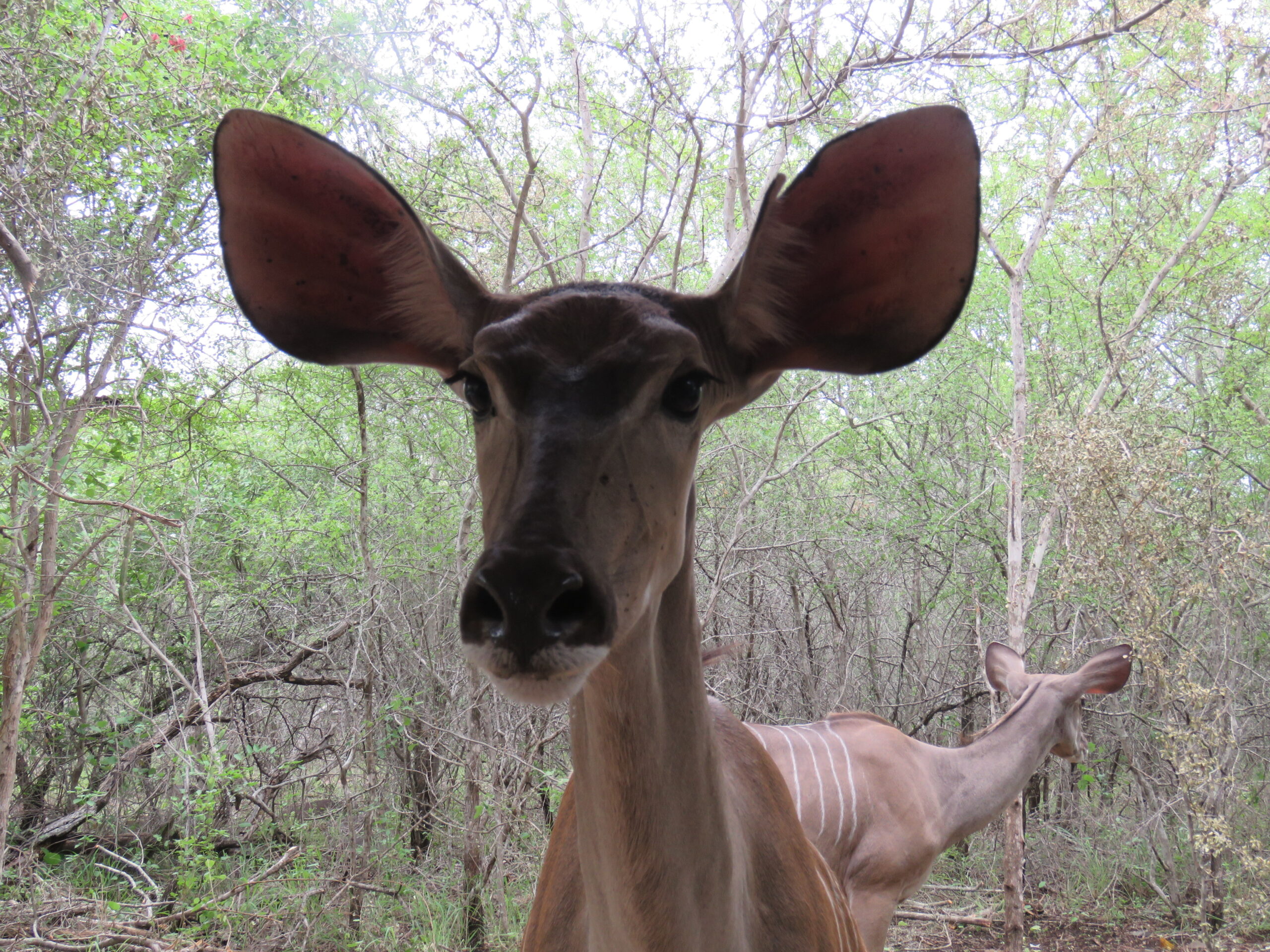
Oxpeckers can dig into the flesh of animals to extract parasites
Oxpeckers can dig into the flesh of animals to extract parasites, ticks, and other insects that may burrow under their skin, as is the case of this kudu. Sadly once the insect is extracted, the oxpecker may continue to peck at the injured site, making matters worse. The photo was taken in Marloth Park, South Africa.

Had other world travelers written such a post describing travel tips for wildlife photographers worldwide, we may have checked it out. But, in 2012, there were few people online doing what we have been doing; traveling the world for years to come, without a home, without storage, with only the items in our then overweight luggage (we’ve since improved that scenario), intent on finding appropriate wildlife subjects in most countries in their itinerary.

Had we discovered such a site that emphatically stated we had to learn all the camera features and how to use them, I may have looked the other way, Tom included. Comparable to our lack of interest in bungee jumping, learning the nuances of a camera wasn’t in our wheelhouse. We just weren’t interested.

So, today, for the first time in almost 3000 posts, which we’ll achieve in less than 30 days (within two days of our eighth travel anniversary), we’ll be delighted to share what we’ve learned for the where the what. The when of taking photos that may not be perfect, but will hopefully fill your hearts with blissful memories of places you’ve been and wildlife you’ve been blessed to see and experience, both in the wild and elsewhere.

wildlife photographers around the world
Finding the rarely seen Colobus Monkey put me on a photo-taking frenzy. The photo was taken in Diani Beach, Kenya.

The “where” of travel tips for wildlife photographers around the world?

It’s been these very photos that prompted us to write travel tips for wildlife photographers around the world, that may include the more experienced photographer and also those who, like us at one point, could barely figure out how to use the flash or the zoom, let alone more complicated settings.

When we decided to travel the world early in 2012, we were ready to go ten months later, having sold every worldly possession while booking two years into the future to provide us with peace of mind in knowing we had a place to live wherever we traveled. In the process, we kept in mind our preferences regarding the type of life we wanted to live, the type of property we wanted to live in, and the surroundings we craved.

wildlife photographer in Kruger National Park, South Africa
We waited patiently, and mom stood while the baby sat up on their hind end, nose touching mom. The photo was taken in Kruger National Park, South Africa.

What appealed most to our tastes and desires were a few vital factors:

  1. Beautiful surroundings and scenery, when possible
  2. An abundance of nature within easy reach
  3. Access to experiencing wildlife and other animals daily, if possible
    wildlife photographer in Princeville, Kauai, Hawaii
    This Laysan Albatross parent and chick sit close to one another until the chick becomes more confident and the parents feel more at ease. In time, the chick will be left behind on its own to fledge, most likely five to six months later. At five years of age, they will return with a mate and begin the life cycle all over again. The photo was taken in Princeville, Kauai, Hawaii.

Utmost in our travels, access to wildlife became more and more important to us as time continued. We’d seen all the historic buildings, churches, and structures, to satisfy a lifetime. We’d dined in excellent restaurants befitting my way of eating. We shopped in unique local markets, adapting to available foods and resources. We experienced the nuances of cultural differences from what we’d known in our old lives and met countless people everywhere we traveled.

But, as far as travel tips for wildlife photographers worldwide, where one chooses to go is of the utmost importance. In Dubai, we were disappointed with little wildlife, other than camels, available for photo-taking, as well as in Morocco. We went wild with delight over the vast array of birds in Costa Rica. We loved shepherding sheep on a farm in England. And, we giggled at a pig farm in Tasmania, Australia.

wildlife photographer in New Plymouth New Zealand
Alpacas are excellent photo subjects. The photo was taken on an alpaca farm in New Plymouth, New Zealand.

In Madeira, Portugal, we saw dolphins and whales while on a catamaran tour out to sea. In Hawaii, the birds, whales, and other sea creatures were in abundance. In Antarctica, we were in heaven with the sheer numbers of penguins, killer whales, elephant seals, and birds, let alone the scenery beyond our wildest dreams.

It all boils down to what you’d like to accomplish in your travels. If wildlife is your top priority, it’s essential to research to determine if the location you’re hoping to visit has an abundance of wildlife. Many countries we’d assumed would be rife with wild animals were not necessarily the case when the only means of taking photos of very elusive animals was while on a planned safari.

No doubt, we’ve been on safari no less than 100 times over the past years; some guided tours, some with a private guide, and many of our own as “self-drives” through national parks. In each of these cases, one must be prepared to be patient and accept the reality that, at times, you may not be able to take a single photo of the more elusive animals and only see the usual plentiful antelopes and birds.

wildlife photographer in the Maasai Mara in Kenya
The photo was taken in the Maasai Mara in Kenya. We were in a Toyota Land Cruiser with open sides, 25 feet from the lion. Much to our surprise, we never felt frightened or at risk at close range to any of these giant animals, including this massive male lion who gave us a great show. In the background, in the carcass of a zebra, this lion savored for lunch.

For birdwatching enthusiasts, almost every country has a plethora of birds presenting countless photo ops. Taking photos of birds in flight requires superior camera skills, which not every amateur photographer possesses, as has been the case in most scenarios. However, some of our favorite photos are of the Laysan Albatross in Kauai, Hawaii, and of course, in the millions of penguins in Antarctica, a photographer’s dream come true.

In researching possible destinations, essential travel tips for wildlife photographers worldwide determine how critical multitudes in photos are to you or if a select number will satisfy your needs and curiosity. With our daily posts taking tens of thousands of images each year, the numbers of decent shots are essential. For the average traveler, returning home with 100 good photos may be fulfilling. It’s essential to decide where you are on the spectrum.

The “what” of travel tips for wildlife photographers around the world?

Amid all the decisions in deciding on locations, one must define what is most vital for you to see and photograph. If lions are at the top of your list, Africa is, by far, the most suitable continent to visit, especially if you choose to stay for a while. But, not every country in Africa is safe to see, nor is there an abundance of lions easily accessed in some countries in Africa.

wildlife photographer in Atenas, Costa Rica
Tom’s photo. What a shot of the classic “Froot Loops” cereal (per Tom) Toucan, technically known as the Rainbow-billed Toucan, aka the Keel-billed Toucan. The photo was taken in Atenas, Costa Rica.

We chose Kenya and South Africa as one of our many goals in seeing lions. We were never disappointed in each of these countries. When it came to tigers, we knew India was our best option. There are 13 countries where tigers may be spotted, but for us, India proved to have the best opportunities to encounter them in the wild.

We should mention that animals in zoos and wildlife facilities do not fulfill our objectives. If that were the case, one could visit a zoo in their hometown or home country. The wild aspect has been a top priority for us when we have distinct opinions we won’t share here today about wild animals locked in cages or small enclosures.

That’s not to say, many rehabilitation centers throughout the world may have excellent open spaces for wildlife with the intent of eventually releasing them back into the wild when possible. We have visited many of these, some of which we’ve found rewarding, providing excellent photo ops as shown in our past posts.

wildlife photographer in Kruger National Park
Impalas have exquisite markings on their faces and bodies. The photo was taken in Kruger National Park.

We’d never have seen a Tasmanian Devil in Tasmania if we hadn’t visited a rehab center, other than the sad roadkill we observed in the mornings. We’ve yet to see one of the more elusive nocturnal animals in the wild, the endangered pangolin. Hopefully, someday we’ll have that opportunity.

Each traveler(s) must decide for themselves, “the what” is most befitting their goals and objectives when returning home, or in continuing on a year’s long journey such as ours with a litany of photos exciting and memorable to savor over the years to come.

The “when” of travel tips for wildlife photographers around the world…

There are three important questions one may ask themselves regarding the “when” of taking photos of wildlife. For most, they include:

  1. When is the best time in life to embark on such a journey? Only each individual, couple, or family can make that determination based on specific lifestyle, travel budget, work constraints, and worthy of mention, general health. It’s important to note that embarking on a safari for hours at a time on bumpy dirt roads with potholes with surprising fast turns could be difficult for some. Also, climbing in and out of the jeep-type vehicles may be highly challenging for those with certain physical conditions, advanced age, or lack of mobility. This is not an experience for those who could become distressed during a “rough and tumble” experience. Also, individuals with severe back or neck problems could find a safari unbearable. If time is limited, the experience may equally be little. Many choose a one or two-day safari as part of a more extensive trip and find themselves disappointed, unable to see and take photos of some of their personal favorites.
  2. When is the best time of the year to see and photograph wildlife? This varies by the area of each country you choose to visit. Research is imperative to determine the best seasons for viewing wildlife. Most often, the best seasons are during the heat of the hottest time of the year. Often rainy seasons are less desirable. This is important to know if you are sensitive to the thought of sitting in an open-air vehicle while on safari. However, many safari companies have enclosed air-conditioned cars that may be more suitable for those individuals, although taking photos will be restricted in such vehicles. Suppose you’re interested in the Great Migration in Kenya and Tanzania. In that case, that eventful experience only occurs in the fall months. It must be timed perfectly to witness the five million animals traversing the Serengeti and the Mara River over and over again. Here again, research is imperative.
  3. When is the best time to snap the shot to acquire the best possible photo? When it comes to taking pictures of wildlife, timing is everything. This has been an area we both feel we have found most rewarding, as our skills increased over the years. Patience and perseverance are the keys to this aspect. At times, we’ve sat still quietly for 20 or 30 minutes to acquire the best photo. Also, knowing when to click the shutter is vital for the best possible photo of your chosen subject.
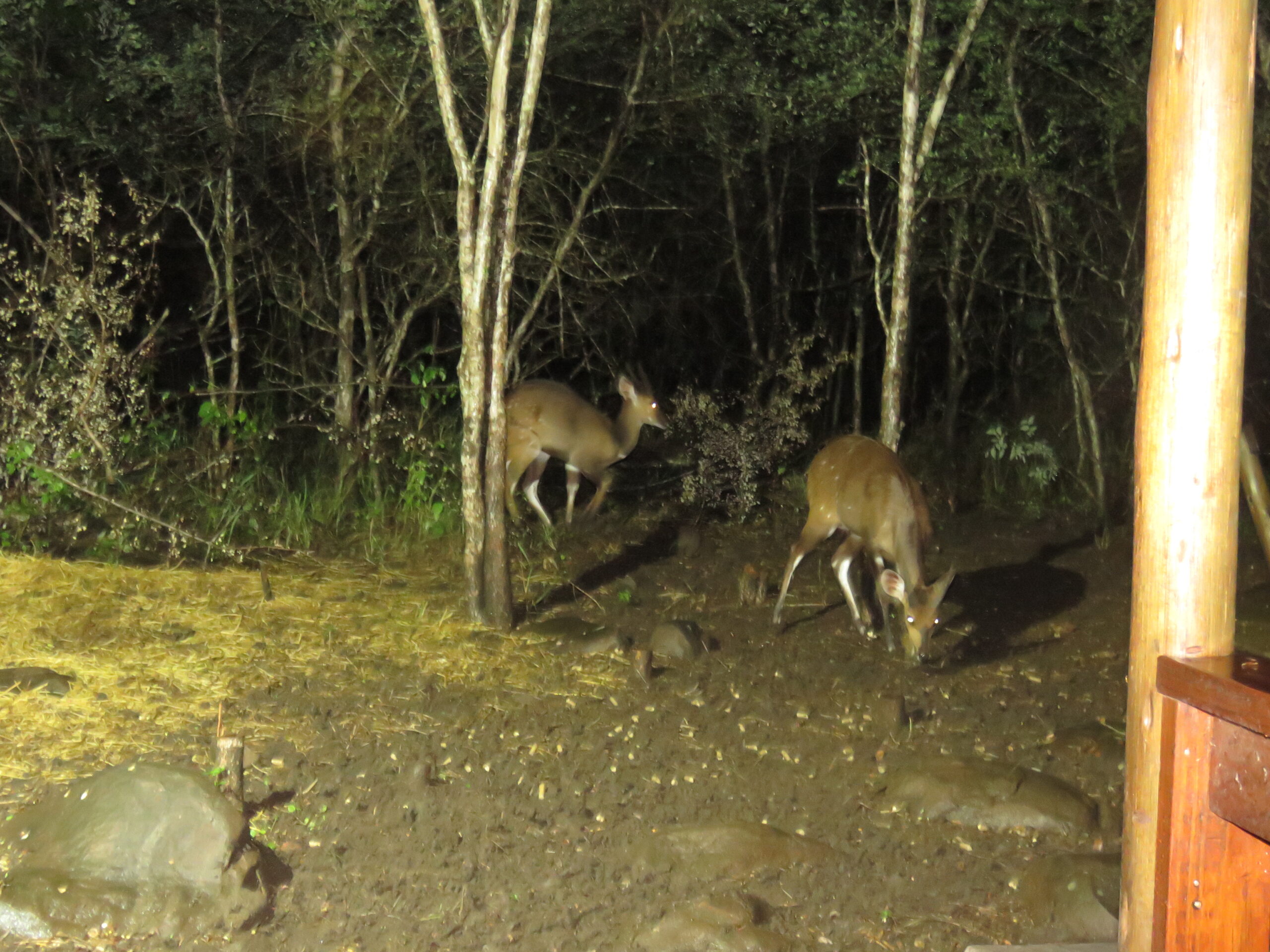
    the pellet crumbs on the nose of this adorable bushbuck
    Notice the pellet crumbs on the nose of this adorable bushbuck. The photo was taken in Marloth Park, South Africa.

In conclusion…

Many of our photos posted here today will illustrate, in part, our use of travel tips for wildlife photographers around the world. They aren’t perfect, but for us, they have fulfilled our desire to create a memory that will easily endure through our lifetime and for those that follow us, for theirs.

If, as a photographer, you’ve been able to learn and develop comprehensive photographic skills, it will only add to your pleasure and fulfillment. Perhaps, in time we may choose to fine-tune our skills. Still, for now, the spontaneous and heartfelt representations of those animals we’ve discovered in the wild, on farms, and in rescue facilities have provided us both with precisely that which we hoped to achieve as we traveled the world over the past eight years.

________________________________________

Photo from one year ago today, October 7, 2019:

ocean in Torquay, Devon
It was wonderful to see the ocean once again in Torquay, Devon. For more photos, please click here.

Day #197 in lockdown in Mumbai, India hotel…Seven years ago today…


This is a Topi, only found in the Maasai Mara.

Today’s photos are from the post on this date in 2013 while on our first safari experiences in the Maasai Mara, Kenya. For more on this date, please click here.

Please bear with us as we share repeated photos as we work our way through October 2013. It was that single experience while on safari many times in the Maasai Mara, Kenya, living in a luxury tent (photos of the tent will follow in a few days), that everything changed for us.

We could sit for hours and watch the antics of the hippos. Their sluggish movement and playful personalities are a pleasure to behold.

In tomorrow’s fourth 2000 word post (only one more to go), we’ll explain this further regarding taking photos of wildlife. It’s a long post to which we’ll be adding more repeated images but will illustrate how being amateur photographers have enhanced our world journey.

It was seven years ago today that we were entrenched in the splendid glory of being on safari twice a day while never disappointed. Throughout my life, I swooned over photos of animals in the wild, wondering when and if I’d ever had a good fortune or be brave enough to embark on such a journey.

A lone hippo was searching for a morsel on the ground.

Little did I know at the time that bravery wasn’t a necessary element in experiencing the joys of safari. Instead, it is a sense of adventure, which with a professional guide and later on, as our guides, presented little risk with a multitude of thrills. At one point in our posts, I equated it to having an “E” ticket at Disneyland (remember, old-timers, like me?), and the thrills were seemingly never-ending.

Looking back at the photos now, primarily while outrageously confined in lockdown in a hotel in India for 6½ months, these photos still send a rush of endorphins through my bloodstream, making me realize how addicted I’ve become to this incredible rush after all of these years.

We realize that this gruesome photo may be difficult for some to see. But, it’s a part of the food chain which we decided we would accept on such scenes as a reality of the life cycle in the wild. This crocodile was consuming either an impala or gazelle.

Each day on Facebook, I peruse dozens of photos from various safaris in Africa and countless wildlife photos in Marloth Park from the many friends we left behind. Many of us belong to different Marloth Park FB groups, and the photos make me long to return in a way I can barely describe.

I think that perhaps someday soon, we can return to see our animal and human friends, shop in a grocery store, cook our meals, savor a glass of red wine or cocktail at happy hour, and move about freely in open spaces. My heart skips a beat.

The Mara River. Our tent was located on the shore, where sounds of hippos filled the air beginning around 4:00 am as they awoke.

On top of that, at any time we’d like, we can make the 20-minute drive to the Crocodile Gate to enter Kruger National Park to search for the next big rush excitedly; elephants, lions, cape buffalos, cheetahs, leopards, rhinos, most of which we don’t see as readily in Marloth Park.

The well-rounded experiences of that location are all we could ever dream of and, without a doubt, were where we had the most exciting, enduring, and blissful experiences in our almost eight years of world travel (as of October 31). Whether it was dinner at Jabula Lodge & Restaurant or dinner at our table or theirs, with friends, sitting by the braai (bonfire), or even those special times alone on the veranda, just the two of us, reveling in every visitor that graced our garden during the day or evening, it all was extraordinary.

No swimming in this river!

Will we appreciate it more now than we did then, during the entire 18 months we spent in Marloth Park in 2013, 2018, 2019? I don’t think so. We treasured every single day and night, just like we’ll do once again, sometime in the future. When? We don’t have a clue. But, we wait patiently for news on the horizon when borders open, and we can be on our way.

It won’t be easy getting there. It’s a long flight, and most likely with COVID-19 protocols, it will be 35 hours or more from airport to airport and then a five-hour drive from Johannesburg to Marloth Park. The closer (one hour drive) airport of Mpumalanga/Nelspruit/Kruger won’t be opening for some time. Time will tell.

“Please pinch me,” I told Tom at that time. “I must be dreaming!”

Right now, our biggest concern is getting that package delivered. The hotel manager is helping us and working directly with FedEx. Hopefully, today, we’ll hear something. In the meantime, it’s the status quo, same old, same old.

Have a peaceful day, and please stay safe and healthy.

Photo from one year ago today, October 6, 2019:

A goose with a knot on her head on the farm in Devon, England. For more photos, please click here.

Day #196 in lockdown in Mumbai, India hotel…Photos from Kenya in 2013…

Anderson, our safari guide in the Maasai Mara, took us on an unplanned 90-minute safari rather than wait at the airstrip for another couple to arrive on a later flight. This was one of the first photos we took along the Mara River. Our tent was located on the river banks where the hippos awakened us with their hysterical morning calls. We couldn’t believe our eyes or ears.

Today’s photos are from the post on this date in 2013 while on our first safari in the Maasai Mara, Kenya. For more on this date, please click here.

Anderson referred to these ostracized male cape buffaloes (one of the Big Five) as Retired Generals. They’ve lost the battle for dominance and are forced out of the herd to fend for themselves for the rest of their lives. Sad. He gave us a nice pose, hungry not only for vegetation but also for attention.

It was seven years ago today, we embarked on our very first safari, in this case in the wildlife-rich Maasai Mara in Kenya. This life-changing adventure will always remain in our minds as the stepping stone into a world we only dreamed about, never imagining that safaris would become such an integral aspect of our world travels.

I love warthogs. Generally, herbivores stroll around for the tiniest morsels. They are delightful to watch.

Also included in today’s post are photos from my first experience of flying in a small airplane. I was terrified, but our pilot, Edwin, reassured me when he spotted the magnificent Mount Kilimanjaro when I had an opportunity to take the photo shown here today. Ironically, this event cured me of my fear of flying in small planes.

According to Tom’s recollection of history, I was nervous when I saw them, adding fuel to our small plane, fueled by a hand crank, typically used in WW2.

In our enthusiasm to share these experiences, we’ve probably posted many of these photos on many past posts. Yesterday I finished writing the fourth of the five 2000 word posts I had to do for our web developers who’ve been working on our SEO (Search Engine Optimization) to provide us with a better presence in searches on the web, ultimately bringing more readers to our site.

View from the plane after leveling off.

When that particular 2000 word post is uploaded this coming week, I’ll be adding more of the same photos you’ll see over the next few days, as we re-share photos from the Maasai Mara experience as it occurred in 2013. Please bear with us for the repetition.

We were seeing Mount Kilimanjaro changed everything for me. The inside of the plane was so small. It was challenging to get a good shot maneuvering around the other passengers since we were opposite.

During these circumstances of COVID-19 lockdown, it’s not easy to avoid repetition, when we have nary a new photo to share of anything in our present-day lives, which, like many of you, consists of the routine and repetition of many functions and activities of daily life.

Look at the reflection of our plane on the ground! What a sight! I couldn’t believe we were inside that tiny thing! This appeared to be some horse farm.

This morning, I spoke to the hotel manager, who has personally taken on resolving our package situation. We are so grateful for his help and kindness. He’s even got his wife, who doesn’t work for the hotel, involved in trying to figure a way for us to pay the customs taxes and fees. We’re hopeful.

As I type, Tom has his laptop plugged into the TV and is watching the Minnesota Vikings game from yesterday. With the considerable time difference between the US and India, he can’t watch it until Monday mornings since the game plays while we’re sleeping. I enjoy watching the games, so I keep an eye on it as it’s playing. But, the disappointment over their losing record is discouraging, making me less interested.

After three takes off and three landings, we finally arrived to meet our guide, Anderson, who’s lived in the Masai Mara region all of his life. What a guy!  We loved him the moment we met him, spending the next several days with him.

Last night, my dinner was a huge improvement. Most nights, except for the once-a-week tiny piece of salmon I order, I have chicken breasts that I don’t care for. I asked for other chicken parts since I prefer dark meat, and they served me a good-sized plate of deboned dark meat in a decent-sized portion. Why didn’t I ask for this in the past?

Well, I tried. In the past, I’ve asked for the dark meat to include chicken thighs and chicken legs. They always stated they didn’t have them, just breasts. Last night when I ordered, I said, “I’d like chicken but NO breasts.” Somehow, with the language barrier, this made sense to them, and a plate of deboned chicken thighs and legs arrived, well-roasted and moist, along with a good-sized portion of sauteed mushrooms.

My knees were still a little shaky from the flights. I was thrilled to be on the ground, meeting our guide Anderson for our time in Onolana. At that point, I knew I’d be less fearful of the return flight.

I’ve been saving two hard-boiled eggs from my breakfast to eat with my dinner since it never was enough. Last night I didn’t eat the eggs when I was packed for the first time since I gave up the curried chicken and paneer makhani several weeks ago to reduce the number of carbohydrates I’d been consuming. The pain in my legs has improved but is not gone. Yes, it could take another month or two until I get complete relief.

Today, I’ll begin working on the 5th and final 2000 word post. It will be great to have this obligation behind me.

Have a good day filled with hope for the future!

Photo from one year ago today, October 5, 2019:
That morning, at the farm in Devon, when the rain stopped for a few minutes, we walked in the mushy grass to the greenhouse to collect these vegetables and berries we used for dinner. For more photos, please click here.

Day #195 in lockdown in Mumbai, India hotel…More on Hilo, Big Island, Hawaii…Island hopping?…

When the trolley in Hilo stopped to pick up passengers in a strip mall, we spotted this orchid.

Today’s photos are from the post on this date in 2014 while on a cruise port of call in Hilo, The Big Island. For more on this date, please click here.

Gosh, it would be great to be in Hawaii right now. As one of the 50 states in the US, we could fly there and stay without any visa concerns while we wait out the virus. But as mentioned in a post a few days ago, the numerous flights with added exposure to COVID-19, the long-distance, and the cost of living is such that it doesn’t work for us right now.

Gazebo at the park in Hilo.

Instead, today, we revel in some of our past experiences in the Hawaiian Islands, which in my old life, before Tom, I’d visited the islands on many occasions. But, as often the case, 30 years later, everything looked very different, although each of the islands was still charming and appealing to tourists.

The designer shops, the upscale restaurants interspersed with popular chain retail shops, and cozy oceanfront restaurants made these towns in Hawaii a shopper’s paradise for all ranges of tourists, providing expansive views of the sea with a quaint and delightful environment.

Pretty scenery at Liliuokalani Gardens.

Although we don’t shop much, it was fun to wander the areas, do window shopping, and search for photo ops, some of which are shown in today’s post. While there that day, we walked the surrounding area, knowing that we’d be returning to stay for six weeks within a short period.

During that stay, we returned to Hilo on the Big Island, and we scoured the entertaining areas, dined in restaurants, and explored the varied shops. More on that in a later reminiscence post. Hawaii is unlike any other island we’ve visited in any other part of the world. There is very little apparent poverty. Structures are well maintained. The streets are impeccably clean and uncluttered. The infrastructure is sound.

Sky at dusk in Hilo.

Although the opposite of those particular facts is often what has made “island-hopping” exciting and exciting for us, the run-down cafes, bars, and shops; the “lean-to” shops and produce stands; the colorfully dressed locals selling their handmade crafts for a song; all contribute to the exquisite appeal of many places we’ve lived throughout the world.

An example of this is the three months we spent on the island of Vanua Levu in Fiji in 2015 in the small village of Savusavu, a breathtaking experience. We may have been two of a dozen Caucasians in the village, and for that fact, we stood out. But, we were treated with the utmost kindness and welcome, often being hugged openly by people we’d just met. Helen, the meat market owner, hugged us each Friday as we left her store carrying bags of free-range chicken and grass-fed beef and pork.

We took the trolley in Hilo, enabling us to get some good shots along the shoreline.

Hawaii, although friendly, possesses an entirely different demeanor than other islands throughout the world, and we enjoyed them both, along with other islands more like Vanua Levu, Fiji as a more exotic island offering more appeal for our taste while traveling the world.

Speaking of islands, right now, there are a select few flights from Mumbai to the Maldives. The visa restrictions allow only a 30 day stay. With their outrageously high prices, this isn’t an ideal scenario for us, as much as we’d enjoy going there. According to the US State Department, the country is not requiring many precautions with COVID-19. If a tourist were to become ill there, this island nation’s medical facilities are marginal at best.

Shoreline in Hilo.

We don’t mean to sound so picky, but it’s our lives we’re playing with. As safe as we are here, although it’s not easy, we feel we must choose our following location with sensibility and caution when opportunities present themselves. South Africa, Namibia, and Madagascar are but a few African countries we’d prefer to visit, if and when it’s possible. Their borders remain closed to US citizens and anyone from India, a double whammy for us. We wait.

No word on our package yet, especially since it’s Sunday, and FedEx is closed today. Maybe by tomorrow, the front desk manager will have discovered a means of paying the customs fee and receiving the package. We shall see.

We hope your day is pleasant and relaxing. I’m still working on finishing all of our tasks, so we can sit back and relax a little too.

Photo from one year ago today, October 4, 2019:

Farmer John was showing us the old apple press, which they still use today. “An apple press makes the whole process fun and simple. The press essentially grinds up the apples into a pulp and then presses the juices out. Once you get going, the liquid gold keeps flowing. You go from press to glass in 30 seconds! The process may not be as quick using this old equipment. There are many presses from the simple hand press to the traditional cider press with a grinder.” Tor more photos, please click here.

Day #194 in lockdown in Mumbai, India hotel…Package from hell…

We’d been thrilled to see the intricate beauty of a red dragonfly that visited each day in Bali.

Today’s photos are from the post on this date in 2015 while staying in Sumbersari, Bali. For more on this date, please click here.

Over the past several days, we’ve gone back and forth with FedEx India about receiving our package from the US, which was shipped here in July and had been sitting in New Delhi since then. With dozens of email messages back and forth, often waiting a week for a response, phone numbers on their website that don’t answer, don’t work, or the lines are always busy, we are at our wit’s end.

Bonfire on the river next to the beach.

The value of all of the items we insured was around US $800, INR 58658. As a result, we rounded it off and insured it for US $1000, INR 73322, as a precaution. Based on the insured amount, they value the contents, and we are being charged US $947, INR 69406 in customs taxes and fees. Oh, good grief. It’s frustrating. We will never order another package from the US again! We’ve had our fill of these frustrating and stressful situations.

Even plain leaves may be symmetrical and beautiful.

Today, we received a notice stating the package was delayed further since we haven’t paid the customs fees. There is nowhere online at their site to pay the fees! They then suggested we pay in cash!  We don’t have that kind of money on hand in rupees. We’d have to go to seven ATMs to get enough money that would expose us to the virus, seven times over. Why can’t we pay with a credit card?

The endless varieties of “growing things” Mother Nature bestows upon our earth is astounding.

This morning, when I went downstairs to pay this past month’s bill with a slip of paper, I asked the front desk for their help, including the amount, the tracking number, and phone number. The management staff emphatically stated they must take a credit card. They are working on resolving this for us.

When we first arrived for our second stay in Bali, I noticed this red dragonfly, as shown in today’s main photo, fluttering around the two koi ponds by either side of the front entryway. Much to my delight, it returns almost every day to the exact location.

When we’ve called, there is a language barrier making communication difficult. Hopefully, soon, the hotel staff will call us back with a resolution. This is so frustrating we both could scream.

Many varieties of coconut trees are found throughout the world. These are a different variety than we’d seen in other countries, with a softer flesh.

Also, in the past 24-48 hours, I’ve received zillions of email messages from our readers who haven’t received our automatic daily email messages with the latest post. I’ve tried to respond to each one when finally, as of this morning, our web developers had resolved the issue. What a relief! Thanks! If you are not receiving the emails and have signed up, please let me know by email.

The tiniest and most straightforward blooms can be breathtaking.

We’ve finished our US taxes with our accountant in Nevada, our home state, paid our tax bill, and can put that behind us until after January 30 pops up again. Also, yesterday I worked on #4 of the required five 2000 word posts for website optimization and will be done by Monday. From there, I’ll have one left, which I’ll complete next week. Only then will I sigh with relief, especially if we have received the package from FedEx by then.

This frog is not unlike the frog visitor we saw almost every day in South Africa over the years.

Today, the front desk informed me that the restaurant would be opening soon while I paid the recent bill. This isn’t necessarily of interest to us. We have felt safe dining in our room these past many months. Not wearing a mask while eating doesn’t necessarily give us peace of mind when people we know have contracted the virus from dining in restaurants, as far as they could tell. We’ll continue to dine in our room for both breakfast and dinner each day.

Plumeria is often used to make leis in Hawaii. In Bali, they’re also used for religious offerings and decorations.

Could our level of frustration be higher than usual right now due to our circumstances? Most assuredly. But, as always, we’ll pull ourselves “up by our bootstraps” and get it together. Receiving that package containing our new passports will surely let us relax while we continue to wait out our options.

We’ve found these pretty flowers throughout the world, from the bougainvillea in Kenya to Bali.

Have a peaceful day! We’re working on it!

Photo from one year ago today, October 3, 2019:

 This photo of a lamb on the farm in Witheridge, Devon, England, sent us swooning with delight. For more photos, please click here.

Day #193 in lockdown in Mumbai, India hotel…Hawaii, almost seven years ago…

Here we are at Liliuokalani Gardens in Hilo, Hawaii, in 2014. Sam, our friendly taxi driver, took the photo.

Today’s photos are from the post on this date in 2014, describing a port of call at Hilo, Hawaii, the Big Island, while on a cruise through the Hawaiian Islands. For more on this date, please click here.

One may wonder why, in 2014, we chose to embark on a cruise through the Hawaiian Islands, when in fact, we’d be staying on four islands for a total of seven months. We’d always been curious about the 9-night Hawaiian Islands cruise which sailed from Vancouver, British Columbia, ending in Honolulu, Oahu.

The scenery along the shores of this river in Hilo is lovely.

The decision proved worthwhile when we had an opportunity to see a few ports of call we wouldn’t necessarily visit while staying in Oahu, The Big Island, Maui, and Kauai. We spent the first 13-nights staying in Waikiki Beach in a condo, one of few holiday homes we didn’t enjoy. The photos on Homeaway looked good, but the tiny, expensive suite was dated, worn, and overall uncomfortable.

An enchanting footbridge in the gardens.

Another lesson was learned at that time…avoid taking property at face value, based only on its photos with only a few good reviews. We’d faltered in that area when we booked our first holiday home in Placencia, Belize, in early 2013, moving out a week later due to many inequities and issues with the property, undisclosed by the owners. We’d lost the rent money and didn’t feel like taking legal action right at the beginning of our journey.

We entered the Port of Hilo, Hawaii.

As time passed, we became more and more particular. Fortunately, the holiday homes on the other three islands were excellent and, as stated in the online listings. With our kids and grandchildren coming for the holidays to the Big Island for Christmas, we were satisfied we’d made decent choices for the two houses we rented, next door to one another, with room for all of us.

The park was lovely.

But, today’s photos are only from that one-day port-of-call on The Big Island to the oceanfront city of Hilo, a modern metropolis of typical US demeanor; lots of malls, restaurants, tourist traps, hotels, and shops lining the boulevards. In our travels, our goal has always been to stay away from busy, crowded cities, but at times, this was impossible to avoid.

The last time we went to a Walmart, a store we never visited in our old lives, was in Mexico on January 6, 2013, when we got off the ship, the Celebrity Century, to purchase our first camera. Here’s Tom in front of the Hilo, Hawaii Walmart.

That day in Hilo, we accidentally got on the wrong bus (very much unlike us to make such an error), ending up at a Walmart store. We took advantage of the fact we needed some items, making a few purchases. Not usually Walmart customers, we found the prices to be good for Hawaii where most things are overpriced.

After our short shopping spree, we decided to take a taxi back to the ship but instead landed a great taxi driver in the Walmart parking lot, who took us on a tour of some of the highlights in Hilo. It proved to be a good decision when we enjoyed our unplanned time, as shown in today’s photos.

Leis for sale in a refrigerated case at the Walmart store.

Later on, staying on the Big Island with our family, we visited Hilo a few more times, mainly for food shopping for our big group at the two houses and a trip to the big mall with one of our daughters-in-law. How the time has flown! Gosh, that seems as if it was a long time ago when it was almost six years ago.

Today, I had a late start working on the post and found myself a little distracted. I spent the entire morning, after oversleeping to 9:00 am, going back and forth with our accountant in Nevada, working on our taxes for 2019, for which we’d filed an extension. When we were first in lockdown in this hotel, I didn’t have to gather the tax information to send to our accountant, so we asked him to file an extension. The filing is due on October 15, and now, thank goodness, we’re done.

Our ship is behind the Pacific Princess in the foreground.

On top of that, I am still working with our web developers on problems with some, not all, of our readers signing up to receive our daily posts but not receiving them. We’re working on a solution to figure out why. If this has happened to you, please check your spam folder and accept our incoming posts. Also, you will be sent a confirmation email which you must accept to receive the posts.

Please let me know if you aren’t receiving the emails within a week while we figure out the issue. We apologize for the inconvenience.

Have a great day. Be well. Be safe.

Photo from one year ago today, October 2, 2019:

After considerable guidance, they guided the sheep to the barn on the farm in Devon, England. He was a competent shepherd. For more photos, please click here.

Day #192 in lockdown in Mumbai, India hotel…Is Hawaii an option for us?….

This bleeding heart so well depicts Hawaii’s gorgeous colors.

Today’s photos are from the post on this date in 2014, while we were in Honolulu, Hawaii. For more on this date, please click here.

Today, several flights have opened up that will be allowed to fly out of India. They include; Singapore, Malaysia, Dubai, and Bahrain. None of these options are appealing to us for the following reasons:

  1. Singapore: We’ve been there twice, staying for a week the second time. Singapore is a clean and safe country but offers no countryside and is all cement with tall buildings, although with many added trees and flowers. We saw what we wanted to see there, and based on the population and crowded venues, we’d have no interest in returning.
  2. Malaysia: We’ve been there in the past. Very pretty in some areas. Very crowded. Low incidence of COVID-19. But, Malaysia doesn’t appeal to us at this time.
  3. Dubai: We spent two weeks in Dubai in 2013, living in a high-rise condo complex and visiting most tourist hot spots. Lots of cement, high-rise buildings, and no countryside. It was not appealing to us for a return.
  4. Bahrain: We’ve never been there but aren’t interested in visiting the Middle East at this time.
Wow! The greenery and flowers in Hawaii amazed us as we walked the streets of Honolulu taking these photos.

Also, yesterday, a newly published document from South Africa has banned travelers from India and the US, a double whammy for us. Also, there are no flights out of India to Africa at this time. Otherwise, we’d visit other African countries and wait to enter South Africa.

We continue to receive thoughtful email messages from our readers stating they’ve read about the countries we may be able to visit that have opened their borders. However, we’re out of luck if India, particularly Mumbai, doesn’t offer flights to those countries. The international airport is still officially closed in India. As of now, there’s no discussion as to when it will re-open.

Many exquisite flowers bloom year-round in Hawaii.

If, at some point, we get tired of waiting, we’ll always have the option to return to the US. But, until there’s a viable vaccine or the numbers of cases drop considerably, we feel safer staying in the safety bubble of this hotel. If something comes up, we’d be ready to leave in 24 hours, although most countries require a negative COVID-19 test result taken within 72 hours of arrival to enter.

In that case, the hotel driver will take us to a drive-up testing center, and we’ll receive our results by email the same day. Now, we await our package from FedEx before we can consider leaving, regardless of possible flights becoming available.

We seldom find orange flowers, but in Hawaii, flowers are prevalent.

We’ve considered the possibility of returning to the US to stay in Kauai, Hawaii, until the virus issues settle down. Overall, Hawaii has had a low incidence of COVID-19. As US citizens, we wouldn’t have to worry about visa restrictions. However, we’d need to get health insurance for me which would be very costly since I never signed up for Part B Medicare, and to do so now would be more expensive than if we’d signed up seven years ago. There’s a penalty for not signing up at 65 years of age. Go figure.

Also, groceries and dining out are expensive in Hawaii, as well as rental cars. At the moment, we’re living here for approximately 40% less than it would be in Hawaii. In Hawaii, vacation home rentals usually result in taxes and fees of an additional US $1000, INR 73417, per month over and above the rental rates.

Tom is thrilled to be in Hawaii.

If we wait to travel to Africa, we can live there for approximately 20% less than we’re paying in this hotel in India with meals. At this point, we’re living well below our budgeted amount. Hawaii would exceed our budget. So, as appealing as this idea is, we have to shelve it.

I can’t recall seeing yellow hibiscus.

In other states in the US, holiday home rentals are very high, especially in warmer climates. We’re not interested in staying in a tiny condo in a snowy, icy location at this point. Few US states have warm weather in the winter months, at least none of which appeals to us right now. Plus, the lockdown and amount of COVID-19 in many states are also off-putting. We don’t want to trade this weird situation for another, not much better.

Beautiful!

Instead, we’ll continue to wait, dealing with our mountains of “paperwork,” website-related tasks, finalizing our taxes with our accountant in Nevada. And of course, dealing with FedEx on the still-undelivered-package from the USA. Nonetheless, we’re grateful for what we do have right now, as opposed to what we don’t. We’re safe, cool, partially entertained, fed with no housework. Plus, we have each other. That’s a huge benefit!

Stay well.

Photos from one year ago today, October 1, 2019:

One year ago, we posted photos from 2015 while we were In Fiji. While there, we stopped on the road to take photos of the sea, but my eyes caught something moving at a distance. Getting out of the car where there was no fence to keep these piglets contained, we squealed with delight, as did this little white piglet who seemed happy to see us. For more photos, please click here.

Day #191 in lockdown in Mumbai, India hotel…The US Presidential Debate???…

The flowers that lined the walkway from the main building at Lantana Galu Beach in Diani Beach to the outdoor path were absolutely breathtaking.

Today’s photos are from the post on this date in 2013, while we were in Diani Beach, Kenya. For more on this date, please click here.

Note: Yesterday, when editing our 2000 word post on my chosen way of eating low carb/keto, I’d made a few errors on the links for the recipes. Last night, a few of our readers/friends brought this to our attention, when we made all the corrections. You may review the edited post here.

My dinner that night: Seasoned grilled red snapper with sautéed non-starchy vegetables

Currently, in the background, we’re listening to the US Presidential Debate. With the time difference between the US and India, it wasn’t available to us until this morning on YouTube. As always, we do not express political views on this site. Subsequently, we’re not expressing any comments or views. We respect each individual’s views and fully believe in a friendly, opinionated, and lively discussion. But, our site is not an arena for such conversations. Thank you for understanding.

I listen to countless podcasts unrelated to politics and often find myself annoyed by the podcasters using their podcasts to espouse their own views. Whether I agree with them or not, I switch to another podcast. If I want to listen to political pundits and often questionable news, I am free to do so, even while here in India.

Notice the lack of veggies on Tom’s plate? He requested they be placed on a separate plate to be handed over to me. I did the same with my potatoes, handing them over to him as shown at the far right of his plate..

Each time I walk the corridors I listen to a variety of podcasts, mainly centered around health and well-being. I can’t learn enough. After yesterday’s 2000 word post on the low carb/keto way of eating, we’ve adopted since 2011, we were thrilled and surprised at the positive response we received.

Times are changing, albeit slowly, over how the low fat, high carbohydrate, low protein way of eating has impacted the lives of people all over the world with more and more Type 2 diabetes and other inflammatory auto-immune diseases. It could be another decade until these changes are universally accepted. I continue to follow scientists, doctors, and other medical professionals who’ve realized the way “we were told to eat” may have been wrong.

After our walk back to the main building, once again, we were mesmerized by these gorgeous fresh flowers.

OK, on to the FedEx package. We received the replacement credit card in the letter envelope, two months later, after filing lots of personal information with FedEx in order to receive it. In the interim, the box of supplies we ordered from our mailing service in July had recently begun the custom fees assessment, after we sent in the same personal documents.

Last night, Tom received an email from FedEx, stating we owed.INR 69406, US $940.56 in custom fees! The value of the contents is only ½ this tax assessment! How can the tax be 200%? We replied by email and await a response, notifying them that there must be an error. I looked online and custom fees generally don’t run more than 28%. Now, this becomes another frustrating hassle we’re hardly in the mood to tackle. Hopefully, today this will be resolved.

The buds for the sweet-smelling flowers were intoxicating, as in a fine perfume.

It’s hard to believe how much we’ve had to handle these past few months. You’d think that being in lockdown would limit one’s responsibilities. Alas, our perceptions were wrong. The reality remains…”You can run but you can’t hide.” Regardless of where we are in the world, we have to deal with filing taxes, paying taxes, handling insurance, website updates, paying bills, and other personal and financial matters.

Wouldn’t this make a lovely bridal bouquet?

Often people presume our lives of world travel consist of simple living in beautiful places all over the world. In some ways, this may be true. Embarking on this lifestyle, we had no delusions that responsibilities would follow us. Lately, in light of COVID-19, and its lengthy lockdown, it’s been a time when we’ve been busier than ever. Perhaps, staying busy has been good for us and when we look back, once we’re back out in the world, wherever that may, we may reflect on this time as productive and worthwhile.

Time to go now. I need to look up our credit card balances to pay them all off on bill pay, on the first of the month, go for another walk, make yet another call to FedEx, get to work on the remaining two-2000 word posts I’ve yet to start and on and on…

Just as we began to exit the main door, this red plant caught Tom’s eye.

We’ll be back…

___________________________________________

Photo from one year ago today, September 30, 2019:

These ducks and chickens are on a mission at the farm in Tiverton, Devon, England. For more photos, please click here.

Why did we choose low carb, keto way of eating while traveling the world?…Food photos and recipes!…

low carb keto way of eating while traveling the world
Here’s a favorite meal: bacon-wrapped, hard-boiled egg stuffed meatloaf made with grass-fed ground beef; salads with red romaine (cos), celery, carrot, and homemade salad dressing; sliced cucumber sprinkled with Himalayan salt; steamed green beans and broccolini; oven-roasted zucchini; good-for-gut-bacteria probiotic sauerkraut; and, my favorite occasional treat, low carb flaxseed and almond flour muffins topped with grass-fed organic butter. Who says “low carb” dining isn’t healthy? (The red bottle in the center of the table contains homemade ketchup we put in a  used and washed bottle). Please see this link for instructions and the recipe.

For many readers, today’s third of five SEO posts may be found to be controversial, again with repetition from past posts, required due to this process as Post #3 of 5 for this purpose.

If you still believe and follow a vegan diet or the low fat, low or moderate protein, primarily plant-based, high carbohydrate way of eating, this post won’t appeal to your personal beliefs about food. That’s OK. The intent here is not to dismiss or express disdain for any way of eating that may serve you well. Nor do we intend to “convert” any of our readers to our chosen lifestyle of low carb, keto way of eating while traveling the world.

Please understand that today’s post on the low carb, keto way of eating while traveling the world has worked for me, for Tom, and many across the globe. Over the years, we’ve received tremendous positive feedback from readers following a similar path, often requesting tips and recipes, which we happily provided and posted. In no manner are we dispensing any medical or health advice? Please seek your resources for additional information.

How one chooses to eat and to ultimately care for their health is a personal topic, one which we’re sharing here again today based on countless emails we’ve received from readers asking us to reiterate how we are living a low carb, keto way of eating while traveling the world when so much of the world’s diet consists of high carbohydrates foods including grains, sugars, and starches.

Homemade grain-free pizza crust
Homemade grain-free pizza crust. Please see this link for instructions and the recipe.

Why did we choose low carb, keto way of eating while traveling the world?…

It all started in 2011 when I sought treatment from an integrative medicine doctor, a licensed, accredited physician who treats the entire body rather than a part of the body causing an issue. I suffered from hereditary auto-immune conditions, including pre-diabetes, hypothyroidism, hyperinsulinemia, and metabolic syndrome. All of these inflammatory genetic conditions ultimately led to cardiovascular disease.

Also, these conditions, coupled with a hereditary propensity to advanced spinal stenosis (and subsequent diabetes and heart disease), resulted in constant full-body pain commensurate with my three MRIs, illustrating that my skeletal frame was rapidly disintegrating.

Based on these three MRIs, the doctor expected I’d be in a wheelchair in a matter of months. At that time, I was 61 years old, living my life as a disabled person, struggling to stay active with excessive painful exercise, requiring me to retire early. Mainly, I didn’t discuss the degree of pain I was suffering, preferring to avoid eliciting sympathy from family and friends.

With pressure on my nerves throughout my body, the “crumbling vertebrae and other joints,” and other conditions mentioned above left me with chronic full-body pain.

baked, low carb, almond flour chicken stuffed loaves
One of our favorite recipes: baked, low carb, almond flour chicken stuffed loaves. We tripled the recipe to result in four meals, freezing part of it. Please see this link for instructions and the recipe.

This fantastic doctor handed me 20-pages of literature from the renowned Cleveland Clinic on how a low carb, ketogenic way of eating may reduce my level of pain and symptoms from the above conditions.

As it turned out, a lifetime of eating low-fat, high carbohydrate, low protein, high sugar-grain-starch diet eventually impacted my cardiovascular system, which was firmly in place long before I changed my diet in 2011. As the surgeon explained, after my triple cardiac bypass surgery in 2019, I’d had heart disease for the prior 20, 30, or 40 years and didn’t know it. Inflammation, ultimately, was the cause. By the time I changed to a low-carb, keto way of eating in 2011, the damage had been done.

In 2019, the cardiologist explained that those changes I made in 2011 may well have saved my life from a fatal heart attack, as well as years of exercising, which I used as a means to avoid further deterioration of my joints and muscles.

Layering the cooked bacon, meat slices, cheese, tomato, and onion slices for our bread-free subway
We were layering the cooked bacon, meat slices, cheese, tomato, and onion slices for our bread-free subway, ready to be wrapped in parchment paper. Please see this link for instructions and the recipe.

What does a low-carb, keto way of eating while traveling the world look like?

As I read through the 20-page report from the Cleveland Clinic, I wondered how I could follow such a strict eating method. In my usual routine, I sought information online from reliable sources on the controversial low carb/keto diet, which was often used for several chronic conditions. Much to my surprise, I found many reputable resources to assist me in my journey. For the sake of expediency, I won’t be listing “how to do a keto diet” here today, other than to list the following foods in general which are allowed, as opposed to those “not allowed.”

1. Animal protein (including eggs): Any form without sauces and spices containing starch, grains, and sugars
2. Vegetables: Any non-starchy vegetables that grow above ground, excluding corn, beans, peas, prepared simply with butter, Himalayan salt, and some spices. No fruit of any type, which is high in sugar, other than a few berries from time to time
3. Dairy (if tolerated): In moderation: Hard cheeses, full-fat cream, butter, sour cream, cream cheese. (Yogurt is generally high in sugars and whey protein containing milk sugars).
4. Spices: Mustard, fresh or dried spices without additives; homemade mayonnaise (most mayo includes toxic oils). No store-bought ketchup which is high in sugar
5. Oils: Pure, high-quality olive oil, butter, lard, tallow, bacon fat. (Vegetable oils must be avoided due to high inflammatory effects).

Goal: No more than 20 actual (not “net carbs” often calculated after deducting fiber) grams of carbohydrates per day, readily available for calculation on numerous free online apps.

Low Carb Chicken Pot Pie

One of three pans of Low Carb Chicken Pot Pie. (We couldn’t find the correct sized tin foil pans to use. Instead, we used three baking pans. But the recipe is best baked in individual pans since it tends to fall apart when scooping it out from larger pans). Please see this link for instructions and the recipe.

How and when did we decide we could maintain a low-carb, keto way of eating while traveling the world?

After three months of eating this way, following the above with relative ease, one morning, I awoke, and the pain was gone! And I mean GONE! Only five months later, we decided to forgo life as we knew it to travel the world. Shortly after that, Tom embraced this way of eating, losing 40 pounds, 18 kg, while recovering from irritable bowel syndrome and restless leg syndrome. In six months, he was totally off seven pills a day! But, we wondered, was it conceivable to maintain a low carb, keto way of eating while traveling the world?

Highly motivated, with the pain still gone for me and weight and illnesses gone for Tom, we were on our way on October 31, 2012, soon to be our eighth anniversary since we began our journey. Hovering in our minds was the upcoming three months in Italy only 11 months later, the endless restaurant visits, the foods popular in various countries in Europe, the tempting desserts, bread, and flour-laden dishes on cruise ships. How would we do it?

I avoided anything that didn’t fall within the above parameters. It required a considerable commitment from me, more than Tom. The latter seemed to occasionally vary from our low-carb, keto way of eating while traveling the world without any significant consequences. For me, I was terrified that if I so much as took a bite of a dessert, a flour-thickened sauce, pasta, or bread, I’d immediately revert to my former pain-ridden condition.

mozzarella balls, stuffed meatballs with a sugar-free Italian seasoned tomato sauce with mushrooms, topped with grated mozzarella cheese and Parmesan cheese
For three night’s we had mozzarella balls, stuffed meatballs with a sugar-free Italian seasoned tomato sauce with mushrooms, topped with grated mozzarella cheese and Parmesan cheese. There’s also one ball inside each meatball, along with one on each top. On the side, steamed veggies and salad. Please see this link for instructions and the recipe.

Was it easy to shop for and maintain a low-carb, keto way of eating while traveling the world?

In time, we developed a sensible routine for shopping for our home-cooked meals. Comparable to most home cooks, we created a list in our minds of favorite dishes, shopping for ingredients accordingly. Every country, without exception, sells some form of animal protein such as fish, shellfish, chicken, beef, and pork. (Although, here in India, no beef or pork is served, other than bacon).

Every country sells eggs, most often free-range, butter, and non-starchy vegetables. We were always able to purchase quality imported hard cheeses and other low-carb cheeses, although, at times, they were expensive. We budgeted. Accordingly, I suppose the most challenging situation has been in India, where we’re longing for a bun-less burger, a juicy steak, or pork chops, none of which are available due to Hindu religious beliefs. As a result, we continue to eat chicken and, on occasion, salmon (for me), which is expensive for a tiny portion.

Shopping for groceries was most challenging in Belize. The grocery store offered only frozen, often freezer-burned meats, and again in Fiji, an excellent meat market provided many significant cuts of meat of all types. Still, the grocery store with only two aisles had few items to prepare our meals, including vegetables and spices. Somehow, we always figured it out, never sacrificing our chosen low-carb, keto way of eating while traveling the world.

Low Carb (2 grams) Gluten Free Cheese Taco Bowl
Low Carb (2 grams) Gluten Free Cheese Taco Bowl. Please see this link for instructions and the recipe.

Recipes for maintaining a low carb, keto way of eating while traveling the world…

Like many of our readers, we all have a “favorite” recipes list, often a top 10. Years ago, I wrote a post about our favorite top ten LOW CARB recipes which include:

1. Bread-less submarine sandwiches – See the link here for the details and photos.
2. Bacon-Wrapped Meatloaf – See the link here for details and photos.
3. Chicken Stuffed Almond Flour Loaves – See the link here for details and photos.
4. Chicken Pot Pies – See the here for details and photos.
5. Meatballs stuffed with Mozzarella with Mushrooms & Sugar-free Marinara – See this link for details and photos.
6. Pizza – See this link for the crust to add your favorite low-carb, sugar-free topping.
7. Taco salad with low carb bowl – See this link here for the bowl to which you add your favorite low carb ingredients
8. Gluten-free hamburgers with low carb buns – See here for our low carb bun recipe to which you add your favorite burgers and vegetables
9. Sunday Roast – See here for our low-carb Sunday roast, so popular in the UK.
10. Coconut or Almond Flour Battered Fish or Chicken – See here for either option.

8-ounce patty with cheese, bacon, lettuce, tomato, and onion
These homemade hamburger buns are enormous enough to hold a 6 to 8-ounce patty with cheese, bacon, lettuce, tomato, and onion or other items added. They’re delicious! Please see this link for instructions and the recipe.

How to maintain a low carb, keto way of eating while traveling the world, especially while in lockdown in India during the past six months…

It’s been not easy these past months in lockdown in India with room service providing all of our meals. We’ve always preferred to eat only two meals per day. On occasion, we’ve chosen intermittent fasting for health reasons, which is easier for us when we’re living in a holiday home and may need to break the fast with the food we have on hand. Here, we have nothing available if we feel a “need” to eat something appropriate for breaking the fast.

Indian food, although delicious to me, is not a favorite of Tom’s. And Indian food is packed with starch, sugar, fruit, and grains, none of which are suitable for my eating. At one point, early on, I considered throwing caution to the wind and dining on the delicious Indian foods.

I’ve forced myself to walk the past few months. However, after seeing how I had difficulty walking after eating only their rich red sauces (all without gluten) for several months, I now realize I wouldn’t have been able to do all the walking I’ve done so far, never missing a day, solely with the intent in benefitting my heart health. If the pain made it impossible to walk, I’d only have been damaging my health further.

organic grass-fed pork roast, Kransky (cheese-filled) gluten-free sausages, Portabello mushrooms, onions, and organic carrots
Our Sunday roast: organic grass-fed pork roast, Kransky (cheese-filled) gluten-free sausages, Portabello mushrooms, onions, and organic carrots. I cut the roast open during the last 30 minutes to ensure it was cooked properly. Please see this link for instructions and the recipe.

Now, back to my strict keto diet, forgoing all those carb-laden sauces, eating less than 20 grams of carbohydrates per day, I’m finding the walking easier each day. The philosophy of deducting the fiber grams from the total number of grams of carbohydrates has been proven to be a fallacy. I count only the full carb content of carbohydrates, and now, I’m gradually improving more each day.

Hopefully, by the time we leave India, I will be back to fitness and health in every way.

How you can achieve a low carb, keto way of eating while traveling the world or when living life anywhere in the world…

At first, when I decided to write on this topic, I considered adding links to the doctors, researchers, and scientists who’ve done extensive research on this way of eating. After thinking about it, I decided with the vast information available online, each of us needs to do our research to bring us to the point of realization that the low fat, high carb, low protein, highly-processed grains, sugars, and starches may not be for us. One need only looks at the poor health of the world’s citizens and in the US, from following this modality for the past four decades.

dinner of lightly battered and seasoned fish with egg and almond flour, sautéed in coconut and olive oil Barramundi, fresh organic green beans, homemade LC muffin, and salad
A favorite dinner of lightly battered and seasoned fish with egg and almond flour, sautéed in coconut and olive oil Barramundi, fresh organic green beans, homemade LC muffin, and salad on the side was a perfect meal we both enjoyed. Please see this link for instructions and the recipe.

It took me years of research to find my way in this life-changing way of eating. There are countless highly reputable resources online you may choose to investigate. If you have difficulty researching, feel free to contact me at the end of any post in the comments section, and I will add some links for all of our readers to see.

Thank you for letting me share this story once again as we each decide which path works best in extending our lives, the quality of our lives, and the ultimate guilt-free enjoyment of many outstanding foods and meals at home and throughout the world.

Photo from one year ago today, September 29, 2019:

tomatoes
Renata, our host,  suggested we pick all the tomatoes and other vegetables we wanted, remaining in the greenhouse. For more photos, please click here.