
Shocking meat prices in South Africa…
After spending weeks in Minnesota in the United States, and before that in Tasmania and New Zealand, we found ourselves once again standing at a familiar counter this morning, smiling in disbelief at what we were about to pay. It felt almost surreal after the past few months of watching grocery totals climb higher and higher, especially when it came to meat, which is such a central part of our diet.
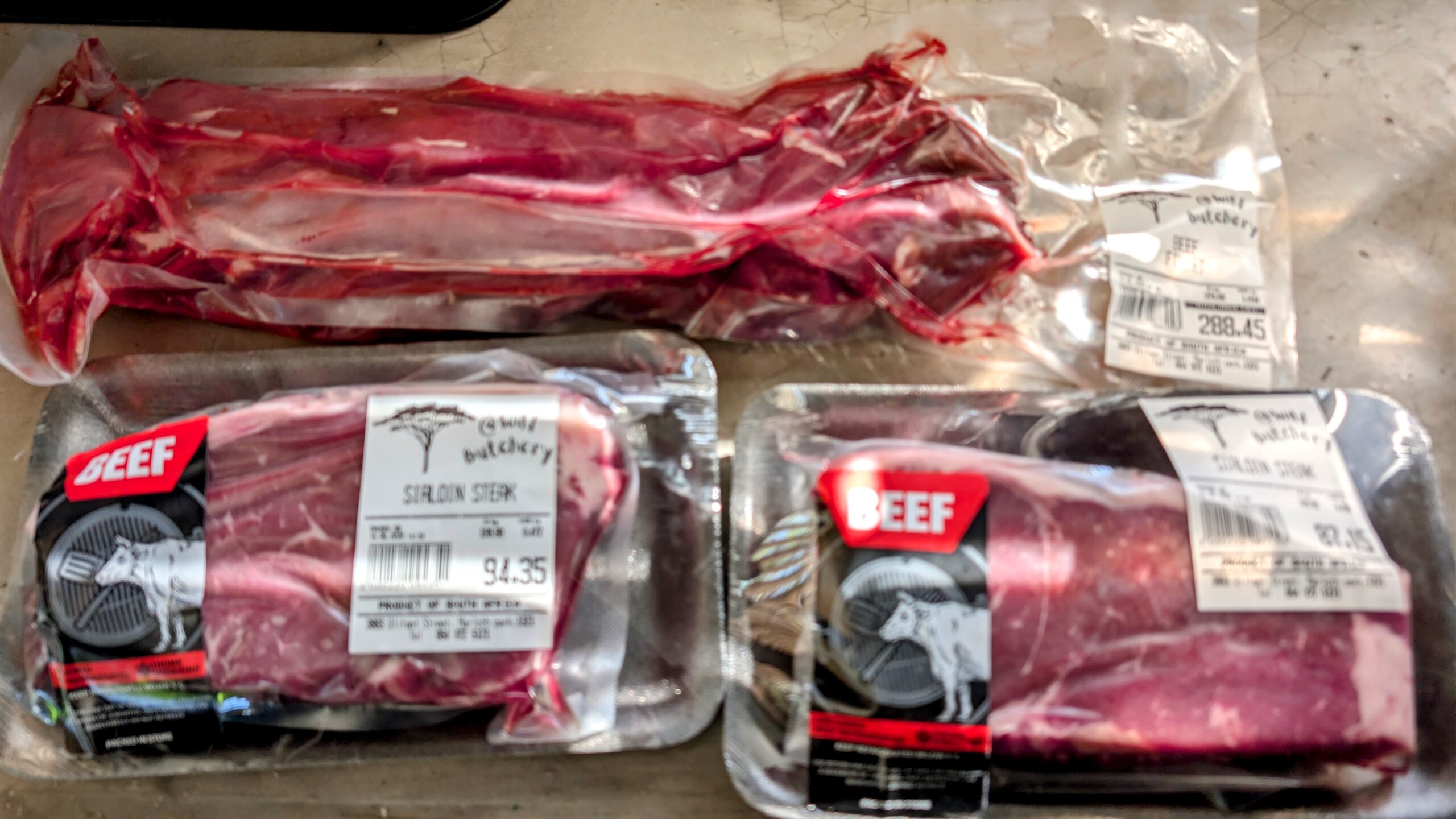
We headed out early to the Wild Butchery, knowing Alta, the owner, had set something special aside for us. She had thoughtfully sourced a beautiful beef tenderloin from her supplier, and when she brought it out, we could hardly believe the price. For a full kilogram, which is about 2.2 pounds, we paid Zar 288, the equivalent of only US $17.53. That comes to roughly eight dollars per pound. I actually paused for a moment, doing the math again in my head, just to be sure we were seeing it correctly.
Not long ago, while shopping at Costco in the US, we stood in front of the meat case and stared at beef tenderloin priced at US $22 per pound. That is Zar 361.30 per pound. The difference is staggering when you put it side by side like that. We had assumed, perhaps naively, that prices in South Africa would have climbed just as dramatically over the past nine months. But standing there today, it was clear that, at least for now, they have remained relatively unchanged.
We also picked up two sirloin steaks, each weighing about half a kilogram. For the slightly larger one, we paid Zar 94.35, which is about US $5.74, and even less for the smaller cut. It almost feels like we are getting away with something when we compare these prices to what we have been seeing elsewhere in the world.
Moments like this remind us why we love being here so much. Our way of eating, which leans heavily toward keto and carnivore, can become quite expensive depending on where we are. In some places, it requires constant adjustments and compromises. Here, it simply fits. We can enjoy the foods that make us feel our best without constantly worrying about the impact on our monthly budget.
Of course, we still enjoy dining out, and we do so often. On average, we go out at least three times a week. Even then, the cost remains reasonable. A typical meal for both of us, including drinks, tax, and tips, comes to around US $50, or Zar 822. It allows us to balance cooking at home with enjoying the social side of being here.
Yesterday, added another layer to our routine. We stopped by Daisy’s Den to arrange for a weekly bale of lucerne (alfalfa) for the animals. Every Saturday morning, it will be delivered, and we hope it will bring more visitors to our garden during busy weekends when tourists are in the area. The cost for the delivered lucerne is Zar 230, or US $14.18, which is noticeably less than the Zar 350, US $21.28 we pay for each delivered bag of pellets. The lucerne will easily replace at least one bag each week, and those small savings add up over time.
As nomads, we have learned to pay attention to these details. Every choice, every adjustment, contributes to the bigger picture. Being able to return to a place where life feels both abundant and manageable is something we never take for granted. It allows us to continue this lifestyle we love, moving through the world while still saving money on our unusual lifestyle.
Be well.
Photo from ten years ago today, June 18, 2016:


About Jess & Tom
We are travel writers, photographers, and slow travelers exploring the world one meaningful experience at a time.
Read More
We never pay that much (what Costco charges) for meat here in MN. We pay a quarter to half of that when we buy from our local farmers! So many benefits of doing it this way from knowing what’s in your food, to supporting local farmers. We do same for veg with CSA (Community Supported Agriculture) boxes. We save so much money this way and eat clean too. It’s the way to go!
Lisa, that is exactly what we did when we lived in Minnesota. So hppy you are saving this way. Unfortunately, when we visit for three weeks and only cook for ourselves a few times, it isn’t pssible to take advantage of these resources and we have to pay regular retail prices. Thanks for writing.
Much love,
Jess & Tom