Tough night…More wonders in the bush…Dental update…

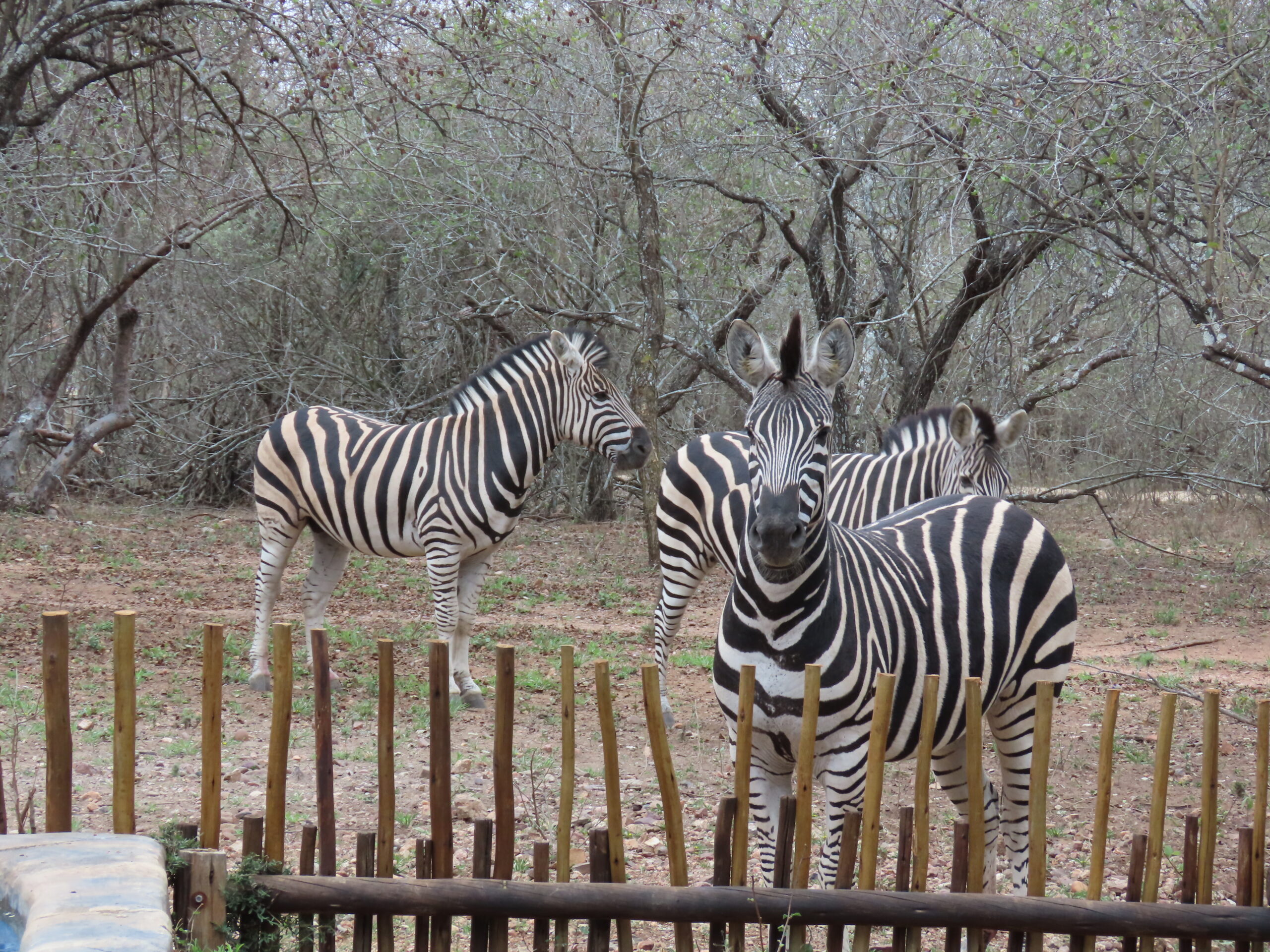
It was time for the family to take a drink.

Last night I awoke every hour itching like crazy. They weren’t mosquito bites but chiggers, sand fleas, or midges, whatever one may call them. The bites last for weeks. One bite can keep me awake all night when the crazy itching won’t stop, no matter what cream or method I use to control it.

They took turns moving in and out from the edge of the pool.

A few years ago, Rita gave me a battery-operated zapper that produced heat that seemed to help if I used it within an hour of getting the new bite. Recently, from overuse, it stopped working. Within a week, a package from Takealot will arrive with a new zapper in the shipment. I am looking forward to using it.

It’s not even summer yet when the mozzies arrive. I will continue to use repellent regularly, but it doesn’t seem to work for the bites as mentioned above and irritating allergic responses.  I wear long sleeves, long pants daily, and full coverage pajamas at night always doubled up with Tabard roll-on repellent. TIA…This is Africa….it goes with the territory for those of us who are sensitive to insect bites and response to dust mites.

Handsome Big Daddy.

I am not the only person that experiences these bite-related annoyances. I have talked to many locals who share the same situation with no new means of combating the issue.

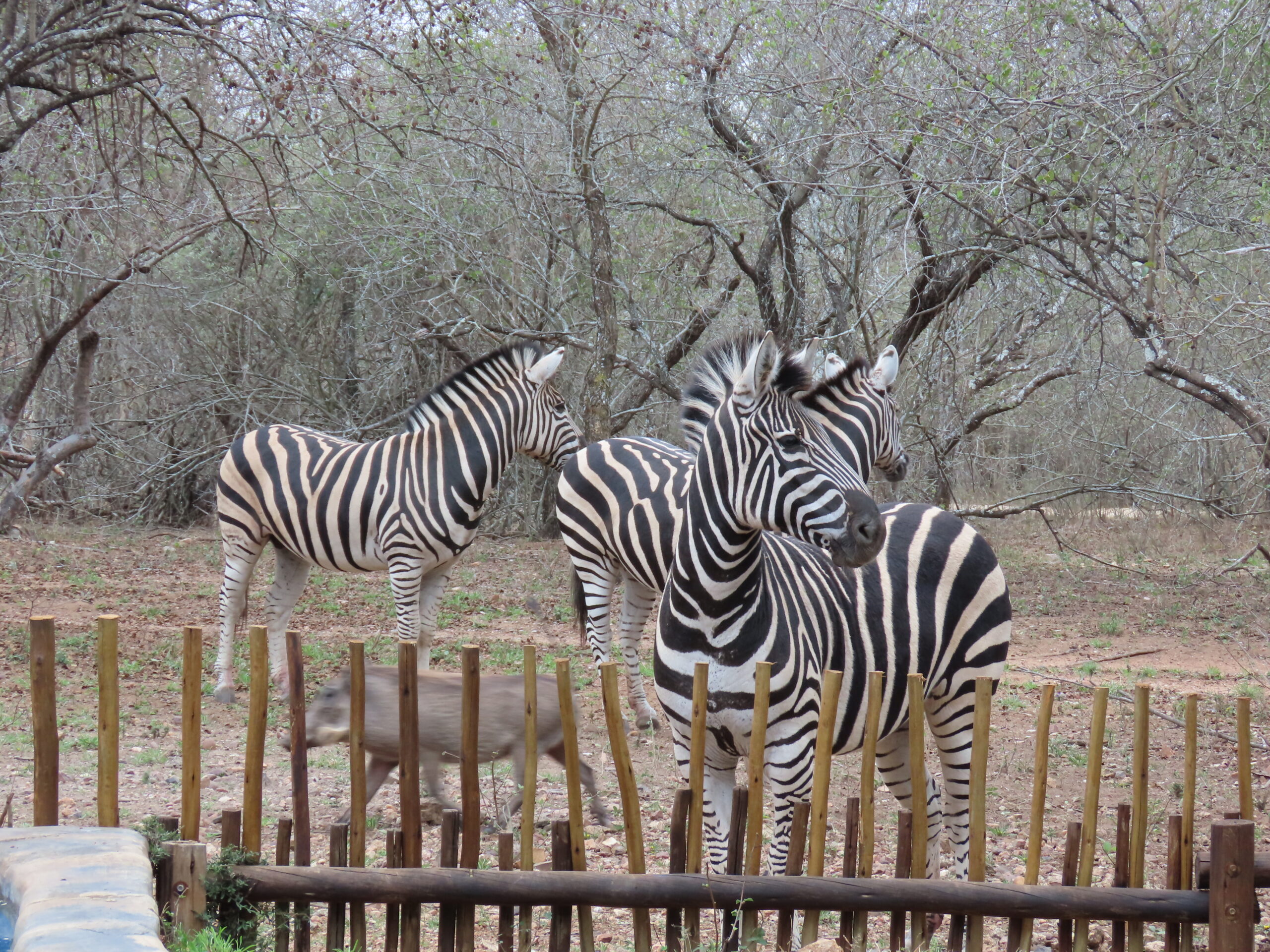
Lollie is on the right, and her boyfriend (she has two) is Busybody. Her other boyfriend is Rueben.

As for our dental updates…Tom’s two new tooth implants are not causing him any problems. It felt tender the first day they were seated, but he was fine a few hours later. I am hoping when I get the implant for my painful tooth in months to come, my result will be similar to his.

As mentioned earlier, the tooth caused me discomfort in the fourth to the upper right. Once the tooth is pulled, the hole will be shown when I talk or smile. I told Dr. Singh I want a temporary tooth (or bridge) while we wait for the bone to heal over the foundation for the implant, which will be put in place the day the tooth is pulled. It may be three to six months until I can get the permanent implant.

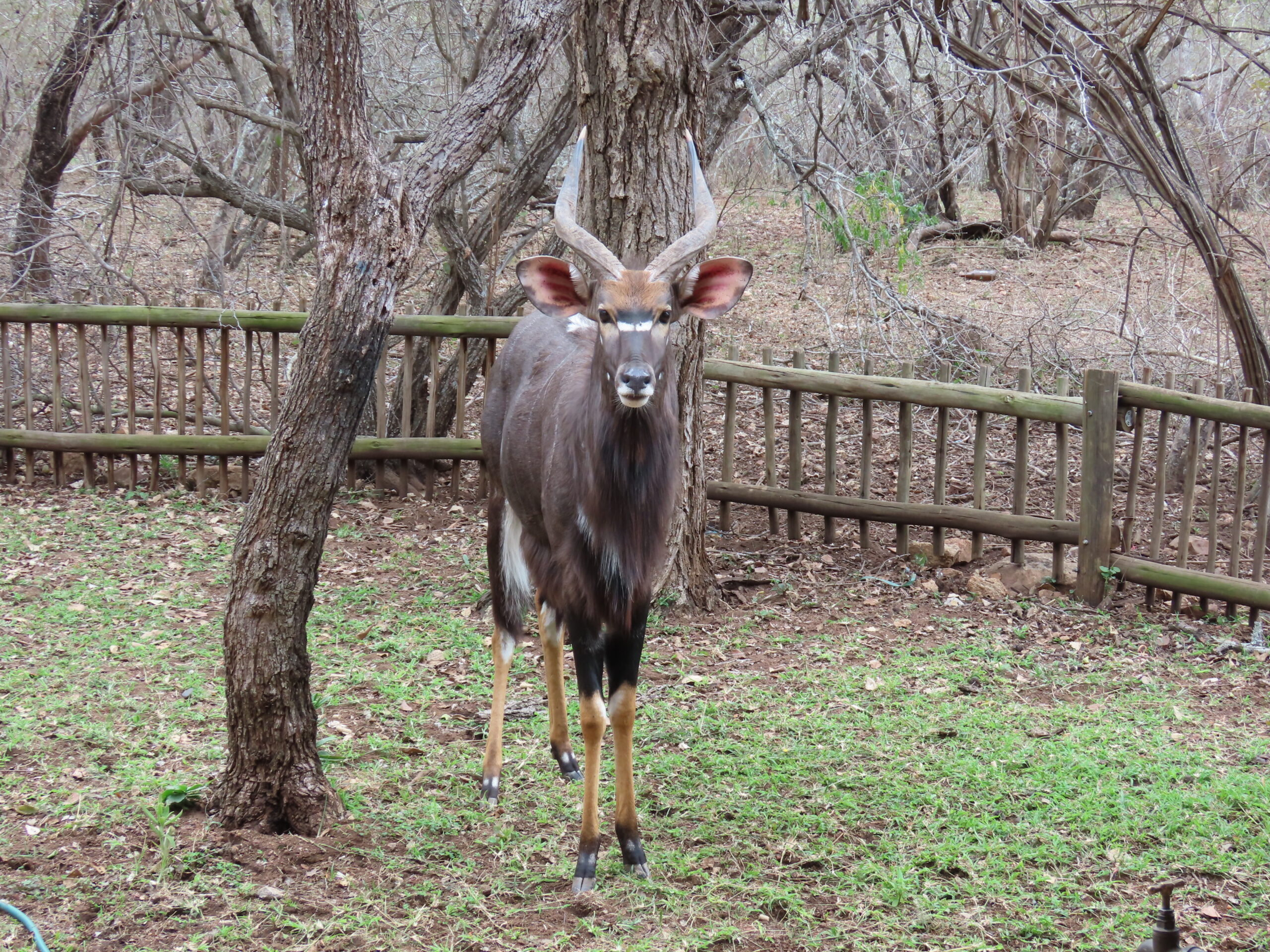
Yesterday, once again, the nyala family came to call, including Norman, Nina, and their son Noah.

In the interim, Dr. Singh will have a bridge made to fill the hole so the hole won’t be visible when I talk or smile. I’d considered having this three-day process done before we leave for our visa-stamp trip to Zambia/Botswana on August 20 for a week. But, the last time I had a tooth pulled, I had a horrible time with an unbelievably painful dry socket, resulting in me being on pain meds for three weeks. I don’t want to go through that again.

But, certain people are prone to dry sockets. If I had the tooth pulled now, I run the risk of the recovery time running into our travel time and being miserable while we’re gone. There was no way I wanted to take the risk. Instead, Dr. Singh prescribed antibiotics, a three-day Z-Pack dose that didn’t work. He sent me another prescription for a different antibiotic which I’ll get filled and use only if I need to.

Closer view of the family of three.

The appointment for the extraction is the day after we return from the trip. It was the best decision we could make considering the circumstances. Right now, the discomfort is minimal, and I’ll wait and see what transpires with the abscess in the interim.

Today, we are working on getting our certified vaccine certificate from this site for only those vaccinated in the US. The fee is US $2.00 each, paid by credit card. We may not need this but are doing so just in case we need it for traveling to any country. Today, we checked to discover we won’t need any Covid-19 tests before traveling or returning to South Africa. This is good news.

Have a pleasant day and evening!

Photo from one year ago today, August 3, 2021:

It was delightful to see Torn Ear return to our garden. For more photos, please click here.

Another fantastic evening in the bush with friends…A welcoming surprise for our guests….

Bossy, (kudu) Marigold, Tulip, and Lilac in the side garden looking for pellets.

Shortly before Rita, Gerhard, and their friend Lee arrived for dinner, we were delighted to see that Norman, Noah, and Nina were in the garden. With their holiday home about 4 kilometers (2.5 miles) from here, it’s unlikely they’ll have an opportunity to see them unless they encounter them while driving around the park.

We hoped they’d hang around until our guests arrived. But Tom offered them plenty of pellets to keep them busy. Since the nyala family is so popular in the park (they are the only nyalas), they don’t always eat all the pellets we offer when they may already be full. They don’t seem to devour them with the same enthusiasm as the other wildlife.

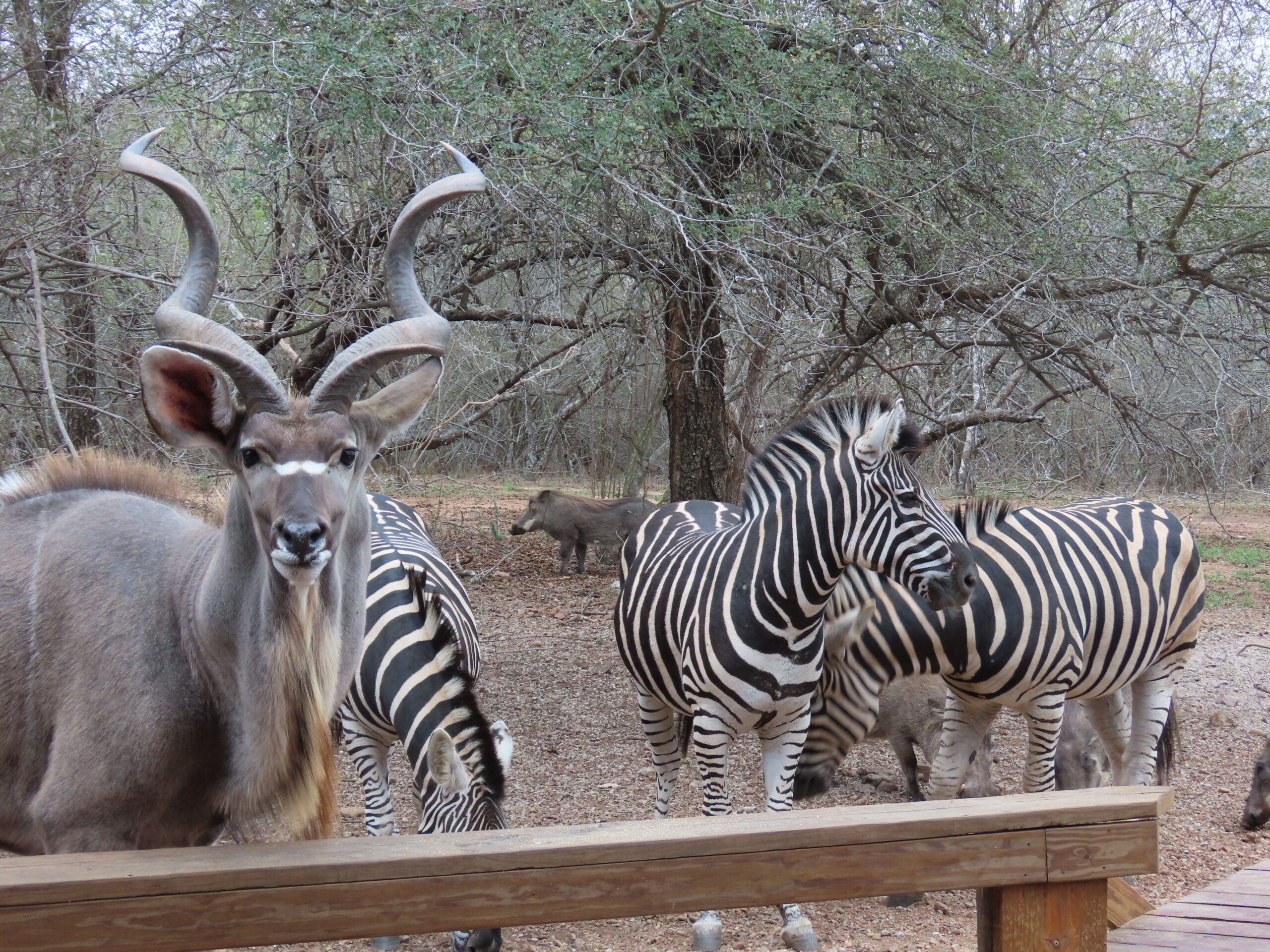
Lots of zebras stopped by last night with Lollie photobombing as usual.

We were fortunate when a few minutes later, our dinner guests arrived. I greeted them outdoors and asked them to be extra quiet in case the nyalas would be scared off by unknown humans. The nyala family is used to us but not necessarily newcomers to their territory. After all, they must be comfortable with us when they usually stop by two or three times a day, except during holidays when the park is packed with tourists.

It was such a joy to watch the faces of Rita, Gerhard, and Lee. They were so excited to see them when they hadn’t since they were here almost five months ago. They couldn’t believe how much Noah had grown in such a short time and how his features were changing from looking like Nina to looking like his dad Norman who looks much different from a female of the species.

Female kudus jumped the fence.

They each took photos with their phones, but that was just the beginning of the evening. Over the next few hours, many more animals stopped by to entertain us, even an adorable bush baby partaking of a little cup of fruity yogurt. It couldn’t have been more enjoyable.

Of course, the conversation was the second highlight of the evening when after not seeing Rita and Gerhard for five months, we busied ourselves telling countless stories of our recent adventures and trials. They have been in Germany and Croatia for the past months and shared some stories and photos. Having never met Lee before, it was fun to hear his take on being in the bush for the past 24 hours. He could not believe what he was seeing!

Bossy gets up close and personal, but we don’t hand feed.

No one can imagine the excitement and joy of living in the bush, even if it’s just for a week or two. Seeing the pleasure derived by newcomers is equally exciting for us. Sharing this magical place with others adds to the experience in many ways.

Crooked Face stops by no less than once per day. He may have a crooked face but we find him very handsome.

All the food turned out well, and everyone enjoyed the various items we served, as mentioned in yesterday’s post here. Fortunately, we have plenty of leftovers for tonight’s meal since I didn’t have much enthusiasm to cook another meal today. This morning I made a double batch of Tom’s Coconut Banana Bread using the ripe bananas we’d stored in the freezer. He’d had enough low-carb muffins and was ready for the “real deal.”

Bad Ear often joins Crooked Face.

I’ll individually wrap each piece in a Ziplock bag, which we’ll keep frozen. This way, it stays fresh when he eats only one or two pieces daily. It was a favorite recipe he loved in our old lives. Luckily I found it in my cloud. Although I don’t bake many non-low-carb treats for him, I was happy to make this favorite he so much enjoys. Plus, I do enjoy baking from time to time.

As for today, it’s a quiet day except for the steady stream of wildlife stopping by, often in the dozens every hour or so. We’re cherishing every moment, knowing another holiday weekend is coming up this week, and we won’t see as many animals until the holidaymakers leave the bush next week. August 9th is Women’s Day, which isn’t until next Tuesday, so that things won’t settle down until next Wednesday.

We hope you have a fantastic day and evening.

Photo from one year ago today, August 2, 2021:

This hornbill was contemplating eating seeds we placed on the veranda railing. For more photos, please click here.

Guess who’s coming to dinner?…

Big Daddy and zebras get along well. They are used to grazing in the bush together. There’s Lollie in the background, as usual.

“Guess Who’s Coming to Dinner” is a 1967 American romantic comedy-drama film produced and directed by Stanley Kramer and written by William Rose. It stars Spencer Tracy (in his final role), Sidney Poitier, and Katharine Hepburn and features Hepburn’s niece Katharine Houghton.”

Tonight, Rita, Gerhard, and their friend from the US, Lee, will be coming for dinner. On short notice, I decided to make an easy meal, starting with easy snacks during sundowners: potato crisps (Gerhard’s favorite), peanuts (Tom’s favorite), sliced cheese with keto, and regular crackers chicken liver pate. (Rita and Lee are also doing keto, like me).

Norman is a regular visitor. He comes by about three times daily, along with Nina and Noah.

For the main course, we’re roasting two whole chickens on the braai with keto barbecue sauce and marinated keto lemon chicken breasts, in case the four breasts from the two chickens aren’t enough for all five of us. If we have leftovers, no problem, Tom and I will eat the chicken tomorrow.

For the sides, steamed buttered broccolini, roasted vegetables, seasoned white rice, and my traditional fresh veg salad (Rita loves this with my homemade dressing). We won’t be making a dessert since I hadn’t planned ahead and don’t have all the necessary ingredients on hand.

We love zebra visits, but they never seem to engage with us as the other wildlife.

Early this morning I started prepping all the vegetables to roast. Actually, I am cooking them now since they require tossing every 15 minutes, and I don’t want to be in the kitchen when our guests arrive; instead, spending time with them. I can quickly reheat the vegetables in the oven in an oven-proof serving dish. I’ll cook the broccolini last minute.

Tom will put the whole chickens on the braai at about 4:00 pm, 1600 hrs., and let them cook on low heat until tender and juicy. I will cook the chicken breasts in the oven to ensure they aren’t overcooked, which can happen on the braai when Tom may be busy chatting and forget about them. The two whole chickens won’t require more than occasional basting with the sauce.

This morning’s zebra visit. Again, Lollie is photobombing once again.

It’s cold and cloudy today, so I made Tom and me heaping cups of low-carb hot chocolate with raw cocoa, coconut cream, and liquid sweetener. As we’re sitting outdoors, chilled to the bone, this is an excellent way to warm up. At the moment, our only visitors are one Big Daddy, Nyala Noah, with a few warthogs along the fringes of the garden. It’s been a busy morning now that the weekend has ended.

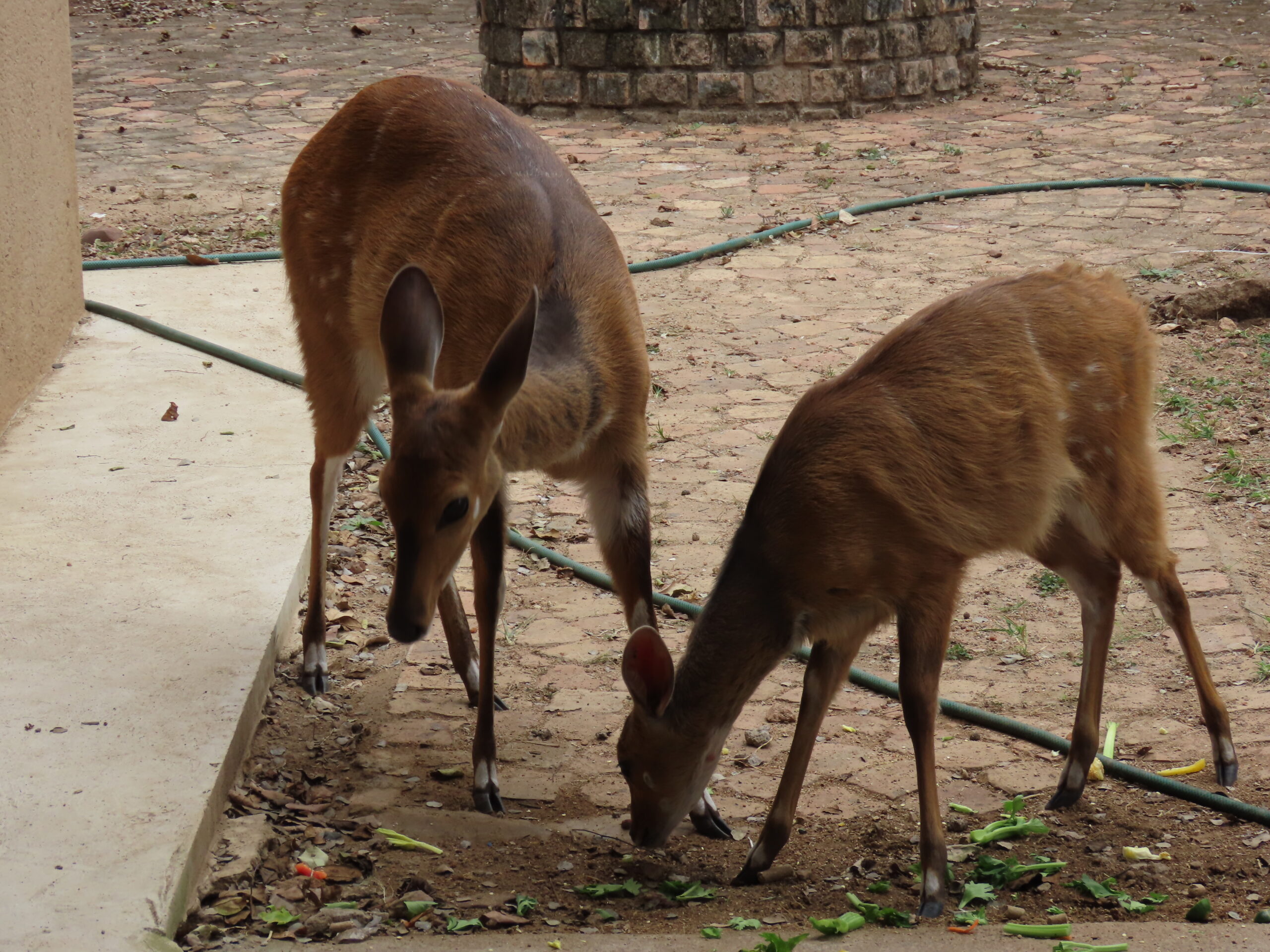
Tulip and Lilac are enjoying my veggie scraps from this morning’s prep.

Another holiday weekend is upcoming this week, and it will be crazy busy here in the bush again. Indeed, the five of us will be heading to Jabula on Friday night, as we always did with Rita and Gerhard and often with Kathy and Don. Gosh, we missed them too.

Our lives here in Marloth Park are filled with many memories that warm our hearts. It feels like living in a unique environment surrounded by friends and wildlife, always enjoying sundowners, and homemade dinners at one of our bush houses, in the heat, in the cold, and in between. We top it off with memorable evenings at the Cheers-like bar at Jabula, and fantastic dinners shared on their veranda.

Tulip and Lilac prefer to eat inside the fence since the larger animals take over on the other side.

Right now, bushbuck Mom and Baby, Tulip and Lilac, are eating the scraps from the vegetables I cut this morning. A moment ago, little Lilac picked up her head with bits of vegetables hanging out of her mouth while she chewed with enthusiasm. What a joy! We couldn’t ask for more.

Have a great Monday!

Photo from one year ago today, August 1, 2022:

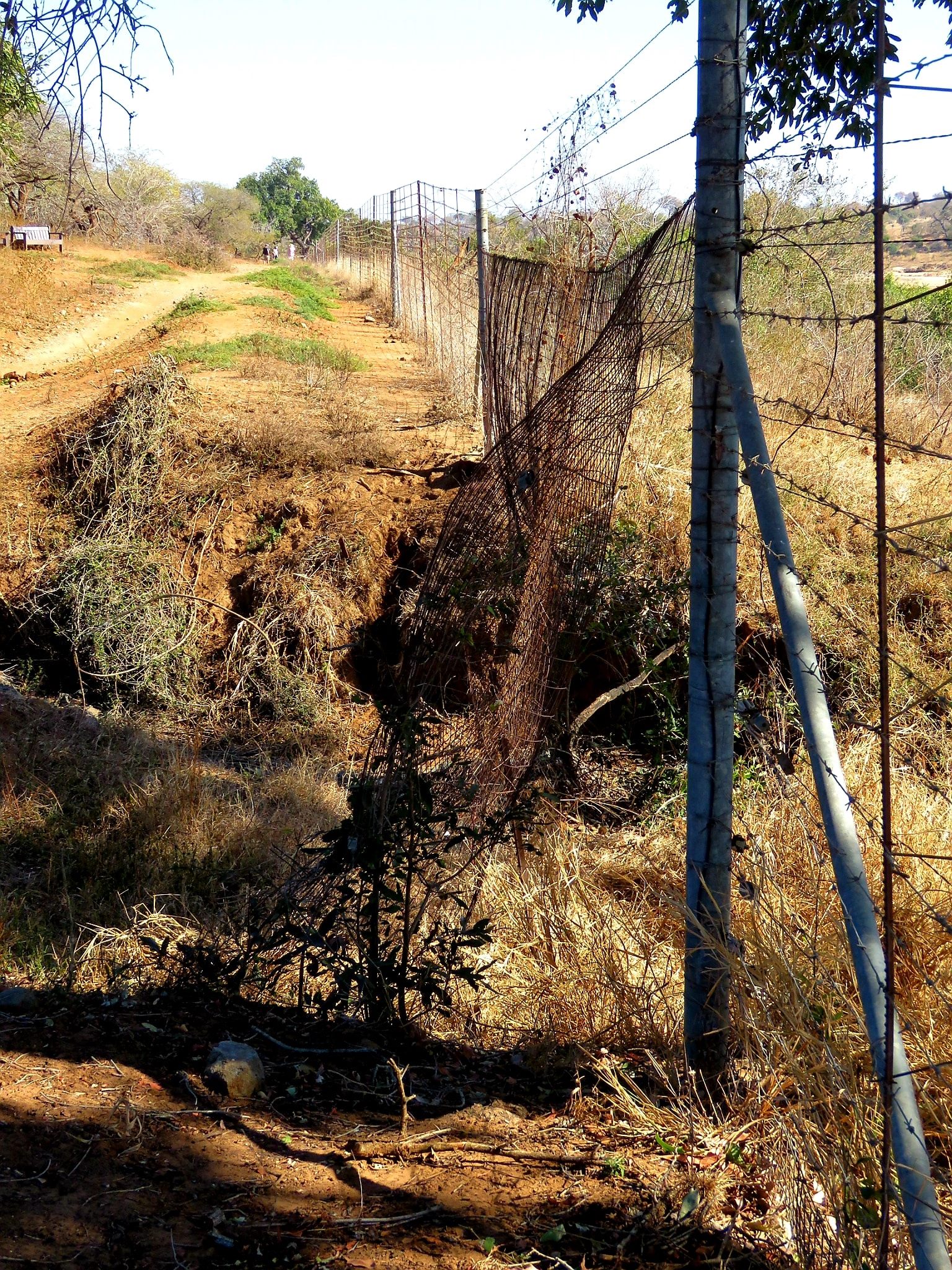
One year ago, my friend Kathy took this photo of where an elephant had knocked down the fence between Kruger and Marloth Park and managed to get into the park. The elephant returned to Kruger National Park a short time later. For more photos, please click here.

“Oh, What A Night!”

We thought of the above song released in 1975 by the Four Seasons this morning after discussing our fun evening last night at Jabula with Louise and Danie, her parents Estelle and Johan, and readers/new friends Marilyn and Gary. We sat at the same table on the veranda where we usually sat with friends Kathy and Don, Linda and Ken and Rita and Gerhard, and others from time to time.

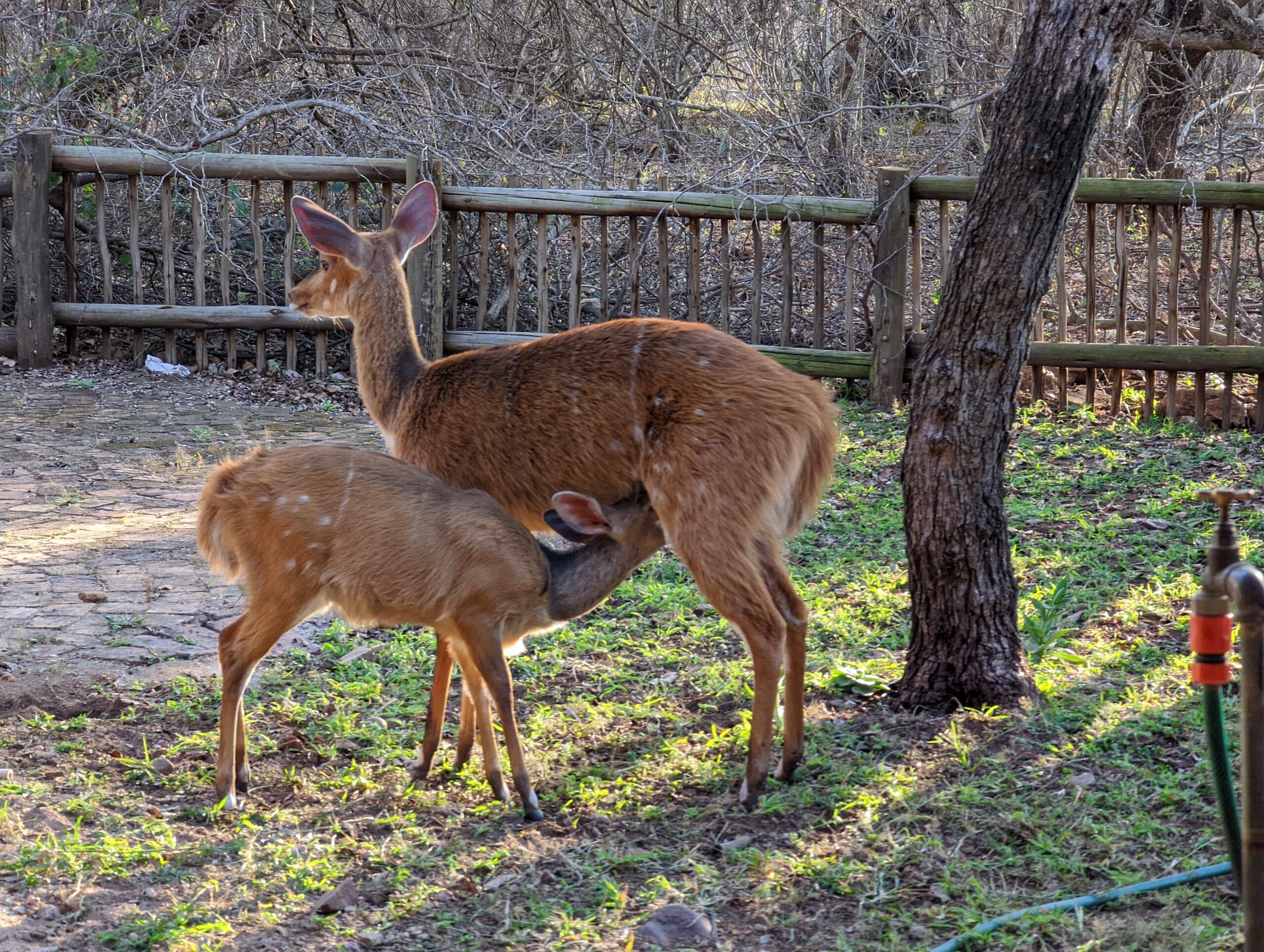
Mom bushbuck Tulip is feeding her young female, Lilac. They often visit several times a day.

Speaking of Rita and Gerhard, we just heard from them, and they will arrive in Marloth Park tonight. We look forward to seeing them as soon as they are settled into the house on Hornbill, where they usually stay. They are stopping to shop in Nelspruit after the long drive from Johannesburg, with another hour’s drive to Marloth Park. We are looking forward to seeing them soon.

Last night, the food was delicious, and the conversation was as lively as ever. There were times we were all talking at once and enjoying every moment. I know I kept interrupting Tom (sorry, Honey) to add to the stories he was telling, but he never seemed to mind. We often do this with one another, which makes us laugh.

Big Daddies are wondering what’s on the menu. Pellets, perhaps?

It’s funny, but Marilyn and Gary know us so well from reading our posts since 2012. There’s hardly a story we can tell that they haven’t read about. We love that aspect of our readers coming here to Marloth Park or anywhere else in the world we may be at any given time. It’s like we’ve been friends forever. Now, all we have to do is spend more time getting to know them, which hopefully we’ll be able to do over the next month they’ll be here.

Today, we’re staying in on yet another perfect-weather day. Tom just took off for Komatipoort to Spar to pick up a case of my low-alcohol (5.5%) wine we ordered. It is the best-tasting low-alcohol wine I’ve had. It’s lower in alcohol than my usual Skinny Red, but I prefer it that way. It’s probably more psychological than anything – I get the taste of wine without the resulting woozy feeling and never a hangover if I drink one or two glasses too many.

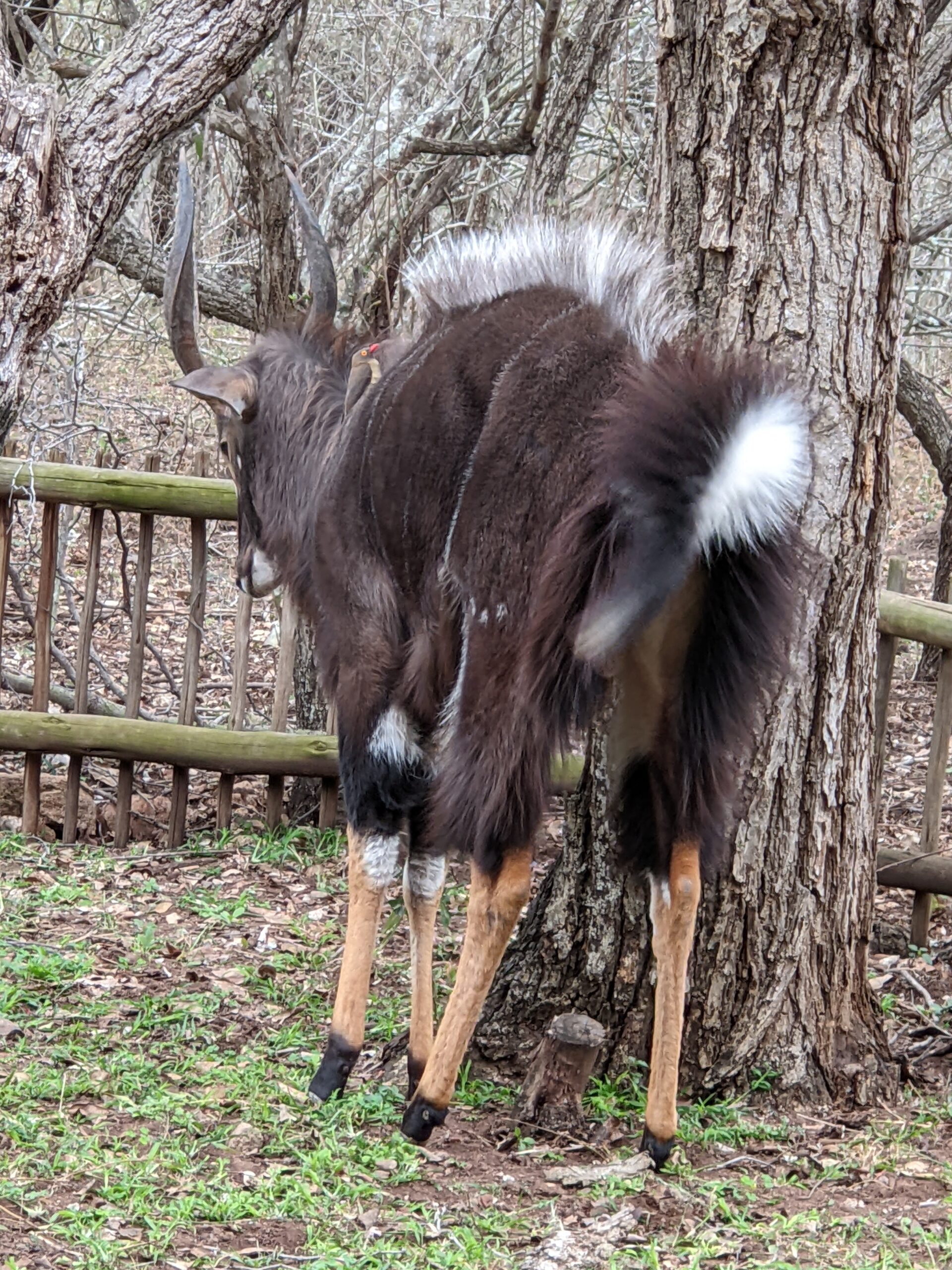
Norman fluffed up with Big Daddy nearby while an oxpecker works on his ticks and fleas.

We could have waited to pick up the wine next when we shop, but Tom so thoughtfully offered to drive alone to Komati to pick it up so I’d have it for upcoming social events over the next week. I’ve been busy this morning, setting up bills to pay using online banking, tracking spending, and chopping and dicing tons of vegetables for tonight’s planned dinner.

I am making a chicken stir fry tonight now that I’ve found all the spices and seasonings to make this dish. On the side, we’ll have a big salad and Tom will have white rice. If I even get a bit more ambitious, I’ll make a low-carb dessert to go along with it based on the ingredients we have on hand.

It’s fun to see him fluff up like this.

Few animals were visiting us this morning when again, the bush is busy with holidaymakers. Early, we spoke on WhatsApp to dear friends Kathy and Don in Hawaii. There’s a 12-hour time difference, so the only good time for us to call them is early morning. It was wonderful to hear their voices.

While we were chatting, Nyala dad, Norman, showed up. We tried to get the video to work on WhatsApp, but the signal was weak, and we couldn’t show them Norman. After living in the bush for many years, they are missing it here and hopefully will return one day soon. We are so looking forward to that time.

Tom just returned from the store with the wine. I thought a case would be 12 bottles, but I guess, here in South Africa, a case is six bottles. Oh, well, hopefully, we’ll be able to get more next time we shop.

We’ll be working on getting more photos when the holidaymakers leave on Monday. In the interim, we’re sharing what we’ve taken over the past week.

Have a lovely weekend!

Photo from one year ago today, July 30, 2021:

Little and his newly adopted family stopped by for another visit. Pellets are on the menu!!! For more photos, please click here.

Weird coincidence!…Back from the dentist once again…

Marigold is so sweet.

What a weird coincidence it was this morning when I started to do the post, to be completed when we return from the dentist, Dr. Singh, in Malalane. I went to the year-ago bar to grab the photo to place at the bottom of today’s post. The heading read,

“Busy morning in the bush!… Trip to Malalane to the dentist and more…”

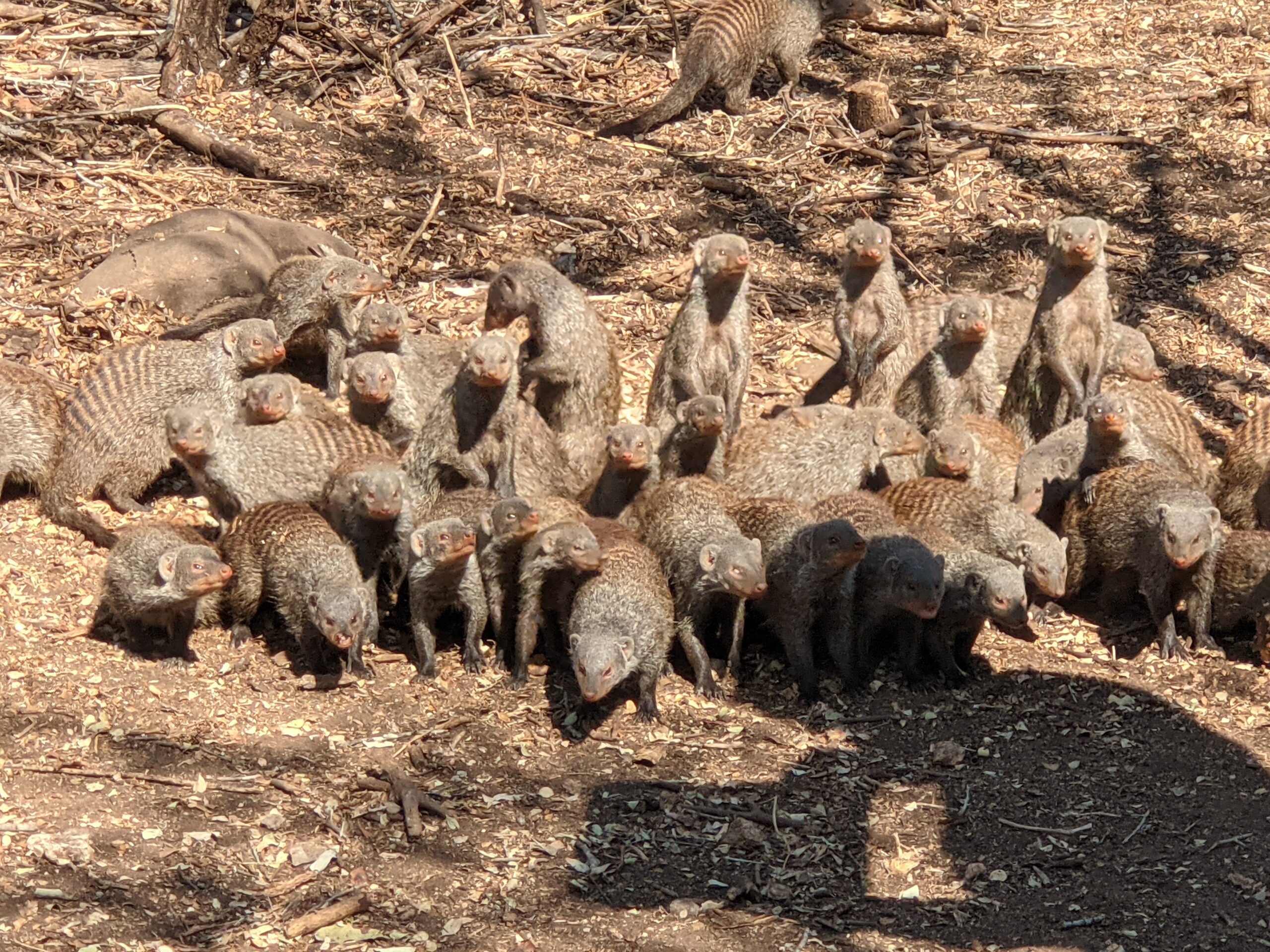
That’s what’s happening today, exactly one year later, as shown here. But another irony is that the first thing I saw this morning when coming out of the bedroom after getting ready for the day was as many, if not more, mongooses waiting for us in the garden (at the old house) as shown in that post.

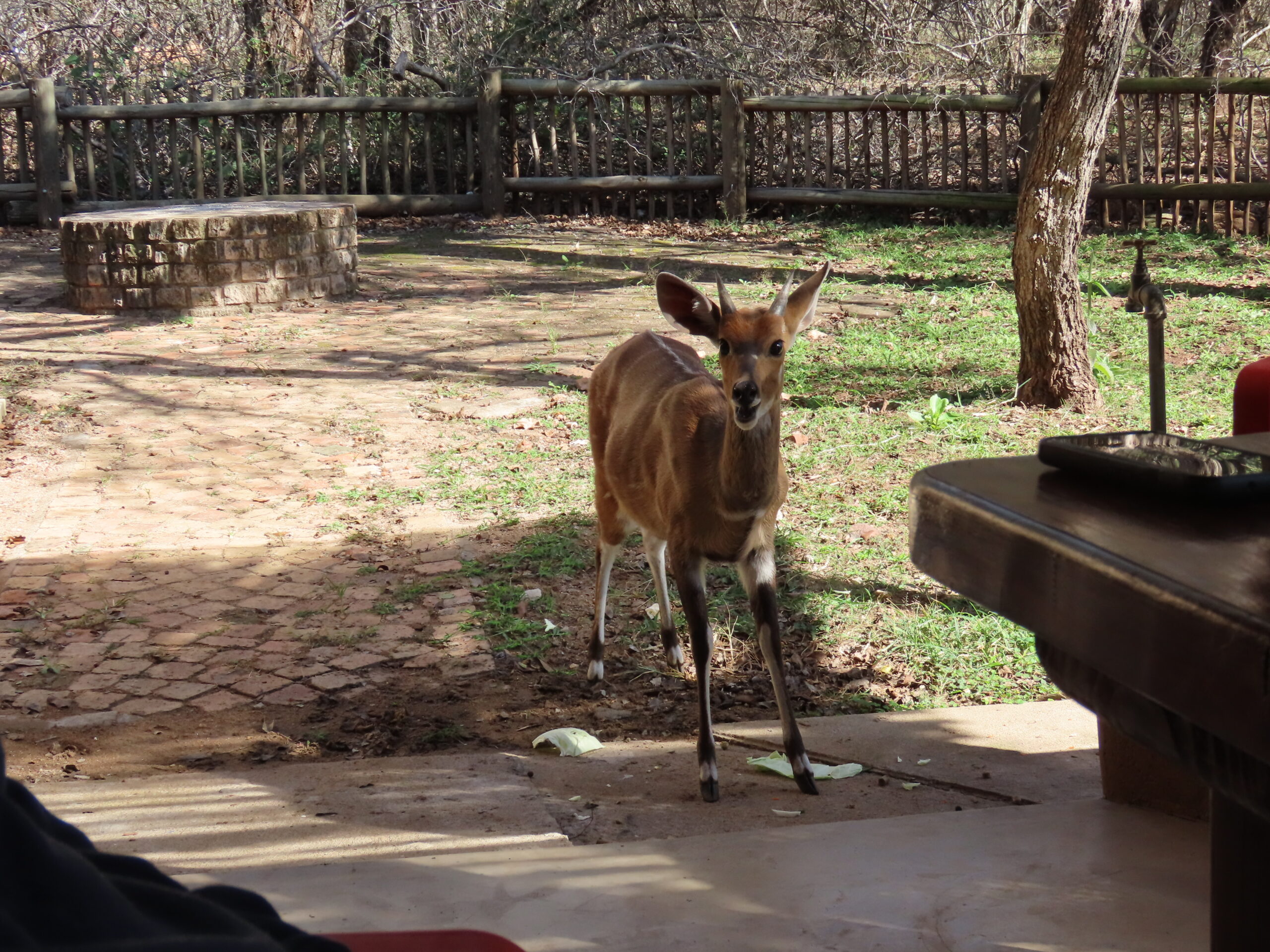
This is Spikey, a young male bushbuck.

The only difference was that at that time, we gave them eggs. Now, we provide them with paloney, cut into little pieces, which ensures every one of them gets something. There were always a few mongooses with the eggs that didn’t get a taste. The paloney I’d cut into pieces, the size of their little heads was enough to ensure each one gets at least one bite. No one is left out.

We find our lives are filled with weird coincidences, most often revolving around events, dates, and places. How peculiar it is! Does it have something to do with the fact that our lives consist of various experiences that we’re bound to encounter similar situations? Who knows? I guess we’ll never figure it out.

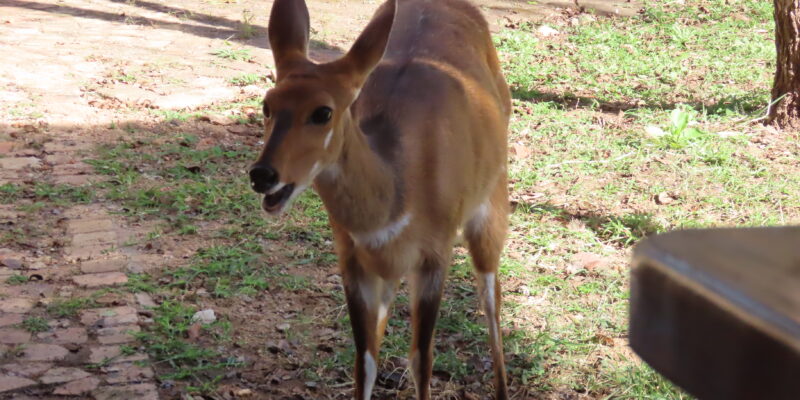
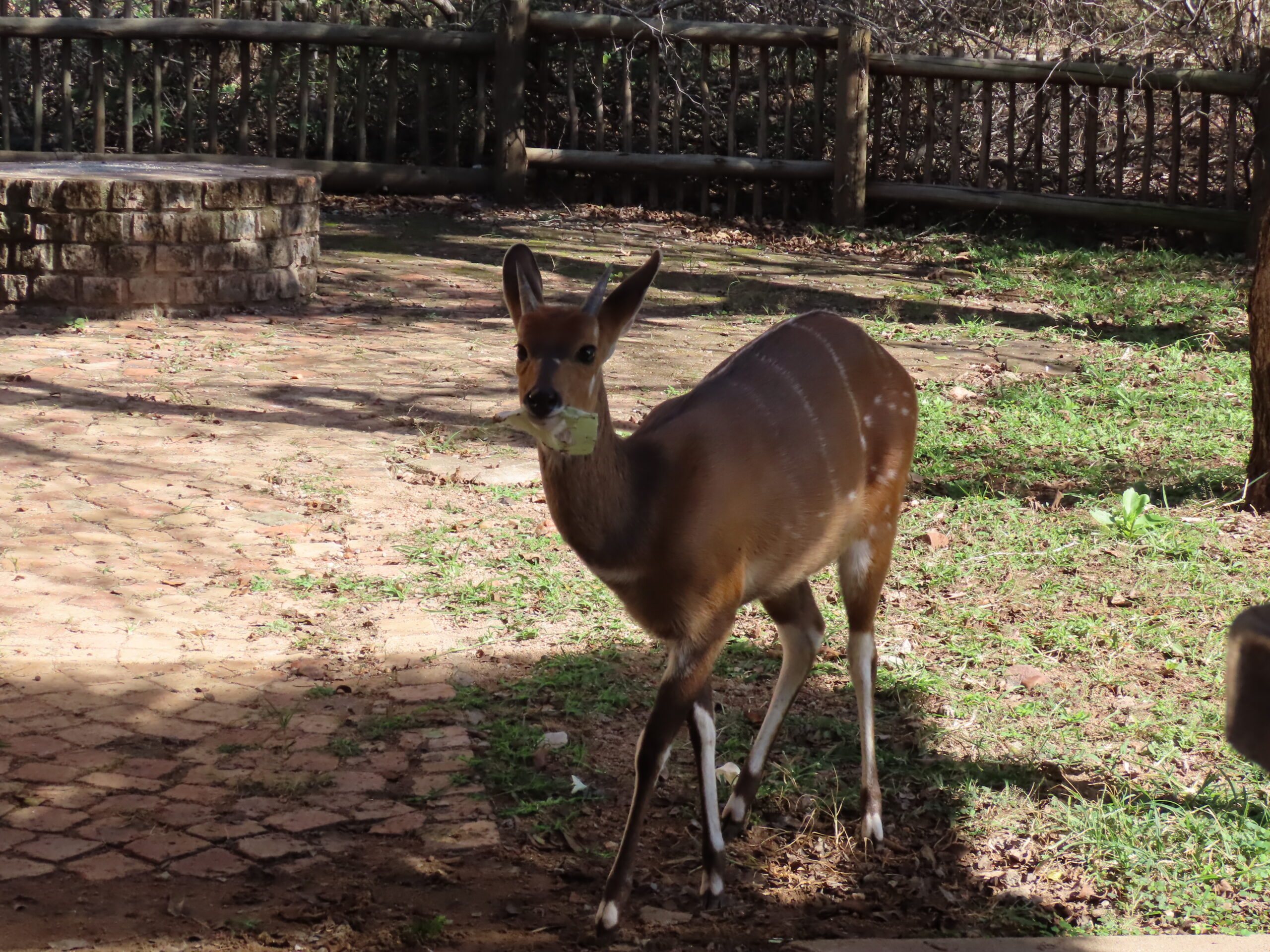
Each day when I make our dinner salad, I give the vegetable scraps to the bushbucks, duikers and kudus. Zoom in to see how cute Spikey is when eating his lettuce leaf.

History is filled with amazing coincidences outlined on this website, such as:

  1. Mark Twain’s birth and death coincide with Halley’s Comet.
  2. Stephen Hawking shares his birth and death dates with Galileo and Einstein, respectively.
  3. Political adversaries Thomas Jefferson and John Adams died within hours of each other—on July 4th.
  4. Anthony Hopkins happened upon a signed copy of the book he was searching for in a train station.
  5. John Wilkes Booth’s brother saved Abraham Lincoln’s son from death.
  6. And that same son of Lincoln’s witnessed three presidential assassinations.
  7. An engaged couple discovered their parents almost married one another.
  8. One woman survived the TitanicBritannic, and Olympic shipwrecks.
  9. The first and last battles of the Civil War were fought next to the same man’s property—in different towns.
  10. The first and last soldiers killed in WWI are buried next to each other.

For details on the above coincidences, and more, please click here. The stories surrounding the above are pretty interesting.

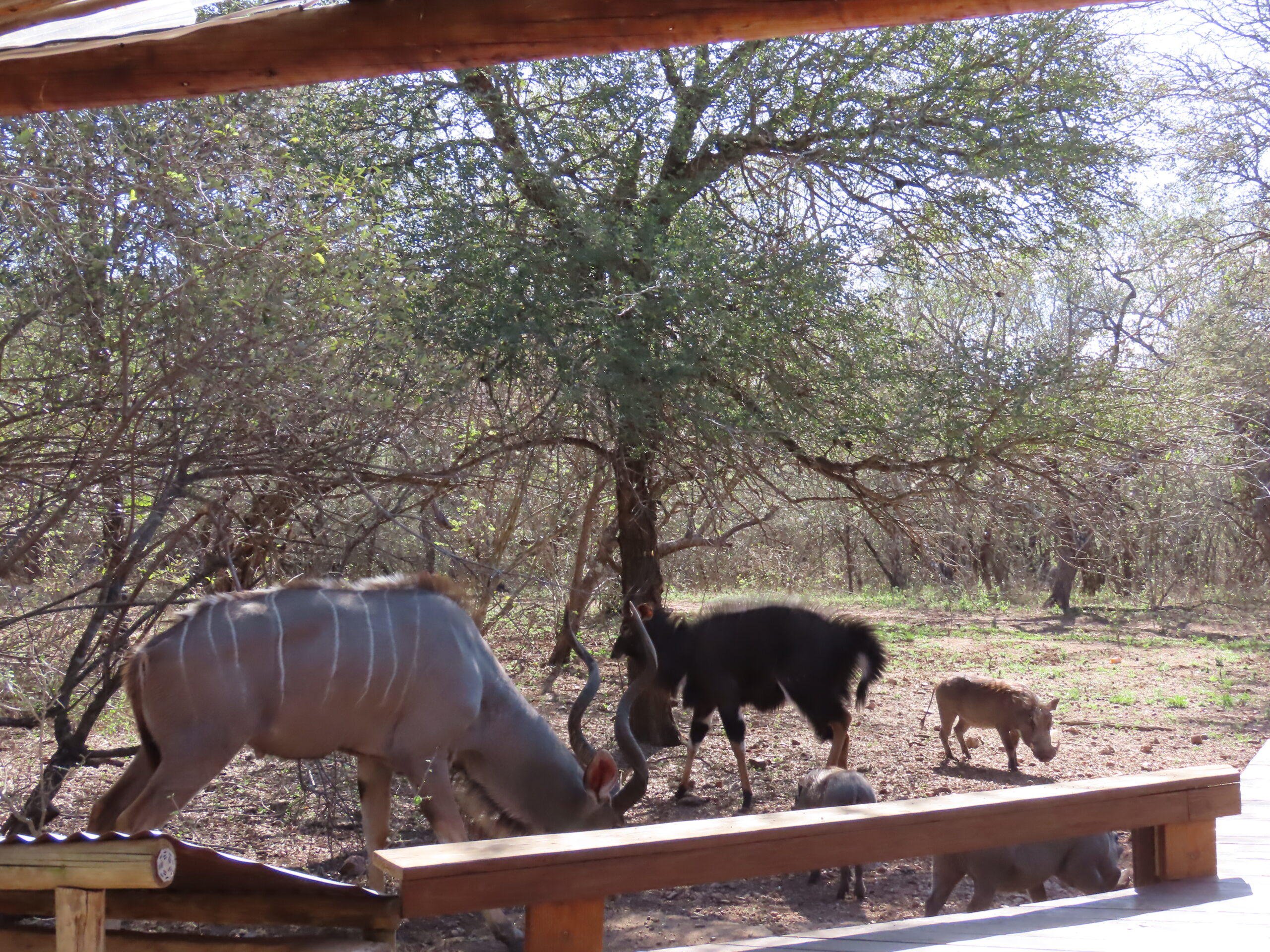
Nyala Norman, fluffs up his fur when he’s in the presence of a more dominant male antelope such a Big Daddy. He pays no attention to the warthogs.

Today we drove to Dr. Singh’s office in Malalane (also spelled Malelane). Wouldn’t you know that an accident on the N4 backed up traffic for 25 minutes from Marloth Park to Malalane? Thank goodness, Tom suggested we leave at 9:00 am for our 10:00 am appointment. We walked in the door to Dr. Singh’s office exactly at 10:00 am. (Even that was somewhat of a coincidence).

Tom had his two implants seated, which looked like his normal teeth. He’s relieved to have the big gap where two teeth were pulled many months ago, finally no longer visible when he smiles, laughs or talks. He doesn’t feel any pain or discomfort.

Alas, I have to have the same thing done. My painful tooth, easily visible when I open my mouth since it’s the fourth tooth from my front tooth, has to be pulled. Dr. Singh explained it had already had a root canal (many years ago in the US), and repeating root canals have a poor success rate. I now have an abscess which is why it’s hurting so much, which I’d expected.

Known to be very shy, impalas are coming closer and closer to the other animals eating pellets.

The only alternative is to pull the tooth and have an implant after the bone heals. I cringed when I heard this. The last time I had a tooth pulled was last September, resulting in an excruciating dry socket. Dr. Singh had gone on holiday, and I suffered dearly for three weeks when I finally visited another dentist to work on the dry socket.

Statistics show that certain people are prone to dry sockets. That’s me. Oh, I don’t want to go through that again! I started antibiotics today but couldn’t make the appointment for the extraction until after returning from Zambia/Botswana on August 27th. It was too risky to do it before we left if I had complications like I’d had last time. We don’t want to be away while I am in pain.

By taking antibiotics now, a must, the pain may return by the time we leave South Africa on August 20. If that’s the case, I’ll have to go on another round of antibiotics that only help an abscess for a short time. I would have refused antibiotics if I could have the tooth pulled in the next week, but it will take three days to make the temporary bridge to see me through the three months necessary to wait for the final implant.

I assure you, during those three days while waiting for the temporary to be made, I won’t be going out and about for anything. I have no desire to look like a “toothless wonder” while waiting for the temporary tooth. Tom said, “You could wear a face mask if a social thing comes up!” Hahaha. I won’t be going anywhere that week!

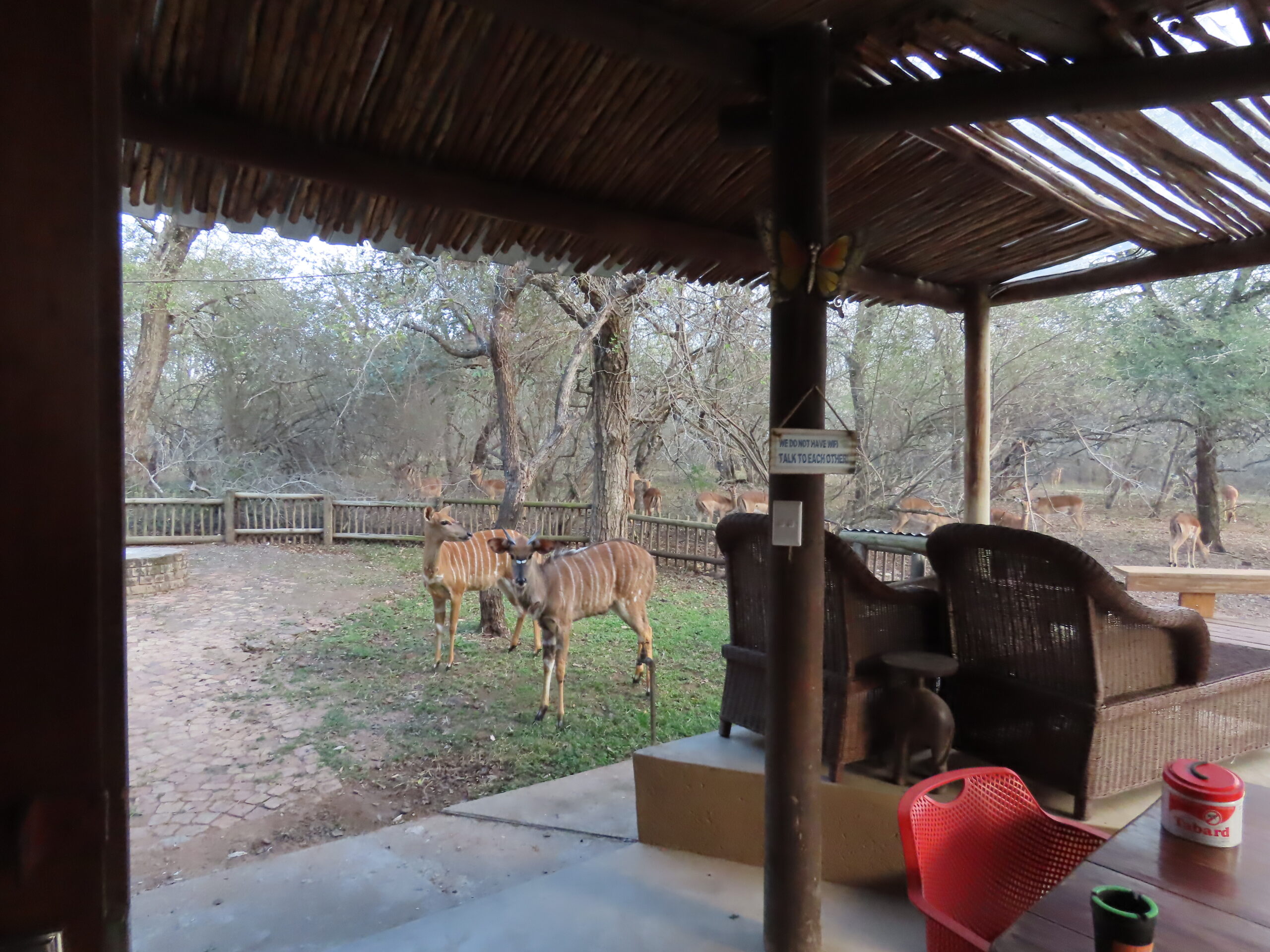
Nina and Noah in the garden after jumping the fence.

This morning while we were gone, Louise and Danie dropped off a better-working refrigerator for the kitchen, and we’re thrilled! Louise unloaded and reloaded all of our food, and the new refrigerator section is roomier and easier to use. I couldn’t be more delighted and thanked them profusely. Soon, the washer part will come in, and the repair guy will install that. Then, all of our appliances will be working.

Tonight, we’re meeting Louise, Danie, and her parents, Estelle and Johan, for dinner at Jabula. David reserved a spot for us at the bar and our favorite table for six on the veranda. It’s a gorgeous day and shouldn’t be too cold outdoors for dining. We’ll undoubtedly have another fantastic evening at our favorite spot in Marloth Park.

Be well.

Photo from one year ago today, July 29, 2021:

When we returned from Malalane one year ago, these mongooses and more awaited us in the garden. Quickly, Tom began beating some eggs for them. For more photos, please click here.

Stunning visitors to the garden…Rioting in the streets in Komatipoort…

A mom and a young giraffe stayed close to one another.

This morning, while lingering in bed, knowing there was no rush to get up, I played Scrabble on my phone. I am trying to break my previous winning streak but have some tough competition. I can tell some players use letter-unscrambling apps, but I wing it alone. What’s the point of playing if I don’t exercise my brain?

Reaching for the treetops.

About 7:30, Tom came into the bedroom to tell me to hurry and come outside. There were four giraffes in the garden, close enough for some photos. I had yet to insert my contacts and couldn’t focus the camera very well, so I rushed back inside to take care of it.

We were thrilled we had some tasty trees in the garden.

In less than a minute, I was back outside and ready to take some photos to share here today. We were both thrilled to finally see these massive animals in the garden during the day. We’d see them on the road but not in the garden, except a few times when they appeared on the trail cam at night, too far for good images.

Giraffes don’t eat pellets, but wildebeests do!

The four massive beasts stayed for about 30 minutes, and finally, I could go back inside to shower and dress for the day. Once in the kitchen, I made my coffee, warmed up a homemade blueberry egg muffin, and ventured out to the veranda to enjoy the views of myriad wildlife visiting us on yet another gorgeous day.

We’d planned to go to Kruger today, but now, with riots in Komatipoort, only a few kilometers from where we turn off to go to the Crocodile Bridge entrance, we decided to stay put. A tweet came in this morning with a video of rioting on Rissik Street, where we were yesterday for Tom’s eye doctor appointment, which is the main road in town that takes us to the Spar Market.

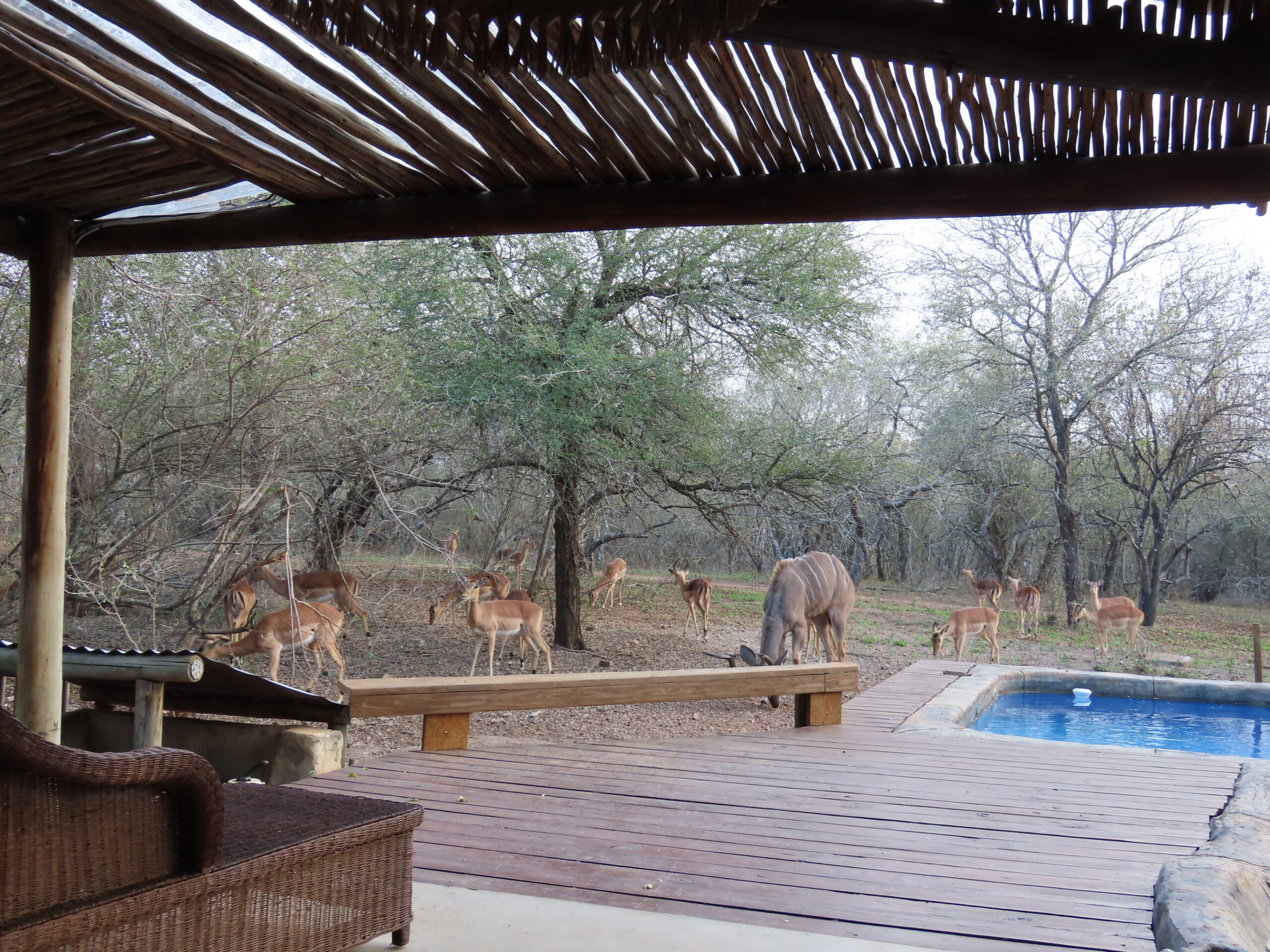
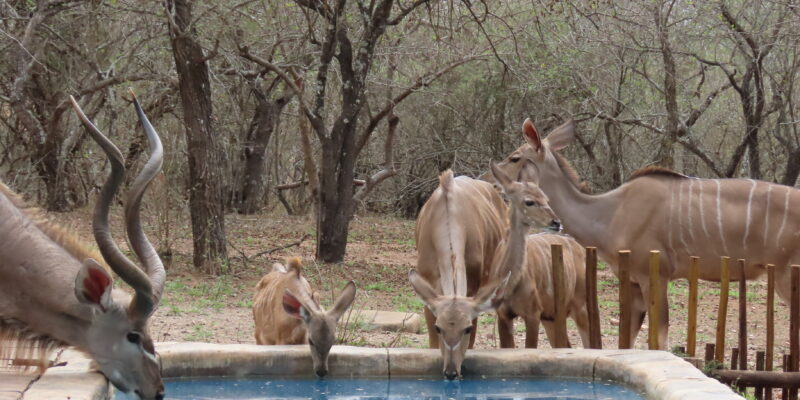
Are you perhaps contemplating a drink from the pool?

Not only was there vandalism and carjackings in the town of a population of under 5000, but rocks were being thrown at people and vehicles. No thanks. We will stay as far away as possible, which is right here where we are in Marloth Park. There’s been a lot of rioting in South Africa lately with no results from these activities regarding changes people want to be made.

In this case, supposedly, the residents were rioting over the lack of a high school, the clinic’s hours, and other reasons, none of which will change from this demonstration. Businesses and governments do not respond to rioting, which is prevalent in this country and others, including our own USA.

They wandered about the garden for about 30 minutes and were on their way.

But, for our safety, we’ve chosen to stay in Marloth Park today. We won’t be able to go to the Kruger tomorrow since Tom has a 10:00 am appointment to have his two teeth implants placed on the foundations by Dr. Singh. In the interim, I’ve had a toothache for the past several days and have been trying to reach the dental office for the past three hours to no avail.

Now that we have a local phone number, it is a little more convenient to leave a message than in the past, when most people don’t return a call to a long-distance number like ours on our Google phones. As mentioned in an earlier post, we figured out a solution for Google Fi’s issue with us regularly using data outside the US.

Delicious!

We purchased a local Vodacom SIM card for my old phone with voice and data to use as needed. Sure, I must carry two phones when heading out, but it was the only practical solution for now. Google phones don’t have an extra slot for another SIM card other than the one installed for Google Fi purposes. Thus, the necessity for another phone.

Overall, this phone solution was less expensive than any other we investigated. Although it’s slightly inconvenient having two phones, there are times it comes in handy when I’m using my old phone to stream music in the early evenings while still able to use the newer phone.

Where to next?

As for Tom’s eye doctor appointment yesterday (where the riots are today), he was relieved to know the strings he saw from his eye were “floaters.” I also have the same problem with one of my eyes. In a study, it was reported that 76% of seniors have floaters. So I guess neither of us has to be concerned about this common condition.

That’s it for today, folks. Be well and enjoy your day and evening.

Photo from one year ago today, July 28, 2021:

Tiny seemed happy to see us, although he hesitated for a moment to ensure it was us. He is timid, unlike Little. We are thrilled to see him once again! For more photos, please click here.

Part 6…Extraordinary Kruger National Park experience…Safari luck prevails…Balance of Kruger photos…

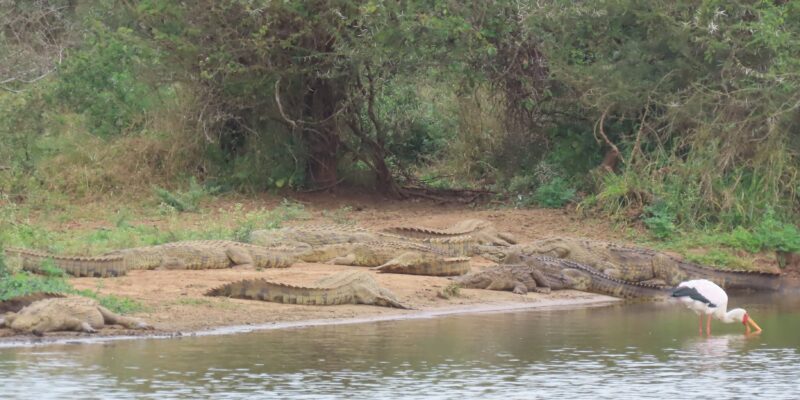
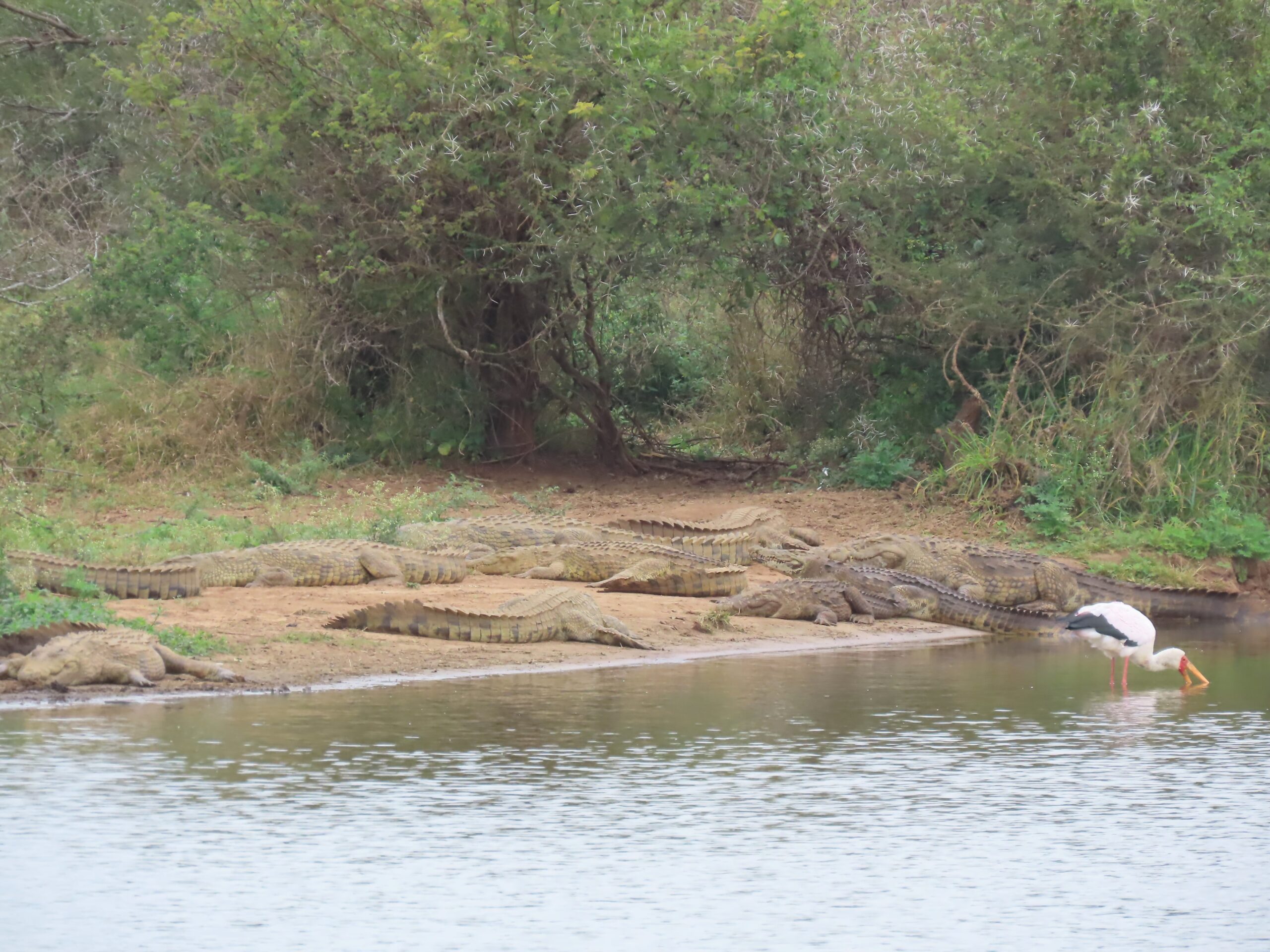
Zoom in to see how many crocs were lying on the shore of Sunset Dam. with a yellow-billed stork.

Last night, Louise stopped by with a buffalo meat pie for Tom. I couldn’t eat it due to the crust, but I did sample the meat, which was delicious. Tom loved it and will eat the rest tonight for dinner. Generally, we don’t eat “bush meat.” For us, the idea of eating any of the gorgeous animals we enjoy in the bush is unappetizing.

But then again, I love cows, pigs and chickens, which we eat. If eating a low-carb diet wasn’t necessary for my health, I could probably be a vegetarian. Many years ago, I was so for 11 years. But now, with blood sugar and inflammation being an issue, I must avoid grains, sugars, and starches, all typically consumed on a vegan or vegetarian diet.

According to friend Lynne, this is a Fork-tailed Drongo.

Sure, I looked at the pie last night and thought of how nice it would have been to cut myself a big slice, but instead, I had salmon salad, cooked cauliflower and green beans, and a green salad which proved to be very satisfying and filling. I’ll do the same tonight while Tom finishes the buffalo pie.

Soon, we will be heading to Komatipoort for an eye exam with the optometrist next door to Dr. Theo and the dentist. Tom has noticed some black spots in his vision in his right eye. For peace of mind, he’ll have the doctor check it out. Most likely, it is floaters, the same thing I noticed about a year ago. I confirmed it by a visit to the same optometrist and exact diagnosis. Nothing can be done for floaters, a typical, relatively harmless condition afflicting many seniors as they age. We’re hoping Tom’s condition will be the same.

Indigenous blooming aloe plants are typically seen this time of year.

After that appointment at 12:30, Tom will drop me at the pharmacy for some toiletries. I shop at the pharmacy for some items I would typically have purchased at a Target store in the US. There is no such store like Target anywhere in South Africa, although there are a few Big Box stores in the bigger cities. But there is nothing like it within an hour’s drive.

After the pharmacy, I’ll walk the short distance to the Spar Market while Tom refuels. Petrol prices are high here as well, as are groceries, which have increased about 30% in the past year, particularly meat products.

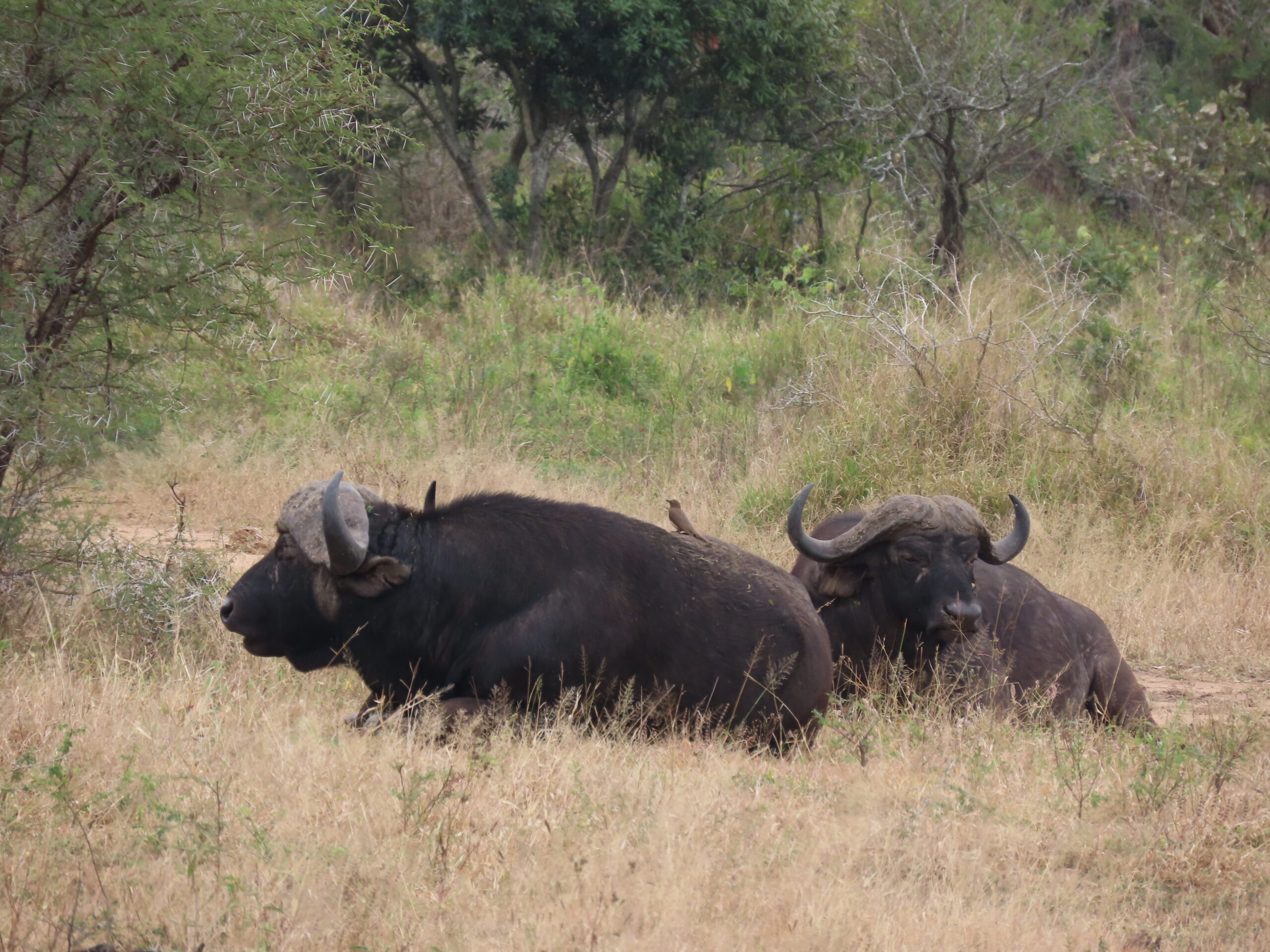
Two Cape buffalos were sunning in the bush with a cattle egret standing watch.

Still, compared to our recent experiences in the US, groceries are about 40% less here. Rent is about 40% less than in the US, and car rentals run around US $500, ZAR 8421, a month plus petrol. As a result, our cost of living is considerably lower here in South Africa than in many other countries.

Two more Cape buffalos, not quite as cuddly.

If tomorrow is a nice day, we’ll most likely return to Kruger. By no means are we expecting our next visit to be as good as the last, but it’s an excellent way to spend a day and to get us out of the house. That’s not to say we feel like we need to get out. We don’t. We could easily spend most days situated on the veranda enjoying the bush. To be able to sit here on a perfect weather day.

Another wild blooming plant in Kruger.

It will be sweltering before too long. We’ll still sit on the veranda each day and evening, but it won’t be as wonderful as it is now with this gorgeous winter weather.

I must head to the kitchen to prep the salad and vegetables for tonight’s dinner. It’s a great day. We are as content as we could be.

We hope you are content on this day as well.

Photo from one year ago today, July 27, 2021:

Little is back after we returned from the US a year ago!!! We were excited to see him again! No Tiny yet, but maybe soon. For more photos, please click here.

Part 5…Extraordinary Kruger National Park experience…Safari luck prevails…Fascinating birds…

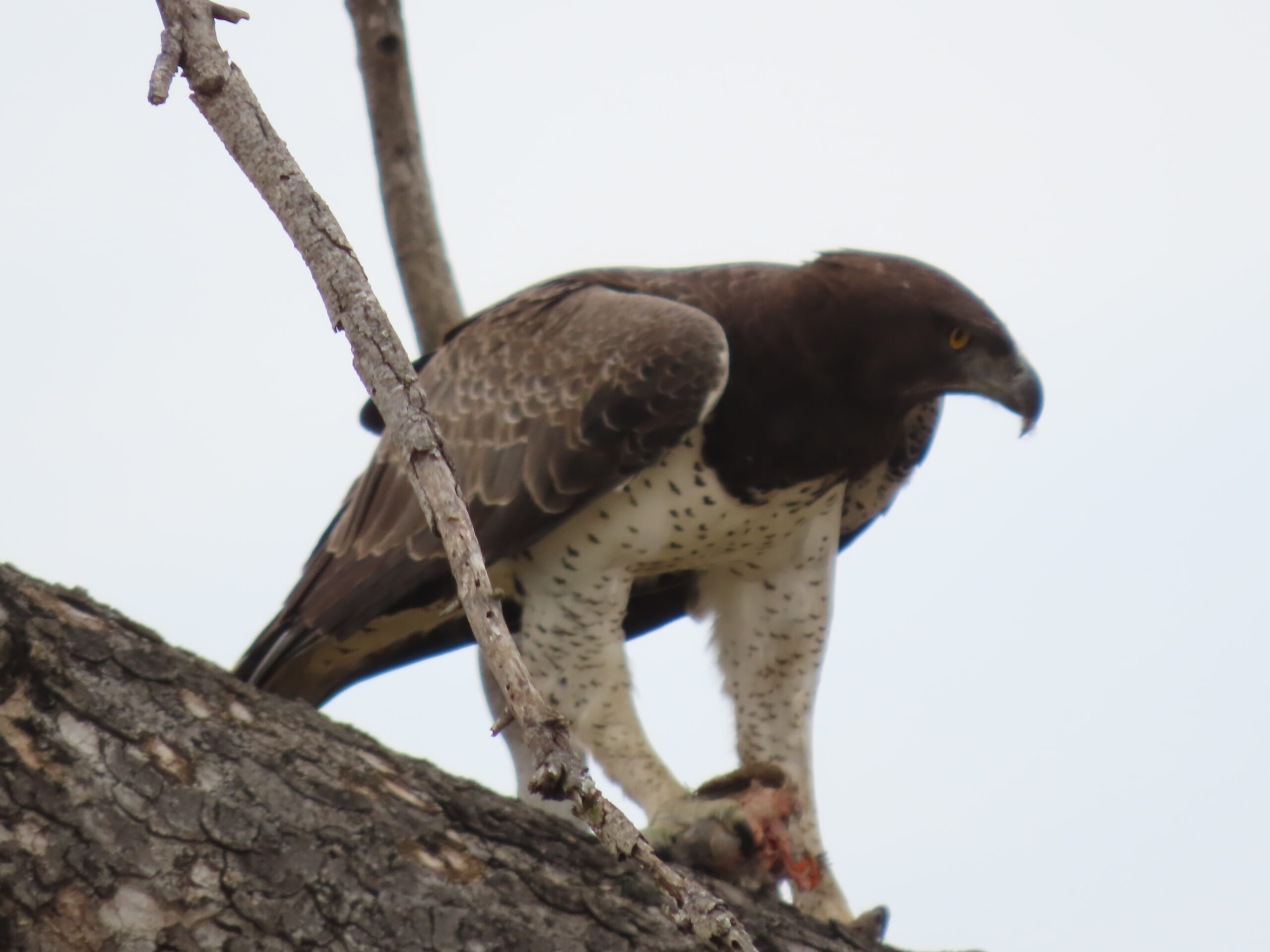
This is a Martial Eagle with his catch of the day. Zoom in for details. See more about this bird below…

We were excited to have spotted so many interesting birds while in Kruger last Thursday. It’s tricky for us to identify them using the bird book we have on hand. I don’t like to pester our bird watching friends when I can find a particular bird in the book or online.

But, when I do find one on my own, I am thrilled. It was easy to find the bird in today’s main photo and to share the details of this species here from this excellent site:

“Martial  Eagle

Latin Name

Polemaetus bellicosus.

Appearance

Martial Eagles are the largest of the African eagles and incredibly powerful, capable of knocking an adult man off his feet. They reputedly have enough power in one foot to break a man’s arm. The largest eagle in Africa, the Martial eagle weighs in at almost 14 pounds (6.5 Kg.) and has a wingspan of about 6 feet 4 inches. It is 32 inches long. The upperparts are dark brown with a white belly with black streaks, the legs are white and has very large talons. The immature bird looks quite different from the adult.

Diet

In some areas birds form an important part of the diet, including guineafowl, francolins, bustards, and poultry. Birds as large as a European Stork are recorded to have fallen prey to the Martial Eagle. In other areas the diet is largely mammalian, especially hyrax and small antelopes.

Animals as large as an Impala calf are taken, and some monkeys, also occasionally young domestic goats, and lambs. Carnivores like mongoose are sometimes taken, even occasionally Serval Cat and Jackal; also a few snakes and large lizards. It will evidently eat whatever is available, with a preference for game-birds, hyrax, and poultry. It is not known to eat carrion at all except possibly dead lambs.

Breeding

Martial Eagle nests are built invariably in trees, at any height from 20 to 80 feet above ground, but often in the largest tree in the area, growing on a steep hillside or in a gorge, where the bird has a clear sweep off the nest. Pairs have one or two nests, which are used in alternate years if more than one, but for successive breeding attempts if only one.

They are huge structures about four to six feet across and up to four feet thick, and often basin-shaped when new – much broader than they are deep. They are made of large sticks up to one-and-a-half inches in diameter, lined with green leaves. They may be used by a succession of birds for many years.

The Martial Eagle breeding season may thus begin in various parts of the range in a wet season, the early dry season, or late in the dry season, and some part of the cycle must extend through rainy periods. Incubation is normally done by the female, but a male has been known to sit. The female leaves the nest to feed and is not usually fed by the male at the nest. The incubation period is probably about 45 days. The young is very weak and feeble when first hatched, but becomes more active after about twenty days.

At 32 days feathers show through the down, and completely cover the bird at 70 days. The young Martial Eagle is fed by its parent till it is about 60 days old, and well feathered, when it starts to tear up its prey itself. During the early fledging period the female remains near or on the nest, and the male hunts and brings prey.

The female Martial Eagle remains in the area and receives prey from the male for about 50 days. After that she hunts or brings prey to the nest herself and the male seldom appears. The young one is closely brooded in its first few days, but after fourteen days the female does not brood it except at night.

The young bird, after making its first flight (at about 100 days), may return to roost in the nest for some days, and thereafter moves away from it. It remains loosely attached to the nest site for some time, and may be seen not far from it for up to six months.

Behaviour

The Martial Eagle is the largest eagle in Africa – this is a bird of the uninhabited stretches of thornbush and savannah found over much of Africa, occurring also in open plains and semi-desert country. Martial Eagles spend on average 85% of their time perched and take to the wing predominantly in the late morning (10am). This behaviour drops off sharply from around 3pm and is largely driven by thermal availability. Martial Eagles are thus also predominantly opportunistic perch and ambush hunters.

Martial Eagles will soar for hours on updraughts without hunting, and with a full crop, but it does most of its hunting from the soar also, killing or attacking by a long slanting stoop at great speed, or a gentle descent into an opening in the bush, the speed of the descent being controlled by the angle at which the wings are held above the back. It may kill from a perch, but does so seldom, and most of its kills are surprised in the open by the speed of the eagle’s attack from a distance.

A pair of Martial Eagles may have a home range of anything up to 50 square miles, and they wander about over most of it. They often hunt for several days in one area and then move on to another, since complaints of kills are often voiced for several days in succession in the same area. It is much shier than the other big eagles of Africa, and generally keeps away from man.

Although not migratory in the strict sense it makes local movements involving flights of several hundred miles, and a pair may not habitually be found near their breeding locality. It is by habit a hunter of game-birds and small mammals out in the open, but also preys upon man’s domestic animals, though it certainly kills much less than it is often accused of killing. Probably on balance it is a beneficial bird to man.

Where To Find Martial Eagles?

The Martial Eagle is found in the savannah and thornbush areas of Africa south of the Sahara, from Senegal to Somalia and south to the Cape. It is also found in open plains and semi-desert country, but not frequenting forest, although it occasionally breeds in forests on the edge of open country. The best place to see Martial Eagles in Kruger National Park is in the Lower Sabie area.”

This is a Fish Eagle. See details below.

Here is information on the African Fish Eagle also from this site:

“African Fish Eagle

Appearance

The African Fish Eagle is a fairly large eagle. It has a distinctive black, brown, and white plumage.

Diet

Although, as its name suggests, it feeds extensively on fish, in some areas it preys on flamingoes and other water birds. It is also known to eat carrion and is classified as a kleptoparasite (it steals prey from other birds). Goliath Herons are known to lose a percentage of their catch to Fish Eagles. Their main diet is fish, sometimes dead, but mostly caught live. Catfish and lungfish are caught most frequently. Larger prey are eaten on the ground next to the water.

Behaviour

The African Fish Eagle has two distinct calls. In flight or perched, the sound is something like the American Bald Eagle. When near the nest its call is more of a ‘quock’ sound – the female is a little shriller and less mellow than the male. So well known and clear is the call of this bird that it is often known as ‘the voice of Africa’. The African Fish Eagle is usually seen in pairs inside and outside the breeding season, even sharing kills made by either of them. They spend more time perched than flying, and usually settle for the day by 10am, having made their kill, although they will kill at any time of the day.

Habitat

It is most frequently seen sitting high in a tall tree from where it has a good view of the stretch of river, lakeshore or coastline, which is its territory. Near a lake with an abundant food supply, a pair may require less than a square mile of water to find enough food, whereas next to a small river, they may require a stretch of 15 miles or more. Some tend to move around to avoid the wettest weather, whereas others stay where they are all year round.

Where African Fish Eagle Are Found

The African Fish Eagle is widespread in Southern Africa. It is particularly common in and around some of the Rift Valley lakes.”

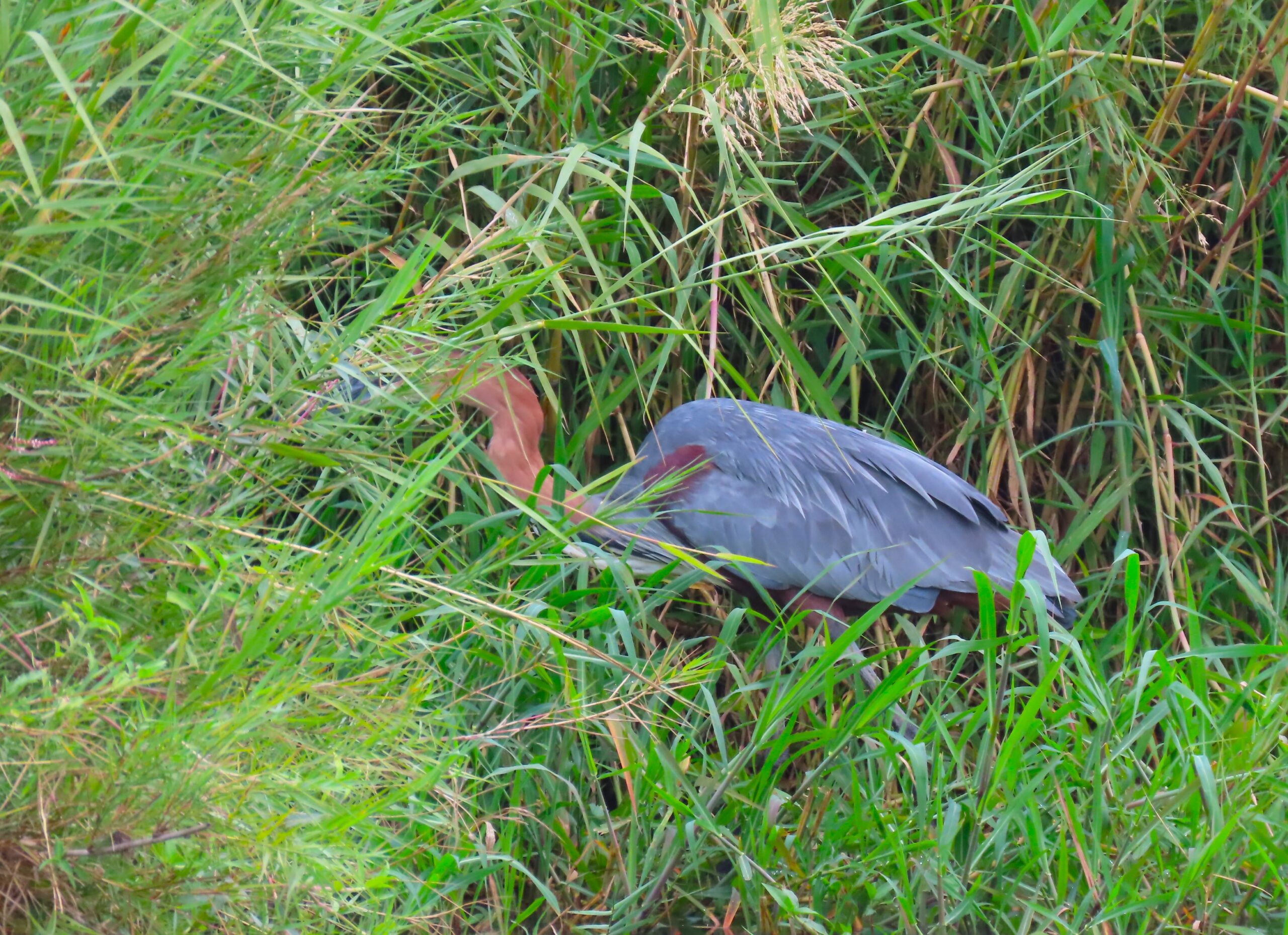
Then Tom captured this Goliath Heron as shown below, partially obscured in the tall grass but a fine sight to see as well.

Although not the most concise photo, it was fun to capture this Goliath Heron while on the bridge in Lower Sabie.

Here’s in formation on the Goliath Heron found on this site:

“Goliath Heron

The Goliath Heron (Latin name Ardea goliath) is described in Roberts Birds of Southern Africa, 7th Edition. This bird has a unique Roberts number of 64 and you will find a full description of this bird on page 590 also a picture of the Goliath Heron on page 592. The Goliath Heron belongs to the family of birds classified as Ardeidae.

The map of the Kruger you see on this page shows the areas (coloured orange) where this bird has been identified. The basic information was provided by the Avian Demographic Unit based at UCT and I created the maps from that information … the green dots show the locations of the various Kruger National Park Rest Camps

The Goliath Heron is neither Endemic or near Endemic to the Kruger National Park. It is however a common resident.

Main diet items for this bird

The Goliath Heron feeds on the ground and in or around water mainly: invertebrates, aquatic life forms

Breeding and nesting habits for this bird

The Goliath Heron is monogamous unless its mate dies. In the event of a partner dying Ardea goliath will seek out a new mate

The nesting habit of Goliath Heron is to create the nest in branches of a tree or shrub or on the ground. The bird lays eggs which are blue in colour and number between 2 to 5

Habitat and flocking behaviour for this bird

The preferred habitats for Goliath Heron are: wetlands and riverine areas

You can see Goliath Heron in flocks. The bird will often also be seen singly.”

In tomorrow’s post, we’ll share the balance of our photos from Kruger National Park. As you can see from our past posts, we had quite a good time in the park, spotting many amazing animals. We look forward to our next outing. We will make a point of avoiding posting repeated info for the wildlife to avoid redundancy.

We had a busy morning when the power went out but only at our house. Danie contacted an electrician who spent several hours making repairs, and now it is back on. What a relief. Now, we’re waiting for the appliance guy to come to fix the washer and main refrigerator. Although we are renting and aren’t responsible for such repairs, it’s excellent that Louise and Danie are so quick to respond when there are issues.

Yesterday afternoon, we had a delightful visit with reader/friends Marilyn and Gary, who were inspired to come to Marloth Park after reading our posts for years. They are experienced travelers, and we had an excellent get-together on our veranda. We’re looking forward to socializing with them again shortly while they spend almost two months in the park.

A special thanks to our friend Lynne, who lives part-time in Marloth Park and on Jersey Island. She and her husband Mick are the first couple we met on our first outing to Jabula in December 2013. They are the most enthusiastic and knowledgeable birders we know!

Be well.

Photo from one year ago today,  July 26, 2021:

There was no post one year ago due to a travel day.

Part 3…Extraordinary Kruger National Park experience…Safari luck prevails…Funny giraffe event…

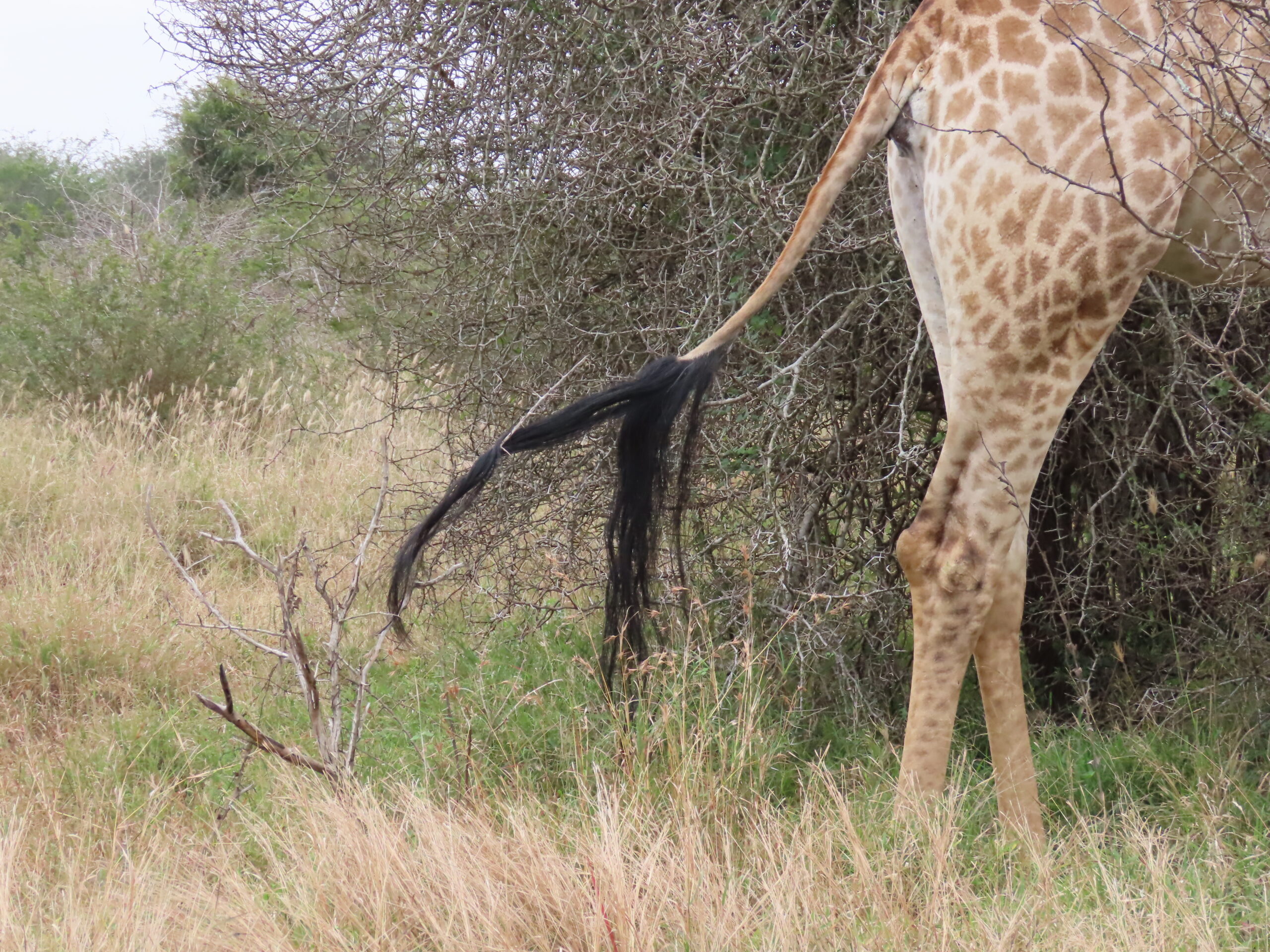
Please watch this video. It’s unlike any video we’ve taken in the past when this giraffe got its hairy tail stuck in a thorny bush. We didn’t know it was going to be able to get loose. But, with her massive size and strength, she could wrangle herself free and wander off.

It was one more of the enchanting sightings we experienced in Kruger National Park on our visit on Thursday this past week when finally, the holiday season had ended, and we felt comfortable entering the park. Previously, there were so many visitors in Kruger it was impossible to get photos at a popular sighting. The vehicles would have been congested at sightings with 20 to 30 vehicles. That wouldn’t have been our idea of a good time.

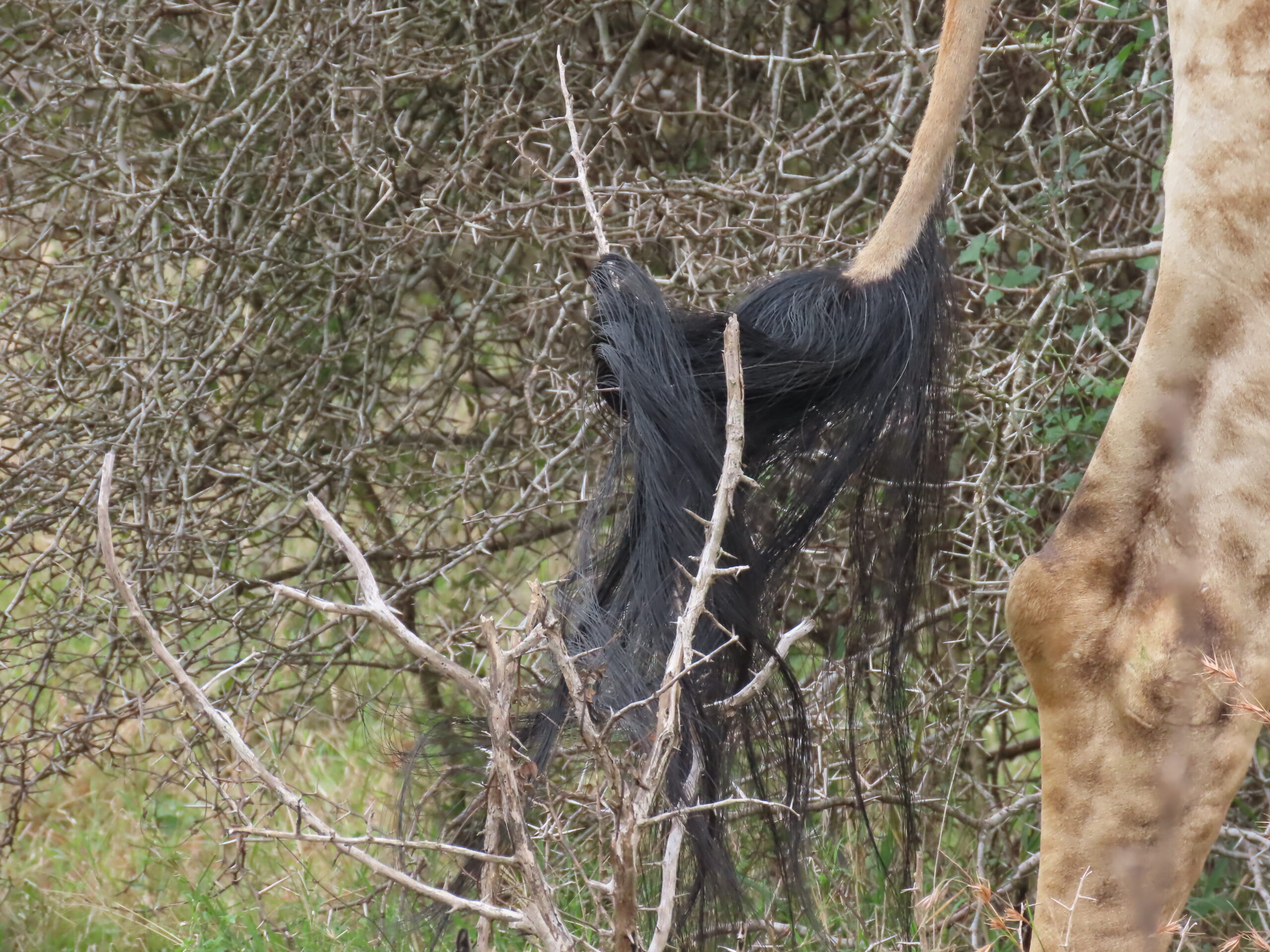
When we spotted this giraffe, we weren’t aware of her stuck tail.

But, when we conducted a self-drive after the holiday, we encountered few vehicles, even at the leopard sighting shown in the post two days ago, found here.

By no means is today’s post the end of our sightings on Thursday. It could go on for many more days while we accumulate new photos from sightings in our garden over the past few days. Right now, as I write here on Sunday at 1:00 pm, 1300 hrs., we have no less than six kudus lying down in the garden with another six standing. They’ve been here for hours.

The animals seem to love it here and feel comfortable hanging around for hours, letting their guard down long enough to sleep, rest and munch on leaves on the bushes and trees, along with our occasional offer of pellets. The longer we are here, the more wildlife seems to make this garden their part-time home in the case of warthog, Lollie, her permanent home. She leaves for a few hours during the afternoon but always returns late afternoon, staying through the evening.

As she moved, we realized her tail was stuck.

As for giraffes, well, what can we say? They are magnificent animals, and we’ll never tire of encountering them, whether here in Marloth Park or Kruger National Park. For a few updated facts on giraffes, please click here.

What are giraffes?

They are the world’s tallest mammals. They are uniquely adapted to reach vegetation inaccessible to other herbivores. Unusually elastic blood vessels and uniquely adapted valves help offset the sudden buildup of blood (to prevent fainting) when giraffes’ heads are raised, lowered, or swung quickly. Their “horns” are actually knobs covered with skin and hair above the eyes that protect the head from injury. Their necks contain the same amount of vertebrae as we do (seven) except their bones are extremely elongated making their neck a long length of 2.4 meters.

SCIENTIFIC NAME

GIRAFFA CAMELOPARDALIS

WEIGHT

MALES: 1,930 KILOGRAMS (4,254 POUNDS) FEMALES: 1,180 KILOGRAMS (2,601 POUNDS)

SIZE

5.7 METERS TALL FROM THE GROUND TO THEIR HORNS (18.7 FEET)

LIFE SPAN

AVERAGE 10 TO 15 YEARS IN THE WILD; RECORDED A MAXIMUM OF 30 YEARS

HABITAT

DENSE FOREST TO OPEN PLAINS

DIET

HERBIVOROUS

GESTATION

BETWEEN 13 AND 15 MONTHS

PREDATORS

HUMANS, LIONS, LEOPARDS, HYENAS, CROCODILES

ESTIMATED POPULATION OF
68,293
MATURE INDIVIDUALS
CAN GALLOP AT
32-60
KM/H
NATIVE TO MORE THAN
15
AFRICAN COUNTRIES
The hair on her tail was caught up in the thorny bush.

Challenges

Humans hunt giraffes for their hides, meat, and body parts.

Giraffe tails are highly prized by many African cultures and are used in good-luck bracelets, fly whisks, and even thread for sewing or stringing beads. The world’s tallest land animal has lost 40 percent of its population in just 30 years, and recent reports show poaching and wildlife trafficking are contributing to this decline. Giraffes are easily killed and poaching (now more often for their meat and hide) continues today. (Today, giraffes are often killed for their tails which are used as jewelry. Horrible!)

Giraffes are quickly losing their living spaces.

The number of giraffes in the wild is shrinking as their habitats shrink. In the late 19th and 20th centuries herds of 20 to 30 animals were recorded, now on average herd sizes contain fewer than six individuals. The IUCN lists four main threats to this species: habitat loss, civil unrest, illegal hunting, and ecological changes (climate change and habitat conversion). As human populations grow and increase agricultural activities, expand settlements, and construct roads, the giraffe is losing its beloved acacia trees, which are its main source of food.

Solutions

Our solutions to saving the world’s tallest land animal from extinction:

Reforest key areas.

AWF has reforested acacia trees in West Africa to provide more food for the giraffe and allow it to expand its habitat.

Educate local communities in conservation.

We educate communities living near giraffes on the importance of sustainable practices for agricultural and settlement growth by providing training on sustainable — and more productive — agricultural practices and incentivizing conservation agriculture when appropriate.

Behaviors

Young giraffes are self-sufficient but vulnerable.

Calves are about two meters tall and grow rapidly as much as two and a half centimeters a day. By two months, the calf will start eating leaves and at six months is fairly independent of its mother. A young giraffe can even survive early weaning at two or three months. Although few predators attack adults, lions, hyenas, and leopards take their toll on the young. Scientists report that only one-quarter of infants survive to adulthood due to the high rates of predation.

Diet

Giraffes are extremely picky eaters.

They feed 16 to 20 hours a day, but may only consume about 30 kilograms (about 30 pounds) of foliage during that time. These two-ton mammals can survive on as little as seven kilograms (15 pounds) of foliage per day. While these browsers’ diverse diets have been reported to contain up to 93 different plant species, acacia trees have been found to be their favorite food source.

They are not heavy drinkers.

Giraffes drink water when it is available, but they don’t need to drink water on a daily basis, which allows them to survive in areas with scarce water.”

When we spotted  this precious giraffe and its stuck tail, we were reminded of the poaching happening today for their beautiful tails. From this site here.

“There have always been animal parts that drew humans’ attention, without any clear reason whatsoever. Sadly, we’re used to crimes like the slaughter for elephant tusks, rhino horns and crocodile skin. So, the fact that giraffes are hunted and killed for their tails could appear as new to us. Yet, this is what’s happening in the Democratic Republic of the Congo and what’s pushing a rare giraffe subspecies, the Kordofan giraffe (Giraffa camelopardalis antiquorum), to the brink of extinction. According to Julian Fennessy, co-director of the Giraffe Conservation Foundation (GCF), less than 2,000 individuals now survive in the wild.”

Finally, she broke free and wandered off. Please watch the above video for details.

Last night, we had a great evening at Alan and Fiona’s. They put on quite a feast of mostly low-carb options we could enjoy. The conversation was fascinating, profound, and thought-provoking, along with enjoying the plethora of wildlife visitors that visited their garden while we were there.

I’ve been busy all morning making a special Sunday dinner, photos that will follow in a few days. Have a fantastic day and evening!

Photo from one year ago today, July 24, 2021:

There was no post on this travel day, one year ago.

Part 2…Extraordinary Kruger National Park experience…Safari luck prevails…Hippos…

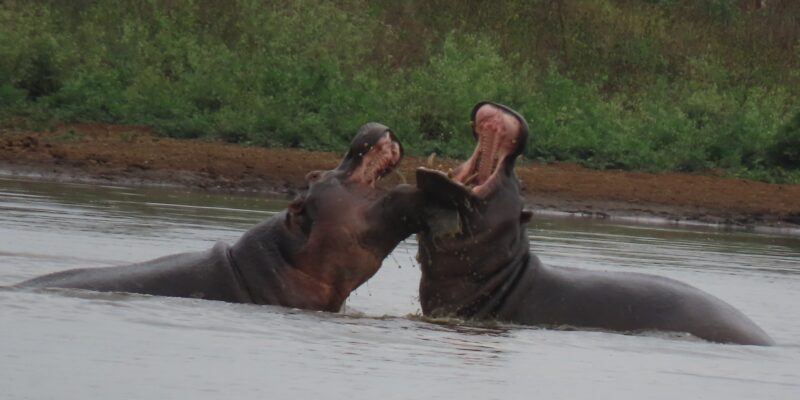
For years, we’ve been taking photos of hippos, always attempting to get that much-revered shot with a hippo’s massive mouth wide open. We failed miserably, time after time. On Thursday, when we visited Kruger National Park, often referred to as “The Kruger,” we got those shots repeatedly.

Note: Today, there are no captions under our photos. The images speak for themselves. were

We couldn’t believe we were able to take the above video at the Sunset Dam in Lower Sabie. It couldn’t have been more exciting and rewarding. Speaking of the above video, please excuse the jittery camera. We were about a kilometer (.62 miles) from this event. Fortunately, we were also able to take several photos of the excitement, as shown here today.

Our camera cannot zoom such a long distance without sacrificing the quality of the photos. But, to upgrade to a camera that could handle such distant images would result in a bulky piece of equipment, adding more weight to our already heavy baggage.  I can place our lightweight Canon Power Shot camera in a carry-on bag without fear of it being stolen.

It’s only during such occasions that we wish we had a long-range lens, but it’s the way it is, and we’ve learned to live with our limitations on baggage weight and our unwillingness to handle heavy carry-on bags.

As for the hippos, it was quite a fight. Included on this site, hippos are fascinating animals who may fight for the reasons listed further in the article, as described below:

“What is a hippo?

There are two species of hippos — the large/common hippo and the smaller relative, the pygmy hippo. Hippos are the third-largest living land mammal, after elephants and white rhinos. Despite their large and bulky appearance, they have adaptations to their semi-aquatic environments allowing them to move swiftly on both water and land. Their feet have four-webbed toes that splay out to distribute weight evenly and therefore adequately support them on land, and their short legs provide powerful propulsion through the water. The pygmy hippos digits are more spread out and have less webbing and, proportionally, their legs are longer relative to its body size. They both have skin tones of purple-gray or slate color, with brownish-pink coloring around their eyes and ears. They have very thick skin that is virtually hairless except for the thick bristle-like hair on their heads and tails. The outer layers of skin are quite thin, making them prone to wounds from fighting. Their flat, paddle-like tail is used to spread excrement, which marks territory borders and indicates status of an individual. Their powerful jaws are capable of opening up to 150 degrees revealing their enormous incisors.

Challenges

Hippopotamus populations are threatened by hunting.

Hundreds of hippos are shot each year to minimize human-wildlife conflict, despite the fact that ditches or low fences easily deter them. It is more likely that the popularity of their meat is the reason for this strategy. Their fat and ivory tusks are also valuable to humans.  At the beginning of the 21st century, the population of the common hippo declined more than 95 percent in the Democratic Republic of the Congo. In 2002, about 5.5 tons of hippo teeth were exported from Uganda, which equates to an estimated 2,000 individual animals. Hippopotamus teeth have been excluded from many of the strengthened ivory bans now spreading across the world making this vulnerable species at an increased risk from ivory poachers.

While the pygmy hippo is not generally a primary target for subsistence hunting, they are reported to be hunted opportunistically by bushmeat hunters.

Humans are pushing hippos out of their habitats.

As human populations grow, they encroach on wildlife habitats as they build new settlements, increase agricultural production, and construct new roads. The hippopotamus once ranged from the Nile Delta to the Cape, but now is mostly confined to protected areas. The primary threats to both hippopotamus species are habitat loss and deforestation.

Behaviors

Unlike us, the hippopotamus does not have sweat or sebaceous glands.

Both species rely on water or mud to keep cool — this accounts for the amount of time they spend in the water. Instead of sweating, they secrete a viscous red fluid, which protects the animal’s skin against the sun and possibly acts as healing agents.

Their social structures are dependent on food and water conditions.

These animals have a flexible social system. Common hippos are usually found in mixed groups of anywhere from 20 to 100 individuals held by a territorial bull, but in periods of drought large numbers are forced to congregate near limited pools of water. This overcrowding disrupts the hierarchical system, resulting in even higher levels of aggression, with the oldest and strongest males asserting dominance. Old scars and fresh, deep wounds are signs of daily fights. Unlike their social cousins, pygmy hippos are solitary and aren’t territorial. If they encounter each other outside of mating, then they simply ignore each other.

Diet

The surprisingly agile hippo climbs steep banks each night to graze on grass.

They leave the water pool at night to graze for four to five hours, covering up to eight kilometers (five miles) of territory. They will eat about 40 kilograms (88 pounds) of food during this time. Their modest appetite is due to its sedentary life, which does not require high outputs of energy. When returning from grazing before dawn, they will enter their water pool at the same spot they exited.”

We hope you enjoy today’s video and photos and will stop back tomorrow for more exciting wildlife photos from our recent visit to Kruger National Park.

Today is a beautiful, warm, sunny day with a slight breeze and low humidity. It couldn’t be more perfect. We had a fantastic social time and dinner at Jabula last night. Tonight, we’re headed to Alan and Fiona’s for sundowners which surely will prove to be another great night with friends in the bush.

Have a fabulous day!

Photo from one year ago today, July 23, 2021:

The pool at the Green Valley Resort in Henderson, Nevada. For more photos, please click here.