
Sorry, we didn’t post yesterday…Went to Kruger and the day was delightfully long and busy…Check out our new visitor!…
Tom and I were a little disappointed that we didn’t see more wildlife in Kruger National Park yesterday. It was just one of those days. We can spend hours driving the roads of Kruger, carefully watching the bush and checking every tree and open area, and sometimes the wildlife simply doesn’t cooperate. Of course, that’s part of being in the bush. There are no guarantees, and we have learned over the years to appreciate whatever comes our way.
Di and Peter, however, were thrilled with the wildlife we did see, including a leopard in a tree. Seeing a leopard is always exciting, and having one sitting in a tree made the sighting even more special. They were also delighted with our stop for coffee at the Mugg & Bean in Lower Sabie. Since I was sitting in the back seat, I wanted Di and Peter to have the advantage of taking photos whenever we encountered something interesting. As a result, I only took a few photos myself, which I will share in the days to come.
While yesterday’s outing may not have produced as much wildlife as Tom and I would have liked, we had something rather special waiting for us at home last night.
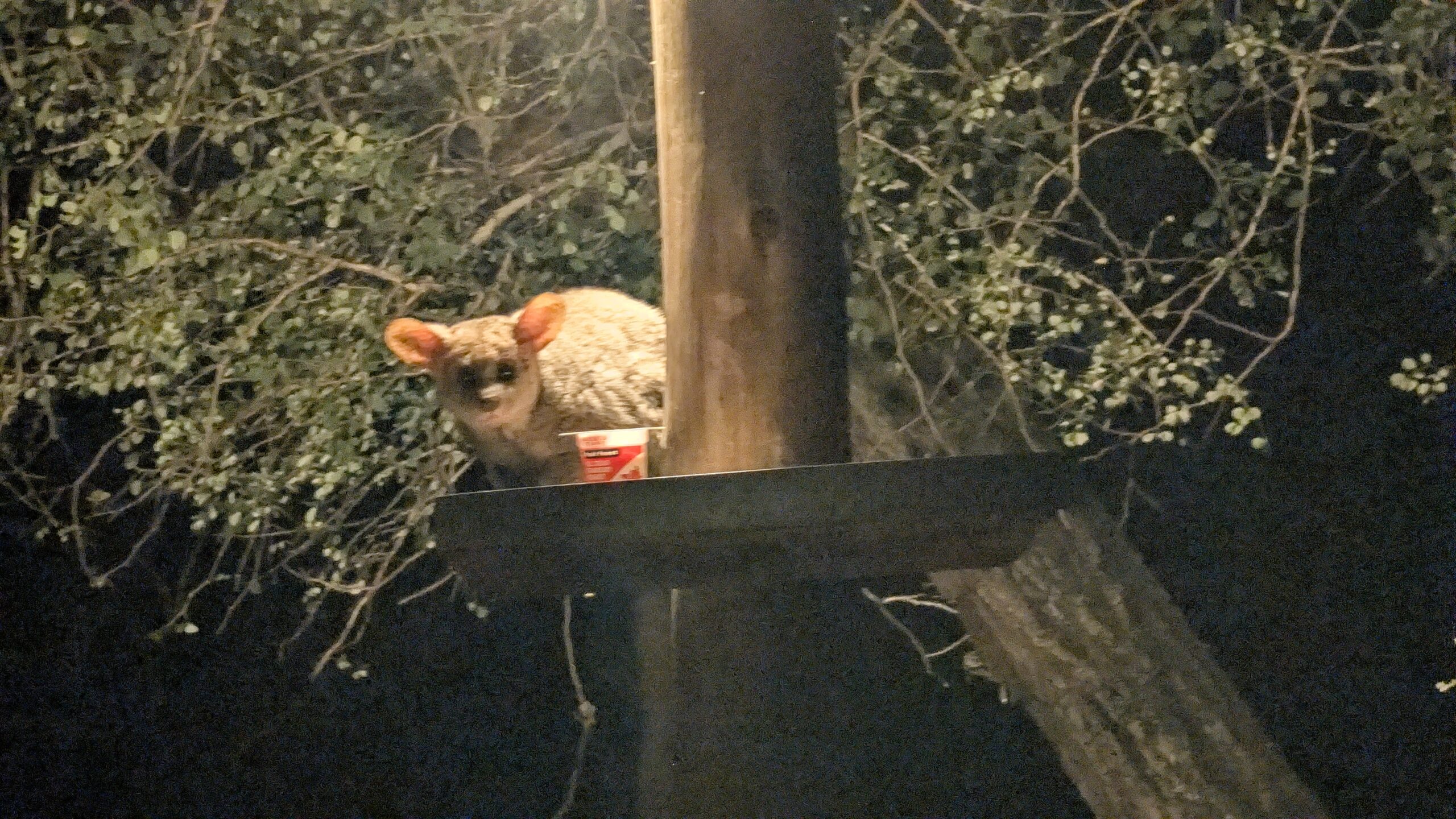
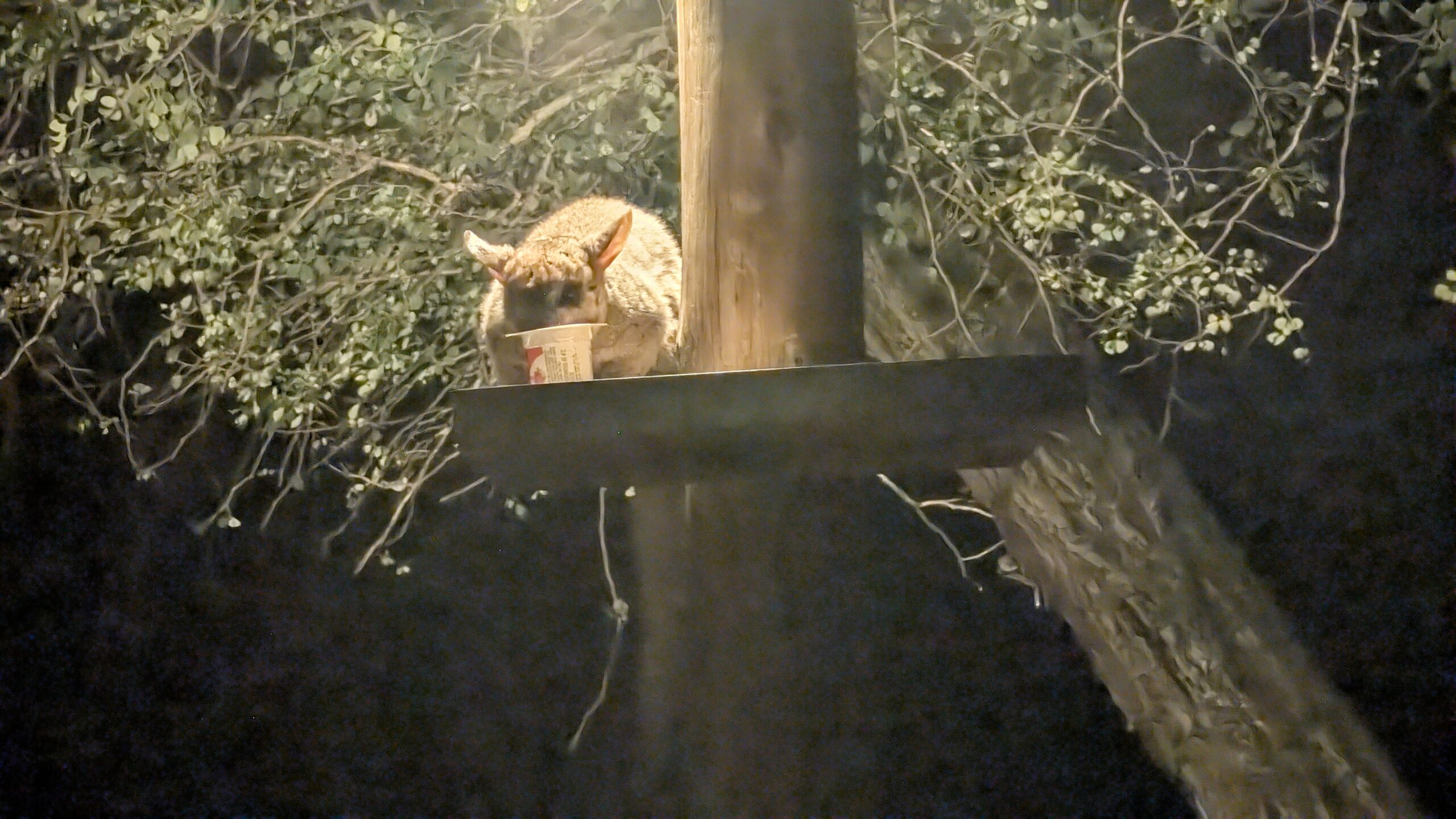
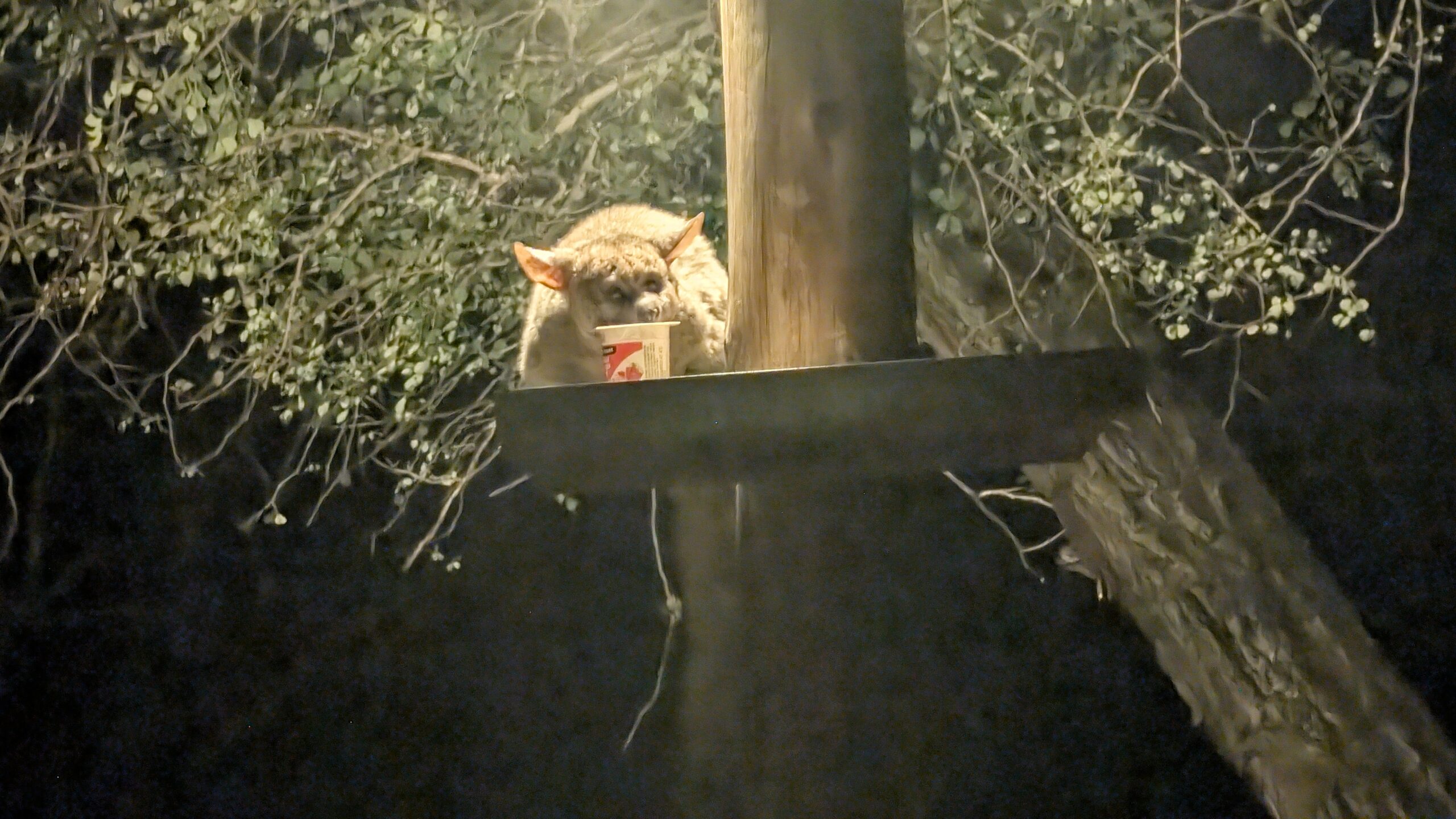
After leaving out some yogurt and banana, we sat on the veranda enjoying our dinner. It wasn’t long before a Thick-tailed Bushbaby made an appearance. What a delightful surprise! We have seen bushbabies during our years in Marloth Park, but every sighting still feels special, particularly when one decides to visit right outside our holiday home.
The Thick-tailed Bushbaby is a small nocturnal primate found in parts of eastern and southern Africa. They are members of the galago family and are sometimes simply called bushbabies or galagos. They are particularly well suited to nighttime life, with large eyes that help them see in the darkness and ears that can detect the slightest sounds around them.
Their enormous ears are one of their most recognizable features. Bushbabies can move their ears independently, helping them pinpoint sounds made by insects, birds, and other animals. They also have excellent hearing, which is important when navigating through the bush at night.
Another fascinating feature is their powerful legs. Despite their small size, bushbabies are excellent jumpers and can leap from branch to branch with surprising speed and agility. Their long tail helps them balance as they move through trees. They spend much of their time in trees but can also come to the ground to search for food.
Their diet is varied and includes fruit, insects, tree gum, flowers, and sometimes small animals. So perhaps it wasn’t a coincidence that our little visitor was interested in the yogurt and banana we had left outside. The banana certainly seemed like an appropriate offering for a bushbaby, although I’m sure it had no idea that we had left it there specifically for a late-night visitor.
Bushbabies are most active after dark, which explains why we didn’t see our little guest during the day. They generally spend daylight hours sleeping in tree hollows, dense vegetation, or other protected locations. Once darkness arrives, they become active and begin searching for food
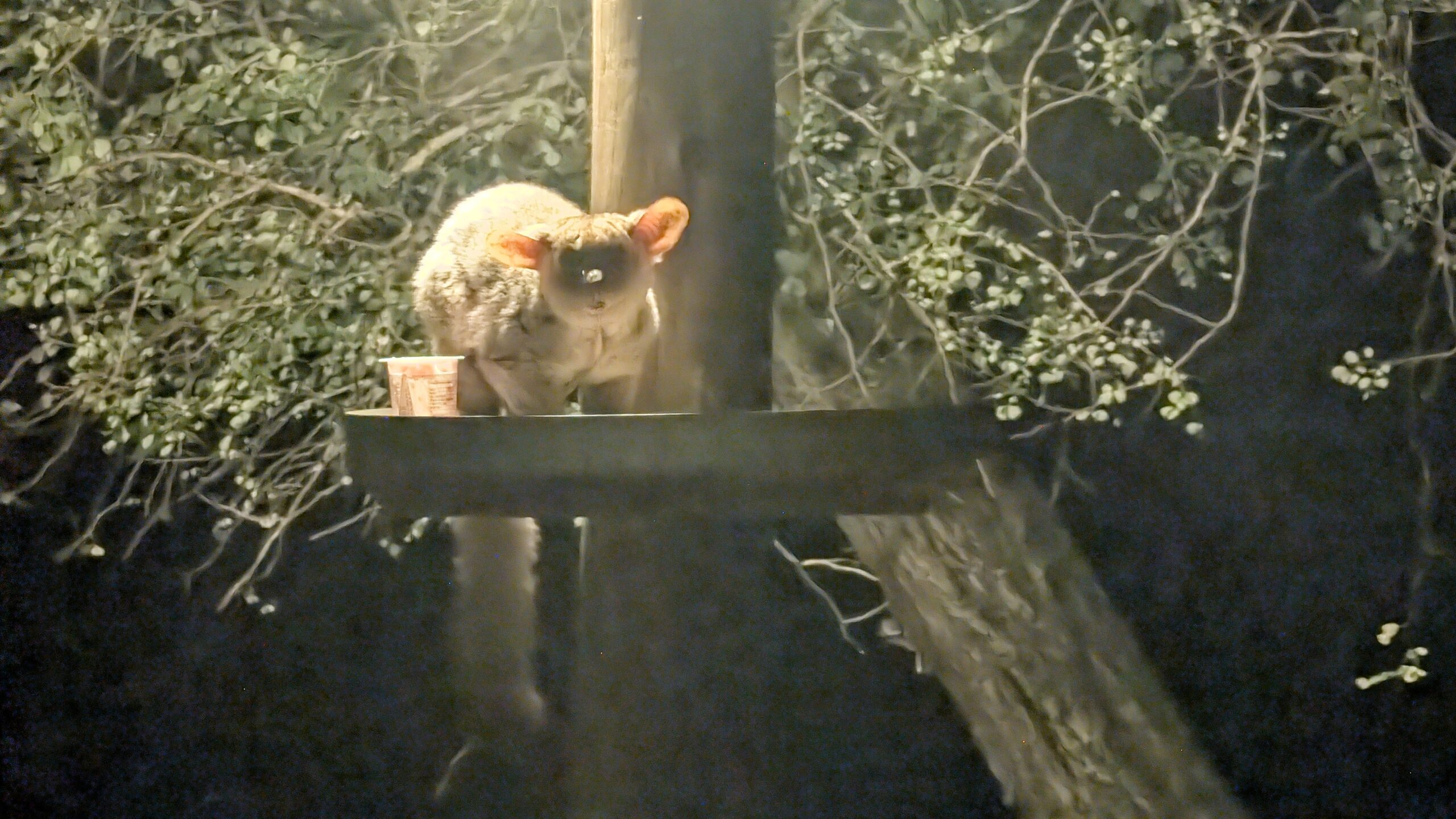
Watching this little Thick-tailed Bushbaby come to our veranda was one of those simple moments that makes staying in Marloth Park so special. We can spend an entire day searching for wildlife in Kruger and sometimes come home wishing we had seen more. Then, while we’re sitting quietly at home having dinner, a tiny nocturnal primate suddenly appears looking for a snack.
That’s life in the bush, and we wouldn’t trade it for anything. Sometimes the most memorable wildlife encounters are the ones that come looking for us.
Be well.
Photo from ten years ago today, August 18, 2016:

About Jess & Tom
We are travel writers, photographers, and slow travelers exploring the world one meaningful experience at a time.
Read More
This was just so special. Thanks for allowing me to share.
Di, thanks for sharing with us! It’s been a pleasure.
Much love,
Jess & Tom