The amazing tree frog…More new photos…

This tree frog is resting on the inside edge of the outdoor refrigerator. We’ll never know how it manages to get in there. They left for a week and later returned. Even the little things in Marloth Park never cease to amaze us.

There is something magical about tree frogs in South Africa, especially as the seasons shift and the nights lose their summer warmth. We tend to think of these delicate little creatures as permanent residents of the warm, humid evenings, clinging to reeds or perched near outdoor lights, patiently waiting for insects to drift by. But when temperatures drop, their lives change in ways that are both subtle and remarkable.

Tom put some meat out for the genet, and later, the trail cam took this photo. Not a clear photo, but fun to see.

Unlike mammals, tree frogs do not hibernate in the traditional sense, yet they enter a state very close to it. In the cooler regions of South Africa, particularly in places where winter nights can be surprisingly cold, these frogs slow their metabolism to conserve energy. It is less a deep sleep and more a quiet retreat from the world, a waiting period that allows them to survive until warmth returns. They are often found in the most peculiar places, here in Marloth Park.

As the air cools, tree frogs begin searching for safe, hidden spaces. They may slip beneath loose bark, tuck themselves into crevices in trees, or burrow lightly into leaf litter where the earth still holds a bit of warmth. Some species take advantage of manmade structures, finding shelter in thatched roofs, garden sheds, or even the corners of outdoor furniture. Wherever they settle, the goal is the same. Protection from temperature extremes and a place where moisture will not completely disappear.

This zebra was waiting nearby while the lucerne was being delivered from Daisy’s Den. Once the delivery guy left, she dug right into it. A short time later, six more zebras stopped by to partake.

What fascinates me most is how their bodies respond. Their metabolism slows dramatically. Heart rates drop. Breathing becomes almost imperceptible. They are still alive, still aware on some level, but everything is reduced to the bare minimum required for survival. It is as if they place themselves on pause, trusting that the world will soften again in time.

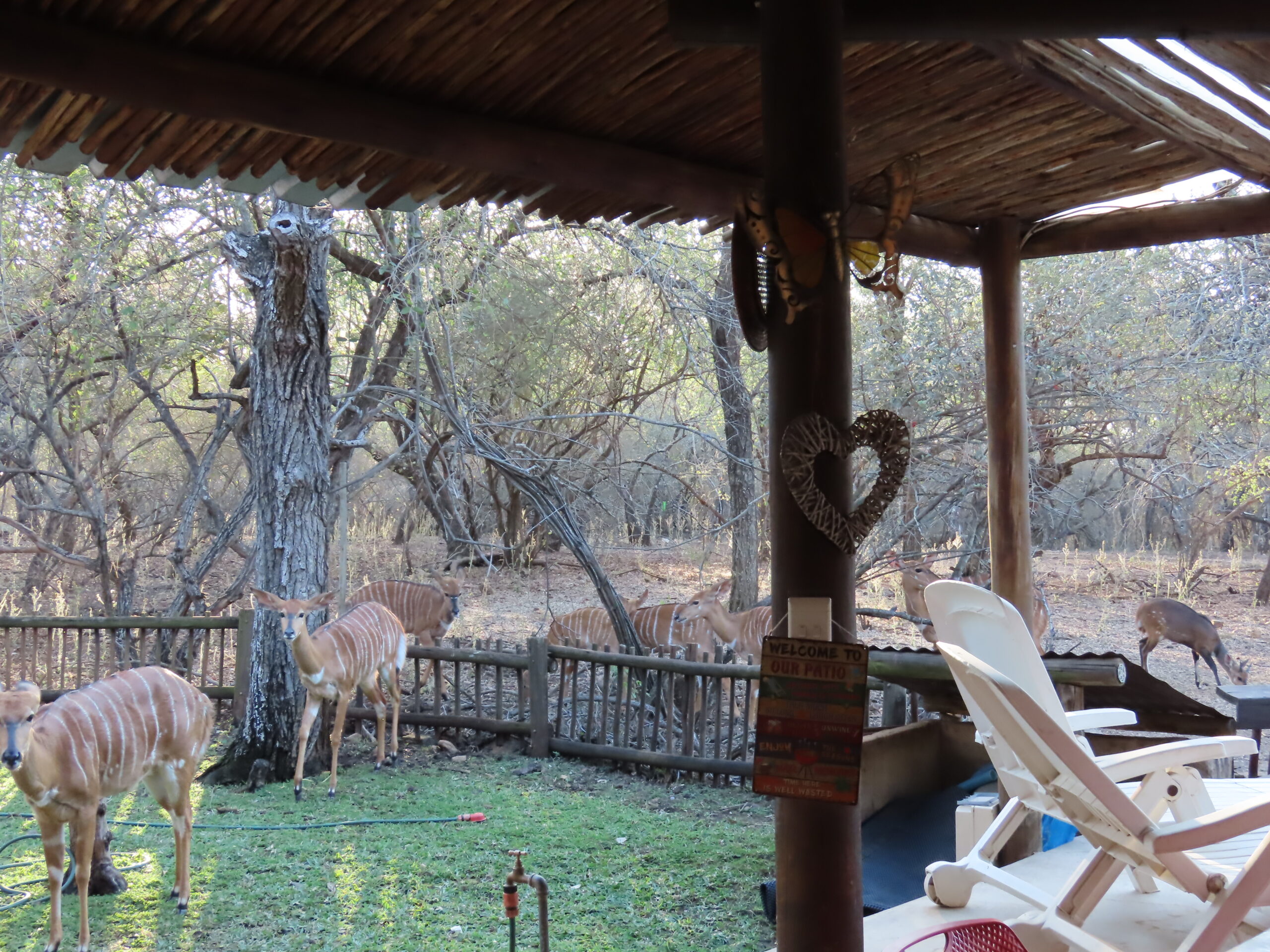
My boy, Chewy, stops by several times a day to see what’s on the menu. Today, it was raw red cabbage leaves, celery tops, and sweet potatoes.

Moisture plays an important role in this process. Tree frogs rely heavily on their skin to maintain hydration, and during these dormant periods, they must avoid drying out. The microclimate of their chosen hiding spot becomes critical. Too dry, and they risk dehydration. Too wet and cold, and they may struggle to maintain balance. Nature, however, has a way of guiding them to just the right place, a pocket of stability in an otherwise unpredictable season.

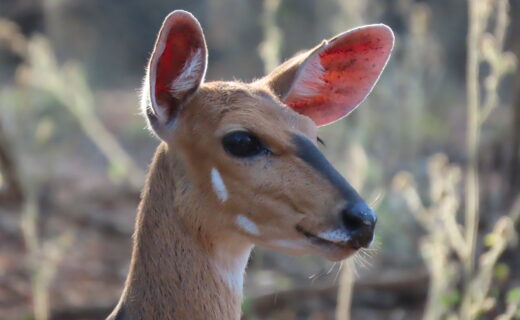
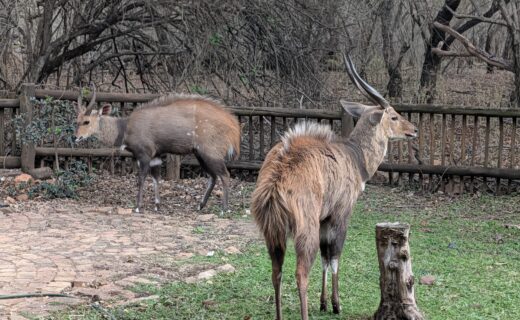
Bushbuck Marigold stops by eight or ten times a day.

In some cases, particularly in milder areas like the Lowveld, where Marloth Park is located, they may not fully retreat for the entire winter. On warmer days or after an unexpected rain, you might still hear a faint call at dusk or catch sight of one moving slowly along a branch. These brief appearances feel like quiet reminders that they are still there, simply waiting for the right moment to return fully.

Their survival strategy is not dramatic. There is no grand migration or visible transformation. Instead, it is a lesson in stillness. They conserve, they hide, they endure. And then, almost overnight, when the rains begin and the air warms, they reappear. The silence gives way to a chorus. The stillness becomes movement. Life resumes as if it had only been gently paused.

Marigold and Lily dug into the lucerne.

Sitting outside on a cool day or evening, it is easy to forget that just a few meters away lies this tiny creature patiently waiting on the interior edge of the outdoor refrigerator door. In a world that often feels fast and restless, something is grounding about that. They do not rush the seasons. They adapt, quietly and effectively, trusting in the pace of the environment around them.

Be well.

Photo from ten years ago today, July 1, 2016:

Tom likes these “wienie wraps!’ in Singapore. These are SGD 1 and US $ 0.74. For more photos, please click here.