Skip to content
Today's Post

Loving the birds we see in Marloth Park!…Fun Quiz Night!
worldwide-admin July 22, 2026 No Comments
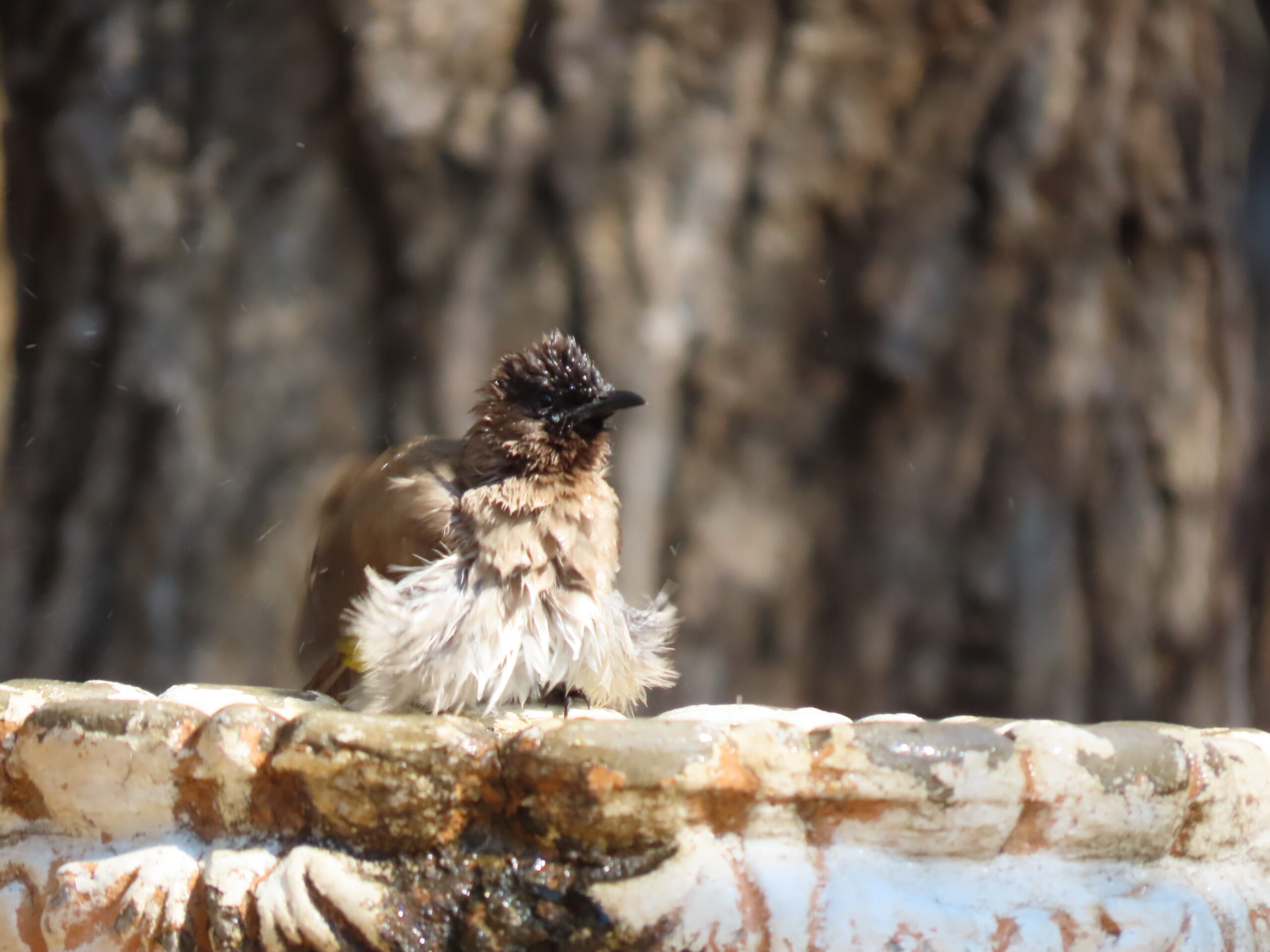
Ah, the joys of a bath in fresh water! This is a juvenile bulbul, most likely a dark-capped Bulbul (also called the Black-eyed Bulbul), which is very common in South Africa. It has a fluffy, disheveled look typical of a young bird (recently fledged): a dark head with a slight crest, brown upperparts, a pale, scruffy underside, and a short, straight black bill. Often seen around gardens, water features, and bushveld habitats like Marloth Park. Young bulbuls often look quite different from the sleek adults, especially when wet or bathing, which gives them that “puffed-up” appearance you captured here.

One of the questions we are often asked by readers planning a visit to Marloth Park is a simple one, yet not so easy to answer with certainty. How many species of birds will we see? It’s a fair question, especially for those who enjoy birdwatching or appreciate the presence of birds in their surroundings as much as we do.
The truth is, there isn’t a fixed number that applies to everyone. Marloth Park, bordering Kruger National Park, is home to an astonishing variety of birdlife. Depending on the season, weather conditions, time of day, and even a bit of luck, visitors may see anywhere from 100 to well over 300 species during a stay.

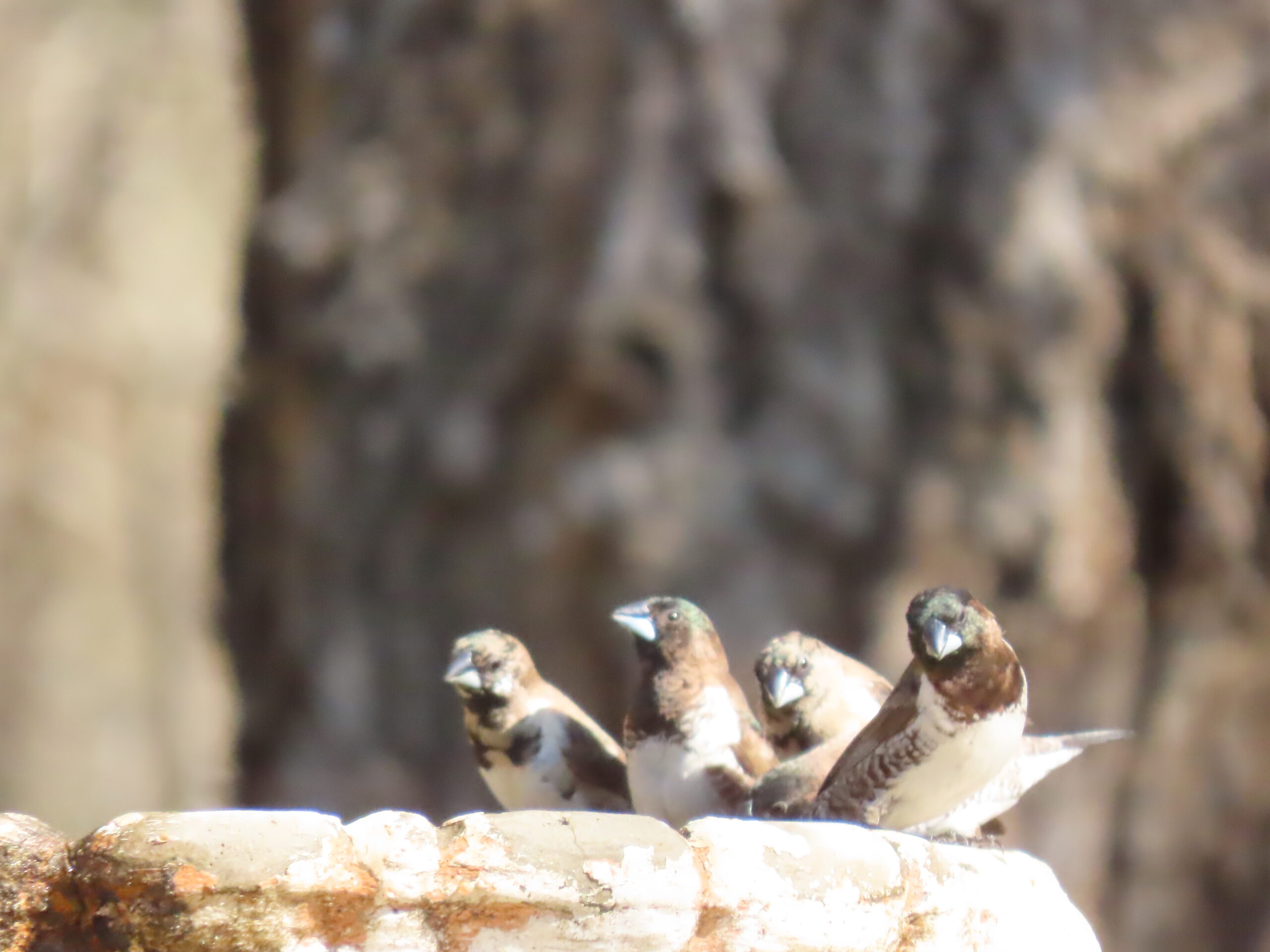
Four bathers! These are small seed-eating finches, and in South Africa they match the Bronze Mannikin (also called the Bronze Munia). Chunky, pale bluish-grey conical bills, classic finch/munia shape. Brown upperparts with white underparts. Fine barring/scaling on the flanks and chest. Social behavior: they almost always appear in small groups like this. Common around gardens, water features, and bushveld, especially where seed is available. These birds are highly gregarious, often arriving together to drink or bathe. They feed mostly on grass seeds, but will readily visit bird feeders. In good light, adults show a subtle bronzy sheen on the upperparts.

For those staying a week or two and spending time outdoors each day, it’s not unrealistic to spot 120 to 180 species without making a concerted effort. For more dedicated birders, especially those heading out early in the morning and just before sunset, that number can climb significantly higher. Some experienced birders who keep careful lists have reported sightings approaching 300 species over longer stays.

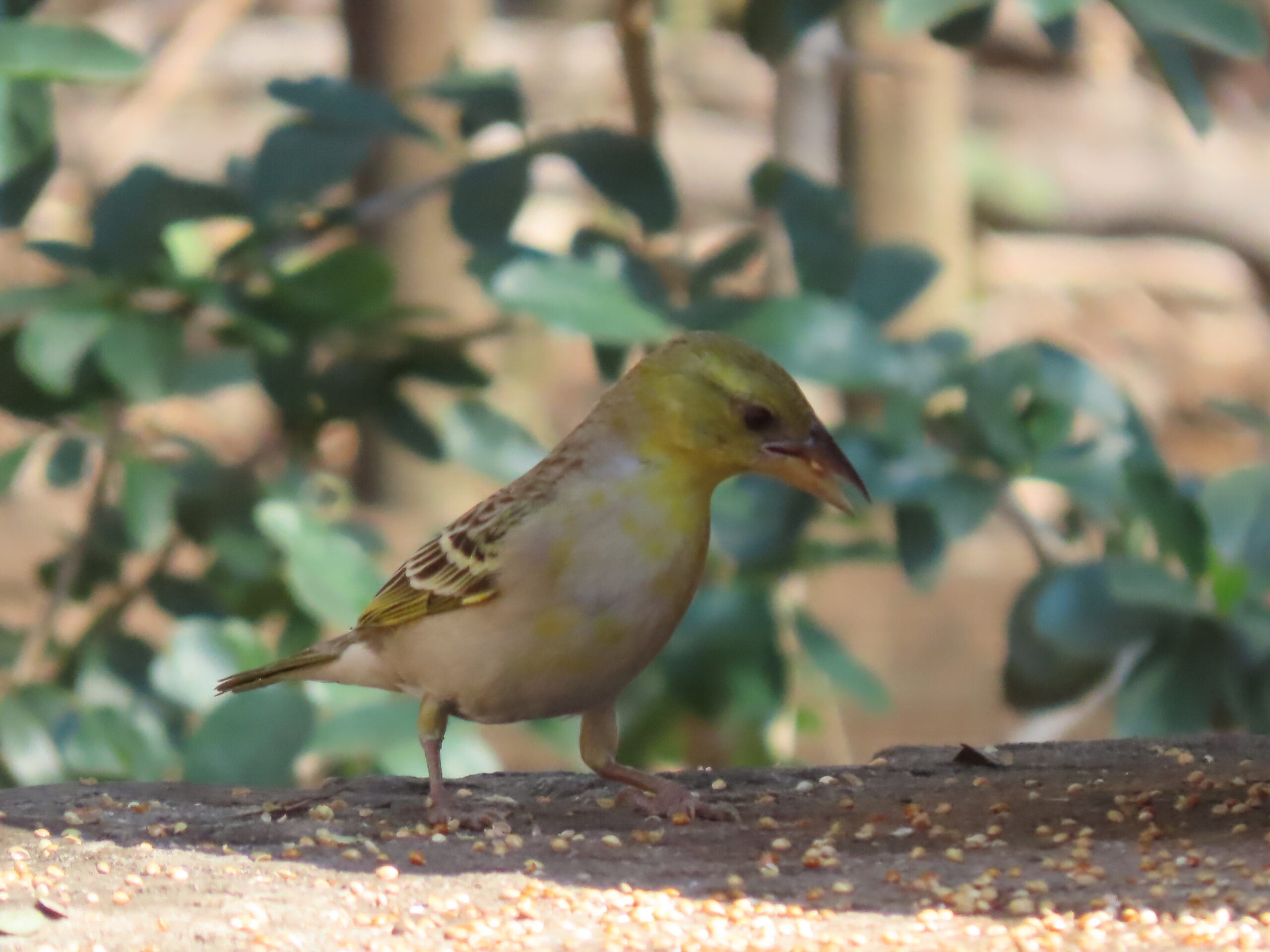
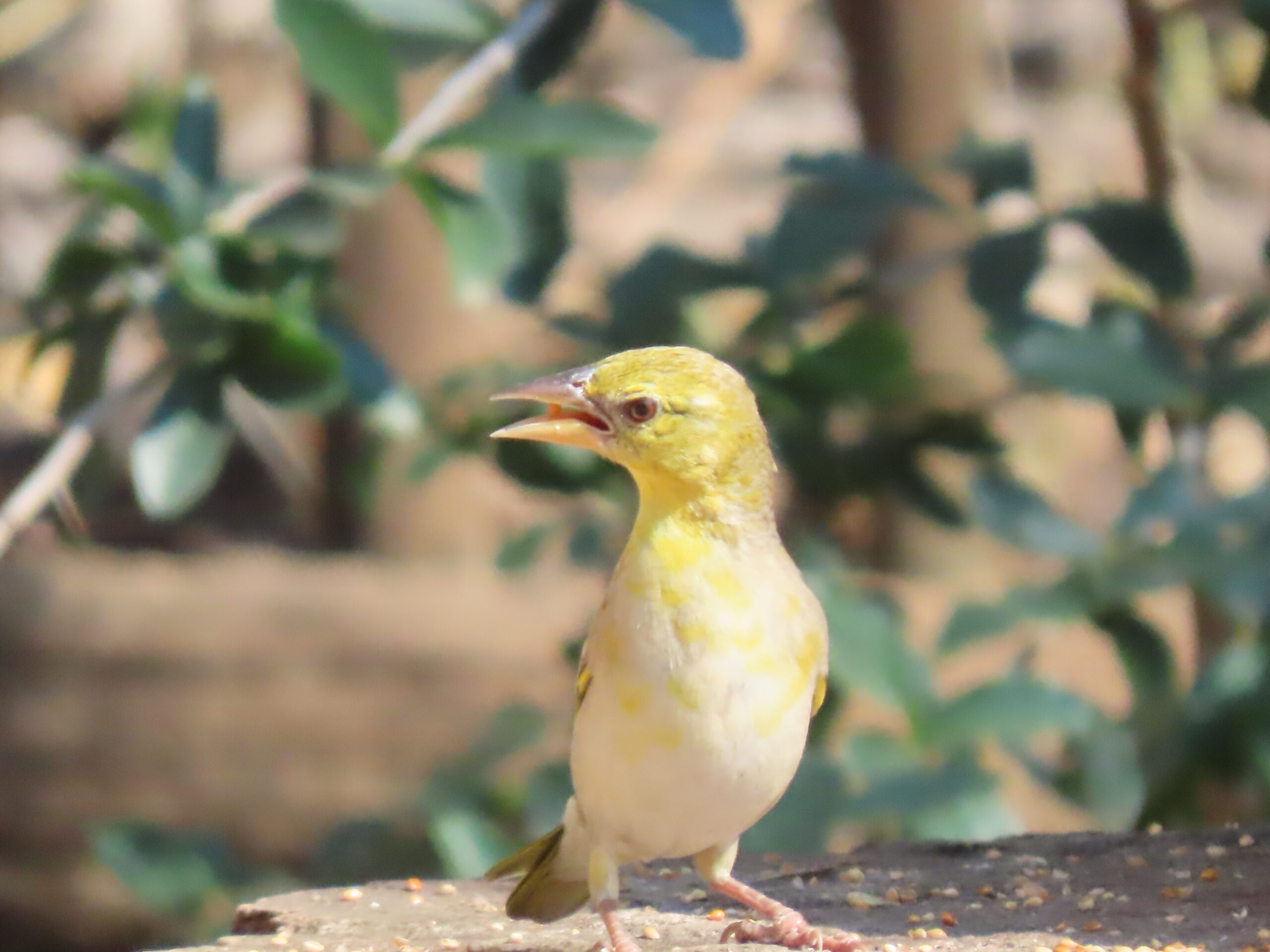
This is a female (or non-breeding/juvenile) weaver, and in our location it’s most consistent with a Village Weaver. Pale yellow head and throat with a softer, mottled look, typical of females or immature birds. Sturdy, slightly pointed bill (not as thick as finches, but still seed-friendly). Creamy-white belly with yellow wash on the chest. Pinkish legs and upright posture. Common around gardens, lodges, and bushveld areas across South Africa.

When we first arrived years ago, we had no idea how rich the birdlife would be. We weren’t actively keeping a tally, but over time, certain birds became familiar, almost like regular visitors dropping by each day. The Fork-tailed Drongos, always alert and a bit mischievous, often perched nearby watching for insects. The weavers, busy and vocal, filled the trees with their constant activity, especially during nesting season. And then there are the hornbills, bold and curious, strutting through the garden as if they owned the place.

What makes Marloth Park so special is not only the number of species, but the accessibility. You don’t need to venture far or sit in a hide for hours. Many birds come right to you. Sitting on the veranda with a cup of coffee in the early morning, we often see a surprising variety without moving more than a few steps. Some days, it feels as if the birds are putting on a show.

Seasonality plays a big role. In the warmer months, especially from October through March, migratory species arrive, adding to the already impressive list. During this time, the bush is alive with calls and movement, and the diversity seems to increase overnight. In the cooler winter months, while some migrants depart, the resident species remain plentiful and easier to spot due to thinner vegetation.

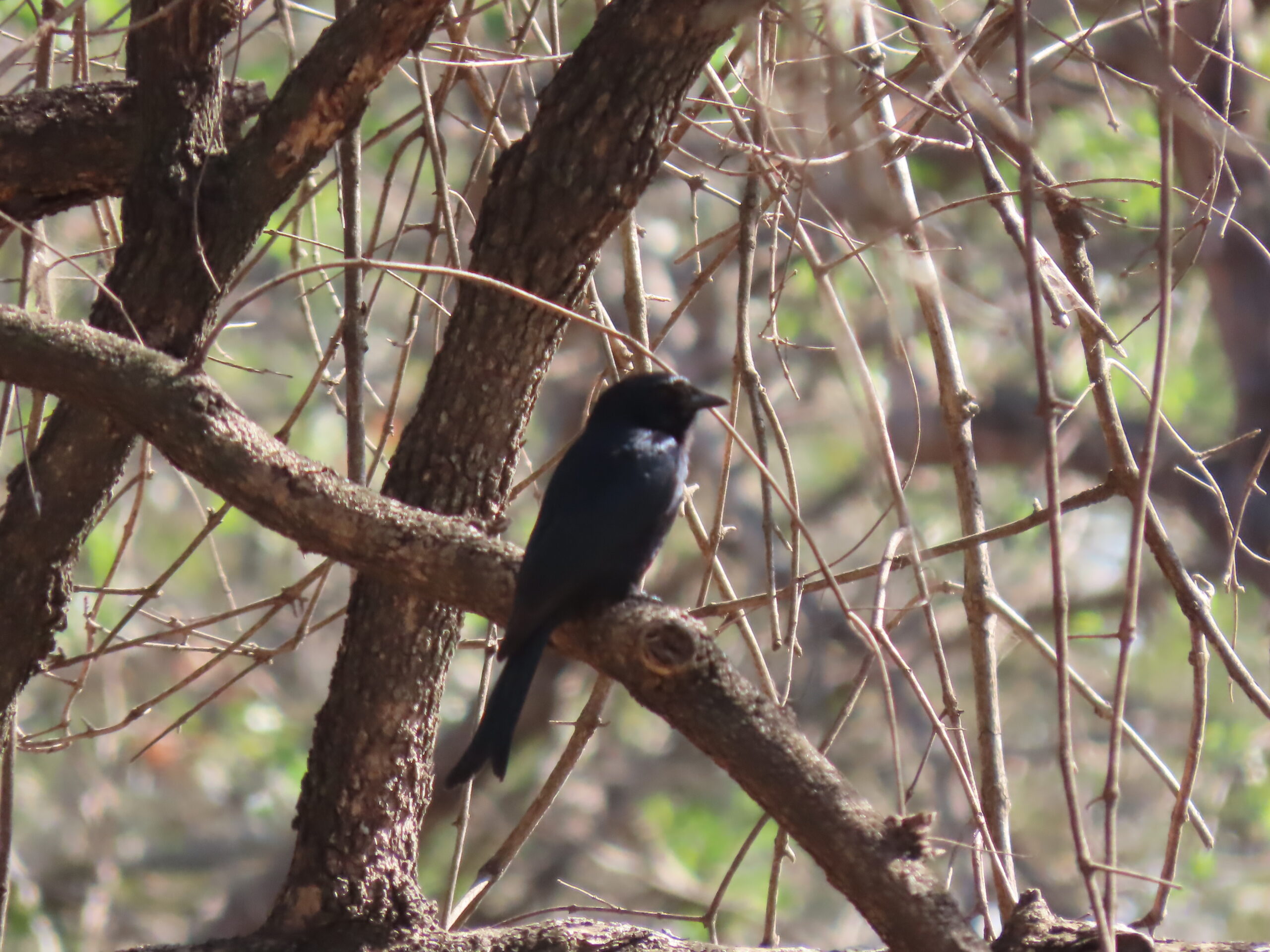
This is a drongo, and in South Africa it’s a Fork-tailed Drongo. Glossy black plumage with a slight bluish sheen in the light. Slim body and upright posture on an exposed branch. Straight, slightly hooked bill typical of insect-catching birds. Long tail (the fork isn’t fully obvious from this angle, but it’s there). Extremely common in bushveld areas like Marloth Park. Often perches exactly like this, watching for insects. Known for being bold and intelligent, even harassing much larger birds. Famous for mimicking other bird calls and even tricking animals.

Water sources also make a difference. A simple birdbath or a small water feature can dramatically increase the number of visitors. On hot days, birds of all sizes come in to drink and bathe in our birdbath, offering wonderful viewing opportunities. We’ve spent many afternoons watching a steady stream of activity, from tiny finches to larger, more striking species, all taking their turn.

Of course, not every sighting is dramatic or rare. In fact, much of the joy comes from observing the ordinary. The familiar birds, the daily interactions, the subtle behaviors that reveal themselves over time. There is something deeply satisfying about recognizing a bird by its call before you even see it, or noticing a new species and wondering where it came from.

In the end, the number of species you see in Marloth Park will depend on how you spend your time and what you hope to experience. Whether you keep a detailed list or enjoy the presence of birds around you, there is no shortage of opportunities.

This is another weaver, and this individual is best identified as a female or non-breeding Village Weaver.

What we can say with certainty is this. You will see more birds than you expect, and before long, you may find yourself looking forward to their visits as much as we do.

Last night’s Quiz Night was lighthearted and fun, even with our smaller team. It was just Matt, Tom, and me, and we gave it our best shot, hoping to place a bit higher than usual. Once again, we landed in fourth place, which seems to be our regular spot. Albert was away on holiday, and we couldn’t help but think his presence might have nudged us into third or even second. Matt carried us through the music category, which tends to stump us. All in all, it was an enjoyable evening spent laughing and trying.

Tonight, we’re staying in, which suits us just fine. After the chatter and energy of Quiz Night, a quiet evening feels especially appealing. We’ll prepare a simple, tasty dinner, nothing fancy, just something we enjoy, and settle onto the veranda as the day winds down. There’s something about this time of day that never gets old. The light softens, the air cools, and the familiar sounds of birds and rustling bush take over. We’ll sit back, relax, and savor every moment, appreciating once again how fortunate we are to experience this life among the wildlife.

Be well.

Photo from ten years ago today, July 22, 2016:

Tom pointed out this jumble of power lines at an intersection in Saigon. For more photos, please click here.

About Jess & Tom

We are travel writers, photographers, and slow travelers exploring the world one meaningful experience at a time.

Read More

Leave a Reply

Your email address will not be published. Required fields are marked *