
Another fine Sunday in the bush with friends and animals…
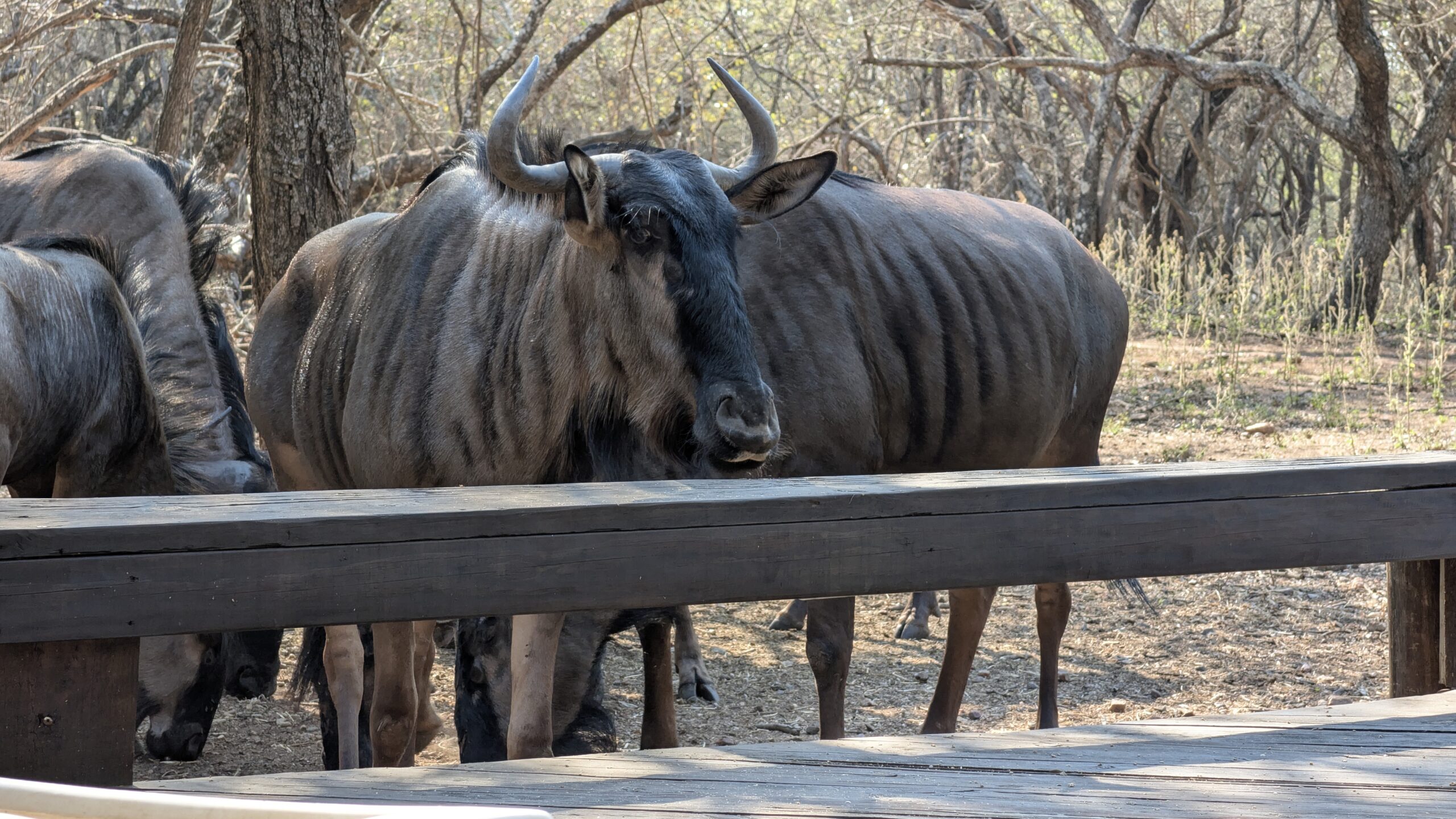
One of the animals we often encounter while staying in Marloth Park, South Africa, is the wildebeest, a somewhat unusual-looking creature that always makes us smile. They aren’t nearly as graceful as the impalas, as striking as the zebras, or as impressive as the giraffes. Still, there is something wonderfully endearing about these large, shaggy animals as they wander through the bush.
Wildebeests are members of the antelope family, although they certainly don’t look like the delicate antelopes we often see throughout Marloth Park. Their bodies are heavy and muscular, with sloping backs, long faces, dark manes, and beards beneath their chins. Both males and females have curved horns, which add to their somewhat intimidating appearance. Their coloring is generally grayish-brown, with darker markings, and their coats can look rather rough and shaggy, especially when viewed up close.
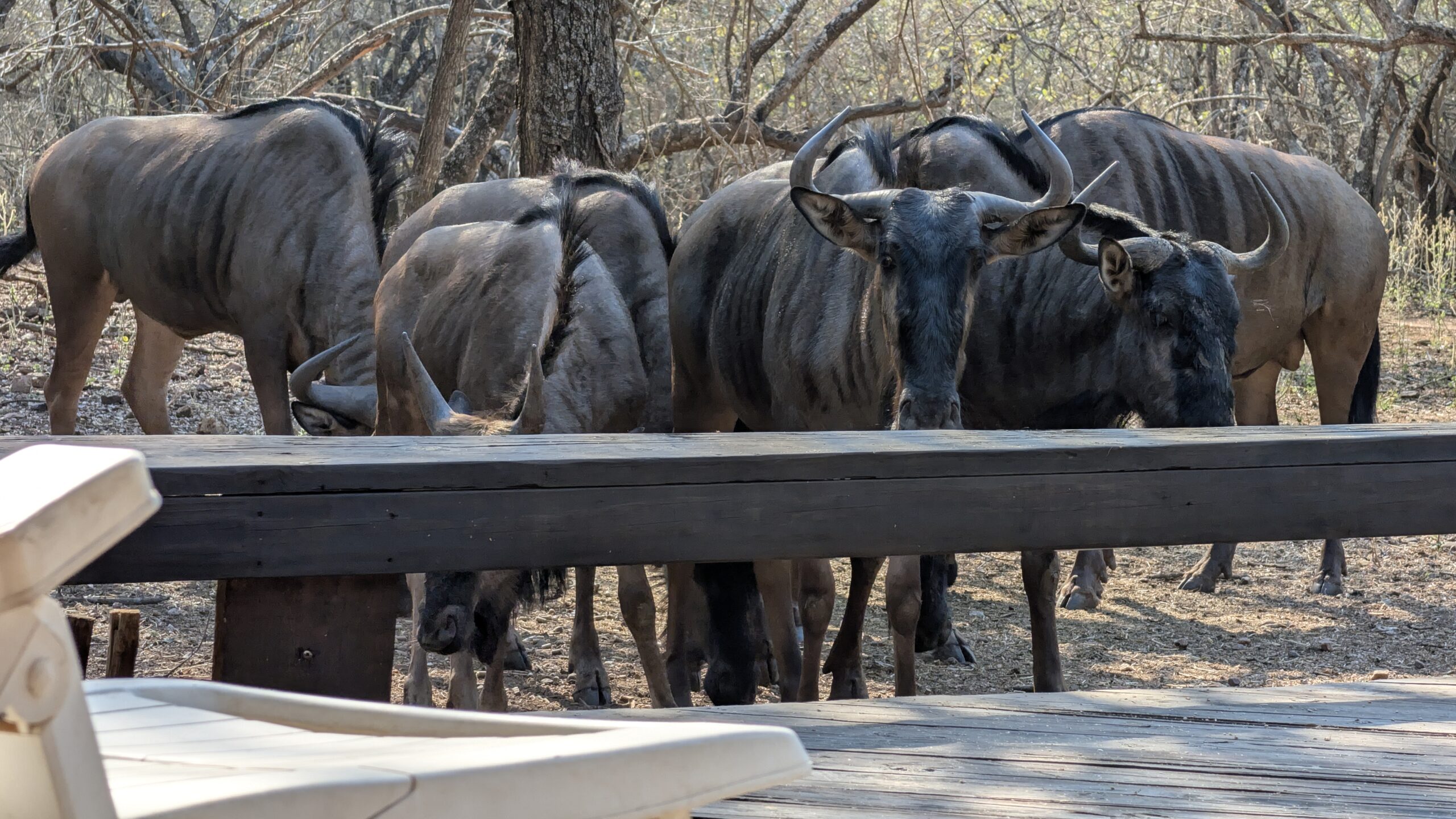
The first time someone sees a wildebeest, they may wonder what combination of animals they are looking at. Their large heads and horns resemble those of a buffalo, their bodies resemble those of cattle, and their long legs and tails remind us that they are, indeed, antelope. They have been described as looking like a creature assembled from several different animals, and I can certainly understand why.
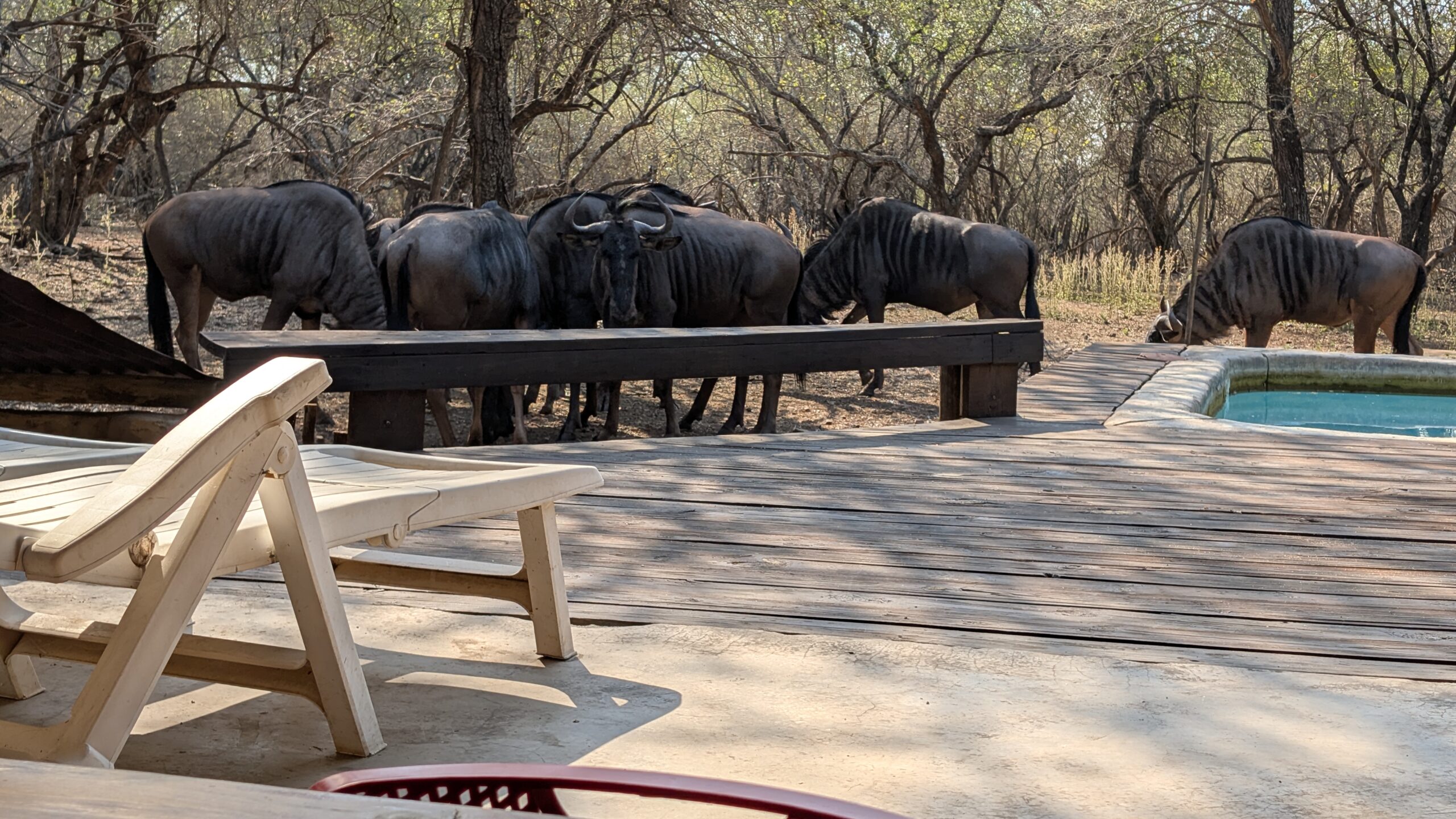
The wildebeest most commonly associated with this part of South Africa is the blue wildebeest, also called the brindled gnu. Despite the name, they aren’t actually blue. Their coats have a grayish, bluish-brown appearance, which can look quite beautiful when the sunlight catches them. Their tails are long and black, and their dark manes run along their necks and backs.
Here in Marloth Park, wildebeests may wander through the bush, sometimes alone and sometimes in small groups. Like many animals that live here, they have become accustomed to people and vehicles, although they remain wild and should always be treated with respect. We may be staying in a holiday rental, but we are essentially living among wildlife, and we never know what might appear outside our windows or along the road.
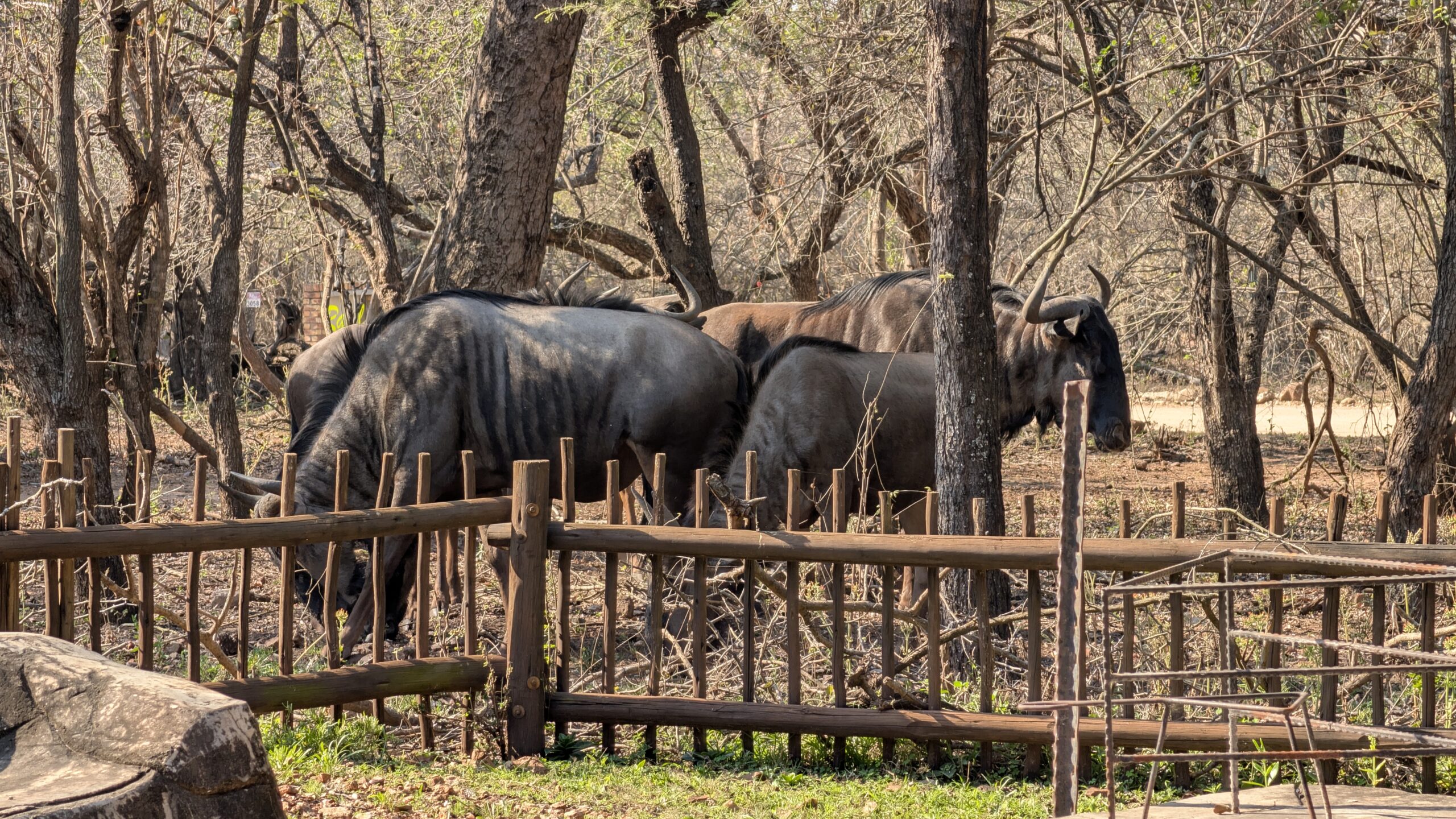
One of the things I enjoy most about seeing wildlife in Marloth Park is that there is no guarantee of what we will encounter. We can drive around looking for animals and find nothing particularly exciting, only to return home and discover that an animal has wandered into the garden. On another day, a herd of impalas may be grazing nearby, while the next day a zebra, giraffe, warthog, or wildebeest may make an appearance.
Wildebeests are also famous for their enormous annual migrations in East Africa, particularly in Tanzania and Kenya, when millions of wildebeests, along with zebras and other animals, move in search of fresh grazing and water. The wildebeests we see here in the Lowveld aren’t participating in anything quite so dramatic. They are simply going about their daily lives, grazing, resting, and moving through the bush as they have done for countless generations.
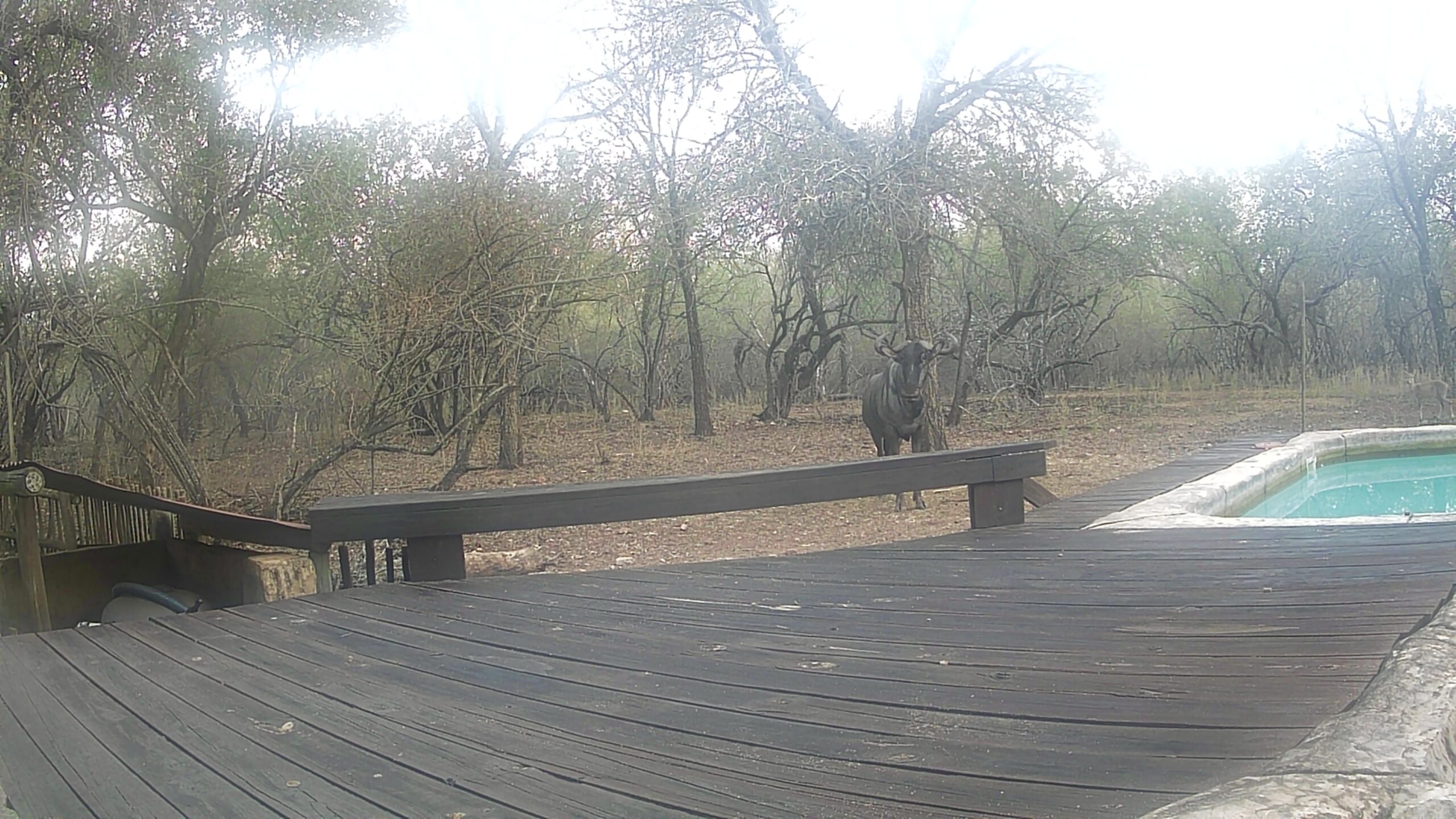
Although wildebeests may not win any beauty contests, I have grown to appreciate them. Something is fascinating about watching these sturdy animals move through the bush, completely unconcerned about whether we find them handsome or homely. They belong here, just as the other animals do.
That is one of the things we love about Marloth Park. Every day brings another opportunity to observe animals in their natural surroundings, and sometimes the most interesting encounters are with animals we might otherwise overlook. The wildebeest may not be the most glamorous resident of the bush, but when one wanders into view, it is always a welcome sight, especially our boy Hal.
Be well.
Photo from ten years ago today, August 23, 2016:


About Jess & Tom
We are travel writers, photographers, and slow travelers exploring the world one meaningful experience at a time.
Read More