A fine evening in the bush with friends..Fun new video!…Check it out!…

Please take a look at the new video we filmed yesterday morning.

Who’s in the garden this morning?

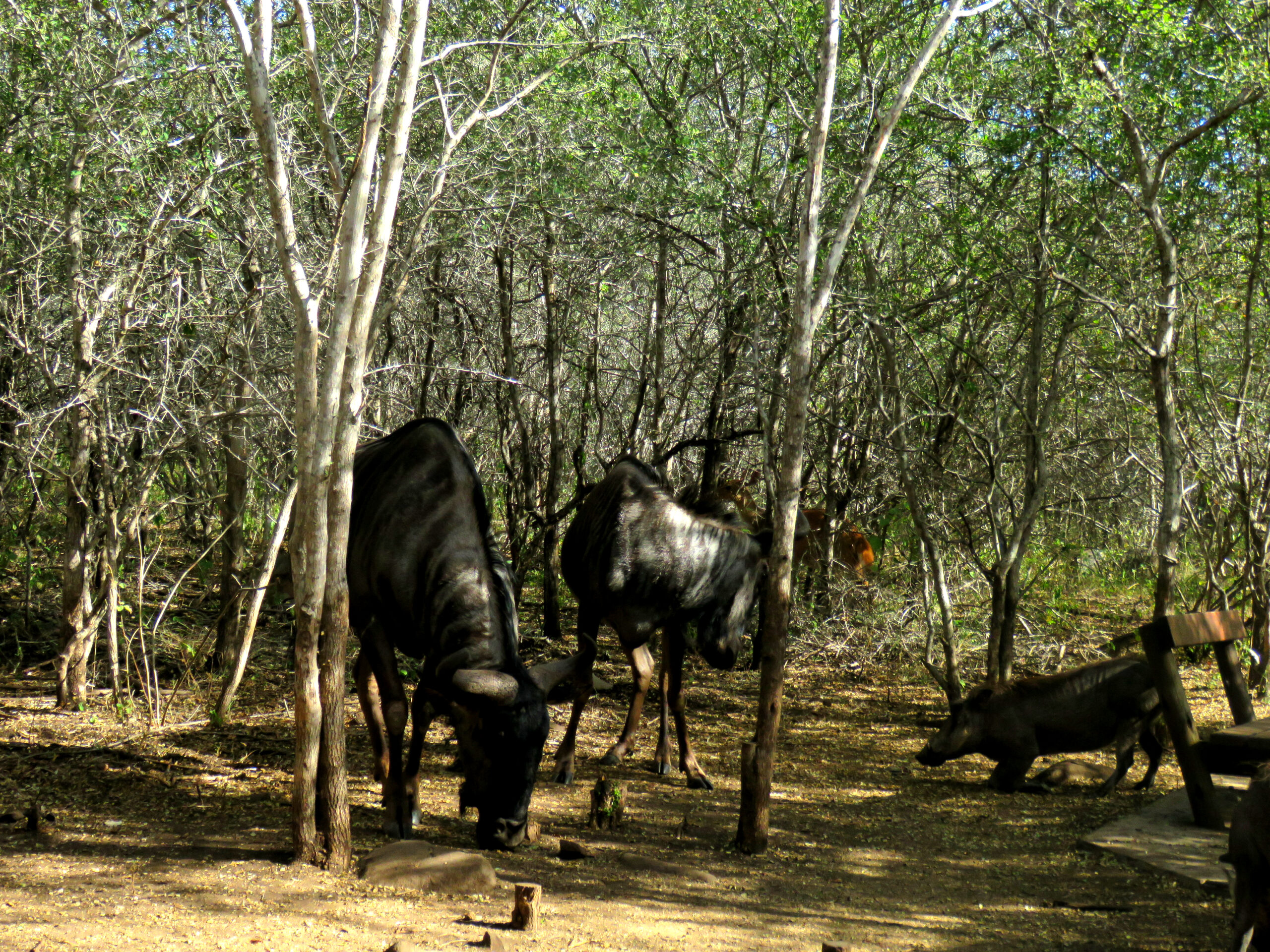
  • 2 wildebeest
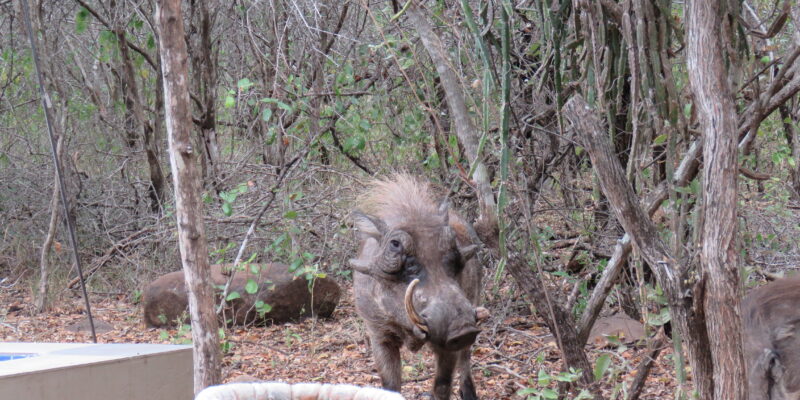
  • 6 warthogs
  • 11 helmeted guinea fowl
  • 5 bushbuck
  • 22 mongoose
  • 2 kudus
  • 1 duiker

It’s a glorious morning. The sun is shining. The temperature and humidity are mild, with a slight breeze. The animals have come and gone over the past few hours, and we couldn’t be more content. Right now, they’re all gone, but that’s going to change in a couple of minutes.

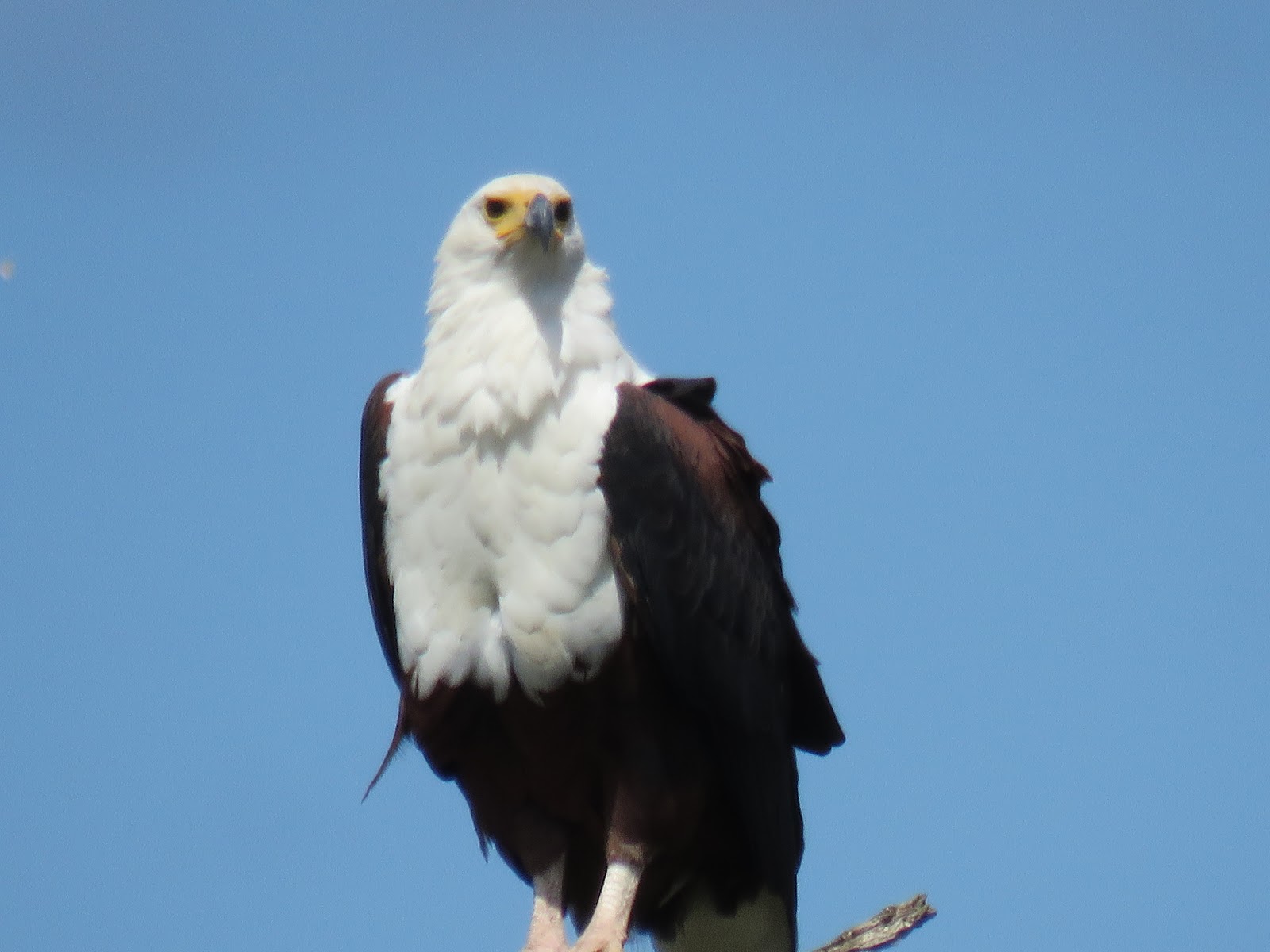
Two Go-Away birds were drinking from the birdbath. Unlike many brighter forest-dwelling turacos, these are birds of an African open country and have drab gray and white plumage. In southern Africa, these birds are known as kwêvoëls, but they are also referred to as loeries with other turacos. The go-away birds are named for their raucous “go away” call.

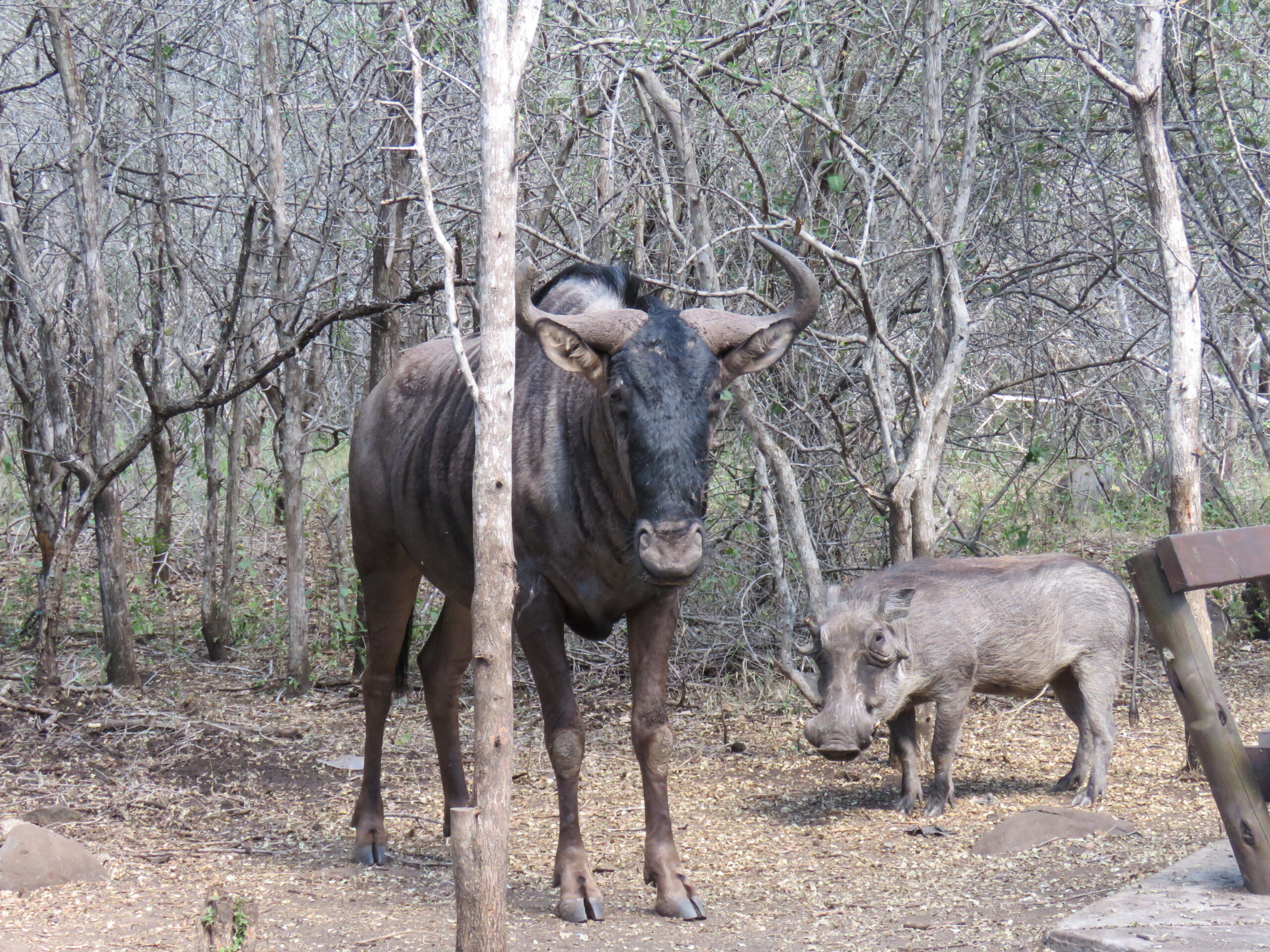
Last night’s dinner with Dawn and Leon was a great time. The food was good, the company superb, and the three wildebeest in the garden all evening added to the entertainment. I’d made an easy steak dinner with sides and spent little time in the kitchen while our guests were here, having prepared everything earlier in the day.

It’s a busy weekend in the bush with many holiday homes booked with guests from other parts of South Africa and a few overseas due to pandemic travel restrictions in many countries. A band of 22 mongooses just stopped by, and we offered them some leftover meat which they devoured.
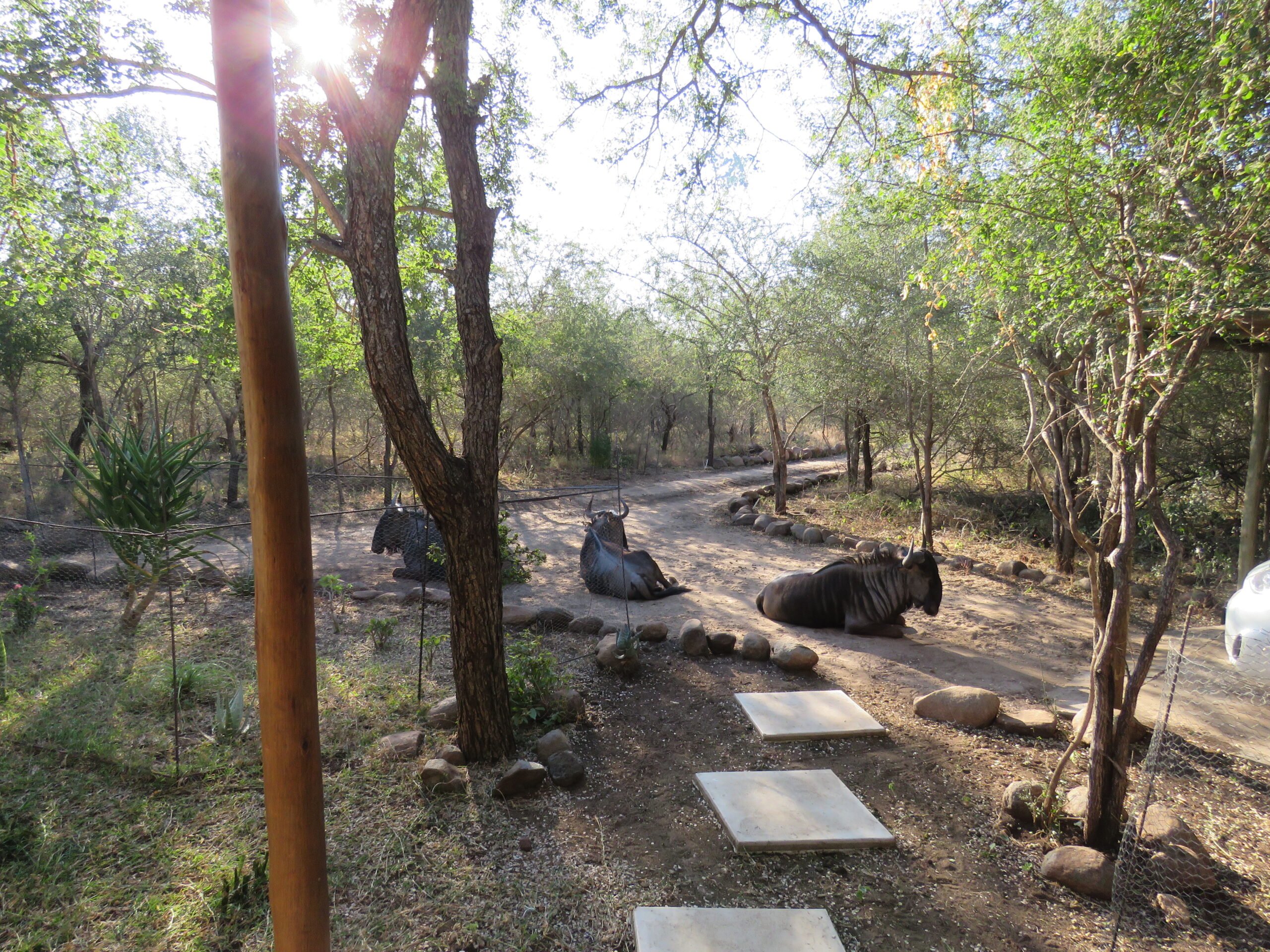
Three wildebeests were lying in the driveway shortly before Dawn and Leon arrived.

Some novice holiday renters have been fed mongoose bread, which is not appropriate for their diet. In one instance, I watched a guinea fowl steal the mongoose’s bread and escape. We noticed that three of the mongoose had whole pieces of white bread in their mouths, which they weren’t eating, but carrying around in somewhat of a frenzy, wondering what to do with it.

Sure, animals love “human food,” but it’s not safe for them to eat in most cases. It’s always disheartening to watch that. Feeding wildlife, especially now that vegetation is diminishing by the hour, is good if it is appropriate for eating. The best feed to supply the animals is game pellets. Fruits and vegetables humans eat may contain pesticides and other dangerous chemicals to animals (and humans too).

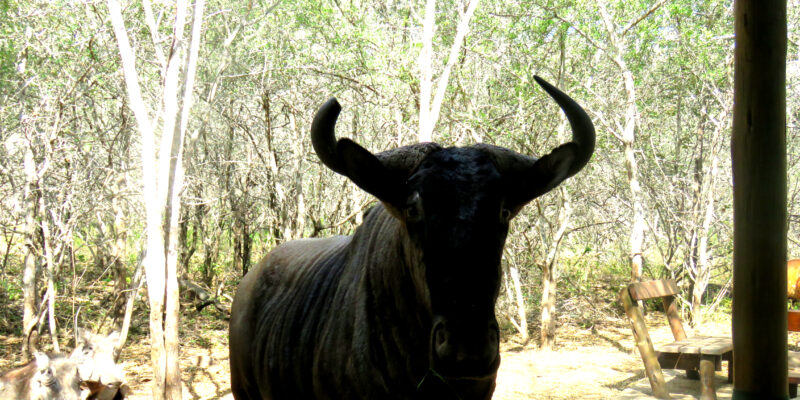
Wildebeest Willie is drooling over the veranda table, begging for pellets.

We occasionally offer them carrots and apples, which we wash first and cut into bite-size pieces. Imagine a bushbuck or a tiny duiker choking on a big chunk of a carrot or apple. It would be horrifying to witness it, but it could easily happen.

This is a hot issue here in Marloth Park with many different opinions and perspectives. Many don’t believe in feeding wildlife. Based on the fact that they are fenced in, living in this conservation without being able to wander towards greener pastures, we feel compelled to feed them.
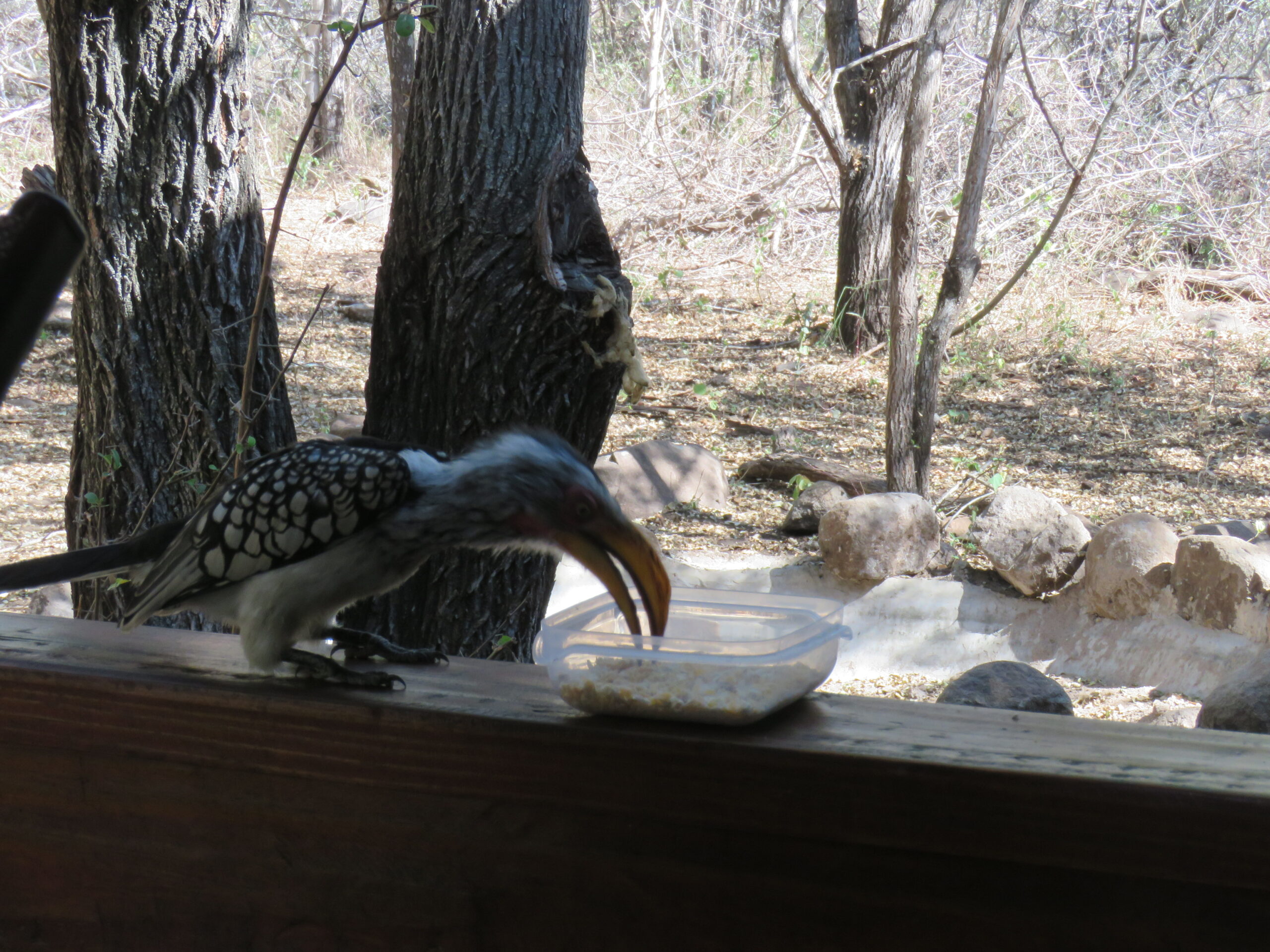
A hornbill was eating out of Frank and The Misses container of seeds.

To cull or not to cull is also a frequent point of contention. We avoid controversy and do what our conscience dictates: feed wildlife food appropriate to their species. We don’t hand-feed or use troughs, breeding grounds for TB, and other wildlife diseases and illnesses that are always prevalent in the bush.

Last night we had good news that Rita and Gerhard will be arriving at Marloth Park on Sunday afternoon, and we will all be heading to Jabula Lodge and Restaurant for dinner. Gerhard has been chomping at the bit over the prospect of ordering their spare ribs, which Tom eats each time we go for dinner. We always go to Jabula on Friday nights, which we’ll be doing again tonight and then again on Sunday night.

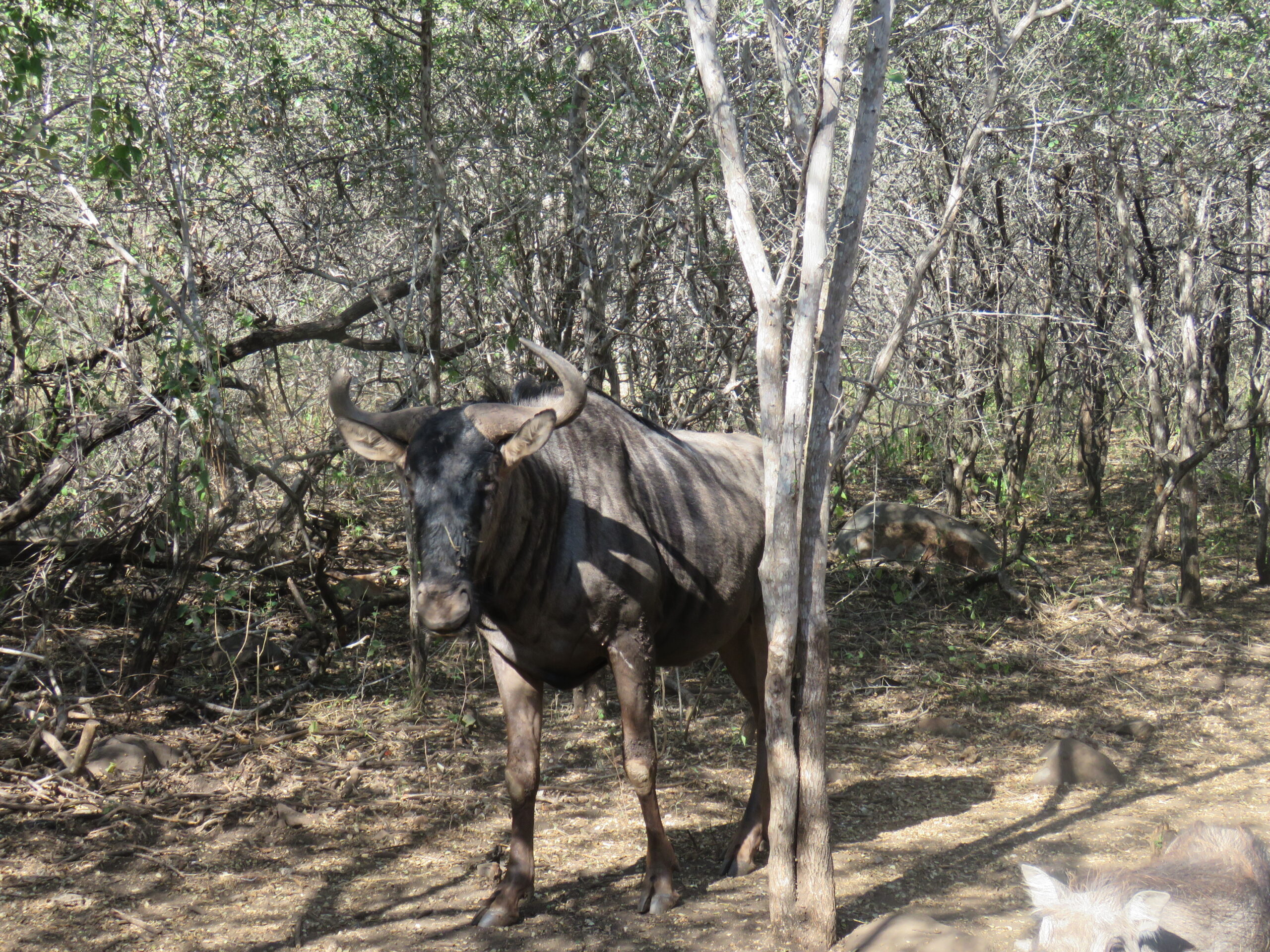
A wildebeest, resting in the garden, a common phenomenon of late.

We’re so thrilled to see Rita and Gerhard. We hope they will stay for a few months, and of course, we hope to be able to survive or return after June 30th, when our current visas expire. Only time will tell.

A Go-Away bird was sitting at the edge of the pool.

That’s it for the day, dear readers. Be safe. Be happy. Cherish every day of life!

Photo from one year ago today, May 14, 2020:

A small lagoon between Anini Beach and Ke’e Beach while we were in Kauai, Hawaii, on this date in 2015. Please see that link here. For the year-ago post, please click here.

Part 3…Kruger National Park…It never disappoints…Adding a new feature for Africa…Tom’s trip is over…Dinner guests tonight…

On the way back from Kruger, we encountered this intentional fire in the sugar cane fields.

Effective this morning, we are adding a new feature to our posts in Marloth Park. The feature will be entitled: “Who is in the garden this morning?” which will consist of all wildlife visitors to our garden when we prepare the day’s post. Here it comes!

Who’s in the garden this morning?

  • 9 warthogs
  • 13 kudus
  • 3 bushbucks
  • 1 duiker
  • 7 helmeted guinea-fowl
  • 39 mongoose
  • Frank & The Misses (francolins)

Thus, while we continue to prepare the post, we will add to the list, keeping in mind that typically it takes about five hours from start to finish, considering managing photos, writing the text, editing the text with occasional short breaks to do a household task, prep for a meal or other breaks necessary during this period.

We will not count regular visitors if we can recognize who is here, which we can do in most cases. Otherwise, it’s fun for us, at any rate! For instance, just now, warthogs, Mom & Babies (2) appeared, but they weren’t counted earlier. We hope that our readers will find these figures amusing.

We had to make it through the thick smoke of the fires.

This afternoon at 4:00 pm, 1600 hours, we’re having guests for sundowners and dinner, Dawn and Leon, Jabula Lodge, and Restaurant owners. We always have such a good time with them at the restaurant, but it will be nice to have time with the two without all the restaurant’s distractions.

A wildebeest (gnu) on the side of the road near Vurhami Dam in Kruger.

This morning we prepped some of the items on the menu which when done here, I will wrap up the balance. Zef is here cleaning the house, which makes entertaining so much easier when we don’t have to clean in preparation for company.

Rapids under the bridge at the Sabie River.

All we have to do is prepare the food and clean up after ourselves. When we entertained more frequently in our old lives, it’s easy to recall how much time was spent cleaning before the guests arrived and later when they left. It’s a lot easier now. Plus, I am not as picky about preparing fancy foods for our guests.

Giraffe walking down the middle of the paved road.

Louise always suggests that we leave our evening dishes for Vusi and Zef to wash the following day as they are accustomed to doing for the guests at other houses. But, we don’t feel right leaving a sink full of dirty dishes when we can easily put them into the dishwasher. In addition, leaving dirty dishes can draw ants and other creeping crawlers overnight, which we do not want to do.

The giraffe walked toward us as we waited patiently.

Simple appetizers (referred to as starters) and simple meals are typical in South Africa, usually consisting of meats cooked on the braai with a few starchy sides, which I am making tonight for our guests. I will limit myself to biltong (delicious South African beef jerky), cheese, and steaks and not be tempted by starchy items.

Another giraffe we spotted in the park.

I am easily maintaining my now medication-free former hypertension and high blood sugar, all of which are normal, day after day. That’s a small sacrifice from my perspective. I’m not missing any of it. Well, maybe a few things, but I never indulge myself in those items, which could result in a “slippery slope.”

It’s funny, but I crave “low carb” items, not sweets and starches from my old life before 2011 when I went low carb. Now, I’ve also been zero carbs since last October while in lockdown in the hotel in Mumbai, India, when I conducted hundreds of hours of research on this more strict version of low carb, never looking back.

More rapids on the Sabie River.

That’s it for today, dear readers. I have to get back to work on tonight’s food prep and, when done, work on the post corrections. My goal is never to miss a day making the corrections unless it’s a travel day. So far, so good.

Be well.

Photo from one year ago today, May 13, 2020:

Royal Caribbean Explorer of the Seas. Will we ever be able to cruise again? For more photos, please click here.

Part 1…Kruger National Park photos…It never disappoints…

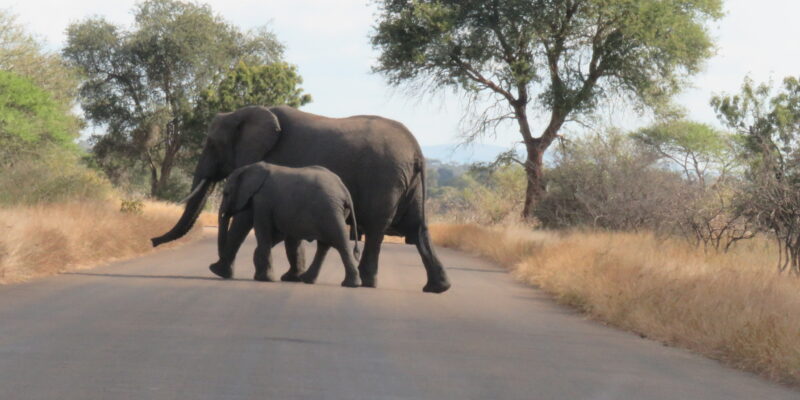
A mom or matriarch was crossing the road with a youngster.

Visiting Kruger National Park is a mixed bag. There may not be an animal insight for long stretches, and with the maximum speed of 40 km, 25 miles per hour, the drive may be slow and tedious with dense vegetation along some roads. Often, vegetation impedes the view of what may have been exciting sightings in more open spaces.

The dangers are many. When more than two visitors are engaged in a self-drive, unless they’re riding an open vehicle or large SUV with huge back windows, the rear seat passenger’s views may be disappointing at best. Strict rules and regulations prevent passengers from hanging out of windows or standing up in sunroofs.

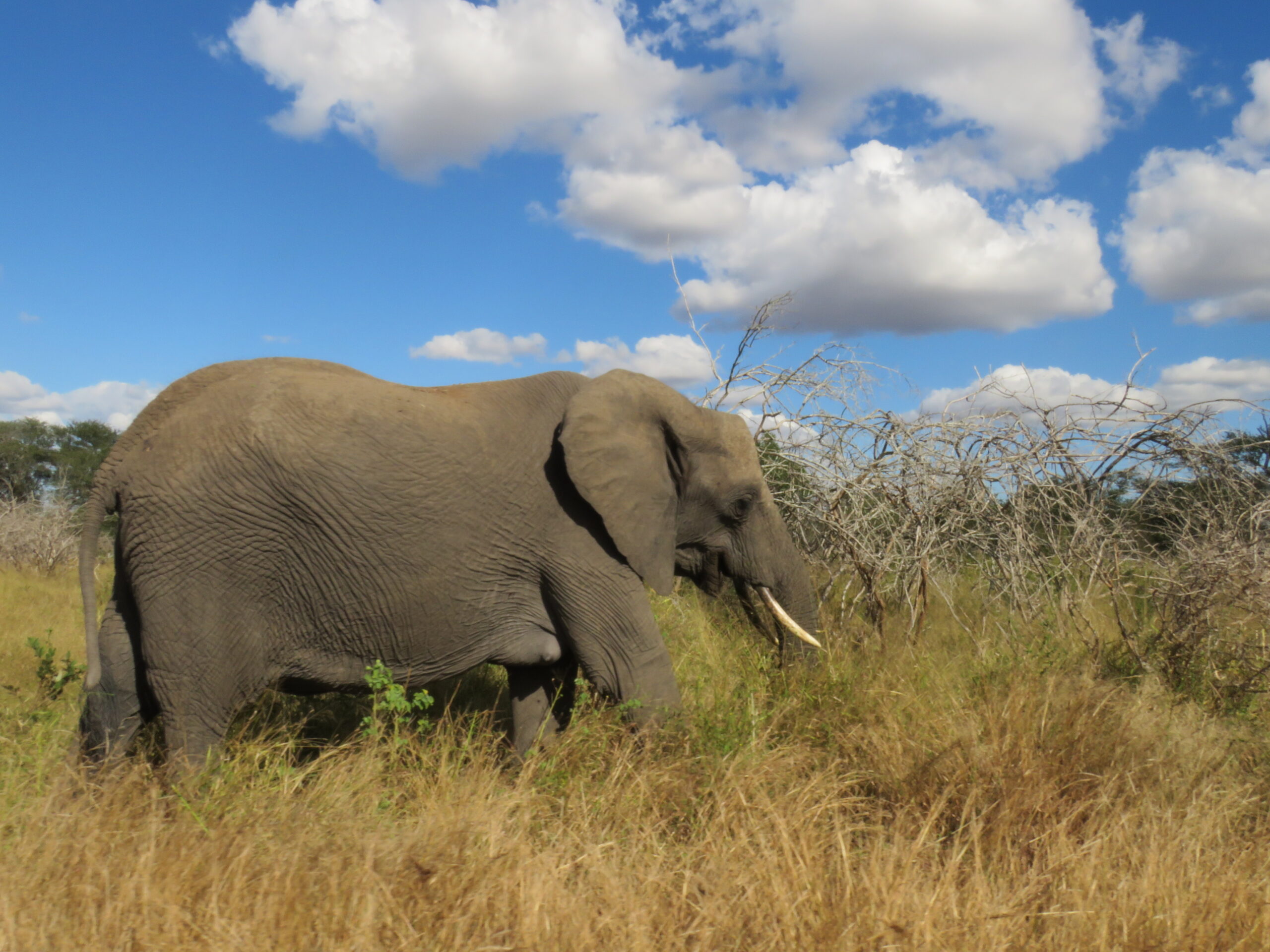
This was one of the first elephants we spotted on Sunday.

In a moment, any of the wild cats could leap atop a vehicle resulting in a severe or fatal injury. Their reaction time is far superior to ours. Also, it is forbidden to get outside of any vehicle on a self-drive. However, on a few occasions, on guided safari/game drives, there may be instances whereby meals or snacks are served in the bush, or a guided walking safari is conducted by an experienced guide leading the walk, carrying a weapon.

As for what we consider the best way to see game in any wildlife-rich national park is riding in a raised, open-sided safari vehicle as high up as possible, enhancing the possibility of distant sightings. To think that wildlife necessarily stays close to a road is unlikely and unrealistic.

Such magnificent beasts.

That’s why we particularly enjoyed the Maasai Mara in Kenya and Chobe National Park in Botswana, both of which resulted in off-road dashes to reach distant wildlife. Ultimately, it was all the more exciting. But, in Kruger, staying on the few paved roads and the numerous side dirt and gravel roads is amazing when visitors can see almost every form of wildlife that inhabits the park.

Lowering one’s expectations about the “Big Five” as a prerequisite for a fulfilling day in the park is vital for embracing what the park is all about. It’s not a zoo and hopefully never will be. Kruger is described as follows here:

“Why visit the Kruger National Park? The world-renowned Kruger National Park is South Africa’s largest wildlife sanctuary with nearly 2 million ha (4.9 million acres) of unrivaled wilderness and wildlife land, and home, not only the Big Five but more species of large mammals than any other African game reserve.”

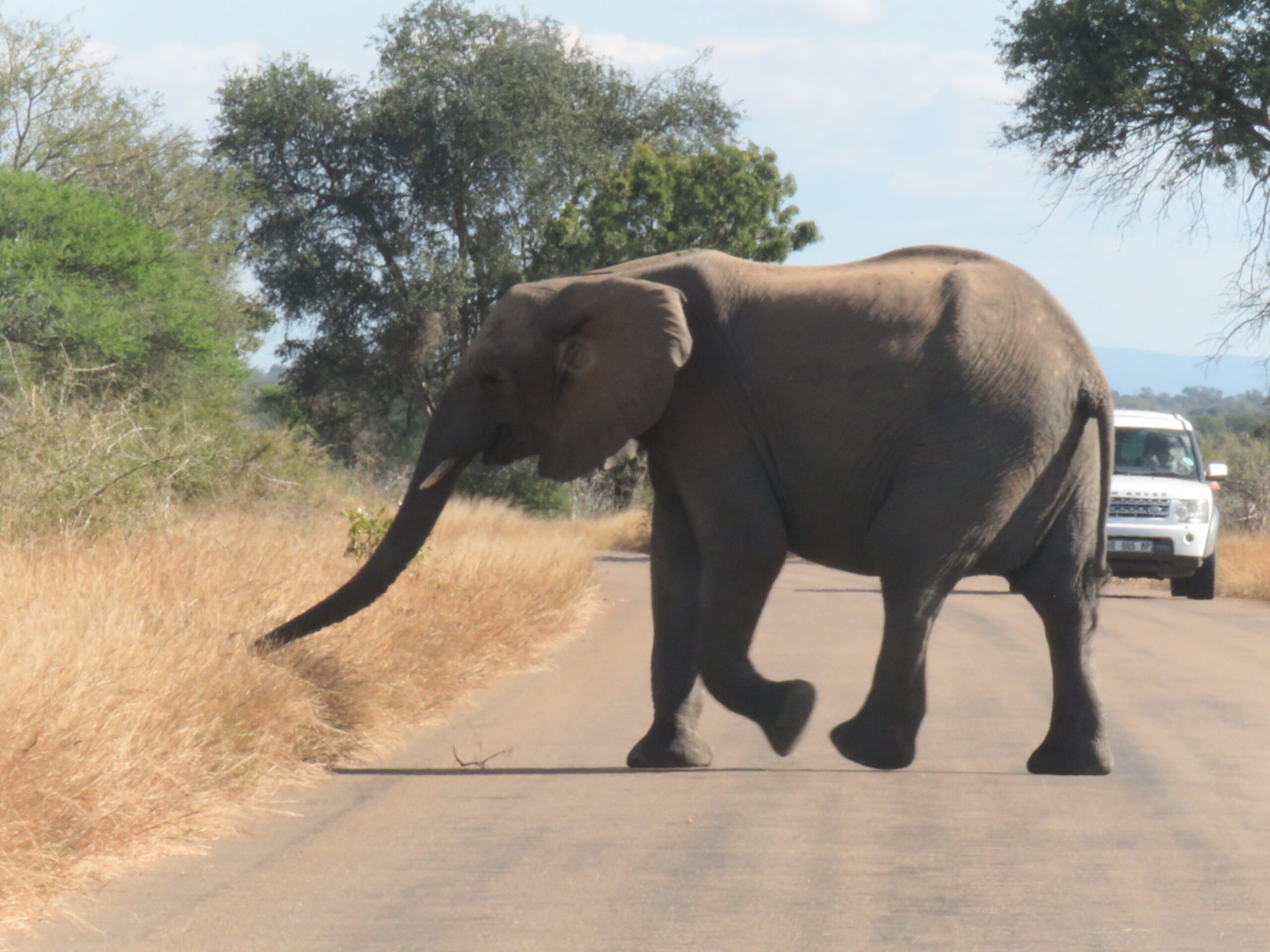
An elephant preparing to cross the road is wary of vehicles.

Of the top 10 safari parks in the world, at this juncture, we’ve visited five of the 10. Here is the link with detailed information. As we peruse this link, our interest is piqued to see more of these at some point in the future. But, at this point, time is not our friend.

With the pandemic in mind, and the ability to travel unknown in the future coupled with the realities of aging, we can’t predict what the future holds. At this point, we don’t know where we’ll be in 50 days from today when the visa extension granted to foreign nationals by South Africa President Cyril Ramphosa ends on June 30th.

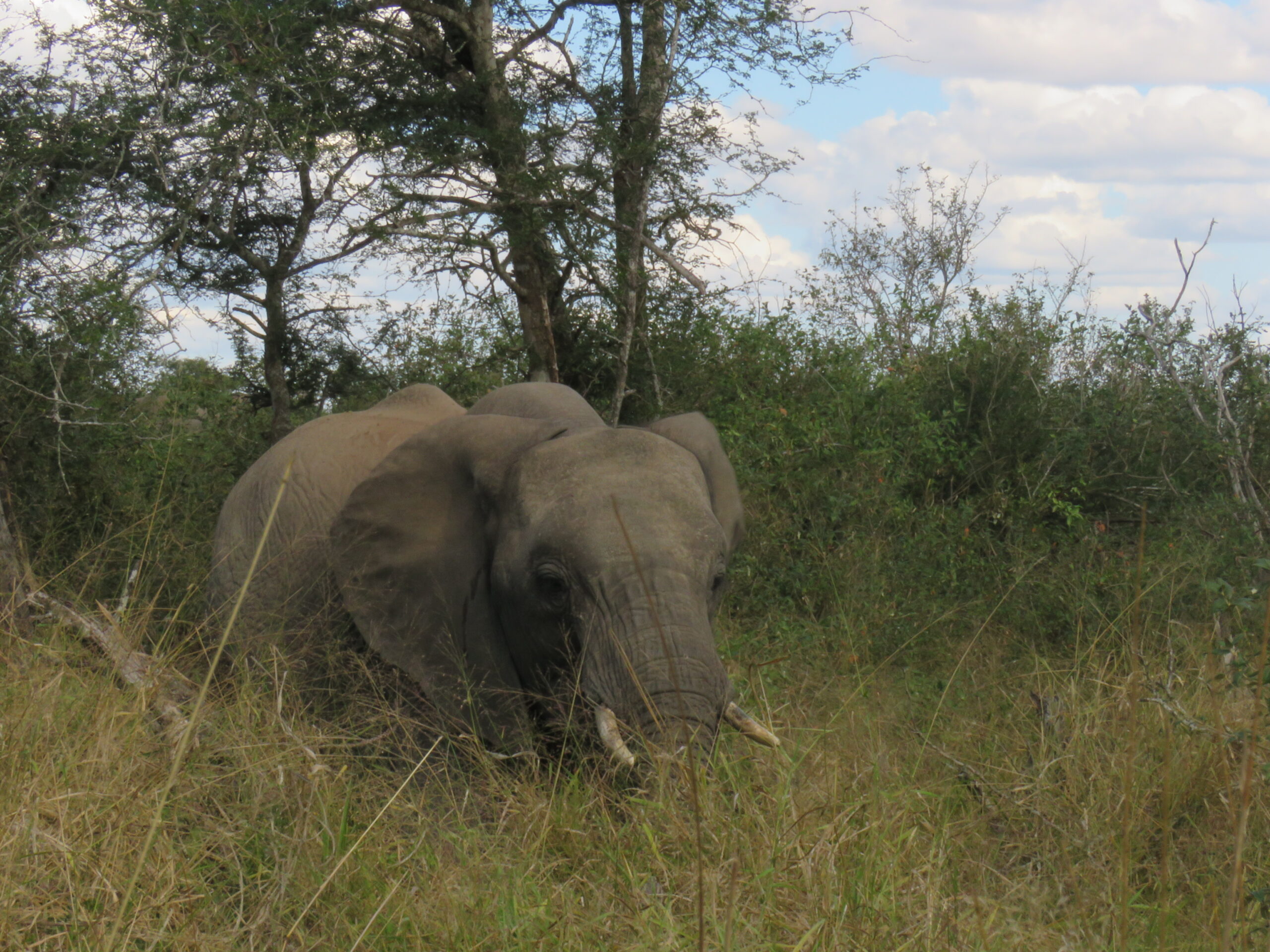
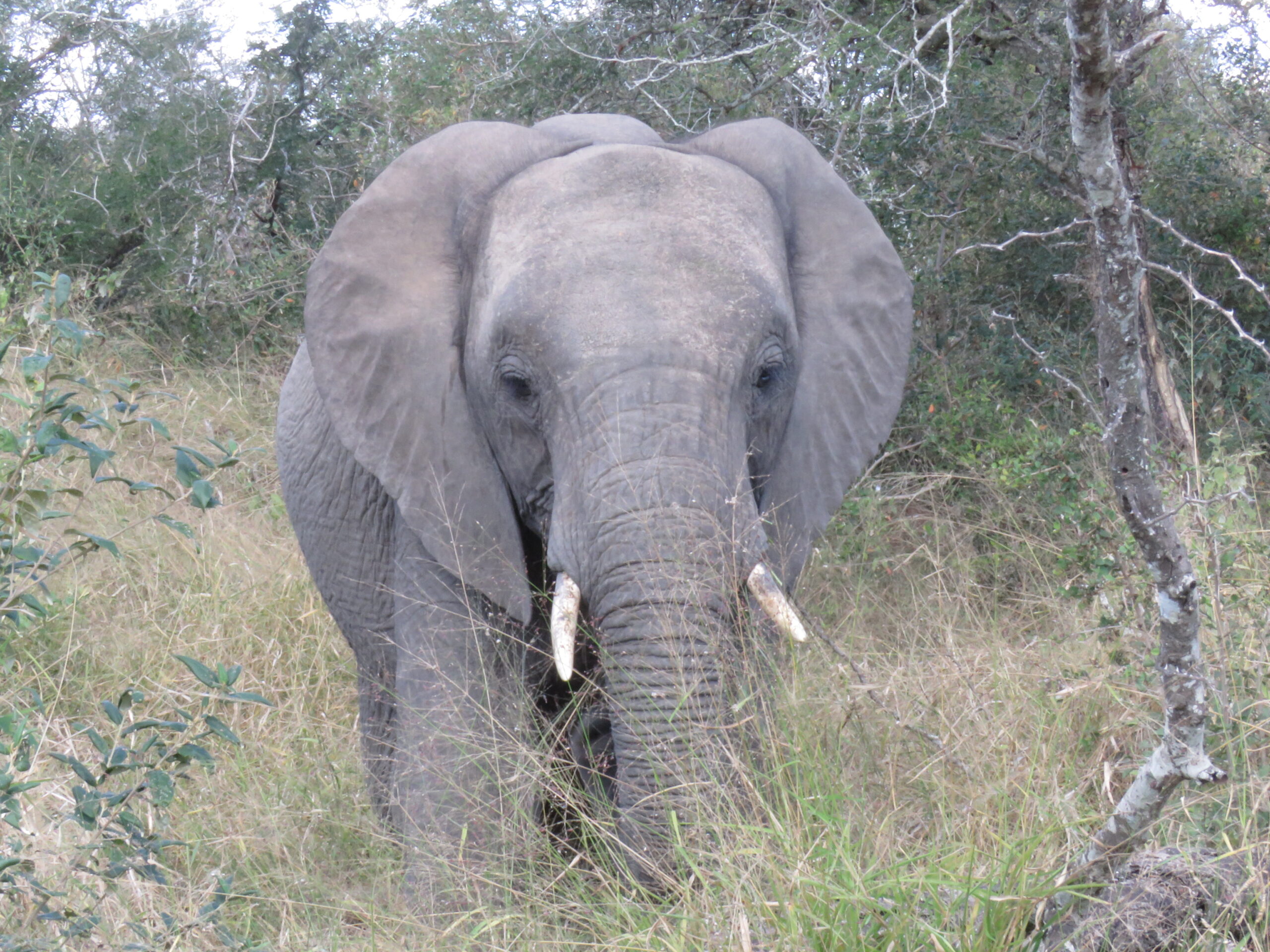
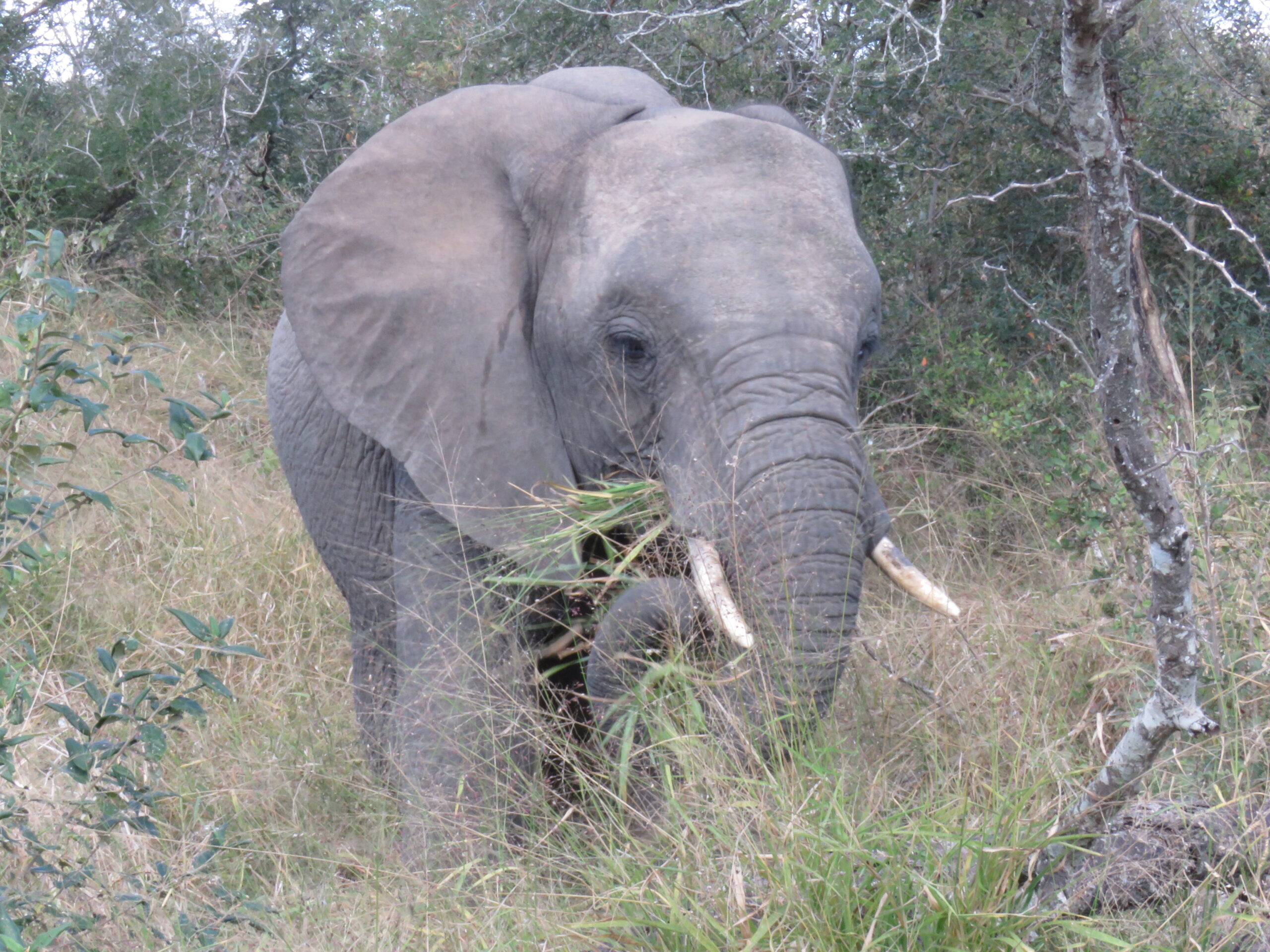
It’s wonderful to watch the elephants feed. A typical African elephant consumes 300 pounds, 136 kg per day.

Before Covid- 19, we often had the next two years booked in advance. Recently, a reader inquired about our upcoming itinerary. Other than the four upcoming cruises we have booked, the first scheduled for November 2021, none of them may ever set sail. Subsequently, we don’t have an upcoming itinerary. We promise, when and if we do, we’ll certainly post it here.

Enjoy the new Kruger National Park photos we’ll be sharing today and over the next few days. No, they aren’t necessarily unique from what we’ve shared in the past, and yet, we’re still thrilled with what we’d seen only two days ago.

A mom and a baby grazing.

Today is an excellent and sunny day, typical for fall in the bush. At the moment, four warthogs are hovering in the garden, including Little, who is napping close to the veranda. No less than a dozen helmeted guinea fowl are pecking at the seeds we tossed on the ground.

Another elephant was crossing the road. We always wait patiently while often some cars may quickly zoom past.

Go-Away birds are making their hysterical sounds while four hornbills are pecking at the bedroom windows, the dining room window, and the windows on the car. A few minutes ago, we fed about 50 mongooses some leftover meat. They are staying around, making their adorable chirping noises.

Although difficult to determine in this photo, this elephant was giant, old, and very wrinkled.

One of our favorite bushbuck, Thick Neck, is hovering in the dense brush, waiting for the pigs to leave since they don’t allow the small antelope to get a single pellet. Three wildebeest are drinking from the birdbath and the pool, and of course, we’re as content as we could be.

Happy day!

Photo from one year ago today, May 11, 2020:

“Pig in the parlor.” Two years ago today, we left South Africa and posted more of our favorite photos. This was the second time Little came up the steps and into the house while sitting on the sofa and didn’t see him right away. We howled. We always love seeing this photo! Now, it is so fun to have him visiting us here. He’s still quite bossy, but we’re managing fine with him. Does he remember us? It appears so when he tries to get very close to me. But, we keep him at a safe distance. For more, please click here.

A fantastic Mother’s Day…A special treat on the trail cam!!!…

It gives us a strong incentive to continue to check at night.

Yesterday morning I rushed through the post preparation, and in no time, we were outside the door, on our way to Kruger National Park. Thirty minutes later, we crossed the Crocodile Bridge in search of all possible sightings in the river. We spotted a few crocodiles on each side, but with cars behind us on the single-lane bridge, there was no way we could stop for pictures. We were prepared, as usual, not to see anything.

However, the theory is that getting there right after sunrise was the best time to see wildlife.

We hadn’t noticed this as critical when we frequently entered the park after downloading a post when it could be as late as 10:00 or 11:00 am. But we often see so much. Even at times, as we enter the early afternoon, we still see a lot of wildlife.

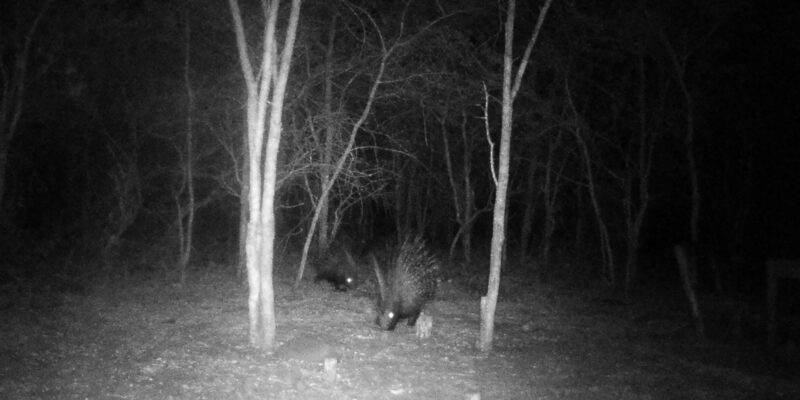
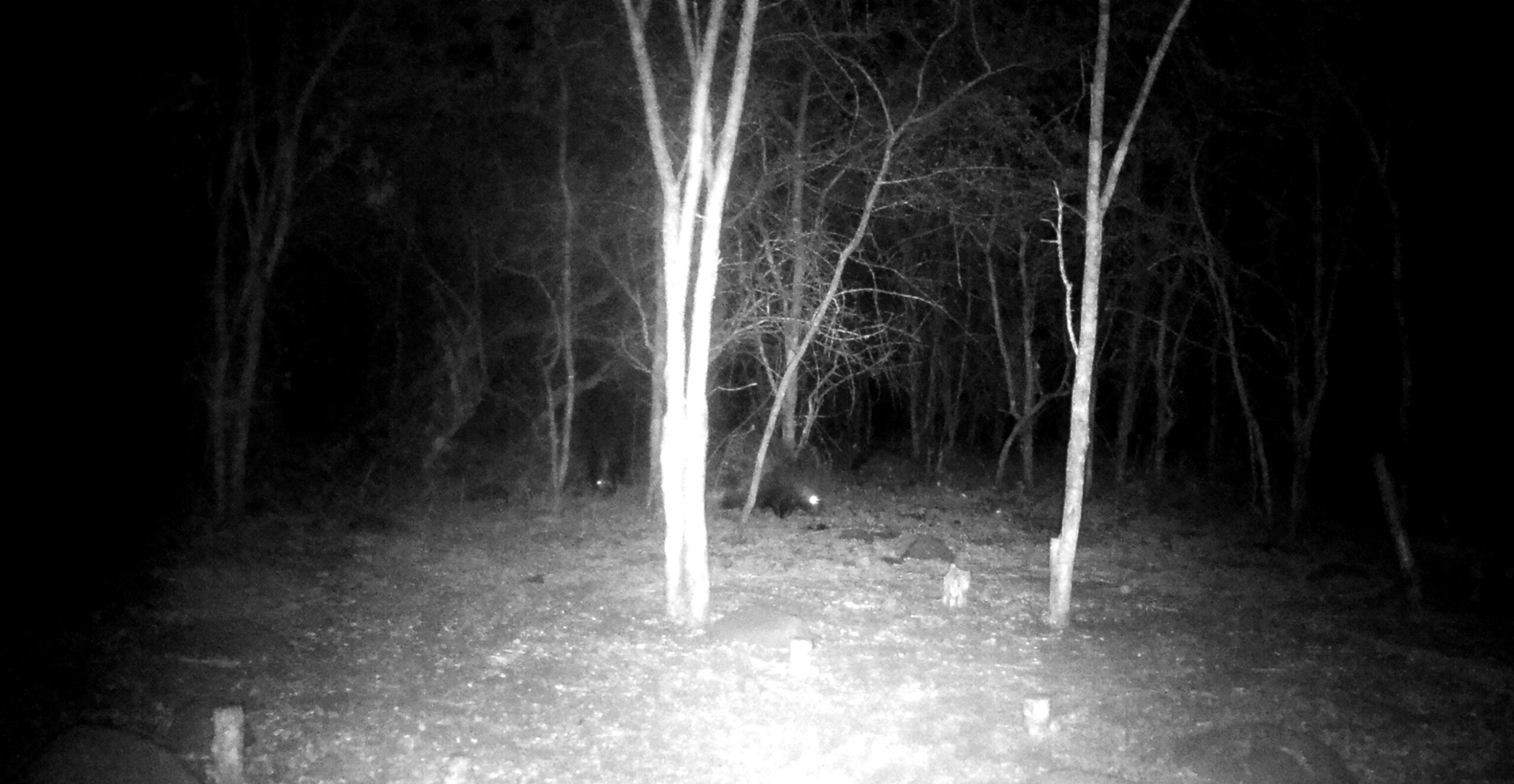
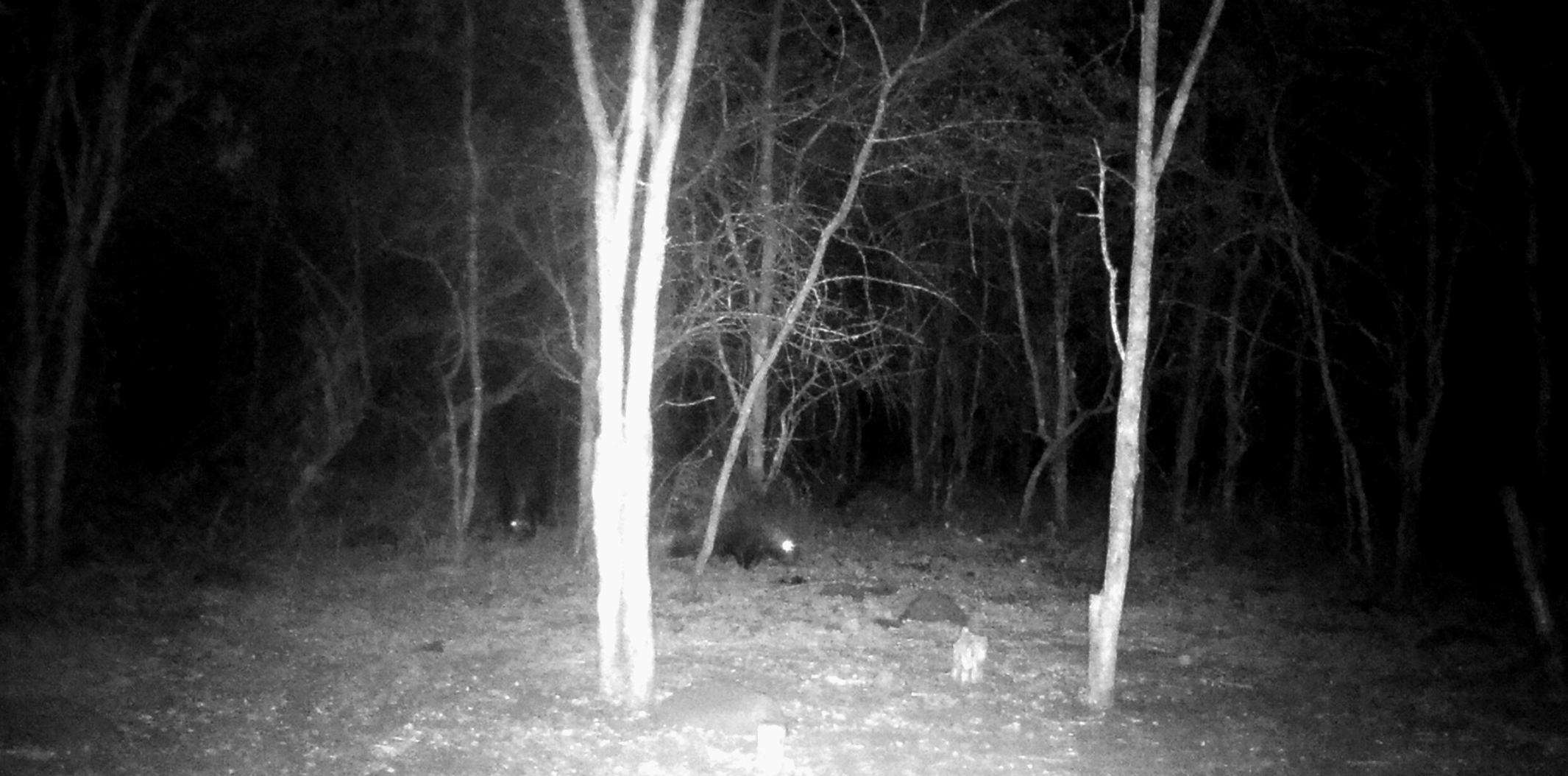
At first, we noticed two pairs of eyes on the trail cam photo.

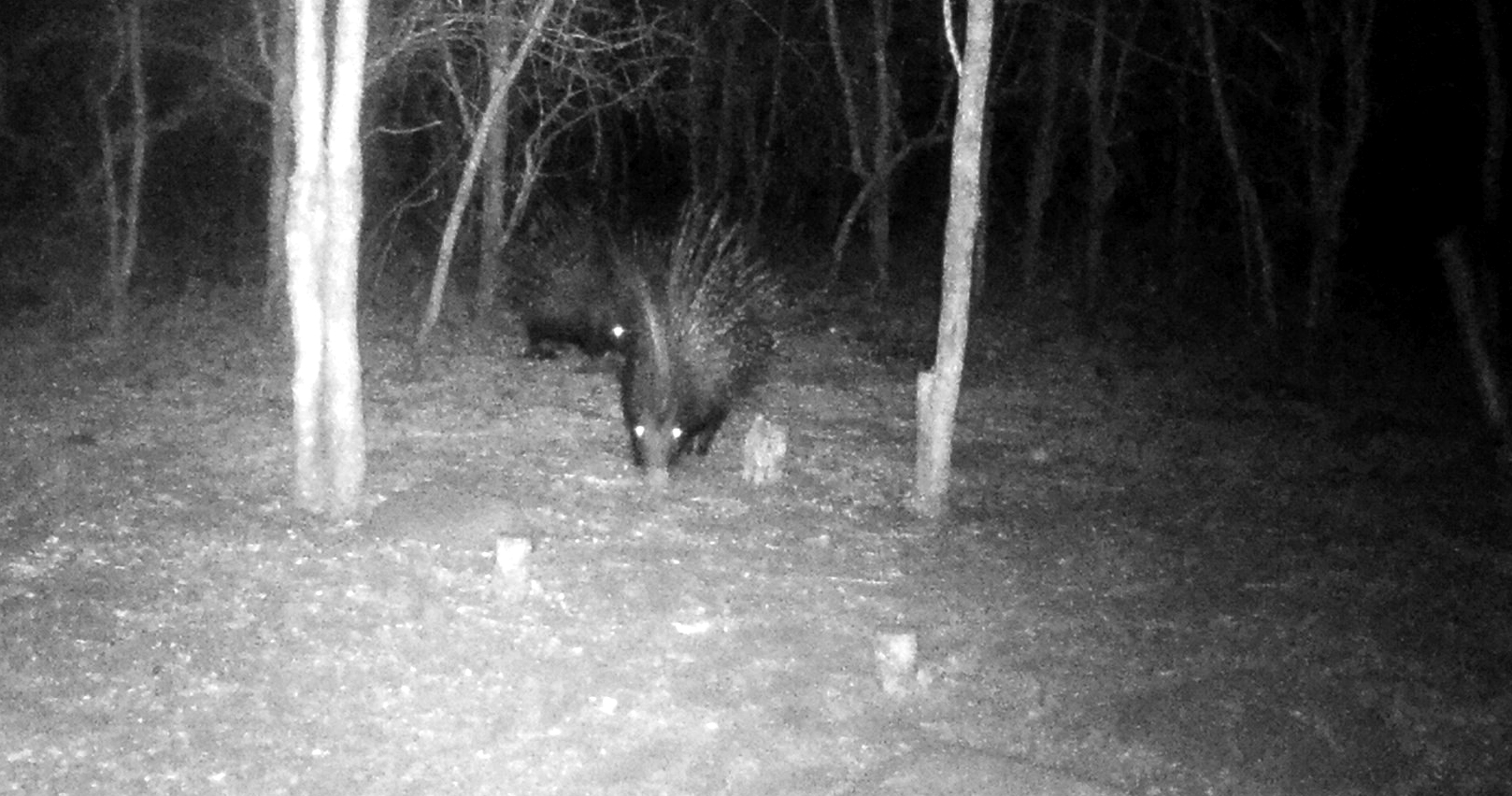
Here in Marloth Park, after watching the trail cam photos each day, the only difference we’ve noticed from what we’ve seen day and night is what we’re sharing today, our exciting photos of a pair of porcupines that the camera picked up at 9:00 pm, 2100 hours, not necessarily a time most visitors would be on a game drive in Kruger. The exception to this would be during the hottest times of the year when wildlife hunkers down in the bush undercover on hot days.

Thus, today, we’re sharing the trail cam photos, and tomorrow, we’ll be back sharing the beginning of a series of wildlife photos from yesterday’s visit to Kruger. No, we didn’t see big cats, which most visitors make a priority, but for us, we’re happy to see whatever nature bestows upon us.

As for Mother’s Day, Tom made it very special for me. Generally, we don’t buy gifts for one another when space in our luggage is limited. While at Lower Sabie in the park, Tom bought me a beautiful bag I can carry when we go out to dinner or visit instead of the huge oversized heavy black bag I use on travel days.

With caution, the porcupine pair moved into the open area of the garden.

On another note… Over the years, I’ve been carrying the Africa-printed fabric grocery bag we purchased in Kenya for US $2.00, ZAR 28, in 2013. It shows no sign of wear and tear whatsoever. I was tired of carrying a grocery bag for a handbag. Yesterday, Tom purchased a new bag for me at the shop near the Mugg & Bean, a black and white printed South Africa shoulder bag, ideal for going out to dinner or visiting friends.

It had been so long since I had something new like this. I felt like a “kid in a candy store.” Oh, how the little things in life mean so much. If I had purchased such a bag in my old life, I wouldn’t have given it another thought once I brought it home. Now, the simplest things are appreciated and handled with care, hoping they will last long.

By coincidence, while we were at Lower Sabie, we ran into Linda and Ken. We knew they were also going to Kruger yesterday, but the odds of running into them were remote. We giggled about seeing them outside the shop and once again hugged goodbye, not certain when we’d see them again.

Finally, they wandered back into the bush.

Once back home, we made a nice dinner and enjoyed a quiet evening in the bush, with many animal friends stopping by to round out the special day.

Today, our dear friend Alan is coming for sundowners and dinner. Tom had been chomping at the bit for our homemade low-carb pizza for some time, and today I’m making it for both of them. Alan also eats a low-carb diet. Since I don’t eat vegetables, I will have my leftover beef liver and chicken breast for dinner. It doesn’t sound very appetizing, but actually, it is pretty good.

I’d better pick up the pace here and finish this post. Once Zef and Vusi arrive to clean the house, we’d like to head out the door to Komatipoort. I’ve already cooked the cheesy sausages and made the cheese-based pizza crusts. When we return and put everything away, I’ll top the pizzas with sauce, mushrooms, onions, cooked sausage, and hand-grated mozzarella and Parmesan cheese and place them in the fridge to be cooked for dinner. Tom loves leftover pizza, so I’m making enough for three nights. I’ll figure out something for me for the remaining nights.

That’s it for today, dear readers. We hope you have a pleasant Monday.

Photo from one year ago today, May 10, 2020:

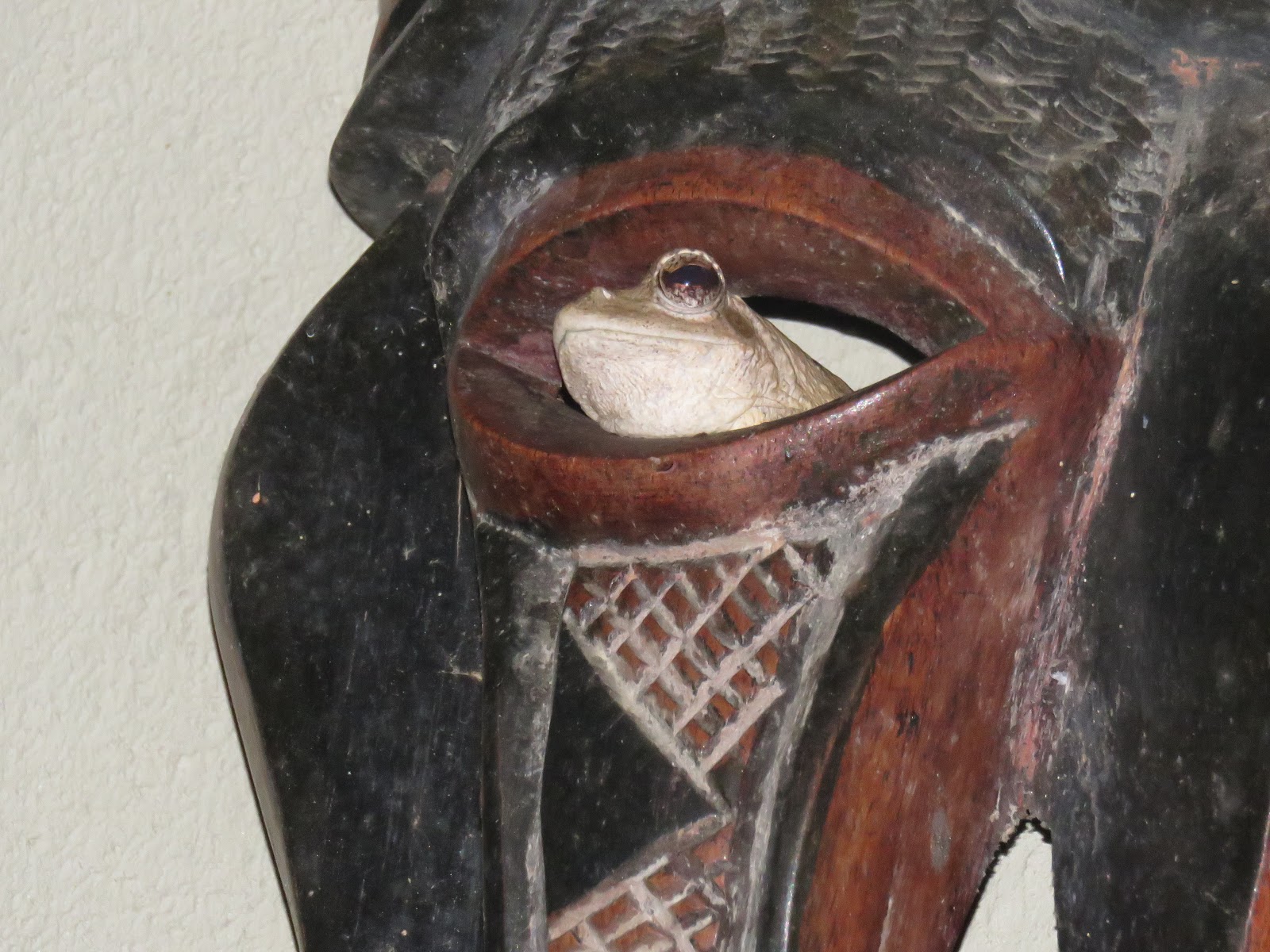
Closeup of our toad peeking out from a hole in a decorative mask when we were in Marloth Park in 2018. For more photos, please click here.

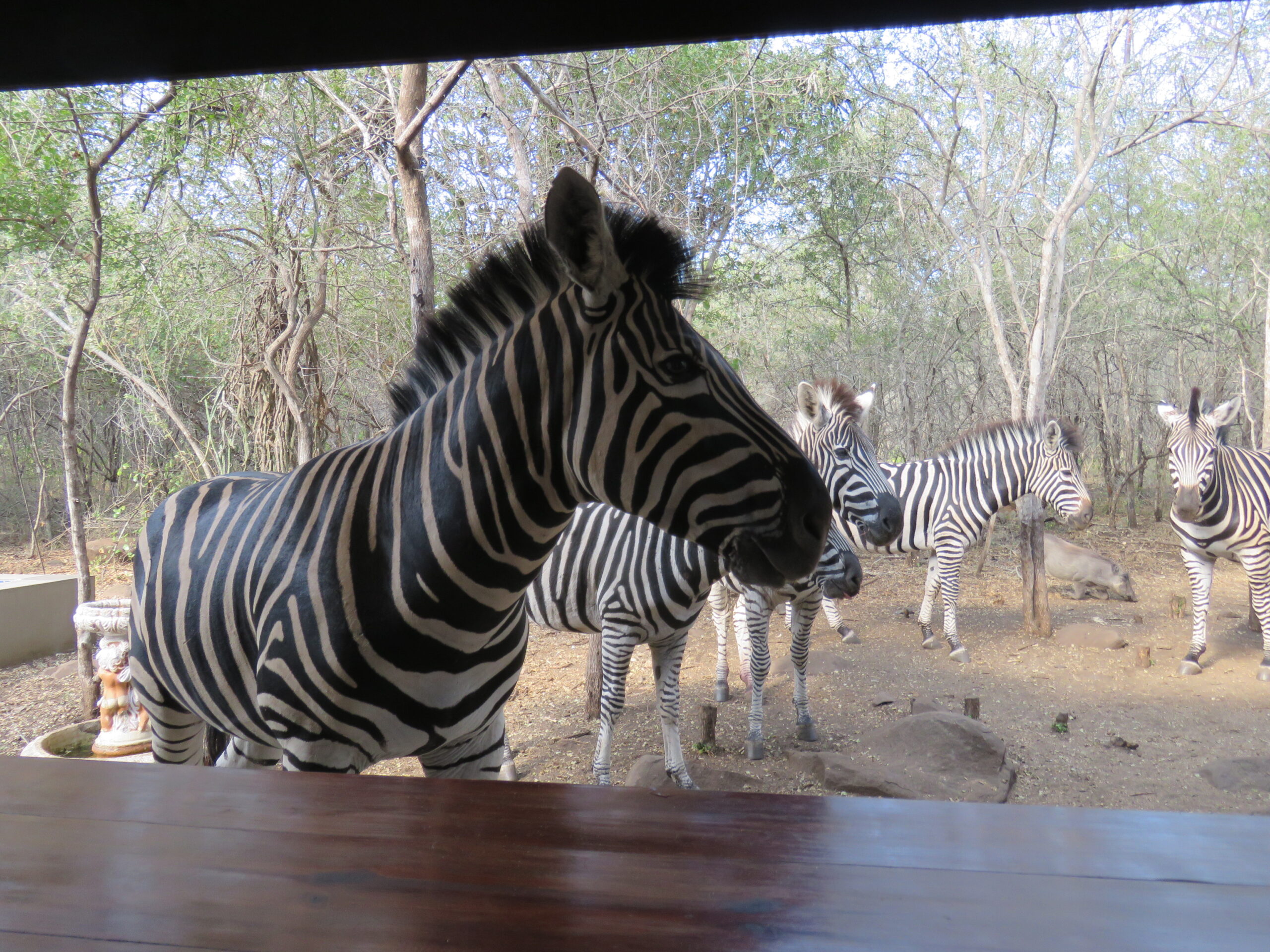
Happy Mother’s Day to moms throughout the world…Nine zebras came by this morning as a Mother’s Day surprise!…

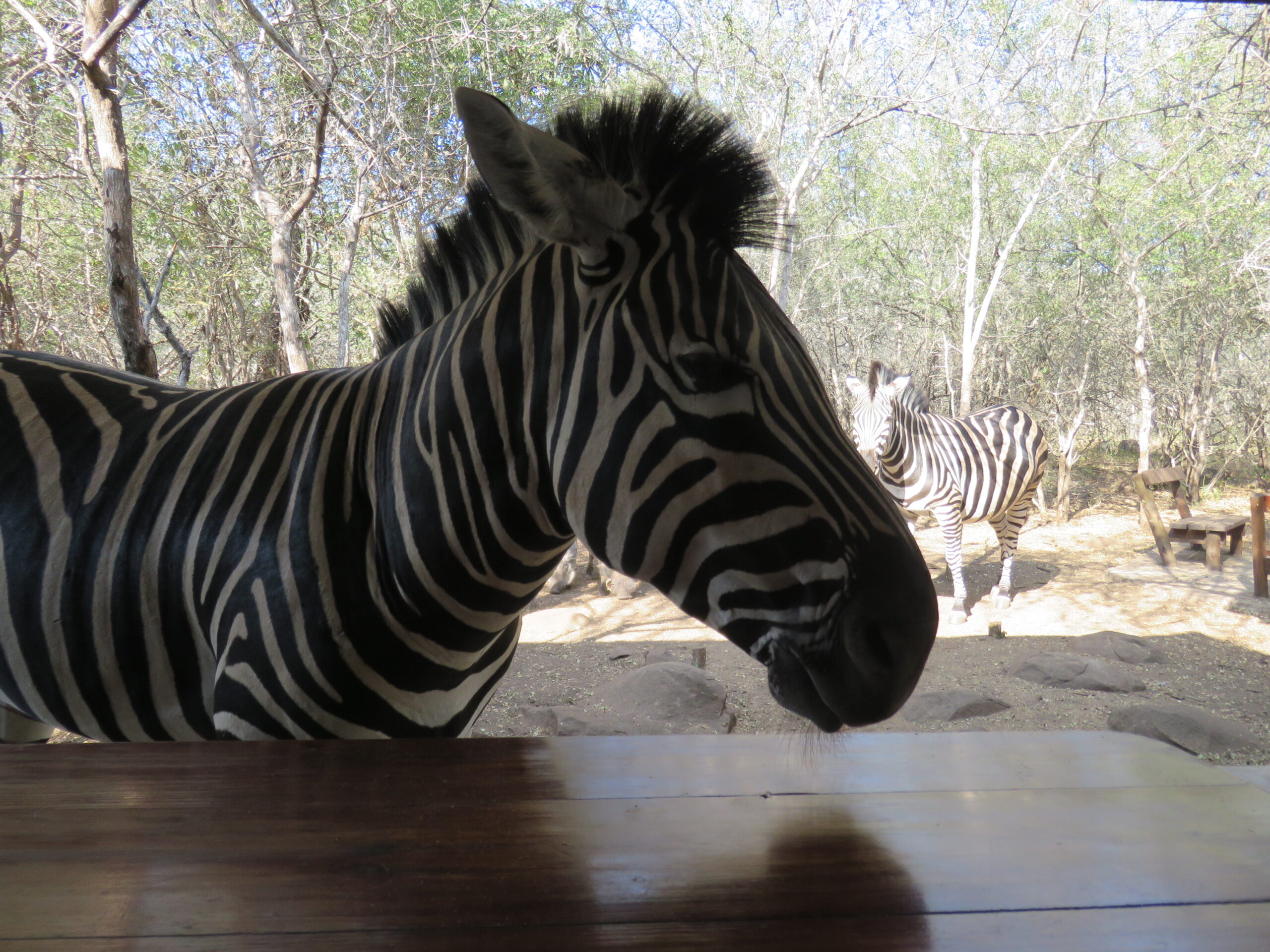
This morning, Tom had two surprises for me, one consisting of nine zebras in the garden that he kept feeding as I showered and dressed. I rushed as fast as I could to watch the friendly visit of our striped friends. Fortunately, I made it in time before they left and was able to take some photos and a video which we’ve posted above. I did this in time before their departure, and I was able to take some pictures and a video we posted above.

Sorry, but the second surprise is a tease. We’ll post it tomorrow with photos we’re excited to share. There’s a bit of editing necessary to present this second surprise. This morning, I’m rushing since we plan to go to Kruger National Park as soon as I get the zebra video uploaded, edited, and posted in today’s story. It’s uploaded at this time on YouTube and is expected to be ready soon.

Zebras on the side of the veranda, begging for pellets.

I stopped typing to check and found the video was done, allowing me to continue with this post which I will be rushing a bit for us to get on the road to Kruger National Park and see what treasures we’ll be able to behold while there. Sometimes, it’s a total bust, and we don’t see much. Sometimes we are amazed at what is happening before our eyes.

We no longer worry about whether it’s a sunny or cloudy day to visit Kruger when in both cases, we can take some decent pictures. Today is partially clouded, and it will be fine for us. It’s been very busy in Kruger the past few weeks, which prevented us from taking a chance and going.

This male must have been the dominant male. He came right up to the table to ask for more pellets.

Nothing is more disappointing than cars backed up, bumper-to-bumper when a sighting is observed, which is often wildlife we’ve seen regularly in our garden. For us, after all these years, as a rule, we do not stop at the impalas, warthogs, kudus, and wildebeest that we frequently see in our garden.

Most often, we’re on a mission to see cats, elephants, Cape buffalo, rhinos, crocodiles, exciting birds, and whatever other treasures and surprises the park may have to offer on any given day. As I mentioned a few days ago, it’s somewhat like fishing when patience and perseverance are necessary to “catch” anything, in this case, taking photos of some of our favorites.

The others watched him see if he was successful, but we’d already given them so much, we had to stop.

We often stop at Lower Sabie on the Sabie River for a bathroom break and take a few photos from the veranda at the Mugg & Bean Restaurant.

Speaking of dinner… Last night, we met Linda and Ken in a new restaurant that we hadn’t tried since our arrival nearly four months ago. The restaurant, Bos, is now in the space formerly occupied by Watergat, in the Bush Centre, just down the road. We’d dined at Watergat a few times in years past, but we were always disappointed.

Bos was a significant improvement. The service was fine, and the food was decent. There were only a few items on the menu I could eat, so I opted for roasted chicken and fried eggs. Tom had the ribs and the fries, but he said they’re not comparable to Jabula’s. For us, Jabula will always remain our favorite, but occasionally we can try other options. Our Friday night reservation at Jabula is always in place and always will be.

Then he made eye contact, and I melted.

Tom just completed the forms/papers for us to enter Kruger, necessary for anyone, including those like us with an annual Wild Card. We always have to bring the forms and our passports with us to gain access.

I will conclude now since we are anxious to get on the road. It takes less than 30 minutes to get to the entrance of the Crocodile Bridge, then the fun begins.

To all the Mothers out there, may your day be filled with wonderful surprises. Happy day to all.

Photo from one year ago today, May 9, 2020:

The sights and sounds of Victoria Falls from both the Zambia and Zimbabwe sides were unlike anything we’ve seen in the past. For more year-ago photos (which were “repeats” while in lockdown in Mumbai), please click here.

Dorothy, this isn’t Kansas…This is Africa…Python in a car!…

Last night, as we often do on Fridays, we headed to Jabula Lodge and Restaurant for dinner, arriving a few hours earlier to enjoy social time at the bar. With Covid-19 currently non-existent in Marloth Park, it feels safe to socialize with the locals. Last night proved to be an exciting evening, not only from the lively banter but from running into our friends Patty Pan and her husband Sydney, a lovely couple we’ve thoroughly enjoyed over the years.

We all sat at the bar commiserating over our wildlife sightings and events of the week, but nothing could stop the story Patty Pan had to tell and subsequently share in photos and videos on her phone. Tom and I couldn’t have been more excited to see her exciting videos and photos, some of which we’re sharing here today, with her permission, of course.

Python under hood #1

Where to begin? Patty Pan explained that she noticed several mongooses hanging around her driveway underneath her car a few weeks ago. No doubt, they were making their little chirping sounds, making Patty wonder what was going on. She looked under the car but didn’t find a thing. Sometimes nature throws a curveball, and we can’t easily figure out what is going on.

Inevitably, in time, the “reasons why” will pop up before our eyes, and we are astounded by the wonders Mother Nature presents to us, humans. And that’s exactly what happened to Patty. Several days later, the attendant lifted the hood (the bonnet, here in South Africa) and shouted, “SNAKE!” immediately slamming down the hood in sheer terror.

Python under hood #2

A commotion ensued as Patty Pan, the attendant, and a few onlookers were excited by this outrageous and once-in-a-lifetime sighting. Patty Pan, a highly regarded, experienced, and knowledgeable Honorary Ranger, didn’t panic. If she’d had the proper equipment with her, she could have readily removed the massive python from under her hood.

Immediately, she contacted Nadine, another Honorary Ranger and trained snake handler, to come to the petrol station, bringing her tongs and a bucket to place the snake in once it was retrieved. In a matter of minutes,  In no time at all, Nadine arrived, captured the snake, and carefully placed it in a proper snake container.

Python under hood #3.

The python was returned to the bush in Marloth Park, its natural habitat. It was adequately rescued and allowed to continue its life as one of the many in this exquisite wildlife-rich environment. What a story Patty Pan (and that petrol station attendant) will have to tell for years to come, let alone the incredible stories she’s accumulated over the years.

We couldn’t be more appreciative and thrilled that Patty Pan was willing to share her video and photo with us to share with all of you today. First thing, this morning, I uploaded the video on YouTube, the social media platform we use to upload videos to our site.

If the video appeals to you, please forward the link (click on the video, and the link will appear) to your friends and family, and let’s see how many hits we can get. Surely, this could result in a viral response.

So, as we say in the heading with the Wizard of Oz in mind, “Dorothy, this isn’t Kansas. This is Africa!” and this, dear readers, is what happens here!

Photo from one year ago today, May 8, 2020:

Where else in the world could you get a photo like this of a giraffe, taken in Marloth Park in 2019? Only Marloth Park offers such wonders daily, often referred to as “Paradise on Earth.” For more photos, please click here.

A mini spa day…The simple sights, sounds and smell in the bush…

Young male bushbuck with sprouting little horns.

It may be strange, but all those years of travelling around the world, fast approaching nine years, I never once had a professional pedicure or a spa service of any kind. For whatever reason, lately I’ve been thinking about getting a pedicure. I mentioned this to Linda and she suggested we could go together.

Louise had suggested a woman in Marloth Park who has a spa in the park, giving me a brochure with prices and her contact information. Today at 11:30, Linda and I meet at the spa for the pedicures. Since I don’t drive in South Africa, Tom will drop me off and pick me up when I call and let him know I’m ready to go.

Mom and five babies. Tiny took a liking to the mom.

In the United States and many other countries, spa pedicures range in cost from US $35 to US $80, from ZAR 498 to ZAR 1139, depending on location. Here in South Africa, the average price for the 60-minute service is US$14, ZAR 200, plus tip. This is an enormous difference! If the prices here had been compared to those in the United States, I don’t think I would have been motivated to make an appointment.

Again, prices for many goods and services are considerably lower in South Africa than in many regions of the world. The cost of living here is lower than any other country we have lived in, about half of the cost of living in the United States. Adding the enjoyment of the many friendships we’ve made while here, let alone the joy we derive from living in the bush among the wildlife, this couldn’t be more ideal for us.

Tiny and the five piglets got along fine since he was pursuing their mom.

Right now, situated on the veranda, the regular band of mongoose is here, three warthogs are looking for more pellets, as well as two bushbucks, along with a few stray impalas. In a matter of minutes everything could change. I often equate our outdoor life in Marloth Park, comparable to fishing.

Fishing, which we both enjoyed in Minnesota years ago, consists of patience and anticipation. There’s no difference here. We sit, wait, watch, and all of a sudden, magic happens. Luckily, we are not catching or eating what we find here. Instead, we “catch” a photo while revelling in the snorts of warthogs, the sweet chirping sounds of the mongoose, the thundering vibrations of the hooves of the zebra on the dry ground, and the endless melodic sounds of a variety of birds in the dense bush.

Wildebeest Willie, lounging in the garden.

Occasionally, we’re “gifted” with the heart-pounding roar of Dezi and Fluffy, the two lions in Lionspruit which borders our back garden. Nothing, anywhere in the world where we could live, compares to the barrage on our senses of the sights, sounds and smells of the bush.

You don’t often hear about scents in the bush. Recently, a reader inquired, asking if we smelled poop from the animals in the bush. We do not. But, the smell of seasonal blooming flowers, the smells emitting from the low lying brush in the bush, a neighboring roaring fire or braai, and the occasional smell of an animal’s hormonal permeating the air, is intoxicating at times.

And then, in the evening, the wonderful scents of our next meal of well-seasoned meat cooked on the braai, leaves a “souvenir of perfume” that we will always carry with us. Even, in the evenings,  the smell of citronella in our various candles and lanterns and the repellent on our skin, all intended to keep the mosquitos at bay, leave a smell we’ve come to recognize as pleasant and familiar.

More zebras in the garden.

No, we can’t stay here forever. No, we have no interest in buying a home or a vacation rental in Marloth Park or anywhere for that matter. We stand firm in our desire to remain free from the rigors of home ownership and responsibility. At some point in the future, when age forces us to stop or lessen our travels, we may have to implement a new philosophy and finally settle down.

Until then, we embrace the life which has been given to us for the moment and cherish every day and every evening. Obviously, what we will do in 54 days remains a mystery and a challenge. But, in our usual way, we will find a solution and in the interim, we’ll allow ourselves the privilege of experiencing the “present moment” for as long as possible.

Be well. Be safe. Remain diligent.

Photo from one year ago today, May 7, 2020:

The ostrich has the biggest eyes of any animal in the world. The giant squid possesses the biggest eyes of a sea animal. For more photos, please click here.

Today, a social day and evening in the bush…

Wildebeest Willie has now become a regular visitor, stopping by a few times each day.

Today, at 4:00 pm, a small group of us will be meeting at one of Marloth Park’s favorite Crocodile River overlooks, known as Two Tree for sundowners. Doing so requires the participants to bring lawn chairs. Without a single such chair in our bush home, we were able to borrow two chairs.

Linda and Ken, who will participate in the Two Trees gathering, have invited us for dinner following the event. No doubt, it will be a fun and entertaining late afternoon and evening. We so much appreciate being able to socialize after such a long dry spell months ago in India.

He doesn’t take any guff from the pushy warthogs who jockey for pellets.

It certainly has been a social dry spell for citizens throughout the world over the past 14 months since Covid-19 precipitated lockdowns in almost every country. At this point, we can’t help but wonder how safe the lessening of lockdown will impact the new cases of the virus as more and more private and public gatherings pick up the pace after all this time.

Surely, what’s transpiring in India now, with almost 400,000 new cases daily, has something to do with the lack of protective measures exercised by the masses attending political, social, and religious gatherings. It saddens us when we especially recall hotel guests wandering the corridors in the hotel in Mumbai, talking loudly and gathering in groups without wearing masks or social distancing.

Willie, in the morning shadows, drinks from the top section of the birdbath.

On several occasions, we were shocked by the hotel hosting weddings, conventions, and other events with little regard for the risks of Covid-19. This mentality carried through the entire country, and now, India is paying the price with these outrageous numbers of cases and subsequent deaths.

On the occasions where I went downstairs to pay the hotel bill, which later we had them bring the bill to us, again, I was shocked by the resistance to wearing masks, wearing masks properly, and lack of social distancing. The hotel staff tried desperately to get the guests to comply to no avail.

Willie, later named Broken Horn, spends a lot of time staring at us in an attempt to get us to give him more pellets.

But, the desperation by the privately-owned hotel to recoup some of their losses prompted them to allow social events to transpire during the worst months of the pandemic, which surely continued long after we left. We wonder if the hotel or any other hotels in India are still open for non-Covid guests.

Gosh, we’re grateful we were able to leave India. It’s so much safer here in Marloth Park. We often wonder about the accuracy of the stats here in South Africa when it appears cases are dropping at this point. And yet, just yesterday, we read a news article from what seems to be a reputable source, stating a potentially new lockdown on the horizon.

These two wildebeest were new to the garden, an adult and a younger male.

As mentioned in yesterday’s post here, the uncertainty during these times of Covid-19 is palpable for all of us. Many are frustrated over being unable to visit loved ones, and many miss traveling to their favorite locations. Of course, cruising has been out of the question and may continue to be so for a few more years to come.

We currently have four cruises booked for April 2022, most of which we expect to be canceled. One of our cruises will require a payment in full in July which is scheduled to set sail in November 2021. We feel compelled to pay the final payment since we got such a great price, which is now priced 50% higher. So, just in case it isn’t canceled, we’ll pay the final payment to lock in our price. It’s all up in the air.

That’s it for today, dear readers. Thanks for hanging in there with us during these peculiar times. Hopefully, as restrictions lessen (or not), we can still provide ample fodder to please our readers.

Be well.

Photo from one year ago today, May 5, 2020:

Tom and I were at Amazing River View in October 2018, when friends Lois and Tom visited for three weeks. For more photos, please click here.

Zebra day!…A delightful visit by nine of these wonderful animals…

A little cuddle among the dazzle of zebras.

Almost daily, warthogs, bushbucks, kudus, mongoose, francolins, and other birds stop by for a visit. However, zebras are less frequent visitors. Since arriving here over 3½ months ago, zebras have only graced us with their presence on two occasions. Yesterday was one of those occasions, and we couldn’t have been more thrilled.

When Tom happened to look out the kitchen window, he saw the zebras in the driveway. He tossed them some pellets. In no time at all, they came around to the back garden.

“Zebras are one of the many beautiful creatures inhabiting Africa. Many people know them for their iconic stripes and the never-ending riddle about them being black with white stripes or white with black stripes. From this site, here are 25 amazing facts about zebras:

Here are a handful of facts you might or might not know about these striped horses.

  1. The zebra is mainly white and striped with black or dark brown stripes, but black skin underneath their coat.
  2. There are different types of zebra, each with a different stripe pattern. The mountain zebra typically has vertical stripes on its neck and across its torso while horizontal lines cover its legs.
  3. Zebras run in a zig-zag pattern when being chased by a predator making it more difficult for them to run after them.
  4. The pattern of zebras stripes is different for each zebra, making them each unique snowflake!
  5. Their coats’ black & white striped pattern is a good bug repellant, keeping horseflies and other bloodsuckers at bay.
  6. A group of zebras is called a ‘zeal” or “dazzle.”

    It was fun to see two zebras drinking simultaneously.

  7. The Native American culture refers to the zebra as a symbol of balance and the sureness of the path.
  8. The Swahili name for the zebra is ‘Punda Milia.’
  9. Romans used Grévy’s zebras to pull two-wheeled carts for their circuses.
  10. In Roman Circuses, the zebra was usually called a ‘Tiger-Horse’ or a ‘Horse-Tiger.’
  11. When predators face, zebras will form a semi-circle and bit, nip or attack the predators if they come too close to them. They will also encircle an injured family member to protect it from further attack if the need arises.
  12. A mother zebra will keep her foal away from all other zebras for two or three days until the colt can recognize her scent, voice, and appearance.

    There were nine zebras in the garden, staying for over an hour.

  13. Zebras form hierarchies with a Stallion (male) in the lead, followed by his Harem (group of females) behind him.
  14. When traveling with his harem, the stallion will lead them with his head low and ears laid back.
  15. Zebra’s bunch together to confuse colorblind predators, such as lions, which mistake the pattern as grass.
  16. Zebras are one of the few mammals that we believe can see in color.
  17. Zebras are pretty short and can be 3.5-5 feet tall.
  18. The Grévy’s zebra is named after Jules Grévy, president of France (in 1882), who received a zebra as a present from the emperor of Abyssinia.
  19. Another name for Grévy’s Zebras is Imperial Zebras.
  20. A zebra can run up to 65 km/h or 40 mph.
  21. To sleep, generally, zebras don’t lie down – instead, they usually sleep standing up.

    We’re so enjoying seeing wildlife drinking from the birdbath, where we continue to add fresh water.

  22. Zebras can rotate their ears in almost any direction; this ability can communicate their mood with other zebras.
  23. Zebras have one toe on each foot.
  24. Zebras cannot see the color orange.
  25. A zebra species are called ‘Asinus Burchelli’ after a conflict between William John Burchell and John Edward Gray sparked. Burchell brought specimens from Africa to The British Museum, and the specimens died. Gray felt the need to Embarrass Burchell because of the incident; the name means “Burchelli’s Ass.”

    They drink from the top section and often drop down and drink from the bottom section as well.

We’ve researched several facts about zebras over the years, and each source provides new and exciting information about these stunning animals.

The sounds of their hooves pounding on the ground, the whinnying amongst themselves over pellets and jockeying for position in the garden, leave us smiling over their demeanor, rambunctious and determined. Each time we drive on Olifant Road, the only paved road in Marloth Park, we are in awe when spotting them at the side of the road or crossing.

They waited in a queue, taking turns drinking the freshwater.

We seldom see a solitary zebra. They are social animals who travel together, covering many kilometers in a single day. Even here in Marloth Park, which is only 3000 hectares, 6.7 square miles, they find plenty of space to wander. Whether in the parklands or the sparsely occupied residential areas, zebras may be seen running fast together or casually grazing on the grass and vegetation.

Residents of Marloth Park certainly appreciate the zebras offering them carrots, apples, and pellets when they stop by for a visit.

We haven’t been offering apples and carrots at this point, but once the winter comes, when the vegetation is sparse, we’ll begin offering these to our friendly visitors.

They were busy eating pellets for quite some time.

Today, we’ll be working on some research for the future and afterward head over to Louise and Danie‘s Info Centre for a short visit. The school holiday period has ended, and now, they have more time for a little social interaction. It will be good to see them once again.

If all goes as planned over the next 24 hours, we’ll be off to Kruger National Park tomorrow for a much-desired self-drive, hopefully returning with many good photos to share here.

A pretty female profile.

Happy day!

Photo from one year ago today, May 3, 2020:

A fish eagle, one of the most prolific eagles in Kruger National Park. For more photos, please click here.

Fantastic evening with friends…Little annoyances with credit cards…

One Tusk with his hair all fluffed up during the rutting reason.

On Friday night, when we had dinner with Linda and Ken, Tom asked me to bring my credit card that has substantial credit on it as a result of refunds for trips we’d canceled due to Covid-19 issues we mentioned prior posts. Unusual for me, I forgot to bring my “phone/wallet,” Since I’d planned to pay, Tom didn’t get his wallet.

As a result, this morning, Tom drove to Jabula to pay our bill using my credit card to reduce its credit further. Dawn, knowing we’d undoubtedly return to pay our bill, didn’t hesitate to let us out the door without paying. This morning, Tom drove to Jabula and paid the bill, using my card with the credit on it.

The four babies will soon be on their own, often staying together until they find a mate. Once they mate, they have no involvement with the piglets and wander about on their own, on occasion in same-sex groups called sounders.

When there’s an enormous credit on a credit card, we’ve found that most credit card companies eventually send a check to the address on file. They don’t like customers having credits on a card. I suppose it means they don’t make any money from us, unable to charge us interest on debit balances. We pay off our credit cards every month to prepare for any possible travel-related expenses which may arise.

This wouldn’t work for us. Our billing address is in Nevada. If a check were sent to our mailing service in Nevada, we’d have to pay extra fees to have it sent to our bank in the US. We called the credit card company and asked them to keep the credit on file for three months while we’ll use the card as often as possible to reduce the credit to zero.

Big Daddy and Bossy are hanging out together.

We prefer not to use that particular card in local shops, a favorite card offering many travel benefits and rewards. When out and about, the card had been used fraudulently in the past, requiring canceling the card and ordering a new one. To get a replacement credit card here to use in South Africa could take upwards of three months since they send them via USPS snail mail which is a disaster on the receiving end in SA.

During Covid-19, we’ve hardly been on the move, incurring new charges other than rental fees, car rental, food, and entertainment. In the pre-Covid past, we’d have considerable sums to charge on credit cards when we were often cruising, flying, and staying in hotels. We often accumulated many rewards points. It’s certainly not so much now.

Big Daddy has been enjoying lounging in the garden.

There are often “little things” like this that we must pay attention to, often by-products of this extraordinary life we live. Indeed, most of you experience similar issues from time to time, and they can be frustrating, however small. We try to stay on top of such things to ensure they “don’t get away from us.”

In our old lives, we frequently had to call utility companies, cable TV, and other services for errors in billing or service. Now, with our relatively simple lives, with no bills to pay other than credit cards and insurance, it’s considerably more manageable.

Two boys in the bush engaged in a bit of a scuffle

Last night, we had another fantastic evening with Linda and Ken. We didn’t get to bed until almost midnight but managed to get a good night’s sleep. I couldn’t help but linger for a while when Tom was up and already outdoors this morning. But finally, always afraid I’d miss something, I bolted out of bed to begin my day.

Recently, I signed up for a free week of AMC to watch season 10 of The Walking Dead. I can’t believe I love this zombie show. Zombies have never been on my radar. Tom had watched seasons one through nine with me in India but finally lost interest in the snarling. I wondered how I’d manage to watch 20 episodes in one week. But I came up with a plan.

Mom and four babies are soon to be set off on their own without their mom.

If I could multi-task and do old-post corrections on one screen on my laptop and have the show running on a spit screen, I could get the 20 episodes completed by the end of the seven days. I have until midnight tomorrow, May 3rd. So each afternoon, while I worked on the corrections, I found I had no trouble doing both. By the end of today, I should be able to complete and season and then cancel AMC.

Based on the above scenario, I’ve discovered that doing the corrections is made more accessible if simultaneously, I watch something on the split-screen. Tom made fun of me for two reasons; my love of the show and my weird ability to do both activities simultaneously. He always says, “I don’t multi-task, like you.”

Two impalas in the garden. They are timid, and we’re always surprised to see them stop by.

So there’s our past 24 hours, nothing earth-shattering but quite enjoyable. At the moment, we’re both sitting at the table on the veranda on a blissfully cool and sunny day, watching Mother Nature present one of her precious beasts after another to bring us more joy.

Photo from one year ago today, May 2, 2020:

A mom and her calf cooling off in the river. For more year-ago photos, please click here.