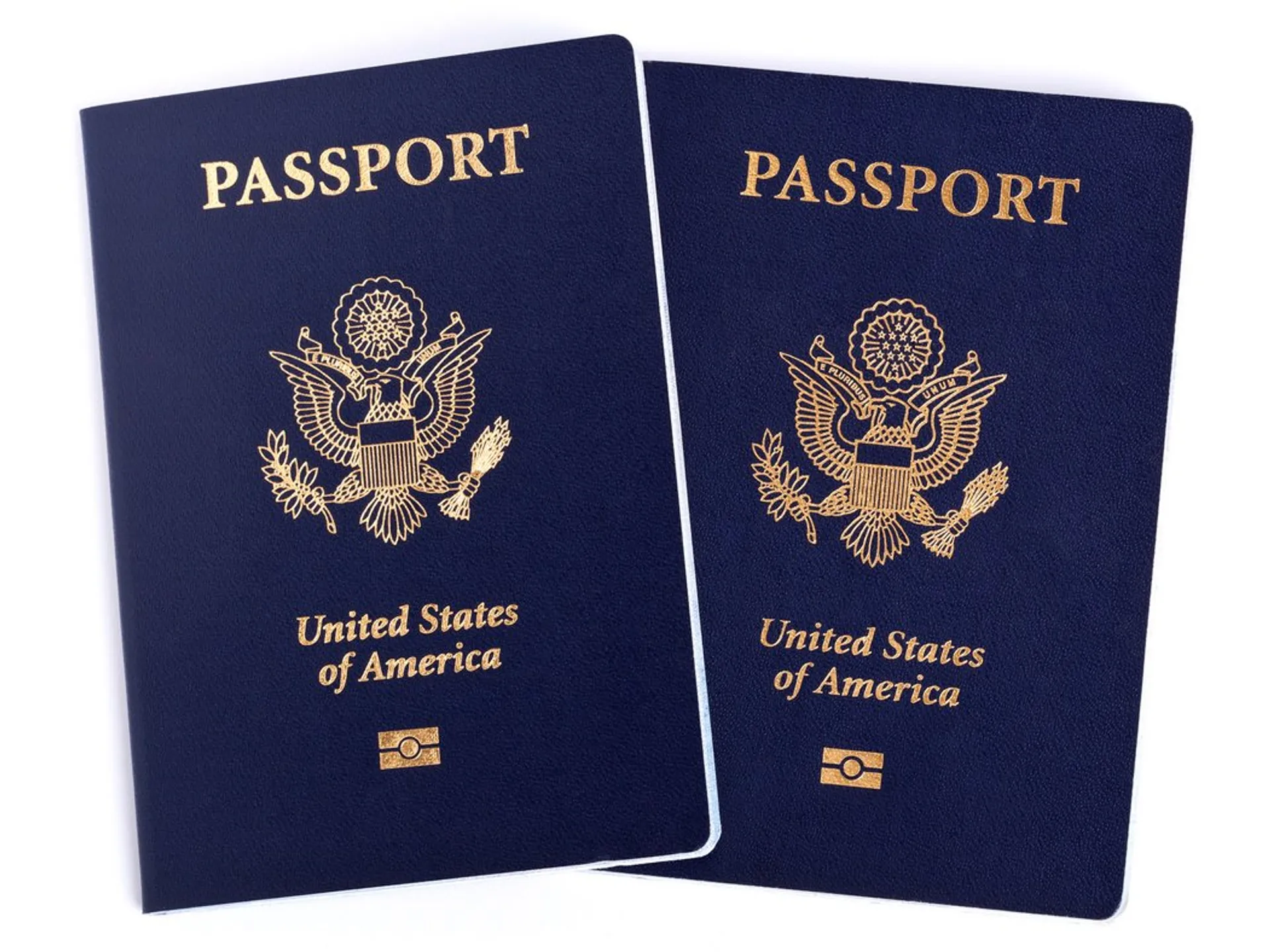
Day 2…Minnesota family visit…Ordering second passports today…Why?

Given the challenges of obtaining a Chinese visa, we chose to get second passports to simplify the process. Mailing off our only passport while abroad was never an option. With two, we can send one for visas and still carry the other, keeping our travels uninterrupted and our peace of mind intact.
See our original post on this topic here from November 2012.

Fourteen years ago, when we first applied for second passports, it felt like stepping into the unknown with a quiet confidence that we would figure things out as we went. We had just left Minnesota, our lives packed into suitcases and a sense of possibility that was both exhilarating and, at times, overwhelming. Back then, the idea of needing two passports seemed unusual, almost indulgent, until we found ourselves navigating the practical realities of long-term international travel.

We quickly learned that the world does not move at the same pace everywhere. Visa applications required surrendering a passport for days, sometimes weeks, and yet we were rarely in a position to stay put and wait. We had flights to catch, borders to cross, and plans that were fluid but still needed a document in hand to continue forward. That first, second passport, valid for only two years, became an essential companion. It wasn’t about convenience. It was about continuity, about keeping our lives in motion.

Now, fourteen years later, we find ourselves in a similar position, though everything feels just a bit more familiar, a bit more grounded. The urgency is no longer fueled by uncertainty but by experience. We know exactly why we need a second passport, because we have lived the alternative, and it simply doesn’t work for the way we travel.

The biggest factor is still visas. Some countries require advance applications to be submitted in person or by mail to an embassy, often along with your physical passport. While that passport sits in an office somewhere, waiting for a stamp or sticker, life doesn’t pause. Travel plans continue, invitations arise, and sometimes unexpected opportunities appear that require immediate movement. Without a passport in hand, even the simplest domestic flight can feel complicated, and international travel becomes impossible.

There is also the unpredictability of timing. Consulates and embassies operate on their own schedules, influenced by local holidays, staffing, and demand. What might be processed in a few days in one country can take weeks in another. We have learned not to rely on best-case scenarios. Having a second passport allows us to send one off into that uncertain process while still holding onto the ability to move freely with the other.

Another reason, one that has become more apparent over the years, is the complexity of geopolitical relationships. Certain entry stamps can complicate or delay entry into other countries. While it is not always an issue, it is something we have become increasingly mindful of as our travels span continents with differing sensitivities. A second passport provides flexibility and, at times, a layer of simplicity in an otherwise complicated world.

What has changed, and what feels like a small but meaningful gift, is that the second passport is now valid for four years instead of two. That extension reflects an understanding, perhaps, that more people are living and traveling as we do, moving between countries not as tourists passing through but as individuals weaving together lives across borders. Four years offer breathing room. It reduces the frequency of applications, the paperwork, and the waiting, and allows us to focus more on the experience itself.

Still, the process brings us back to that earlier version of ourselves in 2012. Filling out forms (DS-11), gathering documents, getting new passport photos, and writing letters (we use the same letter for each of us, separately, with our names, passport numbers, date of birth, and contact information) to explain why we need what we are requesting. There is a sense of déjà vu, but also an appreciation for how far we have come. What once felt like an unusual request now feels like a natural extension of the life we have built.

As we prepare to apply again today at a local passport office, I am struck by how something as simple as a small blue booklet can represent so much. It is not just a travel document. It is freedom, flexibility, and the ability to continue saying yes to the life we have chosen. It allows us to keep moving forward, even when parts of the process require us to pause.

And so, once again, we gather the paperwork, write our explanations, and prepare to send off one passport while holding onto another. It feels familiar, almost comforting in its own way. A reminder that while the world continues to change, and while we have changed along with it, the core of what we are doing remains the same.

We are still moving. Still exploring. Still finding our way, one journey at a time.

Be well.

Photo from ten years ago today, May 18, 2016:

The rice paddies ready for planting. See this site for more details. “The Balinese system of irrigating their rice terraces is known as Subak. It is such an important part of Balinese culture that, in June 2012, it was designated a UNESCO World Heritage Site. This method of irrigating land was inspired by ancient Hindu philosophy and has been used since at least the 11th century. Using this method, the rice fields were built around temples, and the allocation of water is the responsibility of priests. For this irrigation management to succeed, members of each community have had to cooperate and work in partnership. Each member of the community takes responsibility for maintaining the system’s integrity, and this is why the terraces tend to look so well-maintained. The rice farmers work as a unit to create appropriate canals and dams. Another important element of the Subak system is the religious festivals that mark the cycle of the year.” For more photos, please click here.