Day 22…Out to sea, heading to Reunion Island…Immigration Issues?…

The Schooner Bar, where we often play trivia in the afternoons.

Yesterday afternoon unfolded in a way we hadn’t quite expected. Since we hadn’t disembarked in Port Elizabeth, we still had to meet South African immigration requirements, which meant making our way to the makeshift immigration setup in the deck 5 dining room. It was close to 3:00 pm when we wandered down the long hallway, joining the short but slow-moving queue of fellow passengers who were also there to have their passports stamped for exit from South Africa. We assumed it would be a quick in-and-out stop, the kind of errand that hardly registers as a blip in the rhythm of a sea day. But as we’ve learned repeatedly over the years of our travels, assumptions are often the very things that set the stage for unexpected twists.

The room felt strangely quiet for such an official task. Crew members guided passengers to a row of temporary desks where uniformed immigration officers sat, stacks of documents, laptops, and ink pads at their stations. The faint scent of paperwork, leather passport covers, and a hint of impatience replaced the dining room’s usual aroma of meals. We stepped forward when it was our turn, offering our passports with the kind of confidence that comes from having done this countless times before. But almost immediately, the officer handling my passport paused, flipping through the pages once, then again, more slowly this time. Her brow furrowed, her lips pressed into a straight line…never a good sign.

View of the industrial port in the city of Port Elizabeth, South Africa. With the shuttles heading to a local shopping mall, we decided to stay on board.

She looked up at me with that practiced mixture of authority and mild annoyance that immigration officials around the world seem to perfect. “Where is your entry stamp?” she asked. I felt that familiar ripple of unease wash over me, the one that has accompanied every bureaucratic snag we’ve encountered during our travels. I assured her that we had entered South Africa in Cape Town just a few days ago and that the stamp should be there, tucked among the well-worn pages filled with years of border crossings. But she shook her head, still turning pages, still hunting for a stamp she insisted was missing.

There was a vast array of cars at the pier.

Time seems to stretch in these moments. You become acutely aware of everything: the shuffle of feet behind you, the officer marking other passengers’ documents, the hum of conversation growing as people begin comparing their own passport oddities. I felt a blend of frustration and worry rise in my chest. Even after all our travels, it’s never pleasant to be held up by an official, especially for something as seemingly straightforward as a missing stamp.

The officer motioned for us to wait while she communicated with a fellow officer who also flipped through the pages of my passport. We waited, trying to calm that small but persistent voice inside that always imagines the worst-case scenario. Had the stamp truly been omitted? Would this lead to some drawn-out process we’d be stuck navigating long after everyone else had returned to their holiday routines?

The fellow officer took my passport with far more confidence, flipping through the pages like someone who had done this thousands of times. And then, almost anticlimactically, he and the original officer concluded that the entry stamp used when we arrived in Cape Town was recorded as an “exit” stamp based on our prior stay in South Africa. Since we’d been to South Africa so many times, it was easy for them to make the mistake. They assured us we won’t have a problem in the future.

Imported cars, waiting to be shipped to various locations in South Africa.

The only peace of mind we could glean from the situation was that next time we enter South Africa, mid-June, we’ll easily get a new stamp from having just departed the USA, allowing us a new 90-day stamp.

Within minutes, our passports were stamped, and we were waved onward. The entire ordeal probably lasted no more than 15 minutes, yet it felt like a small saga, the kind that reminds us that even routine travel procedures can suddenly become moments of drama. As we walked back toward the elevators, I couldn’t help but laugh at how travel still finds ways to surprise us. Even after thirteen years on the road, the world continues to test our patience and teach us humility, one faint passport stamp at a time.
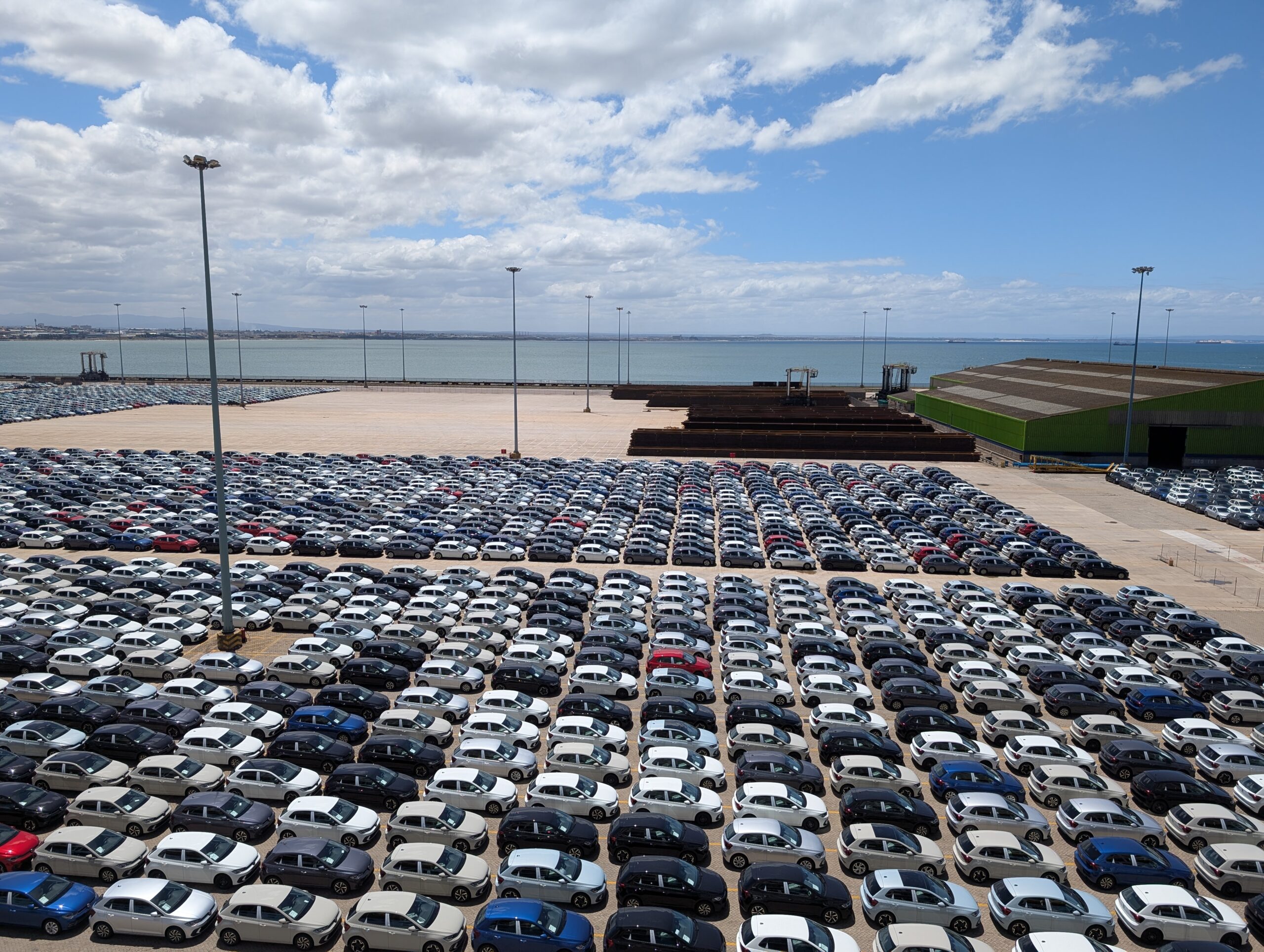
Most South Africans prefer white cars due to the heat.

Again, last night, we had a fun evening, staying out of our cabin until midnight, only to deal with a one-hour time change when we returned, which cost us an hour of sleep. I didn’t nod off until 2:00 am, awakening this morning at 7:00. A short nap may be on the agenda this afternoon, as we languish in yet another pleasant sea day.

Be well.

Photo from ten years ago today, November 17, 2015:

This area is a chicken farm with cages. Not all chickens in Fiji are free-range. Although they aren’t injected with drugs or fed chemicals, they may eat grains. There’s no way to be 100% certain that the eggs we purchase are from free-range chickens when crates aren’t labeled at the farmers’ market. For more photos, please click here.

Day 3, smooth sailing…Morocco…

A monkey towel arrangement on our bed last night. Cute.

Today, we’re in Tangier, Morocco, but we don’t plan to get off the ship. After all, we spent 2½ years in Morocco during our early travels and found that Tangiers is not much different from where we stayed in the Big Square and the Medina, living in a riad.

There were no tours available that didn’t include walking on uneven surfaces, up and down stairs, and shopping, none of which we care to do. Most of the passengers we’ve spoken to are disembarking to shop. There’s a huge shopping mall across from the port. At this point, neither of us could fit a toothpick in our luggage.

Many ports of call are about shopping, which undoubtedly benefits the local economy. Many passengers find shopping at ports of call a highlight of their cruising experience. However, many enjoy a variety of historic and scenic sights offered in the area.

Complimentary treats are offered in the Promenade Cafe, where we work on our laptops.

Here’s some information about Tangier.

Dear readers, we realize many of you expect us to participate in many tours at ports of call. But with my walking limitations and lack of desire to shop, we will only disembark the ship when it suits us. As much as we’d like to acquire more content that appeals to all of you, we tend to partake in events that appeal to us the most.

After posting almost 5000 posts over the past 13 years (two days until our 13th travel anniversary), we’ve decided that at this point, we will only seek experiences that are new, most enriching, and appealing. On this 47-night cruise, there will be plenty of those opportunities.

More complimentary treats are offered in the Promenade Cafe.

We love sea days. Yesterday, we attended a fantastic seminar on the history of Motown and have since spent time with the knowledgeable and friendly speaker, David. He’ll be presenting a few more music seminars over the next few days, and we’ll attend them.

Also, yesterday, we played three trivia games with other passengers. Last night was dressy night, and I could kick myself for never asking someone to take our photo. However, there will be several more dressy nights, and we promise to do so then.

We enjoyed a lovely dinner at a shared table in the dining room. The conversation was lively and animated, and it couldn’t have been more fun. Tonight is “white night,” but I don’t have any white pants, only a white shirt, which I’ll wear. Tom has a white shirt and pants.

We love all the socializing and meeting new people, our favorite aspect of cruising.

A classic car, an MG, is on display at the Promenade Cafe.

At noon, we’ll head to the main theatre for a movie we haven’t seen. After that, there are several trivia games to keep us busy for the remainder of the day.

We’ll be back with more tomorrow.

Be well.

Photo from ten years ago today, October 29, 2015:

A friendly man on his horse in Fiji, after a hard morning’s work, took time to say, “Bula!” For more photos, please click here.

Wrapping up e-visas, one more to go…Cruise lines don’t help…

Photo from a restaurant in Kenya on September 30, 2013. The buds of the sweet-smelling flowers were intoxicating, like a fine perfume. For more photos, please click here.

Yesterday morning, we initiated and completed the process of applying for the required e-visas, also known as Electronic Travel Authorities (ETAs), for New Zealand and Australia. Both countries require these documents, which we’ll print once we board the ship on October 27, in case printed copies are needed.

We won’t be visiting New Zealand during the 47-night cruise, but we will do so after we arrive and fly from Brisbane, Australia, following the completion of the 47-night cruise. However, on the last leg of the cruise, we’ll be entering Australia. The e-visa for Australia is mandatory and may have prevented a passenger from boarding the cruise without it.

To clarify, the 47 nights are three back-to-back cruises on the same ship, Royal Caribbean Voyager of the Seas. We will be required to check out of each leg and then check back in, which process will be made known to us once we are aboard. We have taken several back-to-back cruises, but since the pandemic, we haven’t experienced the process firsthand.

One of the more confusing aspects of preparing for a cruise, especially one as long as the 47-night sailing we’re about to embark on, is figuring out which visas, ETAs, or e-visas are required for each country along the way. Cruise lines do an excellent job of highlighting excursions, dining packages, entertainment, and, of course, the ever-tempting drink offers. But when it comes to the very serious matter of what paperwork passengers must have to even step foot off the ship, they provide surprisingly little guidance.

We’ve learned this the hard way over the years of cruising. At most, the cruise line may send a vague email a few weeks in advance, mentioning that “certain countries may require a visa or ETA.” Beyond that, they wash their hands of the matter. It’s left to the passengers to decipher government websites, apply through official or third-party services, and hope they’ve selected the correct visa type. It amazes me that a multibillion-dollar industry, which can plan the logistics of moving thousands of passengers, crew, and tons of food across the world’s oceans, can’t take the time to streamline this process for its guests.

The reality is that most passengers don’t think to check until it’s nearly too late. For people who don’t travel frequently outside of cruising, visas can be baffling. The terms themselves are confusing—what’s the difference between a visa, an ETA, and an e-visa? One country’s “visa” may be another’s “entry authorization.” Some are valid for years, while others are only valid for a few days. Some require embassy visits, while others can be obtained in minutes on a smartphone. And then there are tricky requirements, such as needing a printed approval rather than just a digital copy, which could leave a passenger stranded at the gangway.

We’ve always been cautious, knowing how important it is to have these details ironed out well in advance of boarding day. But even with our experience, it still requires hours of research. We often use government websites directly, double-checking against travel forums and news articles to ensure rules haven’t changed. For the average passenger, especially one who booked the cruise expecting everything to be “all-inclusive” and carefree, this is far too much to ask.

The irony is that cruise lines could easily fix this. They already collect every passenger’s passport information in advance. They know the exact itinerary, port by port. With a little effort, they could integrate a visa guide into the booking process, showing passengers exactly what’s required for each stop, with links to the correct application portals. Airlines manage to do this to some degree, warning passengers about visa requirements during check-in. Why can’t cruise lines?

Instead, the burden falls on each traveler. Those who are unprepared may find themselves confined to the ship, watching others disembark and explore. In the worst cases, passengers have been denied boarding at the very start of the trip for failing to have the proper paperwork. Imagine the disappointment of saving for a dream cruise for years, only to be turned away at the dock because no one clearly explained the rules.

As seasoned travelers, we’ve come to accept that visa research is part of the preparation, as essential as packing or buying travel insurance. But I can’t help but feel frustrated on behalf of the many passengers who get caught unaware. Cruising is marketed as the easiest way to see the world, your floating hotel that takes care of everything. And yet, in this one critical area, the lines fail to provide the support people need most.

If cruising is truly meant to be a stress-free experience, it’s time for the industry to step up. A simple checklist, tailored to each passenger’s nationality and itinerary, would prevent endless confusion. Until then, travelers must take it upon themselves to double and triple-check every destination’s requirements. It may not be glamorous, but it’s the only way to ensure that when the ship docks in a new country, you’ll actually get to step ashore.

Tomorrow, we’ll complete the ETA for Indonesia and finally be done with all of these needed for our upcoming back-to-back cruise.

Yesterday, Tom’s hearing aid charger arrived at our mailing service in Nevada, and it will be shipped via DHL International today. Due to lithium battery restrictions, the package must be wrapped in a specific manner; otherwise, it may be returned as undeliverable. This evening at 6:00 pm here in Spain (9:00 am in Nevada), I will call Maillink to ensure the package is wrapped correctly. We hope there are no issues at customs when it enters Spain in about a week.

Be well.

Photo from ten years ago today, September 30, 2015:

Many locals in Fiji, as well as some tourists, take this bus to other parts of the island. For more photos, please click here.

Important visa news for 29 countries..How does this impact us, or does it?…

From Travel & Leisure online magazine here.

“Passport Stamps Are Disappearing Across 29 Countries This Fall—Here’s What Travelers Need to Know

What was once a built-in souvenir is becoming obsolete as new technology takes over. By Opheli Garcia Lawler

Fun and exciting news for wine drinkers…Four years of free wine…For our Spanish readers and residents…

Free Vectors | Cheers! Wine glass illustration

From Travel & Leisure Magazine online at this link:

You Can Get 4 Years of Free Wine to Help Scientists Study the Effects of Moderate Drinking

A dream job for wine lovers. By Stacey Leasca Published on July 22, 2025

  • Researchers in Spain are conducting the world’s largest clinical trial on the health effects of moderate alcohol consumption, tracking 10,000 adults aged 50–75 over four years.
  • The study, funded by the European Research Council, aims to provide clear evidence on whether moderate drinking is beneficial, neutral, or harmful—but volunteers must live in Spain to join.

Do you enjoy sipping a glass of wine each evening? If so, scientists in Spain are looking for your help—and will give you free wine in exchange.

In May, The Olive Press shared the news that researchers at the University of Navarra’s Alumni Trialist Initiative (UNATI) are currently seeking volunteers to participate in the world’s largest clinical trial on alcohol, aiming to understand the effects of moderate drinking on human health.

As the volunteer intake form explained, participants will be tracked for the next four years to “determine whether moderate alcohol consumption is beneficial, neutral, or harmful to health.”

The research, funded by a €2.4 million (about $2.79 million) grant via the European Research Council, will track 10,000 people aged 50 to 75 split into two groups: one group who will consume alcohol daily (moderate amounts equal to fewer than seven drinks a week for women and 14 drinks a week for men) and the other who will completely abstain from any alcohol throughout the research period.

Those who sign up must be prepared to join either group, as they will be randomly assigned to either arm. Both groups will undergo in-depth health surveys at the start and end of the trial, be asked to join quarterly meetings, and be willing to work with health coaches.

“Policymakers and clinicians are currently perplexed on how to reduce alcohol harms in drinkers, because of contradictory guidelines: abstention is proposed as the healthiest option by many health advocates, stating that ‘there is no safe level of alcohol intake,’ but most nonrandomized studies found lower all-cause mortality and other beneficial outcomes in moderate drinkers than in abstainers among subjects over 50,” the research plan’s abstract explains. “However, potential biases may compromise these latter studies, particularly when effects are null or moderate.” Thus, it’s pulling together its “large pragmatic randomized controlled trial” to really get to what’s what.

“It will provide first-level evidence to confront the harms of one of the most widely used substances by humankind,” it added.

Both groups will receive “gift foods and beverages.” The abstainers will receive “0%-alcohol beer, and extra-virgin olive oil to foster adherence to the Mediterranean diet.” In contrast, the moderation group will receive “red wine (1.5 l/mo) and the same amount of extra-virgin olive oil to foster adherence to the Mediterranean diet as in the other group.”

To avoid any conflict of interest, the free wine will come from a supermarket chain, not from any single winery or alcohol company.

To date, the Olive Press reported that 6,500 participants have signed up, meaning the team is still seeking 3,500 volunteers in the 50-75 age range.

There is, however, one major catch: you must live in Spain to participate. But now’s as good a time as any to move there, right? “

Be well.

Photo from ten years ago today, July 23, 2015:

In Cairns, Australia, once we were inside the long, narrow boardwalk, it took us deeper and deeper into the salt marsh. We never saw other people. For more photos, please click here.

Risks of buying a home in a country other than your own…Fantastic evening with friends…

This is one of Louise and Danie’s holiday homes in Marloth Park. Tourists often visit Marloth Park and end up purchasing a house such as this. To see rental details for this property, click here.

As we spend time with family and friends while here in the US, we are often asked if we’d buy a home in another country besides the US. At this point, we have no interest in doing so and doubt we will be interested in the future. We’re not getting any younger, and the thought of the effort and costs associated with home maintenance doesn’t appeal to either of us, especially considering some of the risks listed below of undertaking such a task.

Besides, we still have a lot of interest and stamina to continue traveling, and buying a home anywhere in the world would impact our ability to continue paying the costs of travel, along with the costs of home ownership, which continue to escalate.

Buying a home in a foreign country can be a rewarding adventure, but it comes with significant risks that require careful consideration. Here are the key risks to be aware of:

1. Legal and Ownership Issues

  • Land ownership laws: Some countries restrict or prohibit foreign ownership of land or property (e.g., Thailand, Mexico’s restricted zones).

  • Title and Deed Concerns: Verifying a clear title can be challenging. Fraud or unclear ownership history is more common in some countries.

  • Zoning and building codes: You may unknowingly buy a property that violates local laws or cannot be legally used as intended.

2. Currency Fluctuations

  • Exchange rate volatility: A weak local currency may make buying cheaper, but long-term ownership costs (such as taxes, maintenance, and repatriating profits) can fluctuate dramatically.

  • Financing issues: Mortgages for foreigners may be rare or come with high interest rates and strict conditions.

3. Political and Economic Instability

  • Property rights risk: In countries with unstable governments, properties can be seized or heavily taxed with little notice.

  • Policy changes: Visa rules, ownership rights, or taxation laws may change quickly and without warning.

4. Bureaucracy and Corruption

  • Complex procedures: Legal paperwork, permits, and registrations may be slow, confusing, or require bribes.

  • Unethical agents: There may be little regulation of real estate agents or attorneys, which can lead to scams or misrepresentation.

5. Taxation Surprises

  • Double taxation: You may owe taxes in both the foreign country and your home country.

  • Inheritance laws: Local inheritance rules may override your will, leading to property disputes or forced sales.

6. Property Management Challenges

  • Maintenance and oversight: Managing property from afar can be costly and unreliable without trustworthy local support.

  • Rental restrictions: Short-term rentals (like Airbnb) may be banned or heavily taxed in tourist-heavy areas.

7. Cultural and Language Barriers

  • Miscommunication: Contracts, negotiations, and legal processes can be misunderstood due to language or cultural norms.

  • Local customs: You might be unaware of social expectations or informal rules that affect the property’s value or use.

8. Resale and Liquidity Risk

  • Limited buyer pool: Properties in remote or less desirable areas may be challenging to sell.

  • Lower appreciation: Real estate markets in some countries don’t grow as steadily as in more developed nations.

How to Reduce the Risks

  • Hire an independent, bilingual real estate attorney.

  • Research the country’s property laws for foreigners.

  • Visit multiple times to gain a deeper understanding of the local market.

  • Never buy sight unseen or rush into a deal.

  • Use a reputable escrow service and verify all documents.

On another note, last night we had a lovely evening at the home of our dear friends Chere and Gary, who live nearby in Eden  Prairie. The food was fantastic, mainly when Chere, a highly educated nutritionist and life coach, eats like I do, so she had many options for us, along with more carb-heavy foods for Tom and Gary.

The conversations centered around world travel, of which they’ve done frequently, especially with their trip last year to Tanzania and Kenya. Our shared love of wildlife generated many great stories.

With most of our days and nights booked over the next ten days until we embark on our return trip to South Africa, we won’t be able to see Chere and Gary again. But we will return to the US again next May for Miles’ graduation and then two years later for Madighan’s.

It’s been wonderful spending quality time with family and friends, with much more to come in the next several days.

Be well.

Photo from ten years ago today, June 5, 2015:

There was no post on this date ten years ago, as we lost a day due to crossing the International Dateline.

Part 2…32 tips for making a long-haul flight more comfortable…Delightful dinner at home of a friend in Marloth Park…

Sunset view from Frits’ veranda.

Today is the continuation of Part 2, 32 tips for making a long-haul flight more comfortable. Please see Part 1 here if you missed yesterday’s post..

“Charge your electronic devices.

The last thing you need is for your iPad to run out of juice one hour into an 11-hour flight. This is especially true if your in-flight entertainment system isn’t working. Remember to keep your charging cables and a power bank nearby as well.

Load up on podcasts.

Listening to podcasts uses less battery life than watching a movie, and they can be more entertaining than listening to music. You can get through an entire flight on podcasts alone.

Frits built a bonfire, referred to as a braai in South Africa.

Stay healthy.

Sitting in a cramped metal tube for the better part of a day, or more, is not suitable for you. Fight off dehydration and blood clotting — your two biggest enemies in the sky — by regularly drinking water, stretching, and walking around the cabin.

Bring what you need to freshen up.

This is for everyone else’s sake as much as your own. Bring toiletries in your carry-on so you can brush your teeth, apply deodorant, or even change your clothes in the lavatory. Also, try to stick to your bedtime routine. Wash your face in the bathroom before you go to sleep.

Get creative.

You rarely get the chance to sit down for such a long time, more or less distraction-free, so why not make the most of it? Bring a notebook, a sketchpad, or whatever else you need to exercise the right side of your brain. Switching activities throughout the flight instead of focusing on just one thing will also keep you feeling fresh.

Frits had a good setup for providing fruit for the bushbabies.

Be productive.

If you have your laptop with you, this might be a good opportunity to catch up on any tasks that need attention. Plus, everyone else on your flight will think you’re a sophisticated jet-setting businessperson. Just remember to download any necessary documents beforehand, in case in-flight Wi-Fi is unavailable.

Befriend the crew.

Simply not being horrible to the flight crew is a given, but you could always go one step further and actively make an effort to be nice. You’ll not only be doing something lovely for the folks who look after you up there, but also increase your chances of preferential treatment.

Pack extra snacks.

Airline food is often scarce, even on long-haul flights, and it’s essential to stay nourished. No need to overdo it, of course, but no one was ever sorry to find a couple of pieces of fruit or granola bars in their carry-on. Ensure the food you bring is not only nutritious but also easy on the stomach, so you’ll feel your best upon arrival.

Bushbaby heading in to get the bananas.

Moisturize your skin.

The dry, recycled air on a plane has a way of making your skin look and feel parched and lackluster. In addition to drinking plenty of water, slather on a bit of extra moisturizer. Use your thickest night cream — the one you reserve for winter. And reapply it throughout the flight.

Elevate your feet.

Sitting with your legs bent and feet on the floor for an extended period can cause pain and swelling in your ankles and feet as the fluid in your body naturally flows downward. If possible, prop your feet up on a special contraption, such as a portable footrest, or even your under-seat carry-on if it’s sturdy enough.

Wear compression socks.

Compression socks help minimize swelling on and after your flight by increasing blood circulation. At a minimum, they can keep you more comfortable, but more importantly, reduce the risk of developing blood clots during a long flight.

Frits was prepping the braai for cooking our steaks using dried used tea bags soaked in lighter fluid. Great idea!

Pack a nasal spray.

Have you ever noticed a generally icky and dry feeling in your sinuses while flying? That feeling is caused by a shift in air pressure and the low humidity in the cabin. Experts recommend using a decongestant nasal spray in each nostril before takeoff and descent to alleviate those symptoms.

Adjust your watch.

It’s essential to adjust to the time zone you’re flying into. As soon as you board the plane, change your watch to the local time of your destination, and then adjust your routine accordingly.

Be selective about your drink choices.

Some passengers enjoy a glass of wine or beer (often free on international flights) to accompany their in-flight meals and entertainment. That said, you probably shouldn’t treat booze as a way to fight boredom or cope with your flight. You’ll end up using those tiny bathrooms far more frequently than you’d like, plus alcohol is dehydrating and could mess up your sleep pattern. Soda can have a similar effect due to the caffeine, and the bubbles can cause you to feel gassy and bloated.

Bring your best conversation.

Many people dread sitting next to a chatty seatmate, but don’t be afraid to strike up a conversation with your neighbor if the opportunity arises. You could be seated next to a genuinely interesting and friendly fellow traveler, and talking makes the time pass more quickly.

In no time at all, the fire was roaring.

Pack lots of activities for your kids.

Traveling with children? Make sure you have plenty of activities to keep them entertained throughout the flight. Bring the gaming systems, iPads preloaded with their favorite shows (and headphones), as well as coloring and sticker books. Plus, don’t forget their favorite snacks.”

As for last night, we joined our local friend Frits for dinner at his bush home overlooking the Crocodile River. He asked that we arrive by 3:00 pm to watch for wildlife on the river, and later, at precisely 5:45, as Frits had predicted, the precious little bushbabies arrived to eat bananas he had placed in and around his veranda on the second level.

We were thrilled for Lisa to finally see the little bushbabies, since she had already seen the larger thick-tailed bushbaby in our garden and at Jabula on their veranda at about the same time.

It was a joy to finally see the bushbabies, as we had yet to spot the little ones on our veranda at night. We will try again tonight by placing bits of bananas on the perch for them to eat.

Tom just left to pick up Lisa at the Crocodile Gate after her three-hour bush walk, accompanied by two armed guides and guards. Our dear friend Danie, the husband of Louise, who had booked all the events for her over the past few days, kindly offered to pick her up this morning at 5:00 am to drive her to the gate, as he and Louise get up at 4:30 each morning to begin their busy days.

Today is a national holiday in South Africa, Freedom Day, which is described as follows:

“Freedom Day is a public holiday in South Africa celebrated on 27 April. It commemorates the first post-apartheid elections held on that day in 1994 and the day on which the new constitution was introduced.”

Tonight we’ll roast two whole chickens on the grill with veggies and a side salad while we enjoy more time on the veranda. With holidaymakers here for today’s holiday, we don’t expect to see a lot of wildlife, but we can hope, can’t we?

Be well.

Photo from ten years ago today, April 28, 2015:

It took considerable time to get this video. Finally, Tom suggested that I keep the camera open and ready, so that when I stood up to take the video, he would stop singing. As a result, part of this video shows the view through the screen door to the lanai, from where I was sitting at the time. Enjoy this simple video with us for the magnificence of Mother Nature and the world around us, whether it’s a little bird or a Goliath rhino. It all matters. For more photos, please click here.

What’s the deal with a “REAL ID?”…Can I use a passport instead?…

The precious Laysan Albatross chicks began to hatch in early February. We visited the site almost daily to savor the exciting events.

A few of our readers have asked about the requirements for US residents to provide a “READ ID” to travel domestically. As a result, the inquiries have prompted us to write about REAL IDs today to help clarify this US requirement.

How to Get a REAL ID

To obtain a REAL ID, follow these steps:

  1. Visit Your State’s DMV Website
    • Each state has slightly different requirements, so check your local Department of Motor Vehicles (DMV) website for specific details.
  2. Gather Required Documents (Original or Certified Copies)
    You’ll typically need:
    • Proof of Identity: U.S. passport or birth certificate
    • Social Security Number: SSN card, W-2, or 1099 form
    • Proof of Residency (2 documents): Utility bill, bank statement, lease/mortgage agreement
    • Proof of Name Change (if applicable): Marriage certificate, divorce decree, or court order
  3. Go to the DMV in Person
    • REAL IDs cannot be obtained online. You must visit a DMV office in person.
    • Bring all required documents.
    • Pass any necessary tests (vision test, for example).
    • Pay the fee (varies by state, typically $10–$50).
  4. Receive Your REAL ID
    • You’ll get a temporary paper ID immediately. The official REAL ID will be mailed to you within a few weeks.

How to Use a REAL ID

  • Domestic Air Travel (Starting May 7, 2025): Use it to board flights within the U.S.
  • Federal Buildings & Military Bases: Present it for entry where REAL ID is required.
  • Driving: If it’s a REAL ID-compliant driver’s license, you can use it just like a regular license.

Alternatives to REAL ID

If you don’t want a REAL ID, you can use:

  • U.S. Passport or Passport Card (Works for domestic & international travel)
  • Military ID
  • DHS Trusted Traveler Cards (Global Entry, NEXUS, SENTRI)

Is a REAL ID required in countries other than the US?

No, the REAL ID is a U.S.-specific requirement. Other countries do not require or recognize REAL ID for travel.

If you’re traveling outside the U.S., a passport is the primary document you’ll need. Depending on your destination and nationality, some countries may also require a visa.

If you’re driving in another country, you may need:

  • Your U.S. driver’s license (REAL ID or not, depending on the country)
  • An International Driving Permit (IDP) (required in some places)

So, while REAL ID is essential for domestic travel within the U.S., it does not impact international travel.

We won’t be applying for a REAL ID anytime soon since we cannot provide residence verification as mentioned above. We are doing fine using our passports.

Be well.

Photo from ten years ago today, February 8, 2015:

An early evening from our lanai in Kauai, Hawaii. For more photos, please click here.

Beware of Cruise Scams on Facebook…How to Avoid Being “Taken for a Ride”…Six days and counting…

An exquisite sunset on the Big Island.

This morning, while preparing for the day, I was listening to a cruise podcast on my phone; the main topic was a couple who purchased a cruise from a person on Facebook who claimed to be a cruise travel agent. They were told to pay using CashApp, an online app that allows the sender and receiver to deal with cash, not credit cards.

The unwary couple sent the entire cruise cost over some time, even receiving a cruise confirmation number and documents. When they arrived at the departure port, they were informed that no such confirmation existed and that they had been scammed and were turned away. Fortunately, they got their luggage back, which they’d turned over to a porter at the pier, and were left to find a way home.

Unfortunately, Facebook, a hub for connecting with friends and discovering new opportunities, has become fertile ground for scammers. Cruise scams have gained traction among the many schemes circulating, preying on the dream of an affordable luxury vacation. These scams are more sophisticated than ever, often disguised as giveaways, contests, or too-good-to-be-true deals. Understanding how these scams work and how to avoid them can save you from losing money, personal data, or both.

The Allure of a “Free Cruise”

One common tactic is the “free cruise” giveaway. These posts often feature enticing images of luxurious ships, serene ocean views, and extravagant amenities, promising a dream vacation at no cost. To claim your prize, you just have to “like,” “share,” or fill out a short survey. It sounds simple, but the goal is far from innocent.

When you click on the link, you’re typically directed to a site requesting personal information like your name, phone number, and email address. Some sites ask for credit card details to cover “processing fees” or taxes. Instead of earning a cruise, victims deal with identity theft or unauthorized charges.

Fake Cruise Line Pages

Another strategy involves creating fake Facebook pages impersonating legitimate cruise lines. These pages often mimic the branding and style of well-known companies, complete with logos, professional-looking images, and engaging posts. Scammers lure users in with promises of last-minute deals or heavily discounted cruises. Clicking on the links leads you to counterfeit booking sites where you may inadvertently provide sensitive information.

Group Scams and Influencer Fraud

Some scammers infiltrate travel-related Facebook groups or create their own, posting as travel agents or influencers. They share “exclusive deals” with group members, asking for deposits or full payments via untraceable methods like wire transfers or apps like Zelle and Cash App. The scammer disappears once the money is sent, leaving victims without their cruise and out of pocket.

Signs of a Cruise Scam

To protect yourself, it’s crucial to recognize red flags:

  1. Too Good to Be True Deals: It likely is if a deal looks unbelievably cheap or claims to be free. Legitimate cruise lines rarely, if ever, give away free trips without significant eligibility criteria.
  2. Urgency and Pressure: Scammers often pressure you to act quickly, claiming limited availability or time-sensitive offers.
  3. Suspicious URLs: Always check the web address of any link. Fake sites often have slight misspellings or extra characters in the domain name.
  4. Unsecured Payment Methods: Requests for payment through wire transfers, gift cards, or untraceable apps are significant warning signs.
  5. Lack of Direct Communication: Legitimate companies provide clear contact information and never hesitate to verify details over the phone.

Steps to Protect Yourself

  1. Verify the Source: If you see a cruise deal on Facebook, visit the cruise line’s official website to confirm its legitimacy.
  2. Avoid Sharing Personal Information: Be wary of surveys or forms asking for sensitive data. Reputable companies don’t ask for personal details through social media links.
  3. Report Suspicious Activity: Use Facebook’s reporting tools to flag scam posts or pages. This helps protect others from falling victim.
  4. Check Reviews: Before booking, research the deal and the seller. Look for reviews and complaints on trusted platforms like the Better Business Bureau.
  5. Use Credit Cards: If you make a purchase, always use a credit card. These offer better fraud protection compared to debit cards or other payment methods.

Why Scams Work

Cruise scams succeed because they exploit human emotions: the thrill of winning, the urgency of an exclusive offer, and the desire for a luxurious experience. Scammers rely on victims acting before thinking, so it’s essential to remain vigilant.

Final Thoughts

While the dream of a perfect cruise vacation is appealing, don’t let it cloud your judgment. You can protect yourself and enjoy genuine travel opportunities by staying informed and skeptical. Remember, the ocean may call, but scams are just noise—don’t let them steer you off course.

Have you encountered a cruise scam or know someone who has? Share your story—it might help others avoid the trap.

We usually book through Costco, the cruise line, or Vacations-to-Go to book cruises, comparing prices and perks before we commit.

Be well.

Photo from ten years ago today, December 8, 2014:

Apparently, these plants withstand saltwater on the Big Island and flourish in their constant moisture. For more photos, please click here.

How long can you live outside the US before losing social security?…

The church in Campanario, Madeira, Portugal, wasn’t far from our holiday home.

We are often asked, “How long can we live outside the US before losing social security?” This question is often asked while on cruises where we spend considerable time in the presence of other senior citizens.

We’ve always known the answer since we checked on this long before we began our worldwide travels, giving us peace of mind, but we thought about checking it out 12 years later to see if anything had changed on this topic. It has not. Today, we’re talking about two situations:

  1. Permanently living outside the US
  2. Travel to foreign countries but return periodically to the US as we do; thus, we aren’t permanent residents of any country other than the US

Today, I stumbled upon the following article bringing this topic to light as follows from this site:

“How Long Can You Live Abroad Before Losing Social Security?

If you plan to retire abroad, here’s what to know about receiving Social Security benefits. By

While Social Security is a U.S. program, foreign citizens can qualify for Social Security benefits if they have a work history in the United States.

Key Takeaways

  • U.S. retirees can receive Social Security benefits while living abroad, with some exceptions.
  • There is no time limit on how long a person can live outside the country and receive benefits.
  • Foreign citizens with a U.S. work history may qualify for Social Security benefits under certain agreements.
  • Social Security payments can be deposited directly into a foreign bank account.

The United States attracts people from across the world who seek to live out the American dream. In some cases, Americans are leaving for other parts of the globe to enjoy a different pace of life.

For retirees, the appeal may be a lower cost of living, new adventures, and less expensive health care. However, some may hesitate to leave, worried they will lose their Social Security benefits. Fortunately, the good news is that U.S. citizens can, with few exceptions, continue to receive benefits regardless of where they live.

The Social Security Administration pays out about $6.1 billion in benefits annually to 760,000 beneficiaries outside the United]States, according to 2022 data from the U.S. Department of State.

“If people are planning to do this, they need to do some homework beforehand,” said Tim McGrath, managing partner of Chicago-based Riverpoint Wealth Management, in an email.

Before you book a one-way ticket to your favorite retirement destination, understand government rules for Social Security payments to expats.

Whether U.S. citizens can receive Social Security while living overseas has an easy answer.

“Definitely. They can receive benefits abroad. That’s not a problem,” said Matthew Allen, co-founder and CEO of Social Security Advisors, a firm that helps clients maximize Social Security benefits, in an email.

There is no time limit on how long a person can live outside the country and receive benefits. They will continue indefinitely while proof of life documents are signed and returned. Known formally as the report to the United States Social Security Administration, Form SSA-7162 is two pages long and asks about changes to a person’s residency and marital status, among other things. Depending on a person’s age and country of residence, the forms may be mailed annually or biannually.

However, living abroad doesn’t absolve a retiree from the responsibility of filing a U.S. tax return annually. Just as with U.S.-based retirees, a portion of a person’s Social Security benefits may be taxable if their annual combined income exceeds certain thresholds.

And if a person has a foreign pension, their Social Security benefits may be reduced due to the windfall elimination provision. Retirees can use the Social Security Administration’s Windfall Elimination Screening Tool for Foreign Pensions to see if this applies to their situation.

U.S. citizens can move practically anywhere and receive Social Security payments, but some exceptions exist. Currently, payments cannot be received by those living in the following countries:

  • Azerbaijan.
  • Belarus.
  • Cuba.
  • Kazakhstan.
  • Kyrgyzstan.
  • North Korea.
  • Tajikistan.
  • Turkmenistan.
  • Uzbekistan.

“It doesn’t mean you’re not going to get that money,” McGrath said. “You’re not going to get it in that country.”
Once you move somewhere where payments can be made, you will receive the money that was withheld while you were residing in these countries. The exception is for foreign citizens living in Cuba and North Korea. They will not receive any payments for the time they were in these countries.”

Of course, the above may not apply to those permanently living outside the US. If they have a place of residence in the US and receive your social security benefits paid by direct deposit to your US bank account, that may be a different situation. Please check with the US government, an accountant, or a financial advisor who deals with such situations.

None of this applies to us without permanent residence in another country. We are US citizens and residents able to travel back and forth to any country we choose, always returning to the US to our state of residence.

That’s it for today, folks. We hope this clarifies a few questions you may have if you’re considering living abroad.

Be well.

Photo from ten years ago today, July 7, 2014:

Celebrity was our favorite cruise line at the time we booked this cruise. We now prefer the smaller Azamara. We sailed on this ship for 14 nights, beginning on January 5, 2016, and ending on January 19, 2016. Built in 2008, it’s rated 5.5 stars of a possible six stars. For more photos, please click here.