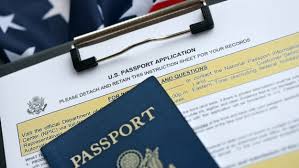
Two days and counting…Applying or renewing a passport during the government shutdown?…

Applying for a US passport.

From Travel+Leisure online magazine:

“What to Know About Applying or Renewing a Passport During the Government Shutdown

The government shutdown, which started on Oct. 1, continues to drag on. Here’s how it’s impacting passport applications and renewals. By   Published on October 24, 2025

Applying for or renewing a passport can be stressful, especially when preparing for an international trip. The government shutdown, which began on Oct. 1, 2025, has impacted many federal services, but for those traveling abroad, there shouldn’t be cause for concern, as passport processing hasn’t been affected. Passport processing is part of Consular Affairs, which is considered an essential service. “During the lapse in government funding, consular operations domestically and abroad will remain operational. This includes: passports, visas, and assisting American citizens abroad,” according to the Department of State website.

Congressional appropriations don’t fund passport processing; rather, processing is primarily funded by passport applications, so the government shutdown doesn’t directly impact this service. “Passports are funded through the U.S. Department of State and are primarily fee-funded, meaning passport issuance isn’t dependent on government funding,” says Sarah Silbert, managing editor for Points Path.

Processing times haven’t changed since the government shutdown. Routine processing time is 4 to 6 weeks, and expedited service is 2 to 3 weeks, according to the Department of State website. Mailing times are not included in these estimates; it can take up to an additional month for them to receive the application and then mail out the completed passport.

Traveling internationally in two weeks or less? Request an appointment through a passport agency or center. “Those needing urgent travel documents should book an in-person appointment at a regional passport agency and bring proof of imminent travel within 14 days,” says  Reza Motalebpour, founder and CEO of INGWE Immigration.

Dr. John Rose, chief risk advisor for Altour, renewed his passport and book this October, with the whole process taking 13 days. “That shows the system is working efficiently right now, but travelers should not assume that will remain the case if the shutdown drags on.”

It’s advised to plan ahead and allow for possible delays in processing if you’re currently applying for or renewing a passport. “There could be delays if passport-processing staff are impacted by furloughs or shutdown of other government agencies,” says Silbert. Reduced agency staff and staffing disruptions within the government could cause processing to take longer than normal. Motalebpour adds, “In the 2018-2019 shutdown, for example, passport operations continued at most locations, although delays of one to two weeks were common due to reduced staffing and slower security clearances.”

Fortunately, we renewed our passports last year for the second time since we began traveling in 2012. Currently, we have nine years remaining on each of our passports. At one point, we also had four-year passports as an adjunct to our ten-year passports, which enabled us to apply for visas that, at that time, may have required us to send in our passports with the applications. But processes have modernized and changed in most countries where applications are submitted online.

Packing continues today with only two days until we board the ship.

Be well.

Photo from ten years ago today, October 25, 2015:

Typically, in rainforests, we’ve observed insects and birds to be more colorful than in less-dense areas of vegetation. Tima spotted this caterpillar we’d easily have missed. For more photos, please click here.

The dreadful process of filling out forms…A zebra in a pool???…

We’ve yet to have a single visit from a full-racked male kudu. They can only get into our garden by walking on the driveway when the bush is too dense. This young male could make it through the bush to stop for a visit during sundowners on the veranda.

We dread it each time we have to extend our visas, apply for permits, or apply online for any government-mandated process. Often, the forms are confusing, difficult to use, and don’t save partially completed forms. However, their website clearly states that returning users can easily find their partially completed forms. Ha! Not always the case.

Yesterday, we started the necessary process of applying for our e-visas for entry into Kenya on April 9th. On January 1, 2021, Kenya switched from the easy visa-upon-arrival process with a mandatory online application. With many of the questions translated from other languages, the questions in the form are often ambiguous and confusing.

A female kudu and a male impala were getting along well while eating pellets.

But, the worst part for us, mainly me, who will make both of our online applications, is now using a Chromebook instead of formerly using Windows. With Windows, all I had to do was find the appropriate travel documents in a folder on my desktop, and we’d be good to go.

It’s not so easy with a Chromebook, regardless of how and where I save documents, to easily find them to grab and attach to an uploader in an online application. I know how to do this. But when saving the documents needed, such as airline tickets, hotel reservations, copies of passports, and decent headshot photos, those documents I properly saved are often missing, and I can’t “grab” to upload them into the form.

Impalas are very shy around humans. We’ve been surprised to see so many visiting our garden.

Yesterday afternoon, I spent no less than two hours in dire frustration in the 100F, 38C, heat, and humidity, and will have to go back and try again today. Just now, as we speak, I looked for the documents and found them where they should be in the “download” folder.

But, I do not doubt that when I start working on the form again, re-entering all I’ve already entered on ten pages, they won’t be there. We often wonder how less experienced users could get through this process. Often, they have to hire a company to do this for them at an additional cost over and above the US $102 ZAR 1558, the fee (for both of us) charged by Kenya.

Impalas stay at a distance from the veranda.

Oh, I can’t wait to get this done and behind us. Tom, a less experienced user of Chromebook’s weird nuances, will be able to re-enter his personal information, which was lost upon “save. Hopefully, after he re-enters it today, it will all be there for me to log into his Kenya visa account and upload the documents from there also.

Talk about sweating in this weather! It’s only 10:30 right now in Marloth Park, and it’s already 90F, 32C with high humidity, all of which is rising rapidly. It won’t be until after about 5:00 pm, 1700 hours, that we’ll feel the temperature drop slightly. Yesterday Tom read that the “wind chill” was 110F, 43.3C. We had no idea wind chill factors were considered for hot weather as well as for cold temperatures.

Adorable young male bushbuck checks out the grassy area in our garden, waiting for Tom, in the red shirt, to toss him a few pellets.

Last night, the air-con in our bedroom couldn’t keep up with the heat. It was also necessary to use one of the two standing fans in our bedroom, aimed directly at us. It never really cooled down much during the night. Even our wildlife friends stay away during the heat. They hunker down in the shade of the bush, close to water holes. It must be so hard for them.

Yesterday there was a Facebook story under Marloth Park Sighting Group that was mind-boggling as follows:

“ATTENTION POOL OWNERS: Last week Thursday, driving up Berghaan Rd, I was flagged down by a resident/visitor of a house with a newly built swimming pool. The gentleman was FRANTIC, and I soon learned that he was deaf, as is his partner, neither could speak either. Turning into the driveway, I was greeted by the sight of an adult zebra, in the pool, but exhausted, his neck and head out of the water, hanging over the side, as the gentleman, who was EXHAUSTED, and two young builders from the next-door house had managed to get zebra to the side of the pool. I don’t know how long it was going on before I arrived, but I jumped into action, looped my bakkie (a pickup truck) tow strap around zebra’s neck, and with the help of the builders, directed zebra around to the shallow end where it could stand, and where we could lead it to the steps. This worked!! Three minutes after I arrived, the zebra was out of the water and on its feet…..
Firstly, the pool was too deep for adult zebra to stand. Secondly, the pool should be fenced. Should it not just be common sense to fence a pool in a nature reserve?? Hate to think what would’ve happened had I not driven by when I did. Occupants of the house were inside, both deaf, with no idea about the drama outside. Luckily the builders were awake…”
Bushbucks have such adorable faces!
Fortunately, the zebra was rescued by the kind and creative people who immediately went into action. The zebra seemed fine and dashed off. And yes, there are pools at most houses in the bush, mainly splash pools used to cool off in hot weather, days like today, and few, if any, are fenced.
That’s a matter for another day. Fences are frowned upon in the bush, preventing the wildlife from freely foraging as they wander about the park. But, circumstances under which a wall may be sensible, providing safety for humans and animals alike.
Tiny is sitting in front of his favorite tree stump.
Our pool, yet to be used by us, is shallow, above ground, encased, and surrounded by a cement wall. It would be unlikely an animal could fall in without climbing over the fence, tricky to do at best. Plus, it’s shallow, as is the case of most splash pools in the bush. We’re thrilled to hear the zebra was safely rescued. Life in the bush has always been exciting and often unusual.
Have a lovely day.
Photo from one year ago today, March 10, 2020:
“Krishna’s Butterball (also known as Vaan Irai Kal and Krishna’s Gigantic Butterball) is a gigantic granite boulder that rests on a short incline in the historical coastal resort town Mamallapuram in Tamil Nadu state of India. Since it is part of the Group of Monuments at Mamallapuram, a UNESCO World Heritage Site, built during 7th- and 8th-century CE as Hindu religious monuments by the Pallava dynasty, it is a popular tourist attraction. It is listed as a protected national monument by the Archeological Survey of India. It is best viewed at sunrise from northwest to southeast or at sundown from northeast to southwest when the panorama is bathed in magical golden hues.” Our guide explained that at one time, centuries ago, the locals tried to move this boulder using elephants, but it wouldn’t budge. For more photos, please click here.

A post from seven years ago…Has much really changed?…

Although rocky, the sandy beaches are beautiful.

“Fascinating Fact of the Day About Ireland”
“Rotunda Hospital in Dublin opened its doors in 1745. It is the longest-running
maternity hospital in the world.”

                             
We can’t quite grasp the fact that we’ll have been traveling the world for seven years in a little over four months, although we began posting in March 2012, before leaving the US. It’s interesting to look back at those old posts to see if we’ve changed our views and perceptions. Often, we’ll read a post from so many years back on the same date.

On June 20, 2012, ironically, we wrote the following, in part, at this link:

“The uncertainty of the quality of medical care in the many countries we will visit undoubtedly presents us with cause for concern. Overall, we are both in relatively good health after working so hard to improve it these past few years.

With our healthful low carb diet of organic, grass-fed meats and produce, exercise (mostly me), reduction in exposure to toxic chemicals in our home, low stress, and a happy relationship, we feel we can manage our few complaints easily from afar.

Fishing boats in the bay.

Our doctor will be available via the Internet should we have questions, and we’ll be well-armed with a wide array of preventive and emergency medications should an illness arise. In the past almost year, neither of us has had a cold, a virus, or illness requiring a trip to the doctor.  

Our recent medical appointments have been for the sole purpose of reviewing our travel medications, receiving our vaccinations, and having blood tests with an annual exam thrown in for good measure, all of which showed tremendous improvement from a few years ago. We are hopeful.

AWe should be fine if we don’t get bitten by a snake or warthog, break a leg, or have a sudden gall bladder or appendicitis attack, But, of course, we must plan for the possibility of illness in the following manner:

  • Emergency evacuation insurance
  • Supplemental insurance for Jess (Medicare won’t pay for any care out of the US). Only 60 at retirement, Tom will be covered by his regular insurance.  Proof of insurance documents.
  • Prescription processing from afar (as mentioned in prior posts, we’re awaiting a response from our prescription plan as to whether they will provide us with 12 months of prescriptions at a time).
  • Emergency medication for infections, bee stings, and allergic reactions (Epipen), and gastrointestinal distress.
  • Copies of all of our immunizations (proof of yellow fever vaccine required with passport upon entry into Kenya).
  • Copies of all of our prescriptions (if we are asked during customs inspections or through security).
  • First-aid supplies: Bandages, antibacterial and cortisone creams, alcohol, hydrogen peroxide (small bottles).
  • Over-the-counter medications.
  • Vitamins/Supplements we currently use.
  • Medical records for both of us (scanning these).
  • Optical needs: extra sets of glasses/prescription sunglasses for Tom,  three years of contact lenses for me.  Both of us are yet to have our final optical appointments.
  • Final dental appointments and supplies: Our teeth will be cleaned two weeks before leaving the US while visiting Las Vegas over Christmas. The past few years, we both had all the crowns done that we’d needed.  
  • Copies of our living wills and legal designation for medical advocacy in the event of an emergency.
    It was hard to determine how this building crumbled.
A neat stack of medical forms and documents sits on our kitchen table with post-it notes reminding me to complete the above tasks on the appropriate dates.  
 
This Saturday is the free shredding event. After going through every file folder, cabinet, drawer, and piece of paper in our entire home, we are ready for the event. No words can describe the freedom we feel from unburdening our lives with paper.  
Other than the required medical documents, passports, and travel documents we’ll need to have on hand, we’ll leave a “paper” life behind us instead of relying on the latest technology to provide us access as required. Yeah, for technology! Without it, planning for this adventure would be more of a headache than it already is!”
Another pretty beach scene.
At that time, we posted very few photos. Neither of us was adept at photography and assumed we could take pictures for the blog using our phones. Smartphone cameras weren’t as good then as they are now. It didn’t take long for us to purchase our first, second, and third cameras, each time upgrading.

These days, we’ve seen many great photos taken with smartphones but now, after using a camera for so long (we have two), we have no interest in going back to the phone for photos.

But, as I reread through the above, not having read it in seven years, I was amazed at how little we’ve changed. Plus, unknown to us at the time, our insurance concerns were well-founded as we continued to deal with my recent open-heart surgery issues.  (I won’t get into that here today, as they continue to avoid reimbursing us for the many expenses we paid out-of-pocket).
House on a hill overlooking the sea.
And yes, we continue to avoid having “papers” in our possession, cluttering our luggage and our lifestyle. As for prescriptions, recently, I refilled everything I needed for six months in South Africa.  

When refills are due, I’ll be able to order them through ProgressiveRX, having them shipped to wherever we may be at the time. Hopefully, I have enough meds to last until we arrive in the US and deal with more prompt mail service than some countries.

Of course, since the above dates, we’ve both turned 65 (and now over 65) and could no longer use the insurance we had when we started. Medicare doesn’t pay outside the US, so before that time, we arranged for the insurance we now have that we can’t cancel until we find another option and they pay the claims.  So far, no luck in either situation.
Painted sheep grazing in a field.

Many of the supplies we mentioned in the old post have long since been eliminated from our bags. We don’t have space for many supplies with only one extra (third bag between us). In most countries, we can purchase a close alternative to any items we may need.

Tomorrow, we’ll share photos and stories of yesterday’s sightseeing outing.

May your day be filled with pleasant memories of times past.

Photo from one year ago today, June 20, 2018:

Little Wart Face, whom we later called “Little,” was so warm during yesterday’s 34C (93F) he climbed into the cement pond to cool off! We couldn’t stop laughing. After he exited the pond, he found a shady spot for a nap. For more photos, please click here.

Supplies needed to carry on…More sacrifices…Happy 4th of July everyone in the US!…

Sorry folks, no photos today except this one I’d failed to post when we visited Petra, Jordan in May 2013. 

Staying inside all day today due to rainy weather, we felt lazy, as one may feel on a holiday, watching downloaded movies. Tomorrow, with sunshine predicted, we’ll have more to share.  We hope that our readers in the US have enjoyed the 4th of July. 

Last week I found this photo from when we walked to Petra in May. I’d saved in the wrong location realizing it was never posted (to the best of my knowledge). These steps were much steeper than appearing in this photo.  To see this horse gingerly tackle them in the scorching heat was both heartbreaking and awe inspiring. 

Planning ahead is never far from our thoughts. 

Prescriptions, medical supplies, toiletries, office supplies, batteries for digital equipment, copies of travel documents must be replaced along with any other items that pop into our heads as we continue to use what we have on hand.

Many expat travelers such as ourselves choose to live in large cities with easy access to most of these items.  For us, having chosen to live in more remote areas, we must plan in advance. 

With less than two months until we leave for Africa, we’ve begun to evaluate what we may need for the nine months we’ll live between Kenya, South Africa and Morocco.

Early this morning, I found myself counting malaria pills to determine if we are short.  While still in the US, I’d ordered enough to last for our almost six-month while in Kenya and South Africa. While in Belize, we ended up booking almost three more months in Morocco. 

Today, looking online at the CDC’s website it appears there’s no known risk of malaria in Morocco, leaving us with the correct number of pills we’ll need for Kenya and South Africa, one per day for each of us for the almost six months.

However, with our current prescriptions scheduled to run out in October, we find it necessary to order enough for another year. Receiving mail in Africa in the remote areas we’ll reside in Kenya and South Africa is sketchy at best. 

Early next week, we’ll place our order online hoping to receive the package well in advance of leaving here.  Although, now not covered by insurance, the prices for our prescriptions are reasonable.

While in Dubai, I had no alternative but to use one of the two Z-Pak antibiotic prescriptions we had on hand while I was ill with a raging sinus infection as a result of an awful flu we both contracted on the Middle East cruise from Barcelona to Dubai.  Hoping to replace the used prescription, I am requesting one five day dose online. 

The weight of our bags, at this point continues to be a major concern. Learning from experience these past eight months, overstocking in a poor strategy.  But remaining mindful of crucial items we know we’ll need is a vital part of our everyday lives.

So far in our travels, we hauled a supply of Crystal Light ice tea, our daily  beverage of choice. Although the pitcher sized packets are lightweight, including a 100 packet three month supply adds an extra two to three pounds. Plus, with the product unavailable in Italy, we’d have no alternative but to have it shipped, incurring international shipping fees.

A few days ago, we both made a commitment to give up Crystal Light ice tea entirely, unless by chance we find it to be available at any local grocery stores where we’re living at any given time, purchasing only enough to use, not to carry.

Giving up the insulated mug of ice tea that I’ve carried everywhere for years, will not be easy.  Is it an addiction? I suppose there are some who may feel that anything we “have to have” may be construed as an addiction. 

With the ice tea 99% caffeine free, surely it must be more of a habit than an addiction. It doesn’t matter what we call it.  We have to stop drinking it.  The weaning process began a few days ago, diluting it by 30% until our current supply is gone in the next few weeks.

Tom’s powdered creamer is another item we’ve been unable to find. We recently considered buying it online, but there again it would result in more to pack.   While shopping last week, we purchased three possible alternatives, three liquid creamers used for latte here in Italy, a very common beverage.   

Much to our surprise, the liquid creamer had an acceptable taste, a product we will no doubt be able to find at our future destinations. I prefer real cream, but with few preservatives used in Italy (and many other countries) it tends to spoil in about five days. 

Interestingly, many foods spoil quickly here, including deli meats and cheeses, again made without nitrates and other preservatives. This fact is pleasing for one’s health, but requires rethinking storage of these perishable items. The freezer, although small, serves that purpose for most products.

Surprisingly, vegetables also spoil quickly here leaving us to wonder what spray chemical products, the local Italian farmers are NOT using on their produce. 

Shopping for two weeks in advance as we’ve done here thus far, requires we eat all the fresh produce as quickly as possible. Soon, the vegetables in the gardens in our yard will be ready to pick, eliminating a portion of this issue over the summer.

All of our luggage is currently atop a bed in a  guest room, except for the items we’d placed in cupboards and drawers. Each day, I peruse through the items, considering which items I am willing to let go. 

In the past several days, I’ve eliminated no less than five pounds.  Minus the ice tea, we’ll be down approximately eight pounds. This process must continue. We’re highly motivated to board our upcoming flight to Africa on September 2nd without paying any excess baggage fees.

Saying goodbye to stuff?  For us, it’s been a process. After a lifetime of stuff, surrounded by stuff, replacing stuff, trips to Costco, stockpiling stuff and surrounding ourselves with stuff we like, love and treasure, it definitely has been a challenge. 

At this point, it’s only practicality and function that drives our sense of attachment to an item(s). No longer do I look at an item of clothing with a smile, looking forward to wearing it again. Those days are long gone.

Above all, its the sacrifices we’ve chosen to make for the opportunity to travel the world are many. We find ourselves instead, loving the views of Mother Nature’s rich treasures, the smells that freely represent a culture, the tastes of the local foods, the sounds of the languages unfamiliar to our ears, the music so passionately represented by its citizens and most of all the people, none of which we’ll be required to place in our bags. 

These, we’ll carry in our hearts and minds forever.

Newspaper story about our adventure…

We’ve got press!  The story below was published in the Chanhassen Villager and other western suburbs publications. Some of the facts aren’t accurate, such as Tom ha two sons and my having a son and daughter, when in fact, it is the opposite. Guess that’s how media works. We won’t fuss about the details. 

The story hits the major points.  Our readership has catapulted in the past few days since the story was published on January 3, 2013, the day we sailed on the Celebrity Century out of San Diego.  Thanks to all of our current readers and our new readers for following us!  Thanks to our wonderful friend Chere Bork who was highly instrumental in getting the story in the right hands and son Greg for finding the article and posting it.

 Here’s the link to see the article in the paper.  Please give it time to load. 
 
 
Former Chanhassen couple begins worldwide adventure

Tom and Jess Lyman

Posted: Thursday, January 3, 2013 5:06 pm | Updated: 8:15 am, Sat Dec 29, 2012.

 Bon voyage. Today, Jan. 3, Tom and Jess Lyman, former Lake Minnewashta homeowners in Chanhassen, begin their worldwide wandering. They sail from San Diego today, go through the Panama Canal to Fort Lauderdale, then sail to Belize, then Africa, and Europe and beyond. They may be gone for five years or 10 years, depending on their health and other circumstances. They don’t plan to stop until they find the destination of their dreams or until one of them is tired of living out of a suitcase or just plain wants to stop.

The Lymans won’t be on the road constantly. Instead, they’ll use a series of cruises (already booked through 2015) to transport them to and from the Pacific Ocean to the Atlantic, to South America, to Europe, to Africa, and then to Hawaii. In between they’ve booked rental homes where they’ll stay no less than one month and no longer than five months at a time. Their rentals include a condo in Dubai, a home in Tuscany, a beachside cottage in Kenya, a home in the Kruger National Park Reserve in South Africa, and a 16th-century stone house in Cajarc, France. They’ll plan on meeting their families on the Big Island in Hawaii for Christmas 2014 where they have a rental and plan to stay through March 31, 2015.
Looking toward retirement.
Nearly a year ago, as Tom Lyman looked forward to his retirement from Burlington Northern, Minneapolis, at the end of October 2012, he and Jess, his wife of 21 years, discussed what they might do once Tom retired. Jess had retired in 2010 after a career in real estate and professional management.
Tom is 60, Jess is 65. Each had been married before and divorced. When they met more than 20 years ago, they recognized kindred spirits and eventually married, blending their families. Tom has two adult sons. Jess has an adult son and daughter. Between the two, they have six grandchildren.
Like scores of other baby boomers, the Lymans considered renting a condo, townhome, or small home in Florida or Arizona in winter, spending their days golfing, socializing with similar snowbirds, relaxing, and enjoying a slower pace.
After 43 years working 14-hour days and enduring a daily two-hour commute, being able to spend more time at home with Jess and his genealogy hobby would be welcomed.
But as they talked, they realized that doing the same old, same old didn’t have much appeal. As a couple they’d spent most of their free time at their Lake Minnewashta home, working on home improvements and entertaining their circle of friends.
“It was time to step outside the box,” Jess said. “Tom and I had both married young and had children in our 20s. We always had to be responsible and our lives revolved around our families.”
Life change
As they looked at approaching retirement, they realized it would be more enjoyable if they were healthy. Although Jess was always slim and fit, she had chronic pain and had high blood sugar. Tom was 40 pounds overweight.
About a year and a half ago, the couple changed their diets to low carb, gluten-free, sugar-free, wheat-free, and starch-free. Tom lost 40 pounds and Jess’s chronic pain went away.
“We’re in good health now,” Jess said. “That was our goal, to be in good health in our retirement. I could not have done this three years ago. The food thing is such a big thing. We don’t eat any grains, not oatmeal, quinoa, any beans, corn, or rice. It literally changed our lives.”
Can we afford it?
While their bodies became healthier, they had to do a similar checkup on their finances.
Jess and Tom ran the numbers. How much would it cost to do the typical retiree thing? They created spreadsheets of their cost of living if they did the typical retirement community life. They estimated their costs for housing, food, clothing, entertainment, and utilities, dental, medical and prescriptions, household goods, car upkeep and maintenance, and everything else they could think of.
And then they compiled spreadsheets of the costs of traveling. The cost of staying in rental homes, not only in the States but in Europe and Africa, food, transportation, special insurance, passports, visas, technology to keep them wired and in touch with family and friends.
“Our baseline was, ‘How much would it cost to rent a condo in a warm climate? How much would we spend a month in retirement?’ That was our magic number,” Jess explained in a phone interview two weeks before their January departure. “Could we make our travel number match that number and not tap into Tom’s pension? We didn’t want to do this and get into financial jeopardy.”
After a lot of research, number-crunching, and Internet research, the numbers worked.
But it would mean a drastic change to their lifestyle. Instead of settling into a warm climate condo to call home base, the Lymans decided they’d travel, trying out different locations and seeing the world until one of them didn’t want to travel anymore. No home, no car, few possessions except what they could pack in six pieces of luggage.
World Wide Waftage
Jess describes herself as a detail person. How detailed? Visit the Lyman’s website called World Wide Waftage at http://worldwidewaftage.blogspot.com/
It’s the culmination of online research “eight hours a day, seven days a week,” Jess explained. Their website is organized into categories: Tom and Jess’s blog posts, itinerary, travel documents, medical issues, health insurance, travel costs, smart decisions, planning mistakes, Internet access, products they like, vacation houses, cruises, retirees, baby boomers, and senior concerns.
It’s so complete it prompted the question, “Are you going to write a book about how to plan for a trip around the world?”
“I’ve always wanted to write,” Jess said. “I always thought that when I retired that I would write. But I needed to find a vehicle to inspire me. So I decided to do a blog for our family and friends to avoid constantly emailing.”
In addition to the emotional preparations the couple is experiencing — saying goodbye to children and grandchildren, selling their home, having an estate sale and the reality of living out of six suitcases, Jess writes about all the small details necessary to make such a trip as worry-free and efficient as possible; details like getting wills and living wills written and into the hands of a trusted family member, doing taxes while out of the country, explaining why a second passport is necessary for the type of traveling they’re doing, questions to ask when buying a mobile phone for international use, arranging for a year’s worth of prescription meds, what to know about health insurance, getting Wi-Fi in remote parts of the world.
“When we planned our retirement and our plans to travel, we asked ourselves, ‘How well can we do this?’” Jess said. “It’s predicated by our health. If we get tired, we’ll stop.”

Luggage carts…practical or foolish?…

We deliberated over buying luggage carts. Would they simply add additional weight to haul around the world?  Would we be charged extra baggage fees to store them on the plane?  Would they serve as a invaluable resource to make the transportation from location to location more manageable?

After spending several hours researching baggage restriction on flights and after analyzing and weighing our load, thus far, we came to the conclusion that we must take the risk and buy the carts.  Restrictions on cruises are only a “per bag” limit weight of 70 pounds to avoid injuries to their handlers. There are no restrictions on the number of bags on cruises.

What if we could place each of our two 50 pound suitcases, our 40 pound carry on bags, our computer gear and my handbag on each of our carts? (No money, passports or important papers will be in my handbag. The allowed space for handbags will be utilized for clothing, shoes, etc.)  Important items will be tucked away in our carry on bags with an exterior zippered pouch for our easy access to our travel documents.  Our wallets will be secured under our clothing. 

We purchased two of these luggage carts each with a
250 pound capacity at Global Industries

The potential total weight for each of our luggage carts is anticipated to be approximately 180 pounds, an amount impossible to wheel and carry at one time without a cart.  Buying a cart with a capacity of 250 pounds would ensure a more stable structure, enabling each of us to be able to wheel our own carts.

Our cart, folded for easy placement under the seat on an airplane

Researching airline baggage restriction, we found that most airlines will allow any wheeling or carrying devices aboard as long as it will fit under the seat. After investigating the folded up size of the carts we chose and the size of the space under the seats on most aircraft, we determined that the carts will fit.

The thought of easily wheeling our bags to cruise ships, through airports, on trains, ferries and in and out of our vacation homes, provides a great sense of relief. Recently, some family, friends and followers of this blog have asked why we don’t just throw some stuff in a suitcase and take off without all this planning.

In our minds, the answer is clear. Most people, when traveling for a few weeks or months have a home to which they return to at the end of their travels. We won’t.  We will continue on. Since we aren’t considering this a “vacation” but rather “living” (as Tom describes it), we need to bring things with us that we need, want and use.

Under no circumstances, do we want the burden of finding a mall, a drugstore, or a post office. Neither of us enjoys going to stores, although I enjoy grocery shopping which we will obviously need to do wherever we go. Whether an outdoor farmer’s market or a tiny little shop on a corner, we will enjoy shopping for local meats and produce.

Neither Tom nor I would enjoy wearing the same items day after day. We tend to wear an item once and then wash it, sloppy that we both are when dining (mostly me)! We make a point of trying to look nice for each other.  It’s a part of the attraction we both fell for each other so many years later; fresh smelling, clean, attractive clothes, well groomed, and for me; some makeup, earrings, manicured nails and polished toes (I have always done these myself). 

Currently, through instructions online for how to cut a man’s hair, I will strive to cut Tom’s hair to his liking. We don’t want to have to spend time looking for a barber or Tom feeling frustrated with a peculiar cut. A few nights ago, I suggested that he grow a beard and a wear a ponytail. Here again, he wants to be “himself” and wasn’t interested. We’ll figure this out together.
None of our quirky traits will change when we’re traveling the world or when and if we ever settle down. It is part of who we are individually and, as a couple. For us, it is a part of the magic. (We accept that we are giving up so much to gain this experience together; seeing our loved ones, drinking coffee, enjoying familiar foods, my kitchen gadgets, watching US TV, reading the newspaper, our home, our friends and neighbors, the 4th of July, having a dog, access to a health club, and on and on.

Thus, this reality adds greatly to the packing. There’s “stuff” associated with feeling “put together.” We are willing to bear the consequences of our picky choices, by wheeling our carts, paying extra for baggage on the fewer flights we’ll experience and for packing and unpacking the “stuff” each time we reach a destination.

This weekend we’ll load up the carts with the two already pack bags, adding several more items to get the feel of wheeling around 180 pounds. If it doesn’t feel great, I will up the weights at my workouts and build more muscle.

After all, we still have three months and six days until we walk out the door!

Medical woes abroad?…

The uncertainty of the quality of medical care in the many countries we will visit, undoubtedly presents us with cause for concern.  Overall, we are both in relatively good health after working so hard to improve it these past few years.

With our healthful, low carb diet of organic, grass fed meats and produce, exercise (mostly me), reduction in exposure to toxic chemicals in our home, low stress and a happy relationship, we feel we can manage our few complaints easily from afar.

Our doctor will be available via the Internet should we have questions and we’ll be well armed with a wide array of preventive and emergency medications should an illness arise.  In the past almost year, neither of us has had a cold, a virus or illness requiring a trip to the doctor.  

Our recent medical appointments have been for the sole purpose of reviewing our travel medications, receiving our vaccinations and having blood tests with an annual exam thrown in for good measure, all of which showed tremendous improvement from a few years ago.  We are hopeful.

Assuming we don’t get bitten by a snake or warthog, break a leg or have a sudden gall bladder or appendicitis attack, we should be fine. But, of course, we must plan for the possibility of illness in the following manner:

  • Emergency evacuation insurance
  • Supplemental insurance for Jess (Medicare won’t pay for any care out of the US). Only 60 at retirement, Tom will be covered by his regular insurance.  Proof of insurance documents.
  • Prescription processing from afar (as mentioned in prior posts, we’re awaiting a response from our prescription plan as to whether they will provide us with 12 months of prescriptions at a time).
  • Emergency medication for infections, bee stings and/or allergic reactions (EpiPen) and gastrointestinal distress.
  • Copies of all of our immunizations (proof of yellow fever vaccine required with passport upon entry into Kenya).
  • Copies of all of our prescriptions (in the event we are asked during customs inspections or going through security).
  • First aid supplies: Bandages, antibacterial and cortisone creams, alcohol, hydrogen peroxide (small bottles).
  • Over the counter medications.
  • Vitamins/Supplements we currently use.
  • Medical records for both of us (scanning these).
  • Optical needs: extra sets of glasses/prescription sunglasses for Tom,  three years of contact lenses for me. Both of us are yet to have our final optical appointments.
  • Final dental appointments and supplies: Our teeth will be cleaned two weeks prior to leaving the US, while visiting Las Vegas over Christmas. The past few years, we both had all the crowns done that we’d needed.  
  • Copies of our living wills and legal designation for medical advocacy in the event of an emergency.
A neat stack of medical forms and documents sits on our kitchen table with Post-it notes reminding me to complete the above tasks on the appropriate dates.  
This Saturday is the free shredding event.  After going through every file  folder, cabinet, drawer and piece of paper in our entire home, we are ready for the event.  No words can describe the freedom we feel from unburdening our lives with paper.  
Other than the required medical documents, passports and  travel documents we’ll need to have on hand, we’ll leave a “paperful” life behind us, instead relying on the latest technology to provide us access as needed.  Yeah for technology!  Without it, planning for this adventure would be more of a headache than it already is!   

Shredding a lifetime of papers…

As October looms nearer and nearer to our Halloween departure date, I lay awake at night prioritizing my tasks. With Tom gone to work Monday through Friday for 14 hours a day, the sorting and packing of a lifetime is logically in my hands. 

A portion of the most unbearable tasks has been started or completed, including the cleaning of our formerly junk laden attic, the messy top of my closet, many overstuffed drawers and hangers with outdated forgotten clothes, much of which I already hauled to Goodwill.  

We’ve scanned over 500 photos thus far with hundreds more to go.  A few months back, I removed every photo in a frame in our house, scanning the photo and saving an entire plastic tote filled with frames to be sold at our upcoming estate sale.

Looming in the back of my mind these past months have been the papers; boxes, drawers, file cabinets, banker’s boxes filled to the brim with receipts, tax records, legal documents, forms, medical files, certificates, insurance policies and on and on. 

Although not hoarders, we’ve kept that which we thought we’d need to keep, 90% of which we never referenced in all of these years. After assessing the paper inventory over the past months, I came to the realization that saving these documents would require no less than a 5′ x10″ storage facility, costing no less than $50 a month.  Goodbye, papers!

I called our accountant asking a few pertinent questions:

How long is one required to keep tax returns?

How long must one keep the supporting receipts for the tax returns? The answers to these questions are vague (Isn’t it surprising that the IRS would be vague?)  If you cheat on your taxes, you’ll need to keep your records indefinitely!  If you don’t, please see the IRS link for the vague answers.

Final question for the accountant:
Will he be able to do our taxes when we are no longer residents of Minnesota? Answer: Yes, as long as we have access to the internet.

The magic of the Internet with the availability of keeping digital personal records is steering us further and further away from the necessity of keeping paper copies of everything.  Our medical records, bank statements, income records, financial records, and other legal documents an now be kept online in a secure “cloud.”  
I made a list of the documents we’ll need to keep and subsequently store. (This list may be different for you depending on your personal circumstances).  

Documents to store:
  1. Original titles to cars (until we sell them both before we leave the US).
  2. Tax returns past 5 years (accountant has these also)
  3. Tax receipts for the past 7 years (per the advice of the accountant)
Documents to bring with us:
  1. Passports, upcoming visas, travel documents
  2. Originals of birth certificates, baptismal certificates, marriage certificate 
  3. New driver’s licenses for new state of residency
  4. Health: Insurance cards, current prescriptions, actual prescription bottles, immunization records, emergency contact information in states
  5. Checkbook (some property owners would like the balance of the rent paid via check) and recently renewed debit and credit cards
  6. Travel insurance documents
Today, after a brisk 45 minute walk on an otherwise lovely morning, I returned home with a certain sense of dread knowing that I must begin the sorting process.  When beginning a dreaded project I’ve always preferred to begin with the “worst first.”  

First, I attacked the old style wood two drawer file cabinet in our bedroom that loomed in my mind in the middle of the night. 
My next concern is the disposal of the papers, shredding and recycling as the only logical choices. After researching online I found a free shredding event which I put on my calendar with a plan to haul my two big bags of papers on June 23rd to the grocery store parking lot where Shredit will be offering the service to the community. 

After sorting for most of the day, I’ve discovered few simple steps to keep the amount to be shredded to a minimum:
  1. Place two plastic totes on either side of your chair, designating one bin for recycling, the other for shredding
  2. Place a cabinet, drawer, or box of papers in front of you on the floor
  3. Go through papers, removing envelopes, advertising, printed booklets and anything that doesn’t reference your name, address, social security number, bank account numbers, dollar amounts, etc., placing papers in appropriate tote; all personal items go into the shredding bin, all peripheral papers in the recycle bin.  (Tear off parts of forms with your personal information and save the rest for the recycle bin).
You’ll be amazed how much smaller your shredding pile is, as opposed to the recycle pile.  Place papers to be shredded into containers as suggested by your free recycle event into either bags or boxes.  Deliver them to the specified location on the specified date and time.  If one has additional shredding beyond that which the shredding event will accept, one can plan to repeat this process closer to the next arranged date in the area.  
Often, waiting for a free event is difficult when we so much want to get this cleaned up and out the door.  Most office supply stores have a shredding program (prices vary by locations and promotions).

Although I still have several more days of papers to toss, it’s less intimidating with this simple plan in place.  Hopefully, by week’s end this task will be completed, leaving me with little piles of the documents we will be taking with us on our journey.  I am looking forward to an enormous sense of relief.

Tomorrow is Round #3 of vaccinations which will include the first  of three rabies shots.  I’ll keep you posted!

Day 2…Minnesota family visit…Ordering second passports today…Why?

Given the challenges of obtaining a Chinese visa, we chose to get second passports to simplify the process. Mailing off our only passport while abroad was never an option. With two, we can send one for visas and still carry the other, keeping our travels uninterrupted and our peace of mind intact.
See our original post on this topic here from November 2012.

Fourteen years ago, when we first applied for second passports, it felt like stepping into the unknown with a quiet confidence that we would figure things out as we went. We had just left Minnesota, our lives packed into suitcases and a sense of possibility that was both exhilarating and, at times, overwhelming. Back then, the idea of needing two passports seemed unusual, almost indulgent, until we found ourselves navigating the practical realities of long-term international travel.

We quickly learned that the world does not move at the same pace everywhere. Visa applications required surrendering a passport for days, sometimes weeks, and yet we were rarely in a position to stay put and wait. We had flights to catch, borders to cross, and plans that were fluid but still needed a document in hand to continue forward. That first, second passport, valid for only two years, became an essential companion. It wasn’t about convenience. It was about continuity, about keeping our lives in motion.

Now, fourteen years later, we find ourselves in a similar position, though everything feels just a bit more familiar, a bit more grounded. The urgency is no longer fueled by uncertainty but by experience. We know exactly why we need a second passport, because we have lived the alternative, and it simply doesn’t work for the way we travel.

The biggest factor is still visas. Some countries require advance applications to be submitted in person or by mail to an embassy, often along with your physical passport. While that passport sits in an office somewhere, waiting for a stamp or sticker, life doesn’t pause. Travel plans continue, invitations arise, and sometimes unexpected opportunities appear that require immediate movement. Without a passport in hand, even the simplest domestic flight can feel complicated, and international travel becomes impossible.

There is also the unpredictability of timing. Consulates and embassies operate on their own schedules, influenced by local holidays, staffing, and demand. What might be processed in a few days in one country can take weeks in another. We have learned not to rely on best-case scenarios. Having a second passport allows us to send one off into that uncertain process while still holding onto the ability to move freely with the other.

Another reason, one that has become more apparent over the years, is the complexity of geopolitical relationships. Certain entry stamps can complicate or delay entry into other countries. While it is not always an issue, it is something we have become increasingly mindful of as our travels span continents with differing sensitivities. A second passport provides flexibility and, at times, a layer of simplicity in an otherwise complicated world.

What has changed, and what feels like a small but meaningful gift, is that the second passport is now valid for four years instead of two. That extension reflects an understanding, perhaps, that more people are living and traveling as we do, moving between countries not as tourists passing through but as individuals weaving together lives across borders. Four years offer breathing room. It reduces the frequency of applications, the paperwork, and the waiting, and allows us to focus more on the experience itself.

Still, the process brings us back to that earlier version of ourselves in 2012. Filling out forms (DS-11), gathering documents, getting new passport photos, and writing letters (we use the same letter for each of us, separately, with our names, passport numbers, date of birth, and contact information) to explain why we need what we are requesting. There is a sense of déjà vu, but also an appreciation for how far we have come. What once felt like an unusual request now feels like a natural extension of the life we have built.

As we prepare to apply again today at a local passport office, I am struck by how something as simple as a small blue booklet can represent so much. It is not just a travel document. It is freedom, flexibility, and the ability to continue saying yes to the life we have chosen. It allows us to keep moving forward, even when parts of the process require us to pause.

And so, once again, we gather the paperwork, write our explanations, and prepare to send off one passport while holding onto another. It feels familiar, almost comforting in its own way. A reminder that while the world continues to change, and while we have changed along with it, the core of what we are doing remains the same.

We are still moving. Still exploring. Still finding our way, one journey at a time.

Be well.

Photo from ten years ago today, May 18, 2016:

The rice paddies ready for planting. See this site for more details. “The Balinese system of irrigating their rice terraces is known as Subak. It is such an important part of Balinese culture that, in June 2012, it was designated a UNESCO World Heritage Site. This method of irrigating land was inspired by ancient Hindu philosophy and has been used since at least the 11th century. Using this method, the rice fields were built around temples, and the allocation of water is the responsibility of priests. For this irrigation management to succeed, members of each community have had to cooperate and work in partnership. Each member of the community takes responsibility for maintaining the system’s integrity, and this is why the terraces tend to look so well-maintained. The rice farmers work as a unit to create appropriate canals and dams. Another important element of the Subak system is the religious festivals that mark the cycle of the year.” For more photos, please click here.

Day 2, Transpacific cruise…We are out to sea!…

After boarding, we had one of those unexpected moments that make this lifestyle feel even more meaningful. We made our way toward the Windjammer Cafe for a quick bite, planning to take lots of sanitation precautions, not expecting anything more than a casual lunch to settle into the day. But as we stepped toward the buffet, we spotted our dear friends, Lea Ann and Chuck, smiling and waving as if no time had passed at all. They knew we’d all be in this cruise a year ago, but never let us know when they wanted to surprise us.

We first met them on a cruise back in 2017, one of those chance encounters that somehow turned into something lasting. The last time we saw them was in 2023 when we were staying in The Villages, Florida. They had come to visit us just before we set off on yet another cruise. And now, here we were again, reunited on a ship in the middle of a new adventure. It felt easy, familiar, and joyful all at once. We sat together, talking and laughing as though we had seen each other just weeks ago instead of years.

I had every intention of posting a photo of the four of us, capturing that moment of reconnection. But much to our disappointment, uploading photos has proven impossible so far. At least for the next 24 nights of this Royal Caribbean Voyager of the Seas, Transpacific cruise, it appears we are at the mercy of limited bandwidth. With a fully booked ship and thousands of passengers trying to stay connected, the system simply cannot keep up. I tried everything I could think of, different times of day, smaller file sizes, even a bit of patience mixed with persistence. Nothing worked.

So instead, I will save every photo into a folder. Knowing that the photos will be saved, waiting to be uploaded gives me peace of mind. When we finally have a stronger signal, either in port or once we are off the ship, I will put together a proper photo page to share all of these moments. For now, the memories will have to live in words.

As for yesterday’s embarkation day, it could not have been easier. From the moment we arrived at the cruise terminal in Brisbane to the moment we stepped onboard, no more than thirty minutes had passed. Everything had been completed online in advance, so it was simply a matter of verification. Passports checked, documents confirmed, and we moved steadily through each queue without delay. It felt organized, efficient, and surprisingly calm.

Our bags, however, took their time finding us. They did not arrive in our cabin until later in the evening, around five. By then, we had already gone out and enjoyed a delightful dinner in the main dining room. When we returned, neither of us had the energy to start unpacking. Thankfully, I had thought ahead and packed a few essentials into the duffel bag, enough to get us through the night and into the next morning without having to dig through everything.

We woke early today, both of us still a little tired. Tom started unpacking first, methodically getting things in place, and I followed once he was finished. There is something about settling into a cabin that makes it feel more like home, even if only temporarily.

Now, as I sit here at the Promenade Cafe with a few cups of coffee behind me, I find myself reflecting on how quickly it all began. It is 11:30 am now, and already it feels like we have lived through a full day. I tried once again to upload a few sailaway photos, hoping maybe the connection had improved. Still no luck.

It is disappointing, yes, but also a reminder of life at sea. Even now, in a world where we expect instant connection, there are still moments when we have to wait. We have to let go of immediacy and simply be present.

Neither of us slept particularly well last night, despite losing only an hour with the time change. The last time I remember checking the clock, it was 12:30 in the morning, just before everything shifted forward. A nap is sounding more and more appealing as the day goes on. After a light lunch in the dining room, we may just give in to that idea.

And somehow, that feels just right.

Be well.

Photo from ten years ago today, April 15, 2016:

No post was published on this date due to a travel day, and I doubt I would have been able to upload a photo anyway.