
We’re back up and running…Meet our refrigerator frog, Froggie, who tried to help with my laptop…
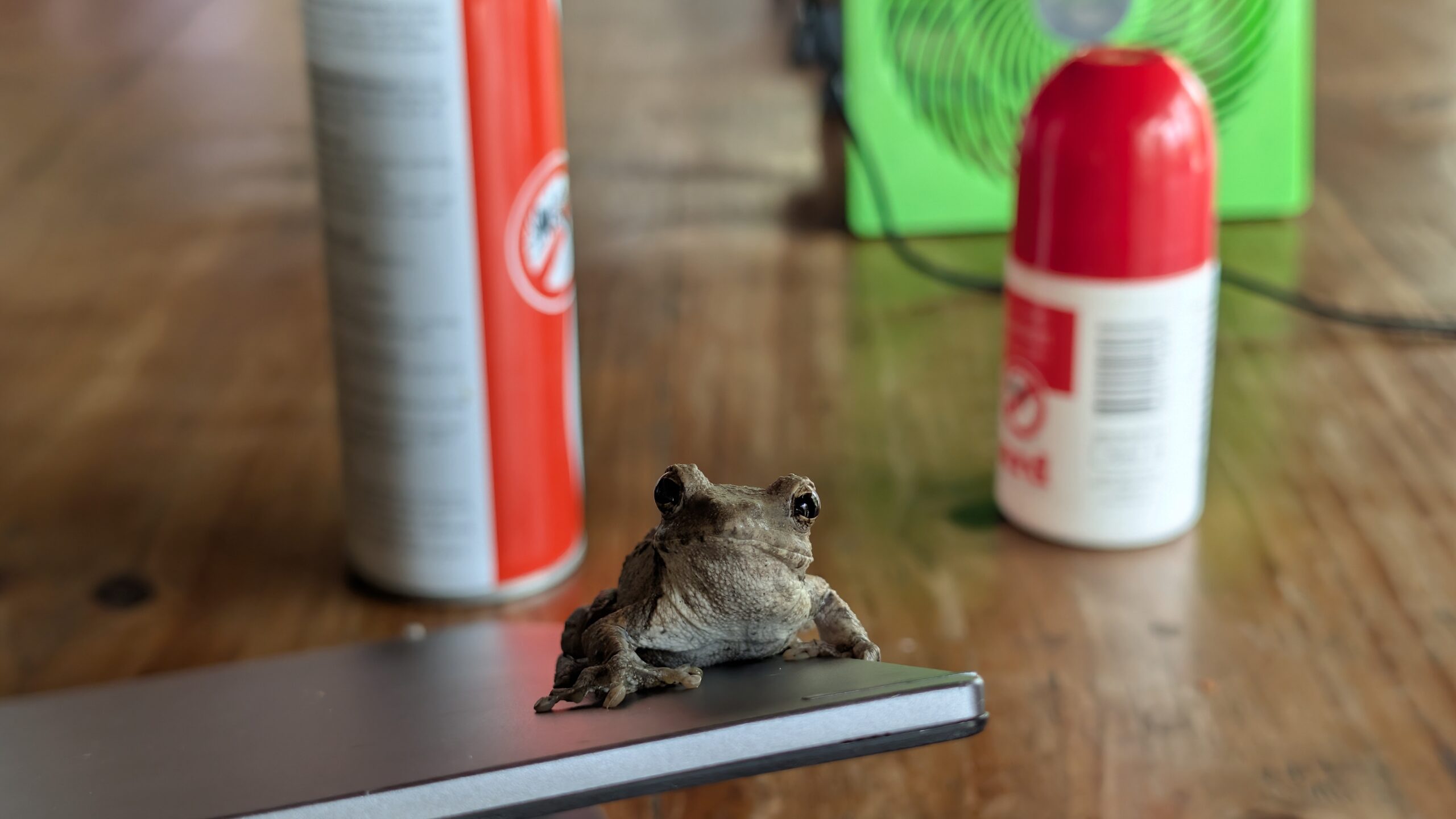
Over the past many months, we have had two rather unusual residents sharing our veranda. No, they aren’t birds, lizards, or any of the other creatures we frequently encounter living in the bush. They are two little frogs who have decided that the groove of the door handle on our extra refrigerator is the perfect place to call home.
We are assuming they are a male and female, although we certainly have no way of knowing for sure. Whatever their relationship, they seem quite content sharing this tiny space, often nestled together as if they haven’t a care in the world.
Every once in a while, one or both disappear, leaving us wondering if they have finally moved on to greener pastures. But, much to our delight, a few days later, they return, settling back into their familiar spot as though they had never left.
From what we have observed, they appear to be common foam-nest tree frogs, although identifying their exact species isn’t easy. Tree frogs are found in many parts of the world, particularly in tropical and subtropical regions where warmth, moisture, and an abundance of insects provide ideal living conditions.
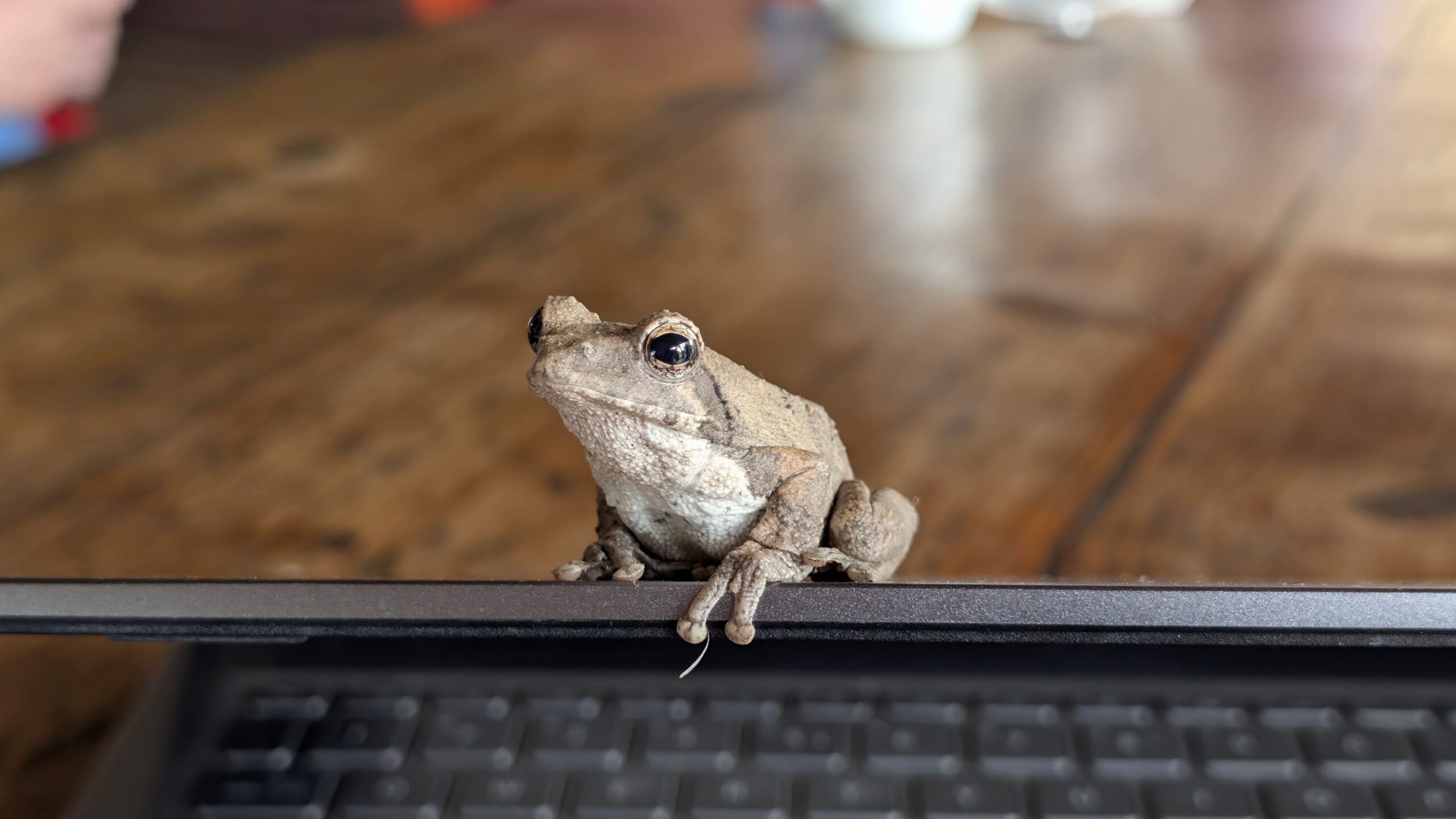
We’ve often wondered why these little creatures have chosen the handle in our refrigerator door rather than one of the countless trees, shrubs, or other hiding places surrounding our home.
As it turns out, tree frogs are remarkably adaptable. Despite their name, they don’t necessarily spend all their time in trees. Many species happily settle into sheltered corners of buildings, beneath leaves, inside crevices, and even around outdoor appliances.
Our refrigerator door handle apparently offers several things they appreciate: protection from predators, shelter from the hot sun, and perhaps a slightly cooler, more humid environment during the day.
Tree frogs have specialized toe pads that allow them to cling to smooth surfaces, including glass, metal, and plastic. Watching these tiny creatures navigate seemingly impossible surfaces is another reminder of how beautifully nature has equipped its inhabitants for survival.
One of the most fascinating characteristics of tree frogs is the tremendous noise they can produce, especially considering their relatively small size.
Anyone who has spent time in the bush during the rainy season knows how deafening the nighttime chorus of frogs can become. Their calls range from soft chirps and clicking sounds to surprisingly loud croaks, whistles, and trills.
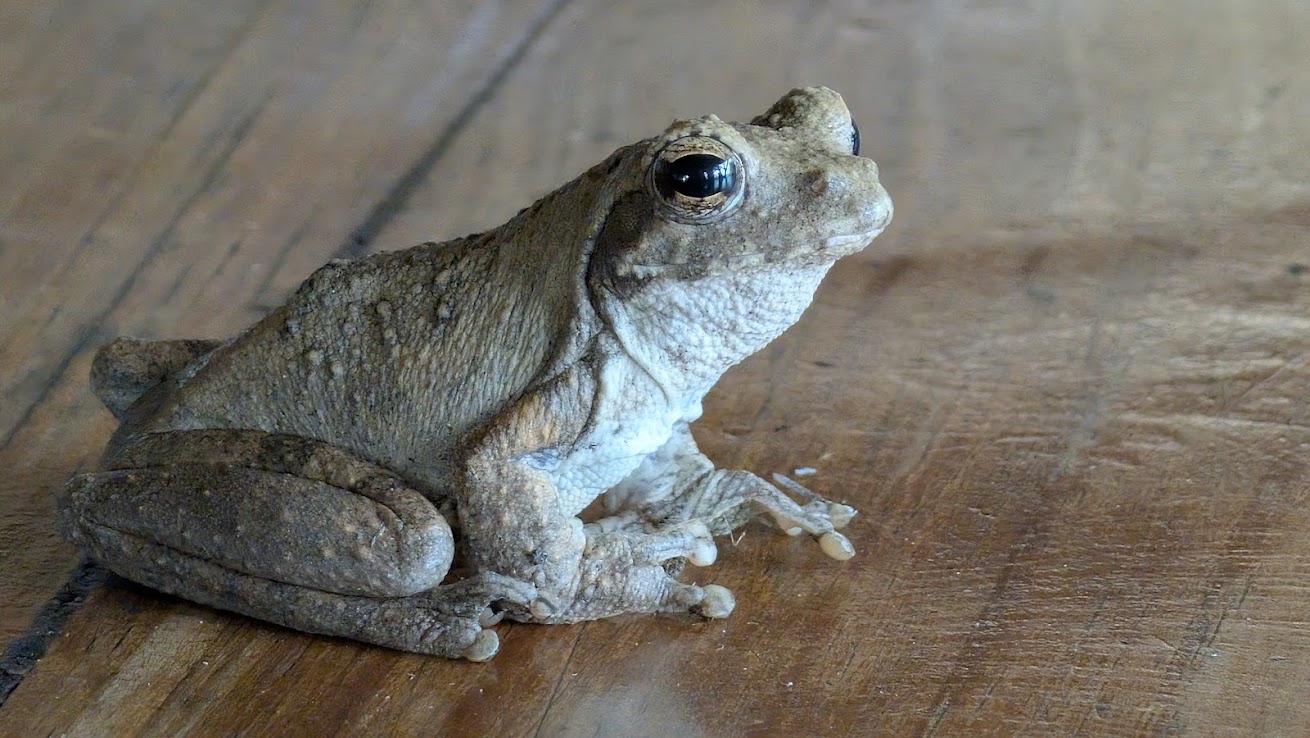
Generally, it’s the males making most of the noise, calling to attract females and establish their territories. Each species has its own distinctive call, allowing potential mates to recognize one another even when several different species are calling simultaneously.
Warm, humid evenings and periods following rainfall often encourage particularly enthusiastic performances.
Although we haven’t determined whether our two refrigerator residents are responsible for any of the nighttime serenades, we certainly hear plenty of their relatives making themselves known throughout the surrounding bush.
Tree frogs are primarily insect eaters, feeding on mosquitoes, moths, flies, and other small creatures. Their presence can be beneficial around homes, where outdoor lights attract an endless assortment of insects after dark.
Most tree frogs are nocturnal, spending daylight hours resting in protected locations before emerging at night to hunt.
They also need moisture to survive. Unlike us, frogs can absorb water through their skin, making humid environments especially important. Their permeable skin also makes them sensitive to chemicals and environmental changes.
Depending on the species, reproduction usually involves laying eggs in water or other moist locations, where tadpoles develop before transforming into miniature frogs.
Living in the bush has taught us that we are merely visitors in an environment occupied by countless creatures long before we arrived.
Some are welcome, others considerably less so, but each has its place in the natural world.
Our two little refrigerator door frogs have become another charming part of our daily routine. We check their hiding place, smile when we find them nestled together, and wonder where they’ve been whenever they disappear.
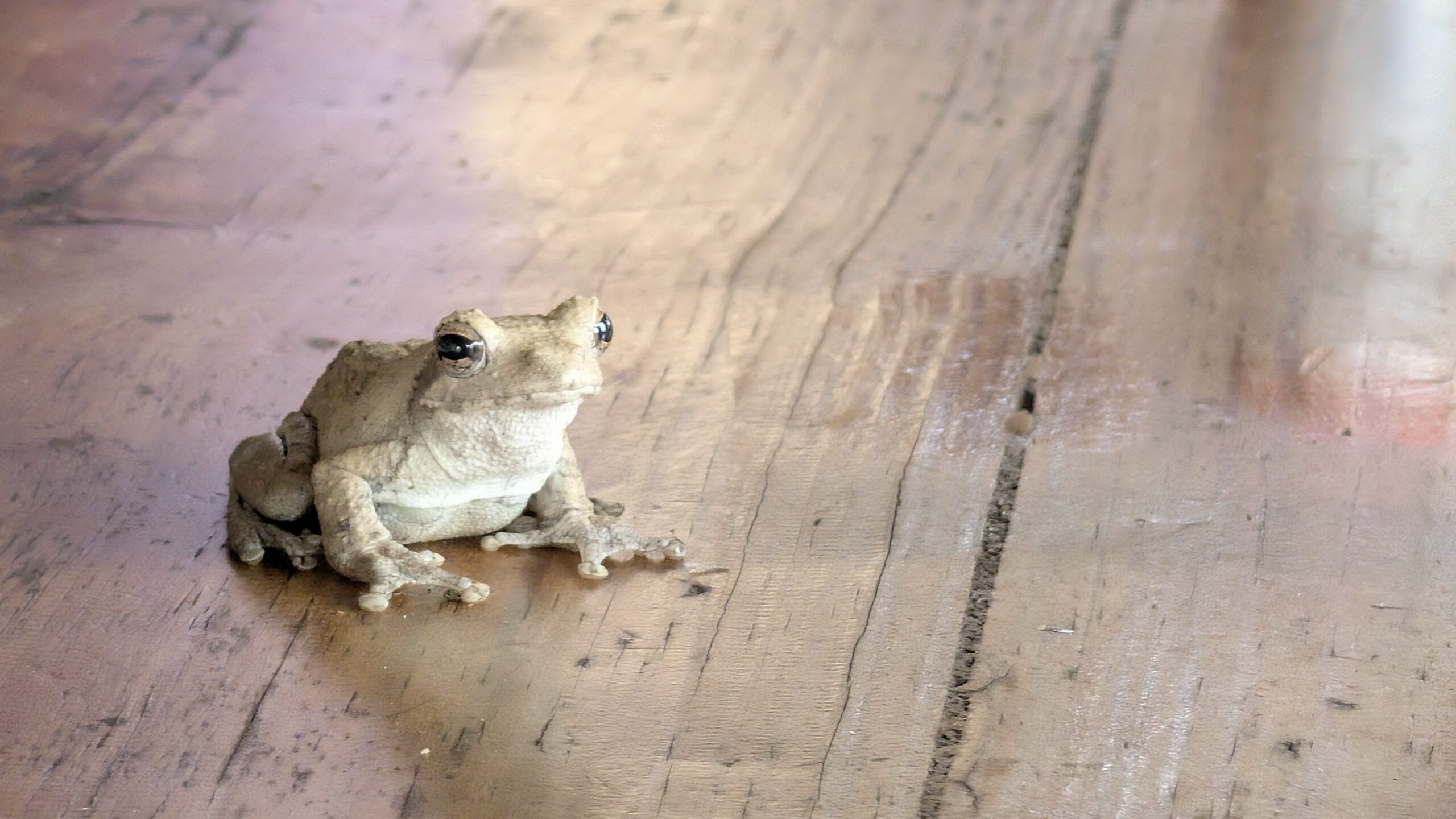
We have no idea how long they’ll continue occupying their unusual little home. Perhaps they’ll eventually discover a more suitable location, or maybe they’ll remain our veranda companions for many months to come.
Either way, these tiny creatures remind us that some of the greatest pleasures of living close to nature come from the smallest, most unexpected encounters.
And who would have imagined that an ordinary refrigerator door handle could become such desirable real estate?
On another note, after my Android computer and smartphone went haywire, I lost numerous apps, important files, and even access to our website. After several frustrating hours, I finally managed to restore everything. Fortunately, our web guy stepped in yesterday afternoon, performing several necessary seciruty tasks to get our site running again, explaining why we were unable to post.
It makes us wonder, is this the wave of the future? Will we increasingly face technological disruptions caused by hackers, malware, viruses, and mysterious system failures? With our growing dependence on technology, it’s certainly concerning. I guess only time will tell.
Be well.
Photo from ten years ago today, November 16, 2016:
|
|


About Jess & Tom
We are travel writers, photographers, and slow travelers exploring the world one meaningful experience at a time.
Read More