
Part 1…Exciting sighting to share with our family!…
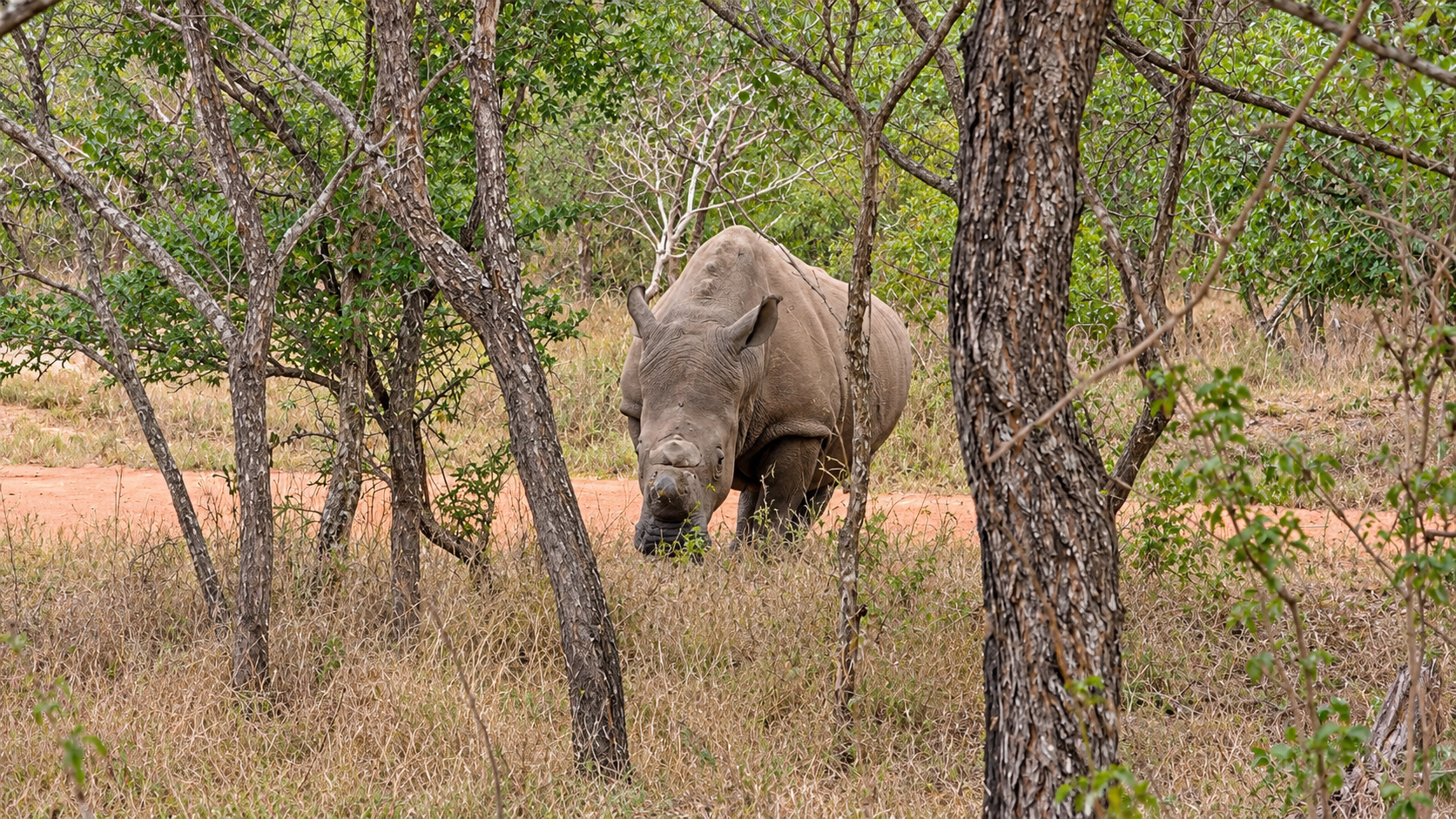
We recently had a magnificent opportunity to see one of Africa’s most extraordinary animals, a rhino, and what an experience it was! Because rhinos are particularly vulnerable to poaching, strict protections limit how we can share their locations. For that reason, we cannot disclose where we saw this magnificent creature. We hope our readers understand why we must keep those details private. Protecting these magnificent animals is far more important than sharing an exact location for the sake of a photograph or story.
Sharing this incredible experience with Colleen and Paulette made it even more special. We had originally considered making the very long drive in hopes of seeing rhinos, but there was certainly no guarantee we’d spot one after spending hours on the road. That’s one reality of wildlife viewing in Africa. We can drive for hours without seeing some of the animals we hoped to encounter, and then, without any particular expectations, we experience something truly extraordinary. This time, we experienced “safari luck!”
There it was: an enormous, magnificent beast going about its day as if we weren’t even there. Seeing a rhino in the wild is an entirely different experience from seeing photographs or watching documentaries. Their size alone is astonishing. They have an almost prehistoric appearance, with their massive bodies, thick legs, distinctive horns, and surprisingly small eyes. Observing this incredible animal was a moment we won’t soon forget. We were all delighted to have the opportunity, especially Colleen and Paulette, who shared this special experience with us.
Kruger National Park is home to both white and black rhinos, although their populations face ongoing threats from poaching. Despite their similar appearances, these two species differ in their lifestyles and feeding habits.
White rhinos are generally larger and are primarily grazers. They spend much of their day feeding on grasses, using their broad, square-shaped mouths to crop vegetation close to the ground. Their wide mouths are perfectly suited to grazing, and they can consume substantial quantities of grass throughout the day. They are often seen in open grasslands, sometimes in groups, although adult males are frequently solitary.
Black rhinos, by contrast, are browsers. They prefer leaves, twigs, shrubs, and branches, using their pointed, prehensile upper lip to grasp vegetation. They tend to be more solitary and are often found in thicker bush where they can browse among the vegetation.
Both species have relatively poor eyesight but possess excellent hearing and a keen sense of smell. Despite their enormous size, rhinos can move surprisingly quickly when necessary. They may appear slow and lumbering, but they can burst into short sprints that would surprise anyone who underestimates them!
Rhinos also spend considerable time resting, particularly during the hottest parts of the day. They often seek shade beneath trees or wallow in muddy areas to cool themselves. Mud baths serve an important purpose, helping protect their sensitive skin from the sun and biting insects. They also enjoy dust baths, which help remove parasites and keep their skin in better condition.
Interestingly, rhinos communicate through scent marking, dung piles, and various sounds. They often return to communal dung sites, known as middens, where their droppings tell other rhinos about their presence and activities. It’s another fascinating aspect of their behavior that most visitors might never consider.
Sadly, both black and white rhinos remain threatened by poaching, primarily because of the illegal demand for their horns. Rhino horns are made of keratin, the same protein found in our fingernails and hair, yet they continue to command enormous prices on illegal markets. Conservation teams in Kruger work tirelessly to protect these animals, using monitoring, patrols, and other protective measures.
We feel incredibly fortunate to have experienced this sighting and to have shared it with our guests. Wildlife encounters are never guaranteed, and that’s precisely what makes them so special. Sometimes the most memorable experiences happen when we least expect them. This was certainly one of those occasions, and we will all treasure the memory of seeing this magnificent rhino in the wild!
We’ll be back tomorrow with more about rhinos in our next post.
Be well.
Photo from ten years ago today, November 10, 2016:
 |
| A small rescue boat anchored alongside the ship. For more photos, please click here. |

About Jess & Tom
We are travel writers, photographers, and slow travelers exploring the world one meaningful experience at a time.
Read More