
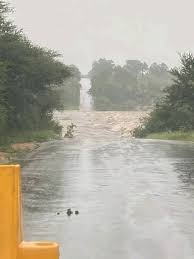
Click this link below to see the flooding that has immobilized Kruger National Park and the surrounding areas.
Kruger National Park floods — Reuters TV reports
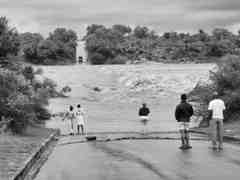
Currently, while we’re tucked away here in New Zealand, surrounded by green hills and a quieter pace of life, our hearts are anything but settled. Each morning, with coffee in hand, we scroll through Facebook and watch YouTube clips posted by friends in Marloth Park. What we see stops us in our tracks. Familiar roads are no longer roads at all. They’ve become rivers. The Crocodile River, usually a powerful but contained presence, has spilled over its banks with a force that feels both awe-inspiring and terrifying.
The Crocodile Bridge, our usual entrance point into Kruger National Park, is completely submerged. That image alone is jarring. We’ve crossed that bridge countless times, early in the morning, when the air is still cool, and the bush is waking up. We’ve sat in line there, windows cracked, listening to birdsong and watching vervet monkeys dart between trees. To see it now, swallowed by floodwaters, makes the distance between here and there feel immeasurable.
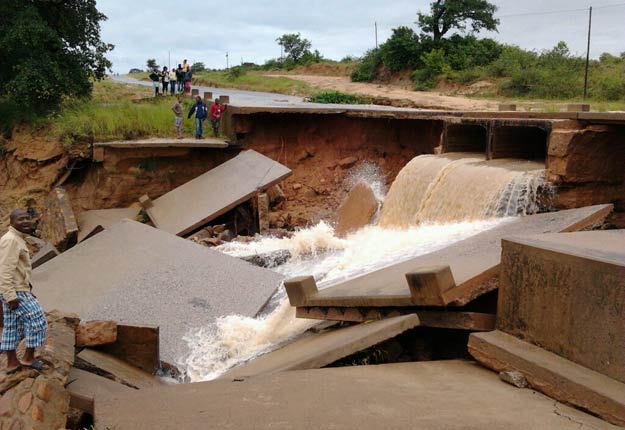
In the past few days, Kruger National Park has been closed to all visitors from every entrance gate. That fact carries weight far beyond canceled safaris and disappointed tourists. Kruger is not just a park; it’s a living, breathing ecosystem and, for many people, a place of work, home, and deep emotional attachment. When Kruger closes completely, you know the situation is dire.
The devastation is widespread. Many of the camps within the park are underwater, some completely. Roads have washed away. The infrastructure that took years to build and maintain has been damaged in a matter of hours. But what weighs heaviest on our minds is not the physical destruction—it’s the people and the animals who are suffering dearly.
Our friends in Marloth Park are sharing updates that feel surreal. Homes are dangerously close to rising water. Fences twisted or gone altogether. Power outages. Uncertainty hangs thick in the air. Marloth has always lived with wildlife as neighbors, but now both humans and animals are facing a shared vulnerability. Warthogs, impalas, and even predators are being pushed into unfamiliar areas, searching for higher ground and safety, just like the people who live there.
And then there are the animals inside Kruger itself. The images are heartbreaking. Elephants standing in swirling water, trying to keep their footing. Smaller animals cling to patches of land that may not exist tomorrow. We know nature is resilient, and floods are part of natural cycles, but knowing that doesn’t make watching this any easier. The sheer scale of the flooding feels overwhelming, and the long-term impact on wildlife won’t be fully understood for months, perhaps years.
Being so far away adds another layer of helplessness. New Zealand feels impossibly calm by comparison. The rain here falls gently. Rivers rise and fall without drama. Life continues as normal, and yet our minds are thousands of miles away, fixed on a place that has come to mean so much to us. Marloth Park isn’t just somewhere we stayed—it’s a community that welcomed us, a place where we learned to live in closer harmony with nature, where the wild wasn’t something you visited, but something you coexisted with daily.
We think about the staff in Kruger, many of whom live on or near the park, now dealing with both professional and personal loss. We think about the guides, rangers, camp workers, and families whose livelihoods depend on tourism. When the park closes, the ripple effects extend far beyond the gates.
This flooding is a stark reminder of how fragile even the most powerful landscapes can be. Kruger feels timeless when you’re there, ancient, unchanging, eternal. But moments like this strip away that illusion and remind us that nature is dynamic, unpredictable, and sometimes devastating.
For now, all we can do is watch, share updates, and hold Marloth Park and Kruger National Park close in our thoughts. We’re hoping for receding waters, for safety, for resilience, and for recovery, both for the people who call that area home and for the animals who have no choice but to weather the storm. The pelting rain continues.
Even from the other side of the world, our connection to that place remains strong. Distance doesn’t dull concern, and it certainly doesn’t erase love for a place that has left such a lasting imprint on our hearts.
Be well.
Photo from ten years ago today, January 19, 2016:

I have never been to Marloth Park or to Africa for that matter, but I feel a strong kinship with the people and animals because of your blog. Praying for the shops and their owners and the people who live and work there. Praying for the beautiful animals that roam that area and that stop and visit you daily when you are there. Praying the damage won’t be as bad as they fear and that they will be back to normal soon.
Thelma May, you are such a kind soul. Thank you for your prayers for the people and animals in Marloth Park and Kruger National Park. We will keep you updated.
Much love,
Jess & Tom