First trip to a grocery store and pharmacy in over a year!…Precautions prevail…

How can you not love this face?

It’s the first time in over a year that either of us, in our adult lives, hadn’t been in a grocery store or pharmacy. Fortunately, since we’d shopped in Komatipoort in 2018/2019, we remembered the layout of both stories, reducing the time necessary to be in the crowded shops.

The pharmacy felt safer than I’d expected with an employee at the door, taking shopper’s temperatures and ensuring the hand sanitizer was used before entering. Taking temperatures is no specific means of a shopper not being infected, who may not be symptomatic. Signs were posted everywhere stating, “Do Not Enter if You Suspect You Have Covid-19.”

Here again, the pharmacy might be the first place an infected person may buy various products to combat the symptoms or fill a prescription. A woman coughed within a meter of me. People weren’t properly wearing their masks or making any effort to social distance, including employees stocking the shelves and helping customers.

Nice profile.

But, I was as well protected as I could be, barring wearing PPE. I had on my N99 mask, a face shield, and rubber gloves. I then ditched the gloves into an appropriate trash container the moment I left the store, putting on a new pair after using hand sanitizer in the car and donning a fresh pair of gloves for the grocery store. I don’t know what more I could have done.

The grocery store felt less safe when I had to ask the outdoor attendant to spray my trolley handle. When Tom came into the store, I suggested I continue to handle the trolley, not him, since I was more well-protected. He loaded up the food at the register and paid the bill, which came to ZAR 4713, USD $312.77.

We’d purchased enough food to last two weeks, except for some mince (ground beef) which we’ll buy at the meat market at the Bush Centre in Marloth Park in the next few weeks, which appears to be of a higher quality than offered at the Spar Market.

This youngster’s parents were in the background keeping an eye out for their boy.

By carefully gauging how much we purchased, I somehow managed to fit all the meat into the small freezer consisting of several drawers. Also, we had to leave a few drawers empty for ice for our ice cube trays, which Tom empties nightly for an entire supply of cubes for the next day.

Keeping in mind how hot it is here, we certainly go through the ice while drinking our Crystal Light iced tea all day. For example, at 1:00 pm, it’s 93F, 34C, and the humidity is 77%. Toasty. Sticky. Rain on the horizon.

It was interesting to observe how careless the people in Komatipoort are wearing masks, as they are all over the world. (Hmm, need I even reiterate this worldwide phenomenon?) Many people mingled in large groups outside shops, on the streets, and in the Spar parking lot, no mask, no social distancing. We steered clear of everyone.

Young citrus trees.

Before grocery shopping, we stopped at the Obaro hardware store in Komati, but when they didn’t have what we wanted, we hightailed out of there in a mad dash. No one was adequately wearing a mask. Most were wearing cotton scarves or homemade cotton masks that kept falling off of their faces.

Eventually, people tend to stop trying to put the masks back on, ending up working in the shops with either no mask at all or it was hanging off their chins. It’s no wonder the number of cases of Covid in South Africa and all over the world has continued to rise. One need only check out the world stats to see cases are still on the rise. (In reviewing this report, it’s essential to click on “yesterday” since today’s stats aren’t yet included).

Within a few hours, we were back at the house, feeling relieved that the grocery shopping was over for two weeks. In the heat, we hurriedly put the perishables away and organized the remainder. Now, we’re situated on the veranda every hour or so. I’ll return indoors to work on the treadmill to complete each of my four daily sessions.

This bridge was underwater, less than one hour later.

I turn on the air-con in the second bedroom about five minutes before I get on the treadmill, do my thing while listening to podcasts on my phone, and turn everything off when I leave the room a short time later. I am not walking as long a distance as I had on level ground in the corridors in India. The treadmill is raised to be a medium grade, which requires more work for shorter distances. That’s fine with me.

When we returned to the house, we found Frank standing at the glass sliding door peering inside. He was looking for seeds. We couldn’t accommodate him quickly enough. He chirped happily as he pecked at the seeds. No other wildlife yet today. With storms foreboding, the wildlife stays undercover.

May you have a safe and pleasant day, wherever you may be.

Photo from one year ago today, February 1, 2020:

Typical scene on a busy street in Mumbai. For more photos, please click here.

Raining in buckets…Power outage…Thank goodness for the inverter…

Peeking up over the step, looking at us, “Got any meat for us?” Sure, we did! Thank goodness, Louise and Danie made certain we had an inverter in this house, Love Bird’s Nest. How thoughtful they are! An inverter uses power to recharge batteries inside the unit, which can be kept indoors, to be used later when the power goes out for small voltage requirements, such as powering a router and recharging digital equipment.

It could be used for some lights but can’t power the air-con, the refrigerator, and power-hogging appliances such as tea kettles, toasters, and microwaves. We keep the usage only for our phones, laptops, and the router to ensure we have WiFi, which, right now, we do. It’s been a massive benefit during all of the power outages.

Cute little mongoose resting his chin on a rock.

At some point, if the power doesn’t come back on, the batteries in the inverter will lose their power. We’ll see how that goes. Hopefully, sometime today, the cause of the outage will be repaired.

With the rains resulting from Cyclone Eloise, the ground is still soaked, and flooding is happening all around us. Even the Crocodile Bridge Gate and others, as access to Kruger National Park, are flooded, preventing visitors from many areas entering the park. I can only imagine the frustration of tourists who planned a one or two-week holiday in this area who can now not visit Kruger National Park unless they drive long distances to other open gates.

Mongooses are affectionate and nurturing to one another.

Also, we’ve found that wildlife tends to go for cover during rainstorms as powerful as this when they become frightened by the sounds. Thus, those tourists currently staying in Marloth Park won’t be seeing much wildlife in their gardens when, for example, so far this morning, we’ve only seen Franks, hornbills, and helmeted guinea-fowl. We tossed seeds for all of them when they looked at us with those longing eyes. Of course, we comply, even on sunny days.

Flooding will escalate over the next several days as the rains continue through Monday, Tuesday, and longer. In viewing the weather reports, it appears it will rain almost every day over the next two weeks, all the way through February 14.

I gave them a little container with the remainder of my chicken livers. As carnivores, they sure loved that.

We’re certainly happy that we’re staying here for quite a long while. Otherwise, this amount of rain would be frustrating. However, it’s vital for the growth of the vegetation critical to the wildlife in the bush, which is their primary source of food, except for carnivores such as mongoose, lizards, snakes, and others.

This morning Louise and Danie stopped by with a cooler, called a “chill box,” here in South Africa. Our social life is beginning to take shape with upcoming visits to friends in the bush. We’ll bring our beverages, in this case, Crystal Light Iced Tea, since alcohol is still banned in South Africa.

A tiny baby mongoose with mom or dad on the pool steps.

Hopefully, the ban will be lifted by mid-February, and I can purchase my favorite South Africa wine, Four Cousins, Skinny  Red. It’s a delicious low-alcohol wine, 9% instead of 13%, which had been my go-to wine when we were here in 2018-2019. At times, my mouth waters when I think of this delightful wine.

It’s ironic. We couldn’t drink alcohol in India during those 10-months in isolation due to many months-long bans and then outrageous prices with taxes at 38%. It just wasn’t worth it to us at the time, especially when neither of us had ever enjoyed drinks in a hotel room or even a cruise cabin. It’s all about socialization for us.

Of course, if it’s just the two of us on the veranda at “happy hour,” we find each other’s companionship a delightful form of socialization and may imbibe when the time is right. We look forward to that down the road.

A moment ago, the power came back on! We’re thrilled!. We’ll be back with more tomorrow! As soon as I upload today’s post, we’re heading out for a drive to check out the area’s flooding and take some photos.

Stay well.

Photo from one year ago today, January 31, 2020:

The view from our hotel room in Mumbai,  overlooking the Arabian Sea, shortly after we arrived in India from the US on a 33-hour journey. For more details, please click here.

A repost from five years ago that still reflects our views…

Our new friend, “One-Wart,” is missing a full-sized wart on the right side of his face. Most likely, he was “born this way.,” possibly due to inbreeding. We have no doubt he’ll be a regular.

While I’ve continued to edit past posts due to errors I’ve made over the years, along with other errors as a result of WiFi issues at the time, I stumbled across a post from November 13, 2015, that over five years later, still resonates who we are and what we believe. I hesitated to repost the text, of course, using some new photos from Marloth Park.

Why the hesitation? To avoid redundancy. After all, during the past ten months in lockdown in India, there certainly was plenty of redundancy with dull stories and repeated photos from years past when no new photos were being taken. Thus, if you recall this post, feel free to pass by the text and enjoy the new photos taken in the past 24 hours.

Impalas rarely come to the garden since they are timid around humans. This fellow stops by almost daily.

If, years ago, someone would have told me I had to write a new story 365 days a year for over eight years, relevant to the current times, I’d have laughed and said it was impossible. I’d never be motivated to perform such a task. And yet, here we are, plugging away with the same enthusiasm in preparing our first post published on March 15, 2012. See that post here. It didn’t include a single photo, but over the years, that first post has been one of our favorites, so well describing who we are and what we hoped to achieve in our worldwide travels.

But, this post, which I stumbled upon yesterday afternoon while working on the prior post’s edits, also caught my eye, and I decided to share it again with you today. Our long-time readers may recall this post, or they may not. Our newer readers may never have come across it as they occasionally reviewed the archives, if at all.

This is Dad & Son, who stop by daily to see what’s on the menu.

In essence, this old post is no big deal, but it reflects who we were then and who we are now, which only you, as readers, may decide if we have changed our views over the years. To see the photos from that date, please click here. Please sit back, relax and read this revealing personal exposé we took seriously at the time and do so again now.  Here we go:

“A grain of sand on the beach of life…Who are we?…

Nothing in life is static. No state of being is guaranteed. All we know for certain is tomorrow, a new day will dawn, and tonight a sun will set. Even that eventuality is in question by scientific predictions in the millennium to come or sooner.

When we hear of new planets emerging within our range of perspective at the edges of our universe, our Earth becomes minor and insignificant in the vast expanse of “forever,” a place none of us in this lifetime will ever know.

How do we grasp a news report such as this:

“A rocky Earth-sized planet that circles a small, nearby star could be the most important world ever found beyond the solar system, astronomers say. The planet lies in the constellation of Vela in the southern sky and is close enough for telescopes to observe any atmosphere. It has a procedure that could help spot life on other planets in the future. Named GJ 1132b, the alien world is about 16% larger than Earth, and at 39 light-years distant, is three times closer than any other Earth-sized rocky planet yet found around another star. At that distance, it is hoped that telescopes will be able to make out the chemistry of its atmosphere, the speed of its winds, and the colors of its sunsets.”

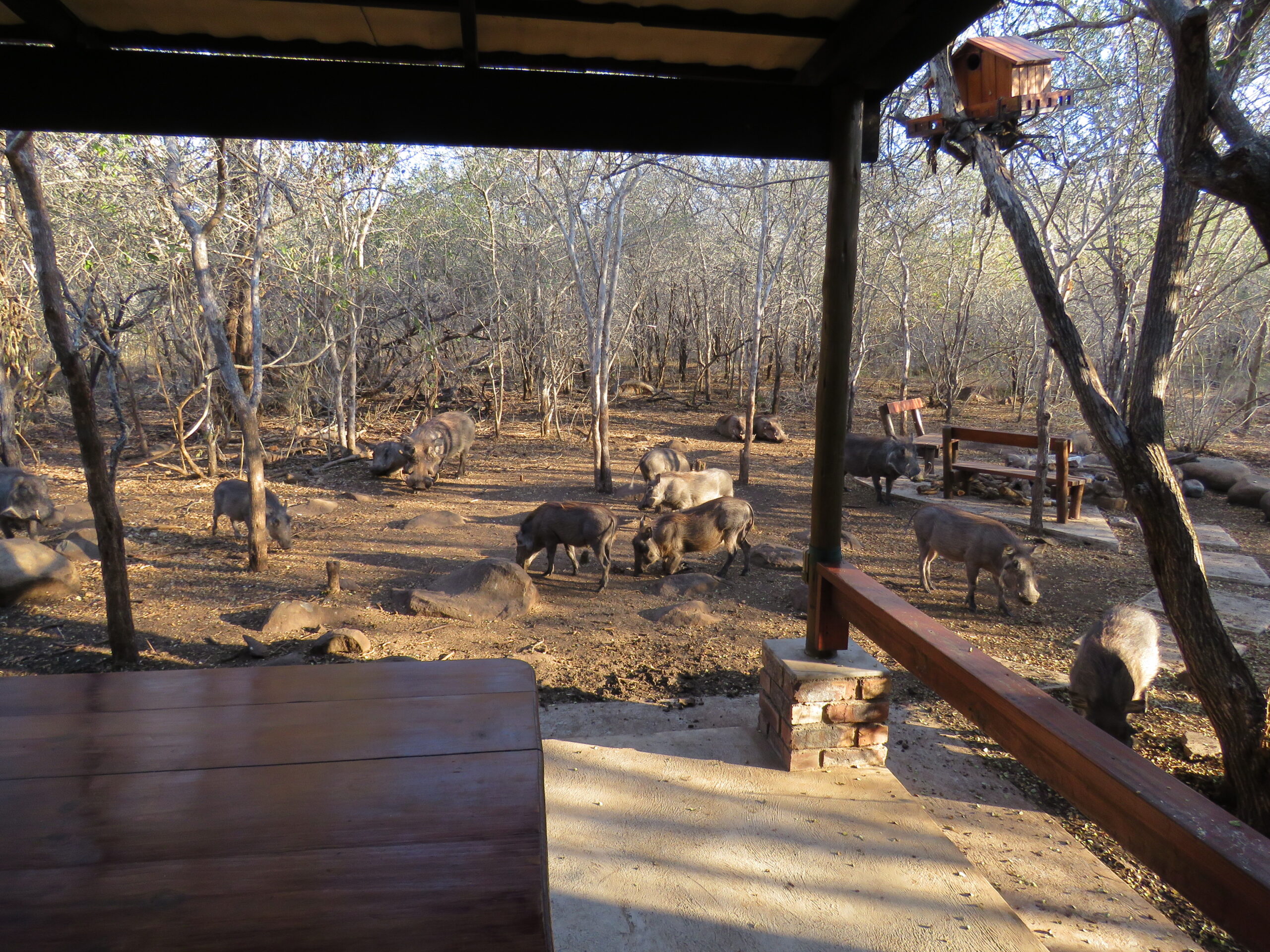
Six warthogs, a kudu, and Frank came by, gathering around the braai.

As we simpletons scour the world, the Earth, enraptured by its endless wonders along the way, we are in awe of Earth’s natural evolution, leaving some of the most exquisite scenery in its wake. Imagine the millions of years that no humans were on this Earth even to know it was there.

With predictions that human life as we know it, from a scientific perspective, has populated the Earth for a mere 200,000 years is a “drop in the bucket” in time, a single grain of sand on a beach.

As the Earth has further populated, each one of us has become a grain of sand on another beach of impossible calculations. How many are there now? How many have there been, and how many are there yet to come?

A male bushbuck and a male impala. This species often graze together without incident.

And, within our limited field of vision, we deem ourselves significant and meaningful. Collectively, we matter. Individually, we must seek the power of the masses to hope for change and progression.

It’s easy to hide away in our self-imposed universe, in our geographic sphere, reaching out only to that which is readily available within our grasp. Is it human nature that we tend to cocoon in a limited space and time?

Oh, as I ponder these thoughts, as I write a meaningless timeline of a day in the village as in yesterday’s post, I’m reminded of how tiny our world becomes coupled with our ambitious desire to see as much as the world as we can as the clock ticks loudly and annoyingly. How much time do we have to complete this journey?  And what, within this realm, are we really doing?

After finishing the raw scramble eggs Tom placed in this pan, these two were determined to lap up every last drop.

I don’t know the answer to either of these questions, which in itself is a further reminder of how little power we each have in this world. The mystery.  Is it wrought from a sense of spirituality or simply hard facts? It remains to be seen in this lifetime.

As we continue to explore the significance of every creature on Earth and its interrelated purpose, it’s easy to assume we humans are at the head of the food chain, and yet, life emerged long before we were here.

The cycle of life and the food chain is magical. Every creature’s design is magic, and none of this could happen from an explosion of planets, remnants evolving into worlds, remnants growing into the Earth.

Ms. Tortoise made a brief appearance, moving quickly through the bush.

A power, a spirituality beyond our comprehension, created this magical life on this planet. As we travel, we witness the vast array in which each population has formed their perception of “who” and “what” this may be. They call it religion, faith, and spirituality in a manner they can most easily grasp and incorporate into their beings.

We don’t choose to see ourselves as self-serving individuals lost in a sea of “vacation,” “holiday,” and travel options. We see ourselves, all of us, you and us, as on a long journey of personal discovery in pursuit of the answers to our own relevant questions, whether we travel the world or sit back in an armchair, hoping to find answers, if not in this lifetime but perhaps in the next.”

She cracked open the egg by pounding it on the cement, sucking out the contents. Animals using tools, fascinating!

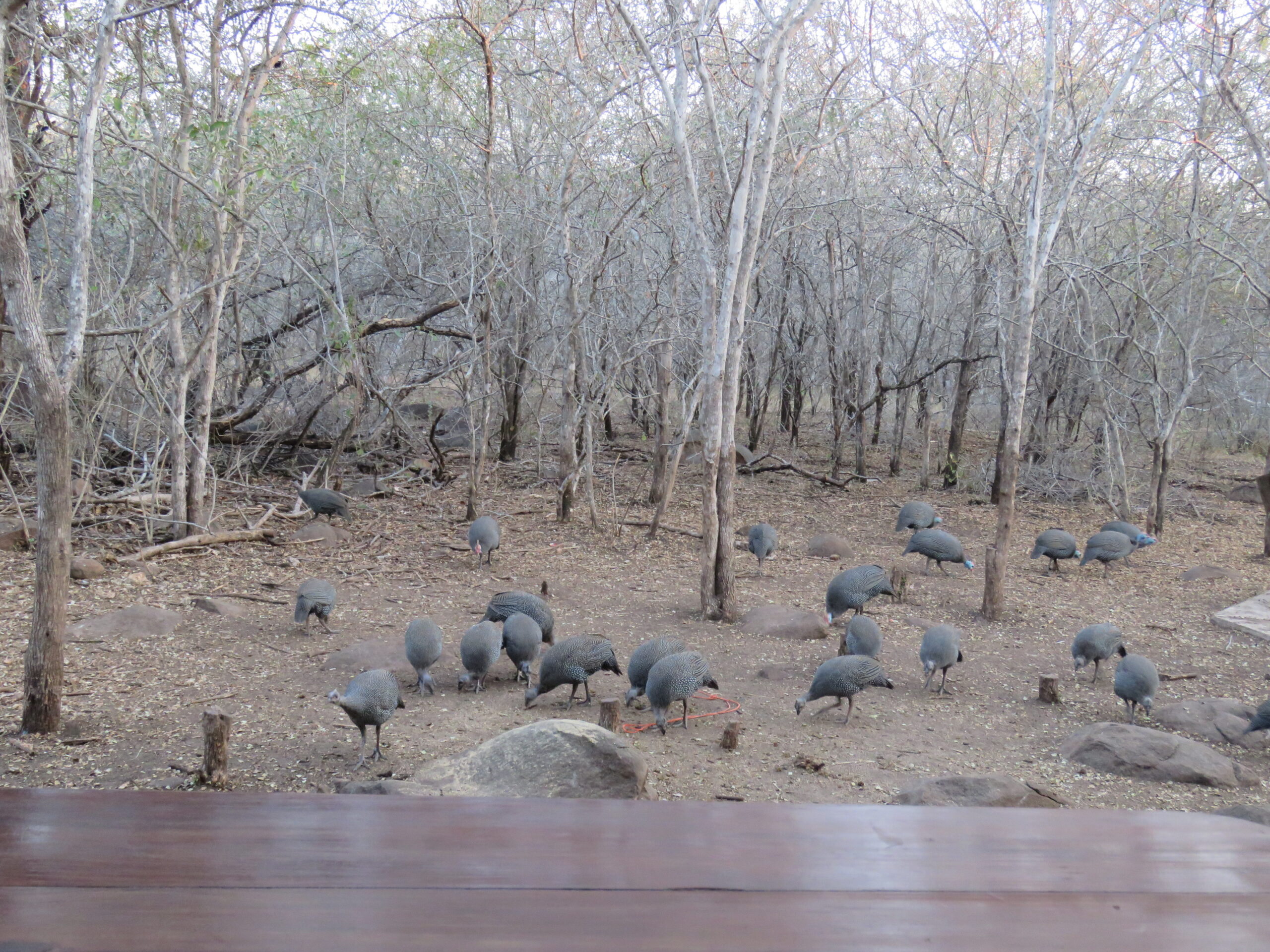
This morning upon arising, no less than ten helmeted guinea-fowl were on the veranda hoping for seeds. Once they left, francolins, Frank, and The Misses were looking in the glass of the veranda’s sliding door, wondering when we’d be coming out to toss some bird seeds. It took us no time at all.

Life is good. We have WiFi, power, and the high today will only be 92F, 33C, as we wait in anticipation of who may come to call in the next 12 hours, as we embrace our surroundings in the bush.

Be well.

Photo from one year ago today, January 30, 2020:

Five years ago in 2016, we spent three months in New Plymouth, New Zealand, living on an alpaca farm. In the early evening, a group of the babies got together to play, running through the paddock, making us laugh over their playful antics. For the year-ago post, please click here.

Visitors are baaack!…Great to see our wildlife friends once again…Settling in…

The pool water has chlorine in it, not ideal for wildlife to drink. We have a clean cement pond in the garden, from which the wildlife often drink.

It started to be a busy morning in the bush. Now that the worst of the storms has passed, we’ve begun to see more and more wildlife, especially in the late afternoon, after 5:00 pm, when it begins to cool down. Now, close to noon, we’ve already had several delightful visitors, which we’ll share in tomorrow’s photos.

Fortunately, right now, it isn’t as hot as it could be, and we’re comfortably situated on the veranda waiting to see who will grace us with their presence during the warmth of the day. However, it’s always a particular time in the early morning and toward the end of the day when more wildlife stops by.

Tiny, our huge warthog friend, and Bossy, a very pushy and persistent kudu, visited together last night.

We’re getting into an enjoyable routine, some mornings sleeping in a little later as needed and other mornings, bolting out of bed to get outdoors as quickly as possible after spotting many species in the garden in the early morning. We never hesitate to acknowledge them.

Finally, we’ve both begun to sleep better, often making it through the night without awakening. My habit has been waking around 2:00 or 3:00 am, staying awake for an hour or more. But, the past few nights, I have been avoiding this annoying occurrence and slept through to 5:30 am. Peering out the bedroom window to see if we had visitors when none were spotted, I was able to go back to sleep for a few more hours, feeling especially rested today. Tom did the same.

Tom placed a few eggs on the grass for the mongooses.

Gosh, it feels good, cooking and eating our chosen meals whenever we’re hungry, exercising on the rented treadmill, and of course, spending the majority of our days and evenings outdoors on the veranda. At this point, we have no desire to go out anywhere, although, on occasion, we jump in the car and drive through the park to the Crocodile River.

Recently, with all the rain, it’s been too muddy to get out of the car to walk closer to the fence between Marloth Park and Kruger National Park. And with the concerns over frightening the stranded waterbucks close to the wall, we’ve chosen to stay away.

Mongoose and Ms. Kudu.

Once things dry out and the waterbuck return to the other side of the river, their usual habitat, we make more trips to the river, getting out of the car to take photos of such stunning wildlife like lions, elephants, cape buffalo, and more. We have all the time in the world, provided we’re able to get our visas stamped by April when our 90-day visa has expired.

For now, we’re not worrying about this. With the pandemic raging on, there are limitations on where we may travel in April. Many countries we’d considered are now refusing entry from South Africa or even US passports due to the Covid-19 and potential variants.

This pair of male warthogs, whom we call Siegfried and Roy, stop by in the early evening.

We’ve chosen not to put a damper on our exquisite time in the bush by worrying about our visas. In the worst case, we can apply for a visa extension or, even worse, fly to the US for a few days and later on return for a new 90-day visa stamp, which isn’t easy, time and travel-wise, but may prove to be our only option.

In the interim, we continue to watch the news about when the vaccine will be available in South Africa, making traveling all the less problematic than it had been during those 59 hours from India. We are so grateful we came out of that long trip unscathed. But, as mentioned, we cannot let our guard down here in Marloth Park.

Eight kudus showed up together, all female, with a few maturing youngsters.

Four deaths from Covid-19 were reported here in the park in the past few weeks. We can easily see how likely this is with many locals and visitors failing to be diligent about proper mask-wearing and social distancing, mainly, the workers and tourists in the local shops.

These two little birds, Blue Waxbills, moved so quickly, it was difficult getting a photo.

Instead, on Monday, we’ve decided we will head to Komatipoort for a much-needed trip to the pharmacy and Spar Market for groceries. As mentioned, Louise has offered to do all of our shopping for us. But, as much as we appreciate her generous offer, we feel it’s time we shop for those items we’d like to select on our own. We can’t stay in hiding forever. After all, we’d done plenty of that in India.

Hopefully, by the time all of our friends arrive in Marloth Park over the next several months, they will all have been vaccinated while we continue to wait for vaccinations to be available to us in South Africa. The friends we have who are already here are like us, proceeding with extreme caution in socializing.

This photo was taken at dusk without flash, two female kudus stopping by for treats.

As much as we look forward to being with others, we truly appreciate and understand the risks are not to be taken lightly. In the interim, we are thoroughly enjoying ourselves every day in the bush.

Be safe. Be well.

Photo from one year ago today, January 29, 2020:

Three years ago, at lunch, that day, one of the chefs on our Antarctica cruise, on Ponant Le’Boreal, was preparing a beef and vegetable stir-fry outdoors. We all partook of the delicious offering but decided to dine indoors. It was a little too cold to eat outside for our liking. For more photos of Antarctica, please click here. Please click here for the year-ago post, which included our final expenses from 82 days in the USA.

Our 14-day self quarantine is over!!…But, caution remains in Marloth Park…

The heading of our post, one year ago today, reads: “The flurry of activity has begun…two days and counting…Not freaking out about Coronavirus..” Little did we know at that time. It wasn’t until six weeks later that we ended our private tour of India, after which we began the 10-month process of trying to figure out how to get to South Africa.

And now, here we are, 14 days after we finally arrived in Marloth Park, South Africa, on January 13, 2021, and the following has transpired:

  • Power outages, no less than eight times, including a 29-hour outage a few days ago
  • WiFi outages,  no less than five times, including two extended periods
  • Cyclone Eloise, dumping 200 mm, 7,9 inches rain in Marloth Park with high winds at times
  • Flooding in many parts of Kruger National Park
  • A highly venomous Boomslang snake visiting our veranda within inches of us, within days of our arrival
  • Outrageous heat and humidity (which has returned today as Cyclone Eloise passed)

    Frank, The Misses, and The Chicks reside in our garden along with other francolins. They are friendly, noisy, and entertaining birds.

And then, of course, we’ve enjoyed the following perks in the past 14-days during our self-imposed quarantine:

  • We are reveling in close and personal interactions with many wildlife, including giraffes, kudu, warthogs, wildebeest, bushbuck, impala, mongoose, Franks, hornbills, etc. many other birds, and, of course, our snake.
  • A few highly enjoyable masked/social distancing get-togethers with Louise and Danie
  • We have been dining on beef no less than eight times in the past 14 days, cooking our meals. Yeah!
  • We washed clothes in the washing machine in the kitchen and hung them to dry on a rack. After handwashing all of our clothes for ten months, this has been a treat.
  • Spending no less than 12 hours a day in the fresh air on the veranda enjoying Mother Nature at her finest
  • Enjoying the freedom of moving around the house with all the space we need
  • For me, exercising on a rented treadmill, Louise found on Facebook which Zef delivered
  • Receiving an endless stream of supportive email messages and comments from our dear family/readers/friends

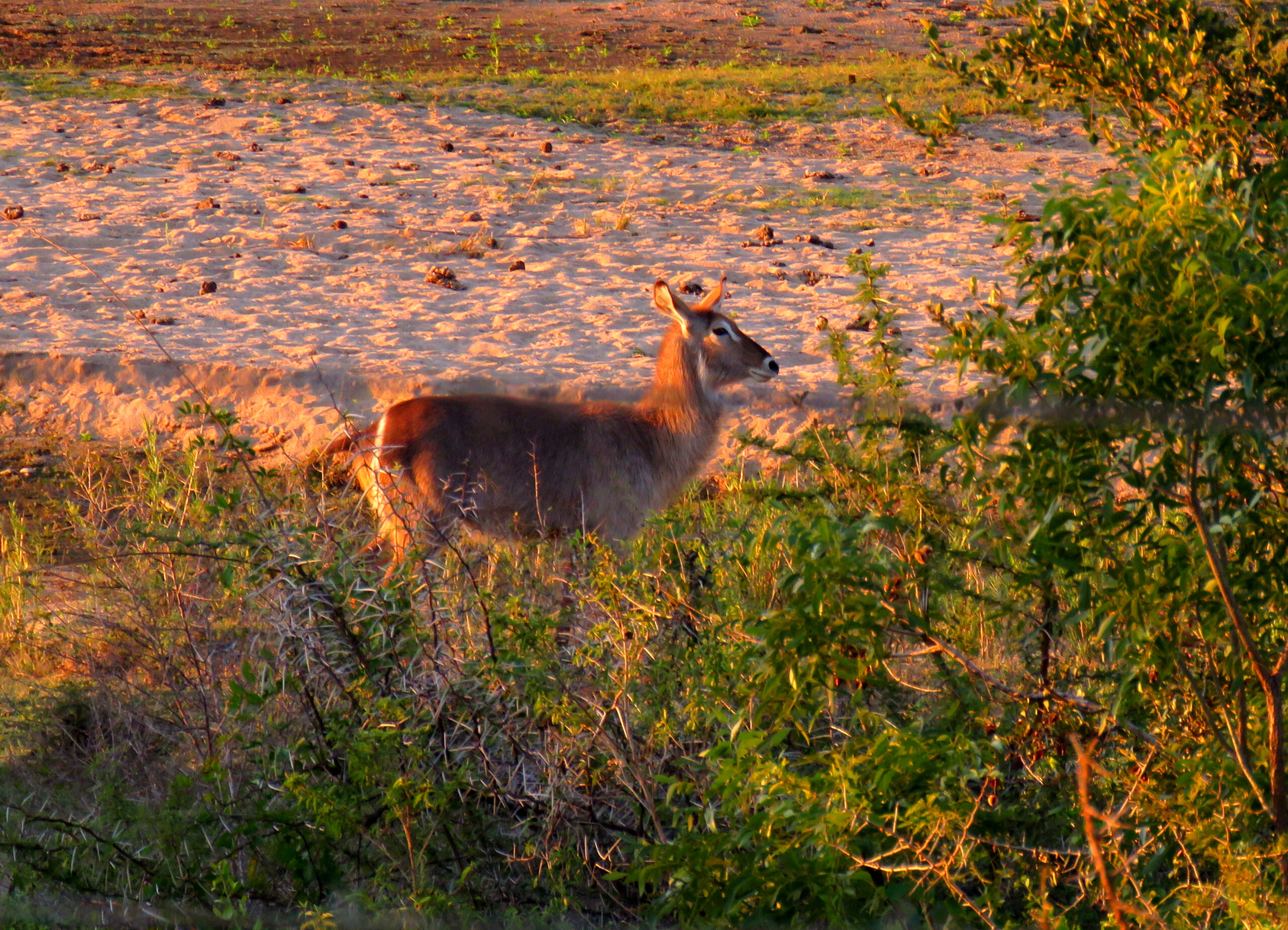
    The waterbuck is a large antelope found widely in sub-Saharan Africa. It is placed in the genus Kobus of the family Bovidae. It was first described by Irish naturalist William Ogilby in 1833. The thirteen subspecies are grouped under two varieties: the common or Ellipsiprymnus waterbuck and the Defassa waterbuck. Please, visitors and locals, stay away from the fence while waterbucks are on the wrong side of the rising river. They are easily stressed and frightened and could become injured in a rush to escape from humans.

The list of the wonderfulness could go on and on, mainly for the simple pleasure of life. As a result, the above less-than-desirable scenarios have been all the more tolerable. Then again, during our previous 18 months spent in Marloth Park in 2013/2014 and again in 2018/2019, many of the above scenarios transpired during those times.

Even then, we were grateful to be here, tolerating the nuances of living in Africa, especially after we spent three months in Kenya in 2013 before coming to South Africa, where conditions were much more challenging than here.

We drove past this unusual cactus shape.

Such conditions in Kenya included; nowhere to sit inside the house other than on the bed; living only on the veranda day and night; no air-con in the bedroom making sleep impossible; continually looking out for venomous insects on the floors, walls, ceilings, and in our shoes, a tiny galley kitchen only suitable for one person at a time, making cooking painstaking and laborious; high risk of crime, guards at our house 24/7, armed military at grocery stores, ATMs, and other venues. This list went on and on.

A local, protecting their plants from animals. There are mixed opinions on plants in Marloth Park. Shouldn’t all the plants be suitable for the diets of the wildlife? Isn’t this their territory?”

Louise’s homes always have great fully equipped kitchens, air-con in bedrooms, fewer insects, and more comforts and conveniences overall. By the time we arrived in Marloth Park, directly after leaving Kenya, this lifestyle was easy comparatively. Yes, it’s still Africa, hot, humid, and at times, uncomfortable. And yes, at times, there are dangerous snakes or potentially dangerous other creatures among us.

We drove by “The Orange”  house, which is now for sale. We love this location so much, weren’t missing the former house where we stayed for 15 months in 2018/2019.

However we look at it, we belong here. And yes, we’ll miss the socialization we so cherished due to Covid-19, but surely somehow we’ll manage to get together with trusted friends and neighbors, exercising the utmost of caution and diligence to stay free of Covid-19. As for the vaccine here in South Africa could be a year until it’s available to us.

We made it through the first year of the dreadful virus, and we hope and pray we’ll make it through the next.

Baboons, who are annoying and destructive, are seated in the garden of a house we drove by.

Stay safe. Wear a mask covering your mouth and nose. Protect yourself. Protect others. Our 14-day quarantine flew by, albeit eventfully so, as shown above, and we’re no worse for the wear!

Photo from one year ago today, January 27, 2020:

Three years ago today, we wrote: “This is unreal…the Black Browed Albatross on Steeple Jason Island, Antarctica, remove tall grass from these massive “pod-like” structures, adding mud and vegetation to make it a freestanding pod on which they can nest. Here’s a young chick making a little noise while atop their elevated nest That’s amazing.” See the post here. For text from the year-ago post, please click here.

A rough and muddy outing brought some treasures to light…

We couldn’t have been more thrilled to see these giraffes while driving on the wet, muddy roads.

Thank goodness, we have power. Unfortunately, we don’t have WiFi. A line went down due to the relentless pounding rain. Hopefully, it will be up sometime today. Cyclone Eloise is still hovering in the interim and should be out of our area in the next day or two. We are bracing ourselves for more rain and power outages in the next 24 hours.

Giraffes are amazing animals. The giraffe is an African artiodactyl mammal, the tallest living terrestrial animal, and the largest ruminant. It is traditionally considered to be one species, Giraffa camelopardalis, with nine subspecies.

Yesterday, we made the long, muddy, pot-hole-ridden drive to the Crocodile River to see how high it had risen. I could only take a few photos since I was determined not to get my shoes and ankles muddy. I only have a few pairs of shoes and didn’t want to muddy them.

The feet and legs of the few animals that visited were caked in thick mud. It was funny to watch the four bushbucks that stopped by trying to shake it off their feet. They, too, hadn’t seen such rain in quite a while.

They were assembled in one particular area, close to the parklands, to roam freely without hitting their heads.

After the challenging drive on the uneven, muddy roads as Tom averted one outrageous pothole and sunken ravine after another,  we made our way out to Olifant Rd, the only paved road in Marloth Park. A stop at The Bush Centre’s meat market was a must out of meat in the freezer. Besides, I needed more cream for my coffee when my liter container spoiled in the refrigerator during multiple power outages.

A youngster with mom and dad hovering at a short distance.

Going into the two shops we visited was concerning when mask-wearing was either non-existent or worn below the nose. In South Africa, there’s a law to properly wear masks when outdoors in public areas and inside all enclosed shops and public spaces. Some shop workers were careless in this regard. I didn’t hesitate to ask those who didn’t comply to “please cover your face and your nose.” No doubt, I got a few dirty looks. I don’t care.

“It feels good to get off my legs for a while.”

Still, we haven’t gone to Komatipoort to grocery shop and to stop at the pharmacy. With the storms of the past several days, it made no sense. Today, Louise is heading there and will pick up a few items for us. With our more strict way of eating, our ingredients list has downsized considerably.

A mom and baby were munching on leaves.

With the storm still brewing, we don’t expect to see much wildlife today. However, yesterday’s outing reaped some rewards when we spotted several giraffes along the way, shown in today’s photos. Hopefully, if the house’s WiFi isn’t back on by the time we’re ready to upload today’s post, I can get my phone’s hotspot to work well enough to accomplish this.

Looks like a magpie playing in rainwater near the area called, Two Trees.

Now, at almost 10:00 am Tuesday, the WiFi is back on for the first time in nearly 24 hours, except for a few hours, here and there.  Last night, after dinner and the necessity of going indoors when the mozzies got terrible, we couldn’t stream any shows or do anything online. As a result, we went to bed early and played games on our phones.

We could read books on our phones on Kindle. Still, after reading so many novels during the first few years of our travels, we lost interest in reading books. Instead, we found ourselves listening to podcasts, watching videos, and streaming TV series, movies, and documentaries. With no WiFi, we can’t do any of these. We both tried reading books on our Kindle apps, but neither of us could get into it.

Mr. Bushbuck’s muddy feet.

Now, much to our delight, the house’s WiFi has returned as I continue to write. With both power and WiFi working, we’re practically giddy. I’ve already done two sessions on the treadmill this morning, and I’m now able to listen to some of my favorite podcasts to make the time pass more quickly.

Mud on young bushbuck’s horns.

Tonight’s dinner is planned for the gas braai with a few simple tasks required to put it all together. We were able to get two loads of laundry done last night and placed them on the portable clothesline to dry indoors. Soon, Zef will arrive to clean the house, after which we’ll head to the hardware store to pick up a lighter for the citronella candles and insect repellent coils we use at night on the veranda. (No, Tom is still not smoking. Yeah!)

Several waterbucks, used to live on the Kruger National Park side of the Crocodile River, found themselves on the Marloth Park side, separated by the fence, preventing them from entering Marloth. The rangers are keeping an eye out for their safety and asking residents and visitors to stay away to avoid stressing the animals. They aren’t used to being near humans.

As always, here in Marloth Park, when weather conditions are tolerable, wildlife is visiting, power is restored, and WiFi is working, we don’t need anything. Of course, the coup d’etat will be when we can get together with some of our many human friends. Today is day #13 of self-imposed quarantine. One more day to go.

Happy day!

Photo from one year ago today, January 26, 2020:

In Kauai, Hawaii, on this date in 2015, our friend Richard, who sadly has since passed away, sat behind the impressive magistrate’s desk, gave us a feeling as to how it would have been to visit his office in St. Louis, Missouri might have been, before he and wife Elaine moved to Kauai. For more, please from that post, click here. For the post from one year ago, please click here as we approached time to leave the US.

Cyclone Eloise making her mark…No power for over a day…Inverter keeping our equipment alive…

Last night, two bushbucks stopped by during the storm. I took the photos using the flash since we had no lights to illuminate the garden.

This morning around 9:00 am, the WiFi signal was restored. The power had been out since 5:30 am Sunday. It’s now midday on Monday. The inverter has been working well to keep our phones and laptops charged but can’t be used for much else to avoid it running out of power. That helps us considerably.

Ah, Cyclone Eloise keeps pounding us with torrential rains and occasional thunder, but fortunately with only occasional gusts of high winds. We heated water for coffee/tea this morning on the gas braai on the side burner. Last night, we ordered takeaway dinner from Jabula when it was raining too hard to cook bacon and eggs on the grill, all the food we had left.

The eyes of the two bushbucks are showing in the dark.

We’ll probably do the same tonight since there’s no way we can grocery shop today when the roads to Komatipoort may be flooded. If we have to do takeaway for a week, we will. Jabula’s food is excellent, and Tom loved his ribs, chips (fries), salad with a small loaf of white bread while I had a double order of the starter, spicy peri-peri chicken livers.

There are other restaurants in Marloth Park offering takeaway, which we may try since we don’t want to get into the rut we were in during those ten months in the hotel in Mumbai, eating the same meals over and over again. However, owners Dawn and Leon know precisely how to have my food made to comply with my eating method. That can’t be assured from other restaurants.

Three warthogs ventured out in the inclement weather. We tossed them a big load of pellets for their efforts in coming out in this weather.

Last night, during the pelting rain, we had only a few visitors: two male bushbucks stopped by when the rain let up for a while, and then we saw “Mom and Babies” who scrambled to get every last pellet we tossed their way. During daylight hours, when the worst of the rain had yet to hit from Eloise, we only saw Frank, The Misses, and The Chicks, and the hornbill mating pair still busy with their nest in the hijacked bushbaby house.

Photo taking has been at a minimum the past few days, so we are sharing a few recent shots from last night and those taken over the past week or so. I considered doing a video of the pounding rain, but its brunt occurred during the night when the winds were much worse. I didn’t consider it sensible to head outside during that situation.

Mongoose is contemplating how she will crack the egg. She banged it on the cement.

Today, it is very cool, which is refreshing, although the humidity is relatively high. It’s currently 74F, 23C which is comfortable, the lowest we’ve experienced since our arrival. This is only temporary due to the cyclone. Once that ends, surely the high summer heat will return, often as high as 104F, 40C, or more.

Louise and Danie offered to bring us their generator to keep the fridge and freezer cool and allow for air-con at night. But, we’ve already lost the few items we had left in the refrigerator, and if the power doesn’t return soon, the bag of chicken wings and containers of bacon in the freezer will also soon be lost. As long as we have WiFi to entertain us and serve our posting and communication needs, we’re fine.

Mongoose was enjoying the contents of an egg we offered.

You may ask, “How the heck are we putting up with this after all we’ve been through?”

Hey, today is day #12 of our 14-day self-imposed quarantine, and we didn’t get Covid-19 from the 59-hour journey from Mumbai to Nelspruit. We’re grateful. We’re thrilled! What’s to complain about? Soon, this power thing will subside, although not entirely, when load shedding will resume.

Soon, we’ll be able to cautiously grocery shop and stop in a pharmacy for a few items for the first time in a year!!! Soon, we’ll be able to shop at the Biltong shop in Komatipoort to buy that great South Africa jerky, the best we’ve had in the world. Soon, we’ll have an opportunity to visit with some of our friends, old and new, who will and have maintained social distancing and mask-wearing with diligence since Covid-19 arrived in Marloth Park a few months ago.

Dad Hornbill is considering his nest-building options.

Soon, we’ll be able to use the electric stove, turn on fans as needed, and use the electric water kettle. Soon, I’ll be able to use the rented treadmill again, which isn’t working without power. One thing we’ve learned after ten months in that hotel room is patience. It was only that level of tolerance that allowed us to get here eventually. We wait patiently.

Oops, I had to take a break to toss birdseed into the garden. Frank, The Misses, The Chicks, and Auntie just stopped by. They make a cute little chirping sound when they eat the seeds. It is delightful.

A forkl of kudus in the garden, and of course, a warthog in the photo. They never miss a photo op.

Another oops, we had to come indoors when the wind picked up during the downpour to prevent our equipment from getting wet. Life in the bush.

Wow! By the time I was about to upload this post, our power was restored. We don’t know for how long, but we’ll enjoy it while we have it! Time to go work out on the treadmill while I can.

Happy day.

Photo from one year ago today, January 25, 2020:

Ironically, similar to a new photo we posted a few days ago. Here is a photo from seven years ago today at this link. On either side of the face are two hanging red-tipped pieces of skin. When the Helmeted Guinea-fowl moves, these swing around like a pair of dangling earrings. Ah, the beauty of the wild! For last year’s post, please click here.

Power outage due to Cyclone Eloise…We’re figuring it out…

Please note: Due to a power outage and poor WiFi signal, we cannot upload photos until power and WiFi are restored.

As mentioned in yesterday’s post, it was highly likely that power would be out today, and it is. It went out early this morning when I was awakened by the temperature, climbing in the bedroom without the air-con running. Louise sent a message this morning to inform us it wasn’t “load shedding” but a power outage due to last night’s rains, and Eskom has yet to come out to work on it.

Why the power goes out from the rain when there’s little wind baffles me. But with the poor infrastructure here, anything seems to be instrumental in the power going off, often for hours, if not for days at a time, under certain mysterious conditions. There’s no point in attempting to analyze the reasons. It is what it is.

Right now, I am using my phone as a hotspot, utilizing Google Fi data service. We only use it for short bursts such as circumstances, such as today when the power and tower aren’t working for the house’s WiFi. It’s pricey, and only warrants use during these situations. Thus, the number of photos in today’s post will be limited.

At least now, we have the inverter to help us for a while, but that runs on batteries, and if power isn’t restored soon enough, that will stop working. For now, we can charge our laptops and phones, but the WiFi isn’t working. That’s most likely due to the system at the tower being down due to the power outage.

At the moment, as I’d done last weekend during load shedding, I am writing the text for today’s post using the offline app, “text,” which I can save to upload later on when the power is restored and then add the photos I’d planned for today. Cyclone Eloise is beginning to impact South Africa, but we cannot see how seriously without a connection.

Instead, we can continue to sit at the big table on the veranda and do it the “old-fashioned” way, watching the weather before our eyes. Right now, it rains intermittently, with occasional big gusts of wind rustling through the trees. The only visitors we’ve had this morning have been a half dozen helmeted guinea-fowl who came and “peck, peck, pecked” the seeds we’ve been tossing out for (francolin) Frank, his family and friends, and our nesting pair of hornbills who’ve taken over the bushbaby house in a tree at the edge of the veranda.

During past stays in Marloth Park, we’d noticed we didn’t get many visitors during rainstorms. I genuinely believe many animals seek shelter when the rain, wind, thunder, and lightning frighten them. Oops, I spoke too soon. I just looked up to find Frank, The Misses, and The Chicks have stopped by for some seeds. We tossed out several handfuls of seeds, and they are making happy little chirps as they peck at the seeds. It’s quite endearing.

Oddly, or maybe not so oddly, this inconvenience causes us little concern compared to our experience of the past ten months. We are outdoors, don’t feel confined, and have nature at our disposal when the timing is right. Fortunately, we don’t have much food on hand to spoil in the refrigerator and freezer.

We’d hope to head out to shop tomorrow in Komatipoort, but until the threat of Eloise is over, it makes no sense to fill the fridge with food that could ultimately spoil. Tonight for dinner, we’ll make bacon and cheesy scrambled eggs on the grill, which has a side burner since we are all out of meat, other than frozen chicken wings, which may spoil if the power doesn’t return by this evening.

Some may say, “Why didn’t we go to a well-established tropical island renting a beachfront property and be able to relax in comfort?” We understand this mentality, and for many, that would be an ideal scenario. But, for us, “rough and tumble” types, we feel right at home with some inconveniences when the tradeoffs are well worth the occasional trouble.

We’d love to go to Kruger National Park soon, but all the facilities are closed due to Covid-19 and now, this storm. There would be nowhere to stop for a bathroom break. We’re hoping soon enough, activity in Kruger will be restored, and we’ll purchase an annual pass and visit as often as we’d like.

There’s not much on the agenda today in light of these current developments. However, when and if the weather improves, we may see our wildlife friends in abundance.

Have a safe and healthy day!

Photo from one year ago today, January 24, 2020:

Almost ready to leave Arizona, while visiting some of Tom’s siblings,  here are his four sisters (two weren’t able to travel to Arizona). From left to right (back row); Colleen, Tom, Mary Ellen with Rita, and Margie (front row). For the story one year ago, please click here.

Cute little visitors, relentless in their pursuit…Wildlife friends on the road…Sounds of nature…

Cute banded mongoose using a tree stump to pose for a photo.

Finally, this afternoon I will get to work on compiling our final expenses from our 10-month hotel stay in Mumbai, India. I don’t know why I’ve been putting this off. The only reason I can think of is how preoccupied and happy I am taking photos in our garden which backs up to Lionspruit, a game reserve within a  game reserve/conservancy here in Marloth Park where the two lions Dezi and Fluffy, live along with other wildlife, some of which prove to be a food source for them.

Another great pose on a rock. Mongooses are very clever. They know how to appear adorable in order to beg for eggs.

Lionspruit is described as follows from this site:

“Lionspruit Game Reserve is a 1500ha (hectare) nature reserve, a home to the big five which offers a true bushveld experience to the guests and residents of Marloth Park. Marloth Park is a wildlife conservation area, bordering Kruger National Park. The main species of game within Lionspruit Game Reserve are white rhino, Impala, Kudu, Zebra, and other small antelope, various mammals, reptiles and birdlife but Buffalo, Rhino and Lion are confined within the Lionspruit Game Reserve while the other wildlife can roam freely between Marloth Park and Lionspruit Game Reserve.

Currently, the reserve accommodates only day visitors. Various rangers patrol the reserve to monitor the animals and guard the animals against poachers as well as to monitor vegetation. Picnic spots are available for all visitors, but they need to be alert because lions roam around the area.”

Coincidences...Hilarious video interaction...Harrowing visit to Lionspruit game reserve...Busy weekend ahead... - WorldWideWaftage
Map of Lionspruit located within the borders of Marloth Park.

Surely, one night soon, as we sit on the veranda we’ll hear their roars when they make their way close to the fence that separates our piece of heaven from theirs. We hope to make a recording of those amazing sounds.

If that doesn’t work, let’s enhance the pose. “Banded Mongoose (Mungos mungo) males are only heavier than females during the immature stages. In adulthood,  both sexes are similar in size and mass, weighing about 1.5 kg. This Mongoose is characterized by triangular-shaped, pointed faces and flat broad ears. They have long bushy tails and a long, coarse coat. Coloration is grayish-brown with an unmistakable series of light and dark vertical bands across the back and flanks. Underparts are lighter with elegant dark legs.”

The mongooses in today’s photos, make a chirping little sound, especially when they are anxious for some eggs. The sound of the endless stream of birds in the bush is heard throughout the day, particularly, the sound of the African Morning Dove, whose relentless trill permeates the air day and night.

Tom delivered them a pan of raw scrambled eggs. They piled atop one another to partake in the treat. “Invertebrates constitute the major portion of the diet, particularly beetles and termites. Will occasionally also take larger prey such as rodents and snakes. Refuge dumps are often scavenged for edible tidbits. Banded Mongooses also feed on the eggs of ground-nesting birds and reptiles. They clasp the eggs with their front paws and throw them behind them to try and break them.”

During our past visits to Marloth Park, we had several resident Francolins. Now, we have a mating pair, their two growing chicks, and two other mating pairs. Often during the day and at dusk and every night without fail, they all begin their crazy loud song/chirping, unlike anything we’ve ever heard in our old lives. I’m sure one night soon, we’ll make a sound clip/video of those sounds, the nightly reminder that darkness is about to fall.

“The Banded Mongoose litters average 2.6 young per female. Within a pack, litters are produced in synchrony after a gestation period of eight to nine weeks. Collective nursing of offspring takes place. Breeding is normally restricted to the rainy season, and during her lifetime, a female averages 1.4 litters per year. 2 – 8 young are born in mid-summer and are blind and partly-haired. The eyes open after about 10 days.”

It’s so easy to sit here all day, getting up four times a day to walk on the treadmill, prepare a meal, do an occasional load of laundry or deal with recharging our digital equipment. Zef and Vusi washed, dried, and folded all of the musty clothes we had in our luggage for months.

Now,  with everything neatly folded and hung up in our respective closet areas in the master bedroom, we’re in great shape. I am using the chest of drawers in the second bedroom with an en suite bathroom which I use for showering and dressing. We sleep in the master bedroom, but having a separate bathroom for each of us is a treat.

Mongooses are known to attack and kill snakes. “The mongoose is known for its ability to fight and kill venomous snakes, especially cobras. Their specialized acetylcholine receptors render them immune to venom.”

Finally, we have two showers with floors that aren’t dangerously slippery, making showering all the more pleasant each day. Typical for the bush, the shower water pressure is low, but we manage just fine. The hot water is ultra-hot, so we are careful, but especially appreciate it for washing dishes, although we have a dishwasher we also use.

Yes, load shedding is a pain, especially when there’s no power or WiFi. Yes, the heat and humidity are outrageous and uncomfortable most days. Yes, the necessity to constantly keep an eye out for snakes or venomous insects is challenging. Yes, applying and reapplying DEET-laden repellent several times a day is an annoying must-do. (We opted not to take malaria prophylactics for such an extended period).

When we ventured out for a drive, we spotted zebras on the only paved road in Marloth Park, Olifant Rd.

And yes, not knowing when and if the Covid-19 vaccine will be available in South Africa is a huge source of concern, wondering when and if we can relax a little and not worry about it. All of these concerns are a part of living in this country, living in Africa, living in the bush. But, amid all of this, we are content, fascinated, and in awe of our surroundings, It will be grand when and if we all can socialize and be more at ease with others.

Zebra traffic jam…

In the interim, we all must continue to be diligent, to be careful, and maintain hope for our future. Be well.

Photo from one year ago today, January 21, 2020:

Staci and I by the entrance to the Red, White & Brew restaurant. The wine and food were excellent and the companionship was spectacular. Hopefully, we’ll meet up somewhere in the future. For more from that post, please click here.

It’s a wonderful life…

This is a thick-tailed bushbaby that visited us last night in the dark. It happened so quickly I had no time to set the camera for the nighttime view, but we were happy to see this special creature who usually makes an appearance at night.

If anyone owns a Chromebook, you know how difficult it is to manipulate and edit photos. Oh, what I’d give to have my old Windows 8 laptop (we didn’t like Windows 10, either) with the ability to make folders on the desktop, to store and easily edit photos. To become proficient at these processes requires an entirely new learning curve. And, although I am a reasonably quick study when it comes to digital equipment, my level of interest in learning this cumbersome process escapes me.

At this point, I am only interested in savoring our surroundings, taking and sharing photos of our stunning discoveries, preparing our daily posts, and cooking a quick and easy meal on the gas grill (Tom does this part while I prep the food). With the excellent help of Zef and Vusi, we don’t have to clean, make the bed, sweep, dust, clean bathrooms,  or even do laundry since they do it all.

Tiny is somewhat friendly, although a little scared since he’s only now getting to know us.

Right now, I have the washer going with one load of two I’ll do today to lessen the amount of wash they’ll be doing. Everything in our luggage, which we never unpacked in India, smells musty and must be washed. A few days ago, they did almost half of it. They fold so much better than I do, so it’s nice to hand it over.

Tiny posed for a photo.

It’s not as if we did much in those ten months in the hotel, other than hand washing our clothing. Had we handed it over to the hotel to do, it would easily have cost us a fortune, as much as US $100, ZAR 1527, a week. Our clothing survived, and we’re no worse for the wear (no pun intended).

It’s hard to resist the request for pellets from the bright-eyes kudus.

Speaking of “no worse for the wear,” when talking with my friend Chere in Minnesota last night while Tom and I sat on the veranda, sipping an adult beverage and waiting for more wildlife, she suggested we write about how we feel about our India experience, what we learned in those ten months and how we can use those lessons going forward. Great suggestions, Chere.

They venture right onto the veranda without hesitation, but we encourage them to back up for safety reasons. After all, these are substantial wild animals.

However, at this point, having dwelled on the challenges of that extended lockdown with our readers for months, we’re both ready to put it behind us, as we’re confident our readers prefer to do as well. The only thing we learned about ourselves (sorry, we aren’t more insightful) was that our level of determination to get back to our happy place far superseded our discomfort in that hotel room.

Wildebeest Willie is easily recognizable since he’s missing the tip of his right horn.

Now, we are pleased with ourselves for doing exactly what we wanted to do to ensure we’d get here, 59 hours of travel and all. No regrets. Not a one. For us, it just goes to prove if we want something bad enough, sheer will, determination, and careful planning can pave the way for us to achieve our goals.

Wildebeest Willie is so at home. He now naps here.

We aren’t heroes. We aren’t brave. There’s nothing special about us. We wanted something important to us, and we were willing to wait for it. That’s what we learned. I suppose, in a way, we knew this all along. After all, we gave up our familiar lives to fulfill a dream of a lifetime.

Is this my place at the table? What’s for dinner?

And now, here in Marloth Park, unencumbered with responsibility, other than to share our photos and stories with each of our worldwide readers daily, life is once again uncomplicated and straightforward. Of course, right now, we’re anxious for the 14-day self-quarantine to pass from those scary 59 hours with nine days remaining of quarantine as of today.

They are sharing among friends. There’s enough for everyone!

Once that ends, we’ll be even more excited to be here, of course, while continuing to exercise strict adherence to Covid-19 safety protocols.

An inspiring post will be upcoming tomorrow when we had a terrifying visit from a predator!  Please check back then and brace yourself, as we did!

Happy day!

Photo from one year ago today, January 18, 2020:

Two years ago today, we visited Kruger National Park to see this elephant family crossing the road with a few babies protected by the parade. For more photos, please click here.