Part 2…Sightseeing with friends in Vancouver, Washington and Oregon…Lovely Mother’s Day dinner at Rita and Gerhard’s home…

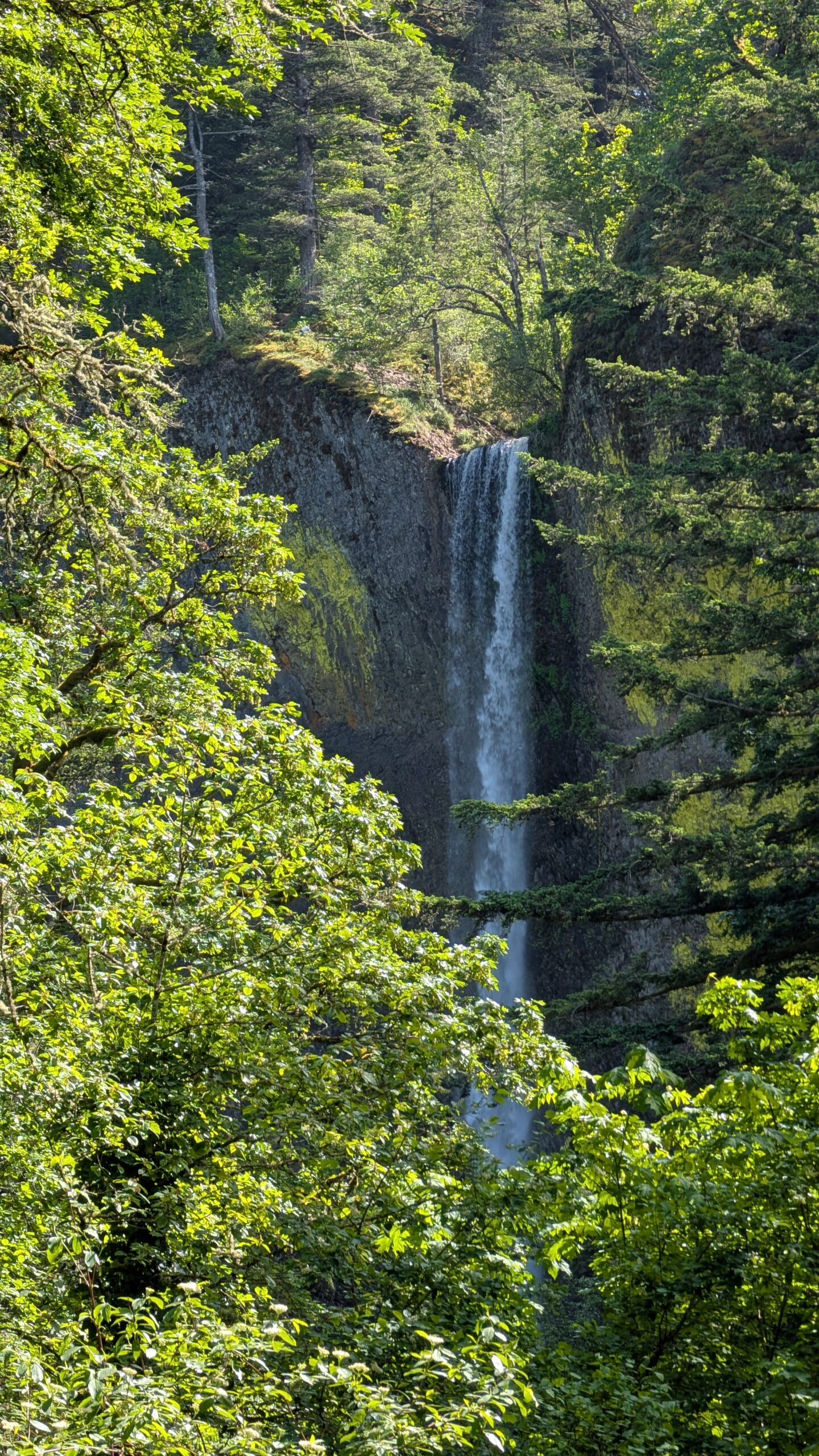
Another beautiful waterfall along the Pacific Northwest.

When Gerhard and Rita picked us up yesterday afternoon, we had no idea that the drive itself would feel like a quiet step back in time. As we made our way through a historic area of Vancouver, they guided us through the grounds of the Vancouver Barracks, a place steeped in stories that date back to 1849. This was the first U.S. Army post in the Pacific Northwest, and even from the car, it carried a sense of dignity and permanence that is difficult to describe unless you have seen it for yourself.

Officers Row is a collection of 22 beautifully restored 19th-century Victorian homes in Vancouver, Washington, once used by U.S. Army officers at the Vancouver Barracks. Located on a 21-acre site within the Vancouver National Historic Reserve, this tree-lined promenade is a landmark for history enthusiasts and a popular spot for scenic walks.

The barracks are part of the larger Fort Vancouver National Historic Site, an area that has been lovingly preserved and restored over the years. We passed rows of stately 19th-century officers’ homes, their architecture reflecting a time when craftsmanship and detail were paramount. The wide porches, tall windows, and manicured lawns seemed to whisper stories of another era. Nearby, we caught a glimpse of the Pearson Air Museum, a reminder that this area is not only rooted in military history but also in the early days of aviation.

While most of the 21 houses are now private offices or residences, several are open to the public:The Grant House (1101 Officers Row): Built in 1850, it is the oldest house on the row. It is named after Ulysses S. Grant, who served as quartermaster at the fort but never actually lived in the house. The Marshall House (1301 Officers Row): A stunning 1886 Queen Anne Victorian that was home to General George C. Marshall. It currently offers walk-in tours and serves as a museum. The O.O. Howard House: Named for General Oliver Otis Howard, this house hosts events and is part of the historic district.

What struck me most was how beautifully everything had been renovated. There was no sense of neglect or fading history. Instead, the entire area felt alive, as if the past had been carefully carried forward into the present. It was easy to imagine life here between 1846 and 1906, when this region played such an important role in shaping the Pacific Northwest. Even for someone like me, who tends to connect more with people than with places, there was something deeply moving about seeing history preserved with such care.

St. James Catholic Church in downtown Vancouver.

Tom, of course, was completely captivated. As a devoted history buff, he soaked in every detail, pointing out architectural features and commenting on the significance of what we were seeing. Watching him light up like that always brings me joy. It is one of the many ways we experience the world differently yet together, each of us finding meaning in our own way while sharing the same moment.

Overlook in the Columbia River Gorge.

After this fascinating drive, we left the historic district and headed toward the neighborhood where Rita and Gerhard have made their home since the late 1980s. The transition from historic landmark to quiet residential streets felt seamless, as if the entire city carries a gentle respect for its past while embracing the present. Their neighborhood was charming and welcoming, with tree-lined streets and homes that reflected years of care and pride.

The tree-lined roads were stunning.

Stepping inside their home was like entering a beautifully curated collection of memories. Everywhere I looked, there were treasures from their extensive world travels. Each piece seemed to have a story, thoughtfully placed and tastefully arranged in a way that felt inviting rather than overwhelming. It reminded me so much of our own lifestyle, collecting experiences, though seeing it displayed in a permanent home added a different kind of warmth.

Bonneville Lock and Dam, located in the Columbia Gorge National Scenic Area 40 miles east of Portland, Oregon, and Vancouver, Washington, spans the Columbia and links the two states. The U.S. Army Corps of Engineers operates and maintains Bonneville Lock and Dam for hydropower production, fish and wildlife protection, recreation and navigation. Since 1938, Bonneville Dam has supplied the region with inexpensive electrical power. Visitors can experience first-hand the operation of two hydroelectric powerhouses and watch migrating fish traveling upstream at the underwater viewing rooms next to the fish ladders.

One of the highlights of the evening was finally meeting their two adult children, Lisa and Marcus. There is something special about connecting with the family members of dear friends, as it deepens the relationship in a meaningful way. They were warm and engaging, and it did not take long for conversation to flow as easily as if we had known each other for years.

Vertical Turbine Pumps (Dewatering & Water Control): These are commonly used in locks and dams for pumping water to manage water levels or for dewatering dry docks for inspections. They consist of a vertical shaft, a motor on top, and an impeller that rotates inside a bowl to lift water.

Dinner itself was nothing short of wonderful. Rita had prepared a delicious spread that included filet mignon, grilled chicken, creamy mashed potatoes, sweet corn on the cob, sautéed vegetables, and a hearty salad of fresh greens. For me, it was perfect to be able to select the options that worked best for how I eat, something that has become second nature after all these years of travel and adapting. Tom, on the other hand, reveled in the mashed potatoes and corn, savoring every bite of what felt like a rare and comforting treat.

The Bridge of the Gods is a steel-truss cantilever bridge that spans the Columbia River between Cascade Locks, Oregon, and North Bonneville, Washington. It is approximately 40 miles (64 km) east of Portland, Oregon, and 4 miles (6.4 km) upriver from Bonneville Dam. It is a toll bridge operated by the Port of Cascade Locks.

As always, the conversation carried us through the evening with ease. We shared stories, laughter, and reflections from our travels and from life in general. There is a certain comfort that comes from being with people who understand the pace of connection, where nothing feels forced, and everything unfolds naturally.

The Columbia River reaches its greatest width near its mouth at the Pacific Ocean, where it spans approximately 6 to 14 miles wide near the Astoria-Megler Bridge. While the width varies, it stretches to these extreme breadths just before entering the ocean, having widened from an average width of 1.5 miles in its lower section.

By the time we returned to our hotel, we were ready for a good night’s sleep, the kind that comes after a full and meaningful day. This morning, as soon as I finish uploading today’s post, Rita will pick me up again, and we will head out for some girl time and coffee at her favorite local barista. I am looking forward to that quiet time together, just the two of us, sharing conversation in a different way.

At some point, passengers may have been killed in accidents along this scenic route.

Later today, we will begin packing for tomorrow’s departure as we set out on a four-day road trip across the northern United States toward Minnesota. I hope to continue posting along the way, laptop balanced on my lap, relying on our T-Mobile connection whenever the signal cooperates. With long travel days ahead, I prefer to write in the quiet of the morning rather than the evening. We are especially looking forward to capturing photos along the journey, particularly when we reach Yellowstone in a few days, depending on road conditions and how far we choose to drive each day.

More expansive views of the Columbia River Gorge.

Be well.

Photo from ten years ago today, May 11, 2016:

Sunset in Bali. For more photos, please click here.

Another stunning day in the bush with friends…WiFi security at airports…

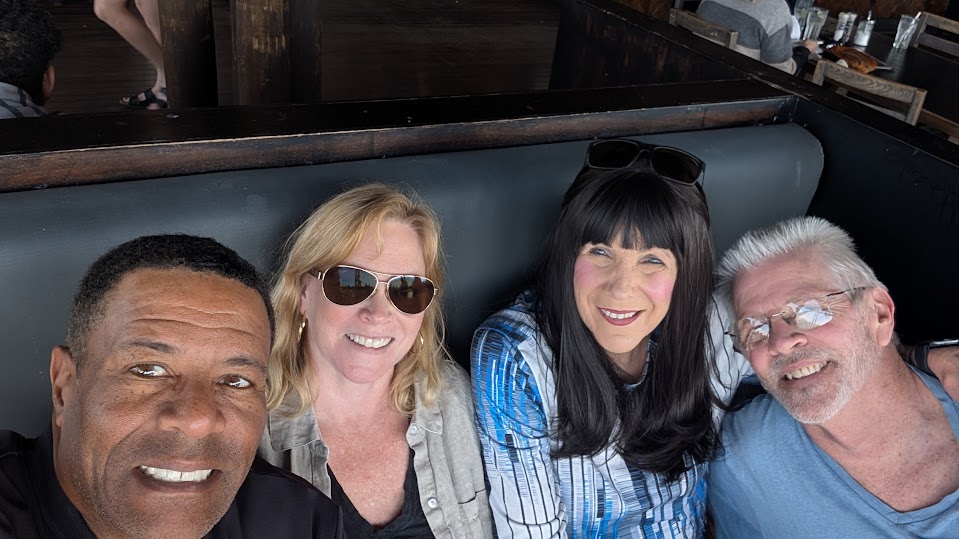
Rich took a selfie of us.

Last night, the four of us went to Jabula for Kady and Rich’s first experience at our favorite restaurant. They loved the environment, the bustling crowds, and, of course, the food. We had another fine evening together in the bush.

The following article appeared in my search results this morning, which I found imperative to share with our readers.

Mr. Bushbuck and Nathan, Norman’s son, got into a little scuffle in the garden.

From Travel & Leisure Magazine:

“This Is One of the Biggest Cybersecurity Mistakes You Can Make at an Airport, Experts Warn

Travelers may want to think twice before connecting to free airport Wi-Fi. By  Published on June 17, 2025

Cybersecurity experts are aligned that travelers should avoid public Wi-Fi at airports. Please continue reading to learn why it’s such a significant risk and how to access the Internet safely while traveling.

While cruising an airport’s public internet network may feel like a convenience, criminals can easily exploit those networks to steal sensitive data from unsuspecting travelers, experts warn.

“It’s definitely among the worst things you can do at an airport,” Matthew Hicks, a cybersecurity expert and associate professor of computer science at Virginia Tech, told Travel + Leisure.

We had offered them food, but they were at odds about the territory.

Public Wi-Fi is a shared internet connection, often over an unsecured network. Users are therefore vulnerable to hackers, who can intercept data like credit card details or account passwords, and install malware onto consumers’ devices, according to experts.

About 40 percent of Americans have had their data compromised while using a public Wi-Fi network, according to a recent Forbes Advisor survey of 2,000 workers who regularly use public internet. Yet, 23 percent of users said they think public Wi-Fi is entirely safe, and another 43 percent said it’s somewhat secure, the Forbes survey found.

Anything you do on airport Wi-Fi should be something you’d be comfortable with the rest of the world knowing about.

— John Breyault

Because travelers often have ample downtime before flights—and may be in an area without cellular connection—airports are a common access point for public Wi-Fi, Hicks said.

Consumers reported losing more than $16 billion to internet crime overall in 2024, a record high and a 33 percent increase from 2023, according to data from the Federal Bureau of Investigation.

A zebra is taking a rest in the garden.

Personal data breaches were among the top three most common complaints received by the FBI, it said. “As nearly all aspects of our lives have become digitally connected, the attack surface for cyber actors has grown exponentially,” B. Chad Yarbrough, operations director for the FBI’s criminal and cyber unit, wrote in the Bureau’s annual internet crime report. “Scammers are increasingly using the Internet to steal Americans’ hard-earned savings.”

Be careful of fake Wi-Fi networks.

Scammers also often try to trick travelers into logging onto fake Wi-Fi networks, John Breyault, vice president of public policy, telecommunications, and fraud at the National Consumers League, a consumer advocacy group, told T+L.

The four of us at Mugg & Bean, including our friends Rich and Kady, in Lower Sabie, when another diner offered to take our photo.

Someone trying to connect to the O’Hare Guest Wi-Fi network may unknowingly access another—perhaps “O’Hare Guest 2” or “Chicago Airport Wi-Fi”—controlled by a criminal. “Make sure [the network] is the one run by the airport, and not someone setting up a honeypot,” Breyault said.

In 2024, the Australian Federal Police charged a man for allegedly establishing one of these so-called “evil twin” networks to steal people’s personal data. He did this at airports in Perth, Melbourne, and Adelaide, among other places, AFP reported.

Accessing the correct network will “eliminate most of the real attackers,” Hicks said, adding that travelers can ask airport personnel if they’re unsure.

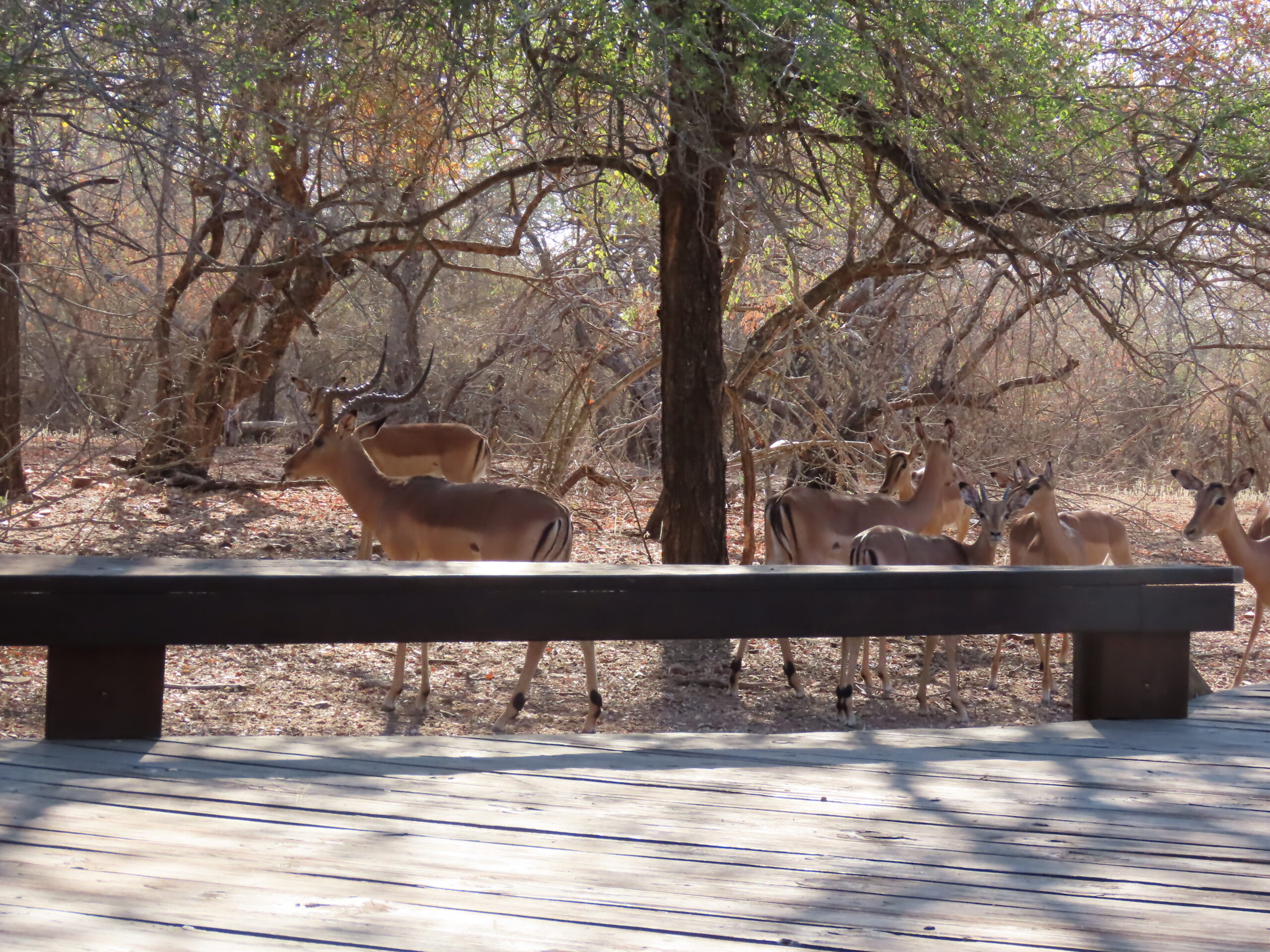
Many kudus and impalas were in the garden, including Mac, our resident impala.

How to safely use Wi-Fi at the airport

Using your cell phone to establish a personal internet hotspot is among the safest ways to access the web in an airport. This simple step will reduce the number of attackers to “near zero,” according to Hicks. That’s because it’s a private cellular connection instead of an open Wi-Fi network. “You’re not sharing that connection with everyone else in the airport,” Breyault said. “Your data will be much safer in transit.”

If that’s not available, experts recommend using a device with a “virtual private network” or VPN, which is an encrypted connection that offers an additional layer of security. Hicks’ best advice is to buy one from a reputable, U.S.-based company.

Travelers should ultimately avoid logging into financial, email, social media, or other sensitive accounts over airport Wi-Fi, Breyault noted. “If you’re just checking the weather, that’s one thing,” Breyault said. “If you’re checking your bank account balance, that’s something different.”

“Anything you do on airport Wi-Fi should be something you’d be comfortable with the rest of the world knowing about,” he said.”

Be well.

Photo from ten years ago today, July 5, 2015:

Viking Mekong Itinerary, Current Position, Ship Review | CruiseMapper
We booked the Viking Mekong, the river cruise, to tour Vietnam and Cambodia in 2017. For more, please click here.

Part 1…Kruger National Park with friends from US…Exciting experiences and photos for first time visitors!…

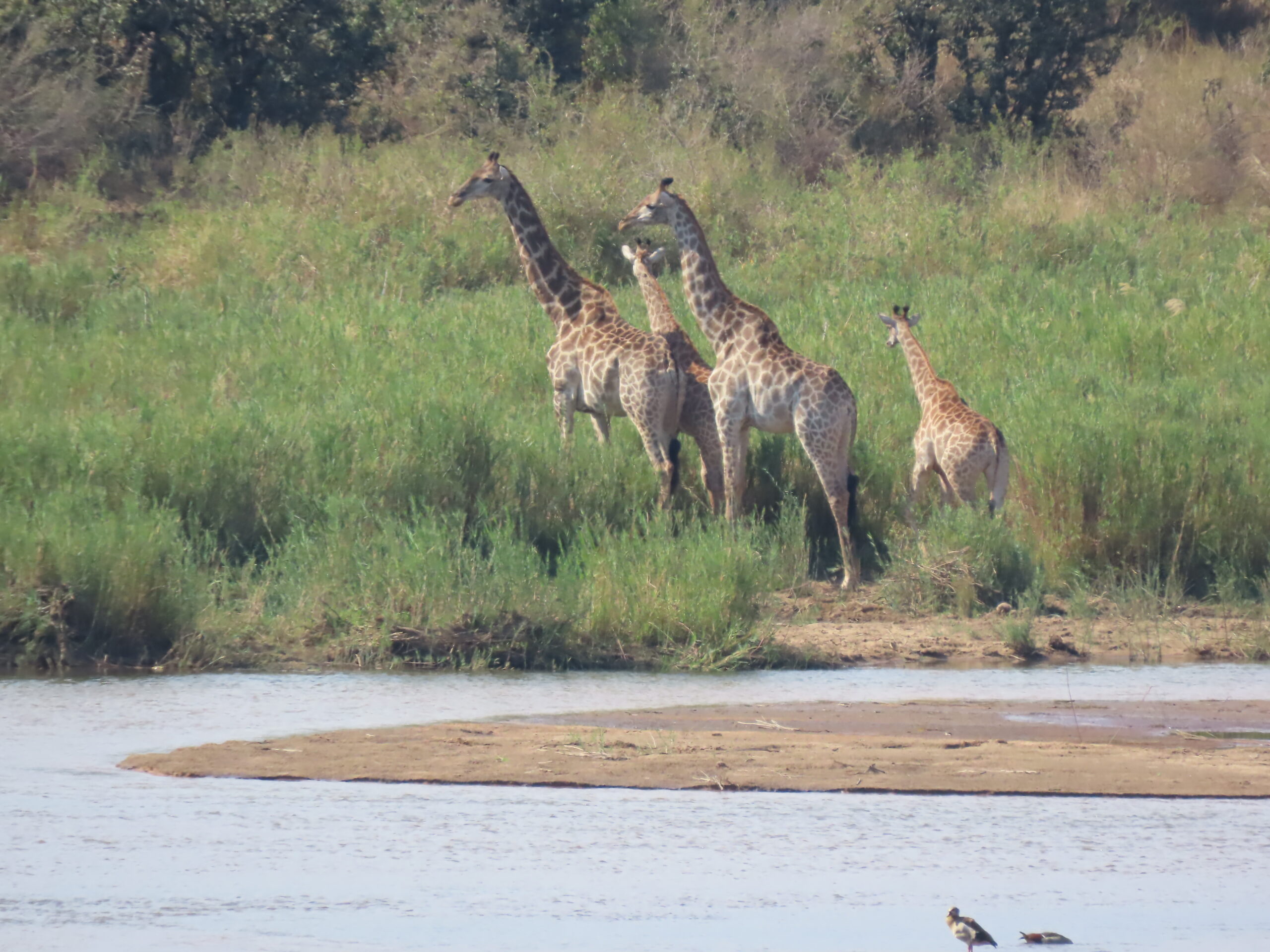
View of a tower of giraffes as seen from the veranda at the Mugg and Bean.

The joy of sharing this magical place with friends Karen and Rich, especially as first-time visitors, is hard to put into words. With the hope of providing them with a memorable experience in the bush, we are keeping them busy with activities we know they’ll love.

We’ve been friends with them for many years, and our shared interests are easy to tap into, ensuring that what we suggest will appeal to them. So far, they are exhilarated by everything we’ve done, and our days and nights have been full.

Most of all, Karen and Rich love the endless stream of wildlife, actually squealing with child-like wonder every time one of many species steps into our vast garden. Rich has already narrated over 20 videos thus far, bringing expertise to the content, having worked as a part-time actor in TV commercials in the US.

A lone hippo was exiting the river.

Karen, a still-working intellectual property attorney, possesses a mastery of words and an intellect that inspires her to learn as much as she can about every species, making it exciting for us to share what we know and work together to research answers to her many thought-provoking questions.

Additionally, the four of us easily engage in lively conversation, interspersed with roaring laughter. On several occasions, we’ve had to temper our uproariously loud laughter to respect the integrity of the bush. It’s so much fun having them here.

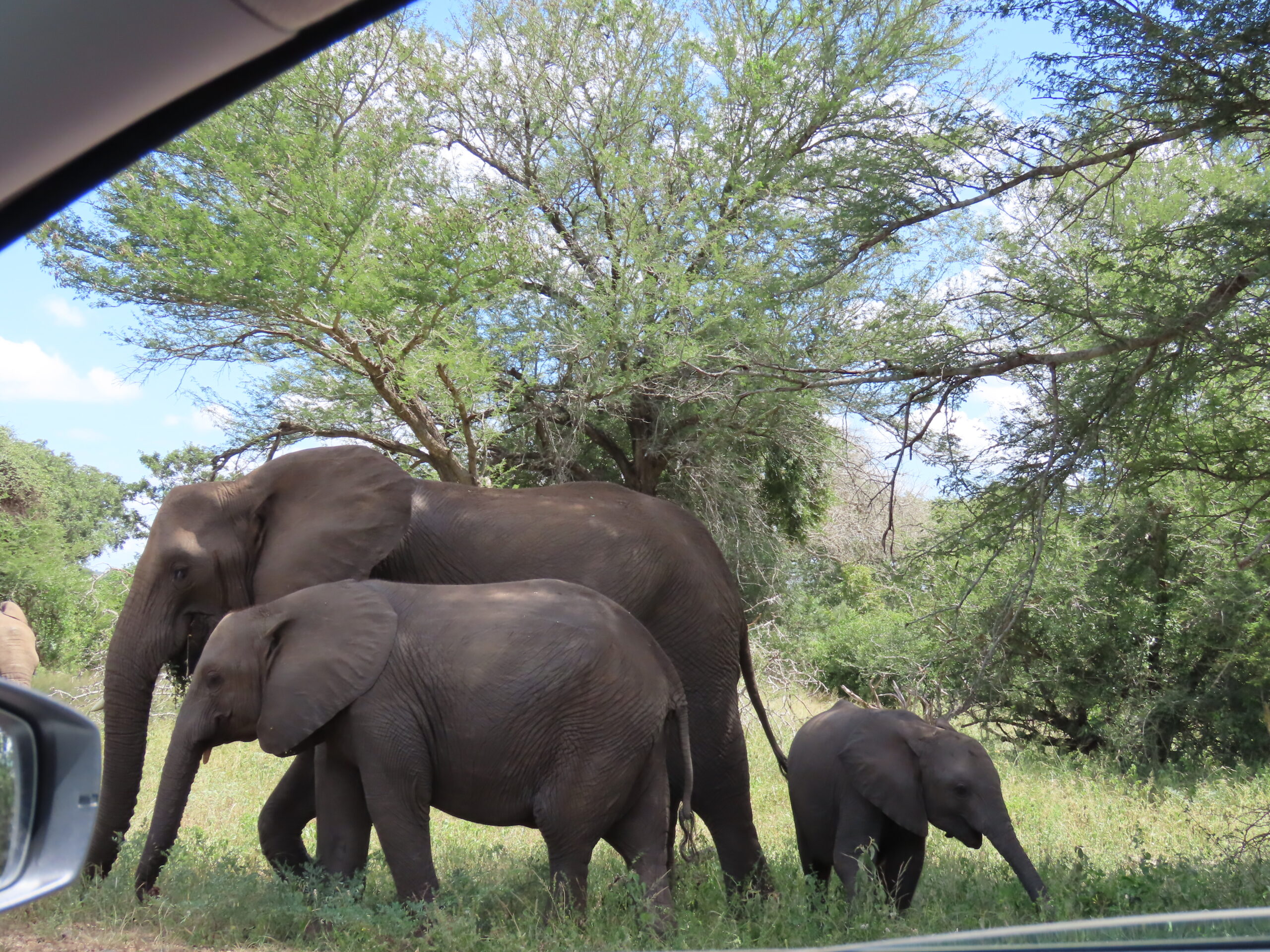
We’d hoped that elephants would cross the road in Kruger, and we were delighted that they did so twice during our five hours in the park.

Yesterday, we had the glorious experience of embarking on a self-game drive/safari into Kruger National Park. Tom drove expertly through the areas we explored, avoiding potholes and treacherous roads to ensure we encountered no issues. Plus, his expert manipulation of the little car allowed them to take good photos from several angles.

Karen and I sat in the backseat with Tom and Rich in the front. Rich is tall, but we all managed to be comfortable during the five hours we spent in the park.

Crossing over the bridge over the Sabie River, we spotted this monitor lizard.

We stopped at Lower Sabie, had a fine lunch at the Mugg & Bean, and they both loved shopping in the best gift shop we’ve seen in the world. Tom and I have been to Lower Sabie countless times in the past, but were happy to wait for them while sitting at a nearby picnic table with no pressure for them to hurry.

After we returned from the park, we continued to enjoy the abundant wildlife in the garden while playing a favorite card game, Five Crowns. I won, and they made fun of me for doing so, which elicited even more laughter. We cooked burgers on the braai, accompanied by a big Greek salad I had made, which they loved. By 10:30, all of us admitted we needed to get some sleep after two nights, since they arrived on Saturday.

A hippo mom and baby on the Sabie River.

Soon, we’re off to Komatipoort for Karen and I to have “girl time” at Stoep Cafe for breakfast while the guys head to the golf course for lunch. Rich is an avid golfer and looks forward to checking out the local course.

Tonight, we’re off to Giraffe Grill and Pub for Quiz Night. I signed us up for our usual team, I & J, and six of us will play tonight.

Enjoy our Kruger photos, with many more to follow in the next few days.

Be well.

Photo from ten years ago today, July 1, 2015:

We selected a filet from this batch.  Keep in mind that for those of you reading from countries not using the metric system, AUD 32.50 per kilo translates to approximately 2.2 pounds, which would be US $14.77 per pound. This is not too bad for fresh (never frozen) wild-caught fish. We purchased about one pound, of which Tom had 9 ounces and I had approximately 7 ounces. He loved it!. For more photos, please click here.

Today, our friends arrive!…Excited to see them and share this wonderland with them…

Several impalas in the garden.

Over the past 36 hours, I’ve been texting back and forth with Karen, providing support as they’ve had layovers on their way to South Africa. They had an over ten-hour layover in London, more than we had with nine hours almost two weeks ago when we returned to South Africa from the US.

They have just arrived in Joburg with a three-hour layover and will then fly on Airlink to Mpumalanga/Nelspruit/Kruger Airport. They should arrive here in about five hours.

Given that it takes almost two full days to travel from the US to South Africa and back, we’ve often discussed how few Americans we’ve met in the bush over the years. Considering that travelers from the US spend almost four days traveling to and from South Africa, it’s no wonder that we rarely encounter Americans in Marloth Park.

Often, Americans book their flights and accommodations through a travel company; they rarely know about Marloth Park and thus promote it. On rare occasions when we meet Americans, we often ask them how they discovered Marloth Park. In most cases, it was through someone they knew who had been here.

Three of four giraffes in the garden.

Additionally, when Americans visit this general area, they typically end up booking one of the tented camps in Kruger National Park, which offer a range of accommodations from luxury to basic, with options in between. Typically, they spend three to five days in Kruger and then take off for tours in and around Johannesburg or Cape Town.

Alternatively, if they have time constraints, such as returning home for work or other obligations, they may stay for a total of ten days and then return to the US.

Of course, many of our readers and friends who have come to Marloth Park after reading our posts have stayed for extended periods, like us. However, we’ve never known anyone who has spent as much time in Marloth Park as we’ve, other than those who have purchased homes here and become permanent residents, including South Africans from various locations and citizens of different countries who have come here and fallen in love with it.

Here was the fourth giraffe looking for anything to eat that may have fallen on the ground.

Here’s an updated overview of how many Americans travel to various countries each year, including South Africa:

U.S. International Travel Statistics

🔹 Overall U.S. Outbound Travel

  • Nearly 100 million Americans traveled abroad in 2023, similar to pre-pandemic levels (~98 million in 2019).

🔹 Popular Destinations (U.S. Visitors per Year)

Destination Annual U.S. Arrivals
Mexico ~39 million (2023)
Canada ~10 million (2023) estimated from monthly ~2M
United Kingdom ~5 million
France ~5 million
Germany ~4 million
Italy ~4 million
Spain ~3.8 million
Japan ~3 million (2024)
South Korea ~1 million
Dominican Republic ~3 million (pre‑COVID estimates)
  • In 2023, 353,975 Americans visited South Africa (Jan–Dec) — a 35–40% increase from 2022 news24.com+14sanews.gov.za+14www-statista-com.ezproxy.canberra.edu.au+14.

  • In 2024, the U.S. remained South Africa’s top overseas market, with 372,362 arrivals, up 5.2% from 2023. (Source: sanews.gov.za, +4gov. za, +4travelandtourworld. com)

  • Little birds pecking at seeds that fell from the birdfeeder.

Regional Summary

  • North America (Mexico + Canada): ~50 million U.S. tourists annually.

  • Europe (UK, France, Germany, Italy, Spain): ~20 million.

  • Asia (Japan, South Korea, others): ~4 million.

  • South Africa: ~0.37 million in 2024, ranking among the top long-haul destinations from the U.S.

  • Caribbean & Central America (Dominican Republic, etc.): ~3 million.

Key Insights

  1. Nearly 100 million Americans travel internationally each year.

  2. Mexico and Canada are the dominant destinations, with approximately 50 million U.S. visitors combined.

  3. Europe draws around 20 million, led by the UK, France, Germany, Italy, and Spain.

  4. Asia is gaining, with ~4 million, including around 3 million to Japan.

  5. South Africa, as a long-haul destination, welcomed ~370,000 Americans in 2024.

  6. Dominican Republic attracts around 3 million U.S. tourists annually.

We’ll be back tomorrow with more and will continue to post while Karen and Rich are visiting.

Be well.

Photo from ten years ago today, June 28, 2015:

This was one of our favorite spots, located on William Esplanade in Palm Cove Beach, Australia, since the colors reminded us of the village in Placencia, Belize, from so long ago. For more photos, please click here.

Part 3…Kruger National Park photos…Grocery and egg prices…What are we spending on food?…

This mom elephant and her two youngsters were a delight to see.

The photos from Kruger weren’t as clear as they may have been if the wildlife had been so far away. It was a tough day in the heat when the wildlife tends to stay undercover to stay cool. Surely, we’ll return to Kruger each week as the weather cools and hopefully take better photos.

On another note, we grocery shopped last Sunday at Spar in Komatipoort and spent a total of ZAR 4867.67, US $264.90 plus another ZAR 1162.94, US $63.29 at The Butchery, the meat market in Marloth Park at the Bush Centre.

Elephant moving further into the bush.

The total for the next two weeks, considering we dine out two nights a week, is ZAR 6030.61, US $328.19, averages ZAR 3015.10, US $164.10 per week, assuming we selected the finest meats, vegetables, and dairy products we consume regularly.

Plus, with dining out at Jabula every Friday and Saturday, our bill is typically ZAR 918.78, US $50 each night. Thus, we spend another US $100 weekly, making our weekly food bill, including dining out twice weekly, ZAR 3934.07, $262.10. When we dined out in Minneapolis or  Lake Las Vegas, typically we spent at least twice as much for dining out.

It wasn’t easy to get good shots of the wildlife when it was a very hot day and the wildlife were readily visible, as they hid under cover in the bush.

When we compared our weekly grocery bills in the US, we paid at least twice as much as we do here. It’s incredible how much less costly it is to live here.

Of course, from time to time, we will go to the local SaveMor market in Marloth Park for fresh veggies for our salads and side dishes. We purchased these when we first arrived for US $12.90.

Spoonbill stork: The African Spoonbill is a long-legged wading bird. Its height is 90 cm (36′). Its body is predominantly white, except for its red legs, face, and bill. Its wings are 365-403 mm long. This bird can be easily identified by its uniquely spoon-shaped bill. At birth, the African Spoonbill’s bill does not resemble a spoon. It is born with a short beak that gradually develops into its spoon-like shape. It usually resembles a spoon right before it is time to leave its nest. Both the male and female birds are similar in appearance.

Yesterday, we had a fantastic time seeing Kathy and Don at their home on the Crocodile River. We arrived at 11:00 and left around 1:30 to allow them to get back to unpacking. It was wonderful to see them when it had been over three years since we dropped them off at the airport in Nelspruit to return to Hawaii for Don’s US medical care. They are thrilled to be back in the bush.

Surely, we’ll see them regularly during the remaining nine weeks until they return to the US. We have lots of plans to see friends while we’re here and then, the arrival of our friend Lisa in the beginning of April. We won’t be short on social activities, much of which transpires when we are at Jabula.

Notice the last item on this list is for a 24-pack of Alzu free-range eggs. They don’t carry pasture-raised eggs, so this was our best option. The price for the 24 jumbo eggs was ZAR 72.99, US $3.97, or almost US $2 a dozen, the same price we paid two years ago.

Last night, we booked our flights, hotel, and car in a good package deal with Expedia on our site. We’ll be leaving South Africa for Minnesota on May 24, arriving on May 25 (considering the seven-hour time difference), and fly back to Marloth Park on June 17, arriving on June 19.

Notice the circular marking on the waterbuck’s rear end. This is seen on both females and males.

We booked the same hotel we stayed in Eden Prairie, Minnesota, a rental car, and our round-trip flights. Fortunately, Maisie’s graduation isn’t until May 29, and the graduation party is on May 31. We’ll have four days to recover from the long flights before the festivities begin.

Waterbuck: This is a large, robust female antelope. Bulls have a shoulder height of 1.4 metres and can weigh up to 260 Kg. Cows are smaller than bulls. Waterbucks have a brownish-grey shaggy coat. The eyes and nose are patched with white, and there is a white collar under the throat. The rump has a characteristic white ring. The large rounded ears are a prominent feature. Only the bulls have long, forward curved horns. Both sexes emit a, not unpleasant, musky smell which typically lingers at resting sites.

With the weekend approaching, we’ll see fewer animals when a new influx of tourists arrives, often feeding them foods they love but are unfit for their health and well-being. This is sad.

That’s it for today, folks. We’ll be back with more tomorrow.

Be well.

Photo from ten years ago today, March 13, 2015:

In Kauai, Tom spotted these two chickens. “Must have been a double yolker,” Tom clucked as I laughed. For more photos, please click here.