Part 3…Outstanding day in Kruger National Park…Tower of power…

Just like that, a tower of giraffes appeared on the road, leaving us exhilarated and enthused to witness these majestic animals again in the wild. To avoid scaring them off, we had to maintain our position on the road and film most of today’s shots through the windshield.

A grouping of giraffes is called a “tower,” which is the reason for today’s heading. Although we spotted seven giraffes in this tower, we could only photograph three or four simultaneously, as they wandered off and onto the road.

Giraffes may seem gentle and graceful with their long necks and slow strides, but don’t be fooled. These towering herbivores are surprisingly strong and powerful animals. Beneath their elegant appearance lies a combination of muscular strength, defensive power, and anatomical efficiency that allows them to survive and thrive in the wilds of Africa.

She was either cleaning herself or getting rid of an annoying insect.

Let’s start with one of the most striking features of the giraffe: its neck. The average adult giraffe’s neck is around six feet long and can weigh up to 600 pounds. Despite its length, a giraffe’s neck has the same number of vertebrae as most mammals—seven—but each vertebra is significantly elongated and supported by powerful muscles and ligaments. These muscles aren’t just for holding the neck upright; they play a key role in one of the giraffe’s primary forms of defense and dominance: necking.

Still can’t get rid of that annoying insect!

Necking is a form of combat between male giraffes where they swing their necks like sledgehammers, using their heavy skulls to strike their opponent. These blows can be powerful enough to knock down or even seriously injure a rival. Observers of giraffe fights often describe the sound of impact as loud and startling, a testament to the force these animals can generate. The winner of such contests earns mating rights with nearby females, so strength really does equal survival in this case.

They often show affection for one another.

Beyond their necks, giraffes possess powerful legs, especially their hind legs, capable of delivering a deadly kick. A single well-placed giraffe kick can crush a predator’s skull like a lion’s. Giraffes are known to kill lions with these kicks, and this natural defense mechanism makes adult giraffes a risky target for even the most formidable predators. Their legs are weapons and tools for speed: giraffes can run up to 35 miles per hour over short distances. However, they generally prefer a slower, energy-efficient pace to conserve stamina.

Standing on the road, always on guard for potential predators.

Regarding raw physicality, giraffes must be strong to support their size. Adult males can grow to nearly 18 feet tall and weigh up to 3,000 pounds. A giraffe has an exceptionally strong heart to pump blood from the heart to the brain, over six feet upward. It weighs up to 25 pounds and can pump blood at twice the pressure of a human heart. This high blood pressure is necessary to maintain brain function, especially when the giraffe suddenly raises or lowers its head.

The giraffe’s strength is not just muscular or mechanical—it’s also evolutionary. Their height and strength allow them to reach food that other herbivores can’t, reducing competition and allowing them access to leaves high in the treetops. Their long tongues—up to 18 inches—are tough and prehensile, capable of wrapping around and stripping leaves from thorny branches, like those of the acacia tree.

We weren’t in a hurry to leave. As we always acknowledge, “This is their house, not ours, and we are merely curious visitors.”

So, how strong are giraffes? They’re strong enough to defend themselves against lions, strong enough to fight each other in brutal battles for dominance, strong enough to run quickly despite their size, and strong enough to circulate blood to their heads without fainting. Their strength isn’t loud or flashy—it’s quiet, efficient, and built into every part of their being.

In the animal kingdom, strength doesn’t always look like a roaring lion or a charging rhino. Sometimes, it seems like a calm, towering creature grazing peacefully—until it’s time to show how powerful it is.

Side by side…

Spotting these giraffes on the road was a delightful experience as we continued our day trip through Kruger National Park. We encountered one treasured sighting after another, leaving us with memories of a well-spent day.

Be well.

Photo from ten years ago today, May 18, 2015:

The expansive lawn of a cottage located on Hanalei Bay was used to make the movie, The Descendants. For more photos, please click here.

Part 2…Outstanding day in Kruger National Park…Baby elephant antics…

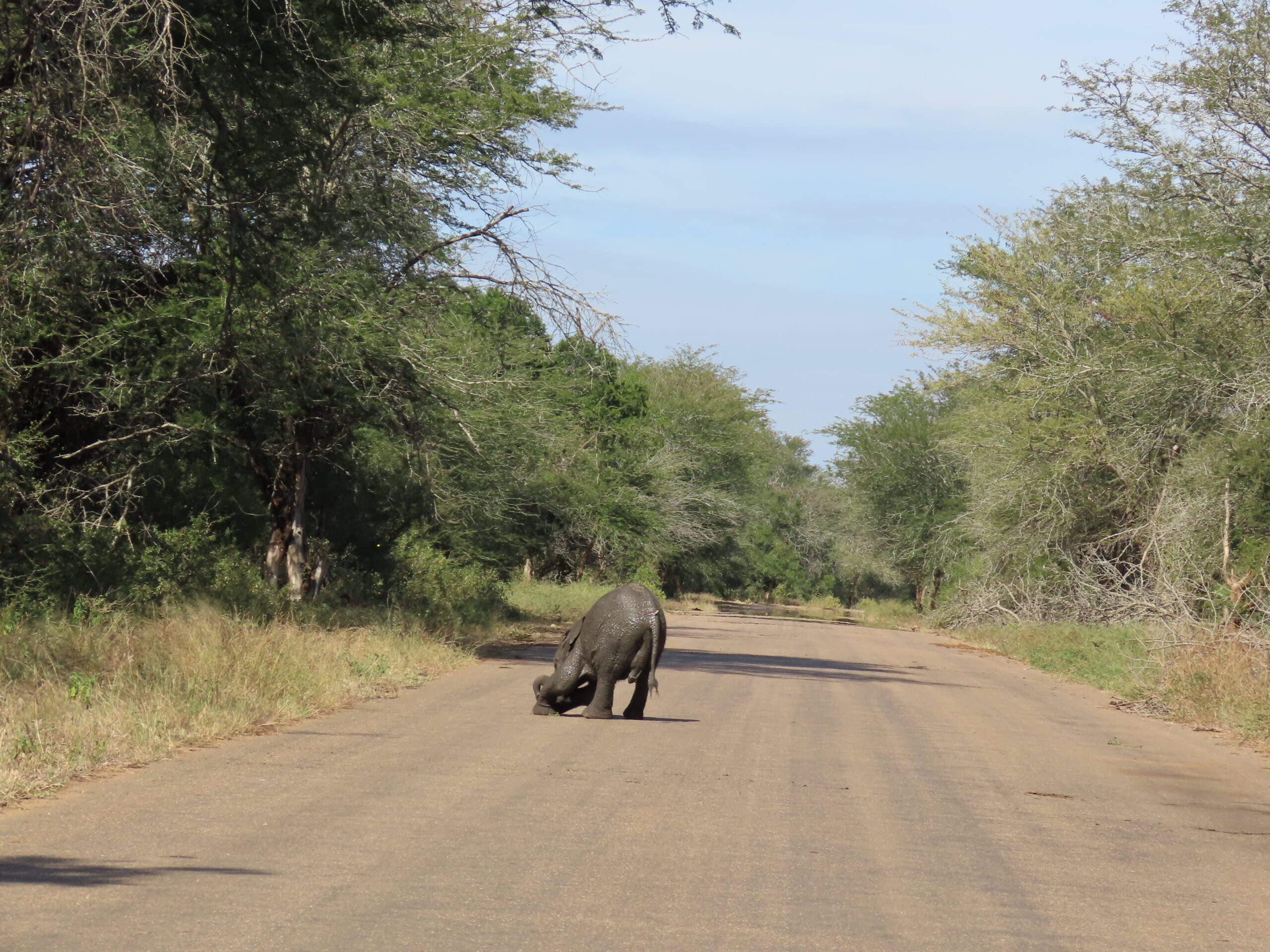
This baby elephant was having fun showing off on the road. We couldn’t stop laughing!

On our return drive to Crocodile Gate on the paved road in Kruger, we thought the sightings were done for the day. Little did we know we’d encounter this precious baby elephant on the road. His mom was grazing on the side of the road and kept a watchful eye on him.

Standing on three legs!

We backed up sufficiently to ensure we didn’t cause the baby or its mom any undue stress. I regret not taking a video, but when he started his antics, we had no idea he’d continue to perform for us. At the time, we were the only vehicle watching this treasure. We didn’t dare move the car to a better position since we thought we’d scare him off. These photos were taken through the windshield.

Baby elephant antics are pure, heart-melting joy! 🐘💕

Picture a tiny elephant — well, tiny for an elephant — with oversized ears flapping like little wings, a curious trunk that doesn’t quite know what it’s doing yet, and an energy level somewhere between a toddler on sugar and a puppy discovering snow for the first time.

Butt in the air!

Here are some classic baby elephant antics:

  • Trunk Trouble: Baby elephants often haven’t mastered control of their trunks, so you’ll see them swinging them wildly, tripping over them, or trying to pick something up and missing entirely. Sometimes they accidentally boop themselves on the face or suck it like a thumb.

  • Mud Bath Madness: Mud puddles are the ultimate playground. Calves love to splash, roll, and slide in them — sometimes flopping in with so much gusto they knock over a sibling or get stuck in the slop and need help from mom.

    “I am so cute, even when I don’t pose!”

  • Play Fighting: Baby elephants practice sparring by head-butting and pushing each other with mock seriousness. Their attempts are often clumsy, followed by running away in exaggerated victory, ears out and tails wagging.

  • Chasing Birds (and Butterflies): They’ll charge after anything that moves — guinea fowl, butterflies, even falling leaves — only to screech to a halt in surprise when it turns around or flutters unexpectedly.

  • Shadow Games: Some have been seen startled by their own shadows or reflections in water, backing up in mock fear before trying again with exaggerated bravery.

After he joined his mom and they both took off into the bush, we continued on our way, unable to wipe the smile off our faces for such a fine day of ‘safari luck.”

“Look what I can do!”

One never knows how a game drive in Kruger will turn out. At times, we encounter many amazing sightings, and at other times, there are but a few photo ops. We never regret spending the better part of a day driving through the wildlife wonderland.

Today, we’re doing three loads of laundry, trying to make room on the rack to fit all of it. It’s hard to believe we’ll begin the long journey to the US one week from today. Packing will be easy this time since we will only be gone for three weeks.

That trunk is quite bendable!

Have a lovely weekend.

Be well.

Photo from ten years ago today, May 17, 2015:

Finding an ocean view takes only moments in every direction in Kauai. For more photos, please click here.

Part 1…Outstanding day in Kruger National Park…Lions making magic!

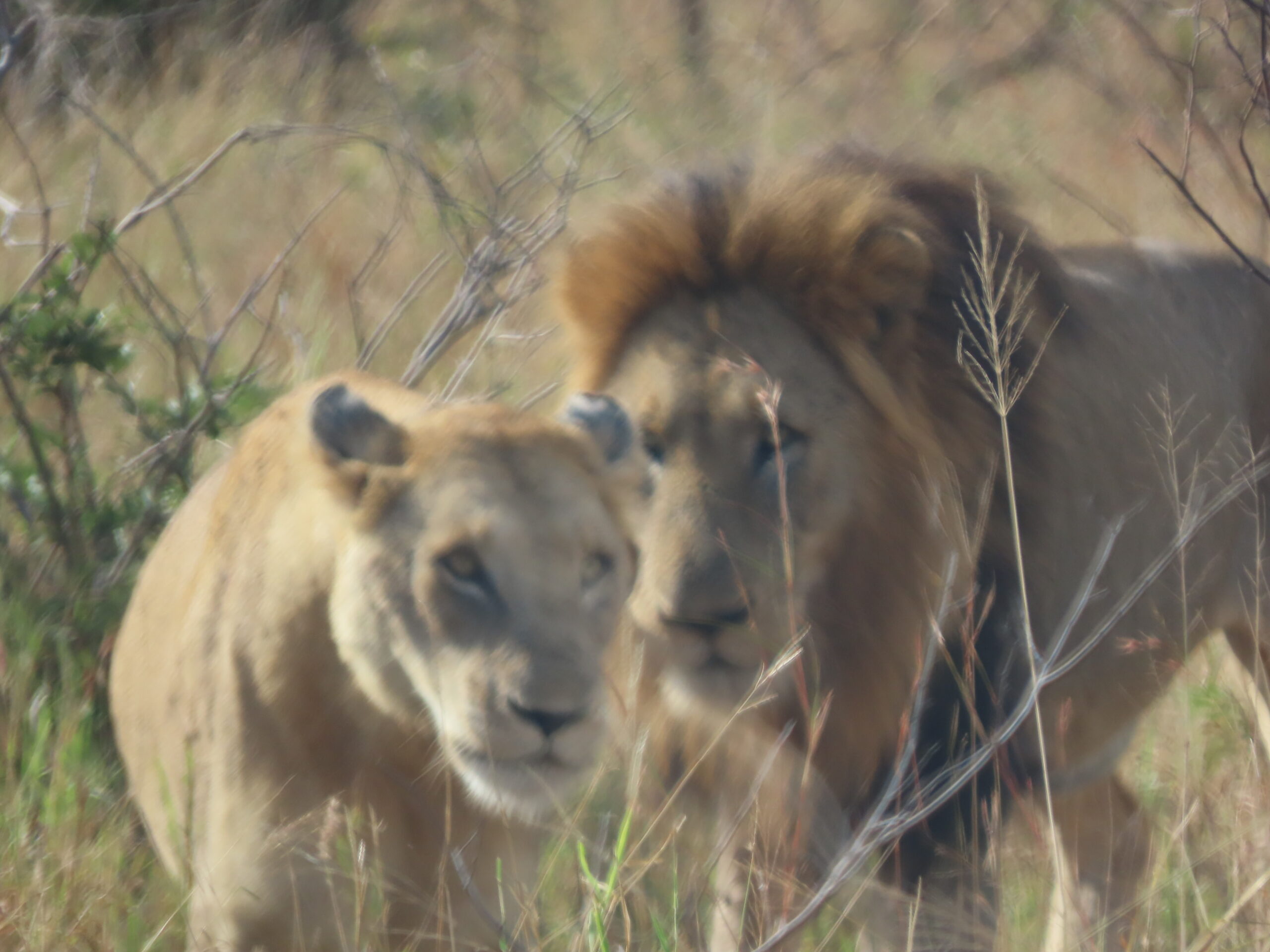
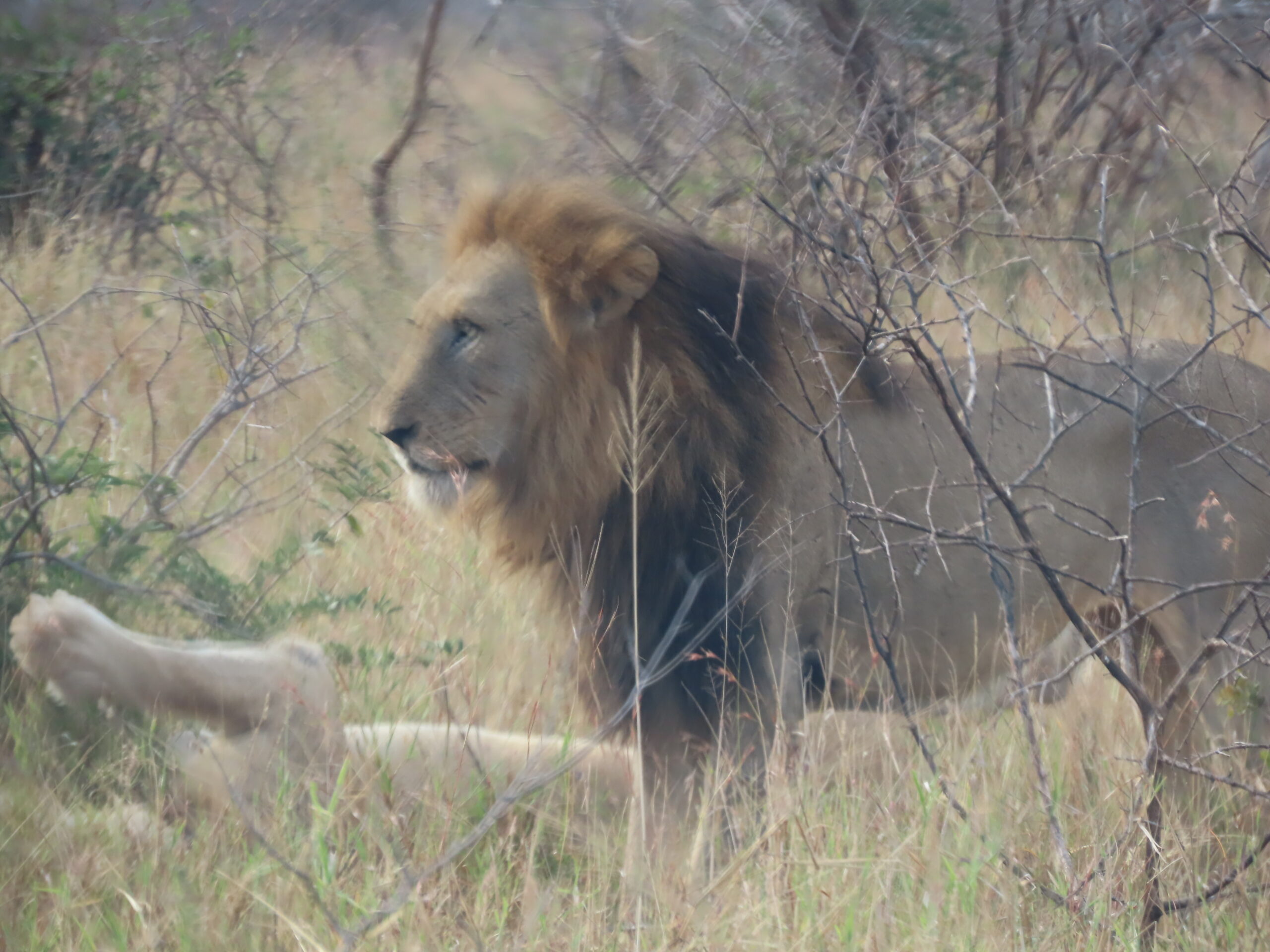
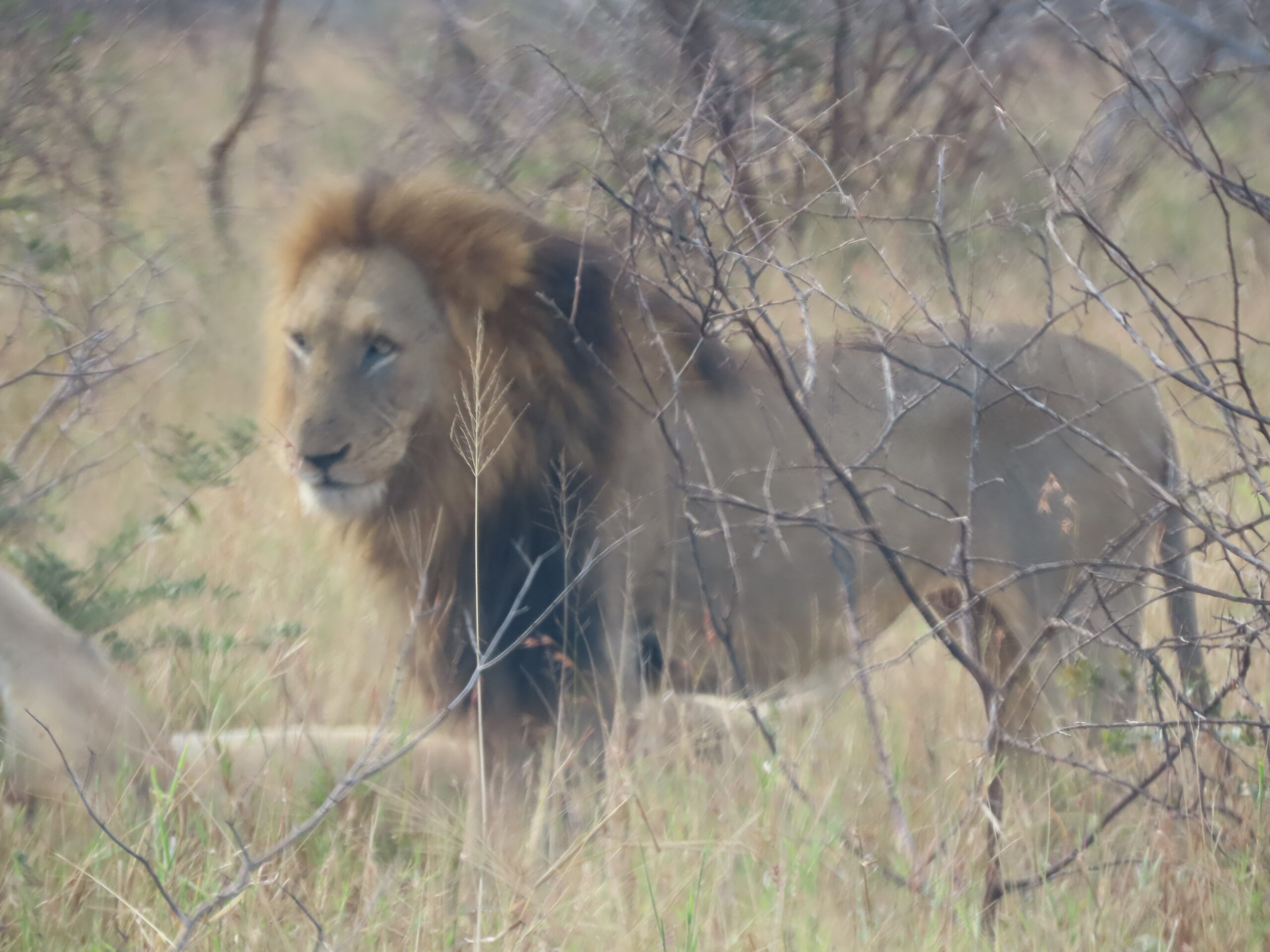
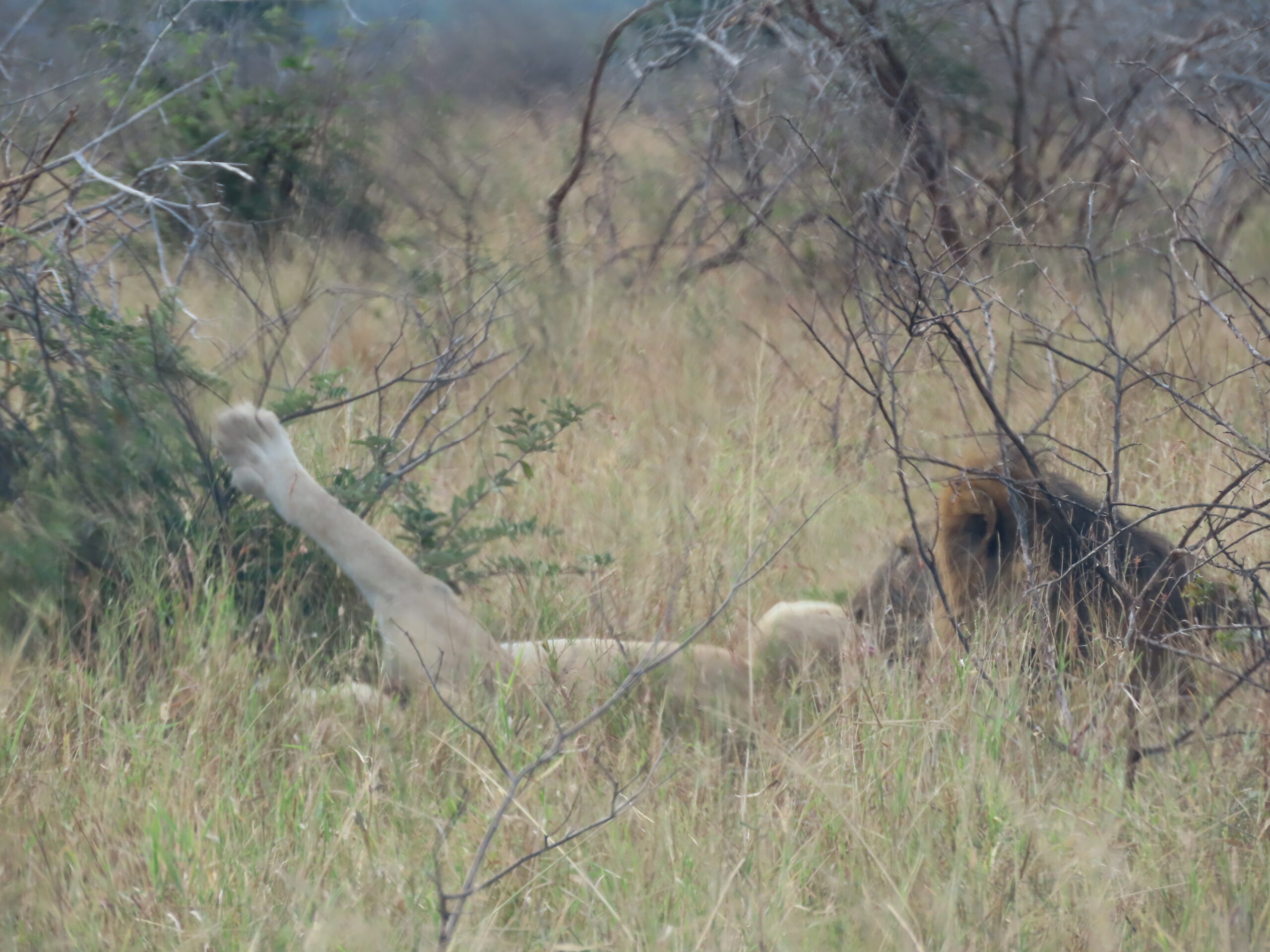
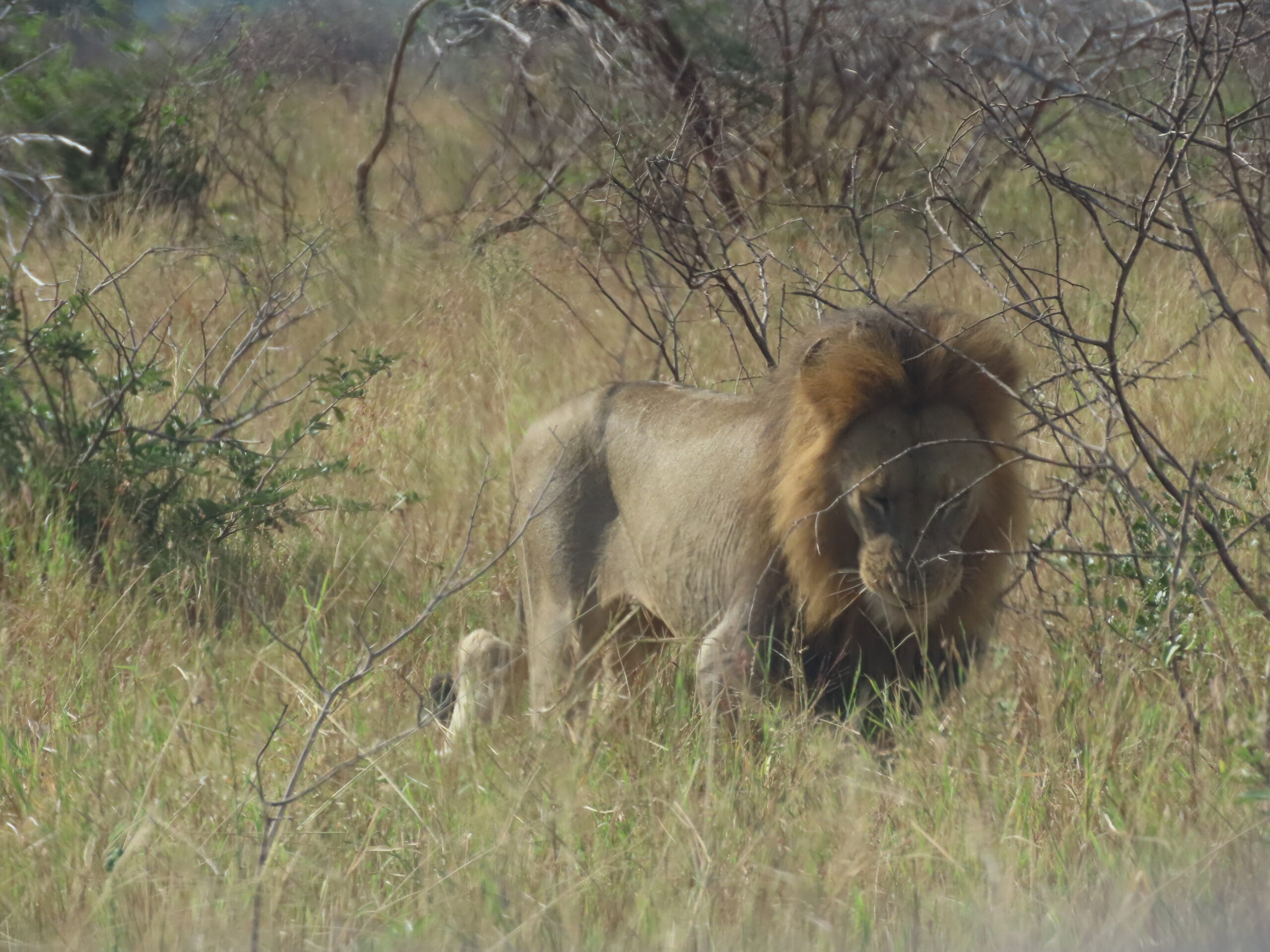
With countless vehicles at the site, we had to take these distant photos through the windshield. We were thrilled to get these shots of the male and female during a mating session.

We keep our expectations in check upon entering Kruger National Park. A long time ago, we accepted the reality that we may not see much on any given day. We always have a one-year Wild Card to enter the park at no additional cost and can return anytime for more photo ops and hopefully more interesting sightings.

After the first 20 minutes of driving after entering the Crocodile Gate, we commented that it might be one of those days with few fascinating sightings. How wrong we were!

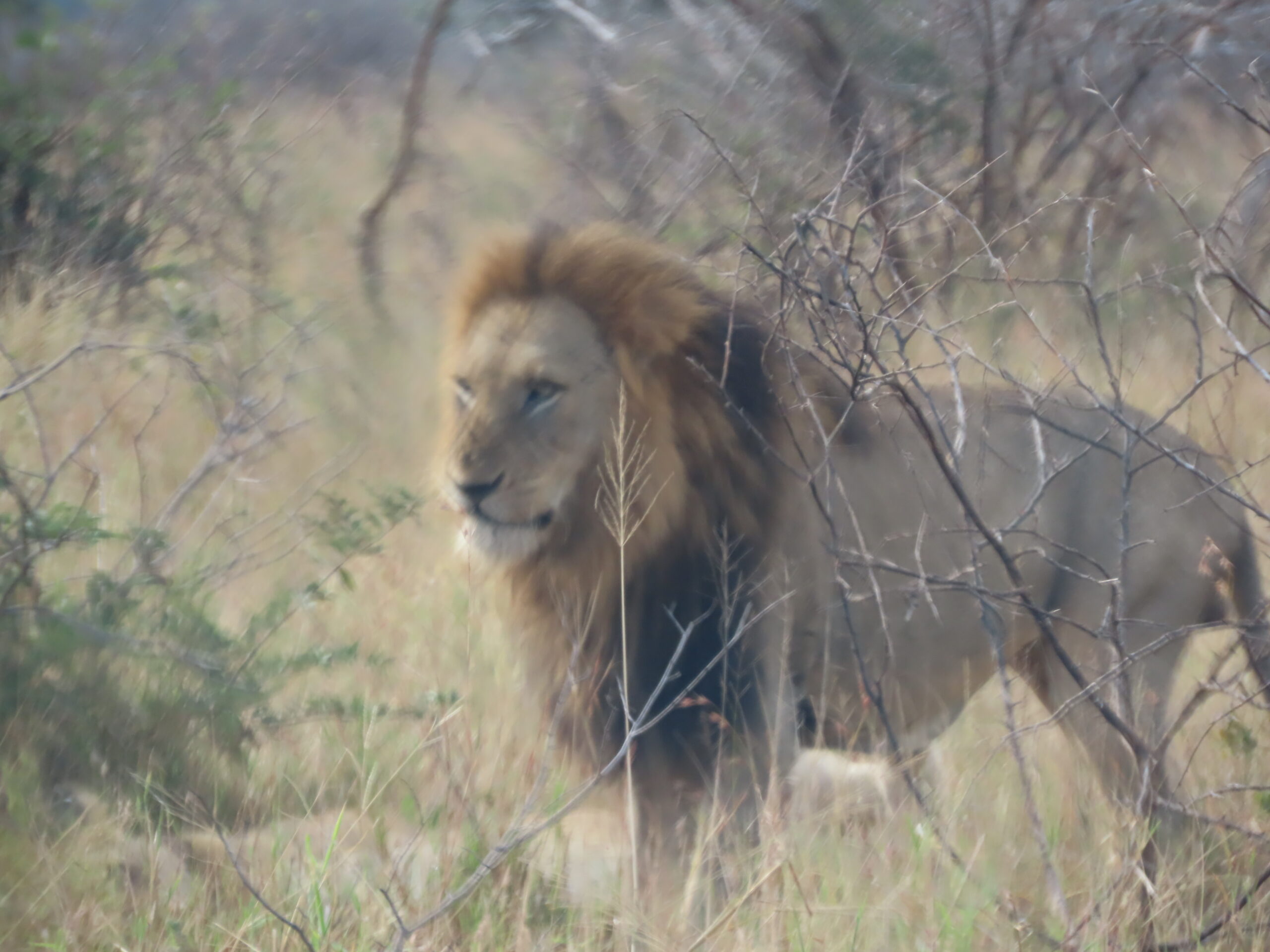
A majestic male with his thick mane surely attracted the female in estrus.

Suddenly, we spotted a grouping of vehicles and knew something exciting was happening nearby. Tom maneuvered the car as close as he could, and we saw the mating pair of lions under a bush, as shown in today’s photos.

Lions’ mating in the wild involves a fascinating, intense, and somewhat brutal process deeply rooted in their biology and social structure. Here are the key particulars:

1. Courtship and Readiness

  • Estrus Cycle: A lioness enters estrus (heat) multiple times yearly, usually lasting 4–7 days. She becomes sexually receptive and signals this with increased vocalizations, restlessness, and scent marking.

  • Male Interest: Males can detect this readiness through scent (pheromones in her urine) and behavior. One or more males may follow her closely during this period

  • Lions have very short mating sessions over many hours, if not days.

2. Mating Process

  • Frequency: Once the lioness is receptive, mating happens frequently — up to 20–40 times a day, often every 15 to 30 minutes. This continues for several days, ensuring successful fertilization.

  • Duration: Each copulation is very brief, lasting only 10–20 seconds.

  • Pain Response: The male’s penis is barbed, which causes pain when he withdraws. This pain triggers the female’s ovulation — a necessary part of feline reproduction.

  • Aggressive Behavior: After mating, the lioness often roars, snarls, or swipes at the male due to the pain. The interaction can look violent, but it is a natural part of the process.

He was handsome and appeared to be healthy and well-fed.

3. Monogamous Period

  • During the mating phase, the pair usually isolates themselves from the pride to focus entirely on mating. They do not hunt or eat much, and the physical toll can be significant.

4. Male Competition and Infanticide

  • Coalitions of males (usually brothers or close allies) often take over prides. If they succeed, they may kill existing cubs sired by previous males to bring females back into estrus.

  • This infanticide, though brutal, is part of the natural strategy to pass on genes quickly within a short dominance window (typically 2–4 years).

The female was submissive, rolling around on her back with paws in the air.

5. Pregnancy and Cubs

  • Gestation: Around 110 days (3.5 months).

  • Birth: Lionesses give birth to 1–4 cubs in seclusion and keep them hidden for about 6–8 weeks before introducing them to the pride.

6. Evolutionary Strategy

  • The high frequency of mating and the barbed penis are evolutionary adaptations to ensure ovulation and conception.

  • Mating many times also reduces sperm competition from rival males.

Lion mating is short, frequent, and physically demanding. It’s marked by a raw intensity that mirrors the pride of life’s competitive, often violent dynamics. These behaviors ensure that only the strongest genes are passed on in a harsh and competitive environment.

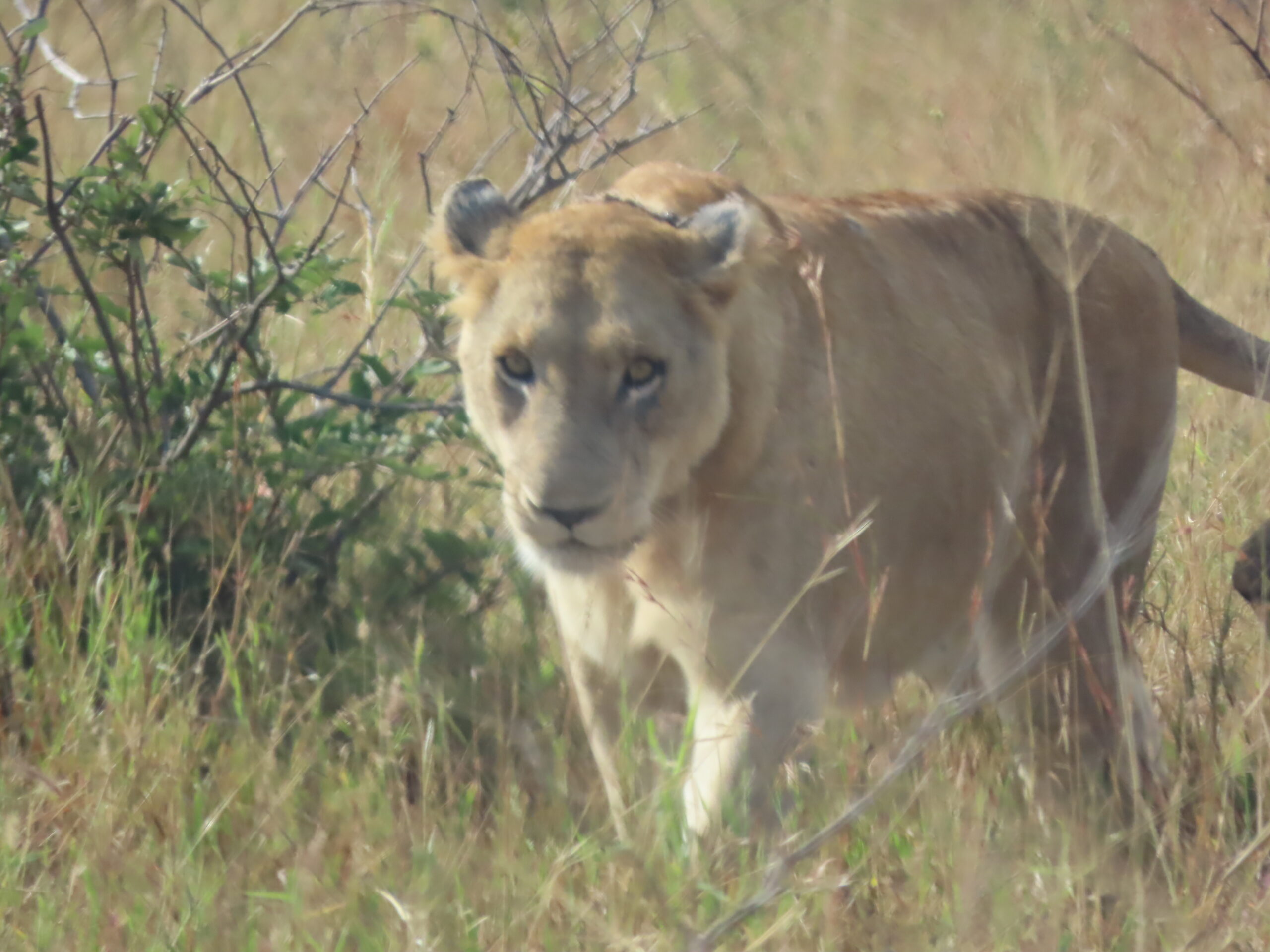
She looked exhausted.

After considerable time at the sighting, unable to get any closer, we took off on our planned itinerary toward Lower Sabie, where we stopped at the Mugg & Bean for beverages. Continuing with diets, we didn’t eat breakfast but instead ordered their delicious coffee while we sat on their veranda enjoying the views over the Sabie River.

Over the next several hours, we encountered many more exciting sightings, which we’re looking forward to sharing over the next several days.

It’s been a busy morning here in the bush. Tom awoke me early this morning to let me know that Norman was here, after we hadn’t seen him in over a week. He’d cut up some apples to keep him busy until I got outside moments later. I was thrilled to see him once again. He was alone without the family, but hopefully, soon we’ll have an opportunity to see his and Nina’s new baby.

They were together when we drove into the park and again on the opposite side of the road when we left several hours later.

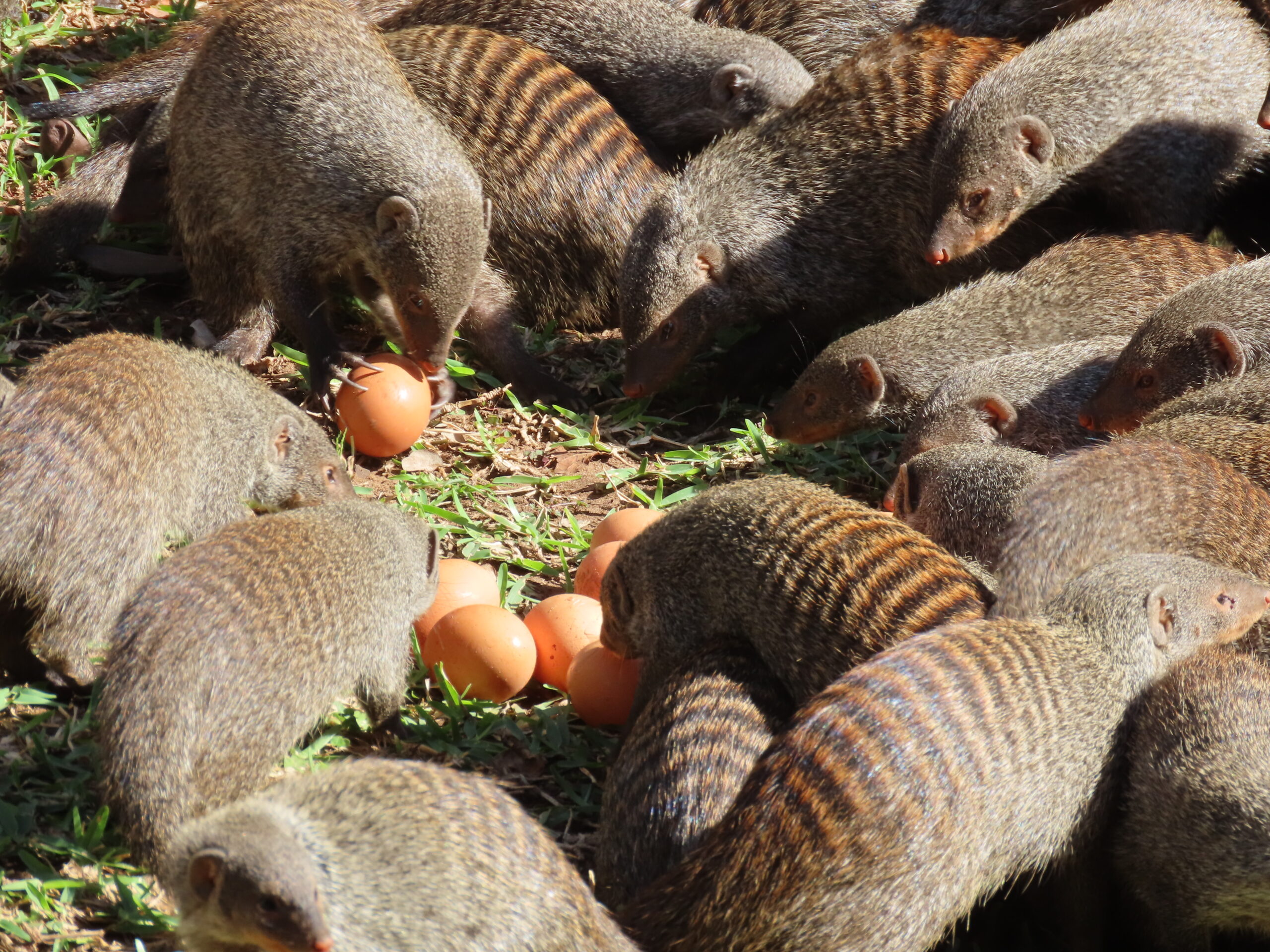
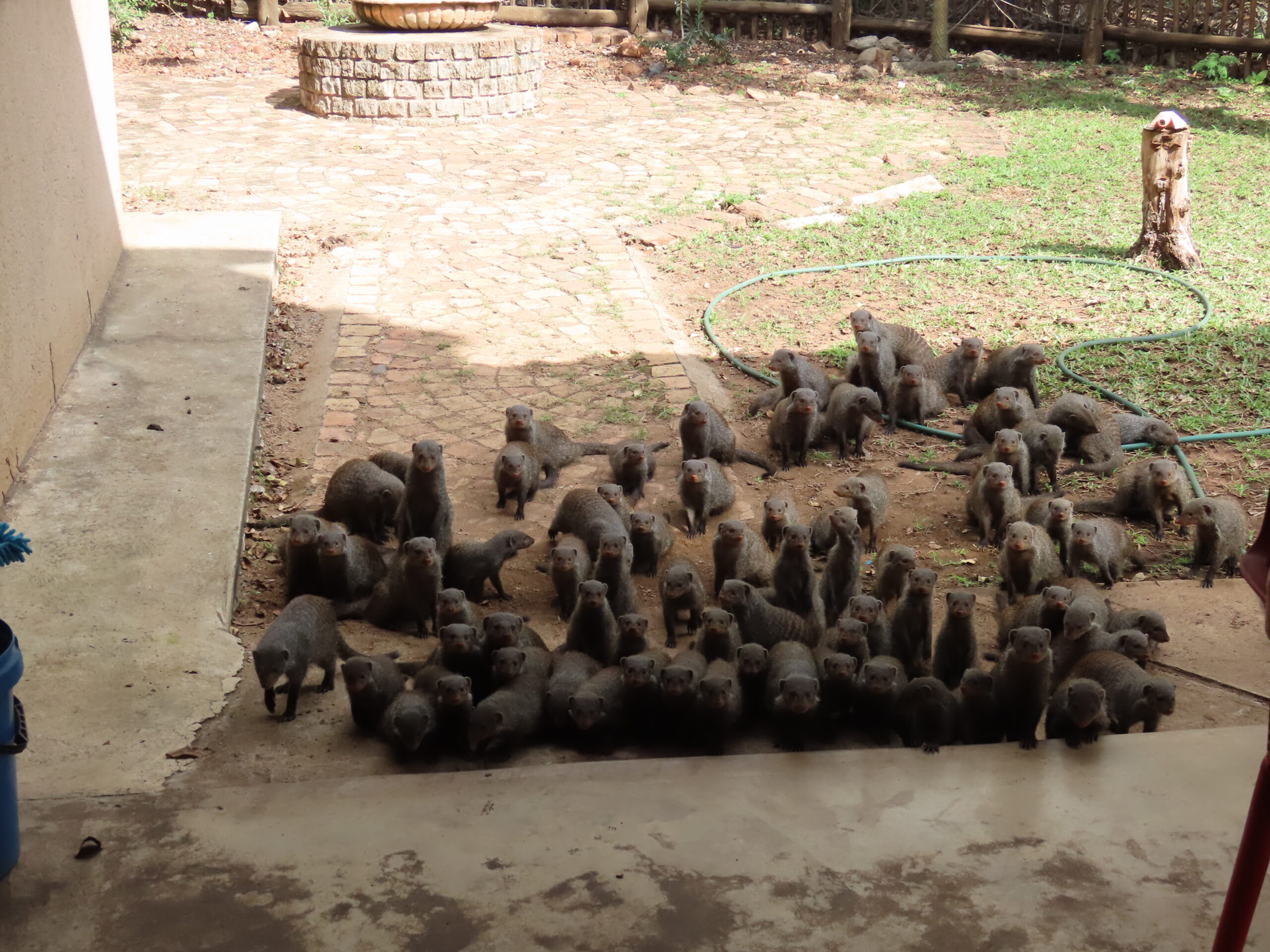
Shortly after Norman left, and I was showered and dressed for the day, a huge band of mongooses stopped by. Immediately, I cut up a good-sized batch of paloney, which they devoured in seconds.

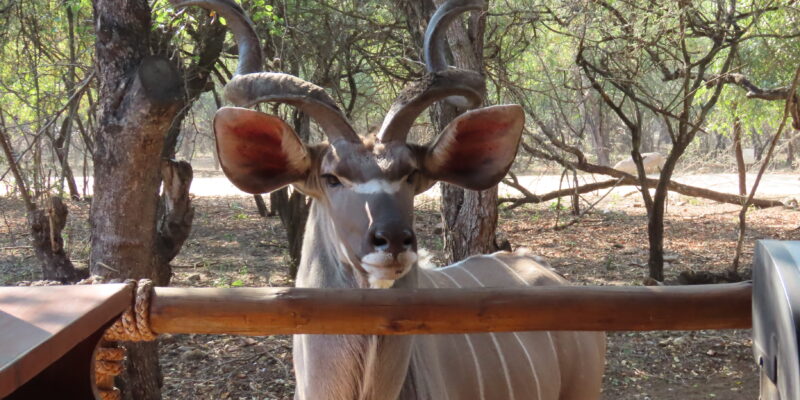
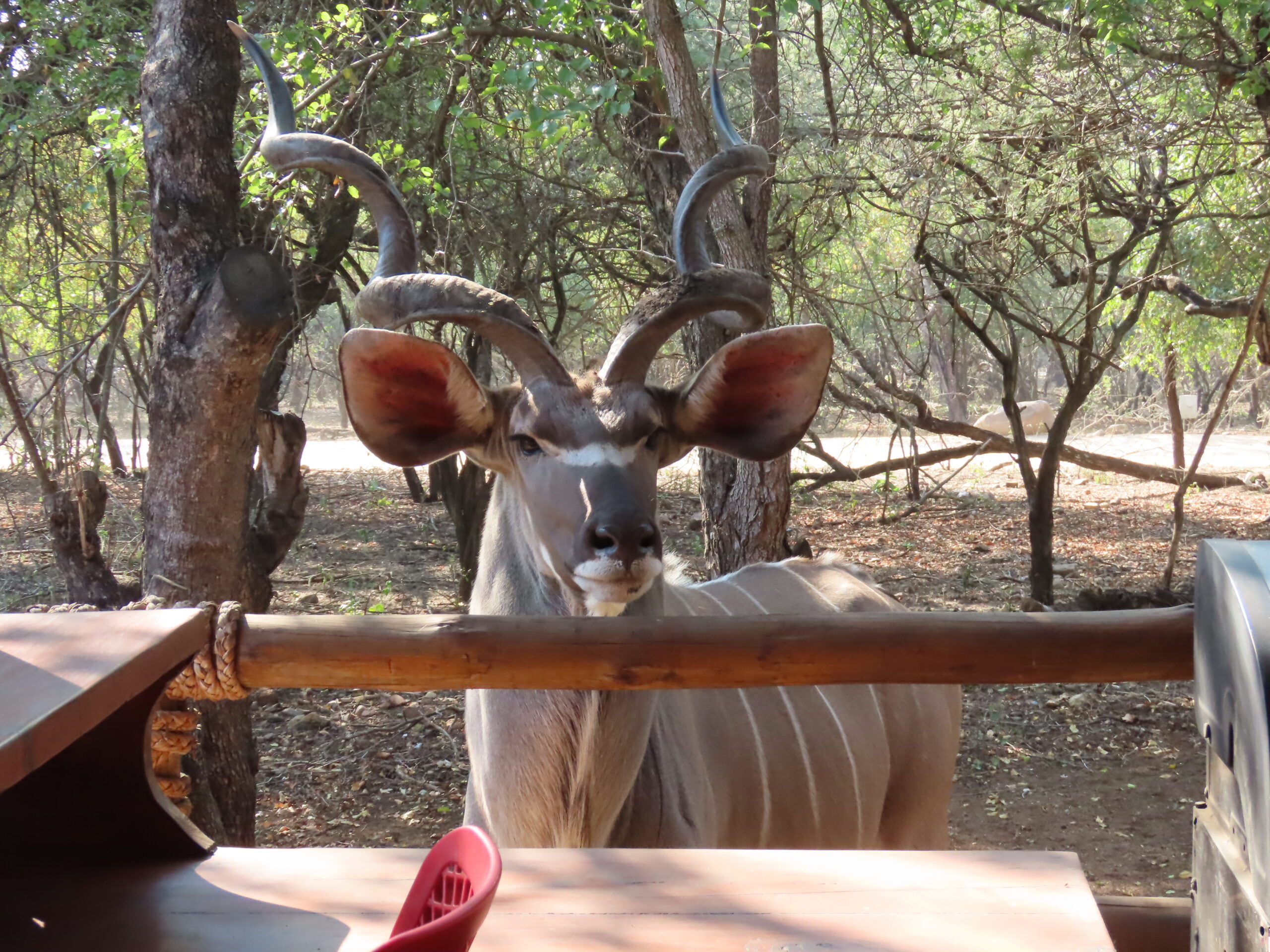
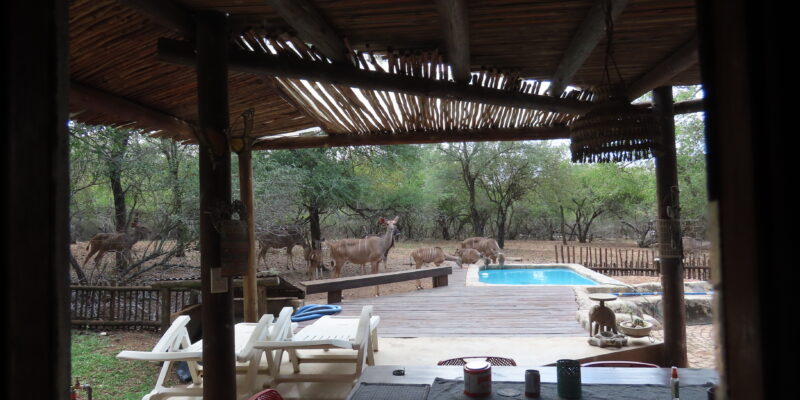
Zebras and several kudu families stopped by. Once it settled down, I baked 36 keto blueberry muffins since there wasn’t load shedding and I could use the oven.

As always, we’ll head out to Jabula for entertainment and dinner tonight. We’ll be back with more Kruger photos tomorrow.

Be well.

Photo from ten years ago today, May 16, 2015:

Our favorite bird, Birdie, lives in our yard with his significant other. He waits for us when we open the blinds in the morning and looks at us as we have dinner each night. Fr more photos, please click here.

Off to Komati for the last time before we leave in 11 days…Tom has quit smoking…

Big Daddy stopped by for some pellets.

This morning, we took off for Komati to pick up a few items we needed at Spar Market and quickly stopped at the pharmacy. When we returned, I got to work to finish this post and upload it as soon as possible.

Today, I need to work on our big upcoming Amazon order, rounding out supplies we’ll need over the next year until we return to the US again in May 2026 for grandson Miles’s graduation. Then, granddaughter Madighan won’t graduate until 2028, after which all four grandchildren will have graduated from high school. From there, we’ll be looking at college graduations for four of the six grandchildren.

Mongooses were scrambling for whole eggs.

God willing, we’ll still be able to travel in the future. We’re doing everything possible to stay healthy and continue our exciting world travel plans. One life-changing, health-altering move Tom has made in the past year has been to quit smoking.

With his confirmed diagnosis of pulmonary fibrosis after being exposed to asbestos and multiple other chemicals, after 42½ years of working on the railroad. This past September, while we were staying in Cleveland for my medical appointments, eight months ago, he quit smoking, cold turkey.

He’s quit many times in the past, but failed repeatedly. However, the seriousness of his lung condition finally convinced him he needed to stop once and for all. The frequent coughing also reminded him of how important it was for him to quit.

We were most worried about how he’d do in South Africa, especially when we spend every Friday and Saturday evening at Jabula, where smoking is allowed at the bar, where we sit to socialize and eat dinner.

Bossy is frequently around, looking at us for pellets.

South Africans frequently smoke. Here are some stats on smoking tobacco in South Africa and other countries:

As of 2021, approximately 23.9% of South African adults aged 15 and older reported smoking cigarettes, translating to about 10.4 million individuals. This figure places South Africa among the higher-prevalence countries globally. Tobacco Control Data

Global Comparison

According to the OECD, in 2015, South Africa had a daily smoking prevalence of 19.0% among individuals aged 15 and older, ranking it fourth among the countries surveyed. This rate is notably higher than in many high-income countries. For instance: NationMasterPMC

  • United States: 10.7% (2019)

  • Canada: 11.6% (2019)

  • United Kingdom: 15.3% (2019)

  • Australia: 12.4% (2016), NationMaster

Conversely, some countries exhibit higher smoking rates: NationMaster

  • Turkey: 25.9% (2019)

  • Estonia: 20.0% (2019)

  • Italy: 19.3% (2019) NationMaster

These comparisons underscore the significant variation in smoking prevalence across different nations.

Gender and Age Disparities in South Africa

In South Africa, smoking prevalence is markedly higher among men (39.1%) compared to women (9.7%) as of 2021. Tobacco use is also more prevalent among middle-aged adults (25–64 years), likely due to higher disposable incomes within this demographic. Tobacco Control Data+1Tobacco Control Data+1Tobacco Control Data

Regional Context

Within the WHO African Region, South Africa ranks first in terms of the number of tobacco users, with an estimated 8.6 million individuals using tobacco products in 2022. This positions South Africa as a significant outlier in a region where many countries have lower smoking rates.Global Action to End Smoking.

No words can describe how pleased I am that he’s finally quit. He had to make this decision on his own, and there was nothing I could have said or done to convince him sooner.

Big Daddy was lounging in the garden, waiting for us to feed other animals who might stop by so he could get in on the action.

No doubt, he still struggles several times each day. I support him when he freely expresses the ongoing challenge. I didn’t write about it for fear he’d fail again. However, now, he is comfortable with me writing about it today. As hard as it’s been, he feels confident he’s on the other side and can continue in his abstinence.

I am so proud of him and feel grateful to no longer be exposed to secondhand smoke daily. Here in South Africa, it’s difficult to avoid secondhand smoke entirely. Still, at Jabula, it’s minimal, with perhaps only one person smoking at a time in the open-air bar and restaurant.

We haven’t become outspoken naysayers about others smoking. It’s each person’s personal choice, and we have no interest in criticizing others for their choices.

Tonight, we’re off to Giraffe for dinner and Quiz Night. It’s a 1960s dress-up night, but with only one suitcase each, we don’t have anything to wear for the occasion. Thus, we won’t be dressing up. Instead, we’ll focus on the lively conversation in our group and socializing with the others.

Be well.

Photo from ten years ago today, May 13, 2015:

A small lagoon between Anini Beach and Ke’e Beach, in Kauai. For more photos, please click here.

What’s happening at the Newark Airport in New Jersey, USA?…

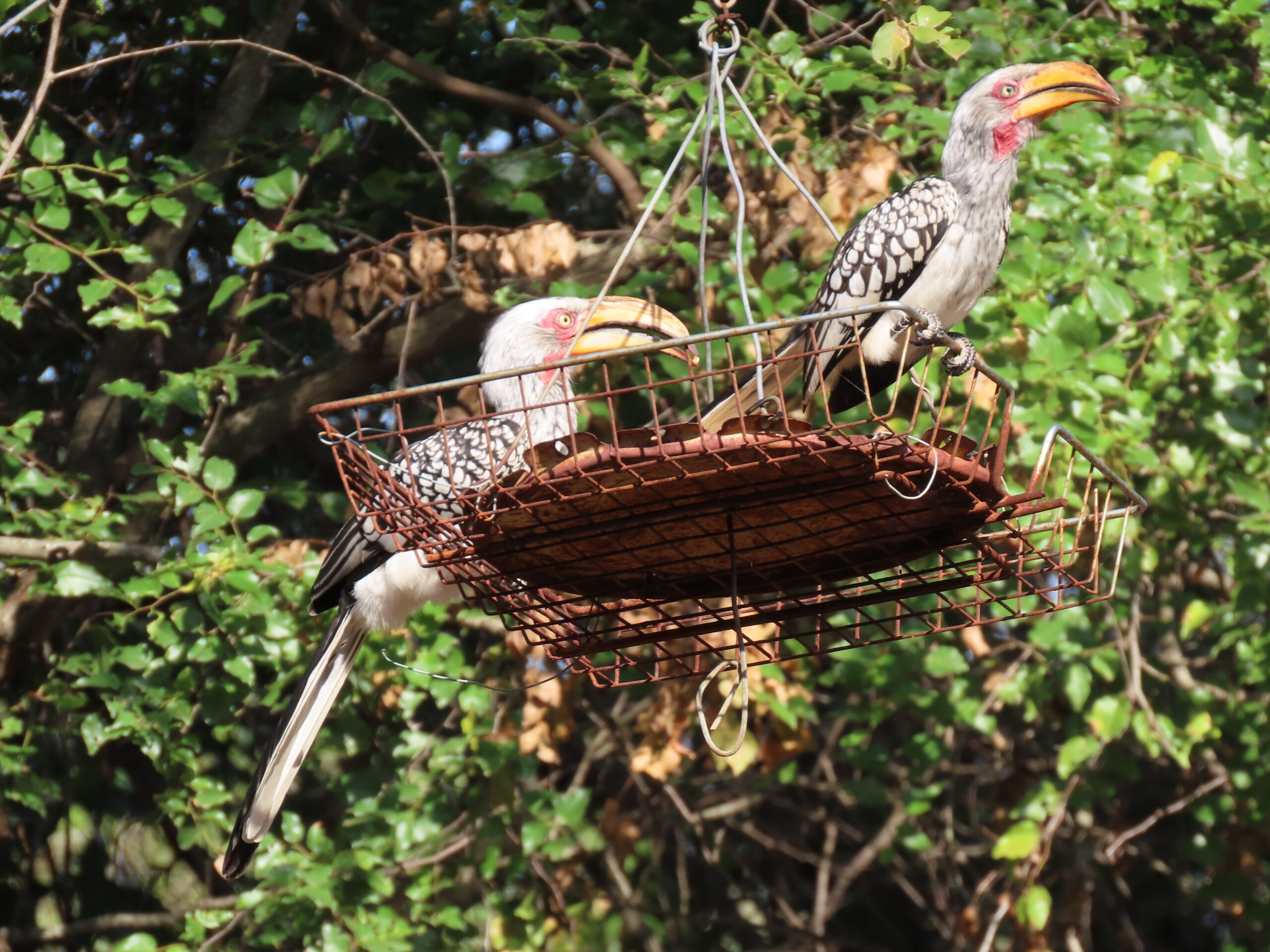
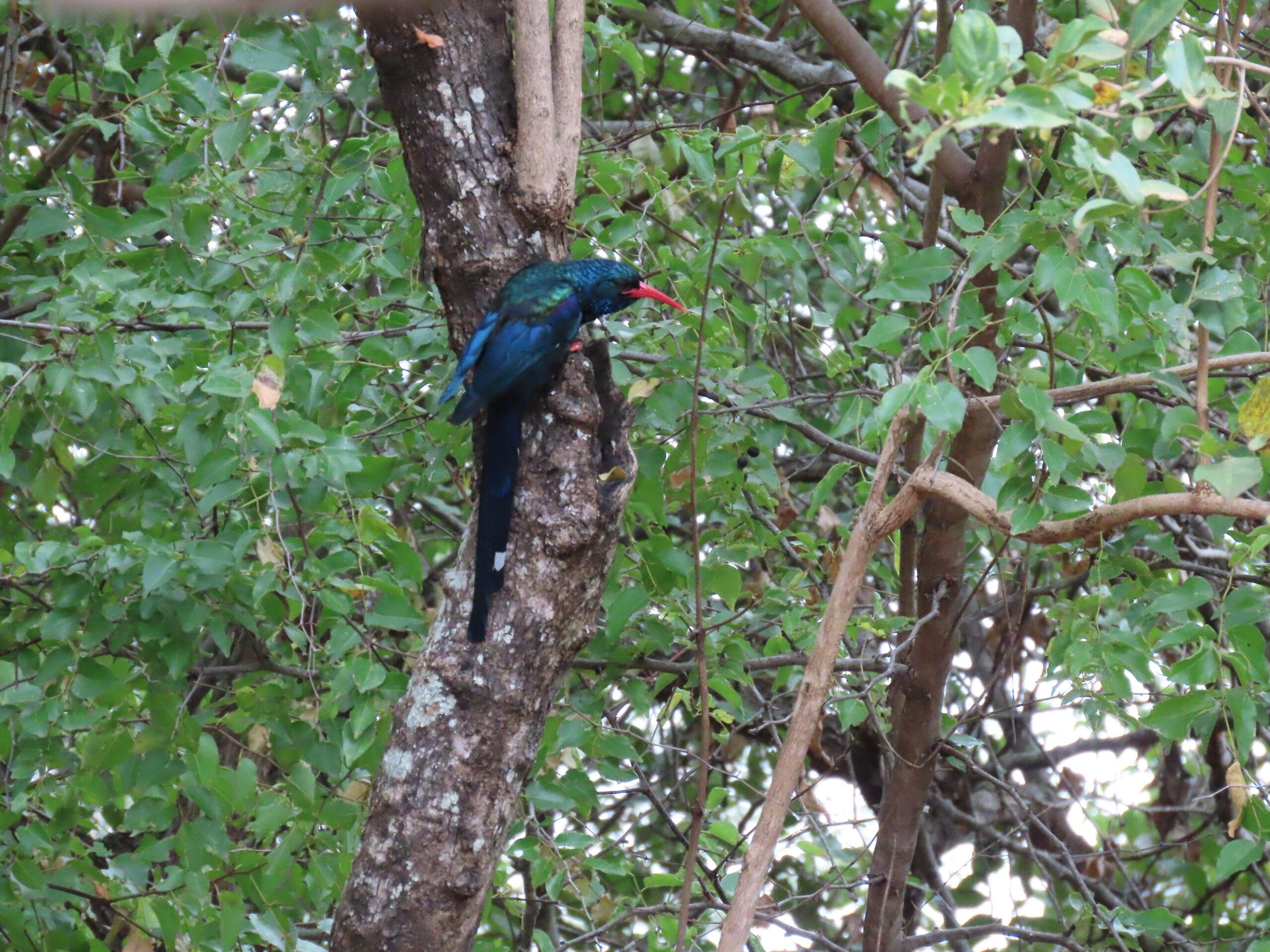
Two hornbills were enjoying the seeds from the above-ground tray in the garden.

With many of our worldwide readers traveling this summer, we felt it was imperative we post an update on what is transpiring at Newark Airport in Newark, New Jersey, USA, that may impact travel plans. When flying back to the US from anywhere in the world, we may have a layover in Newark.

There are quite a few mongooses in this particular band who visit almost daily.

Fortunately, for our upcoming flight in 12 days, our layover will be in London, but unfortunately, it will last nine hours. We’d rather have such a long layover than be stuck in an airport due to technical or infrastructural issues, especially when we don’t know when we’ll be in the air again.

Thus, today’s less-than-exciting post aims to alert those who have booked or are booking travel plans to be aware of potential delays and, if possible, reroute to other airports. This may be an added issue with many flights booked as non-refundable/non-changeable, but it never hurts to check to determine your options. As the Travel and Leisure online magazine article indicates below, “Some airlines are offering free flight changes for travelers who are nervous about flying into the hub.”

“Newark Airport Faces Another Radar Outage (Again)—What Travelers Should Know

By Michael Cappetta, Published on May 9, 2025

Happy Mother’s Day to all the moms in the world…Before we know it…Fishing?

While we were at Jabula last evening, my son Greg called, and I moved to their office to chat with him for a few minutes without disturbing anyone in the bar. As always, it’s wonderful to hear our kids’ voices with updates on the grandchildren and recent events in their lives.

Greg, his girlfriend Heather, and the grandchildren look forward to our upcoming visit. They are making plans for us for when we arrive, amid all the plans we’ll make with Tom’s family. It will be a busy three weeks.

Last night, Greg asked me if I’d go fishing with them, an activity we often did when we lived in Minnesota years ago. Living on a lake for 26 years resulted in many fun times, sitting at the end of the dock, fishing rods in hand, and spending hours in anticipation of who’s going to catch the next and biggest fish.

I consider myself a good fisherperson. Tom always teases that the only time I’d get jealous was when someone caught a fish bigger than mine. So true. But with the necessity of buying a non-resident fishing license for only a few hours, I will join them and won’t fish, but will watch them and help bait their hooks. Even with my long fingernails, I had no problem grabbing a worm, maggot, or leech to bait mine or the kids’ hooks.

In any case, hanging out with the kids and engaging in idle chatter as we watch the bobbers will be fun. As always, there will be many times when Tom is with the kids’ family and I am with mine. Although we both make every effort to spend time with each other’s families, it doesn’t always work out that way.

We’ll arrive in Minnesota at 3:15 pm on May 25, two weeks from today. We won’t see anyone that day or evening since we’ll have been traveling for over 30 hours, plus time on the road getting to and from the airport in Nelspruit and the airport in Minneapolis. I hope we can sleep on the plane and be refreshed the following day.

Maisie’s graduation isn’t until May 29, which prompted us to leave here a little earlier than necessary to ensure we had ample time to recover from the long travel period. When we arrived in South Africa at the beginning of March, it was the first time either of us had suffered from jet lag over the past 12½ years of world travel. We’re hoping that was an isolated situation and that we’ll do better this time after our outgoing and return flights.

This will be my first roundtrip flight from South Africa to the US. But in March 2023, Tom did a round trip when he left here to return to the US for his dear brother Jerome’s funeral, returning ten days later. It was the first time I was alone here in the bush, but I did fine, especially when our many friends made a point of keeping me busy at social events.

I continued to go to Jabula every Friday and Saturday night, with friends driving me each way, particularly my old friend Sindee. Louise and Danie invited me for dinner, and the time flew by quickly until Tom returned.

One might think that living amongst wild animals and the nighttime darkness would make one feel unsafe, but I have never felt unsafe. Plus, I kept the emergency remote in the bedroom with me, and I would only need to press the red button to have security staff here within a few minutes.

The bush is a wild place, and nighttime sounds can be frightening, but the risks are minimal, even when lions roam the park. At any given time, there are leopards, but they are rarely seen.

Today, we are making a prime rib roast on the braai and will enjoy a quiet day. It’s very warm, and we don’t have a complaint in the world.

Happy Mother’s Day to all the moms in the world. Enjoy a day about YOU.

Be well.

Photo from ten years ago today, May 11, 2015:

The locomotive/coach formerly used for tours of the Kilauea Sugar Plantation in Kauai has been closed for many years. For more photos, please click here.

“Technical difficulties” resolved…We’re back up and running!…Trail cam photos…

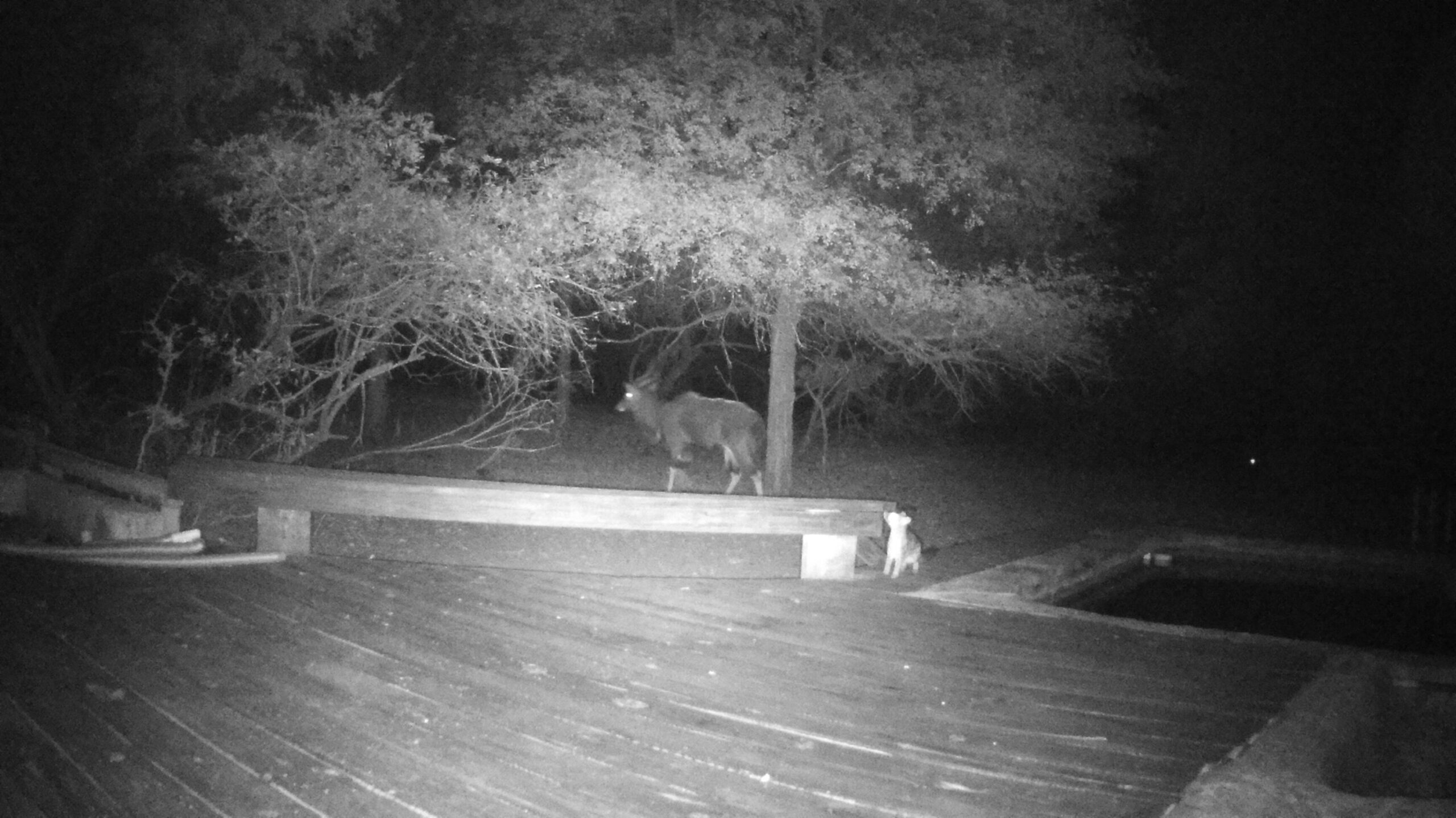
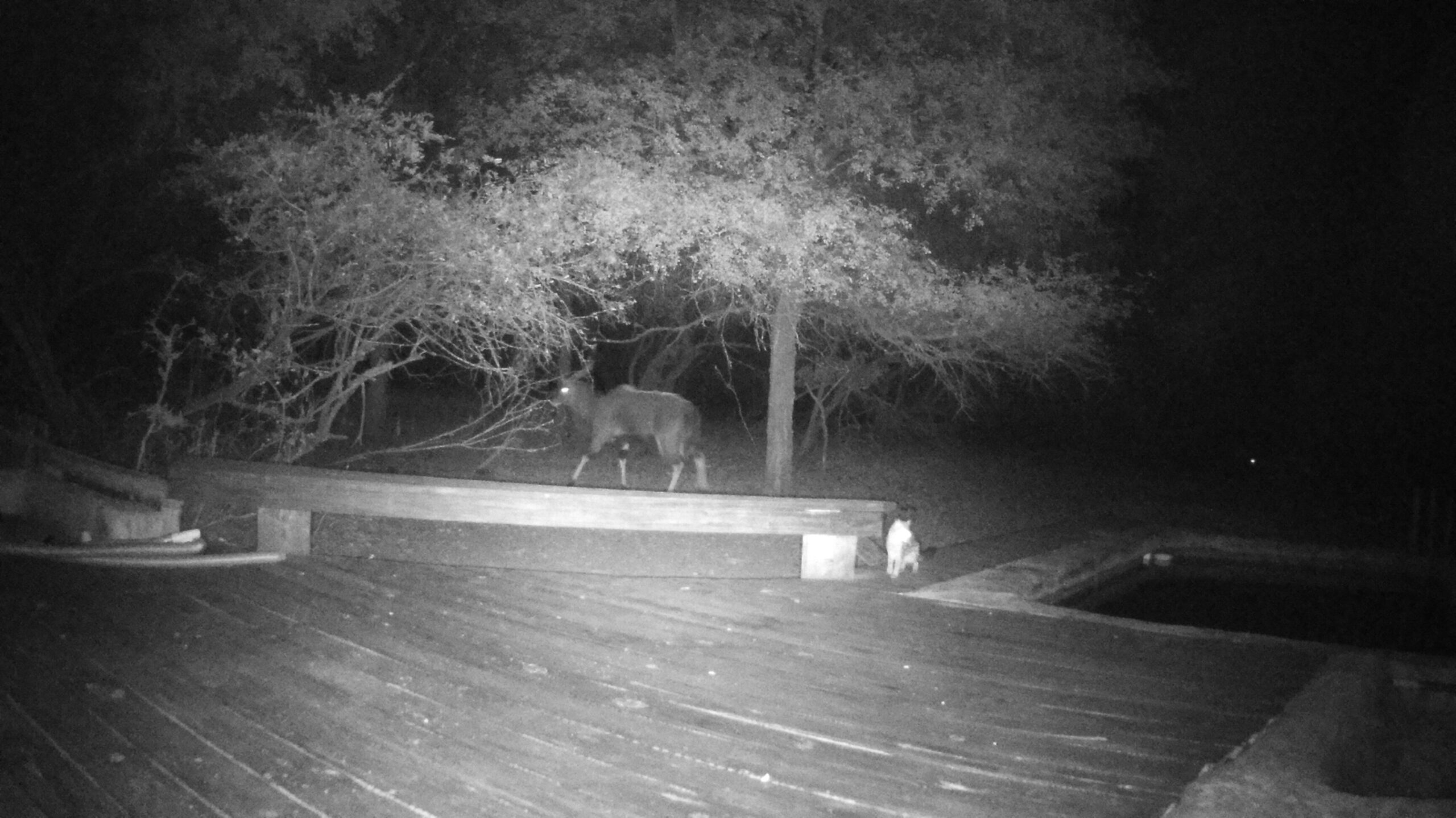
Norman stopped by during the night along with the genet located on the right of the bench.

In April 2024, we purchased three laptops on sale on Amazon using accumulated rewards points. Why did we purchase three laptops? At the time, we figured we’d be in the US for a long time due to my medical concerns and having a backup we could use for streaming would be ideal.

At the time, we thought we’d like to watch news and podcasts while working online on our laptops. Sure, we could use split screen, but neither of us was interested. However, as it turned out (fortunately), I didn’t need another open heart surgery requiring a long recovery in the US, and we were able to continue our world travels sooner than we thought.

We didn’t put any meat out for the genet, but tonight we will leave out steak fat and meat from Tom’s dinner at Jabula last night.

I wish we hadn’t purchased the third laptop, but we may not regret it as we continue on our world travels on cruises and more, beginning in September when we leave South Africa. We’ve found that our laptops usually last two to three years, based on our frequent travel and excessive use.

If one of our laptops crashes while on a cruise or in a remote area, such as here in the bush, we have the backup that is still in its original box. In the past few weeks, when I’ve had issues with my laptop, I thought I’d have to start using the third device.

The biggest issue with my laptop was its slow performance and inability to produce decent sound for streaming. No matter how hard I tried to fix the sound by adding sound boosting software and performing many tasks to upgrade it, it seemed hopeless.

Norman and the genet.

In addition, I was unable to connect either of our two portable Bluetooth speakers. One would work for a while and then create annoying static. The speakers worked fine on Tom’s laptop. It may seem logical that we should use Tom’s laptop to stream shows, but his keyboard is different than mine, and I don’t care to use his computer. I am in charge of setting up all the shows we stream since Tom gets impatient with running into glitches.

This week, we reached a point where we couldn’t stream because I had no sound. It was too much monkeying around trying to watch a show..

I knew what I had to do, but I didn’t want to go through the hours-long process of doing it: I needed to completely reset my laptop to return it to its original Windows 11 configuration. I did that yesterday morning, much to my chagrin, and indeed, it took several hours. That was the reason I didn’t post yesterday morning.

Norman left, and the genet remained looking for food.

Doing a reset may save my folders and factory-installed apps, but it eliminates all the apps I’ve installed in the past 13 months (and their passwords), of which there were many. This took me no less than five hours to accomplish.

Yesterday afternoon, I was almost completely done and could test using a Bluetooth speaker for sound while streaming. It worked! Last night, we could stream a series with quality sound for the first time in months. What a relief. I knew this process would work and wasn’t surprised by the positive result.

Our goals are to make life as stress-free as possible. Solving a problem such as this only reminded us of how important it is to address problems as quickly as possible so that we can continue our travels with ease and peace of mind.

We’ll be back with more new photos tomorrow.

Be well.

Photo from ten years ago today, May 10, 2015:

Could this Yellow Candle flower be more exquisite with its white blooms? For more photos, please click here.

Feeling better…Our dear friends Karen and Rich booked their fights to visit us in South Africa!…

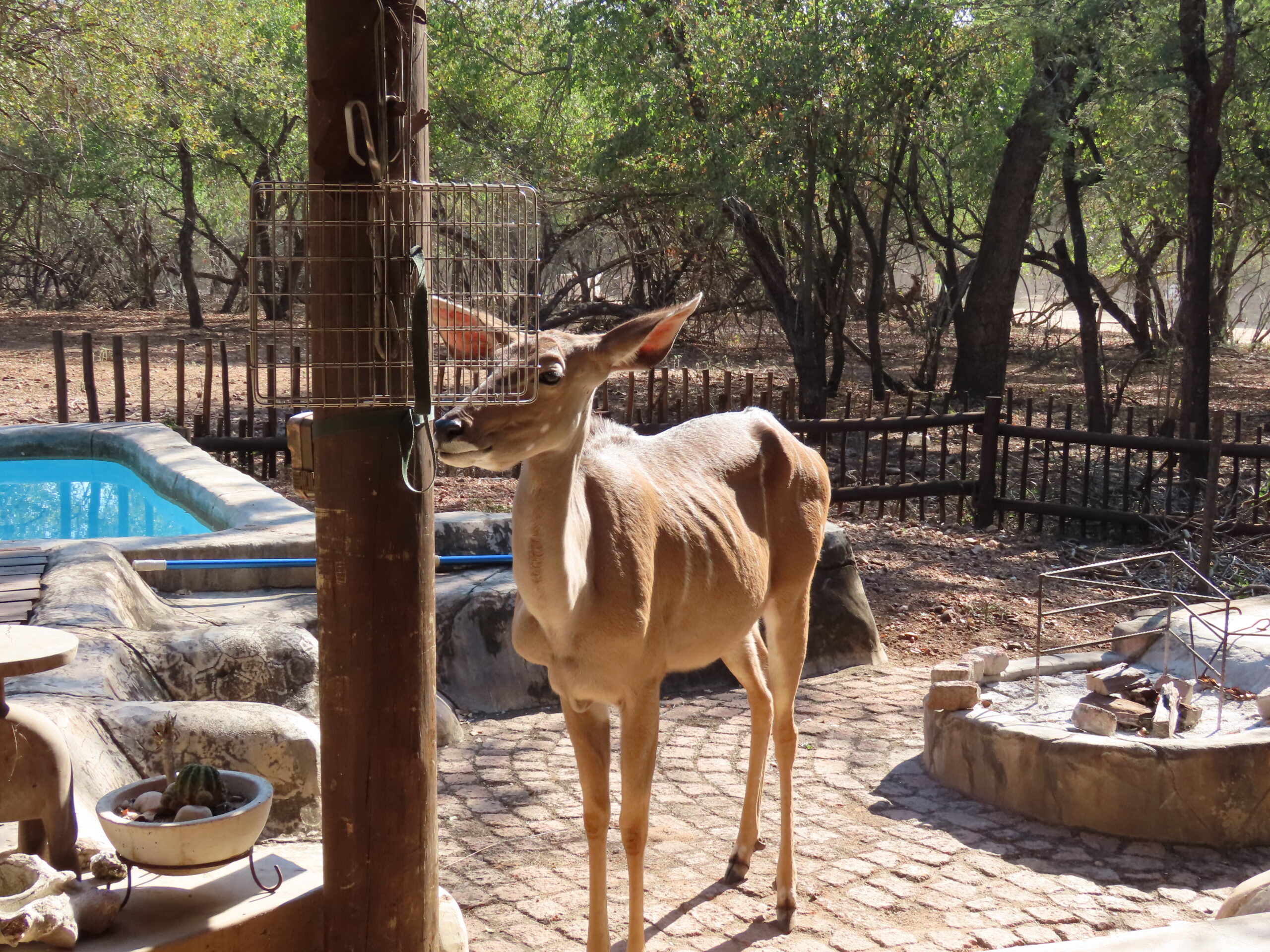
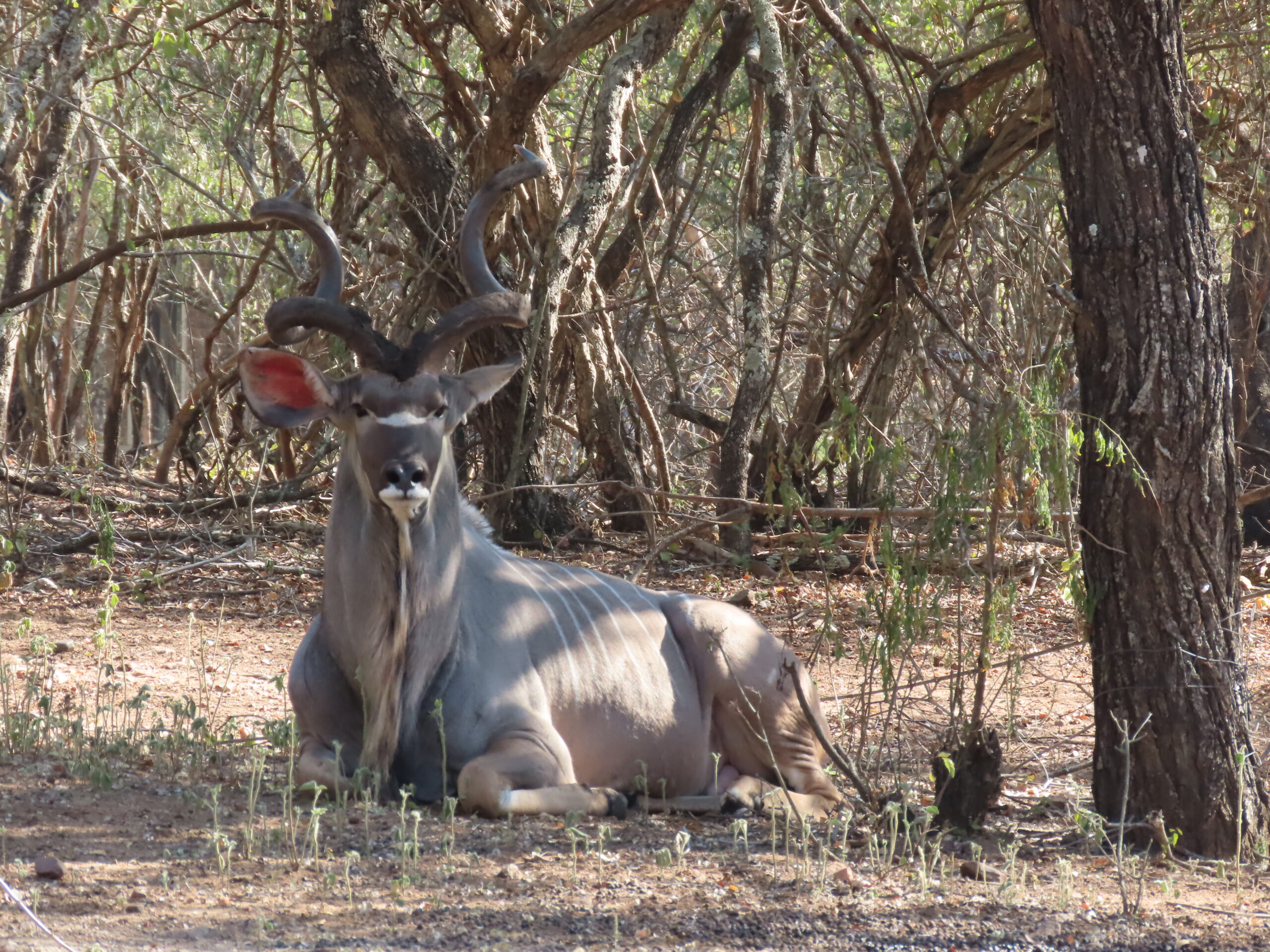
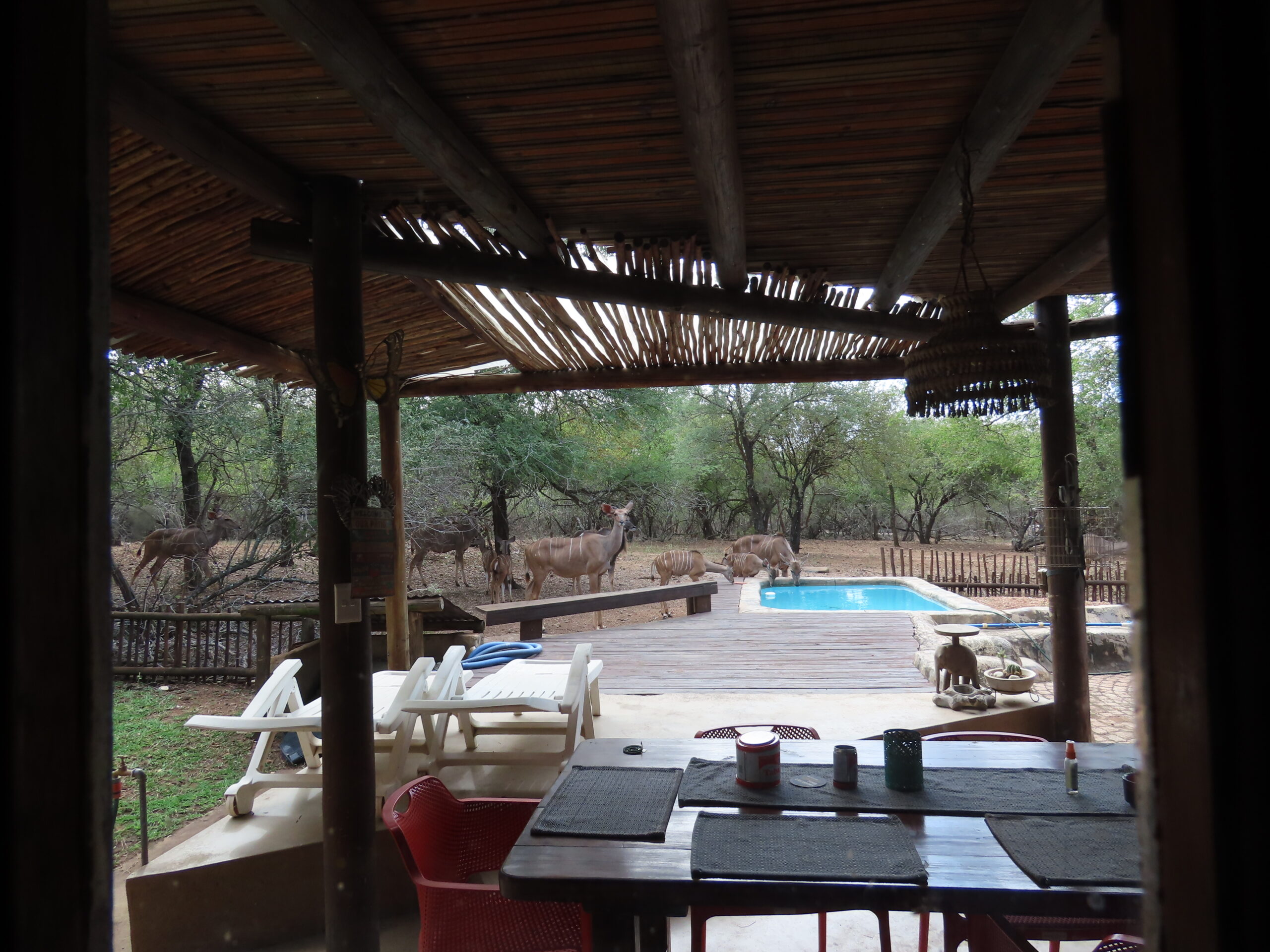
There were 12 kudus in the garden looking for pellets.

This morning I awoke feeling better than I had in days. I hadn’t missed a beat preparing meals, doing laundry, or attending Quiz Night on Tuesday evening. But on this gorgeous sunny day, I feel renewed and refreshed after sleeping through the night, although I awoke at 5:30. A short nap may be on the agenda this early afternoon.

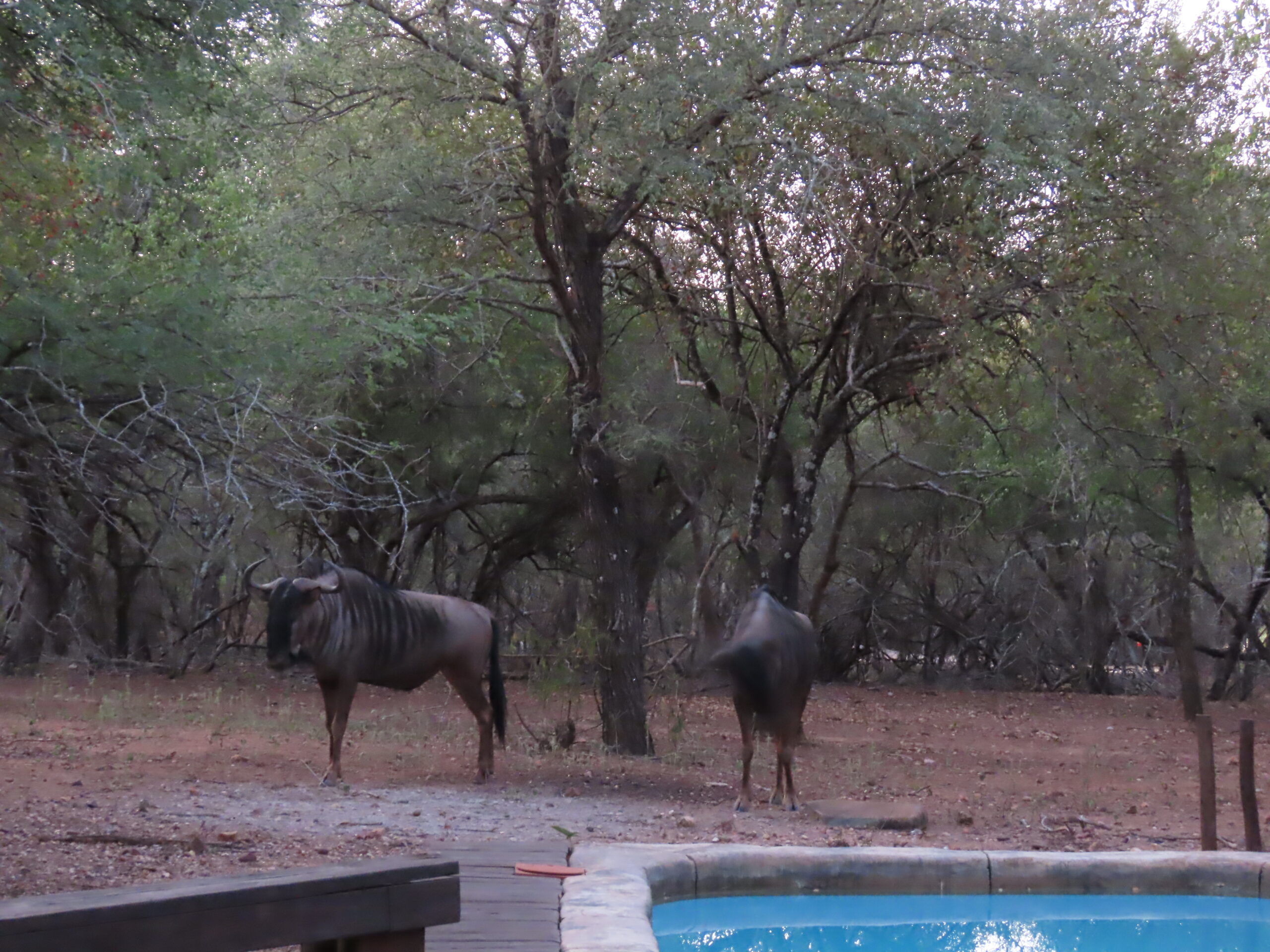
Wildebeest Hal and a friend.

Late yesterday afternoon, my dear friend Karen and I chatted on the phone, figuring out good flights for her and her husband Rich’s arrival. They’d originally planned to arrive in early July, but flights to the US during the 4th of July holiday week resulted in higher fares.

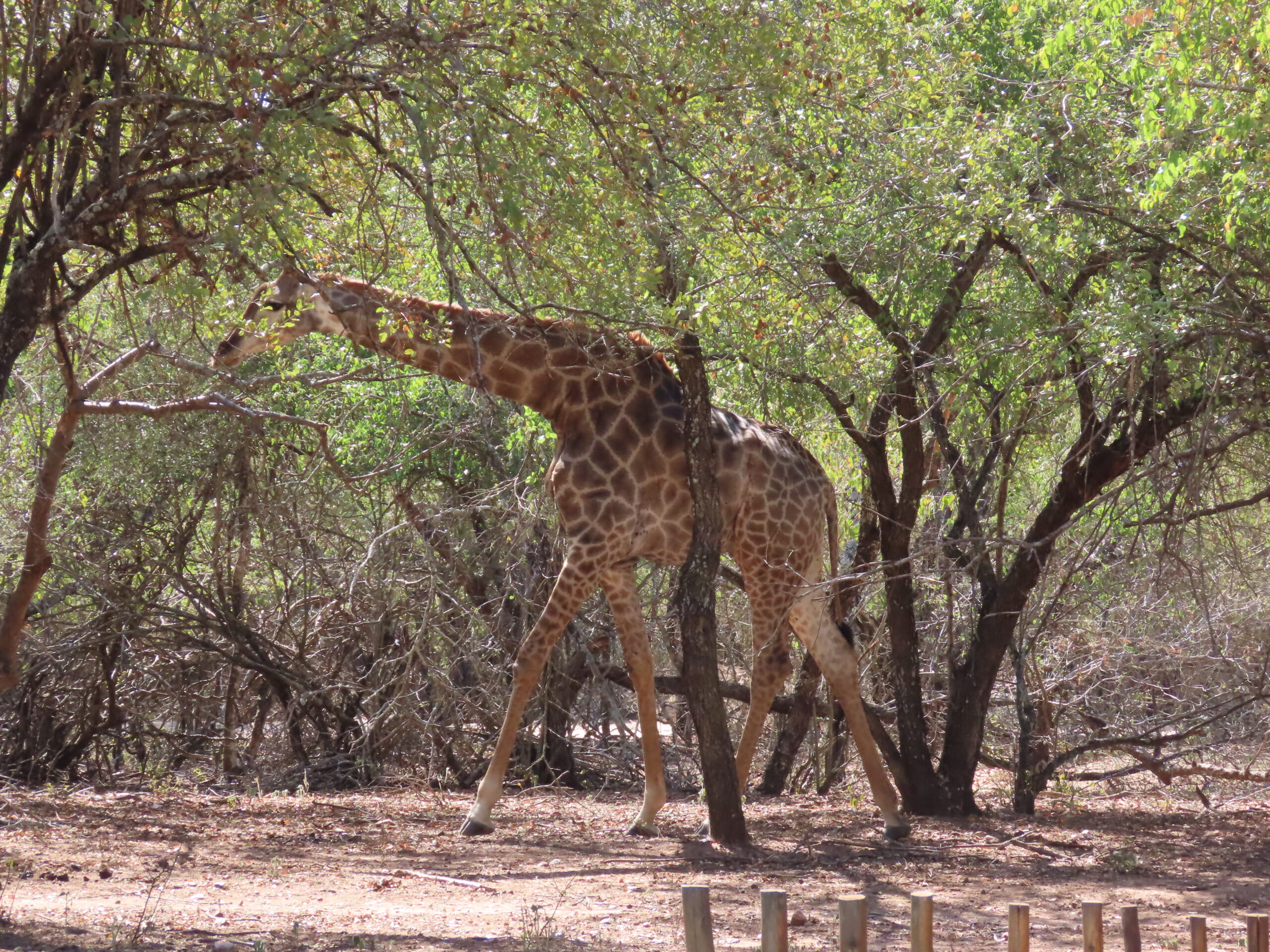
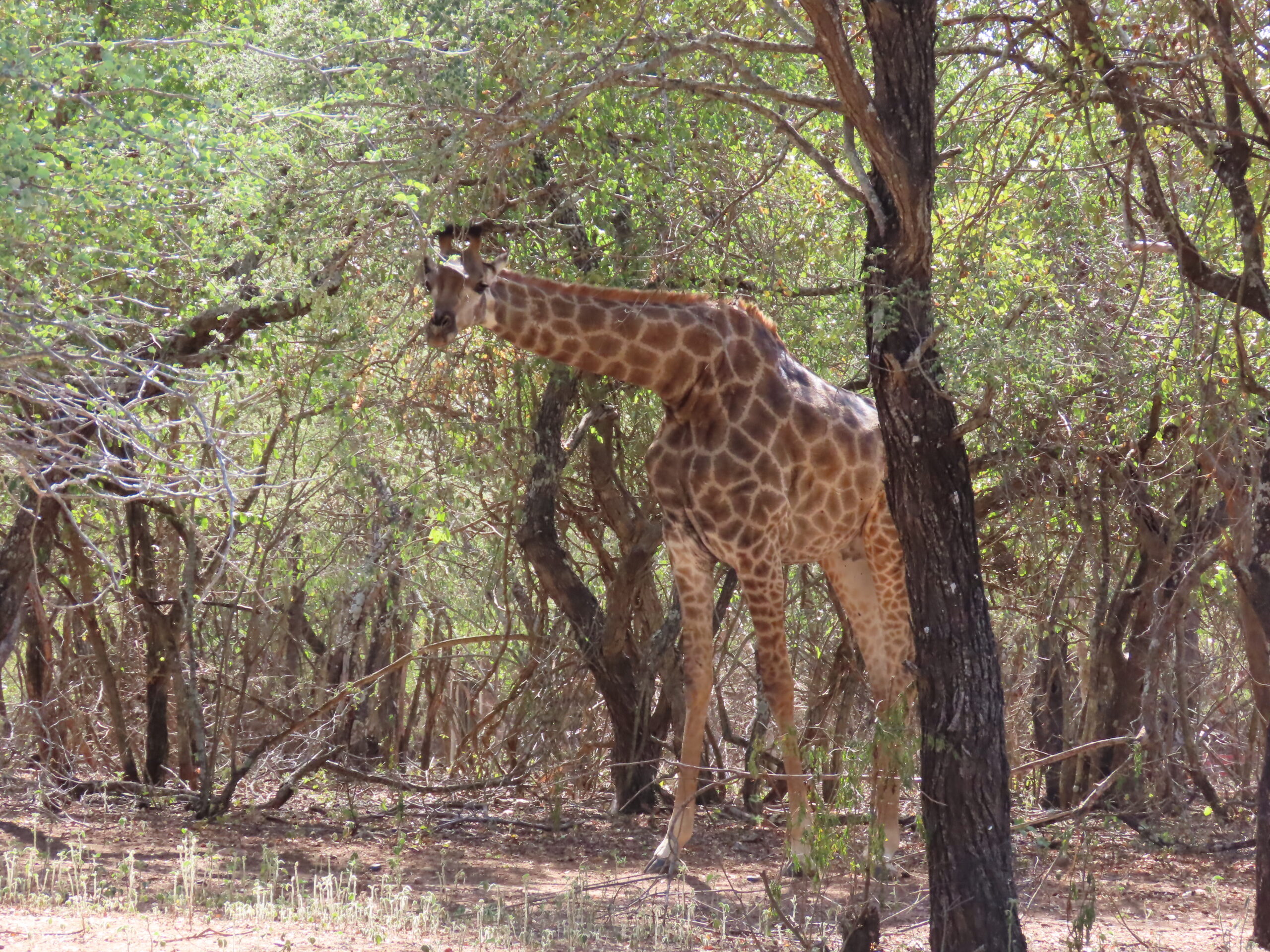
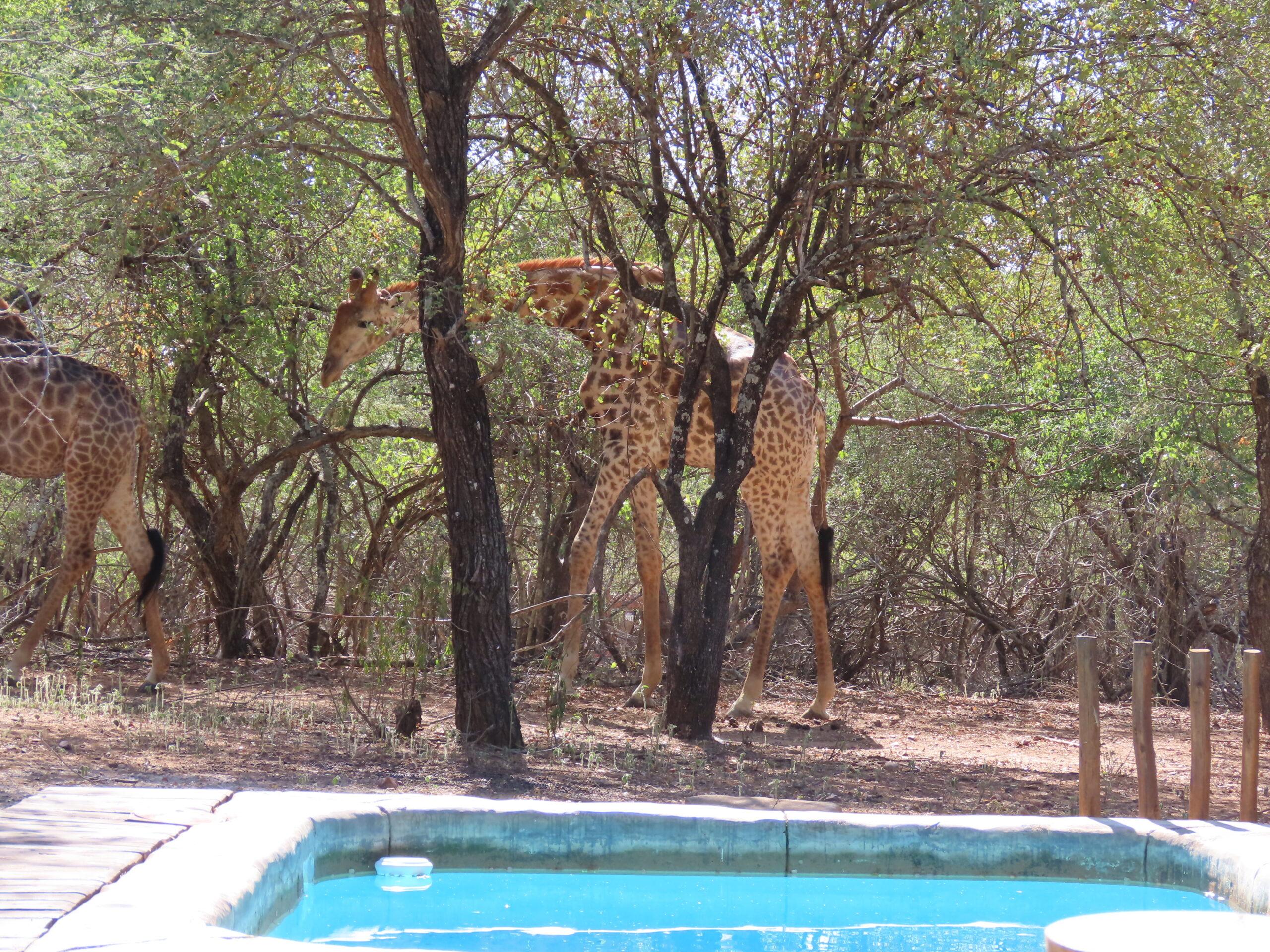
Giraffes visited again yesterday.

By changing their departure date to June 26, they saved around US $600, ZAR 10957, making the fare savings worth the changes. We’ll be returning from the US to Marloth Park on June 17, and they’ll arrive on June 28, a mere 11 days later, giving us plenty of time to prepare for their arrival.

It’s always exciting to see them in the garden.

We are so excited to finally be able to reciprocate after we’ve stayed at their home several times since we began traveling the world. Add the excitement of sharing this magical place with them, and we couldn’t be more thrilled.

It’s not as if we have much to do before they arrive, other than grocery shopping and visiting the liquor store for some of their favorites. We won’t buy too much since they will enjoy shopping with us after recovering from the long flight. It’s a cultural experience one wouldn’t want to miss.

They rarely stay for long periods.

We won’t book any activities until after they arrive and we get a feel for what they’d enjoy. Karen said they’d be content to sit on the veranda with us rather than do much sightseeing, but that could change once they get here, with so much to do.

We originally planned to return to Nwenya tonight for the Thursday night buffet. After making dinner yesterday with excellent leftovers for tonight, we decided to stay in and enjoy the upcoming beautiful evening in the bush, since so many animals have returned to the garden after the holidaymakers left on Sunday.

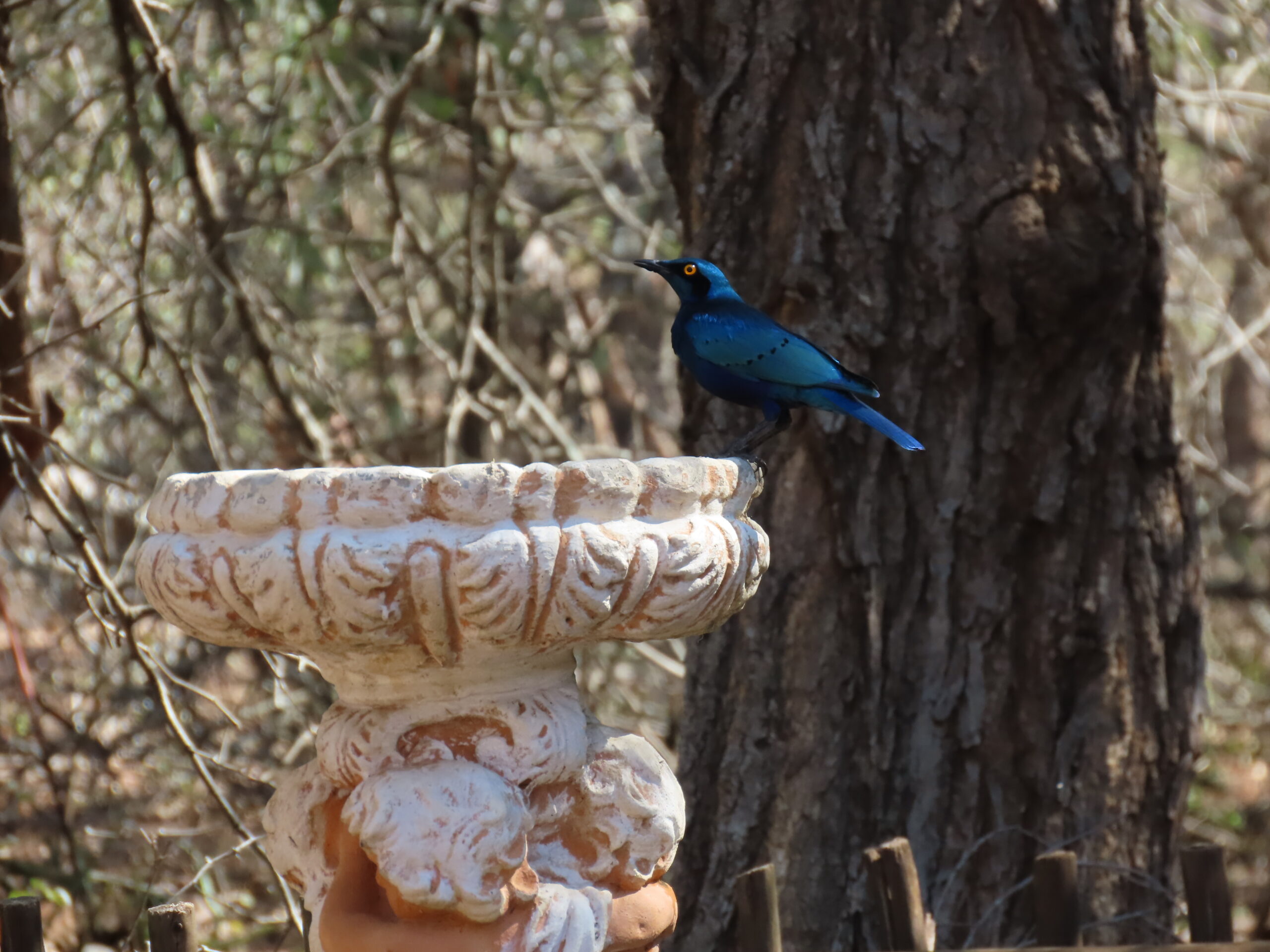
Starlings hover around the garden all day.

Today will be a quiet day, which we are treasuring. The sounds of birds and wildlife are all we need to fully entertain us on such an exquisite weather day. The humidity and dew point are low, and the temperature will be a high of 87F, 31C. Right now, it’s only 76F, 24C. The freshly washed laundry is drying quickly in the sun while Vusi is in the garden watering the grass. It’s a perfect day.

We hope you have a fantastic day.

Be well.

Photo from ten years ago today, May 8, 2015:

A view of the drive to the Kilauea Lighthouse when it was closed. My sister Julie took the photo during her visit. For more of Julie’s photos, please click here.

Part 2…The best new luxury resorts around the world…Second place on Quiz Night!…

A rectangular formation of clouds at sunset.

Here’s the continuation of the fantastic article from Travel and Leisure, found here on their site:

“The Best New Resorts Around the World—Including a Luxe Mexico All-inclusive and an Italian Countryside Escape…continued…

Le Château de Théoule, Théoule-sur-Mer, France

After more than a decade living in France, I’ve seen my fair share of castles, but Château de Théoule is different. Like a cat with nine lives, the building has undergone multiple renovations since its humble start as a savonnerie, or soap factory, in 1630. For this latest reinvention into a 44-room retreat, interior decorator and antique dealer Marie-Christine Mecoen paid tribute to the château’s former owners (who include a Scottish lord and wealthy French silk merchants) with subtle touches. Each room’s design is anchored around a hand-picked antique, so no two are alike. Some are outfitted with sumptuous, draped silk headboards and boudoir-style fringe lamps. My ochre-colored duplex room, dubbed La Valériane (after the flower used in perfume), channeled a 1960s South of France vibe, with floor-to-ceiling gauzy, eggshell-white custom linen curtains, violet velvet armchairs, and rattan palm tree light fixtures. I also appreciated the relaxed location—unlike nearby Cannes, with its international jet-setters, the town of Théoule-sur-Mer attracts in-the-know locals who come to hike trails in the surrounding Massif de l’Estérel mountains, and get away from it all. Doubles from $680. Lane Nieset

Les Lumières, Versailles, France

It’s easy to feel like royalty at Les Lumières, a hotel across the street from the Château de Versailles. There are gestures to France’s most famous palace everywhere: The gold-plated bar at Le Bar des Philosophes pays homage to Louis XIV’s court outfits, and the hotel fragrance is by Trudon. This Versailles candlemaker dates back to 1643. The 31 rooms and suites are also named after famed French writers and philosophers from the Age of Enlightenment, like Voltaire and Denis Diderot, and explorers, like Navy officer Jean-François de Galaup, comte de Lapérouse. It all contributes to a feeling of learning, knowledge, and contemplation. (There was even a journal in my suite to write in and take home.) I also took advantage of the Dream Machine amenity, a light machine brought to my room for a self-hypnosis experience. Accessible hotel. Doubles from $428. —Robin Allison Davis

Le Mas Candille, Mougins, France

Le Mas Candille, set in the hilltop village of Mougins in the French Riviera, seems to define the area’s storied glamour. With majestic views of the bay of Cannes and the Lérins Islands, it’s easy to be swept away by the scenery. Still, the interiors of this 46-room property, which initially opened in 2001 and has come back to life after a careful restoration by French-Mexican architect Hugo Toro, are just as compelling. Furniture and decor were sourced at Provençal flea markets, and I adored the green carpet and matching drapes in my suite (both custom-crafted by Toro). The Clarins spa was another revelation. After several laps in the indoor-outdoor heated swimming pool, I relaxed in the steam room and braved the cold plunge pool, before an hour-long facial with plant extracts, almost all grown on the property. Well-nourished by chef Romain Antoine’s Mediterranean-inspired feast of langoustine and scallops, I retired to the library to skim the collection of classics. Accessible hotel. Doubles from $532. —Kasia Dietz

Mara Toto Tree Camp, Masai Mara, Kenya

The safari started from the plane. I saw my first elephants while approaching the Ol Kiombo Airstrip, a 45-minute flight from Nairobi. After touchdown, I spied warthogs, Cape buffalo, and Grant’s gazelles—their coats glowing pale yellow in the East African sun—on the drive to Mara Toto Tree Camp, a Great Plains Conservation camp run by safari stars and legendary conservationists Dereck and Beverly Joubert. They’ve created a feeling of total immersion and intimacy: Mara Toto Tree Camp has just four tented suites on the Ntiakitiak River. Each one, lifted nearly 10 feet off the ground and connected with snaking wooden walkways, feels like a tree house, with all the adventure you could ask for. Of course, the accommodations are exceedingly comfortable, and the fireside dinners of blackened ribeye, herb salads, and creamy local cheeses are delicious. But you’re here for the game drives, which are unmatched. Mara Toto has access to both the Maasai Mara National Reserve and Mara North Conservancy, a part of the same ecosystem, but with a fraction of the crowds. “Privacy counts,” says Dereck. “You have to be careful to avoid the abundance of tourism, but in Kenya, there are more than enough private corners in nature to explore.” I would say this corner is one of the best. Doubles from $1,445 per person per night, all-inclusive. —Nicole Trilivas

Maxx Royal Bodrum Resort, Turkey

Last May, Türkiye’s Maxx Royal Resorts made a showstopping entrance into the luxury hotel scene on the Bodrum Peninsula with Maxx Royal Bodrum Resort. This wildly chic paradise seems to sprout organically from the dreamy Aegean landscape. Low-slung suites and villas, some of which flank the watery edge of a brilliantly conceived, almost labyrinthine pool, unfurl down to a secluded bay and beach. All have balconies or terraces, and many have private pools. The resort is constructed mostly of smooth stone and wood, giving it warmth and elegance. With seven restaurants and four bars, the gastronomy is uniformly superb, eliminating the need to venture off property. Partnerships with Caviar Kaspia, lifestyle hospitality brand Scorpios, and Spago by Wolfgang Puck, among others, offer international cachet. The 62,000-square-foot Maxx Wellbeing Centre is also a dizzying universe of wellness and an oasis of serenity. Accessible hotel. Doubles from $1,129. —Marcia DeSanctis

One&Only Kéa Island, Greece

The road that leads to Greece’s first One&Only resort is not for the faint of heart. The hairpin bends between precipitous valleys and parched hills appear to careen off the cliffs into the sea until you are finally ushered to the top and into a vast, light-filled atrium. From this panoramic hilltop pinnacle, tiers of double-height, glass-fronted villas cascade down to a sheltered cove and beach club. Of course, you could skip the drive altogether and come by speedboat (a 45-minute, adrenaline-fueled ride from the Greek mainland), by helicopter (there’s no airport on Kéa), or even on foot (via a gorgeous coastal trail from Pisses beach). Better yet, charter Stavros, a handsome wooden kaiki moored at the private jetty, for gentle cruises around Kéa’s beach-fringed coastline. Here, it’s all too easy to simply hunker down at the resort and surrender to the blissful isolation and solicitous attention. I spent hours idly watching seagulls from my miniature infinity pool or contemplating the play of light on the hazy hills etched on the horizon from Kosmos bar. A dedicated host is on call 24/7 via WhatsApp to book spa treatments, tennis lessons, diving sessions, or dinner reservations. I found the enormous spa a bit sterile, but the sea-view yoga pavilion motivated me to get in a workout before a long, slow breakfast of kayianas (scrambled eggs with tomatoes, feta, and oregano) and a calming infusion of chamomile blossom. Doubles from $1,672. —Rachel Howard

The Potlatch Club, Eleuthera, Bahamas

In the 1960s, The Potlatch Club, on the island of Eleuthera, hosted VIP guests like Paul and Linda McCartney, who honeymooned at the hotel in 1969. Last summer, it reopened following a meticulous renovation, with 11 suites and cottages scattered across 12 lush beachside acres. Some accommodations are new, some are original, but all are enlivened with era-appropriate accents—cute wallpaper here, a vintage model ship there. Think of it as a Slim Aarons shoot recreated for the Instagram age. Over in the main house, I found McCartney’s lyrics to “Oh Darling” written on a Potlatch Club napkin, framed on the library wall. Doubles from $775. —Flora Stubbs

Princes’ Palace Resort, Büyükada, Turkey

Reachable by helicopter or boat, the 69-room Princes’ Palace is located on Büyükada, the largest of the nine Princes’ Islands off Istanbul, where Ottoman intellectuals retreated in the 1800s. The crescent-shaped hotel’s glass facade is visible solely by sea, making quite the first impression when you dock. The main building’s minimalist design revolves around sweeping views of the water and Istanbul’s skyline, which you’ll see everywhere from the terrace of seasonal, farm-to-table Ema’s Dining Room, where seafood is sourced off the coast and herbs are grown in the on-site garden. When I was one of the first to visit Princes’ Palace in mid-December, it was too brisk to take a dip in the swimmable beach below, but I had a prime view of the sunset from my balcony suspended over the Mediterranean-style beach club and the tiered infinity pools. In Turkey, a hammam is practically a given, but the slate-gray, marble-and-tile one here is an experience in itself, especially when paired with a dip in the sea-facing indoor pool. Doubles from  $675. —Lane Nieset

Rosewood Schloss Fuschl, Salzburg, Austria

In the 15th century, the Prince-Archbishops of Salzburg built a grand lodge on Lake Fuschl, in Austria’s mountainous Salzkammergut region. Now, the schloss, or castle, has been reborn as the 98-room Rosewood Schloss Fuschl. Given the property’s lineage, I expected it to be thronged by European elites. But I was pleasantly surprised to find locals and backpack-toting travelers among the mix—one afternoon, I squeezed onto a communal picnic table beside a German family, where we all savored smoked trout and generous pours of grüner veltliner. Doubles from $650. Siobhan Reid

​​The Store, Oxford, England

There’s a reason why the university city of Oxford has inspired so many generations of children’s authors. The place is a rabbit hole of intrigue. Alas, its tight medieval center doesn’t leave much space for 21st-century facilities, and for decades, it has lacked the hotel that equals its popularity as a destination.

The 101-room Store opened last summer and presents a brilliant solution to this problem. It’s a breezy, modern hotel, complete with a spa (with Oskia products) and rooftop cocktail bar (usually you have to sneak onto a college roof for such a good view). And yet, it still has a bit of Oxford charm, being located in an iconic old building: the venerable Boswells department store, which was open for nearly three centuries before shuttering in 2020. The lobby presents a serene refuge from the tourist hubbub outside, and I found that the Treadwell restaurant offers inventive spins on British classics, like curried chicken pie. Doubles from $373. —Richard Godwin

Salterra, a Luxury Collection Resort & Spa, Turks & Caicos

This Marriott Luxury Collection resort, just 10 minutes from South Caicos Airport, welcomes guests with coral stone walkways leading up to the property. Menus at the six restaurants incorporate local ingredients like conch and Bambarra Rum—I’m still thinking about the platters of smoky grilled lobster at Cobo Bar & Grill and Key lime tart piled with marshmallow-soft brûléed meringue at Sisal, the lobby bar and restaurant. The 100 ocean-facing guest rooms have hand-carved furniture, textured wall hangings, and prints from a February 2024 study of the islands’ flamingo population. Individual and couples treatment rooms, an aqua thermal facility with a steam room, a dry sauna, and a salt room join a serene hammam in the spa. Here, a massage therapist eased my sore muscles after days spent bonefishing, snorkeling, hiking, and scuba diving. Across the property, the kids’ club offers daily activities, including guided kayaking, paddleboarding, beach discovery walks, and trips to the School for Field Studies’ Center for Marine Resource Studies, which helps restore Turks and Caicos’ coral reefs. I explored the underwater coral plantings as part of the Snorkel for a Cause program at the resort, which was my favorite part of the trip. Doubles from $726. Carrie Honaker

Valldemossa, Mallorca

A little-known secret about Mallorca is that you can find more history (and incredible luxury) if you leave the beach and head into the mountains. Enter Valldemossa, one of the newest properties to grace the peaks of the Tramuntana mountain range. Built on the former site of Royal Charterhouse Palace, which once housed guests visiting the village of Valldemossa’s 14th-century monastery, the hotel has preserved that antique feeling. A stone staircase framed by olive trees leads to the main terrace, from which a meandering path will bring you to one of the 12 rooms. The pool is a prime spot to enjoy the views of citrus orchards, and the village below—but a table at De Tokio a Lima, the second location of Palma’s hit Peruvian-Japanese fusion restaurant—offers an even better perch. Aesthetics aside, the heart of the hotel is the Sanctuary, where guests can receive full-body spa rituals tailored to their individual needs. After arriving for my appointment in the morning, I emerged from the treatment room hours later, having completely lost track of time, imbued with a newfound lightness and feeling fresh to explore the village down the street. Doubles from $365. Jamie Ditaranto

The Westin Bora Bora Resort & Spa

When one thinks of Bora Bora, the first image that comes to mind is likely an overwater bungalow positioned over crystal-clear waters. The newest resort on the French Polynesian island since 2017, The Westin Bora Bora Resort & Spa, is no exception. One of its main draws is its location at the base of Mount Otemanu, offering an unobstructed view. The design, which results from an extensive renovation and rebrand (Le Méridien used to sit on this plot of the atoll), also brings the outdoors in. There are 14 beach bungalows, as well as 128 overwater bungalows—the largest collection in Bora Bora—connected by a winding boardwalk. The vibe is laid-back, but I found the staff’s anticipatory service to be a subtle and welcome part of the stay. For example, on the second day, a server at Tipanier, one of the hotel’s six restaurants, brought our coffee orders as soon as we were seated at breakfast. Snorkeling gear was left outside the door of our bungalow following an offhand comment I made to a waiter about seeing stingrays from our plunge pool. At the spa, the masseuse added a local soothing serum to aid in healing the sunburn I’d gotten on my back. And at Maere, the resort’s signature restaurant, the chef cooked all the courses on seafood night for my mother, who does not eat raw shellfish—a shame, in my book, but one that the restaurant handled perfectly. Accessible hotel. Doubles from $1,000. —Jess Feldman”

Each of these luxury resorts is indeed expensive. But for that special anniversary, wedding, or other celebration, a few days or a week at one of the locations may be the perfect venue. Having the prices for the resorts included in this article was imperative. Thanks to all the writers and reviewers who visited these locations, from which we borrowed the information from the Travel and Leisure online magazine.

On another note, we attended Quiz Night at Giraffe last evening and became part of a new group of six. We would have been in first place, but we all had trouble with the music portion of the quizzes. Nonetheless, we each won ZAR 50, US $2.73 which covered the cost of our entry fee. We had a fantastic time with this group, which we’ll join again next week for 60s Night.

Today and tonight, we’re staying in for a lovely dinner and more exquisite time on the veranda with our wildlife friends.

Be well.

Photo from ten years ago today, May 7, 2015:
A lagoon at Kealia Beach in Kapaa, Kauai. For more photos, please click here.

Part 1…The best new luxury resorts around the world…

A lovely view from Ngwenya.

So sorry we didn’t post yesterday. We all have days when we aren’t feeling up to snuff. Over the past few days, I haven’t felt like myself, and I am taking it a little easy. My blood pressure spiked to a dangerous level while my pulse was normal, and I didn’t experience any Afib or other heart-related symptoms.

Typically, I can feel my blood pressure spike for no reason at all. Subsequently, we went to Doc Theo yesterday. After a slight medication adjustment, it is better, but it took the wind out of my sails, and I am still not 100%. Again, today, I’ll take it easy, and hopefully, tonight, I’ll feel well enough to go to Quiz Night at Giraffe, which begins at 6:30 pm.

After the visit with Doc Theo, we headed to Spar Market, where we purchased everything we needed for the next few weeks in less than 20 minutes. Once back in Maroth Park, we stopped at The Butchery to pick up our pre-ordered biltong, which was out of stock last Friday due to the huge number of holidaymakers in the park in April.

The holidays are over, and the tourists have left. Fortunately, we’re enjoying an endless stream of wildlife this morning as we lounge on the veranda. It’s delightful to see our wildlife friends returning to the garden.

There are just the two of us tonight, but dear friend Patty Pan arranged a spot in a group for us. We won’t eat dinner at Giraffe tonight since they don’t have much on the menu that either of us cares to eat. We’ll eat at home early since we have plenty of delicious leftovers in the freezer to enjoy with nothing to do but heat them in the microwave.

As a result, since I’m not feeling creative today, we are sharing a fantastic article from Travel and Leisure, found here on their site:

“The Best New Resorts Around the World—Including a Luxe Mexico All-inclusive and an Italian Countryside Escape…

Travel + Leisure’s 2025 It List.

Borgo dei Conti Resort, Umbria, Italy

Once upon a time, in the Umbrian countryside, there was an enchanted 19th-century villa, built on the foundations of a 13th-century fortress. It was inhabited by Count Lemmo Rossi Scotti, who spent his days painting and tending to the garden. Fast-forward more than a hundred years, and now that enchanted villa is a luxury resort run by The Hospitality Experience, the hoteliers behind other Italian properties like The Place Firenze and Londra Palace in Venice. Naturally, the villa’s new owners worked to preserve its historic integrity, restoring the frescoes and wood-beamed ceilings, while still bringing it into the 21st century. Maybe it was all the lore surrounding the place, but I did feel a bit like a modern-day countess, whether I was savoring risotto with goat cheese and Mediterranean herbs or cozying up on the sofa in my spacious suite. Perugia, Umbria’s Medieval capital, is just a 30-minute drive away, but don’t be surprised if you feel an almost supernatural pull urging you to stay put and explore the 40-acre grounds instead, perhaps with a picnic in the woods. Surely, Count Rossi Scotti would have wanted it that way. Doubles from $600Laura Itkowitz

Clara Arte Resort, Inhotim, Brazil

After more than a decade of anticipation, art buffs can now stay in a hotel at the Inhotim Institute, one of the world’s largest open-air museums, about an hour and a half from the city of Belo Horizonte, Brazil. Clara Arte opened in December 2024 at the edge of the museum’s botanical garden, which features 4,000 tropical plant species and 700 artworks across 24 stand-alone galleries, all designed by distinct architects. Clara Arte’s 46 stilted villas spill down a lush hill by the entrance; São Paulo-based designer Marina Linhares filled each one with stone and wood furnishings that gesture to the landscape. All stays include three meals, a lavish afternoon “tea” with surprisingly sharp Brazilian brut, and the addictive cheese bread pão de queijo. As the sun sets, you listen to the chirps and croaks of the Atlantic Forest, or relax with a caipirinha at the piano bar, which hosts nightly bossa nova music. Of course, you come here mainly to browse contemporary art at the Inhotim Institute, a five-minute walk away. It takes repeated visits to fully immerse yourself in the towering installations, which include big names like Matthew Barney and Yayoi Kusama. Accessible hotel. Doubles from $410, all-inclusive. Mark Johanson

Dunas de Formentera, Spain

I had ditched my shoes to walk the undulating dunes within an hour of arriving at Dunas de Formentera, a 45-room retreat on the smallest of Spain’s Balearic Islands. Formentera, a craggy 12-mile spit of land, is a low-key refuge from the party scene in Ibiza, just a 30-minute ferry ride away. The hotel comprises nine whitewashed bungalows, a few steps from the beach with its soft sand and clear water. Its restaurant, Caliu, specializes in wood-fired dishes, like the artichokes with cured egg yolk and ham that became a favorite during my stay. Dunas puts the eco in eco-resort: Hourglasses in the shower keep track of the time, and even the bedside phones are made of wood. I spent my days parked by the saltwater infinity pool, where the cooling breezes were more than welcome in the parched Spanish summer. Doubles from $550. Julia Chaplin

Gundari, Folegandros, Greece

Folegandros, an unspoiled island about eight miles long, is only a 50-minute ferry ride from busy Santorini, but it feels like another world. High on a deserted clifftop overlooking the Sea of Crete, Gundari would feel radical anywhere. But in this location, the hypermodern hotel feels almost revolutionary. After opening, the property’s 30 cliffside suites and villas quickly became Instagram-famous. But Gundari’s ambitions go far beyond the visual. The main restaurant, Orizon, is run by Lefteris Lazarou, who earned the Athens restaurant Varoulko a Michelin star. Lazarou’s moussaka, made with shrimp instead of the traditional lamb, was light and aromatic; a risotto of brown orzo with Greek cheese, chili pepper, and wine from the nearby island of Lemnos was somehow both wholesome and indulgent. There’s also a striking subterranean spa where an Australian therapist gave me a world-class massage using oils infused with Greek botanicals. Doubles from $654.​ Flora Stubbs

Hôtel du Couvent, a Luxury Collection Hotel, Nice, France

Hidden away in Nice’s Old Town, Hôtel du Couvent is the chic property this coastal city craved. The 17th-century convent—home to the Poor Clare and Salesian orders until the 1980s—got a $100-million renovation and is now a hotel with 88 guest rooms. Mine had Italian flea-market finds and custom furniture made from old ceiling beams. A terraced garden contains more than 300 plant species, many of which supply the three on-site restaurants. Underground is a contemporary interpretation of the Roman baths excavated in nearby Cimiez, with a warm tepidarium, a hot caldarium, and a frigidarium, or cold plunge. The latter was particularly restorative, as was the Negroni No. 2 at Le Bar, in the cloister, which adds beets and strawberries to the classic recipe. It was a subtle reinvention that, like the hotel itself, improved upon the original without losing its soul. Accessible hotel. Doubles from $545.​ Paul Jebara

Jannah Lamu, Kenya

For decades, on Lamu, a tiny island off the coast of Kenya that has long been fashionable with a certain free-spirited European crowd, the Peponi has been the stylish hotel of choice. Now, thanks to the opening of Jannah Lamu (the word jannah means “paradise” in Arabic), there’s another extraordinary place to stay. This elegant and quirky B&B—with seven accommodations—in the village of Shela is owned and designed by Kenyan designer Anna Trzebinski. Some rooms have stained-glass windows, others have bespoke wood-carved furniture, and all have Trzebinski-designed fabrics. While there isn’t a restaurant on site, there is a decadent breakfast, including sliced avocados, fresh fruit, samosas, and fried donut-like treats called kaimati. The property also recommends several cafes that deliver delicious Swahili dishes so guests can dine on one of the property’s wind-swept terraces. While located on Shela’s main square rather than on the beach, the property offers guests the option to spend time on one of three beautifully crafted traditional boats. There’s nothing like sailing one of the elegant wooden dhows (with a canopied deck covered in pillows) through mangrove-lined channels, then diving into the water, before a picnic of grilled lobster and fish curry back on deck. Doubles from $350. —Gisela Williams

Kibale Lodge, Uganda

Kibale Forest in western Uganda, is known as the best place in the world to see chimpanzees, and there is no better base to explore this underrated part of Africa than Kibale Lodge, a short drive away. The lodge is Volcanoes Safaris’ fifth on their great ape safari circuits through Uganda and Rwanda. Perched high on a ridge, the estate boasts spectacular 360-degree views of the snow-capped Rwenzori Mountains and greenery of rural Uganda. It is an intimate affair, with just eight papyrus-thatched bandas, each solar-powered and handbuilt by talented local craftspeople. At the heart of the lodge, a welcoming common area encourages guests to gather for drinks and food, including Ugandan specialities and more familiar dishes using local or homegrown ingredients. I swapped safari stories with my fellow visitors over freshly caught tilapia, firinda (bean stew), and dodo (steamed greens), while treks were fueled by freshly squeezed passionfruit juice and on-the-go “rolex” (rolled omelettes). The main draw to Kibale Lodge is, of course, the chimpanzees, but it’s well worth taking the time to enjoy the 150 acres of rewilded grounds here, along with the pool, sauna, and complimentary massages to ease post-trek aches. It’s the perfect sanctuary to retreat after searching for primates in the thick Ugandan jungle. Doubles from $990, all-inclusive. —Gisela Williams

La Roqqa, Porto Ercole, Italy

Giorgio Bonotto, La Roqqa’s simpatico general manager, supplied the words I’d been searching for. I’d arranged to meet him for aperitivi on the hotel’s roof terrace, with views over Tuscan rooftops and a harbor full of bobbing boats. The 16th-century fort that crowns the hill across the bay was soaking up the last rays of the setting sun as he said, “I like to describe La Roqqa as an urban resort in the middle of a fishing village.” I wish I’d thought of that. The contrast between the chic interior design and the refreshing authenticity of Porto Ercole, the laid-back coastal town outside its doors, makes the 55-room La Roqqa such an original arrival on the Tuscan scene. Walk 10 minutes to the port and you’re in a film about small-town Italy, where grandparents and kids stroll along the quay, gelato in hand. Walk, or be driven in one of La Roqqa’s electric cars, 10 minutes in the other direction, and you’re in a dolce vita romance set in a wild, rocky bay where beautiful, tanned people loll on loungers at the resort’s beach club. Accessible hotel. Doubles from $515. —Lee Marshall”

We’ll present Part 2 tomorrow and complete this article. If you’d like to see photos of these resorts, please click Travel and Leisure’s link here.

Although the above resorts are expensive, a traveler might consider a luxury experience during a short stay on their way to other nearby locations. Occasionally, we have opted for a luxury resort, leaving us with exquisite memories of a few-night stay.

Be well.

Photo from ten years ago today, May 6, 2015:
A fisherman was casting toward the huge surf in Kauai. For more photos, please click here.