It keeps one giving…More Kruger photos…World travel industry news from around the web…

We never tire of seeing lions and other wildlife while on a game drive. This lone female looked at ease while resting in the grass.

We find we must stay attuned to what’s transpiring in the travel industry. With many changes since the end of the pandemic, all travelers must be proactive in ensuring they are following industry updates, including modifications to visa, airline, cruise line, and other modes of transportation rules and regulations.

Travel in 2025 is undergoing significant transformations, influenced by technological advancements, evolving traveler preferences, and global economic shifts. Here’s an overview of the key developments shaping the travel landscape this year:​


✈️ Airline Industry Developments

  • Virgin Atlantic’s Expansion to Saudi Arabia: Virgin Atlantic has initiated daily flights between London Heathrow and Riyadh, marking a notable move given Saudi Arabia’s conservative stance on LGBTQ+ rights and alcohol. This expansion aligns with Saudi Arabia’s Vision 2030 initiative, which aims to diversify its economy through investments in tourism and sports. The kingdom has already surpassed its goal of 100 million annual tourists in 2023 and now targets 250 million by 2030.Latest news & breaking headlines

  • Alaska Air’s Financial Outlook: Alaska Air Group has withdrawn its full-year 2025 financial forecast due to ongoing macroeconomic uncertainties, including the impacts of trade tensions. The airline anticipates weaker profits in the second quarter, projecting adjusted earnings between $1.15 and $ toand1.65 per share, which is below analysts’ expectations. Despite challenges, premium travel demand to Hawaii remains robust.Reuters

    Vultures prefer to sit atop dead trees for better views of their surroundings as they search for carrion.

  • European Travel Trends: Economic concerns are influencing European travel behaviors, resulting in a 3% overall decline in planned summer trips. Leisure travel has declined by 8% compared to 2024, particularly among Gen Z travelers. Airlines such as Ryanair and Air France-KLM are considering fare adjustments to maintain demand, especially for transatlantic routes.Reuters


🌍 Emerging Travel Trends

  • Slow and Purpose-Driven Travel: Travelers are increasingly seeking meaningful experiences that emphasize sustainability and cultural immersion. Slow travel, which involves extended stays and deeper engagement with local communities, is gaining popularity among eco-conscious millennials and Gen Zs.Travel Tomorrow

  • Noctourism: With solar activity peaking, destinations such as Finland’s Lapland and Norway’s Lofoten Islands are attracting travelers eager to witness the Northern Lights. Nocturnal experiences, including bioluminescent beaches and late-opening cultural venues, are also on the rise.Travel Tomorrow+1BBC+1

  • AI-Powered Personalization: Artificial Intelligence is playing a significant role in curating personalized travel experiences. From itinerary planning to real-time language translation, AI tools are enhancing the way travelers explore destinations. Companies like Tripadvisor and Byway are leveraging AI to offer tailored recommendations.The Curious Creature

  • Elephants with a baby.

    Calmcations and Digital Detoxes: In response to the increasing noise and digital overload of daily life, travelers are opting for “calmcations”—holidays focused on tranquility. Destinations like Norway and Finland offer off-grid retreats and sound-monitored voyages, providing solace from urban hustle.


🏝️ New Destinations and Attractions

  • The Red Sea Project: Saudi Arabia’s ambitious Red Sea Project has introduced luxury resorts, such as The Red Sea on Sheybarah Island, featuring overwater villas designed with sustainability in mind. This development is part of the kingdom’s broader strategy to boost tourism and diversify its economy.Wikipedia

  • Gulf Coast Cruise Launch: American Cruise Lines has announced a new Gulf Coast cruise set to launch on March 1, 2026. The itinerary includes stops in Mississippi, Alabama, and Florida, offering travelers a unique maritime way to explore the southern coastline.Axios

It appears that the elephants have discovered a small waterhole.

🛂 Travel Regulations and Infrastructure

  • EU’s Entry/Exit System (EES): The European Union plans to implement the Entry/Exit System in October 2025, replacing traditional passport stamps with electronic monitoring. This system will record biometric data and border crossings of non-EU travelers, aiming to enhance security and streamline border management.Wikipedia

As we rebuild our itinerary after our extended stay in the US for health reasons, we remain mindful of any potential changes that may impact our travels. We strongly encourage all our readers/travelers to do the same.

Lisa is off on the Panorama Route tour today. I decided not to join her on the day-long tour, as Tom and I had experienced this exciting adventure in 2014, and it would be a repeat of everything we’d already seen and done. Plus, a lot of walking on rough terrain is required, and at this point, that doesn’t work for me.

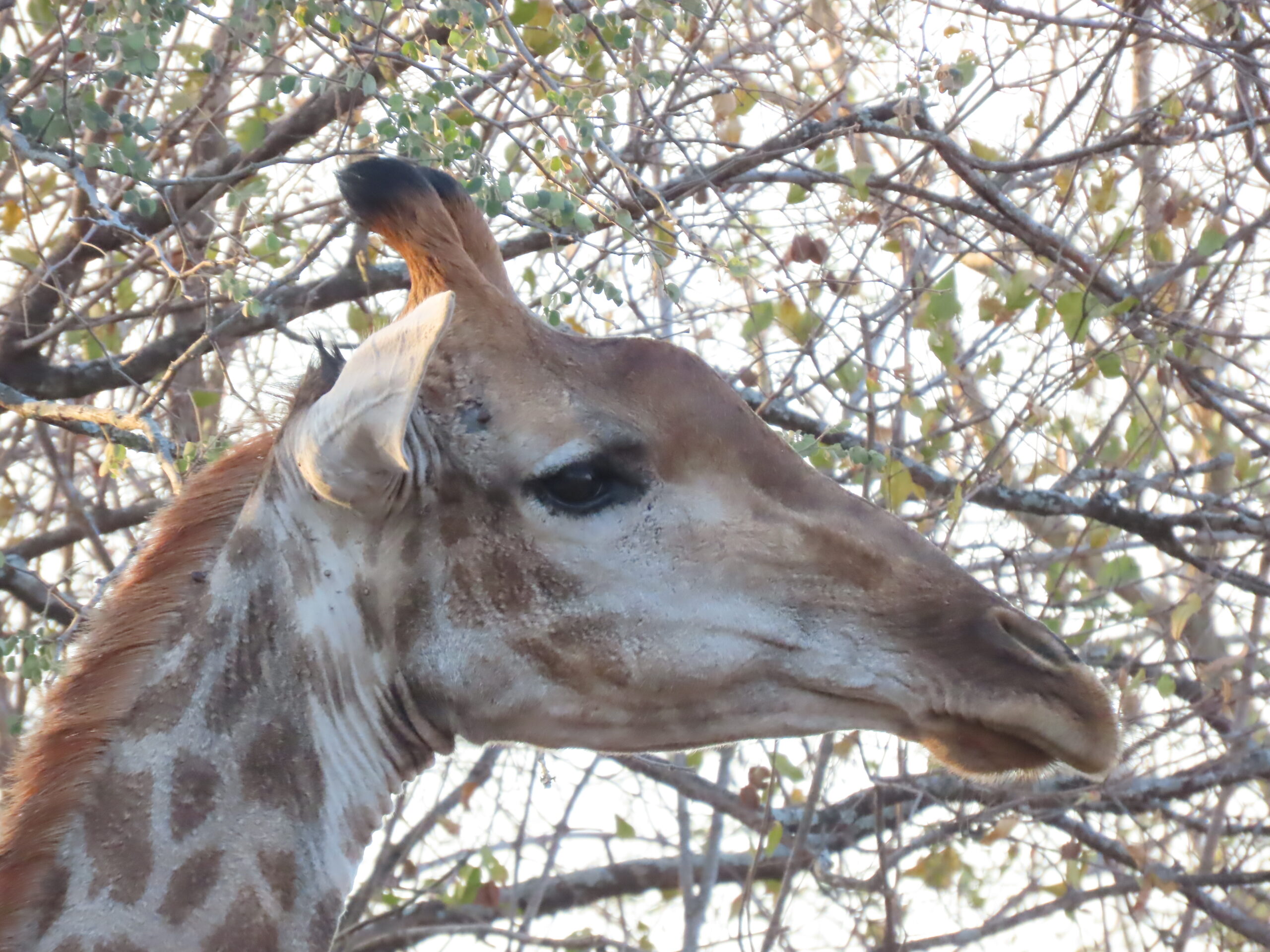
We spotted many giraffes in Kruger.

Thus, Tom and I are hanging out at the house today, doing some work on our laptops and working together to make a lovely dinner when Lisa returns around 5:00 or 6:00 pm. It’s a blissfully rainy day, good for the vegetation and the animals, but not so good for Lisa on her tour. Hopefully, she has a good time.

Be well.

Photo from ten years ago today, April 24, 2015:

View from an obscure overlook we found in Princeville, Kauai. For more photos, please click here.

A world unto its own…Life is good…

We saw over 300 zebras crossing the road while in Kruger.

We hope everyone had a lovely Easter Sunday. We did. Our friend Frits joined us for dinner at our place, and the conversation flowed with ease. I ruined the cheese pie by overbaking the crust in the overly hot oven, especially since I baked it in a metal pan instead of a glass pan. Thus, it was inedible.

The cherry cobbler came out nicely, and Tom and Frits seemed to enjoy it. Of course, our usual homemade keto pizza was a treat for everyone. The evening passed quickly, although we saw few animals in the garden, since all the holidaymakers were still here.

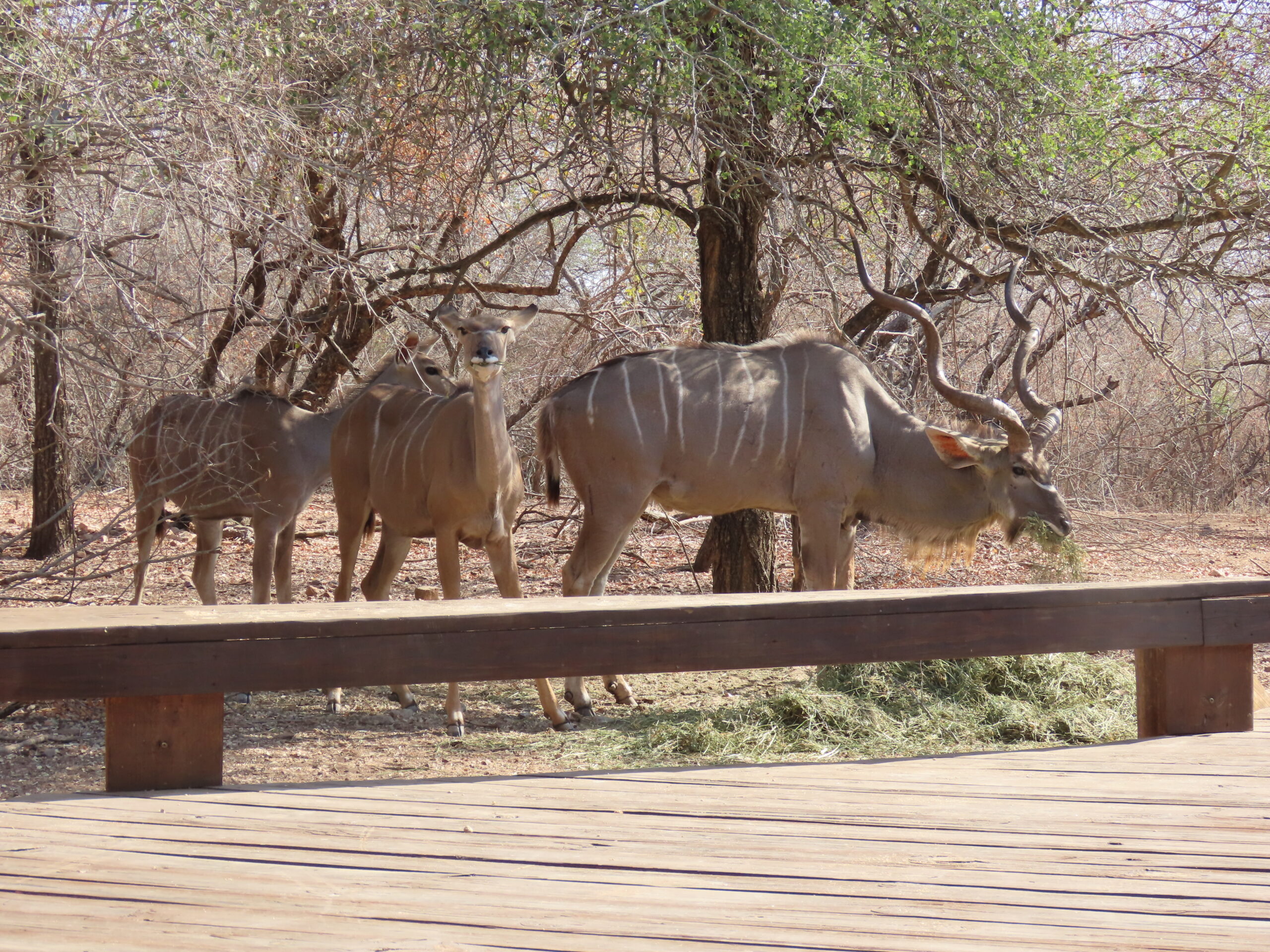
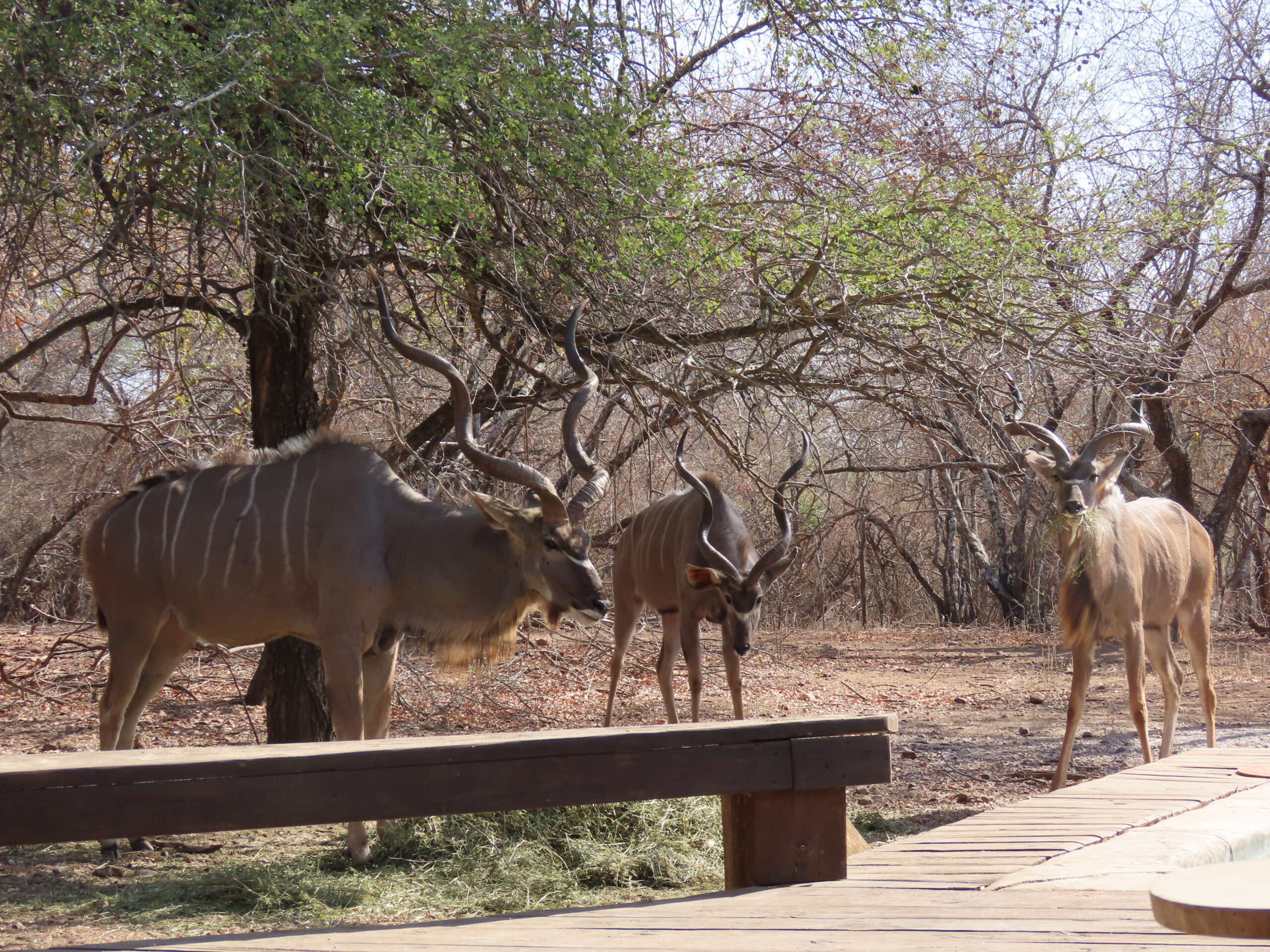
It looks like this will be the case for the remainder of the month, with multiple holidays interrupting the quiet and peaceful state of the bush. There is nothing we can do about it. Instead, the three of us will continue to languish in our time together with animated conversations and occasional distractions by the appearance of a bushbuck or kudu gracing us with their presence.

We couldn’t believe how many zebras crossed the road. We watched them for 30 minutes.

This morning, while I was still in bed, Tom fed the mongoose tidbits of meat left from yesterday’s pizza prep. Most likely, they will appear again before the end of the day.

Frits invited us for a braai at his Marloth Park house next Sunday, located along the Crocodile River. We’ll bring our meat to cook on the open fire. After checking out the chest freezer in our house, I found three New York strip steaks, which we’ll bring to his house along with our favorite Greek salad, which I have been making each time we eat in.

Life is easy here. Although there are occasional power outages, we have an inverter system, which provides us with power and WiFi. Even during load shedding, so far, since we’ve been here, not a single load shedding period has had an impact on us. We often don’t even realize it’s happening.

It felt like a mini-migration, similar to what is seen in Kenya and Tanzania.

The insects and snakes are scarce this time of year, and fortunately, the weather has been cooling by a few degrees each day. Today is a perfect day.. The humidity is only 45%; the dew point is 59°F, and now, at noon, the temperature is a comfortable 83°F, 29 °C.

Life is good. We’re both feeling well and rested and have no apprehension about leaving for Minnesota in 33 days. Packing will be easy since we’re only staying for three weeks. By June 17, we’ll be back in Marloth Park for the remaining 90 days until we depart for Spain.

Load shedding just started. I need to wrap this up in case we lose Wi-Fi, which can happen during load shedding when power to the cell towers is interrupted.

That’s it for today, folks.

Be well.

Photo from ten years ago today, April 21, 2015:

In Kauai, two intertwined white Hibiscus flowers. For more photos, please click here.

Where is Easter observed worldwide?

Happy Easter, Everyone!

People who celebrate Easter around the world are incredibly diverse, but they’re often tied together by a few beautiful common threads: community, tradition, hope, and renewal. Let me paint you a little picture:

  • In Europe, you’ll see grandmothers in Poland carrying baskets of food to be blessed, kids in England chasing chocolate eggs across village greens, and entire towns in Spain solemnly marching in centuries-old processions, wearing traditional robes and carrying statues of saints. Some people are deeply religious, while others enjoy the festivities and the sense of springtime.

  • In Latin America, Easter feels almost like a full-body experience. Streets fill with color, music, and devotion — think families weaving huge palm fronds in Guatemala, or entire neighborhoods in Mexico creating carpets of flowers and colored sawdust for processions to walk over. It’s emotional, joyful, and very communal.

  • In Africa, Easter is often a mix of deep religious observance and vibrant celebration. You’ll find congregations in Nigeria dressed in their absolute best, wearing brightly patterned and embroidered clothing, as they sing and dance in packed churches. In Ethiopia, after weeks of fasting for Lent, families come together to feast and pray, connecting generations.

  • In North America, it’s a blend — you’ll see families getting dressed up for Easter Sunday services, parents hiding colorful eggs in parks, and huge brunch gatherings. Some people focus on the religious meaning, while others see it as a time for family, joy, and the beginning of spring.

  • In Asia, especially in the Philippines, Easter Sunday can feel like a joyful explosion after a long, serious Holy Week — big, outdoor masses at dawn called Salubong celebrate the meeting of the risen Christ and his mother Mary, with singing, dancing, and sometimes fireworks. In other parts of Asia where Christians are a smaller group, Easter is quieter, celebrated mostly within tight-knit communities.

  • In Oceania, Australians and New Zealanders might be off camping for the long Easter weekend, bringing chocolate eggs to the beach, or attending relaxed church services. There’s a laid-back, outdoorsy spirit to the way they celebrate.


At the heart of it, Easter people — no matter where they are — often celebrate lifehope, and new beginnings, whether through sacred rituals or simple, joyful gatherings.

Happy Easter to those who celebrate!

Be well.

Photo from ten years ago today, April 19, 2015:

Formerly, Taylor Camp in Kauai, beyond the second row of trees, is a. dense forest and cliffs that we weren’t about to tackle. For original photos of Taylor Camp, please click here.

Day 8…Kruger National Park…Stunning sighting in Marloth Park last night!…Leopards and lions…

Last night, Honorary Ranger Jaco Minnaar took this leopard photo in Marloth Park.

South Africa’s Easter holiday season begins today with Good Friday and will continue through the end of the month. With so many tourists in Marloth Park, we will see fewer animals in our garden. As we’ve mentioned many times, when the park is packed with tourists, the wildlife scatters to their holiday homes for not-so-good treats.

Interesting rock formation in Kruger.

Hopefully, animals will visit us in the garden during the remainder of the month, allowing us to continue enjoying activities with Lisa for the next 12 days, until she begins her return journey to the US.

Here is an article we came across today from The Citizen newspaper.

Search for Kruger National Park lions continuing into Easter weekend.

By Jarryd Westerdale\

“Lions were spotted outside the Kruger National Park on Sunday, and provincial authorities are continuing the search.

Elephants in the Sabie River.

The search for escaped lions near the Kruger National Park is continuing into the Easter weekend.

Multiple communities bordering the park have reported possible lion sightings after four of the predators were believed to have escaped the park.

Areas near Bushbuckridge and Hazyview have reported lion sightings, and officials say they will continue searching until the park confirms their return.

There were countless elephant sightings in the park.

Dogs are called to assist.

Two lions were initially reported to be on the loose on Sunday, with that number rising to four by Wednesday.

A resident near Belfast sent a grainy snapshot of a lion on a tar road to the Lowvelder on Sunday, prompting the Mpumalanga Tourism and Parks Agency (MTPA) to begin a search.

As of Thursday, MTPA was still searching and had brought in canine reinforcements to assist.

Along the drive, we spotted many giraffes.

“Our team is still on the ground searching for these lions. Today we are searching with dogs. We are confident that we will find the lions if they are still outside the park,” MTPA spokesperson Simphiwe Shungube told The Citizen.

“We advise the community to avoid any confrontation with the lions and to report sightings to the authorities,” he added.

Loss of habitat is a concern.

Loss of habitat and disease are listed as one of the biggest threats to the African lion population, with African Impact warning the animals could go extinct by 2050.

Traffic stop.

“Lions now occupy less than 92% of the land they once did. This loss of habitat has severe consequences. Lions no longer have access to the vast stretches of savanna grasslands they need to find food, viable mating partners, and thrive as a pride,” African Impact states.

This has resulted in increased interaction between lions and communities, while a range of illnesses has affected the lion population.

Our guide explained that elephants brought down this tree. Elephants rub against trees for several reasons, including removing parasites, keeping their tusks sharp, and accessing nutritious bark and roots. They also use rubbing as a form of communication, particularly males during musth, marking their territory with secretions. Additionally, elephants may rub against trees for comfort and to help them fall asleep.

“The spread of feline herpes virus and feline immunodeficiency virus has devastated huge populations due to the low pathogenicity of these diseases,” it said.

May those who observe the Easter Holiday have a blessed Good Friday and Easter Sunday.

Be well.

Photo from ten years ago today, April 18, 2015:

Tom donned a huge leather hand and arm protector and was handed a massive chunk of fresh meat to feed this vulture at the rehabilitation center. It was quite a thrill to get this photo. I love the look on Tom’s face! As their injuries healed, these vultures would soon be returned to the wild. For more photos, please click here.

Day 7…Kruger National Park…Birds in the park with our photos…Exciting experience last night…Thermal Game Drive…

It’s always challenging to photograph a hippo with its mouth open. This was safari luck!

Although we aren’t avid bird watchers, we enjoy seeing some of the many species of birds in Marloth Park and Kruger National Park. We see many interesting species while stopping at Sunset Dam in Lower Sabie.

How Many Types of Birds Are in Kruger National Park?

A Cape Buffalo on the shore of Sunset Dam in Lower Sabie. Also, another yellow-billed stork is standing on the back of a submerged hippo.

When people think of Kruger National Park in South Africa, they often picture lions lounging under acacia trees, herds of elephants crossing dusty roads, or leopards draped over branches. But there’s another world in Kruger that’s lighter, faster, and more colorful — the world of birds.

A spoon-billed stork.

Kruger National Park is home to an astonishing 500 bird species. That’s right—within its 19,485 square kilometers (7,523 square miles), Kruger holds one of the richest bird diversities on the African continent. This vibrant collection of feathered creatures includes everything from massive eagles to tiny sunbirds, offering a full spectrum of colors, shapes, and sounds.

Of those 500 species, about 253 are permanent residents. You can spot these birds year-round, no matter when you visit. The remaining species are either migratory — flying in from Europe, Asia, or other parts of Africa during certain seasons — or nomadic, moving based on the availability of food and water.

Another view of the spoon-billed stork.

The sheer variety is breathtaking. You might see a lilac-breasted roller flashing its iridescent wings as it swoops to catch insects, or a martial eagle surveying the savannah from high above. In the riverine forests, if you’re lucky and very quiet, you might even spot the elusive pel’s fishing owl, a bird so secretive that finding it feels like winning a prize.

More spoon-billed storks.

Among Kruger’s many bird species, a few stand out so much that they’ve earned a special title: the Big Six Birds. Modeled after the famous Big Five mammals (lion, leopard, elephant, rhino, and buffalo), the Big Six Birds include:

  • Lappet-faced vulture: The largest vulture species in Africa, with a wingspan reaching up to 2.9 meters (over 9 feet).

  • Martial eagle: A powerful bird of prey known for its strength and sharp eyesight.

  • Saddle-billed stork: A striking wading bird, unmistakable with its bright red and black bill and towering height.

  • Kori bustard: One of the heaviest flying birds in the world, often seen solemnly striding across open areas.

  • Southern ground hornbill: A large, charismatic bird that spends most of its time walking the ground, foraging for insects and reptiles.

  • Pel’s fishing owl: The mysterious, nocturnal hunter, usually found near large bodies of water.

Black-winged stilt

Each bird species contributes its thread to Kruger’s life fabric. The park’s diverse habitats — from dense riverine forests to open grasslands and thorny bushveld — create countless niches where different birds can thrive. Whether it’s the acrobatic swoop of a bee-eater catching a dragonfly mid-air or the solemn flight of a heron skimming over a dam, every moment feels alive with movement.

An Egyptian goose at Sunset Dam.

Visiting Kruger during the summer months (October to March) can be especially rewarding for birdwatchers. Many migratory species have arrived to breed during this time, and the park pulses with even more energy. Birds wear their brightest breeding plumage, and their calls fill the air from before dawn until long after sunset.

A Cape buffalo with numerous oxpeckers on its hide.

Birdwatching in Kruger isn’t just about spotting species to tick off a list, though many enthusiasts enjoy that aspect. It’s about slowing down and tuning into a world that’s always there but easy to miss. It’s about noticing the tiny weavers meticulously building nests, the stealthy herons poised at the water’s edge, or the flash of a kingfisher darting like a jewel across a river.

In short, Kruger National Park is not just a paradise for the “big” wildlife seekers; it’s equally a treasure trove for bird lovers. With around 500 species filling the skies, trees, rivers, and bushveld, the park offers an endlessly rewarding experience for anyone willing to look a little closer and listen a little longer. Every visit holds the promise of a new feathered friend to discover.

Lots of hippos.

Last night, we went with resident Rodger on his Thermal Game Drive in Marloth Park. Rodger is sending me a few videos of what we saw. Once we receive them, we’ll post the videos and our photos. It was a fascinating experience we’re anxious to share.

Be well.

Photo from ten years ago today, April 17, 2015:

A lone female was stopping for a drink. The edge of the open vehicle is shown in this photo, illustrating how close we were to her. For more photos, please click here.

Day 5…Kruger National Park…We’re back from another game drive…

Last week, we spotted a lion with a Cape buffalo kill on the guided game drive.

Here are some facts about Kruger National Park we’d yet to share:

Kruger National Park is one of Africa’s most iconic and expansive wildlife reserves. Located in northeastern South Africa, it spans the provinces of Limpopo and Mpumalanga and covers nearly 20,000 square kilometers (7,700 square miles)roughly the size of Israel or New Jersey. It’s a major bucket-list destination for nature lovers, safari-goers, photographers, and anyone seeking a wild, immersive experience in the African bush.

With the dense bush, taking photos was tricky.

Highlights of Kruger National Park:

1. The Big Five:
Kruger is one of the best places in the world to see the Big Five—lion, leopard, elephant, rhino, and buffalo—in their natural habitat. Spotting all five in one trip is common if you’re lucky and spend a few days exploring. There are no rhinos in the areas we visit on our safaris. At some point, we’ll drive further north to spot rhinos in a protected area to avoid poachers.

A “parade” of elephants crosses the paved road.

2. Biodiversity:
The park is home to an astonishing diversity of life:

  • 500+ bird species

  • 140+ mammal species

  • 100+ reptile species

  • Countless plant and tree varieties

3. Self-Drive Safaris:
Unlike many other parks in Africa, Kruger is self-drive-friendly. You can rent a car, grab a map, and set out on your game drive. It’s safe, relatively easy, and gives you total freedom over your safari adventure. We make a point of embarking on a self-drive in Kruger once a week. We prefer self-drive to guided safaris since we can tour at our own pace. We often arrange a guided safari for the extra experience when guests visit.

It’s always exciting to see elephants cross a road.

4. Accommodations for All Budgets:
From luxury lodges like Singita and Royal Malewane to SANParks rest camps (like Skukuza, Satara, and Lower Sabie), there’s something for every budget and travel style. Many rest camps even have shops, restaurants, and guided game drives. Since we have such a lovely holiday home in Marloth Park, we don’t see a reason to pay for the rest of the accommodations in Kruger.

The females always protect the calves.

5. Night and Guided Walk Safaris:
Beyond daytime game drives, Kruger also offers night safaris and guided bush walks—incredible ways to see nocturnal wildlife and learn about smaller animals, insects, and plants you’d probably miss otherwise. We are going on a Thermal Night Drive in Marloth Park tomorrow night.

A lone elephant, perhaps searching for the family.

6. Nearby Attractions:
While Kruger could easily fill a trip, it’s also close to scenic areas like the Panorama Route, featuring Blyde River Canyon, God’s Window, and Bourke’s Luck Potholes, all of which we previously visited.

We must keep our distance from large male bulls who can easily charge a vehicle and tip it over.

The three of us are going to Quiz Night at Giraffe Pub and Grill tonight. At 5:30, friends Kathy and Don, her sister Connie, and Don’s cousin Sandra will join us for dinner and to play the game. It should be extra fun with our friends.

Have a fantastic Tuesday!

Be well.

Photos from ten years ago today, April 15, 2015:

In Kauai, the sun is waning on a less cloudy evening. For more photos, please click here.

Lucerne Day in the bush…

We laughed all day at their stuffed mouths as they devoured the lucerne.

It was a fantastic day as the three of us were mesmerized by the steady stream of wildlife coming to partake in the treat we provided. Daisy’s Den delivered two bags of pellets and the lucerne yesterday morning. A bale of hay costs ZAR 265, US $13.85, delivered, and was well worth the day’s enjoyment for each of us.

The wildlife visited all day to dig into the lucerne (hay) we had delivered by Daisy’s Den.

Of course, while Lisa is still here and thereafter, we will continue to buy the hay for the days we don’t have much to do and plan to stay at the house most of the day. The excitement of the lucerne seems to last only for a day when it’s first delivered. From there, the volume of the spread-out hay diminishes by the hour as wildlife breaks down the volume in the pile.

Zoom in to see a piglet lying down and eating.

After a full day of sitting on the veranda, by 4:45 pm, we were freshened up and ready to head to Jabula for our 5:00 pm reservations at the Cheers-like bar for drinks, food, and an endless stream of guests, some we knew and some we were yet to meet.

It was fun to see Lisa having such a good time. It’s been easy having her here. She’s a delightful house guest who is easygoing without annoying quirks and possesses a passion for everything she sees and everything we do. Her lovely personality has made meeting our friends and others delightful for them and her.

Even Bossy was in on the action.

It will be disappointing to see her go in 2½ weeks. As always, we’ll return to our usual routine of entertaining ourselves as we revel in the special aspect of living in Marloth Park, close to Kruger National Park and the entertainment resources nearby.

Last night, Jabula was another fun fest, as usual. The lively and animated conversation swirled around at the bar as we enjoyed our drinks and, eventually, our dinner while chatting with others surrounding us.

Norman was having a good time eating the lucerne. All the animals got along in the pile of hay.

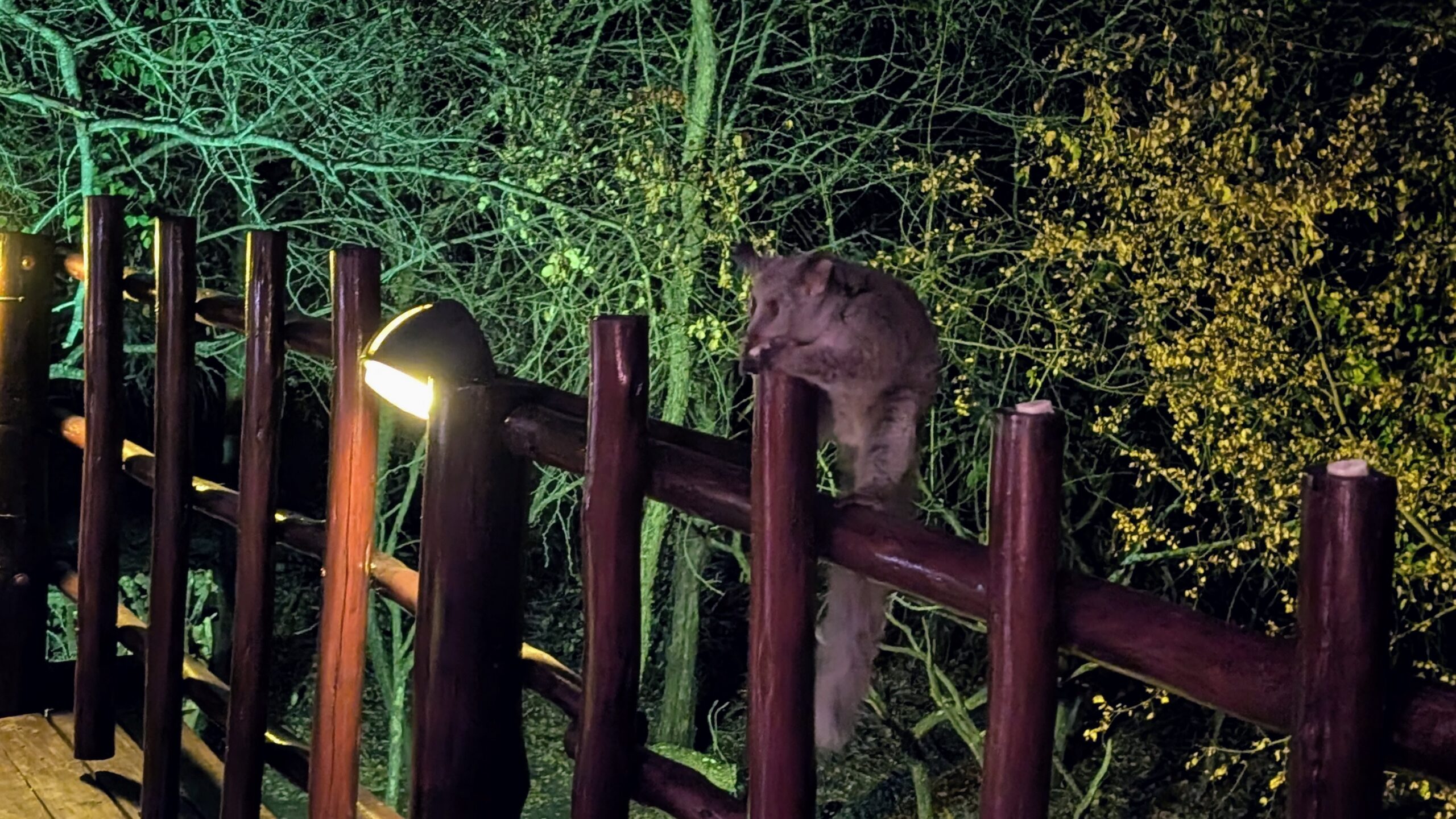
Once we returned to the house around 9:00 pm, we all sat outside on the veranda, thoroughly entertained by a thick-tailed bushbaby making sounds we’d never heard in the past. We used a spotlight to see it in a tree and wondered why it was making so much noise.

When we wandered to bed after 10:00 pm, the bushbaby was still screeching while we wondered what it was all about. About 20 minutes after we went to bed, the noise stopped, and we could get to sleep.

Norman, Nina, and some of their kids and grandkids joined in.

It’s been a busy morning with many visitors stopping by. As soon as I upload today’s post, we’ll head to Komatipoort for grocery shopping. Leon is coming for dinner tonight, arriving around 3:00 pm today.

Have a great Sunday. We may not post tomorrow since we are going to Kruger National Park in the morning.

Be well.

Photo from ten years ago today, April 13, 2015:

In Kauai, check out the clouds in the mountains. For more photos, please click here.

Day 4, Kruger National Park…Guided game drive…Another fantastic evening at Jabula…

“What the heck? I’m standing on a hippo!” says the yellow-billed stork, “I thought it was a rock.”

This morning, Daisy’s Den delivered two bags of game pellets and a bale of lucerne:

“Lucerne, also known as alfalfa, is a perennial flowering plant belonging to the legume family (Fabaceae). It’s a highly nutritious forage crop used to feed livestock and is also known for improving soil fertility by fixing nitrogen in the soil.”

The animals are gathered around the broken-down bale and having the time of their lives. They are all getting along well and enjoying chomping. Tomorrow, we’ll share some photos we’ve taken today of their hilarious antics while eating the lucerne.

We’d planned to go to Komatipoort to buy a few groceries, but now that the lucerne was here, we didn’t want to leave and miss the opportunity to see the animals gathering around the bale. It’s such fun to watch them devour this great source of nutrition.

The yellow-billed stork seemed content, standing on the back of the hippo.

Norman just arrived, but Big Daddy is busy at the bale, and Norman gets all fluffed up to illustrate his dominance. Tom gets the squirt gun and sends Big Daddy away since he’s had plenty to eat. Now Nina and the kids and grandkids are here, and they are making their way toward the bale. Hopefully, the entire family will have an opportunity to dine together.

Four warthogs arrived and are also working in the bale. It’s been quite an eventful day in the garden, and we couldn’t be more thrilled to share this excitement with Lisa.

Leader of the troop of the baboons.

Speaking of sharing the excitement with Lisa last evening, we had a spectacular time at Jabula. We hung out with Leon, Fritz, and other people we knew and met some new people. The evening was festive and entertaining, with lively music on their sound system and YouTube videos accompanying the songs on the TV monitor.

The evening was perfect. The food was exceptional, as always, and the staff and manager, Corrine, provided excellent service. Dawn had gone to Joburg to visit her daughters.

This marula tree was eaten on the underside by giraffes.

Yesterday morning, we headed to Kathy and Don’s house to visit and drop off a bag of pellets for them. It was delightful seeing them, their sister Connie, and their cousin Sandra. On Tuesday night, they’ll join us for dinner and Quiz Night at Giraffe for our new team, Smarty Pants. That should be fun!

A lone elephant grazing on vegetation. Elephants can eat a significant amount, typically between 150 and 300 kilograms (330 to 660 pounds) of food daily. They may spend up to 16 hours a day eating, and their diet consists of various vegetation like grasses, plants, bushes, fruit, twigs, tree bark, and roots.

Today is a lazy day; tonight, we’ll head back to Jabula for dinner again. We have a busy week ahead and look forward to another excellent week.

Be well.

Photo from ten years ago today, April 12, 2015:

The Jackfruit is known for its health benefits. See this link for nutritional details. For more photos, please click here.