Armchair world travel…A fantastic series that brings travel to life…

This enjoyable travel show reminds us of places we’ve visited. It can be streamed on several streaming services, including Hulu, Disney, ABC (regular TV), and National Geographic.

Lately, we’ve been watching episodes of “Gordon Ramsey Uncharted,” a fantastic series as Gordon travels the world to experience and participate in culture and its impact on food indigenous to the area/country. Much to our delight, we’ve been to seven of the first ten episodes we watched as a new country is highlighted on each episode.

Gordon Ramsay: Uncharted – A Culinary Adventure Across Continents

Food has a magical way of connecting us, not just to our daily sustenance, but to unfamiliar places, people, and cultures. Gordon Ramsay, a Michelin-star chef famous for his fiery temper and unparalleled culinary skills, takes this connection to a new level in his Uncharted series. In this National Geographic series, Ramsay steps outside the familiar kitchens, restaurants, and high-pressure cooking competitions to explore the world’s vast, rugged, and sometimes harsh landscapes. But Uncharted isn’t just about food – it’s about discovery, humility, and respect for the traditions that shape a region’s cuisine. Ramsay’s adventurous journey serves as a reminder that the roots of culinary mastery often lie in understanding the land and its people.

A New Side of Gordon Ramsay

For those familiar with Ramsay’s reputation as a relentless perfectionist on shows like Hell’s Kitchen or MasterChef, Uncharted might be a refreshing surprise. While his sharp wit and no-nonsense demeanor are still very much present, this series shows another side of him: one that is open, curious, and humbled by the sheer breadth of knowledge held by the people he encounters.

In each episode, Ramsay travels to a remote part of the world, far removed from the Michelin-starred kitchens where he’s made his name. He works with local chefs, farmers, and food experts to learn the culinary traditions and ingredients specific to the region. From the mountains of Peru to the jungles of Laos, Ramsay isn’t just tasting the food – he’s diving headfirst into the culture that creates it. Whether catching his own fish in freezing waters or hiking to harvest wild herbs, Ramsay experiences food from the source. And that’s the beauty of Uncharted: it’s not about gourmet cuisine in fancy restaurants; it’s about food in its raw, authentic form.

Learning Through Immersion

What makes Uncharted stand out from other travel or food shows is Ramsay’s full-bodied approach to learning. Instead of being a passive observer, he fully immerses himself in each environment, embracing every challenge that comes his way – and there are many. The physical, emotional, or culinary challenges push him to his limits. We see Ramsay scaling mountains, navigating through swamps, hunting for his dinner, and enduring cold waters, all in pursuit of understanding local traditions and practices.

In one episode, he travels to Peru’s Sacred Valley, where he learns the intricacies of traditional Andean cooking and participates in the arduous work of gathering ingredients in such a challenging environment. Watching Ramsay, a man who has spent most of his life in high-end kitchens, bend down to pull potatoes from the ground or forage for herbs high in the Andes gives the viewer a profound sense of the labor that goes into food production in these regions.

Each episode follows a similar structure: Ramsay explores a new region, learns about the local cuisine and ingredients, and ultimately participates in a cook-off against a local chef. But this isn’t a competitive showdown like in his other series. Instead, it feels more like an exchange of respect, where Ramsay takes on the role of a student, honoring the traditions he encounters while bringing his own expertise to the table.

Food as a Cultural Gateway

Throughout Uncharted, one of the central themes is food as a gateway to culture. Ramsay often remarks on how each dish tells a story, not just of the ingredients used but of the land and people who cultivate them. In many ways, food becomes the vehicle through which Ramsay and viewers can better understand a region’s history, challenges, and triumphs.

For instance, in New Zealand, Ramsay learns the significance of the Māori hangi – a traditional cooking method in an earth oven. What might seem like a simple cooking technique to an outsider is steeped in cultural and spiritual significance. The hangi isn’t just about preparing a meal; it’s about community, about honoring the land and its bounty. By immersing himself in this tradition, Ramsay comes away with a deeper understanding of Māori culture, something that transcends the food itself.

Similarly, in Laos, Ramsay learns about the significance of rice to the Laotian people. More than just a staple food, rice has cultural, religious, and economic importance. Ramsay, who has likely cooked with rice countless times, has a new perspective on this humble grain after seeing how much it means to the people who cultivate it.

Humility in the Face of Tradition

One of the most captivating elements of Uncharted is seeing Ramsay – who often exudes an air of authority and expertise in the kitchen – humbled by the depth of knowledge possessed by the people he meets. In each episode, there are moments where he’s clearly out of his element, whether it’s trying to navigate a new terrain or working with unfamiliar ingredients. But instead of letting his ego take over, Ramsay approaches these moments with humility and a genuine desire to learn.

In Alaska, for example, local experts teach Ramsay how to hunt for wild game. Despite being an experienced chef, he struggles to adapt to the harsh conditions and physical demands of hunting. This is a reminder that no matter how much one knows about cooking, there’s always more to learn, especially when it comes to understanding the origins of food.

This sense of humility is a recurring theme in Uncharted. Whether he’s learning from indigenous tribes in Morocco or from farmers in Tasmania, Ramsay approaches each new experience with an open mind. He acknowledges that the knowledge these communities have, passed down through generations, cannot be learned in a kitchen or from a cookbook. It’s lived experience, and Ramsay shows a deep respect for that.

Conclusion: A Journey Beyond the Plate

Uncharted is more than just a food show. It’s a journey that transcends the plate, bringing viewers closer to the heart of different cultures, environments, and people. Ramsay’s adventures, full of grit, discovery, and, at times, vulnerability, remind us of the vastness of the world and the many ways in which food can tell a story.

For Ramsay, Uncharted has been a learning experience as much as an adventure. The show highlights not just his passion for food but also his growing appreciation for the cultural contexts that shape culinary traditions. Viewers come away from each episode not just entertained but with a richer understanding of how deeply food is intertwined with the land and the people who nurture it.

Ultimately, Uncharted is a love letter to the world’s most remote culinary traditions. Through his journey, Ramsay shows us that to truly appreciate food, one must understand where it comes from and the people who make it possible. In doing so, Uncharted reminds us that there’s always something new to learn, even for the most seasoned chefs.

Of course, we don’t assume we’re “seasoned chefs.” Still, we have had the divine opportunity to experience some of the ingredients mentioned in each episode, utilizing them to the best of our ability and expertise. With Tom’s picky tastebuds and my dietary restrictions, I’ve avoided cooking with many of the more exotic ingredients.

As we’ve traveled the world, a considerable aspect of our enjoyment has been learning about how people grow and harvest their native ingredients, as illustrated in many past posts. However, after watching “Uncharted” we are presented with a new perspective that surely will impact our interests when we begin to travel once again.

We highly recommend watching this series even if you aren’t a “foodie.” Once again, Gordon Ramsey and National Geographic present an interesting series with much more to glean.

Be well.

Photo from ten years ago today, October 17, 2014:

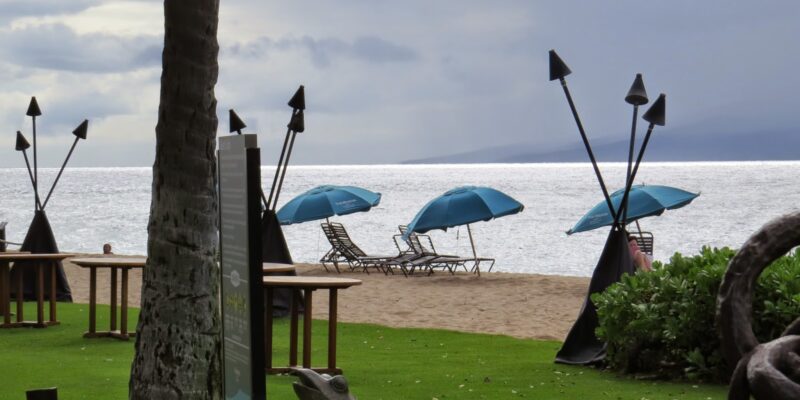
Tom walked toward our private beach near the breakwaters in Maui, Hawaii. For more photos, please click here.

Waiting for change…Not always easy…

The pretty scene in Maui, Hawaii, in 2014.

We experienced a glitch yesterday, and our post didn’t appear. Here it is today!

As we’ve traveled the world over these past 12 years (as of October 31), we’ve been entirely in control of where we are and what we’re doing. During these past many months, while we waited for appointments at the Cleveland Clinic, we have been subject to the desire for answers regarding my heart health and a plan for the future.

No, I don’t need imminent open heart surgery, for which I am incredibly grateful, after three previous misdiagnoses by cardiologists in three countries, including the US. There’s no doubt I have ongoing heart issues, not so much my heart itself but my irregular plumbing and electrical systems.

My mitral and tricuspid valves are regurgitating but not at a pace that requires surgery right now. One of my past bypasses has failed, and my arteries are clogged again by about 60%. The severity of these situations could change in a short period. I’ll need to be tested yearly.

There’s not much that can be done in either case at this time, although we’re waiting on test results to see if I need other heart procedures in the months to come. We will know when I receive the results from the recent two-week monitor I wore.

If a cardiac ablation isn’t necessary, we can leave here after all the tests are completed in December. If not, we must stay until February, when the procedure will be done. In any case, we’ll be here for at least two more months, four months at the most. We both have accepted this reality.

As we have written many times in the past, with almost 4500 posts since March 2012, the only situation that would slow us down is health. I’ve often used the words “health providing” to express our acceptance that such a scenario is inevitable. And now, over this past year, when the awful Afib escalated while we were in Ecuador, we knew the time had come to stop for a while. (The Afib and PVCs started the day I was diagnosed with COVID-19 on April 20, 2023)

No, it doesn’t mean ending our travels. However, it has meant a break in time for me to sign up for a Medicare supplement with a comprehensive plan to cover the extensive costs of determining the extent of my heart disease and discovering the results with necessary treatment. We’re almost there.

Since I don’t want to be taking a dozen different heart drugs, which doctors at Cleveland Clinic have not recommended, my options are limited. I refuse to be subject to side effects causing lethargy, exhaustion, and muscle pain. Quality of life is more important to me in the long run.

Based on a healthy diet, an attempt at a stringent exercise program, a loving “home,” a positive attitude, and an overall healthy lifestyle, the odds may be in my favor, as opposed to taking countless medications that will ultimately immobilize me.

We plan to carry on. We plan to continue traveling the world when the doctors working on my case give us “the good to go.” Regardless of the test results, I doubt they’ll say we should stop traveling. They know how important this is to both of us and how it is the essence of who we are as a couple and as individuals.

Such an essential part of our lives has been the opportunity to write to all of you each day, sharing our story, whether filled with adventure or somewhat mundane in quiet times such as now. Each morning, when I pick up my laptop to begin, I question if I have something to say. But then, I think of all of you and the love and support you’ve continually provided over the years, and if, by magic, my fingers fly across the keyboard, hoping something we have to say rings true, if only for one of you.

We thank you from the bottom of our hearts for this precious gift and opportunity.

Be well.

Photo from ten years ago today, October 16, 2014:

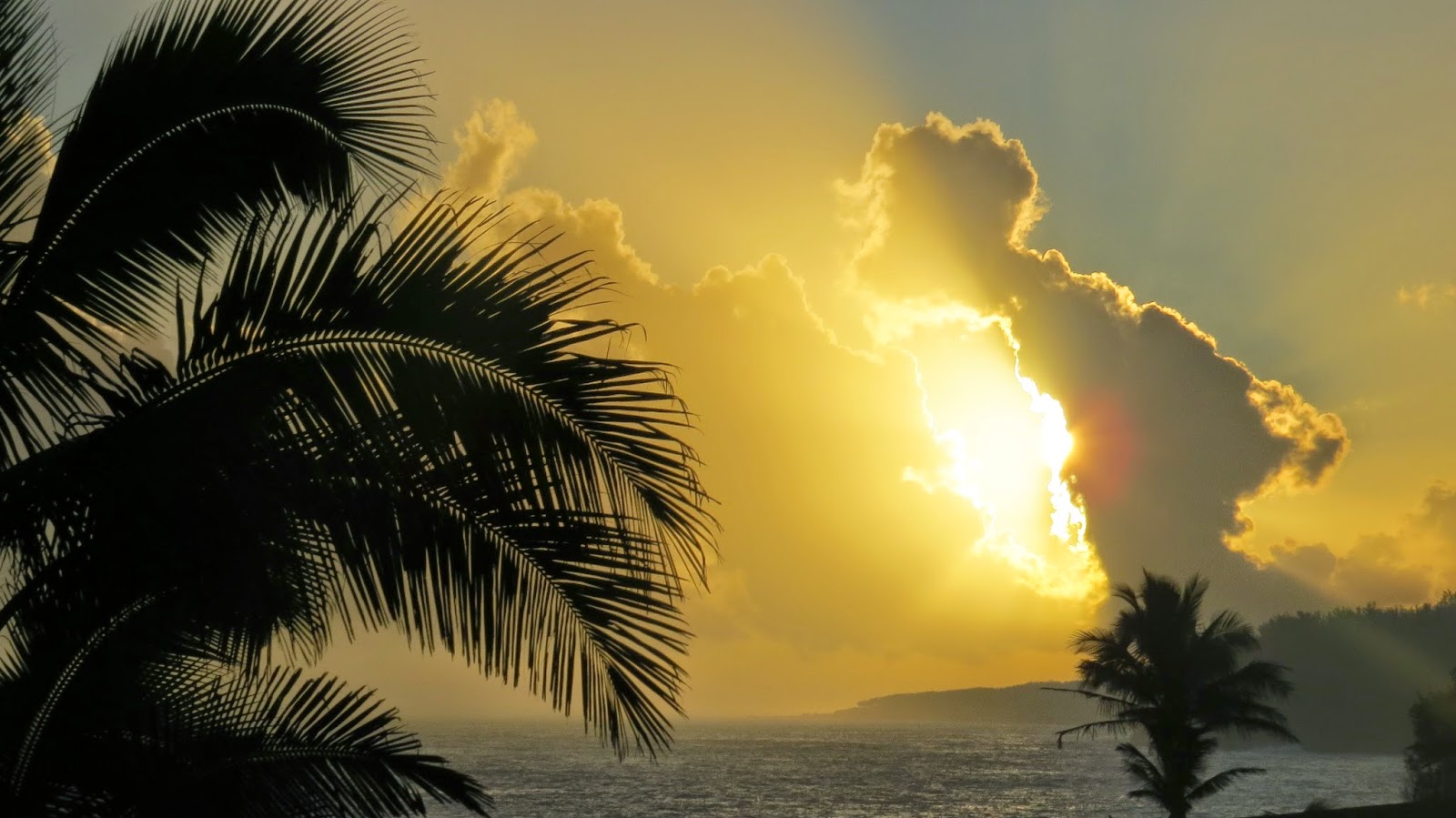
Sunset over the Pacific Ocean in Hawaii. For more photos, please click here.

Most exciting countries to visit at Christmastime…

Cold coconuts for sale in Oahu.

Yesterday, we wrote about getting reasonable prices for travel during the holiday season. Today, we suggest some of the most fascinating places to visit during the holiday season. We’ve been to six of the following locations, but writing this today inspires us to visit some of the others when we travel during the holidays in the future.

The best countries to visit for Christmas offer a mix of enchanting traditions, festive atmospheres, and winter wonderlands. Depending on whether you’re seeking snow-covered landscapes or a more tropical Christmas, here are some top destinations that stand out during the holiday season:

1. GermanyMagical Christmas Markets

Germany is known for its Christmas markets (Weihnachtsmärkte), an absolute must-see. Cities like Nuremberg, Dresden, and Cologne transform into festive wonderlands with market stalls selling mulled wine, gingerbread, and handmade crafts. The atmosphere is warm despite the cold, with sparkling lights and carols filling the air.

  • Highlights: Nuremberg Christkindlesmarkt, Berlin’s Christmas Markets, charming small towns like Rothenburg ob der Tauber.
  • Vibe: Traditional, cozy, nostalgic.

2. AustriaSnowy Splendor and Classical Music

Austria’s alpine villages are perfect for a fairytale Christmas. The city of Vienna sparkles with lights, and you can enjoy classical concerts featuring Christmas compositions. The mountain towns, like Innsbruck or Salzburg, offer snow-capped peaks, making them perfect for skiing enthusiasts.

  • Highlights: Vienna’s Rathausplatz market, Salzburg’s Silent Night Chapel, ice skating, and opera.
  • Vibe: Elegant, serene, and snowy.

3. FinlandHome of Santa Claus

If you want to visit Santa’s actual home, head to Rovaniemi in Finnish Lapland. You can meet Santa, ride in a reindeer-drawn sleigh, and watch the Northern Lights. The snow-covered forests and the remote wilderness make for a truly magical Christmas.

  • Highlights: Santa Claus Village, husky sledding, staying in a glass igloo under the auroras.
  • Vibe: Mystical, remote, childlike wonder.

4. IcelandNature’s Winter Wonderland

While Iceland doesn’t have as many traditional Christmas markets, it offers stunning winter landscapes like waterfalls turned into ice sculptures and the Blue Lagoon under snowflakes. Reykjavik’s Christmas lights and the country’s folklore, with 13 mischievous Yule Lads, bring a different kind of magic.

  • Highlights: Northern Lights, Golden Circle tours, Christmas Yule Lads.
  • Vibe: Rugged, mystical, untouched.

5. USABig Cities or Mountain Escapes

The U.S. offers a diverse range of Christmas experiences. For those who love city lights and window displays, New York City’s Rockefeller Christmas tree, ice skating in Central Park, and extravagant store displays is iconic. If you prefer a more rustic and snowy experience, towns like Aspen, Colorado, or Jackson Hole, Wyoming, are beautiful for a cozy Christmas in the mountains.

  • Highlights: NYC holiday lights, ski resorts in Colorado, small-town Christmas in New England.
  • Vibe: Grand, festive, variety.

6. JapanA Unique Twist on Christmas

Christmas in Japan has a different flavor, as it’s not a traditional holiday. However, cities like Tokyo go all out with light displays, festive cakes, and KFC, which is oddly a Christmas tradition. You won’t find the same religious or family-focused atmosphere, but the illuminations are stunning.

  • Highlights: Tokyo’s light displays, Christmas cake, shopping in Ginza.
  • Vibe: Modern, sparkling, quirky.

7. MexicoColorful and Joyful Celebrations

Mexico offers vibrant and culturally rich Christmas traditions. Known for Las Posadas, a reenactment of Mary and Joseph’s journey, the celebrations include piñatas, music, and feasts. In cities like Mexico City and Oaxaca, the streets come alive with lights and local markets.

  • Highlights: Las Posadas, Nochebuena festivities, fireworks.
  • Vibe: Festive, lively, community-focused.

8. SwitzerlandCharming Alpine Christmas

Switzerland’s alpine scenery, with its pristine snow, makes for a postcard-perfect Christmas. Cities like Lucerne and Zurich have traditional Christmas markets, while ski resorts like Zermatt offer breathtaking views of the Swiss Alps. You can also indulge in Swiss chocolates and fondue after a day on the slopes.

  • Highlights: Skiing in the Alps, Christmas markets, cozy mountain chalets.
  • Vibe: Serene, luxurious, wintry.

9. ItalyReligious and Cultural Celebrations

Christmas in Italy is deeply rooted in religious tradition, with Rome being a popular destination for attending the Pope’s Christmas Eve Mass. The nativity scenes are a big deal nationwide, especially in towns like Naples, known for its handcrafted figures. Coastal towns like Sorrento offer a warmer holiday vibe, with twinkling lights and festive parades.

  • Highlights: Vatican Mass, nativity scenes, Christmas feasts (Feast of the Seven Fishes).
  • Vibe: Sacred, family-centered, warm and festive.

10. New ZealandA Summer Christmas

If you’re looking to escape the cold, New Zealand offers a summer Christmas where you can celebrate on the beach. Towns are decked with decorations, but the warmth invites barbecues and outdoor picnics. Auckland and Wellington are great for Christmas lights and events, while the countryside’s natural beauty offers a peaceful retreat.

  • Highlights: Christmas barbecues, beach celebrations, summer festivities.
  • Vibe: Relaxed, sunny, refreshing.

Emotional Experience

Wherever you go, Christmas travels bring a unique sense of wonder and nostalgia. Whether you’re seeking snowy landscapes to inspire coziness and togetherness or vibrant cultural celebrations, the season can connect you with local traditions, your loved ones, and even your inner child.

Be well.

Photo from ten years ago today, October 14, 2014:

Tom took this photo of the USS Missouri from the launch on his way to World War II Valor in the Pacific National Monument. For more photos, please click here.

Are you planning to travel during the upcoming holiday season?…Best pricing opportunities…

On Christmas Day, after being in lockdown in a hotel room in Mumbai, India, for ten months and unable to leave the fourth floor, the staff said we could come down to the lobby to see the Christmas tree. It was quite a joy!

No, we won’t be traveling this holiday season as we have many times over the years. It wasn’t that we preferred to travel near or on holidays, but we often found flights that were more affordable on actual holiday dates than at other times. We’ve been on cruises and flights at Christmastime, as mentioned below in the “ten years ago photo” in 2020 during the lockdown in Mumbai, India.

We’d have loved to travel on Christmas Day while stuck in India, but the international airport was closed. We could not leave the country until well into January 2021, when it finally reopened, after which we were on our way to South Africa.

However, during many other holiday seasons in the past 12 years of our world travel, we traveled after finding excellent pricing for flights and cruises to travel on Thanksgiving Day, Christmas Eve, Christmas Day, and New Year’s Eve and Day.

Family gatherings often motivate travelers to arrive at their preferred locations on time to attend specific planned holiday events. If a traveler can arrange a same-day arrival based on the time their flight lands, they can save hundreds of dollars. For many, paying premium prices for ideal dates is worth the added expense.

Arriving ” the same day” is usually more economical for those on a travel budget. Of course, there’s the risk of delayed or late flights, which one must consider. Since we’ve traditionally been traveling from one country we’re visiting to another, not necessarily to the US for a holiday, it’s not a big deal, except for the inconvenience.

From Travel and Leisure magazine:

“Avoid Flying on These Days During the 2024 Holiday Season to Save on Airfare

Travel app Going says travelers should avoid flying on the Tuesday or Wednesday before Thanksgiving and on the Sunday and Monday before Christmas.

By Aliison Fox

It’s shaping up to be a busy — and expensive — holiday travel season, and some days over Thanksgiving, Christmas, and New Year’s will be pricier than others.

Travelers hoping to save should avoid flying on the Tuesday or Wednesday before Thanksgiving and on the Sunday and Monday before Christmastravel app Going shared with Travel + Leisure. The Sunday after Thanksgiving tends to be the busiest travel day of the year.

Instead, travelers should consider flying on the actual holidays (Christmas Eve or Christmas Day, for example), which could save them up to 25 percent off the overall ticket cost, according to Going.

“Overall, flight prices coming out of summer are the lowest we’ve seen in years,” Scott Keyes, the founder and chief flight expert at Going, said in a statement shared with T+L. “This holiday season, Going members can save anywhere from 40 percent to 90 percent on flights, provided they have the right tools. It’s important to understand cheap flights as a matter of probabilities. Each day presents a certain likelihood that a great deal may arise.”

Regarding New Year’s, returning on Dec. 31 will save travelers money, compared to flying on Jan. 1 — and airports will also be less crowded.

The advice comes as travelers are expected to spend more on holiday travel this year and as crunch time to book flights quickly approaches. Those planning to fly over Thanksgiving or Christmas should book no later than Oct. 14.

Keyes recommended travelers book at least 21 days in advance and said they shouldn’t wait. Instead, he said they should book the following “reasonable” fare they find and monitor prices to see if they go down, taking advantage of many airlines’ no-change fee policies if they do.

For those who don’t mind spending Thanksgiving abroad, Keyes said it’s a great time to save on an international trip due to the significant increase in domestic travel for Turkey Day.”

Photo from ten years ago today, October 13, 2014:

Before taking this shot, we waited for this sailboat to cross this sunset in Waikiki Beach. For more photos, please click here.

The comedy of errors…

There was a juice truck in Waikiki, Ohua, Hawaii. We didn’t order any because we don’t drink juice due to its high sugar content.

“The Comedy of Errors is one of William Shakespeare‘s early plays. It is his shortest and one of his most farcical comedies, with a significant part of the humor coming from slapstick and mistaken identity, in addition to puns and wordplay. It has been adapted for opera, stage, screen, and musical theatre numerous times worldwide. In the centuries following its premiere, the play’s title has entered the popular English lexicon as an idiom for “an event or series of events made ridiculous by the number of errors that were made throughout.”

Yesterday, we encountered two significant errors that impacted our day.

First, I had an appointment at 10:25 at a Cleveland Clinic facility not located on the main campus of the Cleveland Clinic. With the printed appointment in hand with the address, I gave it to the driver of the hotel’s shuttle. He punched in the address, as I had done on Maps, and it indicated the location was less than two miles away. No big deal, we thought.

Following the turn-by-turn instructions on Maps, we ended up at a location with no indication of where we were supposed to be. When we realized we weren’t at the correct location, the driver and I typed in the clinic’s name to discover it was 25 minutes from our current location. I called the clinic to tell them we’d be late or to reschedule our appointment.

Realizing we’d never make it on time since the hotel driver wasn’t allowed to drive that far from the hotel, we had him take us back to the hotel. By the time we returned, there was no way we would arrive on time for the 10:25 appointment. I was still on hold with the appointment desk at the distant location. It was already 10:20.

We’d have to call an Uber, and most likely, we wouldn’t arrive at the proper location for another 40 minutes, totally missing the appointment.

I stayed on hold for one hour, and no one answered the call. Later in the day, I tried calling again to apologize for missing the appointment, but I was on hold for so long that I gave up. I decided to arrange another appointment with a nephrologist at the nearby Cleveland Clinic main campus. After all, we’d be here until at least the end of February, plenty of time to get an appointment.

The second error was I couldn’t find my wallet, which I’d been leaving on the small dining table. We scrambled to find my wallet before heading out the door to the “missed” appointment. It contained my medical cards, driver’s licenses, credit cards, and much more. When we scoured every area we could, we had to give up trying and head out the door for the “missed appointment.”

Of course, I panicked, wondering where my wallet was the entire time we were gone. We both scrambled when we returned to the hotel, looking everywhere in our spacious hotel suite. I don’t usually misplace or lose items. My memory is excellent. We knew we hadn’t been out and about anywhere I would have dropped it, nor did we suspect housekeeping of taking it.

We are always here when they come to clean, except for Fridays when they do the deep cleaning. On those days, I attached my phone case to the back of the wallet, which was conjoined by a strong magnet. See the photo below from Amazon, where I purchased this nifty set. Here’s the Amazon link to this item.

When staying in, I only use the phone and its protective case since it’s too bulky to carry the entire thing for the use of the phone only. When heading out, I reattach, via the magnet, the wallet to the phone, and then I have all my cards, etc, with me. The only drawback is the powerful magnet going through security at checkpoints and the magnet picking up any metal items in its path. Nonetheless, since this is also RFID, protecting me from illicit scanning by thieves, it’s worth the few inconveniences.

Well, here’s the shocking discovery about where Tom found the wallet section: IT WAS IN THE OVEN!!!

How in the world would my wallet end up in the oven? Here’s how…

Several days ago, when preparing the chicken pot pies, I took the broiler pan out of the oven (which we stored there to be out of the way) to avoid heating it when I didn’t need to use it. I placed the broiler pan on the table to get it out of the way since the tiny kitchen has very little counter space. When I did this, unbeknownst to me, I placed the pan on top of the wallet’s magnet when it was face-down on the table.

The magnet attached to the bottom of the broiler pan stayed there after I returned the pan to the oven after it cooled down. Yesterday, when we were in a frenzy trying to find my wallet, Tom had the foresight to open the oven door, where he noticed the broiler pan was askew. He picked up the pan, turned it over, and there was my wallet.

Here’s the photo below:

We were aghast. Only Tom, with his extraordinary “attention to detail,” would have thought to look in the oven! It’s a good thing that we didn’t turn on the oven and cook/melt everything in my wallet. Then again, I never warm the oven without taking out the broiler pan first, even if we’re going to broil something, since I avoid handling the hot pan any more than necessary.

Go figure. What a fluke! I’ll never let that happen again!

So, that was our day. Today, we settled back into another pleasant day, listening to podcasts, prepping for dinner, and enjoying each other’s company. Have a lovely weekend.

Be well.

Photo from ten years ago today, October 12, 2014:

October 8, 2014 - small scale lava flow map
By drawing a straight line to the ocean from the current northeast flow of the lava to the darkened rectangular area on the coastline, we can see that this is the area where the two houses we booked for December, next door to one another, are located. This is a current map from the National Park Service. For more photos, please click here.

How much are we spending to eat…Hurricane Milton left a path of destruction but our friends and family members are OK….

We browsed a few shops in Oahu but didn’t buy anything, primarily when all of the merchandise was related to home decor.

It’s been another busy morning prepping for tonight’s dinner. We cooked and seasoned six pounds of organic free-range ground beef using the oversized tin foil roaster in the oven. After draining the grease, I seasoned the meat with keto seasonings and other spices and mixed the meat thoroughly. There aren’t any large pots in this hotel room.

When done, I placed all the seasoned meat in a large mixing bowl with a lid and put it in the fridge. At dinner time, I’ll place the portion we’ll use for dinner and heat it in the microwave for our taco salads, which will include diced red onion, sliced green olives, sliced grape tomatoes, shredded cheddar cheese, and, for me, the contents of a mini guacamole cup with Pace Picante sauce and a dollop of sour cream.

We’ll have this same meal for three dinners. I have made at least one time-consuming dish for three meals each week. On the other evenings, we eat homemade meals we’ve frozen or other meats in the freezer. It’s been working out well.

Every other week or so, we order delivered meals from our favorite restaurants, primarily Chinese food for Tom and healthy Asian bowls from Bibibop for me. It’s a good system that’s been working well for us. Lately, we’ve been ordering groceries from Whole Foods through Amazon Prime, which has better quality products and is less expensive than the other local grocery stores.

For example, at Dave’s Market, where we originally purchased groceries, Fage Greek Yogurt, 32 ounces, was $9.39, whereas it is priced as follows at Whole Foods, using Amazon Prime:

FAGE Total Greek Yogurt, 0% Nonfat, Plain, 32 oz
17% off with Prime
$5.57
That’s a huge savings when I purchase three of these each week, and similar savings are available on many other food items. Not only do I eat a bowl of this unsweetened yogurt each day, but I use it to make fresh salad dressing daily. We can buy an entire week’s groceries for well under $200 per week, which includes some grocery items from regular Amazon, such as special keto spices, almond flour, etc.
Yes, we know grocery costs have increased over the past several years, but we can still shop for about $200 a week, the same amount we spent 12 years ago In Minnesota before we left to travel the world. Buying groceries online prevents impulse buying and overstocking supplies.
Living in a hotel, we don’t purchase paper products or cleaning supplies, saving about $30 a week. Thus, although we’re paying about 20% more to live in a residence-type hotel than we’d spend for a vacation/holiday home, overall, we are spending less to live, especially without a rental car, and here, the added costs for parking fees.
With plenty of time available in Cleveland, it’s more convenient to do a cost analysis to ensure we get the best possible prices on everything we purchase. We purchase non-food items directly from Amazon but occasionally find better prices at Walmart or Target. We consider shipping costs when buying outside of Amazon, where we get free shipping.
As for Hurricane Milton, we have been hearing from friends and family that they are safe and have sustained minimal damage to their homes from this second major storm of the season. With the news on in the background, we can see the devastation but don’t as yet have any details on the loss of life. The evacuations may have saved many lives. Our love and prayers continue for all the victims of these horrible storms and their loved ones.
Be well.

Photo from ten years ago today, October 10, 2014:

The prior night’s sunset was at 6:15 pm at Waikiki Beach, Oahu, Hawaii. For more photos, please click here.

It’s hard to talk about anything else right now…

It would be easy to focus on some travel industry news right now when Florida and other states in the southern part of the US are in the news, but my mind is elsewhere. The loss of life is horrific, with total losses not known as yet. Not only are thousands, if not millions, suffering the consequences of Hurricane Helene but now, they are bombarded with the reality of Hurricane Milton making landfall tomorrow.

We have many friends and some family members who have evacuated. Still, others have decided to stay behind after taking many precautions to protect their homes and safety. But, based on current reports, they may still be in danger with the predicted high winds and water surges.

We are in frequent communication with those friends, hoping and praying to hear in days to come that they are safe. On the other hand, their properties may have sustained severe damage, often not covered by insurance. Those inland and some near the sea may not have purchased flood/hurricane insurance.

We are so sorry to hear you might be facing such a situation. Losing a home to a hurricane is a devastating experience, both emotionally and financially. In terms of your mortgage, here’s what typically happens when a natural disaster destroys a home:

1. Mortgage Responsibility

Even if your home is destroyed, your mortgage doesn’t automatically disappear. You’re still responsible for paying it, as the loan is tied to the debt, not the physical structure. The land remains an asset, and the lender has a claim until the loan is fully repaid.

2. Homeowners Insurance

If you have homeowners insurance, this can be a huge relief. Most policies include coverage for natural disasters like hurricanes, though it’s essential to confirm if hurricane-related damage is covered (wind vs. flood damage may be treated differently). The insurance payout would typically help with either:

  • Repair or rebuild the home: Depending on the extent of the destruction, the funds will go toward rebuilding your house or repairing the damage.
  • Pay off the mortgage: If rebuilding isn’t feasible, you may use the insurance money to pay off the remaining mortgage balance. However, you would need to cover any shortfall between what insurance covers and the outstanding balance.

3. Flood Insurance

If the damage was caused by flooding (as opposed to wind or rain), and you don’t have flood insurance, it could get complicated. Many standard homeowners insurance policies exclude flood damage, so you might be on the hook for the repairs. This could also affect your ability to pay off the mortgage, as insurance may not fully cover the destruction.

4. Mortgage Forbearance or Relief

In disaster scenarios, many mortgage lenders offer temporary forbearance, allowing you to pause or reduce mortgage payments for a limited period. This gives you time to assess the situation, work with insurance companies, and rebuild. It’s important to note that forbearance doesn’t erase the debt; you’ll still need to catch up on missed payments later.

5. Rebuilding or Selling

You may decide to rebuild, and your insurance payout can be used. Alternatively, if the property is beyond repair and the insurance doesn’t fully cover the mortgage, you could sell the land to help pay off the remaining balance.

6. Government Assistance

FEMA and other disaster-relief programs can provide some financial help, though this is typically limited and not designed to replace complete losses. Any federal assistance you receive is usually aimed at immediate needs, not necessarily long-term mortgage relief.

Emotional Impact: Losing a home comes with a deep sense of loss and instability, and dealing with the financial aftermath can add to the emotional weight. There’s often a strong psychological attachment to a home—it’s more than just walls and a roof. Rebuilding, emotionally and financially, takes time and patience, and it’s essential to seek support from family, friends, or professional counselors to navigate the stress of the situation.

Have you had a chance to check your insurance policy or contact your mortgage lender yet?

When hurricanes land, they may drop their category classification, from a five to a four or less. Let’s hope and pray that will be the case when Milton hits in the next 24 hours.

Be well.

Photo from ten years ago today, October 9, 2014:

Tom, standing by only a portion of the branches that grow downward from the Banyan Tree in Oahu, Hawaii. For more photos, please click here.

We’re back!!!…Wildlife and other animal myths…

Many who’ve never been on safari assume tigers in the wild may be seen in Africa. That’s not the case. Most Bengal Tigers are found in the national parks in India. We visited three national parks until we spotted this female. We couldn’t have asked for a better vantage point when we spotted this beauty. See the post for more photos here.

Since commencing our world travels in 2012, we have experienced over 200 safaris, including trips to Africa, India, Alaska, and Antarctica. We have observed that some preconceived notions about wildlife are quickly dispelled upon seeing animals in the wild and conducting considerable research.

Another myth we often hear is that polar bears are found in Antarctica, but this is untrue. Polar bears are linked to the Arctic sea ice, where they hunt their seal prey. The bears are found in five range states: the U.S. (Alaska), Canada, Russia, Greenland, and Norway (Svalbard). Scientists have divided them into 20 populations, some shared by more than one country.

While on a guided safari in Africa, a few tourists assumed warthogs were miniature rhinoceros. We chuckled discreetly while the guide corrected them. When on safaris with other tourists, we keep our mouths shut and let the guide educate the other participants. When we are with visiting friends on safari on a self-game drive, we freely provide the narrative when requested.

However, we’re often taken aback by the misconceptions and myths about wildlife, some of which we share below.

Wildlife myths are often fascinating stories passed down through generations, blending cultural beliefs with nature’s mysteries. While many of these tales may seem outlandish, they reflect humanity’s long-standing curiosity about the animal kingdom. Here are a few interesting wildlife myths and the truths behind them:

1. Owls as Harbingers of Death

  • The Myth: In many cultures, owls are seen as omens of death. Their eerie calls in the night, often heard when the world is quiet, have made them creatures of superstition. For example, some Native American tribes believed that hearing an owl’s hoot could mean an impending death in the family.
  • The Truth: Owls are actually beneficial predators, controlling rodent populations. Their nocturnal nature and haunting sounds might have contributed to their mysterious reputation, but there’s no scientific basis for associating them with death.

2. Lemmings Commit Mass Suicide

  • The Myth: The idea that lemmings intentionally throw themselves off cliffs in mass suicides became widely popular after a 1958 Disney documentary, “White Wilderness.” The film staged a dramatic scene where lemmings were shown diving into the ocean en masse.
  • The Truth: Lemmings do migrate in large groups, but the “mass suicide” concept is entirely false. When populations become too large, they search for new territory, sometimes leading them into dangerous situations, but it’s purely accidental and not a deliberate act of self-destruction.

3. Sharks Don’t Get Cancer

  • The Myth: It’s a common belief that sharks are immune to cancer, which has fueled interest in shark cartilage as a potential cancer treatment.
  • The Truth: While it’s true that sharks rarely develop bone cancer (since they don’t have bones), they are not immune to cancer. They can still develop other forms of the disease, including tumors.

4. Touching a Toad Causes Warts

  • The Myth: Many people grow up believing that touching a toad will cause warts, probably due to the toad’s bumpy skin.
  • The Truth: Warts are caused by human papillomavirus (HPV), not toads. While toads’ skin may look warty, their bumps are completely unrelated to the virus that causes warts in humans.

5. Bats Are Blind

  • The Myth: “Blind as a bat” is a common saying, suggesting that bats navigate purely by echolocation because they cannot see.
  • The Truth: Bats are far from blind. Many species have good eyesight. They rely on echolocation to navigate in the dark, but their vision plays an important role in hunting during dusk and dawn.

6. Goldfish Have a Three-Second Memory

  • The Myth: It’s long been said that goldfish have incredibly short attention spans, only capable of remembering things for a few seconds.
  • The Truth: Studies show that goldfish can remember things for months. They can learn and associate sounds or visual cues with feeding times, demonstrating a much longer memory than the myth suggests.

7. Mother Birds Will Abandon Their Babies if Humans Touch Them

  • The Myth: Many people believe that if you touch a baby bird, its mother will smell human scent on it and abandon it.
  • The Truth: Birds have a very poor sense of smell, and most will not abandon their chicks just because a human has touched them. If you see a baby bird on the ground, it’s often best to leave it alone, as its parents are likely nearby.

8. Wolves Howl at the Moon

  • The Myth: The iconic image of a wolf howling at the moon is deeply rooted in folklore and often depicted in art and media.
  • The Truth: Wolves howl for communication, not at the moon. They use howling to locate pack members, defend territory, or coordinate hunting, regardless of the moon’s phase.

9. Elephants Never Forget

  • The Myth: Elephants are often said to have perfect memories, never forgetting a face or experience.
  • The Truth: While it’s a bit of an exaggeration, elephants do have exceptional memories. This is especially useful in their social structures and navigating vast territories, where remembering water sources and migration paths is essential for survival.

10. Porcupines Can Shoot Their Quills

  • The Myth: There’s a popular misconception that porcupines can shoot quills like arrows when threatened.
  • The Truth: Porcupines cannot project their quills. Instead, the quills detach easily when they come into contact with predators. They serve as a defensive mechanism, but there’s no projectile involved.

While in Marloth Park, we’ve seen several bushbucks and other antelope encountering porcupines whose faces and bodies are filled with quills. Here’s a photo we took in October 2022 posted here.

This heartbreaking photo of a precious little duiker who encountered a porcupine,made us cringe in horror. How can she possibly survive these massive injuries? “Porcupines are solitary, slow-moving animals that largely keep to themselves unless threatened. The quills usually lie flat against the porcupine’s body until they encounter a threat, at which point they “puff up” and erect their quills, swinging their spiny tails until the threat either leaves them alone or gets a sharp whack and a face hand, or paw full of quills. Quills are stiff, hollow hairs with microscopic, backward-facing barbs at the tip (like tiny fish hooks), so when they come into contact with flesh.

Of course, there are dozens of myths we haven’t posted here. If you’ve encountered such myths, feel free to share your story.

Be well.

Photo from ten years ago today, October 8, 2014:

We refer to these scenes with holes through the clouds with the sun filtering through as “the eyes of God.” For more photos, please click here.

Impacted travel after horrific Hurricane Helene ravages Florida, Georgia, North Carolina, South Carolina, Virginia and Tennessee….

Men inspect the damage from flooding in the aftermath of Hurricane Helene on Sept. 28, 2024 in Asheville, North Carolina.
Men inspect the damage from flooding in the aftermath of Hurricane Helene on Sept. 28, 2024, in Asheville, North Carolina. Sean Rayford | Getty Images News | Getty Images
We apologize for failing to discuss the horrific loss of life and property resulting from Hurricane Helene, making landfall in Florida on September 26 and continuing on a path of destruction through several other states, killing almost 300 people (and countless more yet to be found) destroying billions of dollars of property. The total loss of life is yet to be determined as rescuers, family members, neighbors, and friends rifle through the rubble looking for survivors and victims.

It’s been on our minds each day, and we decided to wait to write about it as we’ve learned more and more. No doubt, like you, the daily news updates are disheartening and devastating, knowing how many are continuing to suffer from a lack of resources to help survivors make their way through this life-changing event.

One can’t even imagine losing loved ones from the devastation, let alone their homes and all of their possessions. Many have lost their jobs, businesses, and livelihoods.

Of course, there are innumerable politically motivated perceptions and opinions regarding recovery. We won’t share any of that here. At this point, all we know from various media sources is that many people aren’t being helped, and FEMA funds and resources aren’t coming in quickly enough to aid recovery.

We commend all the selfless military, emergency services personnel, and citizens worldwide who have traveled to the areas to assist.

We’ll now share what we read about flights impacted by the hurricane from this news resource.

“With Hurricane Helene disrupting travel, here’s what fliers need to know*

As the Southeast U.S. recovers from Hurricane Helene’s destruction, experts say consumers looking to change their air travel plans to or from affected areas without taking a financial hit may be out of luck.

“The big-picture issue that happens in U.S. air travel: When there is a significant disruption, air passengers have very, very limited rights” regarding compensation, said Eric Napoli, chief legal officer at AirHelp, an online service that assists airline passengers.

Catastrophic damage

Hurricane Helene made landfall Thursday in Florida as a Category 4 storm, leaving a swath of wind- and flood-related damage across Florida, Georgia, North Carolina, South Carolina, Virginia, and Tennessee.

The storm killed more than 120 people, knocked out power for millions of people, and left many stranded without necessities like running water.

The North Carolina Department of Transportation urged people to avoid unnecessary travel in the western part of the state due to hundreds of road closures caused by downed trees, landslides, and “catastrophic damage.”

What airlines owe passengers

Amid that destruction, travelers hoping to change flights for free or cancel their plans for a refund may find airlines unwilling to grant that financial flexibility.

Airlines generally owe “prompt” refunds to passengers if they cancel or make a “significant change” to a flight, regardless of the reason, according to the U.S. Department of Transportation. That’s true even for consumers with non-refundable tickets.

However, experts said weather-related events like Hurricane Helene are generally considered to be outside an airline’s control, meaning passengers have relatively few rights to compensation.

Napoli said the airline’s duty in such cases generally depends on a passenger’s specific fare, such as economy or business class.

He said, “There’s nothing [airlines] will do for you” if your conference was canceled and you didn’t have a ticket granting free cancellation or without fees for changes.

Airlines make concessions in some cases

Some airlines are making concessions tied to Hurricane Helene, though they vary by carrier and geography.

“All the rules are different,” said Sally French, a travel expert at NerdWallet.

She said that many major U.S. carriers have dedicated web pages for travel alerts that outline their policies regarding specific events.

For example, American AirlinesDelta Airlines, and United Airlines have alerts about flooding in the Southeast. Many focus on areas around Asheville, North Carolina, and some parts of Georgia, like Valdosta.

United is waiving change fees and fare differences for passengers whose flights were affected by flooding and who choose to reschedule their flights, for example.

United’s policy has parameters: Passengers must have purchased their ticket before Sept. 26 for travel between Sept. 30 and Oct. 31, 2024; the new flight must be a United flight leaving by the end of 2024 and between the same cities as originally booked. Those who cancel can get a full refund.

American Airlines is also giving leeway to passengers scheduled to travel through Augusta, Georgia, between Sept. 29 and Oct. 4. They must book changes by Oct. 4.

Delta passengers scheduled to fly through Asheville or Valdosta must travel on rebooked flights by Oct. 18 to avoid paying a fare difference. Change fees would still be waived past that date, however.

Read the specifics of insurance policies.

Experts say travel insurance isn’t always a fail-safe in the event consumers can’t get reimbursed from the travel provider for a flight, hotel, or other travel expenses.

If you didn’t purchase a cancel-for-any-reason policy, your trip problems typically have to fall under specific, covered reasons. Plus, policies bought after Helene became a named storm generally won’t cover claims related to it.

“Make sure you read the fine print and what the insurance covers,” Napoli said.

French said that consumers who purchased their trip with a credit card may get certain travel reimbursement benefits from their card issuer, sometimes even in the case of severe weather. Credit card companies generally require a “quick turnaround” on a claim, often within 21 days.”

Photo from ten years ago today, October 6, 2014:

We made a mistake booking this suite for 11 nights in Oahu. With outrageous prices on vacation homes, we chose this small unit but immediately regretted it due to the lack of amenities, size, and condition. Tom was munching on peanuts while watching the Vikings game on his laptop. Notice the piles of clothes on top of the counters and the makeshift closet behind Tom when there were no drawers or closets. For more, please click here.

Ordering delivered food online while traveling…

Honolulu, Oahu Hawaii.

Over the past several years, when we stayed in well-populated cities in certain countries, we’ve been able to order meals online to be delivered. Doing so has been convenient and, in most cases, less costly than dining out without extra taxes, higher tips, and the costs of beverages when dining in a restaurant.

We’ve written about the high cost of ordering online in the past, but here in Cleveland, we’ve found it more economical than when we were in Las Vegas and Minneapolis. At times like this, without a rental car and little desire to dine out, ordering online has been a special treat.

Also, when I haven’t been motivated or feeling well enough to cook, and since we don’t eat pre-packaged meals, ordering online has been a convenient relief. No, we prefer not to spend $100+ for delivery meals, considering we always order enough for two nights’ dinner, which often averages a lower daily cost.

As an Amazon Prime member, the delivery fee is free with Grubhub, while other services have special discounts for delivery or low-cost delivery fees. ( It’s simple to sign up for ‘free Grubhub delivery” with Amazon Prime). Also, Instacart and other delivery services often deliver groceries and meals from restaurants. Frequently, online delivery services offer special delivery fee programs by the month or year.

Many monthly delivery packages offer a free first month or discounts on your first order. If you are traveling, these specials may be different from country to country. It only takes a few minutes to check online to see the best pricing for your chosen restaurants and stay with that service throughout your stay.

We jump between Instacart, Grubhub, Uber Eats, and DoorDash, depending on the promotions offered at any given time. In some cases, recently, we’ve preferred food from specific nearby restaurants and, in only minutes, can check for the best pricing. For example, a restaurant I love with healthy Asian salads, Bibibop,  suggested I sign up for their app on my phone. About every fourth order, I accumulate enough “points” to get one complimentary salad, cutting the cost in half.

Sometimes, we pay a delivery fee of less than $5, but we’ve received food discounts that more than compensate for the cost. Also, GrubHub charges a service fee of about $5 for each combined order, but with Amazon Prime, this fee is cut in half. The question becomes: What are we willing to pay for dinners for each of us for two nights?

Yes, it costs more than groceries for those two nights, but the two-night meals generally cost no more than groceries, would be an added $20 for both of us. The convenience and “treat factor” more than compensate for that. Streaming a good movie and dining on our delivered meals creates a delightful evening we both enjoy. Think of the cost of dining out and going to a movie. This total could easily cost over $150 for two, especially in the US.

Here is more comprehensive information about using meal delivery services worldwide.

A Global Taste: Meal Delivery Across Borders

Traveling long-term teaches you many things: how to pack efficiently, navigate foreign streets, and, perhaps most importantly, adapt to new rhythms of life. While the thrill of discovering new foods in tucked-away markets or family-run restaurants is a core part of the experience, there are moments when all you want is the comfort of something familiar or the ease of having a meal arrive at your doorstep, wherever that doorstep may be. Enter meal delivery services—a lifeline for travelers, expats, and locals alike.

In the United States, services like Grubhub, Uber Eats, and DoorDash dominate the food delivery landscape. For someone constantly bouncing between cities, these apps offer more than just convenience; they provide a psychological tether to a place that can otherwise feel transient. Ordering a local dish or even a comforting slice of pizza from a familiar chain can create an illusion of rootedness. This small ritual ties you to the location, if only temporarily.

Then there’s Europe, where delivery services differ by country and region. In Spain, Glovo brings a bit of everything—food, groceries, even last-minute gifts—delivering in a more personal way, almost like sending a friend on an errand. In France, Deliveroo is the go-to for gourmet meals brought straight to your Airbnb, allowing you to indulge in Parisian pastries without braving the crowded boulangerie. However, Europe is special because each country’s service reflects its unique culture. Italian platforms like Just Eat often emphasize fresh, locally sourced ingredients, reinforcing the cultural emphasis on high-quality food.

In Asia, the scene shifts dramatically. In Japan, where precision and timeliness are a way of life, Demae-can and Uber Eats cater to the organized chaos of Tokyo. You could stay in a minimalist capsule hotel and still enjoy a multi-course bento box delivered to you with the same punctuality as a bullet train. In contrast, Southeast Asia—with its bustling markets and vibrant street food culture—has adopted meal delivery with services like GrabFood and Foodpanda. Here, meal delivery brings an interesting blend of local street vendors into the digital age, making it possible to order fresh pad thai from a stall that’s been in the same family for generations.

South America adds another layer of variety. Rappi, the dominant player in countries like Colombia, Argentina, and Mexico, offers meals and a full concierge service. You can get anything from coffee to prescription medications delivered—an invaluable resource for a traveler navigating a new city’s health system or looking for a caffeine fix in Bogotá’s labyrinthine streets.

But what do these services mean for us as travelers? More than just food on demand, they offer a sense of control in environments that feel out of our control. Traveling often forces us to relinquish our routines and familiar comforts, but meal delivery acts as a small anchor to normalcy. You can be in Bangkok one week, and São Paulo the next, yet your favorite foods are still just a tap away. It’s not just about filling your stomach but feeding your sense of familiarity in a world where everything else seems to be shifting beneath your feet.

The psychological impact of these services can’t be understated. They provide respite during bouts of homesickness, offer a break from constant decision-making, and help you maintain a semblance of routine. Whether you order a meal late at night after a long travel day or treat yourself to a Sunday brunch in bed, meal delivery becomes a small act of self-care that transcends borders, cultures, and time zones.

We’ll dine on our second delivered meal tonight, which totaled $64 for the two nights, not much more than we’d paid for groceries at current prices.

Be well.

Photo from ten years ago today, October 5, 2014:

A bottle-nosed dolphin we spotted from the ship! For more photos, please click here.