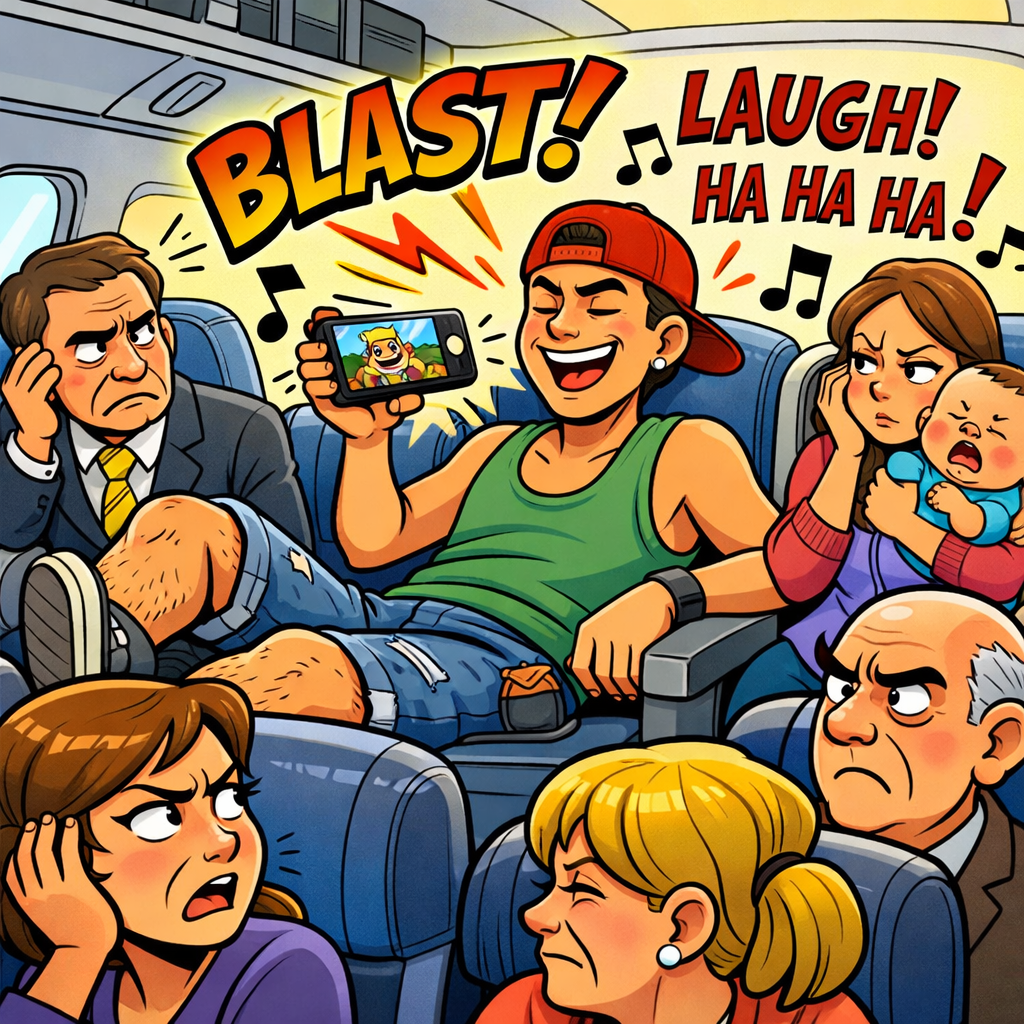
Over the years, after countless hours spent in airplanes crossing oceans, continents, and time zones, we have learned that air travel is as much a social experience as it is a means of transportation. Hundreds of strangers share a relatively small metal tube in the sky, each bringing their own habits, preferences, and personalities along for the journey. Sometimes it works beautifully. Other times, it requires a little patience.
Recently, United Airlines announced a change that frequent travelers will likely greet with quiet relief. The airline has updated its contract of carriage to prohibit passengers from watching videos or listening to music without headphones. Travelers who ignore the rule could even be removed from the flight. While that may sound strict, anyone who spends a fair amount of time flying understands exactly why such a policy might be necessary.
The change was officially implemented on February 27, and United now clearly reminds passengers of the rule during the sign-in process for in-flight Wi-Fi. A large prompt appears on the screen, encouraging travelers to wear headphones before playing any videos, music, games, or other audio. It is a simple request that reflects something many of us assumed was already common courtesy.
According to a United spokesperson, the airline has always encouraged passengers to use headphones when listening to content. However, with the expansion of Starlink internet on more flights, which allows passengers to stream movies, television shows, and other media more easily, the airline felt it was the right moment to make the expectation more explicit.
In truth, the need for such a rule speaks to how dramatically air travel has changed over the past decade. When we first began our long-term travels thirteen years ago, many flights offered only limited entertainment. Perhaps a shared movie played on overhead screens, or a small selection of programs on the seatback monitor. Today, however, nearly every passenger carries a personal entertainment center in their pocket. Phones, tablets, and laptops make it possible to stream endless content throughout even the longest flight.
While that technology is wonderful, it has also introduced new challenges. Few things disrupt the peaceful hum of an aircraft cabin quite like someone watching a video at full volume without headphones. The tinny sound bouncing around the cabin can quickly turn a quiet environment into something resembling a crowded waiting room.
Most travelers, thankfully, understand this without being told. Headphones have become an essential part of the flying routine, right alongside passports, charging cables, and neck pillows. For many of us, slipping on a pair of headphones is part of settling into the nuances of flying. It signals the start of a movie, a favorite playlist, or perhaps a podcast that makes the hours drift by more easily.
United has also made efforts to accommodate various headphone types. On some aircraft, Bluetooth connectivity allows passengers to pair their wireless headphones directly with the seatback entertainment system. On older aircraft, travelers can use accessories such as the small AirFly adapter, which plugs into the headphone jack and transmits the audio wirelessly to Bluetooth headphones. For those who may not have brought their own, complimentary wired headphones are typically available for use with the onboard entertainment.
Interestingly, United has placed the headphone rule within the section of its contract that covers refusal of transport. In other words, ignoring the rule could technically result in a passenger being removed from the aircraft. That section also includes far more serious offenses, such as assaulting crew members or smoking on board. The airline also prohibits voice and video calls once the boarding door is closed, another effort to preserve a calm environment inside the cabin.
At first glance, grouping headphone etiquette alongside those more serious rules may seem surprising. Yet it underscores how important a respectful cabin environment has become. When people are confined together for hours at a time, even small irritations can quickly escalate.
Surveys of travelers consistently show that loud devices rank among the most frustrating in-flight behaviors. One report last year listed it as the fifth most common travel irritation. Only a few familiar annoyances ranked higher: children kicking the back of a seat, crying or disruptive children, aggressively reclined seats, and overly intoxicated passengers.
Anyone who has flown regularly has likely encountered at least one of these situations. We certainly have. There was the long overnight flight years ago when a passenger nearby watched action movies without headphones for nearly an hour before a flight attendant gently intervened. Another time, on a crowded regional flight, a traveler played a video game with loud sound effects that echoed throughout the cabin. In both cases, the discomfort spread quietly through the surrounding rows, with passengers exchanging polite but weary glances.
In many ways, air travel works best when passengers remember that they are sharing the experience with dozens or even hundreds of others. Small acts of consideration go a long way toward making the journey smoother for everyone.
Even government officials have begun encouraging better in-flight manners. Last November, U.S. Department of Transportation Secretary Sean Duffy launched a civility campaign encouraging travelers to restore courtesy and class to air travel. Among the suggestions was the simple request that passengers wear headphones when using personal devices.
It is a modest expectation, yet one that reflects something deeper. Flying, despite its occasional frustrations, remains a remarkable privilege. In a matter of hours, we can travel thousands of miles, crossing oceans and continents that once required weeks or months to traverse.
As Tom and I continue our own travels around the world, we are always reminded that the experience becomes far more pleasant when people show just a bit of consideration for those around them. In that sense, United’s updated rule is not really about headphones at all. It is simply a gentle reminder that a little courtesy can make the skies feel a lot more peaceful for everyone aboard.
Tomorrow, we’ll discuss the clothing requirements some airlines impose on passengers.
Next week, we’ll begin sightseeing and sharing new photos here.
Be well.
Photo from ten years ago today, March 6, 2016: