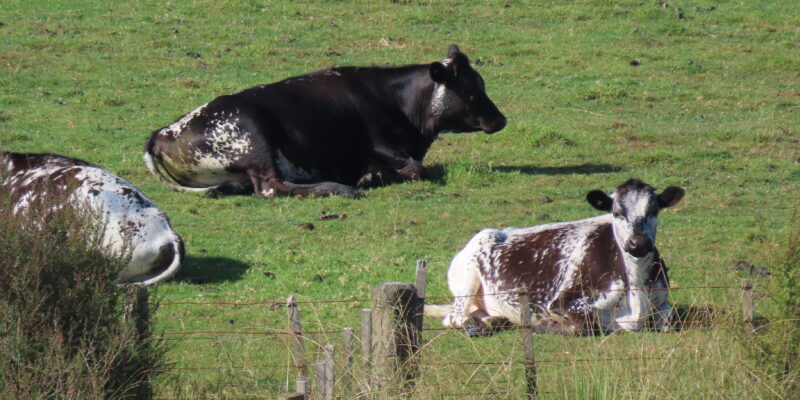
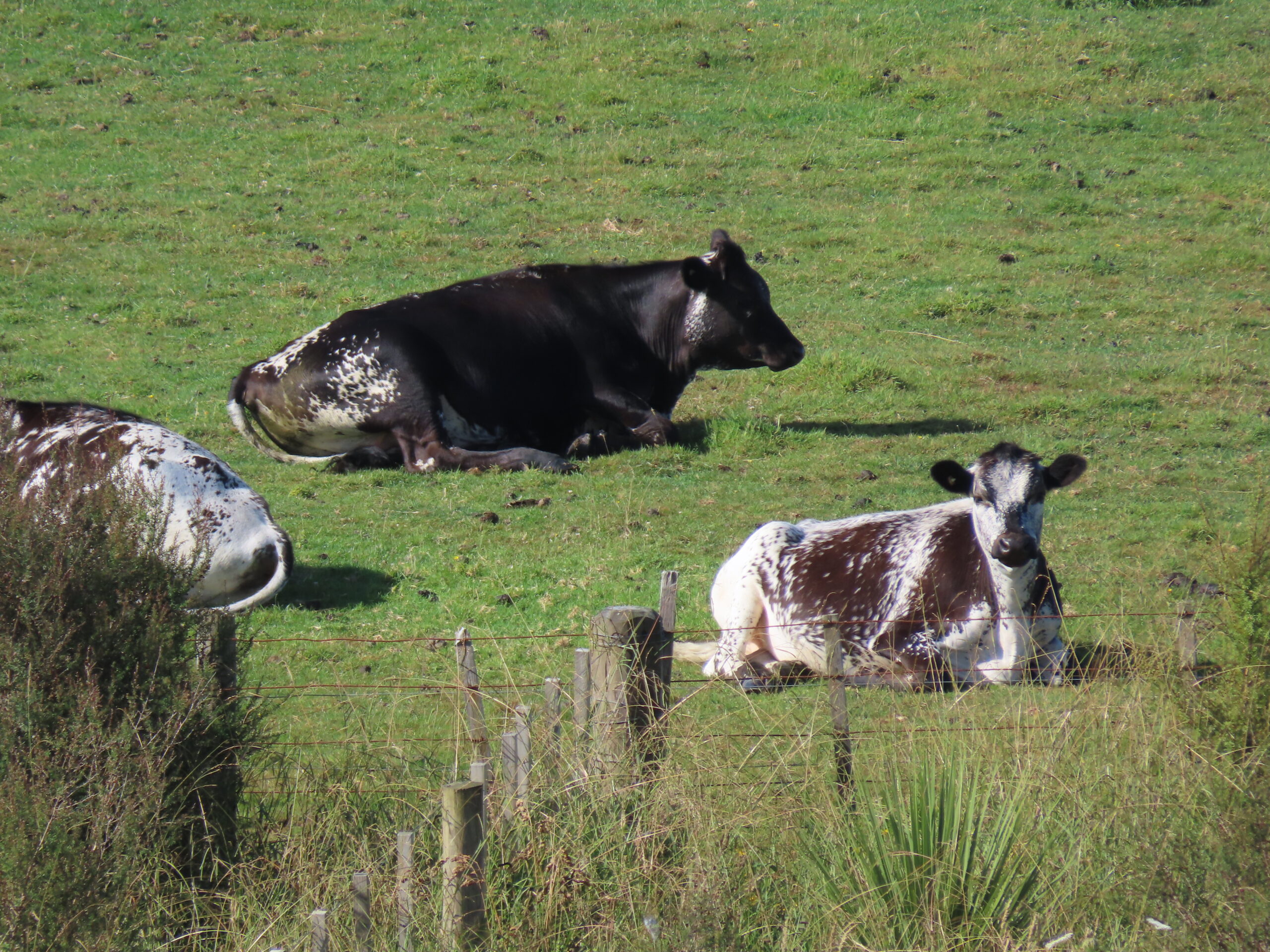
Yesterday afternoon, when gazing out the veranda window, Tom said, “Get the camera! We have new visitors in the pasture.” I jumped up enthusiastically, hardly able to contain myself. And, there they were, cows in the pasture we’ve been observing several times a day.
Cows are an inescapable part of the New Zealand landscape. No matter how far we travel or how winding the road becomes, there they are, heads down in impossibly green paddocks, tails flicking lazily, completely unbothered by passing cars or curious travelers. Over time, they stop feeling like livestock and start feeling like quiet companions to the journey, steady and familiar. Here are ten facts and statistics about cows in New Zealand, woven into the lived reality of seeing them day after day.
First, New Zealand is home to about 6.3 million dairy cows, a figure that slightly exceeds the country’s human population. It’s one of those statistics that suddenly makes everything make sense: the endless fields, the milk tankers on the highways, and the unmistakable rural scent that drifts through the air in farming regions.
Second, dairy farming is one of New Zealand’s largest export industries, earning tens of billions of dollars annually. Products like milk powder, butter, and cheese quietly travel from these peaceful paddocks to dinner tables all over the world.
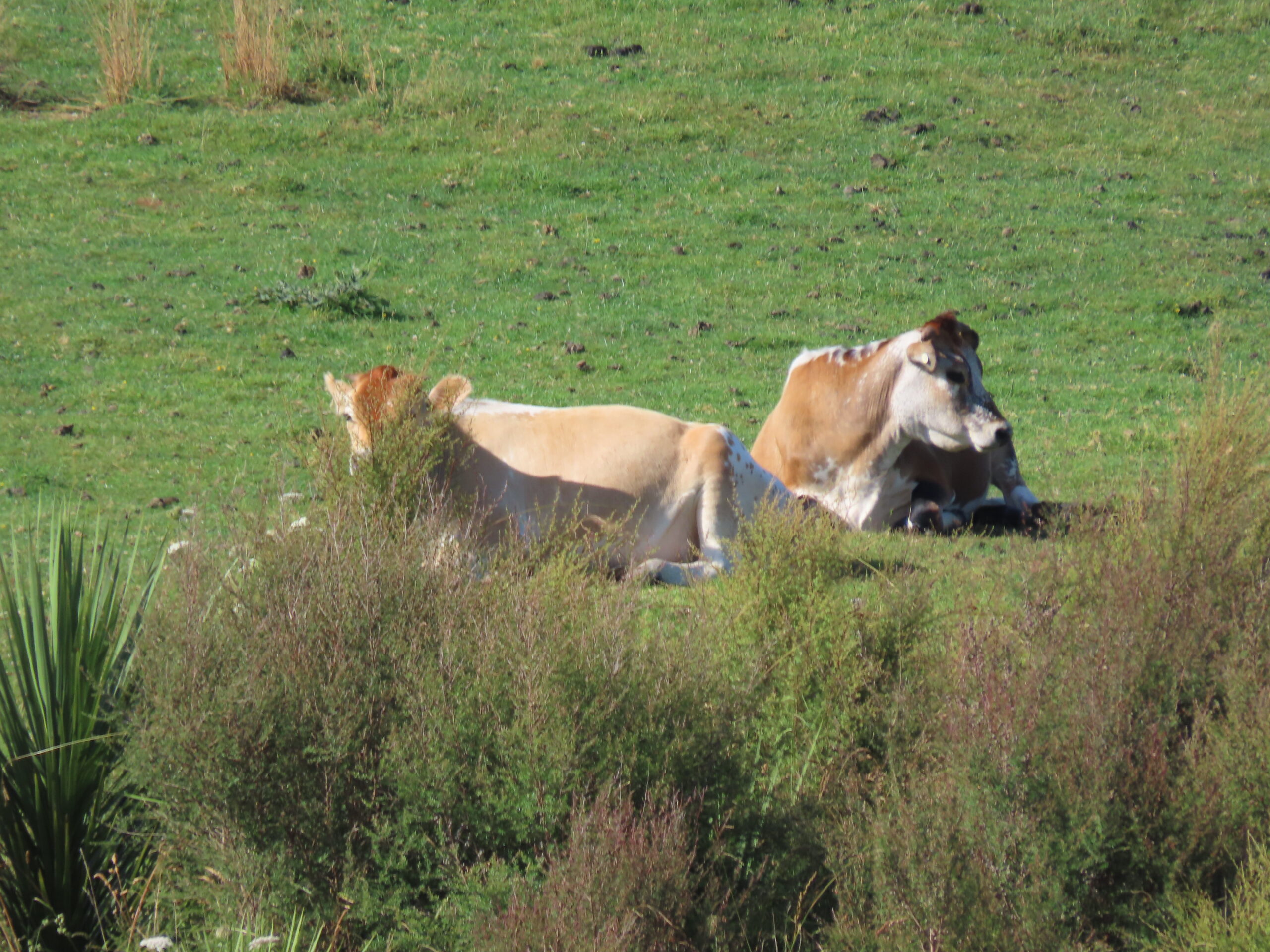
Third, the most common cows you’ll see are Friesian and Friesian-cross breeds, easily recognized by their black-and-white markings. Jerseys, smaller and tawny-colored, are also common and prized for producing milk with higher butterfat.
Fourth, New Zealand cows are overwhelmingly grass-fed and pasture-raised. Thanks to the temperate climate, most cows live outdoors year-round, grazing freely rather than being housed in barns. It’s a system that feels aligned with the land and explains why the countryside looks so alive.
Fifth, the average New Zealand dairy cow produces around 4,300 liters of milk per year. That number may be lower than in more intensive systems overseas, but it reflects a farming model built on grass, rainfall, and open space rather than heavy grain feeding.
Sixth, there are roughly 10,000 dairy farms across the country, many of them family-run. Driving through rural areas, you sense how deeply farming is tied to identity here, passed down through generations, shaped by weather, land, and resilience.
Seventh, cows are central to ongoing environmental conversations in New Zealand. Methane emissions, waterway protection, and sustainable land use are daily topics of debate. Farmers are increasingly adapting practices to balance productivity with care for rivers, soil, and future generations.
Eighth, calving season typically begins in late winter, around July and August. During this time, the countryside feels especially tender when tiny calves dot paddocks, and rural roads slow to accommodate the pace of farm life.
Ninth, cows now outnumber sheep, a notable shift in a country once defined globally by its wool industry. While sheep remain iconic, cows have quietly taken center stage in modern New Zealand agriculture.
Tenth, beyond all numbers and economics, cows shape the emotional texture of the land. There’s something deeply calming about watching them graze in the misty morning or at golden hour, when the hills glow, and everything feels briefly, perfectly still.
In New Zealand, cows are more than statistics. They are part of the scenery that seeps into memory, part of the slow, grounding rhythm of travel here. They remind us that this country, for all its modern comforts, is still deeply rooted in the land and that some of the most enduring stories unfold quietly, one pasture at a time.
We love living amidst this natural landscape, where a simple glance outdoors reveals the everyday wonders New Zealand has to offer: rolling green paddocks, shifting skies, and the quiet reassurance that life here moves in harmony with the land.
Be well.
Photo from ten years ago today, January 4, 2016: