Day 22…Out to sea, heading to Reunion Island…Immigration Issues?…

The Schooner Bar, where we often play trivia in the afternoons.

Yesterday afternoon unfolded in a way we hadn’t quite expected. Since we hadn’t disembarked in Port Elizabeth, we still had to meet South African immigration requirements, which meant making our way to the makeshift immigration setup in the deck 5 dining room. It was close to 3:00 pm when we wandered down the long hallway, joining the short but slow-moving queue of fellow passengers who were also there to have their passports stamped for exit from South Africa. We assumed it would be a quick in-and-out stop, the kind of errand that hardly registers as a blip in the rhythm of a sea day. But as we’ve learned repeatedly over the years of our travels, assumptions are often the very things that set the stage for unexpected twists.

The room felt strangely quiet for such an official task. Crew members guided passengers to a row of temporary desks where uniformed immigration officers sat, stacks of documents, laptops, and ink pads at their stations. The faint scent of paperwork, leather passport covers, and a hint of impatience replaced the dining room’s usual aroma of meals. We stepped forward when it was our turn, offering our passports with the kind of confidence that comes from having done this countless times before. But almost immediately, the officer handling my passport paused, flipping through the pages once, then again, more slowly this time. Her brow furrowed, her lips pressed into a straight line…never a good sign.
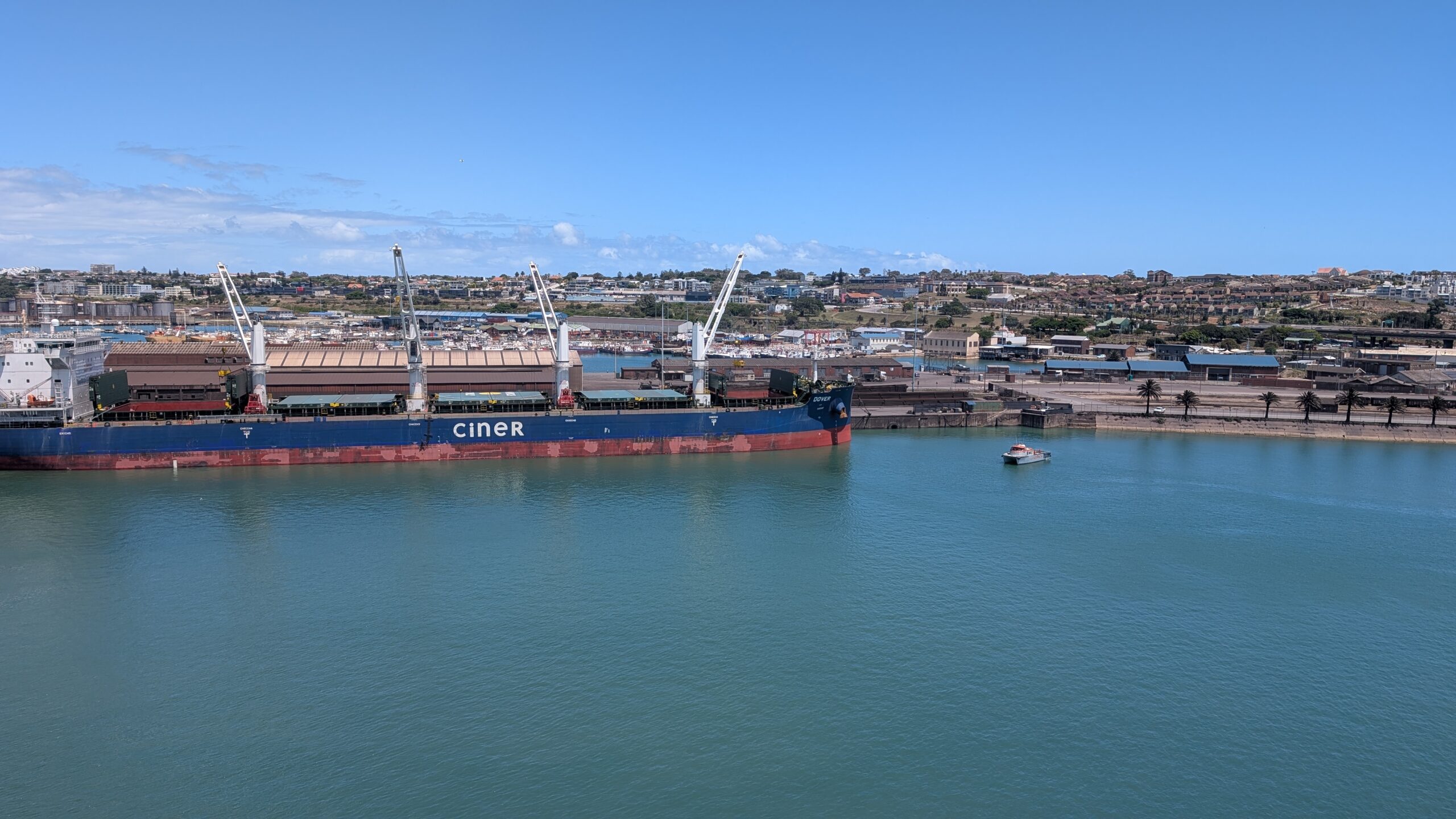
View of the industrial port in the city of Port Elizabeth, South Africa. With the shuttles heading to a local shopping mall, we decided to stay on board.

She looked up at me with that practiced mixture of authority and mild annoyance that immigration officials around the world seem to perfect. “Where is your entry stamp?” she asked. I felt that familiar ripple of unease wash over me, the one that has accompanied every bureaucratic snag we’ve encountered during our travels. I assured her that we had entered South Africa in Cape Town just a few days ago and that the stamp should be there, tucked among the well-worn pages filled with years of border crossings. But she shook her head, still turning pages, still hunting for a stamp she insisted was missing.

There was a vast array of cars at the pier.

Time seems to stretch in these moments. You become acutely aware of everything: the shuffle of feet behind you, the officer marking other passengers’ documents, the hum of conversation growing as people begin comparing their own passport oddities. I felt a blend of frustration and worry rise in my chest. Even after all our travels, it’s never pleasant to be held up by an official, especially for something as seemingly straightforward as a missing stamp.

The officer motioned for us to wait while she communicated with a fellow officer who also flipped through the pages of my passport. We waited, trying to calm that small but persistent voice inside that always imagines the worst-case scenario. Had the stamp truly been omitted? Would this lead to some drawn-out process we’d be stuck navigating long after everyone else had returned to their holiday routines?

The fellow officer took my passport with far more confidence, flipping through the pages like someone who had done this thousands of times. And then, almost anticlimactically, he and the original officer concluded that the entry stamp used when we arrived in Cape Town was recorded as an “exit” stamp based on our prior stay in South Africa. Since we’d been to South Africa so many times, it was easy for them to make the mistake. They assured us we won’t have a problem in the future.
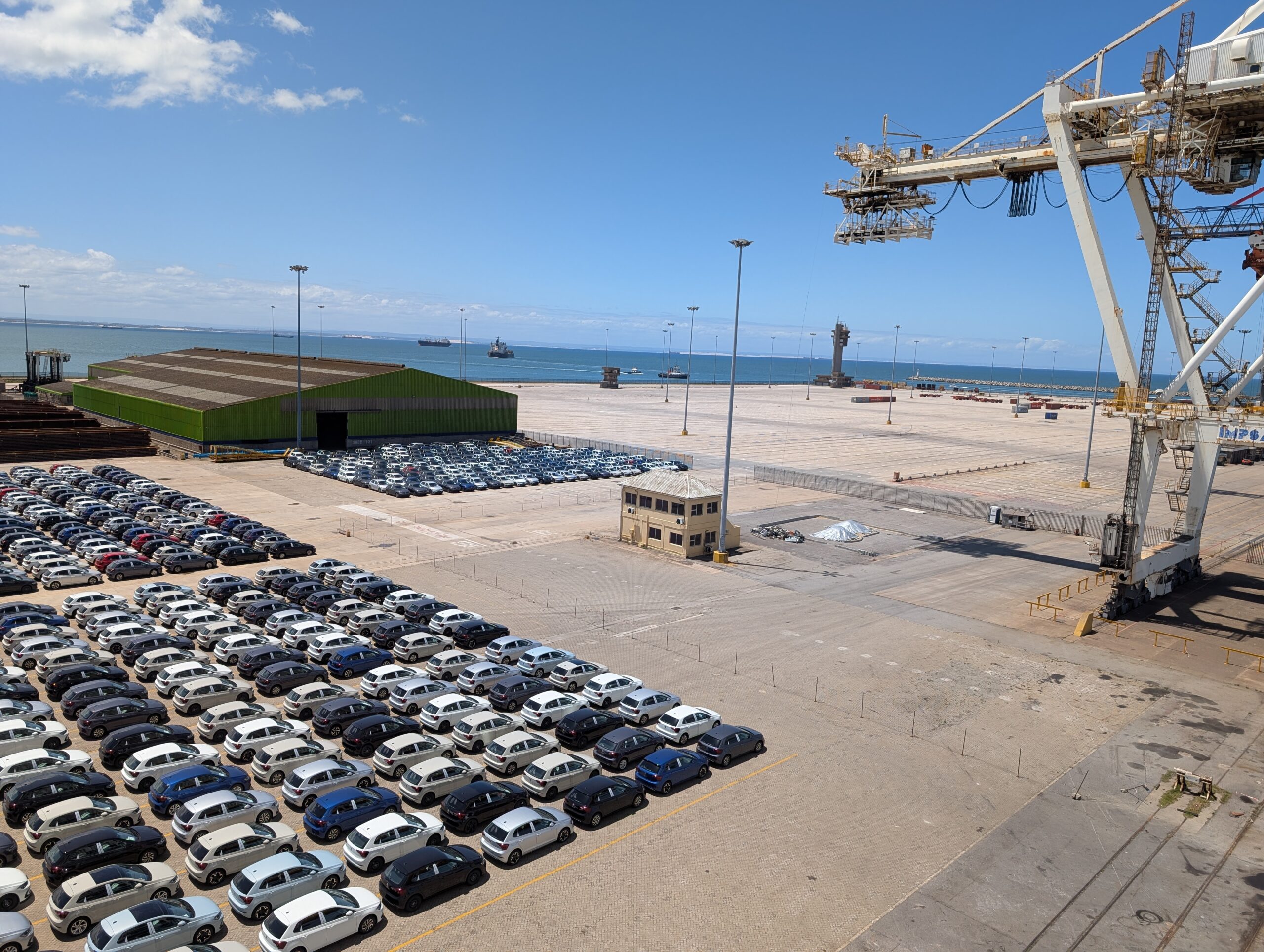
Imported cars, waiting to be shipped to various locations in South Africa.

The only peace of mind we could glean from the situation was that next time we enter South Africa, mid-June, we’ll easily get a new stamp from having just departed the USA, allowing us a new 90-day stamp.

Within minutes, our passports were stamped, and we were waved onward. The entire ordeal probably lasted no more than 15 minutes, yet it felt like a small saga, the kind that reminds us that even routine travel procedures can suddenly become moments of drama. As we walked back toward the elevators, I couldn’t help but laugh at how travel still finds ways to surprise us. Even after thirteen years on the road, the world continues to test our patience and teach us humility, one faint passport stamp at a time.
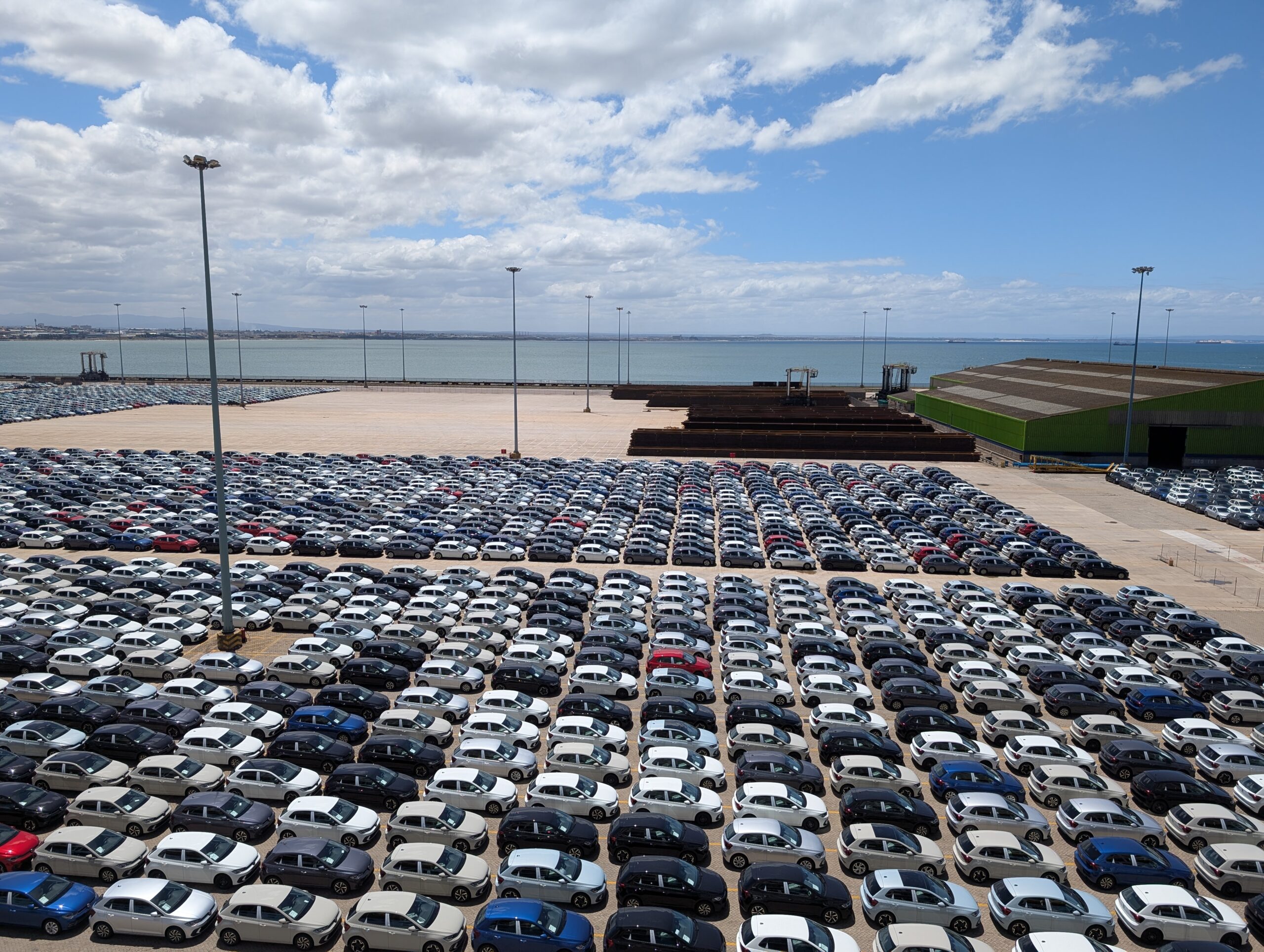
Most South Africans prefer white cars due to the heat.

Again, last night, we had a fun evening, staying out of our cabin until midnight, only to deal with a one-hour time change when we returned, which cost us an hour of sleep. I didn’t nod off until 2:00 am, awakening this morning at 7:00. A short nap may be on the agenda this afternoon, as we languish in yet another pleasant sea day.

Be well.

Photo from ten years ago today, November 17, 2015:

This area is a chicken farm with cages. Not all chickens in Fiji are free-range. Although they aren’t injected with drugs or fed chemicals, they may eat grains. There’s no way to be 100% certain that the eggs we purchase are from free-range chickens when crates aren’t labeled at the farmers’ market. For more photos, please click here.

Day 21…Meet up with cruise friend from 2017…Port Elizabeth, South Africa…

Last evening, in the R-Bar, we enjoyed drinks with old friend Ulla and her friend Julia.

In April 2017, during one of those long, dreamy repositioning cruises, which was aboard Royal Caribbean’s Explorer of the Seas, sailing from Sydney all the way to Seattle, we met a lovely couple who instantly felt like old friends. Ulla and her husband, Ray, had that rare combination of openness and warmth that made conversation effortless from the start. Over the 24 nights we shared on that voyage, we often found ourselves lingering in lounges, lingering anywhere the ship’s gentle hum encouraged stories to spill out. Little did we know at the time that this serendipitous meeting would blossom into an eight-year friendship.

Since then, Facebook has been our bridge across continents and oceans. We’ve celebrated their travels, they’ve celebrated ours, and despite the miles, the connection never dimmed. So when we discovered they’d be joining us again on this current sailing, it felt like one of those full-circle travel blessings that only long-term nomads, like us, truly understand, life looping back with familiar faces in faraway ports.

But as travel often reminds us, plans can shift in a heartbeat. Just before departure, Ray fell ill with pneumonia in Australia and wasn’t able to travel. Our hearts sank for him. After eight years of looking forward to crossing paths again, the timing felt almost cruel. Still, in true traveler spirit, Ulla made the journey anyway, accompanied by her delightful friend Julia, boarding the ship in Cape Town and planning to stay aboard until Brisbane, Australia, on December 13. Seeing Ulla step onboard, smiling, resilient, and excited despite the circumstances, was a reminder of how friendships forged at sea have a kind of buoyancy all their own.

Last night, the four of us reunited as if no time had passed at all. There’s something about cruise ship evenings that brings out the best in these moments: the soft lighting, the gentle sway beneath our feet, the feeling that time is stretching just enough for connections to breathe. We shared stories, laughter, and updates, catching up on the years as though flipping through a well-loved scrapbook.

Ulla, on the right, and her travel companion, Julia.

Later, when they headed off to the nightly show, we gravitated to the Star Lounge for a singing game show that turned out to be hysterical. Neither of us has any desire to get up on stage—our comfort zone is firmly in the enthusiastic-but-anonymous audience category—but we laughed harder than we had in days. The energy was infectious, reminding us of all the quirky little joys that make cruise life so endearing.

When the game wrapped up, we wandered back to the R-Bar, where we ended up deep in conversation with George, an American man we’d briefly met before. He was genuinely stunned—almost wide-eyed—when he heard how long we’ve been traveling the world full-time. His fascination mirrored the reactions we often get: a mix of admiration, curiosity, and disbelief that anyone could live out of a suitcase for so many years and still love it.

As we chatted, I felt that familiar wave of gratitude wash over me. Nights like this—old friends rediscovered, new acquaintances made, laughter drifting through lounge floors—remind me why this nomadic life continues to fill us up after all these years. It’s not just the places or the ports. It’s the people who drift in and out like tides, each leaving a gentle imprint on our ever-changing journey.

Today, our ship is docked in Port Elizabeth, a place many cruisers look forward to exploring, but for us, it’s a quiet pause in the journey rather than a day of adventure. The options are straightforward enough: the shuttle ferries passengers to a nearby shopping mall or off to a safari experience. For many, spotting wildlife in South Africa is the highlight of a trip like this. And truly, we understand the appeal. It’s magical to see those first giraffes grazing on treetops or elephants ambling across the savanna.

But after almost 300 game drives and safaris over the past thirteen years, our hearts no longer chase the novelty of a single day out in the bush. Instead, we’ve come to relish the deeper rhythm of returning to Marloth Park, where we can slip back into our own private version of the wild. There, we settle into a routine we know well: the early mornings when the world is still hushed, the familiar rumble of distant lions, the comfort of waiting in our rental car, engine humming softly, as we slowly make our way through Kruger National Park.

The wildlife seen in this region, whether here in the Eastern Cape or up north near the Mozambique border, tells the same story. The same iconic species roam, the same dramas unfold under the African sun, and the same sense of wonder lingers in the air. The difference, for us, is the feeling of home that Marloth and Kruger have come to represent. We aren’t rushed on those visits, nor are we part of a tour group being guided along a predetermined route. Instead, we have the luxury of time, freedom, and the deeply personal experience of choosing our own path through the bush.

So today, while others line up eagerly for shuttles and excursions, we’re content to stay aboard the ship, enjoying the peaceful hum of life at sea. Some ports call to us with irresistible energy, urging us to explore. Port Elizabeth, however, whispers permission to rest. And in this season of our lives, after so many days on the road, so many game drives, so many breathtaking encounters, we’ve learned to honor those quieter impulses too.

We’ll save the safaris for June, when we return to Marloth Park and ease back into the wilderness we know and love. There’s no need to rush. Africa will be waiting.

Be well.

Photo from ten years ago today, November 16, 2015:

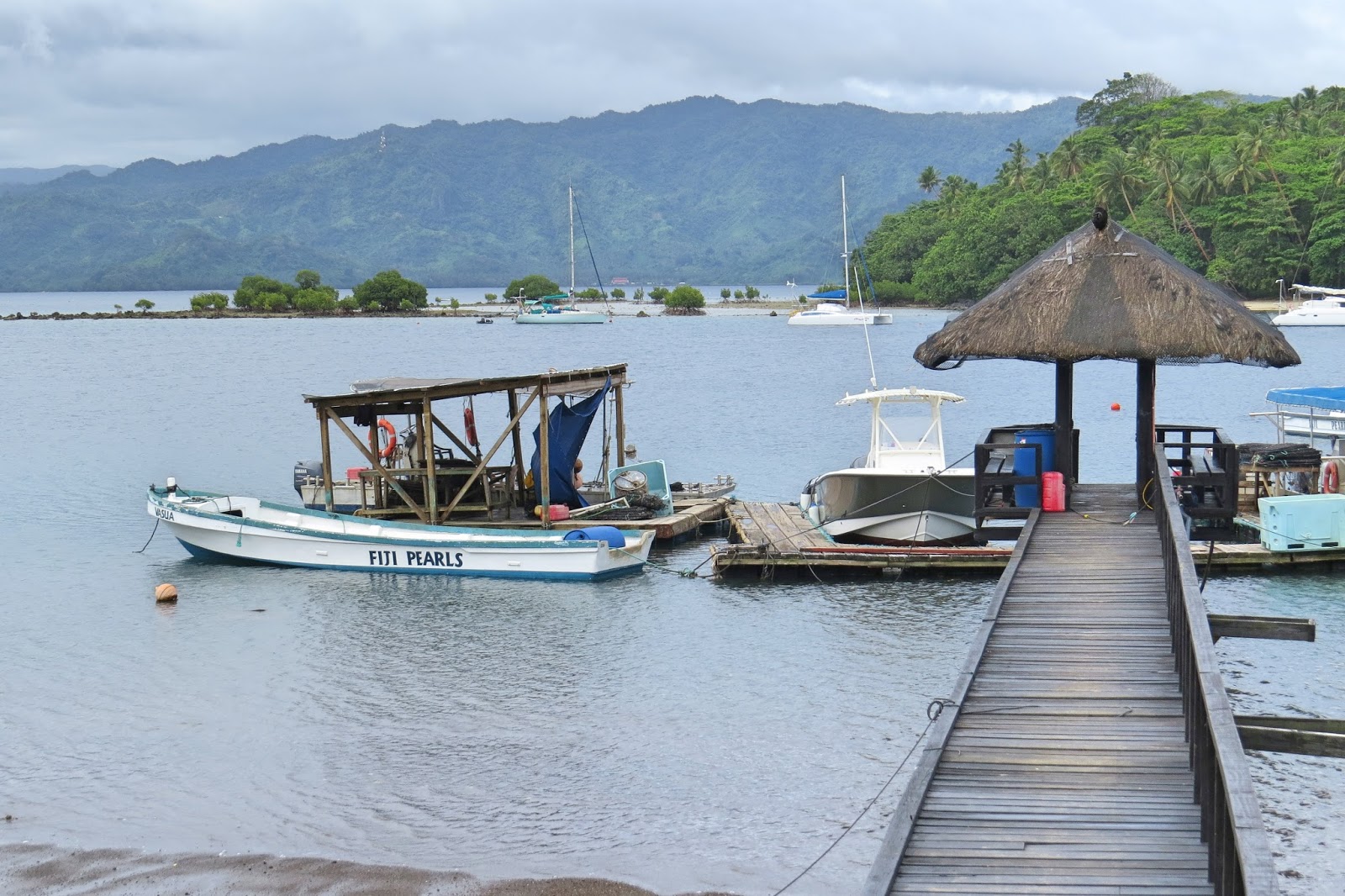
In Savusavu, Fiji, this boat navigates to the pearl beds. For more photos, please click here.

Day 20…Part 2, Cape Town, South Africa…Dear friends came to visit…Mountains and beaches attracting tourists…

Yesterday was such fun seeing Louise and Danie in Cape Town. We will see them again next June when we return to Marloth Park.

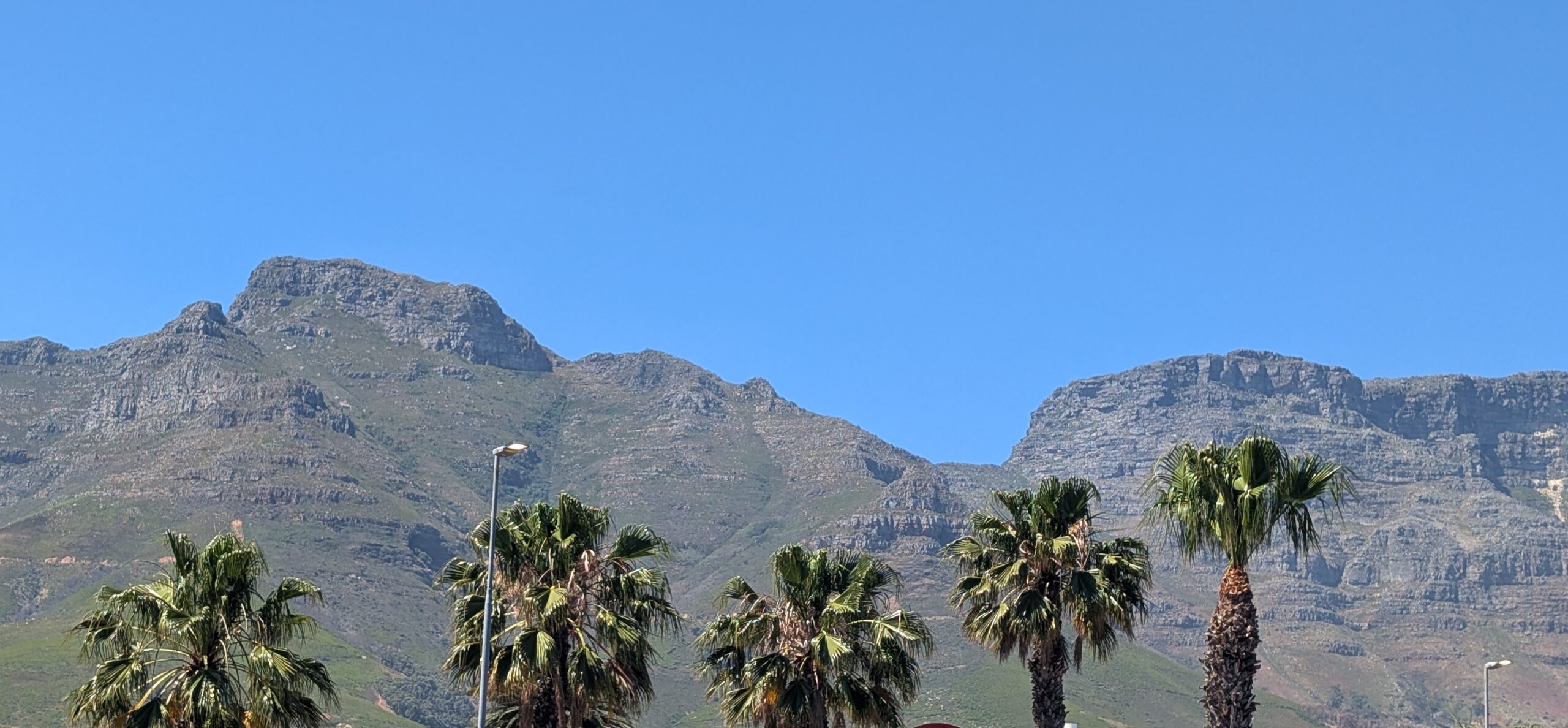
Certain landscapes in the world etch themselves into your memory the moment they appear, as if they’ve been waiting patiently for you to notice them. Cape Town is one of those rare places where the natural world rises in grand, sculptural form, dominating the skyline with a kind of effortless confidence. Nowhere is that more evident than in the trio of mountains that cradle the city, Table Mountain, Signal Hill, and Lion’s Head. Each has its own personality, its own rhythm, its own way of reminding you just how small you are in the most comforting, humbling sense.

The first decorated Christmas tree we’ve seen this year. Note the whisks used as decorations.

For us, arriving in Cape Town feels a bit like opening a familiar book whose pages we never tire of turning. The mountain range seems to watch over the city like an old friend. Table Mountain, with its broad, flat summit, is always the first to greet you. It rises with the commanding presence of a guardian, massive and unmovable, easily stealing the breath of anyone seeing it for the first or twentieth time. From a distance, it almost looks unreal, as if some giant placed a colossal stone table across the skyline, the edges crisp and unwavering against the African sky. Clouds often spill over the top in a delicate cascade known as the “tablecloth,” giving the mountain an almost playful quality. It’s as if it can’t resist reminding you that even giants have moods.

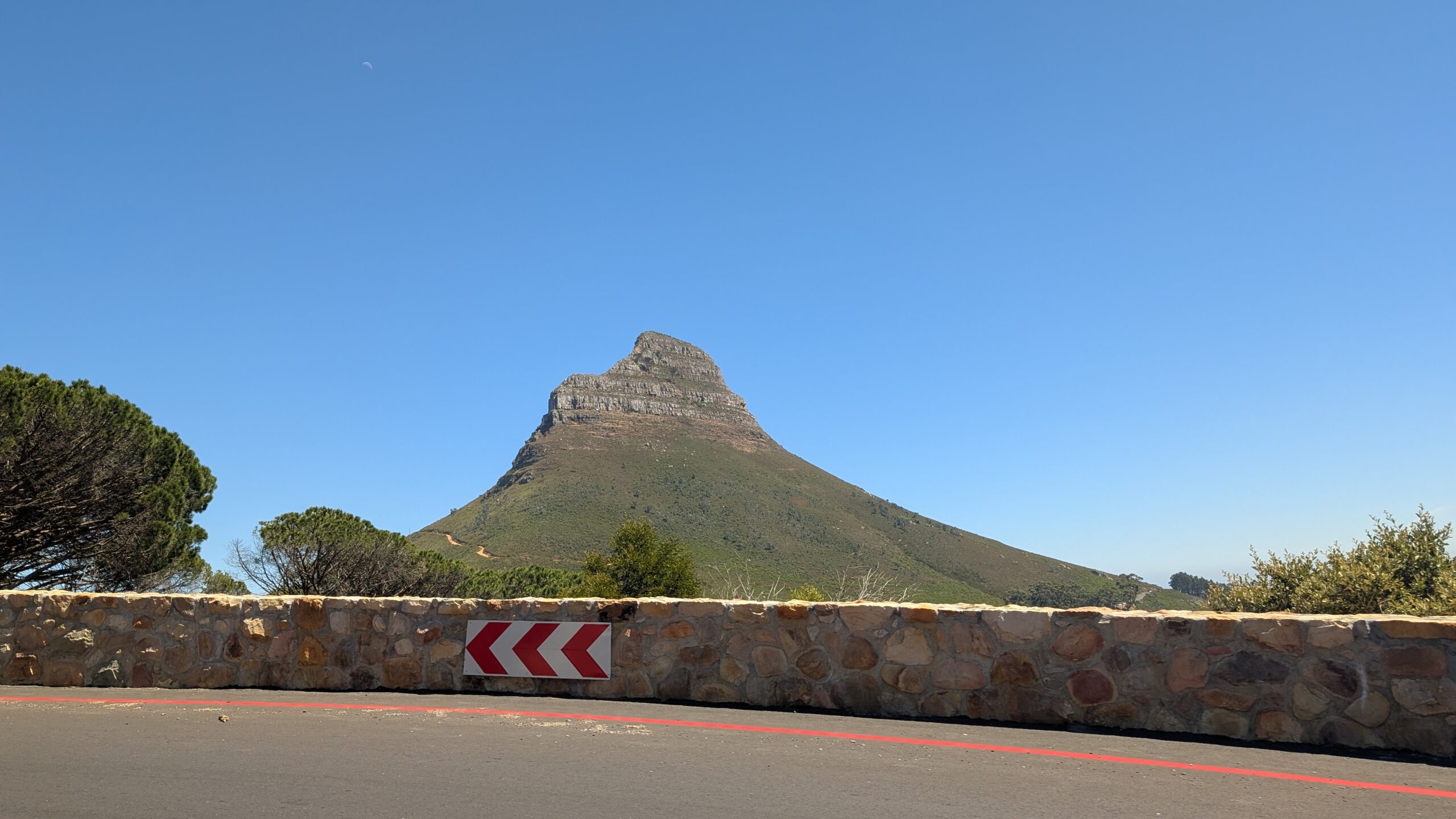
Lion’s Head mountain. We posted this photo yesterday when we intended to post it today.

When you stand beneath Table Mountain, whether wandering through the bustling Waterfront or strolling along Kloof Street with the scent of roasted coffee wafting from little cafés, it feels omnipresent. There’s a strange comfort in knowing it’s always there, watching, steadying the energy of the city with its ancient stillness.

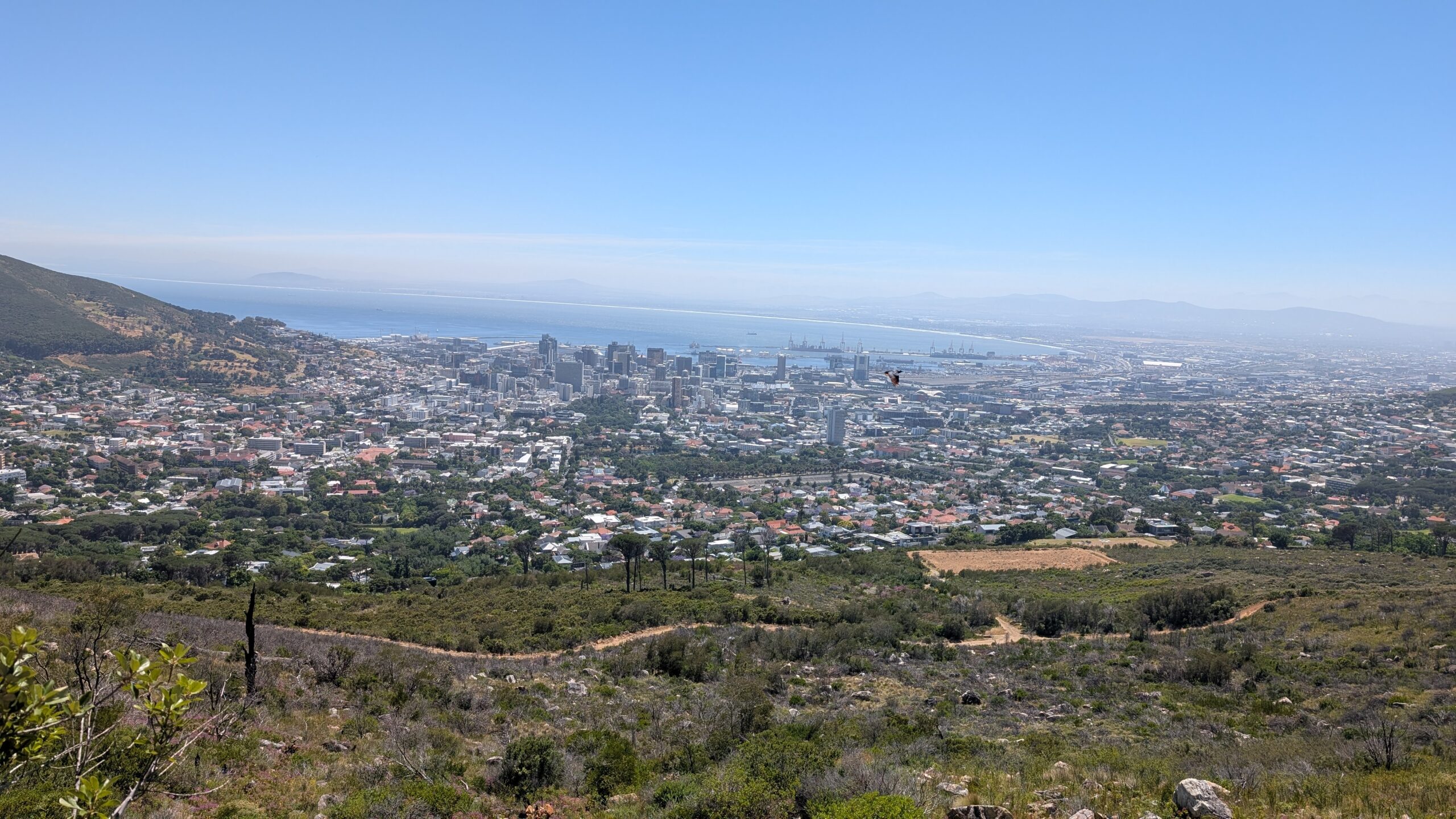
View of Cape Town from the platform area of Table Mountain. There was a 3-hour wait for the cable car. We opted out.

And if you’re fortunate enough to ride the cable car to the top or brave the hike, you’re rewarded with sweeping views that seem to stretch out forever. The city spreads in intricate lines; the ocean glistens like polished glass; Robben Island sits quietly offshore. It’s impossible not to feel a profound sense of gratitude standing up there, the kind that sinks into your bones and lingers long after you’ve descended.

The top of Table Mountain.

Signal Hill, in contrast, feels softer, more approachable. It’s the kind of mountain that invites you in rather than daring you to scale it. Nestled between Table Mountain and Lion’s Head, it acts as the gentle slope where locals and travelers alike gather to watch the sun melt into the ocean.

More views from Table Mountain.

Signal Hill also carries its own rhythms. Each afternoon, the historic Noon Gun sends a resounding boom echoing across the city. I imagine one can feel it as much as hear it, a reminder of traditions that have survived centuries. Surely it is strangely endearing to the locals… this daily punctuation mark in the life of Cape Town, predictable yet always impressive.

The number of tourists and the traffic at Table Mountain made photo ops difficult.

Then, of course, there is Lion’s Head, the striking peak that stands proudly between Table Mountain and the Atlantic Ocean. If Table Mountain is the wise elder and Signal Hill the gentle companion, then Lion’s Head is the spirited adventurer, the mountain with a restless heart. Its shape is unmistakable, the curve of the slope flowing like the back of a reclining lion. Hikers adore it, and rightfully so.

Robben Island, located approximately 7 kilometers off the coast of Bloubergstrand, north of Cape Town, is a UNESCO World Heritage Site and former prison where Nelson Mandela and other anti-apartheid activists were incarcerated. Today, it operates as a museum that offers powerful insights into South Africa’s history and struggle for freedom.

The trail winds around the mountain in a steady ascent, each turn revealing views that seem more dazzling than the last. They say, climbing it is like walking in circles around a secret, each loop bringing you closer to understanding what makes this mountain so magnetic.

Fantastic views.

What connects these three mountains isn’t just their geography; it’s the emotional current that runs through them. They are part of the soul of Cape Town, steady, vibrant, and full of quiet surprises. For travelers like us, who are always drifting from one place to another, they are anchors. They remind us why we wander the world, finding joy and solace in nature as well as wildlife.

Camps Bay in Cape Town is a popular, upscale beachfront suburb known for its wide, white-sand beach and vibrant promenade lined with restaurants, bars, and hotels. It’s situated between the Atlantic Ocean and the Twelve Apostles mountain range and offers a lively atmosphere with blue flag status for its cleanliness and safety. While it’s an attractive destination year-round, it becomes hectic during the summer months.

In Cape Town, the mountains don’t just shape the skyline. They shape the way a tourist feels. And each time we leave such a place, we carry a piece of it with us.

Another view of the fabulous Camp’s Bay Beach.
There is hang gliding in Cape Town, with Signal Hill and Table Mountain being popular sites. The Cape Albatross Hang-gliding Club, along with other operators and schools, offers opportunities for both experienced pilots and those wishing to learn. Paragliding is also very common in the city, with many tour operators available for tandem flights.

We thoroughly enjoyed our time in Cape Town, although short, sufficient to give us a feel for the magical city and its many offerings for tourists and locals alike. Perhaps, someday, we’ll return.

Our ship is the Royal Caribbean Voyager of the Seas. The ship spent an extra night in Cape Town because the port was closed due to high winds. This morning, it set sail.

Today, we’re out to sea, heading to Port Elizabeth, South Africa, which is mainly a stopping-off point for safaris. Since we’ve spent so many years partaking in game drives in this country and others, we may choose to spend a quiet day on the ship.

Be well.

Photo from ten years ago today, November 15, 2015:

The view from atop the hills in our area in Savusavu, Fiji. For more photos, please click here.

Day 19…Part 1, Cape Town, South Africa…Beginning first day of cruise #2 to Singapore…

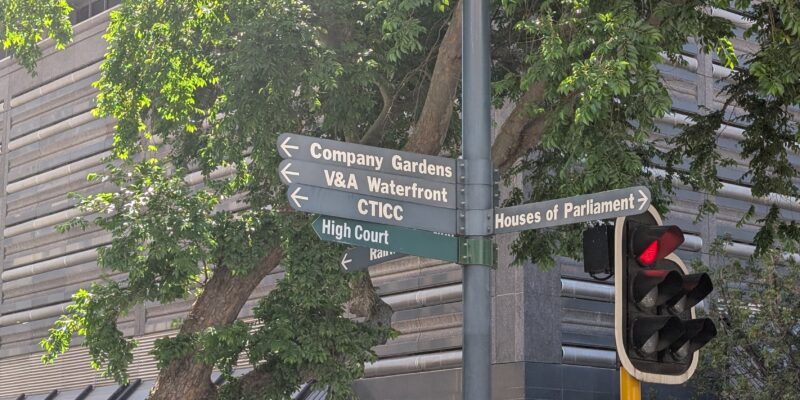
Signs clearly marked the major sights.
Yesterday, as we rode through the bustling streets of Cape Town, I felt that familiar flutter in my chest; the one that always comes when we wander into a city that seems to hum with its own quiet poetry. Cape Town isn’t a place you simply visit. It’s a place that rises up to greet you, brushing its history, its colors, and its complexities against your senses until you’re left a little breathless and more than a little enchanted. And with a knowledgeable local guide, Patrick leading our way, the experience felt even richer, like lifting the veil on a story we’d only skimmed before.
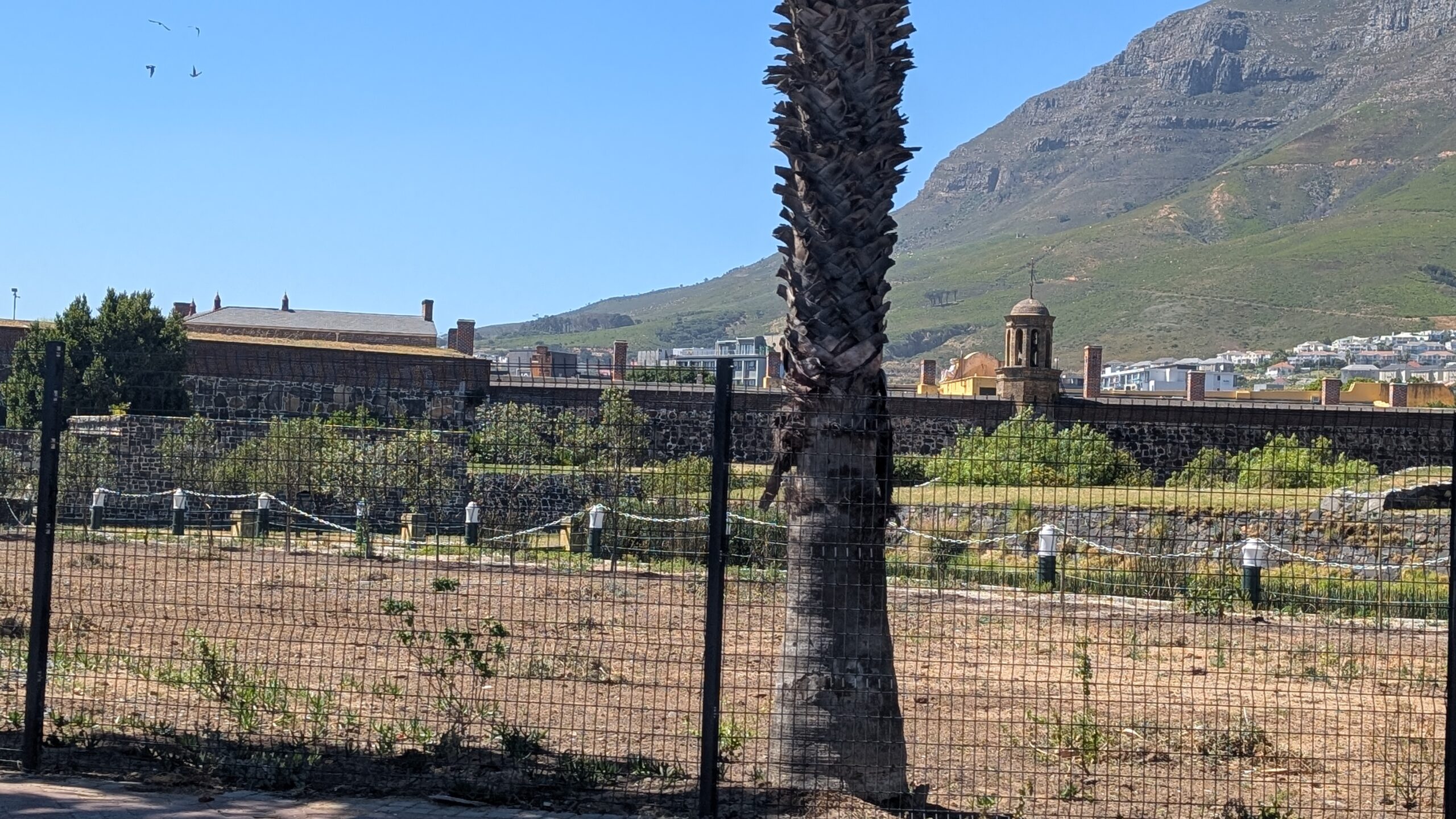
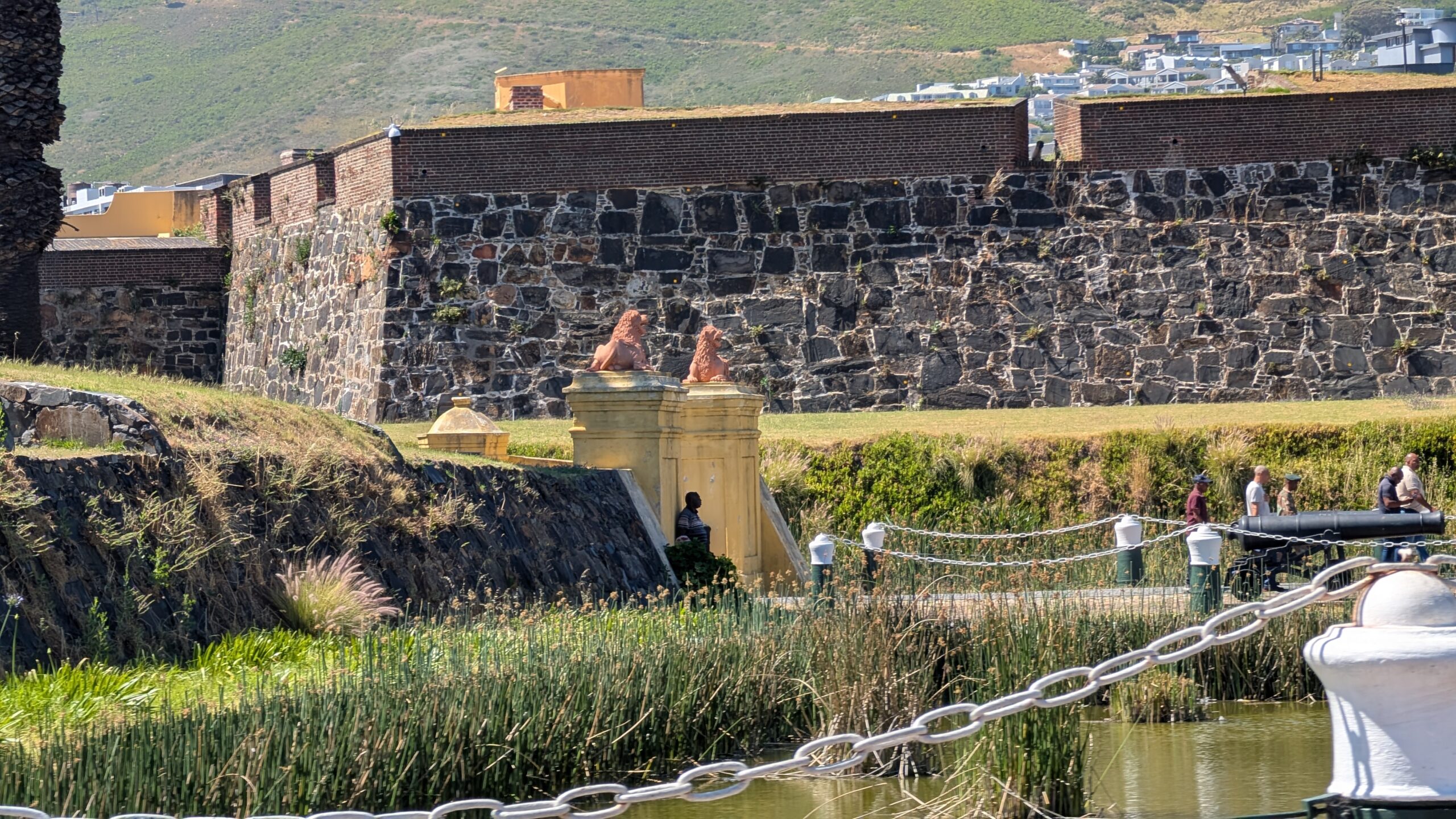
The Castle of Good Hope is a 17th-century bastion fort in Cape Town, South Africa. Originally located on the coast of Table Bay, the fort is now inland following land reclamation.

Patrick, a 19-year resident of Cape Town, originally from the Democratic Republic of the Congo, introduced himself with an easy smile and a voice seasoned from years of telling Cape Town’s layered stories. We met him at the waterfront just after we disembarked, one of many tour guides we could choose from. His easy smile and friendly demeanor immediately triggered us to choose him, among a plethora of others.

Another view of the Castle of Good Hope.

He stated he’d take us on a two-hour tour of the highlights of Cape Town for US$70 $70 which was reasonable compared to the many other offers thrown at us.

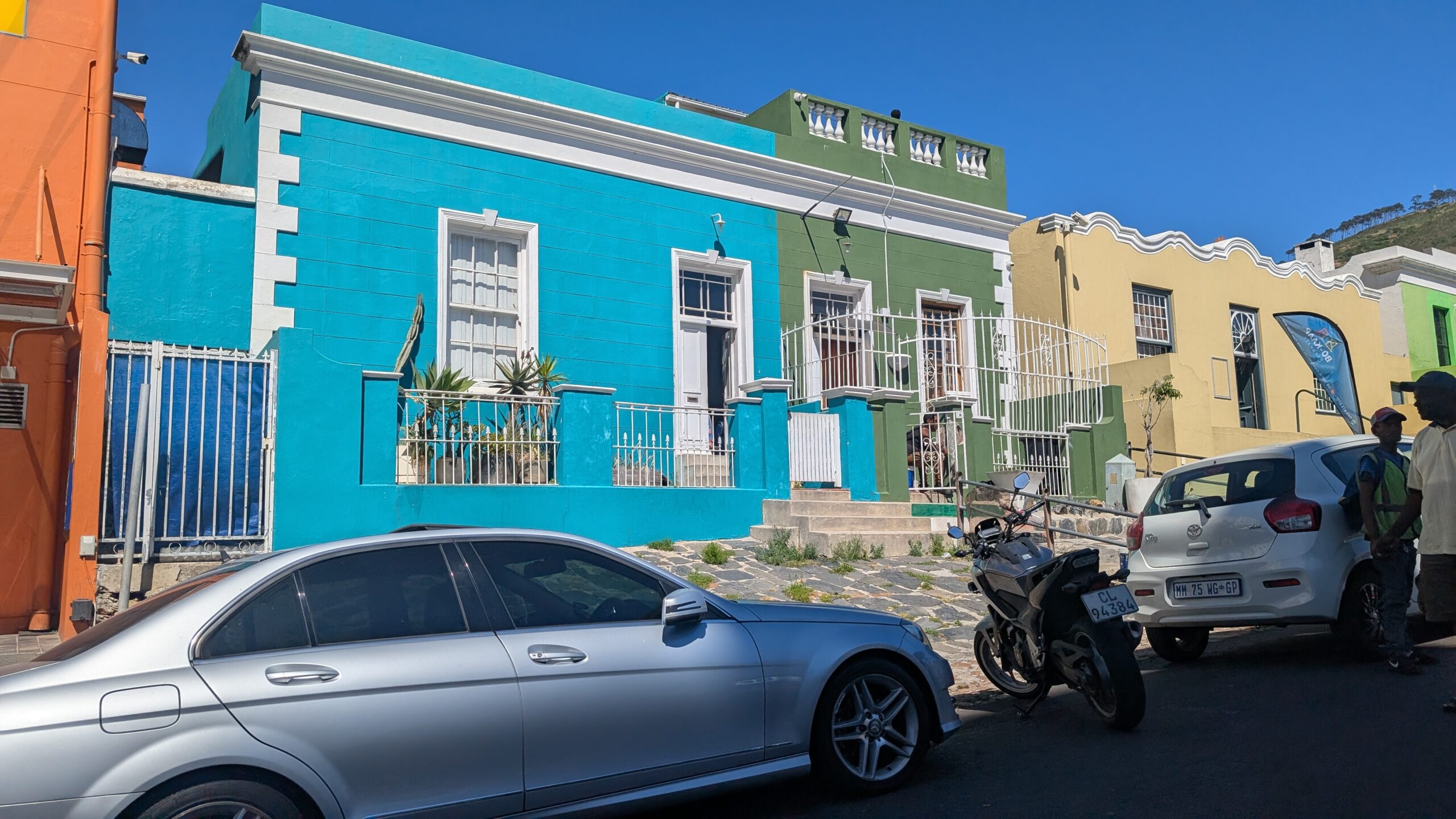
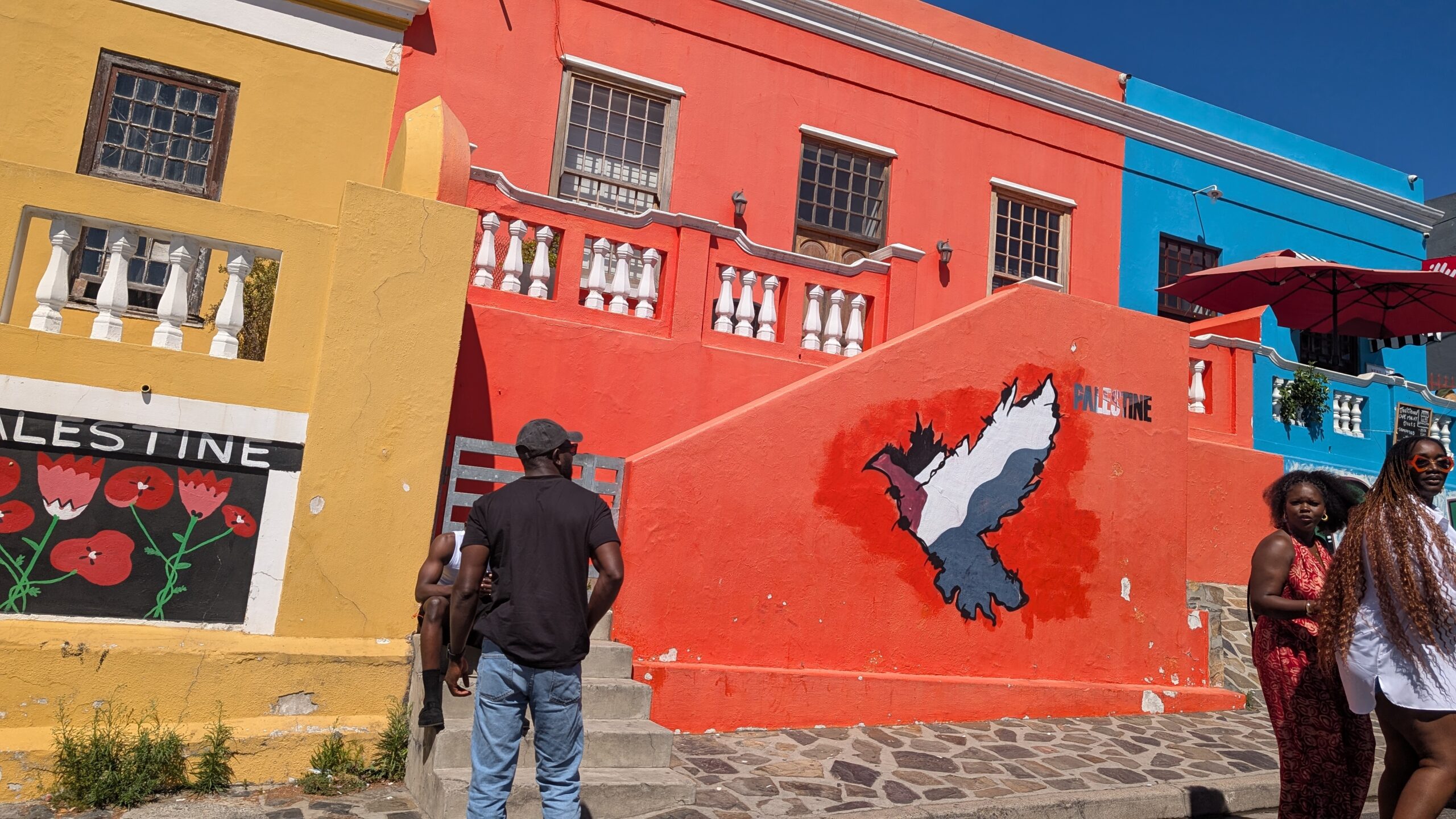
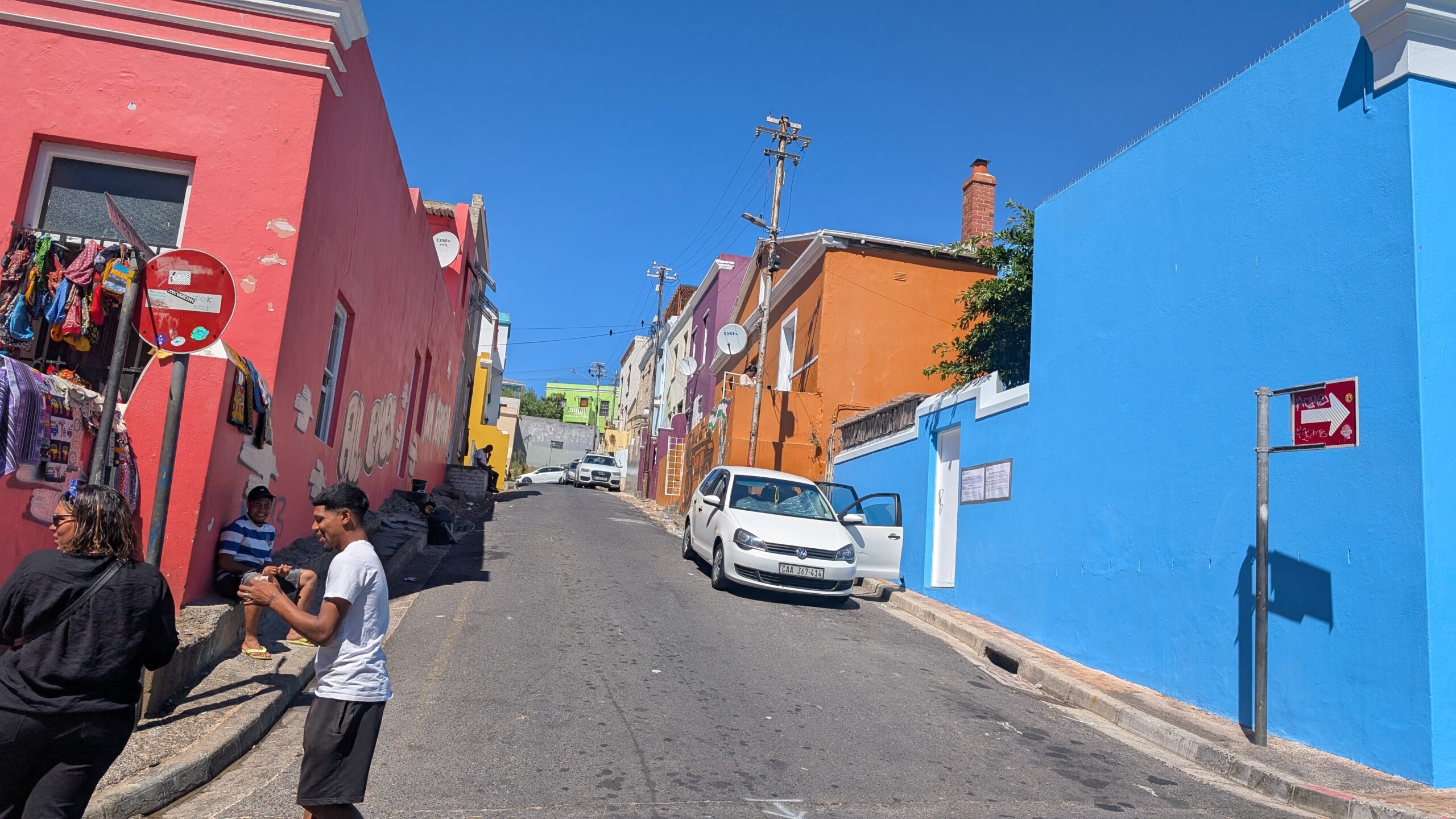
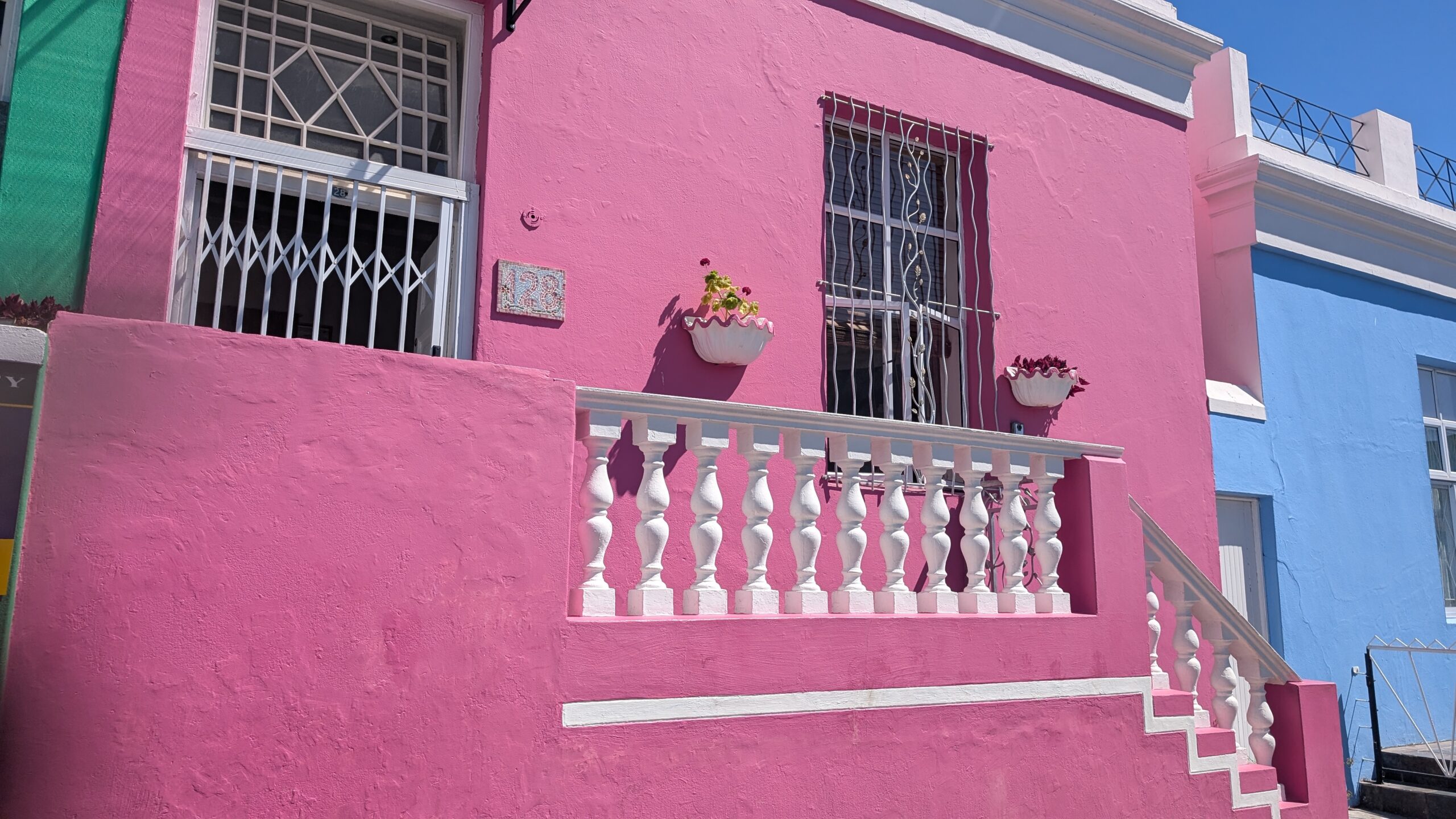
A popular daytime destination, hillside Bo-Kaap is known for its narrow cobbled streets lined with colorful houses. Local Cape Malay culture is represented at sites such as the 1790s-built Auwal Mosque and the Bo-Kaap Museum, which feature exhibits on the achievements of Muslim immigrants. Nearby, simple restaurants serve curries, roti, and other Cape Malay dishes. The Noon Gun cannon is fired daily at midday from Signal Hill

The morning air was cool, tinged with sea spray and that faint aroma of roasted coffee drifting from nearby cafés. Patrick explained that Cape Town is best understood as a tapestry, each neighborhood a patch stitched from different moments in time. That idea framed the entire tour, as though we were unspooling a long thread that connected past to present, one step at a time.

Bo-Kapp.

We began in the shadow of Table Mountain, its flat top softened by a thin ribbon of cloud. Our guide pointed out how the mountain almost seems to anchor the city, both geographically and emotionally. Locals look to it as a constant, he said, especially on days when the winds shift and life feels a bit unpredictable. As he spoke, I could feel that sentiment echoing somewhere inside me. After so many years of nomadic living, I’ve grown sensitive to how anchor points—mountains, oceans, even people—give a place its pulse.

Bo-Kapp.

From there, we wound our way through the city where ancient trees arched overhead like protective elders. Squirrels darted across pathways, accustomed to visitors stopping to take photos or offer tiny morsels. Our guide paused often, not to lecture but to share small, almost tender anecdotes, where couples propose, where schoolchildren gather, where artists come to find their quiet. It reminded me that cities aren’t just streets and monuments; they are held together by moments that might seem insignificant until they’re stitched into someone’s memory.

Bo-Kapp.

No city tour of Cape Town would be complete without a visit to the Bo-Kaap, and the sight of those candy-colored houses made my heart lift with the same lightness I feel when traveling down a sunlit sea lane. The bright facades, turquoise, rose, lemon, and emerald, seemed to glow under the midday sun. Patrick explained the neighborhood’s Muslim heritage and the resilience of families who’ve lived there for generations. You could feel the pride in his voice, but also a thread of protectiveness, as though he were speaking of a beloved relative. That kind of connection always moves me; it’s a reminder of how deeply place and identity intertwine.

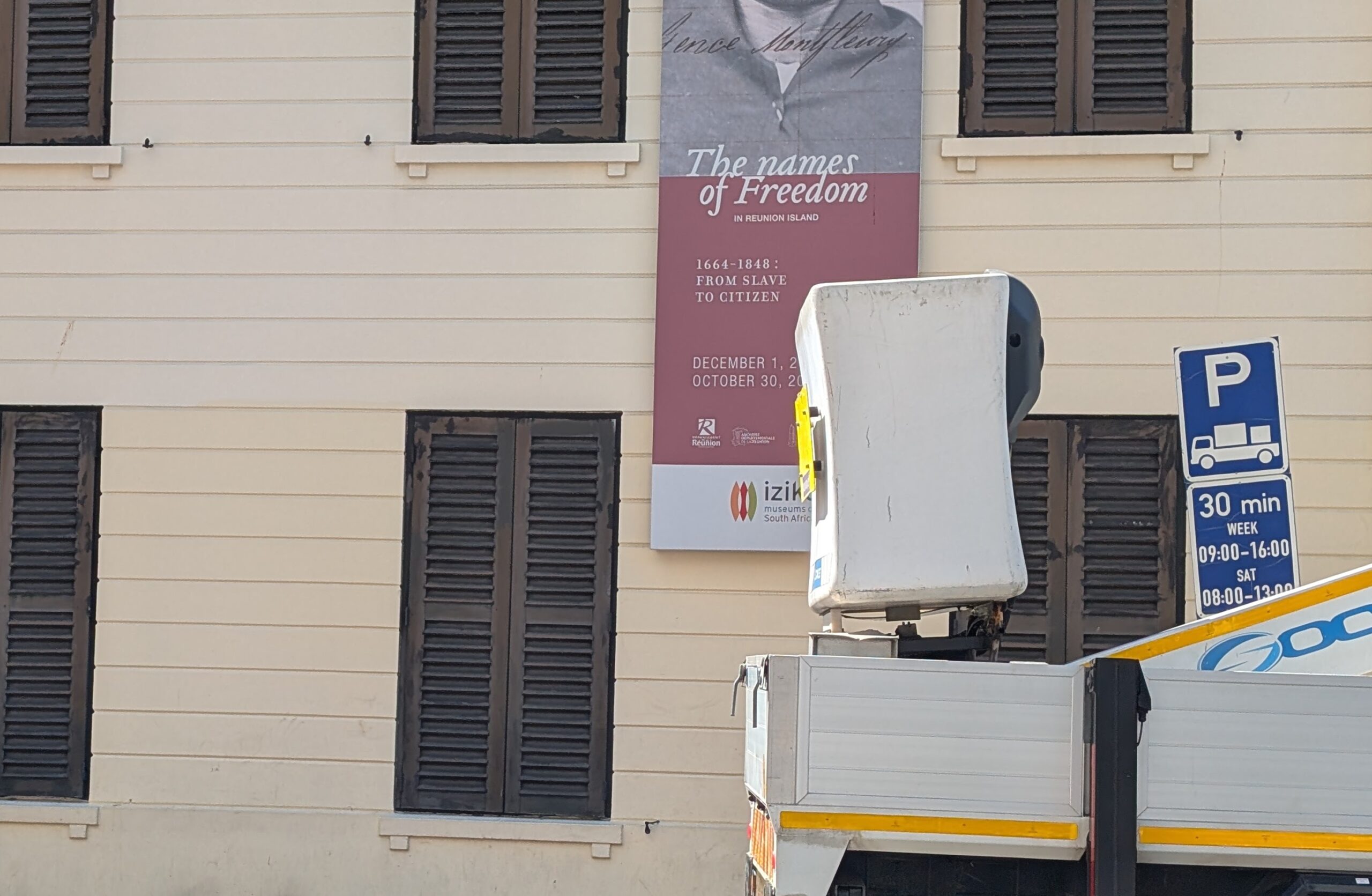
Buildings associated with South Africa’s freedom and history in Cape Town include the Iziko Slave Lodge, the District Six Museum, the Bo-Kaap Museum, and the Groote Schuur Building. Other historically significant buildings related to this theme include the Castle of Good Hope and the Iziko Social History Centre.

Later, we drove along the coast, where waves crashed against the rocky shoreline, sending up plumes of white spray. Our guide let the scenery do most of the talking, offering only gentle notes, where fishermen cast their lines at sunrise, which beaches locals escape to on sweltering afternoons, and how the color of the water shifts with the seasons. As we looked out at the expanse of the Atlantic, I felt a familiar blend of gratitude and longing. Gratitude for the privilege of witnessing so many corners of the world, longing because every beautiful place leaves an imprint, a soft tug that stays with you long after you’ve moved on.

The city of Cape Town was clean and attractive in many ways.
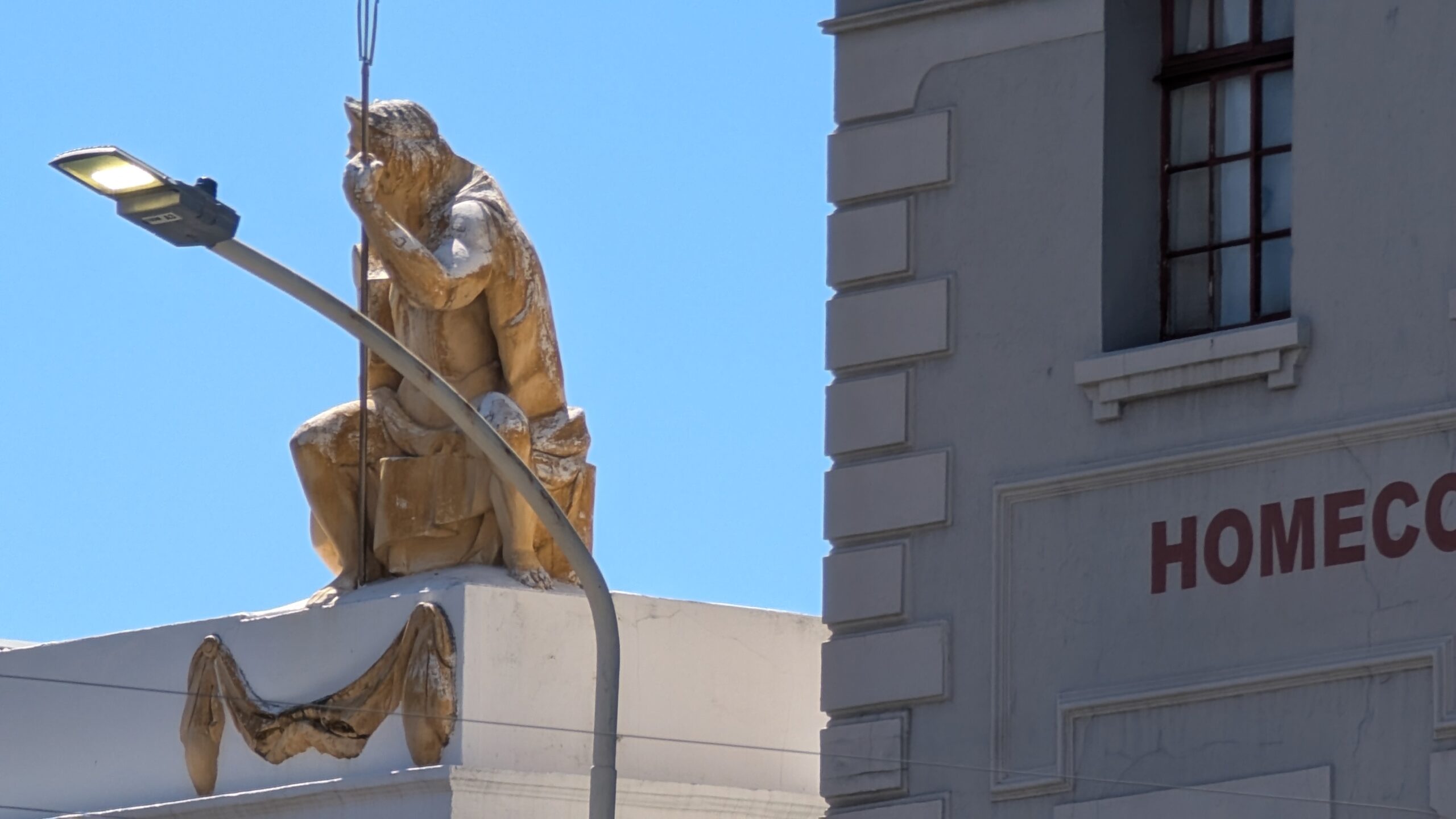
Unidentified gold statue atop a building in Cape Town.

By the time our tour wrapped up and the city began to glow with afternoon light, I felt that Cape Town had opened itself to us in a way only a skilled guide can orchestrate, honestly, gently, and with a sense of invitation. We returned to our ship with full hearts, carrying with us not just facts and photos but the feeling of a city alive with stories, stitched forever into our own.

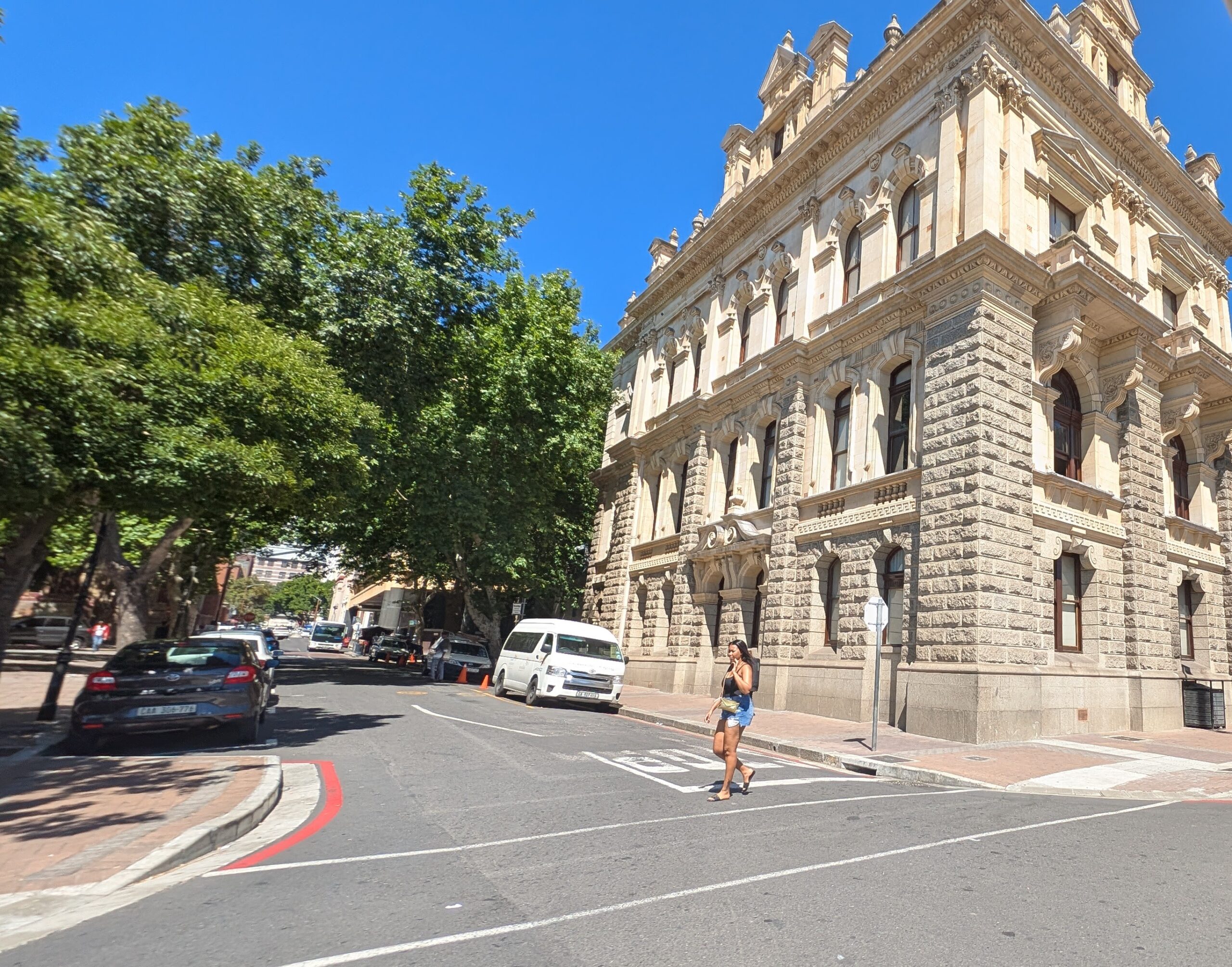
We are unsure of the name of this building.
Another building we can’t identify.

Unfortunately, riding in Patrick’s vehicle through insane traffic prevented us from remembering the details of every photo, and we are unable to identify every scene. However, regardless of that reality, we were entranced by the sights and look forward to sharing more in tomorrow’s post.

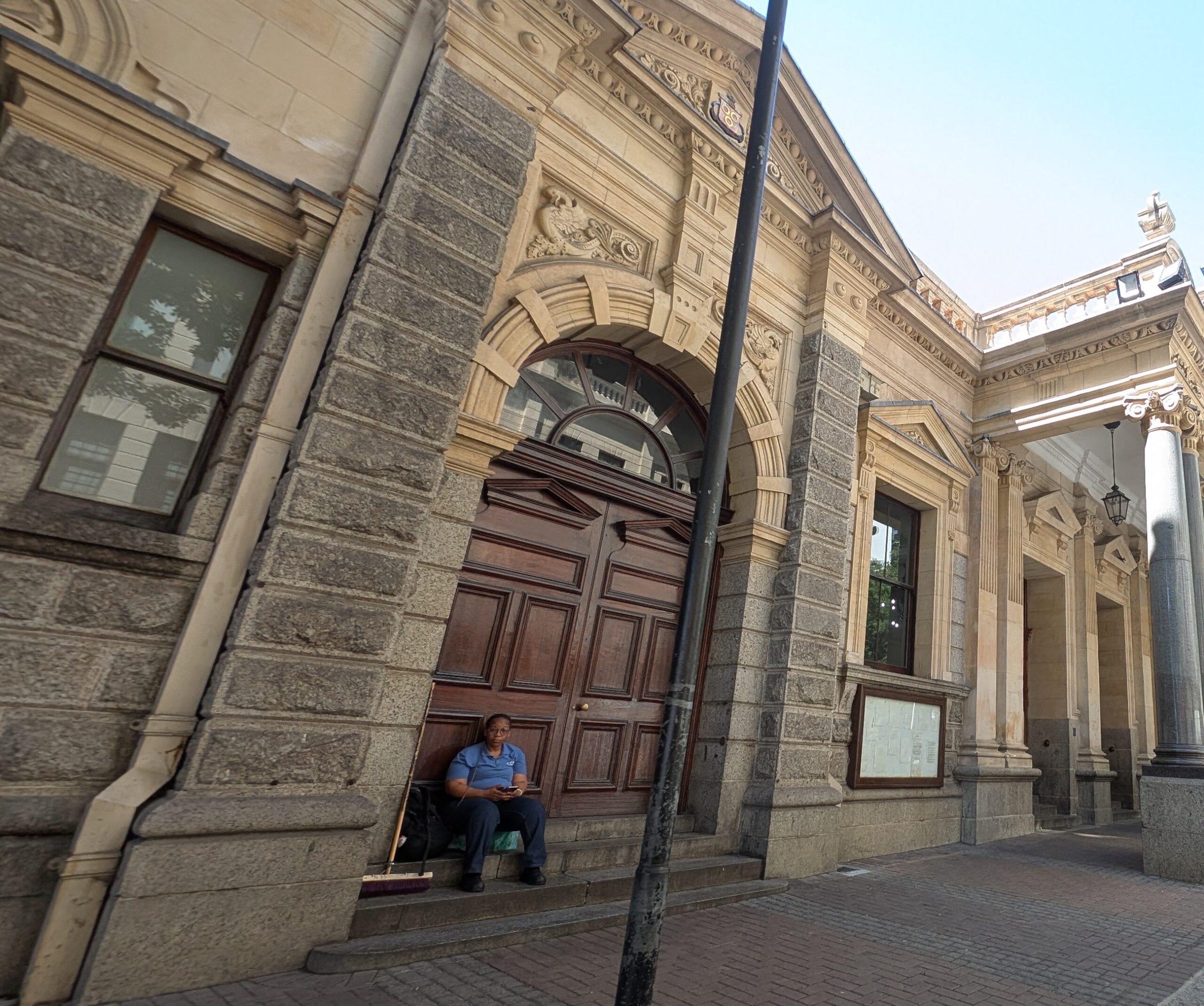
Doorway to a church in the city.
Table Mountain most famously refers to the flat-topped mountain in Cape Town, South Africa, an iconic landmark and one of the New 7 Wonders of Nature. Visitors can take a rotating cable car to the summit for panoramic views of the city, or hike one of the many challenging trails. We’ll be sharing more photos and views from Table Mountain in tomorrow’s post.
One of several views we’ll share when at the famous Table Mountain.
Lion’s Head is a mountain in Cape Town, South Africa, between Table Mountain and Signal Hill. Lion’s Head peaks at 669 metres above sea level. The peak forms part of a dramatic backdrop to the city of Cape Town and is part of the Table Mountain National Park.

A fantastic surprise we promised to share today… Our dear friends from Marloth Park, Louise and Danie, are meeting us at the pier at 2:00 pm to share sundowners at a local pub and to have a lively conversation about our exciting visit to their home city, Cape Town.

Be well.

Photo from ten years ago today, November 14, 2015:

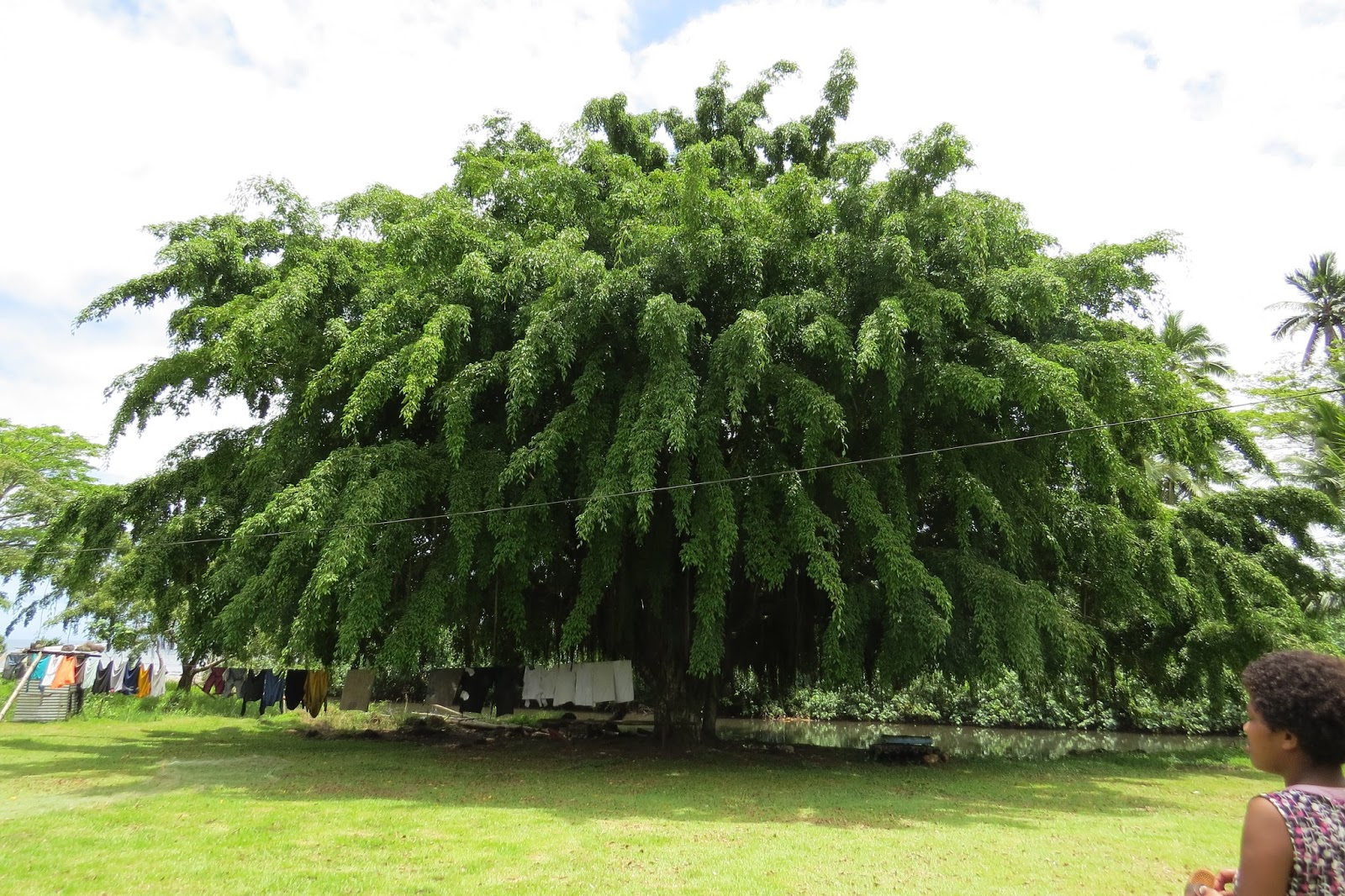
A beautiful tree hanging over the inlet, which we spotted during our visit to the village of Vuodomo. For more photos, please click here.

Day 17…Part 2, Walvis Bay, Namibia…Flamingos…

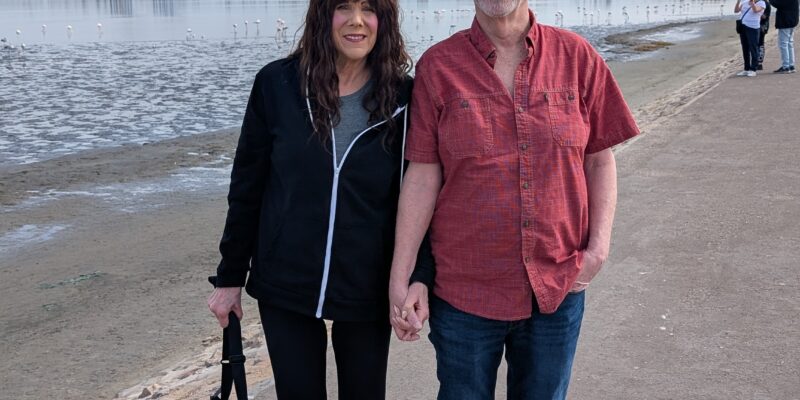
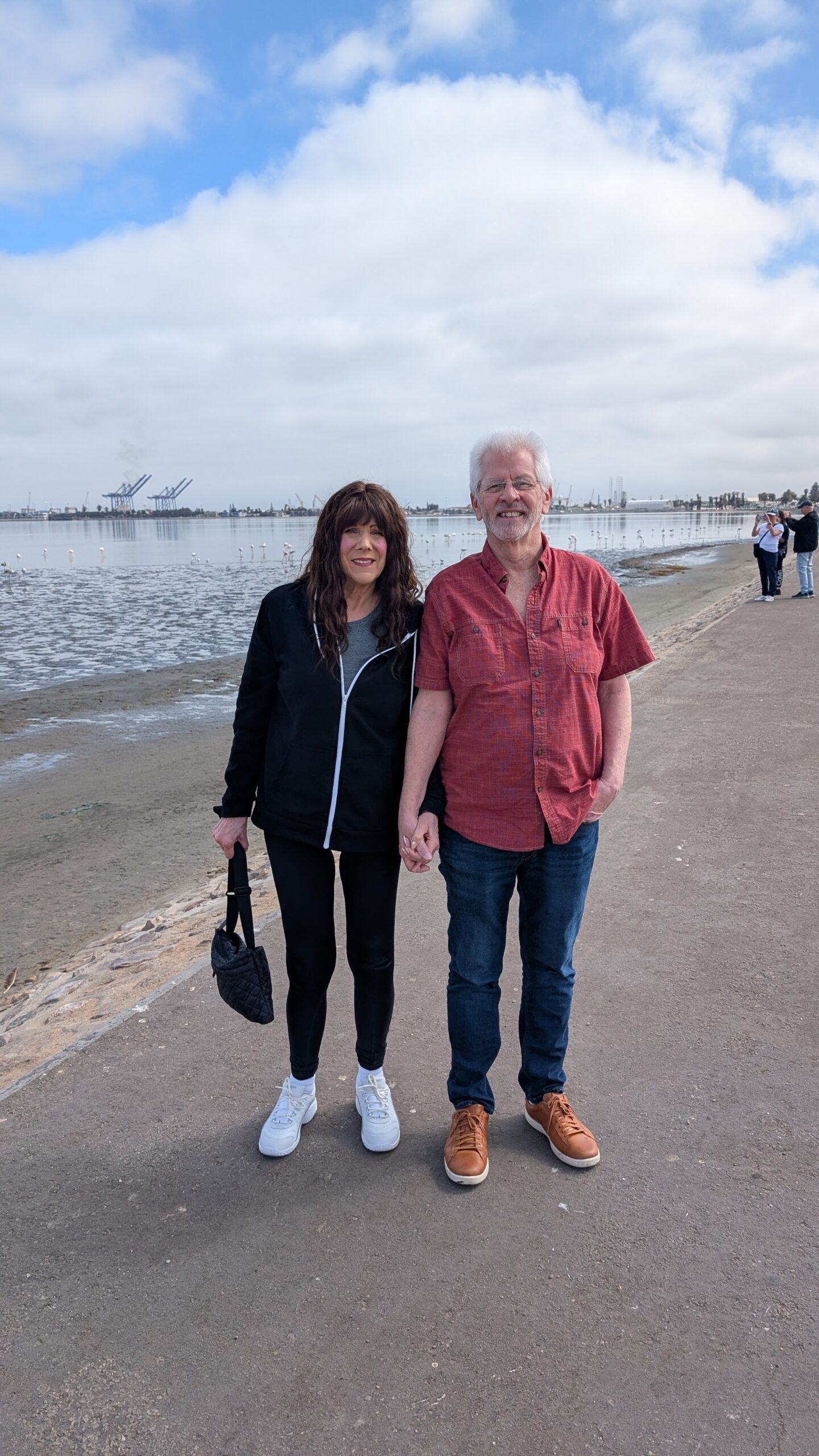
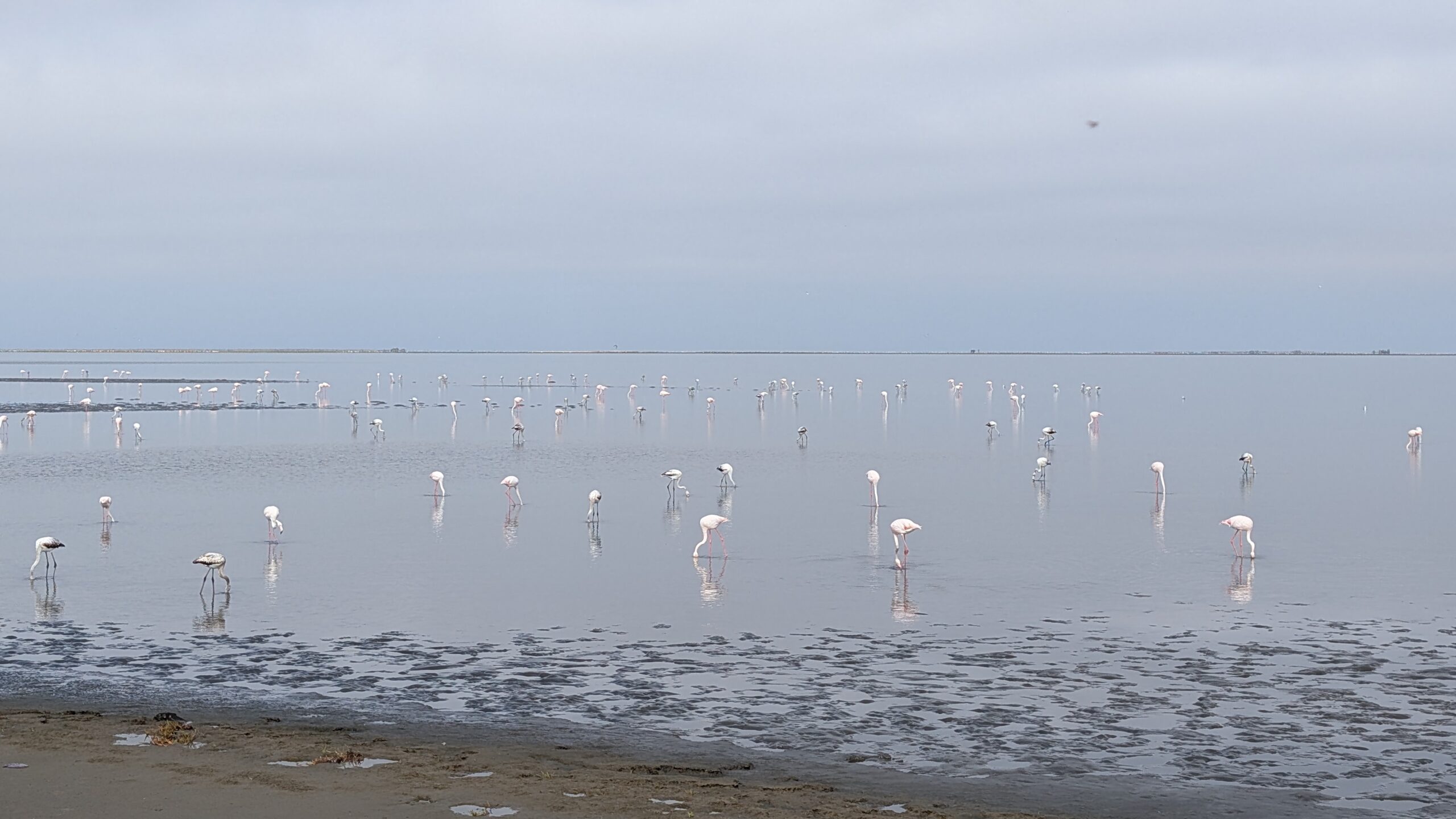
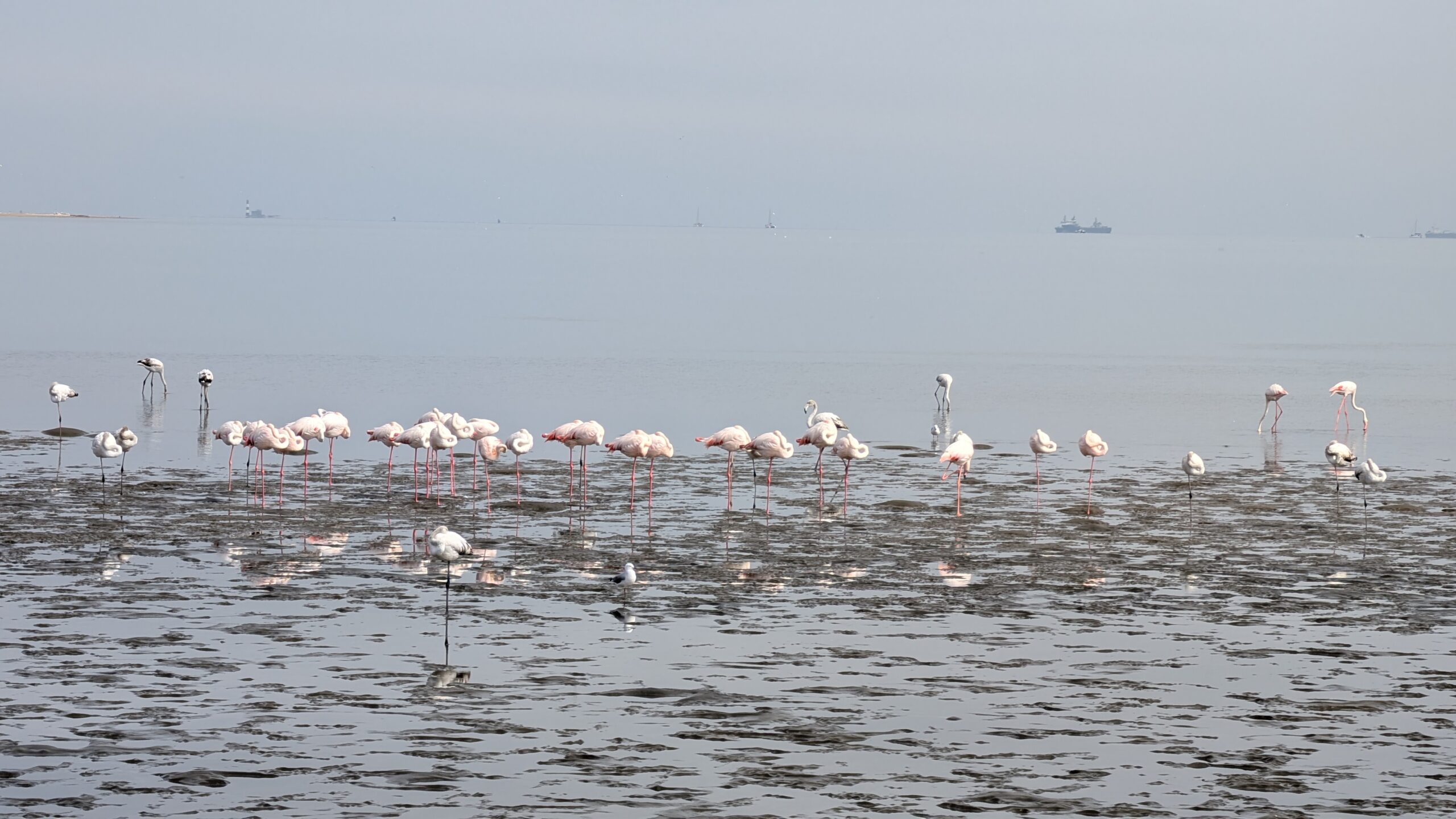
We were thrilled to see the flamingos in Walvis Bay.

On Monday, as we stood at the edge of the Walvis Bay Lagoon, the air was still and heavy with the scent of salt and seaweed. The soft hush of the ocean was interrupted only by the distant calls of the flamingos, hundreds, perhaps thousands of them, dotting the shallow waters in every direction. It was one of those moments that silences conversation, when nature’s display is so extraordinary that words simply can’t compete.

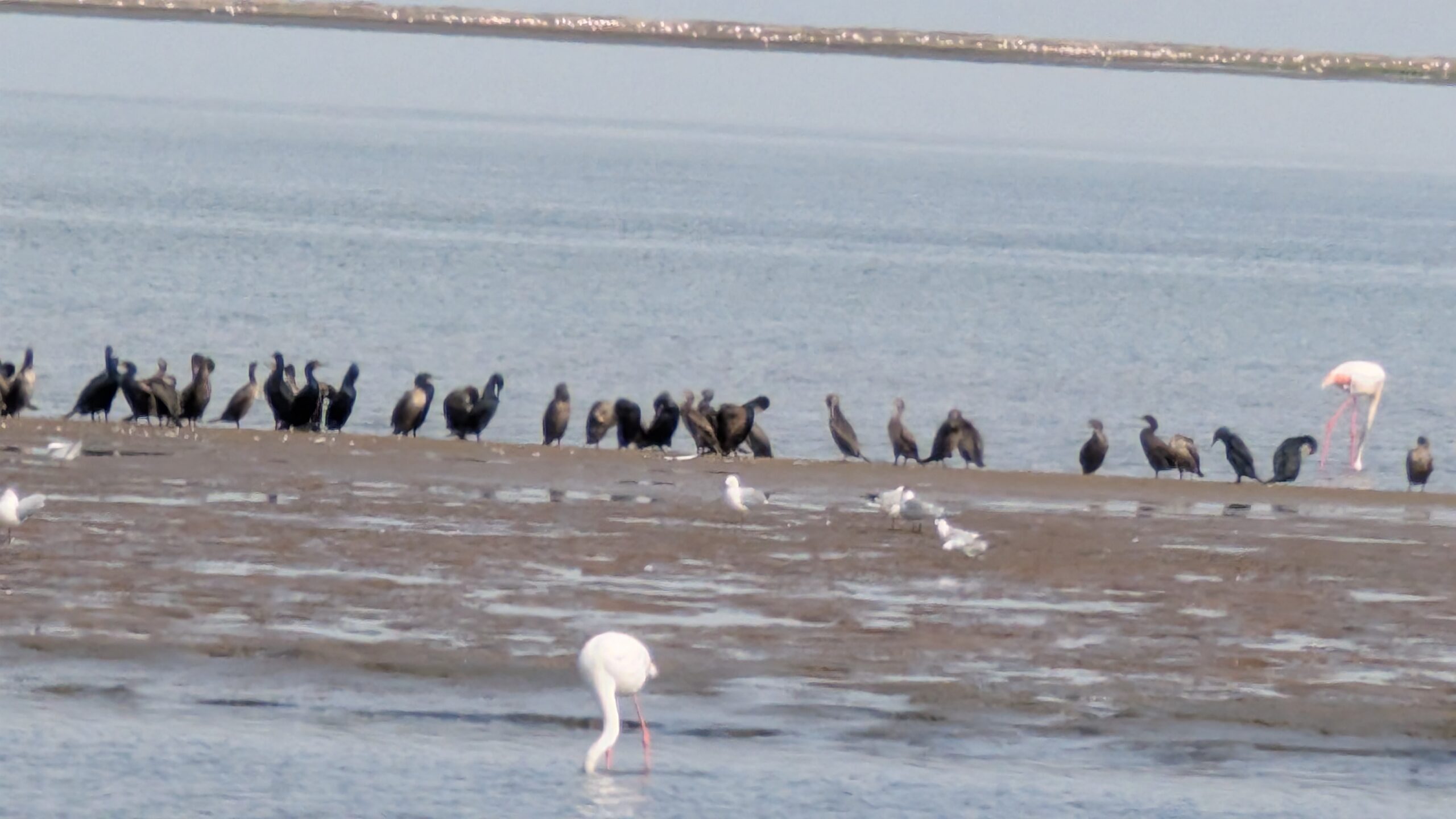
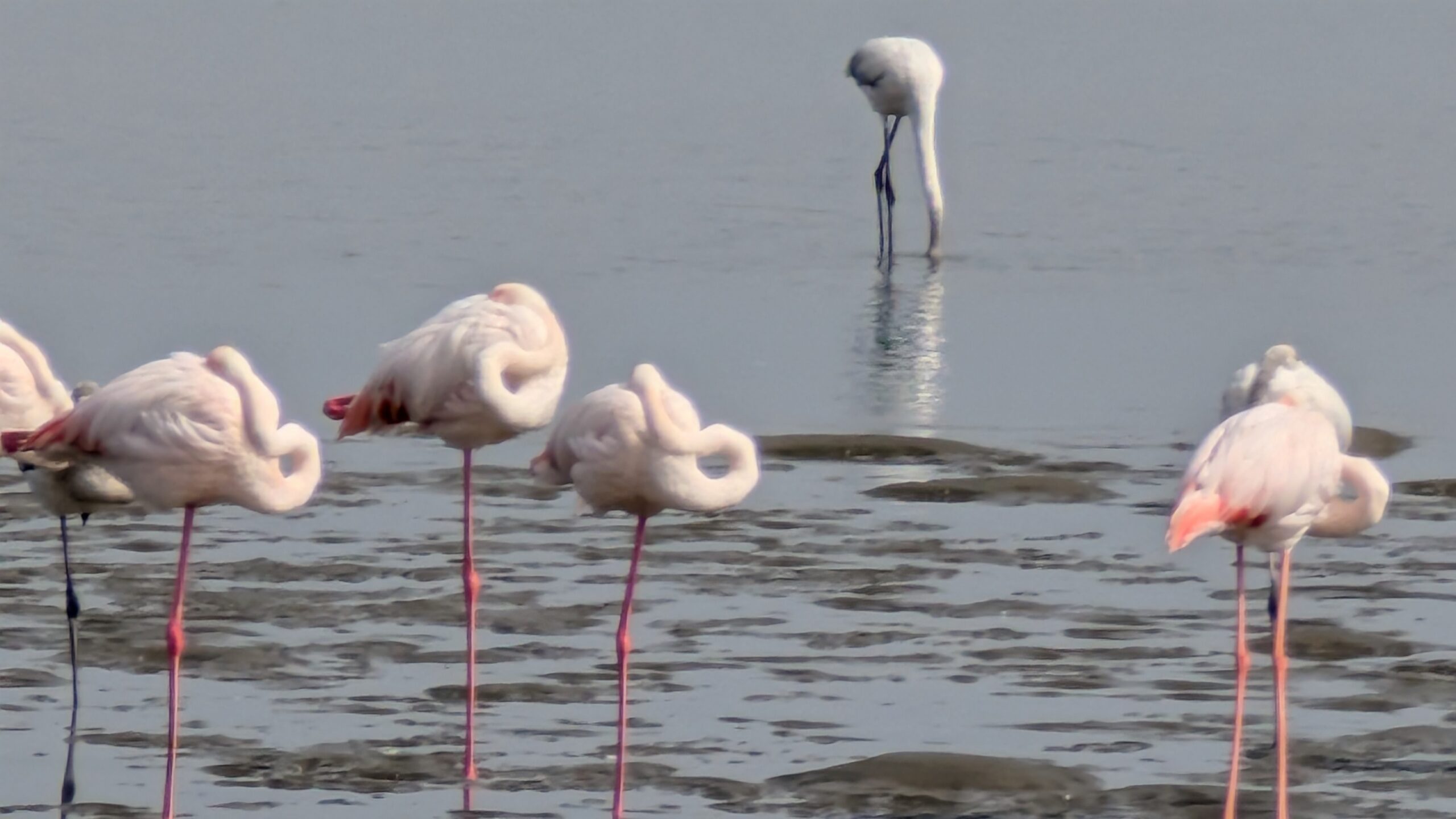
While there are no native “black flamingos” (which are extremely rare genetic anomalies), some of the black birds that are commonly found with flamingos include the African Oystercatcher and the Black-necked Grebe. Additionally, migratory terns such as the Caspian Tern and Common Tern are black-and-white and can be seen in large numbers alongside the flamingos.
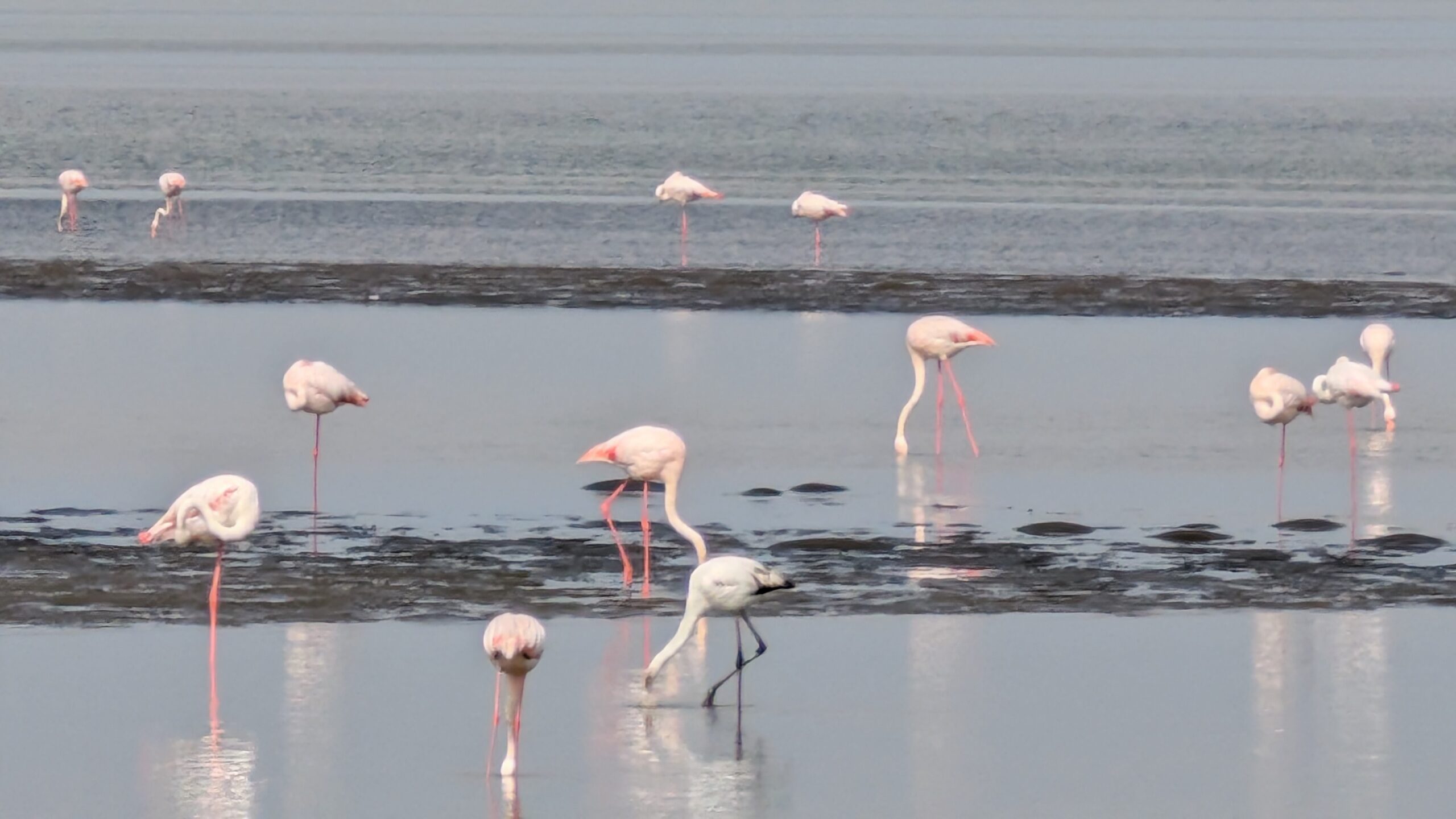
We’d expected to see more flamingos in one location, but there were thousands in different areas along the shore.

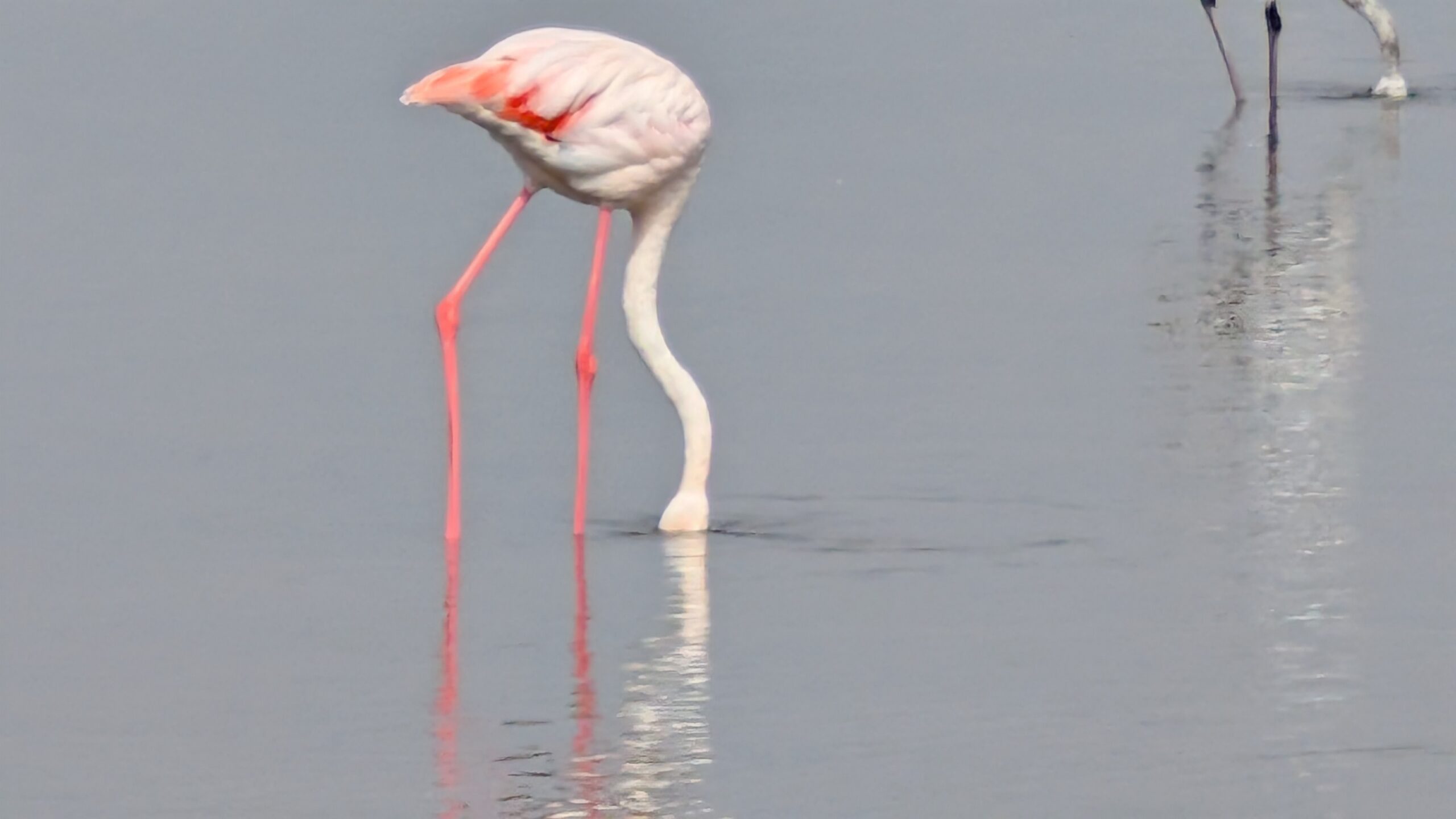
The flamingos here are an iconic feature of Walvis Bay, a living, breathing tapestry of pink and white across the blue-gray water. As the morning light shifted, their feathers glowed in varying shades of rose, blush, and coral, creating a scene almost too beautiful to seem real. Some stood still on one impossibly thin leg, heads tucked neatly beneath a wing, while others waded gracefully through the shallows, dipping their curved bills into the water to feed. It’s mesmerizing to watch their heads move back and forth as they filter tiny crustaceans and algae from the water, the very source of that radiant color.

The flamingos tend to gather in the shallows.

Flamingos are curious creatures. From a distance, they appear delicate, almost fragile, but up close, you realize they are strong and sturdy, built for balance and endurance. Their bright hues come not from birth but from diet, specifically the microscopic shrimp and plankton rich in beta-carotene that thrive in these mineral-laden waters. The salt pans and lagoons around Walvis Bay provide the perfect habitat for this. The wetlands here are recognized as a Ramsar site, an international designation protecting crucial habitats for waterfowl, and it’s easy to see why. Beyond the flamingos, there are pelicans, cormorants, and countless other species sharing the same shimmering expanse.

They are masterful at standing on one leg.

We arrived early in the morning, hoping to catch the best light for photos, and we were rewarded beyond expectation. The rising sun painted the water in soft gold, and the flamingos reflected like brushstrokes across a mirror. Every time a slight breeze rippled the surface, the reflections wavered, turning the scene into an impressionist painting come to life. A few flamingos took flight, their long necks stretched forward, legs trailing behind like streamers. In that moment, their black-tipped wings flashed dramatically against the pale pink of their bodies, a sight that made us gasp aloud.4

We didn’t see many with their heads above water.

What struck me most was their serenity. Even in large numbers, there’s a quiet order among them. They move with patience, as if time is irrelevant, as if they exist in a world untouched by hurry. Watching them, I couldn’t help but think of how this calm rhythm contrasts so deeply with our own often hurried pace of travel. Here, everything slows down. The flamingos seem to remind us that beauty is best appreciated when we pause long enough to truly see it.

These interesting birds are often found in African countries.

The crunch of salt crystals beneath our shoes, the distant hum of a fishing boat, and the low murmur of the breeze made the experience feel almost meditative. Occasionally, one flamingo would utter a low, guttural sound, as if checking in with the others, but for the most part, silence prevailed.

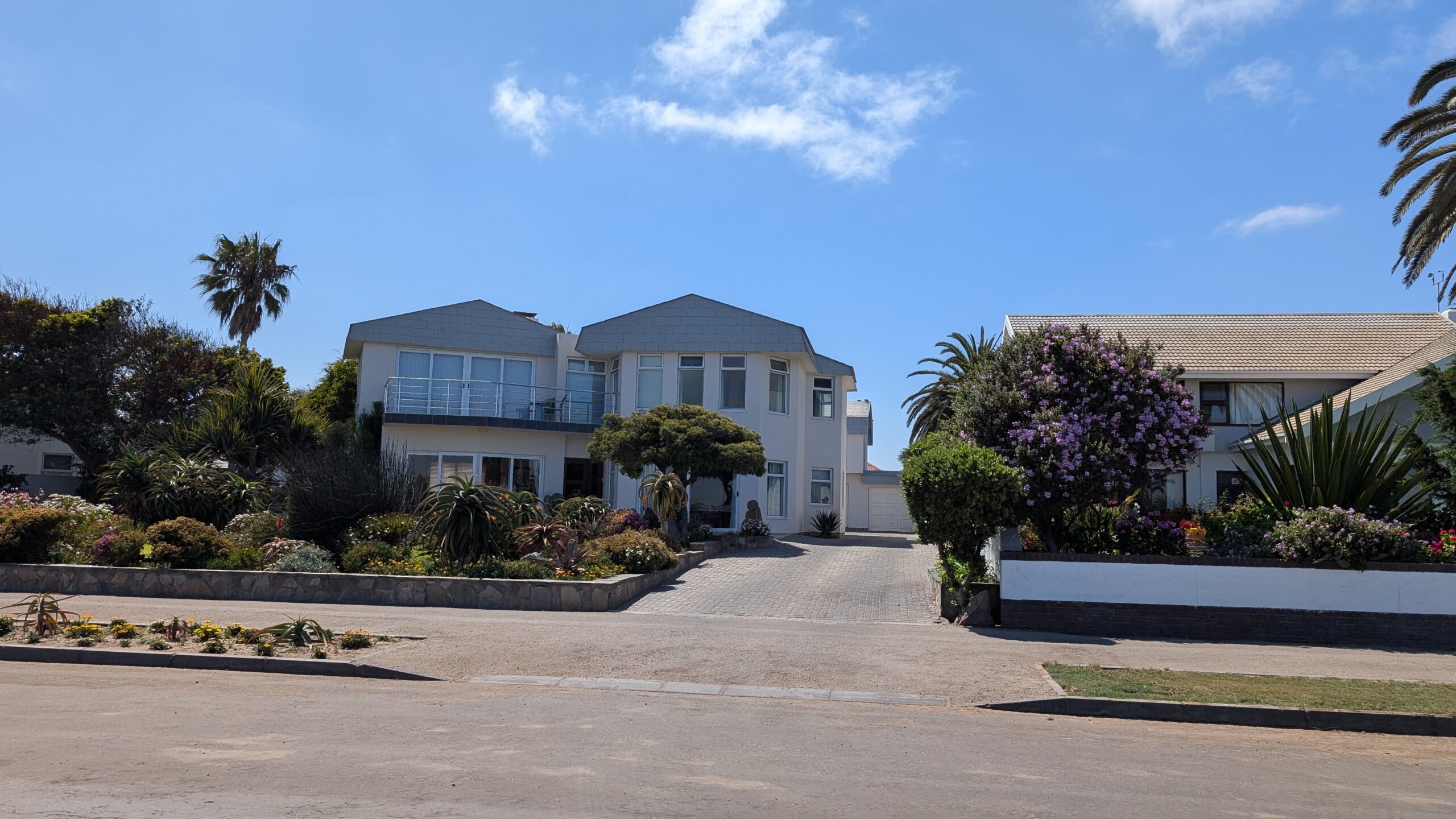
Upscale home in Walvis Bay overlooking the sea.
Multi-unit property in Walvis Bay, overlooking the sea.

By the time we left, the sun was high, and the colors of the lagoon had shifted again. The pinks now appeared softer, blending gently into the silvery-blue horizon. The flamingos were still feeding, still wading, still performing their ancient ritual as they have done here for generations. It’s easy to see why Walvis Bay is often called one of Namibia’s most picturesque coastal spots. The flamingos lend it a kind of magic, transforming a simple saltwater lagoon into a masterpiece of living color.

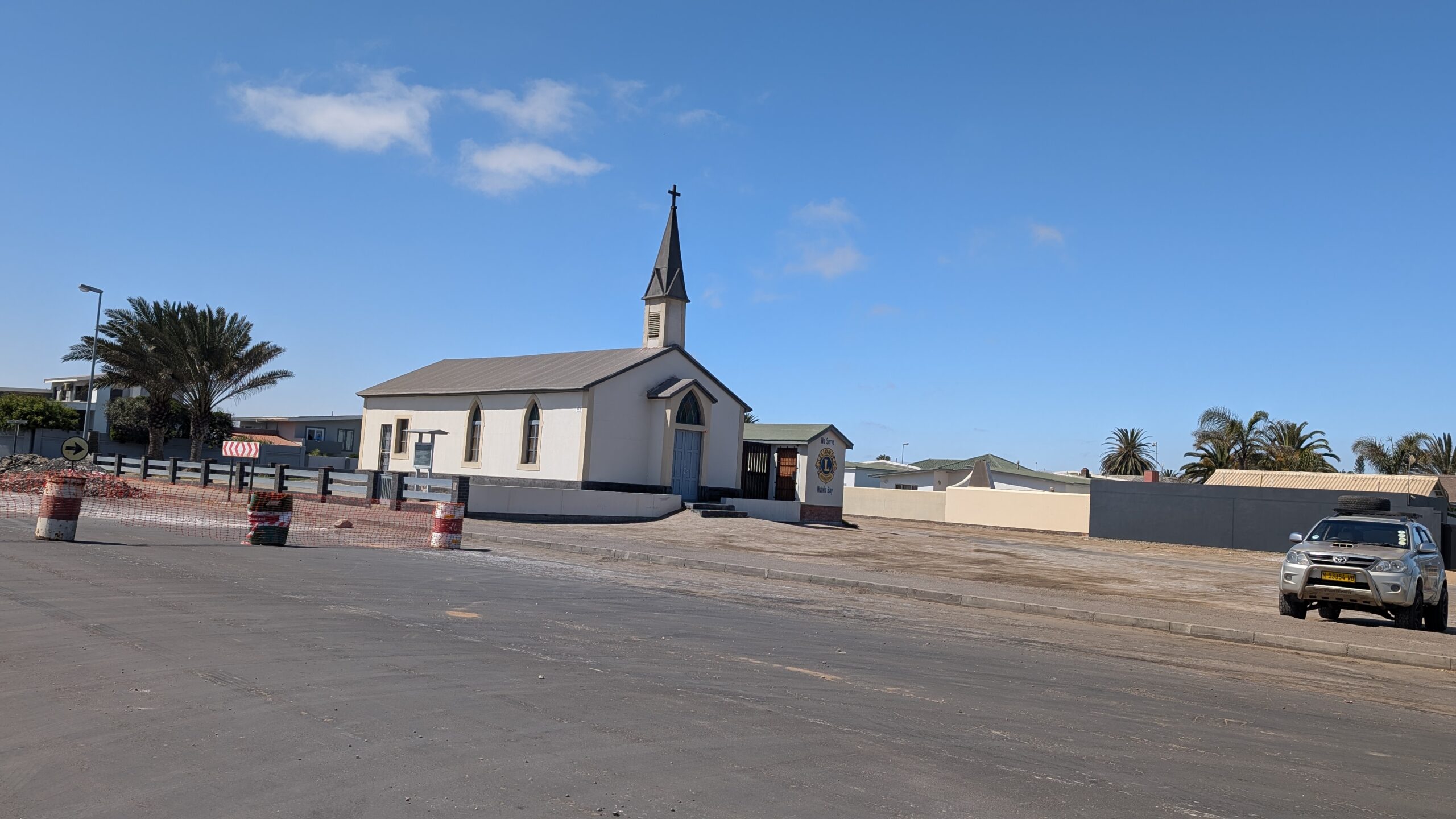
The Rhenish Mission Church is the historic church in Walvis Bay, Namibia. Built by German missionaries, it was prefabricated in Hamburg and reconstructed in Walvis Bay in 1880, making it the oldest surviving building in the city. Originally serving the German community, it was later used as a school and now stands as a historical landmark, occasionally used for special events.

As we drove away, I looked back one last time. The flamingos were still there, their slender forms shimmering in the heat, and I knew the image would stay with me long after we’d gone, one of those rare travel moments that imprints itself deeply in memory, a reminder of nature’s grace and the quiet joy found in simply watching the world unfold.

Tomorrow, we’ll be in Cape Town for almost two days, with an exciting event we’ll share soon about Friday!

Be well,

Photo from ten years ago today, November 12, 2015:

A mooring spot for the locals in Savusavu, Fiji. For more photos, please click here.

Day 14, Sea days continue…Tomorrow, Walvis Bay, Namibia…

Today marks the last of our nine consecutive days at sea. It’s almost hard to believe how quickly this stretch of ocean life has passed. When we first realized we’d have over a week without a single port stop, it sounded like a long time, days merging into one another, the horizon stretching endlessly in every direction. But here we are, on the eve of reaching Walvis Bay, Namibia, feeling as though the rhythm of the sea has become part of our internal clock. Each sunrise has painted its own story across the water, and each evening, as the ship gently rocked beneath us, we’ve watched the sun sink into the vast Atlantic with the same sense of awe as the day before.

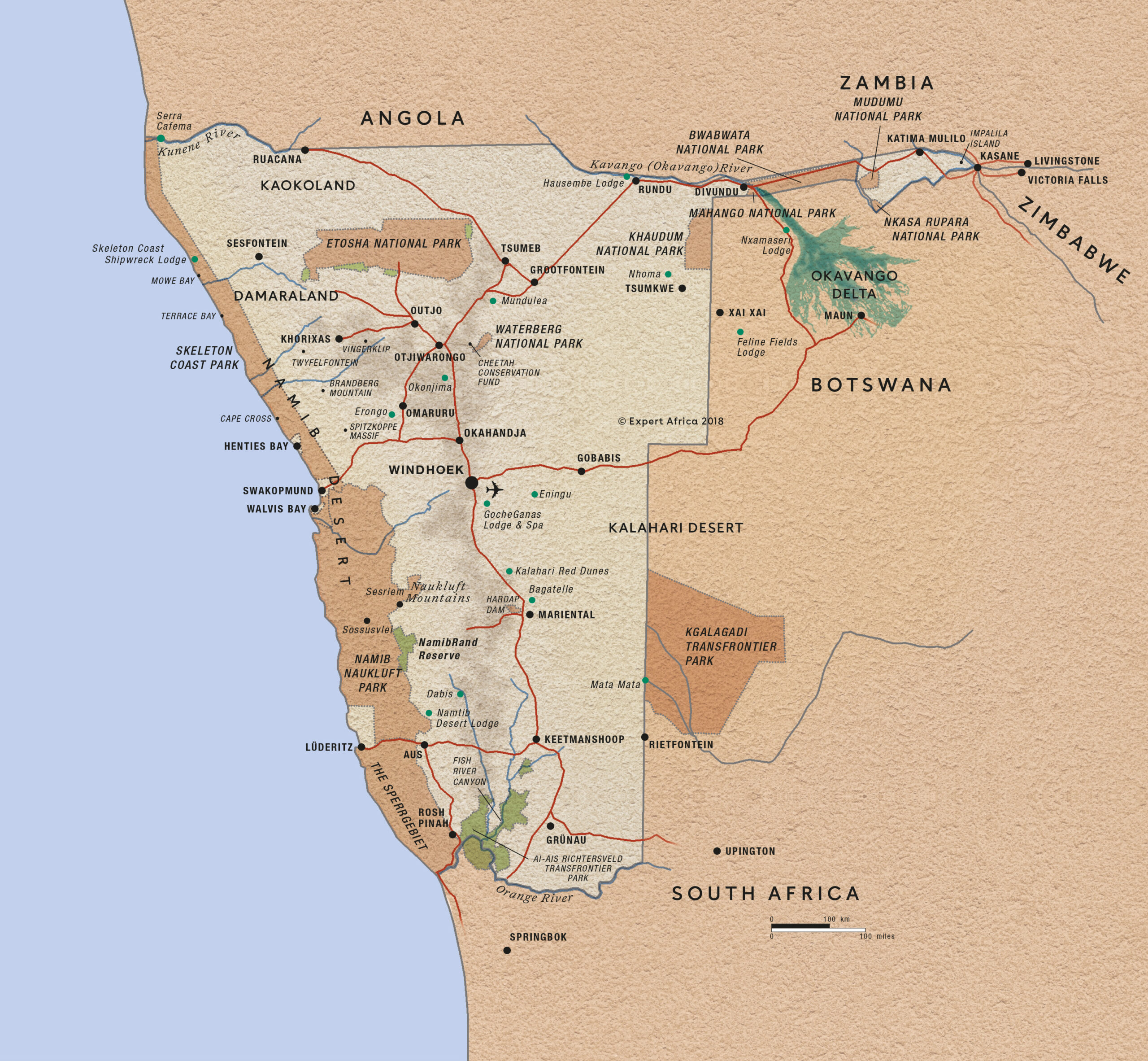
Tomorrow, when the ship finally docks, we’ll step ashore and breathe in the dry desert air of Namibia. The plan is simple: no tours, no rush, just a taxi ride into town to see a few of the sights. After so many days surrounded only by water, the thought of solid ground beneath our feet feels strangely foreign and yet welcome. Walvis Bay, with its sand dunes meeting the sea, flamingos wading through the shallow lagoons, and quiet stretches of coastline, will be a lovely change of scenery. We’ve talked often about spending an extended period in Namibia someday, and this visit will give us a taste of what that might feel like.

Namibia has always intrigued us. There’s a quiet wildness about it, a sense of solitude that feels both vast and comforting. It’s the kind of place that seems to understand travelers like us, those who move slowly, staying long enough to absorb the rhythm of a place before heading on to the next. When we do eventually stay there, we can remain for a few months before returning to South Africa, since Namibia’s proximity on the northwest border doesn’t interfere with our visa timing. It’s a convenient and appealing option, especially since we can make our way back to Marloth Park afterward, a place that always feels like a second home to us.

However, the intricacies of South African visa regulations make planning a bit like solving a puzzle. It’s not as simple as crossing a nearby border and re-entering to get a fresh visa stamp. South Africa has strict rules to prevent what it calls “border hopping,” where visitors leave the country briefly to return for another 90-day stay. Bordering countries such as Namibia, Mozambique, Zimbabwe, and Botswana don’t qualify for new visa entries. To re-enter South Africa after our permitted time, we must either return to our home country or visit a non-bordering African nation or another country outside of Africa.

That’s one of the reasons we’ve traveled to Zambia so often in the past. Zambia doesn’t share a border with South Africa, making it a viable destination when we need to step away briefly before re-entering. Each time we’ve visited, we’ve discovered something new, lush landscapes, friendly people, and the spectacular Victoria Falls, which never loses its power to amaze. It’s fascinating how our travel patterns have been shaped not just by wanderlust but by the practicalities of visas and regulations. Over time, it’s become second nature to plan our route around these rules, blending bureaucracy with adventure in a way that feels almost seamless now.

Still, when we stand on the deck tonight, watching the final sunset of this long stretch at sea, none of that feels complicated. The horizon glows in shades of gold and rose, and there’s a quiet peace in knowing that tomorrow we’ll set foot on African soil again. We’ve learned to take these transitions in stride, the slow days at sea, the anticipation of arrival, and the steady hum of plans forming for the months ahead. Life as perpetual travelers requires flexibility, but it also rewards us with a deeper understanding of how connected everything is: the people, the landscapes, even the bureaucracies that nudge us from one place to another.

So tonight, as the ship glides through calm waters and we prepare for our arrival in Walvis Bay, I feel both grateful and grounded. These days at sea have reminded me how content we are living this way, moving forward, adapting, finding joy in both the journey and the waiting. Tomorrow, a new chapter begins, if only for a day, as we step off the ship and into the sandy beauty of Namibia, carrying with us the gentle rhythm of the ocean and the quiet excitement of what lies ahead.

Be well.

Photo from ten years ago today, November 9, 2015:

Tom checked in at the dental office reception desk on the Savusavu hospital grounds, providing only his name when he had an abscessed tooth. The dental bill was US $2.63. See the post here.

Day 13, Sea days continue…Update on the cruise cough…Tamiflu benefits…

When that familiar ache settles deep into the bones, the chills start creeping across your skin, and the world suddenly feels like it’s been wrapped in fog, most of us know that dreadful feeling—it’s the flu. Not just a little sniffle or a passing sore throat, but the real thing, the kind that knocks you flat for days. That’s where Tamiflu, or Oseltamivir as it’s known generically, comes into the picture. Over the years, it’s become a trusted companion for those of us who’ve faced influenza’s wrath and wanted a fighting chance at shortening the misery.

Tamiflu is what you reach for when you can feel the flu tightening its grip, especially within the first 48 hours of symptoms. That timing is critical. The medication doesn’t work like a magic wand; it can’t eradicate the virus, but it can slow its multiplication in the body. What that means for most people is fewer days of fever, body aches, and exhaustion. In some cases, it can shorten the illness by as much as one or two days, which doesn’t sound like much until you’ve been bedridden, staring at the ceiling, wondering if you’ll ever feel normal again. Those two days can feel like a gift.

For travelers like us, constantly moving between climates, continents, and crowded environments like airports and cruise ships, the risk of catching the flu is always lurking. We try to be careful, washing hands frequently, eating well, and staying rested, but exposure is inevitable when you’re surrounded by people from all over the world. Having Tamiflu on hand provides a layer of comfort, almost like carrying an umbrella when the forecast looks stormy. You might not need it, but when you do, it’s invaluable.

One of Tamiflu’s greatest benefits is its ability to help prevent complications, particularly in older adults or those with underlying conditions. The flu is more than just an inconvenience for people with heart disease, diabetes, or respiratory issues—it can be life-threatening. By slowing down the virus’s ability to reproduce, Tamiflu helps reduce the risk of the infection spreading deeper into the lungs, where it could lead to pneumonia or other severe complications. For many, it’s a way to stay out of the hospital and on the path to recovery at home.

Another important aspect is its use as a preventive measure. When someone close to you comes down with the flu, a spouse, a cabinmate, or even a fellow traveler on a long cruise, it’s often only a matter of time before others follow. But with Tamiflu, there’s a possibility of stopping that chain reaction. When taken as a prophylactic, it can reduce the likelihood of developing the flu even after exposure. It’s not foolproof, but it can make the difference between staying healthy and joining the ranks of the feverish and coughing.

What many people appreciate about Tamiflu is how relatively easy it is to take. It’s available in both capsule and liquid form, and when started early, the side effects are usually mild, sometimes a bit of nausea or a headache, but nothing compared to the agony of full-blown influenza. It’s a reminder that while modern medicine doesn’t have all the answers, it has given us tools that can ease our suffering and speed our return to normal life.

There’s also a psychological benefit that shouldn’t be underestimated. Knowing there’s something you can do, some form of defense, can ease the helplessness that often comes with getting sick far from home. We’ve learned that having a small supply of Tamiflu in our travel medical kit brings peace of mind. When you’re in a foreign country or at sea, where access to medical care can be limited or delayed, that little blister pack can feel like reassurance in tangible form.

Ultimately, Tamiflu doesn’t promise perfection, but it offers hope. It reminds us that even when illness finds us, we’re not entirely at its mercy. Whether taken to lessen the flu’s severity, to prevent its spread, or simply to bring comfort during an uncertain time, Tamiflu remains a valuable ally in the traveler’s arsenal, and for anyone who wants to feel just a little more in control when the flu comes calling.

No words can express how grateful I am that Doc Theo prescribed Tamiflu in the event we started coming down with a virus on the ship. It has, without a doubt, prevented me from a long-term bout with the cruise cough and flu, which started several days ago and is significantly improved.. Please check with your medical professional for assistance with this drug.

Be well.

Photo from ten years ago today, November 8, 2015:

In Fiji, Badal, the neighbor Sewak’s beloved dog, visits us almost every day, checking out what may be on the menu. We never fail to give him a plate of something delicious. After he does, he sits on the veranda looking at me with his legs crossed, hoping for second helpings. He looks fit and healthy compared to many dogs we’ve seen in the village. For more photos, please click here.

Day 12…Sea days continue…The world of cruising, including an array of demographics…

A towel crab on our bed last night.

In 2025, the world of cruising continues to evolve, and nowhere is this more evident than on the ships of Celebrity Cruises and Royal Caribbean. These two lines, while under the same corporate umbrella, attract somewhat different guests, each with distinct motivations and expectations. Yet, they share one powerful commonality: the magnetic pull of the sea and the desire to escape the ordinary. Walking the decks of either line, one quickly senses the diversity of today’s cruising demographic, an ever-expanding tapestry of ages, backgrounds, and stories from around the world.

On Royal Caribbean, the atmosphere is lively and intergenerational, a microcosm of modern travel where families, couples, solo adventurers, and retirees coexist under the same expansive sky. The average age of passengers hovers in the mid-forties, but that number barely scratches the surface of the real story. Parents travel with children, sometimes even with grandparents in tow, making these voyages multi-generational gatherings unlike any other. The newer, larger ships, floating cities in their own right, offer endless opportunities for fun and excitement, attracting thrill-seekers and those seeking a new experience every day. There are rock-climbing walls, surfing simulators, ice-skating rinks, zip lines, and Broadway-style shows. These ships are designed for those who see travel not as an escape but as an adventure.

Celebrity Cruises, by contrast, appeals to a slightly older, more refined demographic. The average age of passengers leans closer to the fifties and sixties, and the pace is gentler, more contemplative. These guests appreciate fine dining, art, culture, and conversation over cocktails at sunset rather than karaoke or game shows. Couples celebrating anniversaries, seasoned travelers who’ve already seen the world, and professionals taking a break from demanding lives fill the elegant spaces onboard. The design of Celebrity’s ships, sleek and modern with thoughtful touches of luxury, mirrors the preferences of its clientele: sophisticated yet not pretentious, polished yet never sterile.

Still, the gap between the two lines is narrowing in fascinating ways. Royal Caribbean’s younger guests are aging into Celebrity’s demographic, bringing with them a love of technology, connectivity, and wellness that is reshaping the luxury cruise experience. At the same time, Celebrity’s efforts to attract a younger audience, through social media outreach, wellness programs, and modern cuisine, are paying off. Millennials and Gen X travelers, many of whom once thought of cruises as something their parents did, are now embracing the ease, value, and quality these voyages offer. Couples in their thirties and forties are booking suites and spa cabins, appreciating the balance between relaxation and exploration.

Both lines are seeing an influx of international passengers. North Americans still make up the majority of guests, but travelers from the UK, Europe, Australia, and Asia have grown significantly. As the world becomes more connected and the cost of long-haul flights continues to stabilize, cruisers are venturing farther afield to join itineraries in the Mediterranean, Asia, South America, and beyond. For many, these cruises serve as floating hotels, offering a familiar comfort while exploring foreign ports. For others, they are a social experience, an opportunity to meet like-minded travelers who share a passion for the world.

Flash mob practice in the Star Lounge.

Another emerging trend in 2025 is the increasing number of digital nomads and remote workers who choose to sail for months at a time. High-speed internet, once a luxury, has become a lifeline, enabling guests to work from anywhere, even in the middle of the ocean. Celebrity’s quieter, more luxurious setting appeals to those who crave both productivity and tranquility, while Royal Caribbean’s bustling energy suits travelers who prefer to balance work with play. It’s not unusual now to see laptops open at a café overlooking the sea, where someone types away between ports, turning a stateroom into an office with a view.

Cruising has also become more inclusive and accessible. Both Royal Caribbean and Celebrity are welcoming guests from a broader range of economic and cultural backgrounds than ever before. Special promotions, loyalty programs, and flexible itineraries have opened the doors to travelers who once thought cruising was out of reach. Solo cabins, a relatively recent innovation, have also changed the face of the passenger mix, encouraging those who travel alone, by choice or circumstance, to join in the experience without paying the traditional “single supplement.” This shift has added a vibrant new energy on board, as solo travelers bring fresh perspectives and spontaneous friendships.

In the end, the demographics of 2025 tell a story of transformation. Cruising is no longer the preserve of retirees or the wealthy. It has become a reflection of the global traveler, curious, connected, and craving experiences that blend comfort with discovery. On Royal Caribbean, the laughter of children echoes through the promenade while couples dance under the stars. On Celebrity, the clink of wine glasses mingles with the soft hum of conversation in elegant lounges. Together, they capture the full spectrum of modern travel, where age, nationality, and background blur into something shared, a love of the sea, of new horizons, and of the gentle rhythm of life aboard a ship.

Be well.

Photo from ten years ago today, November 7, 2015:
After recently watching a David Attenborough documentary on the in-depth life cycle of caterpillars, we gained a new perspective on these amazing creatures, with two distinct life cycles as they eventually morph into butterflies. We spotted this one on the veranda a few days ago. For more photos, please click here.

Day 11…sea days continue…Oh no! The dreaded cruise cough!….

It was Tuesday night when I first felt that familiar tickle in my throat, you know…the one that sends a quiet alarm through your body, whispering, something’s coming. Within hours, it progressed to a sore throat, then a cough, and finally to that heavy, sinking feeling of general malaise. My energy drained like a leaky faucet, and all I wanted to do was crawl into bed and sleep. By the next morning, I knew without a doubt: I had developed the dreaded “cruise cough.”

This is the ninth day of our voyage, and it’s ironic how fast something so small can take over the experience. Before we boarded, we did everything right, or so we thought. We took our daily supplements religiously: vitamin C, zinc, quercetin, elderberry, and a handful of others. I kept up with cold showers, exercised daily, ate healthily, and made sure to get plenty of rest. And yet, none of it mattered once that invisible stowaway, a germ or virus, found its way into our cabin.

Tom, ever resilient, was the first to show symptoms. On the fifth day of the cruise, he began sneezing and coughing, his voice hoarse but his spirit unfazed. He’s never one to complain, even when feeling under the weather. He rested for a few days, skipped all the sugary foods,  drank plenty of water, and by the eighth day, he was completely back to normal. I wish I could say the same. My version of this “cruise cough” has dug in deep, with a persistent tickle that keeps me awake and a fatigue that makes even short walks around the ship feel like an effort.

The “cruise cough” isn’t an official medical diagnosis, of course. It’s a phrase seasoned cruisers use to describe the upper respiratory bug that often spreads like wildfire on ships. Despite the best ventilation systems, diligent cleaning, and constant hand sanitizing, a ship is a floating city with thousands of people sharing confined spaces, elevators, dining rooms, and theaters. All it takes is one person to sneeze in the buffet line or cough into their hand before pressing a button, and the virus begins its quiet circulation through the decks.

So, what can one do to prevent it from getting worse once it’s arrived? I’ve been asking myself that very question as I sip hot tea, the ship rocking gently beneath me. I’ve been taking Tamiflu since yesterday, a precautionary prescription from Doc Theo, “just in case.” Whether it’s the flu, a cold, or something in between, I’m hoping it helps shorten the duration or at least keep it from becoming more serious. The key now is hydration, rest, and patience, three things that sound simple but are surprisingly hard to achieve when the itinerary is full and the excitement of travel still hums in your veins.

There’s also the matter of isolation. I’ve been careful not to attend large gatherings, and we’ve skipped the evening shows and dinners in the main dining room for now. It isn’t enjoyable, of course. After all, cruising is such a social experience. The last thing I’d want is to pass this along to someone else. It’s strange how considerate you become once you’re the one coughing. Every sneeze feels like a public offense.

It’s humbling, really. After years of travel across continents, through jungles, deserts, and cities of every size, I find myself sidelined not by a grand adventure gone wrong, but by a simple cough on a cruise ship. It’s a reminder that even the healthiest routines and the most diligent precautions can’t guarantee immunity when hundreds of different immune systems mingle in close quarters.

For now, I’ll continue resting, take Tamiflu, and drink copious amounts of liquids. I’ll skip the dining room, avoid the buffet crowds, and hope the ocean air helps clear my lungs. Tom, ever attentive, brings me Sprite Zero while reminding me that this, too, shall pass. Goodness, we still have 36 nights of cruising to savor, and I’d like to experience them feeling well.

The “cruise cough” might be an unwelcome companion. Still, it’s also part of the unpredictable rhythm of travel, that reminder that we’re human, fragile, and always at the mercy of the environments we wander through. I suppose all we can do is ride it out, grateful that we’re together, afloat on the wide-open sea, waiting for wellness to return with the next sunrise.

Be well.

Photo from ten years ago today, November 6, 2015:
The reflection of the blue sky on the still water in the Savusavu, Fiji, lagoon. For more photos, please click here.

Day 10, sea days are delightful…

A full moon in the night sky partially obscured by clouds
Not our photo. A super moon seen in Vancouver on November 14th, 2016. Credit: Devonyu/Getty Images

From today’s issue of Travel+Leisure online magazine, here.

“Tonight’s Supermoon Is the Largest and Brightest of 2025—and It’s the Closest the Moon Has Come to Earth This Year

The golden-hued Beaver Moon arrives Nov. 5—these US parks offer prime viewing. By  Published on November 4, 2025

This year’s Beaver Moon will make its starry night debut this week as the biggest and brightest golden-hued supermoon of the year.

To catch the dazzling sight, gaze up at the night sky starting Tuesday, Nov. 4, to witness the closest the moon will be to Earth this year, according to The Old Farmer’s Almanac. The moon will actually reach its peak illumination at 8:19 am. ET on Nov. 5, but it will be below the horizon then, so the best time to view it will be during the evenings of Nov. 4 and 5.

As it rises, the supermoon will glow a deep gold, appearing up to 16 percent brighter and 7 percent larger than usual, according to National Geographic. After this, the moon isn’t expected to appear as large and bright again until November 24, 2026.

The November phenomenon got its playful name since this is the time of year beavers typically start to shelter in their lodges for winter, The Old Farmer’s Almanac noted.

For the best moon gazing, head to one of America’s top Dark Sky parks, protected areas with exceptionally low light pollution, where the night sky is the perfect backdrop for a star show. From the Appalachian Mountains to wide Texas plains, these top Dark Sky sanctuaries offer some of the clearest views in the country, according to research shared with Travel + Leisure from Inghams Walking, a travel company specializing in outdoor adventures.

Mayland Earth to Sky Park and Bare Dark Sky Observatory in North Carolina ranked as the top Dark Sky park in the United States, according to the study. The gem allows enthusiasts to peer through the observatory’s telescope for an intimate look at the lunar rise or set up their own scopes on the park’s flat viewing areas.

Texas’ UbarU Camp and Retreat Center came in next on the list. Once run by a Quaker community, the site remains deeply committed to protecting the wildlife that thrives there.

Tennessee’s Pickett CCC Memorial State Park and Pogue Creek Canyon State Natural Area ranked third in the U.S. First certified as a silver-tier Dark Sky park in 2015, the Pickett CCC Memorial State Park features an astronomy field available year-round.

While the majority of official Dark Sky parks are located in the US, the Waterton-Glacier International Peace Park in Alberta, Canada, actually came in as the top Dark Sky park in the world. Sitting on the border with the US, the park boasts both alpine and glacial features and is “exceptionally rich in plant and mammal species,” according to UNESCO.”

We continue to enjoy sea days, participating in many trivia games, seminars, and various activities. Each evening at 4:30, we arrive at the Crown Lounge, exclusively for Diamond Pus (us) and Pinnacle members. We may never reach Pinnacle, the top-tier loyalty status, but we already enjoy many of its perks. At 7:00 pm, we head to the Main Dining Room on Deck 3 for dinner.
Be well.

Photo from ten years ago today, November 5, 2015:

Tom explained his haircut preference to Kumar, who listened attentively to ensure he understood it correctly. The cost of the haircut was US $2.78. Tom left a 100% tip. For more photos, please click here.