A little bit of living in the past?…The world is not a safe place…

Wildebeest Willie often takes a rest in the shade in the garden.

“Sighting of the Day in the Bush”

Pregnant zebra and friends stopped by for pellets and veg.

It’s early Saturday afternoon on another perfect weather day. Tom’s sitting near me at the big table on the veranda is listening to a podcast of his favorite radio show from Minnesota, Garage Logic.  

Our favorite wildebeest, “Wildebeest Willie,” will often visit for several hours. He loves being talked to and won’t even touch the pellets I toss until I stop talking to him while making eye contact.

He doesn’t need to use an earpiece to listen since I don’t mind the background noise. He keeps it soft (considering sound restrictions in Marloth Park), which he can hear with his less-than-ideal hearing, damaged after years on the railroad, by placing his laptop on his lap. 

He spent his entire life in Minnesota, up until we started to travel the world in 2012, and is still connected to news and information from his original home state.  

Wildebeest Willie got along well with this young male kudu as they shared pellets. Willie doesn’t care for apples and carrots, only pellets.

In addition, he’s still an avid Minnesota Vikings (football) fan and watches each game, streaming from the NFL GamePass website, for which he pays an annual fee. I watch some of the games, but usually, I’m busy preparing the daily post when he’s watching it.

With the time difference, if a game is played on Sunday, he may watch it late at night or the following morning. If he watches it the following day, the commercials are removed, which he prefers.

He looks into my eyes when I talk to him in a goofy high pitched voice. In this photo, he was sharing pellets with impalas.

Having spent a little over 40 years in Minnesota, I don’t feel so connected to the state, only to the family and friends who live there. I grew up mostly in California, but other than the fact I still have family there, I feel no connection to that state either.

Speaking of California, we send our love and prayers to those dealing with the horrifying wildfires, including the sorrowful loss of lives and many homes and businesses. 

Monitor lizard in the garden.

My sister Julie lives in Los Angeles, and if the fire isn’t contained soon, she may have to evacuate. We’re staying in close touch. The world is not a safe place. There are endless natural and human-responsible disasters that impact millions of lives, and there is literally nowhere in the world that is entirely safe and free of risk.

Right now, Marloth Park has a tremendous risk of fire. After all, this is the bush, and although it has rained a few times, the bush is dangerously dry. One careless action and this entire conservancy could be gone in a flash, including animals and humans alike.

“Monitor lizards are, as a rule, almost entirely carnivorous, consuming prey as varied as insects, crustaceans, arachnids, myriapods, mollusks, fish, amphibians, reptiles, birds, and mammals. Most species feed on invertebrates as juveniles and shift to feeding on vertebrates as adults. Deer make up about 50% of the diet of adults of the largest species, Varanus komodoensis.  In contrast, primarily fruit eaters are three arboreal species from the Philippines, Varanus bitatawaVaranus making, and Varanus olivaceus. Although normally solitary, groups as large as 25 individual monitor lizards are common in ecosystems that have limited water resources.”

We take our car keys to the bedroom to keep on the nightstand next to the bed. At night If there’s a fire during the night, we have already planned our escape through the bedroom window and will be in the little car in seconds, ready to escape.

Oddly, this house only has one entrance and exit, the front door. There is no backdoor or side door from which to escape. Building restrictions aren’t as tight in Africa as in other parts of the world that would never approve a building plan without multiple exits.

Elephant at the Crocodile River.

We kept this in mind when we decided on our fast escape route if necessary. Tom, a former volunteer fireman, makes me feel extra safe. Who but a fireman would be the best person to help in an emergency? My multi-faceted husband is an asset to me in many ways!

We’ve already been out on our daily drive in Marloth Park and saw very few animals.  After all, it’s the weekend, and there are many cars and tourists in the park, causing the wildlife to stay well hidden. We did encounter a few giraffes, kudus, impalas, and ostriches. We saw very little at the Crocodile River.

Elephant taking a big drink at Sunset Dam in Kruger National Park.

So far today, we’ve only seen one unknown female warthog, two hornbills, and various other birds. This is highly unusual. By Monday, we’ll be excited to see them return, gracing our garden with lively activity.

Tonight, back to Jabula Lodge and Restaurant for another fun evening with Rita and Gerhard with great food, wine, and lively banter with Dawn, Leon, Lyn, and other guests.

May your day and evening be filled with lively banter and good food!

Photo from one year ago today, November 10, 2017:

Tom’s photo from the veranda in Costa Rica of this Flame-colored Tanager. For more photos, please click here.

Our social life continues…A friendly visitor in the restaurant…Nature can be both heartwarming and heartbreaking at the same time…

Tom at sunset as we dined with Rita and Gerhard at Ngwenya on buffet night. Rita took this great photo so indicative of the peaceful and views from this excellent location.

“Sighting of the Day in the Bush”

Rita and I were captivated by a visitor who entered the restaurant, a friendly little dung beetle. We both held him and felt the ticklish feel of his spiny legs moving rapidly in our hands.

Last night, Rita and Gerhard picked us up at 1630 hrs (4:30 pm) for sundowners on the veranda at Ngwenya overlooking the Crocodile River to be followed by the buffet dinner inside the restaurant after darkness fell.

We’ve so enjoyed spending time with new friends Rita and Gerhard who came to Marloth Park after reading our posts years ago. Through our site, they found the holiday home they’ve rented and also found Louise to help them get situated.  They’ll be here in Marloth until February. Hopefully, we’ll be here as well for more fun times together.

We have a lot in common with this lovely couple and the conversation flowed with ease, animation, and enthusiasm.  They, too, have traveled all over the world and have great stories to tell. Our mutual love of nature and wildlife precipitates an endless flow of interesting conversation.

From quite a distance Tom spotted this elephant with an obvious problem with his left tusk.

This Sunday friends Kathy and Don return to Marloth Park and more social activities will ensue over these next few weeks. Next Saturday is our Thanksgiving dinner celebration here at the orange house.

It was apparent this elephant’s left tusk has been damaged affecting the muscles, ligaments, and tendons that hold it in place. We hoped he wasn’t in pain.

Today, I’m working on making the equivalent of canned pumpkin using lumpy frozen pumpkin. I’ve processed the first two bags and I think it’s going to work well. 

Another view of the elephant with a damaged tusk.

As soon as I upload today’s post, I’ll prepare the homemade pumpkin pie spices using multiple spices. There’s certainly no prepared pumpkin pie spice to be found anywhere in South Africa or even on the continent. It’s a USA thing used for a specific USA holiday.  

From there, I’ll make the from-scratch pie crust, a favorite recipe from Martha Stewart, the best pie crust in the land.  If you’d like the recipe, please click here.  It’s a little time-consuming but worth the extra effort.  

A black-winged stilt we spotted at Sunset Dam in Kruger.

For the first time in seven years, I purchased a bag of white flour and another bag of sugar. I won’t be even tasting the pie so Tom will be on his own to determine if this pie will be worthy of making in number for our guests arriving for dinner on the 17th.

Tonight, Tom will dine on marinated pork chops on the braai while I have salmon steaks, along with roasted vegetables, mashed cauliflower, and salad. And then, for dessert (a rare treat in this household) Tom will have a piece of the pumpkin pie.  He doesn’t care for Cool Whip (which isn’t available here) or whipped cream atop his pie. Plain and simple, that’s how my guy likes it.

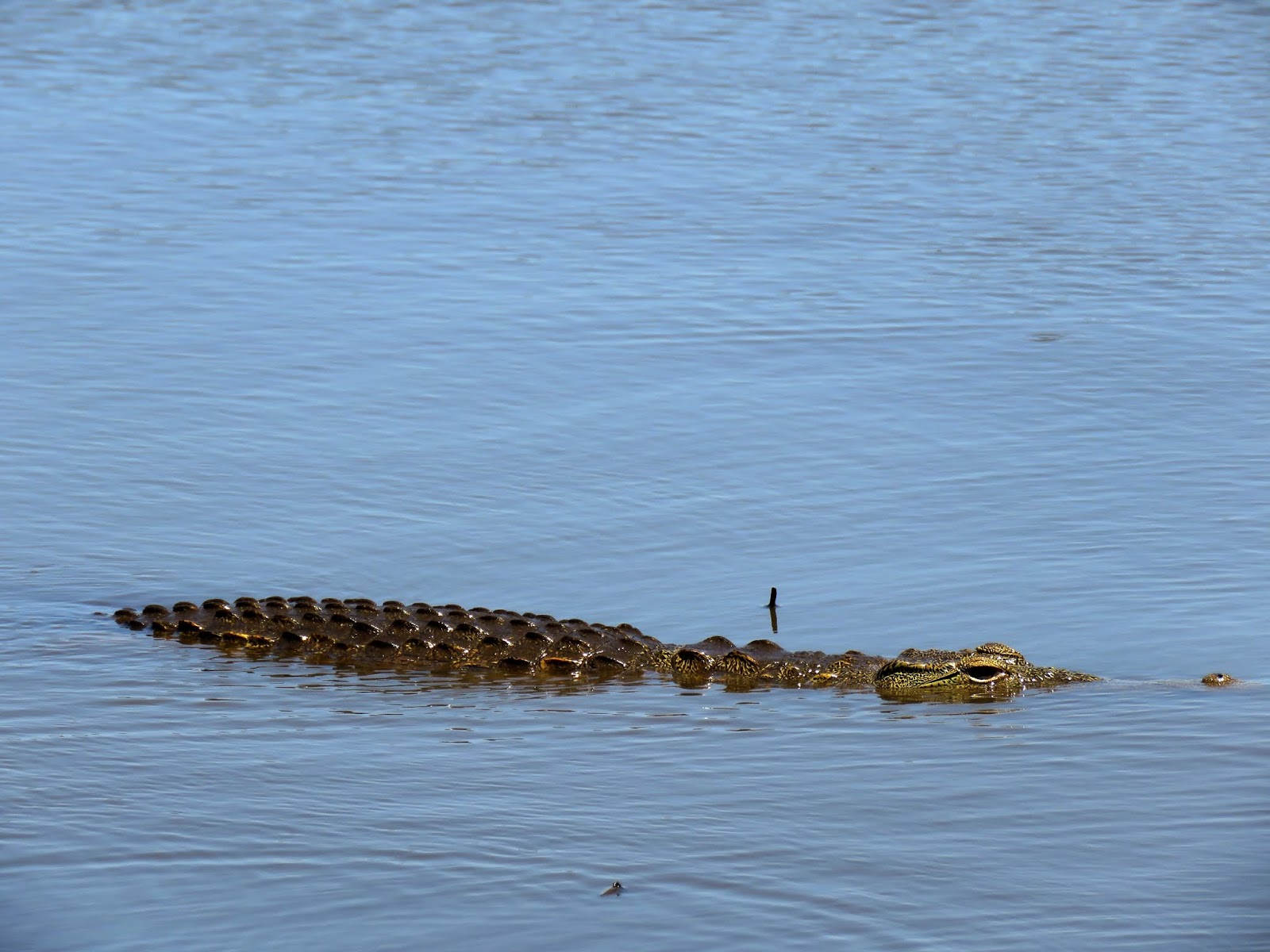
A crocodile made an appearance to check out his surroundings and possible food sources.

Back to last night, after our fine buffet dinner, a “visitor” walked into the main door of the restaurant, my favorite “bug” of all time, the fascinating dung beetle.  

He didn’t have his ball of dung with him or had yet to prepare it but as summer approaches, we’ll surely find plenty of these interesting creatures with their ball of dung in tow. More on that later when we see one with his perfectly shaped ball and perhaps a wife running atop it as he pushes it along with his bag legs.

While I was indoors preparing dinner, Tom called me to hurry and come outside. He’d taken these photos of Wounded with an oxpecker “working on” the severe injury near his left eye.

Rita and I held him in our hands. I was so excited I could hardly hold the camera straight to take a decent photo. That happens to me sometimes…my enthusiasm supersedes my ability to hold the camera steady.  

As I always say, I’m not a professional photographer. I’m an enthusiastic photographer which sometimes results in my emotions getting in the way of the perfect shot.

Here again, is another example of the symbiosis between certain animals. The oxpecker eats the maggots and decaying debris from his injury while he cooperates with the intrusion.

Also, included today are several photos took of our new friend and now frequent visitor “Wounded” who showed up about a week ago and now visits every day. His obvious facial injury is heartbreaking but he wastes no time eating plenty of pellets and vegetables.

Wounded is very shy around other warthogs so we imagine he may have been wounded by another warthog in a fight for dominance or food. We make a point of fussing over him whenever he arrives, hoping in time his injury will heal. It’s too soon to tell if he was blinded in his eye from the injury.

Nature can be both heartwarming and heartbreaking at the same time.

What astounded us about yesterday’s visit by Wounded was when he walked into the garden he had an oxpecker, as shown in the photos, working on “cleaning out his wound.”  

The oxpecker may or may not be helpful when they may become too aggressive in clearing an injury from maggots or other insects, only making matters worse. We can only hope Wounded starts to heal at some point soon. Such a grievous injury can result in a long and painful death.

Three giraffes stopping for a drink in the river.

Today is a warm sunny day, not too cool, not too hot. It’s comparable to what one may experience on a tropical island.  But, the bush is no tropical island.  And life happens for these creatures as shown in the above photo of an elephant with an injured tusk. There’s nothing we can do but let nature take its course.

So for today, we’ll let nature take its course as we’re delighting in a number of visitors stopping by on this perfect day. The pellets and veg are plentiful as is our enthusiasm in sharing it all.

Happy day!

Photo from one year ago today, November 9, 2017:

A fiery-billed acara in Costa Rica says, “I’ve got mine!” For more photos, please click here.

Nothing compares to you…Each and every one of you…

We encountered this stunning scene of zebras and wildebeest from the fence at Marloth Park. One reason zebras and wildebeests hang out is that they love to eat the taller grass and wildebeest the shorter grass – it’s a type of symbiosis. There is no competition regarding food. Also, wildebeests have a better sense of hearing, while zebras can see very well. Another reason is zebras and wildebeest prefer to be in the open savannahs…the concept of safety in numbers comes into play. It’s always great to have an ally to warn of any impending danger.

“Sighting of the Day in the Bush”

Hippo being escorted by a family of Egyptian geese.

It’s Thursday afternoon, and we just returned from a shopping trip to Komatipoort. With plenty of meat, chicken, and fish still on hand in the freezer, we only needed to round out our meals for the upcoming week.

Wildebeest are so expressive. They literally stop whatever they’re doing to make eye contact.

On November 17th, we’re hosting a small dinner party for 10 to 12 friends to celebrate US Thanksgiving, which is actually on Thursday, November 22nd in the US.

Originally, we planned this event as our “going away” dinner party for close friends when we thought we might have to leave South Africa due to visa issues.  

“The hippopotamus is often cited as the most dangerous large animal in the world, killing an estimated 500 people a year in Africa.”

However, after we recently applied (and are awaiting a response) for an extension, we realized we might be able to leave and immediately return if our extension isn’t approved. We should have a response in the next two weeks.

Having an opportunity to takes photos of these unusual animals is exciting.

Thus, we decided to go ahead and have the Thanksgiving dinner party anyway for friends who are currently in the park and played a significant role in including us in their social life over almost nine months we’ve been in Marloth Park.

The typical Thanksgiving meal is relatively easy to make since most cooks have all the recipes for the traditional items in their heads. There’s no need to look up and follow complicated recipes.

“Unlike most other semiaquatic animals, the hippopotamus has very little hair. The skin is 6 cm (2 in) thick, providing great protection against conspecifics and predators. By contrast, its subcutaneous fat layer is thin.”

Unfortunately, finding ingredients for those items is a pointless task. The local stores don’t carry turkeys, let alone the canned pumpkin for the pumpkin pies and many other ingredients I used over the years.  

 “When hippos sleep in the water during the day, they generally prefer to sleep in areas of shallower water. … Hippo, as mentioned, are very closely related to whales and dolphins, and similar to these other aquatic animals, hippos sleep with only one half of their brain at a time.”

So, we have to improvise: stuffed chickens instead of turkey, frozen cranberries, not fresh, local sausage for the stuffing instead of sage flavored sausages found in the US.  It goes on and on.

Tomorrow, I’m making a “test” pumpkin pie using the only pumpkin we could find, which is frozen. I’ll defrost it, thoroughly drain it, and put it into the food processor to see if I can get the proper consistency. We’ll report back on how this goes.

“A good point of distinction occurs around the differing geographical distribution of the Cape buffalo and Water buffalo. As its name suggests, the African buffalo is distributed throughout the African continent, whereas the Water buffalo is native to Asian countries.”

Of course, Tom will be the sole taster and recipient of the “test” pumpkin pie. As a picky eater, I assure you that everyone else will as well if he likes it. As always, the pie crust will be made from scratch, but there’s no rolling pin anywhere to be found. Do people roll dough anymore?

A tower of giraffes on the Sabie River embankment.

Instead, I’ll wash the exterior of a wine bottle and use it as the rolling pin. This definitely will work but will require a little more enthusiastic rolling. I’m good at this task.

Thanks to Louise, who picked up frozen cranberries and spices in Nelspruit this week, and friend Kathy (of Kathy and Don), who made multiple trips to various markets in Hawaii, California, and Pretoria, many of which will fill in the blanks on many of the side dishes.

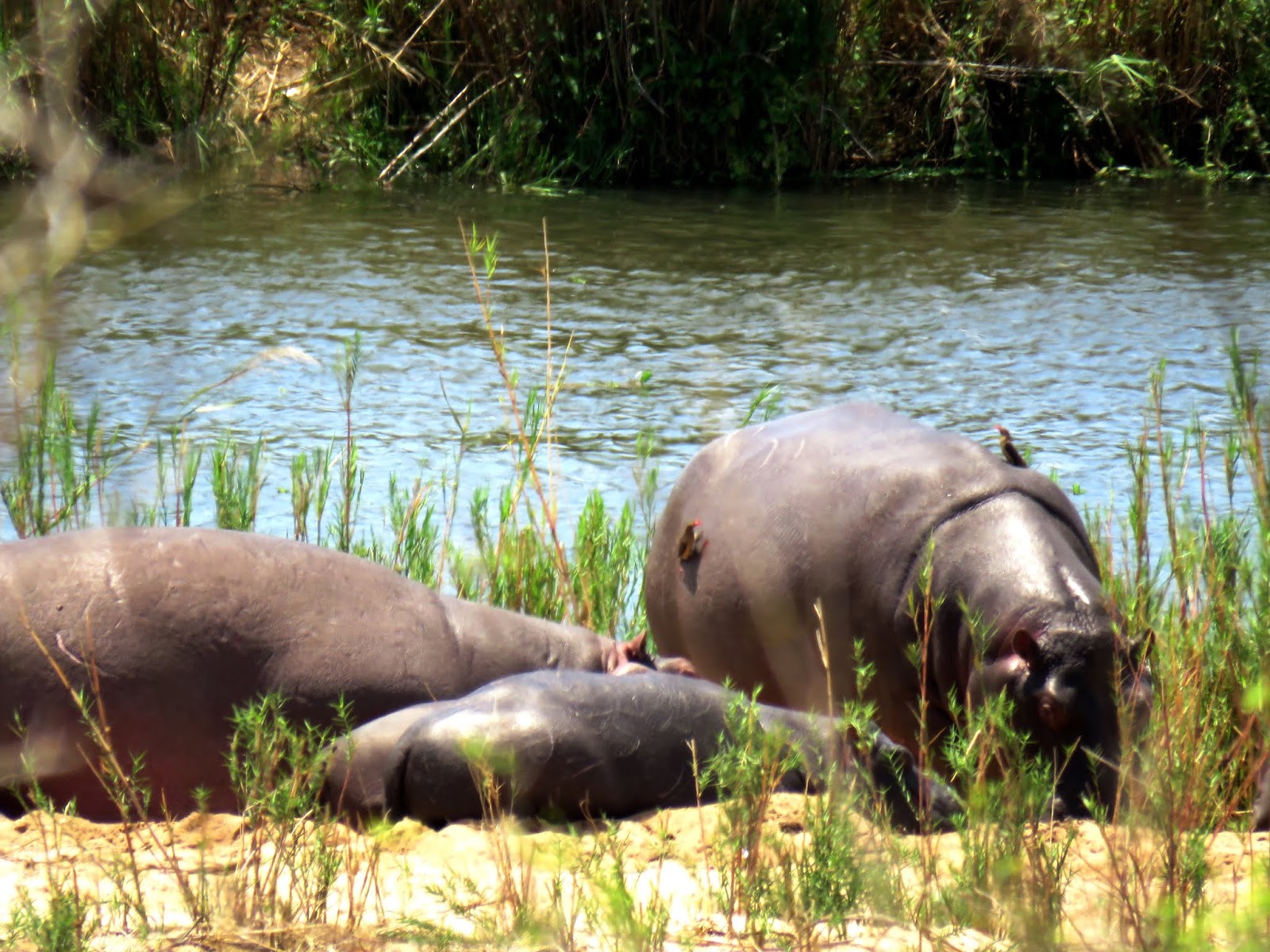
Mom and baby hippo grazing along the river’s edge.

Authenticity?  Not so much. In reality, the Pilgrims didn’t make many of the side dishes that have become traditional in the US. Over the past centuries, recipes have been passed down from family to family and have become a part of the standard and traditional Thanksgiving meal items.

The challenge of making this meal both traditional and delicious clearly fits into my wheelhouse. Hopefully, everything will be as close to the traditional meal as possible, and if not, the new tastes act as good alternatives.

Next week, I’ll post the menu for our Thanksgiving meal, and if time allows, take photos of the meal on the day of the party and post them here the following day.

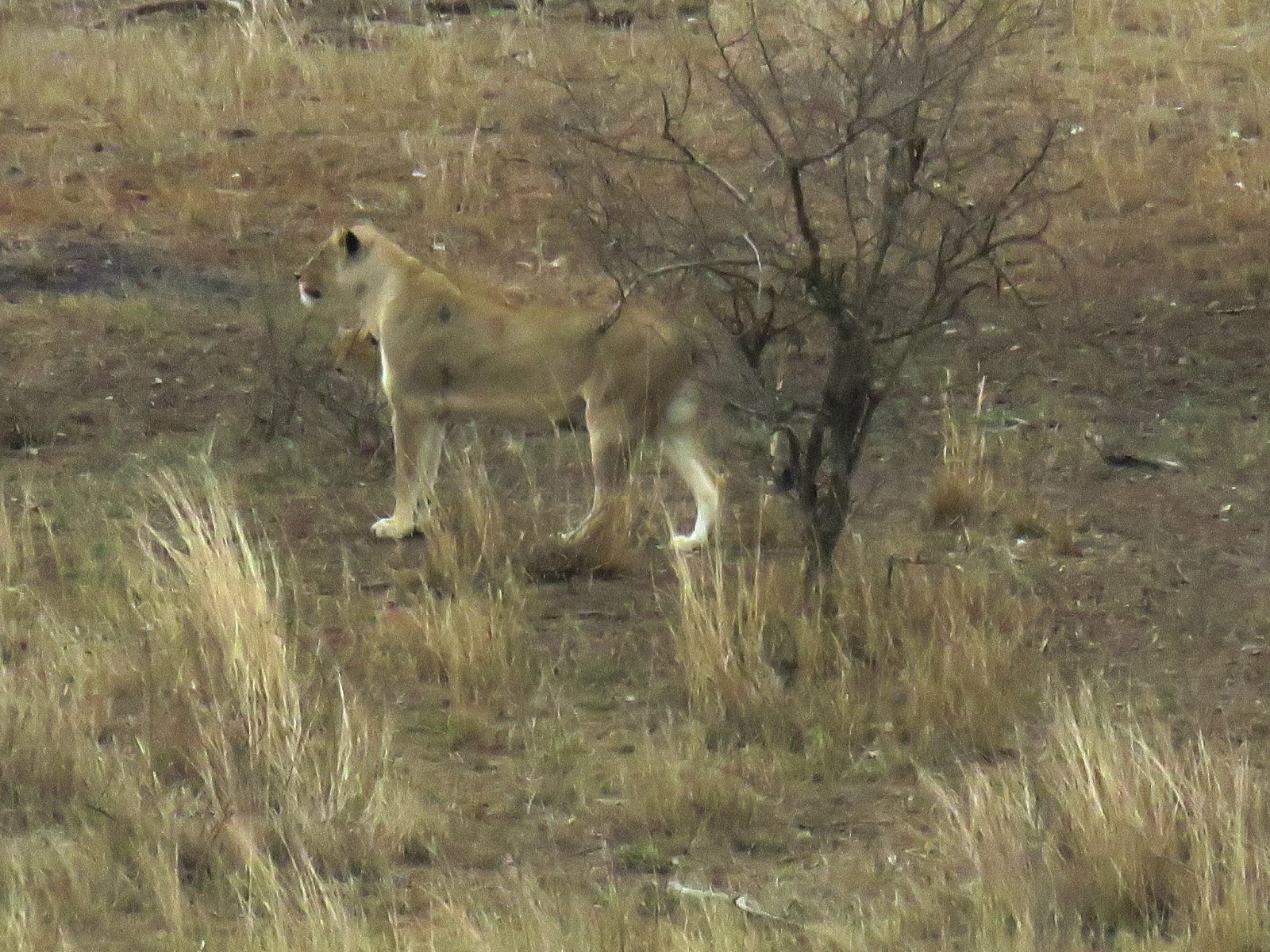
A female lion is on the lookout for the next meal.

This afternoon, we’re beginning the process of researching for future travel plans.  We have several holes to fill in our itinerary, but over these past 9 months, we’ve been preoccupied with “living in the moment” in this magical place. It’s time to get back to it!

Tonight, we’re heading to Ngwenya with new friends Rita and Gerhard for the Thursday night buffet and back to Jabula with them on Saturday night.  

Unfortunately, they’ll be gone for a few weeks and won’t be able to join us for the Thanksgiving meal. After living in the US for the past 30 years, this surely was a tradition in their home.

Have a special day filled with wonderful surprises.

Photo from one year ago today, November 8, 2017:

One must walk carefully on the uneven sidewalks in Atenas, Costa Rica, and many other towns worldwide. For more photos, please click here.

An adorable face and a 40-minute traffic jam in Kruger…A story unfolds..A sad visitor to the garden…

It’s a rarity for us to see impalas in the garden, but several stopped by to partake of pellets. No doubt, they are hungry this time of year, put aside their apprehension of humans, and came to call. This adorable girl was chewing pellets when I shot this photo. Too cute for words!

“Sighting of the Day in the Bush”

We are saddened to see who we now call “Wounded.” He was stabbed near his eye by another animal’s horn or tusk.

It was a rare occasion when a herd of impalas, one male, and 12 females, stopped by to see if we had something for them to eat. Of course, we did! It’s tough for the wildlife this time of year when the dry bush offers little sustenance for the hungry animals.

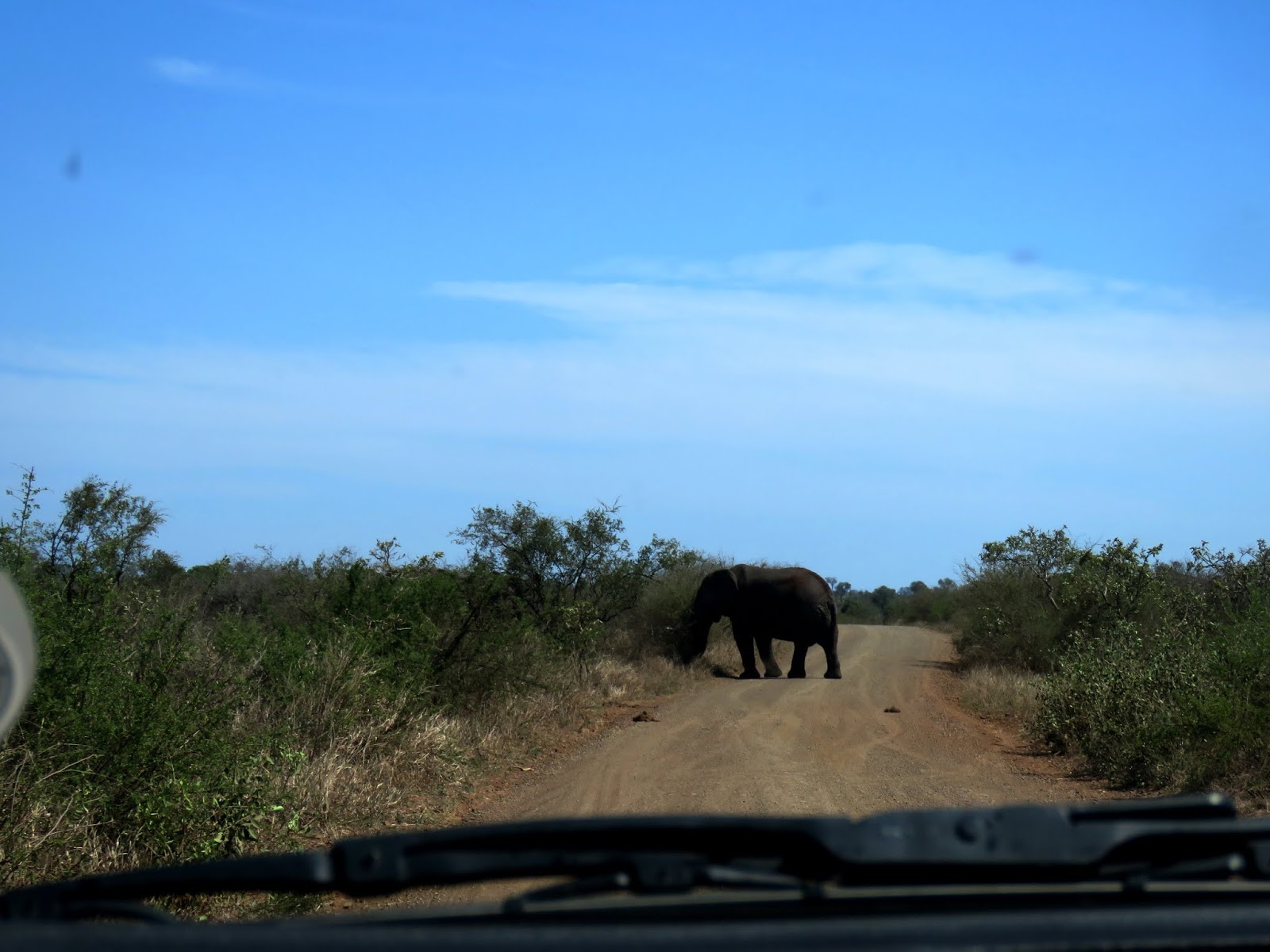
We were on a dirt road in Kruger making our way back to the Crocodile Bridge entrance to the park when we encountered this elephant blocking the road.

There’s a lot of controversy about feeding the wildlife in Marloth Park but most residents have a hard time resisting giving them the nutritional pellets (made from plant matter) when we see how hungry they are, especially before and in the early part of the rainy season.

We got as close as was safe.  He wasn’t about to move for us.

Well, the rainy season has begun, and we see tiny buds on the dry bushes and trees, knowing full well, in due time, leaves will blossom, and Marloth Park will be rich in healthful nutrition for the many herbivores and omnivores that dwell herein.

He was enjoying his meal of dry bushes and wasn’t about to move over for us.

Last night, it rained throughout the night, what seemed to be a good soaking rain, precisely what is needed now. Hopefully, this will continue to ensure a food-rich environment for the wildlife.

We didn’t hesitate to remain at a distance to ensure our safety while we waited patiently.

In some years past, many wildlife didn’t survive during droughts, but those in Marloth Park had a better chance of survival when residents and visitors faithfully fed the animals that came to call.  

While we waited patiently, we took the time to observe some of his features through the camera’s lens.

It has been a dedicated process for us, and I must add that we believe it has been the right thing to do, although some don’t always agree. We’ve been going through a 40 kg (88 pounds) bag of pellets every four to five days at the cost of about ZAR 223 (US $16) per bag.

We noticed as we waited, that he had a hole in his ear which could have been during a fight or damage from a tree or bush while grazing.

We easily rationalize this expenditure. If we lived in the US we’d be spending a lot more than ZAR 1395 (US $100) a month on some form of entertainment. (Gosh, while in the US, we went to one movie and spent ZAR 698 (US $50) for two tickets and snacks. That’s for two hours of entertainment.

The diameter of his foot was astounding.  An elephant’s foot can range from 40 to 50 cm (1.31 to 1.6 feet in length.  

This expenditure is for the great pleasure of feeding hungry animals and lasts for 16 hours every day. No comparison, is there? For us, the entertainment factor is a piece of the experience.  

We kept in mind that this is his terrain, and we respectfully waited to avoid upsetting his meal.

But, in the process, we learn so much and look forward to sharing it with all of our worldwide readers who may never be up close and personal with African wildlife.

The end of the elephant’s tail has hairs that act as a small brush, suitable for swatting flies, bees, and other insects.

So when the 13 impalas stopped by, we squealed with delight over the “honking” sound made by the females announcing their arrival and desire to be fed. It was enchanting.

Another elephant stayed away from the road while grazing.

In the process of enjoying them, I took today’s main photo, smiling all the while over their adorable and whimsical faces. Often, visitors dismiss the impalas since they are so abundant in the bush. But, we’ve both taken an affinity to their beauty and nature and truly appreciated their visit to our garden.

Can we even imagine the strength and weight of these massive feet?  An African bush elephant can weigh up to 6000 kg (13,228 pounds). The average automobile weighs 2268 kg (5000 pounds) for comparison. 

A few days ago, we continued our 40-minute delay in Kruger when an elephant blocked the dirt road preventing us from safely passing. Please read the captions under the included photos to see how the story unfolded before our eyes.  

Finally, after no less than 40 minutes, he crossed to the other side of the road as we watched hoping he’d move into the bush.

In today’s “Sighting of the Day in the Bush,” we’re sharing a sad photo of a warthog who’s had a severe injury to his eye. We can’t tell if he was blinded in the eye, but it’s easy to see he is suffering.  Because warthogs are in significant numbers in the bush, no efforts are made to treat them for illness or injury. This is a hard reality.

He’s come by each day for the past several days, and we freely feed him as much as he wants to, including fruits and carrots. Hopefully, over time he’ll heal and be able to live an entire life in the bush. Many of these animals are very resilient in healing on their own.

It was at this point that we were able to pass. But, the 40 minutes of observing was well worth the wait.

It’s raining off, and on today, so we’re staying put. After a stormy night’s sleep, a nap may be on the agenda.  I’m not good at dozing off during the day, but on a rare occasion, I drift off for 15 to 20 minutes, all that’s needed for either of us to feel revitalized.


That’s it for today, folks. Have an excellent day and be well.

Photo from one year ago today, November 7, 2017:

The adorable costumed girl waved when she spotted us with a camera at the Metrocentre Mall in Managua, Nicaragua. For more photos, please click here.

Kruger never disappoints…It isn’t always about the Big Five or even the Ridiculous Nine…All of it is special to us!…

A pair of elephants affectionately playing in the mud and water at Sunset Dam 
in Kruger National Park.

“Sighting of the Day in the Bush”

A pair of barn owls in the rafters at Mugg & Bean restaurant looking down at all the crazy humans trying to take a photo.

Early this morning, we took off for the river when we’d seen lions had been spotted a few hours earlier. We must have missed them when we arrived at least two hours after Tom had seen the Facebook announcement indicating where they could be found.

A Southern Ground Hornbill in the bush.

But, as always, our trip to the Crocodile River, a 10-minute drive on the bumpy dirt roads, wasn’t a bust. We saw so much more, which we’ll share in days to come.

This appears to be a mating pair of vultures tending to their nest.

Afterward, we made a quick trip to the Marlothi shopping center for a few items, and by 11:30 am, we were back home. The boys had come to clean while we were gone, and the house was spotless and even smelled so.  

A hippo near the shore of the Sabie River.

The constant dust was wafting indoors from the garden when “visitors” come to call leaves every surface covered in dust daily. It takes considerable attention to detail to keep the level of dust indoors to a minimum, and Zef and Vusi are masterful at this.

A hippo and an oxpecker.

Before we left this morning, I’d gone through the hundreds of photos I’d taken in Kruger yesterday, narrowing them down to a possible good 50 shots, many of which we’ll share over the next several days along with others we’ve taken at the fence and of course, in the garden.

A giraffe side-face view.  The hair atop the ossicones indicates this is most likely a female.  Males wear off the hair due to fighting for dominance.

Last night, after holidaymakers left the park, all of our favorite animals returned to see us beginning at about 1700 hrs (5:00 pm). We were so busy with them we hardly had time to get our dinner and beverages ready for the evening ahead.

A giraffe was contemplating a drink.

At one point, we counted eight species in the garden simultaneously: kudus, bushbucks, wildebeest, warthog, duikers, mongoose, helmeted guinea fowl, and bushbabies. We hardly stopped for a moment when finally, we managed to get dinner on the table a few hours later. We couldn’t stop smiling.

A little bird was going after a breadcrumb at the Mugg & Bean restaurant in Lower Sabie, where we had lunch.

As for yesterday’s visit to Kruger, although not earth-shattering, we were content with our varied sightings as shown in today’s and future day’s photos. When we don’t readily spot all the animals considered as the Big Five (lion, leopard, rhino, Cape buffalo, and elephant), we tend to focus our attention on those we do find.

This couple fed the starlings based on how they gathered at their table, staring at them for more.

Yesterday was undoubtedly a busy elephant and hippo day, as evidenced in our photos and included video. We know many of our readers don’t care to watch videos, but we invite you to do so.  

Elephant families on the Sabie River.

We don’t post our videos unless we find something special contained therein. Of course, that’s based on our personal opinion, which may not necessarily appeal to you. Typically, they are only one to three minutes long.

A mom and two offspring from different birth years.

We drove through Kruger on our preferred route, where we’d enjoyed considerable success. But, the sightings weren’t as prevalent along the paved road as we’ve seen in the past.  

It was a hot but gorgeous day, perfect for spotting elephants on the river.

The paved road leads to the Lower Sabie and the Mugg and Bean, where we stopped for lunch to see once again its expansive river views from the restaurant’s veranda.

The little one was enjoying the water too.

As mentioned in an earlier post, recently, I’d accidentally broken a bottle of red wine on one of our two cameras. The SD card was destroyed but ultimately not the camera itself after letting it dry out for a week.

The young elephant was playing in the water.

I hadn’t been able to find another SD card in Komatipoort and didn’t want to wait until we returned to Nelspruit to the immigration office in the next few weeks. I thought the gift shop at the Mugg & Bean might carry them.

They did much to my delight, and I was able to purchase a 16 gig card for ZAR 220 (US $15.43), a reasonable price for such a card. When we returned to the house, I placed the card in the camera, and all is working well.  

Mom elephant fussing over her youngsters.

We’re both relieved that once again, we have two working cameras, especially needed for our upcoming photography tour in Kenya in about three and a half months. I guess I won’t spill red wine on a camera again.

Anyway, the day in Kruger continued with some excellent sightings, some of which we’re sharing here today.  As for the rest of today, we’re hanging out at the house. We’ve had a relatively steady stream of frequent visitors, which we expect to pick up in about four hours for another spectacular evening in the bush!

May your day and evening be spectacular as well!

Photo from one year ago today, November 6, 2017:

We wrote one year ago…”Today’s flowers from the grounds of La Perla in Atenas Costa Rica are a token of our sorrowful expression for the loss of life and injury of the victims in the Texas mass shooting.” For more, please click here.

The Cape Buffalo…Interesting river sightings of this mystical beasts…we’re off to Kruger this morning…

 Check out our video of a large obstinacy of cape buffalo we spotted on the Crocodile River.

“Sighting of the Day in the Bush”

This is the youngest giraffe in Marloth Park from what we’ve seen recently. Check out those knobby knees that will eventually result in some very long legs.

We’re rushing to get today’s post uploaded. Today is a warm sunny day, and we’re heading to Kruger as soon as we complete the post. We have great leftovers for dinner and won’t need to be concerned as to when we return.  

A few days ago, we spotted this excellent size herd of buffalos.

A leisurely drive in the park without time constraints makes the experience all the more exciting. When we spot a scene that piques our interest, we can wait as long as we’d like for the perfect opportunity for good photos.

It was a dark and cloudy day, cool for the buffalos as they gathered by the Crocodile River.

Last night, we had the fewest numbers of visitors than we’d had in a long time. We’re attributing it to being Sunday with many holidaymakers in the park based on the numbers of cars we’d seen on the roads over the weekend.

It usually takes a day or two for the wildlife to begin visiting us after the crowds dissipate. Generally, we see some action on Tuesday or Wednesday. With rain predicted for Wednesday, we decided going to Kruger today was our safest bet.

There were over 100 buffalos on the river at this sighting.

Today, we’re sharing several cape buffalo photos we’ve taken in the past several days. They are such fascinating and unusual animals, often thought to be slow and lazy. But this is hardly the case, as indicated in the following from Kruger’s site here:

“A large and powerful bovine, the African Buffalo reaches shoulder heights of up to 1.5 m and a mass of 750 kg. Both sexes have horns. Those of the bulls are characterized by a heavy boss and upward curved horns.

Cape buffalo, also known as African buffalo, are often seen in herds.  

Mating occurs between March and May. The gestation period is 330 days. Single calves are born between January and April, with a distinct peak in February. African Buffalo are strongly gregarious. Stable herds of up to several hundred are often observed but fragment into smaller herds in times of drought.

They are mainly preyed upon by lions. When a herd member is attacked, others will rush to its defense. Collectively several buffalo are more than capable of staving off an attack by an entire pride of lions. A wounded buffalo bull is regarded as most dangerous by hunters and is one of the reasons why this animal is included in the so-called “the big five.” This trait is the origin of many hunting adventures, myths, and legends.

They are often accompanied by cattle egrets and oxpeckers.

It is said that Buffalo looks at you as if you owe them money, and this is an appropriate description if you should ever come across them on foot in the bush. Buffalo are inherent carriers of viruses fatal to domestic stock. For this reason, disease-free Buffalo are bred explicitly in areas such as the Eastern Cape in South Africa and fetch very high prices.”

Here are “10 Wacky Facts about the Cape Buffalo” from this site:

  • Buffalos are fantastic swimmers. They will swim through deep waters to find better grazing areas.
  • We refer to them as the mafia, not only because of their strong character but because they never forgive and almost always seek revenge. They have been recorded seeking revenge on someone years after being threatened by them.
  • They are one of the most dangerous of the big five because they simply ambush their prey without giving any warning signal.
    This cape buffalo seems to have a few resident oxpeckers who control the ticks and other insects.
  • The birds you see sitting on the hide of a cape buffalo are called oxpeckers. They have a symbiotic relationship with the Cape buffalo and remove ticks/insects embedded in their skin.
  • The most experienced cows are known as pathfinders. They are responsible for taking the herd to the most beneficial area for grazing and water.
  • If you see a lone buffalo bull, it is probably a “dagga boy.” Dagga boys are older bulls who have passed their prime and have separated from their herd. They generally spend their days wallowing in the mud either alone or with other dagga boys.
    On occasion, we’ll see a buffalo alone, usually close to the river.
  • Buffalo cows have their first calves at age 4 or 5, and they become entirely reliant on their mothers, right up until a year old.
  • If a buffalo herd comes under threat from a predator, they form a circle around their young. All of the adults face outwards to hide the vulnerable. The adults lower their heads and form a protective barrier with their horns.
  • The Cape buffalo is a grazer and prefers tall grasses to short shrubs. They are nature’s lawnmowers and thin out the dense grasses, exposing more foliage.
  • The collective noun for buffalo is “herd,” but other terms include “gang” and “obstinacy.” 
Another symbiotic relationship, the buffalo and cattle egret who hover around buffalos for their scraps.

So there it is folks, lots of facts on the cape buffalo, which, if safari luck is on our side, we’ll see more of today during our foray into Kruger National Park.

Hopefully, tomorrow, we’ll have some exciting new photos to share on whatever “safari luck” comes our way today. 

May your day bring you wonderful surprises!

Photo from one year ago today, November 5, 2017:

Another visit from one of our little furry friends, the Variegated Squirrel, commonly found in Costa Rica. For more photos, please click here.

Back into the groove..Visiting the holiday home we rented years ago…

Danie had renovated the pool and braai area at the Hornbill house where we lived for almost two months in 2013/2014 during our first visit to Marloth Park.  To rent this property when Rita and Gerhard are done, contact Louise here.

“Sighting of the Day in the Bush”

A woman in Komatipoort carrying paper products on her head for possible recycling

Gosh, the adventures keep coming and coming. It’s ironic how we never run out of anything to share with our worldwide readers each day. This morning I started preparing today’s post, but we decided to stop what we were doing and head out to the Crocodile River to see if anything was happening.

This is the veranda where we spent many hours watching wildlife so long ago.

Throughout each day, we check the various Marloth Park Sighting pages on Facebook to see if anyone has posted comments and/or photos of any events occurring on the river that can be seen from Marloth Park.

New friends, Rita and Gerhard, readers of our site, are now renting the Hornbill house, also have a resident frog.

When nothing was posted this morning, we decided to take our chances, and off we went. Wow!!! We can’t wait to share the photos we took today of the magic presented to us, and other fortunate visitors of scenes one can hardly imagine are possible in this life. Please check back tomorrow for the photos.

This is the corner where the Mozambique Spitting Cobra moved to while we waited for help.  See this post here for details.

Since I’d already started today’s post and uploaded these photos, I decided to proceed with today’s topic and photos and leave this morning’s sightings for tomorrow. So please bear with us.

The living room and sliding doors with security gates on the windows and doors.

Today we’ve included a few photos of the holiday home on Hornbill we’d rented five years ago when we were in Marloth Park for the first time. A few weeks ago, we were excited to hear that our readers and now new friends Rita and Gerhard came to Marloth Park, met Louise, and booked that particular house based on what we’d written in our posts in 2013 and 2014.

Ostriches in the neighborhood.

As has been the case in the past, periodically, we have an opportunity to meet some of our readers. What an indescribable joy this is! When we meet, they already know us from reading our posts, and we look forward to getting to know them.

Ostriches and warthog were hanging out.

Such is the case with Rita and Gerhard. We’ve already been to each other’s holiday homes in Marloth, and tonight they’re joining us at Jabula for dinner. They plan to be in Marloth for three months, so we’re certain we’ll spend more time with them in the future.

This bird in our birdfeeder appears to be a lesser-masked weaver.

It felt odd to see the Hornbill house again. We have many wonderful memories of the time we spent in that house.  If you’d like to see our photos from that period, please see our archives on the right side of the home page from December 2, 2013, and continuing from there for three months, part of which we spent on two other properties of Louise and Danie‘s.

Sunset in Kruger.

Tom had the biggest scare of his life in that property when the Mozambique Spitting Cobra dropped from the ceiling of the veranda to within centimeters of his feet.  

Mom and offspring cuddling during a nap in our garden.  Note the oxpecker on mom’s head.

He had quite a scare while I ambitiously attempted to take photos, my hands shaking with excitement.  Little did I know the type of snake it was as I bent down to take photos. That was dangerous and foolish!  Lesson learned.

Kudus visit for pellets on the veranda.  This prevents the helmeted guineafowl from eating all the pellets.

The remainder of today’s photos are shots we’d yet to share taken over several days. For now, we’re wrapping it up and look forward to returning tomorrow with our exciting new photos.

Have a spectacular day and evening

Photo from one year ago today, November 3, 2017:

It’s hard to believe we had our required physicals for the Antarctica cruise one year ago.  Please click here for details.

Winding down time with friends…Two days until their departure…The activities will continue to the last minute…

A cattle egret standing in shallow water in the Crocodile River.

“Sighting of the Day in the Bush”

The monitor lizard in our garden came out from her burrow for a refreshing drink of water from the cement pond.

As Tom and Lois’s time here comes to a close on Thursday when they depart to return to the US, we’re packing in every moment with quality time, not only together as friends but also in taking advantage of every opportunity for them to experience more wildlife.

The monitor lizard took off back into the bush.

This afternoon at 1515 hours (3:15 pm) a safari vehicle will arrive to pick us up for an evening at Kruger National Park which includes an afternoon game drive, a bush braai (dinner out in the open in the park in the dark), followed by another game drive in the dark.

Elephant we spotted close to the fence between Marloth and Kruger Parks.

With a spotlight to help us see, we’ll have an opportunity to see those special nocturnal animals that are elusive during daylight hours including many of which are never seen during daylight.

The sausage tree at the hippo pool and bird blind is bursting with these giant pods which will eventually bloom into bright red flowers.  From this site: “The sausage tree of sub-Saharan Africa is beautiful in flower. The blood-red to maroon flowers hang in long panicles. The fragrance of the flower is not pleasing to humans but attracts the Dwarf Epauletted Fruitbat (Micropteropus pusillus), its pollinator. As the flowers drop from the tree, animals come to feed on the nectar-rich blooms. Impala, duiker, baboons, bush pigs, and lovebirds all feed on the flowers of the Sausage tree. Grey fruits grow out of these flowers. These grey fruits resemble sausages and can grow for months to become over a foot long and weigh over 10 pounds.”

We may have safari luck or we may not but in either case, it will be fun to dine in the bush, an experience we had a few times when we were here five years ago. 

Both Toms splurging on strawberry milkshakes at Aamazing (spelling is correct) River View restaurant when we took a break from our usual drive in Marloth to stop for cool drinks.

Those five-year-ago exceptional occasions were hosted by Louise and Danie, an experience we cannot expect to match in elegance tonight although based on very positive reviews we’re anticipating a wonderful experience. For details and amazing photos for our former Valentine’s Day bush braai may be found here at this link.

Lois, the two Toms and I had a great break in the action.

Of course, tomorrow, we’ll post photos of tonight’s bush braai and game drives, hoping to share some unique wildlife sightings. Tonight’s event is hosted by another company, Royal Safari Bush Braai dinner since Louise and Danie no longer conduct these events in Kruger.  

A warthog stops for a sip.

The ease of booking with Royal Safari Bush Braai makes us feel confident this will be an excellent experience for the four of us and any other participants who will also be included.  

A female bushbuck standing in the water on the Crocodile River in Kruger.

Last night we returned to Ngwenya Lodge and Restaurant for Crocodile River viewing and dinner. Ordering off the menu wasn’t nearly as good as Thursday night’s buffet dinner. There’s wasn’t much in the way of wildlife viewing but we took many photos of a stunning sunset (photos to follow soon).

Cape buffalo aren’t the most handsome of wildlife but we’re always thrilled to see them. They are one of the Big Five.

Back at the house early, we prepared the veranda for our usual nighttime viewing but had missed the primetime viewing which is usually before and after dusk.

Two male cape buffalos on the river’s edge.

This morning was quite a treat when 15 kudus stopped by including one “Big Daddy,” four warthogs including “Little and the Girls”, a plethora of helmeted guineafowl, and of course, Frank and The Misses. who’ve yet to produce any chicks.

As I write here now, Vusi and Zef are here cleaning the house and the veranda. Its been fantastic to have the two of them coming in each day and eliminating the massive amounts of dust that enters the house from the action in the dirt garden when the animals come to call.

Lois feeding a large number of kudus who stopped by. She puts the pellets on the veranda’s edge to keep the helmeted guineafowl from taking them all.

For the next few hours, we’ll relax on the veranda until it’s time to head out for our exciting upcoming afternoon and evening.

Be well.  Be happy. 

Photo from one year ago today, October 30, 2017:

On Saturday night, after dinner, in Managua, Nicaragua, we wandered through the pool area of our hotel.  For food photos from the dinner, please click here.

Part 2, Matsamo Culural Village Tour on the border of South Africa and Swaziland…

The Matsamo village consists of many huts made by the men using straw, wood, vines, and cow dung. They are very well constructed.

“Sighting of the Day in the Bush”

Tom and Lois have particularly enjoyed the bushbaby’s nightly visit to the cup of yogurt on the little stand.

Whether or not the villagers of Matsamo live the primitive life they described as customary in these modern times, it was interesting to learn about their history and culture.

There are various boma-type structures to round up the cattle at night or conduct meetings among the tribesmen.

The young man who provided us with a private tour of the village was enthusiastic and dedicated to the customs of his heritage, many of which we assume continue today to some degree.

The chief, our tour guide’s father, was in a meeting with another tribesman.

It was evident by his detailed descriptions that the male members of the tribe supersede the females of the tribe in many ways, except the grandmother, who is held in the highest esteem, even above that of the chief.

The baskets hanging on the side of the boma fence are for nesting chickens.

Women are married at very young ages, and many men take two wives. The first wife will have children, cook, clean, and care for the family and continues to do so until the man decides to take a second wife.

The largest hut was for the grandmother, where all the teenage girls sleep once past seven or eight years old.

At this point, the first wife is “promoted,” and she moves to another hut without a cooking area. The new wife is then responsible for all household tasks while the first wife languishes more leisurely. Interesting, eh?

Note the quality construction of the huts.

There is no limit to the number of children the wives may bear regardless of their status in the family unit. It’s a lifestyle demanding for most of us to imagine, so far removed from our reality.  

The chief’s son, the youngest of his 25 children from two wives respectively, two wives, the first with 15 children, and the second with ten children.

After the tour ended, we made our way back to the car and proceeded to drive back to Marloth Park via the proper roads, avoiding the potholed roads. By early afternoon we were back on the veranda waiting for visitors while Lois and I prepared a lovely dinner for the evening.

This low entrance to the huts is intended to keep invaders out and present a humble entrance for those welcomed.  A large stick is kept by the entrance in the event an unwelcomed visitor intrudes.

Some things never change, especially in our generation of retired seniors, women doing most of the cooking and men taking on other household tasks. For us, traveling the world over these past six years has led us to fall into specific roles and functions based on our skills and interest, more minor on gender identity roles of decades past.

Decorative items to be worn during festivities and when young women are presented to the chief as potential new wives for himself and others.

I prefer to cook. Tom likes to do the cleanup and the dishes. He does the heavy lifting of the 40 kg (88 pounds) pellets while I put away the groceries. I wash the laundry, and if helpers aren’t available, he hangs it on the clothesline.

The husband and wife sleep separately on mats, the man on the right, the woman on the left.  As we entered the hut, we had to comply with this left/right ritual, man always on the right. Hmmm…or did he mean “man is always right?”

In many cultures, established roles and tasks are distributed by a couple, regardless of gender, in a similar manner, based on expertise, ability, and interest. This method works well for us and never, do either of us feel we are locked into a specific gender obligation.

Various baskets were used for collecting water by the young women from the local river.

Yesterday, Saturday, we embarked on the Crocodile River drive in Marloth Park and once again have some spectacular sightings we’ll share in tomorrow’s post.  

The village was designed to generate revenue for the villagers, and many areas were modern and tourist-friendly.

As always, last night’s dinner at Jabula was fantastic, along with the fun the four of us had sitting at the bar yakking with Leon, the owner. Dawn, his significant other, and co-owner were out of town visiting family, and we kept him entertained as he did us!

For an additional sum, we could have stayed for lunch.  But when reviewing the online menu, we opted out on this when many of the items were wheat, corn, starch-based, and deep-fried.

Soon, we’re off to another bush braai in Lionspruit, the game reserve within a game reserve where we’ll spend the better part of the day at Frikkie’s Dam with Louise, Danie, and friends. It will be a pleasure to share this delightful event with Tom and Lois as their time here is quickly winding down.  In a mere four days, they’ll depart to return to the US.

Several areas were set up for dining, and many tourists were dining as we walked through the dining area.

Have a fantastic day, yourselves! We’ll be thinking of all of you as we take photos while embracing today’s fun event.

Photo from one year ago today, October 28, 2017:

Exterior photo of the hotel, the Real InterContinental Managua at Metrocentro Mall, where we stayed for two nights, to renew our Costa Rica visas. For more pictures and details, please click here.

Part 1, Matsamo Cultural Village Tour on the border of South Africa and Swaziland…

We arrived at the Swaziland border where Matsamo Cultural Village is located, just as the show began.

“Sighting of the Day in the Bush”

A zebra was climbing the steps of the veranda for more pellets as we headed to the car to go to Swaziland.

When Lois expressed an interest in attending a traditional African tribal dance, we asked Louise and Danie what they’d recommend. They didn’t hesitate when they suggested the Matsamo Cultural Village Tour located on the South Africa side of Swaziland, a bordering country.

The Swazi performers are very talented in both singing and dancing.

Here’s a map showing how Swaziland, a different country, and how it is situated next to South Africa and bordering Mozambique on the east:

Map of Swaziland.

Had this tour been located in Swaziland, we wouldn’t have been able to attend. While attempting to be granted a visa extension, we were warned not to leave the country, resulting in any stamps in our passports.

Tree stumps were used as seats during the performance.

The website for Matsamo was a little unclear as to whether we’d need to be part of a tour group or if we could show up on our own. We tried calling the contact number to no avail and finally decided to take a chance on the over one-hour drive from Marloth Park.

The men performed a traditional dance.

In looking at a map, Tom and Tom mapped out directions and by 10:00 am, we were on the road, hoping to arrive in time for the posted 11:30 am performance. As it turned out, we barely made it on time when we mistakenly took a shortcut which proved to be the second-worst potholed road we’ve experienced in our lives.

The women also performed a traditional dance and song.

Months ago, we’d made a similar mistake by taking a shortcut and ended up with what is described as the worst pothole road on the planet. Yesterday’s route wasn’t as wrong as our prior experience, but awful. It was quite the adventure for Tom & Lois!

Performing for tourists provides the village with income. The cost of the performance and tour is ZAR 200 (US $13.70) per person.

Finally, we arrived at the village and proceeded to make our way to the activities with the help of a member of the village who directed us down a path to the performance, which was starting at any moment.

Their agility and ability are spectacular.

We found seats in the back row when all the best seats were taken by that arrived earlier than us, but we got good enough seats to take photos and enjoy the 45-minute show with a bit of maneuvering.

The colorful dress of the Matsamo people was bright and appealing.

Their voices and dancing skills were exceptional, and the four of us were mesmerized during the entire performance. After the performance ended, one of the leading performers, a skilled and attractive young man, and the chief’s youngest son, approached us and offered a personalized tour of the village and its customs.

We were thrilled to have him show us around and explain the details of their fascinating culture, all of which we’ll share in tomorrow’s post.

At one point, audience members joined in the dance while we took photos.

Here’s an overview from the Matsamo Tribe’s website located here:

“Matsamo Customs and Traditional Centre Co-operative is a traditional village near Swaziland and a must for visitors looking to experience authentic Swazi culture, which is well preserved in this. It is named after Chief Matsamo, a prominent Shongwe chief and contemporary of King Mswati II. 

As a reward for his loyalty in defending the territory against invaders from the north, Mswati II allowed Chief Matsamo to remain in charge of the region as an eminent member of Swazi royalty. He was the first Swazi chief to reside permanently in the area. Today the part is still under the control of the Matsamo Tribal Authority.

Our tour guide walked down this pretty trail with Lois as both Toms, and I followed behind as we made our way toward the village for the tour. Tomorrow we’ll continue with Part 2 and photos of how the Matsamo people live.

Matsamo Cultural Village offers old folk songs, rhythmic dance performances, including the famous Rain Dance, authentic African instruments, and traditional Swazi cuisine. Visitors can also wander on tour through the village with its many huts and spaces, interacting with the villagers as they go about their daily activities, cultivating their crops, preparing traditional food, and fashioning beautiful craftworks.

Matsamo Cultural Village is near Kruger National Park. It first opened its doors in 2014 and enjoyed tremendous support from the broader community.”

As soon as today’s post is uploaded, we’ll be heading out on a drive through Marloth Park to see what’s happening today on the Crocodile River. Tonight, we’re dining once again at Jabula Lodge and Restaurant, which no doubt will be another excellent evening.

Have an enjoyable and fruitful day!

                                          Photo from one year ago today, October 27, 2017:

Hoffman’s Woodpeckers often stopped by for nectar from the African Tulip Tree in Costa Rica and proceeded to sing. For more photos, please click here.