Seeing an old friend!…A quiet Sunday…Wildlife in hiding with many weekend tourists…

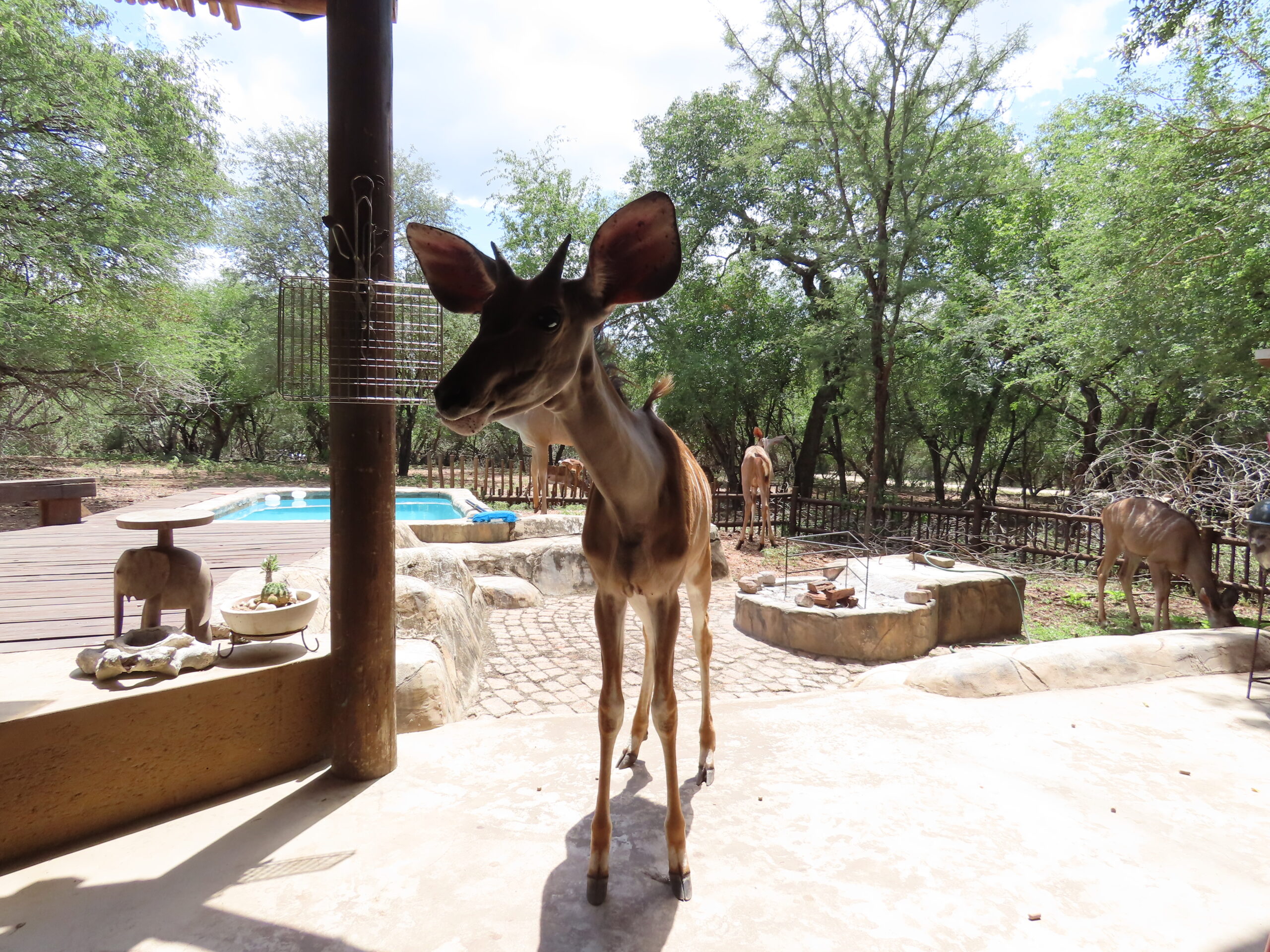
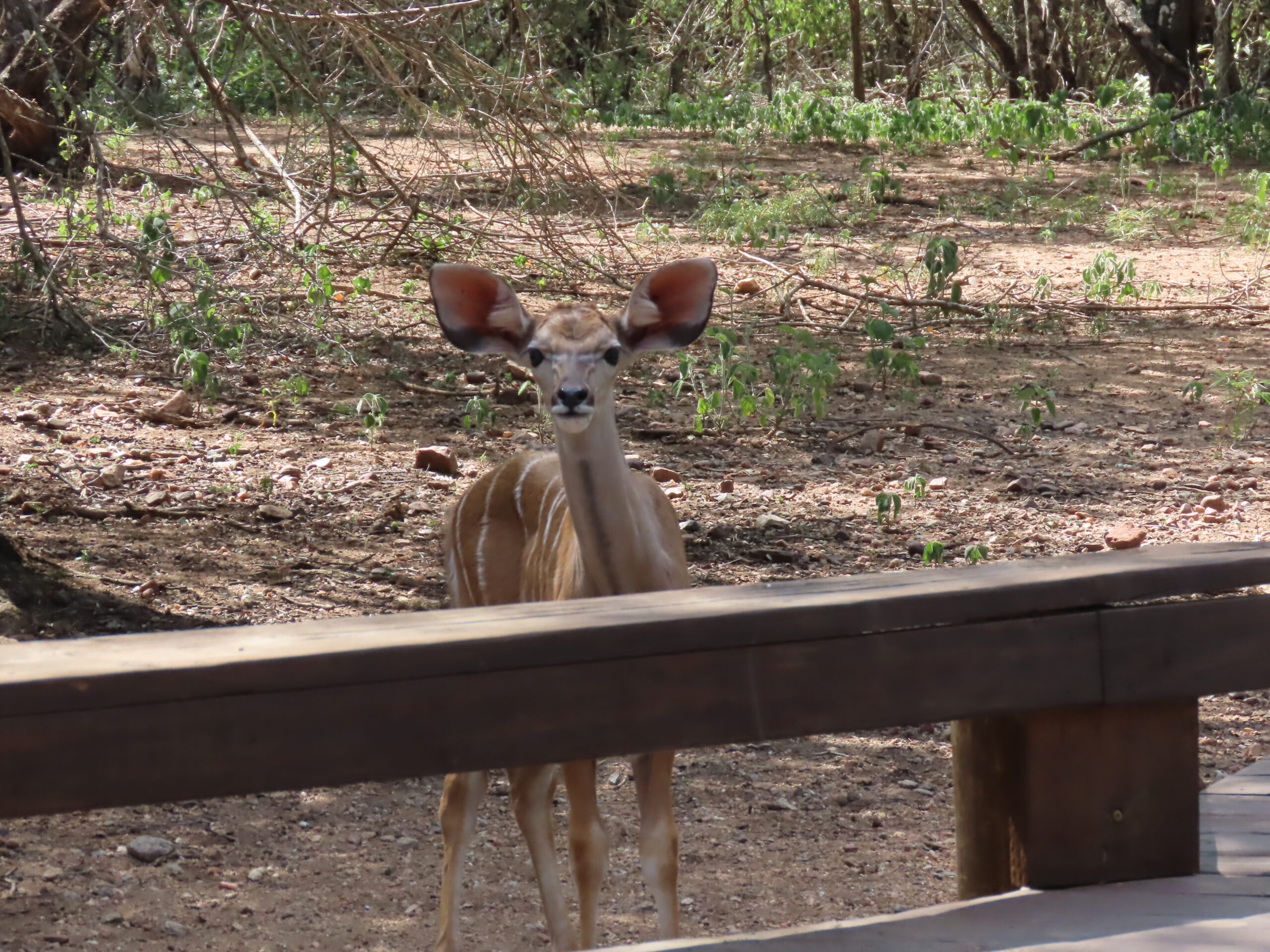
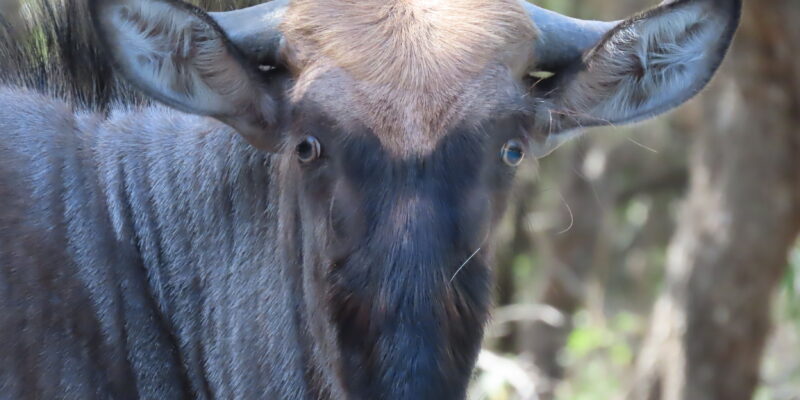
It was hard to see Norman at first, but when I called his name, he turned his head to look at me. My heart skipped a beat! His youngest son is in the front of the photo.

Last night, we dropped off the keto cheesecake I baked for Louise and Donnie before heading to Jabula for dinner. Usually, I’d make a pie for myself, but I am doing great on my diet (so is Tom), and I didn’t want to sidetrack my progress. It was fun to sit and gab with them both for a while.

But no sooner had we walked into the door of their house/office, Louise grabbed me and said she had to show me something immediately. I followed her outside to their veranda and garden, and she said, “Look, there’s your boyfriend!”

And there he was with his wife Nina and two of their latest kids, whom I’ve yet to see and name. I called out to him in my high-pitched voice and he immediately snapped his head my way.
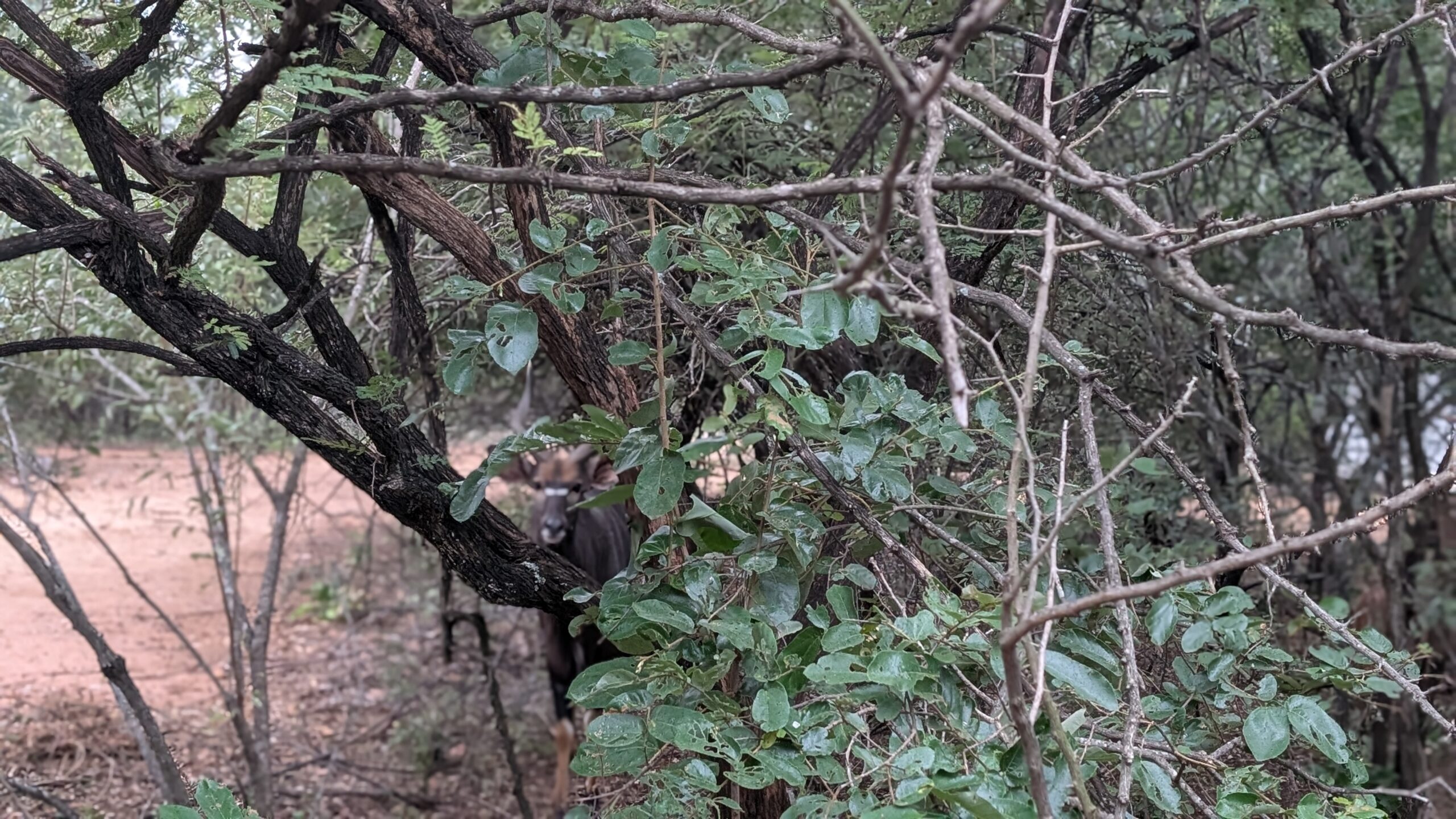
He stared at me for a few minutes and then turned to Nina, whom he was pursuing. It’s mating season again. They had two kids since we’d been gone for 23 months.

I can’t wait until he and his family make their way to our garden, which could happen at any time. I’m keeping a watchful eye on the bush.

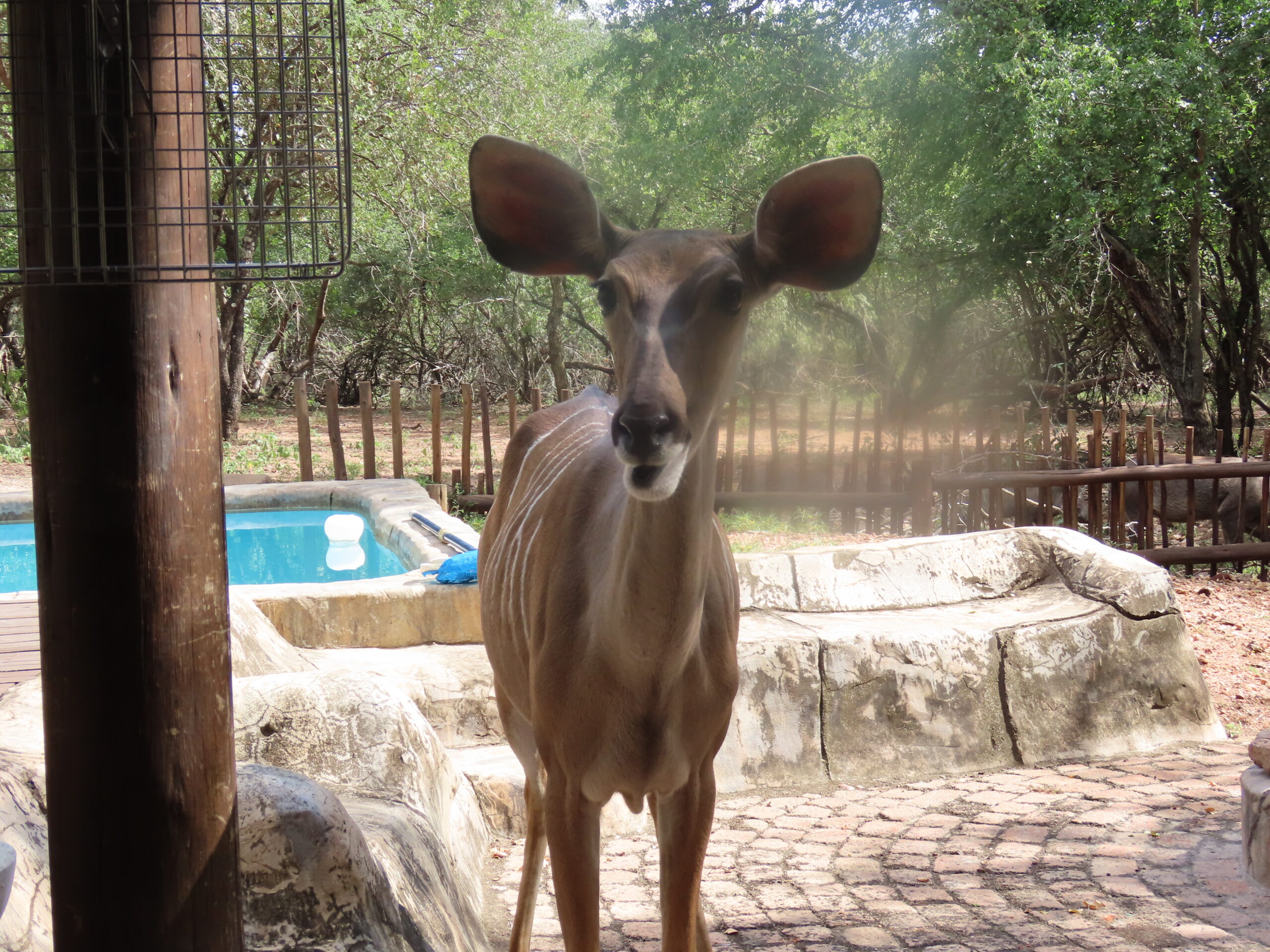
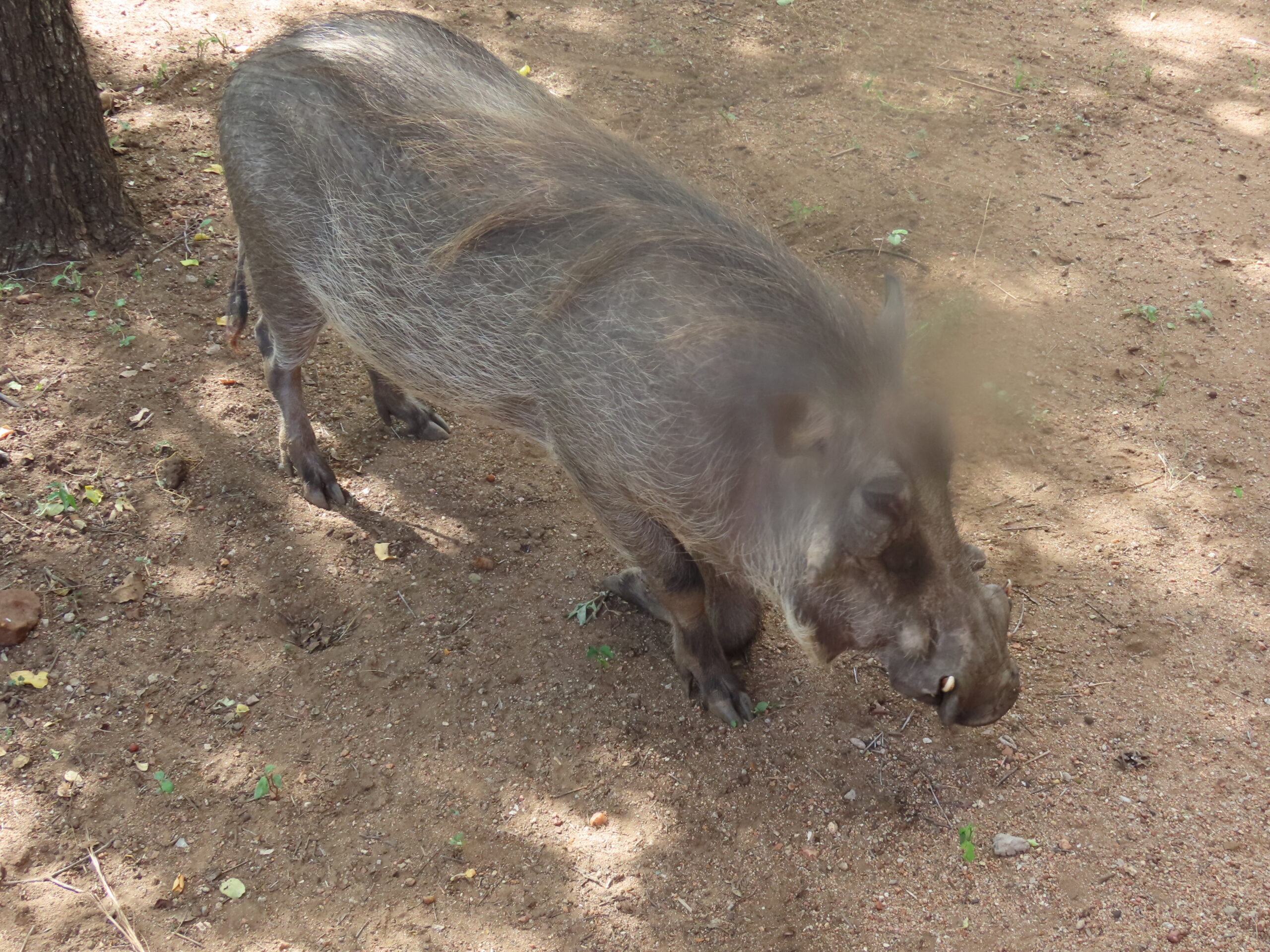
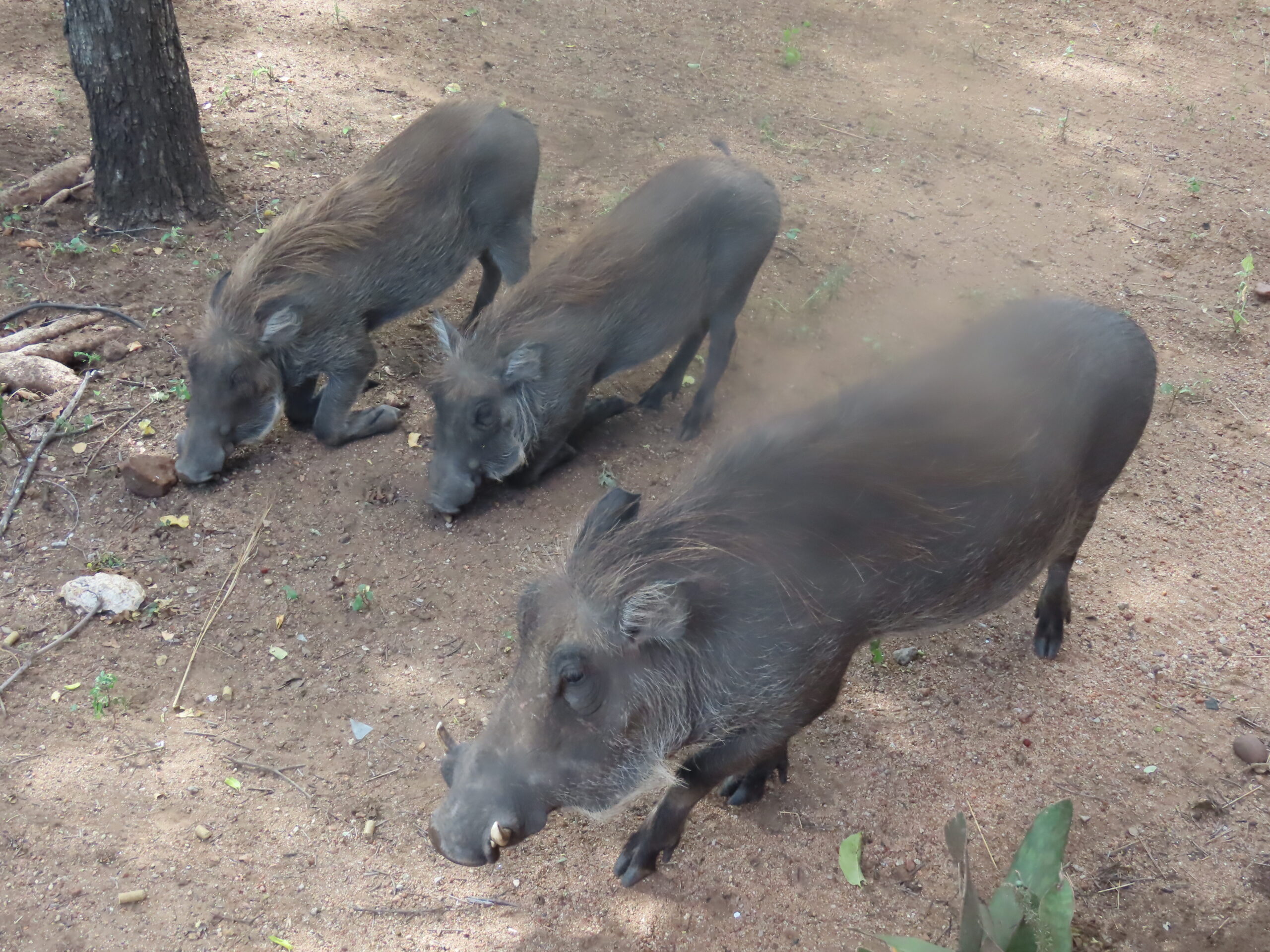
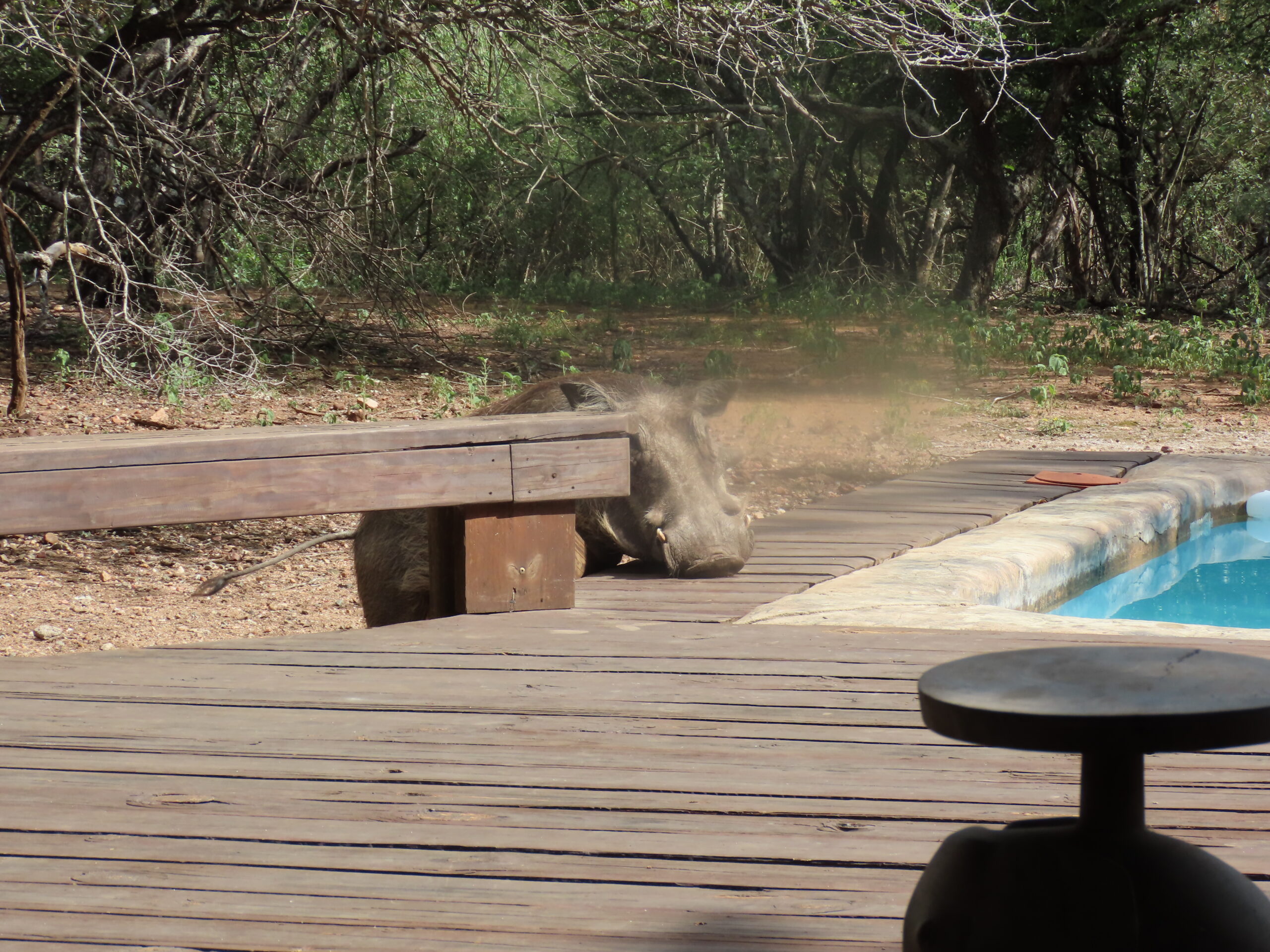
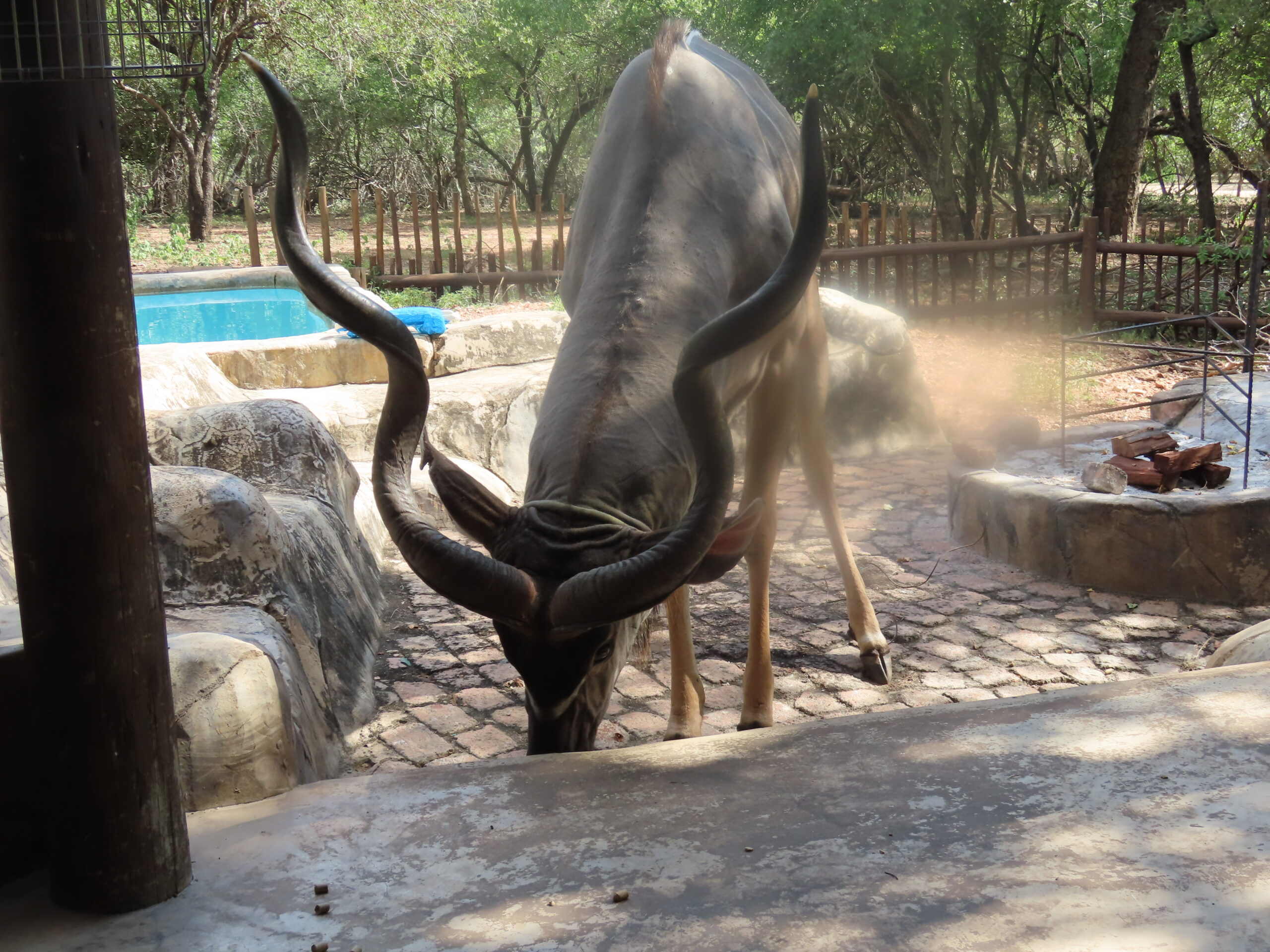
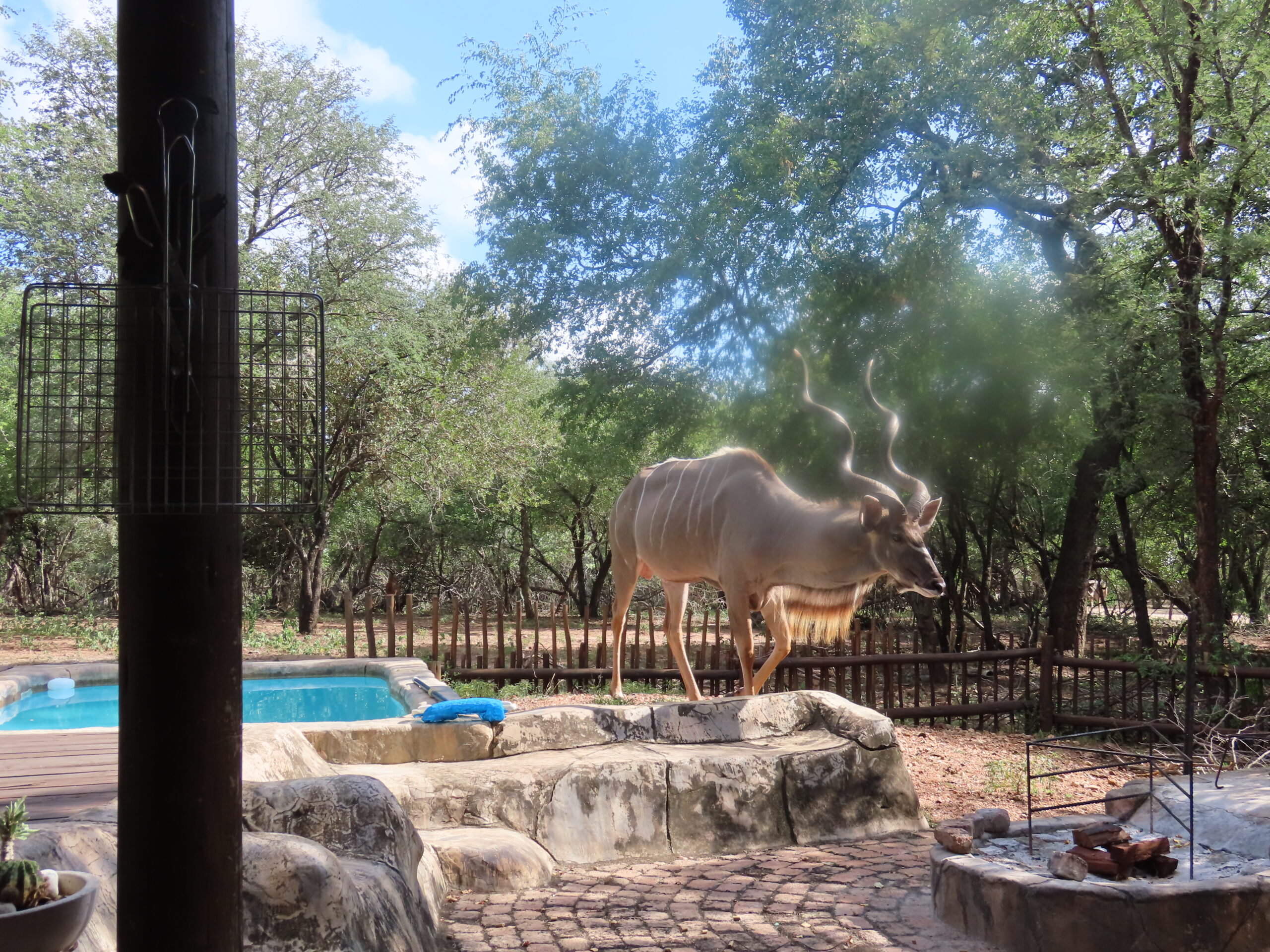
It’s a tranquil day today, with only a few animals lingering in the garden. At this point, I see three bushbucks, one unknown warthog and a male kudu at a distance. On Monday, when the weekend holidaymakers return to their respective homes, the bush will be abundant with wildlife again.

It was so wonderful to see Norman once again.

Tonight’s dinner is prepped. Tom has bacon-wrapped pork tenderloin cooked on the braai, and I am having prawns and mussels in garlic wine broth. On the side, we’ll have a dish I prepped this morning: a keto mushroom, onion, egg, and cheese flan, along with a big cabbage and lettuce salad with tomatoes, carrot, celery, and homemade dressing.

We’ve been doing laundry this morning, half of which is done now. Every few weeks, I wash everything white in a tub with bleach. With all the dust in the air here, whites can lose their brightness and bleach can resolve this. When we take off our socks at night, we notice a line of demarcation between the white in the shoe and the tinge of brown in the exposed part.

Tomorrow, I have an appointment with Doc Theo to get something for my bad allergies. It’s disappointing that I’m having to deal with more health issues but hereditary inflammatory conditions such as heart disease, pre-diabetes and allergies have plagued me all my life.

My boy Norman is quite handsome.

No sooner than four days after we arrived, I started sneezing with itchy eyes and having asthma, I had no choice but to start a short course of Prednisone, as recommended by Doc Theo to treat the asthma when my usual medications didn’t work. In my 30s I had a seven-year course of allergy immunization injections which worked until 30 years later. But, their efficacy can wear off in one’s later years.

Hopefully, he’ll have some options for me besides Prednisone, which is not recommended for extended periods. We shall see. After the appointment, we’ll head to the pharmacy and Spar Merket for veggies and a few odd items.

That’s it for today folks.

Be well.

Photo from ten years ago today, March 16, 2015:

Not wanting to awaken the sleeping monk seal, I kept my distance, although I’d have loved to see more, in Kauai at Napali Beach. “Known to native Hawaiians as ʻIlio-holo-i-ka-uaua, or “dog that runs in rough water”, its scientific name is from Hugo Hermann Schauinsland, a German scientist who discovered a skull on Laysan Island in 1899. Its common name comes from short hairs on its head, and it is said to resemble a monk. The Hawaiian monk seals are adopted to be Hawaii’s state mammal.” For more photos, please click here.

It’s a special day in our lives of travel…Last night, eight guys and me at the “Cheers-type” bar at Jabula…What a blast!…

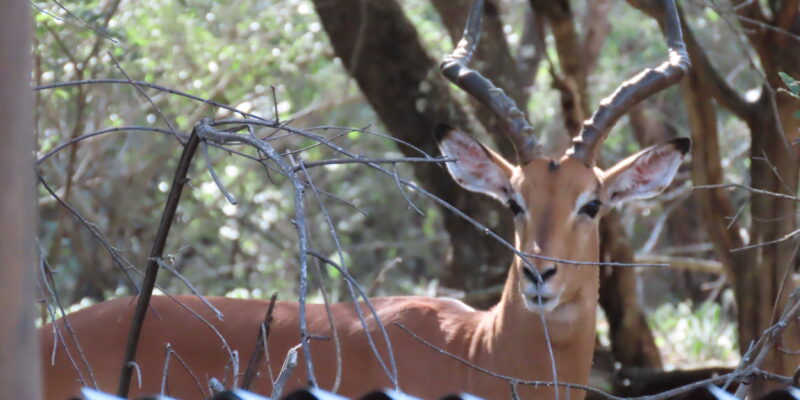
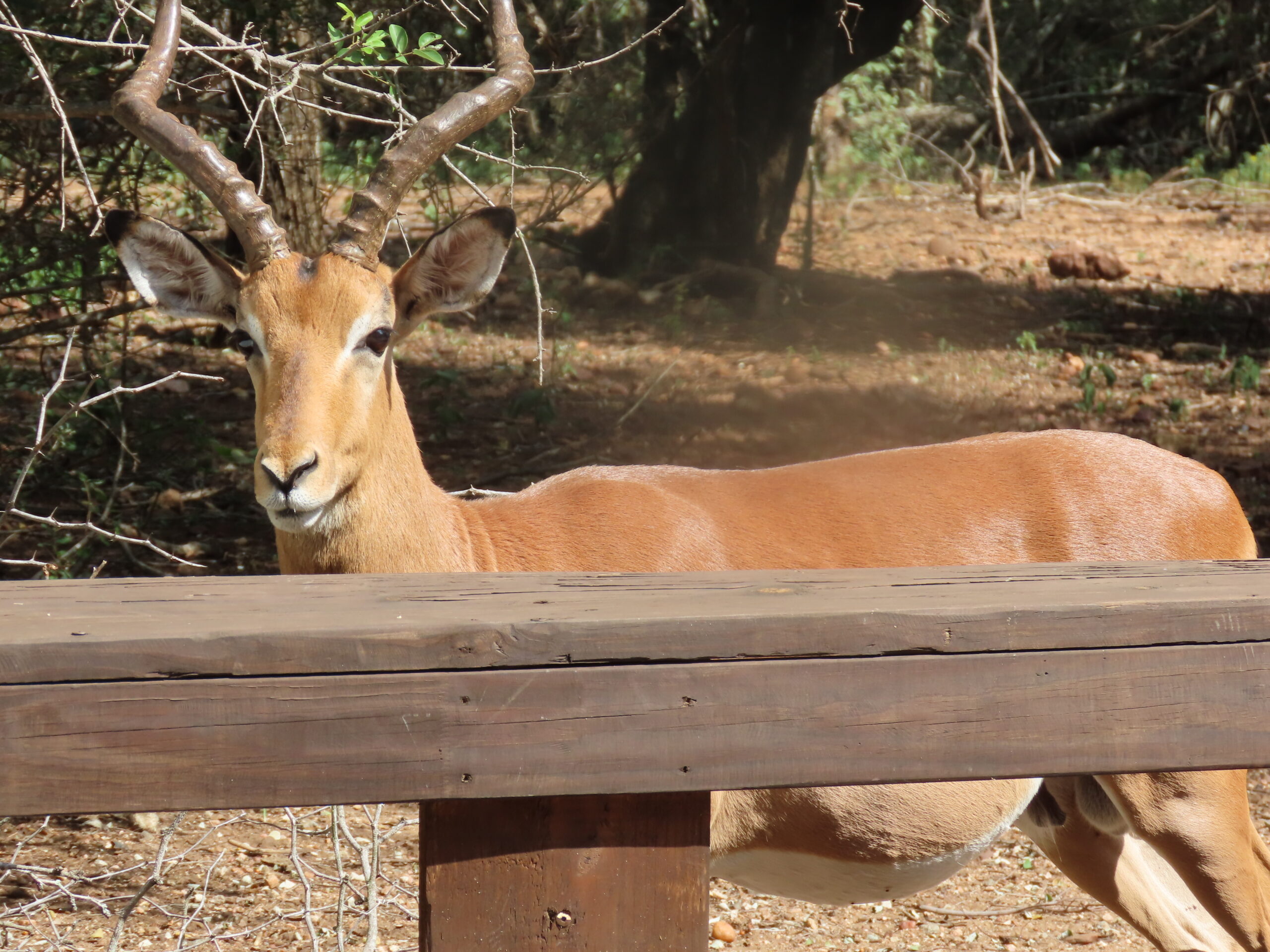
My first ever attachment to an impala. This is Mac. He hangs around our garden throughout the day and night. Most often, impalas graze in herds. Max is the exception. He’s learning his name and the sound of my voice.

We uploaded our first post on March 15, 2012, 13 years ago as of today. You can read the first post here.

It was an exciting day to upload that first post. Although our site wasn’t entirely designed then, I did my best to make it readable. We made many errors, many more than we make today, but I genuinely believe our readers understand that posting as often as we do, a certain number of errors are to be expected, although we both proofread each day.

Today’s post will be number 4172. It is not exactly one post per day; there have been times when we couldn’t post or took a day off during the 13 years since we began sharing our story.

Although we posted on March 15, 2012, we didn’t begin our travels until October 31, 2012, 231 days later. But, we thought we needed to share the process of unloading everything we owned and the emotions associated with letting go of so much we knew and love, including family and friends.

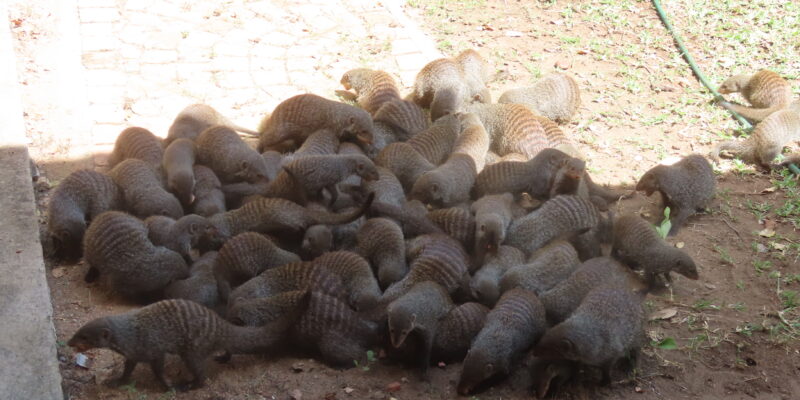
Mongeese drinking from the bird bath after eating paloney..

In the beginning, we included a few photos—for many days, there were no photos. However, as time marched on and our experiences grew, we purchased a cheap little automatic camera at a Walmart in Mexico, with virtually no expertise in photography.

Over the years, our interest in sharing photos increased exponentially but my interest in photography never increased. Thus, as much as we’d like our photos to be perfect, we spend little time editing photos while gaining little knowledge about how to take great pictures.

Tom’s dinner at Jabula last night was 300 gr. rump steak, baked potato, sour cream (which I used), and green beans. He said it was delicious.

After spending so much time preparing posts and photos, once I am done for the day, I have little interest in using my laptop or learning about photography to a greater degree. It is what it is, and I do my best with my limited ability. We hope you all understand.

We’ve found we like to spend the balance of our days experiencing the world around us instead of being educated on a topic for which I have little interest and skill. As long as I can upload photos for our readers to see, I am content and experience no frustration or angst for this topic.

We have thoroughly enjoyed sharing our stories and photos over these past 13 years and hope you will continue to enjoy them with us. Without all of you, I’d have had little motivation to spend every morning of my life sitting at my laptop documenting almost every detail of our lives. For this, I thank everyone of you.

This grilled chicken salad will be a regular for me. It consisted of a Greek salad topped with tender grilled chicken.

On another note, last night we had another fantastic time at Jabula, the South Africa equivalent of the Cheers Bar from the TV series from 1982-1993, about a bar, “where everyone knew your name.” I felt like a prima donna surrounded by eight men sitting at the bar with us, commiserating over our love of the bush, nature and travel. Dawn, the lovely owner, stood behind the bar and joined in with all of us.

Two men were British, two were from Mozambique, and the remainder were South African. What a lively group! The animated conversation, laughter, and interaction amongst the group were palpable. When we left, we received hugs, kisses, and handshakes all around. Surely we’ll see many of them again.

As always, our food was fantastic. We ate sitting at the bar, as usual, never missing a beat in the lively conversations. It was a memorable night. More will follow tonight.

Be well.

Photo from ten years ago today, March 15, 2015::

In Kauai, we watched the life cycle of the Laysan Albatross for months. The beaks of the Albatross are used for preening and signs of greeting. They may also be used aggressively if an intruder threatens them or the nest. For more photos, please click here.

The weekend has begun…Socializing on the menu…New wildlife video…

It’s a lovely day in the bush. The temperature is in the high 70s, and there’s a cooling, overcast sky, a gentle breeze, and less humidity than usual. With the cooler weather, considering there are many weekend holidaymakers, that reduces the number of animals we’ll see, we’ve had a steady stream of wildlife this morning.

We had a dazzle of zebras who seem to have become regulars along with several bushbucks, our now usual band of mongoose, a forkl of kudus, and our favorite impala, Mac, who’s often surrounded by his herd of impala. Impalas are generally shy, but Mac has taken a liking to us and visits us on his own several times daily.

We’ve yet to see my favorite animal, Norman the nyala, but have heard he’s been grazing across Oliphant, the main road in Marloth Park. Hopefully, he’ll eventually work his way back to our bush area soon.

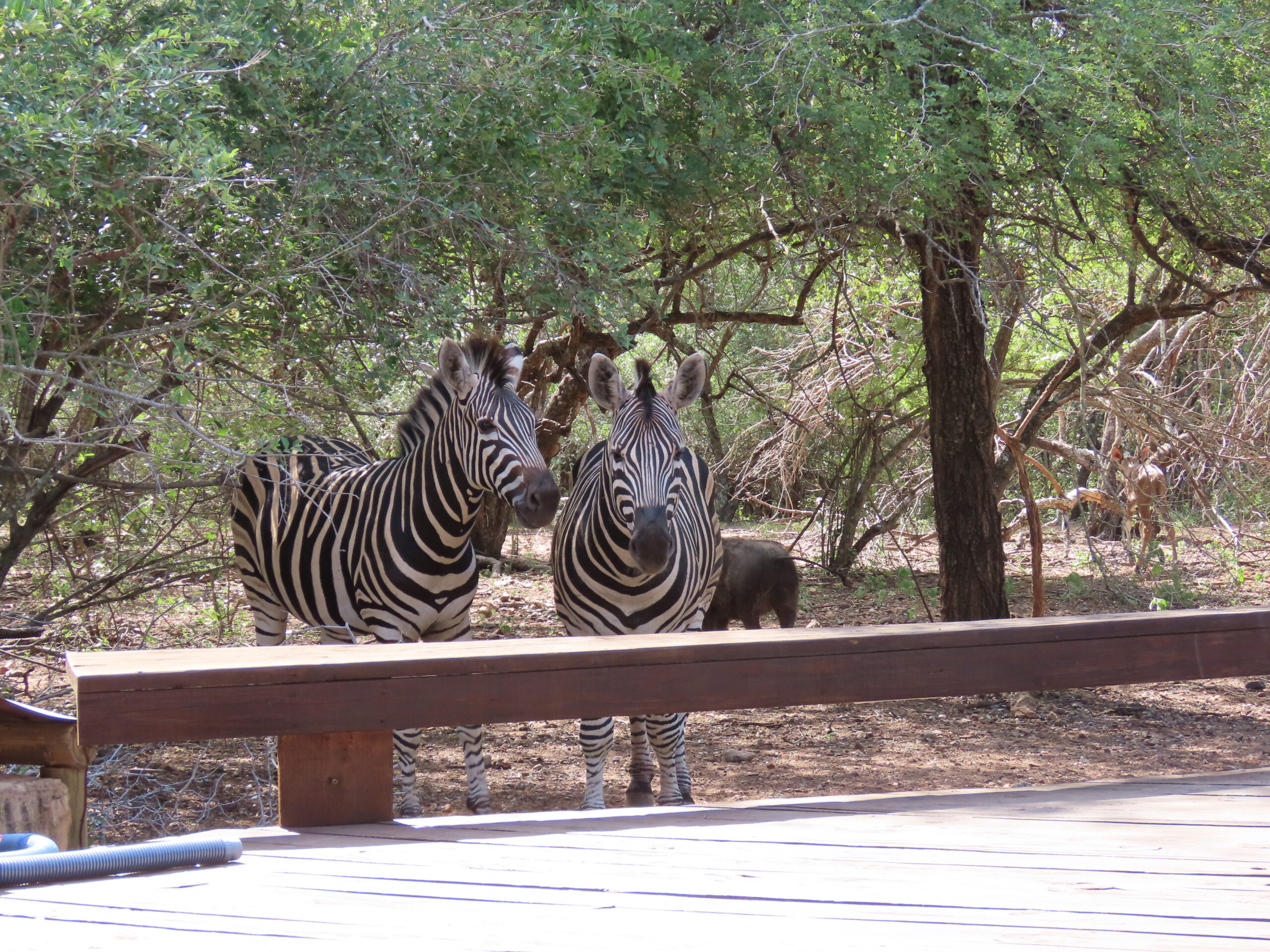
Zebras stop by daily. Right now, there are eight of them in the garden.

A warthog came to visit that looked like Little, my favorite from 2018 when we stayed at the Orange house, probably a half mile from here. Again, we had him with us when we stayed in the Lovebird’s Nest house. When he showed up a few days ago, I could swear it was him, especially when he became animated when I talked to him while we made endearing eye contact.

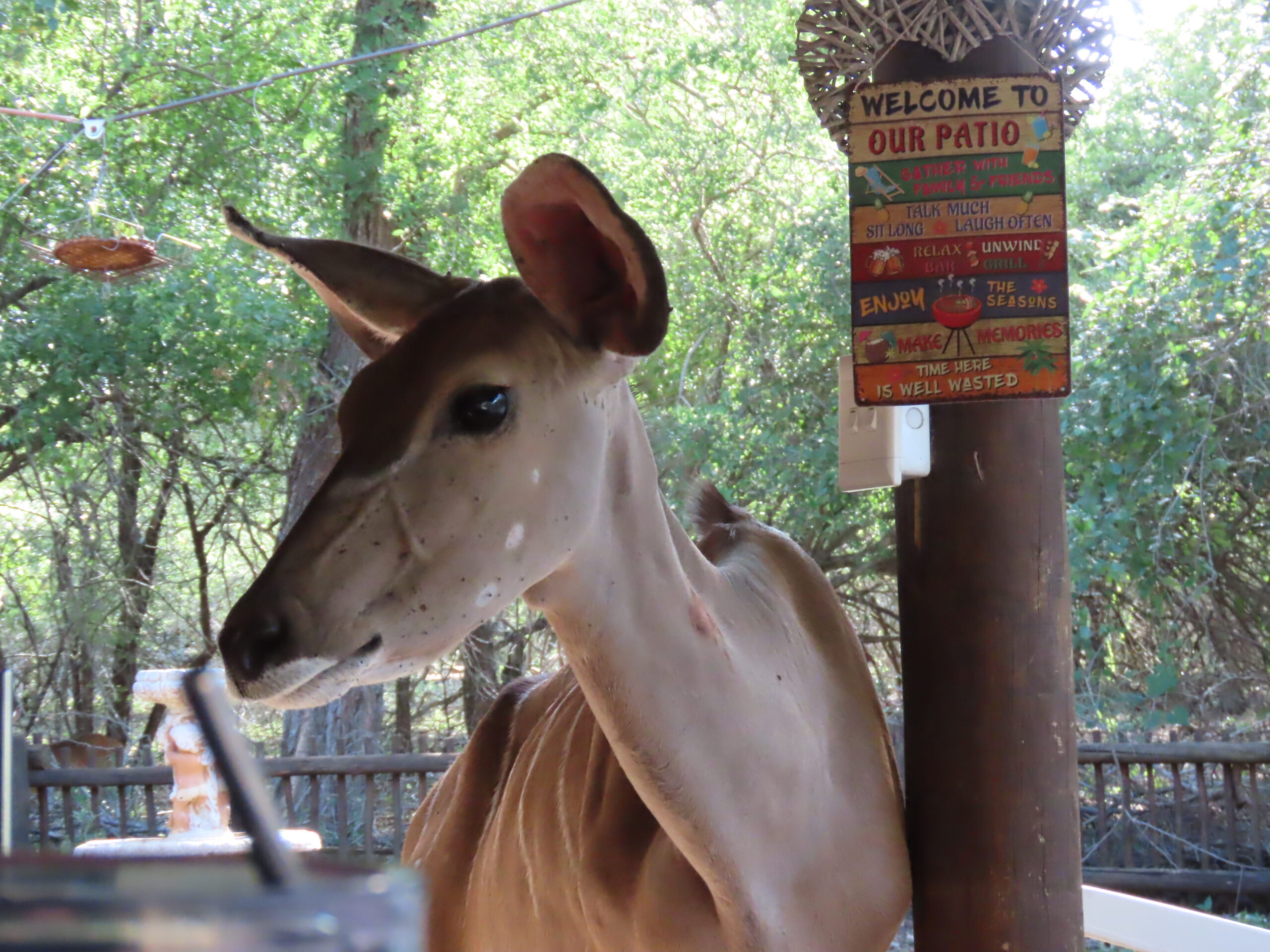
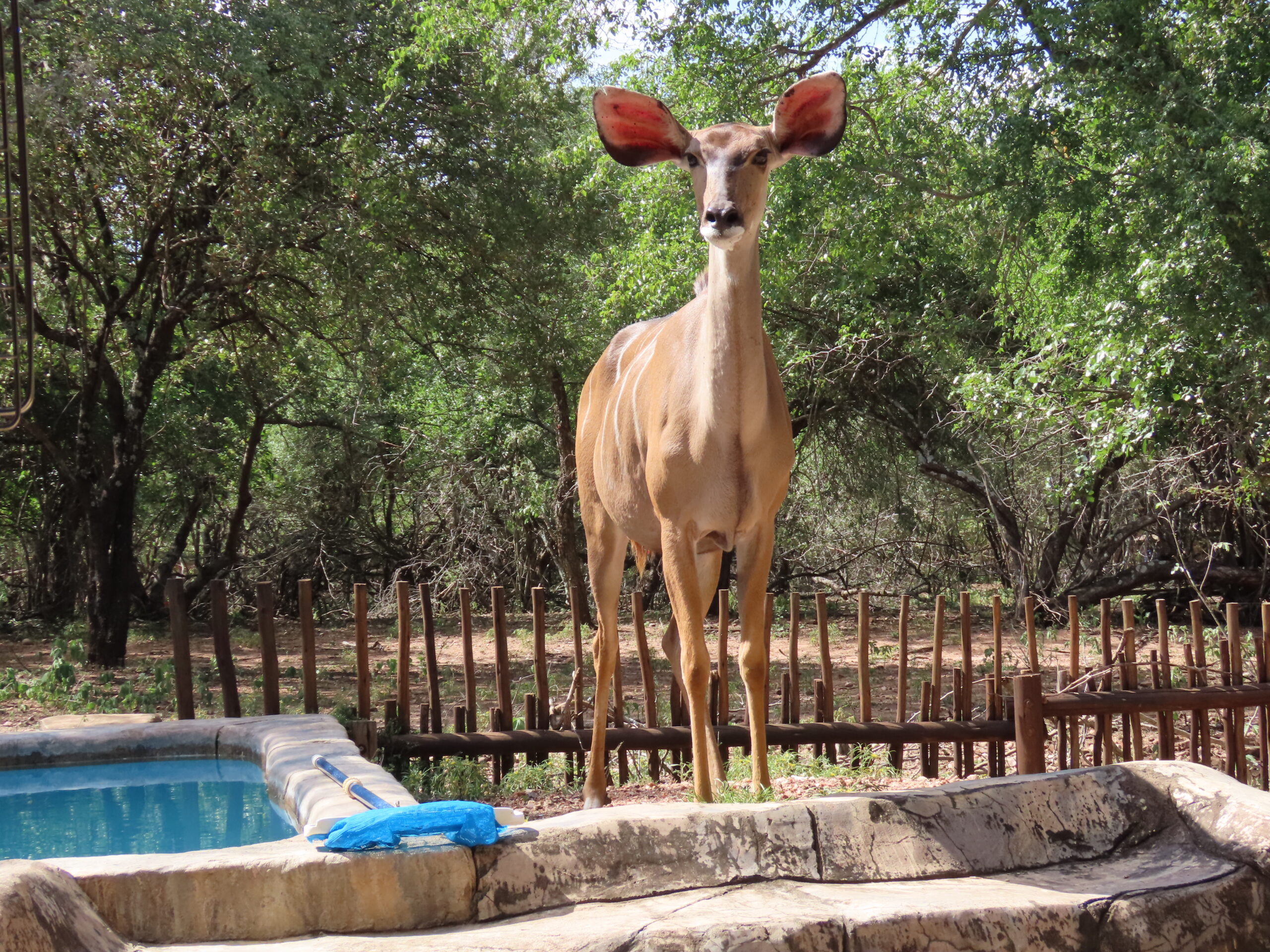
My favorite female kudu, Bossy, arrived the day we arrived. I am sure she remembers me, my high-pitched voice, and my demeanor. Although wild, most of these animals are intelligent and can relate to humans, each in their own way. No words can describe how precious the relationships we develop with these wild animals are, not much different than humans would relate with their dog, cat, or other pets.

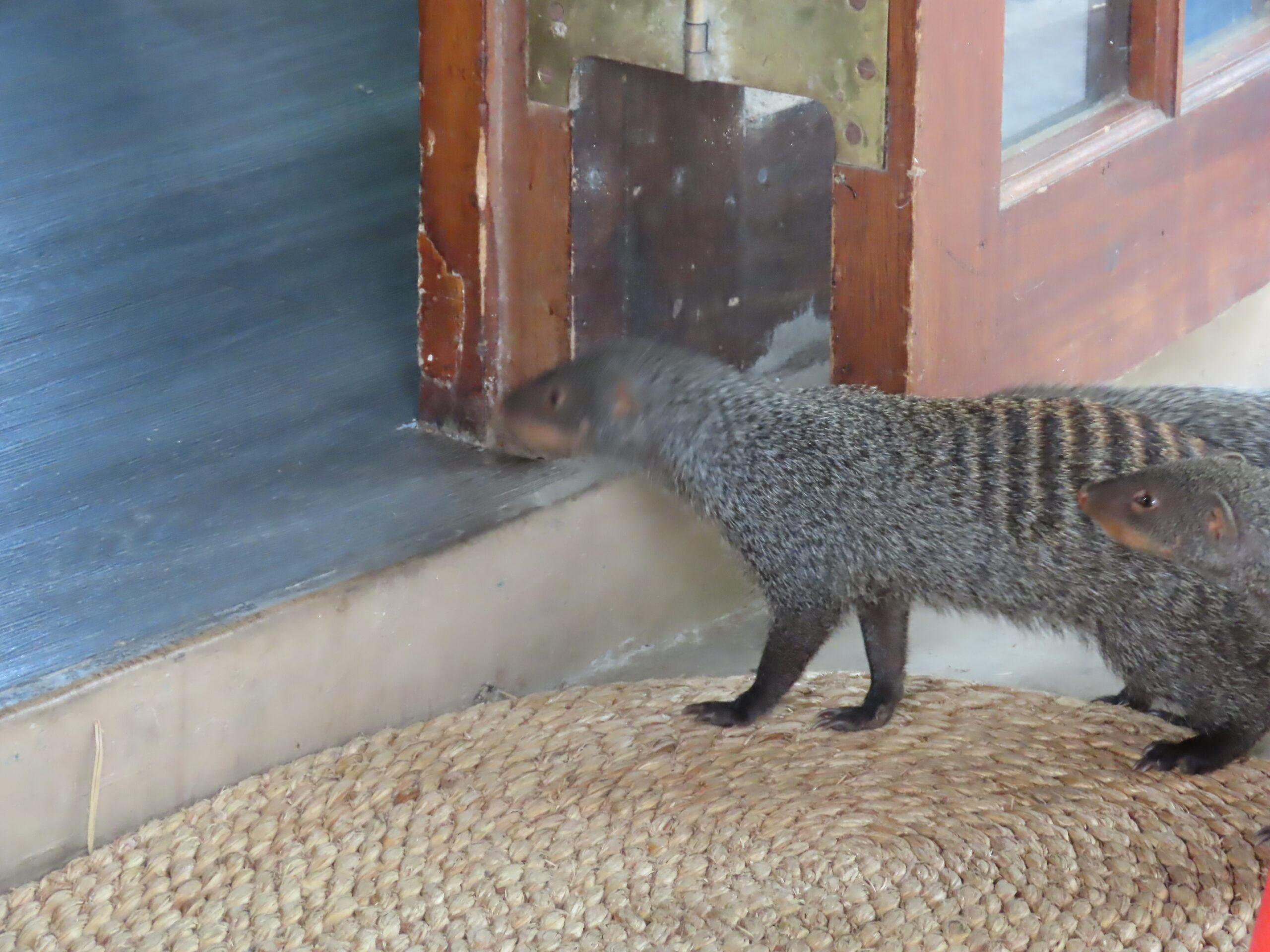
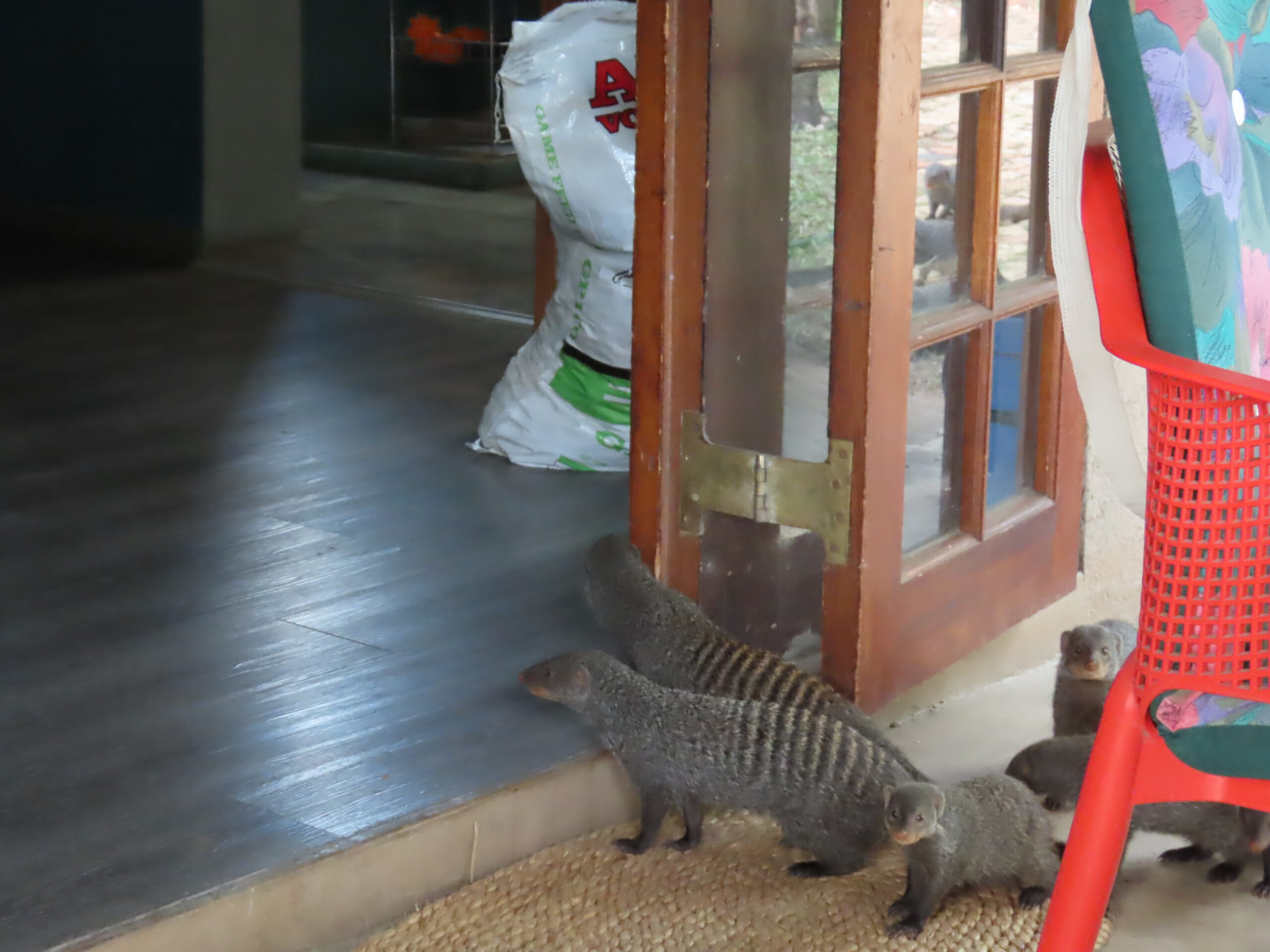
However, these animals are not pets and this is not a petting zoo. We do not touch, hand feed, or invite them into the house, although mongooses stick their heads inside the door to look for me when I cut little bits of paloney, a large roll of chicken, comparable to the texture of braunschweiger.

Today, I gave these zebras, iced cold carrots which they loved.

Each morning, I slice big rounds off the paloney and then cut it both ways into bite-sized pieces, placing them on a paper plate to toss as they wait in the garden. They squeal with delight when the paloney comes their way and this morning we took the above video to share with all of you.

We realize that over the almost six months we’ll be here, there will be considerable redundancy with an endless stream of photos and videos you may have seen in similar media years ago. After all, we’ve spent over four years living in the bush during our 12 years of world travel. We can’t get enough!

Soon, Tom will drop me off at my favorite local spa, Imbewe, where I will have a much-needed pedicure. I haven’t had one since the first week we arrived in Lake Las Vegas in December. I’ve done my best in the interim, but there’s nothing like a professional service. Also, it will be wonderful to see Patience and her husband, Doctor (not a doctor, just his African given name), after over two years since we’ve been gone.

My girl Bossy, remembered us right away.

Tonight, we’ll head to Jabula, our favorite place to spend Friday and Saturday nights. Of course, if other social plans arise, we’re certainly open to doing something else. But, here in Marloth Park, most people are retired, and particular days of the week don’t dictate when they should socialize. We’re invited to Roz and Les’ house on Wednesday for a braai. It will be fun to see them again.

That’s it for today, folks. Of course, we’ll be back with lots more. Tomorrow is a special day. Please check by to see what we’re celebrating!

Be well.

Photo from ten years ago today, March 14, 2015:

No photos were posted on this date in 2015.

Part 3…Kruger National Park photos…Grocery and egg prices…What are we spending on food?…

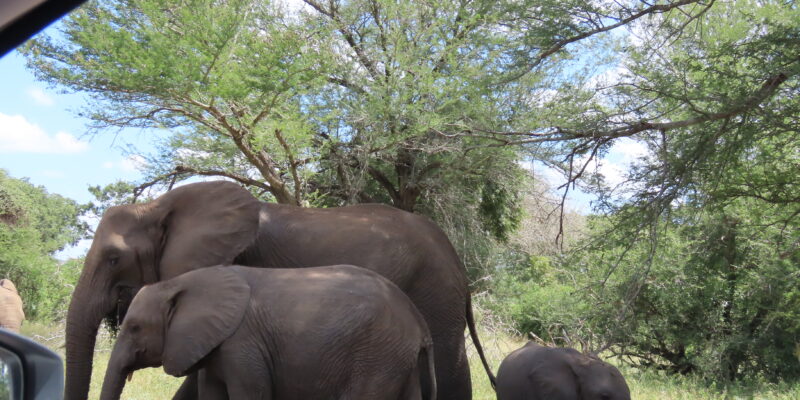
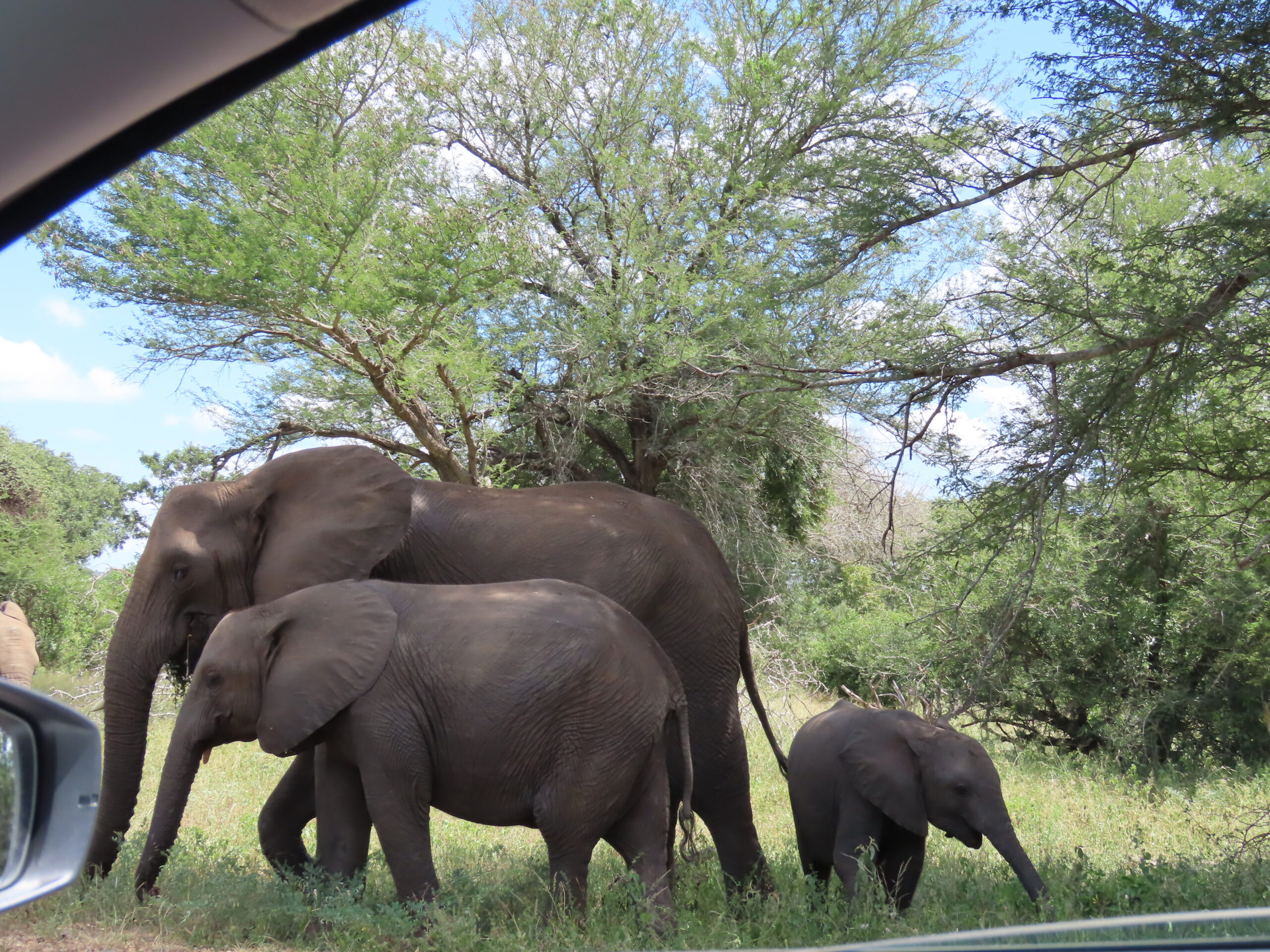
This mom elephant and her two youngsters were a delight to see.

The photos from Kruger weren’t as clear as they may have been if the wildlife had been so far away. It was a tough day in the heat when the wildlife tends to stay undercover to stay cool. Surely, we’ll return to Kruger each week as the weather cools and hopefully take better photos.

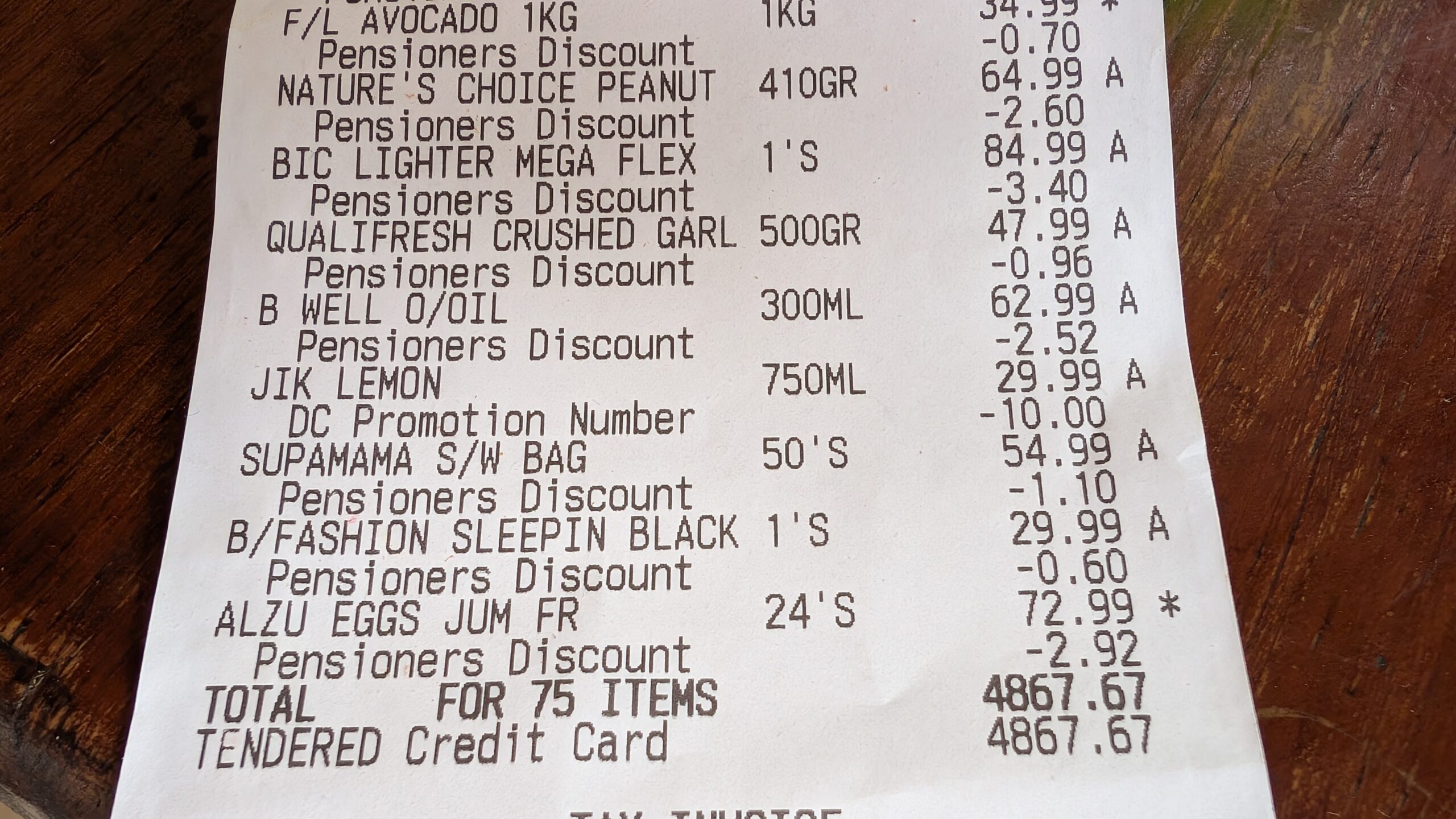
On another note, we grocery shopped last Sunday at Spar in Komatipoort and spent a total of ZAR 4867.67, US $264.90 plus another ZAR 1162.94, US $63.29 at The Butchery, the meat market in Marloth Park at the Bush Centre.

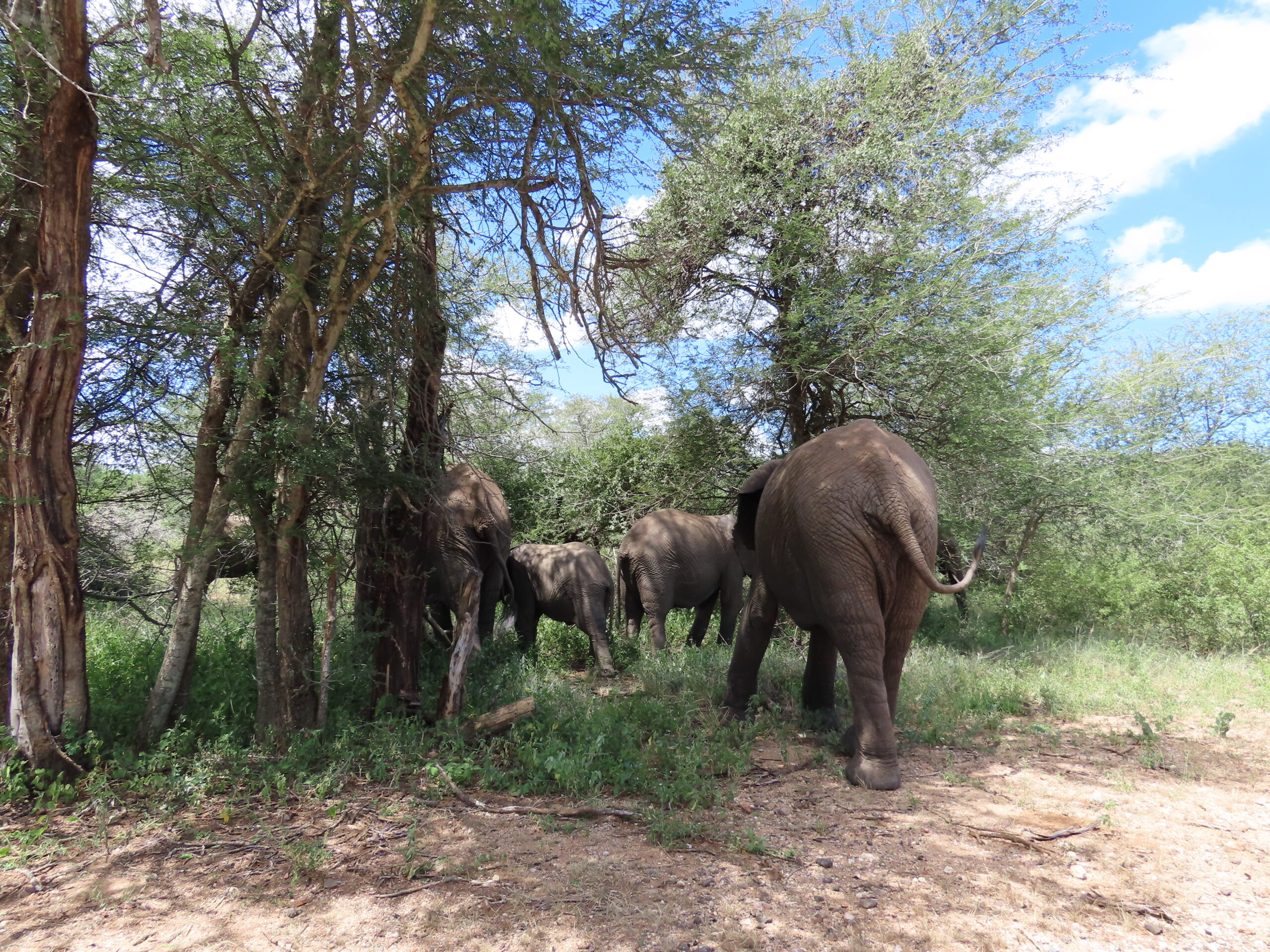
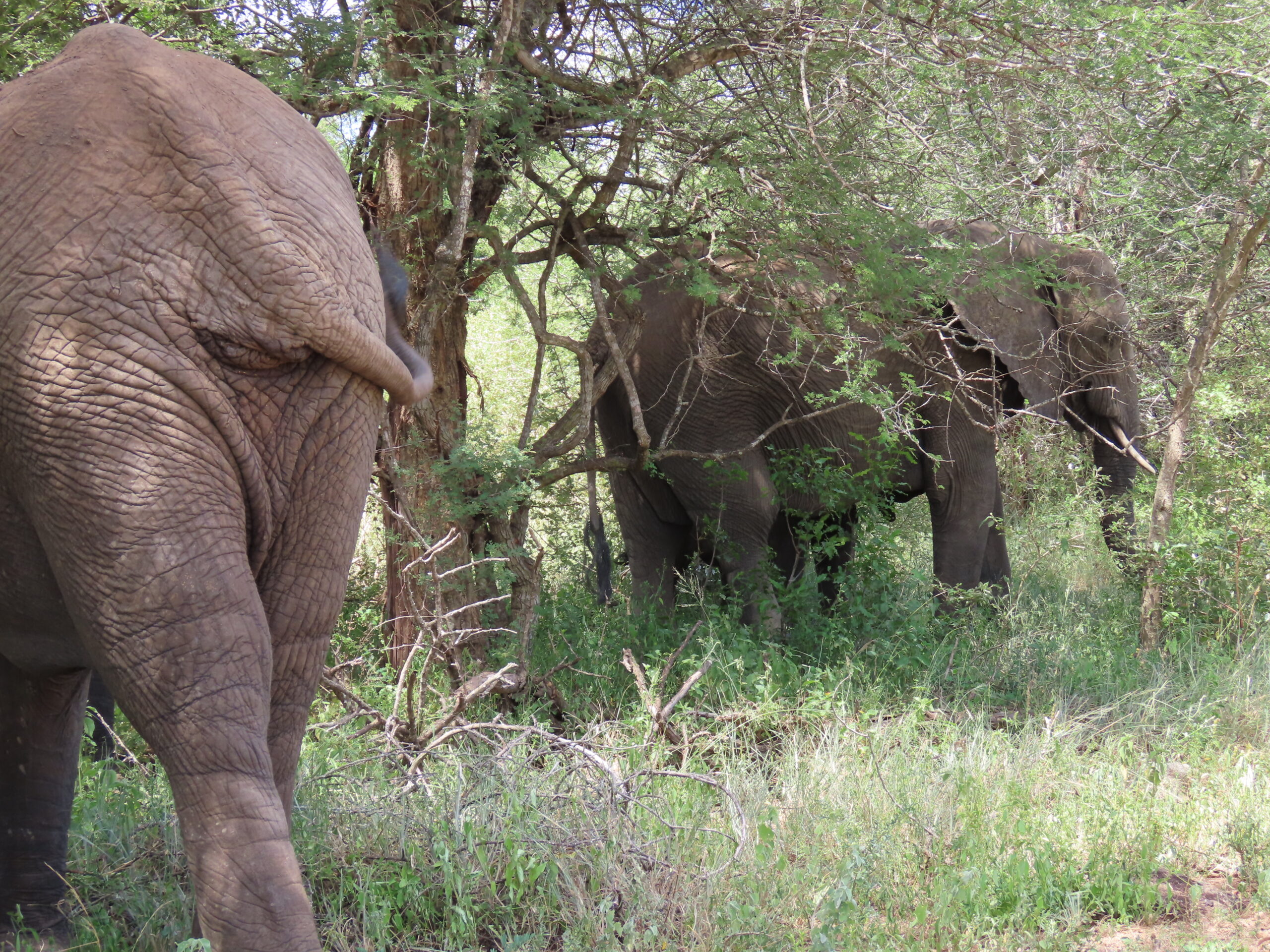
Elephant moving further into the bush.

The total for the next two weeks, considering we dine out two nights a week, is ZAR 6030.61, US $328.19, averages ZAR 3015.10, US $164.10 per week, assuming we selected the finest meats, vegetables, and dairy products we consume regularly.

Plus, with dining out at Jabula every Friday and Saturday, our bill is typically ZAR 918.78, US $50 each night. Thus, we spend another US $100 weekly, making our weekly food bill, including dining out twice weekly, ZAR 3934.07, $262.10. When we dined out in Minneapolis or  Lake Las Vegas, typically we spent at least twice as much for dining out.

It wasn’t easy to get good shots of the wildlife when it was a very hot day and the wildlife were readily visible, as they hid under cover in the bush.

When we compared our weekly grocery bills in the US, we paid at least twice as much as we do here. It’s incredible how much less costly it is to live here.

Of course, from time to time, we will go to the local SaveMor market in Marloth Park for fresh veggies for our salads and side dishes. We purchased these when we first arrived for US $12.90.

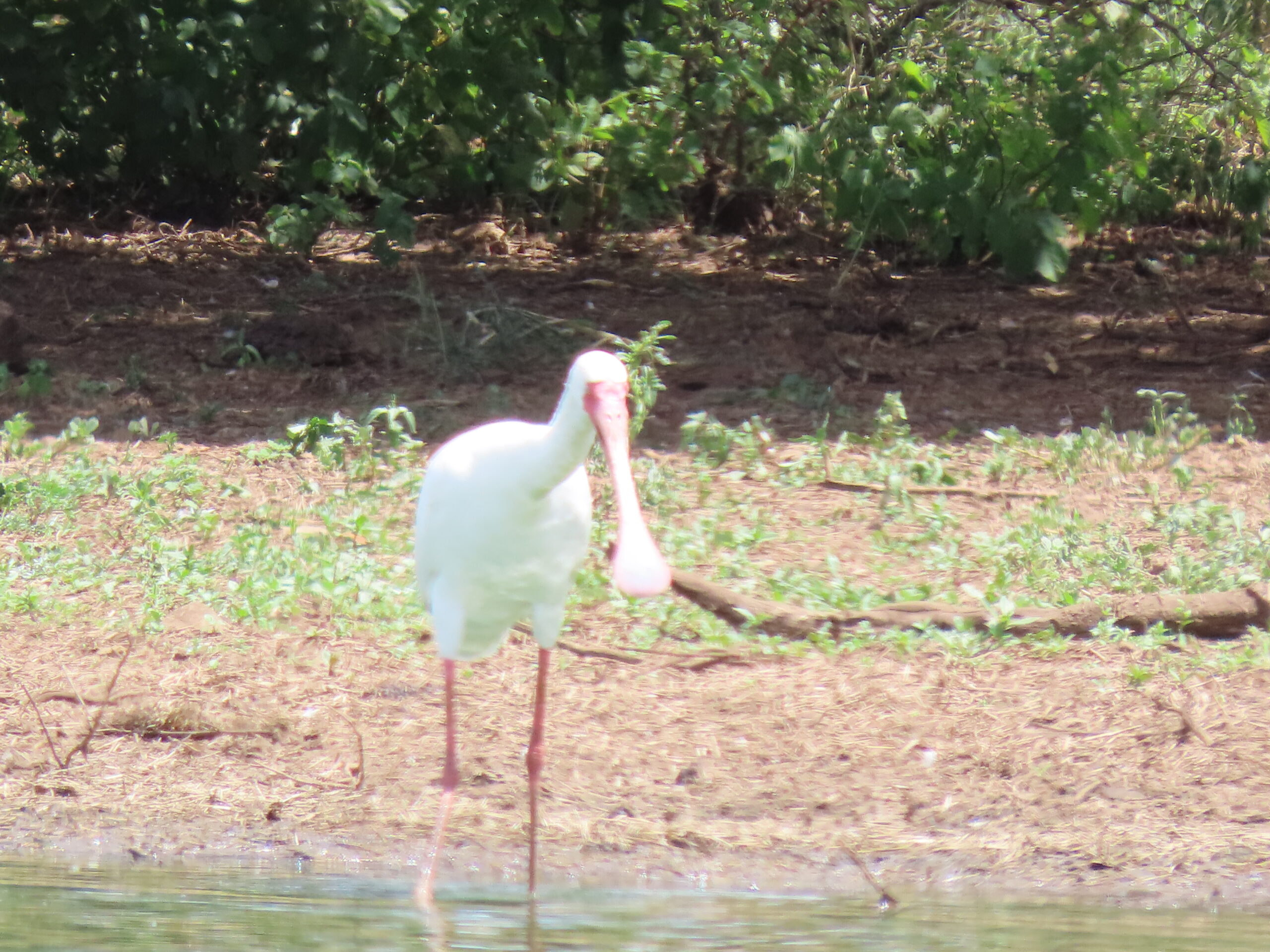
Spoonbill stork: The African Spoonbill is a long-legged wading bird. Its height is 90 cm (36′). Its body is predominantly white, except for its red legs, face, and bill. Its wings are 365-403 mm long. This bird can be easily identified by its uniquely spoon-shaped bill. At birth, the African Spoonbill’s bill does not resemble a spoon. It is born with a short beak that gradually develops into its spoon-like shape. It usually resembles a spoon right before it is time to leave its nest. Both the male and female birds are similar in appearance.

Yesterday, we had a fantastic time seeing Kathy and Don at their home on the Crocodile River. We arrived at 11:00 and left around 1:30 to allow them to get back to unpacking. It was wonderful to see them when it had been over three years since we dropped them off at the airport in Nelspruit to return to Hawaii for Don’s US medical care. They are thrilled to be back in the bush.

Surely, we’ll see them regularly during the remaining nine weeks until they return to the US. We have lots of plans to see friends while we’re here and then, the arrival of our friend Lisa in the beginning of April. We won’t be short on social activities, much of which transpires when we are at Jabula.

Notice the last item on this list is for a 24-pack of Alzu free-range eggs. They don’t carry pasture-raised eggs, so this was our best option. The price for the 24 jumbo eggs was ZAR 72.99, US $3.97, or almost US $2 a dozen, the same price we paid two years ago.

Last night, we booked our flights, hotel, and car in a good package deal with Expedia on our site. We’ll be leaving South Africa for Minnesota on May 24, arriving on May 25 (considering the seven-hour time difference), and fly back to Marloth Park on June 17, arriving on June 19.

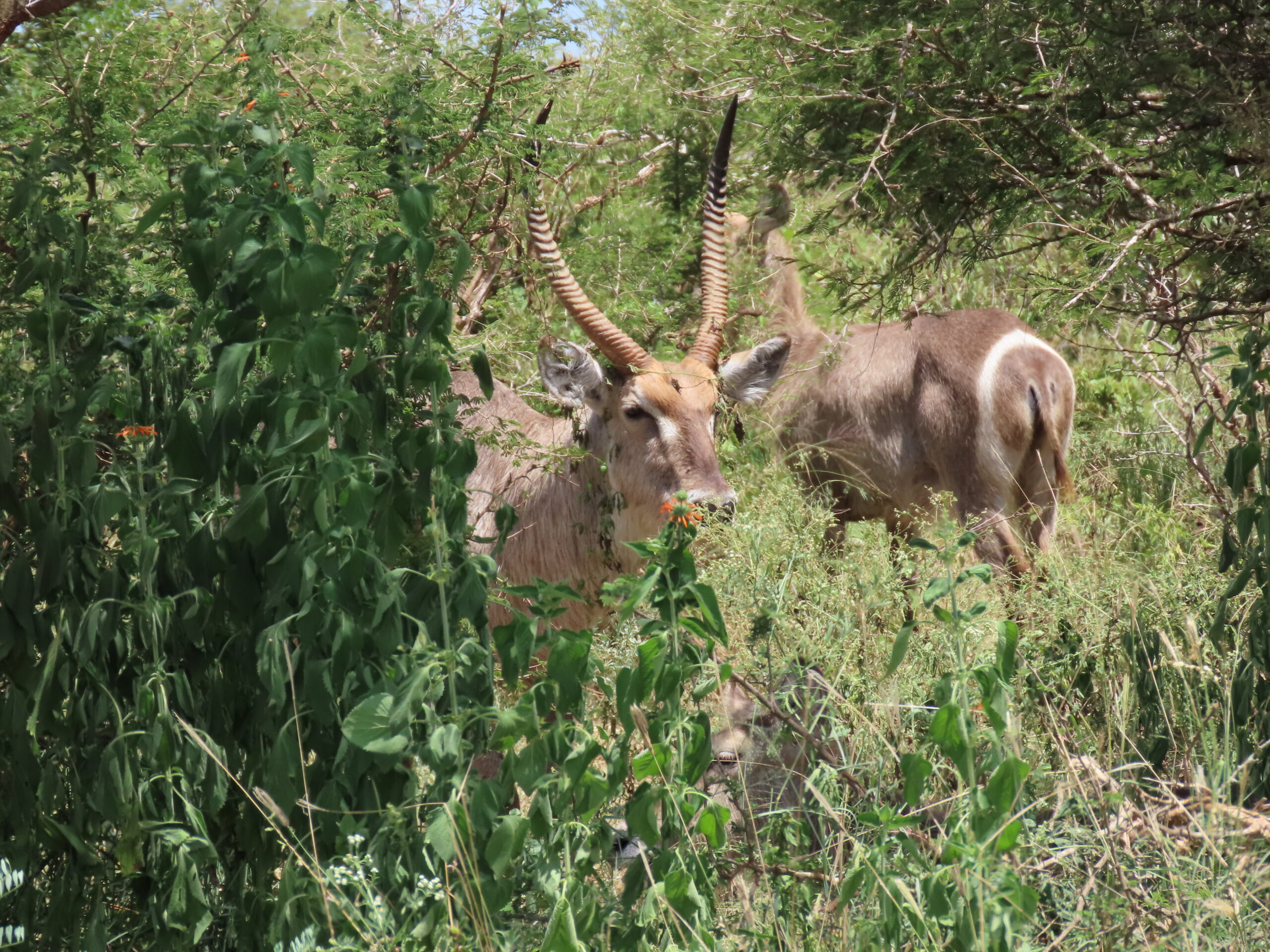
Notice the circular marking on the waterbuck’s rear end. This is seen on both females and males.

We booked the same hotel we stayed in Eden Prairie, Minnesota, a rental car, and our round-trip flights. Fortunately, Maisie’s graduation isn’t until May 29, and the graduation party is on May 31. We’ll have four days to recover from the long flights before the festivities begin.

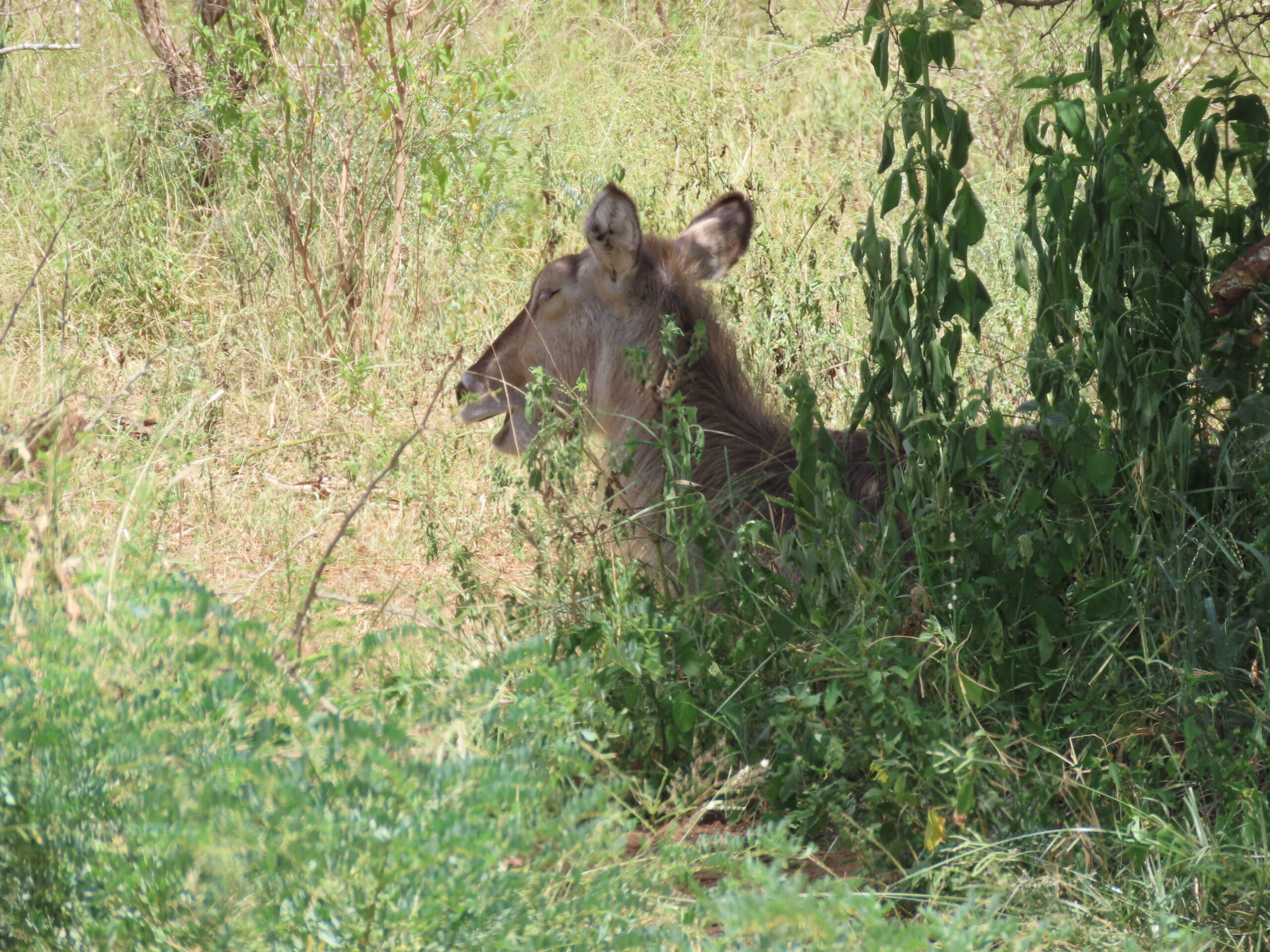
Waterbuck: This is a large, robust female antelope. Bulls have a shoulder height of 1.4 metres and can weigh up to 260 Kg. Cows are smaller than bulls. Waterbucks have a brownish-grey shaggy coat. The eyes and nose are patched with white, and there is a white collar under the throat. The rump has a characteristic white ring. The large rounded ears are a prominent feature. Only the bulls have long, forward curved horns. Both sexes emit a, not unpleasant, musky smell which typically lingers at resting sites.

With the weekend approaching, we’ll see fewer animals when a new influx of tourists arrives, often feeding them foods they love but are unfit for their health and well-being. This is sad.

That’s it for today, folks. We’ll be back with more tomorrow.

Be well.

Photo from ten years ago today, March 13, 2015:

In Kauai, Tom spotted these two chickens. “Must have been a double yolker,” Tom clucked as I laughed. For more photos, please click here.

Part 2…Kruger National Park photos…Most turbulent flights in the world…

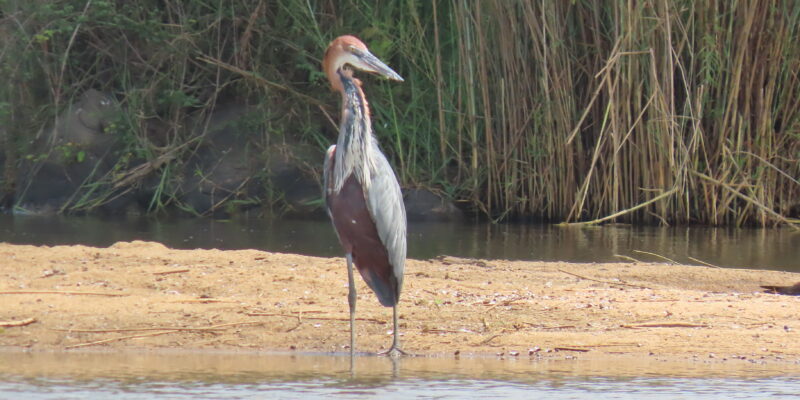
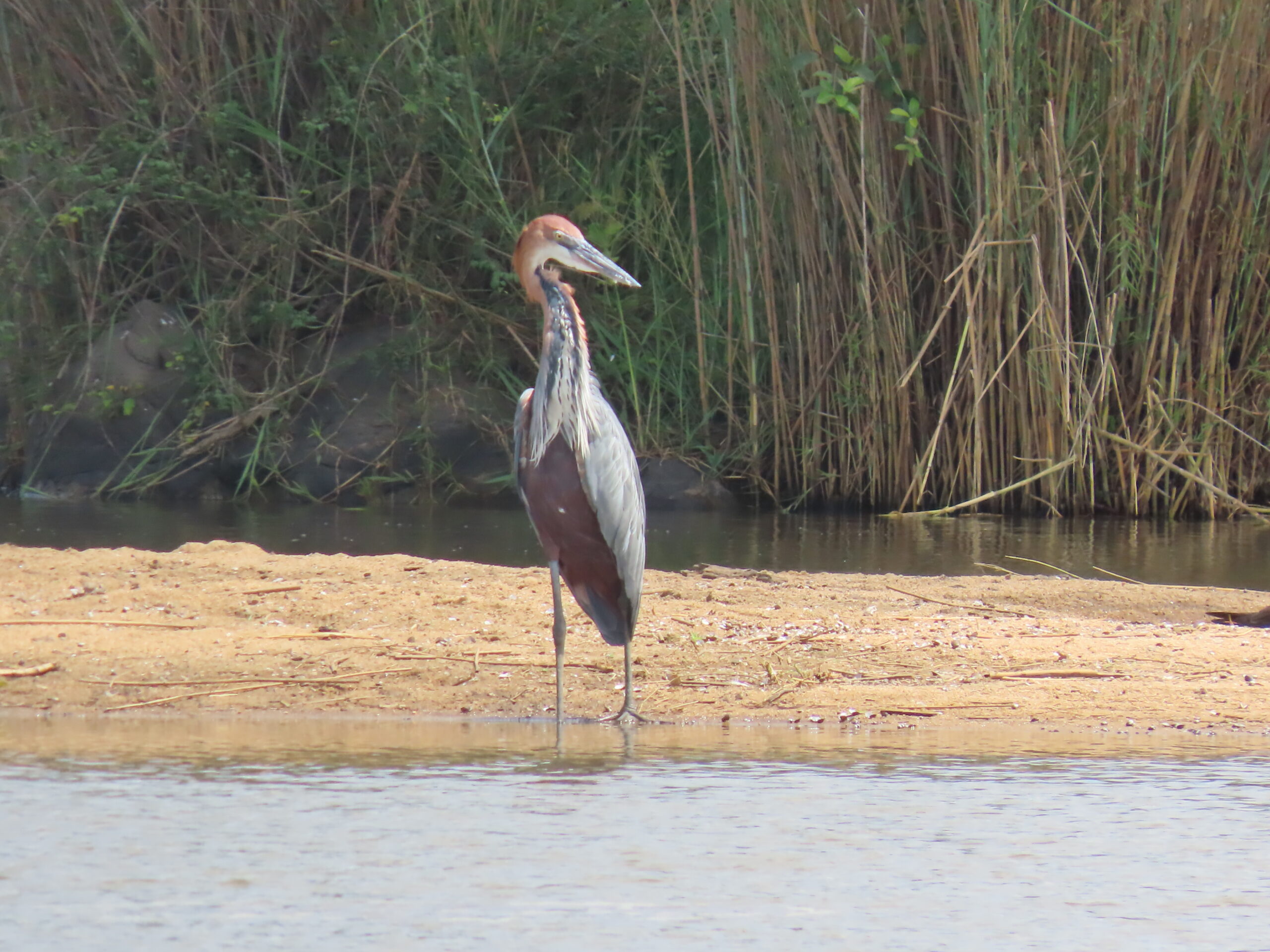
We spotted this Goliath Heron at the Sunset Dam: This enormous heron stands 1.5 meters tall and has a robust, dagger-like bill. The immature has rustier upperwings than the adult. Its flight is ponderous and labored. Goliath Heron inhabits large rivers, marshes, estuaries, and mangroves, hunting for large fish and other animals, stabbing them with an open bill. It has a distinct, barking “kowoork” call that can be heard from up to 2 km away. Purple Heron has similar plumage, but Goliath Heron is twice the size, has a much larger bill, and has a rufous (not blackish) top of the head. 
The photo wasn’t clear enough to determine this type of bird.

With concerns about flying after several recent crashes worldwide, travelers are more reticent about flying than ever. Educating oneself with statistics about flying can quickly allay some of those fears. Also, as in today’s article, knowing the more high-risk areas, airline ratings, and turbulence-prone flight patterns can put one’s mind at ease when making travel plans.

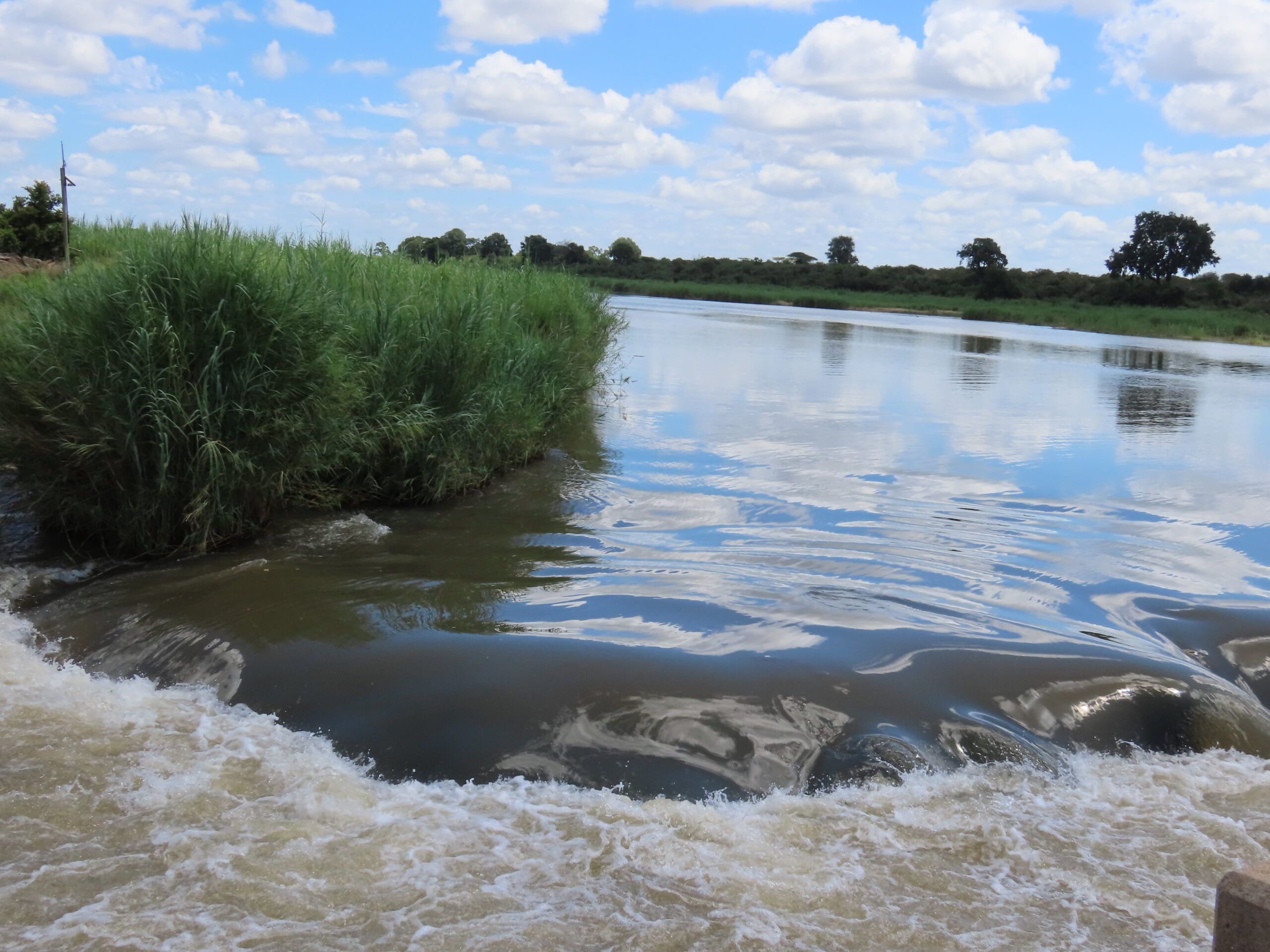
Small rapids as we drove across the bridge at the Sabie River.

On the other hand, a vacation or holiday is just that—a time to relax and unwind. If you are a terrified flyer, researching your intended route may put your mind at ease. Of course, turbulence can be a factor on any flight route or at any time. Remember that it’s a rarity for a crash or injury during even the worst turbulence. Keeping one’s seat belt on at all times reduces such risks.

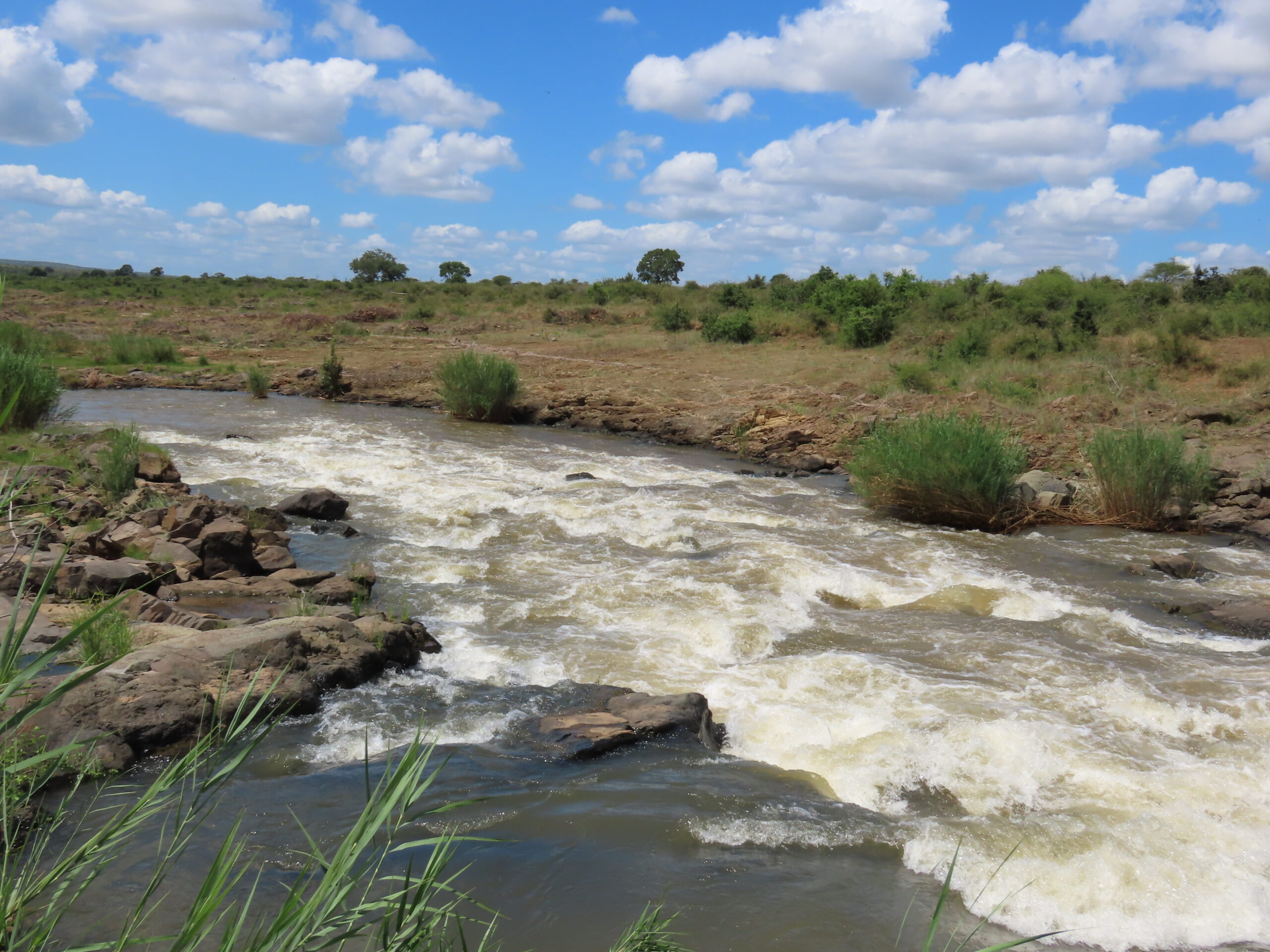
Another view of the rapids at the Sabie River at Lower Sabie.
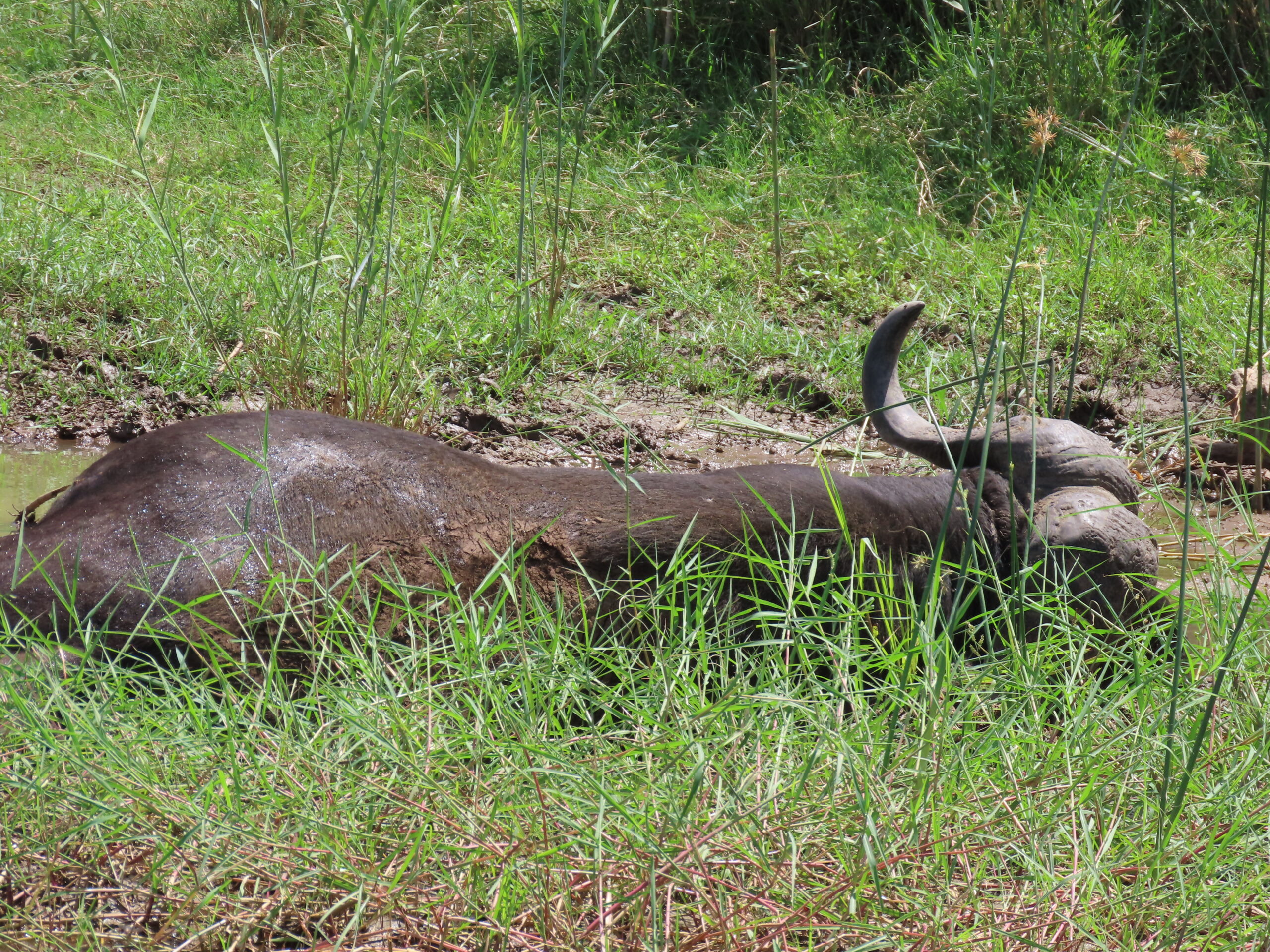
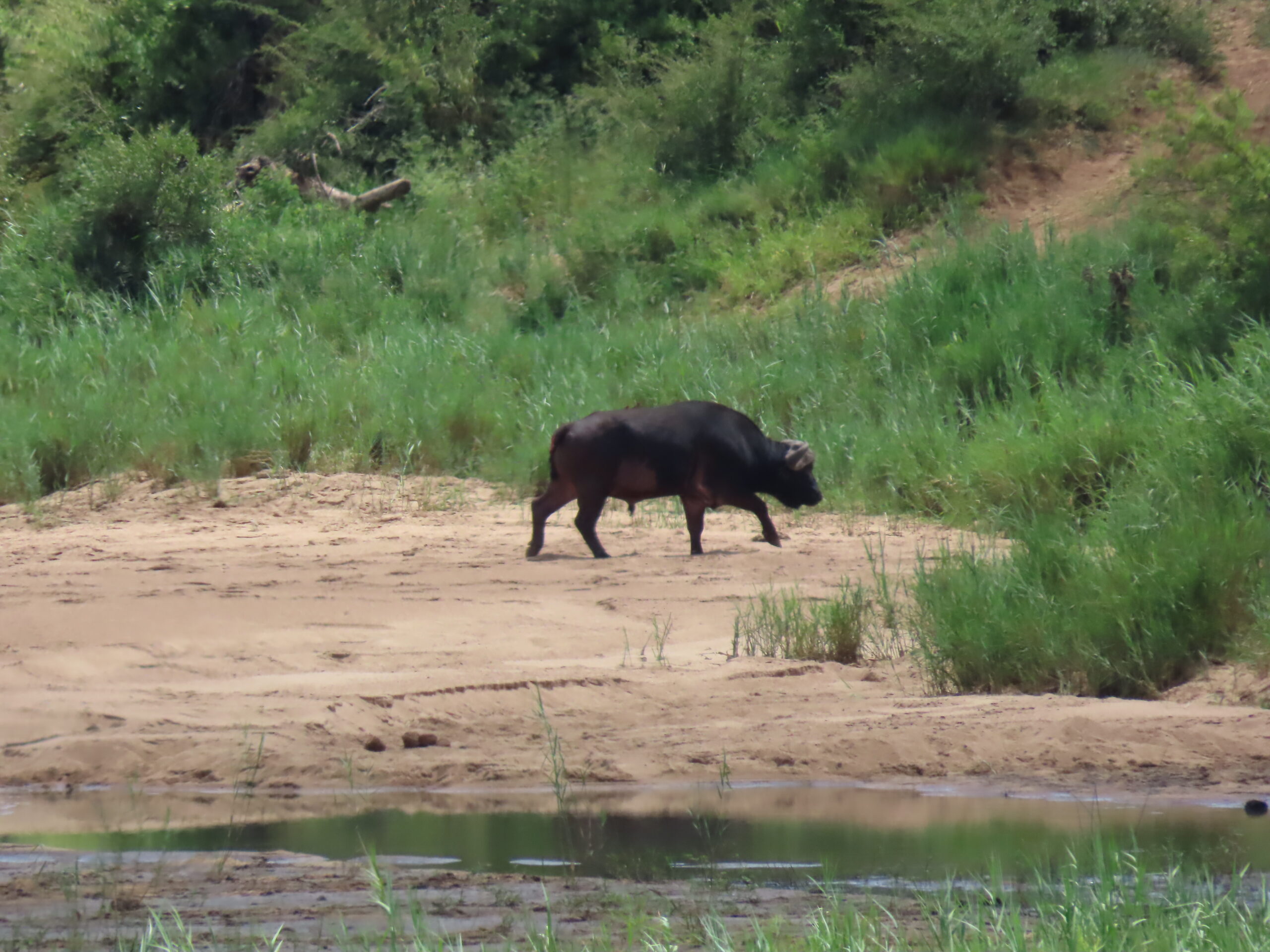
A Cape buffalo lying in the grass on the bank of the Sabie River.

From this article:

“These Are the Most Turbulent Flight Routes in the World—and No. 1 Flies Through Air Notoriously Called ‘Mountain Wave’

  • A turbulence tracking company mined data to identify the most turbulent flights in the world.
  • The most turbulent flight is a one-hour journey from Mendoza, Argentina, to Santiago, Chile.
  • The route passes over the Andes mountain.

A few jolts and bumps during a flight are expected, but specific routes have more than their fair share of stomach-dropping turbulence. A study from turbulence tracking company Turbli, reviewed turbulence forecast data from NOAA and the UK Met Office, to identify the most unstable flight routes in the world.

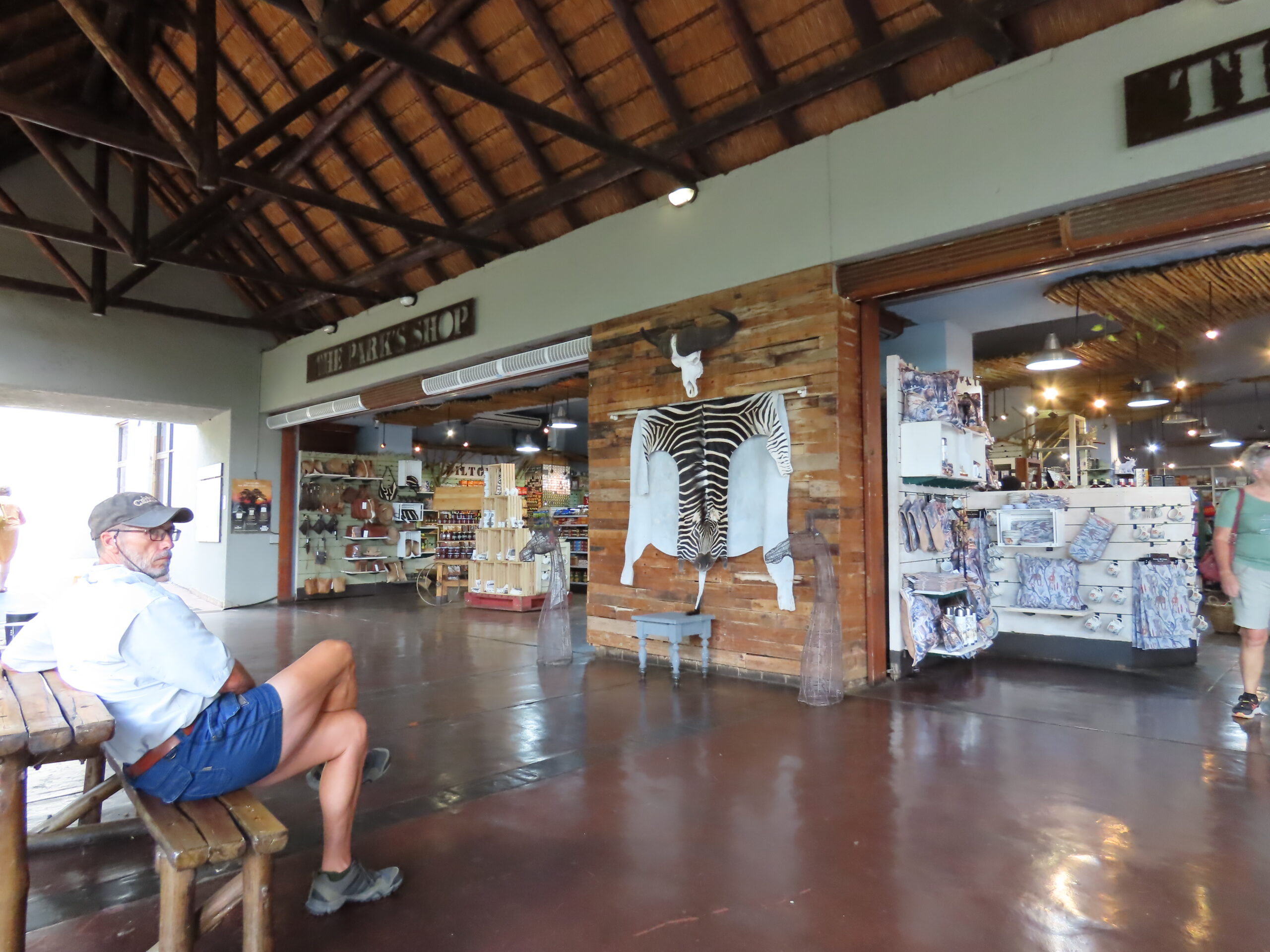
As always, I perused the offerings at the extraordinary gift shop, the best we’ve seen anywhere in the world. I didn’t buy a thing but it was fun to look around.

At No. 1 is the flight between Mendoza, Argentina, and Santiago, Chile, which has an eddy dissipation rate (EDR)—EDR is a turbulence intensity measurement of 24.684. That’s a full 4 EDR more than the second most turbulent flight route in the world: the flight between Cordoba, Argentina, and Santiago, Chile.

Another view of the shop.
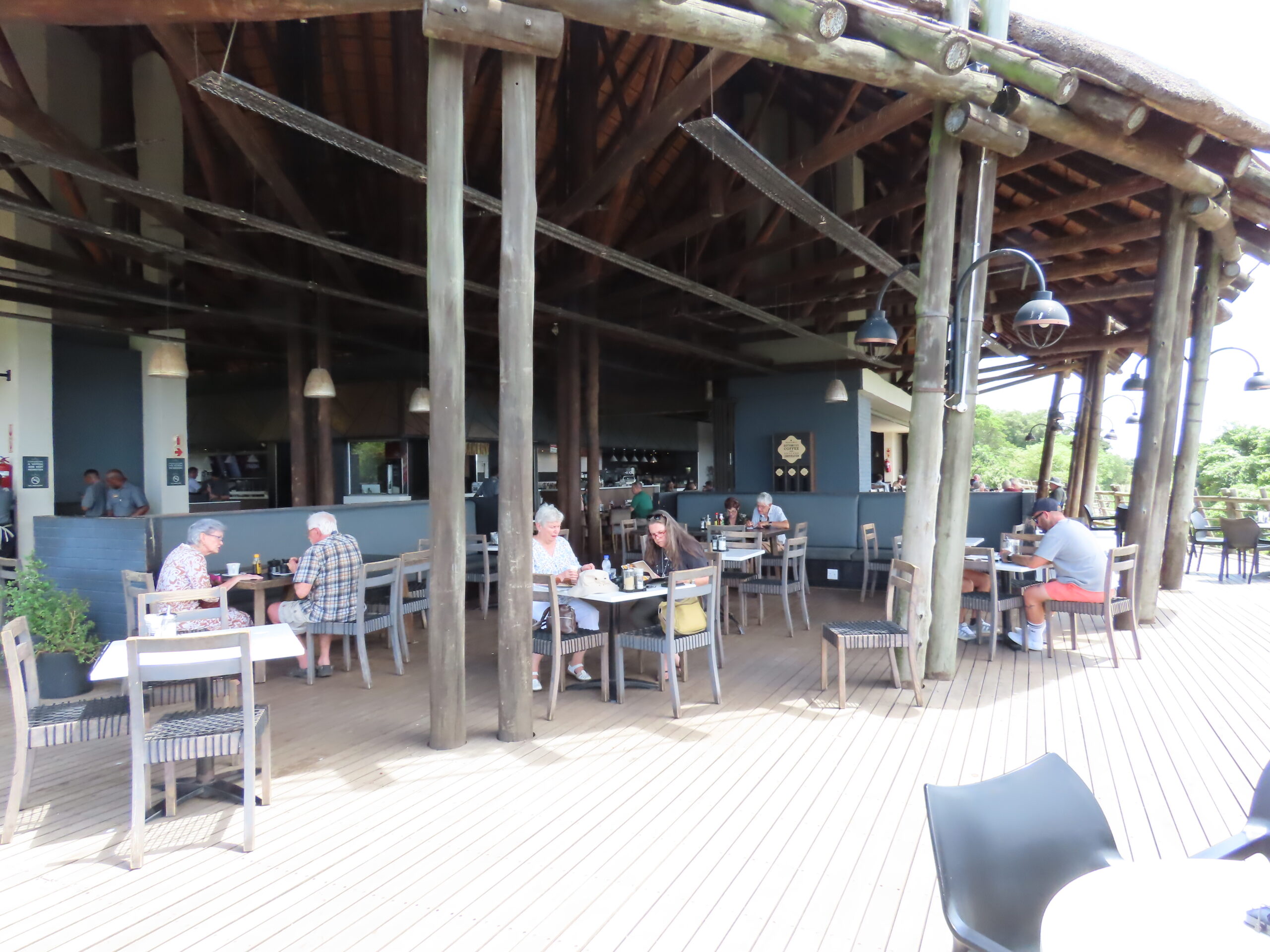
The Mugg and Bean restaurant at Lower Sabie. We didn’t stop to eat due to our diets.
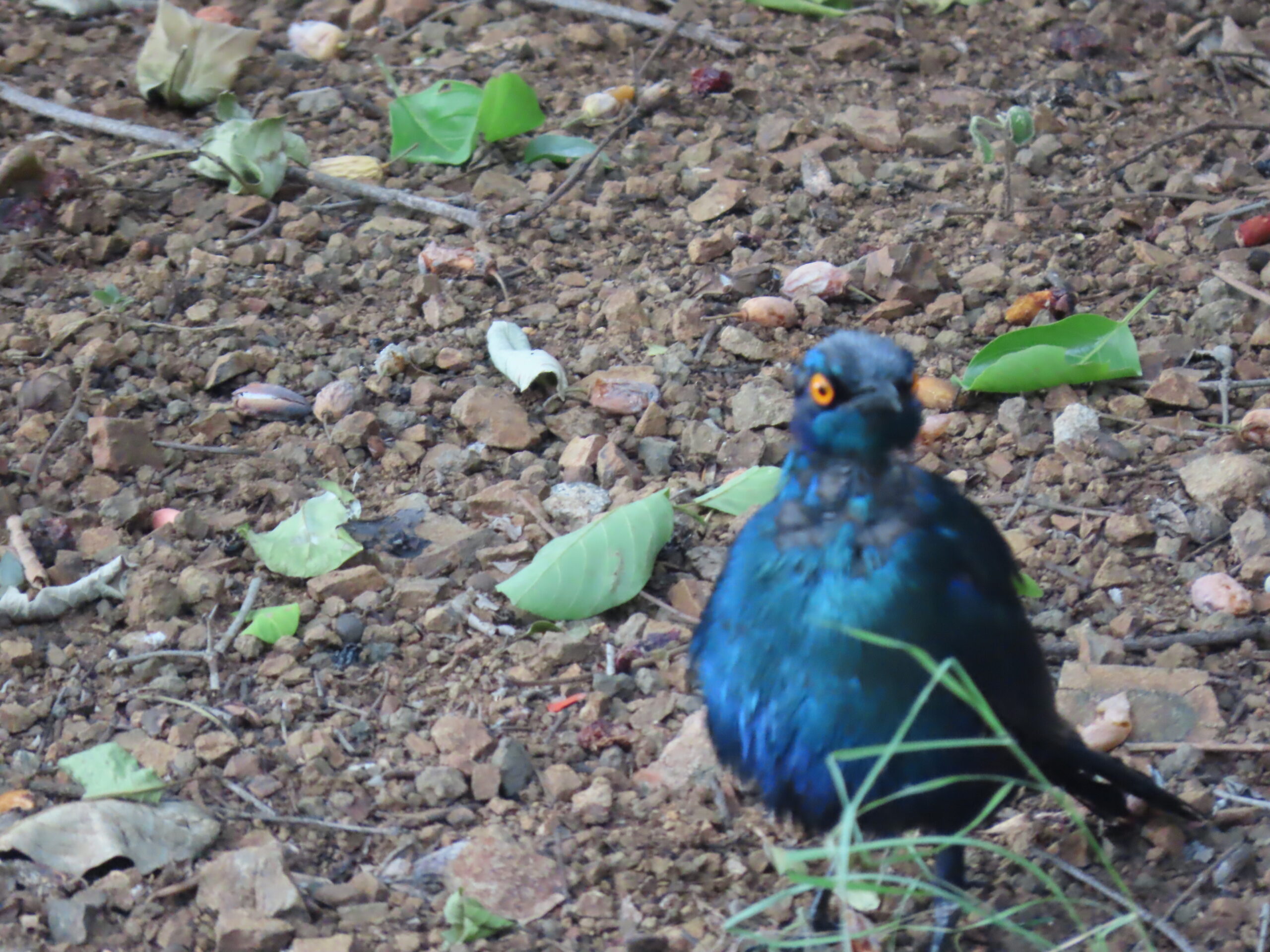
Starlings are often seen at the Mugg & Bean restaurant. They are prolific scavengers.

Turbulence is most often the result of weather or geographical features. The latter is most certainly the cause of the turbulence between Mendoza’s El Plumerillo International Airport (MDZ) and Santiago’s Arturo Merino Benitez International Airport (SCL). The one-hour flight passes directly over the Andes mountain range, which forces air to rise, creating waves and currents that lead to turbulence in the sky. The effect mountains have on the air above them even has an ominous nickname: “mountain wave.”

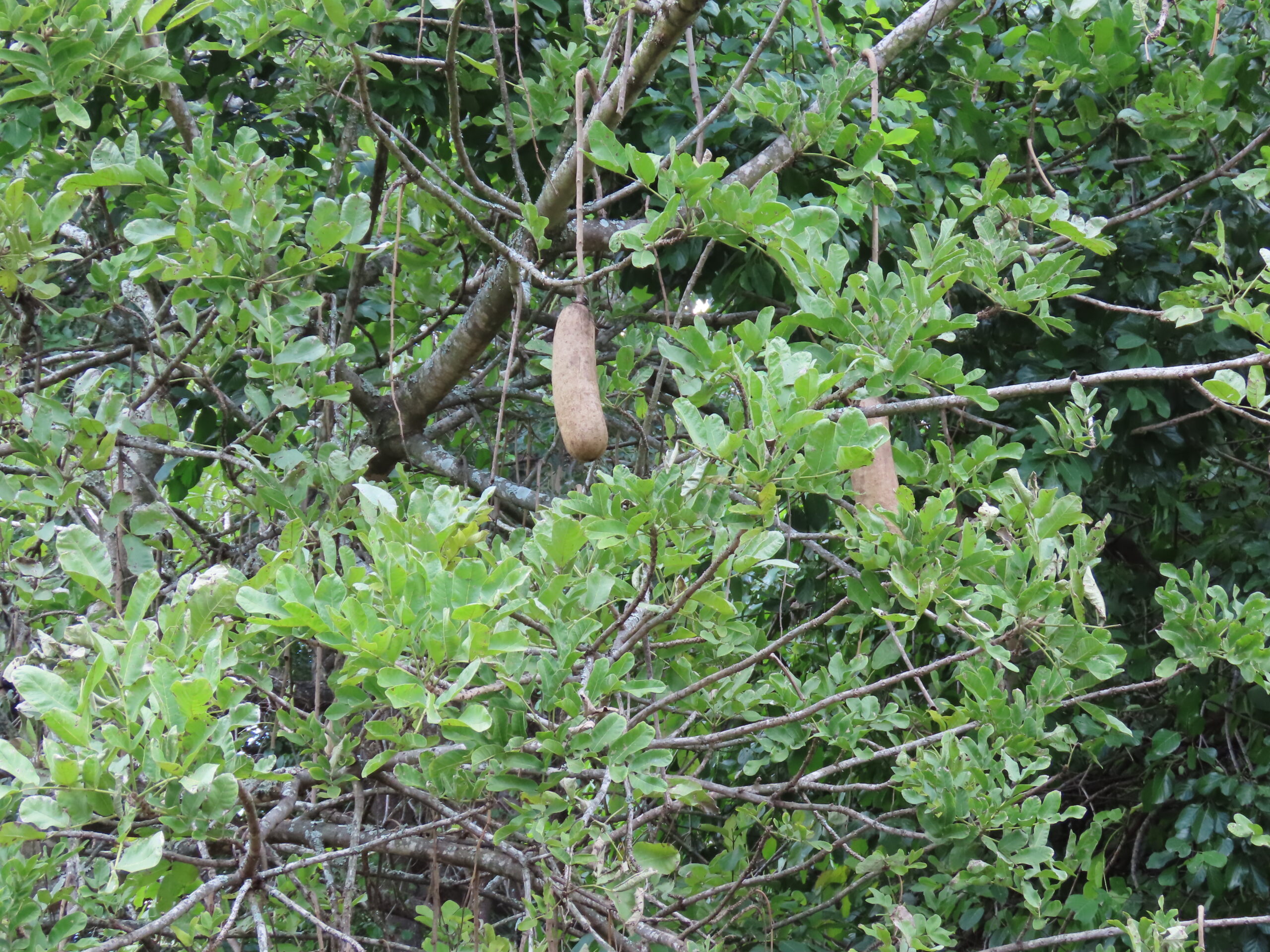
The sausage tree, scientifically known as Kigelia Africana, is a notable tree species native to tropical Africa, including South Africa. It is known for its large, sausage-shaped fruits and showy, dark red, trumpet-shaped flowers.
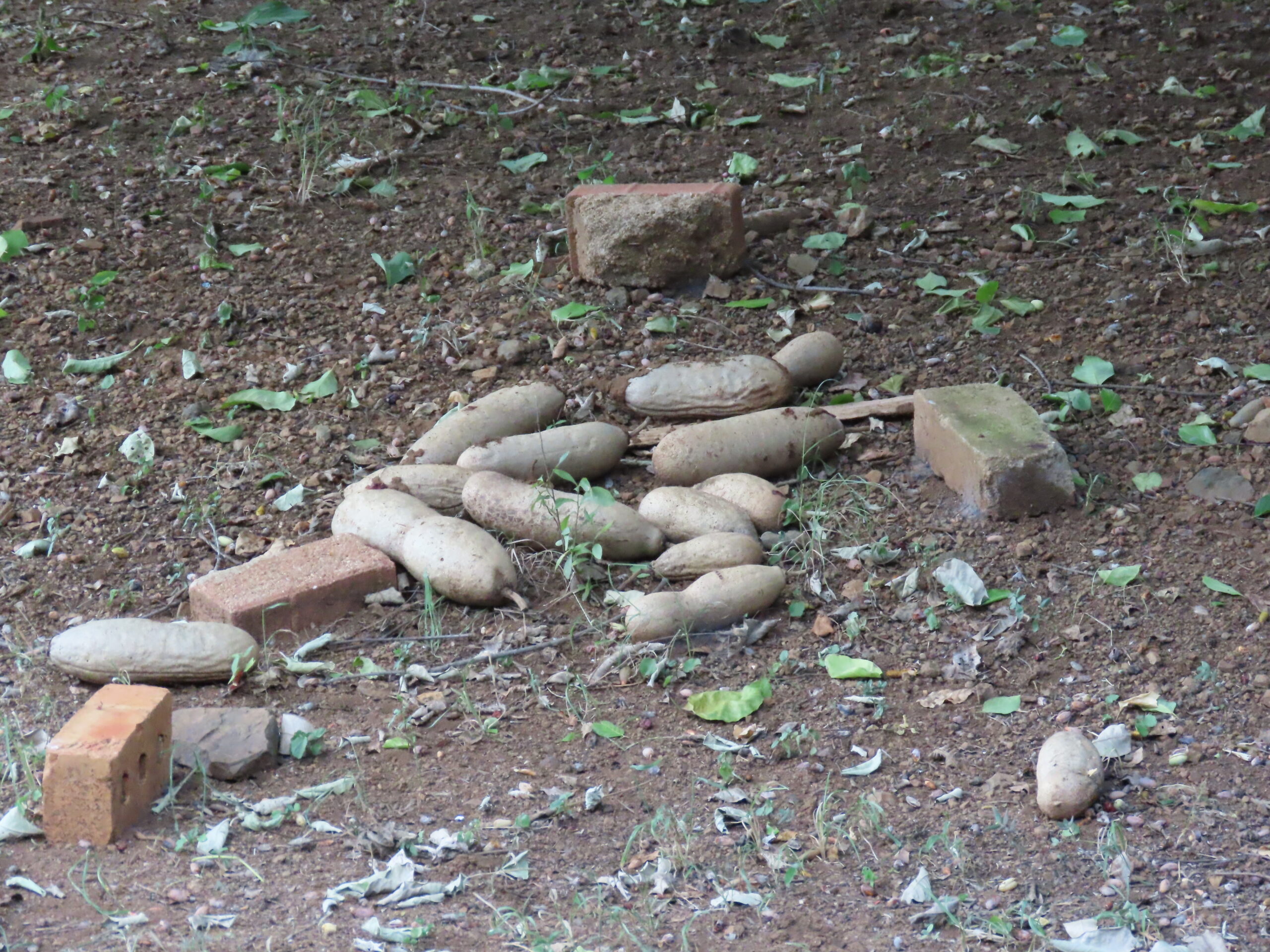
“Sausages” that fell from the tree to the ground

Interestingly enough, the top four most turbulent flights originate in Argentina.

A Cape buffalo on the bank of the Sabie River.

Coming in at No. 5 is the flight passing over the Himalayas between Kathmandu, Nepal’s Tribhuvan International Airport (KTM) and Lhasa, China’s Lhasa Gonggar Airport (LXA).

Here is the full rundown of the most turbulent flight routes in the world in 2024:
  1. Mendoza (MDZ) – Santiago (SCL)
    EDR: 24.684
  2. Cordoba (COR) – Santiago (SCL)
    EDR: 20.214
  3. Mendoza (MDZ) – Salta (SLA)
    EDR: 19.825
  4. Mendoza (MDZ) – San Carlos de Bariloche (BRC)
    EDR: 19.252
  5. Kathmandu (KTM) – Lhasa (LXA)
    EDR: 18.817
  6. Chengdu (CTU) – Lhasa (LXA)
    EDR: 18.644
  7. Santa Cruz (VVI) – Santiago (SCL)
    EDR: 18.598
  8. Kathmandu (KTM) – Paro (PBH)
    EDR: 18.563
  9. Chengdu (CTU) – Xining (XNN)
    EDR: 18.482
  10. San Carlos de Bariloche (BRC) – Santiago (SCL)
    EDR: 18.475″

Soon, we are leaving to go see Kathy and Don at their house on the river.It will be wonderful to ee them after almost three years!

Be well.
Photo from ten years ago today, March 12, 2015:
It’s exciting to see many more flowers blooming in Kauai as spring nears. For more photos, please click here.

Finally, settled in and fully rested…Fun anniversary night…

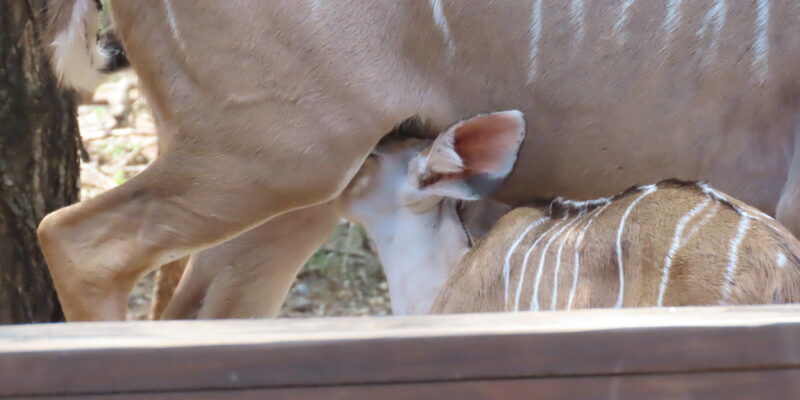
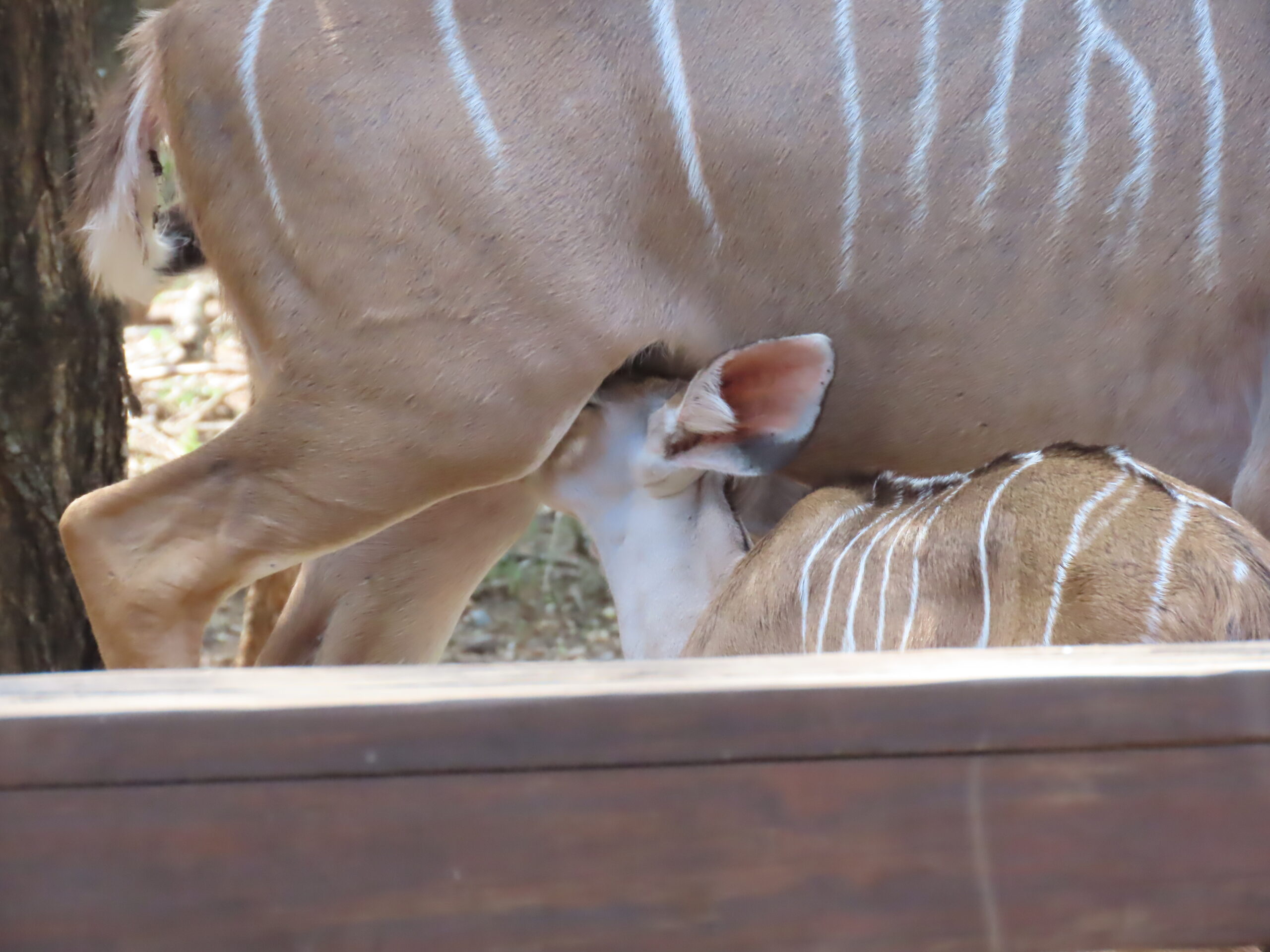
Mom and baby kudu.

No words can express how relieved we are to feel rested. This was the most prolonged period (five days) that either of us was tired and had difficulty sleeping after the two-day journey to South Africa.

Mom and a youngster scouring the ground for pellets.

Although I woke up several times last night, I got about seven hours of sleep and feel great today. Tom has also recovered after almost sleeping through the night. We only needed to sleep for one or two nights in past visits to feel well again. It must be due to old age.

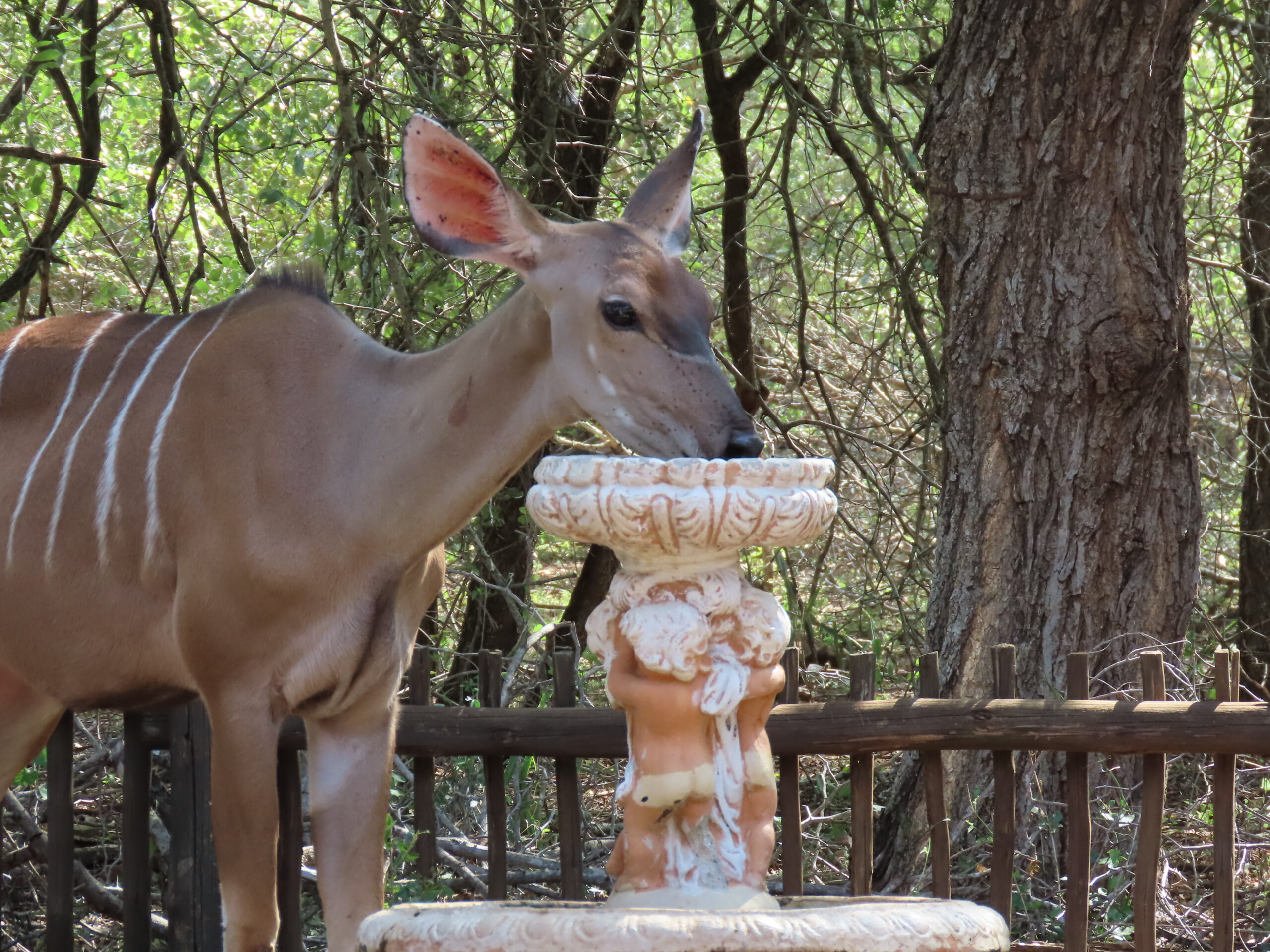
A female kudu drinking from the bird bath.

Last night, we had an excellent time at Jabula. As always, the food was fantastic, as shown in the photos below, and Dawn kept us busy introducing us to guests we’d never met and seeing a few we knew from the past. There was never a dull moment. We arrived at 5:00 pm and had dinner at 7:00, sitting at the bar.

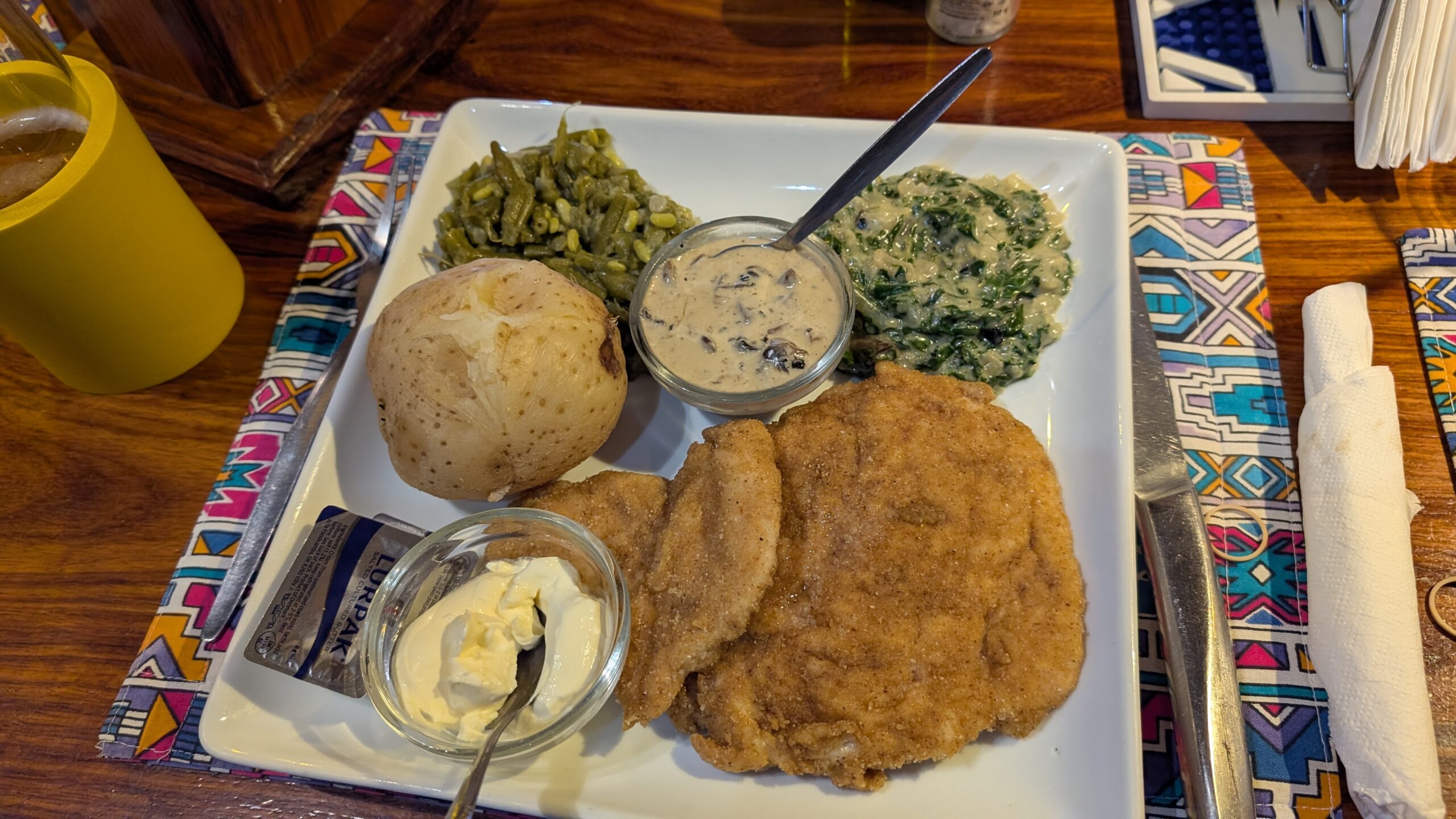
Tom’s dinner at Jabula consisted of Chicken Schnitzel, baked potato, green beans, creamed spinach with mushroom sauce and sour cream. He offered me his creamed spinach which he knows I love, and the sour cream.

Dawn was as thoughtful as ever, ensuring they had my favorite light wine, South Africa Four Cousins Skinny Red. We ordered a bottle for me, and last night I drank two glasses, and tonight I will have two more. There will be a little left which we’ll take with us when we go “home.”

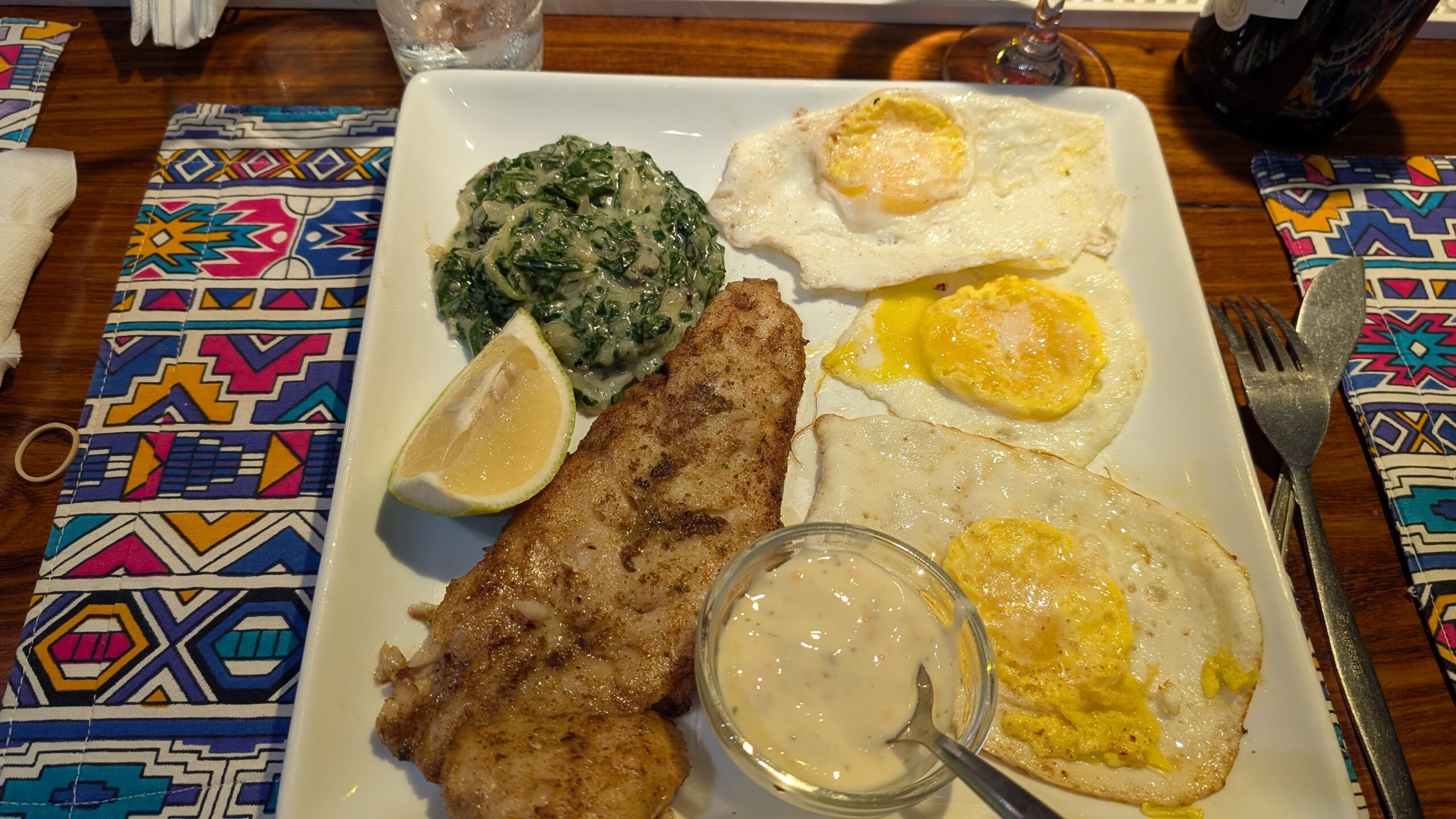
My delicious meal consisted of grilled hake, three eggs, more creamed spinach and tartar sauce.

“The recognized size for a standard pour of wine is around 5 ounces. So, if you’re doing the math, a bottle should yield about five glasses of wine. Of course, individual preferences might vary the pour, but as a general rule of thumb, expect five (5-ounce) glasses from a 750-milliliter bottle.”

This young male was brazen, approaching us at the table. Notice his budding horns.

Tom drank his favorite, Lion Beer, which he can only get in South Africa. This week, we received an order from Takalot, South Africa’s version of Amazon, for a case of 24 cans of Lion Beer, 17.6 oz (500 ml) for Tom for ZAR 289, US $15.83.

We’re trying to feed the animals beyond the little fence to preserve the grass in the garden, but some of the animals come over anyway, even though they don’t get any pellets.

We also received a case of 12 bottles of Four Cousins Skinny Red wine for ZAR 729, US $39.94. This is an average of US $3.32 per full-sized 750 ml bottle, which is typical for wine made in South Africa. In the US, we paid at least $15 for a similar bottle of red wine.

A young kudu looking for pellets. Mom was nearby.

We’ll head to Komatipoort tomorrow to go grocery shopping at the larger Spar Market. That Spar Market has a considerably more extensive inventory than the new SaveMor Spar recently built in Marloth Park. The local store is perfect for picking up a few items but doesn’t fulfill our grocery shopping needs.

It takes about 20 minutes to get to Komatipoort, but we never mind the drive along the sugar cane fields. We’ll most likely shop every week as we’ve done in the past.

An entire family begging for pellets.

Kathy and Don safely arrived yesterday, exhausted from an even more extended trip than ours. They will undoubtedly spend the next few days recovering before we see them. We are both looking forward to reuniting with our dear friends after three years.

We return to Jabula for dinner again tonight, feeling much more alert and rested. Dawn is having the kitchen staff make a leg of lamb for me, which I haven’t had since we were here almost two years ago. A leg of lamb, creamed spinach, a Greek salad, and a glass of red wine sound perfect.

Be well.

Photo from ten years ago today, March 8, 2015:

Many plants and trees on new friends Bev and Sam’s property in Kauai produce various fruits, such as in this pineapple garden, grown in such abundance that they are sold; all are organic and non-GMO, without pesticides and chemicals. For more photos, please click here.

Today is our 30th wedding anniversary…And the sightings continue…

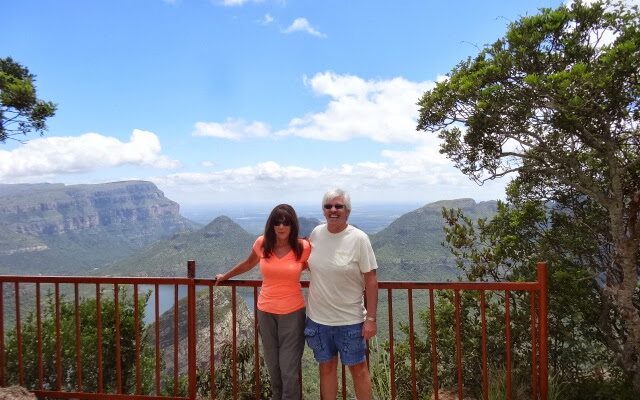
In front of God’s Window in South Africa. Photo taken in March 2013.

Kathy and Don are on their flight from Johannesburg to Mpumalanga/Nelspruit/Kruger. They will go grocery shopping at Woolies in Nelspruit and then make their way to Marloth Park. We will likely not see them for several days so that they can rest and recover from the long journey.

I just texted Kathy that when we visit over the next few months, until they leave in May, we will bring our food, including our meat and sides, and a large salad to share. We won’t need her to make starters of side dishes, especially since we are both watching our weight. In South Africa, it’s traditional for guests to bring their drinks.

It’s been a busy past few days as we’ve unpacked and organized our stuff, done laundry and finally, opened the several bins Louise had stored for us for almost two years. It was like Christmas opening those bins filled with kitchen supplies, gadgets, and spices we’d left behind.

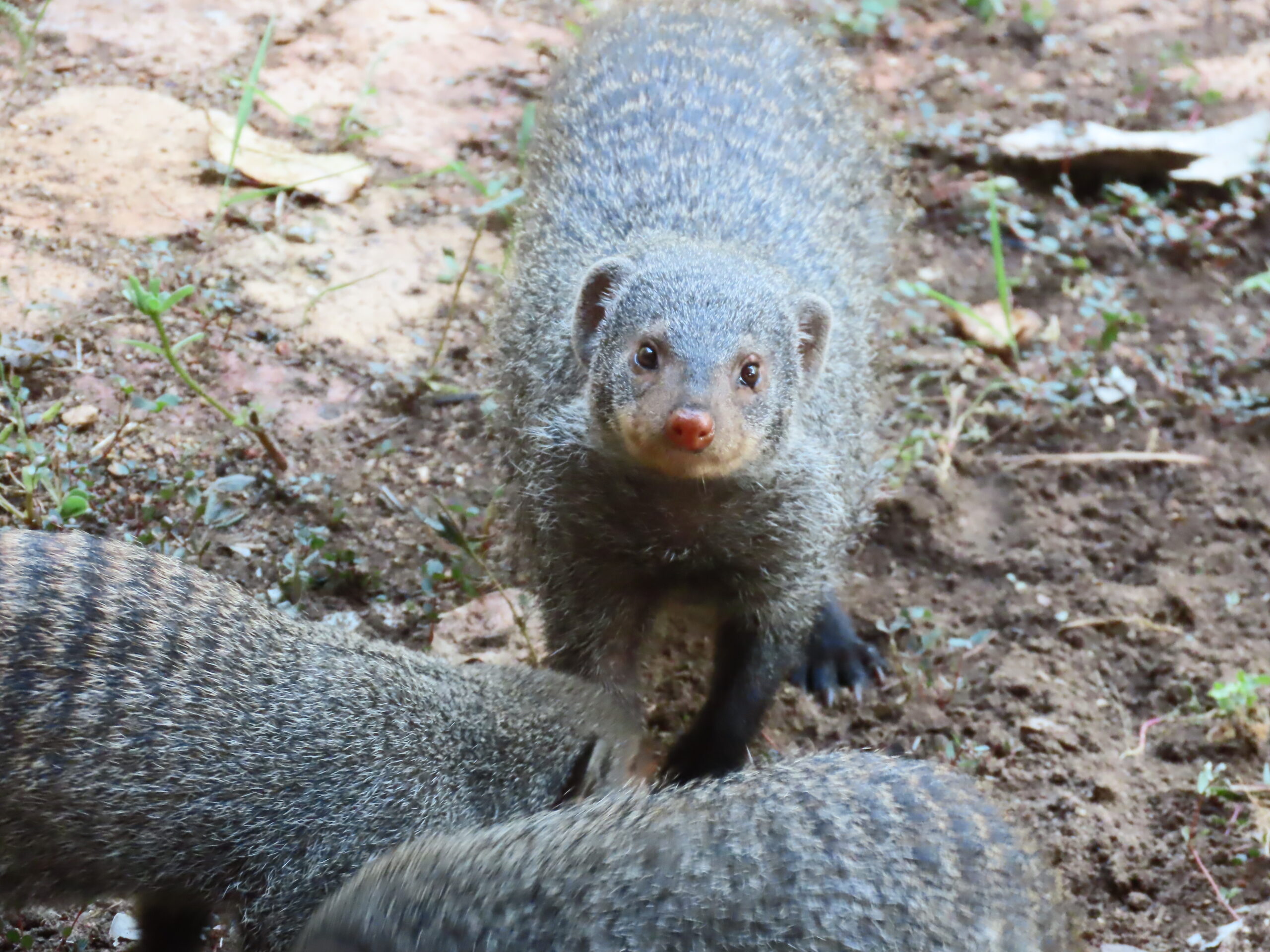
Mongooses are playful and adorable.

Also, we had a black tote filled with clothes we’d left behind, some summer and some winter. After all, we’d been here for several years, accumulating more than we ever dared to carry due to weight restrictions. Once we leave here in September, we will give  Vusi and Zef and their families the overflow clothing, and we’ll give the kitchen products to Louise for her many holiday rentals.

Unloading all the containers took the better part of the day. This morning, Vusi picked up the tote of clothes to be washed, dried, and folded. Of course, I advised Vusi there was no rush. After all, we haven’t had those clothes for two years and won’t miss a thing.

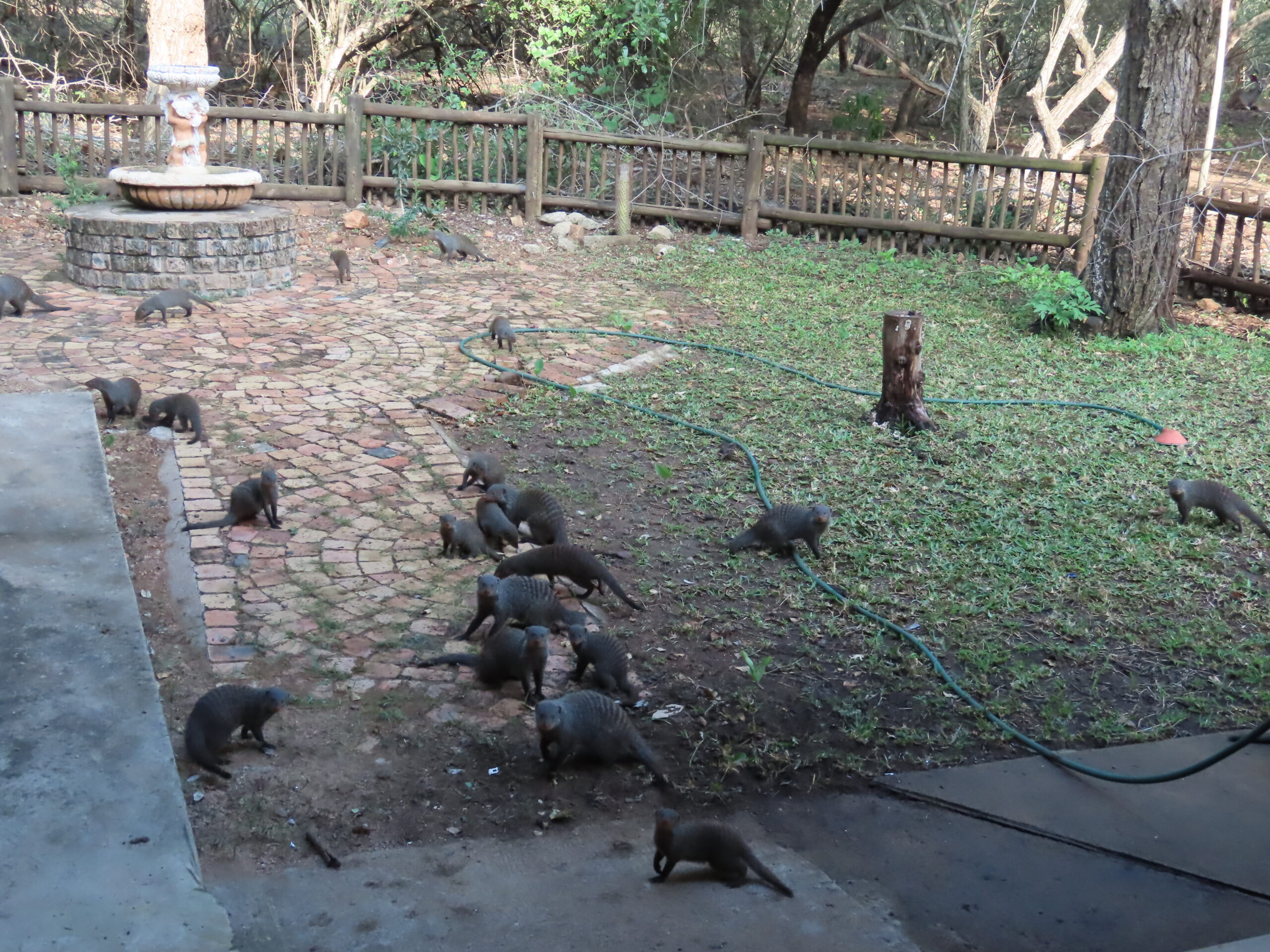
This was only a part of their “band.” When we made a clicking sound, many more came into the garden.

It felt good to get everything done, and we could relax and enjoy the weekend. Tonight, we’ll head to Jabula for dinner and to celebrate our 30th anniversary among friends. Last night, again, I didn’t get much sleep, waking up at 2:30 am and never going back to sleep. I tried breathing and relaxation techniques, but nothing allowed me to drift off. Maybe a nap will be on the agenda today so I’ll be perky for our night out.

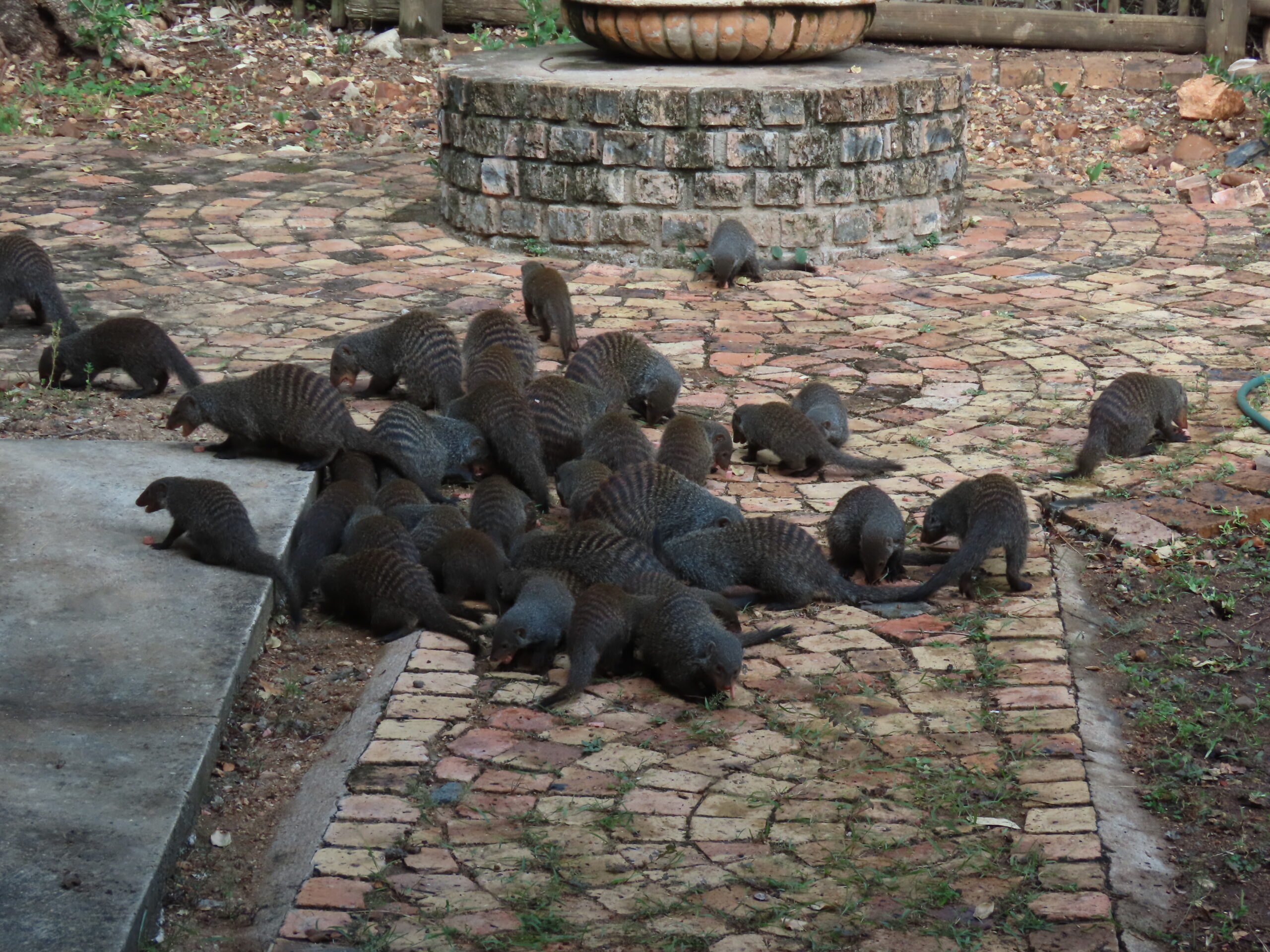
Look at them! They are on a frenzy, getting to the meat we tossed to them.

We thought it may take a few days to see a steady stream of wildlife visitors, but no more than a few hours after our arrival, they were “hoofing it” over to our veranda when they saw us. We recognized some of them, but no Norman yet. I continue to wait for his return with his family.

When they’d devoured the paloney and chicken scraps, a few came to the door, wondering where we were when we were sitting at the table on the veranda.

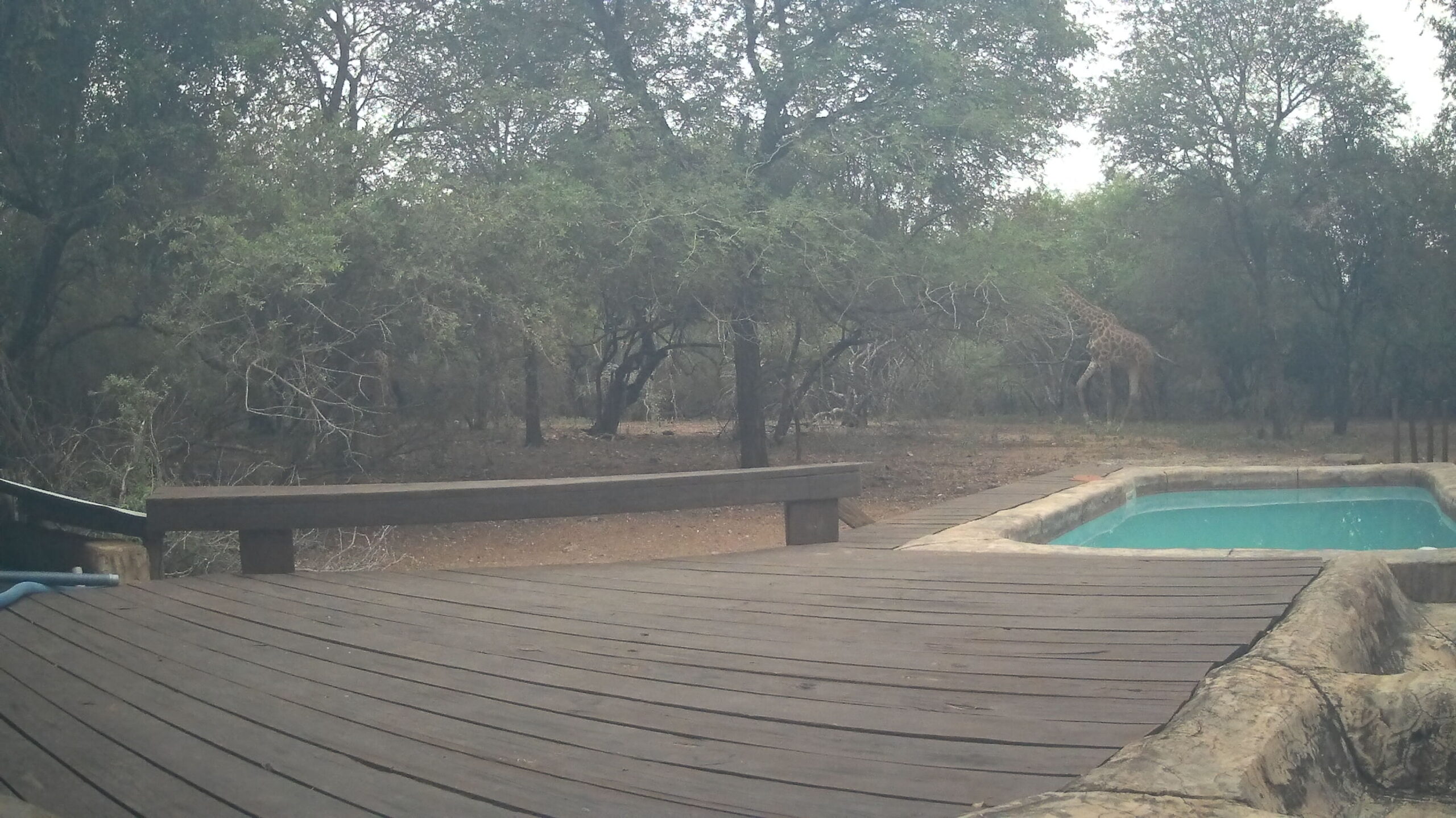
Tom set up the trail cam, and there were only these two blurry photos from last night when a few giraffes walked across our garden (they call it a “yard or backyard,” here a garden). Undoubtedly, one day soon, we will see them lumbering across the terrain.

No, you can’t go into the house, as tempting as that may be. We shooed them away.

We were thrilled to see the many mongooses return to hang out with us. We made our familiar clicking sound and more came running from deep in the bush ready to partake in cubes of cut paloney roll and leftover chicken bones from last night’s dinner. They are funny little critters with lots of personality and endless antics. Enjoy the photos!

Can you see the giraffe near the center of this trail cam photo?
Here is another giraffe, taken with the trail cam, in the right in this photo.

Have a wonderful weekend and be well!

Photos from ten years ago today, March 7, 2015:

Our anniversary photo from March 2013, the night we were injured on the collapsed steps in Belize. Gosh, we were tan. We don’t tan anymore. For more, please click here.

It’s a wonderland for sure…

This wildebeest has a new name…Blondie, with this adorable blond hair.

Last night, when we went to bed shortly after dinner. Still tired from our long journey, we both fell asleep during the two shows we tried to watch. We agreed to wake each other up when we saw the other snoozing to get on a practical sleeping schedule, but we fell asleep simultaneously. We probably shouldn’t have taken a short nap during the day.

Another view of Blondie.
We were thrilled to see the dozen wildebeests visit our garden.

Subsequently, I awoke at 2:30 am and Tom shortly thereafter. We’ve been awake since. It’s been hot since we arrived on Monday and the high today is expected to be 96F, 36 C and similar temps will continue through the next seven days.

Pellets were on the menu. So far, we’ve purchased two 40 kg bags, 88 pounds, which should last through the weekend. The pellet guy comes to Louise’s nearby office on Fridays, when we’ll buy two more weekly bags.

It’s still summer here, and the mozzies accompany the hot weather. We use repellent three times a day and multiple insect repellent products when sitting outdoors at night. Once it cools down, there will be fewer mosquitoes in months to come, but we will still use repellent since it is prevalent to a lesser degree during the fall and winter months.

They lingered for an hour and then took off to search for “greener pastures.”
Scientific Name: Connochaetes taurinus (Blue Wildebeest), Connochaetes gnou (Black Wildebeest) Common Name: Wildebeest, Gnu. Size: Approximately 4-5 feet tall at the shoulder, body length of 6-8 feet. Weight: 260-600 pounds. Lifespan: 10-20 years in the wild. Diet: Herbivore, primarily grasses.

Overall, we feel good. Our sleep schedules will return to normal in a few days, but we enjoy every moment in the meantime. The familiarity of living in the bush for over four years hasn’t diminished our sense of awe and wonder of this magical place.

There are two species of wildebeest: the blue and the black. We see blue wildebeests in Marloth Park.

This morning, we’re doing three loads of laundry. With the heat we don’t wear anything twice, whereas over the past year, living with central air conditioning we could wear the same shirt for a few days and jeans for several days. Tom found the portable drying rack in the storage room. He’s doing the laundry while I hang it on the drying rack as each load is done.

They often drink from the pool.

Tonight’s dinner will be a repeat last night’s: chicken breasts, legs, and thighs on the grill with a side of egg salad and rice for Tom. I’ll make more elaborate meals once it cools down and I’m more rested.

Wildebeests are part of the Great Wildebeest Migration, the world’s largest land migration.

Kathy and Don arrive tomorrow, but we won’t see them for a few days while they recover from an even further journey from Hawaii, several hours longer than our trip from Nevada.

This morning, more than 50 animals came to the garden, and we welcomed everyone. Already, we’re becoming familiar with frequent visitors and seeing a few we recall from almost two years ago.

Wildebeest calves can run within minutes of being born.

What can I say, other than…it is lovely. We couldn’t be more thrilled to be here. Thanks for all the well wishes from our readers/friends and family. We write here, just for YOU!

Be well.

Photo from ten years ago today, March 6, 2015:

In Kauai, the seawater was so clear we could see little fish swimming in this tide pool. For more photos, please click here.

We’ve arrived at wildlife paradise!…Marloth Park, South Africa…

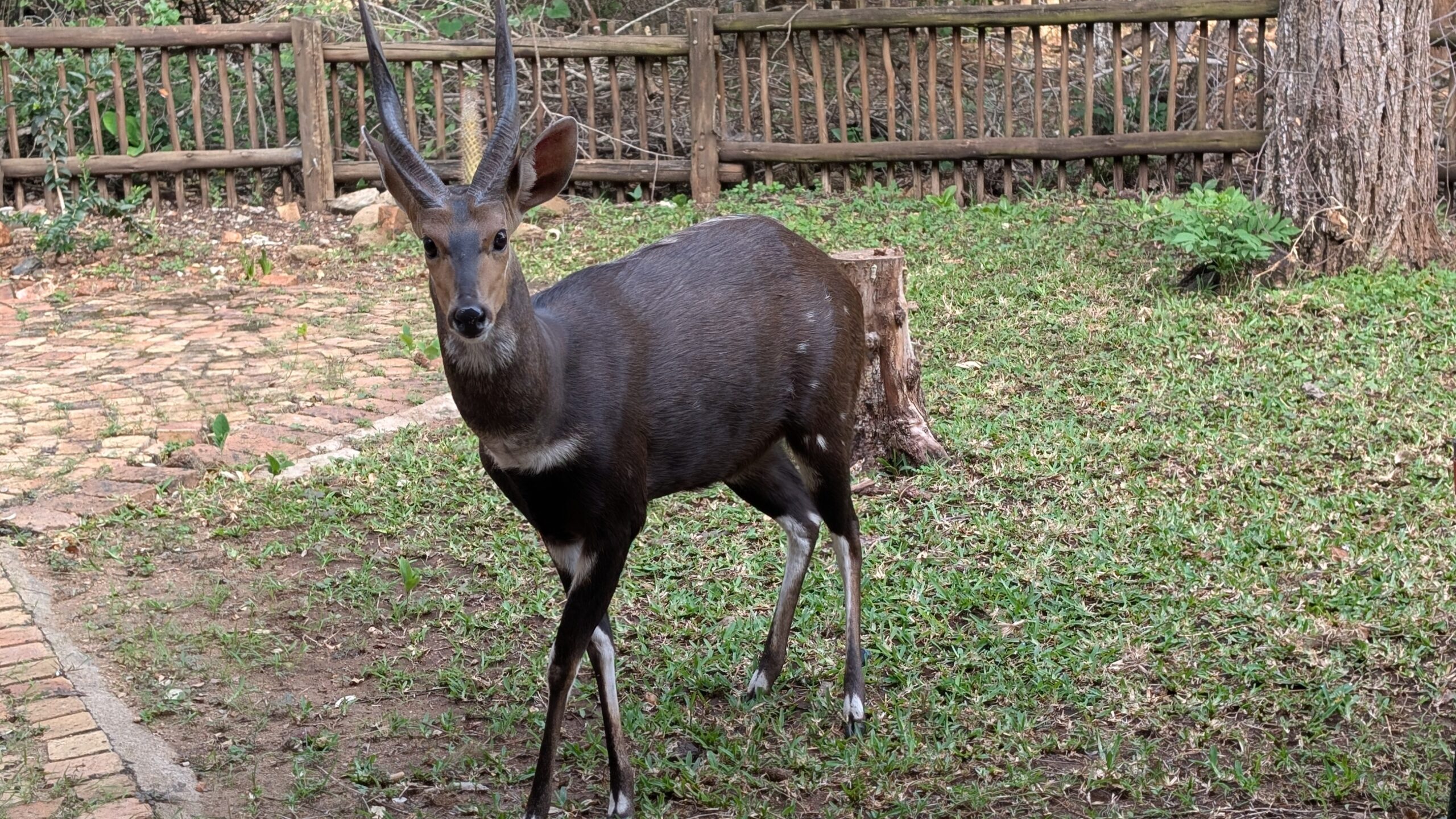
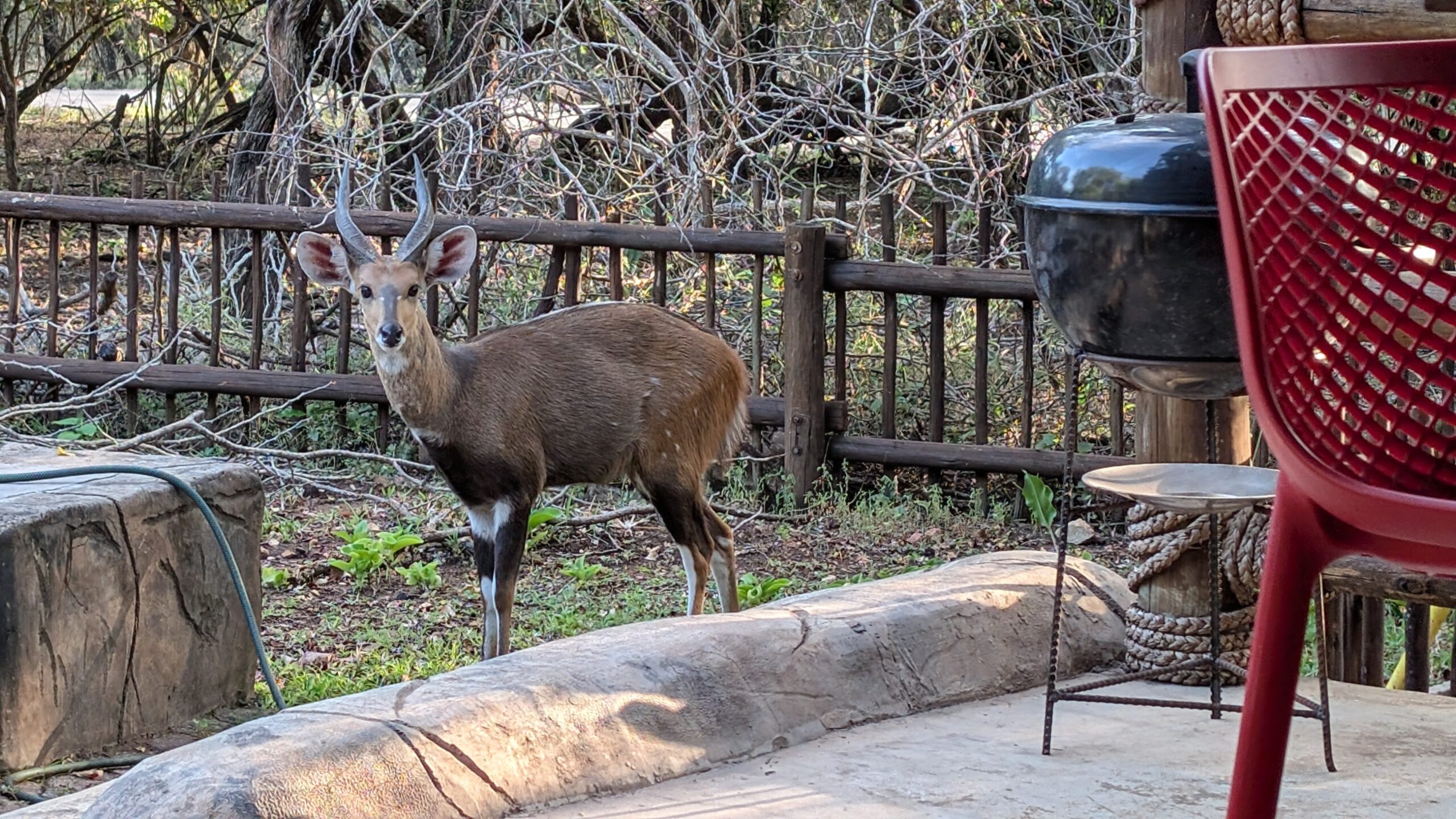
Our first visitor this morning, a male bushbuck.

Note: There is a blur in some of the photos from using our camera instead of my phone. I think I’ve fixed it but I will see how it goes after a few adjustments/

It was a long trip, almost two days, but we are thrilled to return to South Africa. I wrote part of this post on our last of the three fights, albeit a little raggedy after little sleep. We awoke on Saturday morning, anxious for the long journey to be completed and never slept again until Monday night.
A younger male bushbuck than the photo shown above

And there we were on Monday, flying from Cape Town to Mpumalanga/Nelspruit/Kruger, where we collected our bags and the rental car for the 90-minute drive to Marloth Park.

A handsome, Mr. Impala.

Yes, it already feels like home after being away for one month short of two years. It seems like yesterday when we last left. We assumed we’d be returning a year earlier, but health circumstances kept us away a year longer than anticipated.

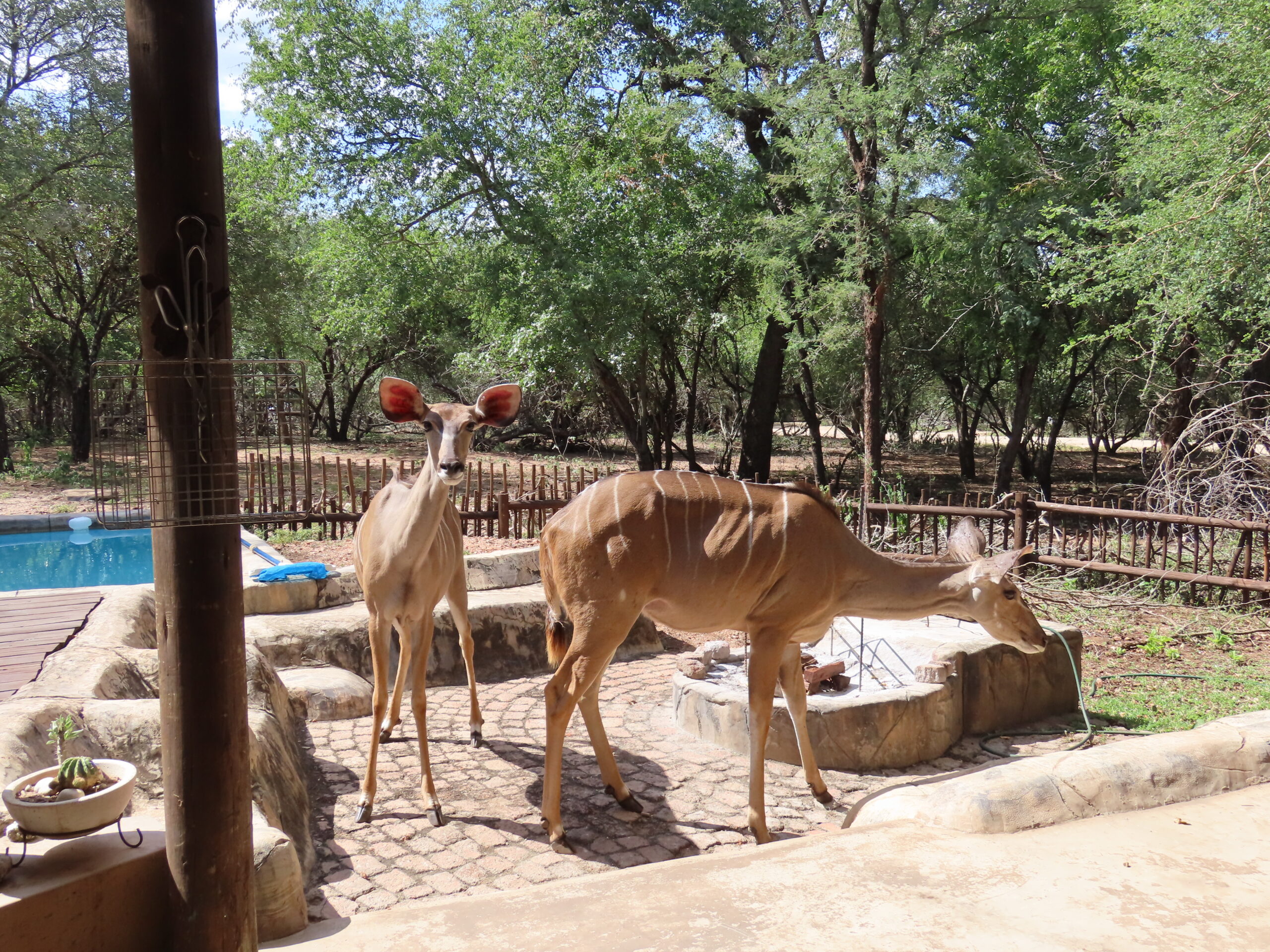
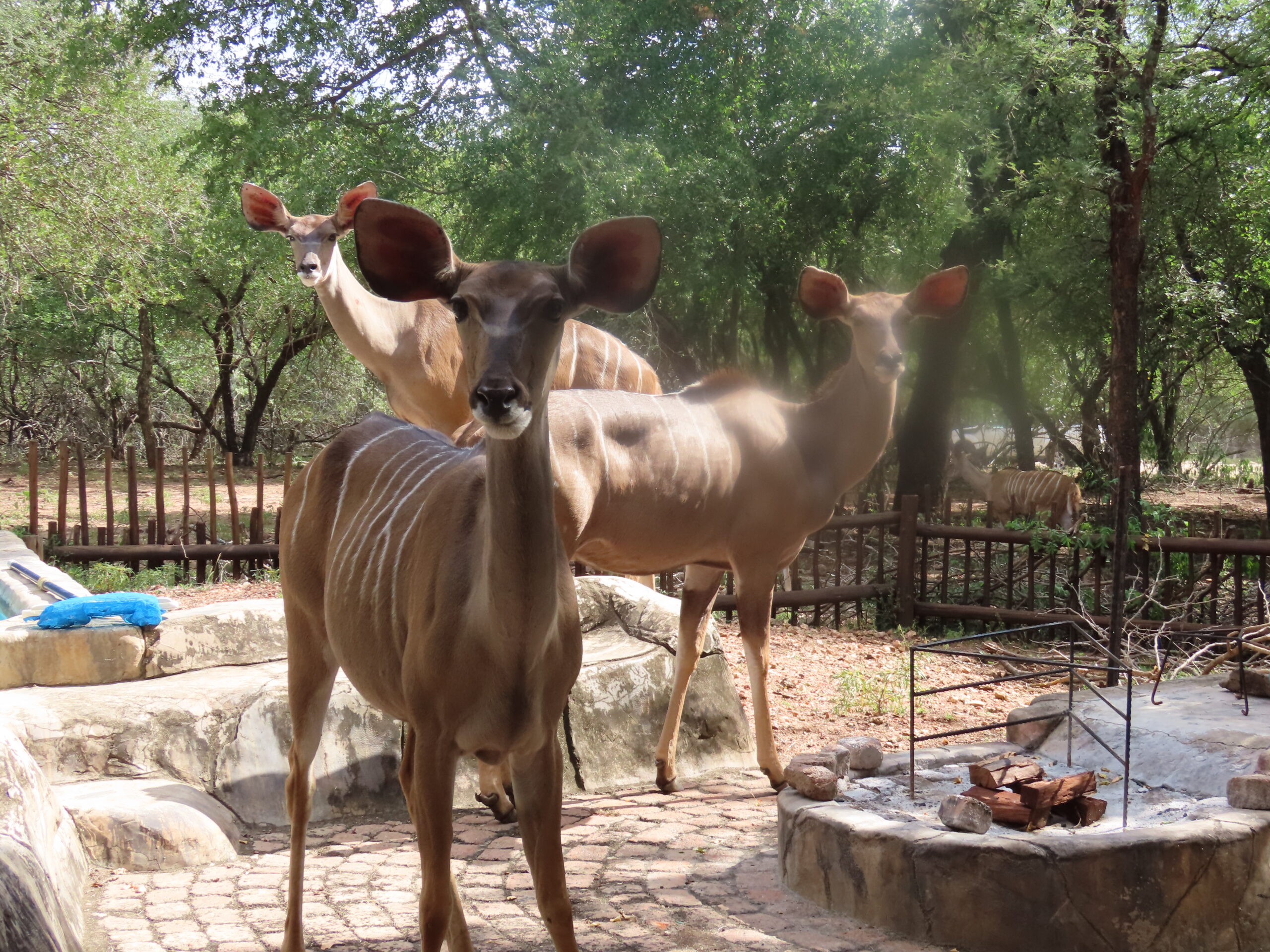
Three female kudus stopped by for a visit.

However, we are grateful to be here now and will treasure each day we are given in this wildlife wonderland, along with the joys of some of the best friends we’ve made in years, both human and animal.

Ah, it feels good.

A lovely female kudu.

The trip was long and tiring for old-timers, but we never complained. We maneuvered through each of the three flights, two layovers, five times through security, and only once through immigration.

A male warthog visited.
A mom warthog with two of her three piglets.

We had to collect our bags and recheck them in Cape Town for the last leg on the smaller Airlink plane. Much to our delight, they were all there, and we didn’t have to pay more than the $100 fee for one very overweight bag.

A male warthog attempting to climb onto the veranda.

The weirdest part of the trip is that the first and second flights from Las Vegas to London and the next from London to Cape Town were both in the dark, with dinner served and breakfast 7-8 hours later. Of course, this was due to the 10-hour time difference.

Big Daddy kudu.

This morning we had the blessed opportunity to see many animals and we stayed busy tossing them pellets.

Some of the wildlife will likely take several days to learn we are here. I’m looking forward to seeing my boy Norman, the daddy and now grandaddy Nyala, in the park. We can’t wait to share!

Another Big Daddy.

Last night, after our arrival and time spent with Louise and Danie at their place, we showered and dressed to head out to Jabula for dinner. The kisses and hugs from Dawn, Leon, and other old friends we saw in the bar warmed our hearts, making us all the more aware of the magic of this remarkable place.

Dinner was predictably outstanding. Our total bill included two light beers for me and three for Tom, plus our meals, taxes, and tips, was US $32.67, ZAR 608.72. This is a far cry from the US $100, ZAR 1863.25, we paid each time we dined out in the US.

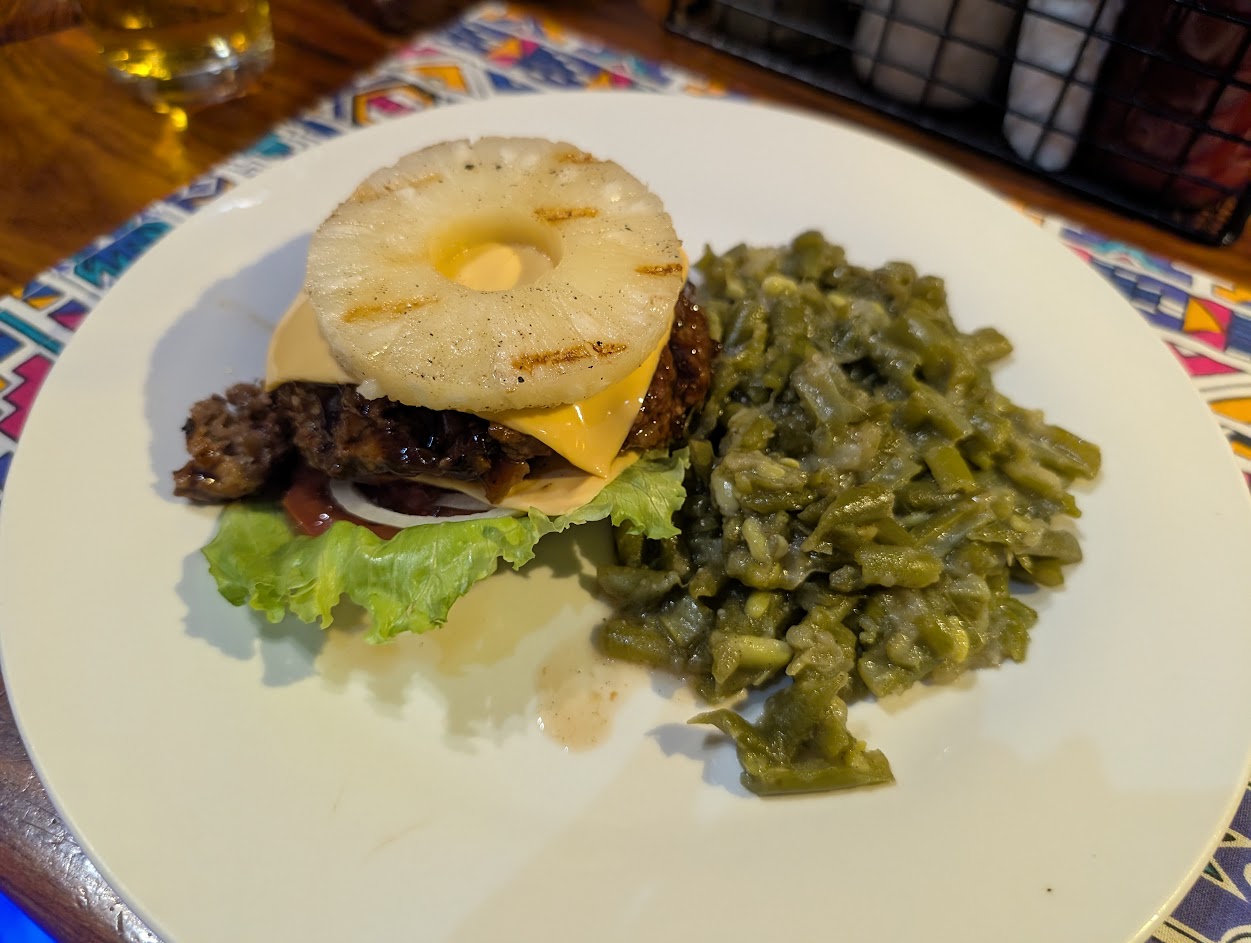
Tom’s dinner was a bunless pineapple burger with green beans.
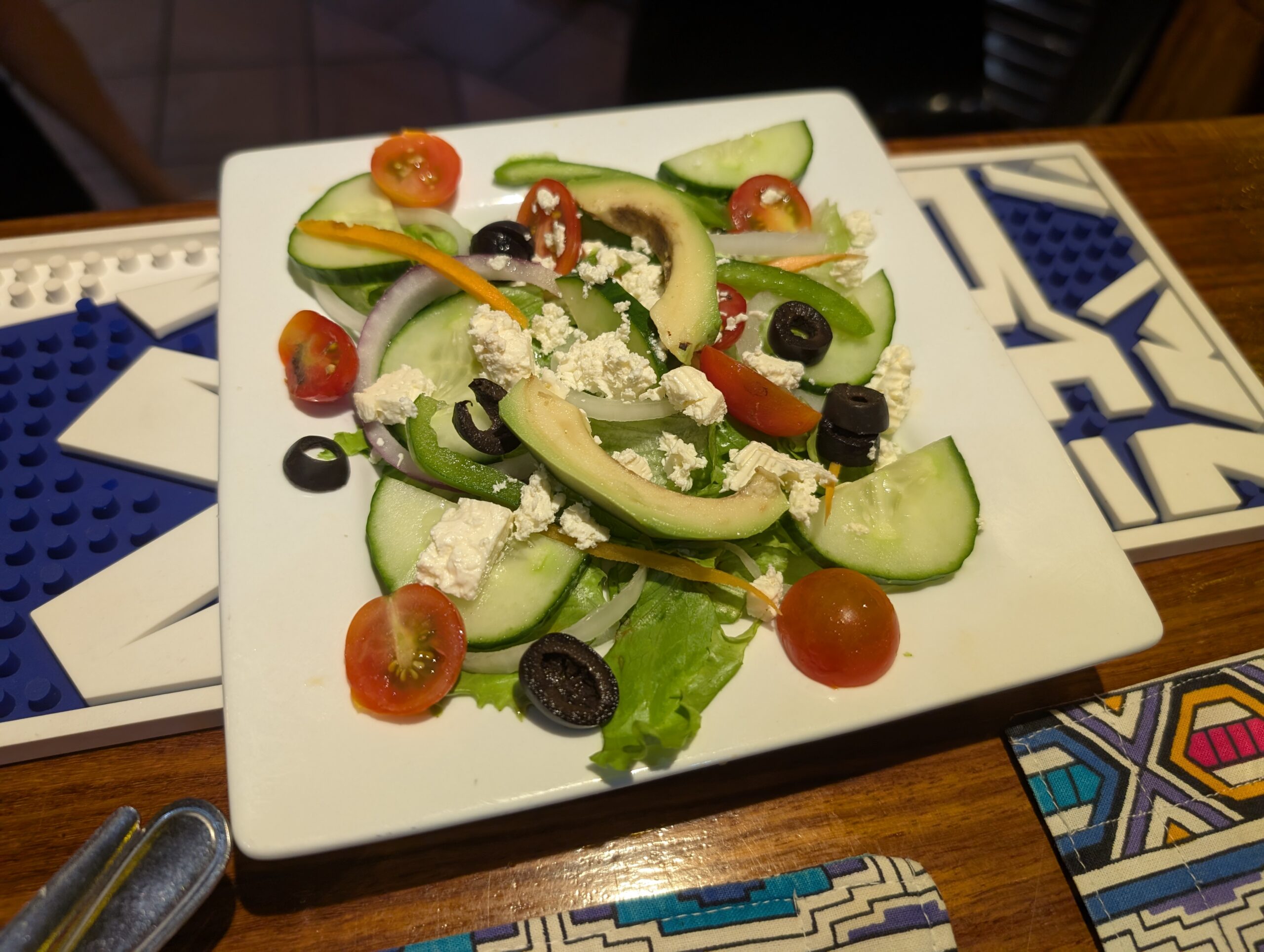
My Greek salad.
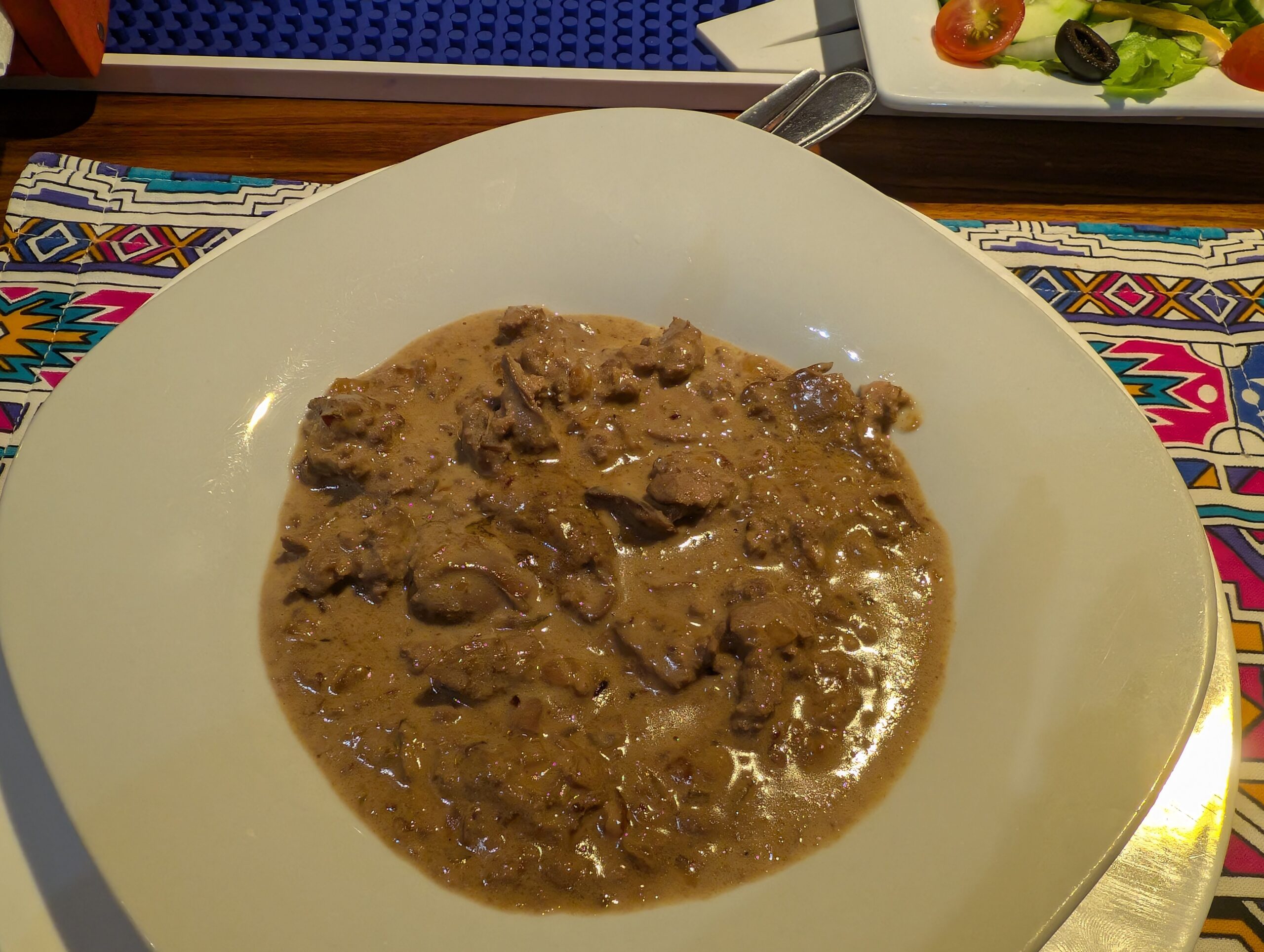
It looks awful but spicy peri-peri chicken livers is one of my favorites at Jabula.

We are entirely unpacked and will soon head to the new grocery store in Marloth Park. We only need to buy enough dinner ingredients to last until Friday, when we’ll return to Jabula on Friday night (and Saturday)to celebrate our 30th wedding anniversary.

Plus after a good night’s sleep neither of us has jetlag.

Stay tuned, dear readers, lots more is yet to come!

Be well.

Photo from ten years ago today, March 4, 2015:

We always feel fortunate to have the opportunity to embrace these memorable scenes, in this case in Kauai, Hawaii. For more photos, please click here.

.

Finally, we’re off to South Africa tonight!…

Agave plants in Hawaii can grow these snake-like protrusions.

It’s been a busy few days. At 10:00 am on Saturday, we only have to pack the clothes we are wearing, change into our travel clothes, weigh the bags, and load the condo’s luggage rack. A moment ago, I ordered an Uber SUV for $102. It was pricey, but we have more luggage than usual and needed to ensure enough room for our large checked and carry-on bags.

Once we eventually leave South Africa in September, we will discard one of the large bags, leaving us with three bags with carry-on, our usual load. We’ve read stories about nomads only traveling with backpacks. We could travel lighter if we didn’t stay in locations for extended periods.

Every nomadic traveler has to decide what works best for them, and for the past 12 years, this system has worked well for us. We have no complaints. With luggage carts and porters in most locations, we manage just fine.

When we arrive at Nelspruit/Mpumalanga/Kruger Airport on Monday, we’ll use their free luggage carts to load everything into the rental car and be on our way. Tom suggested that if we are exhausted, we stay overnight at the lovely hotel at the airport. However, many times we arrived in Nelspruit, we’ve managed to make the 90-minute drive, arriving in Marloth Park before dark, which is vital since driving on the N4 highway at night is dangerous due to rampant crime and carjackings.

Am I anxious to travel this far after so long? A little, I suppose. Luckily, the two legs of the journey each are 10 -12 hours long, with a layover in Heathrow for 1 hour 40 minutes and then Cape Town for almost 3 hours. Although we don’t like layovers, they allow us to move around freely and recharge a little.

If we get lucky and can get empty seats next to us, we can lay down to sleep on the flights. But, these flights are usually packed and we’ll unlikely encounter such a situation aboard the planes. Neither of us is very good at sleeping sitting up, although we may occasionally nod off for a few minutes.

Well folks, that’s all I have for today. If time allows, I will update our itinerary along the way. If you don’t see a post, we’ll return on Tuesday, March 4, about eight hours later than usual, due to the time difference.

Thanks for all of the thoughtful well wishes!

Be well.

Photo from ten years ago today, March 1, 2015:

It’s no wonder the chicken proliferates and hang out at the beaches when surfers and bathers can’t resist feeding them their lunch. No one seems to mind the chickens and roosters, instead finding humor in their presence, as we do. Fr more photos, please click here.