Good news…Uplifting with peace of mind…Safari luck prevails…Gratefulness…

Little came looking for me, wondering why I haven’t been sitting outdoors as usual. Oh, Little, you put such a smile on my face.

“Sighting of the Day in the Bush”

These species get along well, especially when there are plenty of pellets to share.

It wasn’t as simple as returning to our bush house and working on my recovery.  There are so many things to handle besides the credits and refunds we’ve been hoping to receive, in part, if at all.

A few items easily fell into place (some of which we mentioned in an earlier post), which includes:

  • The extension of the car rental for another three months until we leave on May 11th: The rental company, a subsidiary of Hertz, agreed to continue the rental until we leave for the same excellent price
  • The coincidental cancellation of a flight by Ethiopian Air for the flight from Nairobi to Santiago Chile resulted in a refund for ZAR 31587, US $2,150. This was a stroke of safari luck for sure. (We’ve yet to receive the refund but are working with Expedia to get this done).
  • A partial refund from Greg Harvey Tours for the photography tour to Kenya for $5000. (We lost over ZAR 142265, US $10,000 on this one)
  • Partial refunds from two cruises we had to cancel.
  • Cancellation without penalty of two hotel stays we’d booked, one for one night, another for seven nights.
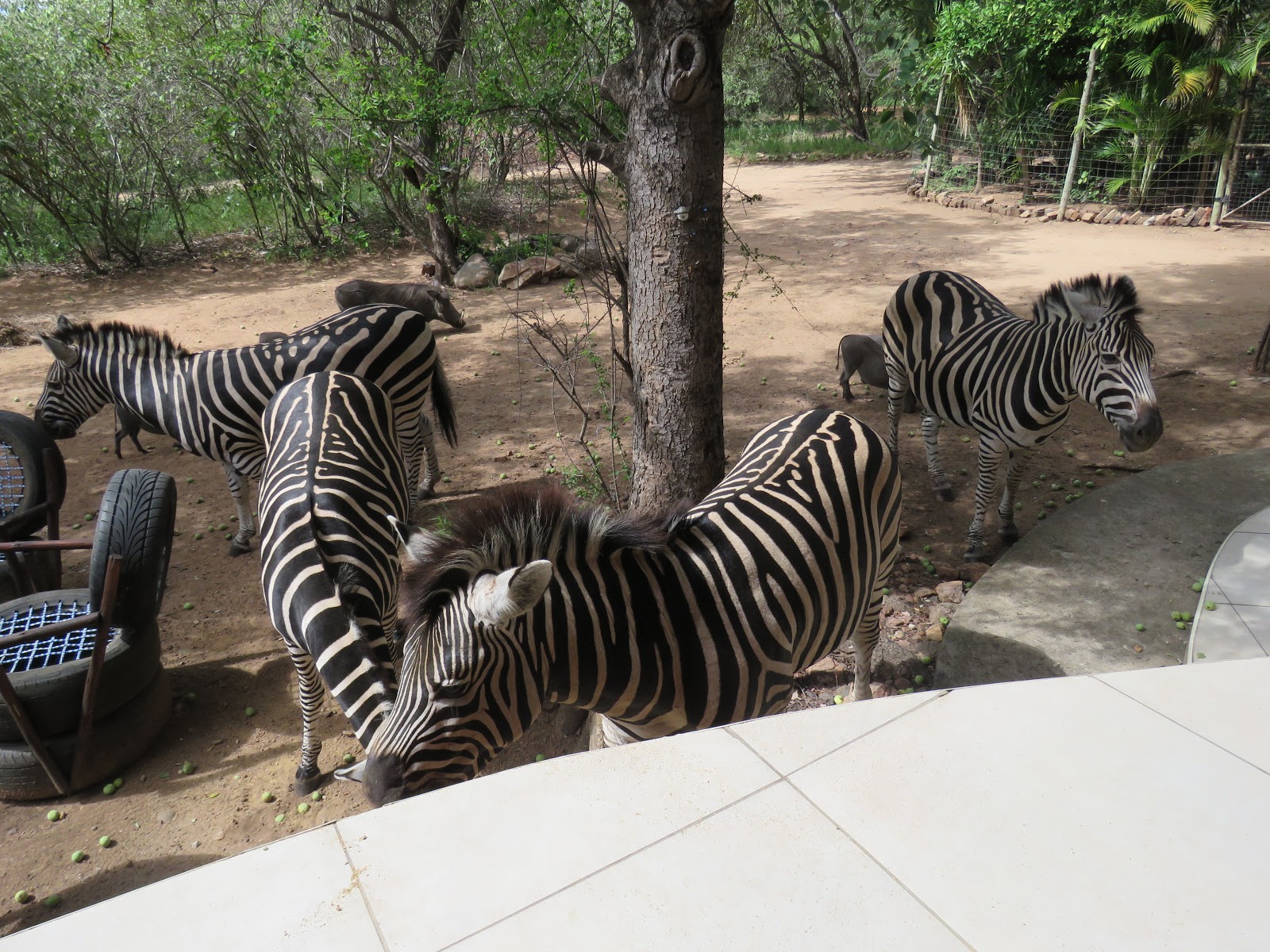
No sooner than Tom opened the big doors this morning, these two zebras were waiting to see if there were pellets on the menu.

As time marches on, we see other ways we can save a few dollars here and there.  But, the biggest relief of all came today when the top billing administrator from Mediclinic Nelspruit informed us that our insurance company would pay the claim for approximately ZAR 700000, US $49,204 minus a ZAR 28453, US $2,000, deductible for the cardiac bypass surgery.

Once that’s paid in the next week, then we’ll file the claim for reimbursement to our insurance company for the ZAR 80000, US $5628 for the angiogram and other tests before the surgery, an entirely separate bill, again requiring a ZAR 28453, US $2,000 deductible which we’re happy to pay.  

Suddenly, there were more when the word got out.
The alternative would have been for us to pay, out of pocket, ZAR 842267, US $59,2014, a substantial chunk out of our budget that would have severely impacted plans for the future while we recovered from the unexpected loss of such a huge sum.  
 
Since we needed to prepare for the eventuality of the insurance company refusing to pay, we had to liquidate some assets (sadly) at their lowest value to put the funds into our checking account to be prepared for the hospital requiring immediate payment.  
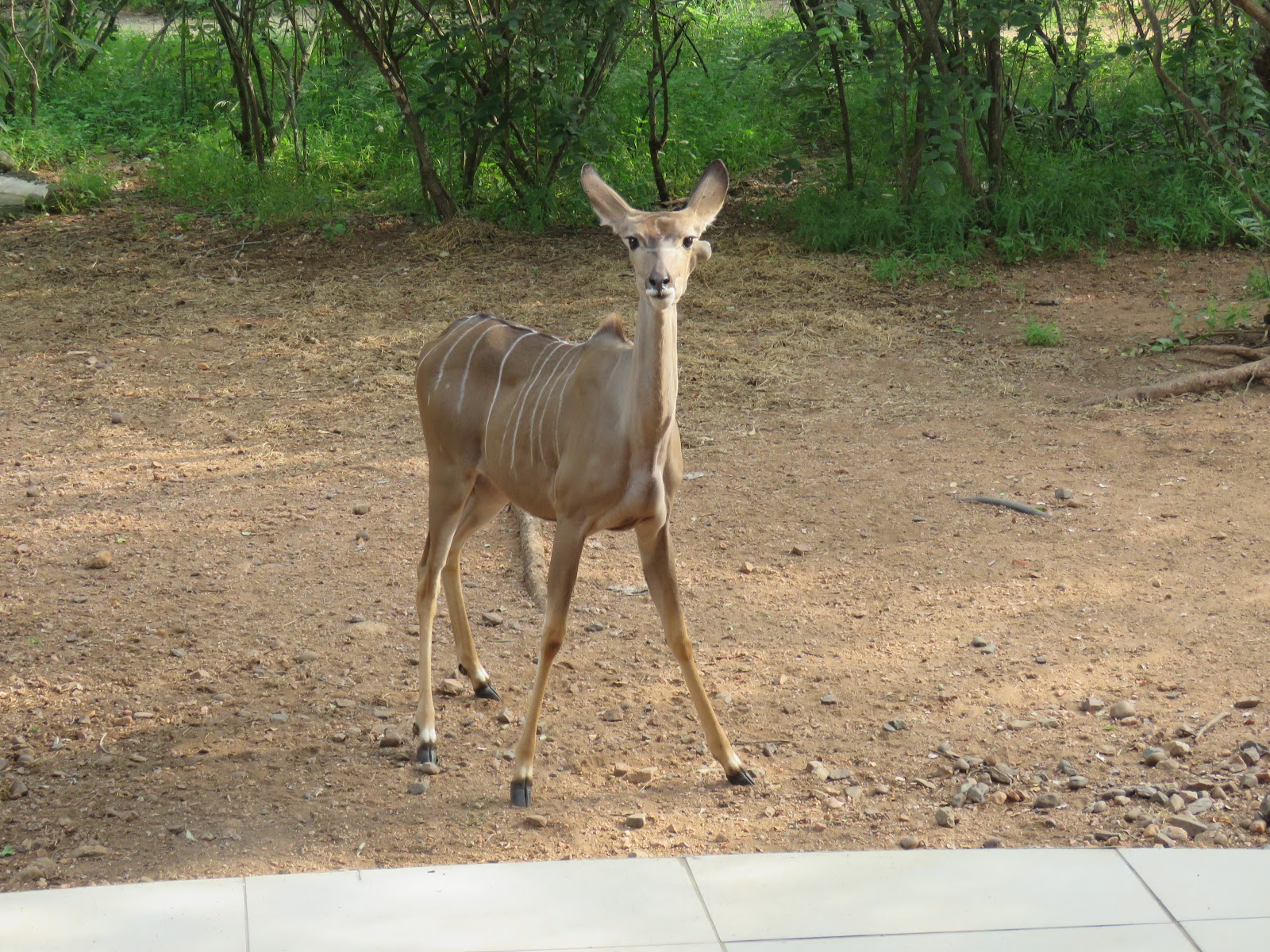
A moment later, we had kudus in the garden as well.
We’ll have to bear US tax consequences for taking out this sum and working with our accountant in Nevada to see how this will roll out for the 2019 tax year.  There’s no free ride.
 
However, we feel the peace of mind and relief that the insurance company will pay the very reasonable hospital bill of ZAR 700000, US $49,204. In the US, the cost of this surgery could have been eight or nine times more than the cost here in South Africa.
Then, of course, Little appeared.
The insurance we have doesn’t provide coverage while we’re in the US.  Had this situation transpired and with the limited coverage offered by Part A Medicare, we could easily have had to pay well over ZAR 1422653, US $100,000.  
 
The cost per day for the ICU unit in the US typically runs from ZAR 99586, US $7,000, to ZAR 142265, US $10,000 per day.  I spent eight days in ICU in Nelspruit.
The identical five zebras visited off and on all morning.

Need I say, we are relieved beyond words. Not only was my life spared by this horrible situation being discovered during our last few weeks while in South Africa, but we’ve been spared some tough-to-swallow expenses had we been anywhere else in the world.  

This, above all other safari luck experiences, has genuinely been the best of them all.  Sure, I’m still in lots of pain and expect to be so for at least several more weeks, but my spirit is uplifted and hopeful for the future.  

The zebras often get into little scuffles amongst themselves over the pellets.

I do not doubt that I’ll be sufficiently recovered for our May 11th flight to Dublin and the long drive to Connemara, Ireland, where we’ll settle for almost three whole months, picking up where we left off in our worldwide journey, as we continue to share this blissful experience with YOU…all of our worldwide readers.

A few readers have written and asked this question in one form or another: “Did you, at any point during this medical crisis, fear your travel days were over?”

Little likes to eat Frank and the Mrs. birdseed, which we often toss into this area.

The answer from me is straightforward…once I realized I’d survived the surgery, my hopes have escalated each day. On the other hand, Tom, the worrier, has continued to be concerned even as recently as this morning.  

But, with the insurance company paying the bill and these other refunds coming through, soon his mind will be at ease, especially as he sees me improving a little each day.

Kudu and zebras.

Thank God. Thank the Universe. Thank the South African doctors for their expertise. Thank Dr. Theo in the little town of Komatipoort for discovering my condition by going on gut instinct and his deep compassion for his patients.  

In essence, this experience, however painful and frightening, may prove to be the best thing that ever happened to me.

Safari luck and gratefulness, a winning combination.

Photo from one year ago today, March 6, 2018:

This was a “tower” or “journey” of the eight giraffes who made their way to the only paved road in Marloth. Note the eighth giraffe is to the far right in this photo. For more photos, please click here.

Photo shortage…Will increase in days to come…Thanks readers for hanging in there!…

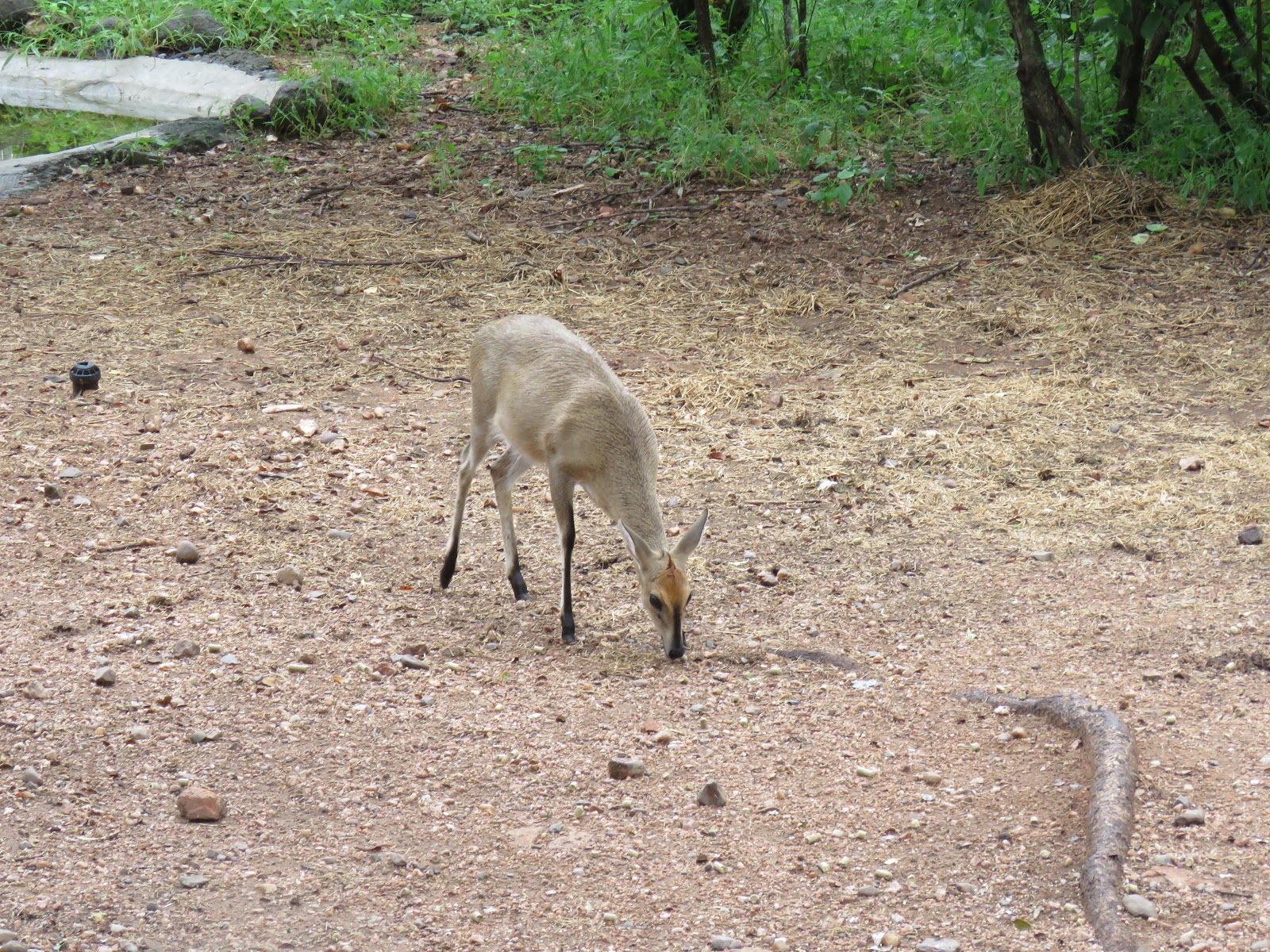
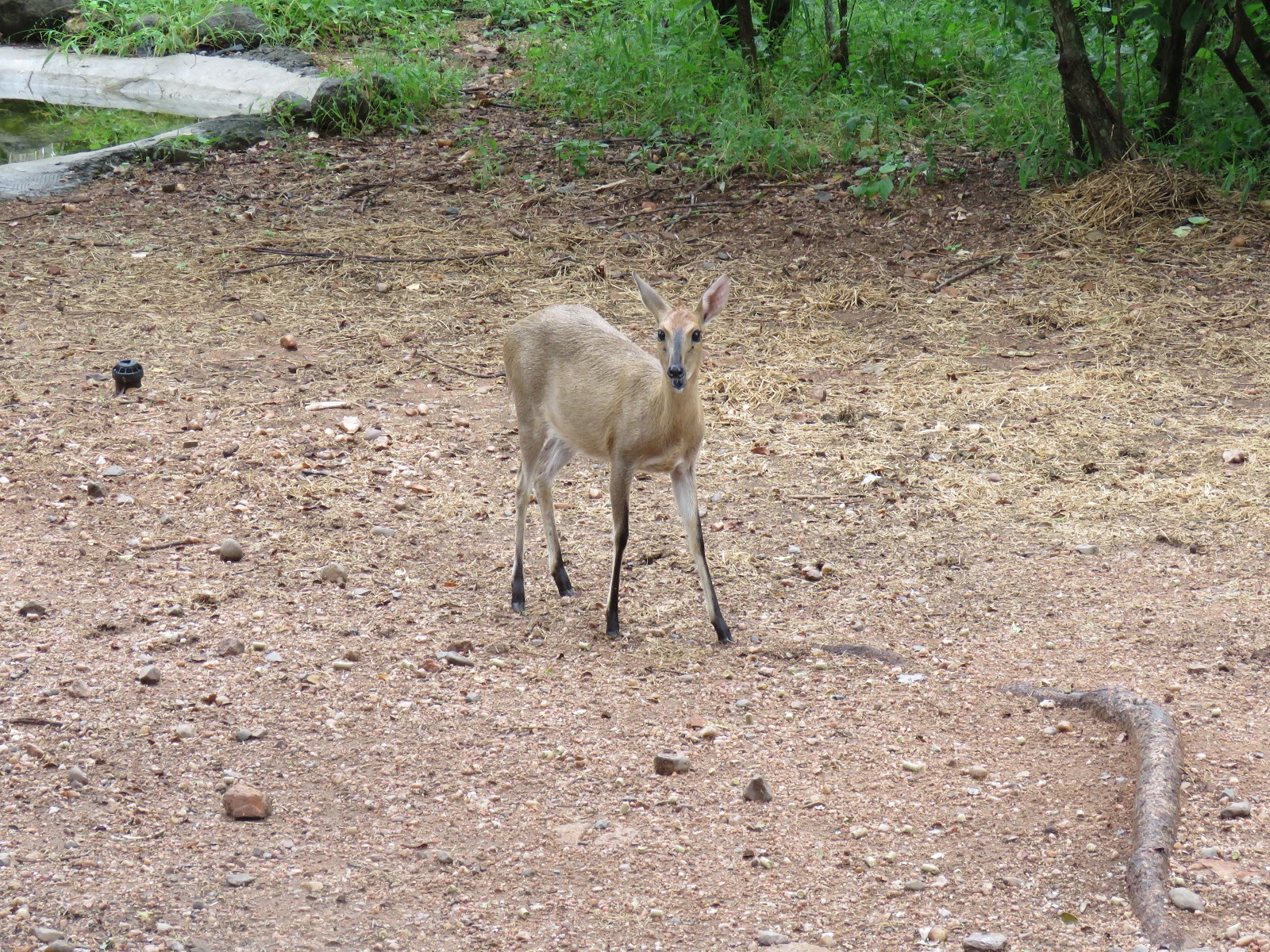
Female duikers have one tiny horn near their ears.

“Sighting of the Day in the Bush”

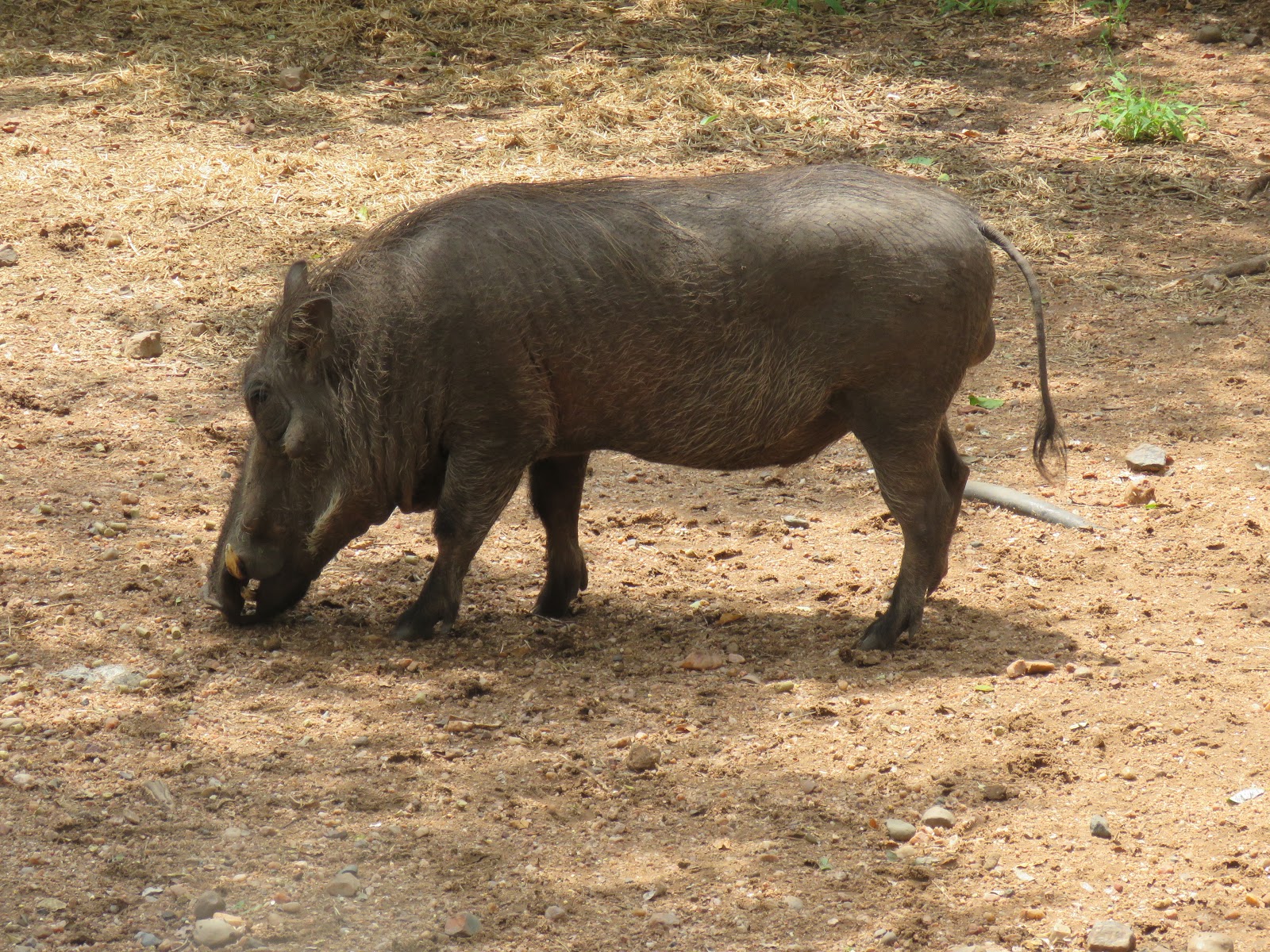
Little hogs all the pellets when other wildlife is around.  After all, he is a pig.

There’s no doubt about it. We’ve had a dreadful shortage of photos since I began posting on February 25th, 13 days after cardiac bypass surgery. It’s truly been a labor of love. I couldn’t wait to get back to it.

However, photo ops have been few since we no longer embark on the long drives in Marloth Park, let alone in Kruger. I’ll be able to do Kruger on the main paved road long before I can ride on the bumpy dirt roads in Marloth Park. 
The street on which we live is one of the bumpiest roads in all of MP. I have no idea when I might be able to tackle it, if ever, during our remaining 67 days here. At this point, I can hardly imagine being able to fly in 67 days after having spent the past 10 days recuperating with only a little progress each day.
Male duikers have two tiny horns on their heads (difficult to see in these photos).

But then, I may be hard on myself when I realize how much more I can do now than 10 days ago. Yesterday, I baked the delicious low-carb cheese pie that I savored as we watched a show last night, to be repeated each night until the final piece is gone.

This morning, I prepared and started a load of laundry, made my lemon water drink, and put away a tray of flatware and knives after Tom had emptied the dishwasher. It doesn’t seem like much, but in my world, it’s progress.

By 10:30 am, I was up, dressed, took the plethora of pills prescribed for me, did the breathing exercises, and walked steadily around the house for 15 minutes twice a day). Now up to the required daily 30-minutes, I can begin to imagine walking for an hour by the end of the initial six-week recovery period. 

Little stopped by this morning to check out the pellet situation.  As always, it was good.

It’s slow, but it is progress, nonetheless, and each day provides me with an opportunity to move forward by some seemingly mundane task that ultimately becomes a milestone in this life of healing.

I gave up the fight against taking the pain meds. They aren’t codeine or morphine-based and supposedly non-addictive, and I now accept taking one (not the recommended two, every five hours or so). Doing so keeps my mind off the pain enabling me to do more things for myself.

Now that I can rise from a chair or the bed on my own, I don’t have to ask Tom for as much help as I did a week or more ago, which has greatly added to my confidence in taking care of myself. Oh, he didn’t mind at all but the more dependent I was upon him, the less quickly I’d recover.

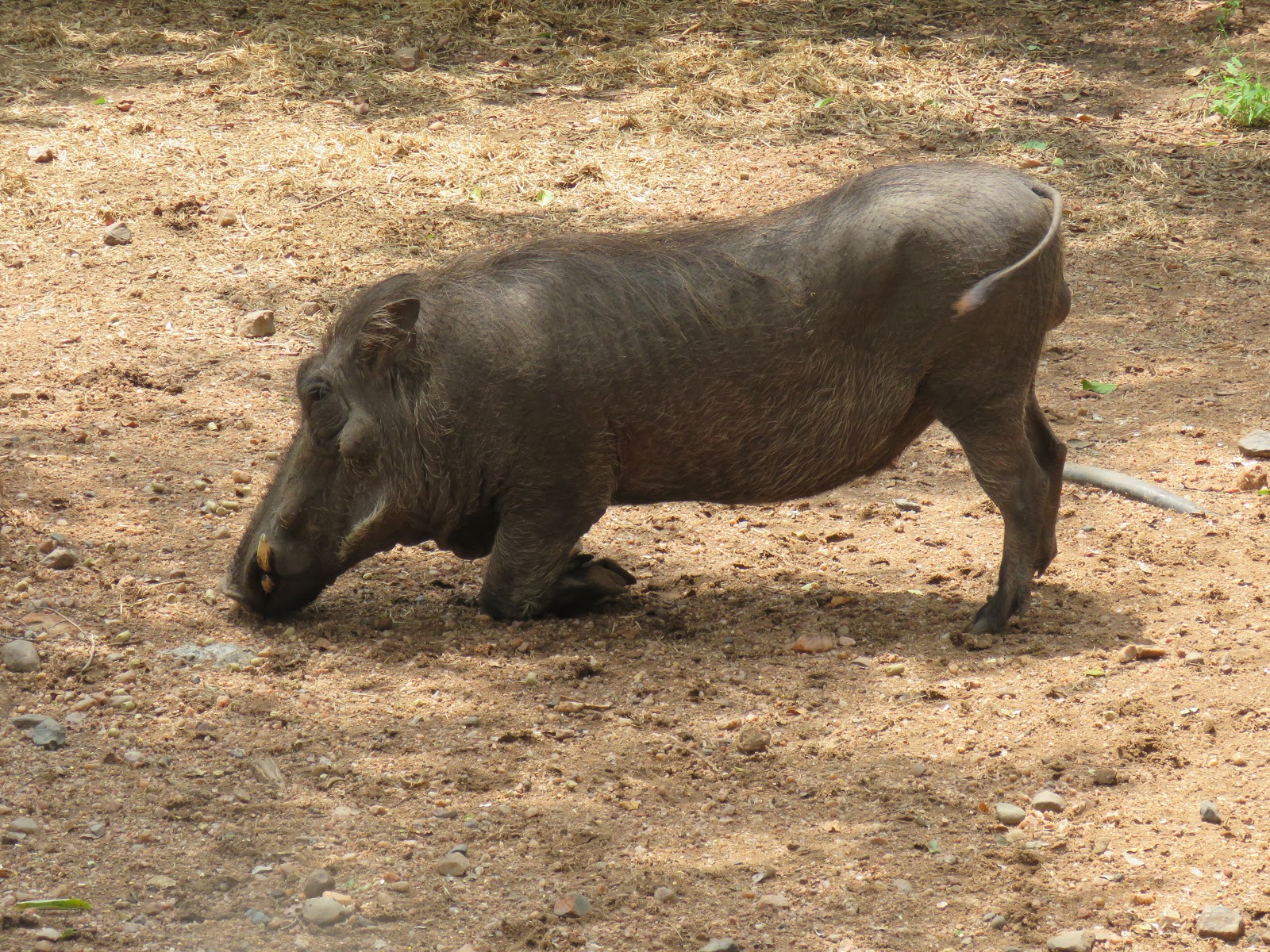
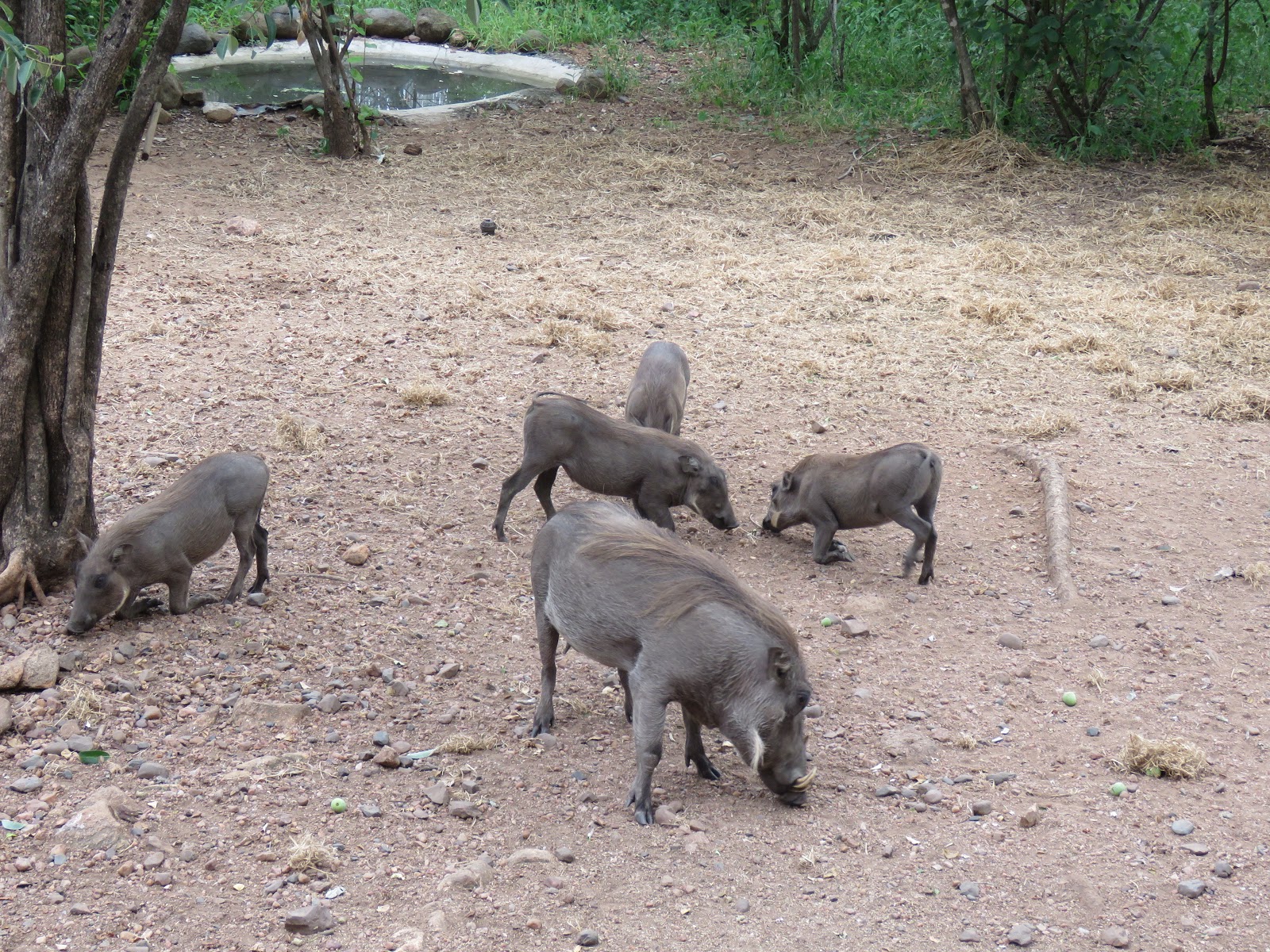
It’s incredible how nature provided warthogs with pads on their knees to all them to bend to eat freely. Their long snouts make it necessary for them to eat this way. Although the original Wart Face has such a huge body and long snout, he didn’t need to bend onto his knees.

Each morning he puts the compression socks on my legs. They are so challenging to get on, especially when he must be cautious in getting near my legs’ still healing incisions, particularly on the right thigh, which continues to bleed off and on. I can’t imagine when I will be able to do this on my own.

Yesterday, dear friend Kathy (of Kathy and Don) visited at 8:00 am to help me while Tom went to Komatipoort to see the dentist for his abscessed tooth, which he’d treated with antibiotics Nelspruit while I was in the hospital. What a great friend among many here in Marloth Park! As always, Kathy came bearing gifts, hugs, and loving support.

Our regular dentist here, the amazing Luzanne Du Preez at Komati Dental, gave Tom a prescription mouthwash to see if it will ultimately heal enough to avoid pulling the wisdom tooth. If not, before we leave in May, he’ll have it taken care of. I have two more amalgam fillings to be replaced, but dental work is not recommended immediately after heart surgery due to the risks of endocarditis, an infection of the heart.

Mom and baby have both grown over this past year. We’ve probably fed them more than any other wildlife, and they look healthy and fit.

So, dear reader/friends, we carry on with hope in our hearts that the healing process will continue to move forward, enabling us to resume our many plans for the future. Thanks to all of our readers for sticking with us, with or without many exciting photos, during this trying time and always.

Have a spectacular day!

Photo from one year ago today, March 5, 2018:

During most of their visit, they stayed close to one another and not too far from us. We’ve since had those tire chairs moved to the far side of the house. They were a breeding ground for insects and snakes. For more photos, please click here.

Turning a corner?…Perhaps the time has come…I made a pie!…

Tom called me outside to see the tiniest baby kudu we’ve seen to date.

“Sighting of the Day in the Bush”

This adorable young kudu, most likely born in the past 24 hours, was waiting for an excellent opportunity to suckle, noticing mom was preoccupied with the pellets.

Ironically, the first thing I did for myself during this long recovery period was to bake a pie, my favorite low-carb cheese pie, to be exact. Losing so much weight since we returned from the hospital nine days ago, from surgery 20 days ago, I knew I needed something sweet to help me stop losing weight.

Statistically, coronary bypass patients do better when they don’t lose much weight after this major surgery. I can’t get the photo out of my mind when seeing former president Bill Clinton a few months after his surgery looking 25 years older than his actual age at the time, 58 years old. Here’s his story at this link.

I will make every effort to be fit and healthy during the recovery period and for years to come after that. Vanity aside, I don’t want to look worn and haggard as he did months after the surgery.
With the umbilical cord still evident, they most likely were born in the past day or so.

On top of that, he suffered from severe cognitive dysfunction, as specified in this article. I may not feel great yet and still experiencing a fair amount of pain and discomfort, but my mind is as sharp as ever, if not more so, from increased blood flow to my brain.

From the article mentioned above posted by one of the world’s top cardiologists, John McDougall, the following is stated:

“In 2001, an article in the New England Journal of Medicine reported that 5-years after bypass surgery, 42% of patients showed a decline in mental function of approximately 20 percent or more. A study published this year (2008) in the Annals of Thoracic Surgery using MRI testing after bypass surgery found brain damage in 51% of patients. Three years after their time on the bypass pump, a significant permanent reduction in mental capacity was identified in 31% of patients. I am not talking major stroke here, but these patients can’t remember names or numbers as they once did, experience sleep disturbances (including nightmares), suffer mood swings and lose intellectual acuity. Approximately 30 percent of people suffer persistent depression, and some even contemplate suicide.”

This was quite a sighting for both of us.

Wow! It’s a good thing I didn’t see this article before I agreed to the surgery! Not only do I remember almost everything that transpired in the ICU unit and later the hospital ward, but I also remember the most minute details of trips we’d planned well into the future and trips we relished in the past.

I am so grateful for this, and if I have to continue to experience some pain and unease over the next many months, so be it…a small price to pay for one’s retained mental acuity.

Thus, this morning with the scale showing another loss of a kilo (2.2 pounds), I knew I had to up the ante on my caloric consumption while remaining my regular way of eating. Both cardiac physicians explained I didn’t develop three 100% blocked arteries from my diet, instead clearly stating it resulted from my heredity—no need for a dietary change.

After all, my typical meal includes a reasonable portion of lean protein, two types of colorful vegetables, and a salad. What way of eating could dispute the quality of this way of eating?

By making this favorite pie (since my childhood), I can afford myself an extra 350 calories with each slice with less than five grams of carbohydrates. Plus, it’s a feel-good pie making me smile at every delectable bite.

Too cute for words.

As much as the value (to me) of enjoying a piece of this pie over the next several nights, I wanted to see if I could make the pie in my weakened condition.  Everything I read about recovery from this surgery mentions getting back into a routine of performing tasks I’d done in the past without any strain on my body.

Right now, I’m walking 30 minutes a day, sitting up for the better part of the day, able to shower and take care of personal needs, and do my breathing exercises with relative ease. Surely, making one pie wouldn’t be more strenuous than any of these other tasks.

It wasn’t. Yes, I had to ask Tom to take the mixer down from a high cabinet, but once that was accomplished. The delicious pie crust was baked with almond flour, butter, cinnamon, and sweetener and allowed to cool. I easily made the filling, poured it into the baked pie crust, and gingerly placed it into the oven setting a timer as I always do.

Once cooled again, I’ll add the topping and place it in the fridge, looking forward to the first bite and the second, third and fourth. I take tiny bites to savor each morsel. I’ll gather my innate sense of self-control to avoid taking a second piece, remembering that prolonging the availability of this pie makes it all the more delightful.

This may be a segue into performing more tasks shortly, of course always keeping in mind my clear thinking mind that the baby steps is the name of this game.

Have a safe and healthy day!

Photo from one year ago today, March 4, 2018:

This female bushbuck flipped into the air after something bit her! For more photos, please click here.

Expectations have the ability to disappoint…Cautiously holding back…

Tom tossed some seeds to Frank and The Misses.

“Sighting of the Day in the Bush”

Lately, Frank has been holding up one of his little legs he must have injured.

Traveling to and from anywhere in the world is filled with expectations. Part of the excitement of traveling is wrapped around the anticipation of wonderful experiences yet to come as we visualize ourselves at various points of interest along the way.

We were thrown for a loop when this sudden unplanned heart surgery necessity cropped up about three weeks ago.  We were only days away from leaving Marloth Park to head to Kenya for the photographic tour we’d anticipated for so long.

Frank and The Misses. and Ms. Bushbuck.

Many times over these past six-plus years since we began our journey, people would ask, “What will you do if some urgent medical situation occurs and you have no home base, no insurance in the US, and you’re living in some remote town?”

The answer was always the same, “We’ll figure it out.” And when it happened years earlier than “expected” we did exactly that. In my medication-induced stupor and Tom’s state of utter exhaustion, we figured it out. Piece by piece, we canceled venues, flights, cruises, and hotel stays, losing a lot of money but finding a way and a place to recover so that in time, once again, we’ll be on the move.

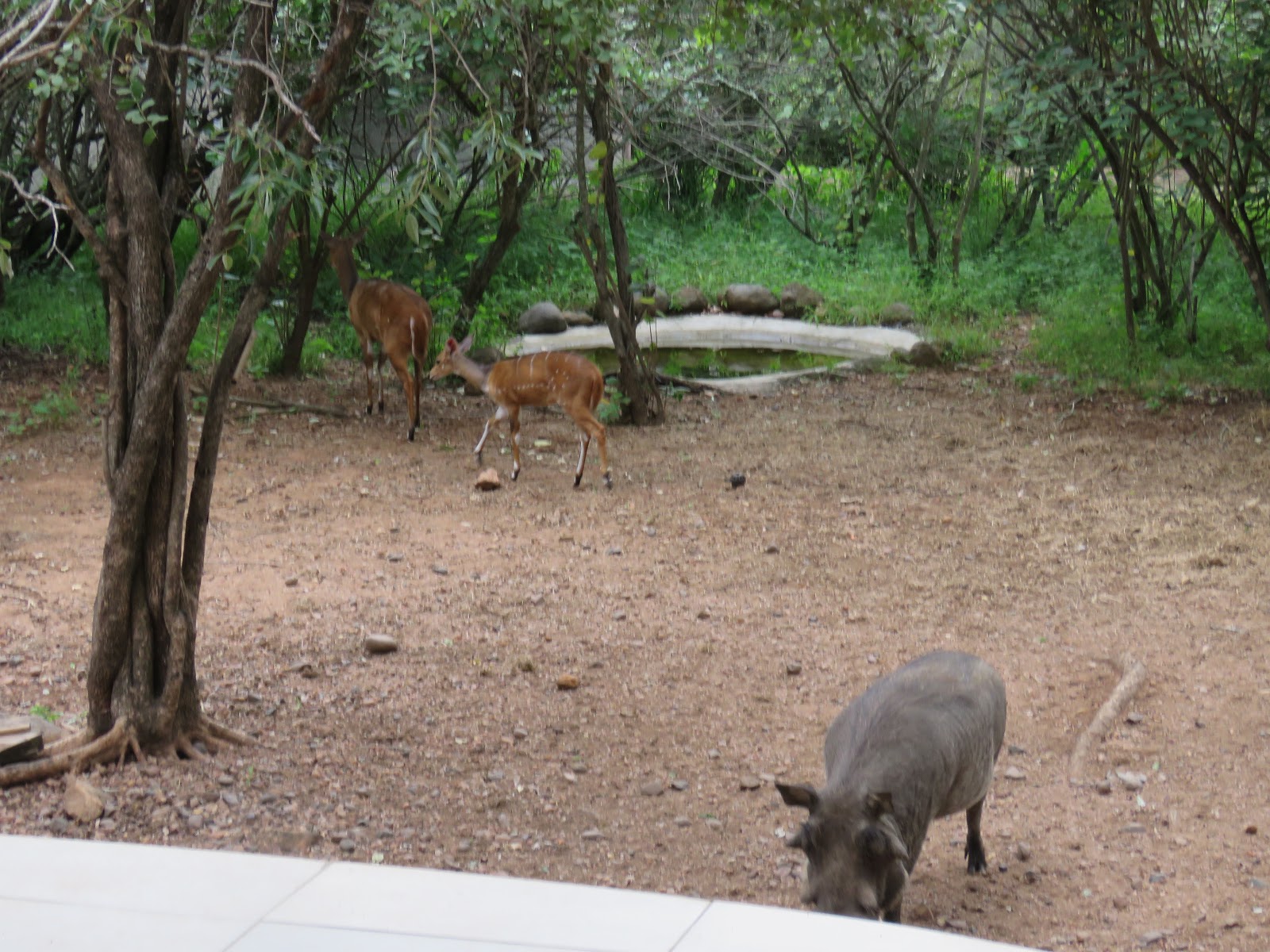
There are several Ms. Bushbucks that come to call.

The doctors suggested we don’t go anywhere until 90 days post surgery which transpired on February 12th. We plan to leave Africa on May 11th to head to Connemara, Ireland, for a peaceful three-month stay. This is precisely 88 days after the surgery. Close enough.

Sure, right now, there are days where I can’t imagine being ready for the long flight and drive to our holiday rental. But it is soon yet, only 19 days post-surgery. I have a long way to go, but I’m hoping and expecting I’ll be much more ambulatory and in considerably less pain than I’m feeling now.

If, for some reason, here again “expectations,” I’m not quite ready to go, we’d figure that out too. These changes always cost money but do provide options if one is willing to pay the price. And what’s is more important than good health?

Bushbucks and francolins get along quite well.

Yes, we cautiously holding back a degree of enthusiasm in going directly to Ireland from here. In doing so, we’ve had to change many plans in between. As mentioned in this post from February 27th, that explains it all. 

Sadly, we’ll miss visiting family for three weeks in the USA in April as previously planned. However, we’ll see them all in November, a mere seven months later. We’d played it out in our minds to be with family, which would have been a little over a month from now. 

But staying here in South Africa made the most sense to be close to the doctors who have treated me through this process. Also, I can’t say I’d feel safe flying such a long distance after such a short period since the big surgery. The risk of blood clots is quite high in the three months after bypass surgery.

A little kudu antics over the pellets.

Yes, our expectations for this period in time were very different than where we are now. But, we took this risk on October 31, 2012, when we left Minnesota to begin our years-long journey. 

Still, we have no regrets. Still, I can say this past year, from February 11, 2018, the day we arrived in Marloth Park until February 11, 2019, has been one of the happiest and most fulfilling years of my life, and I “expect” Tom would agree.

In reality, we were probably in the right place at the right time for this “unexpected” health crisis to occur; top quality medical care at reasonable costs, a house we could continue to rent without the necessity of a cumbersome move and of course, friends all around us as an unbelievable support system.

Two boy kudus and one girl.  Although there’s plenty of vegetation for them to eat since the huge rains, they still enjoy the pellets.

Then again…there’s them…our beautiful wildlife friends who visit every day that brings so much joy, I can feel the positive hormones pumping through my body. There can’t be a much better source of aiding in healing than the wildlife that comes to call day after day, night after night. 

My “expectation” is that they will continue to visit, and Mother Nature rarely disappoints. 

We’ll be thinking of all of you who continue to write, sending the kindest and most thoughtful expressions and well wishes for good health and recovery! Have a fantastic Sunday! 

Photo from one year ago today, March 3, 2018:

A youngster stopped to nurse.  For more photos, please click here.

Exercise and other causes…Why me?…

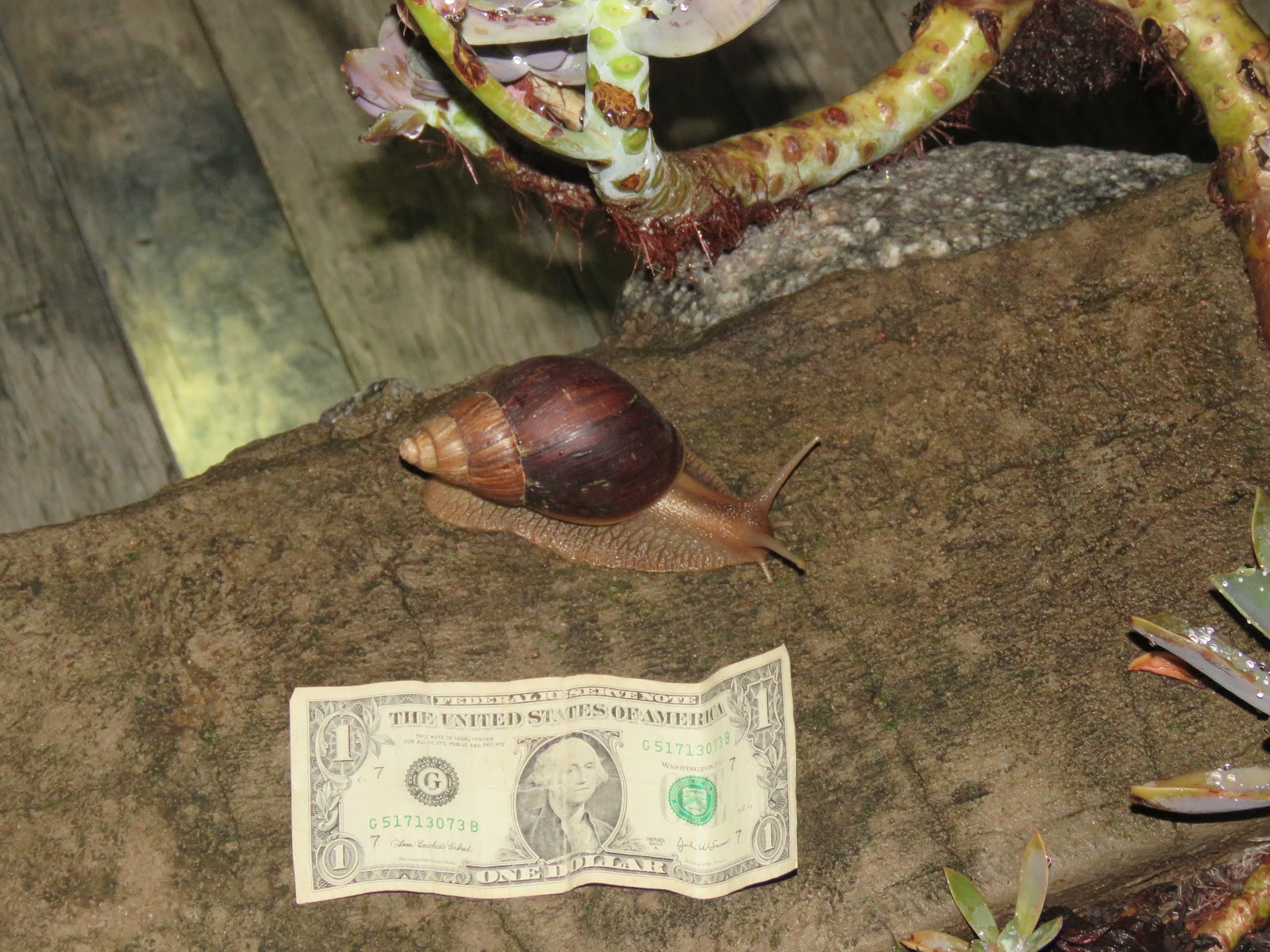
Tom spotted this giant snail outside his hotel room in Nelspruit while I was in the hospital.

“Sighting of the Day in the Bush”

This adorable female kudu  is suffering from TB, as indicated by the tumor on the left side of her face,

As I’ve spent several hours each day resting, walking, and napping, I’ve had plenty of time for serious thought as to why I became a candidate for open-heart surgery.

Was it from the recent lack of exercise since we arrived in Marloth Park over a year ago? Was it the low carb, high fat, moderate protein diet I’ve been on since August 2011 or the high carb, the low-fat, moderate-protein diet I diligently followed for most of my adult life?  Science is confused by these questions.

Over the past several years, we’ve been told by the government what we should be eating and avoiding to maintain a level of health and fitness. These dictates didn’t improve the overall health of citizens throughout the world when many countries followed the American way of eating; too much sugar, salt, starch, and carbs, and still numbers were rising on the scales of poor health.

In today’s medical science, it is still unclear what contributing factors play the highest role in the causality of developing clogged arteries, such as my 100% blocked three of four coronary arteries. Many blame dietary fat while others say dietary fat is not the issue…it’s the cholesterol made by our bodies. What did I possibly do wrong?

It’s sad to see that her days are numbered.

The three cardiac physicians working with me during the eight days I spent in the ICU had no suggestions on what I could do going forward to prevent this from happening to me again in 10 years. That wasn’t very comforting. 

I repeatedly asked, “What can I do differently” and the answer was always the same…nothing. They agreed my way of eating, happy, low-stress lifestyle, and level of activity are commensurate with our life of world travel. They decided upon the deceit perpetrated by my good blood test …nothing appeared to be wrong.

So I’m left with one route to go – to follow the exercise program recommended by the three physicians and worldwide heart health professionals. And, it has begun since we returned to Marloth Path, actually in the ICU unit and the hospital during my many days in residence. Walking. 

Plain and simple, walking. No hand weights, no particular pace other than one that increases the heart rate to a level that allows talking during the process. That’s it. This act continued from my 11 days in hospital.

The walking began within 24 hours of the removal of the intubation tube. Simply walking was laborious to a point beyond my expectations, limited by a lack of mobility with all the tubes, drains, and IV’s still attached.  

Mom and Babies were searching for pellets.

By the time we returned to Marloth Park last Saturday, I was able to walk for 10 minutes. Today, as directed by the take-home instructions, I upped the ante to 15 minutes twice a day. This is not much in the realm of things, but it takes everything I have to get through the 10 minutes, let alone the added ten minutes as of today.

Where do I walk?  I use a timer on my phone in the house, ensuring I don’t quit 30 seconds earlier than required. Eventually, I’ll be able to walk on a road. At this point, I don’t trust my wobbly state of being to venture out on the pot-holed, uneven dirt roads near the house. In due time…falling would be a disaster.  

The goal is to walk for 60 minutes per day in two 30-minute sessions. Knowing myself, once I reach such a goal, I will add my old exercise program to further my strength and fitness.  

There’s no health club in Marloth Park, but hopefully, there will be a facility in Ireland near the house we rented in Connemara. The options look good from our online research.

Today we experienced load shedding for only about one hour. Another is expected at 1500 hours, 3:00 pm, and again tonight at 2330 hours, 11:30 pm to last 2.5 hours. We’ll see how it goes.

Have a fantastic weekend!

Photo from one year ago today, March 2, 2018:
A herd of impalas at the river.  For more photos, please click here.

Patient expertise…What does it require?…

Ms. Bushbuck and growing baby come to call.

“Sighting of the Day in the Bush”

They often stop by for pellets, apples, and carrots.

Note: Load shedding is back on.  We expect a 2 .5 hour outage within the hour.
We apologize for the lack of photos.  This morning’s rain and the trip to Nelspruit made photo-taking difficult.


With rain throughout the area, we decided to leave earlier than planned to make our way to Nelspruit for my first “after-care” visit with the thoracic surgeon who performed the triple coronary bypass a mere 17 days ago.

I’d made a list on my phone of my areas of concern which included the following:

  • Burning feet at night – What I’d assumed…peripheral neuropathy, at times diagnosed after this type of surgery, usually resolving in a few months.
  • Pain in right chest wall – A torn muscle from moving my arm too quickly on the night the power was out.
  • Bleeding incision – As Dr. Phillip stated on Wednesday, it’s a hematoma underneath the which bleeds when irritated during s shower but not bleeding from deep inside my thigh.
  • Side sleeping (which I prefer) – May be done as long as it doesn’t cause pain.
And so it went. My pain and discomfort are entirely normal at this point. I felt a sense of relief knowing my symptoms were within the range of “normal” based on this point in time. 
 
We spoke with the woman who’d had the same surgery on the same day I’d had who went into “theatre” several hours before me. She’s nine years younger than me and was doing much better than I have. But the doc explained that each person is different, and recovery will follow accordingly.  
 
This knowledge provided is with more peace of mind, and now I’ll sit back, doing my exercises and feeling more confident that I will fully recover from this challenging surgery in due time. We don’t return to see the doctor until four weeks from today.  
 
I will be patient and not push it too hard, gradually adding to my activity level, eating healthy meals, rest as needed, and maintaining a positive state of mind.
 
Speaking of being patient, today I’m posting my perception over this past week as to what it takes to be an excellent patient to my exceptional caregiver, Tom, making his tasks a little easier over this long haul which could prove to be as long as three months.
 
  1. The tone of voice -Sure, it hurts. Sure, it’s tough to get out of a chair, off the sofa, or into and out of bed when using arms and elbows are prohibited over these first few weeks. We don’t realize how much we depend on our arms and hands to assist us in moving from one position to another, from one room to another, etc. The tone of voice in asking for assistance is everything.  Instead of saying, “I need help,” how about, “Honey, can you help me stand up?” This pleasant tone may make all the difference in the world in the enthusiasm of the caregiver in assisting in all areas.
  2. No whining, whinging, complaining – The caregiver can’t change the terrible circumstances, nor can they make the pain disappear. Complaining provides no benefit other than when a groan or moan is precipitated by certain actions. After all, we are humans and tend to make it known to all surrounding parties that a certain task is difficult, exhausting, or downright impossible.
  3. Expressing thankfulness – It’s a huge responsibility to be a caregiver and seldom includes remuneration among couples or close parties. A heartfelt “thank you” goes a long way, especially when accompanying the completion of any task together. One can never say “thank you” too many times in a day, here again using a pleasant and sincere tone of voice.
  4. Don’t criticize how household tasks are performed, which generally the patient may have done. Each individual has their way of doing things, and attempting to “re-educate” the caregiver is unkind and selfish.
  5. Don’t complain about meals – Perhaps the patient was the sole preparer of food and meal planning.  Suddenly this task is taken over by the caregiver who a). May not know how to cook or b). Doesn’t enjoy cooking. Firstly, eat the food prepared as long as it fits within the parameters of any special meals as prescribed by the doctor. Secondly, make positive statements to the caregiver about flavor, presentation, or ease used in preparing the meals. Thirdly, if the caregiver asks what you’d like to eat, choose simple and easy to prepare items, not fancy recipes that require time and attention.  If there is something special you’re craving, ask the caregiver to find such prepared items on their next trip to the market. Try to suggest meals you know you’ll both enjoy rather than the caregiver deeming it necessary to cook two separate meals.
  6. Bathing, dressing, showering – Most likely, based on your condition, performing these daily rituals on your own makes the caregiver’s job much more manageable. Only ask for assistance in those areas you find dangerous to do on your own or complex during this period. Do not attempt to perform tasks on your own that only exacerbate your medical issues. You’re not doing either of you a favor.
  7. Each day set aside time when your needs are minimal to allow the caregiver a break – This may be while you nap, read or play a game on a device. Most likely, the caregiver is experiencing some stress, and a designated rest period for them may be all it takes to keep them upbeat.
  8. During periods of ill health or during recovery, there’s never a time that expressing love, affection, and gratitude doesn’t serve you both well. A gentle hug, a tender kiss, or a kind word or compliment will never be lost during this period and, of course, well into the future.
Memories of this recovery period can be a pleasant extension of an already great relationship. Negative comments, behavior, and attitude will ultimately tarnish the relationship.
 
And so, dear readers, we end today’s post with these thoughts in mind and hope, should you ever be the caregiver or patient, you can do so with grace, dignity, and a bit of humor thrown in on the side.
 
Happy day to all.

Photo from one year ago today, March 1, 2018:

This is most likely a lone male elephant as explained here: “Male or bull elephants have very different social needs than the females. In the wild, males leave or are driven out of the family group as they approach sexual maturity. Males spend as much as 95% of their lives alone or in loose association with other bulls.” For more, please click here.

Caregiver expertise…What does it require?…

Mom and Babies were hanging out by the recently cleaned cement pond.

“Sighting of the Day in the Bush”

Her attention and love of her offspring have been unrelenting since we first saw them in August.
There’s never been a time in my life that I required a full-time caregiver. Although I had surgery a few times, I recovered quickly and only needed help lifting heavy objects or grocery shopping for a week or so. In all likelihood, this is the case for most of us.
 
But now, I strive to recover from this dreadful and complex surgery with my sternum cracked, chest cut wide open, and numerous incisions are running the length of my legs, all of which are painful, making moving about the complex.
 
In addition, I’ve had two painful chest tubes since removed that have stitches to be removed tomorrow when we return to Nelspruit for an appointment with the surgeon.
 
No doubt, with only 16 days since the surgery, there is still a lot of pain and discomfort. It takes six to eight weeks for the cracked sternum to heal, as would be the case for any broken bone.  
 
In the case of most broken bones, the patient is wearing a cast during this healing process. It’s impossible to stabilize this type of break with a cast, and thus, I must move gingerly to avoid further injury.
 
Thus as described above, this is the time I need a full-time caregiver, namely my husband Tom, who’s had no significant experience in this area throughout his life.
 
I can do several things for myself; bathe, bathroom, getting in and out of bed (where I spend little time during the day as recommended by the doctors). I cannot use my arms for tasks such as folding towels, chopping and dicing vegetables, or performing many household tasks.  
 
Thank goodness we have Zef and Vusi (included in our rent) who come each day to make the bed, wash floors and clean the house. With all the animals kicking up their heels in the dirt garden, there’s more dust in this house than one can imagine. Here again, one more bit of serendipity that proves that this was the best place in the world for this to happen to me.
 
As a result, as the caregiver, Tom doesn’t have to spend time cleaning the house; other than doing dishes and picking up after us after they leave, his attention is not divided in my full-time care. This is another huge benefit for which we are both very grateful.
 
One of his biggest jobs in getting those darned compression stockings on my legs each morning. As tight as they are, it’s an athletic event. It’s not easy putting on these tight knee-high stockings when I have awful incisions in both of my legs, and he’s trying desperately not to cause further pain. But each day, it goes a little more smoothly than the previous day.
 
Over these past five days, since he took over as my caregiver, after my release from the hospital, there are a few things I’ve observed that truly define the quality of a caregiver beyond the basic tending to bandages, stockings, and mobility.
 
Let me add here; I requested an early release from the hospital. Once I moved (after eight days) from the ICU unit to the regular hospital, it didn’t take more than a few hours to realize the quality of care went from a 10+ down to a zero. At that point, I knew Tom could and would take better care of me. As a result, I only spent two days in the hospital ward, in a room to myself. 
During this period of high temperatures, some warthogs avoid cooling off in the cement pond when the water has become warm.
Most patients spend from three days to a week in the hospital ward after being released from the ICU unit. In my case, I spent eight days in the ICU and, as mentioned above, only two days in the hospital ward.
 
Back to the points that I’ve found have been most helpful in addition to basic caregiving tasks have been the following, in order of preference:
  1. Caregiver’s attitude: Nothing could be more distressing than having a caregiver who wasn’t encouraging, upbeat, and optimistic. A negative resentful attitude could, without a doubt, have an impact on the rate of recovery. Regardless of how difficult this may be, never attempt to make the patient feel guilty for putting them in this position.
  2. Willingness to prepare special meals: Many patients have a diminished appetite and desire to eat after bypass surgery. Healthful, familiar meals are a real boon to the patient’s recovery.  
  3. Replenishment of cold fresh beverages can be instrumental in recovery: The medications may cause extreme thirst and a dry mouth. Drinking plenty of fluids is required for recovery. Having stale water or beverages hardly inspires the patient to drink to replenish their needs during the healing process.
  4. Participation in the rehabilitation process: This type of surgery (and most others) require a committed and diligent walking program. By encouraging and gently reminding the patient as to this process is crucial in making a complete recovery. If the caregiver walks with the patient, especially if they’re fearful of falling, the patient grows more confident.
  5. Medication distribution and monitoring: Many times, patients find themselves taking eight to 10 new prescriptions, some of which are taken at varying times of the day and night. A conscientious caregiver will oversee this process to ensure correct dosages to avoid over or under-medicating. Some pain medications cause drowsiness and result in the patient becoming forgetful.
  6. Encouraging rest periods: Instructions after surgery may include certain activities based on the patient’s level of progress. Type A personalities may quickly become overjealous in performing such tasks. As much as the patient believes “more is better,” a good caregiver will monitor such activities encouraging rest periods and following doctor’s orders.
  7. Creating a comfortable sleeping and napping arrangement: If the patient is uncomfortable sharing a bed with their caregiver/spouse and if the space is too small for comfort, an extra bed in the same room might be suitable. Air conditioning in hot weather is a must, as is appropriate heat in cold environments. Avoid extreme temperatures to aid in healing. Ensuring bedding and pillows are placed for the utmost comfort is a must, even when the patient is out of bed and seated at a table or in a chair.
  8. Escape time. When going through a difficult recovery, everyone needs a period each day to escape from worrying thoughts and pain. Watching fun TV shows and movies, games to play, or other such activities reduces the time the patient feels stressed, here again aiding in recovery.
  9. Encourage feelings of self-esteem: Let’s face it, having one’s body mutilated from surgery is a difficult thing to meet for some patients. Only the caregiver will know if this is an issue and provide realistic encouragement during the recovery process and in times to come.
These points became apparent to me over these past several days, and I only have Tom to thank for making this trying time tolerable. Besides, a little laughter throughout the process can easily lighten the load for both patient and caregiver. There’s no shortage of that in this household.
 
Tomorrow, we’ll cover the patient’s responsibilities to aid in their recovery process and the willingness of the caregiver to carry on with love, support, and excellent care.
Be well, dear friends, and thank you all for “coming back.”

Photo from one year ago today, February 28, 2018:
Nearby at another tree, we spotted a rhino mom and her baby, born this season and still closely attached to the mother. For more photos, please click here.

When all is said and done, what will it really cost????…

The boys are especially handsome with their budding horns.
“Sighting of the Day in the Bush”
The kudus give us “the look,” which means “more pellets please,”

Note:  Please bear with us for the lack of innovative and exciting photos. Stuck on the veranda and with only a few visitors each day, our photo ops are limited right now.

As mentioned in yesterday’s post, whether we like it or not, whether it’s fair or not, we are faced with a monumental financial loss due to my recent triple coronary bypass surgery.
 
Having to cancel all prepaid venues over the next three months results in a financial loss for which there is nothing we can do that we haven’t already attempted.
On top of the incurred losses is the fact that we had to pay for the holiday rental of the “Orange” house from February to May when we’ll depart for Ireland for the upcoming three-month rental in Connemara by the sea.  This booking will remain in place.
Two female kudus stopped by this morning.
We’re looking forward to the summer months in Ireland, but the realities of what it will have cost us to get there are quite a sting. Once again, I’ll reiterate, we are immensely and eternally grateful to have discovered my severe heart condition while in South Africa for several reasons:
  1. The cost of health care in this country is very reasonable
  2. The quality of medical care in South Africa is exemplary
  3. South Africa is known for its advancements in heart disease as compared to other countries throughout the world
  4. The cost of living while recovering is as much as 50% less than in many other countries throughout the world
We couldn’t have been in a better place when discovering this life-threatening condition. Oh, gosh, had we gone on to Kenya, we would have been in dire straits trying to find the quality of care required to “right” this condition. We are so grateful for being here in South Africa.
Soon they were accompanied by a young male, most likely an offspring of one of the females.
Now we are faced with bearing the entire cost of the operation, doctors, and follow-up care when our insurance company is looking for any possible “out” to avoid paying the claim, only adding to our worry and stress. We are talking about a lot of money.
 
Today’s post is presented with the intent of sharing these losses but may not be exact to the penny. The time and energy required for the exact numbers aren’t quite where I’m during this recovery period. But, the numbers we present today are within 5% of the actual costs. I’m still not quite clear-headed enough to be as precise as we’d usually strive to be.
 
So, here’s an overview of the losses we’ll have incurred as a direct result of this dire medical emergency.
 
  • Flight to Kenya from South Africa (non-refundable) ZAR 15752, US $1135
  • Kenya Safari Tour (non-refundable) ZAR 199688, US $14,400 with a promised refund of ZAR 69336, US $5000 for a total loss of ZAR 130352, US $9400
  • Hotel in Santiago Chile (non-refundable) ZAR 20440, US $1474
  • Cruise from Chile to San Diego, CA (partially refundable) ZAR 22174, US $1599
  • Flight from San Diego, CA to Minneapolis, MN (non-refundable) ZAR 6330, US $ 456.60
  • Cruise from Fort Lauderdale, FL to Copenhagen, Denmark (partially refundable) ZAR 12480, US $900
Total losses: ZAR 207523  US $14,965
 
Plus, we must include any medical expenses for hospitals, doctors, and medications. We’ll report back on these as they become known shortly. With these totals included, we will be looking at a total loss, more than ZAR 1040040, US $75,000.
Such cuteness…
Also, ironically, we received a notice from Expedia while I was in the hospital that the flight from Nairobi, Kenya to Santiago, Chile, was being canceled. We’d be refunded the entirety of this expense (not calculated in the above costs). This credit hasn’t been reflected on our credit card yet, but we’re watching for it.
 
As we review these losses, they are meaningless when compared to the fact that my life has been spared, and in time, as we recovery physically, emotionally, and financially, we’ll move into the future with excitement, hope, and fulfillment for that which is yet to come.
 
Thanks to all of our readers/friends, and family for their loving support and prayers during this challenging time.
Photo from one year ago today, February 27, 2018:
I had the opportunity to feed tiny Doc, who slowly nibbled on the teaspoon. For more details on bushbaby rehab, please click here.

First post since February 11, 2019…Life after heart surgery…A heartwarming stroke of appreciation…

This was the scene that rolled out before our eyes this morning.

“Sighting of the Day in the Bush”

A baby is wondering what this crunchy green stuff could be.

Our last full post was uploaded two weeks ago today. I can’t tell you how many times I longed to be able to write, but after the triple coronary bypass surgery of February 12th, it was impossible.  With all the medications, the pain, and the associated brain fog, I could barely sign my name, let alone write a post.

I spent eight days in ICU and a few more days in the regular hospital. With the diminished nursing care in the hospital ward, after the excellence of the ICU nurses, I felt Tom could take better care of me, and thus, on Saturday, February 23rd, I asked the doctor to release me to return to Marloth Park.

This decision proved to be right. Tom’s exemplary care and attention to detail with nary a moment of frustration for being assigned caregiver, we both knew this was the best thing we could do to aid in my recovery.

No, it hasn’t been easy by any means. Tom, bless his heart, painted a picture on Facebook of me being “a trooper” and handling this so well. This has hardly been the case. I have suffered as much as any recipient of this life-saving surgery and hardly consider myself brave in the process.
There were three little ones in this dazzle of zebras.

Being unable to move about freely for fear of dislodging metal parts in my chest, the pain when trying to perform the simplest of personal tasks, and the knowledge that long-term recovery is undoubtedly in the distant future make day-to-day living somewhat challenging.

The long drive back to Marloth Park in the little red car was easier than expected. Tom avoided any herky-jerky maneuvers. The pain medication made me sleepy enough for the time to pass quickly, and before we knew it, we were back in Marloth Park.

Louise had two massive bouquets, the fridge filled with enough food to last for days, the bedroom cooled down with aircon (before the power went out that night), and the house is spic and span condition.

In no time at all, Tom unpacked our bags, made piles of sorted laundry for the Zef and Vusi to hang outdoors today, and began to prepare a perfect dinner of chicken “flattie” and salad, all that either of us cared to eat.  

Tom had cut several stalks of celery, saving the scraps for the kudus, bushbucks, and zebras, all of which love celery. 

Now, the real recovery would begin. But, on Saturday night, when the power went out, thrashing in bed, unable to get comfortable in the hot still air, I attempted to remove the hot compression stockings when my feet and legs felt as if they were on fire. 

In doing so, I tore something in my chest near my right arm that has left me in even more pain than today has finally begun to subside. I couldn’t conceive of driving back to Nelspruit to see what I’d inadvertently done to myself when we’re already scheduled to return to see the surgeon this Friday.

Then, on Saturday night, before the power outage, I showered only to have one of the major incisions in my thigh start bleeding profusely. With all the blood thinners I’d been taking, the blood wouldn’t stop running. Again, last night it happened after the shower. But, we can deal with this.

In essence, the warm, kind is Dr. Theo Stronkhorst, located at Rissik Medical Centre, 71 Rissik Street, Komatipoort, 1340, (phone 
013 793 7306), and knowledgeable general practitioner in the small town of Komatipoort, saved my life. Plain and simple.

The little ones showed little interest in pellets or vegetables.

When I had an appointment with him on Thursday, January 31, to get my three prescriptions refilled in preparation for heading to Kenya for the amazing upcoming multi-faceted safari, beginning on February 22, I casually mentioned a recurring pain in my lower jaw on both sides, mainly occurring in the mornings upon awakening and then again in the evenings at bedtime.

Typically, when we hear about women having jaw pain as an indication of angina, it’s on the left side of the face, closer to the heart. Somehow, this sharp and conscientious doctor knew that he needed to check this out further to give me peace of mind for our upcoming travels to Kenya.

He told me to be at his office on Saturday morning, February 2nd, for an exercise stress test. I was a little stymied when he had me lay down on an exam table after the test to give me a dose of nitroglycerin. I thought I sailed through the test without incidence.  

By Tuesday, February 12th, I was prepped for open-heart surgery at Mediclinic in Nelspruit, South Africa, for coronary bypass surgery with three of four coronary arteries 100% blocked.  I shouldn’t have been alive.  

Two youngsters hanging out as their parents savored the breakfast,

First, we saw cardiologist Fanie Fourie for tests, including an angiogram, CAT scan, and ultrasound. But it was the angiogram that painted the full picture. I was a walking time bomb. While I was wide awake during the angiogram, my arteries were impossible to “stent.” Open heart bypass surgery was my only option.

Tom and I were both in a state of shock with this news. How was it possible that health-nut me was in such a dangerous state of being? But, the bigger question for me will always remain, “Why was I spared?”

Yesterday, in a thank you letter to my immediate family for their love and support. During this ordeal, I mentioned that I might spend the rest of my life trying to figure out why I was spared.  Surely, there’s a bigger purpose here that I will continue to explore for my remaining years. 

But one thing I know for sure is that Dr. Theo Stronkhorst saved my life, and this I will never forget and never fail to appreciate day after day. I will always recall a vague recollection that I spent my 71st birthday in ICU surrounded by some of the most loving and diligent nurses on the planet. (They are called “sisters” in South Africa).

The youngsters are indescribably adorable.

They sang the birthday song that night, presenting me with a gift, and through my medication fueled blur, I had tears in my eyes. Grateful. I will always be thankful for every day of the rest of my life to those nurses, to those three doctors and anesthesiologists who participated in my care, for Dr. Hannes Naude, who performed the surgery, and most of all, Dr. Theo Stronkhorst, who gave me another shot at life.  

Sure, it’s painful. Sure, it takes months of recovery, much of which will be my responsibility to enact, and sure, it has required the attention and loving efforts of my dear husband, Tom. He has given me this extraordinary life of love, healing, renewal, and exploration, which, for this final chapter of my years, in many ways, will have just begun.

A special thank you to our readers/friends worldwide for their continuing love, encouraging messages, and endless prayers.  

We’ll continue to post daily as we gradually work our way back to a life of world travel and the blissful lifestyle it provides.

Photo from one year ago today, February 25, 2018:

An apparently happy oxpecker on the hide of a kudu we spotted on yesterday afternoon’s drive in Marloth.  From this site: Oxpeckers graze exclusively on the bodies of large mammals. Certain species are preferred, whereas others, like the Lichtenstein’s hartebeest or Topi, are generally avoided. Smaller antelope such as lechweduikers, and reedbuck are also avoided; the smallest regularly used species is the Impala, probably because of that species’ heavy tick load and social nature. They now feed on cattle in many parts of their range but avoid camels. They feed on ectoparasites, particularly ticks, as well as insects infecting wounds and flesh and blood.”  For more photos, including “Movie Night in the Bush,” please click here.

Our last post for a week or more…

Ironically, we arrived in South Africa one year ago today. It’s been a fantastic year, and we’re both grateful for the incredible experiences we’ve had in the bush. Now, let’s see if South Africa can deliver me good health!

This will be the first time since March 2012 that we’ll have been incommunicado on this blog for a week or longer. However, we’re so looking forward to sharing the good news that my recovery process is in place and all is well after tomorrow’s triple coronary bypass surgery.

Tom will be posting notices on Facebook that are open to the public, so feel free to check there if you’d like. It’s easy to find my name with a few clicks. 

As mentioned in yesterday’s post, we decided to leave Marloth Park to come to Nelspruit one day earlier than planned. The water and power outages weren’t something either of us felt like dealing with, especially in the hot weather.

As it turned out, the power was out all last night. That would have been one harrowing night. We are glad we left. We spent the night at the lovely Leaves Lodge and Spa, a few minutes from the hospital, giving us peace of mind for being so conveniently located.

Today, at noon, I’ll check into the hospital for the prep required for this type of surgery which includes x-rays (for placement of the heart), blood tests (as a baseline), and a litany of other pre-op procedures you can well imagine.

This morning we headed to a Vodacom store to purchase a SIM card for Tom’s phone. During this past year in South Africa, we never needed to call one another since we were always together, making the SIM in my phone sufficient. 

But, now, with him living at the hotel and me in the hospital, we’ll need to be able to phone and text one another, although he’ll be with me most of the time. Once I’m out of ICU, he’ll bring dinner some nights since I’m confident the hospital food won’t fit my way of eating. 

When I stayed overnight in the hospital last week after the angiogram, after not having a morsel of food all day, they brought me one chicken leg and a cup of plain spinach, not quite enough nourishment for this patient. We’ll see how that goes.

Now, the waiting game is on regarding the insurance company coming up with the money on time. With a two-hour time difference between here and the UK, they may only be getting into their offices now and, it takes a few hours to process the funds. I won’t be admitted in time for the noon pre-op until after the insurance provides the funds. We wait.

And so, dear readers, I wrap this up now again, thanking all of you wonderful people for your thoughtful and kind well wishes and prayers. Please keep an eye out for a post in about seven days or, if I’m healing quickly, perhaps even sooner.

Photo from one year ago today, February 11, 2018:
Due to a poor wifi signal, I’m unable to add the year ago photo. Take care…