Possible Covid-19 vaccination here in South Africa…What is “normal?”…

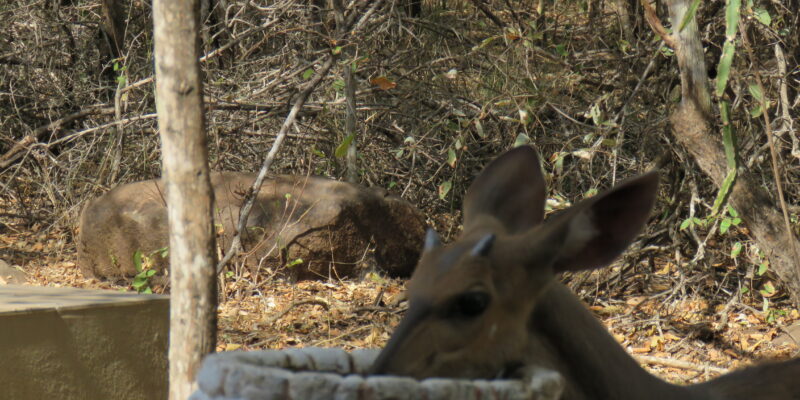
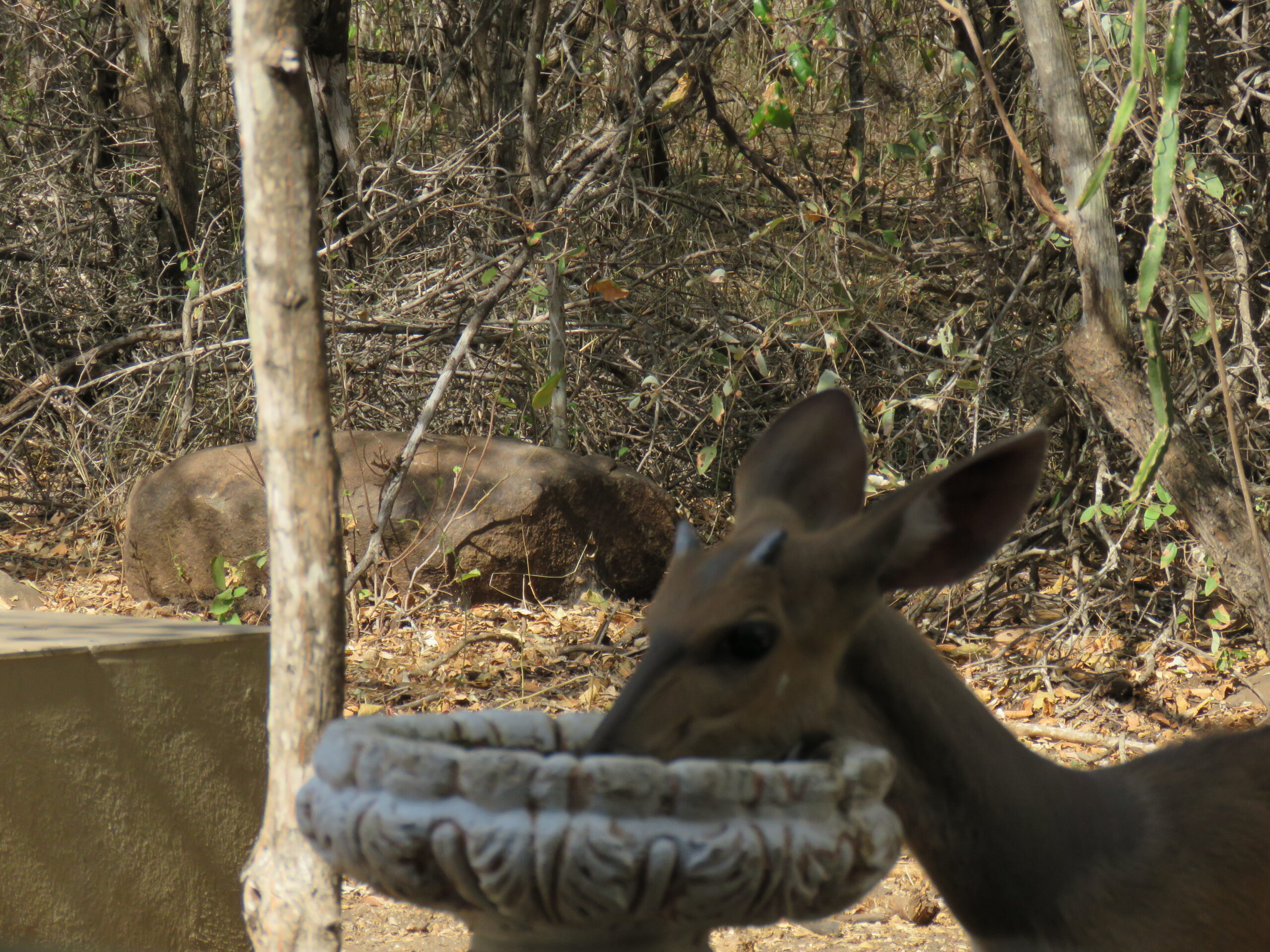
Spikey, young male bushbuck drinking from the birdbath.

Who’s in the garden this morning?

  • 9 warthogs
  • 7 bushbucks
  • 18 kudus
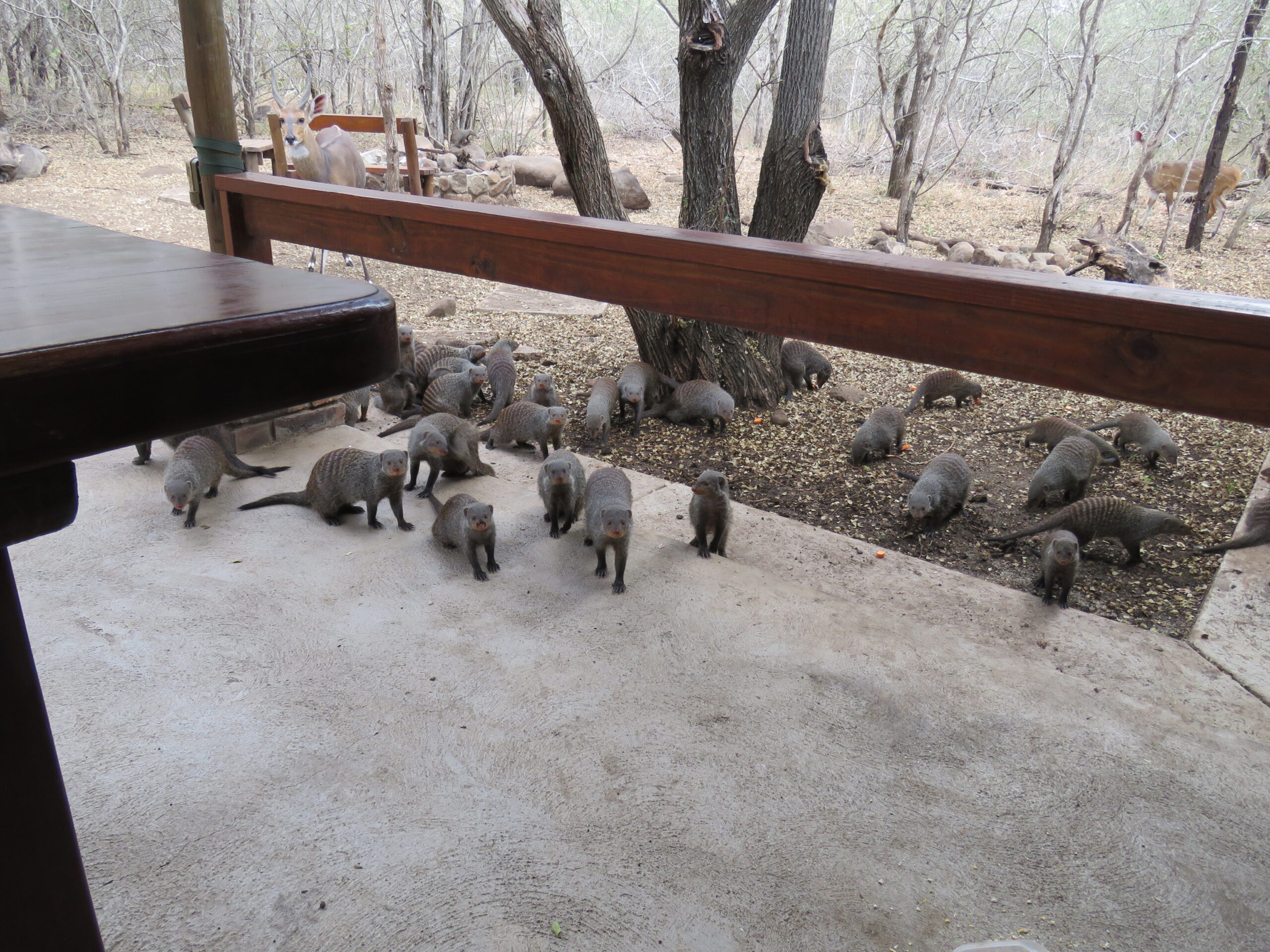
  • 54 mongoose
  • 20 helmeted guinea-fowls
  • Frank and The Misses

When Linda and Ken texted me last night to tell me they’d been notified by the South Africa website where we all registered for the Covid vaccine, I was hopeful. They live in Johannesburg, so they’d probably get theirs sooner than us, living in a remote area. Today, Linda sent me a text that they’ve had their first of two vaccines.
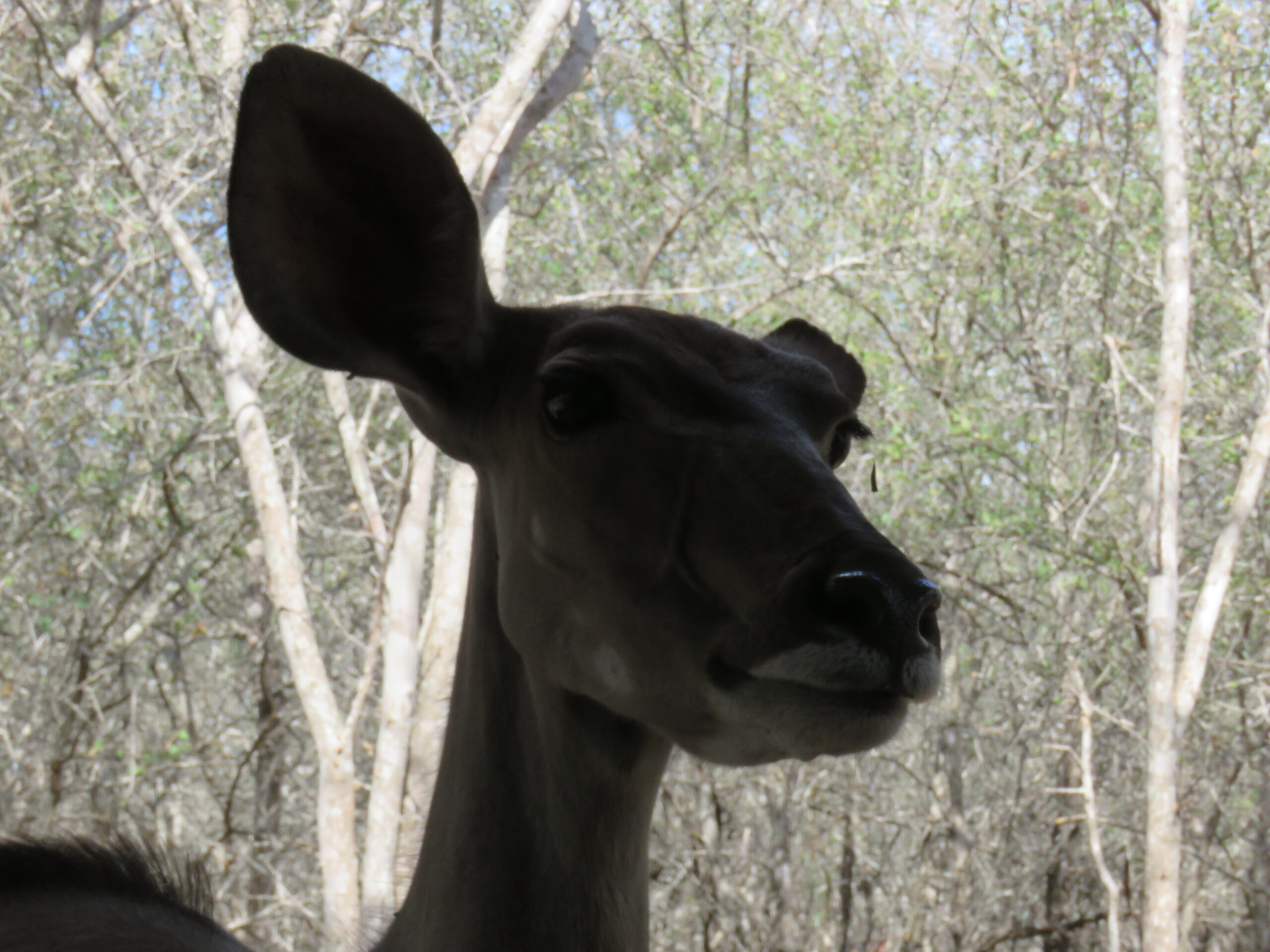
Bossy never misses an opportunity to let us know she’s in the garden. She prances right up onto the veranda, staring into our eyes.

With only 36 days remaining until we have to depart the country for a visa stamp, having the vaccine out of the way would be a huge relief, even if we only got the first of the two jabs, receiving the second jab after we return. If we cannot go to Kenya due to new lockdown measures, we’ll head to the US for a few weeks, see the family and get the second dose there.

It’s not easy having everything up in the air for so long for all of us. Both Tom and I agree that we don’t care for the expression “the new normal,” which has been grossly overused since the onset of the pandemic over 15 months ago. But, will life ever return to “normal?”
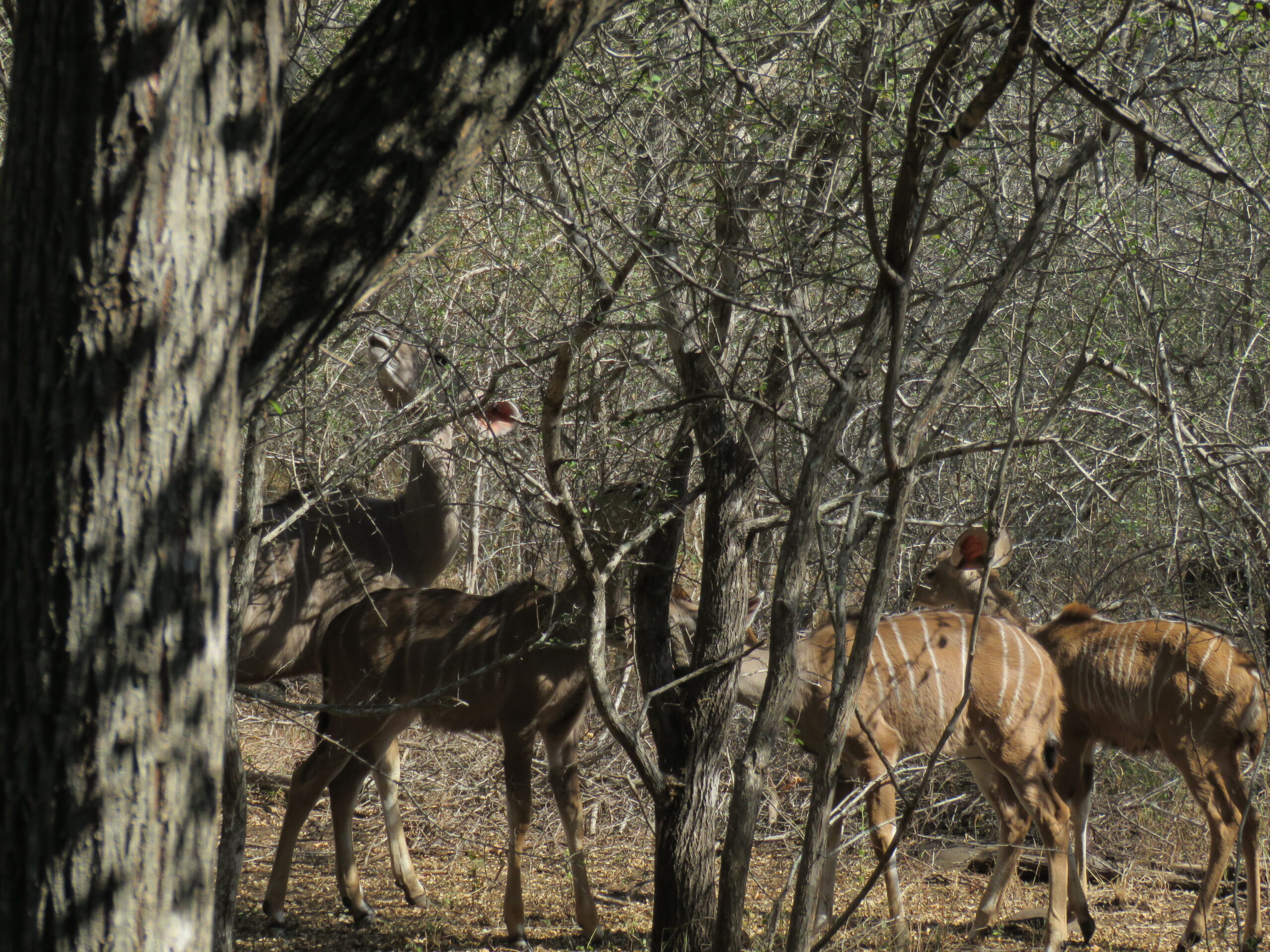
Kudus in the garden.

What is “normal” after all? Simply, we can say it was freedom of movement; lack of requirements to wear face masks; lack of a necessity of social distancing; shops and restaurants open during “expected” operational hours; public and private gatherings with no limitations on numbers of participants, other than space considerations; and, for us, most importantly, the ability to travel to most countries in the world without outrageous requirements, Covid-19 PRC tests, Covid-19 vaccines and additional documents to complete.

This pandemic has cost a fortune for most people due to loss of jobs/income; loss of businesses; loss of entrepreneurial opportunities in many fields of endeavor, and in many cases; loss of a sense of self-worth and hopefulness for the future.
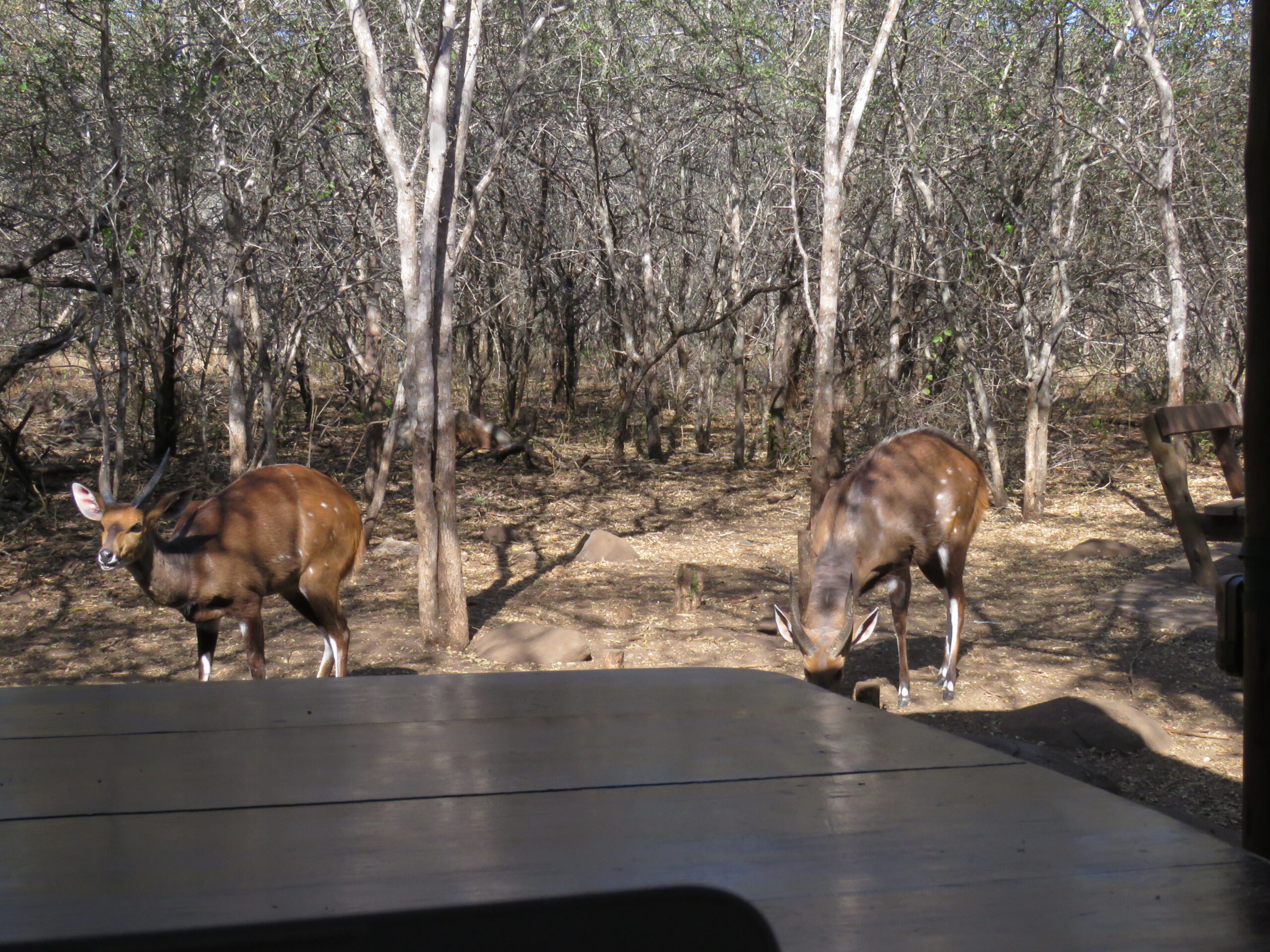
Bushbucks in the garden on a sunny afternoon.

This is not to say that “normal” meant “perfect” in the past, before the pandemic. It wasn’t then, and it won’t be now going forward. It’s the nature of life itself. There will always be wars, political unrest, opposing political and social views, illness, disasters, and more. The list goes on and on. Was all of that “normal?” In its day and in days to come, that may be considered normal.

But, we’re not here to espouse the virtues or the lack thereof of the state of the world, the economy, or social unrest. Instead, our goal here is to share our thoughts, dreams, and ideas about world travel, particularly as retired seniors, to see as much of the world as possible, in whatever time God or a higher power has given us to continue life on this planet.
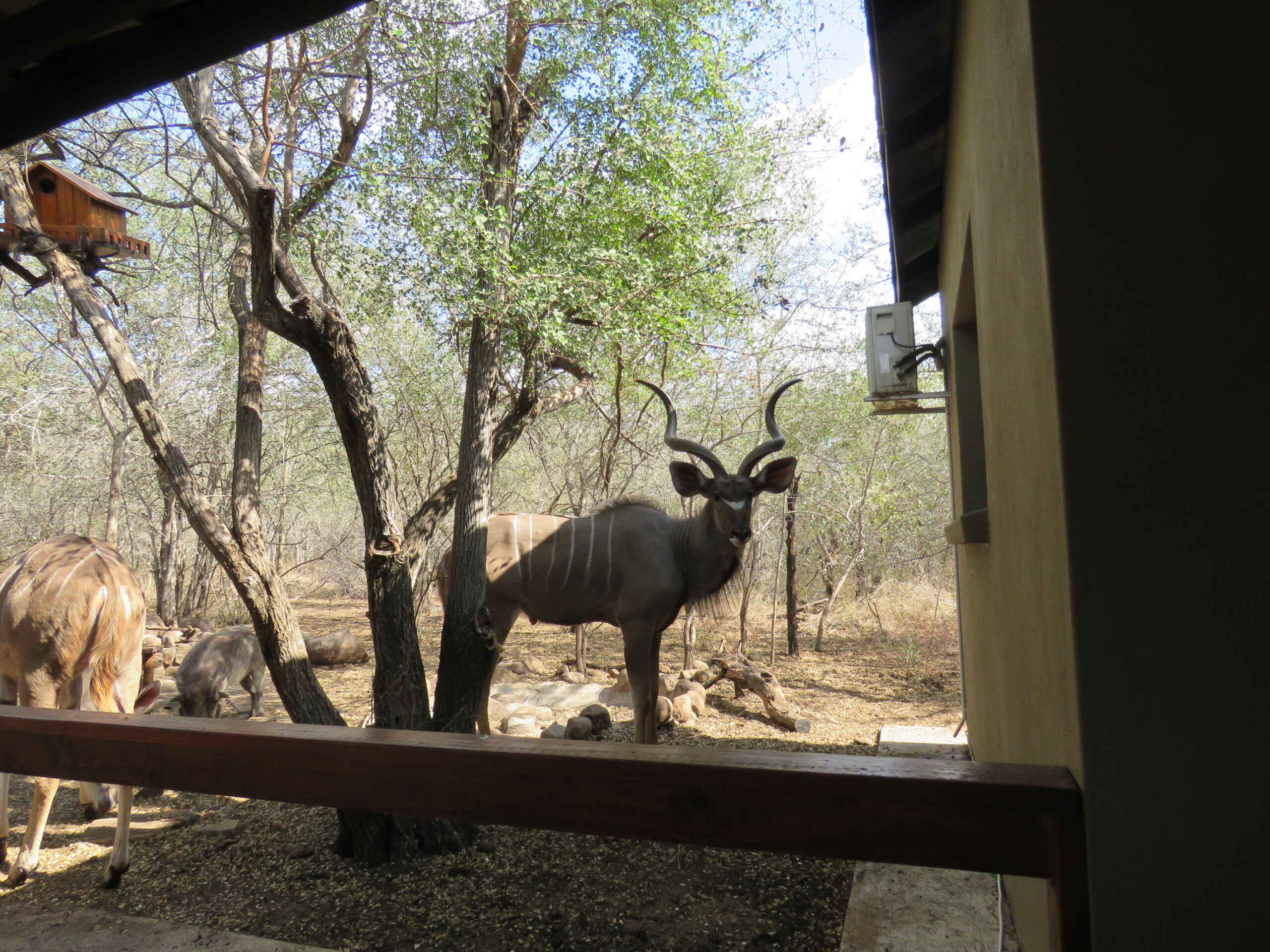
Big Daddy stopped by to check out the female visitors.

And, what is “normal” now, as opposed to the phrase “new normal.?” Many areas of life are the same as they’ve always been. We eat, drink, sleep, entertain ourselves in myriad ways, engage socially and psychologically with others.

We spend time on our phones and other digital devices in a constant search for answers to whatever is our flavor of the month, whether work-related, socially related, or on a mission to expand our interests and knowledge. We all share a commonality in many of these areas. That hasn’t changed. That may never change in this generation or this life as we know it. That sense of normalcy will most likely remain with us, as far as any one of us can see, well into the future.

Although the pandemic has changed so many lives, sadly lost so many lives, and altered the day-to-day of many lives throughout the world, in reality, it’s not a “new normal.” Instead, it’s a consequential and profound “glitch” in the cycle of life on the planet. Believe it or not, in time, I feel confident this will go away, sadly leaving in its wake, losing loved ones, and a loss of financial security in its destructive path.

This is a Thick Neck. He’s an older bushbuck with long horns and an oversized girth to his neck. He stops by daily.

But, we humans are resilient. After all, we’ve been here for the millennium, with varying scientific opinions as to whether it’s been millions of years or considerably less. Countless species have become extinct, yet we remain largely due to the size of our brains and perhaps by divine intervention. We may never fully know the answer with certainty.

In any case, normal will be what we make it. As that innate resiliency prevails in most of our lives and we’ll continue to make the best of it, in whatever form that takes.

May we all tap into our resiliency and form the lives we choose for the future…

Photo from one year ago today, May 25, 2020:
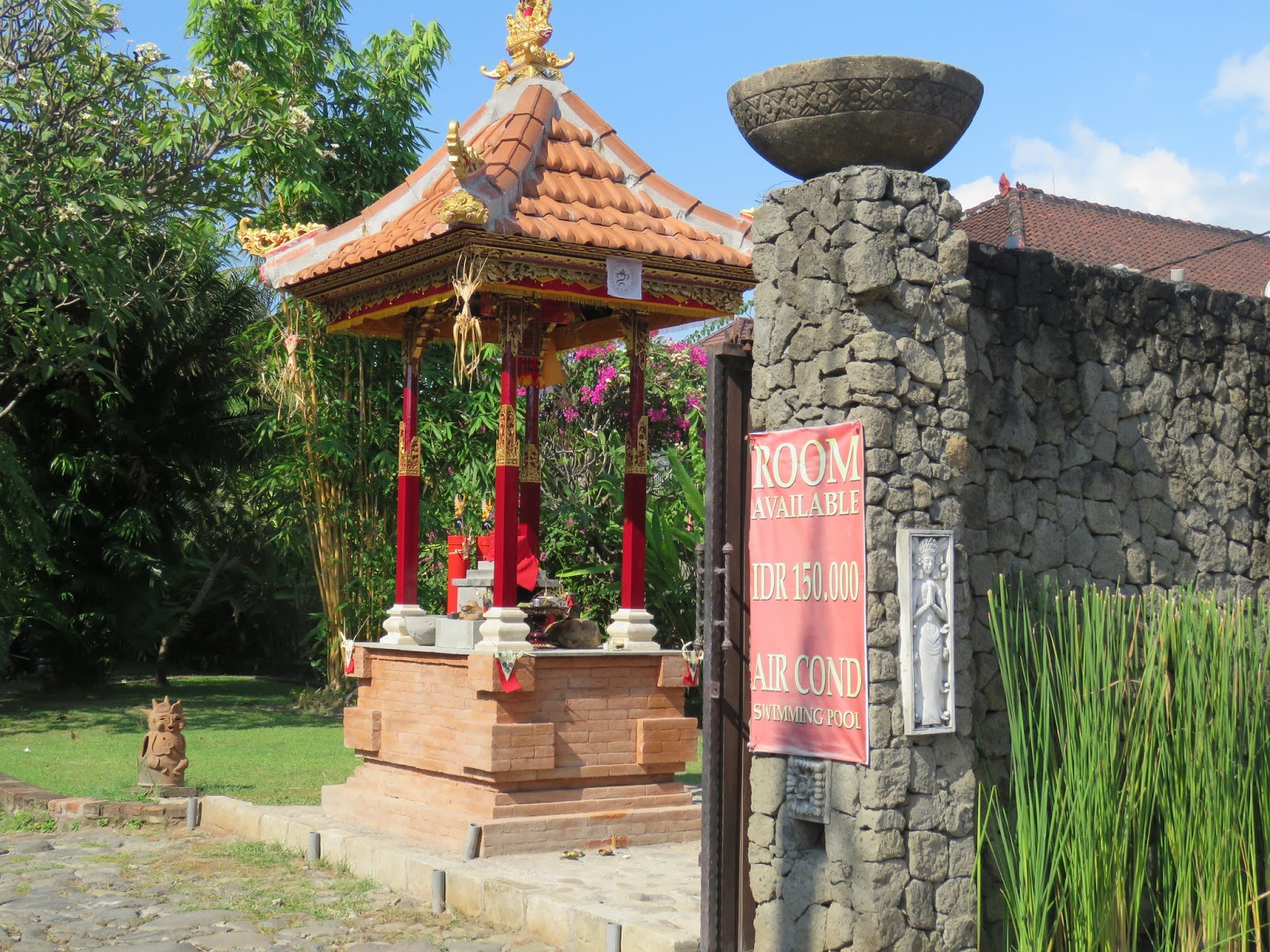
A room was offered for rent at this property in Bali for INR 834, US $10.97 per night! For more photos, please click here.

Out of sorts…Out of sight…Out of mind…Out of time…

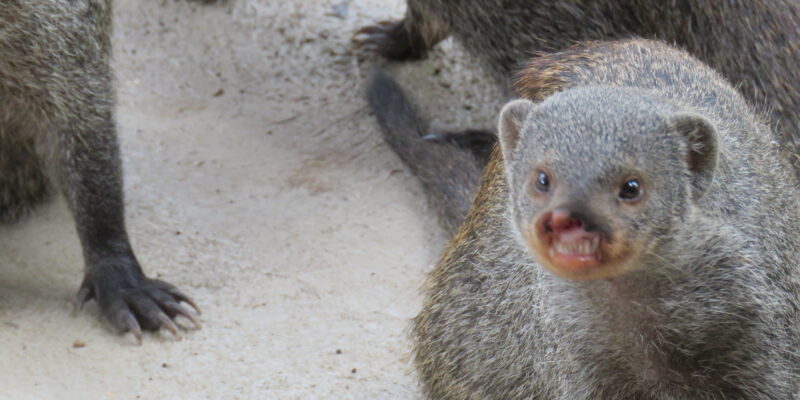
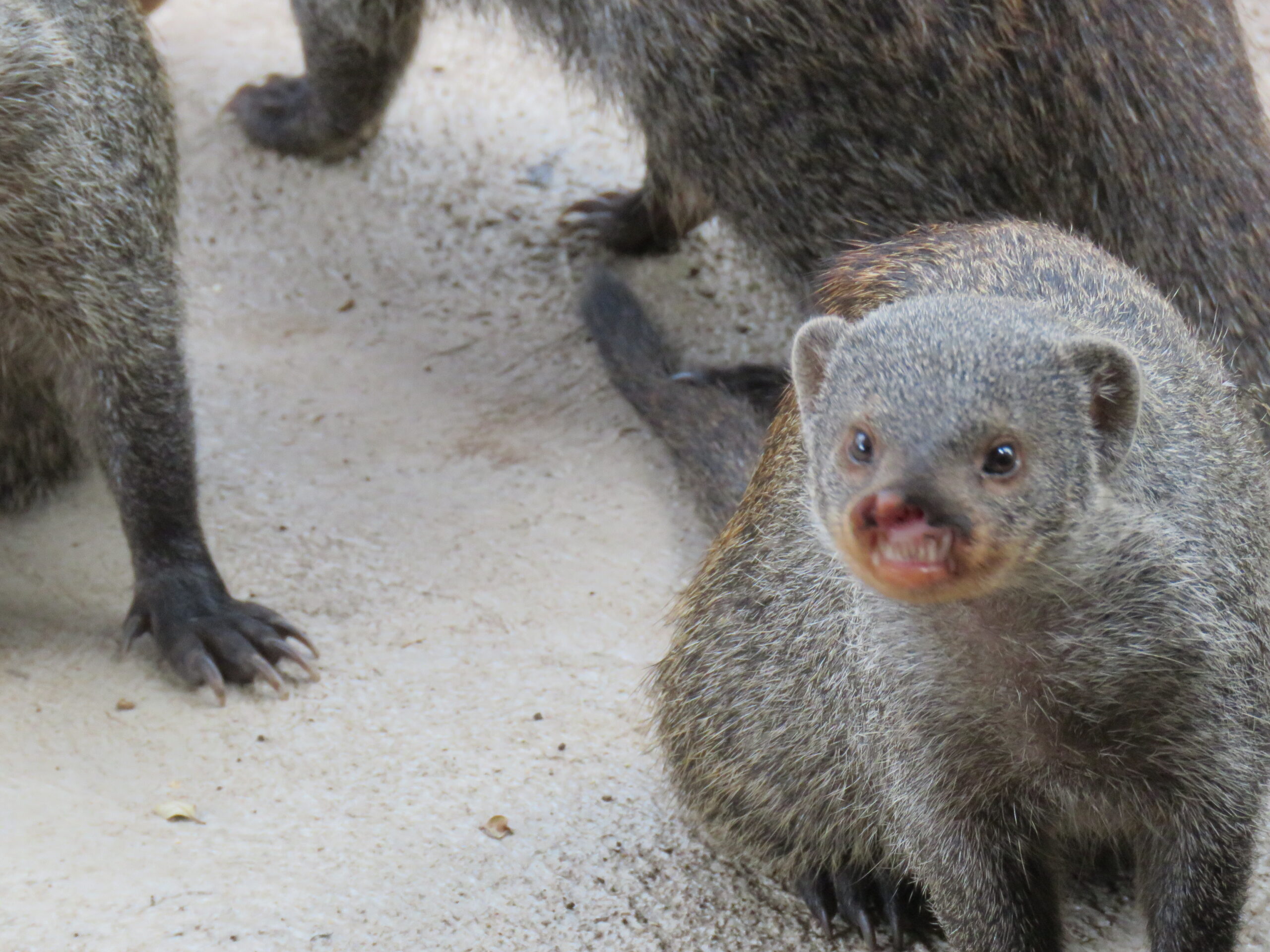
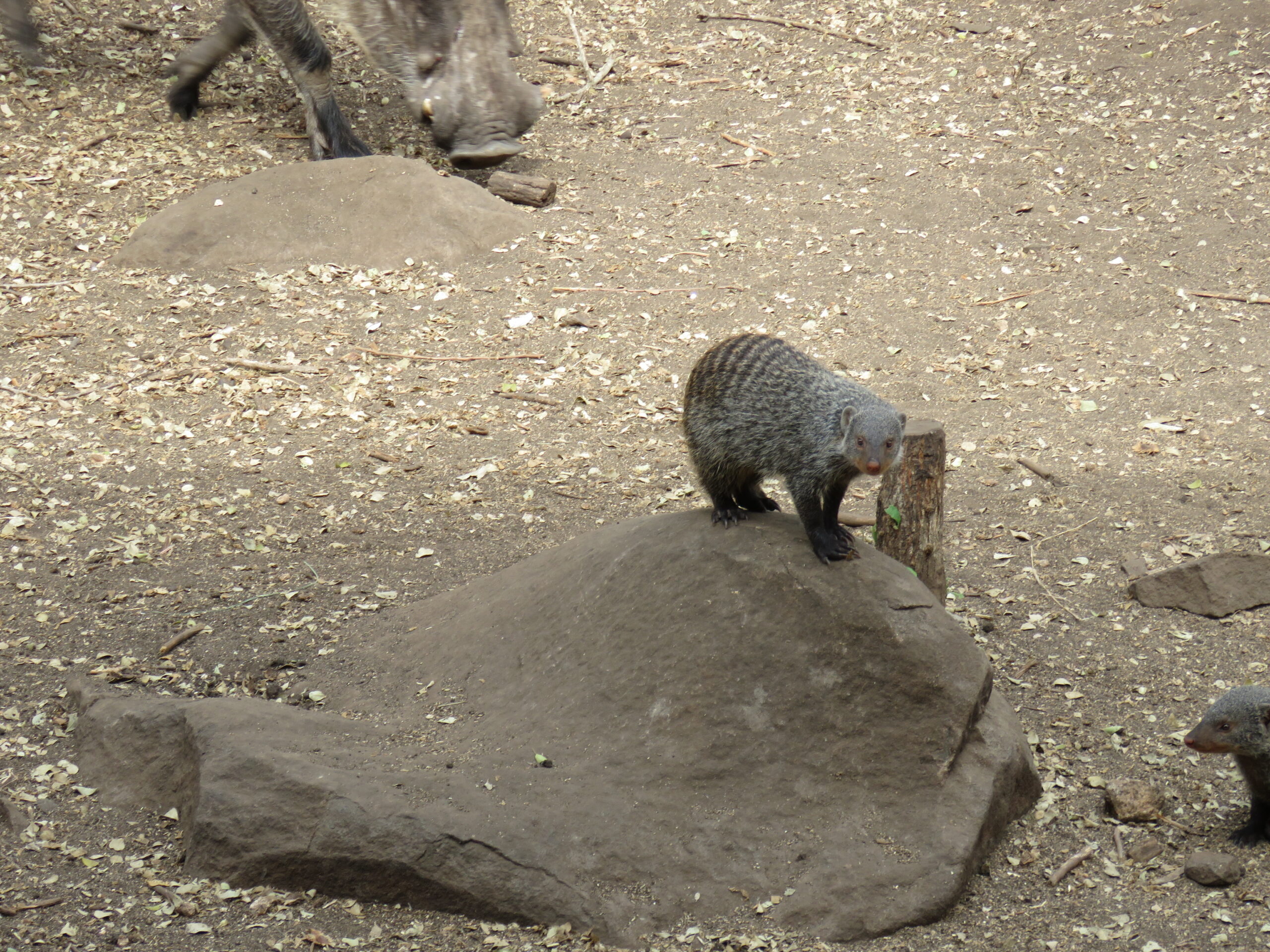
This mongoose must have been injured and lost hers/his lips. Possibly, due to inbreeding it could have been a birth defect. But she/he was as rambunctious as the others for some paloney and eggs.

Who’s in the garden this morning?

  • 6 warthogs
  • 6 bushbucks
  • 4 kudus
  • 38 mongoose
  • 33 helmeted guinea-fowls
  • Frank and The Misses
  • 2 hornbills

Last night was one of the worst night’s sleep I’ve had in a long time. Ironically, in yesterday’s post I’d posted that a bad night was not worthy of mention. Today, feeling like a wreck from a fitful night, I couldn’t help but bring it up. Surely, it will impact my entire day.

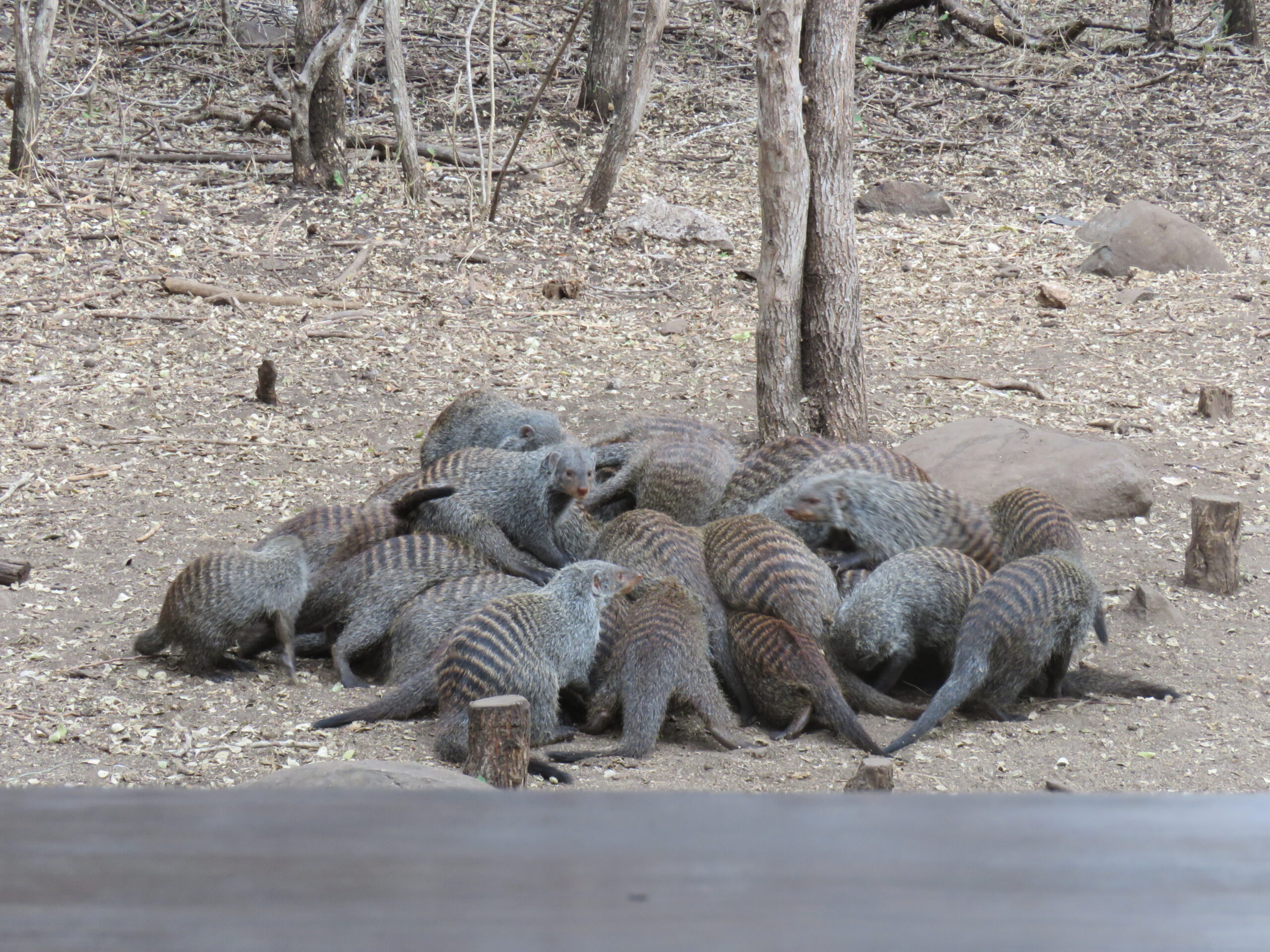
A pile of mongoose going after a pan of raw scrambled eggs.

Fortunately, all of the laundry is done and most of what we’ll eat for dinner is prepared. I need to respond to a zillion email messages and take a pleasantly anticipated WhatsApp call from one of our loyal readers, Otherwise, I can be as lazy as necessary to get me through the day.

My FitBit says I slept 6 hours and 15 minutes, but I did not. It counted the time I lay there, quiet as a mouse trying to get myself to drift off. I listened to soothing music on my phone, using earbuds, in a desperate attempt to get to sleep and miracle of all miracles, it did work, about 10 times for short bursts of sleep. The FitBit shows I awoke 12 times from midnight on. As a result, I feel “out of sorts” today.

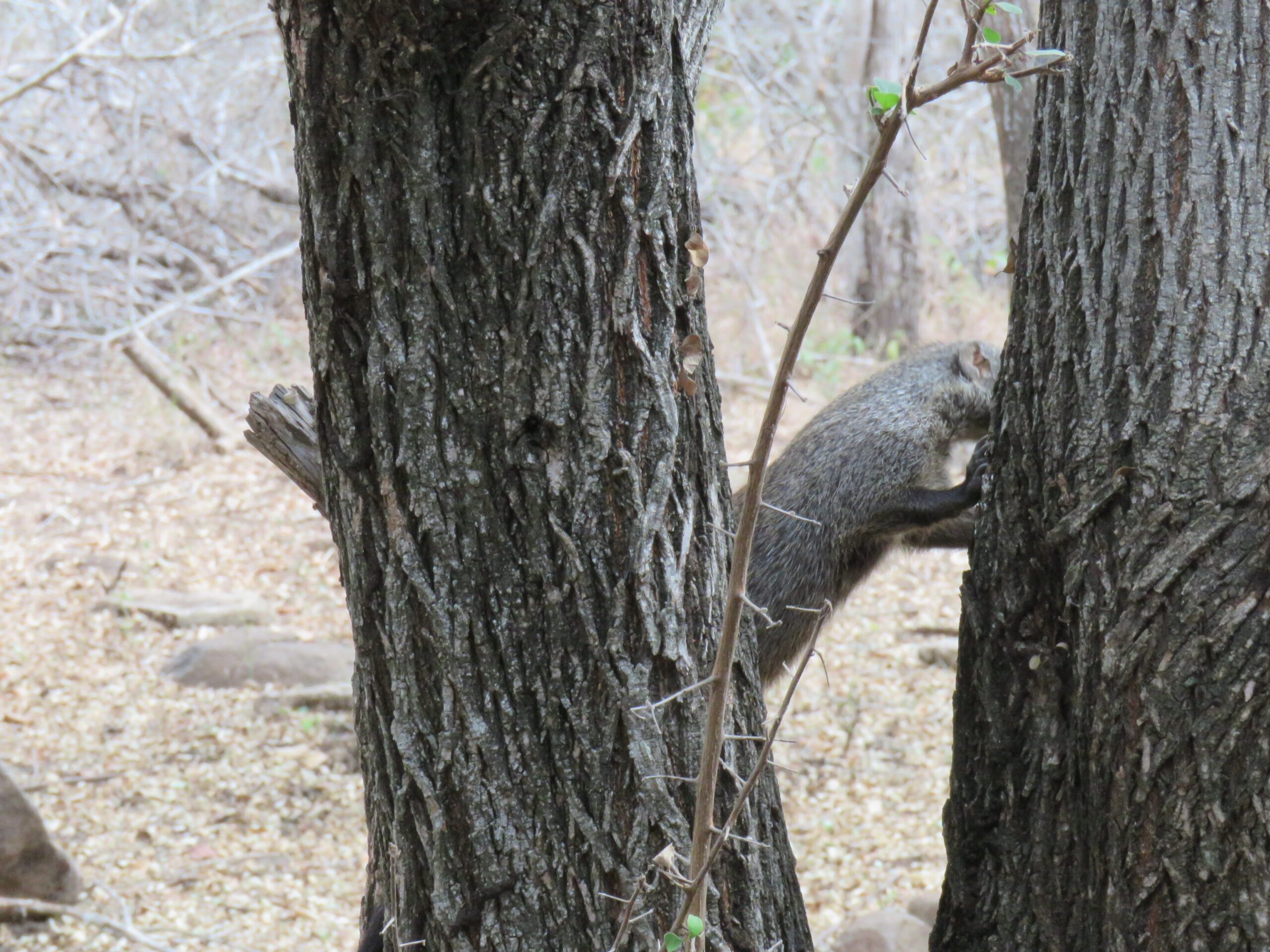
It’s rare to find a mongoose climbing a tree.

As for “out of sight,” I kept my phone on the nightstand and didn’t do my usual game playing during the night, thinking that avoiding the screen may help me get back to sleep. By 3:00 am, I was “out of my mind” doing the worst thing I could do…worry about not sleeping. It’s pointless to do this. Nothing good comes of it.

As for “out of time.” I awoke for the last time at 6:15 am and no matter how relaxed I pressed myself to be, it was hopeless, I’d truly run “out of time” and decided to get up and begin my day. Every usual morning routine took everything I had, but here I am now, showered, dressed and put together for yet another day.

The mongoose hover around us waiting for treats. We only give them foods suitable for their omnivore diet.

I even went as far as folding and putting away all of the dry laundry from the rack, fixed a broken fingernail and cut up some carrots for today’s visitors. Once I’ve uploaded today’s post, I have a few “business matters” to handle and of course, do no less than corrections on 10 posts, a schedule I’ve held myself to diligently over this past month. Yesterday, I passed the halfway mark.

We had a great day and evening, nothing that would precipitate a poor night’s sleep. The day was pleasant and entertaining with more visitors than we could have imagined. At 4:00 pm we headed over to Rita and Gerhard’s house on Hornbill, the same house we’d rented in 2013/2014.

Sitting on a rock, staring at us with those little beady eyes.

I only drank two glasses of low alcohol red wine at their house and when we returned a few hours later, I drank only caffeine free iced tea for the remainder of the evening, as usual. Once back home, dinner for me consisted of a few fried eggs and grilled chicken breasts. After dinner, still feeling a little hungry, I had a chunk of Emmenthal cheese…that’s it. No sleep disturbing foods or sense of fullness, and above all, no life changing thoughts on my mind.

Never once did I think about this upcoming, June 30th, when we need new visa stamps. We’ve resigned ourselves to that reality. We’re either going to Kenya for a few days or the US for a few weeks. That’s it. No other options are available with Covid-19 restrictions everywhere. Why worry about that?

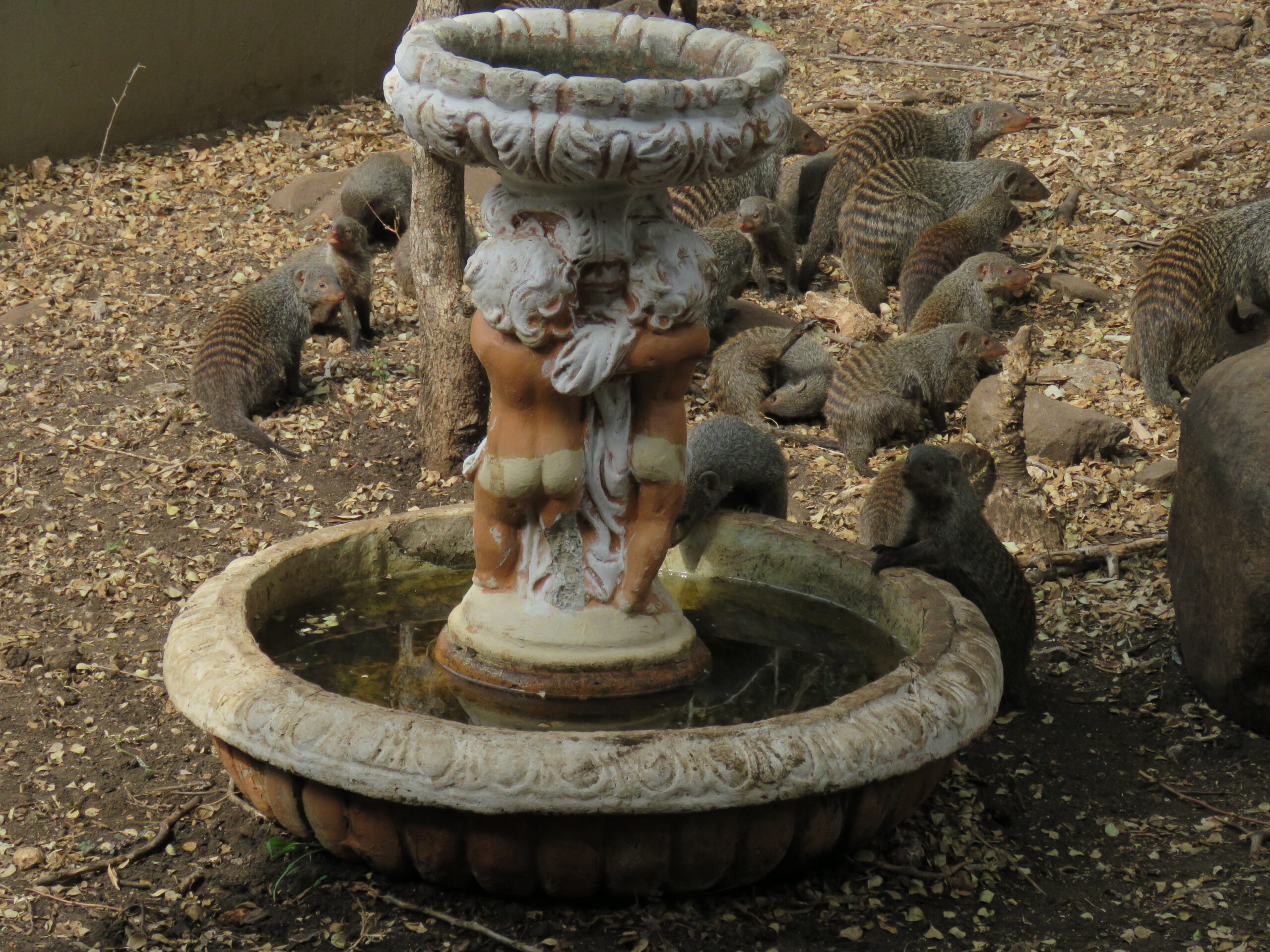
They often stop for a drink from the birdbath where we keep fresh water.

It will be good when today is over and I can hopefully get a good night’s sleep. I have no doubt many of our readers have experienced such a poor night’s sleep and struggled the next day, like I am doing today. For me, the likelihood of a nap is slim when I am not a napper.  Also, it would probably be best to stay awake and try to recover tonight.

It’s another beautiful and cool day. Although it’s likely we’ll have a few hot days in the months to come, this cooler weather, as we roll into winter, is blissful. There are less insects, less mozzies and typical for cool periods, less snakes mulling around our garden. Of course, with the almost daily visits of dozens of mongoose, who kill and eat snakes, its a mini insurance policy against the uninvited reptiles.

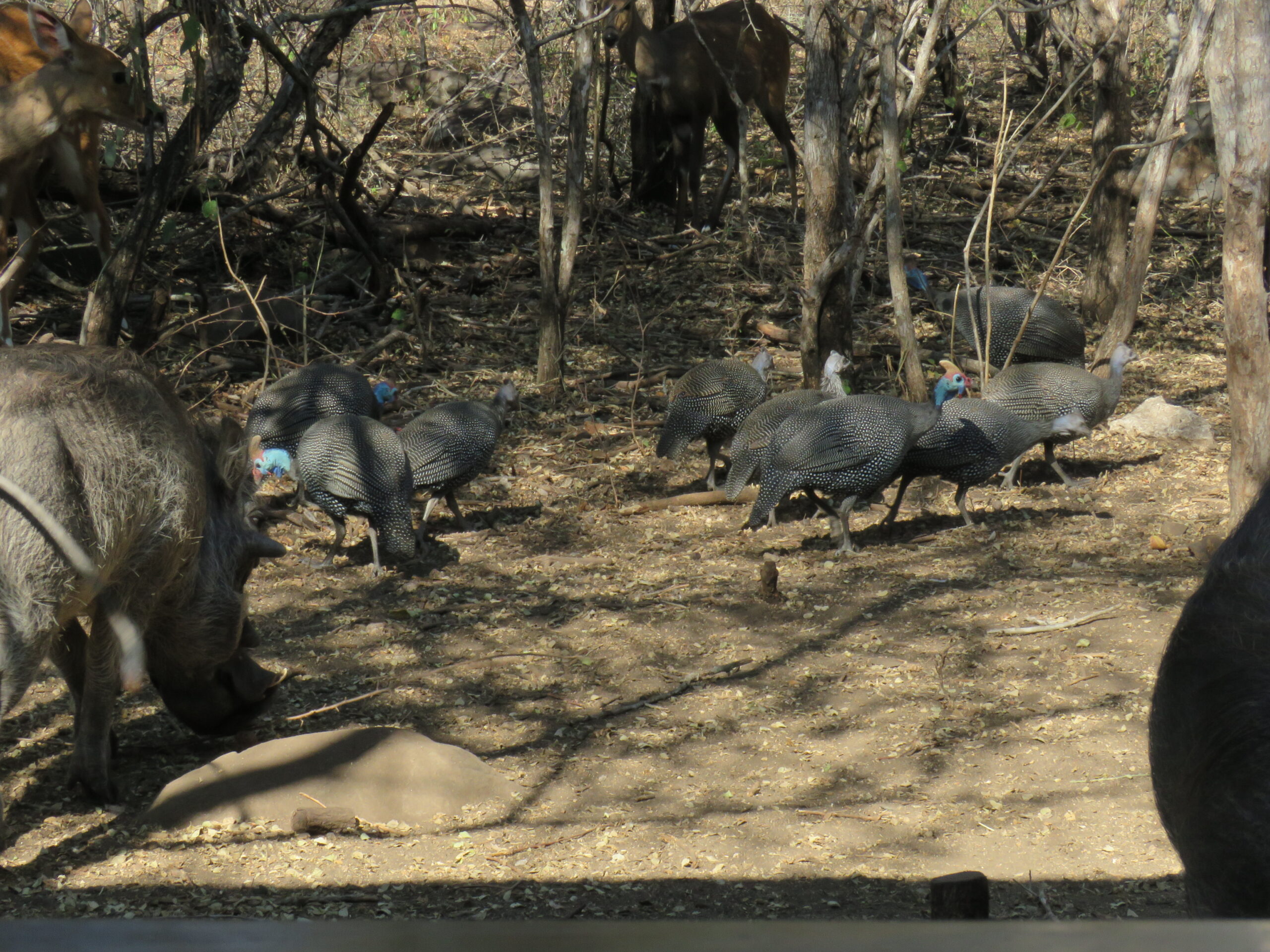
Helmeted guinea-fowls and warthogs in the garden.

At the moment, Tiny is drinking water from the birdbath, Chewy, our jaw-cracking bushbuck is munching pellets, his jaw, making noise with each bite, and two hornbills are banging on the kitchen window, their usual preoccupation. Fred and Ethyl are permanent residents here and hang around day and night. They are the first pigs we see each morning and the last to hunker down at night.

We’ll make the best of the day, regardless of how I am feeling, hoping tomorrow I’ll be back to my usual self.

Be well.

Photo from one year ago today, May 24, 2020:

These two cape buffaloes, close to the dirt road, with their horns stuck together made it easy for us to get these photos. For more photos, please click here.

Another lovely morning in the bush…No, life isn’t perfect…

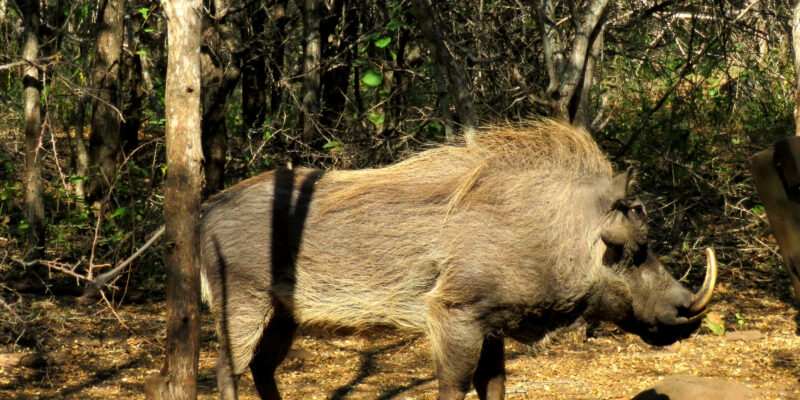
Tiny is a magnificent example of the warthog species; huge body, massive tusks and coarse stiff hair that stands when agitated.

Who’s in the garden this morning?

  • 12 warthogs
  • 2 wildebeest
  • 13 bushbucks
  • 11 kudus including 1 Big Daddy
  • Frank and The Misses (twice)
  • 1 duiker

It would be easy for a new reader to begin reading our posts since we arrived in South Africa and make an assumption that we are the kind of people that always say, “Everything is fantastic,” implying that it is that way all the time. As I recall, I can easily think of people who always say that everything is perfect, when in fact that may not be the case.

Of course, most will not answer, “How are you?” with a negative response, revealing how much they “really” feel. At times, it can appear socially inappropriate. When close friends are alone together over a coffee, tea or adult beverage, they may be more inclined to reveal any negative aspects of their lives at the moment or in the past.

This is OT, One Tusk, who visits on occasion,

On a daily basis, we find that most people say that they are “good”, in an attempt to stay and to appear optimistic and positive, whatever their life circumstances. Let us admit that life is sometimes difficult, even when there is nothing particularly difficult at the moment. And, when there are challenges, we often try to keep them to ourselves, to avoid appearing negative, or to be whining.

In our lives of world travel, almost nine years later, with so much revealed on a daily basis, it’s difficult to hide how we “really” feel or how we’re doing at any given time. In a perfect world, I would keep my mouth closed (fingers on the keypad) and always be positive. But, I truly believe, if we operated on this basis, few readers would have stayed with us for these many years.

The face of a warthog, in this case “Little”, is a conglomeration of slightly less attractive features. Perhaps they see us as having unattractive characteristics!

Not that I like the show, but what made the TV series, “The Kardashians” so popular was the strife, the fights, the fears and the insecurities of its family members and friends. The same thing goes for all the “Real Housewives of….,” another TV series that we don’t watch, with it’s altercations, angst, jealousies and the general disharmony of the group.

Well, in our case, although we aren’t as popular as either of those reality shows, we, too, go through periods when we experience negative experiences, thoughts, fears and disappointments. We share them here. Some have asked if we get along as well as we present online and, we do. What you see of us, as a couple, is who we are.

Big Daddy stops by more to see the females than he does for pellets. Check out his muscles!

We have no drama, we seldom snip at one another, and on the few occasions when Tom gets grumpy for a few minutes, I totally ignore him. Only minutes later, he’s his usual cheerful self, as if nothing happened at all. Since I don’t like confrontation, years ago, I chose not to do “grumpy,” resulting in the fact that I don’t fight, argue and carry on when things don’t go my way. There’s usually a solution to most frustrating situations.

But, as mentioned, our lives aren’t perfect. At our age, we have to be realistic about aches and pains, lack of sleep, and  occasional gastrointestinal distress. Based on our lifestyle, we don’t run to the doctor at the first sign of discomfort, pain or general malaise. Of course, if an issue lingers or feels life-threatening, we’d immediately address it seeking appropriate medical care.

One of our new favorite bushbucks, aptly named Spikey, for his tiny horns, which surely will grow as he matures.

We often find, we can figure out why we’re having a problem and how we can remedy it on our own. No, we don’t bother to mention every ache, pain or sleepless night we experience. But, on those days, feeling out-of-sorts, we may feel life is far from perfect.

Then, there are those days, which are in the majority, when “everything is right with the world.” Whether we’re in Marloth Park, or any of the amazing places we’ve visited in the world, those days are treasured and remembered.

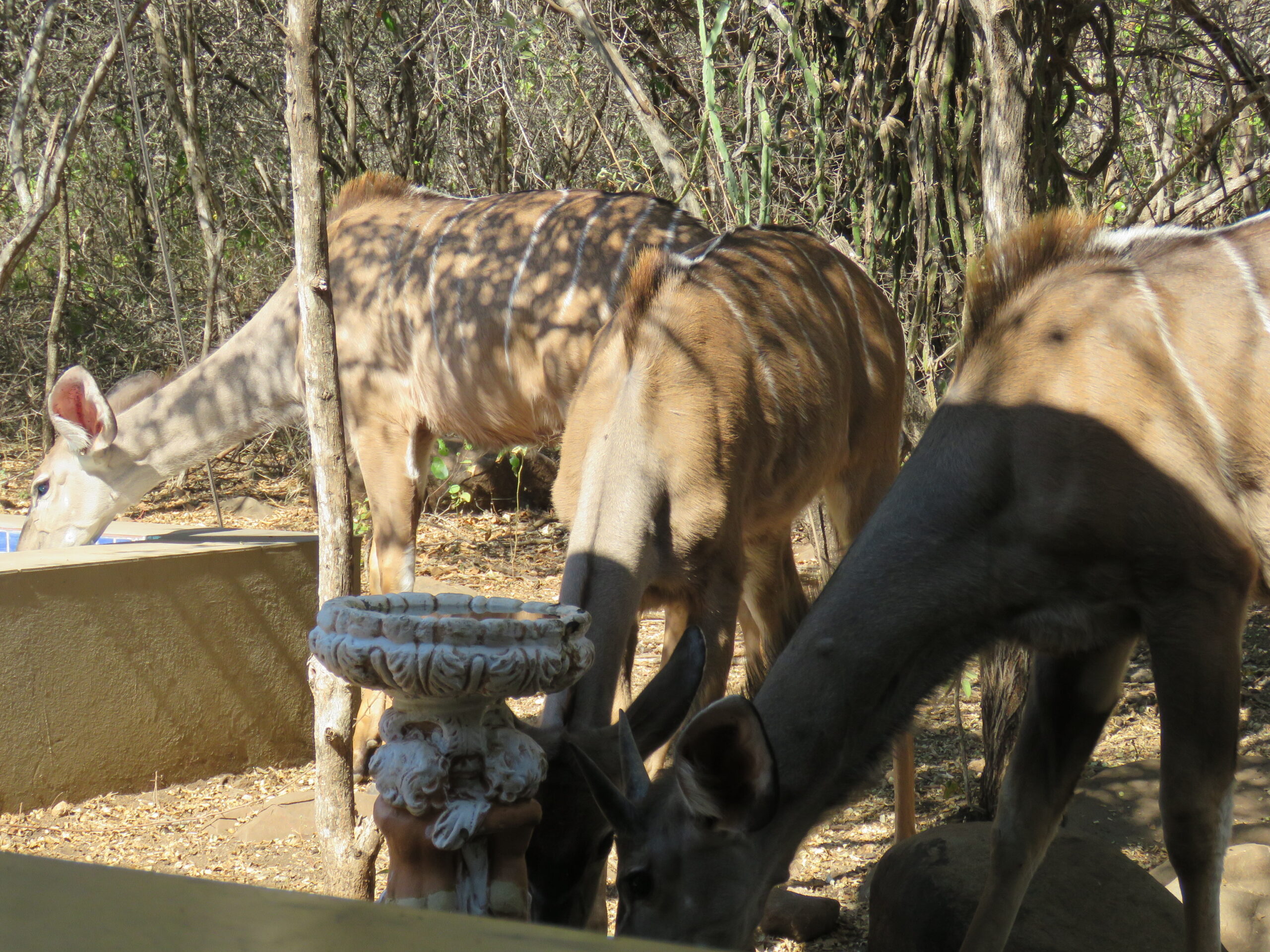
Kudus enjoy drinking water from both the birdbath and the pool.

May we all have plenty of those memorable days when “everything is right with the world.”

Photo from one year ago today, May 23, 2020:

The nutrient-rich hills of Madeira were being prepared for summer produce. For more photos, please click here..

Part 2…A memorable evening at the Crocodile River with friends….

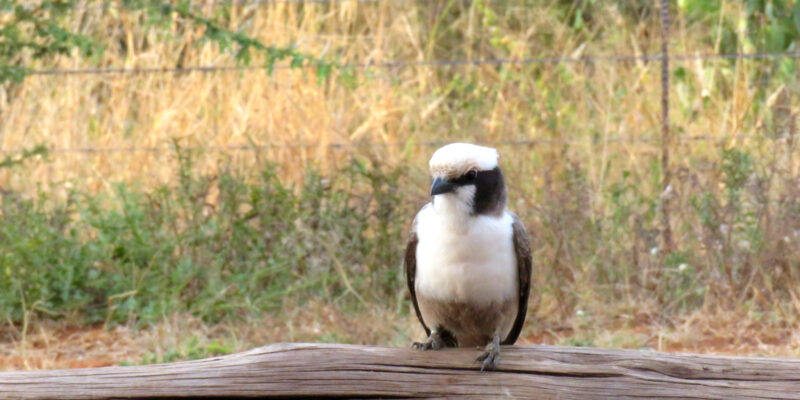
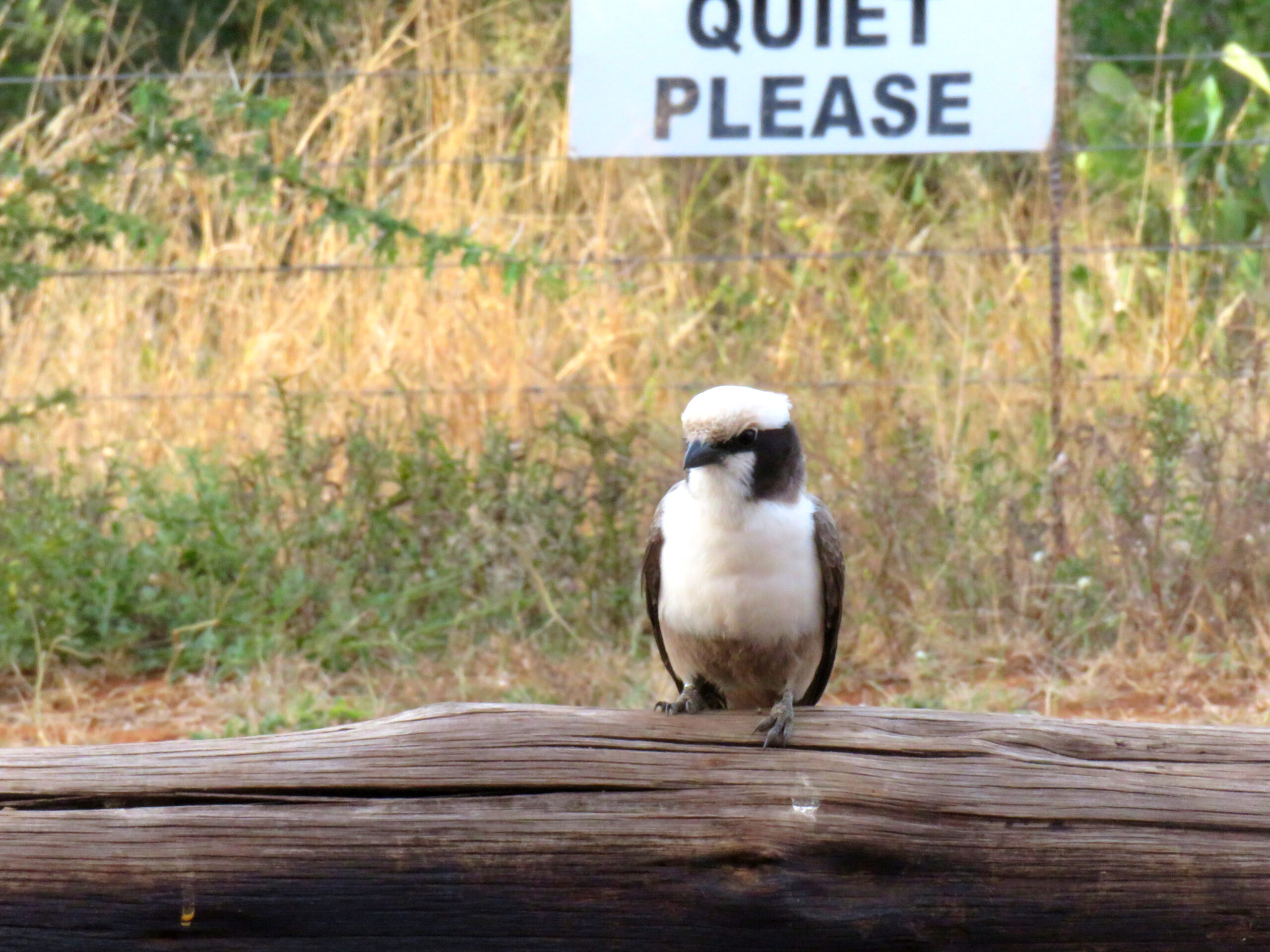
This is a red-backed shrike. We saw several of these birds while at the Crocodile River.

Who’s in the garden this morning?

  • 1 wildebeest
  • 7 warthogs
  • 9 bushbucks
  • 42 helmeted guinea-fowls
  • Frank and The Misses
  • 74 mongoose (two bands)

It’s blissfully cool today. Tom is wearing a heavy zip hoodie, and I am wearing a long-sleeved tee-shirt. As always, we’re on the veranda savoring every moment in the bush. First thing this morning, I cut up apples, carrots, cabbage for the animals, small separate pieces for the bushbucks and duikers, and larger chunks for the wildebeests, kudus, and warthogs.

The shrike on a post on the fence separating Marloth Park from Kruger National Park.

When wildebeest, Broken Horn, stopped by, we tossed pellets and vegetables to him along with a few larger pieces of carrots. He ate everything but oddly left a big part of a carrot. We were concerned one of the lingering bushbucks would try to eat this oversized chunk of carrot.

Five red-backed shrikes next to our rental car at Two Trees location, which overlooks the Crocodile River.

Moments later, a warthog appeared and ate the majority of the carrots, leaving a small piece that fell out of his mouth that he didn’t happen to notice. Within minutes, a bushbuck appeared and managed to eat the small piece. Nature is amazing. We’ll never toss out vegetables for the larger animals unless we’re watching what’s going on to ensure there is no risk for the smaller animals choking on larger pieces.

The river is beautiful at sunset.

It takes a lot of time and effort to cut up carrots into tiny pieces. Regardless, I will cut up a small batch for the bushbucks and a larger batch for the others each morning. Timing is essential, especially when the pigs arrive when everything is wiped out in minutes. We wait and watch for them to leave, enabling us to feed the other animals.

Mom and baby giraffe stopped by the area where we’d set up our chairs.

It’s been a busy morning so far. Just now, as I write this, Frank and The Misses arrived for a late breakfast. I jumped up to fill their two little containers with seeds and the other with water. A second ago, we heard a lion’s roar from either Dezi or Fluffy, who live in Lionspruit, located at the far end of our garden.

When I went indoors to fill Frank’s water container, I noticed Broken Horn resting in the driveway only a few meters from the car. Warthog Lonely Boy is sleeping in the garden while two bushbucks wander through the dense bush, waiting for the warthog to leave so they can have more food. It’s a constant

Mom and baby were checked for their safety.

Now, again as I write this, the helmeted guinea-fowls are back, and so is the mongoose that only 30 minutes ago, we’d given them Tom’s bones from his rib dinner at Jabula last night and also enough pieces of paloney (yep, not a typo), sufficient for all of them to get a bite or two. Ten of them drank from the birdbath simultaneously. What a scene!

Speaking of Jabula Lodge and Restaurant, we certainly enjoyed ourselves last night at dinner with Rita and Gerhard. Tom and Gerhard had the ribs, and Rita and I had the delicious lamb shank, my new favorite at this fabulous restaurant. The Friday night ambiance was playful and fun, with music from Dawn and Leon’s excellent playlist.

Another lone giraffe stopped by to see what was going on. There were about 15 of us savoring the view.

After dinner, the local hardware store owner, Erica, a long-time resident of Marloth Park, joined us for a lively and animated chat about places to visit in South Africa. As much as we love hearing about resorts and camps we “should” visit in South Africa, with the immigration factor always hanging over our heads, we hesitate to leave the bush where we are already so happy and fulfilled.

We’ve already stayed in many stunning resorts throughout the world, and honestly, right now, we aren’t in the mood to stay anywhere that reminds us of a hotel unless we have to. Also, after a morning like this, it would be hard to break away for any reason other than getting our visas stamped.

Before darkness fell, this shrike made herself at home on the side mirror of our car.

Tonight, I am making taco salad for Tom. He’s lost all the weight he needed to lose and certainly enjoys a special, although still low carb meal on occasions, including the vegetables that go with it. Tonight, I’ll have chicken, a little ground beef without the taco seasonings and three eggs cooked in butter. No tortilla chips or hard-shelled taco bowls will be included.

Tonight will be a “movie night,” and we’ll hunker down after dinner on this very cool day and evening.

Be well.

Photo from one year ago today, May 22, 2020:

At every turn in Connemara, Ireland, the scenery was breathtaking. For more photos, please click here.

Part 1…A memorable evening at the Crocodile River with friends…Our new chairs…

It was quite a sight to see when this elephant sprayed water from his trunk.

Who’s in the garden this morning?

  • 1 wildebeest
  • 13 warthogs
  • 9 bushbucks
  • 7 kudus
  • 89 helmeted guinea-fowls
  • Frank and The Misses
  • 1 duiker
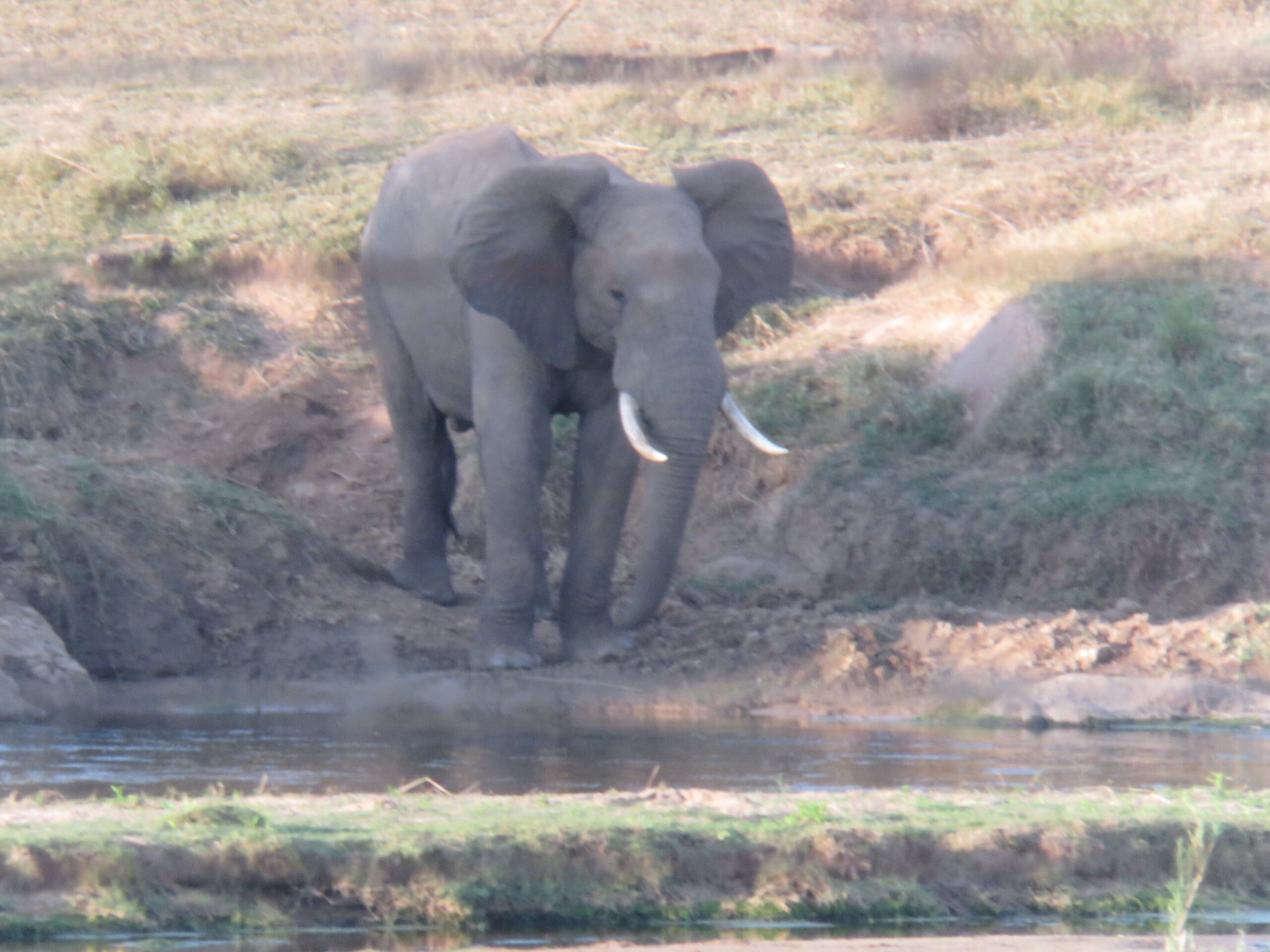
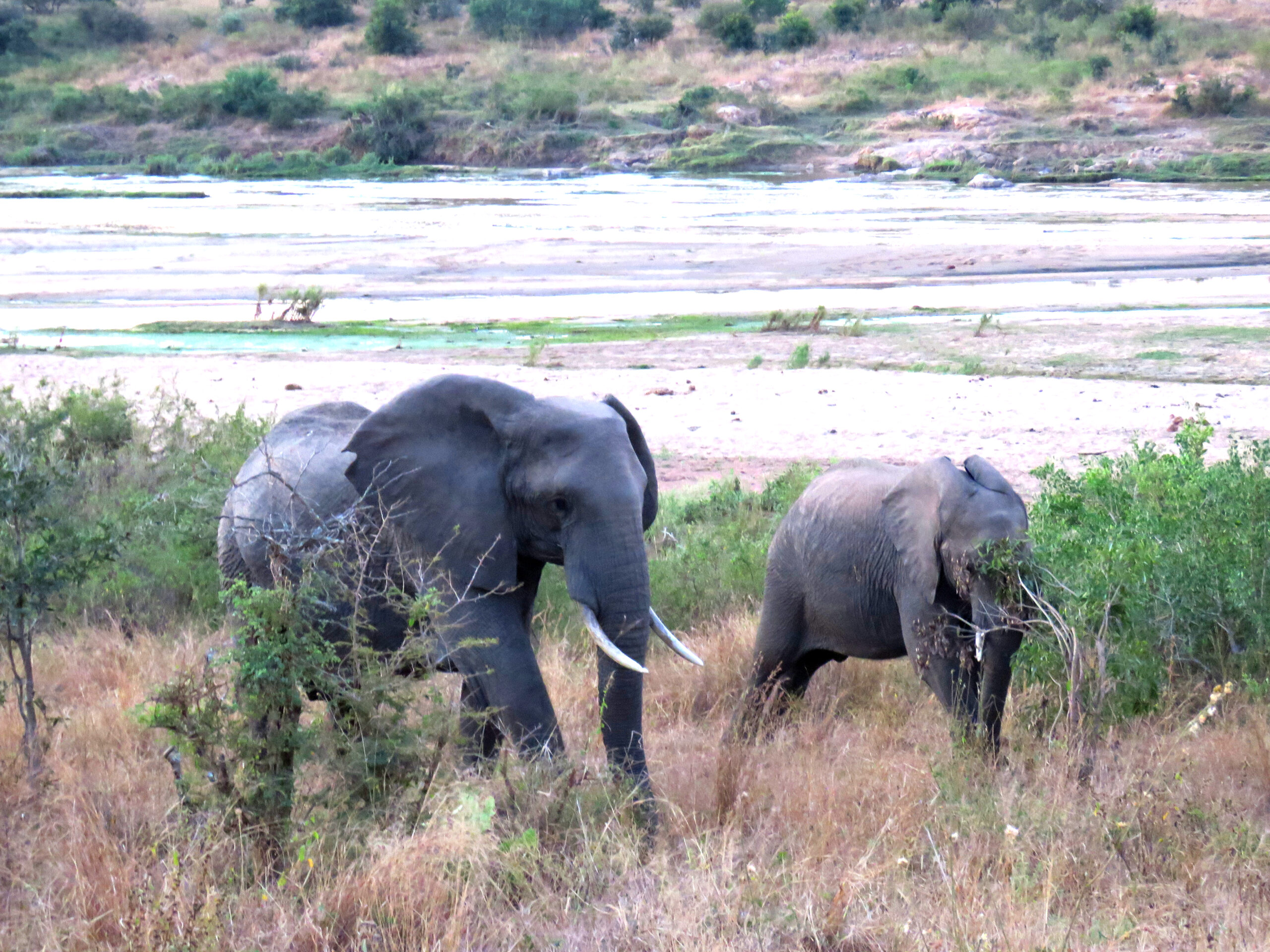
A pair were walking along the bank of the Crocodile River to their following grazing location. Some elephant species, such as the African elephant, will eat up to 300 kilograms of food every day to sustain themselves. In comparison, a human adult will consume around 1.5–2 kilograms of food per day. In the wild, elephants eat mostly grass, wild fruits, twigs, shrubs, bamboo, and bananas.

I forgot to take photos of the new camping/folding chairs that Rita and Gerhard picked up for all of us in Nelspruit. We arrived at the river where I’d intended to take the photos once the chairs were unwrapped and set up, but no more than minutes after we arrived, the wildlife photo ops were so many, I forgot.

We were all busy spotting wildlife and were distracted. Of course, we love the chairs they selected with human-sized chairs for the boys and smaller, more “girlie” chairs for Rita and me. Now, we have chairs we can take anywhere when at some social events, we’re asked to bring our own.

A playful pair across the river.

However, I just recalled that Rita had sent me photos in WhatApp from the store in Nelspruit so now I have added them here, as shown below. I love the little tray on my chair on which to put food and drinks. In our old lives, purchasing such chairs would not be noteworthy. But, in this life, given what little we buy, it was rather fun.

This style is perfect for Rita and me, comfortable, lightweight, and the small table to the right.
It is an ideal chair for men, more comprehensive, and suitable for longer legs.

Once we were all situated, we were squealing with delight over the elephants we spotted across the river. The distance, although quite far from us, allowed me to take the photos included here today. The most incredible thrill of all was when the elephants crossed the river (which we didn’t see) and started munching on vegetation only a short distance from us.

Is it a drink he wants or tossing sand?

As you peruse today’s photos, it’s easy to determine which of our photos were taken across the river and which were taken nearby on our side of the river. Not only did we see numerous elephants, but we also saw several other species, which we’ll share over the next few days.

The trunk is versatile in its ability to serve the elephant’s needs in many ways.

We were so busy checking out the wildlife that by the time darkness fell, we’d hardly had any time to chat. Tonight is Friday, and the four of us are heading to Jabula for dinner for our usual Friday night reservation. Gosh, it’s fun to have a more active social life and continue to enjoy some quiet evenings at our bush house.

Elephants are such majestic animals, mysterious and intelligent.

Yesterday, in Lebombo, we shopped at the market where many locals shop and prices are ultra-low on produce. We purchased two enormous heads of cabbage, two bags of red apples, and a giant bag of carrots. As the bush becomes less abundant for the wildlife, supplementing their diets with fresh fruit and veg is a nice treat.

This could be two siblings born in different years.

Ms. Bossy, our most frequent kudu visitor, was over the moon for all the fresh produce, so much so that she walked right up to me on the veranda while I was seated at the table and stared into my eyes pleading for more. She’s hard for me to resist as she repeatedly licked her lips.

Beautiful bright white, healthy-looking tusks with years of growing to come.

Then, Little showed up, anticipating pellets and looking pleasantly surprised to see the apples and carrots I tossed his way before ever throwing him a single pellet. Warthogs don’t eat cabbage, regardless of how hungry they may be. But, they love carrots and apples, which I cut up into bite-sized pieces.

After feeding the bigger game, including more kudus and wildebeest, I cut up a particular batch of even smaller bits for the bushbucks, who, with their little mouths, can’t handle more significant pieces. Once the pigs leave, hopefully soon, we’ll be able to feed the bushbucks, which the pigs always chase away.

This mom and baby were grazing together on our side of the river.

The hard part is that there is seldom a time there aren’t pigs in the garden, often napping, with one ear tuned to the sound of food hitting the ground. They’ll be on their feet in a matter of seconds when the possibility of food is presented. Tom always says, “That’s why they are called pigs.” I suppose he is right.

Once we returned home last night, we quickly prepared an easy dinner of cheese omelets and bacon when anything else we had on hand would have taken too long to prepare. Since we have no interest in food during sundowners, although we provide snacks for visiting guests, we were starved when we returned.

Later, we watched a few episodes of the Australian series Janet King and finally dozed off to sleep.

It was a good day and an enjoyable evening.

Be well.

Photo from one year ago today, May 21, 2020:

We love the reflection of clouds in the water as we drive through the countryside in any country. For more photos, please click here.

Beautiful morning in the bush…Off to the village…

An impala on a hill on a beautiful day.

Who’s in the garden this morning?

  • 4 wildebeest
  • 6 warthogs
  • 2 bushbuck
  • 6 kudus
  • 19 helmeted guinea-fowls
  • Frank and The Misses

This morning, we decided to start today’s post before shopping in Lebombo and Komatipoort. We decided to go to Lebombo, where we can buy carrots, cabbages, and apples for wildlife at great prices, compared to the Spar supermarket in Komati.

The bush becomes thinner every day. The vegetation the animals usually eat is sparse and brown, getting more before our eyes. It is no wonder we have so many animals in our garden because of our enthusiasm and willingness to provide pellets all day long. Adding these vegetables to their diet won’t cost more than pellets but provides them with some tasty, healthy variety.

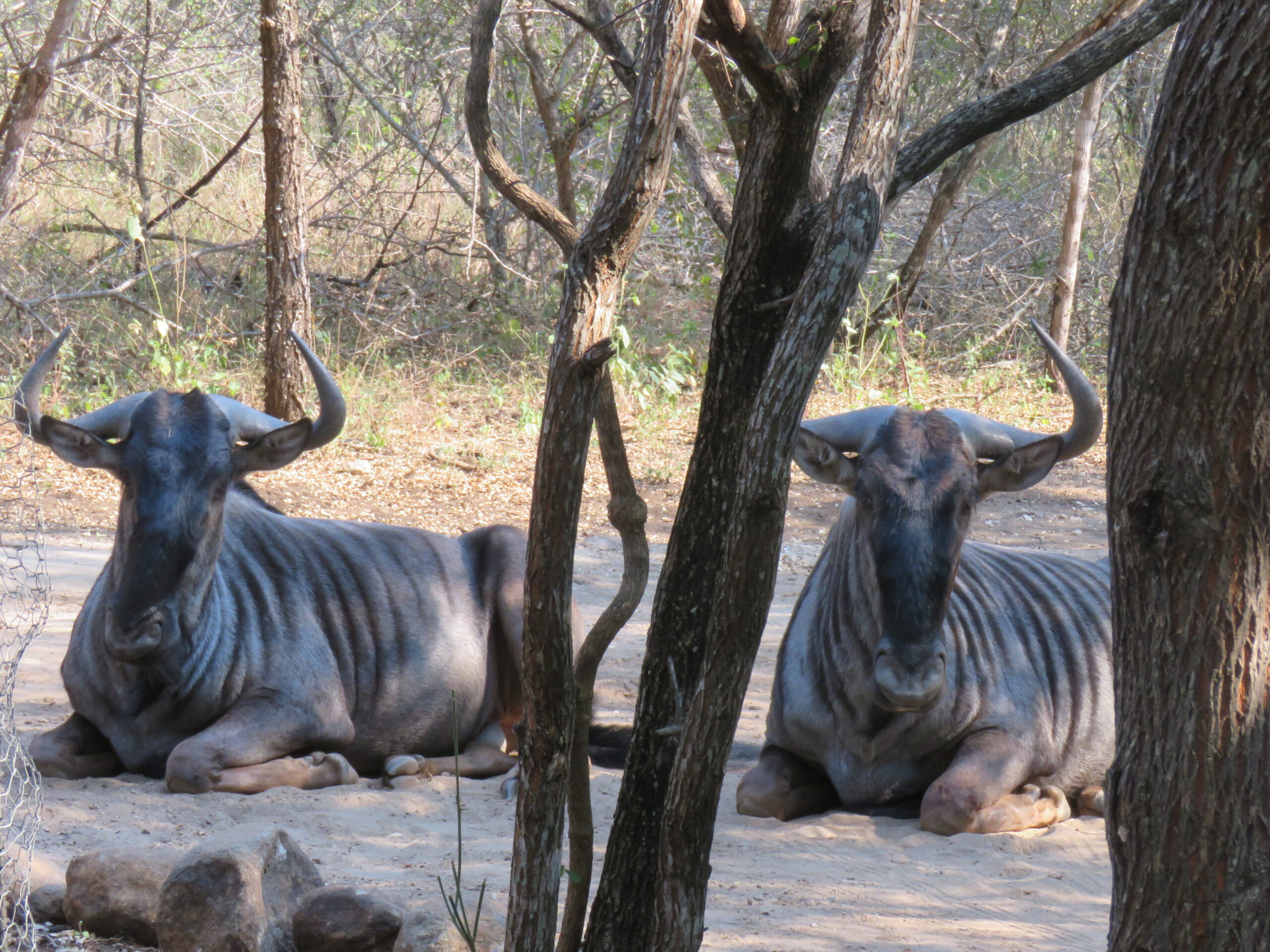
These two wildebeests visit often. The one on the left is CF, for Crooked Face, and his loyal friend is Hal.

Many of the wild animals dig for roots, including bushbucks and warthogs. Offering some root vegetables and others can only be good for them. I will gladly take the time to cut them into bite-sized pieces to ensure none of the smaller wildlife doesn’t choke on the oversized chunks the wildebeest and kudus can easily manage.

Yesterday, Rita and Gerhard drove to Nelspruit to do more comprehensive errands for items not found locally or at Komatipoort. We’ve often thought of doing that but so dislike the three-hour round trip. We have learned to live with what we can find in Komati.

In this photo, it’s easier to see his crooked face, which could have been an anomaly at birth or an injury at a younger age.

They were on a mission to find folding chairs the four of us could use to sit by the Crocodile River during sundowners-time on a mission to see wildlife on the river before sunset. Fortunately, they found great chairs for all of us at the cost of only ZAR 988, US $70.23 for two chairs each. Rita had sent pictures of the different chair options, but I suggested that they move forward and choose for themselves and us.

Tomorrow, we’ll post photos of the chairs and from our time this afternoon while at the river, hoping to see some wildlife in Kruger National Park. Sometimes we have “safari luck,” and sometimes we don’t. It’s more about enjoying the outdoors, watching the sunset on the river, and enjoying idle conversation with our friends.

The joy of having Little visit almost every day is indescribable, especially after he found us here nearly two years later, even at a different house. He swoons when I talk to him.

So now, at 1:00 pm, back after shopping, I’m hurrying to get done here in time to work on the corrections I had planned for today. Once back at our bush house, before even putting our groceries away, we saw Frank and The Misses standing at the screened door to the veranda, looking for their seeds. Lunch had long passed.

Hurriedly, I refilled the little container with seeds and the second container with fresh water so they could have their lunch and beverage to wash down the seeds. We always laugh when we see them. What a joy to behold two or three times a day when they come to call.

Almost every time they visit, once done with pellets, they head to the driveway in front of the house and take a rest, often for several hours.

We need to watch them eat because we are not able to leave the seeds outside unattended. Invariably, the warthogs will come up onto the veranda and finish their seeds. We’ve worked hard to teach pigs not to eat the seeds, and most of them have, but some stubborn pigs won’t leave the seeds alone. They get plenty of pellets and don’t need seeds to supplement their diet.

While we were out this morning, we drove to Lebombo as planned and purchased a huge bag of carrots, a few bags of apples, and two massive heads of cabbage for the animals. In addition, we bought two 40 kg, 88 pounds, bags of pellets to supplement our current supply, which was down to 1½ bags.

Checking to see if we’re on the veranda, offering pellets. If not, he’ll come back later.

Then, upon the recommendation of our friend and Honorary Ranger, Patty Pan, we purchased a giant roll of “baloney,” which is a meat concoction that the mongoose and late-night visitors will enjoy. The mongoose, cats, and other nocturnal visitors are carnivores, consuming only meat, and some are omnivores, consuming meat and some vegetation. The majority of the animals in Marloth Park are herbivores, only eating vegetation.

When we returned from shopping, Frank and The Misses were waiting at the veranda’s screen door, making lots of noise. It was lunchtime, and they were hungry and thirsty! They usually stop by three times a day.

OK, folks, I’m on to my next job of the day, once I upload this post, of getting back to work on those dreaded corrections. In a week, I will be halfway through, having worked on the older posts first.

Then, in a few hours, we’re off to the river to meet Rita and Gerhard for sundowners, excellent conversation, and, no doubt, stunning views. Have a safe and healthy day!

Photos from one year ago today, May 20, 2020:

Albert, our guide in Chobe National Park and on the Chobe River, had pulled the safari vehicle close to the river to take photos of the elephants easily. For more photos, please click here.

An eerie phenomenon captured by night trail cam!!…An apparition?…Cannot be explained!!…

Who’s in the garden this morning?

3 wildebeest

4 warthogs

6 bushbuck

3 kudus

47 mongoose

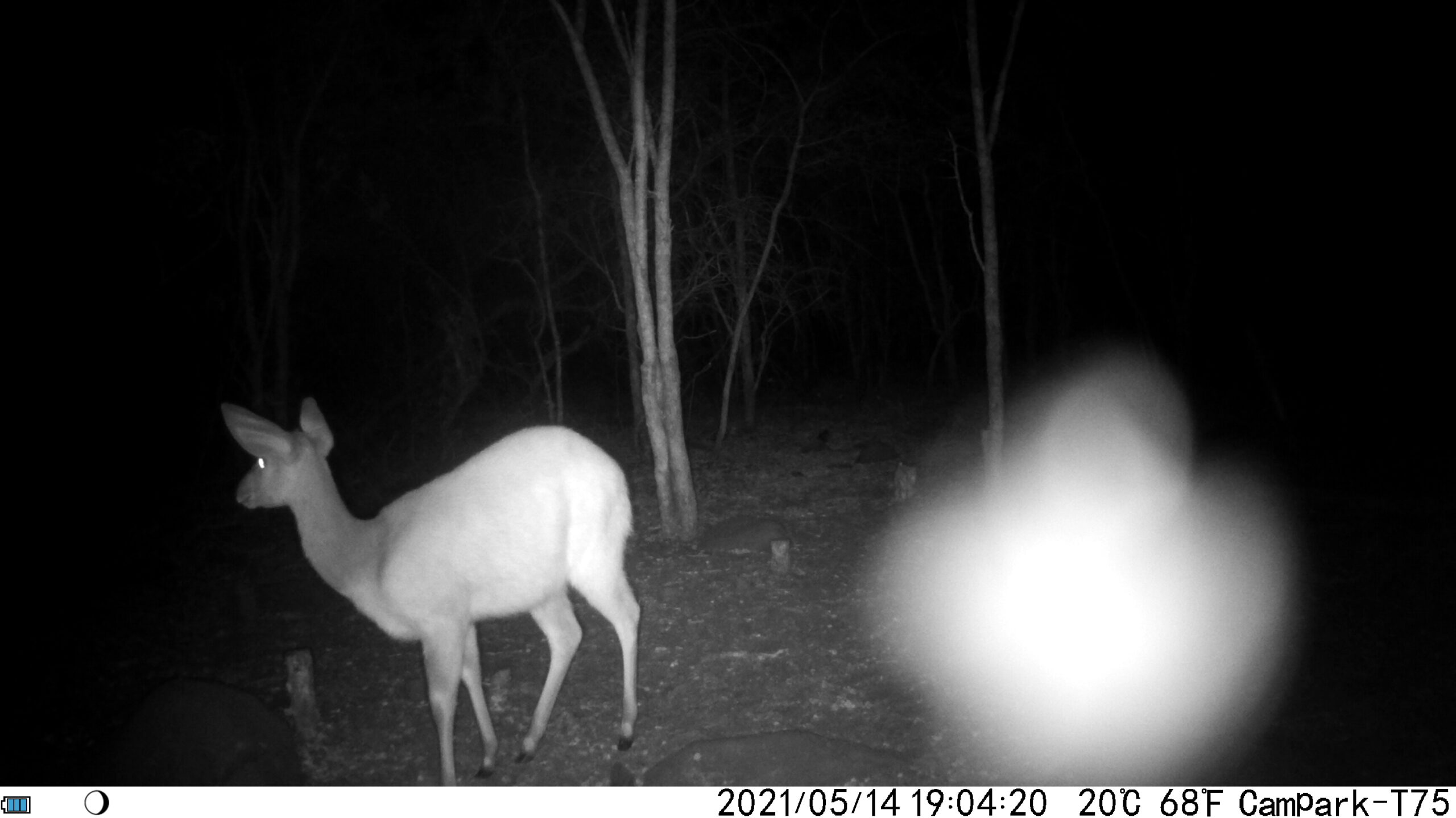
Last night, when Rita and Gerhard stopped by for sundowners, we showed them this series of photos posted here today. With Gerhard’s tremendous experience in aviation, he, too, had no idea what these photos could be, and they were as shocked as we continue to be.

So far, using the trail cam, we have seen several thousand photos taken at night. We perused others’ trail cam photos in researching extensively online, never seeing anything similar to what we’ve shown here today. There’s no way we can explain it.

Notice the bushbuck looking at “it.”

Please scroll down slowly, in succession, toward the last photo to achieve the full impact of what we’ve seen. The photos were taken by the trail camera on May 14, as indicated by the sequence of the photos. We entered them here as they occurred. We’d be curious if any of our readers have an idea what this could have been. Please comment at the bottom of the page if you have any ideas you’d like to share. You may choose to do so anonymously if preferred.

We hesitated to post this for a few days, wondering if our readers would think we are crazy after staring at wildlife all day and night. But, last night, after Rita and Gerhard left, we decided we’d post them today to see if anyone out there in cyberspace could offer some input.

In reality, we may never know, nor will we ever see this again. Of course, the most fantastic photo taken by the trail cam is the last photo, as shown at the end of this post, of the female bushbuck “looking up” when it appears the apparition or whatever it was, drifted up toward the sky, causing the bushbuck to stretch her neck to see where it was going. Oh, good grief! This is quite unusual.

We don’t necessarily believe in ghosts, nor have we ever encountered anything like this. Both of us are very realistic and practical. This is not some effort on our part to sensationalize what could have been a moth or a puff of humidity in the garden that night.

We’ve seen many photos from the trail cam with moths, butterflies, and insects passing over the camera lens, never leaving such a profound image. Surely, at night, the bushbuck would hardly stretch her neck to such a degree to follow the flight of an insect when insects are all around the day and night. Plus, as mentioned, we’ve seen such images fly across the lens, looking nothing like any of these.

The bush is filled with wonder and mystery. Regardless of how much we observe the wildlife, we’ll never completely understand and appreciate what they experience, what they feel, and their ability, however, limited, to communicate with humans.

Perhaps, we’ll have to let our curiosity wither away in time and, on occasion, refer back to this post in the sheer wonder of the fantastic world around us, some of which we will never be able to explain.

Few captions were added to today’s photos. We’ll let you use your imagination on how you perceive these photos.

This photo astounded us even further.

May your day be filled with wonder and awe.

Photo from one year ago today, May 19, 2020:

A lone tree near the shore on the Kauai Path. For more photos, please click here.

Trying to figure out what to do in 44 days…Life up in the air…Vaccine hesitancy?…

We hadn’t seen Torn Ear for over a week and were worried about something happening to him. Last night, he appeared on the trail cam, much to our relief.

Who’s in the garden this morning?

  •  1 wildebeest
  • 15 warthogs
  • 12 bushbuck
  • 8 kudus
  • 12 impalas
  • 59 mongoose

With a third wave of Covid-19 being acknowledged in South Africa, it’s still up in the air as to what we’ll do in 44 days when our current visa extension expires on June 30th. Many other people in the world find themselves in the same situation. Our position is not unique.

We still have the booked flight to the US on June 30th, but if visas are extended again for foreign nationals for another 90 days, we’ll have no reason to leave South Africa on that date. We may or may not be able to move that flight one more time when twice. We’ve been notified of changes in the departure times of the various flights in that itinerary on Lufthansa Airlines.

This young male bushbuck has to eat his pellets on the veranda when pigs wouldn’t let him partake.

There is no question that this is a dilemma we are grappling with every day. In addition, it looks like the launch of the vaccine for South Africans over the age of 60 could begin in this province over the next 30 days. If we can get the vaccine while we’re here a few weeks before we have to depart, it will give us peace of mind if we have to travel for 40 hours or more to return to the US, or visit another country, if visas aren’t extended.,

We’re doing just fine with the challenge. This uncertainty is “foreign” to us in our years of worldwide travel. However, the past 14 months have taught us a great deal. Never take our “freedom of movement” in our world travels for granted. Those ten months in that hotel room in Mumbai, India, have certainly rearranged our thinking in that respect.

Kudus drinking in the birdbath and the pool. There’s some chlorine in the pool, diluted enough to be safe for them.

Like most of us throughout the world, uncertainty about any form of travel, including taking vacations/holidays or even short weekend getaways, is not as easy as it was in the past. COVID-19 changed all of this. Travel has been only one of many areas of our lives, and yours, that has changed in the past 14 months.

Many have suffered life-changing financial loss, loss of jobs, and the sense of self-worth and confidence that goes with being active in the workforce. The most horrific loss of all has been that of loved ones and friends who’ve lost their lives due to this dreadful virus.

Kudu’s mom is suckling her young in the bush.

Like my sister, Julie, many are suffering “long-haul symptoms” and can’t seem to shake a variety of debilitating symptoms that impact their everyday lives. Covid-19 rehab clinics for “long-haulers” have been opening all over the US in an attempt to rehabilitate those affected by this lingering illness.

Do we have hesitancy about receiving the vaccine? I suppose many of us do to some degree. It’s a big decision for those of us with comorbidities and allergies, wondering if we’ll be subject to a life-threatening reaction. Even those without any known medical conditions may be concerned about side effects.

Go Away, bird back for another visit.

With our intent to continue to travel in the future, we have no choice but to be vaccinated. With four cruises booked in the future, some of which may be canceled, we know cruising won’t be possible without a vaccine in the next few years. When and if “herd immunity” is achieved, this may change in years to come. But, for now, and at our ages, we feel we must get vaccinated or stop traveling entirely.

We anticipate that in time, proof of vaccination may be required to board an airplane, a train, a cruise ship, or any other form of travel when crowds may be a reality of a specific mode of transportation. Will proof of vaccination eventually be required for entrance into arenas for sports and concerts? That could happen.

Mongoose waited at the door for food before we’d even gone outside in the morning.

At this point, we don’t know what the future holds. Then again, do we ever know? We look back at our lives over the past few years and see how oblivious we may have been about potential changes in our lives, many of which can change everything, as we knew it.

All of us can decide on the risks we’re willing to take in getting the vaccine or not. It’s a personal decision that should be exempt from criticism or bullying. Trying to convince others that our decision is the right decision is pointless. We all have the privilege of doing our research, checking with our healthcare professionals, and making an informed decision suitable for our health, well-being, and lifestyle.

A Big Daddy was reaching for a bit of vegetation.

We pray for good health and well-being for all of our family/friends/readers, now and into the future.

Photo from one year ago today, May 18, 2020:

The rice paddies are ready for planting. See this site for more details. “The Balinese system of irrigating their rice terraces is known as Subak. It is such an important part of Balinese culture that in June 2012, it was awarded UNESCO World Heritage Status. This method for irrigating the land was inspired by ancient Hindu philosophy, and it has been used since at least the 11th century. Using this method, the rice fields were built around temples, and the allocation of water was the responsibility of priests. For this irrigation management to work successfully, it has required that members of each community cooperate and work in partnership. Each community member takes responsibility for maintaining the system’s integrity, which is why the terraces tend to look so well maintained. The rice farmers work as a unit to create appropriate canals and dams. Another important element of the Subak system is the religious festivals that mark the cycle of the year.” For more photos from the year-ago post, please click here.

It’s great to have our human, and animal friends back in the bush…

Kudus stopped by for pellets at sundowner time.

Who’s in the garden this morning?

  • 1 wildebeest
  • 16 warthogs
  • 17 helmeted guinea-fowl
  • 12 bushbuck
  • 2  kudus
  • 1  duiker
  • Frank & The Misses (francolins)
      A hornbill was pecking at the seed container while on the veranda side railing.

A few minutes ago, there were eight bushbucks in the garden. Unfortunately, Mom & Babies (2), the only warthogs that annoy us, heard Tom toss pellets, and they chased all the bushbucks away. This particular mom has a nasty personality, and she scares off Tiny and Little and other warthogs, large and small, when they see her.

The pecking order is easily evident in the bush. Bushbucks, gentle and non-combative antelopes, compete for pellets with the larger animals. At times, kudus and impalas will share with bushbucks but not wildebeest and warthogs. We’re always trying to figure out ways to feed the bushbucks without problems from the other animals.

Two young hornbills on the ground by the veranda.

Some locals use a raised trough to feed the various animals, to avoid the pigs from scaring them off. But, as mentioned in past posts, using a trough is dangerous for the animals, a breeding group of diseases, including tuberculosis, which seems less prevalent in the bush right now than when we were here in 2018.

With the busy weekend over and tourists leaving the park, we’re seeing many more animals this morning. It’s a great start to the week. Speaking of “great starts to the week,” our dear friends Rita and Gerhard arrived as planned yesterday, and the four of us met at 5:00 pm, 1700 hrs, at Jabula for dinner. It couldn’t have been more fun to see them. The conversation ran smoothly as if we had been together recently.

A hornbill at the bushbaby house.

In the coming months, our dear friends Kathy and Don will also return after a two-year hiatus due to COVID-19. It has been over two years since they left Marloth Park earlier than planned to return to the US when a close friend had passed away. We were so used to socializing with them, it was sad to see them go away, but we understood. Having them here, maybe for the next few months, is such a joy.de

As the winter progresses here (the opposite season in the northern hemisphere), more and more of our mutual friends, most of whom we met through Kathy and Don, will also return to the park, providing that new lockdown measures don’t impact flights coming to South Africa.

Walter, William, and Willard in the garden.

The news reports the third wave of Covid-19, which could easily impact travel to and from the country. Of course, we do not wish for more Covid in South Africa, with very few vaccinations yet. Of course, we don’t want to see more cases of COVID-19 in South Africa, with very few having ever been vaccinated. We can only wait and see.

Last night, we all enjoyed our dinners, with lively conversation. We had been in contact through WhatsApp for a few years, so it was as if we hadn’t been separated at all. Rita and I have a special sister-like kinship, and we couldn’t have been happier to be together once again. Of course, Tom and Gerhard had no lulls in the conversation either when the four of us sat at the bar before dinner.

Other locals joined in on some of our conversations, making the evening all the more memorable. We are so blessed and grateful to be in Marloth Park among our human and animal friends. No complaints here.

Have a fantastic Monday!

Photo from one year ago today, May 17, 2021:

A Belted Galloway cow. From this site: “Belted Galloway cattle originated from western Scotland, a region whose weather is strikingly similar to Ireland’s damp climate! This makes Belted Galloways perfectly suitable for the wet, cold winters and the soft boggy terrain of Irish farms. Their long, curly outer coat is ideal for rainy weather, as its coarseness deflects moisture from the animal’s skin. They also have a soft undercoat to keep them warm in colder temperatures. The head of the Belted Galloway has long hair around its ears, preventing frostbite in a case of an extreme Irish freeze. Common nicknames for these cattle are ‘Belties’ or even ‘Oreo Cows’ due to their peculiar resemblance to the popular treat!” For more photos from the year-ago post, please click here.

Wow!…An adventure in the bush!..

    Our photo of the black sparrowhawk when it took a break from devouring its kill.
Who’s in the garden this morning?

  • 1 warthog
  • 8 bushbuck
  • 8 kudus
  • 1 impala

(Based on the fact that most holiday homes in Marloth Park are occupied this weekend and the guests feeding the animals (hopefully appropriate pellets, not dangerous human leftovers), less wildlife is visiting us this morning. In a few days, things will go back to normal.

Yesterday morning, as I was wrapping up the post, a situation occurred in our garden that was a first for us and left us reeling in awe and wonder about nature. Even here is relatively safe Marloth Park, where wildly few apex predators roam the bush for food, we witnessed a kill right before our eyes.

We were seated at the table on the veranda with nary a care in the world, with dozens of mongoose, 40 or more helmeted guinea-fowl, two warthogs, and no less than four bushbucks, hovering in expectation of other treats from us, of which we’d already offered many.

Whether it was seeds for the birds, meat for the mongoose, or pellets for bushbucks, they all hovered in the garden in eager anticipation of what was yet to come. Suddenly, in a race for safety, like none other we’d seen in the bush, in a matter of a few seconds, they all ran to the right in a mad flurry of squawks, squeals, snorts, and chirps, including the bushbucks, all looking as if they were experiencing sheer terror.

What could it be, we wondered aloud? And there it was, swooping through the garden, in plain view, in a wild frenzy for a “kill” was a black sparrowhawk, eyeballing all the small creatures in our garden, particularly the guinea-fowl and mongoose, all appropriate fodder for the hawk’s desires and diet.

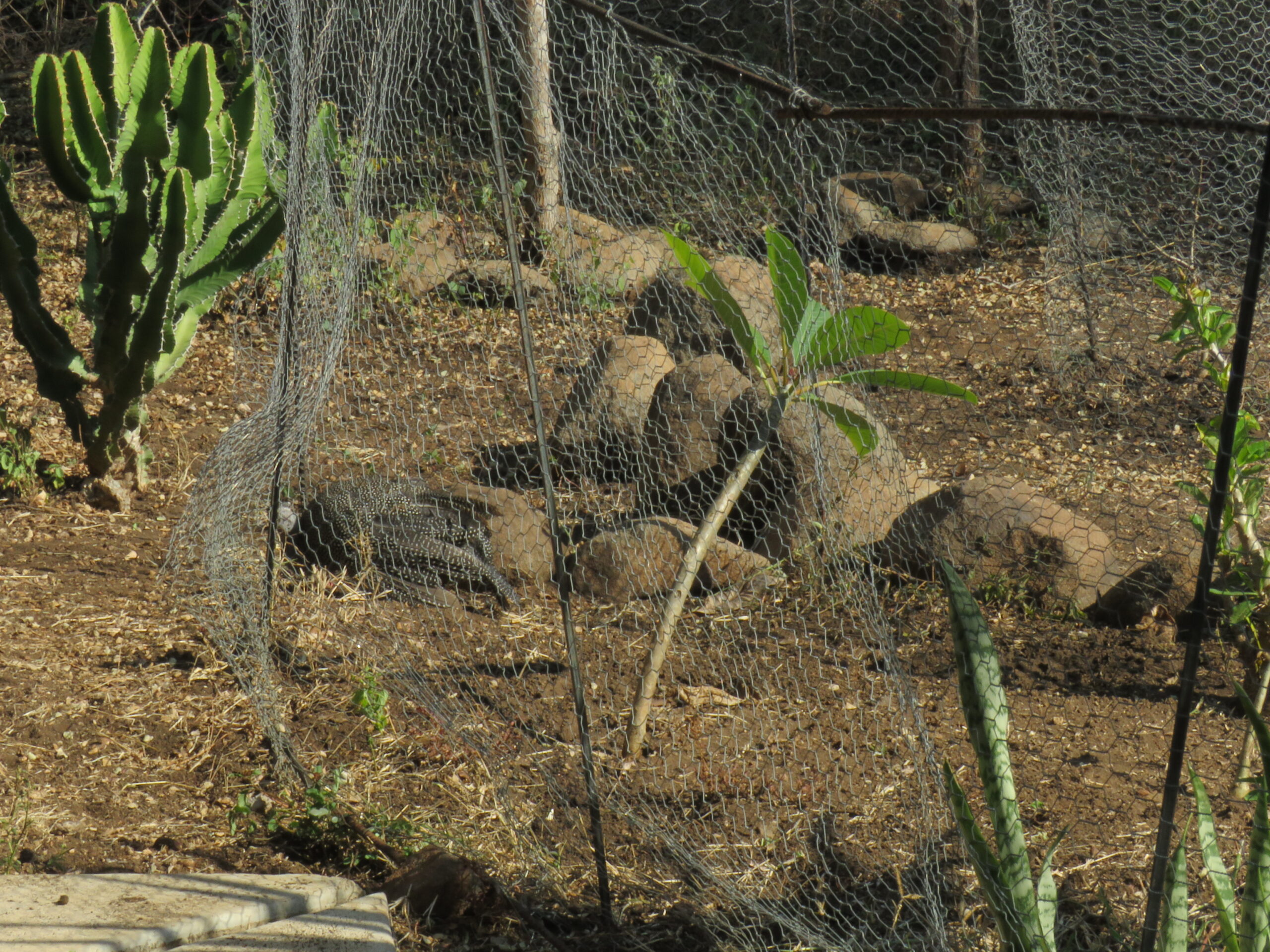
If you enlarge the photo and look carefully at the middle left of this photo, inside the garden fence, you can see the young guinea fowl hovering in sheer terror. With the feathers we had seen in this area, we knew that the hawk would soon capture him, and they did it in the blink of an eye.

Without a doubt, it was a stampede. Many of the guinea-fowls took to the air while many ran as they often do. The mongoose followed suit, chirping in a pitch we’d never heard before. The bushbucks, certainly too large to be fodder for the hawk, followed in the mad dash for safety.

We opened the front door to see his chosen catch, a young guinea-fowl, perhaps only months old, crouching near a tiny bush as shown in the above photo, feathers everywhere, indicating it had already been attacked. We heard screaming sounds from the guinea-fowl and watched as the hawk headed toward the front of the house. The hawk swooped in to capture the bird from the enclosed garden in the front of the house so quickly, but Tom saw it. It was impossible to take a photo and not scare off the hawk.

The hawk must have dragged the bird to the rear side bush area as we saw it flying up into the air intermittently as it devoured its prey. We were able to quickly snap the above main photo when the hawk paused for seconds on a branch during that period.

The guinea-fowls have yet to return to our garden and may not do so for a while. As for the mongoose, we have no doubt we’ll see them again soon when they know there are tidbits of meat always awaiting their arrival. Of course, the bushbucks returned shortly after the incident and showed up on our trail cam photos throughout the night, leaving us with over 250 photos to go through this morning with nary a sighting of any other species.

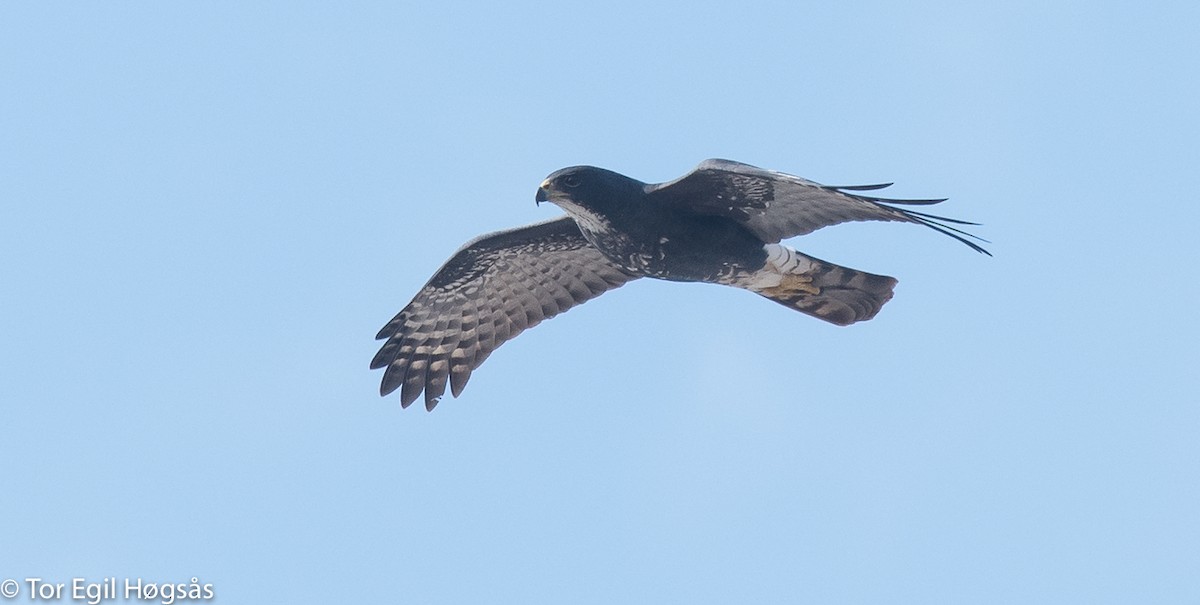
Black Goshawk
A black sparrowhawk in flight.  (Not our photo)

Yes, it’s sad to see them kill the young bird, but it’s all a part of the life cycle of animals in the wild. Over the years, when visiting Africa and then India, we conditioned ourselves to be less emotional when witnessing a kill. Although we both cringed when Tom reminded me it could have been Frank and The Misses. This would have been a massive loss for us when they so easily are a vital part of our everyday life and enjoyment in the bush.

Here is some information about the black sparrowhawk from this site:

“Typically, both sexes of the black sparrowhawk have predominantly black plumage with a white throat, breast, and belly. These white-breasted individuals are known as “white morphs,” which are in the majority over most of the birds’ range. The “black morph” variety is generally rare, except along the coastal regions of South Africa, including the Cape Peninsula, where they constitute 80% of the population. (Black sparrowhawks do not occur more than 200–300 km north of Cape Town along the South African west coast, where there are almost no trees.) These “black (or dark) morphs,” when seen perched, can be black all over but more commonly have a few white spots on the breast or a white throat of variable size. In flight, both morphs show white and black barring on the underside of the wings and tail. The black morphs are not melanistic, as commonly alleged, as their plumage is not entirely black, nor are they black as chicks or juveniles.

There is no noticeable difference between the plumage of mature females and males, which can only be distinguished by size. The tails are cross-barred with about three or four paler stripes, and the undersides of the wings with perhaps four or five. The legs are yellow, with large feet and talons.

Not our photo.

Size

The black sparrowhawk is one of the world’s largest Accipiters, only the Henst’sMeyer’s, and northern goshawk can match or exceed its size. As is common in the genus Accipiter, black male sparrowhawks are smaller than females. Typically the weights of males lie between 450 and 650 g (0.99 and 1.43 lbs) while females’ weights lie in the 750 to 1,020 g (1.65 to 2.25 lb) range. The typical total length is about 50 cm (20 in) and wingspan about 1 m (39 in). As in most Accipiters, the tails are long (about 25 cm (9.8 in)), as are the tarsi (about 8 cm (3.1 in). The features of the black sparrowhawk (and Accipiters in general) are reflective of the necessity to fly through dense arboreal habitats. However, this species does most of its hunting in open areas (usually from a concealed perch in a tree).”

Later today, Rita and Gerhard will arrive and meet us at Jabula for dinner, which is unknown. We’ll arrive at 5:00 pm (1700 hours) and wait for them to arrive. How exciting!

That’s it for today, dear readers. Be well.

Photo from one year ago today, May 16, 2020:

This banded albatross in Kauai, Hawaii, in 2015, appeared to be a parent when they were hovering near a chick. For more photos, please click here.