Pig on the porch!!!..Pig in a pond!!!…Pig in the parlor!!!…

If you look carefully, you can see Little Wart Face running from the veranda. It was raining, and he climbed the slippery steps to see if we’d come outside and give him some pellets. Of course, the minute I stepped out to take the photo, he ran down the steps, sliding down.

“Sighting of the Day in the Bush”

Mr. Bushbuck’s injured leg seems to be healing.  He could barely walk a few weeks ago but is limping now. He certainly doesn’t look as if he’s been starving.  When an animal is injured, we residents of Marloth Park tend to feed the wounded animal extra food to aid their recovery.

On May 28, 2018, we ordered a box of supplies to be shipped to Marloth Park. We’d expected it to take a few months, not four months after all was said and done.

We had lots of muddy pig footprints on the veranda after he left. We didn’t scold him for coming up. We were laughing hard.

There was no less than ZAR 17731 (US $1200) in supplies in that box, and based on poor postal service in South Africa, there wasn’t insurance available, as is the case in many countries when packages are sent through the postal service.

He considered coming back onto the porch (veranda) after we placed a few pellets as shown, but he was scared to death after his slippery descent.

The cost to ship the package from the US to Marloth Park via (USPS) postal service was ZAR 2660 (US $180). Had we used UPS, Fed Ex, or DHL, the cost jumped to ZAR 7092 (US $480). At the time, we didn’t want to spend so much on the shipping. Lesson learned.

Here it is, folks. We’re saying this out loud for the world to see. We will never send another package of supplies from the US unless we can use UPS, Fed Ex, or DHL for fast delivery and insurance. The aggravation over these past months wasn’t worth it.

At first, we spotted Medium Wart Face sitting in the cement pond. By the time I grabbed the camera, he’d already begun to climb out.

According to tracking information, the package arrived in Johanessburg, where it went through customs and was released for transport on June 6th, exactly four months ago today.

He managed to climb out OK, shook off, and came up to the veranda to ask for more pellets.

What transpired from there was a comedy of errors. First, there was a strike in June, and all packages that had arrived in Johannesburg and were sent to Pretoria for processing came to a standstill.

After dozens of phone calls made by Louise and us, we discovered the box was sitting in a shipping container in Pretoria with thousands of other undelivered packages. Everything was at a standstill even after the strike ended in June.

Four Girls and Dad & Son stopped by at the same time. Overall, they got along fine, although the girls rendered a few kicks their way, and Dad gently prodded with his horns.

After writing a highly assertive letter to several postal service officials about a week ago and ultimately connecting with a top official who responded to my assertive letter, a kindly official went into action demanding staff find the box in its specific container and get it to us.

Zebras have such interesting markings as this black and white circle on her back.

We met our kindly contact person at Marloth Park’s Gate 2, who handed over the package this morning. We paid the customs fees of ZAR 385 (US $26) along with a hefty “token of appreciation,” which may have been instrumental in expediting the situation. 

Regardless of the circumstances and the costs, we’re relieved to have the package. Everything inside the box was intact as we’d expected. We met the helpful driver/postal service employee at the gate and brought the package back to the house.  

As soon as the pellets and veg start thinning out, they start staring at us, asking for more.

There was even a long-expired credit card (April 2018) in the box and our new health insurance cards from Healthcare International. I’d forgotten I had ordered a ton of my favorite tee-shirts I so desperately needed when all that I currently own have holes in them.  

Even Little Miss Bushbuck has learned to use those soulful dark eyes to let us know she wants more.

There were so many items in the box we needed, and we’re thrilled to have it all unpacked and put away. We won’t be purchasing any more supplies until we arrive in the US in five months, where we’ll replenish anything we may need.

As for today’s photos, we realized we planned not to spend much time on warthogs, my favorite animals in the wild. However, these hilarious characters are worthy of posting photos and sharing stories from time to time.  Bear with us as we laugh out loud over recent antics in the garden.  

Although not all are shown in this photo, we had six bushbucks in the garden simultaneously, a record for us.

Tonight we’re off to Jabula for socialization and great food. Tomorrow, we’ll be back with plenty more.

Enjoy the day, the evening, and a good night’s rest.

Photo from one year ago today, October 6, 2017:

View from the veranda during the tropical depression in Costa Rica. The clouds were so low they were ground level in the valley.  For more photos, please click here.

Looking forward to sharing this magical place…Four days and counting…

Most likely, Mom, Dad, and youngster were heading down the dirt road.

“Sighting of the Day in the Bush”

According to our friend Uschi, when we walk through the bush to get close to the fence between Marloth and Kruger Parks, we often encounter these spiky bushes, which is buffalo thorn. I got scratched by one of these a while ago, and it itched for days. Some plants can cause life-threatening responses if scratched.

The concept of sharing this magical place with friends is indescribably exciting.  Isn’t that always the case when you love something special and want to share it with special people?

On our “daily drive,” we spotted these giraffes on their “daily walk.”
People all over the world see our photos and read our stories. But, nothing is more impactful than seeing this magical place in person. To be face to face with this abundance of wildlife is an animal-lovers dream come true.
Giraffes don’t stay in one location long.  They continually are on the move to the next best feeding spot.

For those with little interest in wildlife, this surely would be one long boring time away.  There are no beaches, no nightclubs, no fancy restaurants, and lush botanical gardens to visit. There isn’t a movie theatre within a reasonable enough distance to make it a worthwhile evening event.

Noise, including loud talking and music, must be kept to a minimum at all times.  There are no fast-food restaurants in Marloth Park, but a few, including Wimpy’s and KFC in Komatipoort, are less than a half-hour away.

The Crocodile River was aptly named with many crocs in residence.

Typical tourist-type shopping is limited to commonly seen Africa trinkets.  Although there’s a big mall in Nelspruit (90-minute drive), its products are limited to those that appeal to locals with few easily identifiable brand name shops tourists tend to like to visit. 

Mom (on the right), Dad, and chicks.  How they’ve grown!

For those not interested in wildlife, this is hardly the best place to visit. On top of it all, if you’re terrified of insects, snakes, and rodents, this would be the last place you’d want to visit. At times, we’ve encountered folks who are terrified of birds. The bush is a bird-lovers paradise but hardly suitable for those who take cover when a bird flies in their range of vision.

But, for those who’ve spent a lifetime revels in the wonders of the wildlife kingdom, nowhere in the world can match visiting areas of Africa, especially Marloth Park, which provides an up-close-and-personal experience like none other anywhere else in the world.  

We were excited to see this massive “obstinacy” of cape buffalos.

When we originally booked our first house in 2012 with Louise in Marloth Park for our three-month visit in 2013/2014, I’d scoured the world searching for a place where animals roam free around a long-term rental property.  

Sure, there are resorts inside many national parks, animals reserves, and conservancies. But nothing we found could accommodate our desire to stay three months and be reasonably self-sufficient.  
There must have been over 100 of the massive beasts lounging in one big pile!

Also, we preferred to be in an environment where we’d have an opportunity to make friends further and enhance our experience. Staying in a resort is an improbable scenario for making new friends, although it may happen occasionally.  

Most tourists on holiday tend to stay close to their friends and family members, not mingling much with others. We’ve seen this over and over again in our past six years of world travel.
We tried to do a video and zoom in, but the wind was blowing so hard, I couldn’t hold the camera still.

Without a doubt, Marloth Park has provided us with the most social interaction we’ve had anywhere in the world. Princeville, Kauai, Hawaii was a close second.  We’re looking forward to introducing our visitors to some of the friends we’ve made here, let alone the animal friends we’ve also made along the way.

We have been busy setting up activities and planning for our friends the first week they are here. This way, they’ll have a sample of exciting and enticing “things to do” while here. From there, they can decide what appeals to them the most and include us or go on their own, whichever they prefer.
This is an example of the bush we often walk through to get to the fence between Marloth Park and Kruger National Park.

We have a lovely weekend ahead, including Friday night on the veranda, Saturday night out with friends, and Sunday afternoon was stopping by for sundowners (happy hour) with more friends.

We’ll wrap up a bit of shopping on Monday and Tuesday morning. Tom and Lois will arrive well before noon. Fun…

Have a great weekend, everyone!

Photo from one year ago today, October 5, 2017:

Generally, pools have a system to avoid overflow due to heavy rains, which appeared to be the case of the pool in the villa in Atenas, Costa Rica.  It had been raining non-stop for days!  For more details, please click here.

Today is a special day in the bush…Outstanding lion sightings on yesterday’s drive…

Casually wandering down the steep rocks, this male sees his buddy at a distance.

“Sighting of the Day in the Bush”

A little blurry, but nonetheless a happy lion with his tail in the air as he makes his way down the rocks near the river’s edge.

The temperature had dropped from a high of 39C (102F) to a cool 14C (57F) in less than 24 hours. We’ve gone from wearing as little clothing as possible to bundling up in sweaters and sweatshirts. I must admit, it feels darn good.

“Ah, here he is. Maybe I’ll join him for a leisurely nap!”
But, the best of it all is the fact that it’s been raining for the past several hours which started after one of the loudest cracks of thunder we’ve ever heard around 5:00 am.  
He’s checking out the perimeter before he gets too comfortable.
This rain is desperately needed here in the bush with vegetation dangerously dry, a prime situation for a lethal flash fire in this densely brush-covered area. The rain, if it continues off and on over the next months, could certainly alleviate the risk of such a frightening prospect.
Everything looks good. Naptime.
We’re indoors today with high winds whipping the wind around and the cool temperature making sitting outdoors uncomfortable. During the rain, it’s unlikely we’ll see any visitors but we keep checking to ensure we don’t fail to feed any passing hungry animals.
His eyes are almost completely closed but not quite.  Instinctively he stays cognizant of his surrounding.
The rain will “green” the vegetation if it continues long enough. This will add much-needed relief for the wildlife, most of which are herbivores, and will thrive with the new season of sprouting leaves, bushes, and trees. Hopefully, it will continue for a few days.
“She is rather attractive.  Besides, she “made” dinner for me.  Perhaps I should show her some appreciation.”

Of course, with our friends coming next week we’re hoping for good weather for all of us, the humans and animals alike. It’s unlikely we’ll go to Kruger when it’s raining since the animals tend to go undercover during downpours. We tried that a few weeks ago without much luck.

Dreaming of his next kill or…that pretty female over there?

As for today’s many lion photos…OMG! It was outstanding. Our expectations, as always were low in seeing much wandering in Marloth Park since the holidaymakers are still here through the upcoming weekend. To our surprise, we did see a few animals wandering about which we’ll share over the next few days.

“Nah, the nap sounds better right now.”

But, seeing several lions across the Crocodile River, out in the open, was the highlight of the day. We made our usual drive which takes about two hours from Olifant Drive to Kudu Road winding our way down to the river.  

Tom captured this female lounging not too far from the males.  She’d done the kill and the males took it from her, a common occurrence.

We always wind through Volstruis Road (which means ostrich in Afrikaans) in search of ostriches and their chicks. Oddly enough, as mentioned in the past, most ostriches seem to stay near their namesake road. We’re seldom disappointed and yesterday was no exception. Again, we’ll share those photos over the next few days.

It was cool and cloudy yesterday so the pride didn’t seem to mind relaxing in the open.

But the lions, a straight shot across the river upstream from Two Trees, we saw a small gathering of humans with cameras and binoculars in hand. It didn’t take long for us to spot the lions across the river. Again, it’s a very long distance from the Marloth Park fence to the opposite side of the Crocodile River so as always we do our best to get good photos.  

Two other males resting after a feast.

The wind was blowing heavily and without a tripod, I had difficulty holding the camera steady. Instead, as I often do, I braced the camera on the thin wire on the fence between the barbs, located a foot from the electrified fence which is far enough away to avoid any likelihood of touching it.

We both struggled to get good shots but once we uploaded them today, we were pleased we’d been able to get a few good shots under the difficult circumstances. No doubt if we had a bigger and better lens we’d be able to do more.  For now, we live with what we have.

Another lounging “leeu” (lion in Afrikaans) on a cool day.

For today, with the rain, we don’t expect to go out. Like the lions in the photos, we’ll lounge, maybe watch a show and make a nice dinner for tonight. Our plan is to be out on the veranda as usual by 1700 hours (5:00 pm) since we can use the outdoor portable heater if it’s cold. We’ll see how it rolls out.

Like many of you, not every day is adventuresome and exciting. Some days are quiet and low key. Yesterday, we saw lions and today we’ll watch another episode of Master Chef. It’s the nature of our lives and we love it this way!

May you have the kind of day that brings you contentment!

Photo from one year ago today, October 4, 2017:

A new visitor to the tree by the veranda. It’s a Rufous-naped Wren, a common bird species in Costa Rica. For more photos, please click here.

Giraffes came to call!…Preparing for our house guests…Six days and counting…

This morning when feeding this Ms. Bushbuck (one of many Ms. Bushbucks), we noticed a giraffe in the garden.

“Sighting of the Day in the Bush”

Many cape buffalos resting near the river’s edge during yesterdays 39C (102F) scorcher.

Last night, after we’d prepared the veranda for the evening with the big bowl of freshly cut vegetables filled to the brim; the container of pellets; two different types of insect repellents including one lit coil and one lit oil lantern; various lights turned on; the table set for dinner; bushbaby yogurt placed on the little stand and beverages ready for 1700 hours (5:00 pm) we noticed two giraffes in the garden.

Since generally giraffes aren’t fed by humans, they are very skittish.

Since arriving in Marloth Park many moons ago, we hadn’t seen many giraffes in the garden, spotting more when on our daily drives in Marloth Park or on self-drives in Kruger National Park.

It was getting dark, and taking photos of the giraffes was challenging especially when we didn’t dare get too close. Giraffes can be very dangerous if they feel threatened. We kept our distance, thinking this might be one of the very few opportunities to see them in the garden.

As I attempted to get better shots, he moved back, concerned about my presence.

Alas, this morning, while feeding one of many bushbucks that stop by, the two giraffes were back. With our friends Tom and Lois arriving in six days, we’re hoping the giraffes will return during the three weeks they’ll be staying with us beginning next Tuesday, October 9th.

We’d seen this large male at other locations in the park.

We’re busy getting ready for our guests to arrive. On Monday, Louise has arranged for Zef and Vusi to do yet another “spring cleaning.” With the constant stream of dust kicked up by wildlife, the house and veranda must be cleaned daily. But even so, there’s so must dust it’s difficult to attend to each day.

The spring cleaning on both the main floor where our bedroom is located and the second story where Tom & Lois will sleep is imperative, primarily when the upstairs hasn’t been attended to for months. Overnight, insects and cobwebs accumulate in every nook and cranny. After all, this is Africa.

A female joined the male in munching on the treetops.

We’re busy planning the first week’s meals and activities, realizing that anything can be changed if our guests prefer another plan. But we anticipate they’ll be excited with our planning, including dinners out, sundowner wildlife river watching, self-drive safaris in Kruger, and dinners on the veranda, all of which will provide them with the whole African experience.

He stood there for quite some time.

Oddly, this will be the first time any friends from the US have come to visit us.  Let’s face it. This is far from the US and has nearly a 24-hour travel time that many vacationers prefer to avoid. 

Plus, many people prefer to stay in resorts and hotels while on holiday and not stay in a house.  In essence, staying in a resort is considerably easier with no concern over meals, transportation, activity planning, etc.

Soon, they began to wander off toward the nearby parklands.

They are a hectic and well-traveled couple who spend a lot of time on a motorcycle traveling the USA. We plan to make this visit as relaxing and enjoyable as possible for them. Of course, continually searching for wildlife sightings can be very active and time-consuming, which we have no doubt they’ll love.

Also, we feel confident they’ll be OK with the heat, insects, and dust. They aren’t as delicate as some may be under these conditions. I can think of many of our friends who’d find these conditions uncomfortable and subsequently avoid visiting us in Africa and certain other countries where conditions may be a little rough.

About a dozen bushbabies stop by the little stand for yogurt, which we purchase weekly for the nightly feedings.

We’ve asked Tom and Lois about their favorite beverage options and are already well-stocked for their arrival. They’ve generously offered to share in the cost of food and beverages while here since they’re staying for three weeks. But, we’re not accepting any money for rent.  

They are our guests, and we’re grateful they’re taking the time and expense to visit. Our goal is to make this time as memorable and enjoyable for them as possible. We’re leaving plans flexible and wide open if they’d prefer to head off on their own for safaris, dinners out, or any other events.

On the other hand, if they’d like us to join them in any activities, we’ll surely be happy to do so.

Today is much more relaxed than yesterday. Later on, we’ll head down to the river to see if we can spot the lions we hear have been working on a recent kill. We’ll be back with more soon.

May you have a fantastic day!

Photo from one year ago today, October 3, 2017:

The pretty little hummingbird was stunned after hitting the glass wall in Costa Rica and landed on a chaise lounge.  A short while later, she recovered and flew away, much to our relief. For more photos, please click here.

Summer’s coming…hot, hot, hot!…Humans and animals feeling the heat…How do we manage in over 40C, (104F) temps with no AC?…Giraffe traffic…

It’s essential always to stop and wait patiently when wildlife is crossing the road. No honking necessary! They’ll move on.

“Sighting of the Day in the Bush”

After eating a good-sized share of pellets, Baby Bushbuck needed a drink from his mom. Soon, she’ll wean him since, most likely, she will be pregnant again. Bushbucks can give birth twice in one year.

First, let me clarify the “Orange” house (see link here for the listing). There are wall air conditioners in each of the three bedrooms and two units in the living room high up the wall on the massive vaulted ceiling.

If we move forward gently, they’ll usually move on. This giraffe had no intention of getting out of the way. We waited patiently and finally. She moved along. 

When we first arrived here last February 11th, it was still summer, ending around March 21st. It was sweltering, comparable to August heat in the northern hemisphere.  

She joined her “tower” of giraffes on the other side of the road.

During the first few nights after we arrived, we tried using the air con in the living room after sitting outdoors, usually around 9:00 pm. The inside of the house felt like an oven. The air con was no help whatsoever. The massive room and high ceilings made it impossible to cool down at all. We haven’t used it since.  

They went about their business eating leaves from the treetops.

When we go to bed, we use the high-on-the-wall air con unit, and it works well regardless of the temperature to keep us cool while sleeping. This is all we need. During the days, we tough it out.

Right now, at 10:45 am, it is 34C (92.3F). It’s expected to be a high of 39C (102F) today, peaking at around 1500 hours (3:00 PM). Since it’s not summered yet, we’re still experiencing many relaxed and comfortable days of perfect weather.

Cape buffalo were cooling off on a hot day.

Once summer arrives and the rains come, we’ll experience both heat and humidity. Now, the humidity is very low, with no rain in many months. Thus sitting all day outdoors on these high temp days is somewhat tolerable.

When we were here in 2013/2014 (December through February), it was during the peak of summer, and it was sweltering and humid every day with hardly a day’s relief. We managed then. We’ll manage now.

Elephants gathered at a waterhole by the river.

I’m not attempting to allude that this heat is easy. Even in desert climates such as Nevada, our state of residency, anything over 39C (102F) is hot and uncomfortable.  

Elephants were digging holes for fresh, clean water.

When we were in Henderson, Nevada, in July 2017, the temperature reached as much as 47C (117F), if not more. We still managed to use son Richard’s pool and sit outdoors for a few hours each day, mainly in the shade. At most, we each spent 20 minutes in the sun for vitamin D.

The sun is so hot here we haven’t been sitting in the sun at all, although we do quite a bit of walking in the sun when we visit the fence at the Crocodile River.  To purposely sit in the sun here is highly uncomfortable, especially right now.

As hot as it’s been lately, it still springs here, and birds are preparing their nests. A pair of blue African starlings have taken over the formerly unoccupied bushbaby house from a couple of hornbills. 

Regardless of how hot it gets, we always know, if we need a 10-minute break, we can go into the bedroom, turn on the AC and get relaxed. A better alternative is jumping in the little car and going for our usual drive in the park during the high-temperature peak mid-afternoon.   

Each day the female and male bring bits of dried brush and other vegetation to build their nest inside this house.

Tom’s already washed the little car’s windows which he must do each day before we head out when the windows are covered with dust, like every surface around us both inside and outside the house. Everything must be dusted daily to feel some semblance of cleanliness.

No, it’s not easy living in the bush, but the fantastic aspects are well-worth the inconveniences. Last night was exceptional when wildebeests Dad & Son stopped by, warthogs Tusker and his girlfriend, Seigfried, and RoyLoud frogged Mouth, francolins Frank and the Misses. and, Mr. Frog (who visits the light fixture on the veranda every night).

Incubation: lasts about 12 days. It begins with the next or next to last (penultimate) egg. We expect to hear the chicks before too long. Both sexes develop an incubation patch and brood the eggs, but incubation is mostly by the female (70% during the day and all night long).”

Two kudus visited before we went inside, which we hadn’t seen in days since the school holidays began. By this Sunday, the school holidays will end, and we can expect to see many more visitors and, once again, enjoy the peace in the park.

Also, one week from today, our friends Tom and Lois will be arriving from the USA to spend three weeks with us. How exciting! Tomorrow, we’ll share some of the preparations we’ve begun for their arrival.

May your days be peaceful and fulfilling!

Photo from one year ago today, October 2, 2017:

It was one year ago today we posted about the horrific shootings in Las Vegas, Nevada. For more on this sorrowful event, please click here.

“Overstaying our welcome?”…When is too long?…

An old weathered elephant wandering the dry bush on his own. Soon, the rains will come and the vegetation will be lush and green again. It can’t come too soon.

“Sighting of the day in the Bush”

This is Tusker’s girlfriend. It was a very hot day when we took this photo and she showed up covered in mud.  He didn’t seem to mind a bit. After all…pigs…mud…they kind of go together.

Yesterday afternoon when Danie stopped by, as usual, the three of us had a good chat. As often is the case, we couldn’t help but discuss some of the local politics in South Africa and especially in Marloth Park.

Lately, it has become commonplace for us to see lions across the Crocodile River. However, we never will take these sightings for granted.

If it appears this “little piece of paradise” is free from strife, politics, and a variety of outspoken opinions, we’re kidding ourselves. Like anywhere in the world, whether a town, a city, or a tiny village, there are issues and concerns that impact its residents in one way or another.

In most of our world travels, we’ve had little exposure to the political atmosphere other than what we’ve heard from locals as we learn about their culture.  

 It’s not easy to take good photos from such a distance but we continue to try.

However, staying in a country for an entire year (visa extension providing) we haven’t been able to escape frequently hearing and reading about the opinions, ideas, and frustrations of the local people living in this unique environment.  Without a doubt, it had an impact on us.

And, like other municipalities throughout the world, it is not always pleasant.  Having joined several Marloth Park Facebook groups, in order to stay in touch regarding local events, unusual sightings, and concerns, it has been impossible to avoid hearing negative comments. Sadly, isn’t that what people do on social media? Express their good and bad opinions??? 

Busy day to the river.

To tell the truth, hateful comments on any social platform make us cringe. If it weren’t for our need and desire to stay in touch with family and friends, I’d most certainly not have a presence on Facebook. The hatefulness is rampant. Plus, we prefer to avoid attaching any political opinions and ideas to our posts. 

Most days, I post a photo or two on Facebook of recent sightings along with the link to that day’s post so our family and friends can see what we’ve been discovering in our travels. Some of them read our posts and others do not.  That’s up to them.

These types of scenes are so satisfying to encounter.

After reading negative comments regarding many topics regarding Marloth Park, we’ve made an attempt to stay neutral in keeping our opinions to ourselves.  We’ve written a few posts suggesting concerns over the wildlife in the park and how tourists must follow the guidelines for behavior while in the park to preserve and protect the wildlife.

Speeding on the paved and dirt roads has been a serious problem, resulting in the senseless slaughter of wildlife in the park and yes, it makes sense to address this and other safety issues on social media.  

Two friends of Wildebeest Willie stop by now and then when they’ve heard we are generous with the pellets.  Notice the helmeted guineafowl and warthog in the background. They also love pellets. The only animal we’ve seen refuse to go near the pellets are the mongooses. The 30 species of mongoose are mainly carnivores and have no interest in pellets or vegetables we toss.

But many non-wildlife and safety issues have been addressed causing us to step back and realize we cannot get involved. As long as our year here is concerned, we still have no right to get involved. But it’s not always easy to ignore hostile comments and criticism.

The bashing of local businesses has been a sore spot for us. Why not address the issues with the owner of the business directly or the property owner who may not be complying with local ordinances?

A pair of unattached female zebras stopped by in the early evening.

I suppose it’s a part of the worldwide culture that’s evolved today. If you have an opinion, express it whether it hurts someone or not. Yes, we do believe in having conversations face to face on a wide array of issues which we do freely with our close friends.  

Perhaps, even come up with some solutions that may be implemented if taken to the right resources in a professional and organized manner? Ah, but in a perfect world…

Shortly later, another female entered the garden looking for food.

Overall staying in Marloth Park for this extended period has been blissful.  Spending time with our human and animals friends has been indescribable, an experience we’ll never forget and surely miss once we’re gone. 

But, as we discussed with Danie yesterday, staying this long in any country is way too long. After he left, Tom and I discussed this topic further and have decided we will not, unless a medical necessity, stay any longer than three months in any country we visit in the future.

We welcome every visitor except monkeys and baboons who are horribly destructive.

For us, this has been a magical number, long enough to really come to know the area, its people, its culture, and natural beauty but any longer results in us feeling too engaged, too responsible, and too affected by what’s going on.

We decided almost six years ago to embrace the nuances of each country we visit but not to get caught up in the negativity. As much as we’d love to say we “could change the world,” we cannot.  

Zebras usually “eat and run.”

But surely, we can share the beauty, the dignity, and the uniqueness of every special place we chose to visit, sharing it with our worldwide readers each and every day. Thank you for traveling with us!

Happy day!

Photo from one year ago today, October 1, 2017:

Low-lying morning clouds as seen from the veranda in Atenas, Costa Rica. For more photos, please click here.

What are these elephants doing?…Mysterious behavior…Intelligent beings, beyond belief!…

 
 What were these elephants trying to accomplish?  Any ideas?

“Sighting of the Day in the Bush”

A little affection between the two warthogs in the garden.

For us, the fascinating aspect of living in the bush is the opportunity to observe animal behavior. We’re not animal behavioral experts, but after watching wildlife full-time for over a year based on our current and previous time spent living in the bush and on endless safaris, we’ve been able to learn a little.

We couldn’t help but wonder what was going on here.

At times, we see interactions and behaviors that leave us wondering what could be going on. Such was the case when we spotted elephants on the river engaged in a most peculiar pattern while attempting to break down or dig into an embankment on the Crocodile River.

We watched for a while before taking the above video, and today’s included photos trying to formalize an opinion as to what was transpiring. We were never able to conclude. 

One lone elephant decided not to participate in the action at the wall.

As we’ve reviewed the photos and video, we’re still at a loss. But we’re willing to leave it at that…we don’t always get to know what’s in the minds of these and other fantastic creatures. Instead, we made the video, took the photos, and watched and waited until they finally wandered off to the river to drink, eat and clean off.

Even the youngsters got in on the activity.

However, these and other animals we’ve observed have left us reeling with excitement to do some further research to see what we can learn. Many online sites offer a wide array of information on elephant behavior, but the one we found most interesting is here.

Trunks were covered in mud.

We realize many of our readers prefer not to click on links and videos, so today, we’re sharing some of the excellent information we discovered on the above website as shown below:

Elephants continue to fascinate both scientists and general observers alike. They are recognized as being among the most intelligent creatures on earth. Some enthusiasts believe that their intelligence rivals that of human beings.
Aristotle even said of elephants: “The beast which passeth all others in wit and mind.” 

It appeared they were using their mouths, not as much as their trunks, to dig into the dirt wall.

Proportionally, the elephant’s brain is the most sizeable at a mass of just over 5kg. Although the largest whale is 20 times the body size of an elephant, its brain is just under twice the size. 

The need for such a large and complex organ becomes clear when we consider the behaviors and abilities of these animals. Elephants are capable of a range of emotions, including joy, playfulness, grief, and mourning. In addition, elephants can learn new facts and behaviors, mimic sounds that they hear, self-medicate, play with a sense of humor, perform artistic activities, use tools, and display compassion and self-awareness.
 
Part of the reason that elephants possess such a superior level of intelligence is their brain structure. Their neocortex is highly convoluted, as it is in humans, apes, and some dolphins. This is generally accepted to be an indication of complex intelligence. The cortex is thick and comprises many neurons. The elephant is one of the few creatures (along with human beings) that is not born with survival instincts but needs to learn these during infancy and adolescence. The brain is specially designed to accomplish this sort of life learning. Elephants and humans have a similar lifespan, and plenty of time, approximately ten years, is allowed to learn before they are considered independent adults. 

The insight and intelligence of the elephant are particularly noteworthy in their ability to mourn their dead. This behavior has only previously been noted in humans. Recently deceased elephants will receive a burial ceremony, while those already reduced to a skeleton are still paid respect by passing herds. The burial ceremony is marked by deep rumblings while the dead body is touched and caressed by the herd members’ trunks.

Intelligence is also manifested in the elephant’s ability to self-medicate. When a pregnant mother is due to give birth, she will chew on the tree’s leaves from the Boraginaceae family to induce labor. 

Every so often, they backed off and took a break.

The ability to mimic sounds is another indication of the impressive intelligence of these beasts. Elephants have been recorded mimicking passing trucks and even the sounds made by their trainers. Often, the elephant manages to articulate certain sounds to bear a strong resemblance to the spoken word. 

Elephants can use tools or implements to accomplish a task they cannot perform on their own. They have been observed digging holes for drinking water, molding bark from a tree into the shape of a ball, placing it on top of the hole, and covering it over with sand to avoid evaporation. They also use sticks to scratch their backs when their trunk cannot reach and have been known to drop rocks on electric fences to damage them. 

The elephant’s problem-solving abilities are another impressive facet of their boundless intelligence. Incredibly, the elephant can change its behavior based on a given situation. Bandula, an Asian elephant in captivity, had learned how to release the complex hook on her shackles and would then assist her fellow “inmates” to escape from theirs. 

Self-awareness is yet another indication of the vast capacity for thinking and intellect that exists in the elephant. They can recognize themselves in a mirror, something that is extremely rare in the animal kingdom. 

These capabilities are merely touching the tip of the iceberg of the elephant’s capacity for insight, thought, and discernment. And it is this capacity that continues to captivate researchers and onlookers alike in their eternal quest to understand the mystery of the elephant psyche.”

Later, they went down to the river to drink, eat and clean off.

No doubt, this information is astounding.  And yet, as we spend so much time watching elephants in the wild, we remain in awe of the depth of their intelligence and emotions. It appears they have many of the good qualities humans possess, leaving the more negative and critical behind.  We have so much to learn from them.

Today, a perfect weather day, cool with temps in the high 20C’s (high 70F’s) range with a few billowy white clouds drifting across a bright blue sky, will keep us on the veranda hoping to see visitors who continue to be at a minimum right now.

This morning, we had a few bushbucks stop by, Frank and The Misses., dozens of helmeted guineafowl, and many birds and hornbills eating the seeds in the birdfeeder. We can always depend on them!

Have a fantastic day filled with wonder.Photo from one year ago today, September 30, 3017:

Tom’s burger and fries at Donde Bocha Antogeria in Atenas.  I ate the little side cup of guacamole when I could eat nothing else on the menu. For more photos, please click here.

Reviewing “the numbers”…How many posts?…How can that be?…

An impala male who lost a horn, most likely in a fight for dominance.

“Sighting of the Day in the Bush”

An elephant’s feet must carry a lot of weight:  “Elephants are the largest living terrestrial animals. The average male African bush elephant is 3.20 m (10.5 ft) tall at the shoulder and has a body mass of 6,000 kg (13,228 lb), whereas the average female is 2.60 m (8.53 ft) tall at the shoulder and have a mass of 3,000 kg (6,614 lb).”

Today’s post is #2254. Yes, that’s right. Wow! That’s even hard for us to believe! We’ve uploaded two thousand two hundred fifty-four posts since post #1 was uploaded on March 14, 2012 (click here for our first post).

Cape buffalos and elephants seem to get along well in the wild.

When we recall every location we’ve visited over this past almost six years since we left Minnesota on October 31, 2012, we can easily picture ourselves sitting somewhere in a vacation/holiday home, hotel, or cruise ship, preparing each day’s story.

Cape buffalos on the Marloth Park side of the river.

In the beginning, we didn’t include many photos. Still, once we left the US on January 3, 2013 (after a two-month stay in Scottsdale, Arizona, and Henderson, Nevada, while making the final preparations for our departure), we knew photos would become an integral aspect continuing our world journey and subsequent story.

With technology aligned to make this all possible, we knew we’d selected the right time in our lives to go on this adventure. Little did we know then how long we’d continue, and still today, we can’t predict the future…good health is the highest priority.

This crocodile hide looks different than others.  Any comments?

We started the first post, as mentioned above, in March 2012 and today, September 29, 2018. It’s 2390 days later. How is that possible? Where did the extra 136 posts come from? That adds up to an average of an additional 21 posts per year.

Big elephant cooling off in Sunset Dam in Kruger.

In reviewing the list of the archives its easy to see that some months, some years, we uploaded extra posts when the Wi-Fi signal was weak (a common occurrence in many countries) or the power was going off and on, often long enough for us to post a notice we were having difficulties and would prepare the post once services were restored.

At other times, we posted a short blurb on travel days, unsure if we’d later be able to prepare a full post at an airport while waiting to board a flight. Often, we were able to connect. 

Each giraffe’s face appears to have a unique expression.

Less often, we had situations where we had something to share that required periodic updates, such as inclement weather, earthquakes, hurricanes, and rough days at sea.

Cape buffalos were lounging by the water on a scorching day.

In the first year, we wrote less often. For example, in 2012, we only posted 160 stories, but in 2014, we posted 377 times. One can see the totals for each year at the archives listed on the right side of the homepage, which changes daily with each new post.

Cape buffalo grazing close to the fence in Marloth Park.

Now you may ask, “Haven’t we run out of topics yet?” Not quite. As long as we continue to enhance our days with new sightings, new activities, new cultures, meeting new people, embarking on tours and other adventures, we can’t imagine running out of topics.

After this long dry season, this is all that’s left of the water in Vurhami Dam in Kruger.

I’ll admit at times. Our posts are mundane and less enjoyable. Sorry about that.  But, I ask myself this…if someone told us we’d have to write the equivalent of an essay every single day of our lives, sick days included, I’d say it was impossible. 

Elephant family enjoying the cooling water on a hot day.

Then, we’d have to add new photos to each post every day, always on the search for new photo ops. I’d say it was not something I could discipline myself to do. Yet, here we are today on post #2254 with nary a moment’s consideration of stopping.

Impalas in the background.

What keeps us motivated is all of YOU, our worldwide readers who share their stories with us, who send email regularly, who inquire as to how this life may work for them, or, as in many cases, to say “thank you” for providing this ongoing story. 

An impala and a giraffe under the shade of a large tree.

But, we thank every one of you for following along with us. We never take your readership for granted and are eternally grateful for the opportunity to continue on this journey with you at our side. 

May your day be as unique as you.

___________________________________________

Photo from one year ago today, September 29, 2017:

One year ago, we posted photos of various churches we’d seen to date in our travels, including the busy preparations surrounded the Igreja De Campanario church in Campanario, Madeira, in July 2014 as workers rushed to get the decorations in place for Saturday’s religious festivities.  See our link here.

Wildlife being darted and moved!…What’s going on?…

From a recent visit to the “hippo pool” in the Crocodile River bordering Marloth Park.

“Sighting of the Day in the Bush”

Frank and the Mrs. show up every night at dusk in this little garden area where we give them seeds. Then, they take off for the bush to make “their noise,” a loud earsplitting call that can last several minutes.

It’s Friday morning, hot, humid, and dusty. Tom’s streaming the Minnesota Vikings football game on NFL GamePass while preparing today’s post offline. 

Frank and the Mrs. are moving to get to the little garden area where we give them seeds each night. They are always together.

The Wi-Fi signal is too weak with all the tourists in the park for him to stream the game while I’m also online. No matter. I’m sitting here watching the game with him while multitasking, arranging photos, and preparing the text on Word’s offline blog posting page.

Today is a low-key day with little to do other than the matters on hand—no chopping and dicing today. Tonight we have a reservation for dinner at Jabula, which will surely be yet another enjoyable evening. 

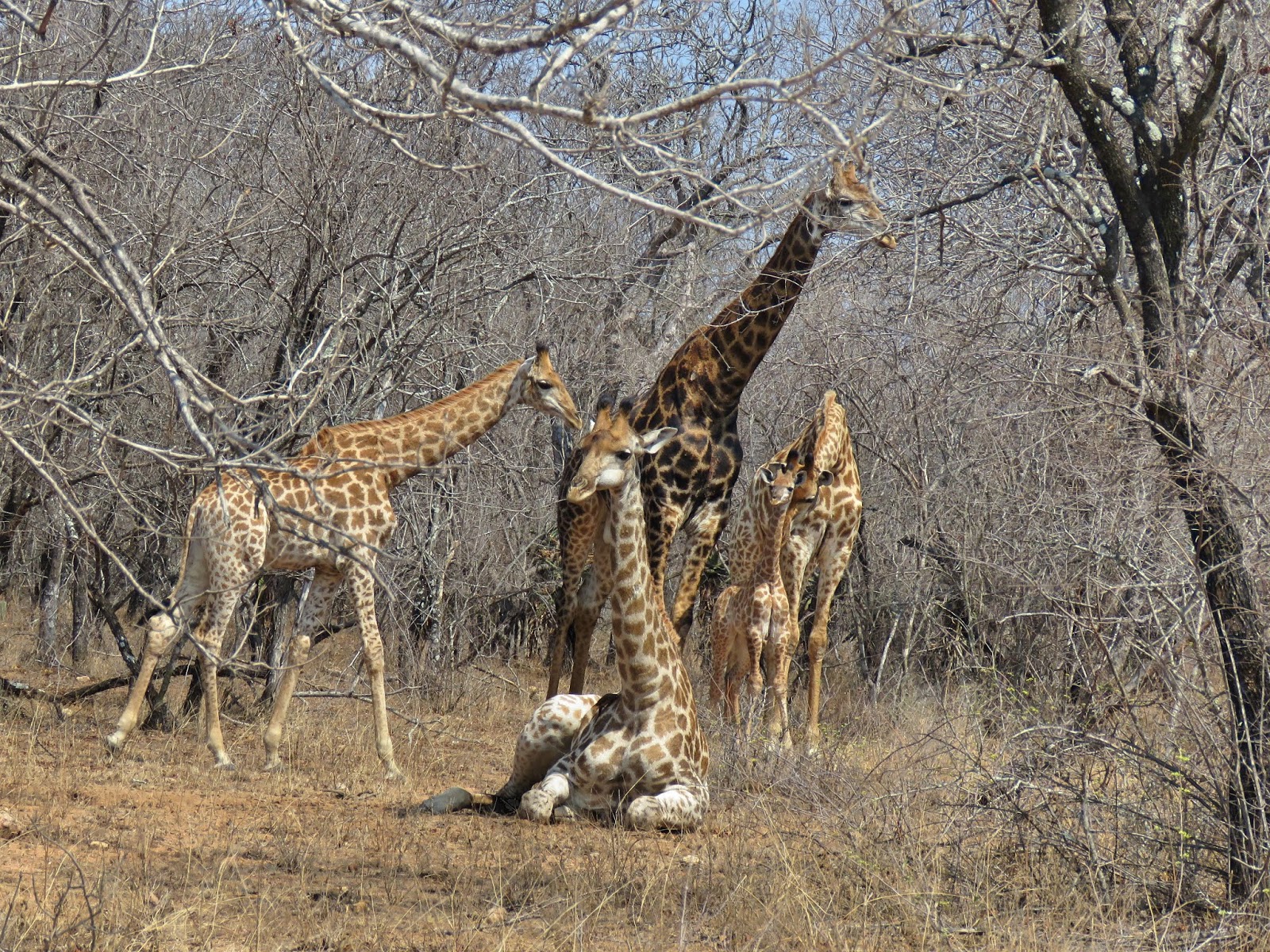
As we mentioned in yesterday’s post found here, sometimes just watching and waiting (patience and perseverance) produces excellent results. See below the result of doing so when we spotted this giraffe sitting in the bush.

Right now and over the past weeks, the “visitors” to our garden are limited; a few bushbucks, lots of helmeted guinea fowl, with an occasional mongoose or two running through the park. We can’t wait to see kudus, zebra and warthogs, and more during the daylight hours, but that won’t be happening for a few more weeks when the school holiday is over.

We’re happy the holiday ends before our friend Lois and Tom arrive on October 9th. It would be quite a disappointment for them to come all this way to see a few wildlife in our garden during the days. The evenings are better. Last night, Wildebeest Willie, Tusker and Ms. Tusker (mating pair, it seems), Siegfried and Roy (male warthog buddies), Mom and Baby Bushbuck, Mr. Duiker and Frank, and The Misses. made lengthy appearances, thrilled with less competition for food. They all got along well.
After watching this seated giraffe for some time, a monstrous dad, mom, and baby appeared. Please look carefully to spot the baby. Could the giraffe seated be there young from last season’s birth?

The previous night Siegfried got into an altercation with Tusker resulting in such loud warthog squeals that Martha came running out from her little house, wondering if everything was OK. A short time later, they returned, none the worse for the wear after the noisy fight. 

It’s easy to see how warthogs end up with holes in their faces when they fight for dominance with such vigor, usually over food and “women.” Aren’t those the exact reasons for starting wars?

After watching further, this family of five wandered off together into the bush.

In a local news article, we read that several animals are being darted and moved into Lionspruit, a game reserve within a game reserve located right here in Marloth Park. Lionspruit is the area where we’ve participated in braais, hosted by Louise and Danie, at Frikkie’s Dam. 

It’s incredible to see how quickly the ostrich chicks are growing.

There are two lions in Lionspruit, Dezi, and Fluffy (female and male), who will be happy to see the influx of possible food for them. There are adequate food sources for them in Lionspruit, but this choice made by locals rangers and veterinarians who will oversee the operation will add to their fodder.

This option, although daunting, is better than culling when food sources in Marloth Park are dwindling over the years, with more and more natural habitats being overrun by the building of bush homes. In defiance of the municipality’s rules, many owners grow grass and plant invasive alien plants, which they ultimately enclose in fences. 

They seem to enjoy hanging out with their siblings but once grown. They’ll be off on their own to start their own families.

This severely reduces the vegetation coverage from which animals can graze.  We often wonder what the status of Marloth Park will be in 10 to 20 years. This reality is relevant all over the world when natural habitat is destroyed by human intervention. It’s a sad situation as we see more and more wildlife becoming extinct.

Ten kudus, five zebras, five wildebeest, and two giraffes will be relocated, of course keeping the dependent youngsters intact with their parents. See the information we read on Facebook concerning the move.

Mom and Dad keep a watchful eye to ensure the safety of their chicks.
“The Marloth Wildlife Fund has been in contact with Wildlife Veterinary Services, who have proposed an excellent opportunity to move some of the excess game from Marloth Park to Lionspruit as part of their veterinary training courses. Qualified vets will, for a week, commencing on Monday 1 October, be available to dart and move animals free of charge.

 As no firearms are permitted to be used in Marloth Park, this is an ideal solution to the excess wildlife population in Marloth Park, which is devastating the natural environment. The population of animals in Lionspruit is at an all-time low, and the environment can accommodate more animals. The gene pool of different species is very low in Lionspruit. If more animals are not introduced, it could result in interbreeding, and the mutations that result will cause deformities, brain damage, etc.

The Marloth Wildlife Fund is concerned about the welfare of the animals and wants to ensure that they live as natural an existence as possible, have the correct nutrition, and build up a healthy population.
This initiative has been approved by the Municipality, and we have received the full support of MPPOA, MPRA, and the Honorary Rangers.
We appeal to property owners and members of the public not to interfere with the Vets who will be undertaking this task in the coming week.”
We wonder if any of those being moved are part of the many that visit us regularly.  We’ll have no way of knowing if they’ve been moved, injured, or passed away from other causes. But, I assure you, we’ll be waiting to see Wildebeest Willie in the garden, hoping he’s not in the lot that is going to be moved.
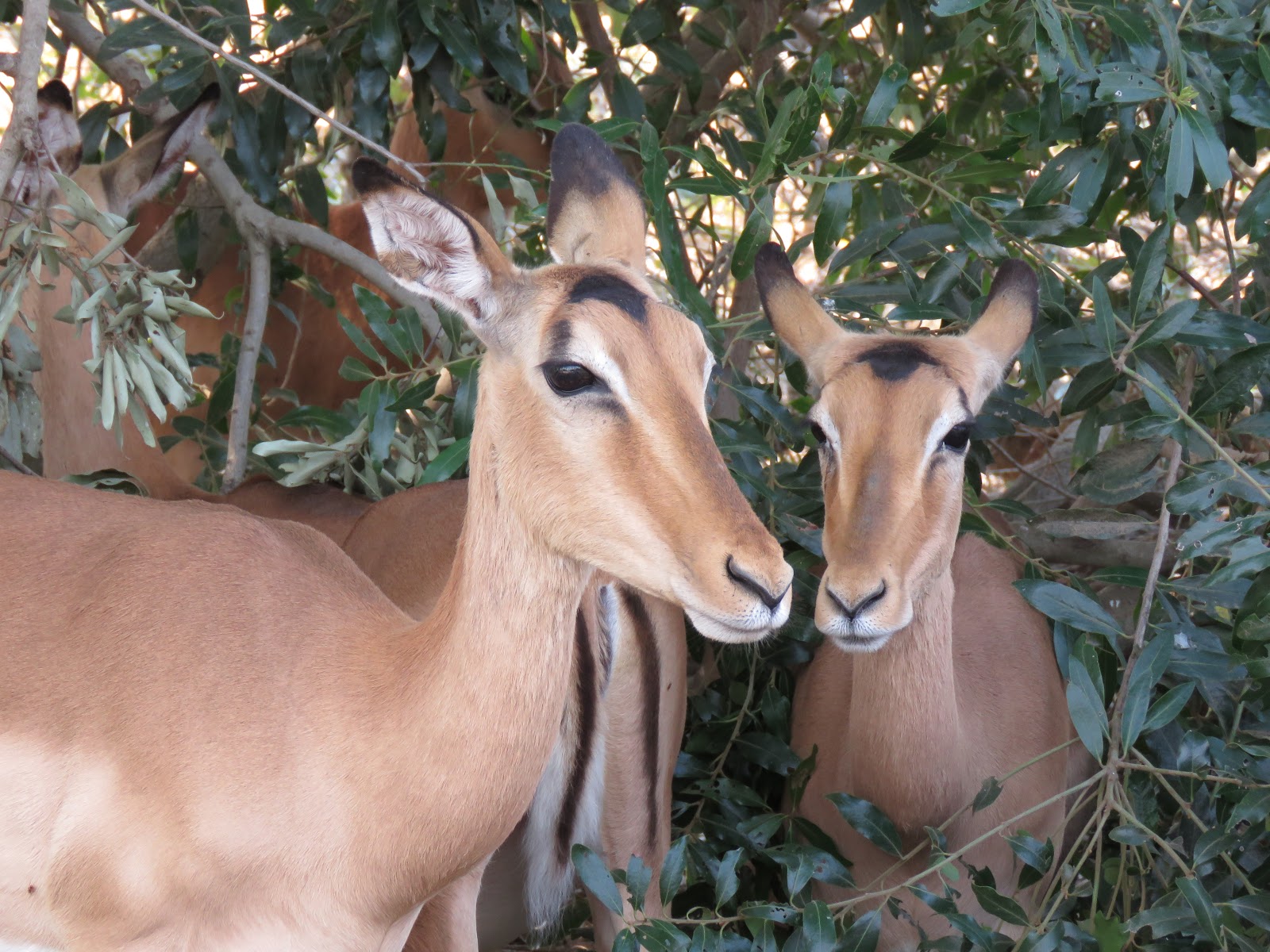
More beautiful impalas, as mentioned in yesterday’s post here.

Many homeowners are upset by this decision, but culling is undoubtedly a less appealing option. At least those who are moved have a chance of a beautiful remaining life if they can avoid being captured by Dezi or Fluffy. 

As mentioned above, there are dwindling numbers of animals in Lionspruit. We’ll be paying close attention to the results of darting and moving the wildlife and, subsequently, the long-term residual effect.
That’s it for today, folks. Have a fantastic day!
Photo from one year ago today, September 28, 2017:
Long view of the altar at San Rafael in Atenas, Costa Rica. For more photos, please click here.

Reaping rewards with patience and perserverance…

This was my favorite photo of the day. Impalas have exquisite markings on their faces and bodies.

“Sighting of the Day in the Bush”

This massive old elephant had the thickest trunk we’re ever seen!

Power outage. WiFi outage. This is Africa.

This morning, when the power went out before we had a chance to even start today’s post, we decided to leave the house to make our usual drive. When we were done, if we felt like it, we’d head to Komatipoort to do our weekly grocery shopping.
The poor elephant must be exhausted from carrying around this massive trunk.
Without much success on the drive, although we did spot a few distant lions at the river after a few hours, we decided to go ahead and drive to town to get the shopping out of the way.
The lions we spotted in Kruger yesterday were way too far for good photos. We did the best we could to capture these two.
Not back at our holiday homes until 1:00 pm, I knew I needed the get the groceries put away especially the perishables in this 38C, (100F) temperatures.  Luckily, the power was back on when we returned but the Wi-Fi was showing as “limited.” It slowed us down further.
There were three lions under this tree, but the other two were impossible to see behind vegetation. Not us! We’ve certainly seen a lot of lions lately but have yet to witness a pride walking on the road.  Perhaps, someday soon. But, who’s complaining?
In the interim, while awaiting the return of the signal, I went through many of the hundreds of photos we’d taken in the past several days. Good grief, that’s a full-time job in itself.
I often ask other amateur photographers what they do with all their photos. They usually shrug and say, “I hope someday someone would want to look at them.”
We believe this bird is a bateleur but are awaiting confirmation from friends Lynne and Mick, birding experts.
But, as we all know, most guests visiting us do not have any interest in looking at our vacation/holiday photos. Everyone has their own to deal with.  Fortunately, we have the joy of sharing our favorite photos here on our posts with our readers from all over the world on a day-by-day basis.
 
However, without this, I doubt we’d be so enthusiastic about taking photos. In our old lives, we rarely took photos and when we did they were fuzzy and off-center. Now, in this arena, we have a strong desire to post quality photos to share with our readers.
Awkward pose while drinking from the cool waters at the Sunset Dam, not far from Lower Sabie.
Taking quality photos is our objective, but getting a good shot of wildlife is tedious and time-consuming, especially in national parks where we compete for prime vantage points with other equally determined photographers.
 
In Marloth Park during the less busy holiday periods, taking photos is a breeze when there’ seldom anyone obstructing our view. But, then again, we’re dealing with nature, an unpredictable force that can move in a flash or not at all for hours at a time.
Proud male giraffe with dark spots.
Getting the right shot (photo, never gun) is entirely predicated on our patience and perseverance for precisely the correct moment. Now, we’re dealing with two forces of nature here, Tom and me, both of us, miles apart in our patience levels.  Can you guess who’s what?
More impalas were hanging out with a single wildebeest.
Yes, I’m the patient one, and Tom is always ready to move on. Oh, don’t get me wrong…he gets equally enthused over a good sighting, at times even more so than me. And, he’ll spend the better part of each day’s drive in Marloth and weekly drives into Kruger, maneuvering the car into suitable positions for the best photo advantage.
Since impalas and giraffes aren’t competing for food, they cohabitate pretty well.
But, once the camera clicks a few time, he’s ready to move on while I could sit for hours waiting for the animal to make a move. Surprisingly, this doesn’t cause any issues between us.  
 
We’ve accepted each other’s peculiarities so well. It never causes any disharmony between us. If either of us is adamant in our stance, the other will compromise. This feature of our relationship takes this 24/7 (24 hours a day, 7 days a week) lifestyle work for us. Without it, we’d have stopped traveling long ago.
Could the impalas be hoping that some of the lush unreachable greenery in the treetops may drop to the ground for them to devour?  It all depends on how sloppy an eater the giraffe may be.
As a result, I accept the reality that sometimes, I need to be willing to move on and not “stake out” a sighting for the perfect scene. Once in a while, I get lucky as in today’s main photos, one of my favorites in this past month or more, a simple photo of the ever-popular and abundant impala.
 
We have many more new photos to share if we didn’t go out to seek more photos ops we could post for at least two months without taking a single shot.
But, our dedication, combined patience, and perseverance motivate us day after day to go out and look for more.
We seldom can take such close-up photos of impalas who are notoriously shy.  We were able to do so as we exited a loop of the main tar road in Kruger.
We don’t forget for a day, subject to immigration/visa extension, we could be leaving Marloth Park in 146 days. At the rate they’re flying by now, this will be sooner than we realize.
 
Be well. Be happy.  

Photo from one year ago today, September 27, 2017:

 Basilica Nuestra Senora de las Piedade is one of the most beautiful Catholic temples in Costa Rica, unique in its Renaissance style, was built between 1924 and 1928. For more photos, please click here.