Arrived in Udaipur after a 16 hour travel day…The latest tiger photos are delayed…The pure joy of safari…

We passed over many sprawling rivers in Kanha National Park.

Note: We’d intended to post the new tiger photos today, but apparently, our order for the camera-to-computer adapter from Amazon India didn’t get delivered. Subsequently, we’re posing other safari photos and will get caught up as soon as it arrives. Thanks for your patience.

By the time we arrived at our hotel in Udaipur, the Fateh Sagar Lake Hotel, it was already 8:30 pm. We’d left the Tuli Tiger Resort at 4:30 am. As expected, we were greeted by a tour guide at the layover point in Mumbai, who drove us to the next terminal and again by yet another tour guide at the airport when we arrived in Udaipur. 

The beauty in Kanha National Park is breathtaking.

This personalized service is slick. We never have to figure out where to go and how we’ll get there. It is all arranged for us, included in our Indi tour package with Tailormade Journeys. Rajiv has done a fine job covering each step of the way. From time to time, we have questions that are responded to quickly and efficiently.

On the first of two flights, I ordered a small container of almonds and a cup of tea. Tom never ate a thing. We’d planned to go to dinner upon arrival, but after being so tired, we decided to go to bed and hopefully sleep by 10:00 pm. For the first time in a long time, I slept through the night. Tom awoke several times but also managed to get sufficient sleep to feel refreshed today.

A pair of Sambar deer.

The included breakfast is served at the hotel’s restaurant, and we both looked forward to a hearty meal to start the day. Although we can’t get bacon or any facsimile, we usually eat lots of eggs with veggies for me and eggs and toast for Tom. It fills us for the day.

The hotel in Udaipur isn’t as plush as we’d expected. Still, it has a view of Sagar Lake, and our room is spacious, clean, and well-appointed with everything we need: good WiFi, air-con, comfortable bed, and good plug-ins for our adapters and converters.

The bulky gaur, a rare type of buffalo.

The hotel reminds me of those I’d visited in years past, which was historic with 1930s decor. We’re pretty OK here. We’re staying in Udaipur for four nights total, and on Thursday, March 5th, we’ll head to Chennai. In the interim, we’ll be visiting points of interest in Udaipur and surrounding areas starting today at noon. We’ll share photos and stories of those visits over the next few days.

But today, we wanted to wrap up our final safari experiences, including the last sighting of a tiger in Kanha National Park in Madhya Pradesh (there are 28 states in India and eight union territories).
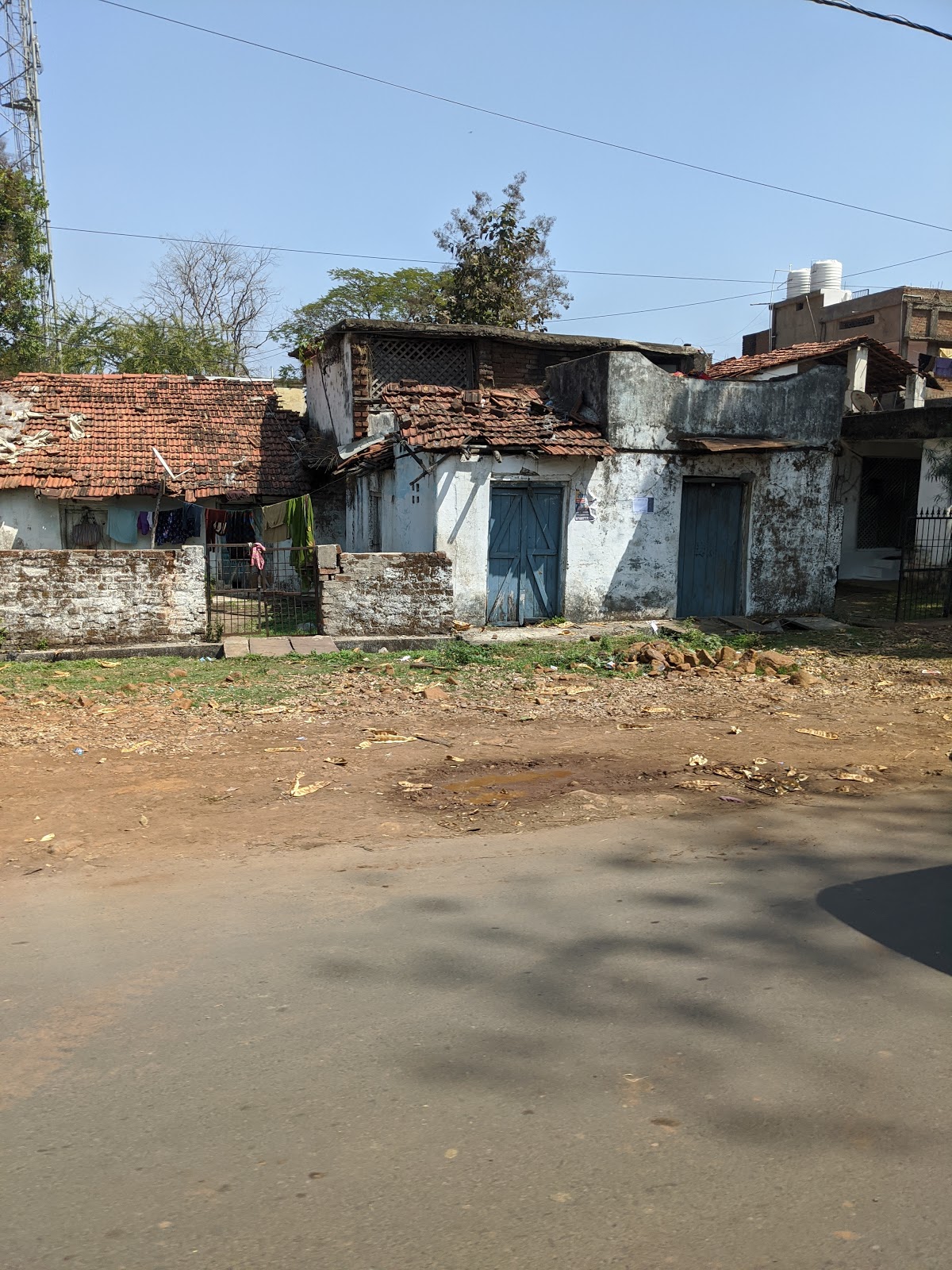
Many people live within the national park in modest houses such as this.

At the moment, we’re awaiting the arrival of the SD card adapter. Once it arrives from Amazon India, I’ll download the photos from the camera, which contains all the final safari photos.

On the last day in Kanha, I went on both the morning and the afternoon game drives on my own. Tom felt a little under the weather and is fine now, but he wasn’t quite up to bouncing around in the safari vehicle for 10 hours.

As I sat alone in the center seat of the safari vehicle’s three rows of seats (including one row for the driver and the naturalist) with a park representative in the third row), I felt comfortable and at ease. I had three professional guides to focus on finding a tiger, and all I had to do was balance myself on the outrageously bumpy roads and take photos when we spotted something.

A peacock was searching for a mate.

Of course, my eyes were peeled on the surroundings, hoping to spot the familiar stripes of yet another tiger. Yet, it was almost equally exciting finding other exciting species such as those we’ve included in today’s photos.

Once the safari ended, I found Tom waiting for me in the lobby, where he stayed and worked on his laptop in my absence. It was great to see him, but I felt liberated and pleased with going on safari by myself.
 
After my long and difficult recovery, it felt good to be independent for a day after a year of Tom’s thoughtful and generous hovering. I’d managed to get in and out of the safari vehicle independently without him or anyone spotting me, which requires cautious maneuvering to avoid injury.
Sambar deer on the side of the road.

We didn’t sleep more than four hours on the last night in Kanah, and after the long travel day, I was exhausted last night. The substantial bouncing for 10-hours left me a little stiff and sore, but not unlike the feeling after a good and healthful workout. Today, I feel like new.
Today, we headed out on a much-anticipated exciting tour in Udaipur, details of which we’ll share in tomorrow’s post.

Have a fantastic Monday! We’ll be thinking of YOU!

Photo from one year ago today, March 2, 2020:

This adorable female kudu is suffering from TB, as indicated by the tumor on the left side of her face. For more, please click here.

Wednesday was a travel day…Now amid more safaris at Kanha National Park…

Note: All of today’s photos were taken from the car on yesterday’s road trip. No captions needed.

Yesterday, as I wrote this post we were in a crisp clean white SUV with air-con comparable to other vehicles that have been transporting us from one location to another.

It was travel day once again with an expected 5½ hours drive time until we’d reach our destination and yet another safari camp, Tuli Tiger Resort, this time to Kanha National Park where we’d be spending another four nights with two game drives each day.

The drive is interrupted every three or four kilometers by small towns lined with shops and vendors selling fruit and vegetables, clothing, and a variety of tourist goods and household goods for the locals.

Cows, dogs, and goats wander through the streets aimlessly in search of the next meal and women walk with baskets of food and other items atop their heads, while men congregate in small groups discussing the events of the day.
The women wear colorful Hindu costumes impeccably draped and pleated regardless of their income level of poverty. The beautiful garb us unlike any other we’ve seen in the world. Although each town may have its own personality the premise of the Hindu philosophy is evident in every aspect of creating a certain familiarity from town to town.

Once back out on the highway, the landscape is brown and somewhat desolate, scattered with trees and vegetation of one sort or another.
It’s winter time here and until the monsoon season arrives everything the grasses remain brown and less hearty for the cows and other animals in search of good grazing fields.

With nary a patch of green for meandering cows and sheep, they often seek out public areas in hopes of food donations from the locals who appear at times to be very generous with their sacred cows. Hindus have a love of all creatures, both human and animals.

People often smile and wave as we pass through. School children in freshly pressed school uniforms play together in the streets without a toy or a ball and yet seem happy and content in their lives.

Their simple life is accepted with a powerful faith not so much as a religion but as a way of life leaving them grateful and accepting of whatever lifestyle they’ve been provided.

We are humbled and in awe of their dedication and their strength as they work their way through any obstacles life presents them. Many have no access to medical care, modern conveniences, clean water, and in many cases such taken for granted commodities such as electricity.

These individuals and families work together however they can to create the best life possible without complaint, without disharmony and without a longing for what could have been.

I often think of all the times I’d grumbled when making a call for customer service to end up with a heavily-accented Indian person on the line, often working in a hot uncomfortable boiler room taking calls for various digital and computer equipment companies all the way from India to provide customer service for companies in the US. Now, I have an entirely different perspective.

In a land of 1.3 billion people there’s is little to no government subsidies such as welfare, food stamps or government assistance. Overall, Indian people are on their own.

We’ve seen fewer homeless people here in India in the almost month we have been here than we saw in an equal time in the US. That speaks for itself and the powerful work ethic and life values imposed by their Hindu strength and principles.

This morning at 5:30 am we began our first morning safari from the resort. We didn’t see any tigers yet but we have five more safaris scheduled at this location, including another today at 2:30 pm. 

By the time we return for the afternoon game drive at 6:30 pm, we’ll freshen up for dinner, dine at 8:00 pm and head to bed shortly thereafter. It’s a busy and exhausting day but typical in the lives of wildlife enthusiasts like ourselves.

Have a fantastic day and night!

Photo from one year ago today, February 27, 2019:

The kudus give us “the look,” which means “more pellets please.” For more photos, please click here.

Safari adventures continue…The rigors of game drives…

A female sambar deer.

It wasn’t entirely about the Bengal Tiger. Safari in Bandhavgarh National Park also included many other forms of wildlife and, as shown, some stunning scenery along the way.

This baby elephant was being prepped for humans to ride him in search of tigers. Riding an elephant is a custom in India, but we wouldn’t ride one, as most of our readers know. 

The morning drive beginning at 6:00 am each day was cold, and we were covered with the blankets provided by the resort. The roads are as bumpy as can be, and thus, those with back or spine problems would be miserable during either the morning or afternoon game drives.

The baby’s mother was chained nearby. I supposed the chains are the saddest part affecting us animal lovers. We have to respect the customs in other countries as we travel the world. After all, we don’t cringe when horses are ridden.

Bathroom breaks are at a premium, and often the toilet is but a hole in the ground, not conducive for us women wearing pants. What a challenge that is! I choose not to drink any fluids in the morning to avoid the necessity. Of course, for men, behind a tree works well.

A white gum tree, the bark of which is used by locals for medicinal purposes.

Between the morning and afternoon game drives, one can expect to be out for no less than 8½ to 9½, making for a very long day. There’s a 3½ hour break between the morning and afternoon game drives, allowing time for lunch in the dining room. All Indian food is spicy and flavorful (not necessarily delectable to Tom. He ordered separately on most occasions).

When we stopped during the safari for our packed breakfast, consisting of boiled eggs, toast, and muffins for Tom and vegetables for me, a few cows entered the picnic area in the park.

Climbing in and out of the safari vehicles is not easy. It was challenging. But I managed well. My legs did not fully recover, but I kept a stiff upper lip and did so with nary a whimper. Tom stood close by, spotting me in the event of a fall.

Not easy to see in this photo taken at quite a distance, a tiger is dining on her catch.

In other words, safari is not necessarily for everyone. But, for us, after years of experience in Africa, we didn’t complain a bit and bounced our way through hour after hour of game drives through the rough terrain.

We saw many of these vine trees in the park.

Our fantastic safari driver was with us throughout the three days, and in each session, a different naturalist joined us. But, our driver Babalu was most knowledgeable after 27 years as a safari driver. 

“Apart from being a rich wildlife reserve, Bandhavgarh National Park in Madhya Pradesh has other ways to beguile travel aficionados. One can be interested in noticing an age-old fort called the Hill Fort or Bandhavgarh Fort standing right in the middle of the national park. This majestic fort allows visitors to peep inside the rich history and shows the prominent influence of religion in the state. So, what exactly are we talking about here? Well, we are focusing on the priceless heritage that includes the cave dwellings, shrines, and several sculptures that indicate the strong faith in the power of Lord Vishnu here.”

We wouldn’t have needed the naturalist when many barely spoke English (our problem, not theirs. We are in “their” country, after all) but seemed to provide good service as spotters whose hearing is acute and eyesight keen for sightings.

A Common Kingfisher.

When a tiger is nearby, the spotted deer make a barking warning sound. The driver and naturalist quickly picked up these sounds, and then the watch for the elusive tiger would begin. We’d often sit quietly in the vehicle at the side of the road for 20 or 30 minutes, watching and waiting for the animal to appear.

A gorgeous sunset over Bandvargarh National Park in India.

There’s tremendous with no sightings of any animals and others when they were in abundance. On a few occasions, they did appear. On many more other occasions, they did not. An impatient person would not do well under these circumstances.

Another photo of the tiger we spotted.

Since my camera card doesn’t work with my new Chromebook (no slot), I couldn’t use my camera until I purchased an adapter or cord. Subsequently, all of our photos were taken with our Google phones, not the best for zooming in, as we all know. There was a bit of frustration over this on my part.

Male spotted deer.

Plus, the photos from our phone, which generally would appear on my laptop within a few hours of taking them, didn’t appear for at least 24 hours with the slow WiFi signal using my phone as a hot spot or when sitting in the reception area of the resort. Yesterday, photos appeared on my laptop in a more timely fashion, and I was able to do yesterday’s and today’s posts in a little more timely manner.

Rare wild buffalo is referred to as a gaur. We were excited to spot this elusive animal.

We apologize for the lack of a post on Monday. No matter how hard I tried, I couldn’t get photos to load. There was no point in writing a story about a fine artist without uploading the images I took in the shop, especially when I was thrilled with their clarity.

Mom and baby wild boar. I love all types of pigs. This was no exception.

If you didn’t have an opportunity to see yesterday’s post, please click here.

Today, we are moving again on another over five-hour drive to the next safari lodge in our itinerary. We’ll be back with more on that soon.

Photo from one year ago today, February 26, 2019:

This is our Basket, the Bully, who was thrilled to see we’d returned to the bush.  Many weeks ago, he appeared with a bloody right ear, which now is but a stubble of an ear that seems to have healed nicely. For more photos, please click here.

The lamb saga on the farm continues…

 This photo op sent me swooning with delight.  Too cute for words.

Fascinating Fact of the Day about Witheridge: 
From this site:

The village of Witheridge is set in a gloriously scenic area dominated by the waters of the Rivers, Little Dart, Dalch, Taw, and the lovely River Mole. It is a charmingly un-spoilt village that has clung steadfast to its rural way of life, with farming mostly at the economy’s center. The village is perhaps best known for its beautiful village church. This has a sturdy clock-face tower crowned with pinnacles and is surrounded by an attractive churchyard. There is a village store, a post office, and a newsagent. Two village inns provide good food and lively conversation – the pub is the place to be if you want to meet the locals! Witheridge is on the Two Moors Way. Thus it offers easy access to the delights of both Dartmoor and Exmoor. The townships of Crediton and South Moulton are both just a short drive away.
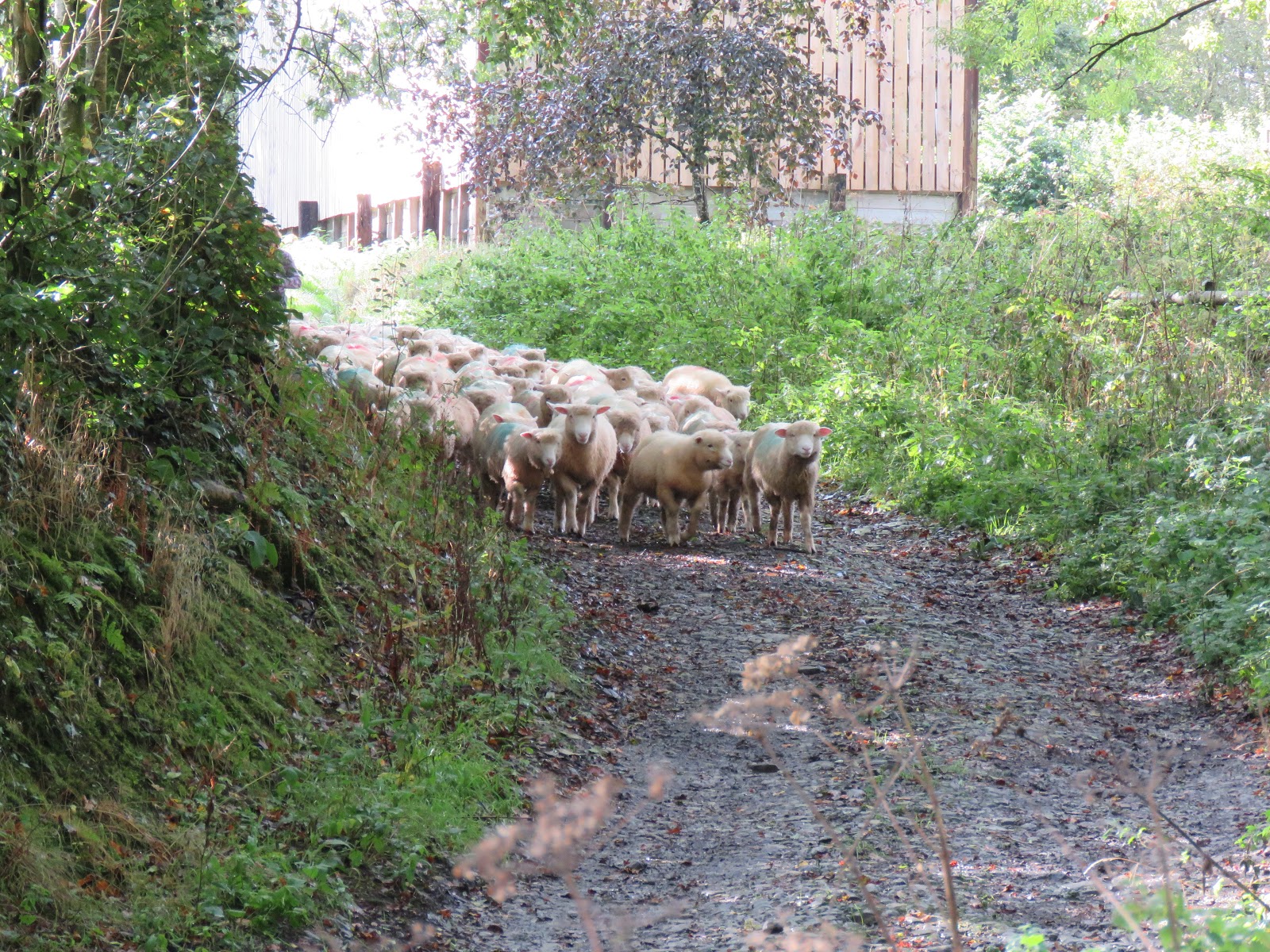
We’re still reeling over the entertaining experience we both had on Tuesday while assisting John and Renate in herding the 6-month old lambs from a paddock located across the road to the fenced area where the barns and outbuildings are located.
At one point, the lamb herd wandered over to the pond next door to our house, Pond Cottage. We couldn’t help but laugh.

I can’t help but tease Tom over his participation in this process as a competent shepherd. Moving this many sheep at one time always requires a third person to assist, most often a neighbor or friend.

The lambs wandered off to wherever they liked with little regard to the mission at hand.
Knowing we wanted to take photos, they asked Tom if he’d take the role of the third person while I would do what I could with both of my hands on the camera poised to take photos, and videos are shown in yesterday’s post here.
They checked out the pond.
Although we’ve always appreciated the work of farmers, we had no idea how challenging a process such as this can be, along with all the other endless chores facing a farming family.  
They stopped to graze on some fresh grass, far from where they were headed.
Living on this farm in Witheridge gave us an entirely new perspective. Not only do John and Renate handle 350 sheep (they have professionals do the steering), but they harvest tons of apples from their orchards and make their cider and apple cider vinegar. (Tomorrow, we will post photos and details for this fascinating process).
Finally, they acquiesced and entered the area to which they’d be nudged along. 
In addition, they have a good-sized garden, greenhouse, and apple orchard to maintain and harvest, wood to gather, chop, and sort for the wood-burning stoves, chickens, ducks, and geese to feed, the day-to-day management of the sheep, and the maintenance and management of their substantial 500-year-old house and of course, this separate house we’re renting. 
The chickens were curious as they watched the lambs herded into the barn.
John is on his tractor many hours each day. Renate works right along with him. The most fantastic aspect of this well-managed farm they handle without permanent staff is that they are both in their 70’s. John is 79! We can’t imagine working so hard at this point in life, but they seem to enjoy it thoroughly.  
With all of them in the fenced area, John nudged them along further.
John and Tom have spent hours chatting. They have similar views on many topics and can’t seem to get enough.  Unfortunately, they are leaving on holiday late tonight and won’t return until after we’re gone. We’ll be alone at the farm, but they have a friend coming to feed the chickens, ducks, geese and check on the sheep.
Still, a little resistance from the young ones.
They encouraged us to wander about at our leisure while they are away, and when there’s a sunny day (if there’s a sunny day), we may do just that. The grass, the rocky paths, and the walkways are slippery and muddy from the constant rain.
With all of them inside the fenced area, John and Renate locked the gate.  John is a retired doctor (no retiring for them working so hard on this 150-acre farm) and handles most sheep’s health issues with expertise and ease.
Today, when it stops raining, we’ll head out to the garden to pick a few tomatoes for dinner and see if we can roust up a few more tender morsels this late in the season.

May you have a fine day!

Photo from one year ago today, October 3, 2018:

A giraffe visiting our garden was quite a thrill. We’d seen this large male at other locations in the park.  For more photos, please click here.

Tom, the shepherd…A truly exciting farm experience…Out sightseeing, late posting…

Part 1…Tom, the shepherd…
Part 2…Tom, the shepherd…

Fascinating Fact of the Day about Devon: 
From this site:

Devon is home to the last castle built in England:
Not everything in Devon is really, really old. Castle Drogo dates from 1930 – and is the last castle to have been built in England. In 1910 Julius Drewe bought about 450 acres south and west of the village of Drewsteignton and asked Edwin Lutyens to build him a castle. The First World War and the economic downturn caused many delays. Exeter City Council had nothing to do with this one. The castle’s defensive characteristics are purely decorative and it had electricity and lifts from the outset, with power being supplied by two turbines on the river below.”
_______________________________
It’s 5:30 pm (1750 hours) and we just returned from a day of sightseeing when this morning we awoke to much-appreciated sunshine.  Based on the weather reports we may be bombarded with more rain over the next several days making today our big chance to get out.

When we noticed the sun was shining first thing this morning with the sky mostly blue with few scattered clouds, we hoped it would last throughout the day and to our delight, it did.  
Suddenly, they’ll stop and decide to go back the way they came.  It takes some coaxing to get them walking in the correct direction.  The sticks are never used to hurt them, only to guide them along the way.  It definitely is a minimum of a three-person job.  They often bring in outside help to assist when possible.  But, we were here and thrilled to assist.

Now, we see the grey clouds rolling in leaving us grateful we’d made this decision. We took many photos, but first, over the next few days, we’re thrilled to be sharing today’s photos and the heartwarming experience we both had yesterday when John and Renate asked if Tom could help with herding the sheep.

Finally, they were headed in the right direction.

Of course, my job was to take photos and assist when and if the lambs took off in the wrong direction near where I was standing. Each of the four of us had a specific spot as to where to stand. I didn’t have any sticks for guidance with my hands busy with the camera but Tom was well-equipped.

The lambs (150 of out a total herd size of 350), all born in March or April this year, began their journey down the road to be moved to the barn for worming and later returned to a different paddock.  Tom had two long sticks to help Renate and John with the shepherding while I took photos.  

He couldn’t wipe the smile off his face, nor could I. He’s not necessarily a farm-type of guy. His grandparents, mother, and father both grew up on farms. Renate said he was a “natural” sheepherder. Perhaps sheepherding is in his DNA!

Where we lived in Minnesota, we had some exposure to farms, by purchasing free-range eggs, chickens and organic produce from local farms. We always appreciated the hard work of farmers and the commitment to the lifestyle.  

After considerable guidance, they were headed to the barn.

A few times over the years we attended gatherings at various farms owned by Tom’s relatives or our friends.  We always treasured the experiences. Since we began our travels seven years ago as of October 31st, we’ve had the blissful opportunity to live on a few farms. This beautiful farm is the second in the past 30 days.

It’s always a treat to have an opportunity to interact with the farm animals and yesterday’s example will remain in our hearts and minds as one of our favorite hands-on experiences in our travels.

At one point, they turned and made an incorrect turn (herd mentality) and again, Tom guided them back in the right direction. 

For us, the “experience” has so much more meaning than seeing one more historic stone building, one more church or one more museum.We’ve already done that. And, no doubt we’ll continue to do that again for many years to come (God willing).

However, experiences such as yesterday’s sheep herding is hard to top in our realm of things. We loved every moment and we look forward to sharing more farm photos in the next few days. Please check out our videos, albeit a little jittery when I had to pitch in and assist.

This adorable boy wanted some attention which Tom and I freely offered.  So sweet!

From there we’ll share our sunny day photos of the Torquay, known as the English Riviera.Thanks for your patience in being able to see this late post. Please check back for more each day!  

______________________________________________________
Photo from one year ago today, October 2, 2018:
It’s important to always stop and wait patiently when wildlife is crossing the road.  No honking necessary!  They’ll move on.  For more photos, please click here.

Back at the farm…Pygora goats…Nutrients

Posing for a photo atop the picnic table. “The pygora goat is a cross between the pygmy goat and the angora goat that produces three distinct kinds of fleece and has the smaller size of the pygmy.”

Fascinating Fact of the Day St. Teath, Cornwall:
“The first recorded mention of cricket in Cornwall is an advertisement in the Sherborne Mercury on 18 June 1781 for the sale of cattle at St Teath, near Camelford. The advertisement was dated 14 June 1781 and signed by Nathaniel Long.  Whereas the annual sale for cattle at St Teath, near Camelford, Cornwall held on the first Tuesday in July had for several years feeling rather neglected. This is to inform the public that the Gentlemen farmers, etc., of the neighborhood, will produce a large show of cattle of the said day being the 3rd day of July next.”

Yesterday afternoon, farm owner Lorraine walked with me out to the paddock to see the pygmy goats and take better photos than I’d taken from a distance. It was a pleasure to get up close and personal with these adorable animals.

They had no fear of me. Lorraine and Graham acquired them at an early age, and not unusual for goats. They are friendly, playful, and hilarious in their antics. They plan to keep them as pets rather than for any other purpose.

I was able to pet them, unlike the wildlife in Marloth Park, and then even nudged me for more when I stopped. Below is additional information on these adorable animals:
The four of them continually hang out together.
From this site:
“They are generally quiet and docile, but there is some variation, as one would expect with goats. Housing requirements are less demanding than for the dairy breeds since the goats are so much smaller. Kids are reared on the dams, so milking is only rarely necessary. 
Castrated males (wethers) make ideal pets, but entire males should not be kept unless separate accommodation can be provided for them. The goats like company, so keeping single Pygmies should be avoided.
Pygmies need a high proportion of dietary fiber daily (80% by weight of the diet is a guide), hay being the main feature; they also need small amounts of low protein goat mix twice a day. They graze and browse well, but tethering Pygmies should be avoided.
Each of them has a name, taken from the TV series Poldark. “The Pygmy Goat Club has set breed standards regarding size and type and organizes show classes for Pygmy goats. It has its registration and pedigree system aimed at improvement by selective breeding. The adult Pygmy has a maximum height at the withers of approximately 56 cm for males, less for females, short legs, and cobby bodies that give an impression of perpetual pregnancy. They can be any color except completely white, with white Swiss markings on the face not allowed.”
The Pygmy Goat Club publishes an excellent booklet, “Pygmy Goats,” that describes all aspects of housing, feeding, breeding, and general welfare of these goats. It is recommended that this booklet is purchased and read before deciding to go ahead with keeping Pygmies. The P.G.C. has a website: http://www.pygmygoatclub.org, where further details can be obtained about the Club. There is also a network of P.G.C. Regional Advisers.”

Lorraine and I chatted about the farm, wildlife, and our travels as we stood in the bright sunshine. I loved the feel of the warmth from the sun, which has been a rarity of late, with the typical cloudy, rainy English weather.

After the walk on the farm, I returned to the house to prepare dinner. I’d sauteed mushrooms, garlic, onions, and aged white cheddar cheese to stuff the cut and flatten chicken breasts which I neatly wrapped in bacon and baked in the oven for 45 – 60 minutes at 190C, 375F, depending on how hot the oven cooks.
They approached me without hesitation.  “Pygmy goats are miniatures, genetically dwarfed; they are kept mainly for enjoyment, interest, and companionship.”
With rice and salad for Tom and salad and cooked watercress for me, we had another great meal. I’m rarely able to find watercress in markets throughout the world but found it here. It’s a nutrient-rich “superfood” described as follows: 
One cup (34 grams) of watercress contains the following:
  • Calories: 4
  • Carbs: 0.4 grams
  • Protein: 0.8 grams
  • Fat: 0 grams
  • Fiber: 0.2 grams
  • Vitamin A: 22% of the Reference Daily Intake (RDI)
  • Vitamin C: 24% of the RDI
  • Vitamin K: 106% of the RDI
  • Calcium: 4% of the RDI
  • Manganese: 4% of the RDI

It’s not that I regard the RDI (the British version of the US RDA) in the highest regard for its recommended daily allowances. We need a higher amount of nutrients than they suggest as a minimum. 

As for watercress, it is not the most delicious vegetable eaten raw but cooked for a few minutes; adding a little butter and salt makes it quite tolerable, if not delicious. Once cooked, one large bag results in two servings. It’s like spinach…cooked down. There’s not much there.

In the evening, we watched the final episodes of season 2 of Seal Team on CBS All Access on Amazon Prime, which is GBP 2.37, US $2.95 a month with commercials, or GBP 4.78, US $5.95 without commercials. It was an excellent series that we hope returns for another season.

“The pygmy goat, also known as the miniature goat, and African pygmy goat, is a breed of miniature domestic goat. The pygmy goat is quite a hardy animal and can adapt to virtually all climates.”

Today, we’d planned to head to Bodmin Moor but have decided to go tomorrow instead. We’re caught up in handling some financial tasks and resulting “paperwork.”

We’ll be back with more tomorrow with two days and counting…


Be well. Be happy.
Photo from one year ago today, September 18, 2018:
When the hornbills were satisfied with their day’s work, they headed back to the birdfeeder for a bit of sustenance. For more photos, please click here.

Will today be a good day for sightseeing?…The consumption of animal products…

The first animal we encountered in the paddock was pigs. As our readers know, I love pigs.  However, as cute as they are, they can’t match the appeal of a handsome warthog.

Fascinating Fact of the Day About St. Teath, Cornwall*:

From this site: “The village has an interesting history. St Tetha, (from whom this village acquired its name) came over from Wales, with her sisters, to this area of Cornwall to bring Christianity to those living here. Since then, the village has seen much change with the rise and fall of both mining and the railway. There is plenty of evidence of both around the area.  The oldest part of the village surrounds the village square – the focal point of the annual summer carnival, Remembrance day, Christmas lights, and New Year Celebrations.”

So far this morning, the sun is shining, but we’re noticing dark clouds rolling in. If it doesn’t rain, we’ll be on the road to go sightseeing in a few hours. Taking photos on rainy days has become a source of frustration for me, and I am determined to avoid adding rainy day photos to our inventory.  
We were especially enthused to see the pygmy goats. Unfortunately, the grass was too mushy and wet for us to get closer for better photos.
Yesterday, as I’d promised myself, I finished our 2018 tax prep and forwarded the documents and worksheet to our accountant in Nevada. It was a tedious task, but somehow I managed to get through it when I already had a considerable amount of the information in place, ready to enter the form. What a sense of relief that was!
Adorable pygmy goat “baaaahing” at us as we admired him.
Now we wait to hear from the accountant with questions. We’ll probably chat with him in the next week and wrap this up, putting it behind us. We have until October 15th to file the return electronically, which he’ll handle for us.
 
A few mornings ago, after a rainy night, we decided to explore the various paddocks to see the farm animals. It was lightly misting and still quite cloudy, but we couldn’t have been more pleased. 
Beyond this bush are two wind turbines which are prevalent in England.
After a lengthy walk in thick grass, we had to wash our shoes, leaving them outdoors to dry when the sun finally peeked out. The shoes I wear most days when we’re going out are water shoes.  

With only five pairs of shoes, I can’t risk ruining a pair in rainy weather making water shoes perfect for our travels. They are ideal on rainy days and yet, are outrageously comfortable.  Tom’s tennis shoes were also a mess, but he waited until the grass dried and then brushed off the grass using a dustpan brush.  

The countryside beyond the farm is comparable to a patchwork quilt with varying shapes and colors.
As we walked through the paddocks, we realized we’d have to ask the owners, Lorraine or Graham, to escort us so we could take better photos on the next sunny day. Undoubtedly, over the next ten days, it will be bright once or twice.
Geese and ducks co-habitat peacefully in a paddock.
We love African animals, but we are also drawn to barnyard animals who have a unique charm of their own. Sadly, some of the animals we saw here will eventually be slaughtered. I doubt the goats or the ducks and geese, kept for their eggs, will be subject to that dreadful fate.

Yesterday, I wrote about how we eat meat, chicken, and pork, yet we have angst about slaughtering animals. Isn’t that hypocritical? I suppose some would say it is. But, the reality remains…we have emotions about this topic.
More beautiful scenery as seen from the farm.
Unfortunately, I can’t be a vegetarian/vegan based on my strict diet, nor would Tom, who doesn’t eat vegetables or fruit. The way I justify this in my mind, which I must do to make peace with it, is the concept that God, a higher power or whatever your beliefs, created an environment with a “pecking order.”  
Every morning and also during the day, we hear the roosters crowing.  It reminds us of living in Kauai, where there are thousands of feral chickens.
As a result, readily available protein sources (necessary for life itself) are provided to each creature on the planet, including humans. Living in Africa for two years during the past seven years placed us in a position to accept the hard facts about the animal hunt and subsequent consumption of the captured food source.

No, I won’t get further into a philosophical view of whether or not to consume animal products. We each have our reasons, rationalizations, and dietary needs.
The last time we had access to a clothes dryer was in Costa Rica over two years ago.  What a treat!  Our clothes were washed and dried in a mere two hours, compared to a day or two of hanging them in humid weather.
Now, as I wrap this up, we’re watching the weather to see if today will be a good day for a road trip.  

Have an excellent day filled with beautiful surprises!
Photo from one year ago today, September 10, 2018:
Check out those long eyelashes. For more photos, please click here.

Thinking back to many months ago…Five days and counting…More favorite photos…

Downtown Clifden.

Fascinating Fact of the Day About Ireland 
“Connemara Chaos is a region of chaotic terrain on Jupiter’s moon Europa.”

After a much-needed good night’s sleep, I awoke this morning determined to get started packing, beginning with all my clothes in the master bedroom’s walk-in closet. 
 
Twenty minutes later, all of my clothing was neatly folded in my suitcase. I’d even begun packing the “supplies” suitcase which I’ll complete later today or tomorrow leaving out toiletries we’ll use over the next several days.  
An island in the lake.
I’ll place those items in a large ziplock bag for easy access for our overnight in Dublin and following two nights in Amsterdam. TDuringthose three days and nights, the clothing I’ll wear will be left on top of the other clothes in the suitcase, again for easy access.
 
While packing this morning, I couldn’t help but recall packing in Marloth Park as we prepared to leave almost three months ago. Where has the time gone? This morning as I packed in blissfully cool weather, I asked myself how I managed in the heat in South Africa during those last three months as I edged closer to be well enough to fly the long distance to Ireland.
Ruins in the area.
Sure those last three months were February, March, April, and part of May which are cooler during the summer months in Africa. But, it had been unseasonably hot during that period with humid temperatures well into 32Cs, 90Fs.
 
Without aircon in the house except for the master bedroom and numerous power outages, it was a difficult time. Looking back to how awful I was feeling then, I don’t know how I got through it.  
A Belted Galloway grazing among the rocks.
On the other hand, Tom was continuously busy cooking and caring for me. He, too, was feeling the heat along with the brunt of the seemingly endless power outages, and occasional water outages. It wasn’t easy.
 
And yet, when I was finally able to go out on the veranda during the last two to three weeks before we left, seeing the wildlife a few more times, made all of it worthwhile and bearable.
Ruins of a former home, partially restored.  It appears the house is occupied.
Oddly, many of our favorites came by, as if to say goodbye which brought tears to my eyes, how we loved our time in South Africa with only the final three months being difficult after my four surgeries. Also, sit was challenging to say goodbye to all of our friends, not knowing when we’d see them again.
 
We may be banned from South Africa for five years based on the fact we overstayed our visas by those three months. Although we’ve produced medical documents to request a waiver, we may never be approved.
This beautiful horse appears to be pregnant.
All of that is behind us now and although my recovery still continues, especially as I wean myself off several toxic drugs, those last three months in Africa have become somewhat of a distant memory.
 
This afternoon, I may go back upstairs to pack a little more.  In the interim, we’ll go about our day. Not unusual, it’s another dark and rainy day. We’ve already chopped and diced everything we’ll need for dinner and can sit back and relax knowing our time to leave is coming near.
One of the many small fishing boats we see daily.
May you have a peaceful weekend.
Photo from one year ago today, August 3, 2018:
The closest living relatives of hippos are porpoises and whales. For more Kruger National Park photos please click here.

Cruise upcoming…Six days and counting until we leave Connemara…Favorite photos continue…

Sunset across the bay.

Fascinating Fact of the Day About Ireland Halloween originated in Ireland. Halloween as we know it today actually originates from the ancient Celtic
festival of Samhain, when the people would light bonfires and wear scary
costumes to ward off unwelcome spirits. Samhain is an old Gaelic word which
translates to ‘darker half,’ thus marking the beginning of winter.”

It’s been easy living in Connemara, Ireland. We didn’t go out more than necessary for shopping and minimal sightseeing. We had Ann as our weekly house cleaner each week, except three weeks when she was ill. Tom did the bulk of the cleaning in her absence.

We cooked easy but delicious meals, healthful and suitable for my way of eating.  The kitchen is well stocked with almost everything we’d use during a three-month stay. (We’ve since replaced the French Press coffee plunger, which Tom accidentally broke last week).

The only drawbacks to the house were the spiral staircase and its difficult-to-use oven, which prevented us from using it more often than necessary. It’s part of the complicated stove used for heating the house and water system and requires 30 minutes to preheat the oven with inconsistent temperatures.

Kylemore Abbey castle…quite stunning.
Everything else has been ideal. There are two beds in the master bedroom which allowed me to avoid the risk of Tom bumping into my still-healing incisions.  In the future, we’ll be sharing a bed once again, as we always had and ultimately prefer…in a mere six days.

The living room has been comfortable for us after we moved the furniture around to suit our needs with comfy chairs with views of the sea and other comfy chairs facing more ocean views and the flatscreen TV.  

Kylemore Abbeys Victorian Garden.
Unusual for us, we’ve spent a lot of time with the TV on, not necessarily watching anything during the day but enjoying our streamed shows in the evenings, which we download from various sites, some free, others paid.

At 1630 hours, 4:30 pm, each evening, we’ve settled into “happy hour” seated in the two comfy chairs looking out to the ocean from the big picture. Tom had a cocktail while I had a glass of red wine.   

World-famous food truck, Misunderstood Heron, draws tourists from all over the country.
An hour later, we’d be drinking iced tea (for Tom) and Pellegrino sparkling water (for me) as we’d get busy putting dinner together with a plan to sit down to eat by 1800 hours, 6:00 pm.

After dinner, Tom cleaned the kitchen while I figured out the evening’s viewing, setting up my laptop with the HDMI cord hooked to the TV. Since it stays light so late, I’ve stayed up later than in the past, and we often “knocked off” three favorite episodes.

View of Killary Fiord from the Misunderstood Heron.
Endless chatter and laughter between us ensued during the day and well into our viewing time in the evenings. Often, we’ve had to replay a portion of a show when we were talking over it. It has been a favorite time of the day for both of us.

Was I going forward?  Everything will change. Two days in Amsterdam and then onto the cruise won’t necessarily allow time for lounging. I’m so used to lying on the sofa when I run out of steam. I’m going to have to push through these periods.  

Formerly an actual food truck, the Misunderstood Heron changed to a renovated shipping container, providing more space for food prep. However, it’s still referred to as a “food truck.”
We’ve never enjoyed spending time in our cabin during the day. Mornings will be busy with breakfast in the dining room at a shared table to meet new people. No doubt, we’re ready for some socialization.  

After breakfast, we’ll get our laptops and head to a comfy location to prepare the day’s post taking the better part of the day when friendly folks stop by to chat. We never say we’re too busy for socializing!

What a spectacular spot for boating!
This particular cruise only has a few sea days. We are booked on one two-day tour in St. Petersburg but no others. For the other ports-of-call, we’ll grab a taxi at the port to give us a time of the city for a few hours, allowing us to take photos and experience the local charm.

Evenings, we’ll head to the Crown & Anchor Society complimentary happy hour(s) for priority club members such as us, usually hanging out with other passengers.  Appetizers are typically served at this time; often, I can have: raw veggies, prawns, and a variety of imported cheeses.

After the happy hour, we’ll head to dinner for a shared table in the main dining room. We prefer not to have assigned seating which requires sitting with the same passengers each night.  

The Misunderstood Heron’s view from their backyard.  
We seldom make dinner reservations and show up at the dining room, usually by 1930 hours, 7:30 pm, whenever we’re ready to eat. Generally, the queue is short, and the wait is insignificant. We’ve found that choosing when we want to dine and the freedom to be seated at a shared table with new passengers each evening creates a more well-rounded experience for us.

I can only hope and pray I can do all of this. At this point, I have no idea. Thank goodness Tom is supportive of what I will and won’t be able to do. This takes a lot of pressure off of me. So, we’ll see how it goes.

Have a fantastic weekend!
Photo from one year ago today, August 2, 2018:
What an animal!  We feel fortunate to have been able to get today’s photos of lions. For more lion photos, please click here.

Starting to wind down…Seven days and counting…Trying to get well…

Family of four walking along the road.

Fascinating Fact of the Day About Ireland 
“The shamrock is not the national symbol of Ireland. The shamrock is recognized worldwide as a symbol of Ireland and the Irish, but the harp is the official National Symbol of Ireland. You can see the real harp on which the symbol is based at the Trinity College library, which dates back to the fifteenth century.”

As I struggle to wean myself off yet another dangerous drug, Amiodarone, that had recently caused me to bump into walls, feel dizzy, and be very unsteady on my feet, I feel exhausted and out-of-sorts.  
 
The drug has a long half-life and may take a year to get entirely out of the patient’s system. Here is a document on its awful side effects. Here’s additional information from the US FDA, which considers the drug with a “Black Box” warning.
We often see abandoned boats along the shore overgrown with vegetation.
After reading tons of information on this drug and having been told by the surgeon I could get off these and other drugs “in a few more months,” at my last visit, and when I began experiencing side effects, last Saturday I took the last pill, going cold turkey. It will take a long time for the side effects of the drug and the weaning process to subside. I couldn’t wait another day.
 
Why get off such a dangerous drug so close to the time we’re leaving? The side effects were worsening daily, and I felt I had no choice. Side effects may easily result in permanent damage to many parts of the body.
Cloudy reflections on the lake.
If you are currently taking this heart medication (or others), please talk to your doctor before changing or stopping the dose. For some, this could be life-threatening. I am not offering any form of medical advice. I am only sharing what has happened to me.
 
I’d hoped once I stopped the statins, I would feel better—foolish me. I have two more drugs to wean myself off of but won’t do so for some time until Amiodorane is more out of my system.  
Wildflowers are blooming throughout Ireland this time of year.
This drug is used for an irregular heartbeat, known as AFib, which I only had in the hospital while in ICU. Once at “home,” I had no more incidences.
 
Due to the nature of this drug, my resting heart rate has been too low, often in the high 40’s. It’s no wonder I have been so exhausted and lacking in energy.  Why I was given such high-risk medications baffles me.  
Yellow irises at the water’s edge.
I wish I’d been told the risks and could have made my own decisions. But at the time of the surgery, I was frightened, confused, and relying on medical professionals to decide for me. I wish I’d been more curious about the medications instead of taking them blindly.
 
Now, I am on my own, trying to figure it out. I contacted the doctor for advice but he made it clear I am no longer under his care based on the fact we have left South Africa.  
Even the craggy rocks appeal to the sheep during times of rest.
I do not want to go to a cardiologist at this point. I was told to see one on the first anniversary of the surgery providing I wasn’t having heart issues which I am not. The only problem I’m having at this point is the side effects of various dangerous heart medications.
 
No, I won’t get out my soapbox about Big Pharma and how its influence has become worldwide. That’s for another day. Right now, I’m looking forward to not walking into walls and doorknobs and feeling steady on my feet. Hopefully, soon that will come but I have to be realistic that I may need to get off more drugs to feel totally well which could take many more months.
Sheep family on a hill.
I deliberated over whether I should mention this here. But, after being so candid all along, and if any of my experiences helps only one reader in some small way, it is worth it. Again, please consult with your doctor for any medication changes.

Today, I will begin packing in bite-sized pieces over the next several days instead of rushing at the last minute. I always dread packing, but once I get started, I realize how easy it is.


Thanks for listening. Have a fantastic day!
Photo from one year ago today, August 1, 2018:
Our bird feeder is often surrounded by hornbills. For more photos, please click here.