Part 1…An environment of dedication, compassion and love at the Cairns Tropical Zoo…

It’s ironic that one of our favorite wild animals at the Cairns Tropical Zoo was the Dingo, looking familiar to us as a domesticated dog. However, Dingos are wild animals, and many attempts to domesticate them have failed. 

With expectations in check, we met Jasmine, the Mammal Department Supervisor at the Cairns Tropical Zoo on Tuesday morning. When neither of us has visited a zoo in many years, we found ourselves with mouths agape as Jasmine gave us a private tour that will remain a treasured memory for years to come.

Binturongs are closely related to the mongoose and distantly related to skunks and weasels. They have a distinct odor common in both males and females, similar to that of popcorn which is produced when scent marking for territorial rights and mating. This fellow is named Sari. Binturongs are on the endangered species list.

For world travelers, having spent nine months in Africa, having been on safari on many occasions, we had no idea how much pleasure and joy we’d experience seeing wildlife in a confined environment. With our previous lack of zoo experiences in the past 30 years, we had no idea how times have changed in the zoo industry.

The Wildlife Wedding Chapel on the ground of the zoo is a popular venue for weddings. Please click here for details.

Cairns Tropical Zoo depicts the epitome of progression resulting in the nurturing, love, and compassion of the preservation of many species we’d seldom, if ever, see in the wild during our time in Australia, on and off over a period of almost two years. 

The Koala, Phascolarctos cinereus, or, inaccurately, koala bear, is an arboreal herbivorous marsupial native to Australia. It is the only extant representative of the family Phascolarctidae, and its closest living relatives are the wombats.  In most cases, we don’t take photos of the wildlife from behind, but this scene made us smile when we visited the Koala nursery.

Jasmine spent considerable time as the three of us gathered in the Koala Cafe, answering our seemingly endless questions about the zoo, its management, feeding, and care of the vast array of wildlife. 

Check out this Koala face!  Could it be any more adorable?

Afterward, we were all anxious to continue on as she personally escorted us on a tour to see many of the zoo’s precious inhabitants. As a dedicated 10 plus year employee, Jasmine exhibits an enthusiasm one would never expect upon such employment longevity.

This scene took our breath away. This is a mother Koala with her “Joey” which is the name for all marsupial offspring. A Koala Joey is the size of a jelly bean, with no hair, no ears, and is blind at birth. Joeys crawl into the mother’s pouch immediately after birth, staying there until about six months old.

Throughout the tour, we never felt a sense of bored animals confined in small spaces with little to do but sit and watch annoying visitors. Instead, the expertly designed and maintained environments befitting each animal’s natural habitat, created a feeling of openness and freedom, enabling each species to thrive, propagate and live long, healthy lives, enhanced by the constant love and care of the many employees.

The natural bond between moms and their offspring is always precious to observe. Many visitors gathered around this area in awe of the experience.

Such was apparent in Jasmine’s description of each aspect of the zoo, as her eyes twinkled with sheer delight as she introduced us with pride to many of the species from the Komodo Dragons to the wide array of birds in the various aviaries. 

Jasmine, Tom, and Koala mom and Joey, who was named Violet after 10-year, devoted employee Jasmine’s daughter. 

What particularly appeals to us is the fact that the Cairns Tropical Zoo has rescued many wild animals bringing them back to health after severe injuries and illness that would prevent them from safely returning to the wild. Those deemed fit for released is returned to a safe wild environment. 

They were both checking out the action. Koalas eat as much as 1000 eucalyptus leaves per day. 

In addition, the zoo has taken the responsibility to include many endangered species, as well as those that may have been cast aside from private citizens hoping to domesticate an animal such as a Dingo, an animal never intended to be kept as a pet. 

This young Koala ventures away from mom for a moment.

As we often hear, wild animals are just that.  hey aren’t intended to become pets and the cast-offs of irresponsible owners often end up in zoos. Cairns Tropical Zoo welcomes such animals, anxious to provide them with a rich life they so well deserve since most often they cannot be returned to the wild and survive.

Boa Constrictor, safely behind the glass enclosure. There was a Reticulated Boa in the background which was difficult to see in the darkened area.

Much to our delight and good humor, Jasmine explained that oftentimes, a variety of birds and wildfowl including the Pacific Black Duck fly into the zoo’s habitat of other birds deciding on a free meal and “easy ride’’ often staying at their leisure. Nonetheless, these wild birds are fed.

The massive size of numerous Crocodiles in their well secured, but the viewable area is difficult to describe here. Their weight is estimated when it’s impossible to ever get them on a scale. They may weigh upwards of 1000 kg, 2205 pounds. 

The Cairns Tropical Zoo is located only 20 minutes north of Cairns, and 35 minutes south of Port Douglas at Palm Cove on the Captain Cook Highway. With easy free parking and reasonable entrance fees, it’s the perfect venue for both children and adults, tourists, and locals alike. 

It isn’t often we could get quite this close to a Crocodile to have a close-up view of the complex tail and hide.

The wildlife areas are easy to navigate with only a few gradual inclines making it possible for many with limitations to enjoy full access to most areas. For the times of operation, entrance fees, and extensive information about the Cairns Tropical Zoo, please click the links provided.

A smaller female Crocodile sunning with her mouth within close proximity to a larger male.

Tomorrow, we’ll return with Part 2, more photos and information about our visit to the zoo and our many new experiences with the wildlife we’ve never seen in our past worldwide travels.

Like us, Crocs have five digits but, that’s where the similarities end!


Photo from one year ago to July 11, 2014:
The fuzzy green buds on this exquisite orchid were quite a joy to see while on a flower hunt in Madeira. For details, please click here.

Breathtaking Cattana Wetlands…Exciting news on the horizon…Stepping outside the box on Tuesday…

The Cattana Wetlands offered excellent expansive views.
Vegetation growing in the lake at the Cattana Wetlands created this view.

Our sense of relief is totally wrapped around a high degree of excitement. We’ve filled the gap in our schedule for next June, July and August and couldn’t be more thrilled with the bookings we’ve finalized as of late last night.

There were numerous signs warning of the possibility of crocodiles as we entered the Cattana Wetlands, none of which we’ve seen as yet.

In tomorrow’s post, we share the first half of the details with the balance the next day, each warranting their own post with the amount of information and photos we have to share.

As it turns out, we have an upcoming appointment on Tuesday morning at the Cairns Tropical Zoo to interview the Mammal Department Supervisor to learn about the zoo, the care, and preservation of the wildlife, and to take photos of the wildlife indigenous to Australia. 

Who knows what creatures may lurk beyond the vegetation?

OK, I get it. We’re hypocrites. We said that we “don’t do zoos” and normally we don’t. The reason we haven’t done so in the past is due to our love and respect for the preservation of animals in the wild. After all, we did go on many photo safaris in Africa in both Kenya and South Africa. 

The sun reflected in the wetlands creating this orange glow in the water.

However, we feel we could justify, rationalize or in less severe terms, simply explain, why we’re visiting a zoo on Tuesday to write a story about the facility, its operation, and the care for its vast array of Australian wildlife.

The Cattana Wetlands are well arranged with paved walking paths and clearly marked areas.

Many moons ago, we spent days researching possible “safari-type” adventures in Australia, contacting many potential resources to get the same answer each time, “We don’t do safaris in Australia. You can drive to the Outback to possibly see some wildlife on your own.” 

The various ponds and lakes were clearly marked.

Frustrated that such a safari wasn’t realistic we gave up searching only to begin again once we arrived in Trinity Beach. After using no less than two gig of data searching online, again I came to the realization that its is not going to happen unless we rent an RV to make the trip on our own. 

Peeking through the trees to the main lake in the Cattana Wetlands.

Now, don’t get me wrong, we seriously considered touring the Outback on our own without fear or apprehension. We’d considered using the gap in our itinerary that we’ve since otherwise booked that we’ll present tomorrow and the following day. 

Areas were clearly marked with maps and descriptions.

The problem in touring the Outback on our own is the cost of the rental of an appropriate vehicle, preferably an RV with four-wheel drive (although not necessarily required) when hotels and RV parks, although available, aren’t as readily available as one may think. 

We expected a beaver to pop up at any moment. 

The bottom line for us is the cost. A moderately sized and priced RV with toilet, shower, kitchen, etc. would cost in the range of US $15,000, AUD $19,954 a month when adding RV rental fees, fuel, groceries and RV park fees. The price of fuel alone would be outrageous when the cost here in Australia is twice as much, if not more, than the cost in the US.

This small island was located in the middle of the lake.

In addition to the cost, we wouldn’t be able to get online and, most importantly, we may seldom find wildlife.  The Outback is a vast desolate desert. One can drive for hours and hours to never see another vehicle. 

 A close up of lily pads on which some creature enjoyed lunch.

Here’s an interesting article regarding some of the potential challenges of driving through the Outback.

The lakes were covered in parts in lily pads.

Believe me, this has been a tempting prospect. But, reality prevails, and incurring this type of expense for that which may prove to be a very long drive in a vehicle with little to see, we decided against the possibility. 

One of many paths we’ll explore when we return in the future.

Instead, in this almost month we’ve been in Australia, we’ve wandered through many rainforest areas looking for wildlife including the Cattana Wetlands for over an hour (we’ll return again with insect repellent and proper clothing) we only saw a few birds, none of which we were able to get a photo.

It was especially appealing on a sunny day. 

As a result of this long and convoluted situation, we decided that the only way we’d see a large amount of indigenous wildlife would be to visit a zoo, one of which, The Cairns Tropical Zoo, is located near the Palm Cove area we visited a week or so ago.

Leave that have changed color.

Contacting the Manager of Wildlife and Operations, we’ve been able to secure an appointment to interview a zoo supervisor to learn what we can about Australian wildlife which we’ll share here with photos and descriptions over a period of several days.

From a distance, we thought these were flowers when in fact, they were colorful leaves.

Sure, we hesitated at this prospect based on our passion for animals in the wild. But, we both feel a tremendous desire to learn more about the exquisite and unusual inhabitants in the wild in this amazingly diverse continent.  The only logical means of doing so with the least amount of expense and time is to take the path we’ve chosen, albeit with a bit of trepidation. Hypocrites? Perhaps. Wildlife enthusiasts? To a high degree!

As we entered the wetlands, this was the first path we took toward the lake.

Today, we’re sharing the photos we took a few days ago at the Cattana Wetlands. Here’s a blurb of the story of the wetlands from this site:

“Originally a sugarcane farm owned by Franco Cattana, the site was used as a sand mining quarry resulting in several fresh and saltwater man-made lakes. The land was purchased by the then Mulgrave Shire Council in 1993, primarily to protect the 30 hectares of lowland rainforest on the western end of the site. This forest, described as the Feather Palm Forest, is a remnant of a once extensive forest type that is now confined to only a few remnant patches in the Cairns region. Council has planted over 70,000 native plants and undertaken extensive weed removal enabling existing water bird populations to flourish. As part of the 150th anniversary of Queensland celebrations, Council and the Queensland State Government each committed $1.5 million to the rehabilitation of the site. The works program included the construction of boardwalks, walking tracks, bird hides, and viewing platforms, picnic areas, interpretative signs, car parks, access roads, and toilet facilities. In addition to the amazing wetland habitat, Cattana Wetlands also harbours an impressive range of north Queensland wildlife and significant plant communities.”

Tomorrow, as stated above, we’ll be sharing our new bookings. Please stay tuned for much more to come!

Again, to our family and friends in the US, have a safe and memorable Fourth of July celebration.

                                                Photo from one year ago today, July 4, 2014:

There are many tunnels on the island of Madeira, Portugal, located off the coast of Morocco in Africa. We enjoyed every day of the two and a half months we spent in a gorgeous house overlooking the hills and the sea. Also, on this date, one year ago, we posted our upcoming itinerary available at that time.  Soon, we’ll be posting an updated itinerary, including the booking we’ll be sharing in the next few days. For more details, please click here.

We hit the road and found another fabulous area…The scenery never ends in Australia…

One of many quaint outdoor/indoor restaurants along Williams Esplanade In Palm Cove beach. More photos of the boulevard will follow tomorrow.

Midday yesterday after my stint at the fitness center, we decided to drive until we found more amazing scenery we’d yet to see. It wasn’t a difficult task to accomplish as we headed north on the Captain Cook Highway, beyond a point which we’d driven in the past.

A boat launch near the Palm Cove pier.
The beach with a few adventurous sunbathers.

At a long distance from our area, we’d seen a pier that piqued our curiosity. After asking Sylvie and Andy about it, they suggested it was definitely worth a visit.

When the sun peeked through the clouds, the views were especially appealing.

We couldn’t have been more pleased after we turned east down the road we’d guessed it might be to find the beautiful Palm Cove, a fabulous beach and resort area with restaurant-lined streets, shops, and tourist attractions.

The pier had been designed with various levels to allow those fishing to be out of the way of the walking visitors.

Surprisingly, on a busy Friday, we managed to snag a parking spot and were able to walk up and down the beach along Williams Esplanade soaking in all the quaint and interesting buildings. 

The view of Palm Cove beach from the pier.

Too close to the buildings and with the street crowded with tourists, it was difficult to take good photos from the sidewalk. After our walk, we slowly drove along the boulevard enabling us to get some decent shots to share here over the next few days.

Notice the white plastic holders on the posts. These holders are for the purpose of holding the fishing rods while those fishing can take a break from holding their rods.

The walk on the pier was pleasant on a sunny day and we were able to watch fishing enthusiasts avidly perusing a fine catch of the day. In our old lives, we enjoyed fishing but now without equipment of our own and prohibitive costs to buy or rent equipment, it’s not something we need to do. 

The long, fairly wide pier is a commonly visited spot for tourists.

The pier was packed with tourists armed with cameras, like us, along with families and kids enjoying the beautiful, albeit windy day. There were a few sunbathers lounging on the beach and a few in the water, oblivious to the danger signs posted everywhere in regard to the stingers and crocodiles.

A brave kayaker in the ocean with sharks, stingers, and crocs in these waters.

Palm Cove has numerous hotels and resorts and interesting history:

“The history of Palm Cove dates back to over 60,000 years ago when the Aborigines became the first settlers. The most famous landing at Palm Cove happened in 1873 when G.E. Dalrymple’s Northeast Coast Expedition landed to explore the beach. The expedition was met with hostility by the indigenous people and they opened a violent assault on the exploring crew which led to one of the largest beachfront invasions in Australian history. Shortly before World War I in 1918, the land that is today Palm Cove was bought by Albert Veivers from Archdeacon Campbell. Archdeacon Campbell had been known as a priest at Cairns church who experimented with bringing different agricultural crops to the Cairns region. Veivers was important in the advancement of Palm Cove by having the first road built. The creation of the road led property values in Palm Cove to increase dramatically, leading to more prosperity for the community. Shortly after World War II, in which Palm Cove was used as a training base for Australian soldiers, the number of people traveling to Palm Cove greatly increased. The opening of the Ramada Reef Resort in 1986 marked the first international hotel chain to be located in Palm Cove and the town has continued to increase in national and international recognition ever since.

Palm Cove is located in Far North Queensland and is on the coast of Australia. It is guarded against the South Pacific Ocean by the Great Barrier Reef. Palm Cove is completely surrounded by the Daintree Tropical Rainforest and is close to Daintree National Park. Since Palm Cove is located in a tropical climate, the average summer temperature is between 24 and 33 degrees Celsius; the average winter temperature is between 14 and 26 degrees Celsius.

On our walk back to the beach.

Palm Cove proved to be an interesting and enjoyable spot for us to visit. Later, on our return drive to Trinity Beach, we discussed how different our lives may be then for those of tourists. Most tourists visiting this area would have stopped for a meal and/or drinks in one of the many dining establishments along the way. 

Catching Tom off guard on the Palm Cove pier.

Instead, we read and take photos of the posted menus for the restaurants we may return to down the road when the mood hits us. Dining out is less enjoyable for us when my restricted way of eating makes doing so complicated at many restaurants. But, we’re not complaining.  

The sand on the beach in Palm Cove is known not to be as fine sand as other beaches in the area.

Checking out the various locations is satisfying enough for us. It’s just not worth my ordering a steak for AUD $35, USD $26.80 when it’s being cooked on a grill where foods with gluten, starch, or sugar may have been cooked. We can easily purchase and cook fabulous grass-fed steaks for AUD $15, USD $11.49 each, with side dished we know I can have.

The sixth fish down in the left column on this list is the popular local Barramundi Cod, often found on menus in local restaurants. Apparently, according to this list (see photo below), the sign says, “No take,” perhaps indicating they cannot be kept if caught.

 Barramundi Cod as indicated on the fish identification sign in the above photo.

Neither of us feels any resentment even in the slightest manner by the virtue of the fact that “Hey…we’re traveling the world and we’re healthy. What more could we ask for?  Nothing, absolutely nothing!”

                                                Photo from one year ago today, June 27, 2014:

Ironically, it was one year ago that we booked our next location in our travels in Savusavu, Fiji as shown on the map of the smaller island in Fiji.  For more details, please click here.

Three days and counting…New photos…Our years long journey to everywhere continues…Link to our Princeville condo here…

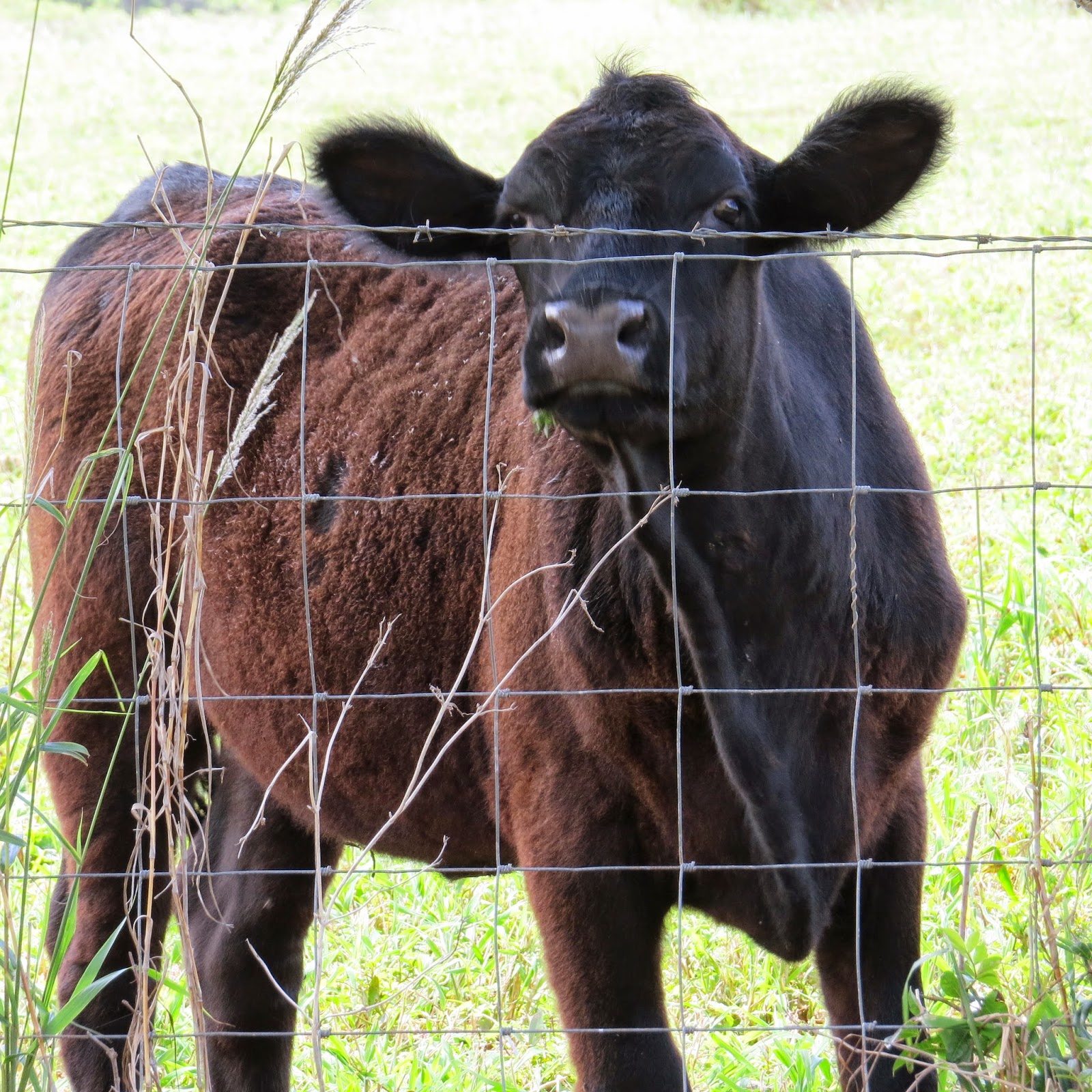
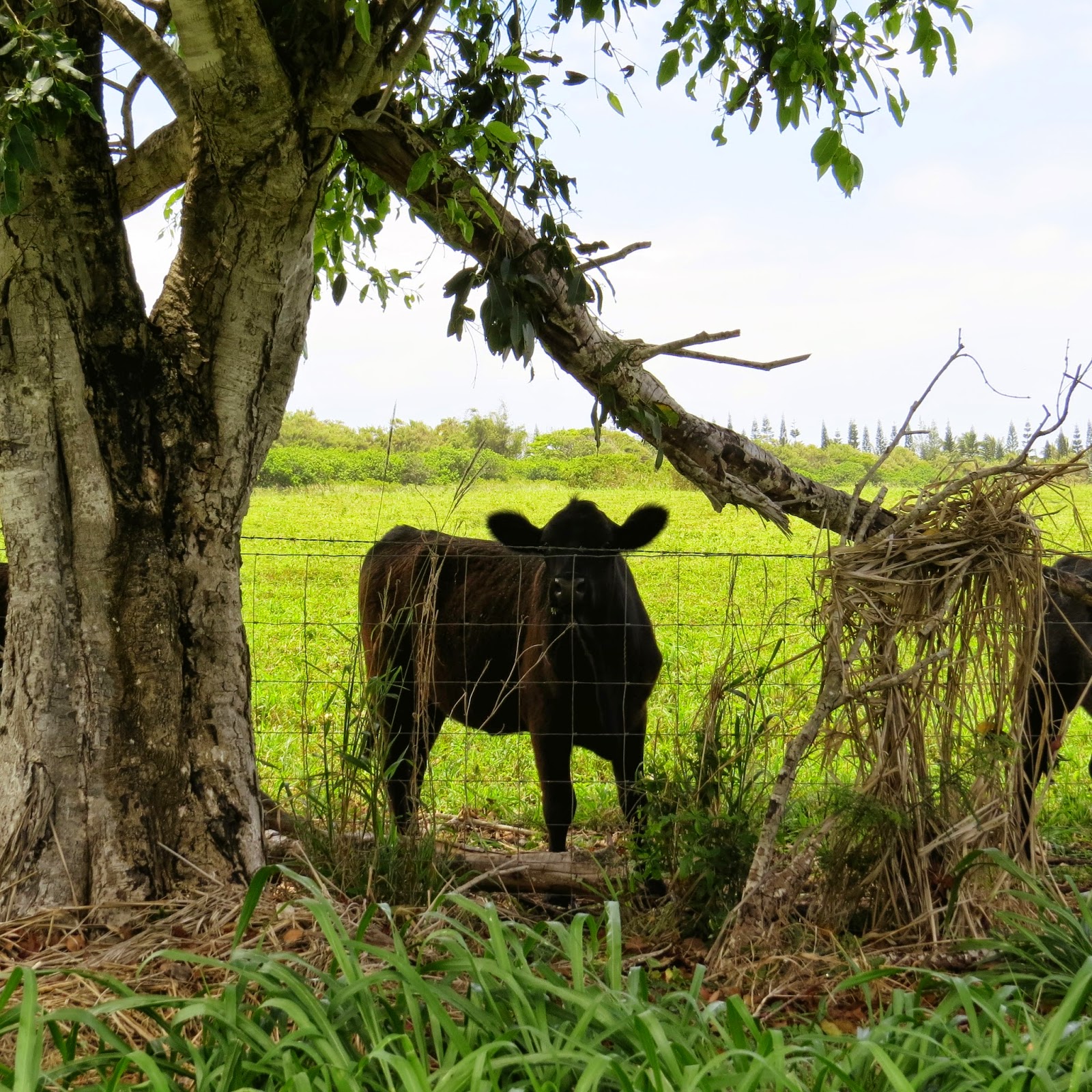
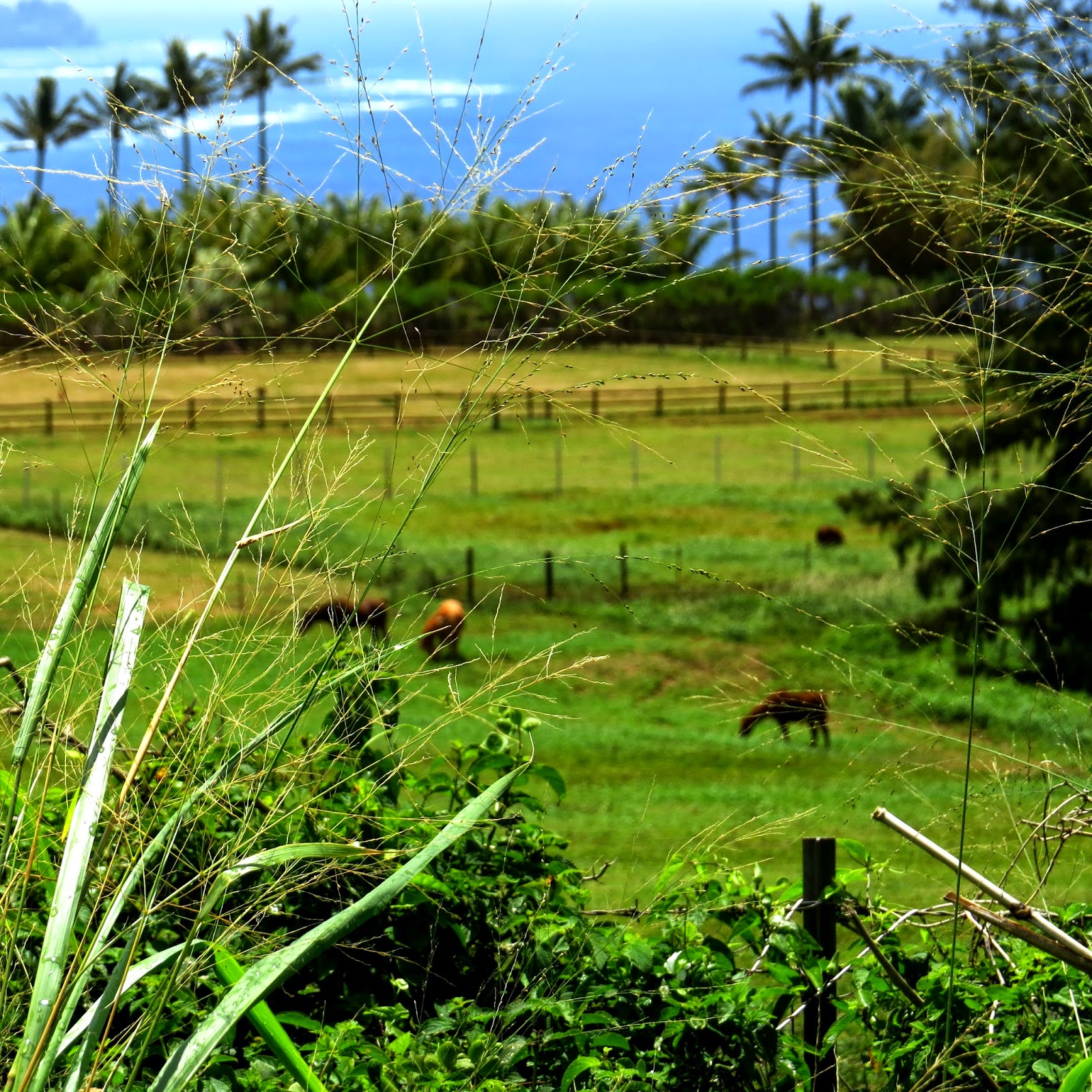
Free-range cattle poses for a photo.

It’s unimaginable to be saying this but, Hawaii has been a long haul. Oh, don’t get me wrong it’s been an excellent experience in tropical island living. With the mountains, the ocean, the fast-changing weather, the extraordinary vegetation, and its friendly people, it’s been a memorable leg of our year’s long journey to everywhere.

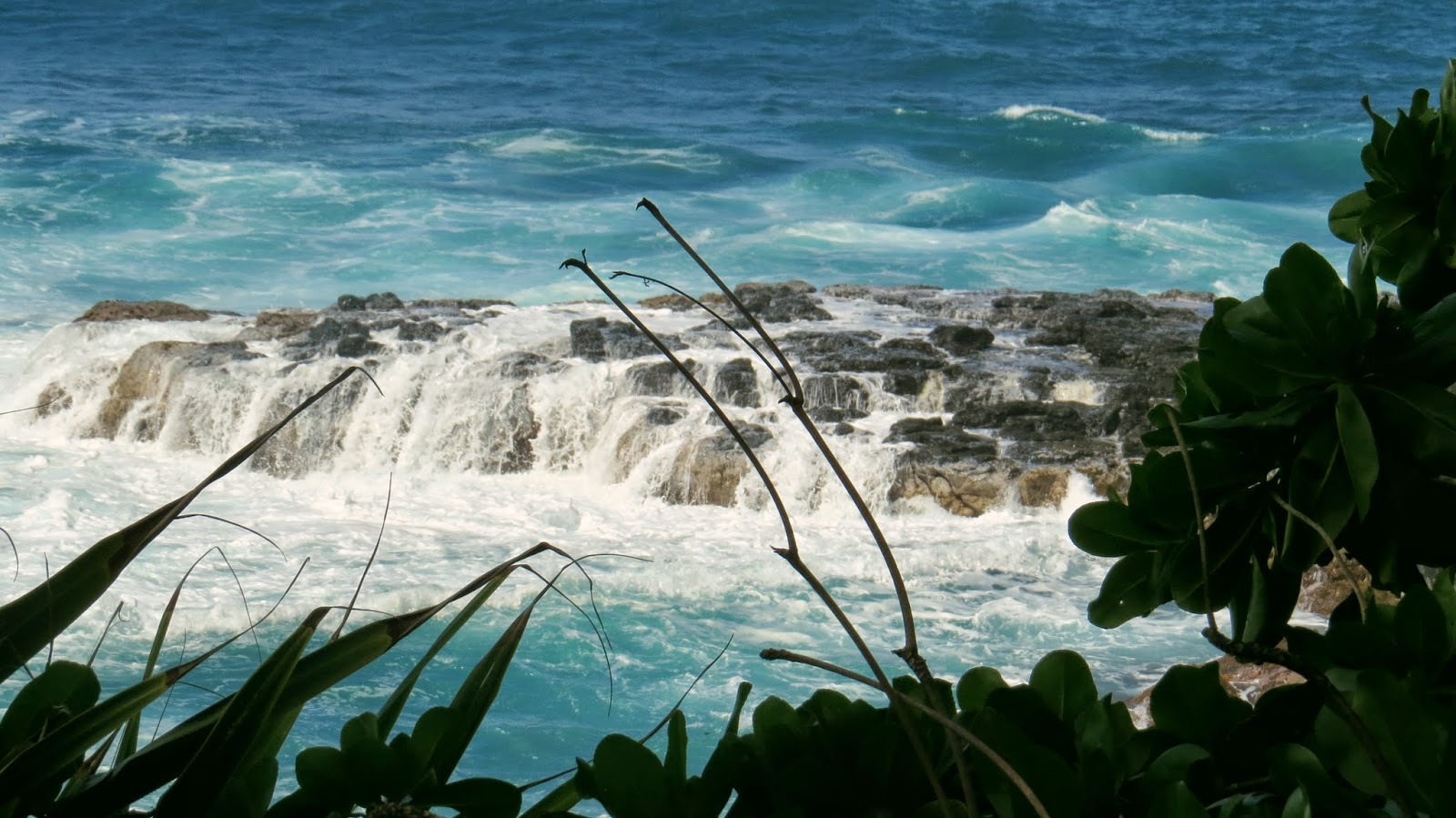
The pounding high tide surf over a rock formation jutting out from the steep cliffs in Princeville.

Overall, we’ve thoroughly enjoyed our time here. However, the wanderlust beacons us and we’re anxious to be on our way to the point of counting down the days over the past month.

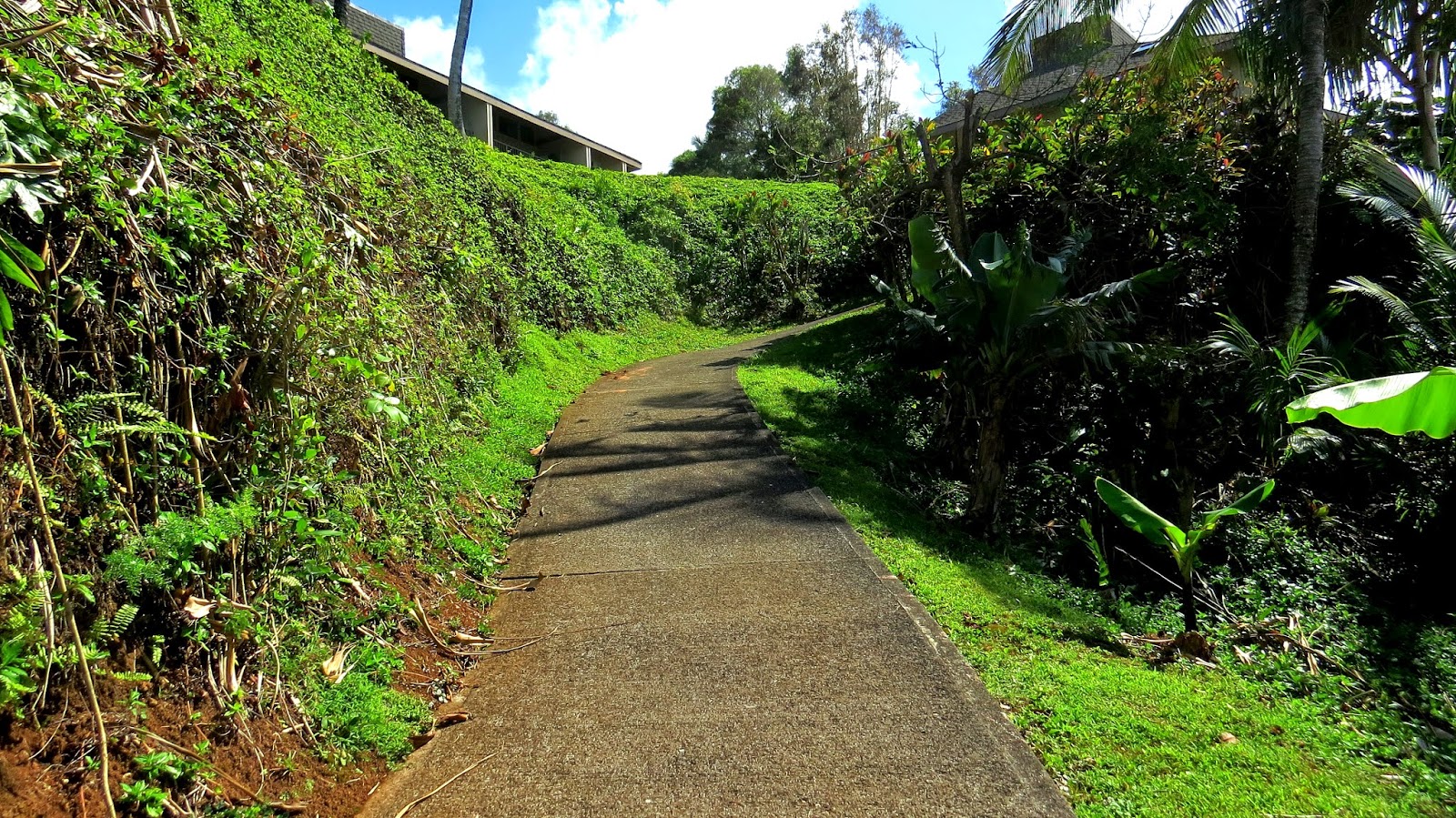
A portion of the paved path that leads to Hideaways Beach, one of the many steep paths we navigated to beaches.

As the days wind down to a mere three until we load the car, make the hour-long drive to Lihue and fly for 20 minutes to arrive in Oahu for one day, we become reminiscent of the many months we spent in Hawaii including a total of 12 nights in Oahu, six weeks each in Maui and Big Island and now over four months in Kauai, totaling almost eight months.

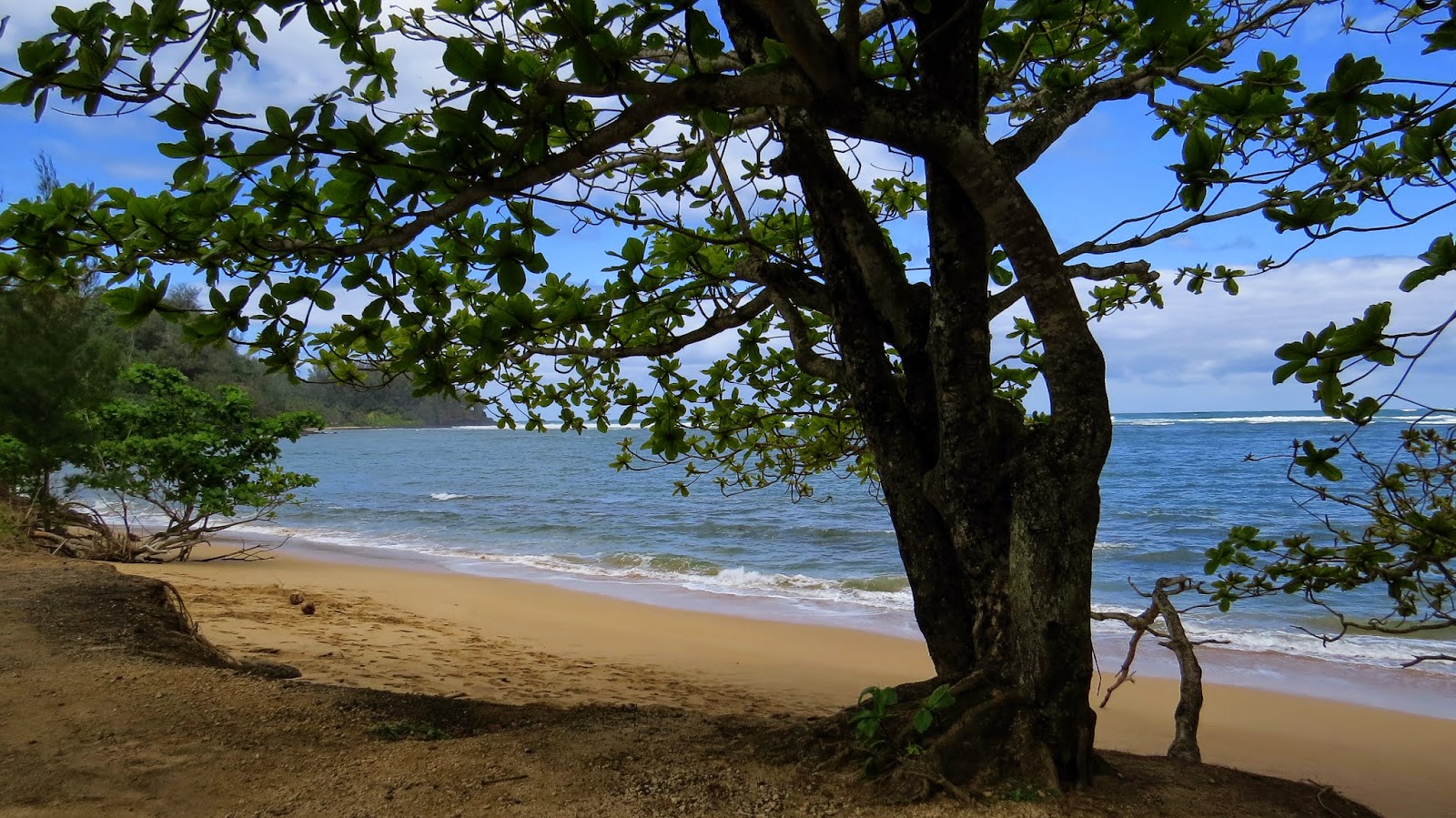
Anini Beach is secluded in many areas.

When we recall originally booking the five various vacation homes in Hawaii, all based on our family coming to the Big Island for Christmas and, this upcoming cruise in May, it all made sense at the time. Hawaii, then off to the South Pacific with a relaxing, stress-free four-plus, months in Kauai in between. 

A path from a secluded area in Anini Beach to the street.

Looking back now, we could easily have spent a shorter time in Kauai, found a different cruise, and seen more world by this period in time. But, this isn’t the Amazing Race. It’s our lives, albeit our sometimes complicated lives that are interspersed with almost constant dreaming, planning, booking, and ultimately, living for days, weeks, or months in those places of our dreams.

Part of the charm of Kauai is its many chickens. chicks and roosters we’ve found everywhere.

We have no regrets. Our only time limit is life itself and continuing good health, or at least health issues we can manage along the way wherever we may be at the time. Feeling wonderfully well again, I’m reminded of the fragility of life itself. 

Ocean views are a huge motivator for island living.
We have no delusions about how quickly it all can be snapped away. Perhaps, this acceptance makes us a little more cautious than some may be on a vacation or holiday or, for a many month’s long respite from winter’s cold weather. 
Palm and coconut trees line the landscape.

We don’t take too many chances attempting to tackle high-risk physical adventures beyond practicality as we age. Why take the risk? It’s not as if our worldwide following is waiting with bated breath for us to bungee jump or hike a dangerous trail. 

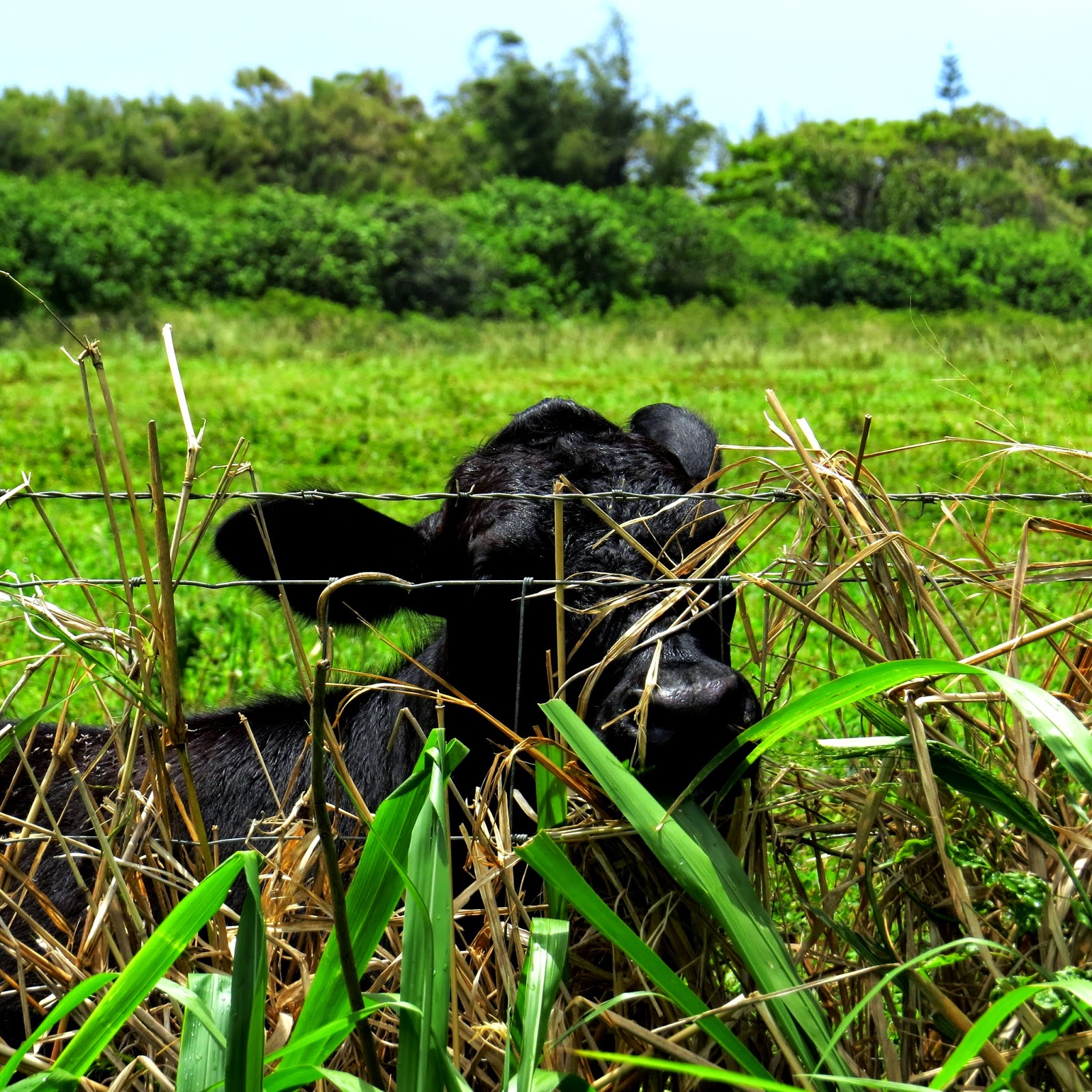
This cow was particularly interested in us.

When we look back into our over 1000 archives of these past years since 2012, we giggle over the many adventures we have experienced, never thinking about what we “should’ve, would’ve or could’ve done.” 

Many large homes and estates have long and winding driveways.

As we wind down this lengthy stay we’re also reminded of all of the friends we’ve made, the parties we’ve attended, and the conversations we’ve shared with a seemingly endless array of fine people. 

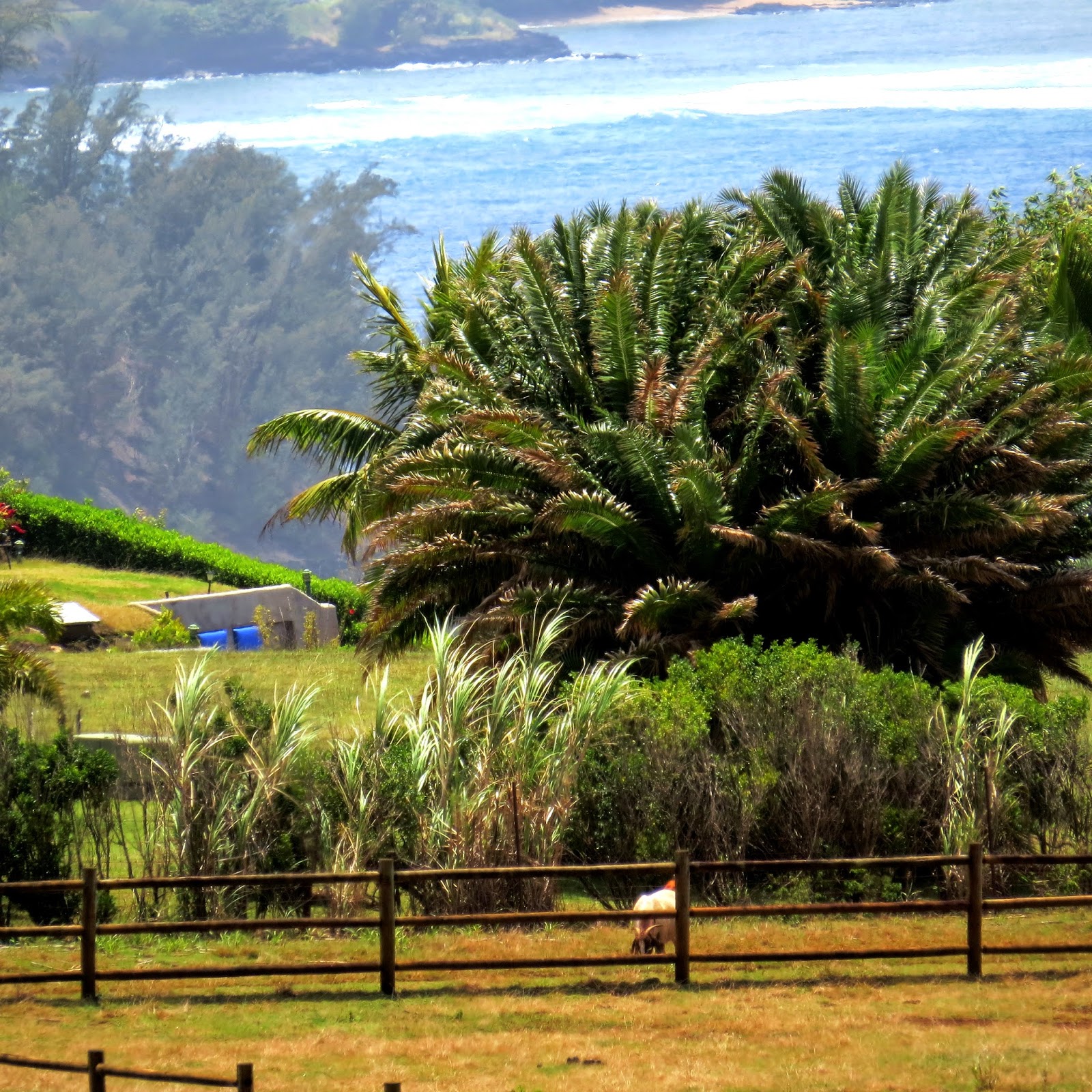
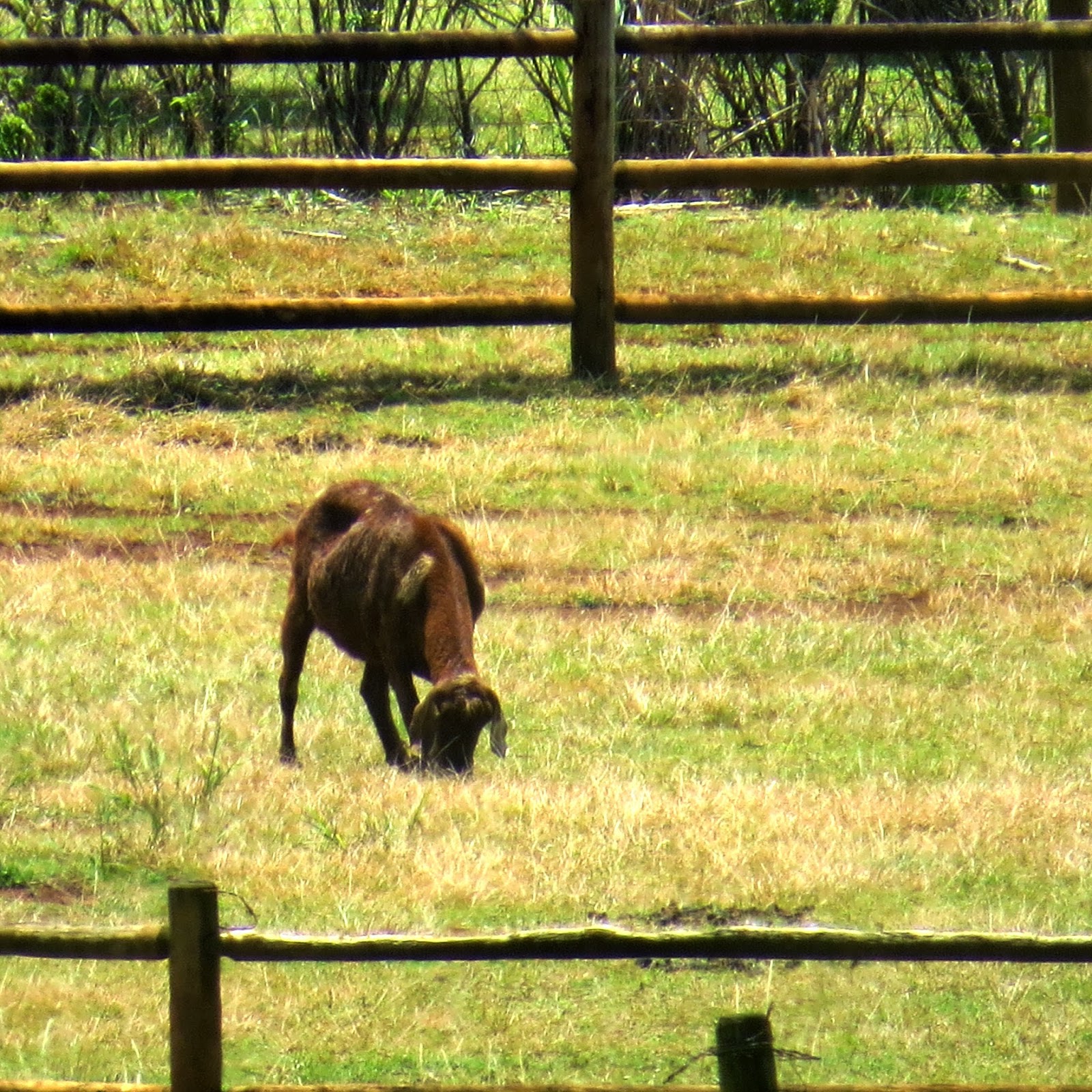
It wasn’t unusual to see sheep grazing in Kauai. 

Whether our social activities were precipitated by the kindly social directing of our friend Richard, whom we met our first few days in Kauai, or those we met on the beach or at the overlook across from us on Ka Haku Road, or other travelers we’ve met who moved in next door to us for a few days or a week, every one of them mattered to us

Many property owners raise goats and sheep on their acreage.

A huge factor in making this extended period pleasant for us has been this condo. If you plan a trip to Kauai, you’ll also enjoy its comfortable bed and bedding, relatively good wireless broadband and cable TV, the washer and dryer conveniently located in a closet in the kitchen, and a good supply of kitchen appliances and gadgets, all of which have made staying here easy and convenient.

Whenever we’ve stopped for photos of the many grass-fed cattle in Kauai, they approach the fence to check us out.

Above all, the view from the lanai to the wild vegetation in the back with a breathtaking ocean view and another enticing ocean view from the front, also with a view of Hanalei Bay, has made awakening each morning a treat.

Horses are found on acreage, ranches, and farms.

And then, there are the birds we’ve come to know and love, the sounds of the roosters crowing and the chicks and chickens clucking, hidden beneath the palms in the surrounding yard and we’ve found this location and condo to be ideal. 

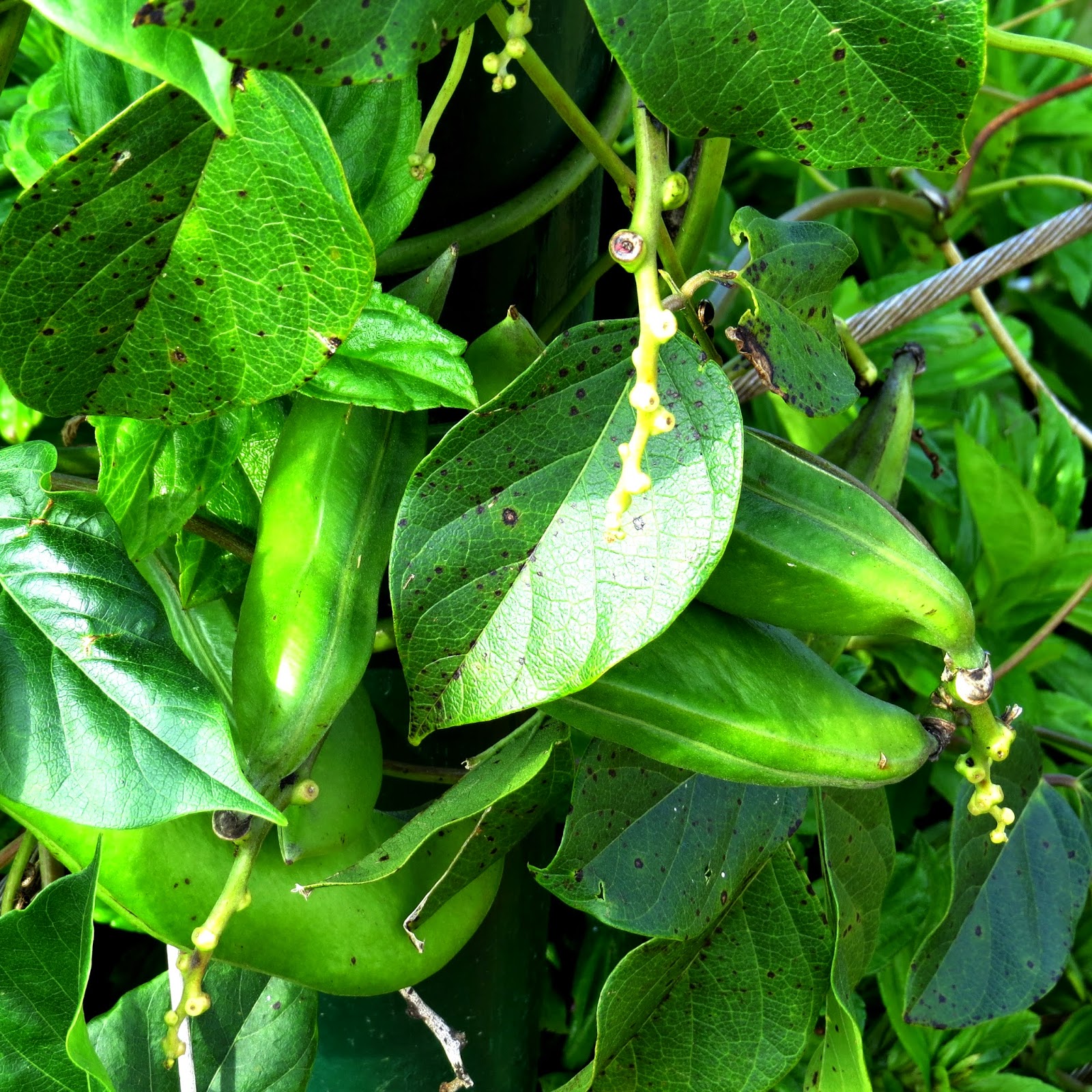
These pods are growing against the railing at the overlook across the street.  Many plants, shrubs, and trees in Hawaii grow large pods that bloom into gorgeous flowers or simply more leaves.

Adding the countless opportunities we’ve relished of visiting the growing Laysan Albatross chicks only a short distance away, from the parents sitting on the nests in January to the hatching of the chicks in February and as they matured, chucking their fluffy feather, soon to fledge the nest.

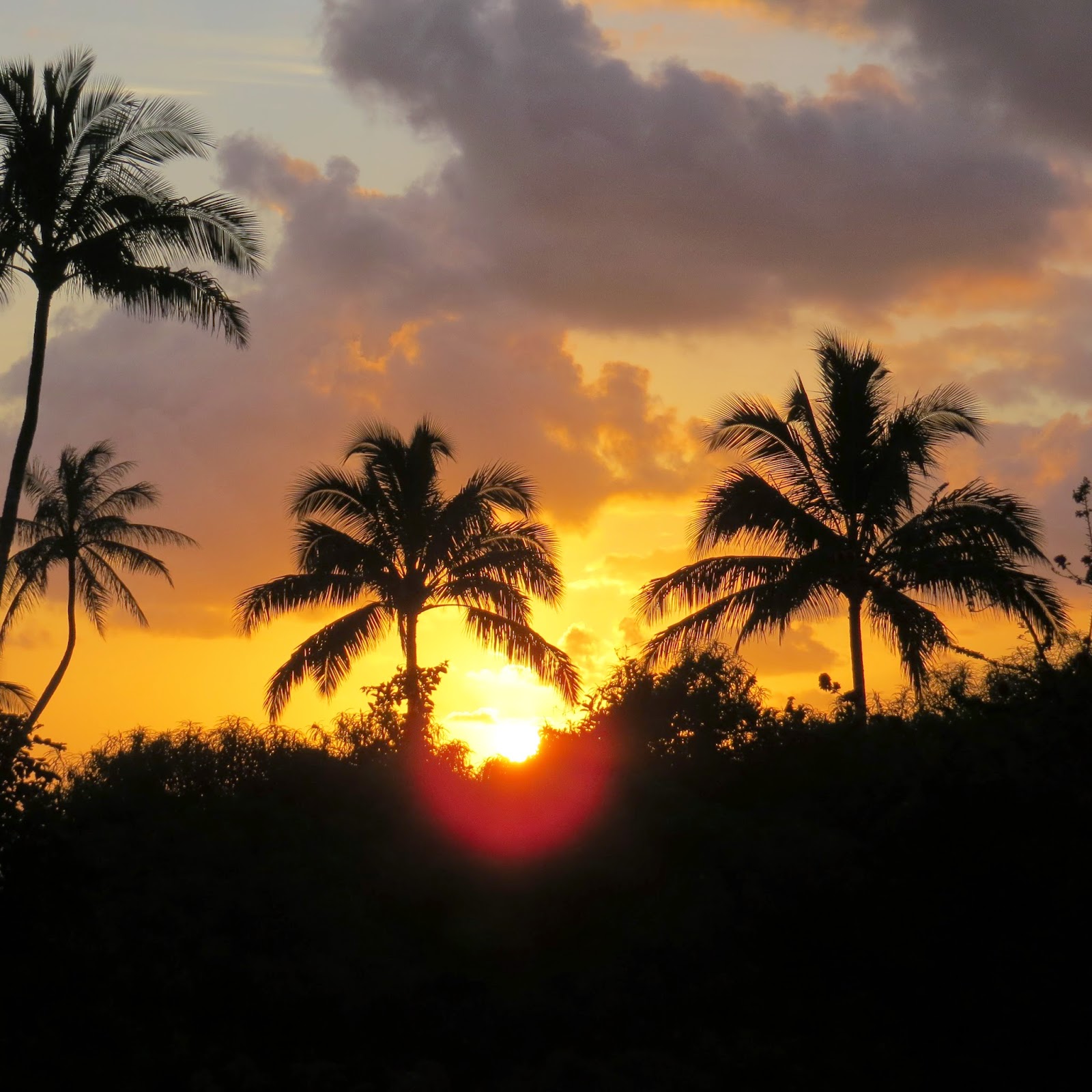
Sunset from our front lanai.

Today, we’re sharing a few remaining new photos and starting tomorrow, as promised, a recap in photos of our time in Kauai with a few remaining photos of our time on the other islands in Hawaii.

Hump day, think upcoming weekend. Have a great day!

                                               Photo from one year ago today, May 20, 2014:

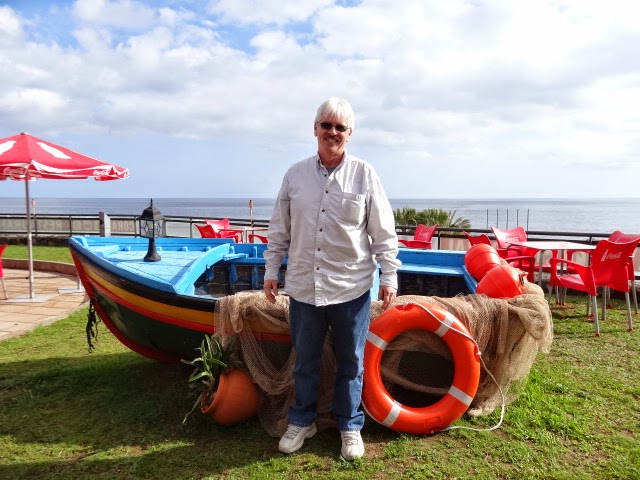
After getting settled in Madeira, Portugal, we started getting out and navigating the steep hills of Campanario, the little village in which we lived. It was cool when we first arrived, staying in the cool ’70s throughout the summer. Tom is standing on the ground of a lovely restaurant we visited late in the day for an excellent meal. For details, please click here.

Continue reading “Three days and counting…New photos…Our years long journey to everywhere continues…Link to our Princeville condo here…”

One week from today…Leaving Kauai!…A long haul in Paradise…Tom’s funny expression…Thrills?

Our favorite bird aptly named Birdie, lives in our yard with his significant other, waiting for us when we open the blinds in the morning and looking at us as we have dinner each night.

It’s hard to believe that we’d make a comment about being in paradise for too long. How can that be?

Looking back, we could have spent less time in Hawaii.  Good grief, we’ve been here for eight months, certainly long enough. At the time we booked the long stay we had two reasons to be in Hawaii; one, our family coming to Big Island for Christmas, and two, taking the cruise to Australia on May 24th from Honolulu. 

The waning sun at the overlook.

Those two reasons resulted in these required extra months with the remainder on the front end in Honolulu/Waikiki, Maui, and Big Island.

For some odd reason, we assumed time in the US would be useful while doing US-type things; doctor appointments, dentist appointments, and some arbitrary paperwork which we’ve discovered we can easily do while living in other countries. We’ve never had the doctor appointments (other than my recent illness which is slightly improved again today) or the dentist appointments we’d planned. We hope to do this in Australia.

The overlook last evening.
We’ve learned a valuable lesson to never spend a straight, four months in any one location. It’s just too long for us.  We aren’t staying long enough in any one location to feel totally settled in and we aren’t leaving soon enough to give us that feeling of excitement and adventure we both so crave.

Not to contradict ourselves, we must admit that we’re booked in Bali for four months total but, in two separate two-month stints, separated by over two months. Hopefully, that will work out well for us. But, let’s face it, whatever the circumstances, overall we always have a good time, even if the only friends we made were the household help, the non-English speaking butcher at the meat market, or if available nearby, the property owner or manager.

A miniature orchid, smaller than a dime, growing along the railing at the overlook.

We’ve managed to do well without a living room only sitting outdoors all day in 100-degree heat (38C); living in countries where no one speaks English and we never made friends; living in Marrakech a year ago in the confines of the riad, the souk and the Big Square with little else to do and now this extended period in Hawaii. 

It’s like everything else in life, too much of a good thing is too much of a good thing. Tom has an expression he uses from time to time: “The most beautiful woman you’ve ever laid eyes on, there’s some guy who’s sick and tired of her “sh_ _!” He always qualifies it by saying that it goes both ways when I eyeball an adorable muscular 20 something at the beach. 

This yellow flower is not much bigger to the eye than a pea. Zooming in to capture its beauty is exhilarating.

This always makes me laugh out loud including moments ago when I asked him to repeat it. This comment reminds me that no matter how beautiful and friendly Hawaii has been it’s not perfect for us for the long haul. 

Why are we living this crazy life anyway? We could say to enrich our knowledge and experience by exploring various parts of the world. We could say to expand our personal horizons in this final hurrah of our lives to become more well rounded. We could say it’s to stretch ourselves beyond the confines of our previously pleasant but mundane lifestyle.

A colorful sunset.
The reality? I say this with a little bit of trepidation over a possible backlash from the few naysayers and haters that lurk out there. WE DO IT FOR THE THRILL!

Yes, there is a thrill in stretching oneself beyond our limits; a 4×4 day-long adventure in the mountains of Iceland; cruising through pirate-infested waters in the Gulf of Aden with specials forces on board; sitting in a tiny vehicle with 25 elephants blocking the road; dining at night in the bush with armed guards to protect us; standing outside for an hour and a half in the pouring rain in Versailles with no umbrella and yet a smile on our faces; taking the strenuous long trek to Petra to see The Treasury; chasing a fish truck up the steep road to ultimately catch it and buy an entire yellowfin tuna to watch the fisherman fillet it with a machete. We do it for these kinds of thrills.

Although this bloom appears to be a future flower its actually a growing leaf.

And then, there’s the joy and satisfaction of promoting local artists and businesses with positive reviews, stories, and photos posted here hoping that our worldwide readers will consider partaking of their services should they travel to their locations. We do it for these kinds of thrills.

Then, the other piece, however repetitive it may be for our less than interested readers, sharing our way of eating with information, links, books, and recipes, hoping that one person along the way may be able to make it work for themselves, relieving pain, improving health or eventually getting off or reducing the need for medications. We do it for these kinds of thrills.

Pretty flowers on a bush near the albatross.

We’re ready to move on from beautiful, magical, friendly Kauai. It’s been heavenly living on the Garden Island.  We’ve made many wonderful friends at social events we’ll always remember. We’ve loved watching the hatching and growth of the Laysan Albatross, a bonus we never expected. And, of course, we loved Birdie and the Redheads who’ve visited us several times a day singing their songs in an attempt to successfully gain our attention.

We move on with a sense of freedom and adventure knowing we gave Kauai everything we had to give and Kauai, in return, bestowed its wonder upon us.

Happy Saturday, worldwide friends! Thanks for hanging in there with us during this extended stay in Hawaii.  Soon, the thrills will escalate…

                                              Photo from one year ago today, May 16, 2014:

It was one year ago today that we were on the move from Marrakech, Morocco to Madeira, Portugal which resulted in a much more lengthy travel time than expected. Tom and Samir are shown in this photo wheeling our luggage at the airport. For details, please click here.

Cruise cancellation and results of vacation rentals date changes…New amazing photos…

This chick was sitting close to the road wondering what I was doing.

As a result of next year’s cruise being cancelled and the necessity of booking a different cruise with two day’s difference in arrival and departure dates we waited anxiously to hear back from the owners.

When he realized I was no threat she relaxed a little.

Would they have availability for us to stay four days longer in New Zealand and arrive two days later to Bali, extending an extra two days at the end to compensate?

With the substantial time differences between New Zealand and Bali, 22 hours and 18 hours respectively, we didn’t expect to hear back for a few days. First, we heard back from the owners of the New Zealand property with a positive response…no problem with staying four days longer than our contract. For Bali, arriving two days later and staying two days longer is also a yes from the owner, neither of which scenarios resulted in any additional costs.

As he moved, we were able to see more of the white and black feathers which will soon replace all of the fluff.

We’re grateful for the availability and the kindness of the owners of both properties for their cooperation.  Problem solved. We had a backup plan ready to implement in the event either of these didn’t work out which included additional costs and monies lost. We’ve found that there’s always a solution. The question becomes, does one want to pay for that solution which is often the case?

Yesterday afternoon, a sunny day, we drove over to the neighborhood to check out the growth of the Laysan Albatross chicks. Being able to watch them morph from fat fluffy balls of inactivity and to actually see their new mature feathers was a sight we’d never expected to see in person.

This parent wandered from the chick for a walk.  Note the feathers on an adult as opposed to the fluff and feathers on the growing chicks.

As we slowly drove through the neighborhood, we spotted one chick after another in varying stages of molting their fluff. It’s crazy how they aren’t disturbed as we stop the car and I get out to take photos. We may be only 15 or 20 feet from them but they are as fearless of humans as the adults. 

They’ve been so loved and respected by the locals, they’ve had no reason to be afraid. Yesterday we watched a homeowner working in his yard with a chick and two parents only three feet away. Neither the human nor the birds paid any attention to one another as they each went about their usual activities.

Check out the chick’s huge beak!

Here’s a quote from National Geographic:

“On the Wings of the Albatross
By Carl Safina

An albatross is the grandest living flying machine on Earth. An albatross is bone, feathers, muscle, and the wind. An albatross is its own taut longbow, the breeze its bowstring, propelling its projectile body. An albatross is an art deco bird, striking of pattern, clean of line, epic in travels, heroically faithful. A parent albatross may fly more than 10,000 miles (16,000 kilometers) to deliver one meal to its chick. Wielding the longest wings in nature—up to eleven and a half feet (3.5 meters)—albatrosses can glide hundreds of miles without flapping, crossing ocean basins, circumnavigating the globe. A 50-year-old albatross has flown, at least, 3.7 million miles (6 million kilometers).”

One of the main highlights of our long stay in Kauai has been watching the life cycle of the albatross from the parents sitting on the nest when we arrived on January 15th, to the chicks hatching in early February and now the chicks maturing with only a month or more from the time they’ll fledge from the nest. 

Suddenly, she stood up giving me a great shot of the white feathers growing on her underbelly.

Although we won’t be here to witness them fledge which only occurs over a very short period as they run to the edge of the cliff and dive off to soar into the air, we’ll keep an eye out on the live video feed we’ve been watching many times each day at this link.  By watching this live feed with two chicks about 100 feet apart it’s possible to see the permanent feathers coming in and the fluff molting away.

This was our intent when we stopped by yesterday. We’d hoped to take photos of the gradual change in their appearance and were pleased to be able to do so with ease.

When the chicks sit on their back end, their weight causes their huge feet to lift off the ground.

Before we leave Princeville in 20 days, we hope to be able to follow Cathy, the Laysan Albatross expert, and docent, on one more of her two daily rounds as she documents the progress of the chicks, twice each day. She does this for seven days a week over seven months each year when the albatross return to the same neighborhood for the life cycle to begin again, year after year.

After returning home I prepared our pu pu for last night’s Full Moon Party. After attending four of these enjoyable monthly parties (last night was our final party), orchestrated by friend Richard, we’ve found these parties to be highly instrumental in enhancing our social lives. 

We couldn’t stop laughing when we shot these huge paddle-like webbed feet lifting off the ground as she leaned back on her butt.

Holding the party at the Makai Golf Club’s pool was especially fun last night. Although the crowd was slightly smaller than usual with about 20 in attendance, we had a marvelous time, again meeting new people.

Back at home by 8:30, we had a late dinner when I’d left a full meal ready for our return. Popping our precooked (earlier in the day) tasty well-seasoned chicken wings into the microwave (sans sauce), adding a salad and green beans we sat down at the little table to dine and watch prerecorded videos of “Shark Tank” and the new “Beyond the Tank.” Once again we had an excellent day and evening.

Months ago, the chicks slept most of the day. Now, they are alert and awake waiting for the parents to return with more food. They don’t interact with the other chicks although other parents may stop by for a visit.

Today, we’ll take a walk in the neighborhood, watch some golf, prepare Sunday dinner and play with Birdie and his friends, who as usual stopped by this morning as soon as we opened the blinds and the door. 

Have a satisfying Sunday!

                                             Photo from one year ago today, May 4, 2014:

This broken egg was outside our bedroom door when we awake that morning a year ago. With the riad’s open to the sky center courtyard we imagined that an egg fell from a nest somewhere in the house. How peculiar. For details from that date, please click here.

Part 2, National Geographic has done it again!…Life…its astounding…

It was exciting to touch the vultures. We were told to keep moving while around the vultures. They only eat what appears to be dead meat.

Part 2. Please spend a few minutes watching this exquisite video from National Geographic. You won’t be disappointed and doing so will further explain the nature of today’s and yesterday’s posts.
https://www.youtube.com/embed/Hodomt6bBOw

After posting all the photos yesterday, I suffered a few moments of trepidation. Every time we post, we attempt not to be repetitious.  However, a by-product of posting daily is a certain degree of repetition.

An eagle on the mend at the rehabilitation center.

After all, we’re fast approaching a milestone number of posts which we’ll share in 10 days, a number that is hard for us to believe. After so many posts, we accept the fact that many new readers may not have seen many of our most exciting adventures to date and repeating them from time to time in the photos is the easiest and best way to share them.

For those of our readers unfamiliar with the archives by year and by month located on the right side of the home page each day, please take a look at them. They are under our row of advertisers, under the field that says “SEARCH.”

Tom donned a huge leather hand and arm protector and wad handed a huge chunk of fresh meat to feed this vulture at the rehabilitation center. It was quite a thrill to get this photo. I love the look on Tom’s face!  As their injuries healed, these vultures would soon be returned to the wild.

Every post from March 14, 2012, to the current date, is listed in the archives. If you’re looking for a particular post or a recipe, by typing the words into the “SEARCH” field a number of options will pop up that you can choose to read, not unlike performing a Google, Yahoo or Bing search when looking for a particular topic. The difference here is that you’ll be searching through our 100’s of posts as opposed to the entire web.

These two badgers are at the rehabilitation center to recover from injuries and had become good companions. Badgers are known to be viscous animals feared by others in the wild.

We understand that some of our readers may not be web savvy, mainly using the Internet for their email and an occasional search. Please don’t hesitate to email either of us if you’re having trouble with the archives or searching for a specific post or photo.  We’re always happy to help.  

We had an opportunity to interact with a cheetah at a wildlife rehabilitation center. The particular cheetah wouldn’t ever be able to return to the wild due to injuries sustained in the wild for which he was rescued. 

A link to our email is listed on the home page in the upper right under the photo of us in Petra, Jordan.  (Gee, that seems like such a long time ago when it was only two years). 

Although we were parked at a considerable distance, this lone elephant started approaching us. Quickly, Tom backed up the car and finally, the elephant backed off. There have been many instances in which elephants have been intruded upon by tourists getting too close, resulting in cars being tipped over injuring the occupants.

In selecting photos to share of some of our past wildlife experiences, prompted by our viewing the above amazing National Geographic video, I struggle a bit, when originally I hadn’t hesitated for a moment. 

The fifth animal in the Big 5, (Leopard, Cape Buffalo, Rhino, Elephant and Lion) this herd of elephants blocked the road as we drove through Kruger National Park.  Notice the babies are kept protected in the middle of the herd. The largest elephant, the Matriarch, is often twice as large as the other adult females, holds up the rear with a keen eye ensuring their safety. Seldom are elephants attacked in the wild based on their pack mentality of safety in numbers and their massive size.

In the past few years, my photo taking skills have improved and it was both frustrating and encouraging at the same time to see the changes in the photos. So please bear with my occasional lack of skills in some of these photos that we’re sharing over this two day period. 

There was one day we were visited by an entire troupe of baboons who can be very destructive. Tom held a broom handle over his head to show them that he was bigger than they are.  These monkeys have no respect for women who are known to feed them, which is never a good idea. However, they have fear of men carrying a big stick. They stayed most of the day, finally taking off all at once through the bush.

From time to time, readers contact us to tell us that they’ve gone back to the first post to begin reading as if its a book, albeit a very long book, and found it more entertaining following the full course of our travels, seeing how we’ve changed, our ups and downs and the endless lessons we’ve learned.

A Vervet Monkey and her baby peering at us one morning while we were sitting at the table on the veranda. Check out that thin pink ear of the baby.

Gone 30 months to date, we’ve only traveled the tip of the iceberg, (yes, we’ll go there too), with much ahead of us, health providing. We’ve seen so little of the world and yet in another way we’ve seen so much, as shown in these photos.

We howl every time we look at this photo of a monkey in Kruger National Park kissing the ground. Too cute!

Yesterday afternoon, we took a one hour walk, mostly talking about the future and further committing to one another our dedication in continuing on with a high level of enthusiasm and excitement. 

This photo was taken through the window of our cottage when we stayed at a resort on the Indian Ocean in Diani Beach, Kenya to celebrate our one year anniversary of traveling the world. The monkeys were hanging around as soon as we moved in. They knew we’d have the complimentary fruit plate provided to new guests at check-in which many guests often fed them. We didn’t eat the fruit nor did we give it to the monkeys who need to forage for their food.

We discussed that we’ve spent too much time in Hawaii, as much as we’ve loved it and are ready to move along. Who’d have ever thought anyone would say, “We’ve spent too much time in Hawaii?” 

A leopard, the fourth animal of the Big 5, all of which we’d seen in the first 10 hours on safari in Kenya.

It’s not about Hawaii. It may be one of the most beautiful places on the planet and we’ve loved it, especially our time in Kauai. However, as we’ve passed the 90-day maximum period we usually stay in one location, the wanderlust has kicked in for both of us. We’re ready to go. 

This Barn Owl was trying to figure a way out of the attic of our house in Kenya. Hesborn, our house man, helped it escape.

With a variety of social activities ahead of us, plenty of sorting and packing to tackle, a box of supplies for the next two years yet to be shipped, in about three weeks we’ll begin the preparations to depart Hawaii.

The White Fronted Plover, a bird often seen along rivers in Africa.

We always giggle to ourselves when someone we meet says, “Enjoy your vacation or have a good trip.” Although, we have a similar sense of excitement that one has when anticipating an upcoming vacation, holiday or trip, as we navigate our way from one location to another it never feels like a vacation. It feels like a glorious life for which we are grateful, humbled, and never take for granted.

We spent an entire day watching the activities of a group of thousands of grasshoppers as they moved from one tree to another.
Close up of one of the above grasshoppers dining on a cabbage leaf we’d left on the driveway.

It could all change in a minute by unforeseen circumstances. We choose not to worry about that possibility, perhaps that eventuality. As we discussed on our walk yesterday, we’ll always have the option to figure it out. 

The Golden Orb Spider web was located in the carport in South Africa.
This frog hung out in the rafters watching us each day during our entire time at the African Reunion House in South Africa.
Male frogs fertilizing the egg-laden foam nest made by the female frog overnight. Seeing the progression of this event occurring in our yard in South Africa was an amazing experience.

As we neared our condo we encountered a couple, a few years older than us, most likely tourists based on the camera hanging around his neck and the binoculars in her lap. She was in a wheelchair and he was pushing her along the same path we’d taken.

Having an opportunity to see an endangered Hawaiian Monk Seal on the beach in Kauai was a thrill.
We weren’t ever able to get a photo of a full breach of a whale. Once we get to Australia, we may have better luck.

We said hello in passing with both of us in quiet contemplation for several moments afterward. At the same instance, we turned to each other and spoke simultaneously in almost the exact words, “That could be us one day.”

We love the Helmeted Guinea Fowl. They visited every day, many with their chicks.
Look at the colors in this close up of the above Helmeted Guinea Fowl. Tom referred to these birds as Guinea Hens.

We agreed, “Yes, it could be us and if it is, we’ll carry on, one way or another.”

Enjoy the weekend! We’re off to explore today. Back tomorrow with all the new photos!

                                                Photo from one year ago today, April 18, 2014:

Le Jardin restaurant in the souks of Marrakech was a favorite we often visited. Two turtles wandered about the floor providing a degree of entertainment.  Please click here for details.

National Geographic has done it again!…Life…its astounding…

Please spend only a few minutes watching this exquisite video from National Geographic.  You won’t be disappointed and doing so will further explain the nature of today’s post.

https://www.youtube.com/embed/Hodomt6bBOw

The above video reminded us of photos we’ve taken during our travels in the past 30 months.

A lone female stopping for a drink.  The edge of the open vehicle is shown in this photo illustrating how close we were to her.

Yesterday afternoon I noticed an email in my inbox from Tom. I must admit that he sends me a few items each week. When we began to travel he finally dispensed per my request with all those endless jokes and stories. 

Hippos along the Mara River while we were on safari in the Maasai Mara.
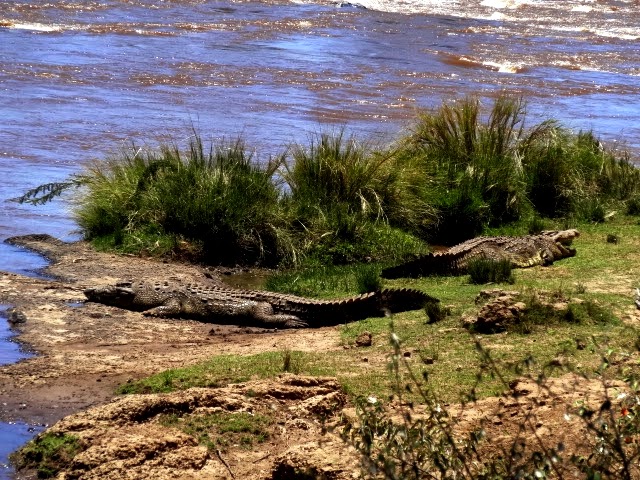
Crocodiles sunning along the Mara River.

As much as I enjoy a good laugh like anyone, I prefer not to spend time each day riffling through a pile of email messages, reading jokes and stories. 

The Cape Buffalo, one of the Big 5.
The cheetah and leopard are distinguishable by the cheetah’s tear lines running down her face, as shown here.

As a matter of fact, once I’ve completed posting here each day, take care of necessary business and respond to emails from our readers, I prefer to spend as little time at my computer as possible. 

A female lion looking for the next meal. The lion is the second of the Big 5.
The pride of lions from which we took the above photo of what appeared to be a mom.

My computer is kept on all day allowing me to occasionally check for email, new comments, and to receive phone calls from family and friends. We have a Skype phone number for which we pay $5 a month since we have no cell contracts on our phones, using SIM cards in other countries that aren’t available in the US without a contract (unreal).

In the first 10 hours on safari, we saw the Big 5. The black rhino is one of the Big 5. (The leopards and elephants we saw are a part of the Big which will be shown tomorrow). Note the birds which are oxpeckers who eat the bugs off of the rhinos and other wildlife’s hides.

Anyway, yesterday afternoon I received an email from my dear husband who now sends me only pertinent information or something he knows I’ll love seeing. When he sent me this National Geographic video yesterday and I began to watch it, I nearly wept.

Males lions are always on the lookout for a female making a kill. Why? So he can steal the kill from her.
This male was dozing in the bright sun. The Maasai Mara is cool in the morning

It’s five minutes long but, I promise you won’t regret taking the five minutes of your life to watch it. For us, the content was profound. As I watched it with Tom watching it a second time with me, my mouth was agape at the wonder of it all, especially for one particular reason…

A turtle climbing a hill to greet us.
We traveled across rough terrain to Tanzania to catch the tail end of the Great Migration.

It reminded us of all that we have done and seen thus far in our travels and, all that we have yet to do and see in the future. 

We couldn’t resist posting this contented lion who was, at the time, engaged in a mating ritual with the female about 15 feet from him, leaning on another tree.
Giraffes are a thrill to watch. This one was very close to us allowing me to take this headshot. Their cheeks are often puffed up due to the manner in which they eat storing the greenery in their cheeks.

The video inspired us in writing today and posting some previously posted photos. Somehow, we felt compelled to share them with our readers, including many new readers, as to the reasons and motivations that inspired us to travel the world. Also, we selfishly wanted to see them once again to remind us of how blessed we have been to live this astounding life.

Within hours of our arrival in Marloth Park, two moms and seven babies aka piglets, not all shown in these photos. This family became daily visitors to our yard.

Life. It’s all about life. It’s about the gift of life I’ve been given with renewed health by changing my diet making it possible for me to have a 34-hour travel day from airport to airport and continue to be “overly bubbly” without a word of complaint or exhaustion. 

This was one of the first zebras we spotted in Marloth Park, a fluffy baby, aka foal.
An adult male zebra standing under our carport on a hot day.

It’s about the life I’ve been given to be able to make the three-hour walk to Petra in Jordan, the trek down to the Queen’s Bath in Kauai, and every tough trek in between, all over the world, at times in 100-degree (40C) weather, at times sitting outside all day in the heat waiting to see who may stop by for a visit.

Males hang out together. We never saw a female and a male together other than when mating. On this particular day, we had seven zebras visit although only five are shown in this photo as they depart. They’d had their fill of our attention and nutritional pellets and were on their way after a one hour stay.
Male impalas will graze with the females and fawns.

None of this would have been possible 44 months ago. And then I say, “Life, so good, so solid, so much fun with this man I met almost 24 years ago, who never seemed like the kind of guy who’d suggest this life, embrace this life and ultimately love this peculiar life we live.” 

One day, over 100 impalas visited our yard.
There were monitor lizards in our yard, occasionally making an appearance from their holes in the ground. They were very cautious and skittish making it tricky to take photos.

So today, we share this video with our readers to celebrate life on a regular day, not an anniversary, not a milestone day but just any day in the life of two people traveling the world for years to come seeking, searching, and savoring every nook and cranny of the world for signs of “life.”

Stay with us, dear readers, there’s so much more yet to come including an amazing story of a special place in Kauai forty years ago.

                                            Photo from one year ago today, April 17, 2014:

Tom had a haircut in Marrakech but wasn’t thrilled with the way to charges were handled.  Please check here for details.

Planning on a tour today…Raining in buckets at the moment and the sun’s shining…What about Versailles?

This is our favorite chick, now named “Joy” who usually sits facing the wall.  She was practicing clacking when we stopped by last week, although we were at least 15 feet from her. On this particular day, she wasn’t facing the wall, as she often does, as did her parents. Yesterday, she was gone from the nest and we were worried about contacting Cathy for an update.

When we lived in South Africa having the time of our lives, albeit, with bugs, snakes, and more, our dear friend Okee Dokee told us of an Afrikaans expression commonly used when it rains when the sun is shining, a so called “sun shower.”

Could this chick be any cuter?

Although we’ve been able to memorize various words and even sentences in other languages, for some odd reason, I can’t seem to recall that expression. It makes us laugh when it slips my mind time and again and, it really makes Okee Dokee laugh when I email her and ask for it one more time. When the three of us were together continually laughed, often to the point of tears, over the silliest things.

Here’s a video we made of a chick swallowing the food his parent had fed him, regurgitated from a recent trip out to sea, often not returning for days at which point the chicks are very hungry.
 I’d saved that expression on my computer last December but, it died and the expression died along with it. So, this morning I wrote to Okee Dokee, for the zillionth time, asking for it one more time. Ah, here it is:  “Jakkals trou met wolf se vrou,” meaning “the fox marries the wolf’s wife” or in other words, it’s raining and the sun is shining.Thanks, Okee Dokee. We love you!


It’s hard to believe that these fluffy balls will eventually grow into the beautiful pristine white and grey feathers of the adults.

Anyway, we’re scheduled for a five star rated tour today at 1:30, hoping to take many photos to share for days to come. With the rain pelting as we’ve never seen in Kauai, we may have to reschedule for Thursday, our next option for this tour.

Neither of us minds getting wet. After all, we stood outside at Versailles in France (link to our Versailles post, Part 1) last summer in the pouring rain for 90 minutes, with no umbrella, getting soaked to the gills, with nary a peep of complaint from either of us. It’s the camera and equipment we want to protect.

A Brown Gecko is hanging out in this plant with sharp thorns, a safe hiding spot for sure.

We’ll wait and see how it goes. As I sit here writing now, we have three hours until we have to walk out the door. In Kauai, the weather can change on a dime. In a few hours, the sky could become totally clear without a cloud in sight.

Yesterday afternoon, we stopped by the neighborhood to see the albatross chicks and parents to find that things have begun to change. Chicks and parents have begun to move about. It appeared that the parents whose eggs never hatched were long gone. 

There are many beautiful plants and shrubs growing in the neighborhood where the albatross nest. The homes are exquisite and meticulously maintained.

Many of our chick photos have been of one in particular who’s parents always sat on the nest facing the wall of a house with their back to us. 

When the chick was born in early February, soon growing too large to sit under the parent, it too, began facing the wall. How sweet that the chick followed the pattern of the parents. Each time we’ve stopped by, at least twice per week, the chick was facing the wall, growing fatter each day.

Chickens and roosters wander about the neighborhood, cohabitating well with the Laysan Albatross.

Yesterday, we were shocked to find that chick was gone. We looked everywhere and couldn’t find it. “Oh no,” we thought, “Did something happen to it?”

Immediately upon returning home, we wrote to Cathy, docent, and caregiver to the Laysan Albatross in the neighborhood, making notes on their health, activity, growth, and well being on two-hour walks, twice a day.  We thought if anyone knew what had happened to the chick, it would be Cathy.

This peculiar tree is growing in the neighborhood of the albatross.

This morning when I turned on my laptop, I spotted a message from her that warmed our hearts. We both sighed in relief reading her message.

Here’s what Cathy wrote in her words about the missing chick and more:

“After spending most of his days at or next to his nest, he is suddenly moving around.  He is often around the corner now.  This afternoon he was back near his nest, trying out his wings.  I was wondering when he would leave the security of his nest.  You probably noticed that the one at the house catty-corner has moved closer to the street.  I have a big orange traffic cone that I often have to put in front of chicks when they venture too close to the street, and the Princeville Patrol officers carry cones in their car for the same reason.  The main street worries me a bit because the trucks working at the house at the end sometimes drive too fast.  The chicks do get to a point where they venture out into the street and sometimes have to be coaxed back to safety. This is officially known as “hazing” an albatross when you walk slowly towards them so they walk away from you and from a dangerous situation.  

By the way, when you see adults with a chick at this time of year, you can’t assume it’s the parents.  The chick you are talking about had several visitors one-day last week.  Mom just happened to arrive then, and she snapped at all of them until they left!

Cathy
P.S.We don’t know the sexes of the chicks, but the owners of the house where the chick you asked about lives have named him/her Joy.”
I wrote back to Cathy thanking her for putting our minds at ease. Although we’ve never been closer than 15 feet from the albatross, in a funny way, we’ve become attached to them. We’ll be long gone when the parents finally leave the chick who’ll eventually fledge out to sea to begin his/her own life. 
The chicks began preening themselves at an early age.
Most likely, this event occurs in a matter of minutes and the likelihood of ever seeing the chicks fledge would require an around the clock vigil, not at all practical. 
Please bear with us on our frequent mention of the albatross. Living so close to the albatross families has been comparable for us, to when we were living in Marloth Park, a game reserve with wildlife at our doorstep for a full three months. Yes, I know, I became particularly attached to the warthogs and warthog babies and, I realize, I must have bored our readers to no end with my frequent mention and photos.
Here’s another vocal chick.  Now that they are less fearful, they’ve begun practicing typical adult behavior in preparation for days to come.
Here again, you are stuck with my passion for the wildlife of any kind and honestly, Tom doesn’t fall far behind.  Yesterday, his brow was frowned, as he drove around and around the neighborhood looking for the chick. This morning, he smiled from ear to ear as I read Cathy’s message aloud.
As the chicks have grown they appear to be spending more time alert and awake perusing their surroundings.  of course, now as Cathy stated, they’ve begun to wander away from the nest, occasionally being “hazed” by humans to stay away from the road and oncoming traffic.
We continually confirm in our hearts and minds that our love of nature is the basis of our travels which includes wildlife, vegetation, and scenery. As for old buildings and places like Versailles, they must hold some interest for us or we wouldn’t have stood in the rain last August, soaked through and through, touring the beautiful gardens. Then again, it was a garden. We love those. 
More to come.
                                                 Photo from one year ago today, April 7, 2014:
In our post one year ago, we discussed the difference between safety measures in other countries as opposed to those in the US, Europe, and other countries. For details from that post, please click here.

An interesting wildlife discovery…Green Anole…What’s that?…

We speculate based on appearance, that there’s some sort of permanent pouch beneath this shedding skin of this Green Anole. We had difficulty finding details on the shedding process of these lizards.

Late yesterday afternoon Tom and I took off on a walk. The bright sun and heat of the day had waned with a cooling trade winds breeze wafting through the air. I wanted to show him a different perspective of the familiar ocean view I’d found on the prior day’s walk on my own. 

After admiring the view, he spotted some possible photo ops I’d missed the previous day while we’ll share tomorrow. He’s got quite the eye for spotting things I’d easily miss, which makes taking walks together enjoyable in more than one way. 

Apparently, this Green Anole, not a gecko is shedding his skin.

He never hesitates to remind me that he didn’t dream of walking when he retired. It wasn’t on his “bucket list.”  It was on mine. He walks more than I’d ever expected he would, merely to please me, bless his heart. However, for both of us, that which we find on walks together never ceases to amaze us.

When I sense he’s open to walking I bring it up and he usually agrees. Once we’re on our way he seems to get into it. He’s a good walker, able to navigate tough terrain better than I, and can manage a pace requiring me to practically run in order to keep up.

We were fascinated by the deep green color.

At the end of the major part of the 40-minute walk, we wandered over to the overlook across the street from our condo for that amazing view that continues to take our breath away.

A few weeks ago, he mentioned spotting a gecko in the vegetation along the railing, change from brown to green right before his eyes. Since that time I’d looked in that area many times hoping to see the same. I’d yet to see one gecko since his sighting, let alone one changing color.  Until yesterday.

He moved from leaf to leaf staying within our view for quite a while.

Although we didn’t see a gecko changing color, we did see the same species Tom had seen in his/her “brown” state.  More excitingly, we saw another creature which we assumed was a gecko with a most interesting white pouch as shown in today’s photos.

I was like a kid in a candy store while Tom was pointing out which candies to buy. Snapping one photo after another, I was squealing with delight as I carefully positioned myself to hold the camera as still as possible while I zoomed in for the shots.

This was a tiny weed Tom spotted as we watched the anole.

I’m no expert at macro photography, nor do we have the equipment that is sophisticated enough to do the kind of job I’d like to be able to do. But, I’m fascinated to be taking photos of “small things” as most of our long term readers are aware.

My biggest problem is avoiding the natural instinct to stand too close to the subject when it appears standing further back and zooming in provides the best result with the inexpensive (under $400) camera we use. 

This is the Brown Anole, the same species Tom had watched change color.  He was also shedding the skin around his mouth. It must be a springtime thing.

After taking shots of the what-we-thought was a green gecko of some sort, we headed home while I immediately began looking online for the name of the type of gecko. No luck. Not a single possibility popped us making me frustrated and hungry for more information. 

I knew my only hope was to contact Cathy Granholm, the knowledgeable docent with the Los Angeles Zoo for over 26 years, who helped me with information for my many posts regarding the Laysan Albatross, here in Princeville.  

Discovering this is Green Anole, not a gecko, was quite a thrill. Perhaps, some of our readers may find us goofy for our enthusiasm overseeing such a creature. We find all creatures and vegetation fascinating in one way or another.

Cathy’s not only a rare expert on the albatross which she monitors twice daily for seven months each year, but she also has a wealth of knowledge on wildlife in general. Surely, she was my best bet for information.

It’s interesting how each body part of a creature, including us humans, has a purpose. Our creator, whoever you may choose to believe, certainly didn’t miss a beat in creating life.

I couldn’t have been more appreciative when in a short time Cathy responded to my email with our question as to what we expected was a Green Gecko with this response: “This is not a gecko, which is nocturnal, it is a diurnal green anole, which is shedding.  Up until 5 or 6 years ago, I saw lots of green anoles in my garden, but they have been largely displaced by brown anoles. Neither species is native to Hawaii, in fact, there are NO lizards that are native to Hawaii.  

 I found this interesting article about how green anoles in Florida are evolving to avoid having to compete with brown anoles, which seem to be more aggressive.  I think some graduate students at UH should study the anoles in Hawaii to see if they are evolving in the same way. I can tell you that I rarely see green anoles on the ground or on lower branches of shrubs or trees, they are usually higher up.

I think this kind of adaptation is fascinating!”

From time to time, the Brown Anole would move her head to see what other predators may be in the area.

In researching the above link in Cathy’s response, there is considerable information about the Green Anole which is a lizard, not a gecko. It appears to be shedding its skin but, beneath the white shedding pouch lies another pouch-like protrusion from the neck, used in the male to attract the female.

She was far enough from us that our presence didn’t inspire her to change colors. Look at those toenails useful for climbing trees!

Oh, Mother Nature, you never disappoint. Keep presenting us with the opportunities to see what other gifts you have in store for all of us to treasure.

                                             Photo from one year ago today, April 3, 2014:

One year ago on this date, we didn’t post any photos we’d taken. Instead, we discussed the seasonal changes we’d experienced thus far in our travels, much of which was near the equator. For details of that post, please click here.