Winding down…Three weeks and counting…

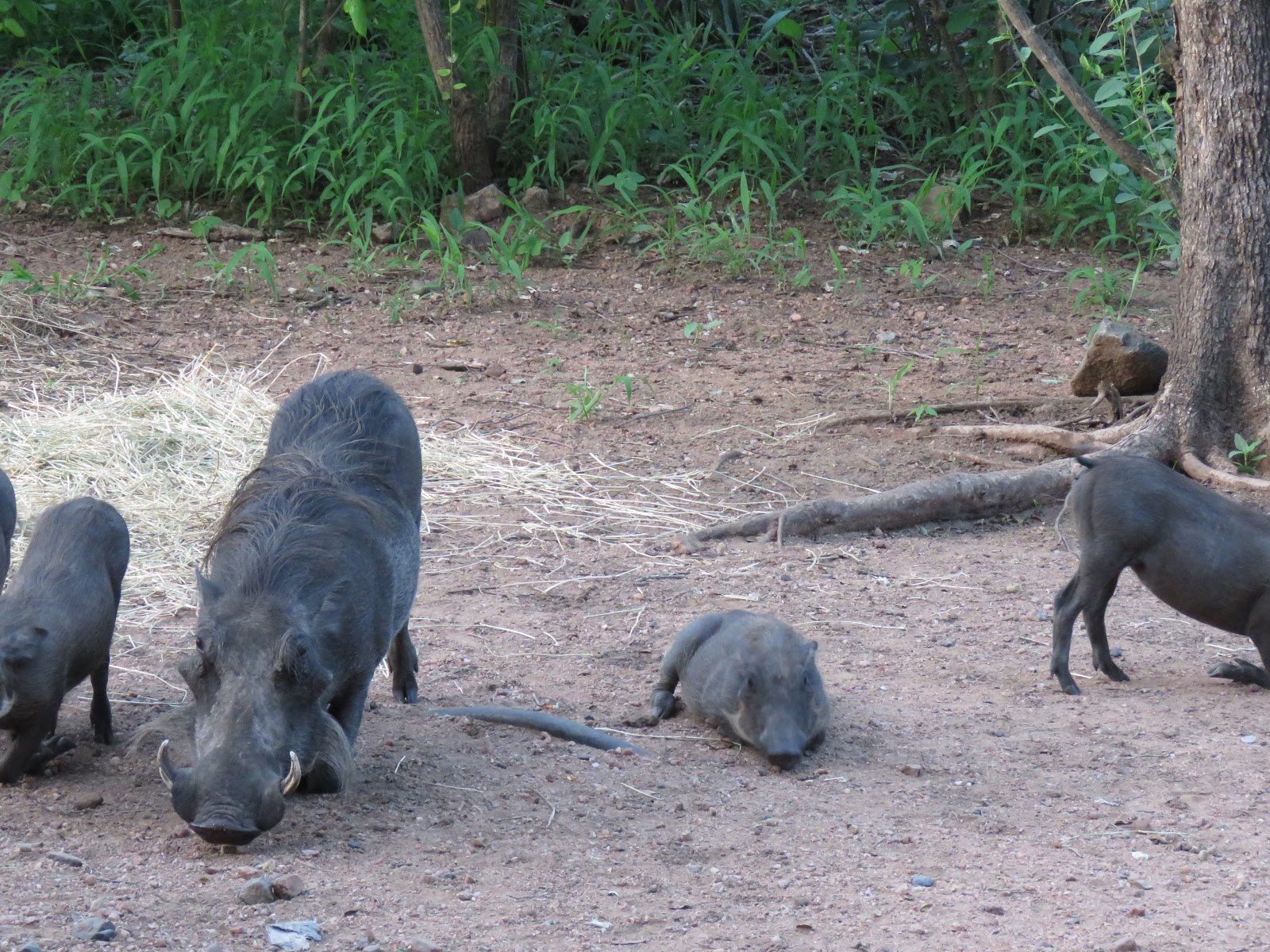
Check out this mongoose mom and a tiny baby.

“Sighting of the Day in the Bush”

Long-tailed Paradise Whydah.  (Photo by friend Ken).

Tom always says counting down the days until we depart the time goes by too quickly. For me, it’s the opposite. I savor each day, knowing there are so few remaining.

Three weeks from today, the next phase of our world journey begins when we drive to Nelspruit on February 14th, Valentine’s Day, to spend one night in a hotel to board an early morning flight to Johannesburg, change planes to then we’ll be off to Nairobi, Kenya.

As I meander through this good-sized house, I see things we need to pack in almost every corner. In essence, the process has started. I’ve already gone through all of my clothing and removed everything I will no longer wear.  
Dad is proud of his fast-growing chicks.

Many items no longer fit with my weight loss of 10 kilos this year (22 pounds). I’ll donate what I haven’t already given away to the sellers on the street to see if they can make a little money on my good-condition clothing.

Doing so leaves me with very little to wear on the upcoming cruise from San Antonio, Chile, to San Diego, California. But at this point, I’m not worrying about what I’ll wear on a cruise ship on dress-up nights. 

For the rest of the days and nights, I’ll wear jeans, shorts and lovely tee-shirts, of which I have plenty of. I still have four somewhat dressier tops, when paired with black pants, can work fine for more formal occasions.

It’s hard to believe these chicks have increased from the tiny little things they were six months ago.

Of my five pairs of shoes, one pair may be construed as a little dressy. Tom has several button shirts to wear to dinner and one white dress shirt for dress-up nights. We’I can add a scarf or costume jewelry for dinners in the main dining room to dress up an otherwise dull outfit. We’ll make it work, as we always do.

When Louise stopped by yesterday, she offered to store anything we may want to keep for our next visit. We may be willing to store a few roasting pans and outdoor lights to watch the wildlife at night.  

Other than that, she suggested we leave any food, spices, canned or bottled items we don’t want in the cupboards, and she can distribute them to their many rental houses for future guests to use or give them to the locals. 

It wasn’t easy to differentiate the chicks from the parents.

As it turns out, many of the food products we use aren’t used by the locals in their cooking method. But tourists from other countries may use the spices and condiments, of which we have many after cooking here for the past year. 

On Tuesday, we went through the chest freezer to inventory precisely what we had left to consume. After doing so, we realized we might not have to purchase much in the way of groceries, especially protein sources, of which we have plenty on hand.

Ostriches seem to love hanging out at this same house we’d observed five years ago.

I’d forgotten we had the frozen filling, already made, for one more pumpkin pie, left from our Thanksgiving dinner party. With it defrosted later in the day, I created and rolled the dough for one more pumpkin pie for Tom (his favorite).  

With the cooler weather, the pie crust came out better than on “pumpkin pie hell day” (click here for details) when we prepared the special meal for 12 of us. There wasn’t enough filling to fill the pie, but Tom loves the homemade crust. See the photo below of the pie I made on Tuesday.

Newly baked pumpkin pie made with a shortage of filling, but it suited Tom just fine!

We also found three large tenderloin steaks, enough for two nights each, so tonight, we’re starting with that, spacing out the balance over the next three weeks. With many upcoming social events and dinners out in the remaining three weeks, we’ll only need to replenish salad fixings, other fresh produce, and a few miscellaneous items such as coffee, cream, butter, eggs, paper products etc.

This morning in Komatipoort, we stopped at the dentist’s office to purchase an at-home teeth whitening product. Next door, I ran into the doctor’s office to make an appointment with the doctor to have my three (non-narcotic) prescriptions refilled for six months (it’s required in SA to see the doctor for refills).  

We can’t help but admire these stunning animals, which have never been domesticated due to their unsuitable demeanor.

The prices for refills are low enough here. It’s worth the office visit cost at ZAR 662 (US $48) rather than ordering them online from my usual supplier (ProgressiveRX).

We each have one more dentist appointment remaining to have our teeth cleaned, at which time I’ll have two remaining amalgam fillings removed and replaced with the safer white material. 

Female zebra grazing in the bush now that there’s so new growth of vegetation due to rain.

At that point, I won’t have any remaining amalgam fillings or teeth requiring any work, which will be a huge relief. I’ve meant to have this done for years. Ironically, we had to come to South Africa to work on our teeth, but the dentist is fantastic, and prices are considerably lower than in the US or other countries.

Back at the house, after shopping at Spar, buying three bags of pellets at Obaro, and Tom heading to Lebombo for carrots, apples, and eggs (for the mongoose), we’re suitable for the next week.

Zebra were looking healthy and well-fed.

We’re staying in for the remainder of today, beginning to work on some other organizing and packing projects. For me, doing a little each day feels more productive than waiting until the last day or two. Tom, on the other hand, prefers to wait until the day before we depart.

It’s all these slight differences between us that make traveling the world together more exciting and entertaining. It would be mighty dull if he was just like me!

Be well. Be happy wherever you may be.


Photo from one day year ago, January 24, 2018:
There were no photos on this date one year ago as we were heading to Ushuaia, Argentina, to board the ship sailing to Antarctica.

Part 2…Five years ago in South Africa…The Panorama Route…Wildlife in Hoedspirit at the Moholoholo Rehab Centre…

The small Serval cat is a vicious hunter in the wild.  We were not allowed inside her habitat.

“Sighting of the Day in the Bush”

Mongooses waiting patiently for Tom to place the bowl of raw scrambled eggs on the ground.

It was on January 19, 2014, we posted the photos we’re sharing in today’s story of our visit to the Moholoholo Rehabilitation Centre in Hoedspruit, South Africa, about a four-hour drive from Marloth Park.

This handsome cheetah was recovering from poisoning, as the result of an attempt to kill him for his hide. He won’t be able to return to the wild due to the risk of being killed by his own species. He’s been made an “ambassador” to represent the rehab center in saving his and other species from becoming endangered.  Watching him through the electrified fencing, we were anxious to get inside for “hands-on.”

In reviewing the photos, it boggles our minds to think this was a full five years ago. It seems like only yesterday we embarked on a three-day getaway to see the Panorama Route as reiterated in yesterday’s post here.

Here is the link from our visit to Moholoholo so many moons ago.

This mating pair of honey badgers were kept together when one was injured.  It was delightful to watch their playful antics. In the wild, they are dangerous animals known to be able to rip the genitalia from any animal in a single bite. Yikes.

As mentioned in a few recent posts, we may be sharing a few repeated posts as we wind down our time in Marloth Park, now only 22 days until departure. Mainly, we decided on this occasional repeat to share past experiences in South Africa in 2013/2014 for our readers who may have begun following us long after this time.

We weren’t allowed to get face to face with this vulture. He offers tourists a stick with the appearance of being generous when in reality, if the gift is accepted through the fence, he’ll bite their fingers off!

Another obvious reason is the fact we’ve been here for so long (a few weeks short of one year as of today) we felt we needed to “shake it up a bit. ” How many warthogs, kudu, giraffe and zebra photos can we post in our remaining time? We realize that it’s become redundant and perhaps boring after so many of the “same old, same old.”

Of course, we’ve yet to become bored with a forkl of kudus, a band of mongoose, a dazzle of zebras or a tower of giraffes in our garden or on the bumpy dirt roads in Marloth Park or even in Kruger National Park. It’s been a constant stream of that which we love, over and over again.

This adorable, yet deadly eagle was more than willing to lower her head for me to pet her.

And yet, it’s about to change very soon and we will bombard our readers with new experiences, new photos, and new adventures unlike many others we may have shared in the past.

Tom volunteered to feed the vultures raw meat. He wore a leather sleeve on his right arm from fingertips to shoulder. As soon as our guide put the raw meat into his hand, several vultures flew at him to grab it, leaving two to fight over it. Exciting, to say the least!

Yes, we’re excited for the future; the upcoming photography tour in Kenya; the March cruise from San Antonio, Chili to San Diego, California; seeing our family once again in Minnesota in April; the cruise in the latter part of April from Fort Lauderdale, Florida to Copenhagen, Denmark; and then in May, flying to Dublin and then driving to Connemara, Ireland where we’ll stay for three months until August. And, it goes on and on…The Baltic, St. Petersburg and more.

At times, I feel melancholy about leaving the bush, the wildlife, and friends. But then, I remind myself I’m continuing to travel the world with my husband, lover, companion and best friend and we’ll never run out of the lively conversation, magic moments, and memorable experiences along the way.

This male lion recovering from an injury leisurely walked our way as we approached the electrified fence. I was able to take this photo through an open small space in the fence, using a bit of zoom.  Of course, we weren’t allowed inside his area.

Today, as we share photos from five years ago, we anticipate five years into the future, wellness, and good health providing, when we may share some of our magic moments from this heart-pounding year in the bush.  

In 22 days, I’ll be emotionally prepared to move on, however sad it may be to say goodbye to Little, Ms. Bushbuck, Basket, Tusker, Mom and Babies, Wildebeest Willie, Frank, and the Mrs. and many more.  No doubt, a few tears will be shed on those last days.  

Other wildlife meandered the open areas of the rehab center, which is located in the bush including many vultures, eagles, impalas, and other species. This young impala was enjoying a quiet time in the shade.

Then, of course, is saying goodbye to our many friends in Marloth Park who have welcomed us, once again, with open arms, open hearts and more loving friendship than we ever could have imagined.  

Never a day passes without us acknowledging how we’ve been blessed to live this unusual life, filled with riches that can’t be bought.  We are grateful.

May you have blessings in your life!


Here are the expenses we incurred one year ago today, for the 31-night stay in the Prodeo Hotel in Palermo, Buenos Aires, Argentina: 

 Expense   US Dollar   Argentine Pesos 
 Hotel – 31 nights $                  2,480.00 47,076.69
Flight – Round trip- inc. cruise                   –               –
 Taxi   $                       65.31 1,239.75
 Groceries & Dining out   $                     987.87                     18.752.28
 Laundry  $                        56.00 1,063.02
 Tips for hotel staff   $                     158.05 3,000.19
 Pharmacy & Misc.   $                     477.52 7,157.48
 Total   $                  4,224.75 59,537.13
 Avg Daily Cost    $                     136.28 1,920.55

Please click here for more details.

Part 1…Five years ago in South Africa…Stunning scenery that didn’t include wildlife…the Panorama Route

Wow! Bourke’s Luck Potholes was definitely our favorite photo of the day on our three-day tour of the Panorama Route and Blyde River Canyon.

“Sighting of the Day in the Bush”

Basket the Bully was feeling sad after his right ear was nearly torn off in what must have been as a result of a fight he most likely provoked.  We comforted him with pellets, apples, and carrots before he took his nap in the hay.

Each day, after we upload the new post, Tom reviews the posts of the same date going back over the years reading aloud to me reciting the places we visited and lived during each of the prior years since we began posting in 2012.

The colorful rock formations, coupled with the water from the Blyde and Treur Rivers at Bourke’s Luck Potholes were breathtaking.

Yesterday, when he mentioned we’d done the Panorama Route around this time five years ago, we figured it would be a good new post to review the experiences with our new readers that we’d had in January 2014.

The waterfalls were a highlight at Bourke’s Luck Potholes as well as the interesting rock formations.

The majority of our readers joined us partway into our journey and may have missed the photos from one of the most stunning experiences for visitors to South Africa, the Panorama Route.

The water was so inviting.  Can you imagine the day that Bourke, an unsuccessful gold miner discovered these? Essentially, they are a result of decades of swirling eddies of water where the Treur River meets the Blyde River, the tumult of which has caused extensive water erosion over time. The result is a series of cylindrical rock sculptures that look as though they would be more comfortable on the moon.

From this site, the Panorama Route is described as follows:

“One of the country’s most scenic self-drives, the Panorama Route, explores the Mpumalanga Highlands, or the north-eastern section of the Great Escarpment of the Drakensberg. In these rugged mountains, the plateau comes to an abrupt and dramatic halt, falling steeply away into the Lowveld accompanied by incredible views out over the grasslands of Africa.”
As we made our way out of the Potholes, we were sad to leave. But, we needed to get back on the road in order to make the best use of our time.

To embark upon this route and gain the full depth and beauty of the experience, one must plan for a two to three-day trip with lots of driving and many stops along the way.

The Three Rondavels viewing point was shrouded in haze which prevented a clear shot.  In South Africa, a Rondavel is a traditional beehive-shaped hut built by the indigenous people as their homes.

Weather is a big factor in ensuring the quality of the self-driven tour along with having a full tank of petrol when taking off which we hadn’t done at the time. Since we visited five years ago now there may be more petrol stations along the route.

A lovely couple from South Africa took this photo of us as we did the same for them.

At the time we ended up low on fuel and barely made it to a petrol station before running out. The situation may have put somewhat of a damper on the experience for a few hours until we finally found a petrol station.

The haze had an impact on our view from God’s Window. We could easily imagine its beauty on a totally clear day.  

However, as we stopped at each point of interest along the long route, we forgot about our fuel needs and embraced the magnificence of that which lay before our eyes and the lens of our camera.

 Berlin Falls presented an impressive view.

If you would like to read the post from January 21, 2014, from which we copied these photos please click here.

Another aspect of this three-day road trip was our stay at the exquisite Blyde River Canyon Lodge. The rooms were well-equipped and gorgeously appointed along with the joy of seeing wildlife wandering about the lush property.  

 This was Wonderview.  What appears to be smoke is low-lying clouds on a hazy day.

The owner Vicky went out of her way to ensure we had an exceptional stay as she did for all of her guests. We couldn’t have been more pleased by the choice we’d made in booking this lodge in the Blyde River area.

Lisbon Falls was one of many exquisite waterfalls in the area.

Another part of the tour was a boat ride in the Blyde River Canyon for some of the most gorgeous scenery we’d seen along the way. Sadly, the rain and dark clouds had an impact on our photos which didn’t stop us from having a good time.

The day was cloudy, the air thick was thick with a mist and low clouds obstructed our views of the mountain tops at times.  However, we found the Blyde River Canyon breathtaking for the two full hours we spent on a pontoon with 20 other tourists.

Please click here for more photos of the scenery from our boat ride in the Blyde River Canyon.  

The excitement of the three-day trip didn’t end here.  Tomorrow, we’ll share Part 2 with photos from our visit to Moholoholo Wildlife Rehab Centre with some outrageous photos and experiences we’ll always remember. Please check back for more.

May your day be filled with memories of the wonders you have experienced over the years!


Photo from one year ago today, January 22, 2018:

An adorable little parrot sitting atop a birdbath in Buenos Aires, as we ended our time in the  Palermo district.  For more photos, please click here.

A mysterious intruder during the night…All new photos…

Each morning, over the past several days, I noticed the remains of sunflower seeds near the container of seeds we use for the birds, which we leave on the little table at night.

“Sighting of the Day in the Bush”

This morning, using Ken’s night vision, motion-detecting camera, we determined the nighttime intruder is a bushbaby, a nocturnal little creature who is apparently living inside the house. We have no idea where it sleeps during the day. 

Over the last several nights, we noticed someone had gotten into the plastic container of seeds we use for feeding Frank, The Misses, and other birds that visit us in the garden.

Over this past year, during the night, we left the same container on the small table in the dining area of the house, never giving it a thought. During this extended period of living in this house, we’d saw many of these precious creatures partaken of its contents.

Bushbaby is looking for food at the old stand, which has since fallen to the ground from kudus pushing at it, looking for food.

We showed the remnants of the sunflower seeds scattered on the table to Linda and Ken, and we all surmised what it could be. I asked Ken if he could set up his night vision, motion detector camera so perhaps overnight last night, we could determine what it might be.

Yesterday morning the four of us headed to Lionspruit for the bush t Frikkes Dam, hosted by Louise and Danie. This was our fourth such event during the past year, and once again, we made our usual egg, sausage, onion, and mushroom cheesy casserole to share.

During our first few months, we used the old bushbaby stand for the cups of yogurt.

As mentioned in yesterday late post, uploaded after the event late in the afternoon, others had made some excellent food, including Louise and Danie’s seafood potjie, which I failed to describe as follows: “Get your friends and family together and cook a delicious meal in a South African cast-iron potjie (pronounced ‘potchee‘)! It is an exciting and enjoyable way of relaxing together and a tasty alternative to a barbeque. The potjie is placed over hot coals, either on an open fire or on top of a grill.”

I was in cookie heaven when Rita brought homemade low-carb, gluten-free, sugar-free peanut butter cookies. I don’t usually make low-carb cookies since I tend to eat too many of them.  

Every night they stopped by for the yogurt.

Even good-for-you-foods may be consumed in excess and may not be healthful in doing so after all. Such is the case for me and cookies. At the party, I may have eaten five cookies, and when Rita gave me the batch balance to take “home,” surely last night, I ate another three or four.  

Bad, bad, bad when today I felt bloated and uncomfortable. I hate the expression, “everything in moderation.”  Moderation is not possible when it comes to certain foods that send us to the moon!  Today, I’m back on track and will allow myself one cookie a day until they are gone in five days.

It’s always adorable to see their little “hands” holding onto the cup.

When the four of us returned to the house around 1600 hours (4:00 pm), we contemplated if we’d have room for the delicious low-carb Italian casserole I’d prepared early on Sunday morning, hoping we’d eat it for dinner on Sunday evening.

If no one ate a morsel until then, we agreed we’d all be ready for dinner by about 1930 hours (7:30 pm). Linda helped me put the final touches on the meal and make the coleslaw salad. By 1935 (7:35 pm), we were ready to eat again. I stayed away from the cookies during this period.

Occasionally, they drop the little cup.  On each occasion, Tom picks it up and places it back on the stand.

The meal was as good as I’d hoped (if I say so me). Shortly after dinner and cleanup, we played the domino-type game once again. By 2230 (10:30 pm), we were off to bed with bellies full and anxious for a good night’s sleep which ultimately was achieved.

But, before we retired for the night, Ken set up the camera to ensure in the morning, we’d discover who was the mysterious nighttime intruder getting into the container of bird seeds.

On many occasions, we’ve seen several bushbabies on the stand.

This morning, when I saw Ken in the kitchen preparing his breakfast, I couldn’t resist inquiring about what he discovered on the camera. He told me to guess. My first guess was a mouse, the obvious choice. Secondly, I suggested a bushbaby, and he nodded his head with a big smile on his face.  

Indeed, the culprit was a bushbaby, as shown in today’s “Sighting of the Day in the Bush,” a furry bulgy-eyed bushbaby that apparently is living somewhere in this house. What a fun discovery!

The bushbaby on the bottom has their head inside the cup while the others wait, tongue sticking out. Cuteness, overload.

Linda and Ken left this morning, but we’ll see them again in early February, on the night of our going away party at Kathy and Don’s bush home located overlooking the Crocodile River. And Linda is joining Kathy and me to treat me to a pedicure at the spa at a local resort. What fun that will be!

Tom and I will settle back into our usual routine with the bushbaby dilemma solved, with Linda and Ken had left for a camp in Kruger for a few days. However, the fun is hardly over with Rita and Gerhard and possibly Louise and Danie (depending on their work schedule) joining us for dinner tonight for one more dinner party.

Later on, we added this stand closer to the veranda for better viewing and photos.

This is the bush. Between the people and the wildlife, the good times continue. We received an invitation from friends Lynne and Mick for dinner at Jabula on Saturday night as I write here now. Perfect! We’ll be there!

 Life in the bush? Um, quite good. Only 24 days and counting…
            
                                             Photos from one year ago today, January 21, 2018:

The big “E” on this door in Buenos Aires represents “entrada” in Spanish which translates to “entrance” in English. For more photos, please click here.

A close up hippo encounter…A rarity in the bush…

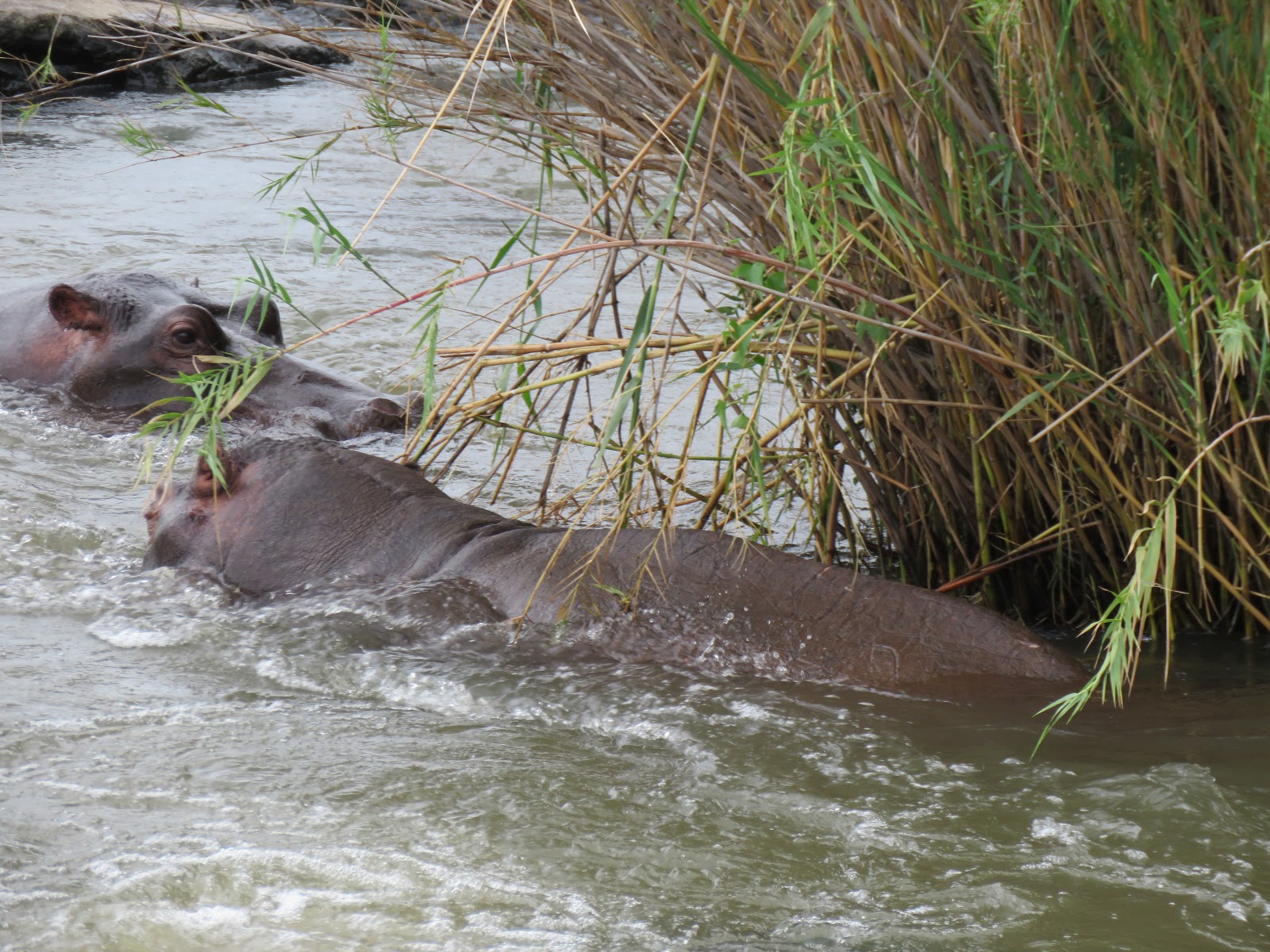
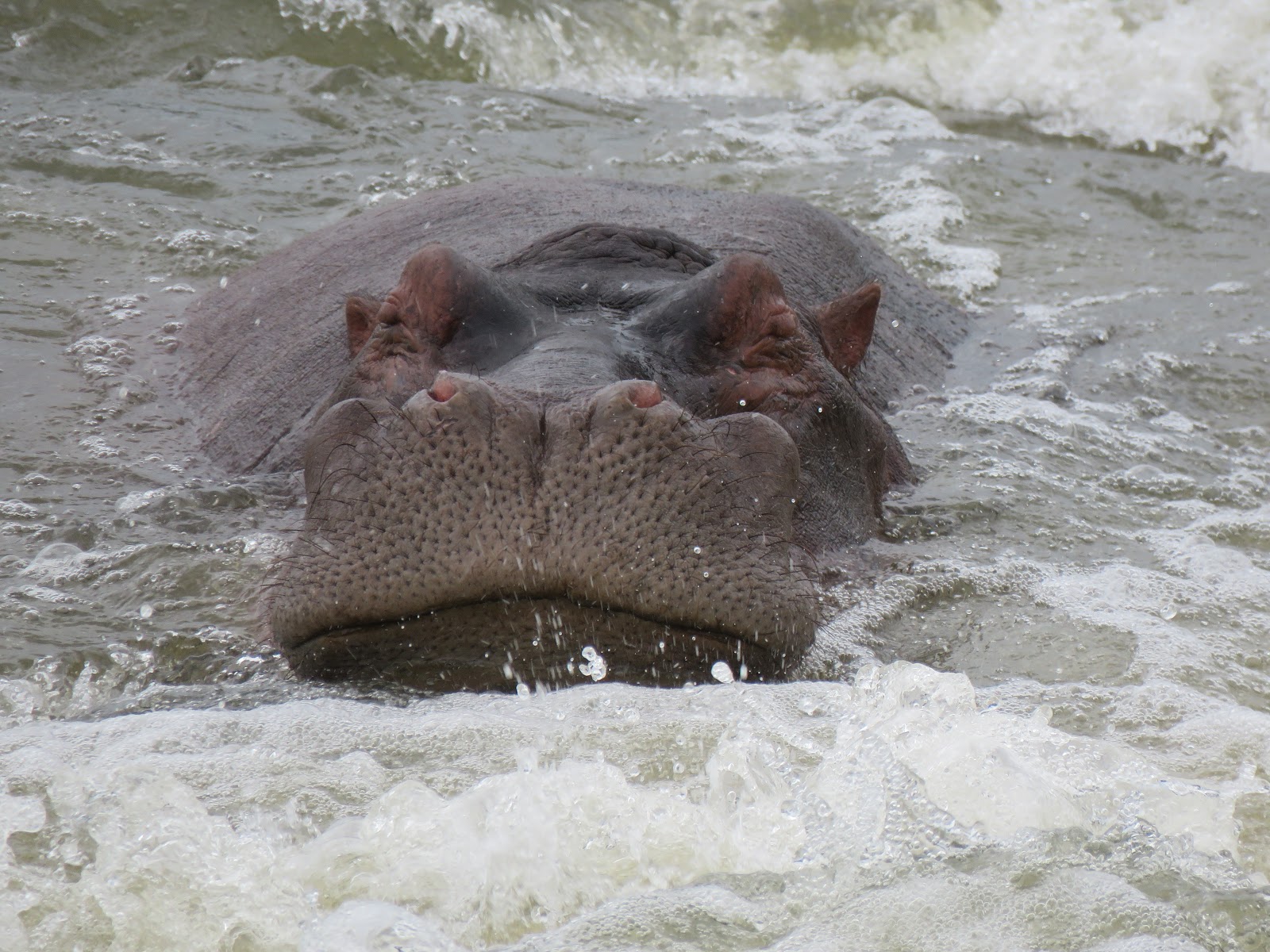
We centered our attention on this particular hippo hoping for a wide opened mouth shot at one point. Unfortunately, he never cooperated, but we enjoyed the close-up photos nonetheless.

“Sighting of the Day in the Bush”

An Egyptian Goose on the far shore of the Sunset Dam in Kruger.

It seems as if each time we visit Kruger National Park, we encounter an exciting scene (to us anyway) that serves as fodder for an upcoming post. Today’s post about hippos proved to fit the bill.

As we drove across the bridge over the Sabie River, we spotted four hippos in the rapids.

As we drove toward the Mugg & Bean Restaurant in Lower Sabie a bit earlier than necessary to meet Rita and Gerhard for lunch, we noticed some activity on the Sabie River bridge. We veered off the main road to see what the commotion was all about.

We shut off the car’s engine to avoid vibration, taking photos for quite some time while we decided which hippo provided the best photo ops. It wasn’t these two.

We located a good spot to park the car as close as possible to the edge of the bridge, closest to the hippos, to enable us to take a few decent shots, hopefully. With many other cars on the bridge, we were pleased to get an excellent place to stop.

From time to time, these two hippos moved a little but never enough for unique shots.

While trying to take photos, we’ve found it necessary to turn off the car. The vibration from the running vehicle has an impact on the quality of the photos. I’ve even noticed when Tom moves to get more comfortable. It can have a bearing on the clarity of my photos.

Periodically, our star-of-the-day closed his eyes to nap in the bubbling waters.
In any case, we sat at that location for approximately 30 minutes, reveling in every moment while watching the motion of the hippos in the bubbling river. Others drove by while we sat with cameras aimed at the hippo’s mouth, hoping for the one unique wide-mouth shots.

It never happened. We realized as we drove away that the wide-mouth shot wouldn’t be necessary after all.  Instead, we had an opportunity for the first time to be so close to hippos, hardly needing to use much zoom to acquire the photos we’re sharing today.
It was a hot day, and he appeared relaxed and at ease in the fantastic rapids washing over him.

Over these past six years, three months, we especially took an interest in getting closeups of animal’s faces.  There’s something magical about the intensity of their looks, expressions, and demeanor that reveals so much of who they are and perhaps, if we’re lucky, how they feel.

As we reviewed these photos, we couldn’t help but find a bit of whimsy in these faces, oddly faces of one of the most dangerous animals on the planet, killing many humans as follows from this site: “Ungainly as it is, the hippopotamus is the world’s deadliest large land mammal, killing an estimated 500 people per year in Africa. Hippos are aggressive creatures, and they have very sharp teeth.”

From this site:  “The hippopotamus, commonly referred to as the hippo, is a round, bald, cantankerous herbivore with a semi-aquatic lifestyle and a fearsome reputation. At 14 to 16 feet and 4,000 pounds, they are as long as a car. The 3-foot skull houses huge, protruding canines, called tusks, contained in a broad, cavernous mouth that can be opened to a gape of 150 degrees – 3 times wider than the human jaw.”

As dangerous as they may be, for the safari-goer/tourist, they are fascinating animals to observe in the wild, and we’re grateful for the experiences we have had over this extended period spent in Africa.

The hippo’s skin is gray to brownish-red with pink areas around their ears and under their chin. They have very few hairs on their body but do have stiff whiskers on their broad lips that feel like a broom and a small amount of fuzziness around the edges of their ears and on their tail.

Today, we had yet another fun party to attend, a bush braai at Frikkees Dam in Lionspruit, a game conservancy inside Marloth Park. We dined on fantastic food with about a dozen in attendance, including a traditional potjie Danie and Louise made with seafood. It was divine, comparable to fine seafood chowder.

Earlier this morning, I made a big pan of an Italian dish for tonight’s dinner. Now, back at the house, none of us are hungry, so we’ll play it by ear. Maybe by 7:00 or 7:30, we will be hungry again.

“Ah, that splash feels good,’ he moans.  Hippos don’t swim, although they spend nearly 16 hours a day wallowing in rivers and streams. When not strolling along the bottom, they propel themselves by pushing off the riverbed, or rocks, driftwood, or other hippos, and gliding along for a distance before pushing off again.

Linda and Ken are leaving tomorrow. Their week with us has sailed by, and we look forward to seeing us again in February when they return to Marloth Park from Johannesburg for our upcoming going away party, hosted by Kathy and Don. At this point, we’re leaving MP in 25 days.

Have a fantastic evening!


Photo from one year ago today, January 19, 2018:

Fancy chalk graffiti on the exterior of a cafe in Buenos Aires. For more photos, please click here.

The “Little Five Game” animals…Hard to find…Interesting to see…

A rhino beetle we found on the veranda on Thursday. They are harmless to humans and don’t bite.

“Sighting of the Day in the Bush”

Basket, the Bully, appeared with a terrible injury to his right ear, most likely due to a fight with another warthog.

A few nights ago, while Linda, Ken, and Tom, and I lounged on the veranda after dinner, we joyfully spotted what we thought was a dung beetle. We were even more excited when we realized it was harder to spot rhino beetle. We couldn’t have been more thrilled to see and handle this fantastic little creature, a member of Africa’s “Little Five Game.”

Unfortunately, we’ve only spotted two of the little five during our past year in the bush, as indicated in today’s included photos. But in our remaining 26 days in Marloth Park, we’ll be keeping an eye out for the other three little creatures in this select group, hoping to round out this experience.

In any case, we wanted to share with our readers precisely what is construed as the Little or Small Five as an adjunct to the familiar and popular Big Five so enthusiastically sought by visitors and locals to national parks and game reserves throughout Africa.

Today we’ll start with a description of the Elephant shrew and continue from there, ending with our favorite, the infamous rhino beetle, which joined us after dinner on Thursday evening.
A considerable portion of the text has been added from this site.  

“In Africa, the little five game animals are: The term “little five” was brought to life after the marketing success of the big five for tourist safaris in Southern Africa. This prompted a call by nature conservationists for visitors to acknowledge the savanna’s smaller — less noticed — but still enigmatic animals (called bushveld in South Africa).
The “little five” species contrast in terms of sheer relative size to the animals, which
they share a part of their English name with the more well-known “Big Five.”

The”Little or Small Five game” consist of the following animals:
This is an elephant shrew. (Not our photo).

Elephant shrew: a small, insect-eating mammal with a long nose. Elephant shrews are very common in Southern Africa but seldom seen. Elephant shrews, also called jumping shrews or sengis, are small insectivorous mammals native to Africa, belonging to the family Macroscelididae in Macroscelidea. Their traditional common English name “elephant shrew” comes from a fancied resemblance between their long noses and the trunk of an elephant and their superficial similarity with shrews (family Soricidae) in the order Eulipotyphla. However, phylogenetic analysis revealed that elephant shrews are not classified with true shrews but are, in fact, more closely related to elephants than shrews. In 1997 the biologist Jonathan Kingdon proposed that they instead are called “sengis” (singular sengi), a term derived from the Bantu languages of Africa, and in 1998 they were classified into the new clade Afrotheria. They are widely distributed across the southern part of Africa. Although common nowhere, they can be found in almost any type of habitat, from the Namib Desert to boulder-strewn outcrops in South Africa to thick forest. One species, the North African elephant shrew, remains in the semiarid, mountainous country in the continent’s far northwest.  The creature is one of the fastest small mammals, having been recorded to reach 28.8 kilometers per hour (17.9 mph).
Red-billed buffalo weaver. (Not out photo).

Buffalo weaver: The body length of approximately 24 cm and the weight of 65 g place rank this as one of the largest Ploceidae (weaver birds). Visually the sexes are not significantly differentiated from one another. The red-billed buffalo weaver is distinguished from the white-billed buffalo weaver (Bubalornis albirostris) by the color of its bill. The feathers of the male are dark chocolate brown. The front wing edges and the wingtips are flecked with white. His bill is a shade of red. The eyes are brown, and the feet are reddish-brown. The female’s body is also colored dark chocolate brown, without the white flecks on the wings. However, her chin and throat feathers include broad white-colored hems. Her eyes are dark brown, and her legs light brown. Adolescent birds are a lighter shade of brown.

The diet of the red-billed buffalo weaver consists primarily of insects, seeds, and fruit. Particular insects the bird feeds on include crickets, locusts, grasshoppers, caterpillars, beetles, weevils, wasps, bees, ants, flies, and spiders. Its diet also includes scorpions. Most of these food sources are located in the soil or low vegetation. As a result, the red-billed buffalo weaver does most of its foraging on the ground. Climate changes have not significantly affected the abundance of prey for the bird.  These birds tend to live in dry savannahs and sparse woodlands. They prefer areas usually disturbed by humans and livestock. If people living in the community, with a population of red-billed buffalo weavers, leave, the birds often depart as well. Thus, at places that continue to be urbanized, these birds find more homes. Additionally, overpopulation does not tend to be a problem for the red-billed buffalo weaver, as they live in colonies.

This is our photo of a leopard tortoise we spotted in Kruger, shown in this post.

Leopard tortoise: The leopard tortoise (Stigmochelys pardalis) is a giant and attractively marked tortoise found in the savannas of eastern and southern Africa, from Sudan to the southern Cape. It is the only member of the genus Stigmochelys, although it was commonly placed in Geochelone in the past.  This tortoise is a grazing species that favors semi-arid, thorny grassland habitats. They may dwell in abandoned fox, jackal, or aardvark holes in both scorching and cold weather. Leopard tortoises do not dig other than to make nests in which to lay eggs. Given its propensity for grassland habitats, it grazes extensively upon mixed grasses. It also favors succulents and thistles. The phylogenic placement of the leopard tortoise has been subject to several revisions. Different authors have placed it in Geochelone (1957), Stigmochelys (2001), Centrochelys (2002), and Psammobates (2006). More recently, the consensus appears to have settled on Stigmochelys, a monotypic genus. There has been considerable debate about the existence of two subspecies, but recent work does not support this distinction.  “Stigmochelys is a combination of Greek words: stigma meaning “mark” or “point”* and chelone meaning “tortoise.” The specific name pardalis is from the Latin word Pardus meaning “leopard,” and refers to the leopard-like spots on the tortoise’s shell. The leopard tortoise is the fourth largest species of tortoise in the world, with typical adults reaching 40 centimeters (16 in) and weighing 13 kilograms (29 lb). Adults tend to be more prominent in the northern and southern ends of their range, where typical specimens weigh up to 20 kilograms (44 lb), and a gigantic tortoise may reach 70 centimeters (28 in) and weigh 40 kilograms (88 lb). The carapace is high and domed with steep, almost vertical sides. Juveniles and young adults are attractively marked with black blotches, spots, or even dashes and stripes on a yellow background. In mature adults, the markings tend to fade to a nondescript brown or gray. The head and limbs are uniformly colored yellow, tan, or brown.

This is an antlion.  (Not our photo).

Antlion: The antlions are a group of about 2,000 species of insect in the family Myrmeleontidae, known for the fiercely predatory habits of their larvae, which in many species dig pits to trap passing ants or other prey. The adult insects are less well known, as they mostly fly at dusk or after dark, and maybe mistakenly identified as dragonflies or damselflies; they are sometimes known as antlion lacewings, and in North America, the larvae are sometimes referred to as doodlebugs because of the strange marks they leave in the sand.  Antlions have a worldwide distribution. The most extraordinary diversity occurs in the tropics, but a few species are found in cold-temperate locations, such as the European Euroleon nostras. They most commonly occur in dry and sandy habitats where the larvae can easily excavate their pits, but some larvae hide under debris or ambush their prey among leaf litter.  Antlions are poorly represented in the fossil record. Myrmeleontiformia is generally accepted as a monophyletic group, and within the Myrmeleontoidea, the antlions closest living relatives are thought to be the owlflies (Ascalaphidae). The predatory actions of the larvae have attracted attention throughout history, and antlions have been mentioned in literature since classical times.

This is our photo of a rhino beetle.  See info below.

Rhino beetle:  Dynastinae or rhinoceros beetles are a subfamily of the scarab beetle family (Scarabaeidae). Other common names – some for particular rhinoceros beetles – include Hercules beetles, unicorn beetles, or horn beetles. Over 300 species of rhinoceros beetles are known.  Many rhinoceros beetles are well known for their unique shapes and larger sizes. Some notable species are, for example, the Atlas beetle (Chalcosoma atlas), common rhinoceros beetle (Xylotrupes Ulysses), elephant beetle (Megasoma elephas), European rhinoceros beetle.  (Oryctes nasicornis), Hercules beetle (Dynastes Hercules), Japanese rhinoceros beetle or kabutomushi (Allomyrina dichotoma), ox beetle (Strategus aloeus), and the Eastern Hercules beetle (Dynastes tityus). The Dynastinae are among the largest beetles, reaching more than 150 mm (6 in) in length, but are entirely harmless to humans because they cannot bite or sting.

Some species have been anecdotally claimed to lift to 850 times their weight. Their common names refer to the characteristic horns borne only by the males of most species in the group. Each has a horn on the head and another horn pointing forward from the center of the thorax. The horns are used in fighting other males during mating season and for digging. The size of the horn is a good indicator of nutrition and physical health. The Dynastinae are among the largest beetles, reaching more than 150 mm (6 in) in length, but are entirely harmless to humans because they cannot bite or sting. Some species have been anecdotally claimed to lift to 850 times their weight. Their common names refer to the characteristic horns borne only by the males of most species in the group. Each has a horn on the head and another horn pointing forward from the center of the thorax. The horns are used in fighting other males during mating season and for digging. The size of the horn is a good indicator of nutrition and physical health.  The body of an adult rhinoceros beetle is covered by a thick exoskeleton. A pair of broad wings lies atop another set of membranous wings underneath, allowing the rhinoceros beetle to fly, although not very efficiently, owing to its large size. Their best protection from predators is their size and stature.

Additionally, since they are nocturnal, they avoid many of their predators during the day. When the sun is out, they hide under logs or in vegetation to camouflage themselves from the few predators big enough to want to eat them. If rhinoceros beetles are disturbed, some can release very loud, hissing squeaks. The hissing squeaks are created by rubbing their abdomens against the ends of their wing covers. Rhinoceros beetles are relatively resilient; a healthy adult male can live up to 2–3 years. The females rarely live long after they mate.”

Tomorrow, we’ll continue with more from yesterday’s outing to Kruger National Park with more exciting photos, focusing on some unusual shots of hippos, up close and personal.

Please check back tomorrow for more.  

Have a lovely weekend!

Photo from one year ago today, January 19, 2018:

A colorful exterior of an ethnic restaurant near a park in Recoleta, Buenos Aires, Argentina.  For more photos, please click here.
A visit to Kruger National Park with many special sightings!…

Today, Ken took this playful elephant baby photo. What a fantastic shot!

“Sighting of the Day in the Bush”

Ken’s photo:  A Southern Carmine Bee-Eater they spotted today in Kruger National Park, the first sighting for him and Linda.

Today, my plan had been an entirely different topic than our visit to Kruger this morning. Not only did we take off for the park now that the holidaymakers mainly had left the area, but Linda and Ken and Rita and Gerhard had also done the same.

The baby elephant is at play with family members.

We prefer to go into the park on our own since it’s never easy taking photos from the back seat of a standard car.  Besides, experienced self-drive enthusiasts each has their particular way of searching for wildlife and routes they prefer to take.

As it turned out, we met Rita and Gerhard for lunch at the Mugg & Bean for a delightful lunch and conversation, as always. By the time we returned to the house, Linda and Ken were already sitting on the veranda working on their photos from the day’s self-drive and offered to include several of their photos for today’s post.

There were six giraffes in this particular tower.

With company coming for dinner (friends of Linda and Ken’s) at 1700 hours (5:00 pm), the two are preparing and cooking the meal. I was left with 90 minutes to complete today’s post, about one-third of the time I usually spend.

I’d taken over 100 photos today, and the time required to go through all of them would occupy the entire 90 minutes I had allowed to get this uploaded. Thus, I’m doing the best I can and apologize for any brevity and errors in my haste.

Elephant family crossing the road with a few babies protected by the parade.

With only 27 days remaining until we leave Marloth Park, we may only visit Kruger National Park a few more times. Today proved to be a special day with several good sightings and the lack of tourists in the park.  

Unfortunately, obstructed by vegetation, it was challenging to get good photos of the five lions we spotted near the entrance to Crocodile Bridge. This may have been five of the notorious Verhami Pride.

Although there would be three or four vehicles jockeying for position at notable sightings, overall, traveling through the park was easy. After stopping and staying so long at the lion sighting toward the end of the day, we realized we needed to get the show on the road and get back.

The dinner guests will arrive in less than 30 minutes, and I need to shower again (another hot, sweaty day) and make myself presentable for the evening on the veranda.

In a hurry to get back to the house to do today’s post, these were the best we could get of this pride of lions.

Over the past 48 hours, we’ve been bombarded by biting flies. I can’t type more than a few words, and I have to stop swat flies, hornets, and wasps away from my sweaty face.  But, as they say, TIA, aka “This is Africa,” and that’s the price we pay to enjoy such wonders as we’re showing here today in our photos.

In the next several days, we’ll include more photos from today’s trip to Kruger and a fascinating story for tomorrow when I’ll have more time to be more detail-oriented.

Have a spectacular day and evening, wherever you may be.

Photo from one year ago today, January 18, 2018:

Tom is quite a history buff and is particularly fascinated with older structures. For more photos of Recoleta, please click here.

An outstanding birthday party in the bush…

Ken set up the camera on a timer to take this photo of all 10 of us! Fantastic!

“Sighting of the Day in the Bush”

Fork-trailed drongo Ken was spotted in the garden.

It was quite a night. A fabulous time was had by all. Per my expectations, the food all came out well, and everyone kindly gushed over the vast array of options and flavors.

Rita loved being silly with all of us at her birthday dinner party.

We included the menu in yesterday’s post. If you haven’t seen it, please click here. It was a lot of work making all the menu items in the sweltering heat and humidity, which has finally cooled down a bit today.  

Rita and I pose for more silly photos. We’ve built quite a lasting friendship in only a few short months. We both feel fortunate for all of our beautiful friends.

With Linda’s efficient help, we managed to get through all the food prep, and later, both she and Louise jumped in to help with dishes. Tom kept loading the dishes, and soon, all will be completed, perhaps even before Zef and Vusi arrive, who are always willing to do dishes when they clean the house each day.

Danie, Leon, Tom, Gerhard, and Ken, from left to right, toasting a good evening.

Somehow, we don’t feel right leaving them piles of dishes from the previous night’s dinner and party, and we make every effort to clean up as much as possible. By 8:00 am this morning, I had the second load of laundry washing, Tom had the dishwasher emptied and put away, and we were ready to begin a new day.

And the girls, from left to right, Louise. Dawn, me, Linda and Rita.

Most likely, this will be the last dinner party that we’ll host in Marloth Park. With only 28 days remaining until we leave the park, we’ll begin chipping away at the food we have left instead of buying large quantities of food for future entertainment purposes.

Linda and Louise took on dish duty.

And what a party it was! It was a perfect compilation of personalities, the ability to laugh, and the commonality of our mutual love of the bush. The evening passed so quickly. We were disappointed when it was over.

We celebrated with one toast after another.

Yes, we worked hard, but it was worth every moment. Today, my legs are tired from being on my feet for almost two days, standing on the ceramic tile floors. The awful weather, humid and hot, made the prep all the more taxing.  

The boys were toasting once again.

But I can’t wipe the smile off my face in recalling the fun Rita, Gerhard, our other friends, and Tom and I had last night. Of course, adding to the night’s good humor was the constant flow of some of our favorite warthogs who stopped by to see what all the commotion was about, and yes, check out the pellet situation.

We had no idea why the fingers were on our heads, but Ken, who took photos, thought it worth a shot.

We saw “Little,” Mike and Joe, Sigfried and Roy, Mom and Babies, and not surprisingly “Basket, The Bully,” who stopped by for a while to show off that he, too, could be good-natured in a social setting.

Initially, I’d planned to serve the meal in courses, but when we got a late start with the food since we were preoccupied having fun, we narrowed it down to only three courses instead of four. It all worked out as well as we could have wanted.

Rita and Ken pose for silliness.

Today, Linda and Ken are heading to Kruger for a few hours, and soon, we’re off to the dentist for my second to the last appointment. Then my teeth will be done, done, done until our next cleaning in some other country down the road, wherever that may be.

Tonight, we’ll dine on leftovers which we’ll particularly enjoy at a leisurely pace with Linda and Ken. Perhaps, after dinner, on the veranda, we’ll play a few more rounds of their dominos-type game while seeing who stops by to say hello.

Have a fantastic day!

Photo from one year ago today, January 17, 2018:

There are also many historical hotels and buildings in Buenos Aires, Argentina. For more photos, please click here.

In another state of mind today…It’s all about the food…Tonight’s menu…

Today, there has been an invasion of baboons and Vervet monkeys around our property.

“Sighting of the Day in the Bush”

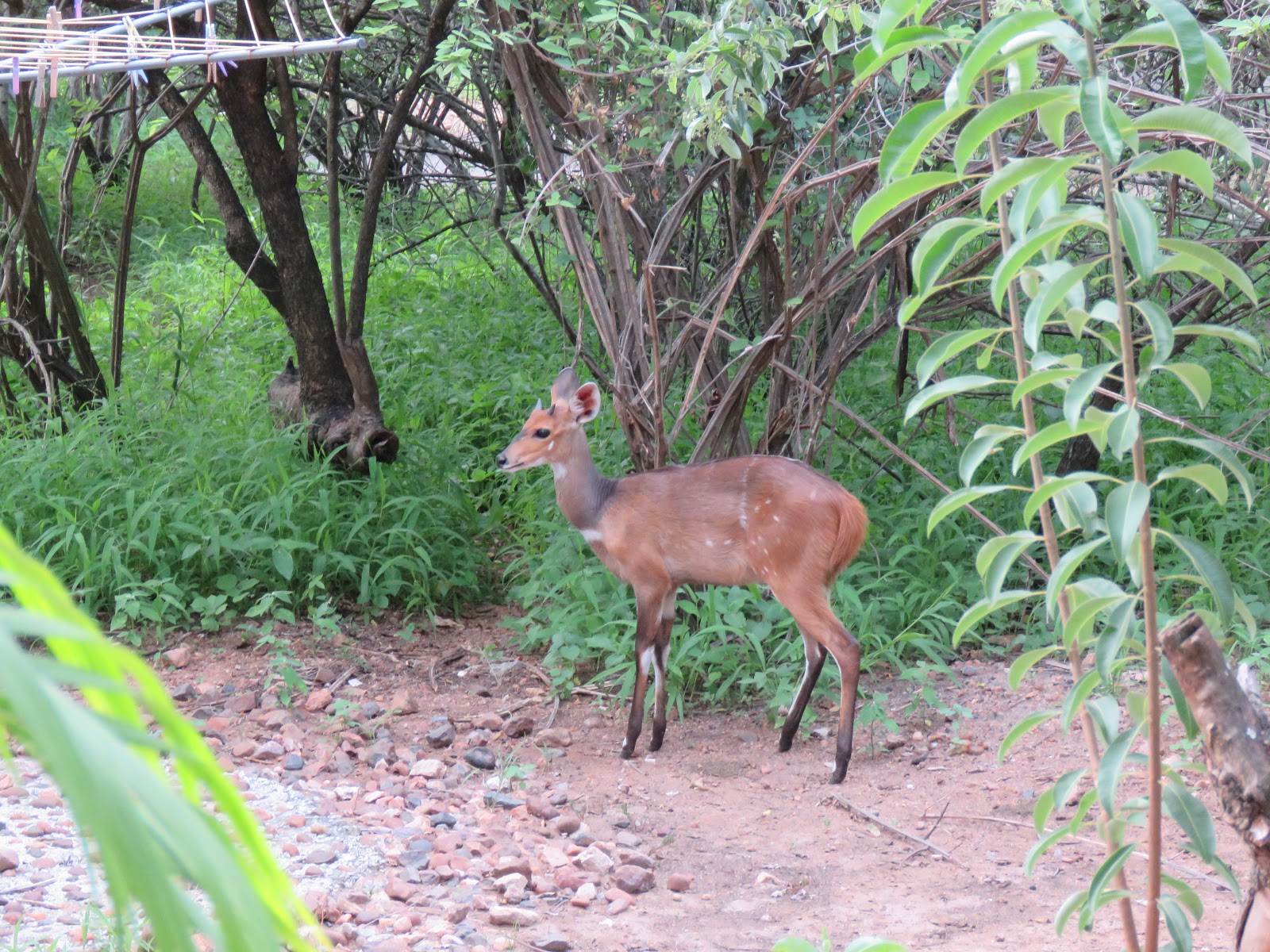
Young male bushbuck in the garden.

Today reminded me of our old lives when we entertained, making a wide array of main and side dishes and, of course, some delicious dessert.  The place settings, the linen placemats, and linen napkins folded into a configuration I learned almost 50 years ago when I worked as a server in a supper club in Minnesota for a short time.

No doubt, I always make more food than we’ll need, fearing that there’s enough for everyone. Plus, Tom and I both love eating leftovers. The convenience of not having to cook for a few more days, along with the opportunity to savor the special foods, once again makes leftovers incredibly pleasurable for us. 

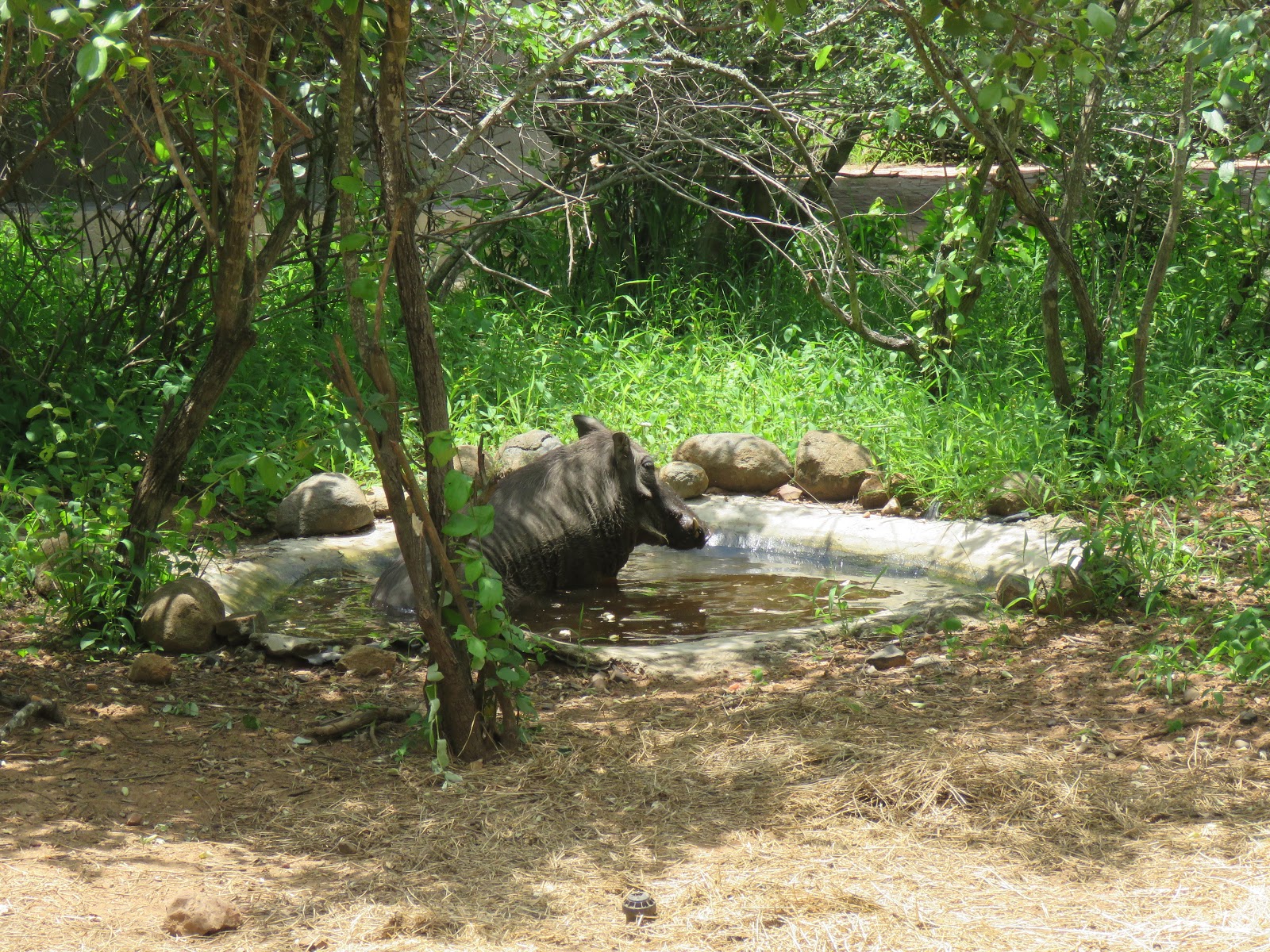
Little, while he was lounging in the water in the cement pond.

With Linda and Ken here, we’ll feast tomorrow night again and freeze whatever is left. Based on the foods we have accumulated in the chest freezer, we may not have to shop for food again, other than fresh produce, for the remainder of our time in Marloth Park, at this point in 29 days. It’s hard for us to believe the time is passing so quickly.

Tonight’s menu for Rita’s birthday consists of the following items:

Happy Hour 
Lemon Drop Martinis (sugar-free) *
Assorted Nuts and Cheese
 
First Course
Spiced Pumpkin Soup*
 
Second Course
Par 30 Salad*
with bacon, cauliflower bits, slivered almonds, diced green onions, fresh greens, and tossed with homemade dressing
 
Third Course
Marinated Filet Mignon*
Rosemary Lamb Chop*
Peel & Eat Prawn Tails*
Cheesy Potato Casserole
Cheesy Cauliflower Bake*
Sauteed Green Beans with Crispy Bacon and Caramelized Onions*
Toasted Garlic Ciabatta Bread with Parmesan Cheese
 
Fourth Course – Dessert
Cheese Pie with Buttery Almond Crust*
 
All items marked with an asterisk (*) indicate the item is low carb, grain, starch, gluten-free and sugar-free
 
 This young male bushbuck stops by several times a day along with other bushbucks.
So far, I have everything prepared except the final touches on the salad, cooking the prawns, baking the side dishes, and preparing and grilling the garlic bread. Tom will be cooking the meats on the braai.

But even with this seemingly small amount left to do, it will result in a busy day when putting it all together. Thus, based on this, unfortunately,  I have to cut today’s post short to get back to work on this lofty menu.

Little, leaving the cement pond after a soak on a hot, humid day.
By the way, last night, we had a barrage of visitors, including many warthogs, kudus, bushbucks, and duikers. It was a delightful evening on the veranda with Linda and Ken. We had a nice dinner and played a fun domino-type game.

Tonight’s party should be fun as well. Let’s hope the power stays on!

Happy day to all.

Photo from one year ago today, January 16, 2018:

This scene in La Recoleta Cemetery in Buenos Aires, where Evita Peron is entombed, particularly caught our eye.  For those photos, please click here.

Celebrating with friends…Dinner in town…Is it dangerous at night?…

 
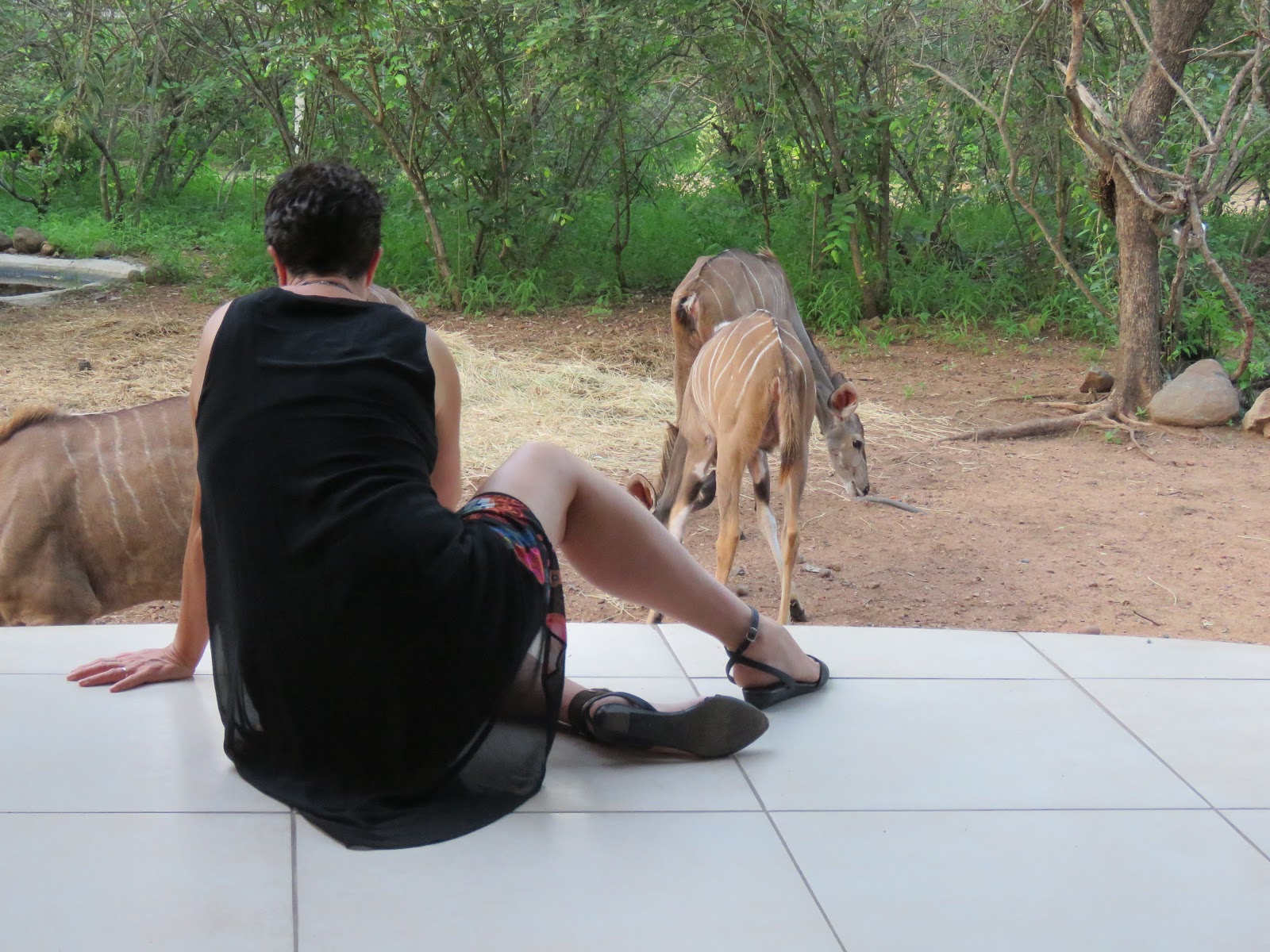
Last night, Rita sat at the edge of the veranda feeding pellets to the kudus. This photo so much bespeaks her love of wildlife.

“Sighting of the Day in the Bush”

Mom and Babies arrived this morning to greet our guests.

Yesterday was the actual date of Rita’s birthday, and we’ve been committed to making her birthday as unique as she is.  She and Gerhard had hosted Tom’s birthday with an elaborate meal and decorations on December 23rd, which we posted on December 24th at this link.

Our original plan was to host her dinner party yesterday, but with this horrible heat and humidity, we postponed it for tomorrow, Wednesday, when it’s supposed to be cooler. We’ll see about that!  
Tom at the end of the big table on the veranda.
Right now, at 11:30 am, the humidity is outrageous, and the four of us, including visiting guests Linda and Ken, are situated on the veranda sweating up a storm. Every so often, I go into the kitchen to work on a recipe for tomorrow’s dinner party, sweating all the more.
 
As of this moment, I have prepared one dish for tomorrow’s dinner party, with six more dishes to prepare, including salad, sides, and dessert but not including the three main dishes. If it weren’t so hot, this meal would be a breeze.
Ken and Linda were at “happy hour” last night before we headed out to dinner.
Because Rita’s birthday was yesterday, we wanted the evening to be special for her, so we all decided to go out for dinner on Linda and Ken’s first night here.
 
Most residents of Marloth Park don’t drive to Komatipoort for dinner based on a history of car-jackings on the highway before Ngwenya. But, with all the dining out we’ve done lately in Marloth Park, we suggested leaving Marloth Park to go to Tambarina in Komatipoort, a famous Portuguese dining establishment known for their prawns.
Gerhard was conversing during the happy hour. 
It was a little risky, especially when Zef, one of our two outstanding household helpers, was recently attacked at gunpoint on this same road but deftly defended himself with the spray from a hose of scalding hot water from the radiator in his vehicle. He escaped with his life after spraying the perpetrator in the face with the boiling water while ending up with severe burns on his arm. 
 
We hesitated in driving the two cars necessary to carry all six of us. Still, We decided we’d all be extra diligent in devising a plan on how we’d divert any potential criminals trying to get us to stop the car.
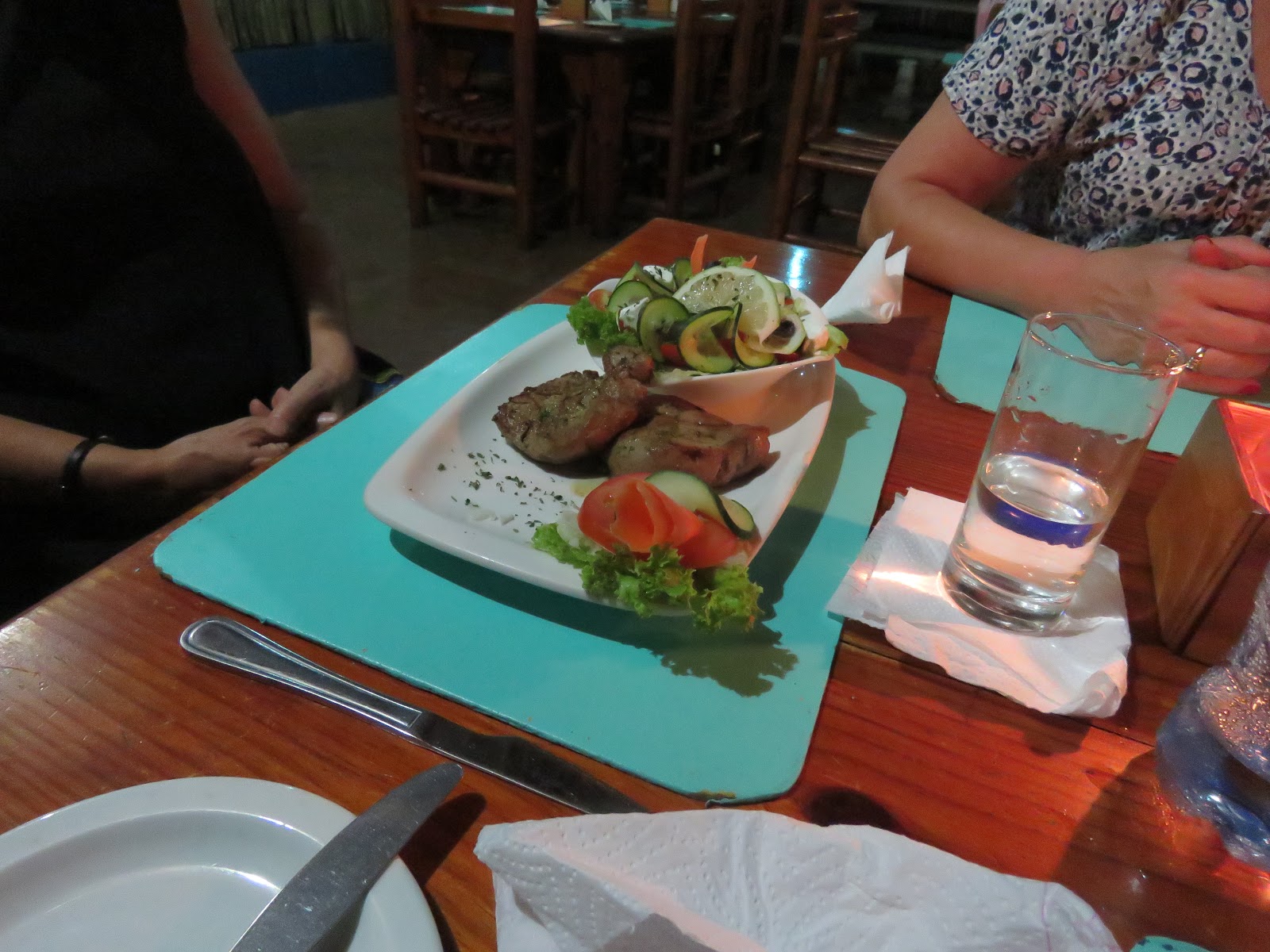
Rita’s fillet and salad which she enjoyed at Tambarina last night for her birthday celebration.  
I had called ahead and made the reservation for six informing the staff it was Rita’s birthday. They made it special at the end of our meal by singing “the birthday song” and serving each of us a shot of pink marula (a local alcoholic beverage/liquor made from the fruit of the Marula tree).  
 
Rita and I, both low carb, passed the marula shots on to our husbands for their pleasure. By 2200 hours (10:00 pm), we were on our way back to Marloth Park, relieved as we passed the security gate into the park that we’d made it back without incident.
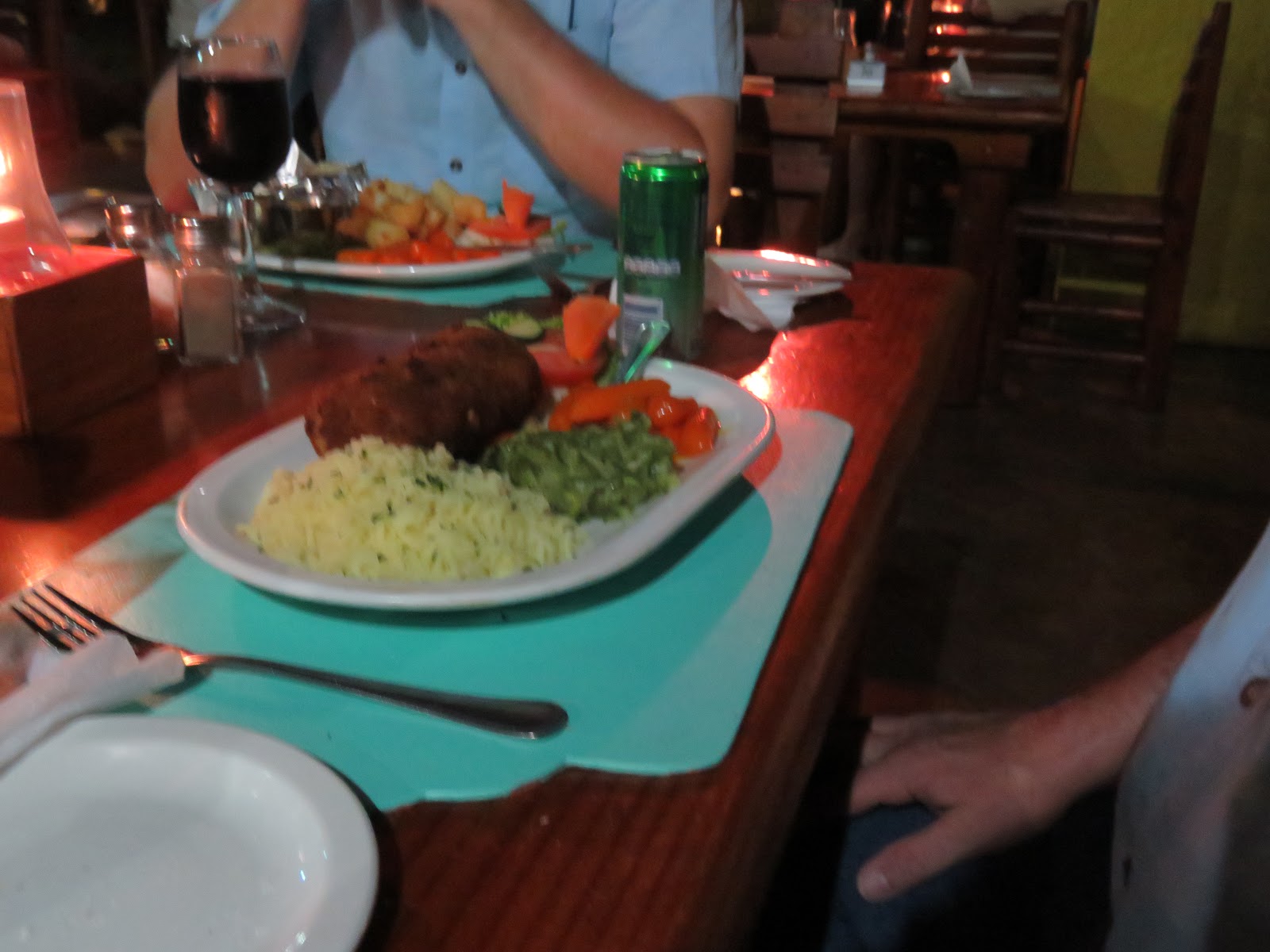
Tom’s dinner of Beef Condon Bleu with rice and vegetables.
The night’s sleep was fitful. I awoke at 2:00 am and didn’t go back to sleep until 4:00 am, dosing in and out until I finally got up, showered, and dressed by 7:00 am, anxious to visit with our lovely long-time friends and houseguests, Linda and Ken.  
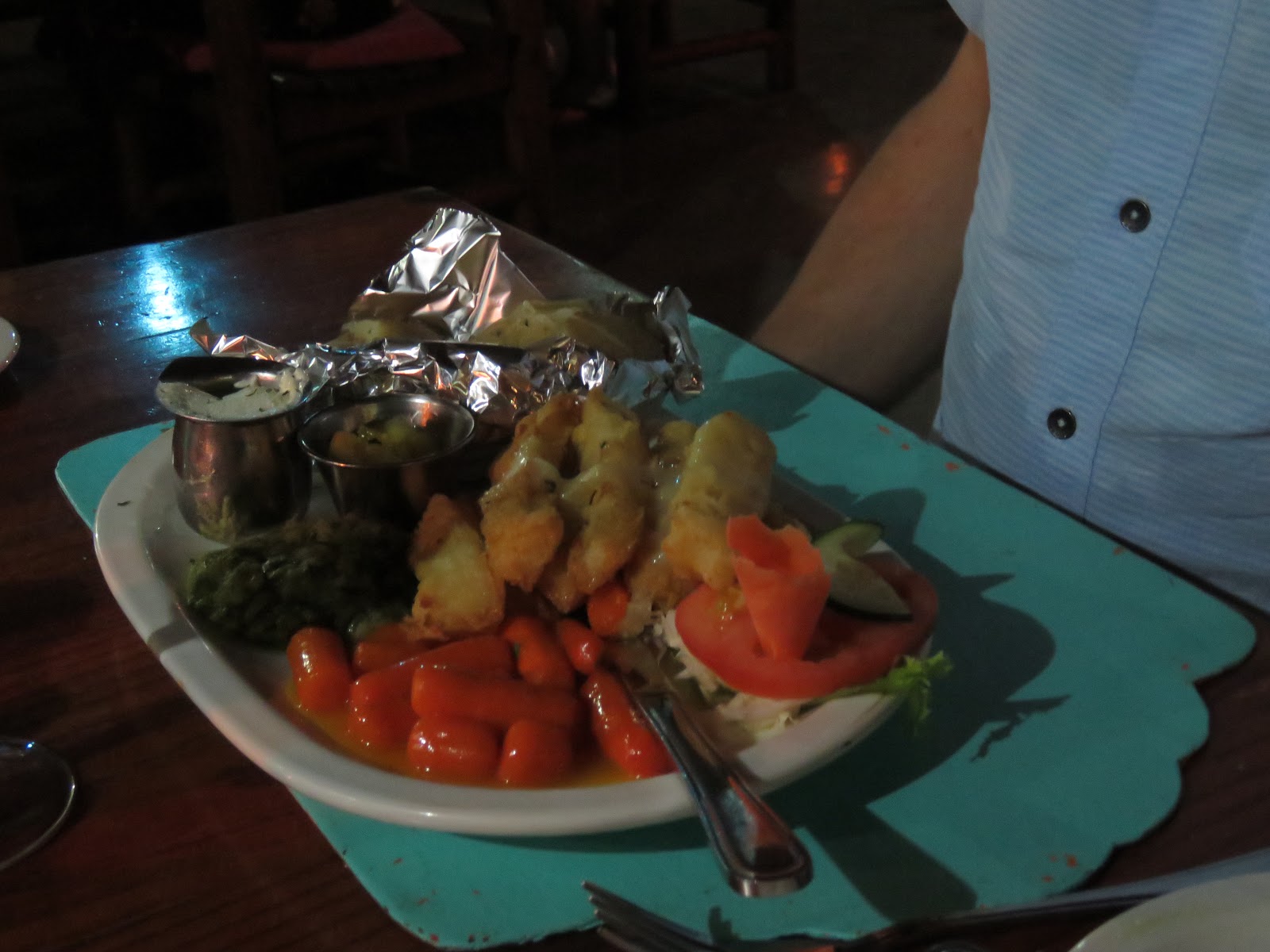
Gerhard’s meal of fried calamari, baked potato, and vegetable.
Upon entering the living room from the comfort of the night’s airconditioned room, I knew we were in for another scorcher.  Although today’s temperature will only be 34.4C (94F), the humidity is running over 80%. Brutal. Brutal.
 
For this reason alone, we appreciate the fact that we’ll be moving on in less than a month. The rest, not so much. Departure day is looming before us, and as we celebrate with the people and wildlife, we love we know it won’t be easy to say goodbye.
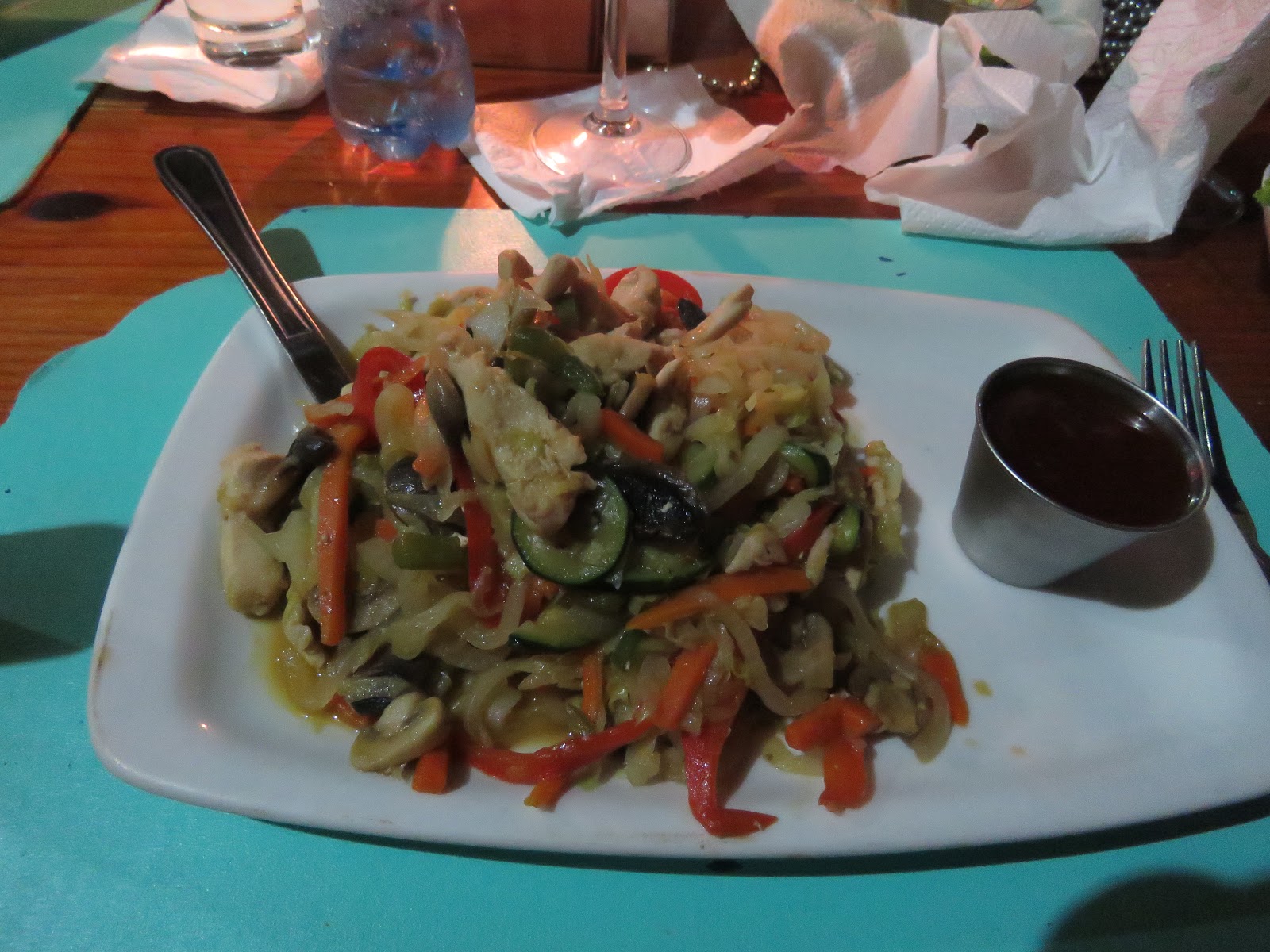
Linda, Ken, and I each ordered the chicken stir fry, which was prepared for our dietary needs.
Goodbye for today, dear readers. We’ll be back tomorrow with more.


Photo from one year ago today, January 15, 2018:

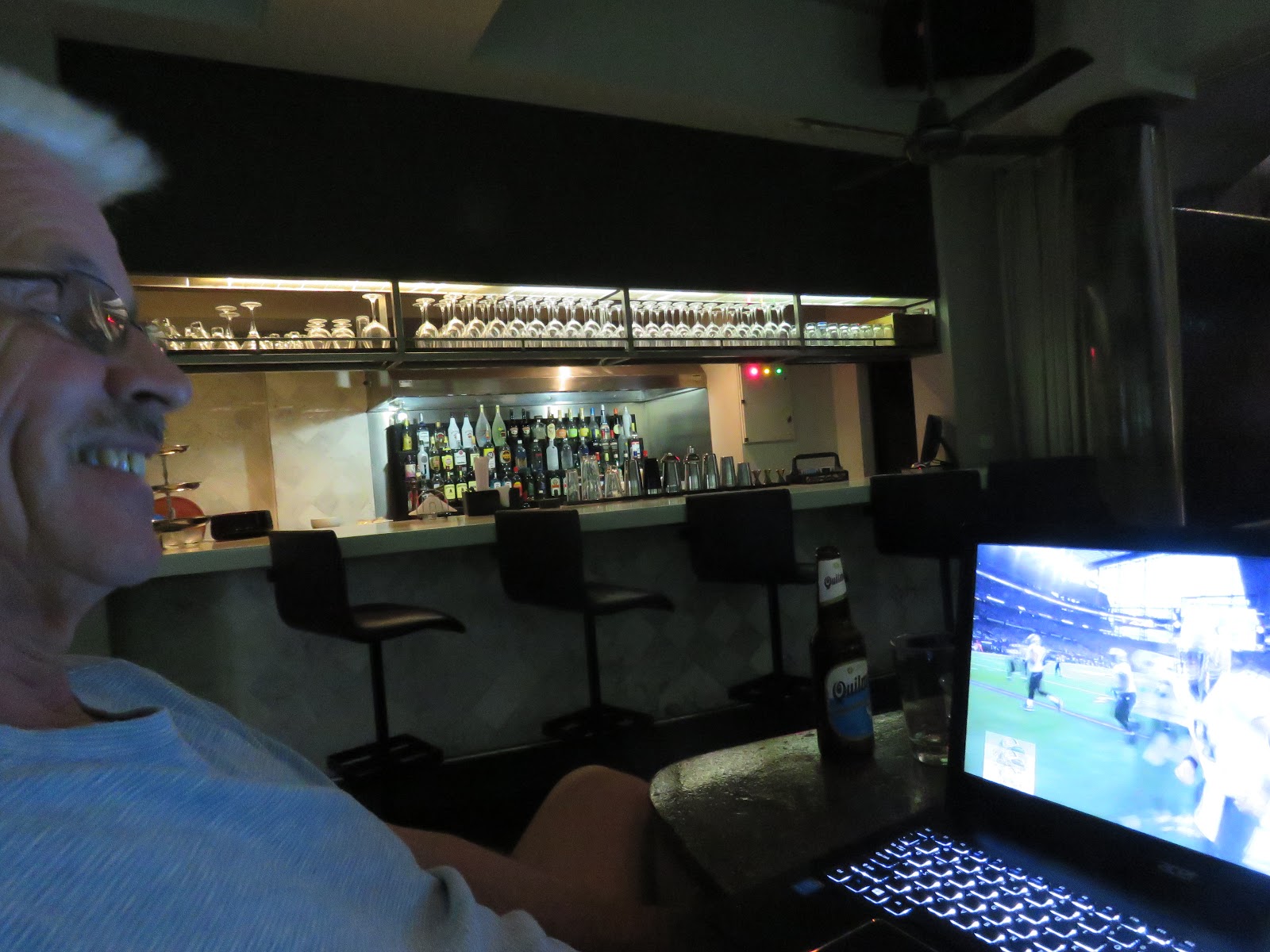
Tom was thrilled to be seated in the comfortable big booth in the bar with me at the Prodeo Hotel in Buenos Aires, watching the live Minnesota Vikings playoff game. For more details, please click here.