Cruise decisions…

As the date for our first cruise inches closer, we find we must make some decisions about our upcoming cruising experiences.

Our first cruise, on Celebrity Century, has had a price increase since we booked it many months ago.  We paid $2199 plus tips and taxes for a balcony cabin, for a total of $5545 for the two of us, a locked-in price.  If purchased now, the total for two would be around the $9500 range (at $4199 each) with tips and taxes, $4000 more.

Here’s the current pricing information directly from our cruise booking company Vacations to Go

15 nights departing January 3, 2013 on
Celebrity’s Celebrity Century
Brochure Inside $1,449
The  Inside $1,049
You Save 28%
Brochure Oceanview $2,449
The Oceanview $2,449
You Save 0%
Brochure Balcony $4,199
The Balcony $4,199
You Save 0%
       
Thu Jan 3 San Diego, CA 4:00pm
Fri Jan 4 At Sea
Sat Jan 5 Cabo San Lucas, Mexico 11:00am 6:00pm
Sun Jan 6 Puerto Vallarta, Mexico 12:30pm 7:30pm
Mon Jan 7 At Sea
Tue Jan 8 At Sea
Wed Jan 9 Puerto Quetzal, Guatemala 7:00am 6:00pm
Thu Jan 10 At Sea
Fri Jan 11 Puntarenas, Costa Rica 7:00am 6:00pm
Sat Jan 12 At Sea
Sun Jan 13 Panama Canal (Full Transit) 6:00am 6:00pm
Mon Jan 14 Colon, Panama 6:00am 4:00pm
Tue Jan 15 Cartagena, Colombia 9:00 am 4:00pm
Wed Jan 16 At Sea
Thu Jan 17 At Sea
Fri Jan 18 Fort Lauderdale, FL 7:00 am

We decided when booking this first cruise that we would exercise our right to “buyer beware” by educating ourselves to the possible “up” charges that inevitably exist on cruises.  After reading reviews over these past several months, talking to experienced cruisers, and more recently calling the cruise line and asking questions, we feel satisfied that we have an idea as to potential additional charges. Over and again, we’ve heard from experienced cruisers as to the shock of seeing their “tab” at the end of their cruise, always backed up by a credit card, leaving no margin for negotiations or adjustments. 

One big point of discussion for us has been as to whether or not to purchase a “beverage package” for Tom.  I seldom drink alcohol.  Mostly, I drink copious amounts of iced tea or hot tea which is provided at no additional cost.  Tom, when socializing, may enjoy a few cocktails, otherwise, he doesn’t drink at all.  His drink of choice is Courvoisier, a pricey cognac, which we discovered would be $8 per cocktail plus a 15% tip.

The beverage package that works for his cocktail of choice is $810 (just for him!) for the length of the cruise, allowing him to drink all he wants and includes tips.  For one second we considered this.  He feels he cannot justify the expense since he doesn’t want to feel like he is pressured into getting his money’s worth.

On the other hand, I don’t want him to feel he can’t have a cocktail when he wants one so we went to work and did the math.

If he has three cocktails a night (highly unlikely he’ll drink every night), the total would be $27.60 per night x 15 nights for a total of $414.  Considering that some nights he won’t drink any alcohol but instead may have a non-included soda, we feel comfortable that the drink bill won’t exceed $400. 

Then, there’s the question of dining in any of the non-included restaurants. It’s unlikely we’ll choose to dine in these extra-charge restaurants due to our limited low carb, grain, sugar, and starch free diet. The exception to this would be a social situation whereby fellow travelers we’ve befriended invite us to join them at one of these restaurants. We’ll decide at the time if it makes sense to bear the added expense. We aren’t “tightwads.”  We’re world travelers with a desire to continue traveling for as long as our health holds out and that we stay within the budget we’ve established for our travels. 

We’ve allowed ourselves an average of $75 per day for extras on cruises.  If our alcohol beverage budget is $27.60 per day, that leaves us $47.40 per day in other extras. 

The next expense we’ll most certainly incur is the cost of Internet access on the cruise. At a cost of $395 for the 15 days, we will each be allowed 60 minutes of Internet access per day. (There were other less costly packages available but, cost per minute increased with lower minute packages).

As a result, I will write the blog offline then go online for posting, editing, and adding photos. This amount uses up $26.33 per day leaving us $21.00 per day average for incidentals which is enough for us to go on two excursions if we so choose.

Our habits of researching our travels, mindless reading online will literally be metered while we’re on a cruise.  Odd?  Yes, but do-able. We’ll have plenty to do to keep us occupied leaving us ample time to read one of many pre-downloaded books. 

Oops, there’s another task we must complete before the month ends…download books to the Kindle app on our phones and laptops, all of which may be read offline. It’s easy for me to imagine sitting in a lounge chair on the deck of the ship reading, NeanderThin: Eat to Achieve a Lean, Strong, Healthy Body” while Tom peruses, “The Family Tree Problem Solver: Tried-and-True Tactics for Tracing Elusive Ancestors.”    Ah, nice.

P.S.  Please excuse gaps in editing.  When copying and pasting from other websites, spacing becomes an issue in Blogger.

New unlocked phone ready to go…

The Motorola Razer Maxx that arrived on Wednesday is now activated, loaded with my contacts, my email, all my apps, and of course, has a slot ready to receive the first SIM card, we will soon install, along with adding a SIM card to Tom’s unlocked SIM card-ready Motorola Razer.

As I had mentioned in the last post about our phones, the newer smartphones come with a slot only suitable for a micro SIM card as opposed to a standard SIM card which is much larger.  Many countries only offer standard-size cards.  This was a concern until I found that a nifty device exists, the SIM card adapter.

Needing a case/protector to fit the new phone, that was priced at $25 each at the Verizon store, I researched my favorite cell phone supply site:  www.cellphoneshop.net.  There, I purchased the appropriate case for the phone and the SIM card adapter for a grand total of $9.97 including shipping.

If you shop there, use the coupon code: “freeship2 ” (minus the quotes) for free shipping on orders over $20.  I only spent $6 for the two items happily paying the $3.97 shipping fee.  It would have been over $38 for the two items purchased elsewhere.  I’ve been shopping at that site for years, extremely pleased with their products, pricing, return policy (only returned an item once), and customer service.

Much to my delight, the 368 photos I had on my phone automatically loaded to my Dropbox cloud on both my new phone and now to my Windows 8 laptop.  On numerous occasions, I’ve tried to move the photos on my old DroidX phone to my computer.  No matter how hard I tried, I couldn’t move them over. 

Somewhat adept at this technology stuff, the frustration factor was intense.  At times, I literally spent an hour or more trying to find a solution, utilizing software, apps, cables, Bluetooth, and sheer determination to no avail.

Yesterday, while setting up the new phone with most of my apps rolling over, Dropbox “suggested” we move over the smartphone photos.  “YES!”  I hollered at Dropbox. “YES!  Do it!!”

An hour later all the photos of those precious grandkids, Mother Nature’s whimsical morsels, those adorable dogs we’ve so much treasured, and the special foods lovingly prepared, finally in the Dropbox folder on my computer and my new phone. 

As much as I love learning technology, at times I am totally oblivious of how things work.  It was a total surprise to me that my old Droid X phone, now de-activated actually still picks up a WiFi signal and can be used to go online.  Had I taken the time to think about this, it makes all the sense in the world.  Live and learn.

Now, I am challenged by how we can use this 3rd WiFi receiving device (my old phone) when we already have two unlocked smartphones ready to install SIM cards in any country in which we’ll travel.  Once we leave the US, five weeks from now, we’ll surely figure it out.  In any case, this 3rd device is coming with us.

I’ll go back to shopping online (to be received at our mail service in Nevada, where we’ll be over the holidays) to find the perfect SIM cards that will not only work with our specific smartphones in any foreign country but also here in the US for the few occasions that we are in Florida between cruise ship sailings. 

Keep in mind, our two contracts with Verizon have expired.  We are under no obligation to continue to be connected with any carrier.  Thus, beginning January 3, 2013, we will request to be disconnected from Verizon and begin utilizing SIM cards for both phone service and data.  Yes, we’ll pay for the data we use via the cards and the calls we make.  Mainly, we’ll be making calls using SKYPE, most often at no charge. 

The data, although expensive using a SIM card will be as much as 90% less than the cost of using data offered by a cell phone provider. Thus, no need for cell service.  When we are using the previously mentioned XCOM Global MiFi device, as needed, in a few of the vacation home where wireless broadband is not available or working, the data on our phones will work from that connection.

In any case, the cost of the MiFi device, which may be needed for about four months a year on average, is roughly $400 a month, averaging annually at $100 a month.  In itself, this is less than we paid for our cell phones and Internet access in our home in the past. (When using the device from XCOM Global, which provides data only, we’ll only use the SIM cards for emergency phone calls when we aren’t near our computers to use Skype).

Would the average traveler have to go to this length to figure out how to use their smartphones?  No, a one month vacation or less would not require this much use of technology.  They’d gingerly use international roaming at exorbitant rates, potentially racking up $100’s in data charges if not careful. 

We’ve all heard the stories of youngsters playing games on their phones on cruise ships, resulting in $1000’s in charges that shocked the parents when they later received their final cruise bill payable before disembarking. 

That won’t be us!  We’ve been warned.  We’ll turn off roaming to prevent the cruise ship from charging us any more than we’ll need.  On the cruises, we’ve booked (eight so far) we’ll bite the bullet going online for short periods each day to download our email, upload our photos and of course, post our blog. 

So, enough about phones. On to other matters at hand, such as having guests for dinner this weekend here in Scottsdale, Tom’s two sisters and brother-in-law, and again, the following weekend when friends from Minnesota arrive for the weekend. 

Whew!  It’s about time we begin to relax!  Oh, then there’s Tom’s colonoscopy prep next Wednesday for his two tests next Thursday and taxes to prepare for the year’s end and more technology to learn, and 2nd passports and visa’s to process and the trip to Las Vegas for Christmas and Tom’s 60th birthday party and on and on. 

Cell phone issues resolved…

Technology is an integral element of our ability to experience life “on the road” for a period of years.

When one travels to a hotel for a two week vacation, technology is relatively easy:
1. The hotel provides Internet access for free or for a charge.
2. The cell phone service provider allows phone calls for a roaming fee or not, depending on where one is vacationing.
3. Smartphone data is provided by the cell phone data plan at increased rates if outside the US or on a cruise ship. (We’ve all heard the Internet legend where a kid played games on the phone during a cruise after which the dad got a bill from his cell service provider for $20,000. Not so unlikely).

Over the past several months, I have been researching international cell phone options for us once we leave the US. Coincidentally, both of our contracts will have run out by November 1, 2012. The timing couldn’t have been better!

iPhone users have been saying, “You need an iPhone for international travel!” This is not our best or only option. We will need an UNLOCKED phone which simply put is a GSM (Global System for Mobile Communications) which is not associated with any specific cell phone carrier and thus, no contract is required.

An unlocked phone doesn’t have any service until one inserts a SIM card (Subscriber Identity Module), purchased in the country in which it will be used, providing both phone and data, with time and usage limits.

When the time runs out on the card, one either purchases another SIM card or buys additional time through an online account attached to a credit card. SIM cards each have their own phone number, not the handiest aspect when buying new cards from country to country. (Our old phone numbers won’t work).

Unlocked phones are considerably more expensive than purchasing a cell phone through a carrier and committing to the usual two year contract. By signing a contract, the carrier makes enough money from the subscriber for them to be able to sell the smartphone at a reduced price or, in some cases, for free.

How do we purchase an unlocked phone? We could buy one from Verizon, our current carrier for about $800. Other web stores such as Amazon sell unlocked phones. It is imperative that the phone be GSM or the SIM cards won’t work.

Upon reading some reviews online, it appears some customers did this to later
discover that the phones were not unlocked and had to figure out how to unlocked it themselves which may be as easy as flipping a switch or as complicated as hours online following complicated instructions.

In the worst case, one could send the phone to an unknown technician to have it unlocked, paying a hefty fee. This is the primary reason consumers hesitate to purchase an unlocked phone: Will it really be unlocked and if not, what do I do? Most people prefer to buy a two year contract and not mess with SIM cards which are also available in the US.

When we purchased our new unlocked GSM smartphones, we may consider buying two of the SAMSUNG GALAXY S III I9300 UNLOCKED GSM QUAD BAND SMARTPHONE from the company in this link by recommendation from CNET, a company that does reviews for technology and offers technical support, a company I have followed since the early 1990’s.

Why buy two unlocked phones when the cost is high at a minimum of about $700 each? We have a few good reasons:

1.  In the event of an emergency, we will always have one charged phone handy and time left on one SIM card.
2.  There are times we won’t be together for short periods: I may grocery shopping on my own or work out at a nearby health club. If something happens, we can phone each other. Piece of mind is worth a one time cost of $700.
3.  OK, here’s a frivolous reason: We can both play games on our phones at the same time and, with each other and read books on the Kindle app.
4.  Based on the specs of this particular model of smartphone (new as of a few days ago), it has a decent camera, perhaps all the camera we will need (we shall see). We can both be taking photos or videos at the same time while on safari!

By no means, are we experts on this topic and through research we’ve found varying opinions. And, this cell phone issue has been nagging at us for awhile. Finally, we feel we have a handle on it and can look forward to our new purchase this upcoming October, among with other digital needs!

Giving up habits..Wean me slowly!…

Bye, bye tea!

“They,” say it takes three weeks to break a habit. Yes, we still have six months and fourteen days until we leave for our adventure, but I feel compelled to start weaning myself off of some of my habits and routines. Most likely, Tom will bring his habits with us! 

We often chuckle over our routines and habits, as written in the first entry in this blog on March 14, 2012, describing in painstaking detail how we jointly manage to change clocks twice a year for daylight savings. That bi-annual event is but the tip of the iceberg!

Creatures of habit, we are! As we anticipate the homes we will occupy in the countries we will visit, many of our familiar and comforting routines will be tossed aside. Never staying long enough in any location to firmly establish new routines, we will strive to find ways to feel at ease and comfortable in someone else’s space.

The master bath in our home has a sink with brass fixtures, a bit outdated, but still attractive and befitting our lodge-like home on a lake here in Minnesota. The faucet in the pedestal sink drips. Over the years we’ve had several plumbers looking at it, telling us that the faucet cannot be repaired and must be replaced with a more current design. It still looks quite nice.

The faucet leaks when not shut off tightly (mostly by me). It drips onto the brass ring and stopper at the drain. This annoys me. Two to three times a day, I get out the Barkeeper’s Friend with a little sponge kept at the bottom of the closet (have to bend over each time), wet the sponge, sprinkle the Barkeepers, and scrub the drain until it sparkles, drying off every last drop of water with a piece of toilet paper. 

Good riddance!

Throwing the t.p. in the toilet, I consider flushing it but don’t. Why waste water?  Why don’t I throw it in the little plastic bag inside the little decorative brash trimmed, off-white porcelain trash can? Simple, I don’t want to have to feel compelled to empty the trash! (Now you can see why the details of planning this extended many years life of world travel, make me feel right at home as if you didn’t already know)! Two or three times a day, I do this! Twenty-six years!!!

Will I immediately go to a grocery store upon arriving in Belize, buy a Barkeeper’s Friend equivalent, and a small scrubby sponge to run back to our little ocean side house and start scrubbing the sparkly stainless steel drain two to three times a day? I don’t think so. Some habits will die on their own. Good riddance!  

However, other habits will be harder to break. This morning, as usual (another habit) I awaken at 5:30 am. I get up, hit the loo (Ha! Look, I am already getting more familiar with foreign expressions!), brush my teeth, wash my face and put in my contacts in order to see and go back to bed to look at my phone, an AndroidX loaded with 100’s of apps, but only a few I habitually use: Gmail, Facebook, Pulse, and Amazon Kindle Free App (containing my latest reading obsession).  

This morning I realized that this may not be possible once we are no longer on US soil. Yes, we will have access to the Internet on our laptops, many times provided as wireless broadband by the property owners. During these periods, we will be unable to use the Internet on our phones unless we are willing to pay outrageous fees. 

When I calculated the possible fees, it would be about $5000 a month for playing with our phones, considering our current megabyte usage, utilizing our current service provider! No thank you! (We will get into this in more depth on this topic as we move along here and discuss XCOMGLOBAL and SIM card options). Thus, another habit to break! Playing with our phones! Yikes!

We have three flat-screen TV’s as do many Americans, one in the living room, one in the bedroom, and one in the kitchen. From the moment we are up and about, until going to bed, the TV is on in the background, quietly or off when talking or loudly when watching due to Tom’s hearing loss (42 years on the railroad).  

Although recently distracted with our laptops; Tom with ancestry, me with travel stuff, we usually spend most evenings together watching shows we programmed during the week. This “getting outside your head” form of entertainment is a delightful respite from the stresses of everyday life.   

Most of the vacation rentals will have tiny hard to watch old TVs with shows in foreign languages. No more piling up our plates with tasty homemade dinners to sit and watch yet another episode of “Downton Abbey”, “Dexter” or one of our favorite mindless, sinfully deliciously reality shows.  

Guess we’ll watch TV on our computers when we have Internet access or watch the many movies we plan to download to a yet-to-be-purchased portable four terabyte external hard drive.  

Here’s another habit, hard to break. Every afternoon at 4:00 PM, I brew tea, one cup at a time, at exactly the correct temperature, with precisely the same pot, for exactly three minutes, with a certain strainer, a special timer, a sterling silver spoon, in a pale green cup, with 3 drops of liquid Stevia, my own version of Happy Hour.  
I only like one type of tea, Pouchong, a hard to find, buy-online-only tea grown in the spring in Taiwan. I have tried numerous other teas to no avail. Oh, no! The bag of tea, the strainer, the cup, the timer, the Splenda, the pot, the spoon all weigh 2.7 pounds which equals 3.85% of our allowable luggage when we fly. Bye, bye tea!

The final criteria, lots more to follow…

Here we go! We’re wrapping up the all-important criteria today, allowing us to proceed to the equally important itinerary in the next post. As I mentioned earlier, listing these vital “rules” again and again is certainly tedious. 

Seeing them over and over, reading them aloud to Tom each time I write, is exactly what we’ve needed to be reminded of the importance of following these guidelines. Without them, the temptation to book expensive vacation rentals, overpriced cruises, and the occasional exorbitant hotel rooms would throw our financial plan out of whack.  

The goal of avoiding the necessity of tapping into our savings or investments is a huge motivator. Fear, the infinite motivator. Fear, being forced to stop this adventure due to financial constraints. Fear, canceling future travel due to health issues. Fear, the caves with the bats, the guano. Fear, the zip line.

Friends and family have asked, “What happens if you get bored?” We didn’t get bored living in our home together for the past 21 years, in the comfy chairs, enjoying lounging in a lawn chair in the summer, eating homemade meals, watching episodes of our favorite TV shows, chatting, laughing, and socializing.  

They also ask, “What if you get tired of traveling?” We’ll stop. We’ll cancel future plans, maybe lose a deposit or two but we’ll stop. We’ve agreed that if one of us wants to stop, the other will agree. Knowing this, comforts us. Knowing this, removes the fear. 

So, the remaining criteria:

Criteria #7:  Never stay in a vacation rental for less than one month. The rationale behind this rule is simple. Staying in one location not only reduces transportation expenses, but provides us with the opportunity to negotiate better rates when staying a month or more.  

Many of the property owners allow a stay of as little as three or four days, requiring added paperwork, liability, and cleaning. Their piece of mind is a substantial motivator for them to accept a lower rent for their property. As each month’s stay is extended in the negotiations, the price goes down proportionately. This will be illustrated by the rental amounts we will post with the itinerary.

Criteria #8:  No trinkets!  As tempting as “bargains,” “souvenirs” and local “handicrafts” appeal to us during our travels, we will resist the temptation. The cost of excess baggage along with the horror of hauling some heavy wooden objects all over the world is preposterous!

We will make a list of the items we encounter that tempt us. Once we settle someday, we will easily be able to find similar items online or in some cases, purchase them from the actual vendor’s web site. Often these tempting artifacts can be found for half the price on eBay, from sellers who found they were tempted during their travels. Most often, when we look back at such a wish list at a later date, we’ll find that we have lost interest anyway.

Criteria #9:  The availability of Internet/cellphone access with us at all times. This was a tough one. I’ve spent no less than an entire week researching various options. We now have discovered solutions (of course, subject to technology changes over the next several months). For Internet access, 24/7, in our rental, on the road, and part-time on cruises, we’ll use MiFi Rental with XCom Global. In a future post, I will write about the cost and how this works.  

As for cellphone service, we will be buying an Unlocked International cell phone into which we can purchase and install a local SIM card using the available local network (which is what most cell phone users in many countries use for service). SIM cards result in considerably lower rates, all without the use of a contract. Here again, I will write an entire post on this subject.

Criteria #10:  Cook and eat in! Due to health concerns we live a low carb, wheat-free, starch-free, grain-free, sugar-free, and gluten-free lifestyle. Occasionally Tom will indulge along the way! He won’t be able to resist pasta in Italy or a baguette in France. But, for me, my ongoing health from this way of eating it a huge motivator. Cooking and eating in the kitchen of our vacation rental will save us $1000’s along the way.  

We currently spend about $800 a month on food (all organic produce with grass-fed meat, free-range poultry, and eggs, organic dairy). This may sound like a huge sum for two people, but that totals only $26.67 a day. After considerable research, we feel confident that we’ll be able to maintain this budget and our food requirements. I currently pack 3 meals a day for Tom’s long 12 hour workdays.

We could never eat two to three meals a day in a restaurant in any of the countries we are visiting for a mere $26.67 for both of us! We have budgeted the cost of enjoying a dinner out in a nice restaurant, once or twice a week depending upon local prices.  

That one dinner a week may cost $25 in Belize including tax and tip, but could be $125 in Tuscany, resulting in an expenditure of $6500 a year, enough to pay for a vacation rental for 4.3 months or 8.6 months, if eating out twice a week. It’s a matter of trade-offs.  

I don’t think we’ll mind grilling a steak on the veranda in Majorca, Spain while overlooking the Mediterranean Sea.

In review, here is a complete list of all the criteria:

Criteria #1: Do not have a permanent home!
Criteria #2: Do not own cars!
Criteria #3: Do not stay in hotels unless absolutely necessary!
Criteria #4: Do not pay more than that which we were willing to pay for rent in our chosen retirement community!
Criteria #5: Use the cruise!
Criteria #6: Bag the excess baggage!
Criteria #7: Never stay in a vacation rental for less than one month!
Criteria #8: No trinkets!
Criteria #9: The availability of Internet/cellphone access with us, at all times!
Criteria#10: Cook and eat in!

Sure, all of the above is subject to change. We don’t know what we don’t know. It’s a work in progress. By the time we are ready to leave in seven months and ten days, we may laugh or even cringe at what we “thought” we knew and posted here, this early in the process. In any case, we learn as we go, on a perpetual mission of gaining knowledge, reducing fear, and ultimately, having the time of our lives.  

Continuation of the strict criteria…

Yesterday, I wrote about the first four criteria that we have discovered making long-term world travel affordable for us as a retired couple (Tom retires on Halloween), on a fixed monthly income. Let’s review those points before I continue with the others:

Criteria #1:   Do not have a permanent home! 
Criteria #2:   Do not own cars! 
Criteria #3:   Do not stay in hotels unless absolutely necessary!
Criteria #4:   Do not pay more than what we were willing to pay for rent in our chosen retirement community!

Criteria #5: Use the cruise!  As described earlier, we have booked five cruises so far with two more in the works.  Of the 571 days, we have booked thus far, beginning October 31, 2012, 71 days will be spent living aboard a cruise ship, rated a score of 4 or more (out of a possible 6).  

A vital factor in maintaining the integrity of our budgeting is that cruising results in a maximum average cost per day, not to exceed a combined $350 including fees, taxes, and tips. This amount far exceeds our average daily rental of $50. However, we are booking cruises to be a mode of transportation to and from countries where we’ll have booked a vacation rental. 

Cruising replaces the following usual travel expenses:
1.  Cost of Rental
2.  Three (or more, if preferred) meals per day
3.  Transportation to and from the rental location
4.  Taxis, car rental, trains, buses, and other local modes of transportation while getting around the area

Some cruise pricing includes tips, others do not. Keep in mind that tipping may be as much as $25 per day, per person. We have included them above in our daily total. Also, every cruise has an ongoing credit account for the charges, WiFi, non-included tips, drinks, meals in specialty restaurants, spa services, certain activities, and of course, the casino and shopping in the “tourist trap” shops.  

Internet access to your digital equipment is very expensive. Turning off data and roaming features will avoid the shock of one’s life when seeing the bill at for the onboard WiFi fees.

It’s imperative to check in advance with the cruise line as to WiFi policies and charges. Future posts will explain cell phone usage and Internet access while traveling abroad, a challenge for long term travelers like ourselves visiting 25 countries in less than 2 years (Yes, the itinerary will be posted soon)!

The cruise guy (and company we are using) Joaquin, at Vacations To Go has an appealing pre-booking incentive: book cruises in advance, and as prices drop, the customer receives the benefit of the reduced pricing, up to 90 days prior to the sailing date, being unaffected by potential price increases. 

Pre-booking secures a decent cabin that we choose at the time of booking by paying the deposit, usually around 25% of the cost of the cruise. We refuse to stay in an inside cabin many of which have little space, if any, to even walk around the bed. All of the cabins we are choosing are either a “Balcony” or “Mini-Suite.”  

In summary, cruising costs about $200 more per day than staying in a rental. Building a budget that allows for this expense, adds much to our enjoyment while freeing us on transportation costs, preparing meals, and handling baggage. The opportunity to see a little piece of many locations in a short time span is appealing.  Adding to the experience is choosing a cabin on the correct side of the ship, allowing the best viewing advantage of land throughout the cruise.

Most cruise fares include port charges but getting off the ship at various ports will undoubtedly result in often hundreds of dollars in additional charges for excursions, meals, shopping, and the usual hawkers selling their wares. We will stay on the ship as much as possible to avoid these tourist traps. 

Soon, Criteria #6 will be posted. Thanks for stopping by!

Snail mail solution…Tasks piling up…

I don’t like snail mail. Every day between noon and 3:00 PM, the white rickety US mail trunk comes bobbing down our bumpy private road, the driver bouncing about, oblivious to the numerous potholes, the narrow road, and the little dogs.  

Living on a private road of six homes, situated on a narrow peninsula, the little dogs can roam freely. Sorrowfully, about 15 years ago, our little five-year-old Aussie, Bart, was run over by the then mailman who later commented, “Yeah, I’d thought I hit something but didn’t think I needed to stop to investigate.”

Had it not been for the second kiss goodbye to Tom that day that inspired me to follow him outside and kiss him through the open car window, I wouldn’t have noticed Bart lying dead behind Tom’s back tire. He would have backed up driving over him, assuming he had killed him. Thank goodness, Tom was (and still is) deserving the second kiss. 

That’s one reason I don’t like the mailman, the truck, or the mail itself, an endless barrage of junk indicating we are on some kind of arbitrary, categorical list that perpetually invades our privacy. 

The second reason I don’t like the mail is simple: about halfway through every vacation, I start thinking about the fact that this glorious experience has to come to an end. And, what is the first thing you do when you get home from a vacation??? GET THE DARNED MAIL!!! The therapeutic benefit of this much needed time away turns into a dreadful experience of wading through the annoying pile of useless paper. (We went paperless years ago on all of our monthly/annual/quarterly obligations).

After rifling through this mess, there remains perhaps one item worthy of a toss into the pile on the kitchen counter, which invariably requires some type of task in order to warrant its eventual disposal. I hate mail.

In my mind, one of the major contributors to my desire to travel the world is this: We won’t have to come home to the mail! Ah, but who are we kidding? Do you think it’s easy to get rid of mail?  Mail is relentless! Mail seeks and finds. There is no freedom from the mail!

So, when we started making the daunting “to do” list that will make this many years-long adventure possible, at the very top is “what do we do about the mail?”  

It’s not that simple. One might think we should get a PO box, sending all the mail there. No, this won’t work.  It piles up and then what? Have a family member collect it, go through it, and send it to us? No, that’s too much to ask with everyone’s busy lives and their own mail to contend with. 

Every dilemma has a solution, right? We’re assigning a mail forwarding company the task of our mail. They give us an address, receive the mail, toss the junk, scanning, and sending by email anything we may need to review and assess its value.  

If we choose to touch it for some odd reason, they will snail mail it to us anywhere in the world, overnight if need be. It’s not costly and requires little time commitment plus, partial mail freedom. Full mail freedom only occurs a period of time after one’s demise. We’ll settle for partial. Cost: about $10 month plus additional fees for scanning mail and for sending us anything oversees. One task, resolved. 

Now back to the required second passport for obtaining visas; the visas themselves; the scanning every photo we’ve ever taken; the international health insurance issues; the medical evacuation insurance; the immunizations; the process of renewing prescriptions; the packing of two suitcases each with enough to last us for however long; the disposal of everything we have owned for 26 years; the estate sale at the end; the international cell phones and new computers with an external hard drive loaded with 100’s of movies, TV shows, e-books; the ability to have Internet access worldwide; Tom’s retirement party; the comprehensive spreadsheets of all projected expenditures including fixed expenses, taxes, banking, exchange rates and of course, the itinerary including cruises, ferry rides, air travel, train travel, vacation home rentals, the safari, all of which is already booked out to January 2015.

Oh, oh, I just heard the mail truck bouncing down the bumpy road, the bobble-headed driver behind the wheel. I’d better go check it out!  Just think, only 7 months and 21 days left to partial mail freedom. Yeah!

How to avoid getting kicked-off a flight!…

Have you ever experienced this?

Day 12…Sea days continue…The world of cruising, including an array of demographics…

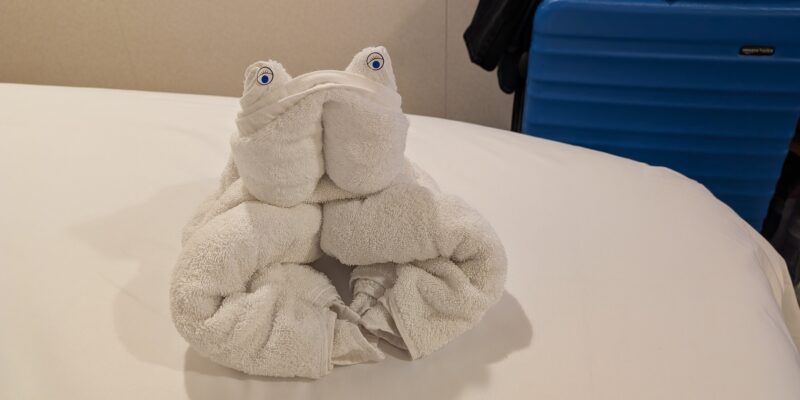
A towel crab on our bed last night.

In 2025, the world of cruising continues to evolve, and nowhere is this more evident than on the ships of Celebrity Cruises and Royal Caribbean. These two lines, while under the same corporate umbrella, attract somewhat different guests, each with distinct motivations and expectations. Yet, they share one powerful commonality: the magnetic pull of the sea and the desire to escape the ordinary. Walking the decks of either line, one quickly senses the diversity of today’s cruising demographic, an ever-expanding tapestry of ages, backgrounds, and stories from around the world.

On Royal Caribbean, the atmosphere is lively and intergenerational, a microcosm of modern travel where families, couples, solo adventurers, and retirees coexist under the same expansive sky. The average age of passengers hovers in the mid-forties, but that number barely scratches the surface of the real story. Parents travel with children, sometimes even with grandparents in tow, making these voyages multi-generational gatherings unlike any other. The newer, larger ships, floating cities in their own right, offer endless opportunities for fun and excitement, attracting thrill-seekers and those seeking a new experience every day. There are rock-climbing walls, surfing simulators, ice-skating rinks, zip lines, and Broadway-style shows. These ships are designed for those who see travel not as an escape but as an adventure.

Celebrity Cruises, by contrast, appeals to a slightly older, more refined demographic. The average age of passengers leans closer to the fifties and sixties, and the pace is gentler, more contemplative. These guests appreciate fine dining, art, culture, and conversation over cocktails at sunset rather than karaoke or game shows. Couples celebrating anniversaries, seasoned travelers who’ve already seen the world, and professionals taking a break from demanding lives fill the elegant spaces onboard. The design of Celebrity’s ships, sleek and modern with thoughtful touches of luxury, mirrors the preferences of its clientele: sophisticated yet not pretentious, polished yet never sterile.

Still, the gap between the two lines is narrowing in fascinating ways. Royal Caribbean’s younger guests are aging into Celebrity’s demographic, bringing with them a love of technology, connectivity, and wellness that is reshaping the luxury cruise experience. At the same time, Celebrity’s efforts to attract a younger audience, through social media outreach, wellness programs, and modern cuisine, are paying off. Millennials and Gen X travelers, many of whom once thought of cruises as something their parents did, are now embracing the ease, value, and quality these voyages offer. Couples in their thirties and forties are booking suites and spa cabins, appreciating the balance between relaxation and exploration.

Both lines are seeing an influx of international passengers. North Americans still make up the majority of guests, but travelers from the UK, Europe, Australia, and Asia have grown significantly. As the world becomes more connected and the cost of long-haul flights continues to stabilize, cruisers are venturing farther afield to join itineraries in the Mediterranean, Asia, South America, and beyond. For many, these cruises serve as floating hotels, offering a familiar comfort while exploring foreign ports. For others, they are a social experience, an opportunity to meet like-minded travelers who share a passion for the world.

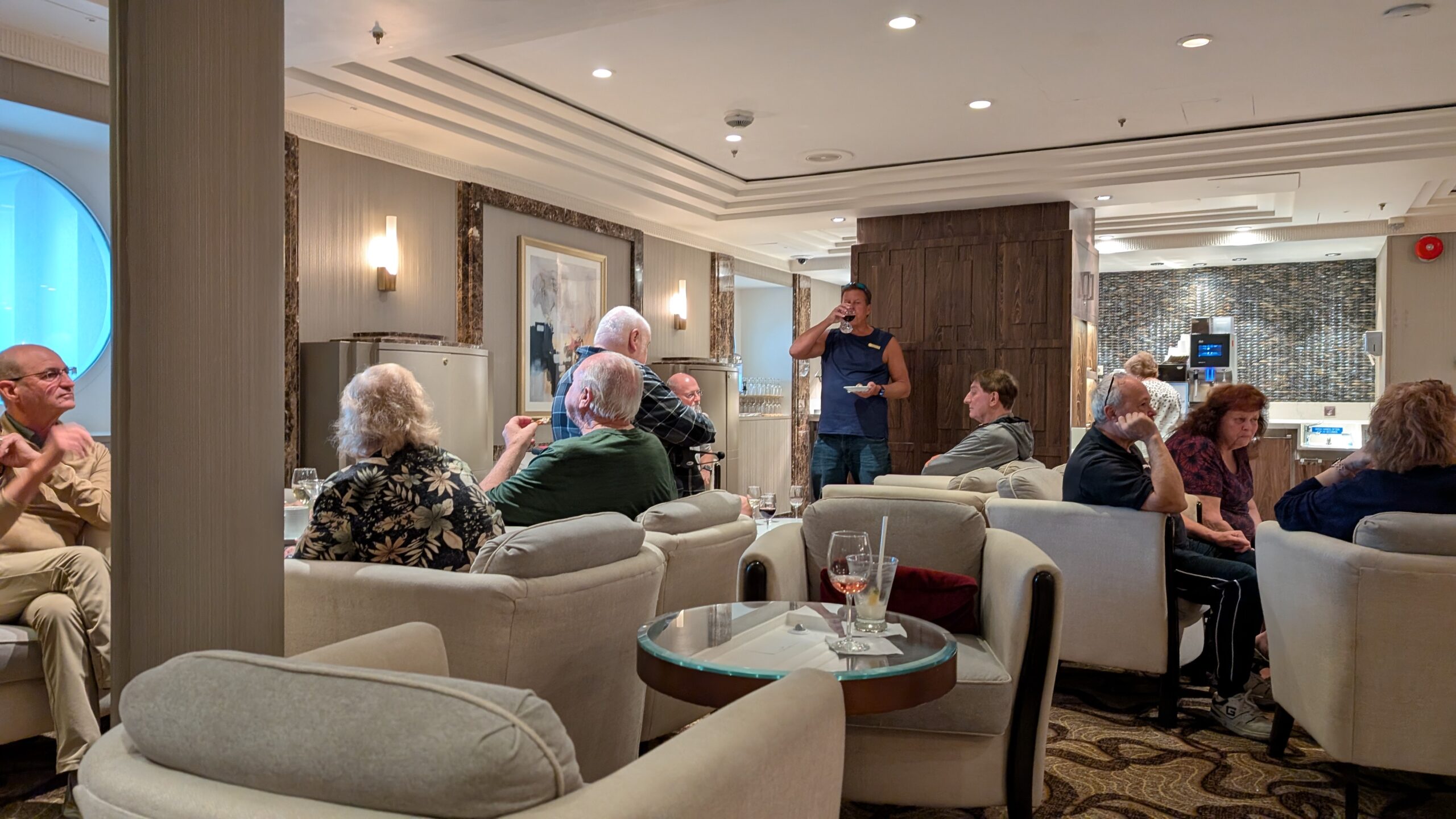
Flash mob practice in the Star Lounge.

Another emerging trend in 2025 is the increasing number of digital nomads and remote workers who choose to sail for months at a time. High-speed internet, once a luxury, has become a lifeline, enabling guests to work from anywhere, even in the middle of the ocean. Celebrity’s quieter, more luxurious setting appeals to those who crave both productivity and tranquility, while Royal Caribbean’s bustling energy suits travelers who prefer to balance work with play. It’s not unusual now to see laptops open at a café overlooking the sea, where someone types away between ports, turning a stateroom into an office with a view.

Cruising has also become more inclusive and accessible. Both Royal Caribbean and Celebrity are welcoming guests from a broader range of economic and cultural backgrounds than ever before. Special promotions, loyalty programs, and flexible itineraries have opened the doors to travelers who once thought cruising was out of reach. Solo cabins, a relatively recent innovation, have also changed the face of the passenger mix, encouraging those who travel alone, by choice or circumstance, to join in the experience without paying the traditional “single supplement.” This shift has added a vibrant new energy on board, as solo travelers bring fresh perspectives and spontaneous friendships.

In the end, the demographics of 2025 tell a story of transformation. Cruising is no longer the preserve of retirees or the wealthy. It has become a reflection of the global traveler, curious, connected, and craving experiences that blend comfort with discovery. On Royal Caribbean, the laughter of children echoes through the promenade while couples dance under the stars. On Celebrity, the clink of wine glasses mingles with the soft hum of conversation in elegant lounges. Together, they capture the full spectrum of modern travel, where age, nationality, and background blur into something shared, a love of the sea, of new horizons, and of the gentle rhythm of life aboard a ship.

Be well.

Photo from ten years ago today, November 7, 2015:

After recently watching a David Attenborough documentary on the in-depth life cycle of caterpillars, we gained a new perspective on these amazing creatures, with two distinct life cycles as they eventually morph into butterflies. We spotted this one on the veranda a few days ago. For more photos, please click here.

Day 2, cruising…Heavenly, amid a few glitches…

Before sailing away, we took this photo of the world-famous Sagrada Familia church in Barcelona.

We couldn’t be more thrilled to be sailing the seas once again. After months of anticipation, the feeling of stepping onto a ship, hearing the faint hum of the engines, and seeing the endless blue horizon fills us with a familiar joy that never gets old. The gentle roll of the ocean feels like home, a rhythm we’ve grown to love after years of traveling the world, always seeking that perfect balance between adventure and serenity.

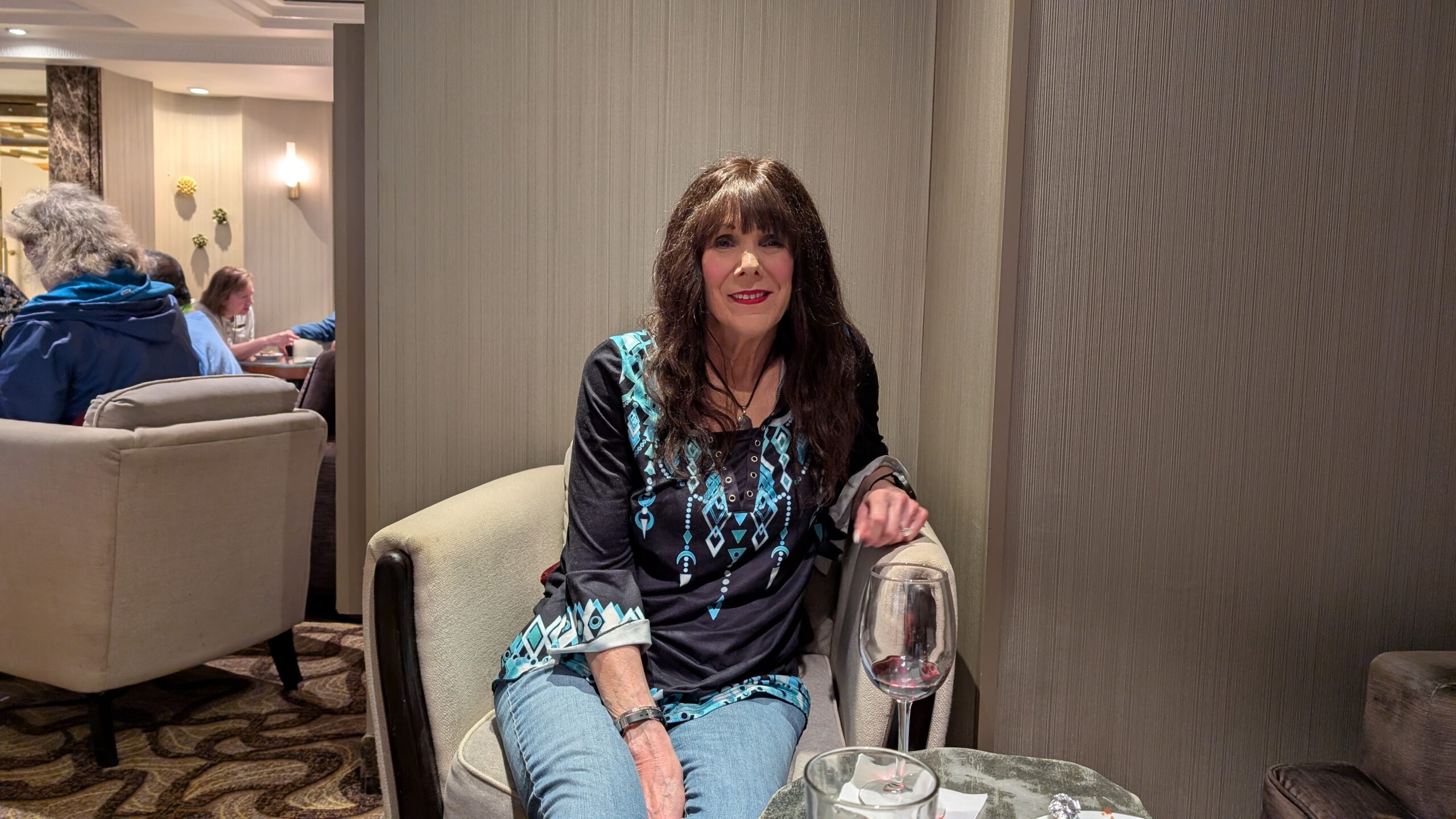
Last night, we had our first cocktails in the Crown Lounge, exclusively for Diamond Plus and Pinnacle members.

Still, the boarding process was trickier than we’d hoped. I pride myself on being organized with travel documents, but even the most seasoned travelers have their hiccups. Somehow, I made an error when completing our Namibian e-visa applications, and it wasn’t discovered until check-in. My heart sank when the agent pointed it out with a polite but firm smile. We’ll have to redo them in the next few days before arriving in Namibia. Thankfully, there’s time, and as frustrating as it was, it’s all part of the unpredictable nature of travel. These are the moments that remind me that patience and flexibility are as essential as a passport when living this life.

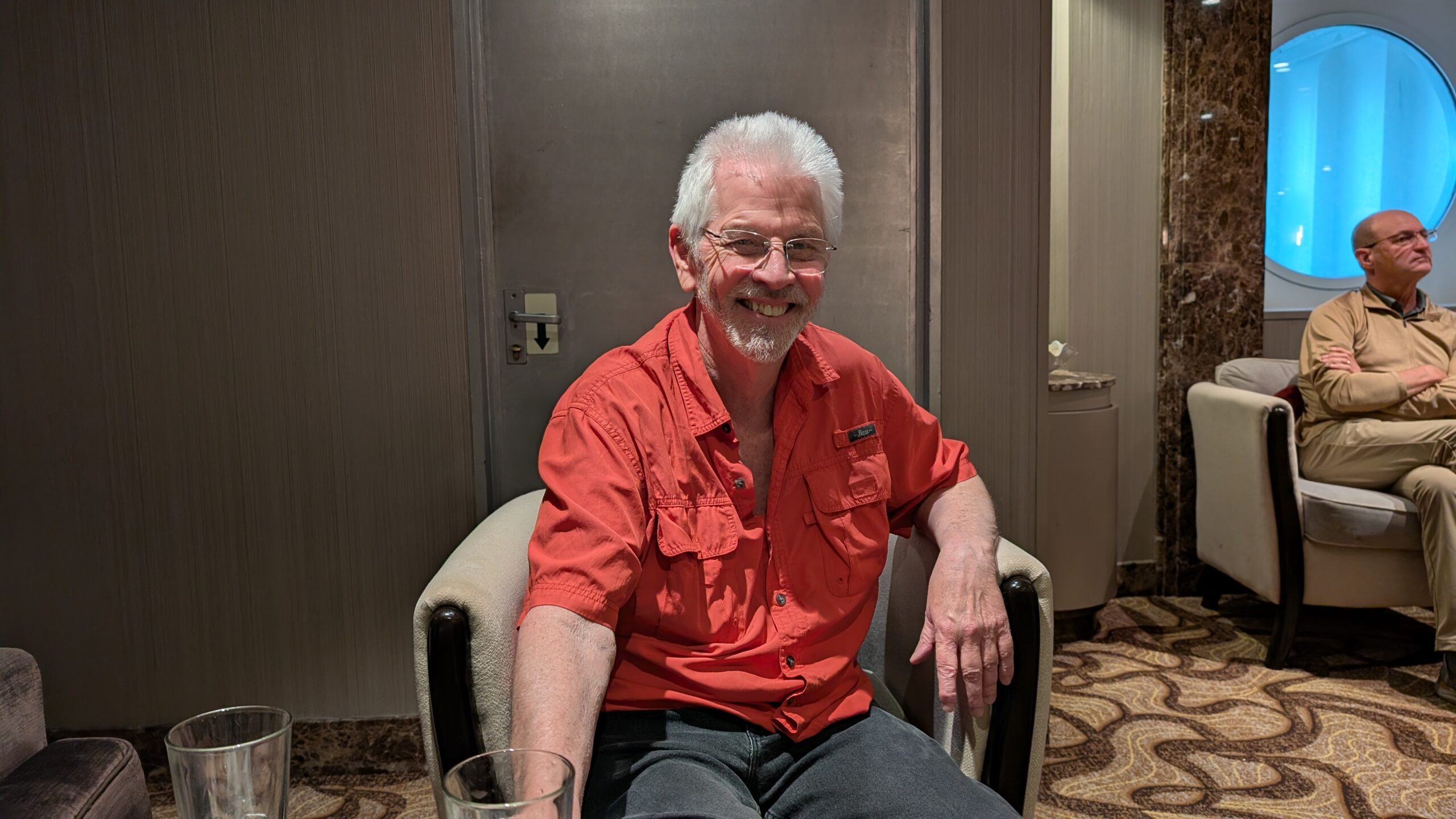
Tom was in the Crown Lounge last night.

Once we were on board, the mood lightened immediately. The familiar scent of the sea and the sound of cheerful greetings from the crew washed away the minor stress of boarding. The ship, though a bit older than some of the newer Royal Caribbean vessels, has a charm all its own: warm, inviting, and comfortable. After unpacking and settling into our cabin, we decided to get our WiFi working so we could stay connected to the world, post updates, and check emails. That’s when the next little hurdle began.

I was in the Crown Lounge previous evening.

We’d prepaid for the VOOM internet, Royal Caribbean’s Starlink, expecting it to be as seamless as on past cruises. Previously, it was as simple as entering an access code and connecting. But this time, the process was anything but simple. There were multiple instructions depending on the device, confusing login pages, and no clear way to activate our prepaid plan. We each tried our phones and laptops, only to end up in a loop of sign-ins that went nowhere.

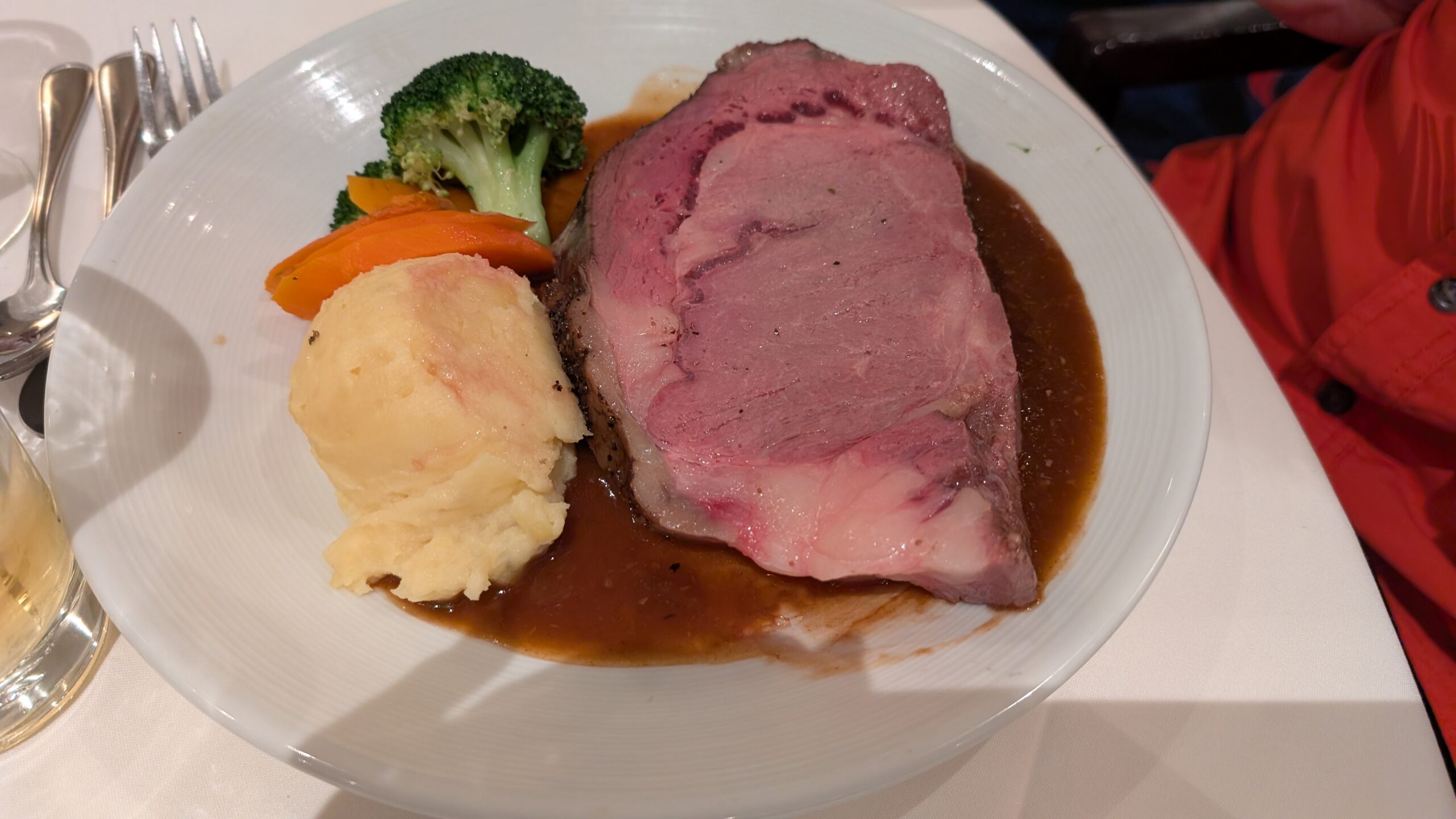
Tom’s prime rib dinner in the Main Dining Room last night.

After thirty minutes of fiddling, we finally gave in and stood in line at the tech help desk. The line moved slowly, filled with other puzzled passengers holding their phones aloft, hoping for that magical moment when “Connected” would appear on the screen. Usually, we can figure out these things on our own, but this time it was simply too convoluted. Eventually, a patient crew member guided us through the new system. Within minutes, we were online, relief washing over us like the sea breeze outside.

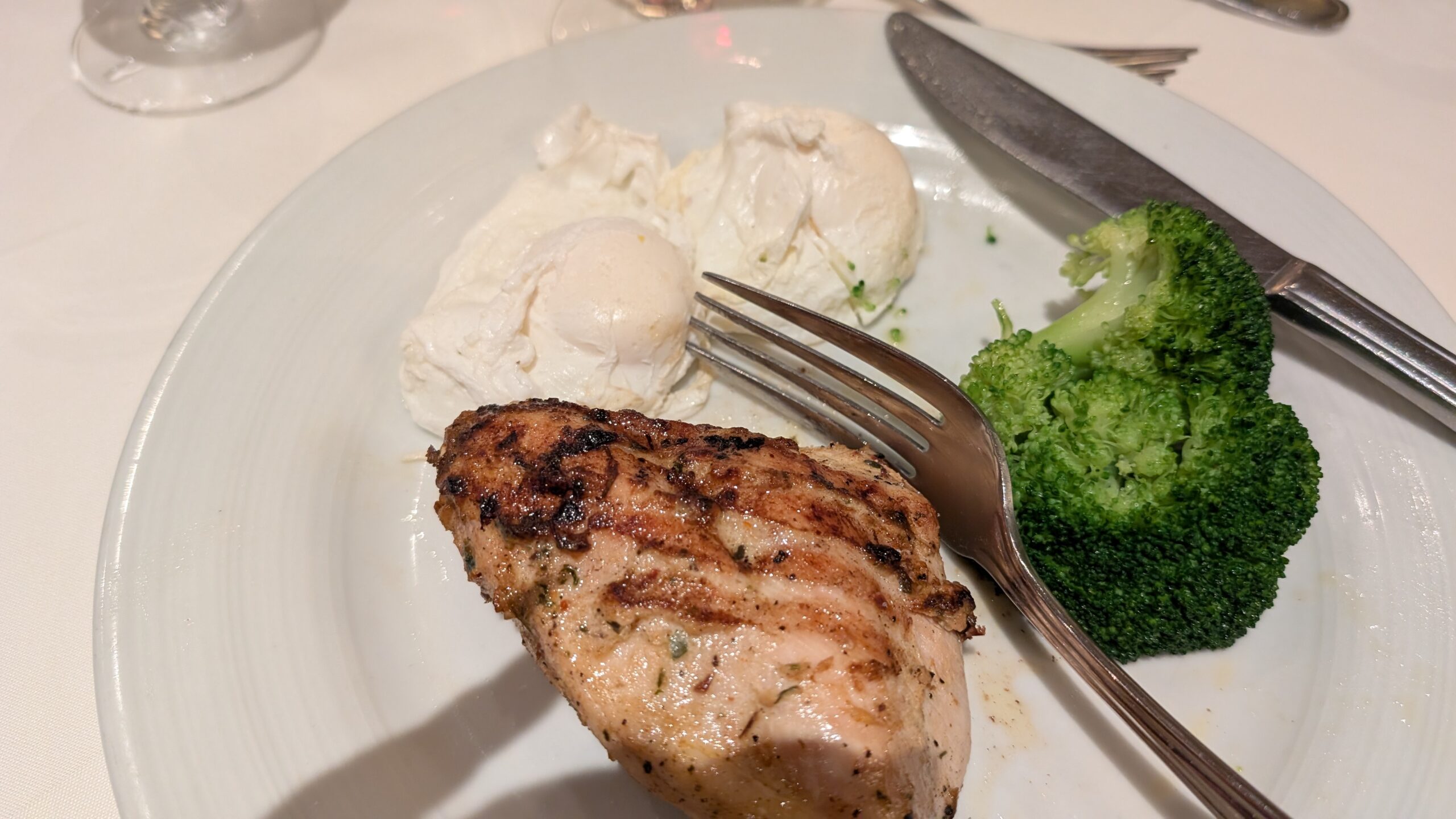
My dinner last night… chicken breast, poached eggs, and a bit of broccoli.

It’s funny how dependent we’ve all become on connectivity, even when sailing across the ocean, far from the routines of everyday life. For us, it’s not just about posting photos or browsing the news. It’s how we manage our travels, communicate with family, and continue writing about our journey for all of our dear readers. Once the connection was stable, we could finally exhale.

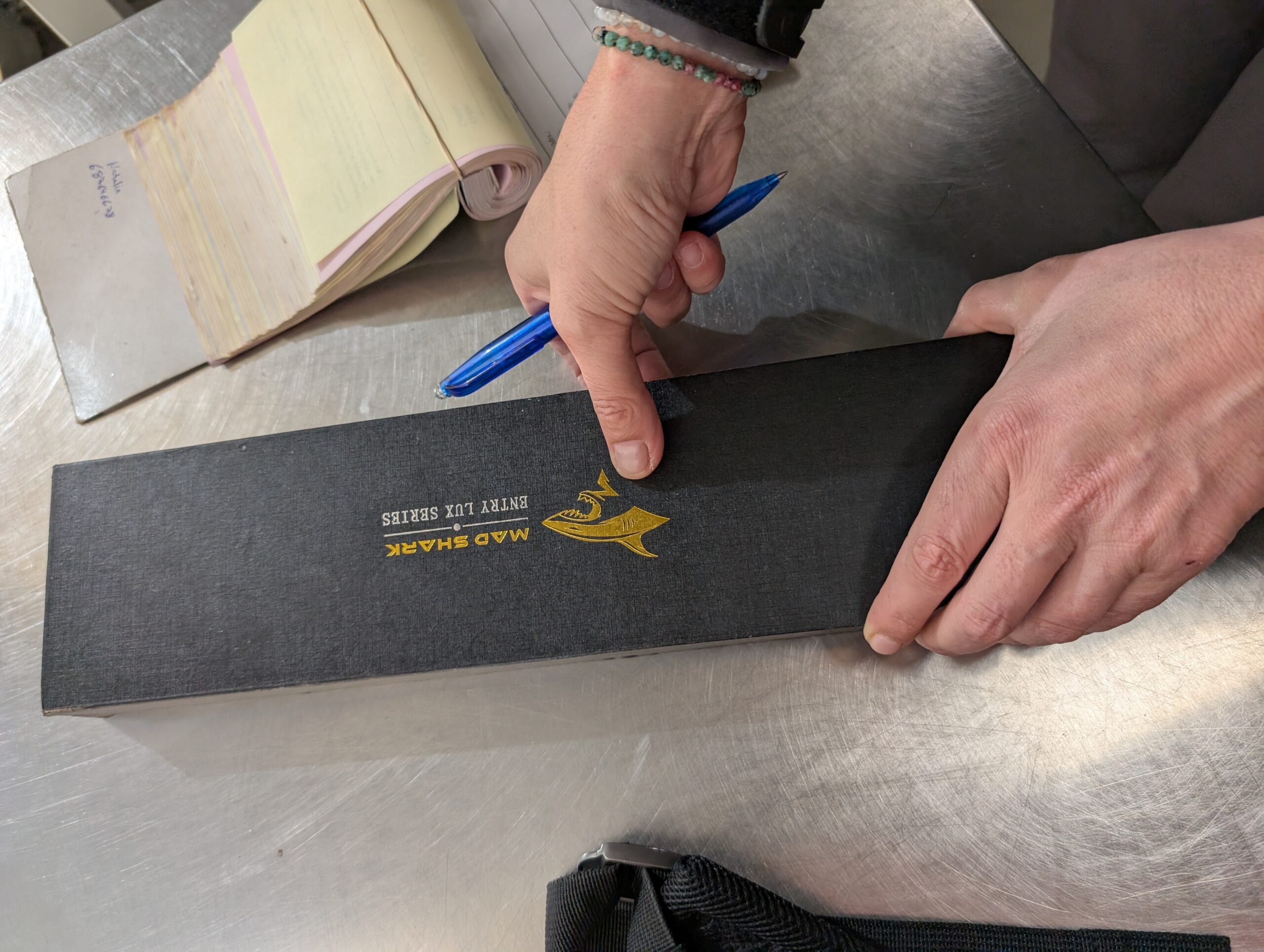
The ship’s security department confiscated my big knife that travels with us. At the end of the cruise, we’ll be able to collect it.

As evening approached, we wandered to the deck to watch the sunset, the horizon glowing in shades of gold and pink. The minor frustrations of the day faded as the ship glided smoothly over the calm sea. Below us, the wake shimmered like a trail of silver, a reminder that each day at sea brings both challenges and beauty. Tomorrow, the ship will be farther from shore, and we’ll settle into the rhythm of cruising life, meals, walks on deck, conversation with fellow travelers, which has already been such fun, and the gentle lull of the ocean, reminding us how lucky we are to be here once again.

Even after all these years, there’s nothing quite like the freedom of being at sea.

Be well.

Photo from ten years ago today, October 28, 2015:

Cows are always curious, and we laughed when this grazing cow picked up his head to check us out. For more photos, please click here.