:max_bytes(150000):strip_icc():format(webp)/TAL-humpback-whale-ningaloo-reef-australia-SWIMWHUMPBACKS0326-bb7a737b55de4a8d8d4e81a92527f4cb.jpg)
Today, I stumbled across this article from Travel + Leisure Magazine, found here. For those interested in Travel and whale watching, this may be of interest.
“These Are the 4 Places in the World Where You Can Swim With Humpback Whales
From Tonga to the Dominican Republic, these destinations offer rare, regulated encounters. By Evie Carrick, Published on March 18, 2026
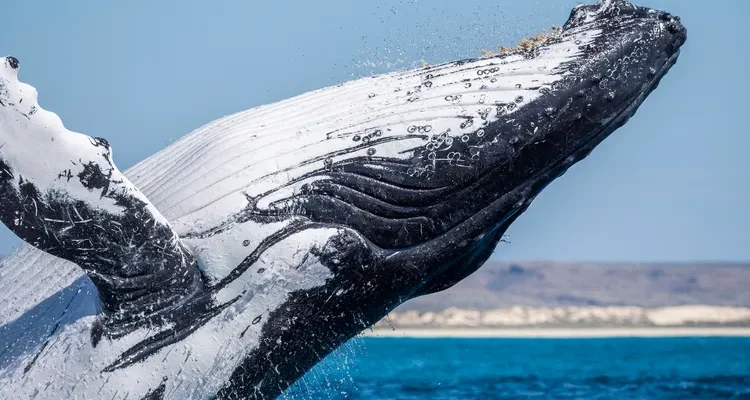
People travel all over the world to see a humpback whale’s dorsal fin glide through the water or to watch a tail or fin lift as a hello. A lucky few might even witness a breach or hear their haunting song. Any kind of humpback whale experience is special, even life-changing, but it often takes place from the deck of a boat, which can feel like a clumsy barrier between human and whale.
In very few places around the world, this barrier is removed, and people are allowed to enter the water alongside humpback whales to grasp their size and beauty fully. (Adult humpbacks are typically 46 to 49 feet long.) It is a very rare, very special experience, and one that should be taken seriously. Typical in-water whale swims are limited to four to seven people, and the experience is completely dependent on whale behavior; if they’re showing signs of annoyance or disinterest, you might have to try another day.
Below are a few places where swimming with humpback whales is allowed and well-regulated, along with each destination’s humpback whale season and the tour operators that are respected.
Vava’u, Tonga, South Pacific
One of the best places to swim with humpback whales is near the island of Tonga in the South Pacific. The island group of Vavaʻu is a popular place for mother whales who come to give birth and nurse their young in the warm, calm waters. Whale sightings tend to be consistent and are well-regulated. Operators use small boats and limit the in-water group size (typically four to six people at a time).
When: July to October
Popular tour operators: Tahi Tonga, Humpback Swim, and Acanela Expeditions.
Mo’orea & Ruruto, French Polynesia
Some of the clearest waters are found in French Polynesia, making the country an excellent place to swim with whales — especially if you’re hoping to capture crisp underwater photos and videos. Mo’orea is located just west of Tahiti, making it an easy-to-get-to option, while the more remote island of Ruruto is another 1.5-hour plane ride south of Tahiti.
Both islands offer the rare chance to swim with humpback whales. Respected outfitters and tour companies on Mo’orea include Mo’orea Moana Tours and Mo’orea Sea Experience. In Ruruto, most whale-watching excursions are part of week-long packages that include lodging with a local family, food, and multiple marine-life expeditions.
When: August to October
Popular tour operators: One With Whales and Baja Wild Encounters.
Ningaloo Reef, Australia
In the Ningaloo Reef off the coast of Western Australia, pods of humpback whales often swim and feed alongside whale sharks, the largest known fish. The chance to not only see but also swim with these two giant creatures is rare.
When: August to September
Popular tour operators: Ningaloo Whale Shark Swim and Kings Ningaloo Reef Tours
Silver Bank, Dominican Republic
The only humpback whale swimming experience in the Northern Hemisphere is found in the Dominican Republic, which is home to one of the largest humpback breeding grounds in the Atlantic. Like the offerings on Rurutu, the Silver Bank whale-watching trips typically take place over several days. The offshore bank where the whales breed is a journey from the coast, so most operators run liveaboard boats.
When: January to April
Popular tour operators: Aquatic Adventures and Aqua-Firma Worldwide Expeditions.”
In many countries we’ve visited over the past 13 years, we’ve eagerly signed up for whale watching tours, always hopeful, sometimes lucky, always grateful to be out on the water. But the moments that linger most vividly came in Pahoa on the Big Island of Hawaii, where humpbacks seemed to appear as if on cue, and again in Antarctica, where everything felt magnified by the wild, icy environment. There, killer whales surfaced beside our small zodiac boats, close enough to hear their breath. We ventured out several times a day, never tiring of the wonder, never quite believing our good fortune.
Be well.
Photo from ten years ago today, March 19, 2016: