
Travel warnings today…
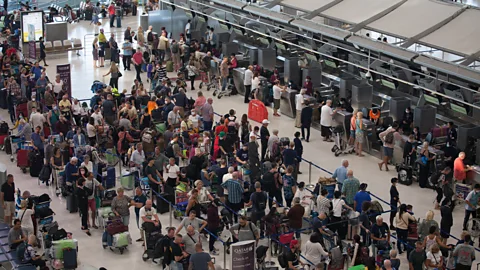
The news has been difficult to ignore lately. For those of us who have spent years crossing borders with a certain quiet confidence, the latest global travel warnings tied to the escalating conflict involving Iran feel different. Not just another headline to scroll past, but something that settles heavily in the chest of anyone who has built a life around movement.
Over the past week, governments around the world have issued increasingly urgent advisories. The United States has told its citizens to leave large parts of the Middle East immediately, citing missile and drone attacks and rapidly deteriorating security conditions. At least a dozen countries in the region are now under heightened warnings, with several closing their airspace entirely. For travelers, that simple phrase we have learned to respect, “airspace closures,” carries enormous weight. It means rerouted flights, sudden cancellations, and sometimes the uneasy reality of being stranded far from where you planned to be.
Australia has also updated its advice. Through Smartraveller, officials continue to warn Australians not to travel to Iran and to leave if it is safe to do so, noting the risk of reprisal attacks and further escalation across the region. Even for countries not directly involved in the conflict, the ripple effects are already being felt.
For those of us who live this nomadic lifestyle, these moments always bring a pause. Travel, at its heart, is built on a fragile kind of trust. Trust that planes will fly. Trust that borders will remain open. Trust that the world, while imperfect, will stay navigable.
Right now, that trust feels a little more delicate.
Across Asia and Europe, governments are lining up with similar guidance. Singapore, Malaysia, Thailand, and Vietnam have all urged citizens to defer nonessential travel to Iran and monitor developments closely. Several European nations have gone further, advising their nationals to leave Iran while commercial routes remain available and warning that the situation could deteriorate quickly. When you see this level of global alignment, it tends to signal that officials are genuinely concerned about what may come next.
And it is not only about Iran itself. The wider Middle East is feeling the tremors. Airlines have already canceled hundreds of flights through early March, citing unacceptable security risks. Even travelers simply transiting through major Gulf hubs are being advised to keep a close eye on their itineraries.
For seasoned travelers, this is where experience quietly steps in.
We have learned over the years that global mobility can shift overnight. One moment, you are planning routes and hotel stays months in advance. Next, you are refreshing airline apps and checking government advisories with your morning coffee. It is not panic that sets in, at least not for us. It is something more measured—a gentle recalibration.
I find myself thinking about the many times Tom and I have passed through the Middle East on long-haul journeys between continents. Not long ago, we were at the Qatar Airport for a layover. Airports that once felt like familiar crossroads now sit under a cloud of uncertainty. It is a sobering reminder that the world, for all its beauty and wonder, is never entirely predictable.
There is also the human side of these warnings that often gets lost in the logistics. Behind every advisory are families deciding whether to cut trips short, business travelers scrambling to reroute, and long-term expatriates weighing difficult choices about when to stay and when to go. Officials are even warning that a wider conflict could trigger major population displacement if instability deepens. Those are not abstract projections. They are real lives, real uncertainty, real upheaval.
For travelers watching from afar, including many of us here in Australia, the practical advice remains steady and familiar.
Check official government advisories frequently.
Avoid unnecessary travel to affected regions.
Build extra flexibility into upcoming international plans.
And perhaps most importantly, stay calm but stay informed.
If there is one thing years of world travel have taught us, it is that conditions can change quickly, but they also evolve. Routes close, and eventually they reopen. Tensions rise, and with time, many ease again. The flow of global movement rarely stops forever, even when it stumbles.
Still, this moment does call for a little more caution than usual. Not fear. Not the cancellation of every dream on the horizon. Just awareness.
Be well. Be safe.
Photo from ten years ago today, March 4, 2016:


About Jess & Tom
We are travel writers, photographers, and slow travelers exploring the world one meaningful experience at a time.
Read More