Shocking event in the cruise business…Frustration for travelers..

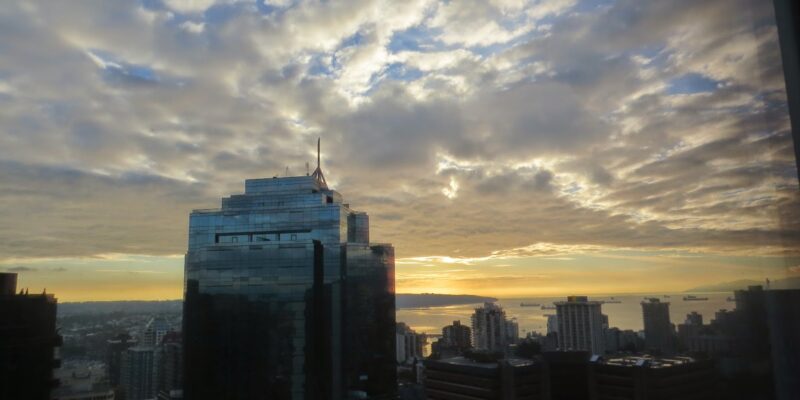
The view from our condo in Vancouver before we sailed to Hawaii.

Traveling is a tricky business. We are subject to changes, cancellations, and longer-than-expected waiting periods, often at our own expense, due to situations entirely beyond our control. The following story popped up today that clearly illustrates one of those frustrations, in this case, for a more extended period than usual.

From this site:

Passengers bought berths on a 3-year cruise. Months later, the ship is still stuck in Belfast.

By  JILL LAWLESS and PETER MORRISON

BELFAST, Northern Ireland (AP) — Lanette Canen and Johan Bodin gave up life on land to become seaborne nomads on a years-long cruise.

Months later, the couple has yet to spend a night at sea. Their ship, the Odyssey, is stuck in Belfast undergoing repair work that has postponed its scheduled May departure for a 3½-year round-the-world voyage.

Bodin said Friday that they have enjoyed their pit stop in the Northern Ireland capital, but “when we’d visited every pub and tried and every fish and chips place and listened to all the places that have Irish music, then we were ready to go elsewhere.”

“We’re ready to set sail, for sure,” added Canen.

Villa Vie Residences’ Odyssey is the latest venture in the tempest-tossed world of continuous cruising.

It allows travelers to buy a cabin and live at sea on a ship circumnavigating the globe. On its maiden voyage, it will visit 425 ports in 147 countries on seven continents. Cabins – billed as “villas” — start at $99,999, plus a monthly fee, for the vessel’s operational life, at least 15 years. Passengers can also sign up for voyage segments lasting weeks or months.

Marketing material, aimed at adventurous retirees and restless digital nomads, touts “the incredible opportunity to own a home on a floating paradise,” complete with a gym, spa, putting green, entertainment facilities, a business center, and an “experiential culinary center.”

But first, the Odyssey has to get out of the dock. It’s now at Belfast’s Harland & Wolff shipyard, where the doomed RMS Titanic was built over a century ago.

Villa Vie Residences’ marketing manager, Sebastian Stokkendal, said the company had been “humbled by the scale of what it takes to reactivate a 30-year-old vessel from a four-year layup.”

He said that the ship was almost ready to depart after work on the rudder shafts, steel work, and engine overhauls.”

Calling itself the first perpetual world cruise, Odyssey has a busy 425-port itinerary across 147 countries through 2028. Its cabins, renamed “villas” by Florida-based Villa Vie Residences, start at $99,999 and run to $899,000, with monthly fees that vary according to the cabin type and number of occupants. Non-resident passengers can also sign up for segments that last weeks or months.

As of today, the Odyssey has yet to set sail. We can only imagine the frustration of the waiting passengers who have upended their lives for this extended journey.

Photo from ten years ago today, September 22, 2014:

A lonely-looking boxer was waiting outside the restaurant for his family, where we dined on our final night in Vancouver. For more photos, please click here.

Part 2…Pros and cons of living on a cruise ship…What can it cost?..

We were at a ship’s Celebrity Solstice cocktail party, which featured free drinks and appetizers and was held for priority club members only.

We hear many stories about retirees living on cruise ships, as opposed to the costs of living in various retirement communities and facilities. Not only do they find the cruising lifestyle more affordable with its many amenities, but they also love the novelty of continually sailing worldwide.

Living on a cruise ship in retirement has become an enticing option for some, combining the luxury of travel with practical living costs. The overall expense varies based on the type of cruise, accommodations, duration, and included amenities. Here’s a breakdown of the main costs:

1. Cruise Fares

The cost of living on a cruise ship can range from about $2,000 to $10,000 per month or more, depending on the ship and cabin type:

  • Budget-friendly cruises cost around $2,000–$4,000 monthly or more and usually offer an interior cabin on a standard ship. They include basic amenities but might lack the perks of more expensive options.
  • Luxury cruises: Suites or rooms with balconies on upscale ships can cost $8,000–$10,000+ per month or more.

2. Inclusions

Cruise fares often include a lot of everyday living expenses, which can make the overall cost comparable to, or sometimes less than, living on land:

  • Meals: Most meals in various dining venues are included, with specialty restaurants sometimes costing extra.
  • Entertainment: Onboard activities, shows, fitness centers, and lectures are typically included.
  • Housekeeping and maintenance: The package includes regular cabin cleaning, laundry, and property maintenance.

3. Medical Expenses

Many ships offer onboard medical facilities for basic healthcare needs, but retirees may need comprehensive travel health insurance to cover more serious medical expenses. Insurance prices depend on age and health, typically ranging from $200 to $500+ per month.

4. Gratuities and Tips

Cruise lines often have automatic gratuities, typically adding $15 to $30 or more per person added daily to your bill. This is for crew service in dining rooms, housekeeping, and other areas.

5. Excursions and Activities

Shore excursions, special events, and premium services are an extra expense. Depending on how often you venture out, these can add $50 to $500 per excursion.

6. Internet and Communication

Wi-Fi on ships is often expensive and can range from $150 to $600 monthly. Some long-term or luxury cruises may include it in their package.

7. Taxes and Port Fees

These fees depend on the cruise itinerary and are typically $100–$500 per month, depending on how frequently the ship docks.

8. Discounts for Long-Term Stays

Retirees can benefit from discounts if they book extended stays or back-to-back cruises, significantly reducing the overall cost. Some cruise lines also offer packages for retirees, making a full-time living on a cruise more affordable.

9. Comparison to Traditional Living

If you compare the cost of living on a cruise to traditional retirement living (especially in high-cost areas), the cruise can sometimes offer savings:

  • Retirement community: Monthly fees, housing, utilities, meals, and activities in senior living communities can easily cost $5,000–$8,000 per month.
  • On a cruise, many of these expenses are bundled into a more predictable price, plus you get the added benefit of constant travel.

Living on a cruise ship in retirement offers a unique and adventurous lifestyle, with relatively predictable expenses and the chance to explore new places daily. It can be an ideal setup for someone looking for a travel-focused, maintenance-free lifestyle.

This lifestyle is not for us. As mentioned in post Part 1 two days ago, we love the novelty of cruising. But doing so permanently would diminish the uniqueness of cruising and eventually become mundane.

Be well.

Photo from ten years ago today, September 29, 2014:

A flower we spotted on our rainy walk to the grocery store in Vancouver. For more photos, please click here.

Unusual event on Delta flight…Nothing surprises us…

View of downtown Vancouver, British Columbia, in 2014.

Numerous media accounts have provided information about events occurring on various flights by many airlines. We ask, “What’s going on?”

Is all this news due to increased reporting of any situation that can be sensationalized, or are the airlines being less diligent in ensuring safe flights for travelers? Are careless inspections being performed by disgruntled employees, or are checks and balances ignored in certain situations?

We don’t know the answers to these questions, but we don’t perceive flying as safe as it may have been a few years ago. The average flyer can do nothing to eliminate such concerns as they continue to flood the press. Today’s story is a perfect example of such an event. Why was this allowed to happen?

“FAA investigating after Delta passengers report bleeding ears and noses (from this site)

The Federal Aviation Administration is investigating after a Delta Air Lines flight leaving Salt Lake City last weekend developed cabin pressure issues and left some passengers with bleeding eardrums, headaches, and bloody noses.

The flight was traveling Sunday from Salt Lake City to Portland, Oregon, when the five-year-old Boeing 737-900ER aircraft’s pilots noticed a pressurization problem and made an emergency landing back in Utah’s capital, according to the flight log.

Passengers told KSL they noticed people bleeding as the plane decreased in elevation over the Great Salt Lake. Passenger Caryn Allen said the pilots announced they were returning to the airport but did not explain why. Oxygen masks did not deploy.

Allen described watching her husband cover his ears in pain while other passengers tried to help a man on the other side of the aisle who had an uncontrollable bloody nose.

Another passenger, Jaci Purser, told KSL it felt like someone was stabbing her inner ear.

“I grabbed my ear, and I pulled my hand back, and there was blood on it,” she said.

Paramedics met passengers at the gate and identified at least ten people out of the 140 on the flight who required medical attention. They recommended that anyone who was bleeding go to the hospital for further evaluation, and Delta offered to cover those transportation costs, the airline said.

“We sincerely apologize to our customers for their experience on flight 1203 on Sept. 15,” Delta said in a statement. “The flight crew followed procedures to return to SLC where our teams on the ground supported our customers with their immediate needs.”

Delta said the plane was taken out of service Sunday and returned to service Monday after technicians resolved an issue that prevented it from pressurizing above 10,000 feet.

The Boeing aircraft involved in Sunday’s emergency landing is not part of the manufacturer’s newer MAX fleet, which was investigated this year after a door plug blew off during a Jan. 5 Alaska Airlines flight while the plane was at 16,000 feet over Oregon.

However, in late January, the FAA recommended more thorough inspections of other Boeing aircraft, including the 737-900ER involved in the incident over Salt Lake City, because it shares the same door plug design as the MAX jets.”

This obviously resulted from human error, which seems to have caused many such flight events. Notice the above statement in bold: “Delta offered to cover those transportation costs, the airline said.”

What about the cost of medical bills incurred for those who sought medical assistance? What about the potential loss for those who had connecting flights or other forms of awaiting transportation?

To enjoy world travel, one must fly. In a perfect world, one could cruise from location to location, as we attempted during the first year of our travels. It was often more cost-effective and certainly more enjoyable than flying. Unfortunately, it’s not always possible, although we continue to search for cruises to get us to our following preferred location.

That’s it for today, folks.

Be well.

Photo from ten years ago today, September 19, 2014:

My breakfast was served in the restaurant of the membership hotel, Club Intrawest, Vancouver, British Columbia, where we waited for a cruise. For more photos, please click here.

Beware entry fees to various countries…Research before traveling….Here’s a list…

We posted this photo ten years ago today and perhaps a time or two since then. But whenever I reencounter it, I feel compelled to post it again. My father, George, was a fine man. He’ll remain in our hearts forever. For the tragic story of his loss, please click here.

Here’s an interesting article from Travel and Leisure Magazine with important information for world travelers from this site:

“Here’s When the UK Will Implement Its Entry Fee for U.S. Travelers

The electronic travel authorization (ETA) fee will be implemented next year. By  Alison Fox

Next year, travelers heading to the United Kingdom will have to pay a fee to enter as the country prepares to implement its long-anticipated electronic travel authorization (ETA) fee.

According to the UK government, the ETA will go into effect for visitors from most countries, including the United States, on Jan. 8, 2025. Eligible non-European travelers can apply for the authorization starting Nov. 27. Once secured, the ETA will be digitally linked to a traveler’s passport. The authorization will cost £10 ($13.05) and be valid for multiple trips over two years (or until the traveler’s passport expires) for stays of up to 6 months at a time.

“The worldwide expansion of the ETA demonstrates our commitment to enhancing security through new technology and embedding a modern immigration system,” Seema Malhotra, the UK’s minister for migration and citizenship, said in a statement.

The UK introduced the ETA last year, rolling out the new system for visitors from several Gulf countries, including Qatar, Saudi Arabia, and the United Arab Emirates. Travelers from those countries can apply using the UK ETA app or online. Each traveler must have their own ETA, including children of any age. Applicants should typically expect a response within at least three business days.

In addition to the U.S., the UK will expand the ETA to dozens of other countries and territories on Jan. 8, including Canada, Australia, Japan, Mexico, and more. Then, on April 2, 2025, the ETA will be extended to travelers from other European countries. The decision to roll out an online ETA is part of the U.K.’s effort to fully digitize its borders by 2025.

Beyond the UK, Europe plans to implement a similar pre-authorization system next year called the European Travel Information and Authorisation System (ETIAS). The travel authorization fee is expected to go into effect before mid-2025. It will cost €7 ($7.71) and require travelers from visa-exempt countries, including the U.S., to enter 30 different European countries.

Several countries require travelers to pay a fee or obtain a visa before entering. These fees may include visas, tourist cards, entry taxes, or environmental fees. Here’s a breakdown of some common examples:

1. United States (ESTA/EVUS)

  • Citizens from certain countries under the Visa Waiver Program must pay a fee for the Electronic System for Travel Authorization (ESTA).
  • Chinese nationals are required to enroll in the EVUS (Electronic Visa Update System), which also carries a fee.

2. Australia (ETA)

  • Travelers from many countries must obtain an Electronic Travel Authority (ETA) or eVisitor visa, which involves a processing fee.

3. Mexico (Tourist Card – FMM)

  • Mexico requires tourists to fill out a Forma Migratoria Múltiple (FMM) and pay a fee unless visiting border regions for a limited time.

4. New Zealand (NZeTA)

  • Some visitors must apply for a New Zealand Electronic Travel Authority (NZeTA) and pay an associated fee, along with an International Visitor Conservation and Tourism Levy (IVL).

5. Bhutan (Daily Tourist Fee)

  • Bhutan has a unique policy of requiring travelers to pay a daily fee, which includes accommodation, meals, and a guide. The fee supports sustainable tourism.

6. Argentina (Reciprocity Fee)

  • Argentina used to charge a reciprocity fee for citizens of certain countries (like the U.S.), though this has been suspended or eliminated for some nationalities.

7. Chile (Reciprocity Fee)

  • Depending on their nationality, some travelers must pay a reciprocity fee before entering Chile.

8. Turkey (eVisa)

  • Many tourists must apply for an eVisa and pay the associated fee before traveling to Turkey.

9. Cambodia, Laos, and Vietnam (Visa on Arrival)

  • These countries offer a visa on arrival, but travelers must pay a fee at the border or airport.

10. Indonesia (Bali) (Visa on Arrival)

  • Indonesia, specifically Bali, requires a visa-on-arrival fee for many nationalities.

11. The Maldives (Green Tax)

  • The Maldives charges a Green Tax to tourists, usually included in accommodation costs.

12. Thailand (Tourism Fee)

  • Thailand plans to implement a tourism fee for travelers in the future, which would cover insurance and contribute to tourism development.

13. Madagascar (Visa Fee)

  • Visitors to Madagascar must obtain a visa on arrival, which includes a fee.

14. Sri Lanka (ETA)

  • Sri Lanka requires an Electronic Travel Authorization (ETA), which is charged, even for short-term visits.

15. Jordan (Jordan Pass)

  • Travelers can buy a Jordan Pass, which covers the visa fee and entry to major tourist sites, making it a good deal for longer stays.

These fees and requirements are constantly changing, so it’s always wise to check the latest regulations from the embassy or consulate of your destination before traveling. Many of these fees are meant to support tourism infrastructure and environmental protection or are reciprocal arrangements based on the travel policies of other countries.

This list is changing rapidly. It is imperative to check the requirements of each country you plan to visit well in advance since some visas may take weeks to obtain once the application process begins.

Photo from ten years ago today, September 17, 2014:

While in Boston ten years ago, we visited the cemetery where many of my family members were buried. Here is a photo of the family; my father is on the left, his brother Red and sister Ida, and their mother, my dear grandmother Ethyl. Uncle Bernie was yet to be born. For more photos, please click here.

Back to the clinic today…More testing…Minnesota Vikings didn’t disappoint…

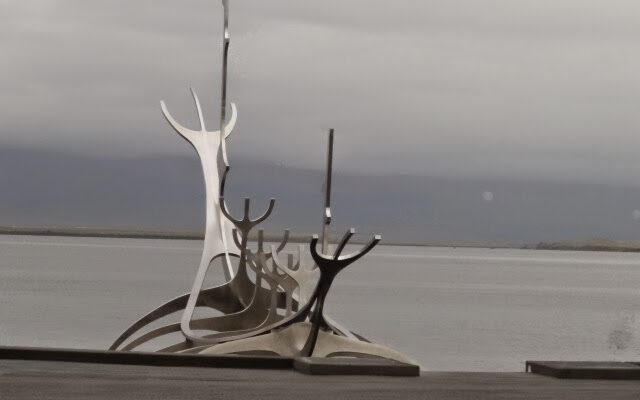
We spotted interesting artwork in Iceland on a tour off the ship. I can’t recall where this was.

In 90 minutes, we’ll depart the hotel and head back to Cleveland Clinic, where I will be fitted with a Holter monitor. What is a Holter monitor?

“A Holter monitor is a portable device that records your heart’s electrical activity over a period of time, usually 24 to 48 hours. It’s used to help diagnose irregular heartbeats, arrhythmias, and other heart-related conditions.”

The electrophysiologist, Dr. Keogh, a cardiologist with additional training in the heart’s electrical systems, will read the results for my next appointment with him on September 27. His goal was to determine if the new medication I was taking is working since they took a baseline while I was in the hospital for three days.

The doctors I saw while in the hospital recommended I purchase a KardiaMobile to perform a six-lead EKG at any time to determine how I am doing. I can send him the results when I see a problem in the future to make any necessary medication adjustments.

I purchased the device from Amazon for $129, which the FDA has approved for accuracy. However, I need to call the company since, for some reason, it’s challenging to get a reading, although I’ve diligently followed all of the instructions to a “t.”

I will wear the Holter monitor for only 48 hours and return it to the clinic at the end of that time so the doctor can read the results in preparation for my upcoming appointment.

On another note, yesterday afternoon, we watched the Minnesota Vikings play the San Francisco 49ers using Tom’s app DAZN, formerly NFL Game Pass. Recently, we’ve had some issues getting the app to work, which requires a VPN, making it appear as if we are outside the US. The app doesn’t work while in the US.

As mentioned earlier, we use Express VPN not only for this app but also for added security when using “open” Wi-Fi, such as those provided by many hotels. We can choose the country we’re selecting while using the app. When it wasn’t working recently, we contacted Express VPN, and they explained that many of their customers were having problems streaming using the app to stream DAZN.

After spending considerable time trying to get DAZN to work, we finally figured it out, and once again, we could watch the US football games. Of course, Tom was especially thrilled when Minnesota won its second regular season game. I watch with him, but I have been a fan since we began traveling and using this app. Tom has been a fan his entire life.

When the game ended, we cooked dinner, a big pan of a keto dish, Mushroom Hamburger Scramble, another favorite of Tom’s, which we’d prepared in the morning. All we had to do was pop into the oven for 40 minutes and enjoy it with a fresh batch of coleslaw I made in the morning.

We enjoyed dinner and then settled in for the evening, streaming a few shows on Hulu. Now, it’s time to get ready to return to the clinic. Although I walk daily now, I am not quite prepared for the long walk at the clinic, so we’ll use the wheelchair. Hopefully, next time, we won’t need to.

Be well.

Photo from ten years ago today, September 16, 2014:

This generous gift was sent to our hotel room in Boston by the management of Four Points by Sheraton Norwood. For more, please click here.

Does world travel only include the Earth?…Times and travel are ever-changing…

SpaceX An astronaut waves at the crowd. She's smiling broadly and wearing her white-and-grey spacesuit and is standing infront of the Dragon capsule.
The SpaceX crew spent five days in space and participated in the first commercial spacewalk. Photo from BBC.

We often think of world travel as only including travel on Earth. But times and technology are rapidly changing. Although many of us won’t be around to experience space travel, perhaps young children and our grandchildren will experience far-reaching adventures into space in decades.

Space travel for the average person is becoming more of a reality, but it’s still in its early stages. Companies like SpaceX, Blue Origin, and Virgin Galactic are leading the charge with private space flights, mainly for the ultra-wealthy. For instance, Virgin Galactic’s commercial suborbital flights started in 2023, offering passengers a brief trip to the edge of space for around $450,000 per seat.

However, costs are expected to come down over time, just as air travel did in its early days. Experts believe that within 10 to 20 years, space tourism could become much more accessible. Advances in reusable rockets, competition among companies, and technological innovations will likely help lower prices. As that happens, we might see more “average” people going to space, perhaps first for short trips and later for longer journeys.

Another aspect that could influence space travel’s accessibility is the development of space hotels and moon bases. These will need to be built, staffed, and maintained, which could create more opportunities for people to live and work in space. But all this depends on continued investment, public interest, and technological breakthroughs in safety, sustainability, and cost reduction.

Would you be interested in taking a trip to space when it becomes more affordable?

“SpaceX crew returns to Earth after historic mission

Ruth Comerford BBC News

From this site:

SpaceX’s Polaris Dawn crew has returned to Earth after five days in orbit, following a landmark mission featuring the world’s first commercial spacewalk. The Dragon capsule splashed down off the coast of Florida shortly after 03:37 local time (07:37 GMT) in an event stream live by SpaceX.

“Splashdown of Dragon confirmed! Welcome back to Earth,” SpaceX said on social media platform X, formerly known as Twitter.

The US space agency Nasa said the mission represented “a giant leap forward” for the commercial space industry. After re-entering Earth’s atmosphere, the spacecraft reached temperatures of 1,900C (3,500 degrees Fahrenheit), caused by the intense pressure and friction of pushing through the air at around 7,000mph (27,000kph).

The four-member civilian team, bankrolled and led by billionaire Jared Isaacman, traveled further into space than any humans for over fifty years. Scott Poteet, a retired US Air Force pilot, and SpaceX employees Sarah Gillis and Anna Menon were also on the crew. Mr. Isaacman and Ms. Gillis are the first non-professional crew to perform a spacewalk, a risky maneuver that involves depressurizing the crew compartment and exiting the spacecraft.

Before this flight, only astronauts from government-funded space agencies had attempted the feat. Speaking to mission control in Hawthorne, California, during the spacewalk, Isaacman said, “Back at home, we all have a lot of work to do, but from here, it looks like a perfect world.” As Dragon doesn’t have an airlock, the crew was exposed to a space vacuum during the spacewalk.

This spacewalk, higher than any previously attempted, was made possible by innovative astronaut suits fitted with new technology. During the five days, the crew conducted more than 40 experiments, including investigations into the impact of space missions on human health and testing inter-satellite laser communication between the Dragon Spacecraft and Space X’s Starlink satellite.

Gillis, a trained violinist, brought her instrument and performed “Rey’s Theme” from “Star Wars: The Force Awakens” alongside orchestras on Earth. Her rendition was sent back to Earth using SpaceX’s Starlink to test the satellite network’s potential to provide in-space connectivity. The video was created in partnership with St. Jude Children’s Research Hospital, which the Polaris Program was fundraising for throughout the mission.

The crew spent five days in orbit inside the Dragon spacecraft Resilience, launched early Tuesday morning from the Kennedy Space Center in Florida. The mission made history by reaching a maximum altitude of 1,400km (870 miles), higher than any human flight since the final Apollo Mission i972. Polaris Dawn is the first of three planned Polaris missions, a collaboration between Mr Isaacman and SpaceX.

This includes the first manned flight of the new SpaceX rocket Starship, which is still under development.”

If space travel were feasible for me, would I be interested? Yes! I’d love such an experience! Tom, not so much. But realistically, this is not a possibility. But I can dream, can’t I? Isn’t that what travel is all about, anyway? Fulfilling a dream, and we have lots of dreams yet to fulfill in the future.

Be well.

Photo from ten years ago today, September 15, 2014:

It’s late in the season for blooms like this in Boston, but I couldn’t resist taking a photo. For more photos, please click here.

Its all about an apple…

The Honeycrisp apple was created at the University of Minnesota Arboretum.

As mentioned in a post in 2012, I started eating a low-carb, grain-free, sugar-free, and starch-free diet in 2011 to reduce inflammation. Ironically, I followed a copy of the diet from researchers at Cleveland Clinic that I received from an integrative medicine doctor. Inflammation is a huge factor in diabetes, heart disease, and countless other medical conditions.

However, the damage to my arteries was already done from years of eating a high-carb, low-fat diet. There was nothing I could do to reverse it. But, perhaps I could slow down the progression. My blood sugar was high then, and insulin injections were the next step. Diabetes and heart disease were the cause of death of many of the family members on my mother’s side of the family. If I reduced my blood sugar, I felt I could live longer. I am now the matriarch of the family.

When I started this diet, I tried eating various fruits to see which raised my blood sugar, testing my blood with a test kit. In our old lives, every day before I changed my diet, I ate one Honeycrisp apple, my favorite fruit. When I ate the apple on an empty stomach, my blood sugar rose as much as if I’d eaten a candy bar.

When I discovered this, I called the University of Minnesota Landscape Arboretum across the lake from us to see if I could speak to Jim Luby, the scientist mentioned below, who developed the apple, about how much sugar is in one Honeycrisp apple. He was delighted to share the information with me.

A few hours after we talked, he called me back, explaining that one Honeycrisp apple contained the equivalent of 9 teaspoons of sugar. I was shocked it was this much. Looking online, I discovered that a single can of Coke contains 9.75 teaspoons of sugar.

Some people can eat fruit without colossal blood sugar spikes since the fiber may offset some of the response to the sugar, but I am not one of those people. Thus, my story today is about the Honeycrisp apple, which I dearly miss, having stopped eating it 13 years ago. My way of eating prevents me from needing diabetic medication.

When Tom stumbled across the following article on one of his Minnesota history sites, he sent it to me, prompting today’s story. In any case, if you can eat apples freely, these have always been my favorite. Before we left Minnesota, it cost $1 per apple at Cub Foods. I treated myself to one Honeycrisp apple daily as a midday snack each week. My mouth waters when I think of it. No wonder…sugar tastes good.

From Kare11 News in Minneapolis, here’s the article:

The man behind the iconic Honeycrisp apple retires, passing the torch to a former student.

Jim Luby retired this summer after a 40-plus-year career in fruit breeding at the University of Minnesota Horticultural Research Center.

VICTORIA, Minn. — The man behind Minnesota’s favorite apple has decided to call it a career.

This summer, Jim Luby retired after a 40-plus-year career in apple breeding at the University of Minnesota’s Horticultural Research Center. During his career, Luby and his team created some of the tastiest apples in the country, including SweeTango, Zestar!, and their biggest success, Honeycrisp.

Luby is now passing the torch to a new generation of apple breeders led by one of his former students.

“It’s a little overwhelming,” Matt Clark said. “It’s a lot to take in.”

Clark enrolled in the master’s program at the University of Minnesota’s Applied Plant Science program in 2009. He received his degree a year later and started working on his PhD. That’s when he developed a strong appreciation for apple breeding.

“I did my PhD in the fruit-breeding lab. I studied, actually, Honeycrisp. I had an opportunity to take a deep dive into why Honeycrisp has this special gene and to be part of the legacy of Honeycrisp in Minnesota,” Clark said.

After graduation, Clark joined the department as an associate professor in their grape-breeding department to develop new wine grapes that can survive in Minnesota winters. In late 2023, Clark was asked if he would be willing to transition to Apple and take over for his former professor.

“Jim is an exceptional scientist and a wonderful person, and there are some big shoes to fill,” Clark said.

Yes, some big shoes indeed, but also an iconic apple to live up to.

“Honeycrisp was our gem. It still is, and we use it a lot in breeding, and what we’ve realized is our competition is too, because of that excellent quality, the crispiness. So, we have to step up our game to compete with everybody using Honeycrisp as a parent,” Clark said.

Clark said almost every apple they’re developing is somehow connected to Honeycrisp.

“Honeycrisp was either the grandparent, maybe even great-grandparent, or maybe even the parent to many of the apples we work with,” Clark said.

Every year, the research team plants hundreds of seeds, each slightly different. If the seed grows into a tree that can survive a Minnesota winter, the apples return to the taste test.

“It can’t taste bad, it can’t be bitter or astringent, but it might be a little tart, might be a little sweet, might have some interesting flavors, but if it’s not crisp and juicy like Honeycrisp or SweeTango, there’s no way it’s going to end up in our cooler,” Clark said.

The apples that show enough qualities to earn a spot in their cooler are then tested to see how long they can survive on the shelf.

“If they can only survive for a month and a half, then we kick them out,” Clark explained.

Very few apples meet their strict quality, taste, and shelf-life standards.

Clark said the research team usually tests out more than 10,000 combinations before finding one new variety that is good enough to release to the public.

“Apple breeding is a long-term investment,” he said. “20-ish years to develop a new variety.”

Clark said the next great apple may grow in their orchard, but he understands that discoveries take time.

“I’m not looking to retire any time soon, but if I’m here in 25 years, at the end of my career, we’re hoping to have more success stories on which we can look back.”

We are all different, and our bodies respond in various ways to foods and environmental influences. May we all strive to achieve the best possible health outcomes through good choices suitable for our personal makeup and health considerations.

Be well.

Photo from ten years ago today, September 12, 2014:

DSC03621
The indoor pool on Royal Caribbean’s Brilliance of the Seas. For more photos, please click here.

How the 9/11 attacks impacted travel in the past 23 years…

Photo by Thomas E. Franklin/The Bergen Record/AP. Firefighters George Johnson, Dan McWilliams, and Billy Eisengrein raise an American flag at the site of the World Trade Center on September 11. Some have compared it to the iconic flag-raising at Iwo Jima, and the photo was later used as a postage stamp.

Travelers like ourselves have been significantly impacted by strict regulations at every port of entry, including more comprehensive scrutiny of checked baggage and carry-on bags. Travelers’ comments could be construed as potential indications of intent to commit a terrorist attack.

Visa restrictions made travel to certain countries time-consuming and cumbersome. Visa extensions have been challenging to obtain.

The 9/11 attacks fundamentally transformed the experience of traveling, especially air travel, in the United States and around the world. The changes were immediate and far-reaching, from tightening security measures to the psychological effects on travelers. Here’s a closer look at how 9/11 impacted travelers:

1. Tightened Airport Security

  • Creation of the TSA (Transportation Security Administration): Before 9/11, airport security was relatively relaxed. After the attacks, the TSA was established to oversee airport security, implementing stricter procedures that dramatically changed the airport experience. Travelers now had to pass through metal detectors, remove shoes, jackets, belts, and laptops, and subject their belongings to more rigorous scanning.
  • Liquid Restrictions: In 2006, further restrictions were added after a foiled plot involving liquid explosives. Travelers were limited to carrying liquids in containers of 3.4 ounces or less, all of which had to fit into a quart-sized bag. This became a routine part of air travel packing.
  • More Thorough Screening Processes: Random additional screenings, full-body scanners, and pat-downs became commonplace. Many travelers found the process more invasive, and some felt anxiety about the potential for racial profiling or being singled out for additional checks.
  • Changes in Identification Requirements: Travelers must present government-issued identification to board flights. This increased security surrounding personal information led to longer lines at security checkpoints.

2. Flight Experience and Changes in Airplane Policies

  • Restricted Cabin Access: One of the most notable in-flight changes was the introduction of locked cockpit doors. Before 9/11, it wasn’t uncommon for passengers to see the cockpit or for pilots to leave the door open during a flight. After the attacks, airlines reinforced doors to prevent access to the cockpit, ensuring only authorized personnel could enter.
  • In-Flight Protocol: Flight attendants and crew members became more vigilant in identifying potential threats. Passengers were also encouraged to report any suspicious behavior. The sense of camaraderie among passengers shifted, as many felt a new level of responsibility in ensuring the safety of their fellow travelers.

3. Psychological Impact on Travelers

  • Fear of Flying: In the months and years following the attacks, many people developed a fear of flying. Anxiety about potential hijackings or terrorist attacks made air travel more stressful. Some people opted for alternative means of travel, such as driving or taking trains, while others avoided travel altogether.
  • Heightened Awareness: Even frequent travelers became more hyper-aware of their surroundings at airports and on planes. The once-carefree attitude of going through an airport was replaced with a constant sense of vigilance. Over time, this created a new kind of travel culture where security was always on our minds.
  • Impact on Muslim and Middle Eastern Travelers: Unfortunately, Muslim travelers, as well as individuals perceived to be of Middle Eastern descent, faced an increase in racial profiling and discrimination at airports. Many were subjected to additional screenings and questioned more often, which added stress and frustration to the travel experience. Some even reported avoiding air travel due to the fear of being singled out.

4. Changes in International Travel

  • Stricter Visa Requirements: The U.S. government imposed more stringent visa requirements for people traveling to the United States, especially from certain countries. Many countries followed suit, tightening their own immigration and entry policies. The introduction of biometric passports, increased background checks, and the requirement for more detailed travel histories became standard.
  • Heightened Border Security: Security measures at international borders were also reinforced. Passing through customs and immigration became lengthier, with more in-depth questioning and screenings for travelers entering or leaving the U.S.

5. Economic Impact on the Travel Industry

  • Airline Industry Losses: In the aftermath of 9/11, airlines suffered massive financial losses. Thousands of flights were grounded, and the entire airspace was closed for several days. The reduced demand for air travel led to layoffs in the airline industry and contributed to the bankruptcy of several major airlines over the years. Many smaller travel agencies also struggled to recover from the downturn.
  • Rise in Airfares and Travel Costs: As security and insurance costs increased, airlines began raising ticket prices to cover the added expenses. Fees for checked baggage, in-flight meals, and other services became more common, making travel more expensive.
  • Decrease in Leisure Travel: Many travelers, especially those for leisure, hesitated to fly in the months following the attacks. Fear of future incidents and the hassle of going through enhanced security discouraged some from traveling unless necessary. The travel industry had to work hard to regain public confidence.

6. Adaptation and Resilience

  • Return to Travel: Over time, people began to adjust to the “new normal” of air travel. Though the changes were significant, most travelers gradually accepted the heightened security as a necessary part of flying. By the mid-2000s, travel volumes primarily recovered, although the experience had permanently shifted.
  • Focus on Preparedness: For some travelers, the changes brought a heightened sense of preparedness. Many became more aware of emergency procedures, paid more attention during safety briefings, and learned to navigate airport security efficiently. Some even carried emergency supplies or developed mental strategies to cope with anxiety.

While the overall experience of traveling, especially by air, became more stressful and time-consuming, 9/11 also introduced a new sense of unity and responsibility among travelers. The shared experience of heightened security brought people closer, and many found ways to navigate the challenges with resilience and understanding.

We continue to pray for our country’s and its citizens’ safety in challenging times.

Be well.

Photo from ten years ago today, September 11, 2014:

DSC03571
On this date, Tom and I enjoyed dinner at Giovanni’s specialty restaurant, where we ate a fabulous meal aboard Royal Caribbean Brilliance of the Seas. For more photos, please click here.

A story from ten years ago…We haven’t changed much…

In many countries, we don’t see this much use of color in the buildings, which are often brick and stone from centuries ago. Much of Reykjavik, Iceland, has been built over the past 50 years.

On this date, ten years ago, we were on a ship-arranged tour in Reykjavik, Iceland. We opted for the full-day off-road adventure in a large, giant-tired land and water vehicle. It was a pricey tour, but with only eight passengers, it was perfect. Unfortunately, it rained the entire day. But neither of us hesitated to exit the vehicle to revel in Iceland’s wonders, ending up soaked but exhilarated.

As I reviewed the post from ten years ago, I was reminded of our enthusiastic emotional state and the joy we were experiencing in year two of our world travels. Thus, unlike anything we’ve done in the past, I am sharing the verbiage we wrote on September 10, 2014. You can see the entire post here.

So, here we go, the post we wrote ten years ago today:

“Happiness is fleeting. At times, it wraps around our hearts during a special moment or entirely surrounds us on a day when everything in the world is right. We experienced our fair share of those special moments in our old lives. However, the challenges of everyday life are often imposed upon maintaining a perpetual state of contentment.

A pipe broke, spewing water all over the basement. An error on our cable bill threw us into a frenzy to correct it, perhaps leaving us frustrated and angst throughout the day. Day-to-day life has many challenges, often entirely out of our control or beyond our realm of responsibility.

Of course, the greatest angst of all is when we do make a mistake, an oversight, or an unintended spontaneous blurb that may hurt the feelings of a loved one or friend. It is during these times that we may feel as if it will never be right again, and happiness becomes a fleeting memory.

When we left life in Minnesota almost two years ago (October 31, 2012), we had no expectations of happiness being a daily state, of being consistent, or even somewhat dependable.

After being ill for many years and suddenly becoming well in August 2011, we both felt a sense of urgency to take advantage of my renewed health by living “outside the box” for as long as health allowed. It could all change in a day, a week, or a month. We chose happiness as a way of life.

We asked ourselves how we could best achieve such a state of happiness. The answer in our hearts was being free of most responsibilities, certain obligations, and the tasks of maintaining a house, a car, and a lawn.

We were left with only the responsibility of financial matters, planning and following our travel schedule, and, of course, to one another.

Communicating with our faraway loved ones has been nothing but pure joy. Yes, we occasionally feel a tinge of guilt for leaving everyone. But it doesn’t consume us when we’re committed to loving them all with open hearts, not guilt or sorrow, both of which impede happiness. They know we love them.

Ah, the old clichés. Terms such as “live life when you can,” “live life on your terms,” or “live your dreams ” are often espoused when speaking to others, but we seldom adopt these principles for ourselves.

So, here we are, “living life on our terms,” pleasing some, frustrating others, and leaving some curious about how we could dispose of everything we knew and love to make a life of happiness.

Whatever comes, we’ve been exquisitely happy these past almost two years. We often look at one another with expressionless faces, eyes locked upon each other, when suddenly, a wide-tooth-baring grin, almost from ear to ear, fills our aging faces with pure and simple happiness.

“Pinch me,” I often say. “Is this well-organized, meticulously planned, and executed like ours?” Yep. That’s us.  And for however long it lasts, we’re grateful.

We love it now as much as the first day we left the US on January 3, 2013, after spending two months back and forth between Arizona and Nevada, planning our final details. In many ways, we love it more now, with the experience under our belts, the kinks worked out, and the fear all but gone.

I no longer fear flying in tiny airplanes, scorching hot weather without AC, lack of screens on windows, scary bugs, rough conditions, or rough roads. Laying it in God’s hands, coupled with common sense to keep us safe, we carry on.

Today, we share the last of our photos from Monday’s Iceland tour. Monday night, we departed Iceland and will be out to sea for five days. I won’t have WiFi until Sunday morning at 8:00 Eastern time when we dock in Boston. Please email me if anyone needs to reach me, and I’ll check daily.

Posts and photos will continue daily when we’re out at sea, during which I’ll use Tom’s computer with the ship’s slow WiFi signal. In the meantime, we’ll continue to have fun, cherishing each moment, every week, every month, and every year of happiness for however long we’re gifted with the desire to continue on.”

We haven’t changed much, have we? Regardless of how challenging the issues we face, we always strive to be challenged and fulfilled in life. Thank you for being here with us.

Be well

Photo from ten years ago today, September 10, 2014:

Icelanders believe Leif Erickson, represented in this statue, discovered America, not Christopher Columbus. For more photos, please click here.

Have to start living again…Cancelled dinner plans…

We enjoy spotting gorgeous roses in many countries.

We had to cancel dinner plans for the second time with friends Carol and Mark while we were in Cleveland. The first time was on Wednesday when, shortly before dinner, we went to the emergency room when I had horrific high blood pressure and heart rhythm issues after stopping the drug Flecainide six days earlier. Today is the second time.

Now, on the latest drug, Multaq, I am suffering from horrible side effects after three days on the drug. I can barely move. My arms and legs are weak and painful, and periodically, I find myself out of breath. I am determined to keep taking the drug until I’ve used the entire month’s supply.

After already trying five other drugs over the past few years with similar side effects that never stopped after continued use, I will be out of options. I’ll have no other choice than to take my chances and not treat my irregular high blood pressure and heart rhythm irregularities. That’s the way it is. In the meantime, nothing is required of me but to feel better. No place to go. No one to see. No obligations.

Between us, we’ll manage to make dinner each night, or, when necessary, we can order delivery, which is easy, although expensive. I found a healthy Asian delivery restaurant that makes fantastic bowls with kale, kimchee, lots of veggies, and chicken or beef. These are much healthier than Chipotle bowls. Tom likes Reuben and hot corned beef sandwiches and fries from a local deli.

We’ve been ordering enough for two nights, running about $100 with free delivery (free through Amazon Prime), tax, and tip. This averages $50 a night, more than buying groceries but less than dining out. We can make two to three dinners with what we have on hand, which we ordered from Costco, and order out for the rest. This will average about $300 per week, $100 more than if we cooked nightly.

With the hotel’s complimentary breakfast, which we partake in daily, Tom often doesn’t feel hungry for dinner since he eats more filling food than I do. But I always need to have a meal in the evening. It will all work out well.

Today, I considered not writing a post due to my extreme weakness and need to lie down. But, as patient as all of our readers have been, I at least wanted to post something and let you know that we are thinking of you, regardless of our current challenges.

Yesterday, our friends Marylin and Gary called to see how we’re doing after they’ve been in Marloth Park for many weeks. Several batches of family and friends visited one after another while they stayed in Louise’s house. It was delightful to hear how much fun they had these past few months, with one fantastic adventure after another. This only enhances our desire to return to Marloth Park once the weather cools down, closer to winter.

That’s it for today, folks. We’ll be back again soon.

Be well.

Photo from ten years ago today, September 9, 2014:

In many areas of Iceland, steam rose from the ground due to the activity of the tectonic plates. Overall, Iceland is an island where earthquakes and volcanic eruptions are expected. For more photos, please click here.