Part 1…Artistry, talent and taboos…A cultural goldmine in Livingstone…WayiWayi Art Studio and Gallery…

This is talented and dedicated Agness Buya, who has made art, apprenticeships, and education at the core of her very existence. We were honored to have met her and for the time she took sharing this cultural center with the two of us.  Agness created this magnificent creation using tea bags!

“Sighting of the Day in Zambia”

Work and providing for one’s family is a part of the marriage commitment ceremony. This statue and other’s similar to this, bear no arms and legs, indicating there’s no place for “lazy” individuals who refuse to work.

Today and tomorrow we’ll be sharing photos of a fabulous cultural experience from yesterday’s tour of the city of Livingstone, Zambia. The highlight of our day was our private tour of WayiWayi Art Studio and Gallery.

The dirt road to the WayiWayi Art Studio and Gallery.

When one is on holiday in a tourist town with the intent of visiting an art gallery what visions come to mind? The glass storefront, a pristine and impeccable decor allowing for highlighting the art as opposed to the facility itself?

The sign upon entry onto the grounds.

One envisions expensive art offering including paintings with a wide array of techniques and styles, sculptures, glassworks, and a plethora of handmade creative wall, floor, and table pieces, each stunning, pricey and unique.

This building serves as both an art center and residence for owner/manager Agness and her artist husband Lawrence. Sharing art with their community is truly the essence of their lives.

Well, dear readers, one may find such places in many tourist locations throughout the world, but not here in Livingstone, Zambia. Throughout our almost six years of non-stop world travel, homeless and unencumbered with stuff art only provides us with a finite appreciation of the work and craft of highly dedicated and talented individuals.  

The grounds are near the art school and art classrooms.

We don’t own a wall, a floor, or a table to hold or display such an artistic piece of the work of these creative talents. Nor do we have a storage place to hold such works for future use should we ever stop traveling.

Display of children’s work in one of the classrooms in the adjacent building.

Although Livingstone with its World Heritage Victoria Falls is one of the world’s most desired tourist attractions, the culture is very different here than one might find in many other popular tourist destinations. 

Artist in residence honing his skills.

Subsequently, we were literally “over the moon” traveling over yet another bumpy dirt road (quite a familiar experience for us in rough-roaded Marloth Park) and we approached the most quaint and charming WayiWayi Art Studio and Gallery, located at Plot #2613/392 Kalukuluku Street (off Airport Road) in Livingstone, Zambia.  

Artist in residence working in one of the several workrooms with children learning from the experiences.

To reach Agness, contact her on their Facebook page here or she can be reached by email at this link. No reservation to tour the center is required during normal business hours but since the property is also hers and her husband’s residence, it’s best to contact Agness outside any regular hours.

Opportunities for both youth and adults to enhance their skills.

Should any of our readers travel to this exceptional country to visit Victoria Falls, a stop at this culturally fascinating facility is an absolute must, especially if cultural experiences fit well into your travel plans.

Art supplies and storage area.

As soon as we exited the taxi, Agness immediately approached us, hand outstretched to warmly greet us, two strangers. Little did she know we’d be writing a story with many photos about her outstanding artistic endeavors.  

A separate room dedicated to marriage rites and customs. This pattern on the floor is for the engaged couple to walk on tiptoes together symbolizing their ability to work as a couple.

As far as she knew we were typical tourists/shoppers interested in purchasing a few items to bring “home” for ourselves, family members, and friends as a reminder of a tour of Livingstone, Zambia.

Agness’ husband Lawrence painted this beautiful piece indicating the family’s unity and involvement in the marriage.

In only a matter of moments, Agness understood how committed we are to sharing “her” story in words and photos and possibly attracting the attention of art enthusiasts and future shoppers whose purchases help to support the continuation of such a fine educational and creative center for children and adults.

A collage of photos of the many stages of preparation for the upcoming marriage.

From the simple one-page brochure we’re sharing their words on services offered (as an important adjunct to our two-day story as follows):

1.  Produce, display, and sell high-quality Zambian arts, crafts, and design.
2.  Organize workshops and art exhibitions locally and nationwide.
3.  Provide apprenticeship opportunities for emerging artists.
4.  Empowering women’s groups and youth with skills training in the visual arts.
5.  Offer hands-on arts and crafts to children aged one and a half to six-month and above.
6.  Showcase the Mbusa cultural traditions (pottery, wall paintings, and artifacts used in the traditional Bemba marriage ceremony).  For detail on these traditions, please click here).
7.  Face/body paintings for various functions for all age groups.
8.  Resource Centre for visual art in Zambia’s Southern province.
9.  Provide studio space and Residency opportunities for local and foreign artists, in all areas of art.
10. To stock and supply a variety of art and craft materials for use by local schools and community programs.

Music, wall hangings, artifacts, and pottery are an integral part of the traditional Bemba marriage ceremony and rituals.

We will say this today and then repeat it tomorrow: “Thank you Agness Buya for adding such a rich texture to our ongoing experiences in your fine country and for all the care and support you provide for your artistic community.”

This wall mural contains many sections representing different aspects of life for the Zambian couple as they prepare for marriage, a lifetime commitment in this culture.

Tomorrow we’ll be back with Part 2 with a focus on many of the taboos commonly observed in Zambian culture. Please stop back.

 Photo from one year ago today, August 18, 2017:
Our friend Louise, whom we met in Kauai Hawaii identified this bird as a Hoffmann’s Woodpecker. Thanks, Louise, we appreciated the information. I took this photo while seated on the sofa on the veranda while working on the day’s post while in Atenas, Costa Rica. For more photos, please click here.

“Dr. Livingstone, I presume”…Livingstone city tour……

Tom was busy reading the extensive menu at Café Zambezi trying to decide what to order.

“Sighting of the Day in Zambia”

The dirt floor and bare feet in the restaurant, Cafe Zambezi, are so far our favorite spot in Livingstone.

Last night was quite a pleasure. We had happy hour at the hotel bar and at 1800 hours, (6:00 pm), the same taxi driver we used three months ago picked us up to go to our favorite restaurant in Livingstone, Cafe Zambezi.

We were shocked to see how many hotel employees remembered us from our visit three months ago. We were warmly greeted as we wandered through the lobby, hallways, restaurant, and bar areas. That was rather impressive considering the popularity of this hotel.

It was getting dark shortly after we arrived its easy to see the festive environment at Cafe Zambezi.

Once again, we enjoyed another excellent meal at the popular hot spot for locals and tourists although no reservations were required. We were seated outdoors at an open-air table on the dirt floor (commonly seen in Livingstone restaurants) and promptly and graciously served.

Way more chicken than I could eat but every bite I managed was delicious, including the side of vegetables and salad.

We weren’t in a hurry so we languished over the extensive menu, chatting all the while. At one point, I was reminded of many books I’ve read and movies I’ve seen where the characters, often journalists, reminisced over memorable times spent in African cafes and restaurants in their myriad travels.  

I shared this with Tom and he also recalled reading about such circumstances.  And, here we are, doing exactly the same; a dusty floor, the hum of conversation, the clinking of glasses, and the pungent smells of local food wafting smoke from the smokey kitchen.

Tom ordered the t-bone steak which was cooked properly. Our total bill for dinner including meals, drinks, tax, and tip was kwacha 250 (Zambian currency), (US $24.40).

This morning we did a tour of Livingstone, with our taxi driver Matthew taking us to see some of the most popular venues in the small town. From this site:
“Livingstone
 was, until 2012, the capital of the Southern Province of Zambia. Lying 10 km (6.2 mi) to the north of the Zambezi River, it is a tourism center for Victoria Falls and a border town with road and rail connections to Zimbabwe on the other side of Victoria Falls. A historic British colonial city, its present population was estimated at 136,897 inhabitants at the 2010 census. It is named after David Livingstone, the British explorer, and missionary who was the first European to explore the area.”

Today, we headed to the Livingstone Museum but when we were told no photos were allowed, we decided not to stay. We were on a photo-taking mission and spending an hour of our three-hour tour without photos didn’t appeal to us.

Now, the capital of Zambia is Lusaka as described here from this site: Lusaka is the capital and largest city of Zambia. One of the fastest developing cities in southern Africa, Lusaka is in the southern part of the central plateau at an elevation of about 1,279 meters (4,196 ft). 

Vintage World War II military plane.

As of 2010, the city’s population was about 1.7 million, while the urban population is 2.4 million. Lusaka is the center of both commerce and government in Zambia and connects to the country’s four main highways heading north, south, east, and west. English is the official language of the city, but Nyanja and Bemba are also common.

Statues outside the Livingstone Museum.

In 1935, due to its fairly central location, its situation on the railway and at the crossroads of the Great North Road and Great East Road, it was chosen to replace Livingstone as the capital of the British colony of Northern Rhodesia

Bust of the first president of the Republic of Zambia.

As we continued on the tour, we stopped at a few spectacular cultural venues.  After returning to the hotel and desperately needing a nap after a fitful night’s sleep, we’re saving those stories and photos beginning in tomorrow’s post.  

Traveler and explorer, Emil Holu.
We’ll be back tomorrow with more we’re excited to share.

Colonial soldier statue.

Be well!

Photo from one year ago today, August 17, 2017:

In Atenas, Costa Rica one year ago, moment by moment, the clouds grew thicker and thicker as the weather changed.  Most days it was warm and sunny. For more details, please click here.

We made it to Zambia…Settling in for another week…

The matriarch blasts a sound, “Come on kids, back up the hill. Playtime is over.”

“Sighting of the Day in the Bush”

Mom and baby making their way back up the hill, as they follow the matriarch who’d signaled it was time to go.

Around 4:30 am I awoke with a start. Something was off. It took a few minutes for me to realize the power was out. I checked my new phone to see we didn’t have wi-fi which goes down when the power is out.

Driving down a dirt road, we spotted this male ostrich fluffing his feathers in this pile of bush debris. At one point, he spread his wings and did some mating ritual-type dancing.
Oh, no, I thought, we’re getting up at 6:00 am and there won’t be hot water for showers or lights to put ourselves together for today’s trip to Zambia for our second visa-stamp exit from South Africa in the past six months.
When he noticed us at a distance, he stood up to watch what we were going to do.

As many of our readers are well aware, South Africa only allows US citizens a visa for 90 days in their country. The laws dictate that we cannot exit and re-enter from any of the many countries bordering South Africa. Plus, if we fly in and out of Johannesburg, the hub, we may not be able to get back in.

The cape buffalos don’t seem to mind the presence of the elephants.

Subsequently, our safest bet has been to fly from the tiny airport in Nelspruit (an over one hour drive from Marloth Park), fly to the only country to which that particular airport flies non-stop without stopping in Johannesburg, where immigration laws are considerably more stringent.  

Our fingers are crossed this will work out again (and one more time in November) when we return from Zambia on August 23rd through the Nelspruit/Mpumalanga/Kruger airport.  

A massive matriarch elephant with a herd of cape buffalos.

Now that I’ve explained this necessity one more time (sorry to our readers who’ve heard this many times), our immediate concern this morning was getting ready to leave with no power. The house was dark when we got out of bed.  

More cape buffalos and an elephant, two of the Big Five in one scene.

Determined to shower even if it was in cold water, I was shocked to discover some hot water remained in the pipes, long enough for me to take a quick shower and for Tom to do the same.

Tossing mud and water to stay cool on a very hot day.

Somehow, using a flashlight and a small hand mirror, I was able to get myself looking presentable enough to tackle the day. About 30 minutes before we left to begin the drive, the power came back on, giving us time to recharge our digital equipment, pack it up and be on our way.

The drive to the airport during which we encounter road construction took 90 minutes this time but we arrived in plenty of time for our 11:35 am flight. From there, everything went smoothly.

Lessons in rough play.

Our driver from Chris Tours, Steve was waiting for us at the curb with a sign with my name and he whisked us off to the Protea Hotel Livingstone with a stop at an ATM for cash, Zambian kwacha, and a quick trip to a pharmacy.  

A mom and a maturing offspring.

Tom felt like a cold or hayfever was coming on and he needed a nasal spray and antihistamine, just in case. Once we checked into the hotel and got situated in our lovely hotel room, he seems to be doing better. We have no time for colds and being sick!

The last time we stayed at this same hotel, we had a second-floor room with no elevator in the complex. This time, upon our request, we’re located on the main floor close to everything. Perfect.

This one-tusk elephant was sitting down in the vegetation.

Tonight, we’ll head to our favorite restaurant in Livingstone, Cafe Zambezi, as we’re both contemplating the fabulous food we enjoyed last time we were here, a mere three months ago.

Tomorrow, we’ll explore the town of Livingstone which we hadn’t done much last time we were here. We were too busy with the tours we’d arranged at the time.  

More elephants on the bank of the Crocodile River in Marloth Park.

Now with only two days and one overnight booked to go to Chobe National Park and stay at the Chobe Safari Lodge, we’ll have more free time to check out the historic town, known for its gateway to Victoria Falls. Last time we visited the falls from both the Zambia and Zimbabwe sides which resulted in a full day.

Thanks to Louise and Danie for stopping by for a “sundowner” last night and the treasured handmade gift of a jar of 90% dark chocolate-covered coffee beans.  What a treat when the sweet tooth hits after dinner! Such good friends!

Truly a large parade of elephants on the river.

Tomorrow, we’ll be back with new photos of Zambia we’ll be sharing along the way. Today, we’re finishing posting a few Marloth Park photos we’d taken earlier in the week.  Our posts over this next week will be uploading at varying times of the day based on the tours we’re planning. But, there will be a new post daily.

May your day be filled with new adventures, big and small, regardless of where you may be.

Photo from one year ago today, August 16, 2017:

We’d been anxious to get photos of unusual frogs in Costa Rica, especially the colorful species. That will have to wait until we get out soon. We’d yet to see a colorful frog at the villa. But, this plain frog attached to Henry’s left rear bumper satisfied me for now. Check out those toes!  For more, please click here.

Curious giraffe behavior on a side road…One day and counting…

What could they possibly be waiting for?

“Sighting of the Day in the Bush”

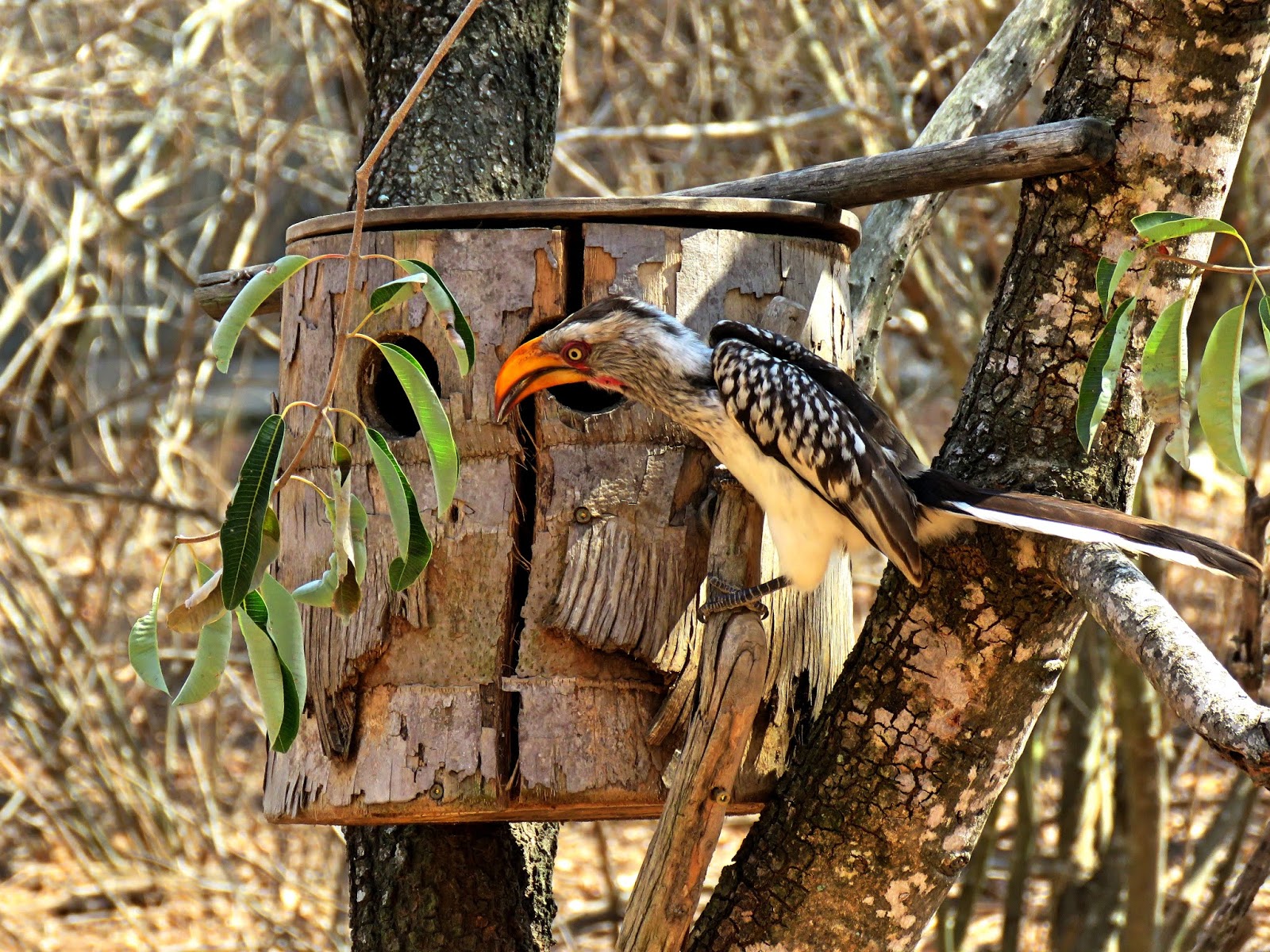
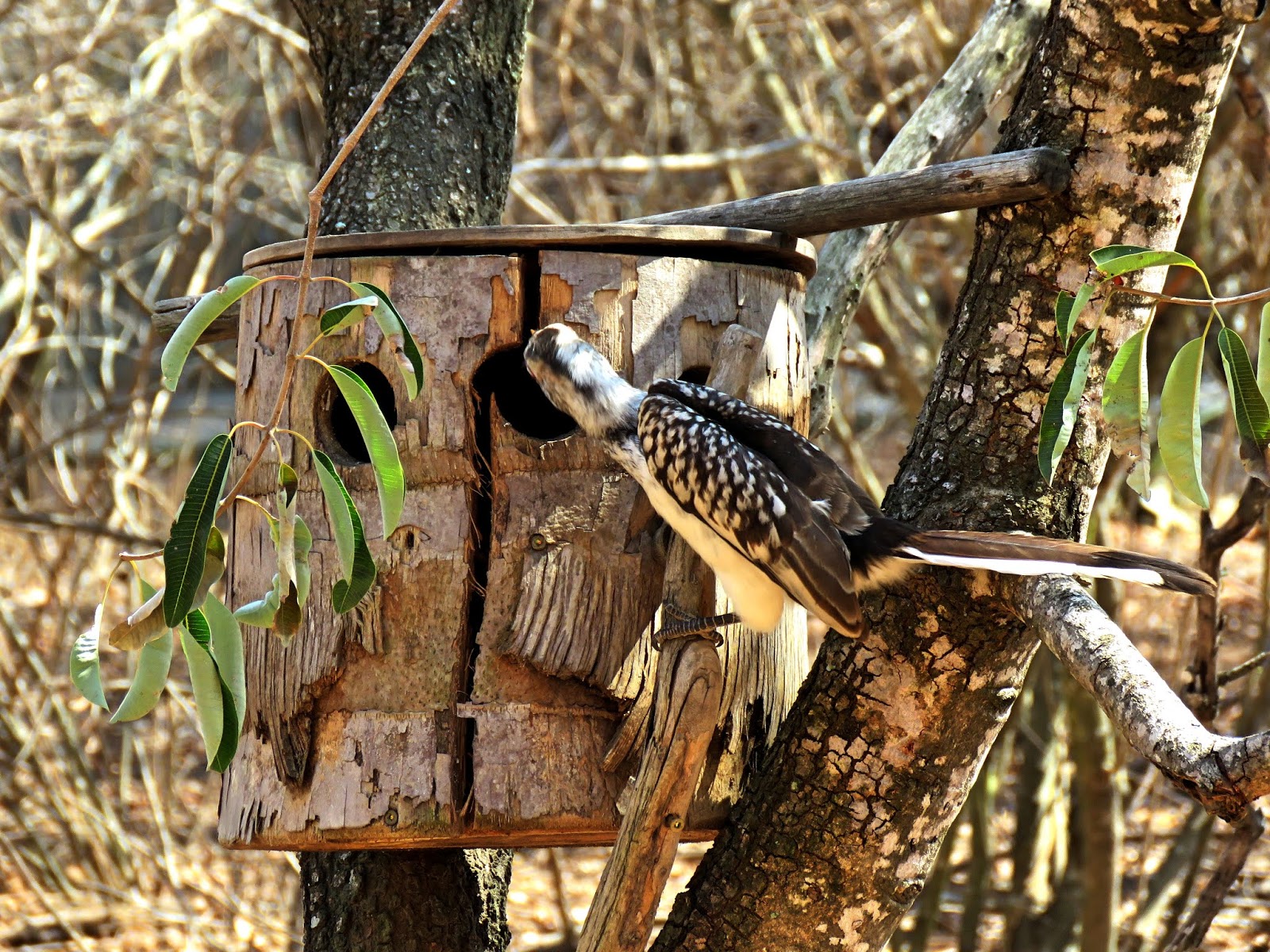
Over the past few days, we’ve observed this pair of hornbills taking seeds from our birdfeeder and placing them inside this unoccupied bushbaby house.  Could they be preparing a nest?

Please note for visitors and residents of Marloth Park: 

TODAY AT 2 PM
The Tin Shack Restaurant, Marlothi Shopping Centre

 
On Monday, when we embarked on our typical two-hour drive through Marloth Park in search of interesting and unusual sightings of wildlife, we stumbled across a very busy road, as mentioned in yesterday’s post

here.

 The young giraffe had no interest in the activities of the others.

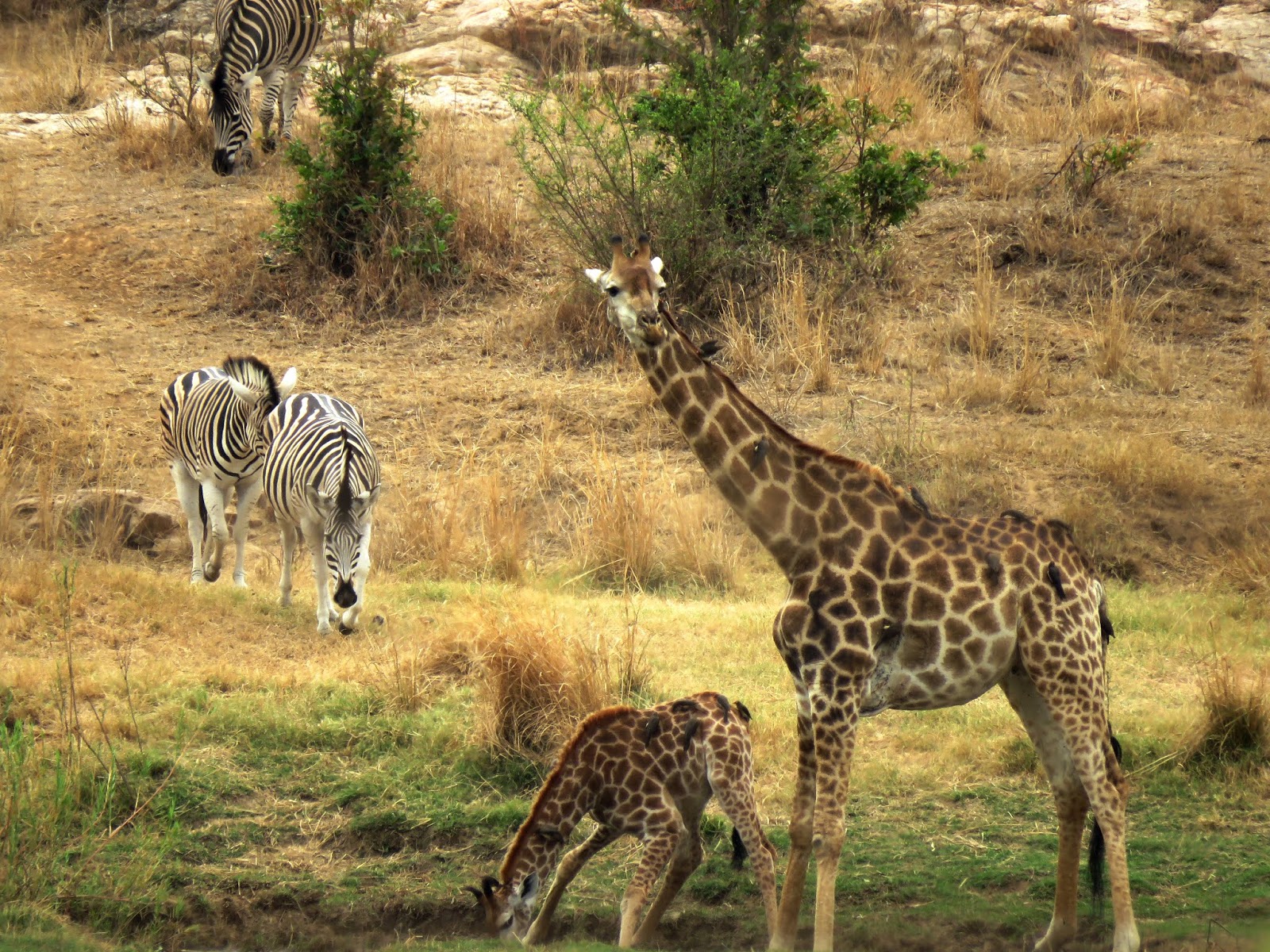
Not only did we see a dozen or more zebras on a mission we also spotted no less than a dozen giraffes, also seeming to have a task in mind as they stared down the road for quite some time.

The youngster scratching an itch.

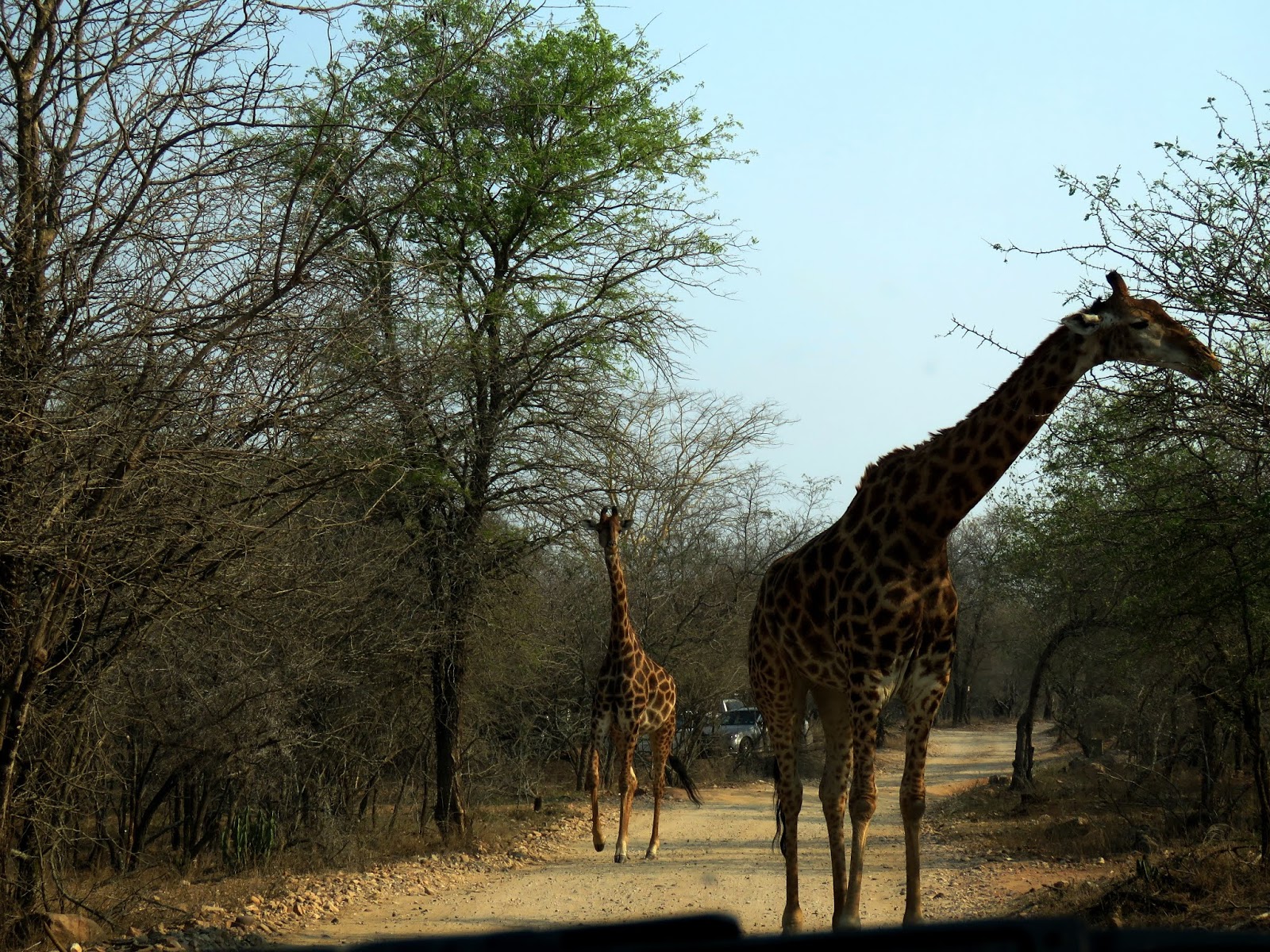
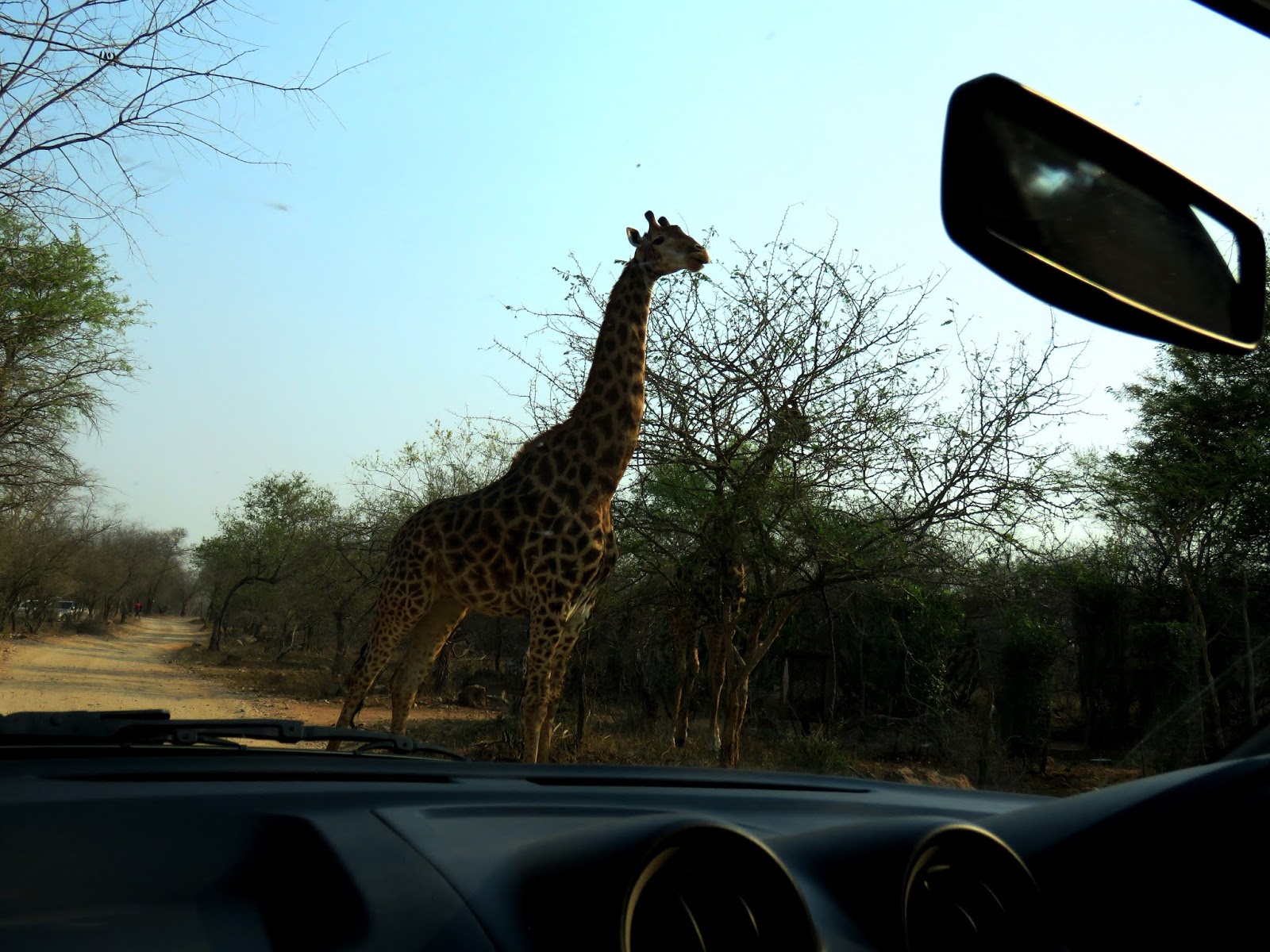
After watching the giraffes for 10 or 15 minutes, we decided to drive further down the dirt road to see if we could determine what they were looking for. As we drove several hundred meters toward the direction they were watching, we noticed another tower of giraffes heading their way.

The young giraffe didn’t seem to be interested in what the others were waiting for and busily munched on the leaves of a tree. 

From this long-distance, they were well aware of the approaching giraffe. Was this to be a happy meeting or some type of mating conflict we’d heard so much about. Giraffes, when fighting for dominance will engage in necking can cause serious injury or death to one another.

Watch this NatGeo video to see what we’re describing here. After watching this video, we weren’t disappointed to discover these two towers of giraffes were meeting for some other unknown reason, perhaps as a family reuniting after a period of separation.

The giraffes were intently staring down the road with some objective in mind.  

This was not unlike photos and a video we posted a few months of a mom and chick ostrich reunited with the dad who we spotted at a distance, walking proudly down the road toward his family. Once reunited, the baby and dad hung out in the bush together while the mom stood watch on the road. For that post, please click here.

When the two towers all came together, they didn’t congregate into one tight area. Instead, they seemed to acknowledge each other’s presence by entering each other’s space to begin grazing on what leaves were left on the trees in the area.

On occasion, he’d stop to see what was going on, including checking us out.  

Giraffes have no competition when grazing other than other giraffes. No other animals eat the leaves on the treetops than these magnificent tall creatures. But even for them, in the dry winter months with little rain, their food sources become sparse as it is for other wildlife.

Those to the right in this photo didn’t move a limb for a considerable period of time.

Unfortunately, those of us in Marloth Park during the dry season can’t feed the giraffes. They don’t bend to eat, only to drink and they certainly don’t eat pellets or vegetables from being hand-fed by humans. They are totally on their own.

We weren’t able to get photos of them altogether since they were scattered throughout the feeding source. We watched for quite a while and then we were on our way satisfied over the two great sightings.

Suddenly, they were on the move.

From there, we continued on to the river with more photos we’ll share in tomorrow’s post which is a travel day. Although the flight from Nelspruit to Livingston, Zambia is less than two hours, it takes about seven hours from the time we leave the house until we arrive at the hotel in Livingstone. (The drive from Marloth Park to the Nelspruit/Mpumalanga airport is a little over one hour).

As for tomorrow’s post, we hope to get it uploaded before our 11:35 am flight. If it doesn’t work out, we complete the post once we arrive at the hotel, making posting time approximately six or seven hours later than usual.

We turned off the little car’s engine to wait patiently while watching the two merged towers enjoy time together in the bush.

We look forward to sharing many exciting photos during the upcoming week from both Zambia and Botswana.

Enjoy the day!

Photo from one year ago today, August 15, 2017:

Check out those ears.  They certainly were flicking back and forth when we stopped to say “hola!” while in Atenas, Costa Rica. For more photos, please click here.

An outstanding drive in the park…They’re baaaack!!!!…Two days and counting…

Mom and baby love.

“Sighting of the Day in the Bush”

We continue to take nighttime photos of the bushbabies on the stand eating the little cups of yogurt to see how many we can capture. We counted seven here but not all of them is easily shown in the photo.

With few animals visiting since last Wednesday when the holidaymakers started arriving for the long weekend, yesterday we were determined to be able to take plenty of photos to share over the next few days until we get to Zambia and Botswana.

We had few expectations even commenting to one another that with all the commotion in Marloth Park we’d see few animals within the park but might have safari luck looking across the fence to the Crocodile River in Kruger.  How wrong we were!

There were no less than 12 zebras in the dazzle, many of which included youngsters.

Sure, we saw plenty of wildlife on the river but that’s always from such a distance that the photos don’t always come out as good as we’d like. We’ll share those photos over the next few days until we depart on Thursday for Zambia, after which we’ll have plenty of new photos to share on our activities in both Zambia and Botswana.

After driving for about 15 minutes and taking a series of ostrich photos, yes on Volstruis Road (which means ostrich in Afrikaans) and a few surrounding roads, Tom spotted some giraffes and zebras on a side street.

Baby zebras always seem a little dazed and confused, sticking close to their moms.

Today, we’re sharing the zebra photos, and tomorrow we’ll post the giraffe photos that include a story that was quite entertaining. Please check back for those photos.

As for the dazzle of zebras, we couldn’t have been more dazzled. In researching the definition of the word “dazzle” from Merriam Webster dictionary, we noted the following: 
a. To shine brightly;
b. To arouse admiration by an impressive display.  

They were on a mission.  We couldn’t tell what motivated them to stay on the move.

Hum…it’s no wonder a group of zebras is called a “dazzle.” They certainly arouse admiration by an impressive display! And that they did yesterday as we slowly drove up and down the road observing them on their apparent mission to an unknown destination.

We’ve noticed that when zebras come to call, they don’t stay long like many others. They eat their pellets, jockeying for position with one another for the closest advantage to the food, kick up their hooves a few times when being pushed out and then, are on their way.

The babies were able to keep up the pace.

Often warthogs, kudus, bushbucks, and others will lounge about the garden, some even laying down for a rest or a nap as we’ve shown in prior photos. But zebras? Nope, they move along. Perhaps with their larger weight than some others, they require more food.

From this site:“Males are slightly larger than the females, and they have a narrow black stripe running vertically between their hind legs. In females, this stripe is wider. Males grow to between 1.35 meters (53 inches) and 1.37 meters (54 inches) at the shoulder and their weight is between 290 kg (629 pounds) and 340 kg (750 pounds), while females weigh about 260 kg (573 pounds).”

They traveled in a long row making it impossible to take photos of the entire dazzle.

In any case, the sightings for the day were much more than we’d expected, and by the time we returned to the house, we were fulfilled and satisfied with the excellent day in the bush.

They stopped to drink from a cement pond.

However, once we set up the veranda for the evening, we didn’t expect many visitors. The holidaymakers were still leaving the park and sightings were sparse. We had a number of warthogs, one bushbuck, and one duiker stop by for a visit.

Stopping in the shade to cool off for a moment.

This morning, now that a day had passed, as usual, they started returning to see us.  At 6:30 am, we had several sounders of warthogs including “mom and five babies,” three bushbucks, “mom, baby, and friend,” no less than a dozen kudus including “Big Daddy and Little Daddy,” lots of guinea fowls, and unfortunately, way too many monkeys.  

Tom spent most of the morning chasing off the monkeys while I stayed busy preparing tonight’s dinner, doing laundry, packing a few more items, and sorting through zillions of photos for today’s post.

When it’s so much hotter in the summer months, we can only imagine how hot it is for wildlife especially when water is sparse.

At the moment we’re sitting indoors on the sofa while Josiah cleans the veranda (a daily necessity with all the blowing sand and leaves) while Martha is sweeping and washing the floors on the inside of the house (almost daily). We’re anxious to get back outside to see who may visit us today and tonight.  

They made their way through trees and vegetation in the gardens of homes along the way.

The pounding next door has stopped and for these next two days, we can relax and enjoy that which we’ve come to know and love…paradise in the bush.

Be well. Be happy.

Photo from one year ago today, August 14, 2017:

This is a variety of Bromeliad growing on the grounds of the villa in Costa Rica. For more photos of the exquisite landscaping, please click here.

Annoying noise and big concerns in the park…A little complaining on this end…Three days and counting to trip…

From this site:  “Zebras as very social animals and live in large groups called ‘harems.’ Plains and mountain zebras live in harems that are made up of one stallion and up to six mares, and they’re young, while Grevy’s zebras come together as groups for short periods of time.” The type of zebras in the South African savanna is Burchell’s Zebra [Equus burchelli].

“Sighting of the Day in the Bush”

Moms and babies…what a sight to see!

It’s been an unusual weekend. With few wildlife visitors stopping by due to the holidaymakers and the noisy construction next door, which occurred all day Saturday and Sunday, beginning again with hammering at 6:17 this morning, our days and nights were quite different than usual. 

The work continued each day until darkness fell that impacted our enjoyment of setting up for wildlife visits in the early evening. No one came to call.

Zebras can be pushy when it comes to getting their share of pellets and vegetables both with their harem mates and with us.

At a few points over these past days, the pounding was so annoying we went inside, shut the door, and watched a few episodes of shows on my computer. This is very unusual for us. We rarely watch anything other than the Minnesota Vikings game during daylight hours.

There are rules in Marloth Park as to which hours and days of the week construction can be in process.  Obviously, the neighbors had little regard for these rules. But, who are we to report them. We’re only renters.

This zebra started climbing up the veranda steps to let us know he was hungry.

We can only imagine the frustration tourists who’d come for a long weekend would feel if they’d come for a four or five-day stay and they had to put up with the noise and lack of wildlife visiting. People come to Marloth Park for the wildlife and a sense of peace.

Unfortunately, some homeowners and holiday renters aren’t respectful of the laws, spoiling it for everyone else.  Actually, we’re thrilled to be leaving in three days to head back to Livingstone, Zambia, and Chobe National Park in Botswana for a week.

It’s not unusual to see altercations among the zebras when they’re competing for food.

Hopefully, by the time we return on August 23rd, the construction will be completed, and the noisy and disrespectful holidaymakers will be gone. In the past several weeks, we’ve seen no less than a half dozen children driving 4×4’s and SUVs in the park, some as young as eight or nine years old, either sitting on the parent’s lap or some type of booster seat.

It’s no wonder 12 or 13 animals were killed on the roads over these past few school holiday months. Some people come here, not all, with little regard for laws and safety, many speeding on the roads with the potential to kill both animals and humans innocently walking or biking to their destinations.

The symmetry of their stripes is different on each zebra, such as in a fingerprint. From this site: “Body stripes are less numerous and broader than the Cape Mountain Zebra, whereas body stripes extend around the belly. Leg striping is less prominent. Measures 1.3 to 1.4 meters (51-55 inches) at the shoulder and weighs 300-320 kg (661-704 pounds). They have rounded ears approximately 160-170 mm (6.3-6.7 inches) long. The front portion of the mane forms a black tuft between the ears. Diet: Predominantly a grazer, feeding in areas with short grass. Zebra has a strong, sensitive upper lip with which it gathers herbage by collecting the grass between the lip and the lower incisors before plucking the harvest.”

A few weeks ago, we saw a lit cigarette being tossed from a moving vehicle.  We were aghast!  Marloth Park is all bush and this time of year extremely dry. The entire municipality could ignite in minutes from one single careless act.  

Plus, the invasive alien plants, of which there are many, brought in by homeowners desiring a “fancy” garden tend to burn higher and more intensely than the indigenous plants. This isn’t very comforting.

The type of giraffes found in South Africa from this site “Giraffe camelopardarlis giraffe – South African giraffe found in South Africa, southern Botswana, southern Zimbabwe, and Mozambique.”

As all of our readers know, it is not our intention to be “negative” in our posts. Still, we’re hoping both locals and visitors will stumble upon this post and realize how serious some of these infractions are to the safety and well-being of everyone in this magical place.

We apologize to our worldwide readers, far removed from this area, to be reading this bit of negativity. But, we do not doubt that there are similarly thoughtless people who upset the balance of peace and harmony in some of your neighborhoods, towns, and villages.

From this site: “Receptive cows are continuously courted by adult bulls. They have a gestation period of 457 days. Whereafter a single calf is born. At birth, a calf weighs about 100 kg (220 pounds), and they are weaned between six to eight months, but only about 52 percent of the calves ever reach maturity since the young are preyed upon by lions hyenas, and leopards. Sexual maturity is reached after four or five years. The reproductive receptiveness of cows is checked upon by adult bulls moving from group to group.” The calves are more likely to reach maturity for giraffes in Marloth Park since there are fewer predators in the park than in Kruger National Park.

I’m planning to pack today for our upcoming trip.  It always gives me peace of mind to be packed a few days earlier than necessary. We’ve found it’s harder to pack for short trips while living in a holiday home than it is for us to leave a location permanently.  In those cases, we pack everything we own.

For short trips, it’s a pick-and-choose process that takes more time and effort.  The last time we made this trip, I brought along 50% more than I needed. This time, I’ll cut back considerably, lightening the load.  

Ms. Kudu and a friend visited us a few weeks ago. Only one kudu came to call over the past many days.

Plus, we’ll be taking a “trip within a trip” when we stay overnight at the Chobe Safari Lodge midway through the week. During this one-night, two-day period, we’ll mostly be wearing our ‘bugs away” clothing, making those decisions a little easier.

Today, we’ll embark on our usual drive in Marloth Park since getting into Kruger is still almost impossible with the tourist crowds. We’ll wait to visit Kruger after we return from Zambia.

Have a spectacular day!

Photo from one year ago today, August 13, 2017:

View from the chaise lounges of the pool, the Jacuzzi to the left and beyond it, the cold plunge pool at the house in Atenas, Costa Rica. For more photos, please click here.

Reasonable prices in South Africa…What are we spending here?…All new photos from yesterday’s drive…

The ostrich on the left, who may be the dad, says to the ostrich on the right, which may be his son, “Dad, I appreciate the good advice.”

“Sighting of the Day in the Bush”

Baby elephant walking with mom, holding onto her tail for emotional security.

When we’d made a mistake in the date, we needed to leave South Africa for another visa stamp. This had an impact on our car rental by one day. Yesterday, we called the rental car company using the phone number on the documents to ask for a one-day extension.  

Although not visible in this photo, once again, we spotted the mom, dad, and seven chicks who were scattered in this home’s garden, close to the dad at a distance. Dad watched the chicks while mom stayed on the lookout for predators.
We were quoted only ZAR 225 (US $15.97) for the extra day, and we were pleasantly surprised. When we’d previously inquired about a one or two-day extension on a rental car contract in other countries, in most cases, the daily rate was an additional ZAR 705 (US $50) with little regard to the daily rate we were paying in the contract.  
Once again, we spotted ostriches on Vostruis Road (volstruis means ostrich in Afrikaans) next to this same vehicle where we’d seen them almost five years ago. Click this link here to see the post from December 7, 2013.  Funny, eh?

Although we’d never actually used an extension in this past almost six years, we didn’t hesitate to accept the above rate offered by Hertz (via their booking service Firefly).  

A casual stroll down Volstruis Road on a Saturday afternoon.

We’ve found many costs to be reasonable in South Africa, lower-priced than in many other countries, which were one of the many reasons we decided to spend a year in Marloth Park. We’ve been here six months with six months to go when we’re leaving as of yesterday.

The only area we found to be a little higher than in some countries is the cost of groceries, based on the types of foods we eat, high-quality meats and vegetables. Tom continues to eat some dairy while I gave it up a few months ago. Quality imported cheeses are expensive here.

Recently, we’ve seen elephants at the river every time we’ve gone for a drive as we carefully peruse the long span of the river from Marloth Park.

We’ve been shocked at the low prices on Tom’s brandy at ZAR 120 (US $8.52) per liter and my low-alcohol red wine priced at the grocery store at ZAR 49.99 (US $3.55) per bottle, the going rate for most bottles of wine. A similar wine in the US would easily be ZAR 169 (the US $12).  

This male elephant looks skinny and somewhat unhealthy.  Life is not easy for these majestic beasts when they are off their own, ostracized from the family structure. Male elephants spend their formative years with the herd leaving at around age 13 to 14 when puberty sets in. The male elephant will roam the savanna alone or team up with other males in a loose bachelor herd.

Dining out is inexpensive. We’ve paid the most at any local restaurant, ordering any main dish, drinks, and tips, ZAR 500 (US $35.49). Our dinner bill at Jabula is often around ZAR 450 (US $31.94), with drinks, tips, and taxes included.

This female was surrounded by her parade of perhaps 50 others.

So far, during these first six months, including holiday home rental, car rental, groceries, dining out, trips to Kruger, and miscellaneous shopping, our monthly living expenses are slightly under ZAR 56,340 (US $4,000), considerably less than in other countries.

Even with the requirement of us leaving every three months for visa purposes and the cost of flights, activities, tours, hotel, taxi, food, and tips, it adds an average additional monthly cost of ZAR 14,090 (US $1,000), still leaving us at an average of ZAR 70,450 (US $5,000) per month.

I am at a loss as to the black band around this elephant.  Any ideas out there?

We’ll be posting the actual expenses at the end of our 12-month stay in South Africa.  Daily, we keep track of every expense, making it relatively easy to compile the data to post here.

As I write today’s post, Tom is watching the Minnesota Vikings’ first pre-season football game using NFL Game Pass, which he signed up for yet another year.  

Another lone elephant.

After last year’s excitement when the Vikings made it to the playoffs, finally, after all these years, I’ve developed an interest in watching football. So I’m looking forward to the new season along with Tom.

Currently, he plugged the HDMI cord into the hi-def flat-screen TV, and we’re watching with the clearest picture possible. See, even living halfway around the world we can enjoy some familiar activities enjoyed by others in many parts of the world.

We always swoon when we see the youngsters.

Still, animal visits are at a minimum with construction next door and the added tourist traffic during this holiday weekend. We didn’t have one visitor all day yesterday until last night when Little Wart Face showed up with Mr. Duiker. We were thrilled to see them and promptly tossed large handfuls of pellets.

Today, a tasty Sunday dinner is on the menu and dining outdoors on the veranda, a must. Hopefully, as some tourists head back to their homes today, the traffic will thin out, and more wildlife visitors will arrive.

Yesterday, we heard that the Crocodile Gate to Kruger was closed to anyone that didn’t have a reservation. Only so many cars are allowed into the park at any time if that’s any indication of how busy it is here.

May your day be rich in experience and fulfilling in love.

Photo from one year ago today, August 12, 2017:

Sunset from the veranda in Costa Rica was always stunning. For more photos, please click here.

In an attempt to avoid “tooting one’s horn”…Kindness means so much…

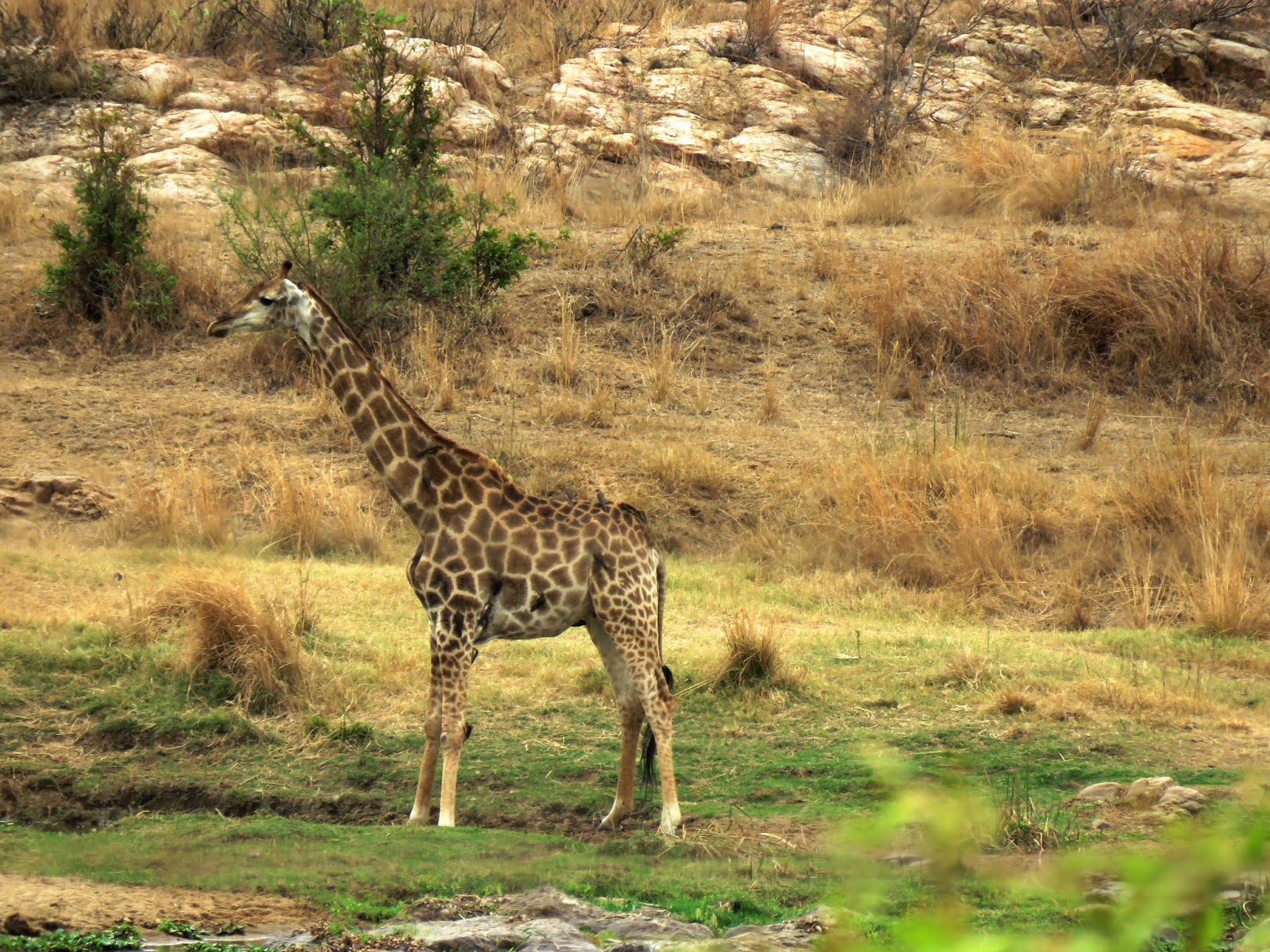
A lone giraffe in the bush.

“Sighting of the Day in the Bush”

A croc was making an appearance in the river.  From this site: “Crocodiles can submerge and remain underwater for a variety of reasons. In most voluntary dives, crocodiles stay underwater for between 10 to 15 minutes. If the crocodile tries to hide from a threat, dive length may be longer, up to 30 minutes or more. Most crocodiles can remain underwater for up to 2 hours if pressed.”

Our world travels aren’t always about “us.” As we meet and engage with the locals, we often find opportunities to “do good works” for those in need. It isn’t always about handing over money, although when circumstances are correct, we do.  

At times, it’s about doing something special for an individual and their family. At other times, it’s about generosity and kindness in varying forms and degrees. We choose not to write about these occasions. Doing so would merely be in an attempt to gain recognition or accolades for “doing good works.”

What a lovely scene on the Crocodile River, as seen from Marloth Park.

When wealthy celebrities donate money to various situations and causes, there are many forms of media covering the exchange to make the donor “look good” and enhance their public image.  

No doubt, it’s done with good intentions to provide funds and foundations for many causes, disaster relief, and poverty. But, strip away the ability to do it anonymously, and one wonders among them would still contribute.

This elephant climbed the big rocks for a better view.

But, for the “small folks” like us with limited resources and a fixed income, we don’t have the luxury of donating the more significant share of our income. We give as we can when circumstances are right.

Long ago, when we encountered such situations that felt right for us, we decided we had no need or desire to write about them here in an attempt to “toot our own horn” or “make us look good.”  

Crossing the shallow river…

In our hearts and minds, we are at peace with the fact that our travels are not entirely about our pleasure and enrichment. It’s about somehow, in some way, giving back something of ourselves that matters to someone we meet along the way. That’s all we need.

Gee, I don’t want to sound like we’re looking for accolades for our philosophy.  We’re not. We’re mentioning this as a preface to a bit of story we’re sharing today that didn’t include generosity on our part but was merely a matter of circumstance, perhaps somewhat serendipitously, more than anything.

The Crocodile River views vary depending on the banks from which we’re shooting photos. The amount of water varies from day today.

When the screen on my still-working cellphone cracked, which wasn’t noticeable when used in a darkened room, and I’d run out of storage space with too many apps, we decided I’d get a new phone that we shared yesterday’s post here.

We decided we’d drop off the old phone at an electronics recycle facility once we reset the phone to delete all of my content. This is what we usually do with obsolete digital equipment in most countries. But, it was a shame to get rid of an otherwise well-operating smartphone.

This elephant appears almost black after being in the water.

We decided we’d ask Martha, our housekeeper, if she could use the phone after I wiped out all my data. Keeping in mind she doesn’t speak English very well, when we showed her the phone asking if she likes it, her response was priceless. She enthusiastically hugged us both. What a coincidence! Her old phone had stopped working for calling.

Martha has a large family, and being unable to stay in touch was hard for her, as one would imagine. She lives in a tiny house on the grounds of this house and visits family on her days off. She doesn’t do Facebook, email, or any other forms of social media. She likes to make calls and play games. This we could accomplish for her.

These orange blooms on aloe bushes are commonly seen during the winter months in the bush.

We all giggled over the irony of me buying a new phone and needing to dispose of an old phone, which ultimately meant so much to her.  We didn’t do anything special other than avoiding a trip to a recycling store. It only took moments of our time to set it up for her, certainly less than we’d have spent driving to a recycling facility.

The quality of our lives is often about the little kindnesses we receive, ultimately striving to pay it forward. Kindnesses include dining at Uschi and Evan’s fabulous home in the bush last night with Evan’s mom Ester joining us,  a delicious meal perfect for my way of eating with some of the best conversations in the land.

Recently on a scorching day, we spotted dozens of elephants by the river.

Kindness means Louise and Danie were bringing us knives, a cutting board, and a food processor, and many more endless generosities they provide day after day. Kindness means the workers who came to our house to help when Martha was away, graciously greeted us each day, and did a fine job fulfilling our expectations. 

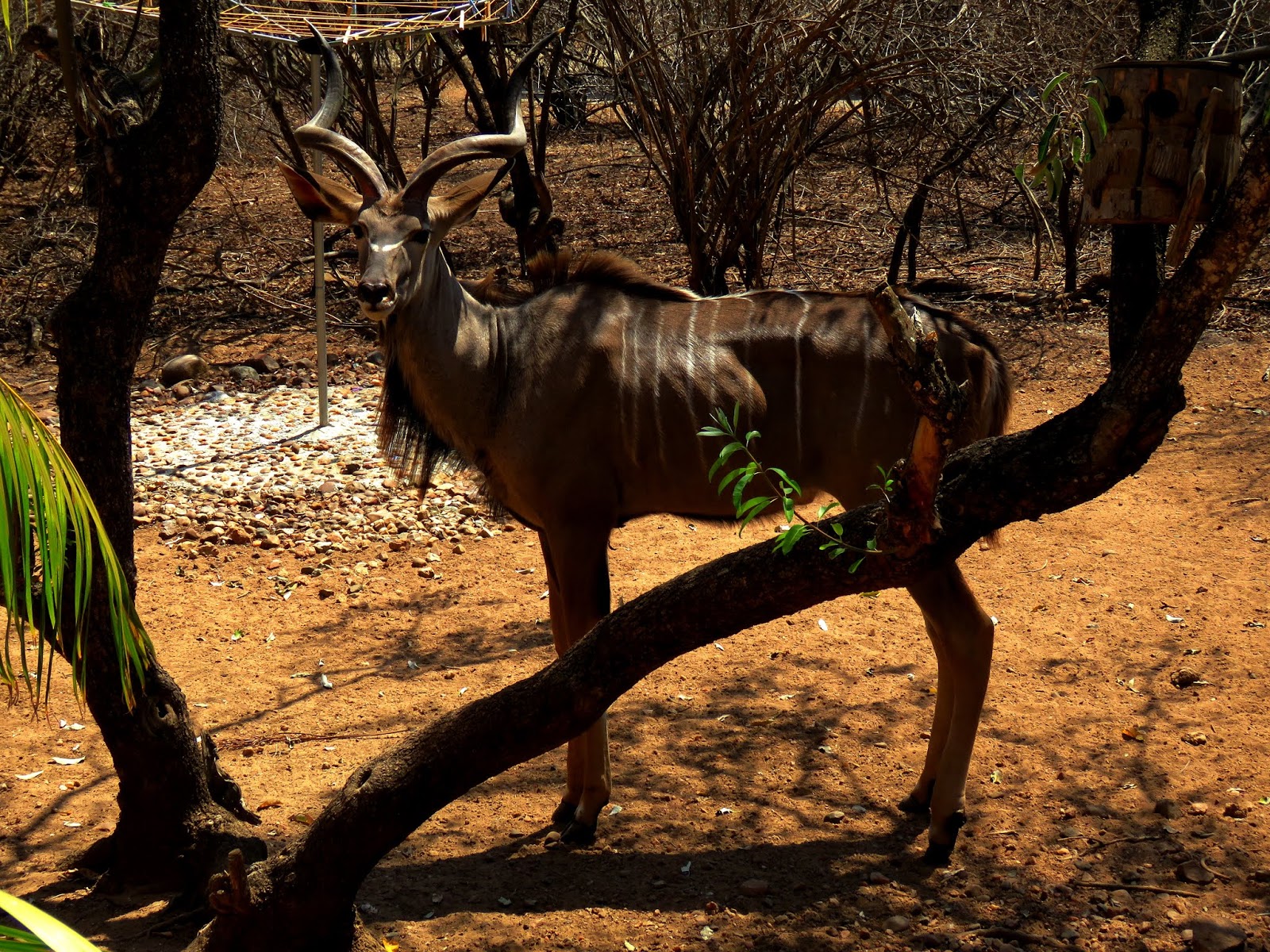
A Big Daddy (kudu) crossing the road in Marloth Park.

Kindness means our beautiful friends in Marloth Park, including Kathy and Don (and many more) who introduced us to their friends who have included us in their lives, inviting us to their homes and social events, always making us feel welcomed and special.

It goes on and on, and we are grateful for every gesture, big and small, that we are gifted with day after day and for the opportunity to bestow kindness in return.

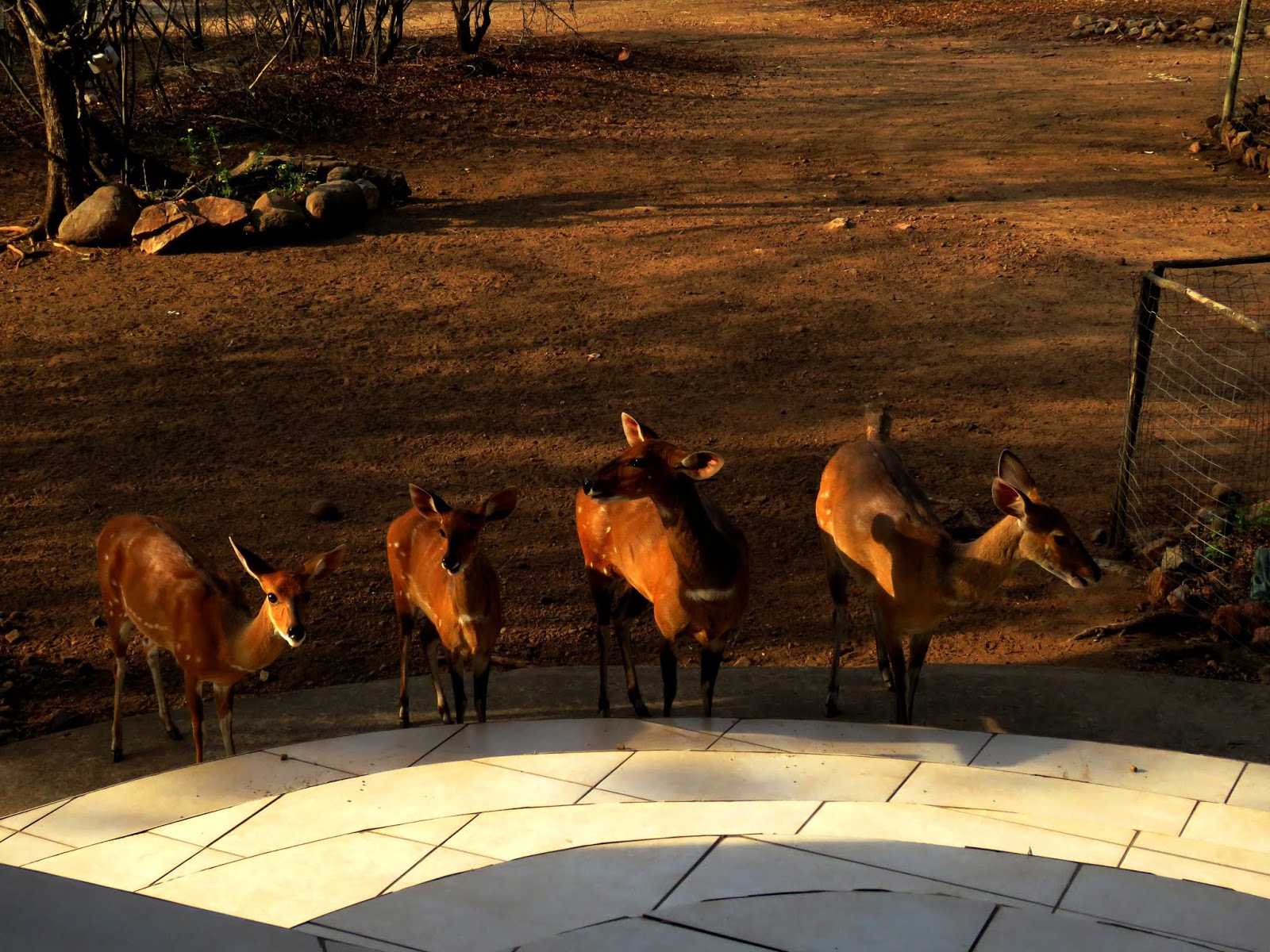
One of our favorites, Mom and Baby Bushbuck. We place their pellets on the bottom step to keep guinea fowls away.

As for kindness, we want to thank all of our readers for their thoughtful email messages, for continuing to “travel” on this journey with us, making every day more precious and meaningful.

May kindness come your way today and always!

Photo from one year ago today, August 11, 2017:

In the villa in Atenas, Costa Rica, the end of the kitchen island with the sinks had a stepped-down countertop with a shorter barstool. This spot was ideal for sitting and chopping, and dicing. For more photos, please click here.

Rain, at long last…Few visitors last night…Today is Women’s Day in South Africa, a national holiday…

Wildebeest Willie is drinking from the cement pond.

“Sighting of the Day in the Bush”

It’s a little bit challenging finding a comfortable position when you have razor-sharp tusks!

Miraculously, last night it rained and continues to drizzle throughout the day. It’s cold again, today as low as 13C (55F), and after the scorching day recently, this feels very cold. Thank goodness for the outdoor heat lamp that enabled us to stay outdoors last night and will again tonight. It makes all the difference in the world.

As for last night’s visitors, we were pleasantly surprised when no less than eight warthogs, some we didn’t know, stopped by to say hello and check out the pellet situation. It was pretty good, they observed.

View of the Crocodile River from the overlook.

A short while later, several bushbucks and two duikers, female and male, all of whom we do know, appeared, anxious to get in on the action. It was easy for us to help them participate. 

We got up to feed them several times during dinner, leaving our dinners to get cold. This is such a common practice. We no longer mind a bit. Now, chilled to the bone, we’re still sitting outdoors while the drizzle continues hoping to see more and more vegetation turn green for the wildlife. It’s a happy occasion in the park today.

Three little pigs…not so little…Mom and babies eating pellets at the bottom of the steps, intended for Ms. Bushbuck.

We thought it is important to mention that instead of frequently apologizing for late postings, in the future, please plan to see a post between the usual posting time and five hours later. We’re so busy here in Marloth Park. We often head out on mornings to shop, go to Kruger, or head out on a drive, especially when we see notices posted on Facebook on unusual sightings.

As much as it seems we may have idle time, we’re swamped each day with only a few idle hours in the late afternoon. I’m sure this is the case with many retirees. How did we ever manage to have a “regular” job and get anything done?  

Croc lounging on the bank of the Crocodile River.

We’ve often heard retirees make such comments as “I’m busier now than when I worked.” I suppose it’s no different for us when each day we strive to engage in more fodder for the next day’s stories and photos, have a social life, cook most of our meals while spending the bulk of each day interacting and observing wildlife.

Tom says, “Being retired, I get up every day with nothing to do, and by noon, I’m three hours behind.” Hahaha, so true.

Three zebra butts.

Add the fact we spend at least three to four hours each day preparing a post, proofreading, taking and managing photos, and coordinating photo ops for future posts. It’s surprising to us that we have any time at all left for frivolity. But, we make sure we do.

So, for now, we’re back from shopping for the next week until we depart for Zambia and Botswana next Thursday. We’ve eaten almost everything in the big freezer except for two boxes of fish we recently purchased from the traveling “fish guy.”  

Little Wart Face often naps in our garden.  He’s so at home here.

If the power goes out for an extended period while we’re gone, Lousie and Danie will rescue the fish and other frozen items in the fridge’s freezer and put it all on ice.No worries.

Today, when we drove to Komatipoort to shop, we noticed the pharmacy was closed at 10:00 am. While at the Vodacom store purchasing my new phone (more on that tomorrow), the sales staff stated that due to Women’s Day in South Africa as a national holiday, the pharmacy would open for only one hour. How weird was that?

Vervet monkey on a rock on the bank of the river.

For details on this holiday, see below from this link:

National Women’s Day
National Women's Day.jpg
Women in Lesotho at a National Women’s Day protest against violence against women at the National University of Lesotho
Observed by Republic of South Africa
Date 9 August
First time 9 August 1995

“National Women’s Day is a South African public holiday celebrated annually on 9 August. The day commemorates the 1956 march of approximately 20,000 women to the Union Buildings in Pretoria to petition against the country’s pass laws that required South Africans defined as “black” under The Population Registration Act to carry an internal passport, known as a pass, that served to maintain population segregation, control urbanization, and manages migrant labor during the apartheid era.

The first National Women’s Day was celebrated on 9 August 1994. On 9 August 1956, more than 20,000 South African women of all races staged a march on the Union Buildings against the proposed amendments to the Urban Areas Act of 1950, commonly referred to as the “pass laws.” In 2006, a reenactment of the march was staged for its 50th anniversary, with many of the 1956 march veterans.

The march was led by Lilian Ngoyi, Helen Joseph, Rahima Moosa, and Sophia Williams. Other participants included Frances Baard, a statue unveiled by Northern Cape Premier Hazel Jenkins in Kimberley (Frances Baard District Municipality) on National Women’s Day 2009. The women left 14,000 petitions at the office doors of prime minister J.G. Strijdom.

The women stood silently for 30 minutes and then started singing a protest song composed in honor of the occasion: Wathint’Abafazi Wathint’imbokodo! (Now you have touched the women, you have struck a rock.). In the years since, the phrase (or its latest incarnation: “you strike a woman, you strike a rock”) has come to represent women’s courage and strength in South Africa.”

Moms and babies.

What an important day for South African women! We wish the very best for every woman as they are reminded of this critical period in time to celebrate together.

We’d heard about this important day of celebration but had no idea some stores would be closed or open for only short spans of time. After keeping an eye out, we managed to get into the store during the one-hour-open period and purchase a few toiletries for our upcoming trip.

Five waterbucks and lots of elephants near the river.

Tomorrow, we’ll be back with photos from Tom’s new haircut and the story of purchasing a new smartphone in South Africa, where there certainly are a few differences from buying in the US.

Have a spectacular day!

Photo from one year ago today, August 9, 2017:

The view of the main pool from the master bedroom in the villa in Costa Rica. These sliding doors and others on an adjacent wall open wide with fine screens to keep out insects. It was such a treat for us to have screens! For more photos, please click here.

Bird lover’s paradise…Animal lover’s paradise…

This morning’s four hornbills love our birdfeeder.

“Sightings of the Day in the Bush”

A typical day at “home,” drying a little laundry in the sun, and a zebra stops by.

We can hardly describe ourselves as expert bird watchers. But as enthusiastic animal watchers, birds certainly provide us with considerable entertainment, as witnessed in many of our posts over the years.

Whether it was hand-feeding kookaburras in Fairlight Australia, setting out seeds for our all-time favorite singing red cardinal in Hawaii, or observing the nesting and hatching of albatross chicks in Kauai, we never failed to take the time to watch and enjoy our feathered friends.
Laughing doves are frequent visitors to our feeder.

Here in Marloth Park, we can enjoy a wide array of birds in our garden or when out on frequent drives through the park or during any foray to Kruger National Park for the day.

Louise recently loaned us a bird book for common South Africa’s birds arranged by color, but I continue to struggle to find the names of birds we’ve seen in the garden and when out.  

This is a streaky-headed seedeater, aptly named, who loves the birdfeeder.

I partly blame myself for becoming frustrated when I don’t correctly pin down the bird’s features efficiently enough to find the photo in the book. At that point, I’ll look online and then, as a last resort, pester our bird-enthusiast friends Lynne and Mick, who live in the UK and part-time in Marloth Park, and friend Louise in Kauai, Hawaii.

When they go to Kruger, they’re searching for birds while reveling in spotting other wildlife. For us, it’s the other way around. We’re looking for other wildlife and happen to come across birds in the process.

Ostriches tend to hang around a specific territory in Marloth Park.  We’ve yet to have any in our garden this time.  However, when we were here in 2013, we had an enthusiastic visitor. To see those photos, please click here.

I suppose it’s a matter of personal preference. Also, it’s not as if one can’t be enthusiastic and expert in both areas. For us, it’s a matter of where our attention is focused at any given time, and although we aren’t experts in either aspect of wildlife viewing, we quickly can wrap our minds around appreciating both.

In other words, it revolves around the lyrics from the old song, “Love the One You’re With,” which I guess applies to many areas of life, including wherever we happen to be at any given moment, loving the one you’re with, the place we’re living at the time, the scenery we’re embracing, and the wildlife we’re incorporating into our daily lives.

Early morning dewdrops on the back of the head of a helmeted guinea fowl, permanent residents in our garden.  Typically, dozens of these birds hovering in the bush, waiting for us to toss pellets to other animals.  They peck at the pellets to break them up into bite-sized pieces.

Perhaps, that’s what travel is all about, getting outside your comfort zone, seeking the unusual, the new, the unique, and the enchanting to expand one’s horizons and furthers our personal growth.

The difference for our way of life, essentially as homeless drifters, nomads, or wanderers, we’re always seeking to learn and grow through our surroundings, whether it’s rich with birds or other wildlife or exquisite scenery and vegetation.

On any given day, there may be as many as 60 of these turkey-like birds hanging out in our garden. They wait underneath the birdfeeder for other birds to drop seeds while they eat.

The world is a magical place, filled with rife, worry, war, and disharmony. One day it could all be gone. We can only pray and play whatever role possible in striving to keep our exquisite surroundings intact. 

Photo from one year ago today, August 7, 2017:

Early morning view of low-lying clouds in Atenas, Costa Rica.  For more photos, please click here.