Coincidences…Hilarious video interaction…Harrowing visit to Lionspruit game reserve…Busy weekend ahead…

For a good chuckle, watch this video.  At about halfway through
you see a funny interaction with this warthog and mongoose.
 
“Sighting of the Day in the Bush”
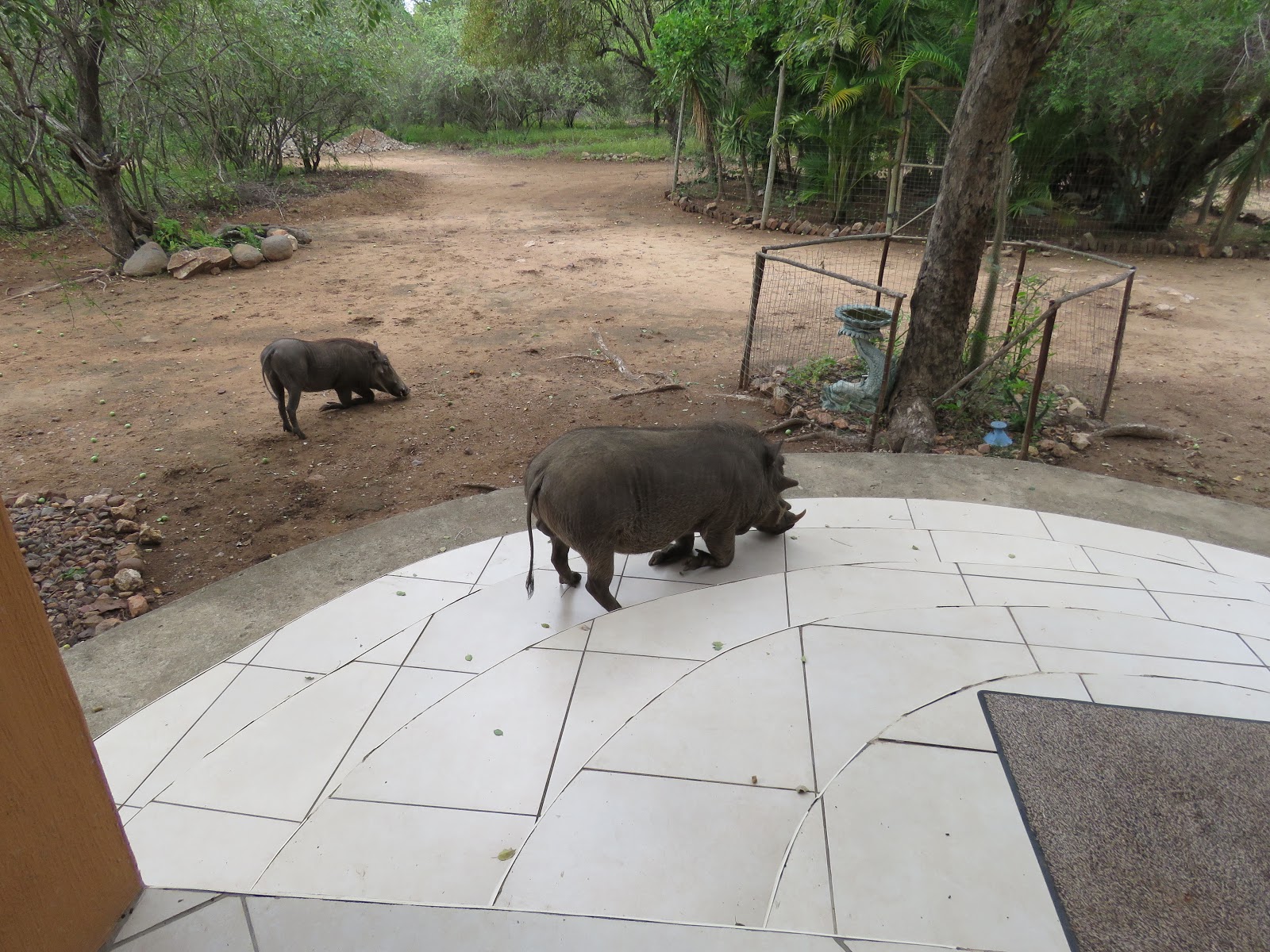
These tusks on this female warthog that visited with babies are the largest we’ve seen since our arrival.
Upon entering Lionspruit, we had to sign a waiver stating, “Entering at our own risk.
Our lives are filled with coincidences, dates, people, and things. As we look back at the year-ago posts, we’re always amazed how often we encounter patterns of dates and events. I suppose with the diversity of our experiences. This can happen.

Today is February 23rd which brought to mind the coincidence of the 23rd of the prior several months. For example, on November 23rd, we embarked on the 30-night South America cruise. On December 23rd, Tom’s birthday, the cruise disembarked in Buenos Aires, where we stayed for 31 nights. Then, on January 23rd, we flew from Buenos Aires to Ushuaia, Argentina, and embarked on the cruise to Antarctica. These are pretty coincidental dates filled with considerable adventure.

Today, we’ve posted a video you must watch if you’d like a chuckle. About halfway through (watch carefully), you’ll see interaction with a warthog and mongoose that we watched over and over again, laughing each time.

This sign, written in both Afrikaans and English, warns visitors about entering.  We had no intentions of getting out of the vehicle at any time.

While filming the video, we had no idea this happened. It wasn’t until we watched the video after uploading it to YouTube we realized this funny split-second-long event.

Yesterday morning Louise and Danie stopped by to leave a “cool box” (cooler) with us and a pass to get into Lionspruit Nature Reserve, contained within sprawling Marloth Park.

With very few visitors, it’s a long day for the guard that manages the gate.

With social events tonight and tomorrow night where we bring our beverages, it was thoughtful of them to loan us a cool box for our lengthy stay at “Orange…More Than Just a Color,” the name of this lovely home in the bush. 

Although the house is well-equipped, Louise has rousted up some additional items I needed; sharp knives, measuring spoons and cups (most tourists don’t cook much), mixing bowls, and other odds and ends.  Now, we have everything we need.

There were numerous impalas beyond the entrance gate, but we didn’t see much as we traveled on the dirt road.

As for the pass to Lionspruit…last time we were here, four years ago, we’d considered visiting this small (compared to Kruger National Park) wildlife reserve, but for some reason, we never got around to it. When Louise and Danie offered the pass, we decided to go.

Image result for map lionspruit
Map of Marloth Park and Lionspruit Nature Reserve.

Here’s a map of Lionspruit, located within Marloth Park. Lionspruit is 1500 hectares, equivalent to 3707 acres, or 5.8 square miles. In comparison, Marloth Park is 3000 hectares, equal to 7413 acres, or 11.6 miles.

We’d heard the roads inside Lionspruit were uneven with lots of rocks and potholes but thought we should finally give it a try. If we didn’t find it navigable, we’d turn around and leave.  Not so simple. 

Most of the roads are one-way. It proved to be like a maze, and although we were never lost, we found ourselves in a quagmire of never-ending mud holes, water holes (not knowing how deep they were), and rocky pits and ruts from rain and erosion.

As it turned out, this reserve is not the place for a regular, especially tiny car with small tires, like our rental. Indeed, a four-wheel drive would have been more appropriate.

The dirt road didn’t look bad when we started, but everything changed 10 minutes into it.  It had rained quite a bit lately. We probably should have waited for a drier spell to enter Lionspruit.

Once we got going, there was no turning back. At several points, we certainly anticipated getting stuck in the mud or ruts and having to call for help. Luckily, I’d brought my phone with the number for Field Security in the park that will come to the rescue in an emergency. We hoped “safari luck” would prevail and we’d see a lion but instead, “safari luck” saved us from getting stuck.

There are only two known lions in Lionspruit, but we could have done a number on ourselves, anticipating being stuck and spending the night in there or in attempting to walk back to the single entrance.  Oh, good grief. This could have been quite the story for an episode of 48 Hours, Dateline, or other such sensationalized TV programs in the US.

Luckily, we both stayed calm, even when we approached the scary huge water holes in the narrow dirt and rock road. Although we both were running the possibility of getting stuck in our minds, we avoided mentioning our concerns to one another.

“The southern yellow-billed hornbill (Tockus leucomelas) is a hornbill found in southern Africa. This hornbill species is a widespread resident of dry thornveld and broad-leafed woodlands. Yellow-billed hornbills feed mainly on the ground, forage for seeds, small insects, spiders, and scorpions. They can often be seen along roads and watercourses.”

Tom, a highly competent driver, was a little hesitant at times but maneuvered our way through some of the most challenging roads we’ve navigated in our travels. Each time he made it through another frightening patch, we both sighed in relief.

It was so tense. I failed to take photos of the water and mud holes, which I wished I had done now that it’s over. Just picture a water hole of unknown depth covering an entire dirt roadway…we made our way through many of these.

More impalas tucked away in the bush.

With a manual transmission, Tom used first gear during most of the entire long drive. It took us two hours to return to the entrance gate, after which we returned the plastic-encased map to the guard joyfully waving goodbye.

We never spotted either of the two lions in Lionspruit, nor did we see much wildlife, other than a few, as shown here today. We see more wildlife sitting at the big table on the veranda than we did there. 

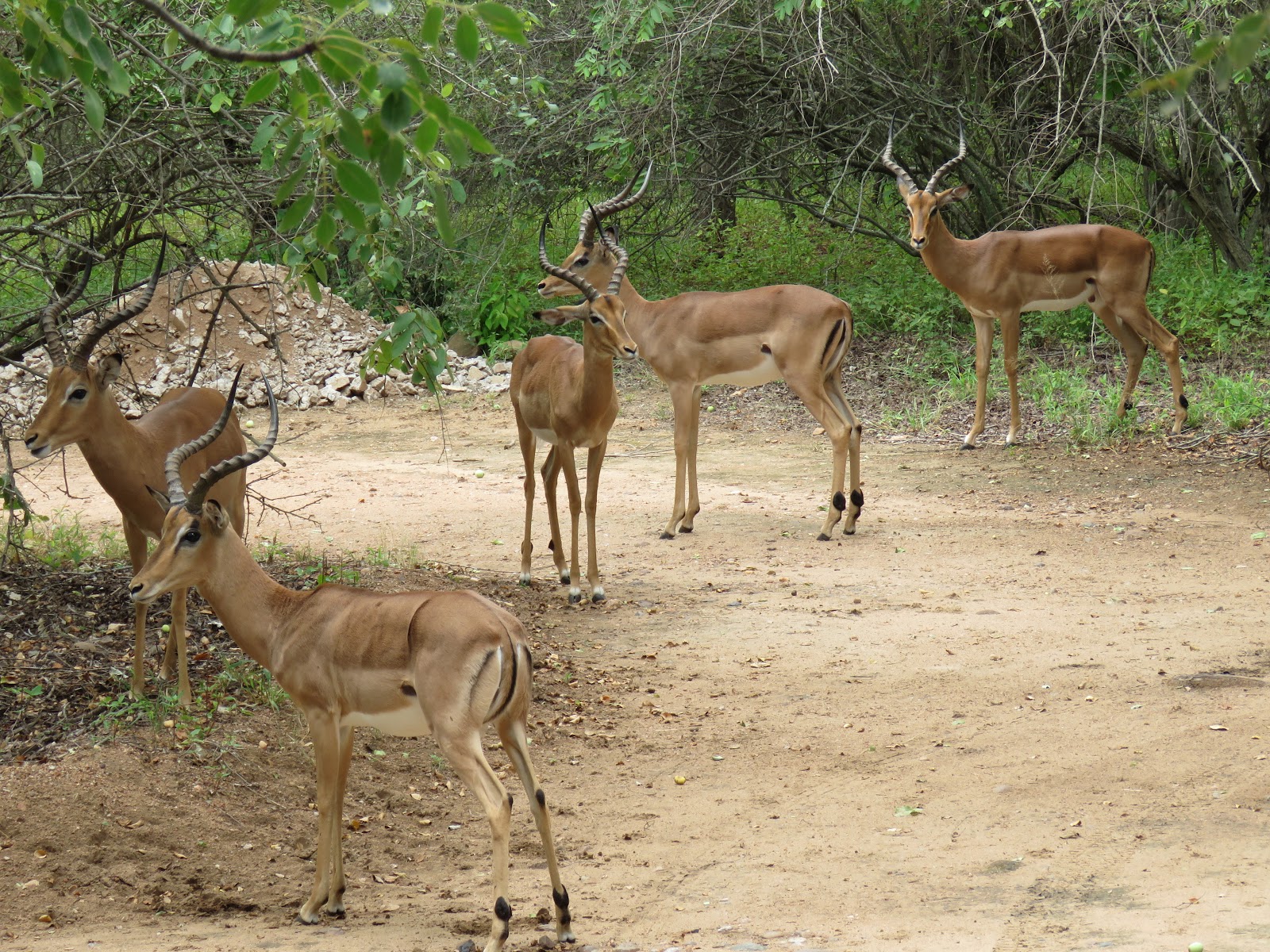
Impalas are shy and tend to back off from humans.  Plus, they are huge targets for lions, leopards, and hyenas, so they’re always on the lookout.

Next week, we’re heading to Kruger National Park (25 minutes to the Crocodile Bridge entrance) on a self-drive on their easy-to-manage paved roads.  In comparison, Kruger is over 2,000,000 hectares, 4,942,108 acres, and 7,722 square miles. Having visited Kruger many times during our last stay, we’re looking forward to returning.

There are many hornbills in this area.

Tonight at 6:00 pm, we’re off to a musical party at friends Kathy and Don’s home here in Marloth, where Don and Ken (of Linda and Ken) have a performance planned, followed by food, drinks, and most certainly more lively chatter. 

What a fabulous social week for us with more excitement upcoming tomorrow night, which we’ll write about tomorrow. 

Have a blissful weekend, whatever you may do!

Photo from one year ago today, February 23, 2017:

Caravans parking in Franklin, Tasmania for summer activities in the Huon Valley. For more photos, please click here.

Herbivores, omnivores and carnivores…More apparent in the wild…Lions in Marloth Park…

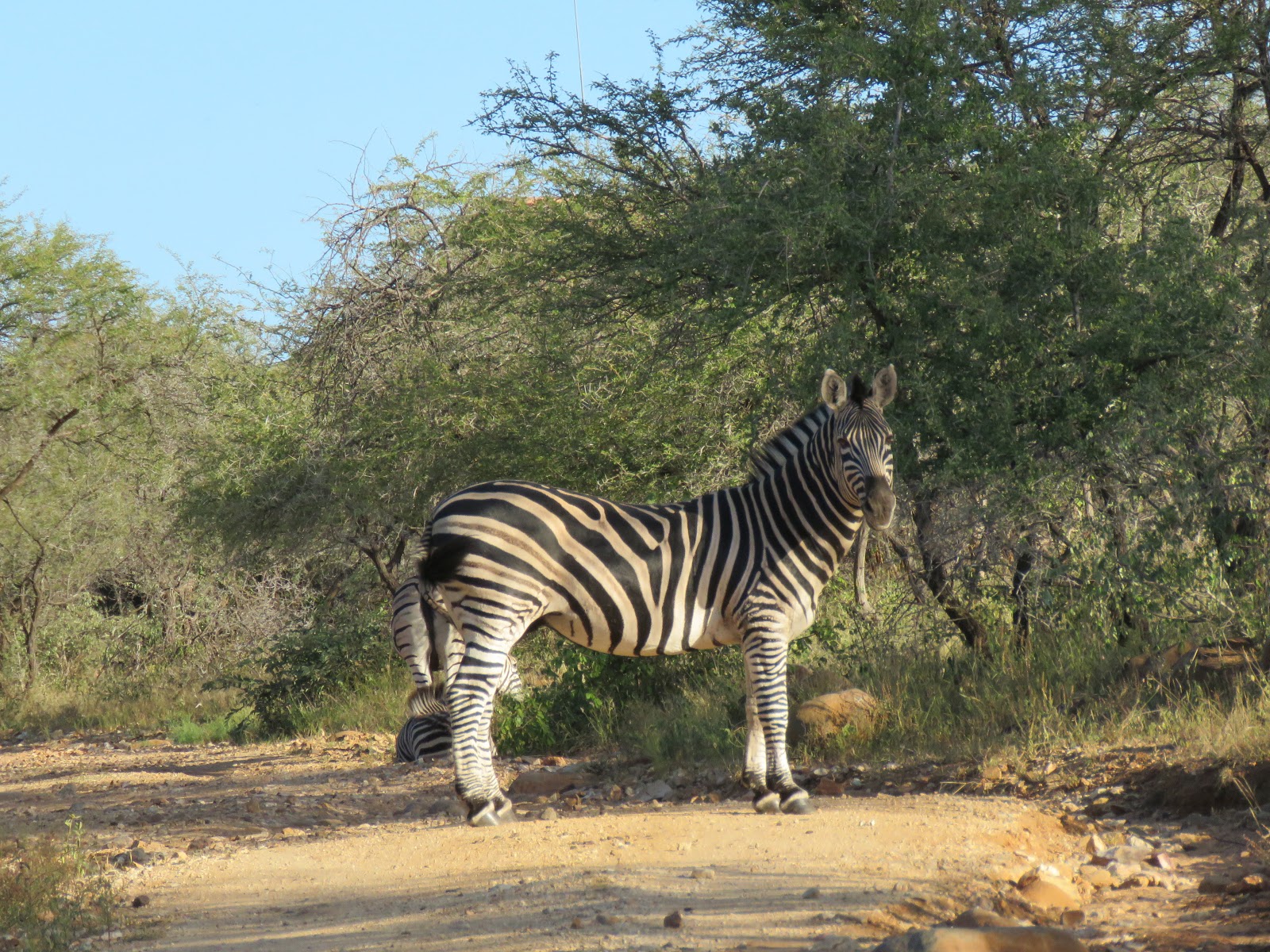
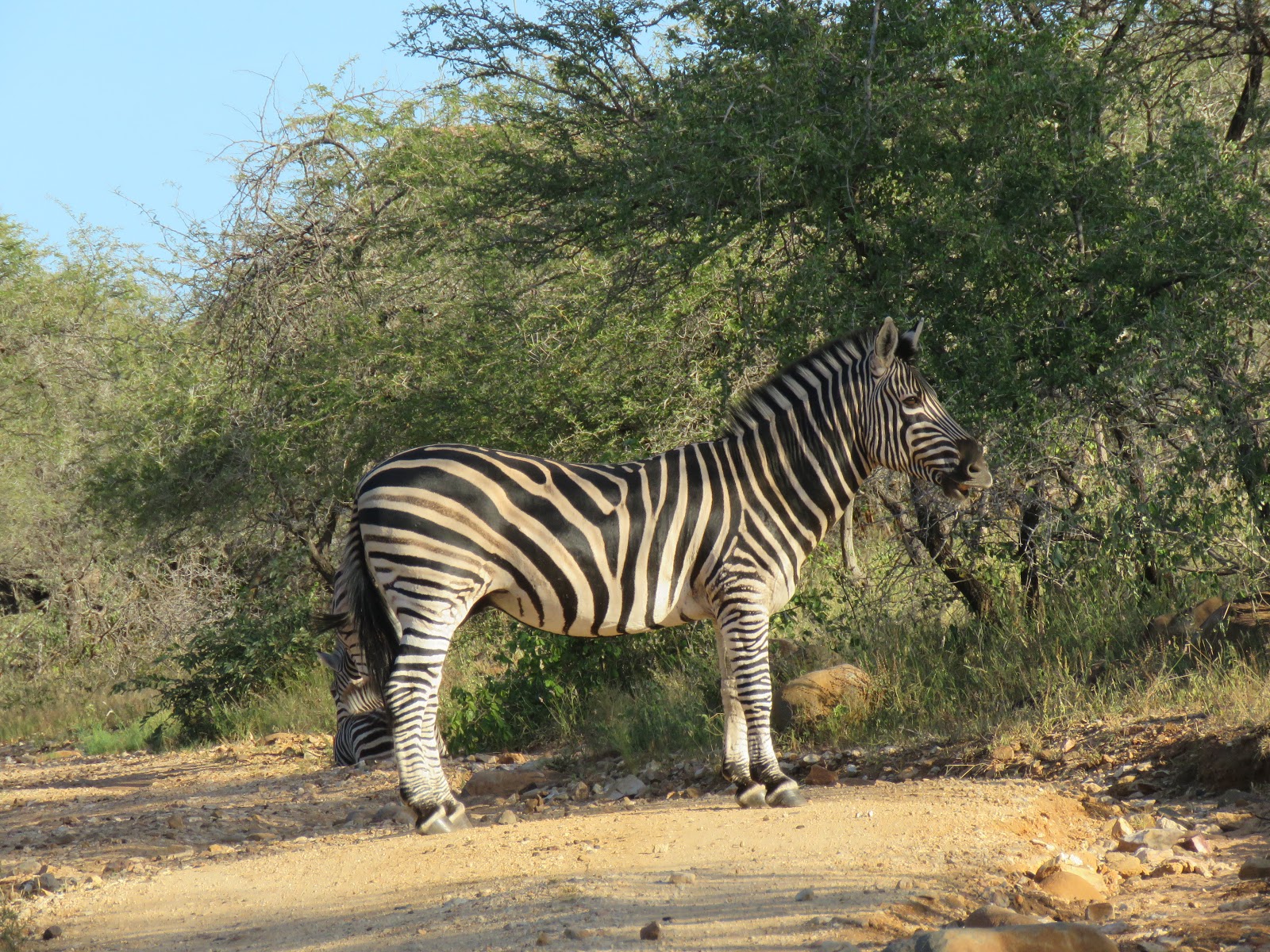
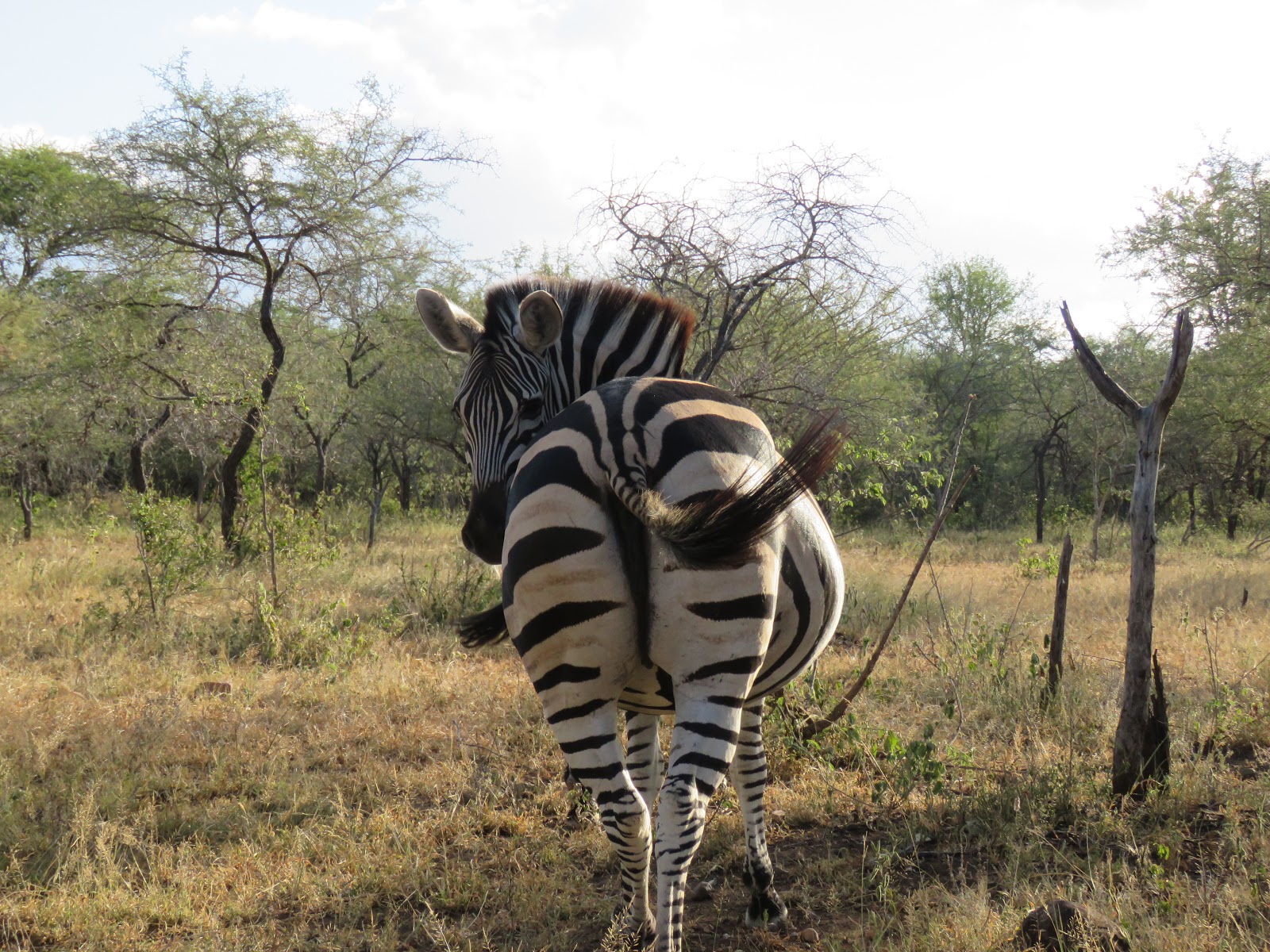
We drove down this bumpy dirt road to find several zebras while they grazed. This one stopped to look at us but didn’t seem to mind our presence.

“Sighting of the Day in the Bush”

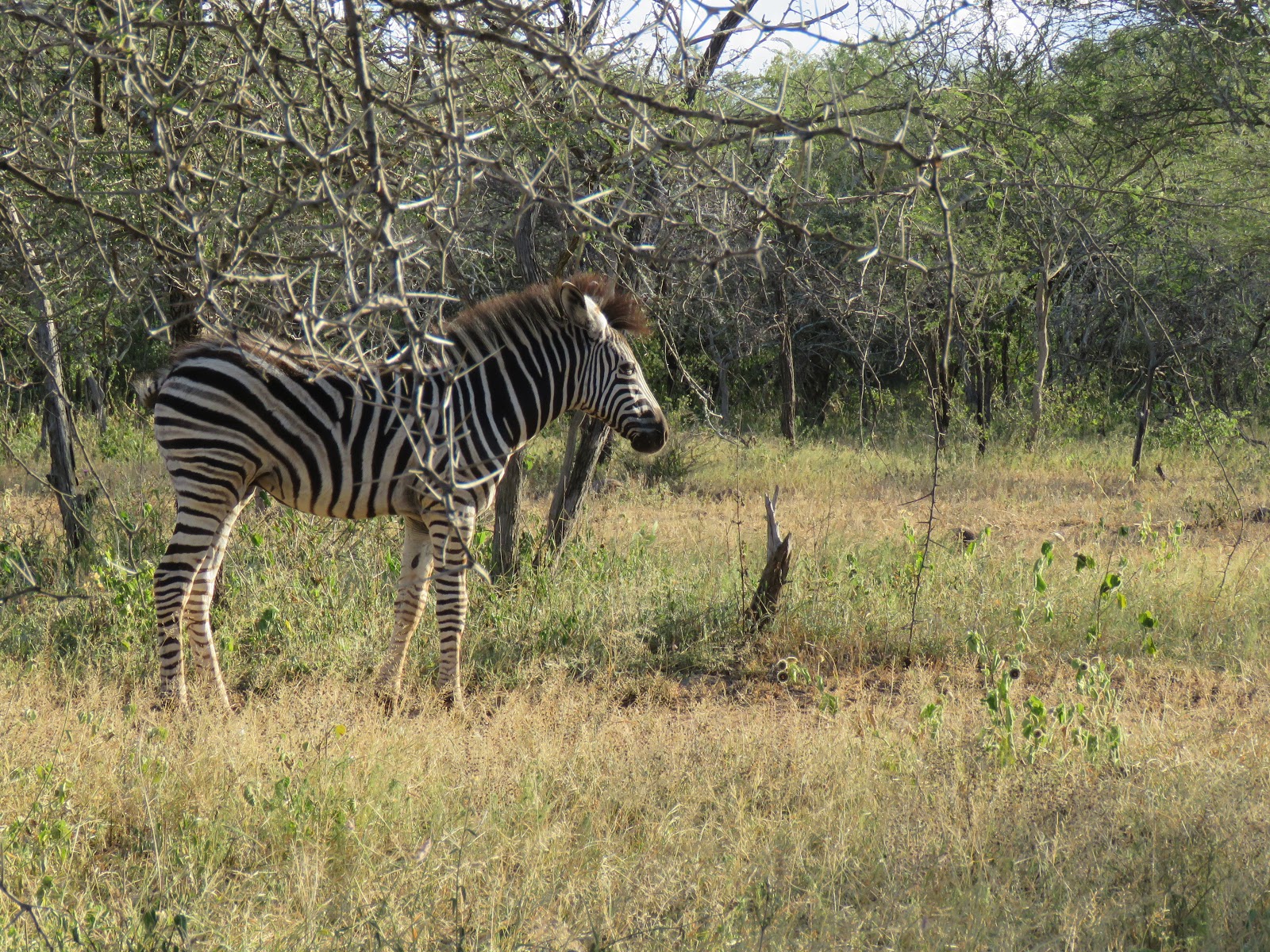
Young zebra’s stripes appear more brown than black, and the hair on its neck is fluffier than on an adult.

After a fair amount of rain, it’s good to see the bush has become greener, providing more vegetation for the animals to forage. Most of the wildlife in Marloth Park are herbivores, as described here:

herbivore is an animal that gets its energy from eating plants and only plants. Omnivores can also eat parts of plants, but generally only the fruits and vegetables produced by fruit-bearing plants. Many herbivores have special digestive systems that let them digest all kinds of plants, including grasses.”

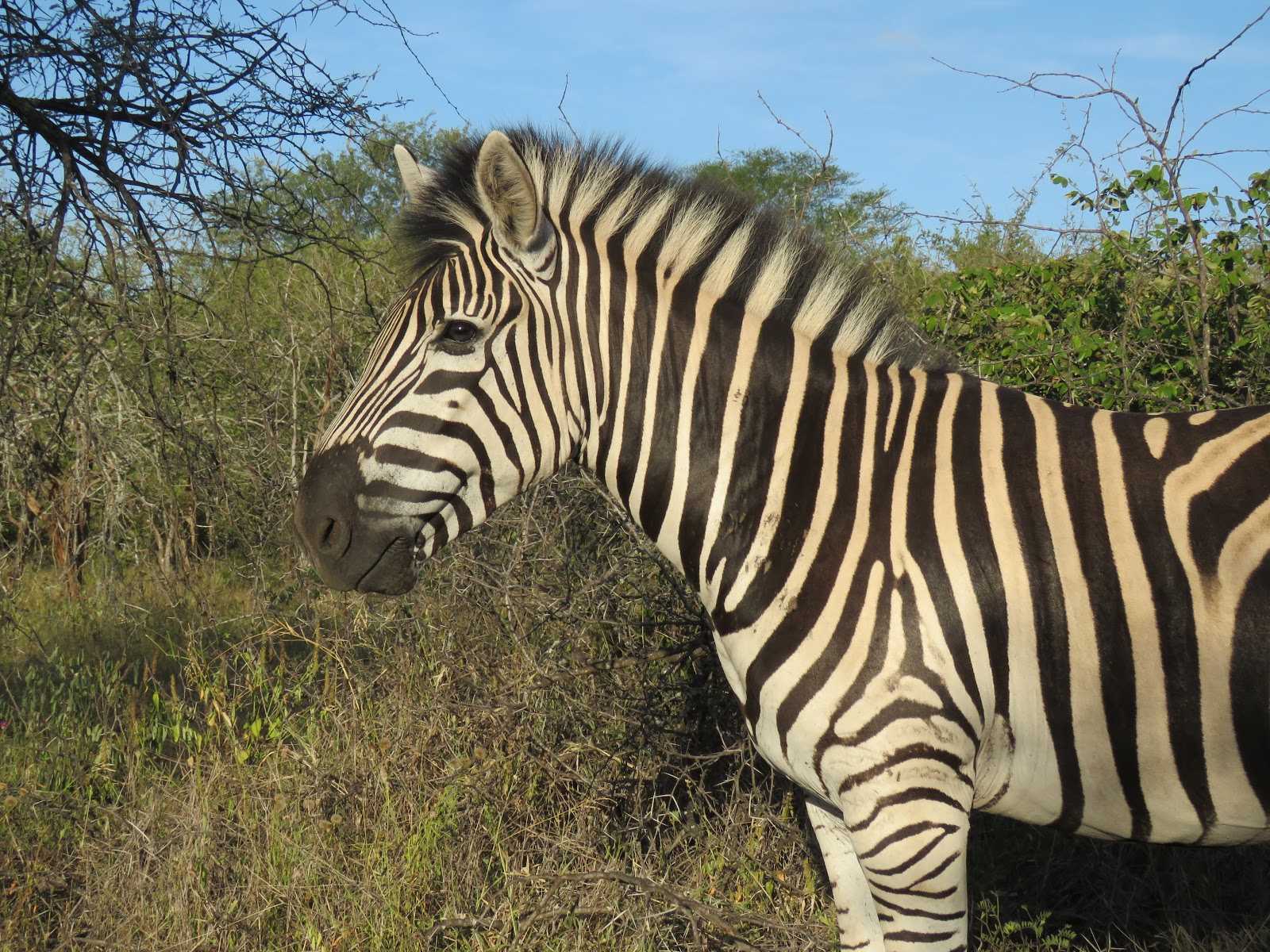
Zebras are such fascinating animals, especially when considering the uniqueness of their varied stripes. 

There are several omnivores in the park as well, described as follows here:

 “Omnivore /ˈɒmnivɔːr/ is a consumption classification for animals that can obtain chemical energy and nutrients from materials originating from plant and animal origin.”

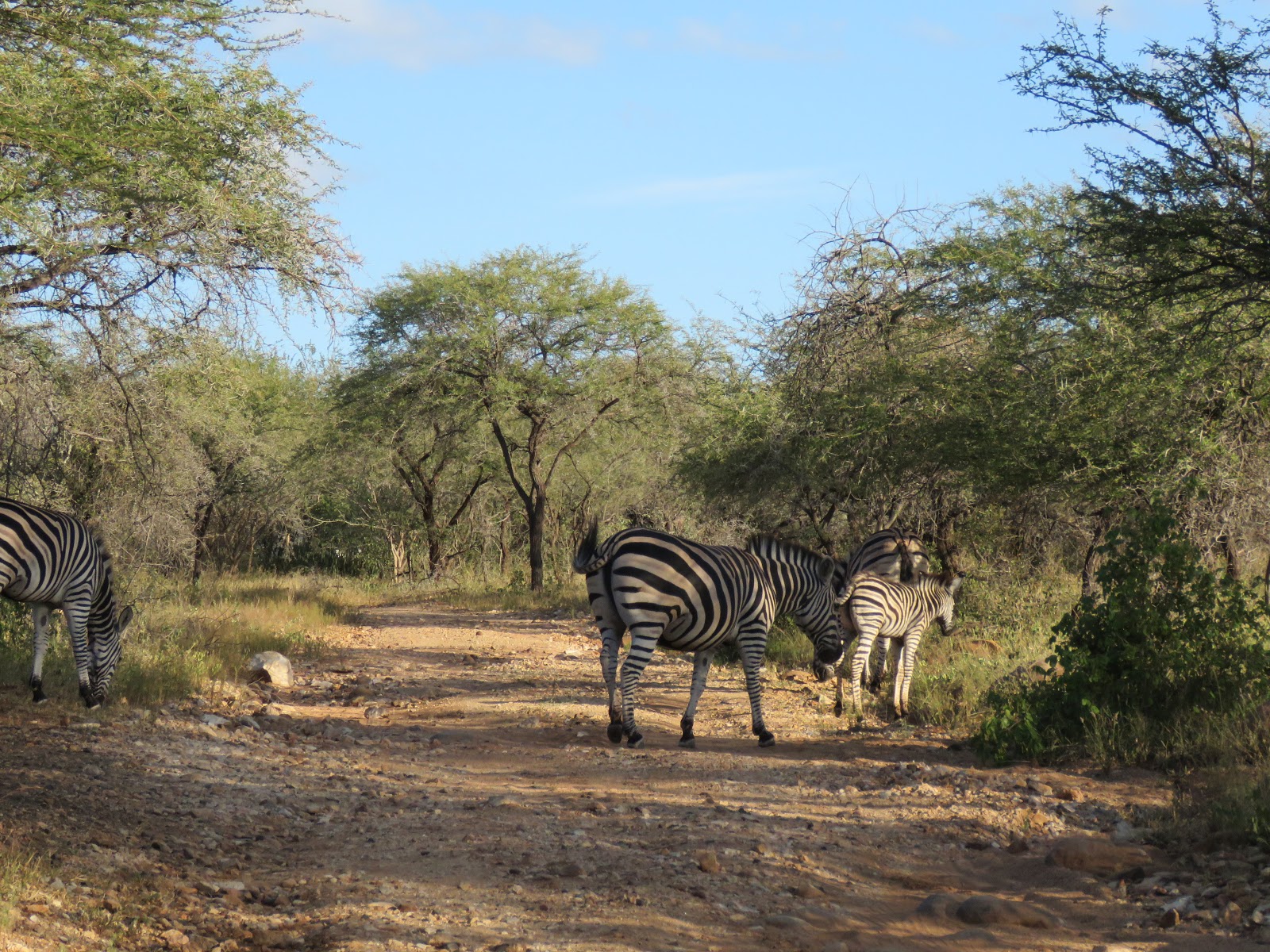
Zebras often live in “harems” with a male and several females and their offspring.  This appeared to be the case here when we noticed this youngster in the group.

Many species of birds are omnivores, such as the local helmeted guinea fowl, rodents, frogs, and other bird species, known to eat carrion, the rotting flesh of dead animals. Many types of vultures and birds of prey are carnivores.

Of course, as we all know, a carnivore is a creature, both human and animal that consumes meat, of one variety or another. With no particular affinity or opinion as to veganism as a personal choice for diet, especially for those who eat a “clean” vegan diet, they often claim humans weren’t intended to eat the flesh of other animals.

The stripe patterns are fascinating, and there are various opinions on why they developed them. Zebras are herbivores.
For many wild animals hunting for meat are a very natural process and their only means of survival. Perhaps we humans evolved similarly. I won’t get into that controversial topic too much here.
But, being in Africa certainly gives us a different perspective of the “food chain” as opposed to living in a more developed part of the world where we may give less emphasis to the cycle of life for human and animal evolution.
The adult male in the harem.

Indeed, I’m no scientist or expert and our perspective may hinge entirely upon a lifetime of preconceived notions we’ve garnered over decades. Living in the bush opens our eyes to possibilities we’d never considered in the past.

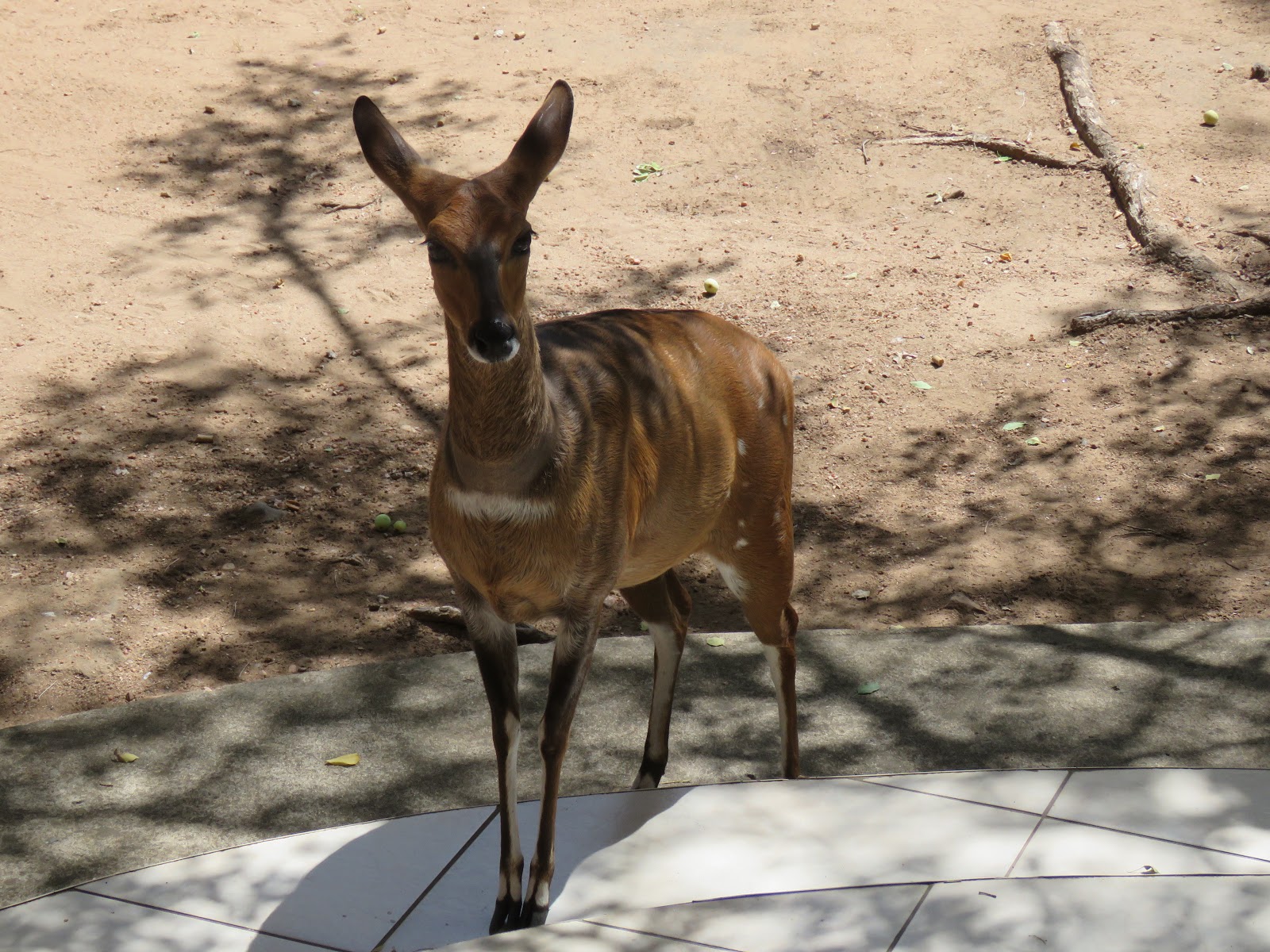
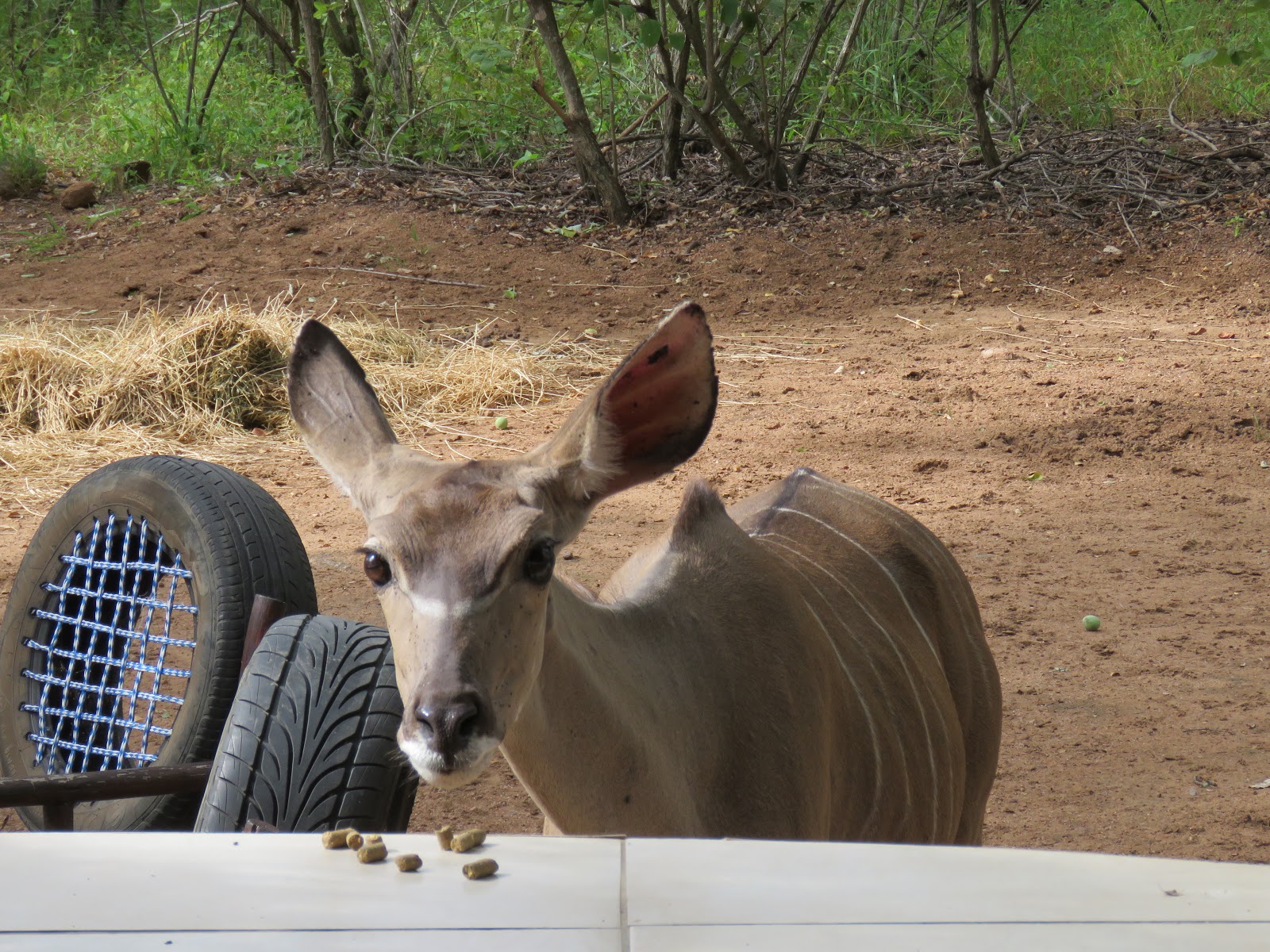
There she is, Ms. Bushbok, climbing the steps looking for pellets.  Of course, we respond to her request, as we do for all visitors.

We do know for sure that whatever we thought we knew about wildlife, even after our prior six months living in Kenya and South Africa was infinitesimal compared to the knowledge that lifetime residents of these parts have gleaned from education, personal encounters, stories passed down from generations. Innate curiosity to understand their country and their environment.

Each day as we discover a new species, a unique encounter or behavior, we find ourselves grasping for knowledge to understand better the magnitude and power of this vast wildlife-rich continent. 

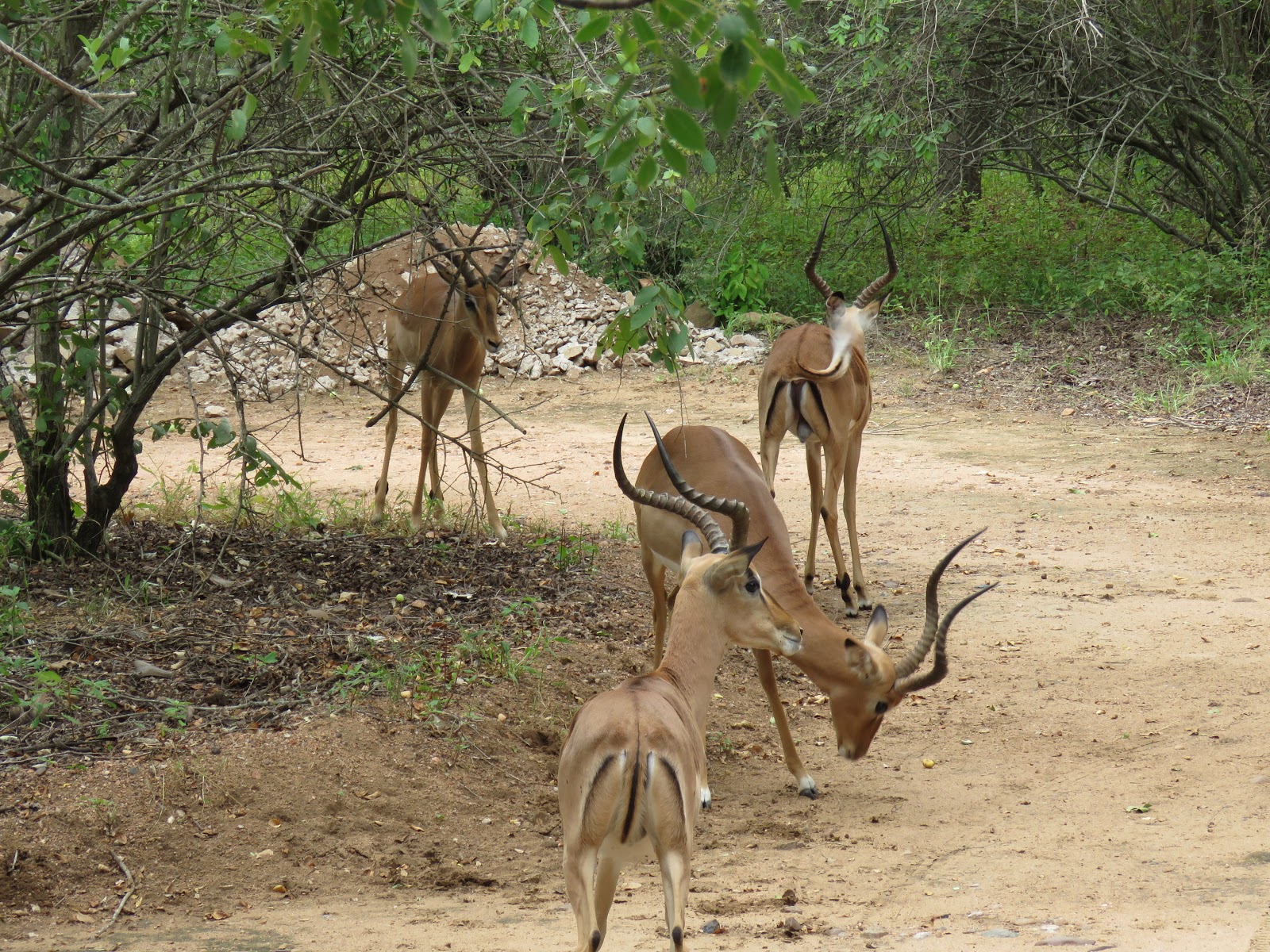
Several male impalas stopped by for a visit.

Fortunately, there’s considerable information online from reliable sources aiding us in our research and, like hungry vultures ourselves, we devour every morsel we can gather to enhance our perspective. Plus, our friends and landlords, Louise and Danie, native South African, are a valuable source in educating us.

There’s no way we can capture it all. This morning a half dozen vervet monkeys visited the marula tree in the yard which daily drops hundreds of the green fruit to the ground. As fast as they constantly moved, it was impossible for me to get a photo I would have loved to share here. 

There wasn’t a single female in the herd.

At times, a photo is just not meant to be although in no way does it diminish the quality of our experience.  We can tell you about it and eventually, we’ll be able to share a photo. It’s all a part of the joy of being here. It’s not always instant gratification. Often, patience and gentle determination will provide the outcome one desires.

Big Boy is on his knees eating pellets on the steps to the veranda.  His friend nibbles off to the side.

And so, we’ve heard from several reliable sources, there are lions that have entered Marloth Park via the fence and the Crocodile River between Kruger National Park and Marloth  Park. One was spotted a few days, only a few blocks from us.

Sure, we’d love to see it and the other lions that apparently have taken up residence in the park and of course, if “safari luck” prevails, we’ll be ultra-careful and never attempt to “push our luck.” 

This pretty young female stops by every few days for some pellets.

Today, as soon as we upload this post, we’re heading out for a drive, hoping to spot more of Mother Nature’s wonders in the veritable paradise for wildlife enthusiasts.

Be well. Be happy.

Photo from one year ago today, February 22, 2017:

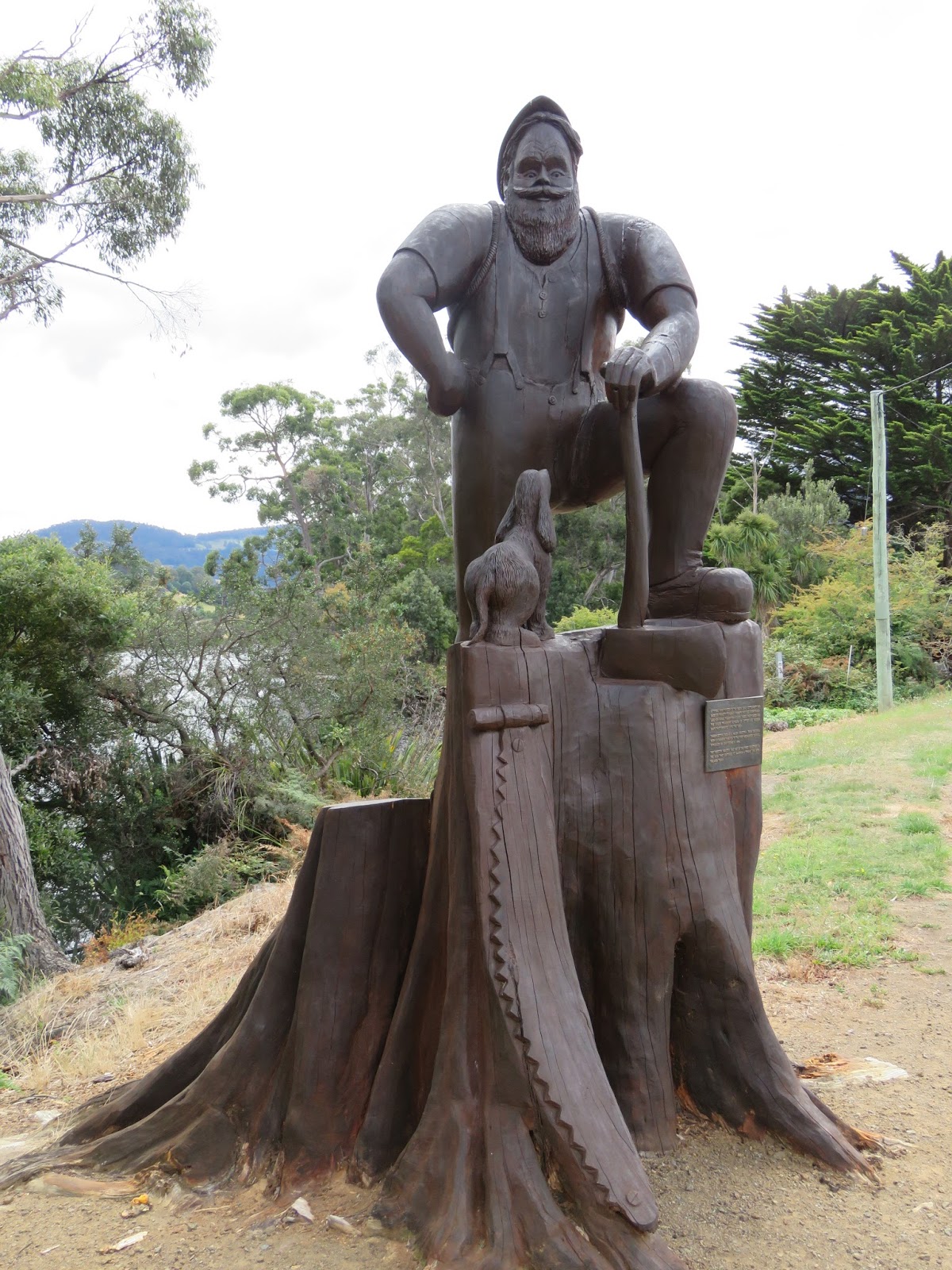
Throughout Tasmania and Australian states, there are many wood carvings
In honor of Australians throughout history. For more photos, please click here.

Birthday party photos…Oh, what a night!…

We’ll never forget this birthday as a special event for both of us; celebrated life, health, our experiences, and the acceptable friends we’ve made along the way.

“Sighting of the Day in the Bush

Colorful face shot of a helmeted guinea fowl, many of whom are frequent visitors to our bush house.

It’s after noon, and I’m just getting started on today’s post. There were a few diversions this morning, keeping me from getting a timely start. One delay was due to my sleeping in until 8:00 am after a long stretch of wakefulness during the night. I guess it was the two glasses of red wine I drank during my birthday party. 

Secondly, I had complicated computer problems this morning (I won’t bore you with the details) when I sat down at the big outdoor table to begin the post. After a few hours of working on it and staying calm, I created somewhat of a workaround, hopefully lasting until I fire up my new yet unused laptop. 

I‘ve been trying to use this three-plus-year-old Acer laptop until it’s on its last leg, and it appears that day may be imminent. Based on all the jousting around in our travels and excessive use, I’m surprised it’s lasted as long as it has.

Dawn had decorated the table beautifully for the party.  Thanks, Dawn!  By the time we were all seated, it was dark, cozy, and romantic.

The second distraction was when our housekeeper Martha, who lives in a tiny house on the property, asked to help fix her TV. We walked to her little place and played with the remote, attempting to get a signal.  Finally, we got it working, and the dear woman hugged us with gratitude. 

We could only imagine how hard it would be for her to be without TV during her free time. Although she works for us and a few other properties for Louise and Danie, she has idle time that could be lonely and difficult without the ability to watch her favorite shows.

The third distraction was to run to the little market in Marloth to see if we could find mushrooms for a dish I’m making tonight. The mushrooms are an integral ingredient in the recipe, and it just wouldn’t be the same without them. 

Wow! We were thrilled with the “cake of the world!”  Janine even made the two representations of Tom and me totally by hand.

We didn’t feel like driving to Komatipoort for mushrooms since we didn’t need to do any other grocery shopping right now.  The round trip drive is over an hour and certainly not worth it for only one item.

There are two superette-type markets in Marloth Park, one with about 30% more inventory than the other. Alas, we headed to the larger of the two and found fresh mushrooms. That was surprising!

Back at the house, I settled into my usual spot on the veranda to finally get started on today’s post about last night’s birthday party. A few visitors stopped, and again I was distracted from the task at hand. Oh, well, here we are now, pushing 3:00 pm and anxious to share last night’s event.

Closeup of Tom and I in fondant standing atop the world!  So fun!

Tom and I arrived at Jabula shortly before 6:00 pm, where we met with Jannine, the cake lady, her husband Vincent, and their two kids while they waited for us in the rain tucked under an overhang. They’d arrived earlier than planned, and fortunately, we’d done the same.

Although it was pouring rain when we arrived, they’d already carried the cake up the steep stairs to the restaurant. As soon as we stepped into the bar and spotted the cake, we both smiled from ear to ear. It couldn’t have been more perfect.

As shown in our photos, the cake was made round into the shape of the world, with each of the continents added utilizing fondant. The two minor characters she’d made to represent us couldn’t have been more adorable and befitting. 

Kathy, me, Tom, Lynne and Danie at the end of the table.

What a talent! Known as the “cake lady” in these parts, Jannine can be reached through Vincent’s email here should you live in Marloth Park or nearby and would like a unique and delicious cake.

Shortly after Jannine and Vincent left, our guests began to arrive. We mingled around the bar until it was time to be seated. We paid for our cake, reasonably priced at US $56.54 (ZAR 650), and hugged them both for their attention to detail and for delivering the cake to Jabula.

Dawn, the co-owner of Jabula with her husband Leon, set an exquisite table for our group and had the plastic-encased menus printed with the selections as well as the photo of us sipping champagne on the Zodiac boat only weeks ago in Antarctica. It couldn’t have been more perfect. (See image below).

Linda, Mick, and Louise, with Ken and Don standing.

The evening flowed with lively upbeat conversation, not only about the commonality we all share in our love for Marloth Park but also many other exciting topics. The time flew so quickly, when it was time to go, we felt as if we hadn’t had quite enough of this beautiful group of people.

The specially printed menu added a nice touch.

The food was exceptional.  We hosted the meal, and both red and white wine was served during the dinner. Afterward, I cut the cake, which tempted me to lick my fingers, but I didn’t taste a drop.  

I’d thought about making an appropriate cake for me, but I didn’t feel a need for it.  I try to avoid getting back into a taste for sweet foods, which I’ve all but conquered over these past few years.

I’d asked our guests not to bring gifts, but they couldn’t seem to avoid doing so. When doesn’t a girl love a 50 pound (23 kg) bag of pellets, a bag of almond flour, bars of scented soaps, and a bottle of fine South African wine in a lovely African cloth holder beside all the beautiful cards and messages? 

A few of the guys had “espetada,” which is well-seasoned meat of a hanging skewer.  Gee, I might try this sometime, but I always have the same meal at Jabula; peri-peri chicken livers with a Greek salad.

A heartfelt thanks to all of our friends for knowing exactly what I’d love, none of which I’ll have to add to my luggage next time we fly away after blissfully using up all of the items.

Back at our inviting holiday home, referred to as “Orange…More than Just a Color” I checked my computer to find more birthday wishes than I’d ever seen in the past; from our readers, our Facebook friends, our family, and friends. I must say I was reeling from the love I felt from all over the world. 

After the dinner plates were cleared, the cake was delivered to the table. Thanks, Kathy, for bringing the candles!

Thank you with all of my heart for making the 70th birthday one I’ll never forget, not for the celebration of the “number” but for the people who made it so special. 

Photo from one year ago today, February 21, 2017:

Views of the Huon River in Tasmania. For more photos, please click here.

Malaria risks…Big Boy is back!…The excitement continues…We can’t get enough!…

Three-for-One….on the Crocodile River; a White Fronted Plover, a female impala, and a male waterbuck. We’d wish it had been a sunny day for this shot, but cloudy days can mean more rain, and rain is desperately needed.

“Sighting of the Day in the Bush”

A vervet monkey was sitting atop a lion statue in the yard of a house.

No, we won’t be spending this entire next 12 months in Africa sitting on the veranda waiting for visitors and posting photos of the same species over and over again. We have many exciting plans on the horizon.

Big Boy is easy twice the size of this other adult male warthog. We’re assuming this may be the same “Big Boy” we saw four years ago, as shown at this link. Warthogs have a lifespan of 18 years.  Once males mate, they don’t hang out with females, nor are they involved in the care of their offspring.  However, who knows, perhaps another male with whom they wander and graze may be an offspring.

But, after the last few months having sailed on two major cruises (30-nights and 17-nights) and spending 33-nights in Buenos Aires, we’re both thoroughly enjoying this time doing exactly what we feel like doing; relishing the quiet, the never-ending stream of “visitors” and time with our friends in Marloth Park.
 
Part of the joys of traveling the world is spending time, just like all of you, settling into a comfortable and pleasurable routine with minor requirements of our time. We can go out. We can stay in, sitting on the veranda. Our time is our own.

“A face only a mother could love,” and yet I find them so adorable with their quirky personalities.

Marloth Park and much of South Africa are often hot, humid with plenty of mozzies and other insects. We have to reapply insect repellent several times a day, especially during this second stay in South Africa. We aren’t taking malaria pills. 

The high-risk malaria season is ending in March or April, depending on the rains. It made no sense to be taking the pills for over a year where there are side effects and hazards in doing so over the long haul. 

Up the steps he goes, to see what we’ve got in the way of pellets!

Taking the risk of getting malaria or taking the risk of possible side effects from taking the medication for an extended period was a toss-up.  With a diligent repellent application, primarily with DEET, the only sure-fire ingredient, there’s another round of risks.

Warthogs tend to eat on their knees due to their long legs and short necks, making foraging for food more accessible. They have special knee pads that make this possible.

We didn’t take these considerations lightly. After speaking to several of our local friends, we opted to do what they do…stay protected with strong repellent and don’t kid ourselves that “natural’ repellents are strong enough to prevent bites. We know this from experience after trying several natural repellents, and yet, we still got bit, Tom, less than me.

“Whew,” says Big Boy. “I need a rest after eating all those pellets.”  He has to comfortably position his head with those razor-sharp tusks used for digging up roots and for his personal defense.  Warthogs aren’t naturally aggressive but will defend themselves vigorously if need be.  Females will become very aggressive in protecting their young.

Plus, taking malaria pills is no guaranty one won’t contract malaria. They aren’t 100% effective. Many tourists coming to Africa for a few weeks begin taking the drugs a week or two before they arrive, during their stay, and a few weeks after leaving the area. Generally, this provides good protection.

After about 20 minutes, Big Boy perked up and was ready to continue his day with his male friend, who hung around waiting for him while he napped.

But, our circumstances are different. After considerable research and speaking with our friends here in Marloth, we feel comfortable with our decision not to take the pills with a few adaptations.

Roadside shop with potatoes, onions, and miscellaneous items.

One way to reduce the risk of mosquito bites is to remove these “tire chairs” from our proximity, as shown in the photo below.  These tires can easily hold water where mosquitoes can lay their eggs.  Yesterday, after it rained, Tom tipped them all over to remove the water. Today, when our pool and groundskeeper Josiah arrives, we’re asking him to move these chairs in a distant area in the yard,

Visitors are checking the ground for pellets near the “tire” chairs.

As pointed out on Saturday night by our friend Don and longtime resident of Marloth Park, these tire chairs could easily provide an ideal hiding place for a deadly black mamba. Four years ago, Don told us a terrifying story about finding a black mamba in his storage room the last time we were here. 

Don escaped unharmed, but it was an incident he’ll never forget and a story we easily remembered after hearing it so long ago. One can’t ever be too careful in ensuring their safety from potential risks in specific environments, and there’s little room for foolhardiness.

This is the bush house we first rented when we arrived in Marloth in December 2013.  We prefer the house we’re in now due to its easier view of the yard indoors (for checking on visitors). However, we’re spending every hour of the day outside as we’d done at that property.

The weekend was spectacular for both human and wildlife visitors.  At one point on Sunday, we had eight large animals in front of us. We do not doubt as they become used to our presence, we’ll see more and more.

Today, we’re finalizing a few details for my upcoming birthday party at Jabula tomorrow night. We can’t wait to share photos from the party and the most unusual birthday cake prepared by the “cake lady” here in Marloth Park. 

Life is good, even better than we’d expected. We hope yours is as well!

Photo from one year ago today, February 19, 2017:

Huon River from the highway in Tasmania. We were nearing the end of our six-week stay. For more, please click here.

Unbelievable sighting in our yard…You must see this!…Look below!…Fabulous evening with friends…

Please take a moment to watch our video of mongoose visitors in our yard last night!

“Sighting of the Day in the Bush”

Finally, my favorite, warthogs, stopped by for a lengthy visit—more on this tomorrow.

I don’t know where to begin first, the outrageous sighting in the yard shortly after our friends arrived for dinner, a stunning sighting for all of us or, the exceptional evening we spent with four of our friends.

Ken, Tom, and Don are making big faces for the camera!
Linda, me and Kathy. It was these two thoughtful friends that took me to lunch on my birthday four years ago. Wow! Now, we’ll all be together again to celebrate my 70th.
During the day, we had no less than eight visitors all at once from three different species that sent us into a tailspin of pure delight. That event in itself was beyond our wildest dream this early in our stay. We’ll share those photos tomorrow.
At first, we only saw a few of the mongooses, but the rest were on their way into the yard.

We only arrived a week ago today, and yet we’ve seen every species that resides in the Conservancy, and beginning next week, we’ll head to Kruger National Park hoping to see the Big Five once again; lion, elephant, cape buffalo, rhino, and leopard.

Our guests arrived promptly at 6:00 pm, and we were ready for our guests. When we’d made the invitation to the four of them for dinner, we realized we had enough food on hand for the meal without the necessity of heading to the market.

Mongoose is the popular English name for 29 of the 34 species in the 14 genera of the family Herpestidae, small feliform carnivorans native to southern Eurasia and mainland Africa. The other five species (all African) in the family are the four kusimanses in the genus Crossarchus and the only species in the genus SuricataSuricata suricatta, commonly called meerkat in English.”

We made the following (all the meats were cooked on the grill):
1.  Pork Chops
2.  Lamb Chops
3.  Boerewors (sausages) – “The many varieties of boerewors include specialties such as garlic wors, kameeldoring (camel thorn), Karoowors (sausage from the Karoo region in South Africa), and spekwors (made with extra cubed pork fat). Other ingredients include cheese and chili peppers.”
4. Cauliflower Mash
5. Pureed Pumpkin
6. Sauteed onions, garlic, and portabella mushroom (to top the seasoned meat)
7. Cabbage Salad

Suddenly a baby was on the scene.

We’d purchased beer and wine, but they insisted on bringing their own beverages, a tradition when visiting guests in the bush. We had purchased a lighter red wine for me with less alcohol and tannins, which tend to keep me awake at night after a few glasses. It wasn’t as good as a regular Cabernet or Merlot, but I drank it anyway. Tom had Castle Beer, manufactured in South Africa and a local favorite.

Mongooses love raw eggs.  When we spotted them, Tom ran inside, bringing out an 18 pack of fresh eggs.  He laid one on the ground, and this is what happened.

Although we’d seen Linda and Ken in Sydney 11 months ago, we hadn’t seen Kathy and Don in four years. It was Kathy and Don who’d invited us for Christmas Eve when they’d never met us. We’d met their mutual friends, Lynne and Mick, at Jabula Lodge a few days before Christmas, and they hooked us up.

During the period of time they were in our yard, Tom placed four eggs on the ground for them to quickly fight for and devour.  It was quite a scene.

Lynne and Mick were leaving Marloth for the holidays but wanted to make sure we had something wonderful to do on Christmas Eve. And indeed we did, spending the evening at Kathy and Don’s beautiful bush house bordering the Crocodile River. Here’s the link to that story.

To know that soon we’ll all be together again (also with other dear friends) at my birthday party in two days fills my heart with so much joy and love. How did we get so lucky? 

Once the rest of them realized we had eggs, they piled atop one another.

The evening flowed with considerable ease when we’d prepared all but the meat in advance. I heated the side dishes in the microwave and then popped them in the preheated oven. With the homemade dressing ready to go, I tossed the salad. 

“Mongooses live in southern AsiaAfrica, and southern Europe, as well as FijiPuerto Rico, and some in the Caribbean and Hawaiian islands, where they are an introduced species. The 34 species range from 24 to 58 cm (9.4 to 22.8 in) in length, excluding the tail. Mongooses range in weight from the common dwarf mongoose, at 320 g (11 oz), to the cat-sized white-tailed mongoose, at 5 kg (11 lb).”

Tom, Don, and Ken fussed over the grill, and by 8:00 pm, we were all seated at the outdoor table, meats cooked to perfection, and we dug in for a hearty meal (minus gluten, grains, starch, and sugar). No one even noticed we didn’t have rice, potatoes, or bread. 

The lively conversation continued through the delightful evening. We all have so much in common in our love for Marloth Park, traveling and being engaged in lively and exciting times at this point in our lives.

In a split second, they were all over the eggs.  See our above video for details.  “Mongooses mostly feed on insectscrabsearthwormslizardsbirds, and rodents. However, they also eat eggs and carrion. The Indian gray mongoose and others are well known for fighting and killing venomous snakes, particularly cobras. They are adept at such tasks due to their agility, thick coats, and specialized acetylcholine receptors that render them resistant or immune to snake venom.  However, they typically avoid the cobra and have no particular affinity for consuming its meat.”

So yesterday, enriched by our friend’s visit and the many wildlife “visitors,” it was quite a special day. You won’t be disappointed! Enjoy our photos, and please take a moment to watch the video.

Be well. Be happy.

Photo from one year ago today, February 18, 2017:

Although overcast in the Huon Valley, Tom had a great day fishing and taking photos while boating with Anne and Rob. For more photos, please click here.

Guess Who’s Coming to Dinner?…New, or shall we say, returning special feature?…

With a lack of rain, there was little water in the Crocodile River.

“Sighting of the Day in the Bush”

We love Hornbills. “The hornbills are a family of birds found in tropical and subtropical Africa, Asia, and Melanesia. They are characterized by a long, down-curved bill which is frequently brightly colored and sometimes has a casque on the upper mandible.”

Note: Today, we’re beginning a “Sighting of the Day in the Bush” feature, which we’ll continue during our time in Africa. We hope our readers will enjoy this feature which we’ve presented similarly in specific past locations. 

The first zebra we spotted in the park.  We’ve seen several more since taking this photo a few days ago!

This is the first dinner party we’ve had since Fairlight, Australia, when we invited our dear landlord Bob and another couple we’d met who was also staying in his properties.

A baby zebra, most likely approximately four to five months old.  Zebras weigh from 30 kg to 35 kg (66 to 77 pounds) at birth. 

With friends Kathy and Don and Linda and Ken returning to Marloth Park yesterday, we could hardly wait another day to see them all once again.  We haven’t seen Kathy and Don since we were here four years ago.

As for Linda and Ken, we met up with them for lunch in Sydney, Australia, and had a spectacular time together. Please click here to see the post about our get-together.

“Ossicones are horn-like (or antler-like) protuberances on the heads of giraffes, male okapis, and their extinct relatives, such as Sivatherium, and the climacoceratids, such as Climacoceras. The base that a deer’s antlers grow from is very similar to an ossicone.”

We’ve stayed in close touch through Facebook, Messenger, and email, never losing touch with any of our South African friends during the past four years after leaving on February 28, 2014. 

In a way, it feels as if it was a lifetime ago we were in Marloth Park. But now, as we’ve settled in, it seems as if it was only a short time ago.  Lathering up in repellent several times a day, sweating in the high temperatures and humidity, batting off the mozzies while living every moment to the fullest is not hard to forget.

Giraffes lay down to rest but rarely sleep for more than five minutes at a time.

After we uploaded the post, we drove for two hours in Marloth Park, searching for wildlife. During the first hour we didn’t see much and what we did see was too far away for good photos.

During the second hour, everything changed, which is typical when on safari. You search and search, often coming up empty-handed, and suddenly there they are, one after another.

A male giraffe can weigh  1200 kg (2646 pounds), while a female may weigh 830 kg (1830 pounds).

I should mention that when we refer to “safari,” we’re constantly referring to “photo safari.” At no point would we ever participate in shooting wildlife for sport or trophies. Thus, we’ll say “safari” here in the future, constantly referring to photos safari unless stated otherwise regarding the senseless slaughter of endangered animals. 

With dwindling populations of most animals in Africa and the toll, poaching takes on nearly extinct wildlife. It makes no sense to kill any for sport or profit. But I won’t get into that here. Our readers know how we feel about this controversial topic.

No words can describe how excited we were to see these giraffes. Not wanting to disturbs them, we stayed on the road, taking photos from afar.

Much to the delight of all of us here in Marloth Park, it’s been raining off and on since yesterday afternoon. This provides much relief for the wildlife who so desperately need to eat the greening vegetation. 

Right now, it’s nearing the end of summer. The green vegetation will begin to wane in the fall season, commencing on March 21st and throughout the following cooler winter months. The wildlife will be on its own trying to find food. It’s a sad time for them, and many don’t survive the long winters.

Large ant hill with trees growing from it.

Today is a busy day, like few others, as we prepare for our six-person dinner party tonight. What a unique and memorable experience for us…to be entertaining in our “temporary” home, here in the bush in South Africa.

A vervet monkey is sitting in a yard of a house as we passed.

Today’s temperature is currently 90F, 32C, and the humidity is a bit uncomfortable after the rain.

May today bring you unique experiences.

Photo from one year ago today, February 17, 2017:

Tom was proud of their big catch, all flatheads, when he went fishing with our landlords. He had a great day!  For more3 details, please click here.

A little about Marloth Park… Fun with the locals…

Zeff was here with us four years ago.  It was wonderful to see him again. 

What is Marloth Park? Over these past four years since we were last here, we’ve mentioned it more times than we care to count, over and over again, ad nauseam, perhaps at times to the disdain of our readers. For this, we apologize and hope we haven’t bored you.

But, this place is unlike any other world, a little developed, a lot natural. Oh, some may say this is like “Disneyland in the bush,” but that’s far from the truth. 
Our first male kudu visitor.
Marloth Park is adjacent to Kruger National Park, that this 3000 hectare (11.5 square miles), developed as a town in 1972, became a holiday haven for wildlife enthusiasts who wanted to experience living in the bush (bushveld in Afrikaans, the local language), being able to interact ever so gently with the many animals that have naturally habituated this area.
We’ve heard that 4000 lots had been divided over the years, and there are varying opinions on how many houses have actually been built in these past 46 years. Our host, Danie, a builder, presumes there are about 2300 houses in Marloth Park.
Mr. Kudu certainly enjoyed his share of pellets after he finished off everything we’d left on the dirt driveway.  Once he left, we restocked.
Other than the houses in the area and a few minimal-offering shops and a petrol station, Marloth Park remains pristine in its attempt to maintain a less touristy-feeling environment while providing its homeowners and visitors with a life-changing experience.
Sure, we could find a home in the savannah, somewhere in the bush in Africa, where wildlife roamed about the house. In that case, we wouldn’t have the ease of living all of us expect in our day to day lives; electricity; air-con for sleeping; Wi-Fi, running water, sewer systems, garbage pickup, and all those amenities many of us have come to anticipate as a part of everyday life.
What a muscular animal!
We’re not 20 years old, hauling a backpack and sleeping in a tent for the rich experience one of this age might find enticing in their pursuit of personal growth.
However, even in our age group, we reap the benefits offered by this stunning environment, of peacefulness, wonder, and the sheer joy of our surroundings and yet have all of the above conveniences we’ve come to expect and, maybe at our ages, need to be comfortable to some degree.
This adult female bushbuck stops by several times a day.
Oh, don’t get me wrong, it’s not a piece of cake living here. It’s a half-hour drive to a supermarket or pharmacy. And if one needs emergency medical care, it’s still that same 30-minute drive which would be a matter of life or death in the event of a bite from a black mamba (snake) even we had seen in these parts only four years ago (and most likely will see again).

It’s hot and humid most of the time. There are insects like none others we’ve seen anywhere in the world. The power goes out more often than in most places, often due to careless tourists failing to be mindful of the size of the limited power grid in this area. 

While at the shopping center yesterday, these students were cheering and singing after a fabulous photo safari in  Kruger Park as part of a school project.

And, the mozzies come out at dusk bringing with them a rash of dangerous diseases. This time we aren’t taking malaria pills. None of our friends take them that live here off and on throughout the year.  

The possible fourteen months we’ll be in Africa is just too long to be taking the drugs. Instead, we’re using repellent day and night with a maximum of 35% DEET, which has been determined to be safe.

When this pretty young lady spotted us with a camera, she asked if we’d take her photo.  When we handed her a card with our web address, she thrilled us to post her photo.  Her name is Sonto Zwene. We hope she has an opportunity to see herself here. What a lovely girl!

The staff in Marloth Park come from many surrounding areas. Many arrive each day by bus or sharing the  Rarely do any of them live in the park. The exception is those who may be live-in support staff.  Even Martha, our full-time housekeeper who lives in a little house on the property, frequently leaves the area to visit family and friends.  

These kindly, warm and friendly people definitely enhance the quality of our experiences living in Marloth Park. A warm hug is as common as a hearty hello. Although most speak Ndebele, Northern Sotho, Sotho, Swazi, Tsonga, Tswana, Venda, Xhosa, and Zulu, many speak English sufficient to communicate easily.

More Helmeted Guinea Fowl. We love these turkey-like birds with colorful heads.

Yesterday, we drove to Komatipoort for the second time since our arrival to find a few groceries items we hadn’t been able to find the first time. Also, we replaced the HDMI cord, but we’re still having trouble with the signal from my laptop to the TV. We’ll work on this later today.

While in town, we stopped at a pharmacy to discover I won’t need to order refills of my few prescriptions from afar. They carry each of my three meds over-the-counter, without a new prescription, making the process convenient.

“The greater kudu (Tragelaphus strepsiceros) is a woodland antelope found throughout eastern and southern Africa. Despite occupying such widespread territory, they are sparsely populated in most areas due to a declining habitat, deforestation, and poaching. The greater kudu is one of two species commonly known as kudu, the other being the lesser kudu.”

Yesterday the temperature was a high of 100F (38C). In the evening, after our delicious dinner, we stayed indoors. The two air con units in the high vaulted ceiling living room couldn’t cool it down. It was toasty, but we managed. Today, it’s partially cloudy and much cooler.

We’ve already had several visitors this morning and look forward to more as the day progresses.

Have a beautiful day! 

Photo from one year ago today, February 16, 2017:

Boats in the bay on the Huon River in Tasmania. For more photos, please click here.

Party planning in the bush…More new exciting photos…Hot today!…

As the sun was waning during our evening drive. Sunsets in Africa seem to be the most spectacular we’ve seen in our travels.

The last time I planned a party was when we were about to leave Marloth Park on February 28, 2014. It’s customary when someone is leaving South Africa to host their going-away party. 

As darkness began to fall, we squealed with delight when we had to slow down for this ostrich walking down the center of the road. Could it have been Clive or Clove or one of her offspring from our four-year-ago visit?

We invited a small group for dinner shortly before we left. The friends we’d made were in two groups, one related to our rental in one way or another and other friends we’d met along the way. 

We dared to get a little closer to take this shot through the windshield. We didn’t want to scare her away.

At one point or another, we’d had everyone over for dinner, and now as we plan my birthday in five days, I realized we hadn’t planned a party anywhere in the world since that time, and this time, we include both groups. We’re so excited.

Finally, she moved over so we could pass, but we watched her in the rearview mirror, stay on the road for quite some time. What a treat!

This morning, we ordered a regular birthday cake from Jannine (correct spelling), the Marloth Park “cake lady.” I’ll bake a small coconut flour cake for me, and we’ll be able to celebrate eating cake together. 

I’m so excited to be celebrating this milestone birthday with these fine friends. Turning 70 can be daunting, but I’m looking at it as a celebration of life, love, friendship, and the non-stop joy of experiencing the world every day of this unusual lifestyle we’ve chosen to live,

Mr. Kudu was on the side of the road as we passed on the way to the little market in Marloth Park. Now, these stunning males are visiting us in the yard. Photos will follow!

Last night we went to Jabula Restaurant & Lodge to see our old friends, Dawn and Leon, restaurant owners and had a fabulous time. They’d set up beautiful outdoor tables with Valentine decorations, reserving one for us. 

After wine and beer at the bar, we took our table and chatted with a party of three sitting next to us, after our exceptional dinner, which including two red wines for me and four beers for Tom (little lushes we are when out, not at “home”) our total bill including tip was US $47.82 (ZAR 586).

We spotted three wildebeests when we went for our evening drive in the park.

Of course, I ordered “my usual” (from four years ago) peri-peri chicken livers and a substantial grilled Greek chicken salad. Tom ordered barbecue ribs, chips (fries), and salad. We couldn’t have enjoyed it more.

Today, I’m busy cooking one of our favorite homemade recipes, the first full meal I will have prepared in 85 days. We both longed for our favorite low-carb dish, Chicken Pot Pie to which we’ll add a green salad. 

A thought-provoking pose with a bot of vegetation in her mouth.

Although this seems like a cold-weather dish, when we spend most of our lives in warm or hot weather, we don’t let the weather dictate what we’d like to eat. This dish could be classified as comfort food and most certainly, we don’t require much more comfort than we’re feeling now, but it will be fun to sit down with this fine meal tonight.

Wildebeests are commonly seen in Marloth Park and neighboring Kruger National Park.

Once we’re done posting today, and I finish chopping and dicing, we’ll head back to Komatipoort to purchase a few more items we hadn’t been able to find on Monday and hopefully find an HDMI cable.  Like many cables, eventually, they wear out, as was the case with ours. 

Impalas are often referred to a “MacDonalds” when they are the chosen meal for many predators.

We’re thrilled to be getting visitors several times a day, feeding them the nourishing pellets, and talking to them in my usual high-pitched voice. Hopefully, soon, some of the regulars will recognize my voice. So far, no warthogs. I wait patiently.

Today’s high temperature is expected to be 97F (36C), and yet we still sit all day outdoors, sweating up a storm, content as we can be. 

Be content today and always!

Photo from one year ago today, February 15, 2017:

In the Huon Valley in Tasmania, we enjoyed the fresh-picked organic vegetables from owners Anne and Rob’s garden. For more photos, please click here.

Hansel and Gretel style…Dropping pellets in the yard…Visitors have arrived….Happy Valentine’s Day

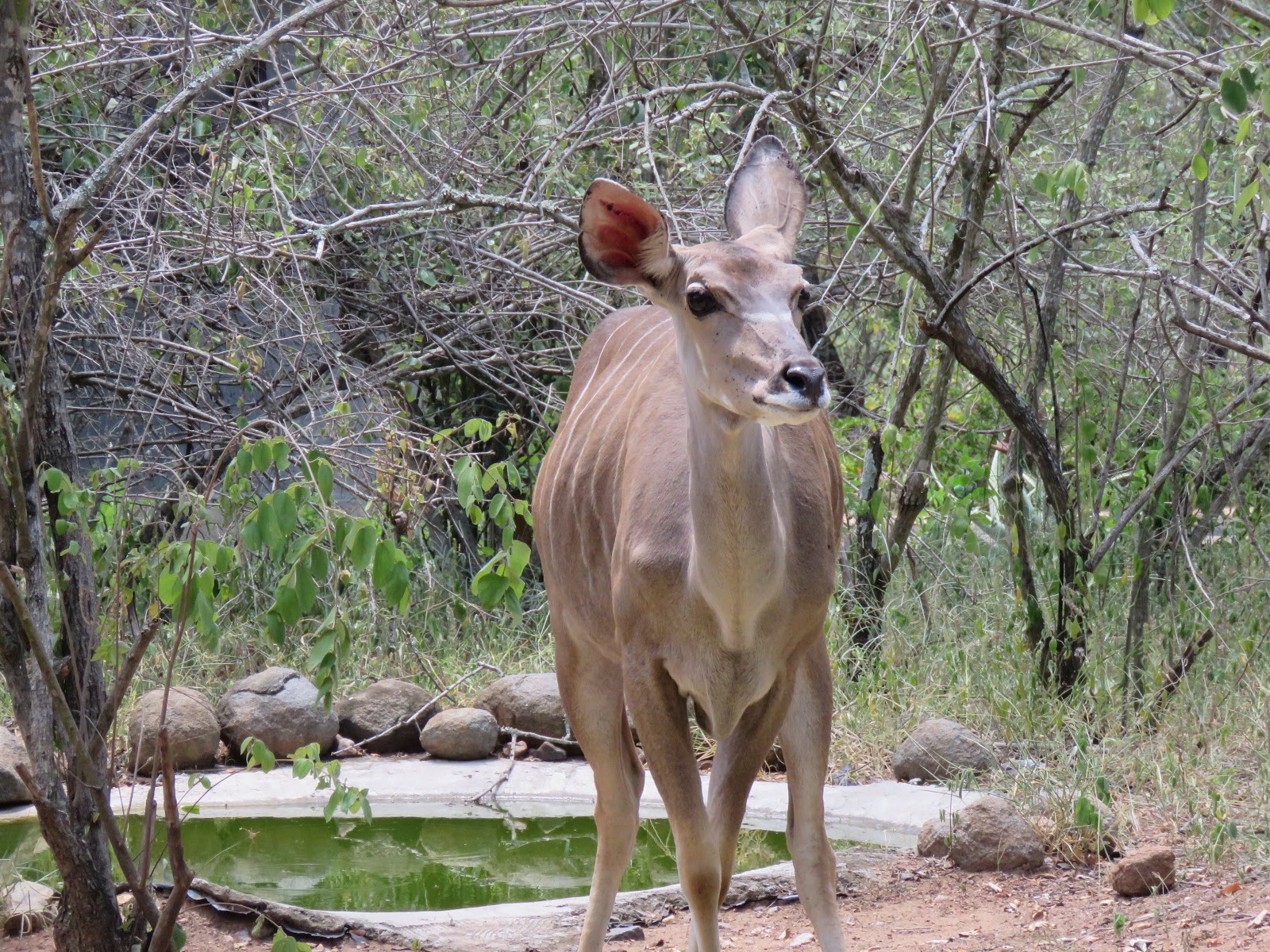
There she was yesterday,  a pretty kudu, standing by the watering hole in the yard of our holiday home. She nibbled on pellets and hung around for some time. Female kudus usually weigh about 463 pounds (210 kg), while male bulls may be well over 661 pounds (300 kg).  Only the males have long spiral horns. Tomorrow, we’ll share male kudus we spotted while out on our nightly drive.

Over four years ago, when we lived in Marloth Park, we purchased the approved pellets residents can feed the wild animals.  With the recent drought resulting in less vegetation for the wildlife to eat, the pellets are a nutritious food source.

Kudus are muscular, agile, and strong.

Louise had picked up a 50 pound (23 kg) bag of pellets, which were waiting for us when we arrived.  She dumped them into a giant trash bin with locking handles which we’ll keep indoors to avoid the baboons from getting into them. 

The baboons are very crafty and could quickly figure out how to unlock the interlocking handles.  Although many tourists “get a kick” out of seeing the baboons, they are an awful hazard and can tear up the interior (and exterior) of a house in minutes if they manage to get inside or on the veranda.

She was enjoying the pellets we’d left on the grounds surrounding the property.

It’s our responsibility to ensure they don’t get close to the house by not eating outdoors, feeding them pellets, or making them welcome in any manner. They are the only animals we’ll avoid in this Conservancy.  The others are more than welcome to stop by.

And stop by they have, especially after we began dropping the pellets, Hansel and Gretel style, while walking up and down the dirt driveway and around the house, scattering the pellets as we go. 

This was one view of her from the table and chairs on the veranda. As shown, we have two grills, one gas and another wood burning which we’ll take advantage of soon. Notice the chairs made of tires encircling the fire pit on the ground.

Well, wouldn’t you know, no more than an hour after we laid down the first batch of pellets, we had our first visitor, shown here today in our photos, a lovely female kudu?

Kudus may travel in groups referred to as a “forkl” or herd, particularly the females. The males are often loners, although they may be seen in herds of two, three, or more. We’ll share all of these instances as we move along.

At times, she stopped nibbling pellets and looked directly into our eyes.  What a sweet experience!

This morning as soon as we got situated at the long table on the veranda, I loaded up a plastic container with pellets to begin my twice daily “pellet dropping,” once upon awakening and another around 2:00 pm. 

Doing so should keep the visitors coming. Of course, we’re thrilled to be able to provide them with a bit of sustenance. Once they become used to our offering, they come by regularly during our three months in this house. Most likely, during our second three-month stint and beyond, we’ll repeat the same process, regardless of which holiday house we occupy in Marloth Park.

Although a little cautious near us, she wasn’t intimidated by the little rental car parked in the driveway.

We’d mentioned discussing our recent grocery shopping trip at the Spar Supermarket in Komatipoort. Not unusual in Africa, we had trouble finding some everyday items (to us) such as celery and Parmesan cheese. 

We spent US $317.08 (ZAR 3,760.88) at Spar plus, after the meat market, the biltong shop, a 12-pack of beer, three bottles of wine, and the total grocery bill to get us started was US $401.46 (ZAR 4,761.71). 

She was a lot bigger than she appears in this photo, although we suspected this female might be only one or two years of age.

We have enough beef, chicken, pork, and lamb on hand to last for the next two weeks, and we’ll only need to return to Komatipoort for vegetables and incidentals. We plan to return tomorrow to check out the Shoprite store to see if we can fill in the blanks for our upcoming planned recipes. 

Tonight, we’re planning dinner to celebrate Valentine’s Day at Jabula Restaurant and to arrange for my birthday party next week on Tuesday. It will be fun to return and see owners Dawn and Leon and get the party planning underway. I don’t want a big fuss. We’ll be hosting several appetizers and cake and utilize a cash bar for the drinks.

Our first helmeted guinea hen (take from afar, resulting in a little blur).

As for Valentine’s Day, we wish all of our family, friends/readers a very loving day filled with reminders about how to share this special day with those you love. We won’t have any trouble figuring that out around here!

Photo from one year ago today, February 14, 2017:

Cute restaurant in Franklin, Tasmania. For more photos, please click here.

Settling in…Settling down…Adapting to the heat and other little challenges…Biltong…


This is a typical street scene, with lots of trucks parked on the side of the road while the locals people stop in the various shops along the route.

Gosh, we’re happy here. The house is exceptional, perfect for us, with a plunge pool, a pool table, a comfortable bed and bedding, and the living room where we’ll spend most of our evenings nestled in the comfortable furnishings with the availability of a flat-screen TV (to which we can plug in our HDMI cord) to watch our favorite shows.

We couldn’t wait to buy “biltong” (jerky) in Komatipoort. It’s by far the best jerky we’ve ever had.  We purchased a bag of pork on the far left and a large bag of the traditional biltong, as shown in the center, for a total cost of US $17.29 (ZAR 206.23).  We don’t care for the greasy sausage sticks on the far right. There’s a shop owned by the Butchery, right here in Marloth Park, if we run out before heading back to Komatipoort.

There’s no dining room or dining table (space is taken up by the pool table), but we moved around a few side tables to make an ideal dining spot in the living room. This way, we can watch episodes of Shark Tank during dinner, if we’d like.

After selecting the type of biltong, we’d like the store clerk to grind it into bite-sized pieces making it easy to eat. Otherwise, the enormous amounts are too large to chew.

Louise and Danie, our friends and property managers, oversee the operations of many properties in the Conservancy and are on the ball for anything we may need. This morning we mentioned we needed an extension cord to be outside all day with our laptops. 

Within 20 minutes, they drove up to the house with a new, never-used outdoor reel extension cord. We couldn’t appreciate their thoughtfulness more, a scenario all of their holiday renters have enjoyed with the utmost in service and attention to detail.

Biltong hanging from a rack in the shop.

Now, as we sit at the long handmade wooden table on the veranda in the most comfortable padded chairs, we can relax, work on posts, future travel plans, and stay in touch with family and friends as we wait for Mother Nature’s African treasures to arrive.

If none come by today, before dinner tonight, we’ll take a drive around the park to see what we can find, a relatively easy task in the early evening, when wildlife come out from the shelter during the heat of the midday sun.

This batch is venison biltong which we don’t care for.

And hot it is…Today’s temperature is expected to be around 90F, 32C, and in the upcoming days, we could be looking at much higher temps. With air con units in the living room and bedrooms, we still prefer to be outdoors all day. So what if we’re hot and dripping sweat? 

It seems as if we’re already used to the heat, which we thought would be much harder to do after coming out of Antarctica.  Ah, Antarctica…we’re still reeling from experience and will for a very long time.

Next door to the biltong shop is the Butchery, where the finest cuts of meat are available at fabulous prices. We purchased six considerable pork chops, five large lamb chops, 4.4 pounds (2 kg) mince (grass-fed ground beef), and 6.6 pounds (3 kg) cheese sausages for a total of only US $55.30 (ZAR 660.14). In the future, we’ll purchase all our meat, pork, and chicken at the Butchery.

Sure, living in the bush in Africa has its challenges. Last night, we spent an hour dealing with ants in the kitchen after we’d prepared a simple meal of pre-cooked roasted chicken, green beans, and salad which we’ll repeat for one more night. 

Our way to shop in Komatipooert was reminiscent of seeing banana trees with blue plastic bags covering the growing bunches to keep the bugs and birds away.

Someone, perhaps a previous renter, had left a sugar bowl filled with sugar in the cabinet where dishes are kept. After dinner, I cringed when I saw zillions of ants scurrying about,  on all the dishes and all over the granite countertops.  

A small market where many of the local people shop.

We sprayed everything, and today Martha (pronounced Marta) washed all the dishes and the inside of the cabinet. Last night, I cleaned the countertops, sprayed the counters, and then rewashed the counters with water we boiled and soap to remove the residue from the insect spray. 

We are confident the ants will return, dealing with them as it occurs. Louise suggested we leave our dinner dishes for Martha to wash, but that’s not possible with the ants. Tom will continue to do the dishes while I do the cooking.

Tom, like me, was exhausted on the day we arrived, but we managed to unpack and go out to dinner.

And yes, we’ve found things that need to be repaired in the house; no hot water since we arrived; microwave not working; ice dispenser on freezer door not working, and items we regularly used not available in the kitchen cupboards. This is Africa, after all, not Scottsdale, Arizona. 

Phumula, the bush restaurant where we dined on Sunday evening.

Louise and Danie are so “on the ball” we have no doubt everything will be in working order within 24 hours. Danie came early this morning, after I was up and dressed, while Tom slept in and got the hot water working. Not that we minded taking cold showers these past two days as we adjust to the temperature differences.

My dinner of steak and prawns.  Grass-fed steak is often challenging. The price one pays for choosing this option. There were three prawns on my plate with heads still on. I had chilled white wine with my meal.

The water here comes from the Crocodile River, which is purified at a processing plant.  The locals are used to drinking it, but we won’t take a chance. Thus, the water dispenser in the fridge makes purified water, and we were provided with a large water dispenser. As soon as we run out of water, we’ll take the empties to the “water store” in Marloth Park to have them refilled for a nominal cost.

Tom had a side of mashed potatoes and gravy with this chicken schnitzel and for two beers. Our total bill was US $38.98 (ZAR 465), which we felt was reasonable.

As always, we’ll be back with more on life, living in the bush in South Africa, sharing the costs and details of grocery shopping, which presents particular challenges for my way of eating.

Have a glorious day! We plan on it.

P.S. As we’re about to upload this post, we have our first visitor. Photos were coming!

                Photo from one year ago today, February 13, 2017:

In Geeveston, Tasmania, We took this photo through the water-stained window to find this Black Faced Cormorant at the end of the dock. They stayed for a few hours in the rain. In Antarctica, we also saw these penguin-like birds. For more photos, please click here.