The kindness and generosity of special people…

Louise and Danie dropped off this beautiful knife set this morning which fits perfectly into a space in the kitchen drawer where the flatware is stored.

“Sighting of the Day in the Bush”

This is a black-eared seedeater was awaiting her turn at the bird feeder.  This morning I used the bird book Louise dropped off to identify this bird.

Today’s late start was as a direct result of many distractions this morning.  I was anxious to use my new knives, a gift from Louise and Danie as shown in the above main photo, along with beautiful Africa shaped hand-carved cutting board, South Africa bird book, and delicious little dark chocolate coffee bean nibs.

How did we get so lucky to become friends with our kind and generous property managers, a friendship that started four and a half years ago?  Over the years, we stayed in touch and there was no doubt in our minds that we’d rent one of their properties when we arrived in February.

This beautiful hand-carved cutting board is made into the shape of Africa indicating
“my heart belongs to Africa.”  So true.

We’ll certainly rent from them again when we return to Marloth Park in 2020 for a 90-day visit, knowing we’ll never get these fine people and this extraordinary experience out of our minds.

But, it’s not about “gifts” for us since these items and others, we’ll have no choice but to leave behind when we leave in February 2019, a mere seven months from now.  We’ll be delighted to return them all to Louise and Danie along with numerous other items they’ve provided for us since we arrived.

This bird book from Louise and Danie will help so much when trying to identify birds for our posts.  This way we won’t have to pester our birding friends quite so often.

When it comes to these two fine people, they have an uncanny way of getting cues from conversations that often result in a gift.  Going forward I must be careful to avoid mentioning anything we may need or want since these two dear attentive people never miss a beat. 

Last night I asked where we could buy some knives or a sharpener since the knives here in the property have become dull with all the cutting I do as shown in the photo below. 

This stainless steel bowl is larger in diameter than the average dinner plate and quite deep.  Each day I cut up no less than two of these bowls with apples and carrots.  Having sharp knives really speeds up the process.

Each day I cut up no less than two, sometimes three of these big bowls of carrots and apples.  Also, with our low carb home-cooked meals often requiring lots of fresh vegetables, side dishes and salads, I spend a lot of time each day chopping and dicing.

In our old lives, I had a variety of kitchen gadgets that aided in the cutting process including a food processor and various “As Seen on TV” handy choppers and dicer all of which I used regularly.  Over the past few months, I struggled to cut up the carrots, apples and other vegetables for meals using the dull knives.

Danie made these little coffee bean treats made with 90% chocolate and brought me a package last night. Now, I am totally hooked on these tasty little morsels for a special sweet morsel.  Check out the pretty packaging.

In this life, there’s no space in our luggage for knives (not good to pack anyway) or any other items of any weight but having these special items to use over these next months means the world to us. 

We were particularly interested in this young male kudu who’s horns have begun to sprout.  See photo below for detail.

Once we leave here in February and then Kenya in March, we won’t be cooking again until we arrive in Ireland in May 2019 where we’ll stay for 90 days where we’ll see what’s available in that holiday home.  


We usually make-do with what’s on hand at holiday rentals but Louise and Danie have made this stay extra special for us with their thoughtfulness and consideration of our needs.
Male kudus have horns, females do not.  At about 15 months the horns begin to take on the shape of the first spiral.  See adult male below.

As for last night’s evening, the weather was so warm we didn’t need to bundle up or turn on the outdoor gas heater (another item they presented to us for our comfort).  The food was good, the ambiance perfect, the conversation lively and animated…along with a handful of visitors that stopped by from time to time.

All of our wonderful friends in Marloth Park are considerate, thoughtful and generous, as were all of our friends back in the US.  We feel so blessed to have been able to experience such kindness from all of our friends over the years.

Big Daddy, one of many adult male kudus in Marloth Park.

But, we must admit these two special people go over-the-top in ensuring we have an exceptional experience each and every day in this property and in sharing this exceptional friendship.

Thank you, Louise and Danie.  Wherever we may be, you’ll always be in our hearts and minds for being the special people that you are.  If any of our readers ever decide to come to Marloth Park for a holiday rental or to build your dream home in the bush, these are the people to contact.  Their kindness, creativity, and thoughtfulness carry over into everything they do.

Yesterday morning Mom and Five Babies stopped by for the first time in a few months.  My, how they’ve grown!

Quote from this site:
“The strong bond of friendship is not always a balanced equation; friendship is not always about giving and taking in equal shares. Instead, friendship is grounded in a feeling that you know exactly who will be there for you when you need something, no matter what or when. Simon Sinek”

May you life be rich with friendship!

_________________________________________________

Photo from one year ago today, July 29, 2017:

Opuntia pinkavae, common name Bulrush Canyon Prickly-pear is a species of cactus which originated in northern Arizona and southern Utah which we found in Nevada for this photo.  For more, please click here.

Blood moon..Full view of total eclipse of the moon…We had a full moon party!…

“Sighting of the Day in the Bush”

Even the bushbabies were curious as to what was transpiring last night.

Most of today’s blood moon photos don’t include any captions.  The moon speaks for itself. 

From this site:

“JOHANNESBURG – South Africans are in for a treat on Friday with the longest total lunar eclipse of the century taking place. According to the Astronomical Society of Southern Africa, at around 19h13 pm, the moon will start moving into the penumbral (partial) shadow of the Earth. Less direct sunlight will reach the eastern (lower) side of Moon, and you may notice the Moon dimming slightly from that side.”

We knew we’d be in for quite a treat with the announcement over the past month regarding the rare appearance of the ‘blood moon” and a total eclipse of the moon clearly (weather providing) visible in South Africa.

With the weather forecast predicting a cloudy night, we were thrilled when the sky was apparent by nightfall. We set up our usual routine, including the light to see the wildlife arriving for a visit, the burning repellent candle on the big wood table, the coil repellent at our feet.

The vegetable container for the animals was freshly chopped with carrots and apples. The container for pellets was ready to go, and the birdseed bin was ready for Frank and the Mrs., who never disappoint. The cup of yogurt for the bushbabies was filled to the brim with the fruity treat and placed on their little stand.

At 1730  hours (5:30 pm), Frank and the Mrs. sounded their nightly alarm as they headed into the bush to make their usual announcement that darkness is imminent. They never fail to sound the alarm at night and again as the sun rises in the morning.

Within minutes, the bushbabies appeared on the little stand, ready to share the tasty yogurt, flying through the trees for taste after taste. It’s a stunning ritual to observe night after night.

Our dinner was ready to go into the oven. The salad was made and tossed. Tom made a brandy and Sprite Zero cocktail, and I poured myself a glass of my new favorite low-alcohol red wine. The table was set with flatware, plates, and napkins. The two-person full-moon-blood moon-total-eclipse party was ready to begin.

Both cameras had fresh batteries and were set identically for nighttime photos. Of course, our lack of expertise didn’t necessarily result in the most professional-looking photos. Still, in our laid-back manner, we did our best and decided against editing the photos. We share them here as they were taken, except for cropping as mentioned above.

The evening was so whole and busy we were on our feet most of the time. We started at 1700 hours (5:00 pm) as we always do and never went inside for the night until 2230 hours (10:30 pm) when the moon had done most of its magic.

It couldn’t have been a perfect evening. We sat down to dinner, but we jumped up time and again to toss pellets and veggies when visitors came. There was no way we’d ignore our usual visitors when they have faithfully provided us with so much entertainment night after night.

Between taking photos of the ever-changing views of the moon, trying to finish dinner, and feeding our friends, it was quite an active event. By the time we headed indoors, we were ready to call it a night. Tom did the dishes while I cleaned the kitchen; neither of us could wipe the smiles off of our faces.

Speaking of “feeding our friends,” this time humankind, Louise, and Danie are coming for dinner tonight. I did most of the prep yesterday, so today will be easy with only a few side dishes left to prepare. We love spending time with this beautiful couple.

Ah, it’s a good life. We don’t have a complaint in the world, other than the pesky monkeys who won’t leave us or our birdfeeder alone. Several times a day, Tom has to chase them away. Monkeys generally don’t respond to women doing the chasing as if to mock us. Go figure.

Have a great day! 

Photo from one year ago today, July 28, 2017:

These two birds were too busy preening to look up as we passed their habitat at the wildlife center in Henderson. For more details as we wound down the time in Nevada, please click here.

Power outage today…

A Great White Heron was standing in the water at Sunset Dam in Kruger National Park.

“Sighting of the Day in the Bush”

This is our friend Tusker.  He is the sweetest guy who comes to visit several times each day, particularly after 1600 hours (4:00 pm).  He’s so comfortable here he often lies down for a short nap.

While midway through making one of our favorite low-carb meals, and before I started working on today’s post, the power went out at 0945 hours (9:45 am). We weren’t too concerned when most often, it comes back on within a few hours. 

Tom read a “paper” book we borrowed from friends Lynne and Mick about the history of Marloth Park while I’m typed the text on the offline app for our site on my phone, which I often use during power outages.

We never get tired of seeing these wondrous animals, both in Kruger and in Marloth Parks.
Unfortunately, I’d forgotten to plug in my phone when I got up this morning, and the battery was almost dead. I typed fast and furiously to be prepared when and if the power came back on today.

Power outages are common in Africa, as are other areas of the infrastructure. For example, we had a package shipped from the US on May 28th, almost two months.  Due to a strike, it’s been stuck in Pretoria since June 6th.
Zebras were crossing the road in Kruger.

We check package tracking and often call to no avail. Yesterday, I was told the “network was down” and to call back again. I called again, and there was no answer.

But, as everyone always says…this is Africa, and we can’t expect such services to be comparable to that in the US and other more developed countries in the world.

A bloat of hippos at Sunset Dam.
Expectations must be kept in check. Our friend Kathy (and Don), while home alone at one of their other homes in Pretoria, South Africa, was without power from last Friday until late Sunday. She couldn’t leave when the electronic gate wouldn’t open without power. We could only hope that type of scenario doesn’t happen here. 
From this site: “Hippos can stay underwater for up to 5 minutes without coming up for air, according to National Geographic. When they sleep in the water, their bodies automatically bob up to the top of the water so that they can take a breath, and then they sink back to the bottom. Hippos’ eyes and nostrils are on top of their head. This allows them to breathe and look around while the rest of their body is submerged. “

We’d grocery shopped yesterday, and the extra freezer is full of meats and other items. The refrigerator is all fully stocked. If the power didn’t come back on, we’d be out a lot of money.

OK, folks, here’s a new one for you…This is a “bask” of crocodiles!

I finished making most of the meal and quickly opened and closed the refrigerator door putting everything perishable inside. We decided the best course of action was to embark on one of our usual drives through Marloth Park, hoping the power would come back on while we were gone. 

We returned several hours later, and we have power. That’s why today’s post is so late. We had an eventful drive, including spotting two lions on the river and other wildlife, and yet, we’re happy to be back at the house with power.
Another “bask” of crocs at Sunset Dam.

No doubt, we’ll have another good night in our blissful surroundings, grateful for even the little things; a good home-cooked meal, lots of visitors to the garden, and of course, having power back on.

Three giraffes at a distance in Kruger National Park.

Tonight, clear skies providing, we’ll be able to see the entire total eclipse of the “blood moon,” which is only fully viewable in certain parts of the world,  South Africa included. It should be a good night!

As winter continues, there’s less and less green vegetation for the wildlife in Kruger and Marloth Park.

Hopefully, wherever you may be, tonight, you’ll get a glimpse of this special moon!

Photo from one year ago today, July 27, 2017:

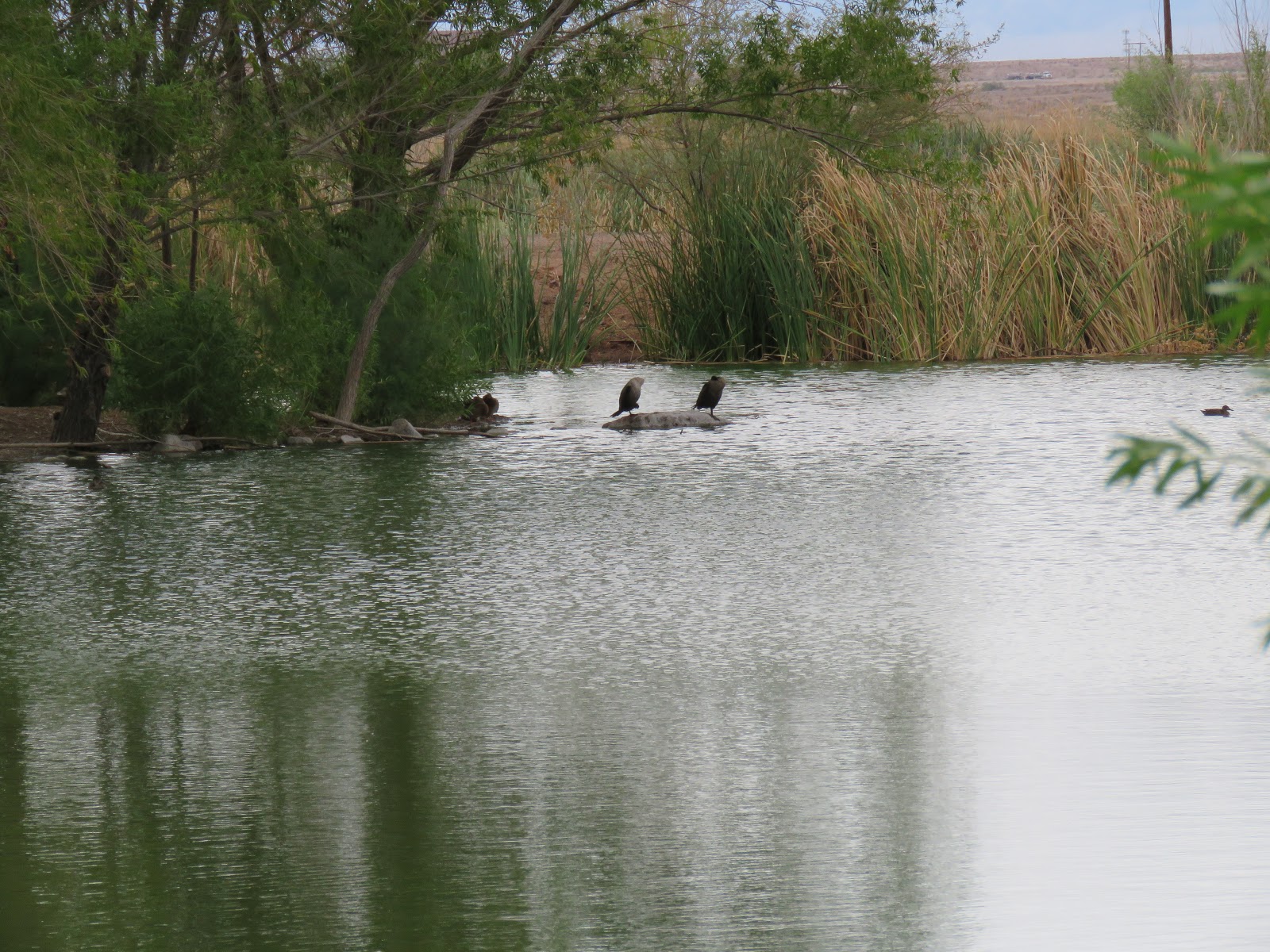
Too distant for close-up photos, we spotted these two Cormorants sitting on a rock in a pond at the Henderson (Nevada) Bird Viewing Preserve. For more photos, please click here.

What’s it really like?…

This giraffe was having a “bad hair day!” The hair on the female giraffe’s ossicones is usually short and straight up. 

“Sighting of the Day in the Bush”

Cape buffaloes on the Sabie River in Kruger.

In 2012, when we booked our first holiday home in Kenya and then Marloth Park, it was hard for us even to imagine what it would be like living in this type of environment. 

Unaware at the time as to the degree of potential risks, inconveniences, and challenges we might face spending three months in the bush, we forged ahead tentatively optimistic, hoping to fulfill my lifelong dream of visiting Africa. 

A dazzle of zebras hanging out near the road in Kruger.

Although Tom was somewhat skeptical and fearful of the unknown, he willingly agreed to visit the mysterious continent. We spent almost nine months on the continent living in three countries; Kenya, South Africa, and Morocco.

Many travelers never consider visiting Africa due to their fears. The distance is also a factor, along with the high airfare costs from many parts of the world. But, fear seems to be the most significant deterrent based on conversations we’ve had with travelers from all over the world.

And yet, millions of tourists visit Africa each year, statistics for which may be found here. Tom had never known anyone who’d visited Africa in our old lives, and I only knew a handful, all of whom had an extraordinary experience.

A crocodile was lounging on the bank of Sunset Dam.

And now, almost six years have passed since we arrived in Kenya in September 2013, which we’ll soon visit again in less than seven months. It feels as natural for us to be in Africa as anywhere else in the world, if not even more.

Over and over, we’ve mentioned the challenges and inconveniences; the insects; mosquitoes; malaria, and other disease risks; rampant crime in specific areas; the excessive heat in the summer months; and a small but realistic risk of injury from wildlife (snake bites, insects bites. poisonous vegetation and close encounters with dangerous animals).

Yellow-billed storks and other birds are not easily identifiable due to the distance when taking this photo across the lake at Sunset Dam.

We’ve even heard local stories of residents in Marloth Park unwittingly being “stabbed” by the horns of male kudus, male bushbucks, and wildebeest when they got too close. These animals generally don’t attack humans unless injured or provoked.

Then, of course, we all proceed with caution when lions or leopards have been spotted in the park, which poses the most risk at night in the dark. There are curfews imposed against walking on the roads at night. Logical, eh?

We surmised this elephant might have been ancient based on its size and its bright white tusks.  Scientists can better gauge the age of an elephant by its teeth, as described on this site.

All of these aside, we do not live in fear under any circumstances, although we use reason, caution, and care in many situations that could pose a problem. 

Yes, when walking through the heavy bush on our perpetual search for photo ops, we watch where we’re walking not only to avoid spraining an ankle from the uneven terrain but always on the lookout for snakes.

Hippos on the bank of the Sabie River.

On the positive side, nothing, anywhere in the world, can compare to the joy we experience every day. From watching the birds enjoy our bird feeder to the nine kudus who visited first thing this morning to the many trips to Kruger as shown in today’s photos.

This morning while we had breakfast on the veranda (which we now do each morning), we delighted in the kudu’s presence, totally entertained by their interactions and gentle antics. I stand at the edge of the veranda, and my favorite kudu licks the toes of my stocking feet.

This was the first time we’d seen giraffes at the Vurhami Dam, located about 10 minutes on the paved road from the entrance to the park at Crocodile Bridge.

It’s cool here now in winter. Most days are sunny and comfortably warm, not hot. There aren’t many insects buzzing around our heads in the winter months, which will end in September. 

We aren’t dreading the onset of the hot and humid summer. We experienced it in 2013/2014 and knew what to expect.  

Wildebeest lounging in the savannah.

Soon, we off to the hustle and bustle of busy, cultural Komatipoort and Lebombo, the streets packed with locals selling their wares and others buying them. Even shopping day is an adventure unto itself.

We continue to be grateful and humbled by this life. We pray good health will keep us traveling for as long as possible.

Several giraffes attempting to drink at the Vurhami Dam.

May each of you have good health and fulfillment!

Photo from one year ago today, July 26, 2017:

Two Mallards sitting on rocks in one of the eight ponds in the Henderson Bird Viewing Preserve in Nevada. For more photos, please click here.

World travel friends inquire…Visa questions…

We took this photo on Volstruis Street. The word volstruis means ostrich in Afrikaans.

“Sighting of the Day in the Bush”

Wildebeest Willie and a friend, along with some warthogs at night.

Today, as late as it is, we’re rushing through the post to get it uploaded before 1700 hours (5:00 pm) when the evening’s festivities begin. As a result, there’s no rhyme or reason to today’s photos which include a bit of this and that.

Not only do they gravitate toward the river for food but also for water, where they drink, play, and swim.

We just returned from Kruger National Park for another fantastic day we’ll be sharing in tomorrow’s post, for which we’ll have plenty of time to prepare as opposed to today’s limited time frame.

Trying out a few of the camera techniques I learned from friend Ken, I still see that I have a long way to go.

Over this past almost six months in South Africa, we’ve become more and more interested in visiting Kruger, but it seems to make sense to arrive before noon resulting in our frequent late posting. 

If visitors arrive after midnight, it’s required to go into the building to access the park. This may result in a 30 minute or longer wait during busy days.

This photo better represents what I’ve been practicing. 

As it is, driving through the entrance booths can take as long as 10 or 15 minutes per vehicle. Once we cross the Crocodile Bridge, we’re anxious to get inside to begin our favorite route.

On another note, we can’t believe we’re leaving for our next visa run in a little over three weeks. Where did the time go? These 90 day periods we’re allowed to stay in South Africa are flying by so quickly. It’s undoubtedly frustrating we have to leave, but it’s the only solution we see available at this time.

Speaking of visas, a few minutes ago, we were talking on Skype with friends Lea Ann and Chuck, whom we met while on a cruise, Royal Caribbean Explorer of the Sea, from Sydney to Seattle. We’ve stayed in touch over these past many months.  They had visa-related and other questions to ask.

I’m not a “natural” photographer making it extremely difficult to learn all the nuances, but I’m determined to improve over time.

Soon, Lea Ann and Chuck will embark on their own world travel journey, and of course, they encountered some concerns about visas for specific situations. We suggested they contact one of the many visa processing companies for finite details.

But, we were able to give them an overview of a few situations we’ve encountered along the way, including our experience in being “illegal aliens” in Australia last year due to a closed-loop cruise.

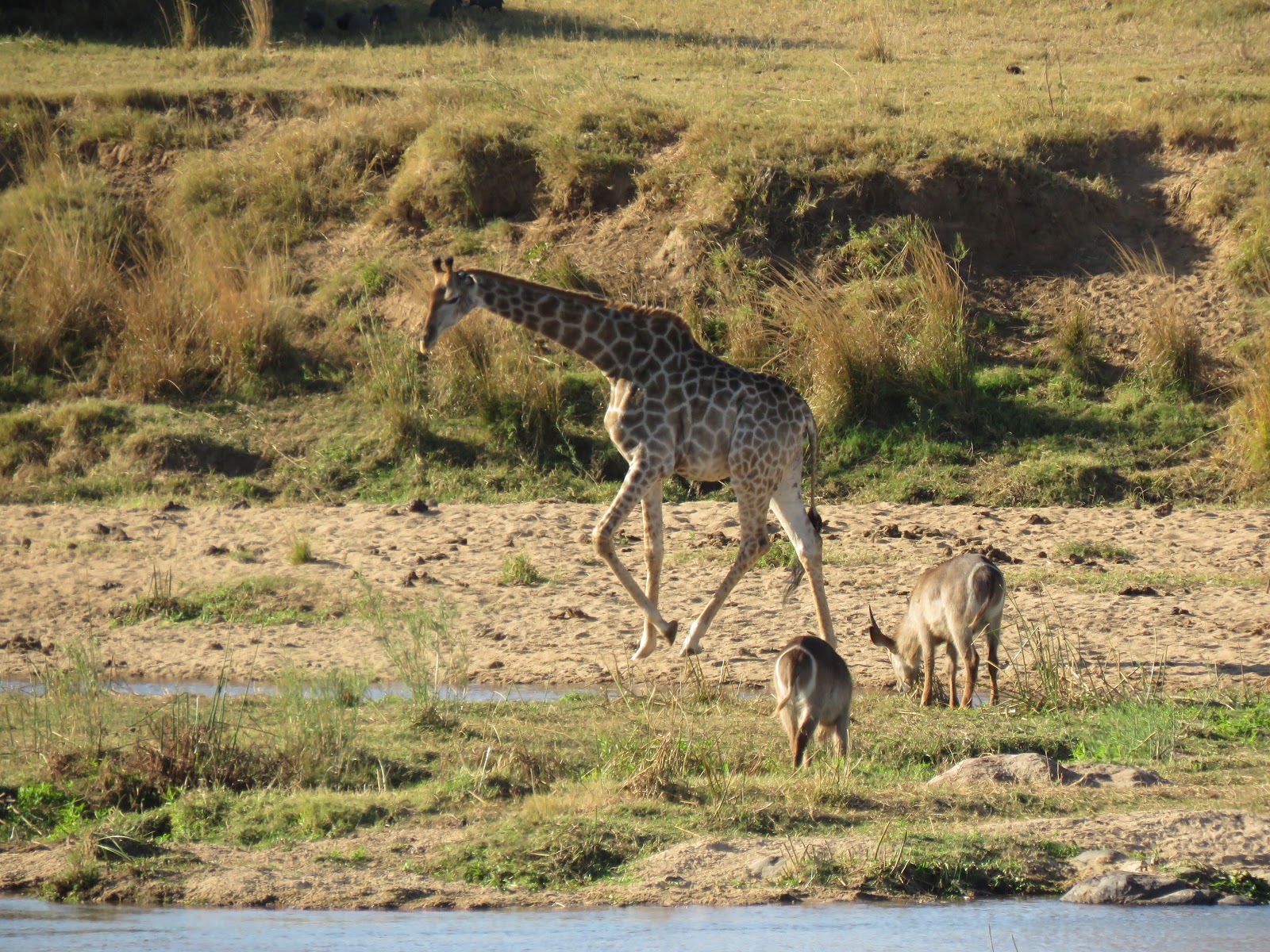
A giraffe near two waterbucks.

For one of many posts describing our illegal alien status in Australia, please click here. Luckily, after considerable time and effort, we were able to work it all out and leave on the cruise where we met Lea Ann and Chuck on our way back to the US to see family.

In speaking with Lea Ann and Chuck, we’re reminded of how vast our experiences have been since 2012 and how grateful we are for every experience, good and bad. We’ve learned a lot from our mistakes and, on occasion, prided ourselves on good decisions we’ve made along the way.

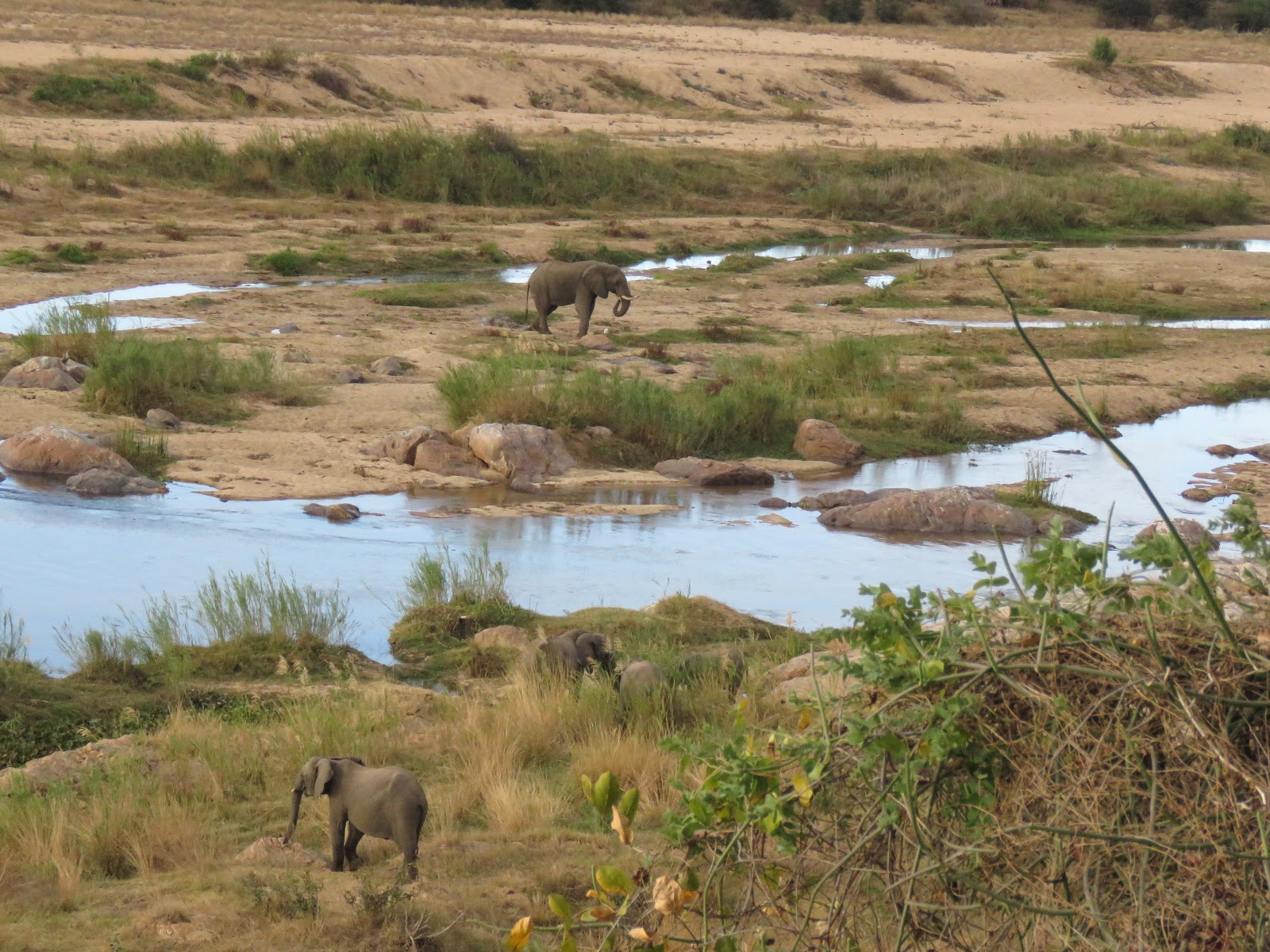
We always enjoy watching elephants crossing a river or a road.

However, continuing to travel the world, which we’ll commence with even more mobility beginning next February, is always a “work in progress.” The learning, along with our personal growth as individuals and a couple, is an ongoing process.

Today, as we drove through Kruger for several hours, we relived many of the details of the early stages of our relationship. At that time, we were the most “unlikely” couple to succeed as anyone we’d ever known. Our differences were many.

The green grasses along the river are pleasing to the elephants.

And yet, here we are 27 years later, and we’ve decided we couldn’t have been better matched in general and for this extraordinary life we live. The likelihood of two people willing to live this life and doing so with love, respect, peace, and harmony is hard to envision.

A lone elephant across the river.

We wish Lea Ann and Chuck, another happy couple, the very best life together as they continue to plan their world travel adventures. We have no doubt they’ll be as content and fulfilled as we have been!

Happy day and evening to all!

Photo from one year ago today, July 24, 2017:

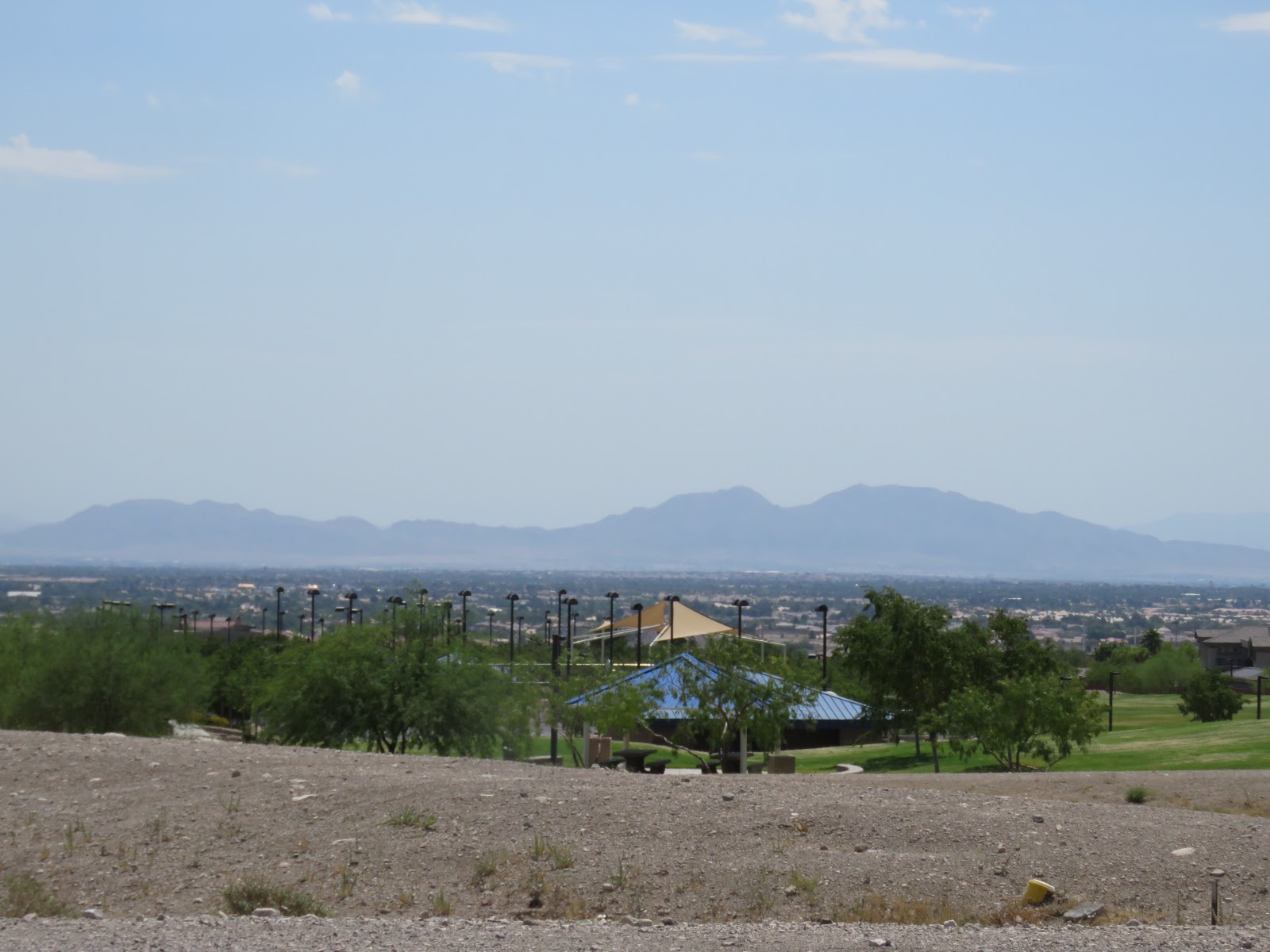
The heat and dust create a haze over the desert, often impeding views of the mountains.  For more photos, please click here.

A Sunday drive in the neighborhood…Pinch me, am I dreaming?…

This was one of our favorite sightings of the day, three giraffes drinking together on the Crocodile River.

“Sighting of the Day in the Bush”

We’ve posted other photos of hornbills in our bird feeder, but we can’t ever get enough of these pretty birds.

After uploading the day’s post and busying myself making a special Sunday dinner, I suggested we go for our drive…in this case, a “Sunday drive.” I recall as a kid going for a drive on Sunday afternoons, and it was extraordinary. 

I grew up in Long Beach, California (except for two years in Boston). A Sunday drive usually consisted of visiting one of many exceptional beaches on the Pacific Coast Highway.

The above main photo is from a distance. 

When Tom was a child, typically, his family would drive from Minneapolis to Winsted, Minnesota (72 km, 45 miles) to visit family. It was often too cool to swim in the ocean in the winter months, but the drive and a stop for an ice cream cone were all it took to make the day special. He, too, had some great memories of those days.

Now, as we’ve aged and are “relatively” retired as world travelers, Sundays are just another pleasant day of the week, especially since we’ve re-instituted our old-fashioned Sunday drive.

Giraffes rarely bend over to the ground other than for drinking. They are highly vulnerable to predators in this position.

However, a Sunday drive in Marloth Park is like none other anywhere else in the world. As always, Tom washed the little car’s windows since, at times, sightings occur in front of us on the road, and we have no choice but to take photos through the windscreen (windshield in the US).

A wildlife wonderland.

We load a newly charged battery in the camera, clean the camera lens with a soft cloth and pack an extra battery in Tom’s pants pocket. We fill our mugs with iced tea, Crystal Lite for Tom, and green tea with cinnamon for me, and we’re off.

Over the past 5½ months, we’ve learned to keep our expectations in check. On occasion, we may see little more than helmeted guinea fowls (of which we have dozens in our garden), impalas, and a variety of baboons and Vervet monkeys.

Zooming in on this “obstinancy” of cape buffaloes, we see where they got this plural name. They certainly do appear obstinate and, in fact, are referred to as the “Black Death” based on the number of people they kill each year.

For first-time visitors seeing the above could be most satisfying. But, now, after a total of 8½ months in Marloth Park, including our prior three months in 2013/2014, impalas, although adorable, guinea fowls and monkeys are seldom subjects of photos unless something is exciting transpiring.

As for baboons, which are destructive and may be dangerous, we have no interest in them at all, preferring to stay away as much as possible. The exception may be if a large troupe came to the garden for a possible photo op. Of course, it’s imperative not to feed them, or they’ll never go away.

In this distant photo, it appeared the many cape buffaloes were piled atop one another.  They do stay close to one another when lounging…safety in numbers.

As for the rest of the wildlife, we’re interested in it all, from the unusual insects to tiny frogs to the massive elephants. I suppose most of the residents in Marloth Park feel the same, except we noticed the next-door neighbors feeding the Vervet monkeys over the weekend. 

They leave for their other home, and then we’re left with the monkeys pestering us. We cannot stress enough how destructive they can be. They can literally destroy every item on a veranda or the inside a house in a matter of minutes.

Elephants are always an exciting sighting.

Side note:  a few minutes ago, a hornbill was sitting on a tree limb squawking at us.  Tom checked and found the birdfeeder almost empty of bird seeds. He refilled it, and moments later, the hornbill was back inside the feeder as content as she could be, with several following her. That precipitated today’s “sighting of the day” photo above.

We began the Sunday drive around 1330 hours (1:30 pm) and never made it back “home” until almost 1600 hours (4:00 pm).  What a day we had while merely on a Sunday drive through Marloth Park, mainly focusing on activity on the river.

As we ended our drive along the river road, we spotted elephants close to the fence between Marloth Park and Kruger National Park. This was a first for us, but Kathy and Don’s friends who live on the river road told us this occurs occasionally.

The areas around the bush houses had few animals since many holidaymakers were still here spending a long weekend or more. But, once we reached the river, the sightings were over-the-top. 

We’d drive a short distance with our eyes peeled toward the river, see something, park the little car on the road to walk through the dense bush at times. I was wearing jeans and socks, but Tom was in shorts, scratching up his legs in the process. 

Wildebeests and zebras visiting holidaymakers. They had a small bag of pellets that tourists often buy when they are here for a weekend or longer stay. 

Some indigenous and invasive plants can cause a nasty rash, infection, or even serious injury, so I always make sure my legs are covered. We’d recently read of a woman who died (in another area in South Africa) by a neurotoxin in a plant that had scratched her leg while walking in the bush. 

One can’t be too careful. Next time, he’ll wear long pants. Also, it’s important to wear insect repellent since we aren’t taking malaria pills this year in Africa except for our visa trips to Zambia, Botswana, and Zimbabwe.

There were giraffes munching on trees in Marloth Park and more drinking on the river.

Anyway, the day was outstanding! We spotted more wildlife in this short period of time than we’d ever seen in Kruger during the same period. It kept coming and coming. Each time we thought we were done for the day, we encountered more sightings. 

Back at our holiday home, a few animals were waiting for us, Ms. Bushbuck and Little Wart Face. We gave them each a little pile of pellets and vegetables in separate areas so LWF wouldn’t chase her away. They happily munch on their treats, both returning in the evening for yet another round.

Yesterday, we saw no less than 100 cape buffaloes at the Crocodile River.

Today, we’ll lay low, enjoying yet another hot and sunny day at 25C (77F) while situated on the veranda, as usual, contemplating our next trip to Kruger and drive in Marloth Park. Of course, we won’t be waiting until next Sunday for either.

Have a warm and sunny day!

Photo from one year ago today, July 23, 2017:

The lights on the Strip at night are always impressive. It’s hard to believe it was a year ago we were in Las Vegas spending this fun evening, among many others, with son Richard and friends. For more photos, please click here.

Lions lounging…Anticipation…Dangerous small antelope…

Difficult to distinguish in this photo. Two male lions are sleeping.

“Sighting of the Day in the Bush”

With the male bushbuck in the yard munching on pellets, this female hid in the bush until he left.

After a pleasant evening out to dinner with friends, we were home shortly after 2200 hours (10:00 pm). I couldn’t fall asleep when I went to bed at least an hour before Tom for some odd reason.

Tom spotted this lion napping across the Crocodile River as we peered through the fence between Marloth Park and Kruger.

Finally, by midnight, I dozed off, only to awaken every hour or so. By morning, I hadn’t slept for more than three or four hours, asking myself what possibly could have caused the poor night’s sleep. Nothing had changed. I hadn’t had any caffeine or eaten anything that would precipitate such a stormy night.

He was at quiet a distance, making me struggle to hold the camera steady for these shots.

Subsequently, I was relatively pooped when I began today’s post, a little later than usual after I’d made breakfast (Tom did the dishes), did laundry (Tom hung it on the clothesline), and prepared the majority of tonight’s dinner. 

I was dozing off sitting at the big table on the veranda on a gorgeous warm sunny day. By 10:30 am, I headed back to bed (an infrequent occurrence for me) to try for a short nap.

Male bushbuck can be dangerous with their sharp horns.  See this article where a farmer was gored to death by a male bushbuck.

After spending an hour and a half in the bedroom, sleeping only about 20 minutes, I felt considerably better and returned outdoors to Tom, who’d stayed in place at the table while I was trying to nap.

Somewhat refreshed, I knew I’d better get going on today’s post, or I’d be sitting here all day. On this gorgeous day, we’d like to do our usual drive in the park, especially after what we’d seen two days ago when we stopped along the river road and walked through the dense bush to get to the fence between Marloth Park and Kruger National Park.

Tourists should not hand feed any animals with horns. 

We’d spotted several vehicles parked on the narrow road and a dozen or so people armed with binoculars and cameras looking across the Crocodile River. We love it when others find incredible sightings, and we follow suit.

The sky changed dramatically while we were in Kruger a few days ago.

But, this is not as easy as you’d think. The terrain and the color of the lions are an identical match, and bringing them into view on a camera is often tricky. Others who’ve spotted them will often say, “Oh, they are near that big bush, next to the tree.”

There are dozens of big bushes and trees on the opposite side of the distant bank of the river. We’ve often seen people leaving in total frustration when they couldn’t see them after trying for an hour or more.

Female bushbuck were preparing for a drink in the cement pond.

As all of our readers so well know, we’re stubborn and determined and will try and try until we get it right. Why is it worth it to go through the angst of trying to get the wildlife in the camera’s lens for such a distant shot?

Tom says it’s like fishing. You sit. You wait. Nothing happens. Time passes slowly. Finally, you catch a fish, only to take a photo, carefully remove the hook from the fish’s mouth and toss it back in the lake, the river, or the sea.

Sugar cane burning at a distance.

Go figure. What’s with us humans? Why do we get such pleasure out of this? The only answer we can come up with is this: ANTICIPATION! It’s a magical thing.

The burning of sugar cane fields is almost daily, often leaving our white tiled veranda covered in soot based on wind conditions.

We’re reminded of Carly Simon’s famous song, found here as we say this word aloud. Yes, it’s anticipation that drives us to make the weekly run to Kruger, the almost daily drive in Marloth Park, and to sit on the veranda when we’re not doing either and wait, morning, noon and night.

A bloat of hippos.

The funny thing about anticipation is that one must occasionally experience “results,” or the interest would fade away in time. Here, in South Africa, in this unusual place, we’re rewarded with results over and over again.

May anticipation bring you the results you’re seeking today and always!  

Photo from one year ago today, July 22, 2017:

As always, we had a great evening at The Elephant Bar with friends while we were in Las Vegas, Nevada, last year at this time. For more photos, please click here.

Part 2, Kruger National Park reaps many rewards…Supporting other travelers in their quest to travel the world…

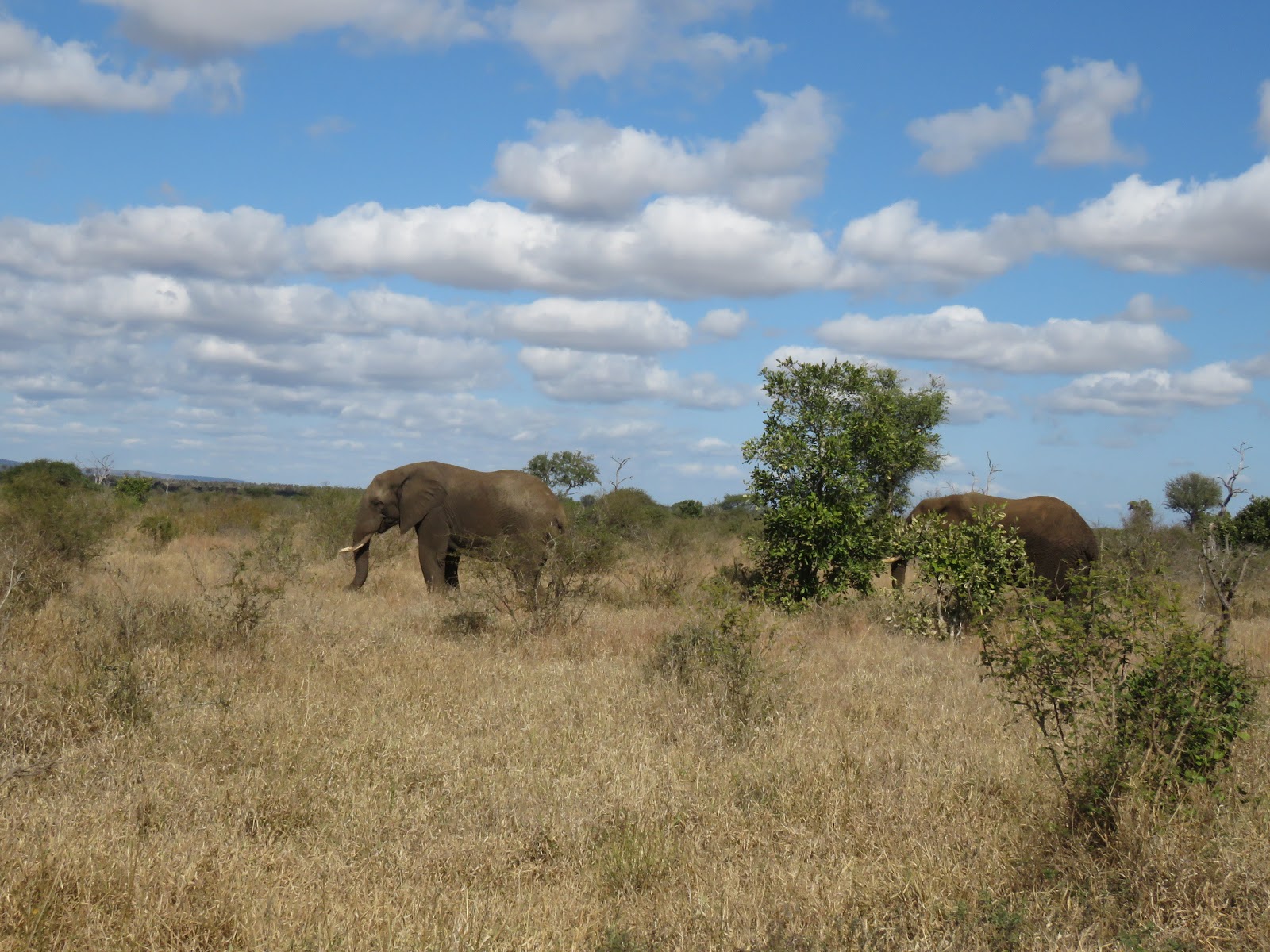
The pillow-like puffs of white clouds against the bright blue sky and a few elephants create a heavenly scene in Kruger.

“Sighting of the Day in the Bush”

This cute little bird landed in our bird feeder. According to our helpful friend Lynne, this is a juvenile male red-headed weaver.  Thanks, Lynne!

Not a day passes that we don’t hear from some of our readers contemplating changing their lives to travel the world. They often have many questions we’re always more than willing to answer based on our personal experiences over this past almost six years.

It’s always thrilling to see elephants along the road.

We’ve had little to offer in a few cases when the inquirer is planning to backpack, stay in hostels, or use an RV, camper, or caravan. But, the majority of inquiries revolve around places we’d suggest, holiday/vacation home rental sites we prefer, health insurance and medical care, refilling prescriptions, car rentals, credit cards to use, visas, and the most cost-effective means of converting money.

Elephants crossing the road is extra special.

We are always happy to oblige and most often respond within 24 hours. The irony of it all is that everyone travels differently. No single person or couple seems to do it precisely as we do.

And most exciting when large numbers of elephants cross the road.

That’s the beauty of the vast numbers of primarily retirees/baby boomers who are making the drastic decision to change their lives. The single most significant difference in the way we travel and how others travel or desiring to travel may include some of these:

  • We have no home, apartment, condo, or bedroom in the homes of family or friends where we go for downtime or regrouping. 
  • We have no storage anywhere. We unloaded everything we owned in our old lives.
  • We own no rental property, often the traveler(s) former residence they keep in case “they change their minds” or tire of traveling.  This may be a significant source of worry and stress; maintenance, management, rental issues, wear and tear, and market conditions. We each had owned homes for over four decades.
On our way to the Mug & Bean restaurant on Lower Sabie, we noticed it was raining at a distance. We certainly need rain here but most likely won’t encounter much for several months.
  • Typically we stay in vacation/holiday homes for one to three months. (Although this year in Africa is a rare exception, as mentioned in yesterday’s post, where we’re recovering from the big expense of the Antarctica cruise).
  • Often, for short stays, we negotiate special pricing for hotels while we await the next venue.
  • We use cruising as much as possible as a means of transportation while providing living arrangements during the sailing period. We don’t think of cruising as a holiday or vacation. 

We have minimal luggage. If we purchase something to add to our bags, we must dispose of something else. Maximum kilogram per bag: 23 (50 pounds)

A waterbuck is looking across the river for possible predators.
  • We do not stay in the homes of family and friends.  We don’t want to burden anyone with our peculiarities, nor do we expect a free ride (except for son Richard in Henderson, Nevada, where we’ll stay for a few weeks every two to three years. Thanks, Ricky!)
  • We don’t have a “bucket list.” If we discover something along the way we’d like to do, we research, analyze the costs, and make a decision to include it in our itinerary.
  • We often book some events two years in advance to continue shaping our itinerary. We thoroughly enjoy the planning process, with each of us playing a very active role.
  • Every day, 365 days a year, we spend half of each day documenting our daily lives with photos. Doing so is not a chore for us. It’s a pure pleasure! We can write about the second part of each day we spend experiencing aspects of our lives the following day.
  • Our overall goal: stress-free living.
There’s never a shortage of moms and babies.  From this site: “Elephants have the longest gestation period of all mammals. These gentle giants’ pregnancies last for more than a year and a half. The average gestation period for an elephant is about 640 to 660 days or roughly 95 weeks. By comparison, a human pregnancy lasts an average of 280 days or 40 weeks. Female elephants live for 60 to 70 years, but only have about four offspring throughout their lifetime.”

None of the above is stated to imply that the way we’re doing it is ideal. However, over these years, we’ve fine-tuned our goals, objectives, and expectations and are content with how we’ve chosen this path in life.

From this site: “The South African giraffe (G. c. giraffa) is found in northern South Africa, southern Botswana, southern Zimbabwe, and south-western Mozambique. It has dark, somewhat rounded patches “with some fine projections” on a tawny background color. The spots extend down the legs and get smaller. The median lump of males is less developed. A maximum of 31,500 are estimated to remain in the wild, and around 45 are kept in zoos.”

However, we always welcome inquiries regardless of the ways you may choose to travel. Please don’t hesitate to inquire at any time. Also, if you know of someone interested in long-term lifestyle travel, please forward our site to their email.

Two giraffes are crossing the road near a historical marker on the paved road.

Tonight, we’re heading out to dinner with friends Sandra and Paul (both MP Honorary Rangers), who happens to live a few doors down the road from us. No doubt, as always, it will be an enjoyable evening with this lovely couple.

In certain parts of Africa, giraffes are being killed for their tails used as a status symbol. For a video and story on this horrifying practice, please click here.

Tomorrow, we’ll be back with lion sighting photos! Please check back!

Have a beautiful weekend.

Photo from one year ago today, July 21, 2017:

We purchased our new Brother color scanner in Nevada to replace the five-year-old Doxie model we used in the past.  For details on living a paper-free lifestyle, please click here.

Part 1, Kruger National Park reaps many rewards…A gruesome reality…Plus, cucarachas…

Although this may appear gruesome, this is the reality of life in the wild. Most likely, a lion killed and devoured this cape buffalo which was later “finished off” by vultures that we saw hovering when we first spotted this scene.

“Sighting of the Day in the Bush”

We were parked at the edge of the shore of Sunset Dam when this croc emerged from the water. Wow!

Sometimes when we go to Kruger National Park, we encounter breathtaking and unusual scenes. Yesterday was a little different. There wasn’t any particular incident or sighting that left us reeling as usual. 

Several vehicles had stopped to observe this kill.  We waited until we could get a better shot and zoomed in.  See the main photo for more detail.

Were we disappointed? Not at all. It’s not always the mind-blowing experiences that make it a good trip into Kruger. Instead, we encountered a wide array of birds and wildlife, which we’ll share over the next few days.

Hippos and impala at a distance on the Sabie River in Kruger.

Often, it’s the more subtle sightings that make us appreciate the simplicity of it all…wildlife living in their natural habitat, continually on the search for food, procreation, and a degree of comfort when possible. We, humans, are so much like them, aren’t we?

We take a side dirt road each time we go to Kruger and often see this wildebeest sitting under this same tree.  I guess  that explains how we’re all “creatures of habit.”

We began first thing in the morning to make the 20-minute drive to the Crocodile Bridge with a plan to drive to Lower Sabie to the Mug and Bean restaurant for a leisurely lunch. I know I’ve mentioned this before, but where in the world can one jump into their car and be in wildlife nirvana in 20 minutes? 

Now that we’ve fallen in love with Wildebeest Willie, we are particularly passionate about these calm and peaceful animals.
We never fail to appreciate this fact, nor do we ever get tired of seeing elephants, giraffes, zebras, wildebeest, warthogs, rhinos, and so much more. One might think that since we can drive five minutes to the river in Marloth Park and almost always seeing elephants, that after a while, it could become mundane.
From this site: “An omnivorous bird, the Yellow-billed Hornbill, feeds mainly on the ground surface, where they forage for seeds, small insects, spiders, and scorpions. This is the bird we see most often in Marloth and Kruger Park, the hornbill. Termites and ants are a preferred food source in the dry season.”

It doesn’t. Each time we spot the magnificent beasts, we’re reminded of how fortunate we are to be here. Often, we ask ourselves and each other…”How did we get to be here? How could we have lived our lives without these amazing
experiences?”

An “implausibility” of wildebeest.

Previously, we’d mentioned that one of the reasons we chose to stay in Africa for so long was to “lick our wounds” from the costly Antarctica cruise, which was well beyond the limits of our yearly budget. To see the total expenses for the Antarctica cruise, please click here and scroll down the page for the information.

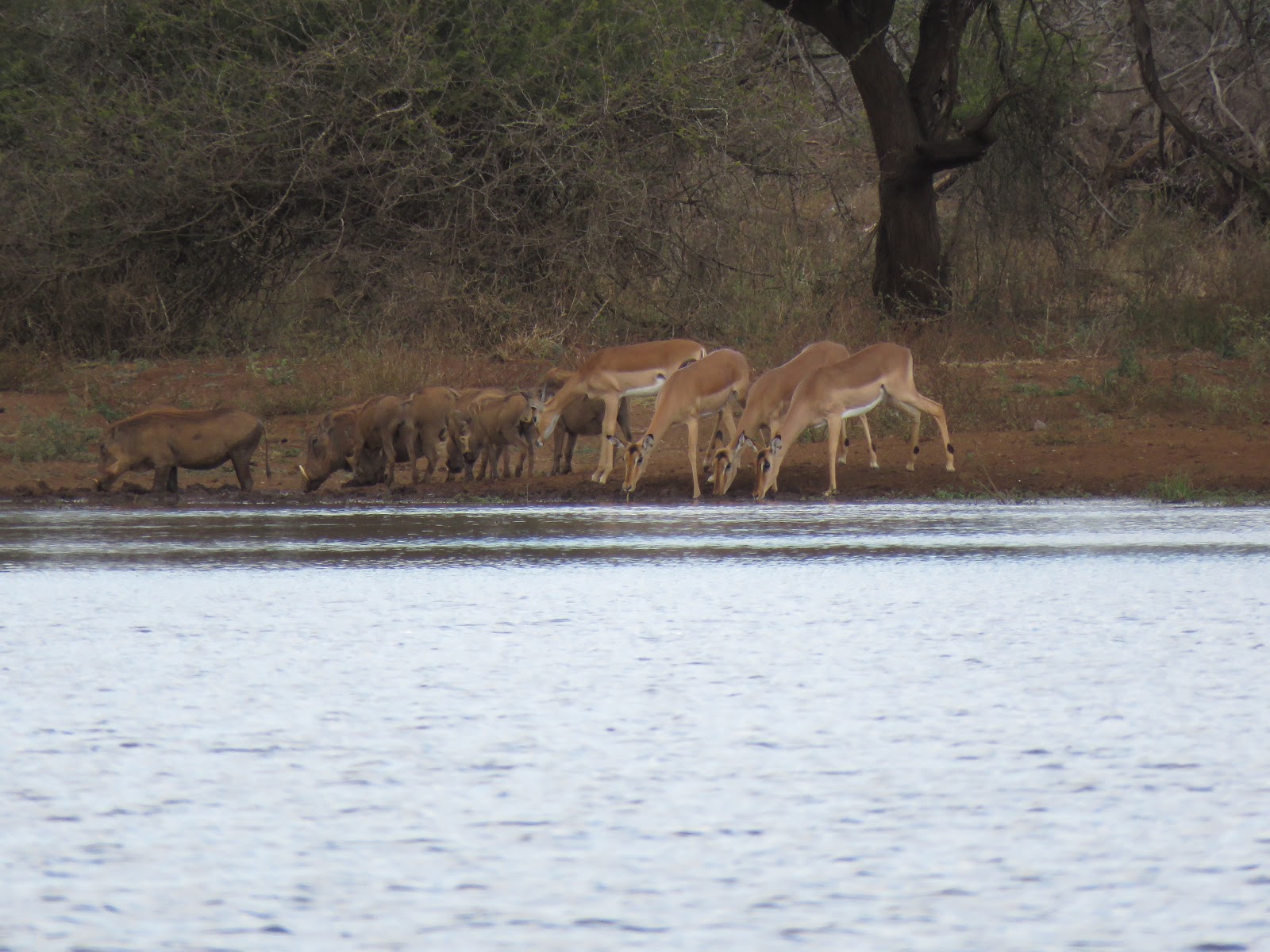
Impalas and warthogs are stopping for a drink.

But, we knew in doing so, it would be “heaven on earth” spending more time on the continent of Africa. Usually, “to lick one’s wounds” requires a certain degree of sacrifice. There’s been no sacrifice here.

This was the first time we’d ever seen a cape buffalo crossing the tar road. They are one of the “Big 5,” including the leopard, lion, elephant, and rhino.

Sure, there are inconveniences and occasional discomforts compared to living in some other parts of the world. However, we’ve adapted so well, we hardly notice anymore. 

Hippos resting on a sandbar on the Sabie River.  Note the number of oxpeckers on the hippos hides!

Over the past few weeks, we’ve had many cockroaches (aka cucarachas in Spanish) in the house. Usually, one thinks of dirt and filth about the disgusting cockroaches. We have them here, and we had them in Costa Rica, both very clean and newer properties. 

This is a white-fronted bee-eater from this site: White-fronted bee-eaters nest in colonies averaging 200 individuals, digging roosting and nesting holes in cliffs or banks of earth. A population of bee-eaters may range across many square kilometers of savannah but will come to the same colony to roost, socialize, and breed. White-fronted bee-eaters have one of the most complex family-based social systems found in birds.”

Picture this, you’re taking a shower, and you see a cockroach crawling up out of the drain. The weird thing here is that they were crawling up out of the drain in the shower. This surely could be a scream-worthy event. 

These dark-capped bulbuls hang around for scraps from diners at the Mug and Bean restaurant in Lower Sabie, where we stopped for lunch yesterday. 

We don’t scream. Tom sprayed the shower, but when it didn’t resolve the issue, Louise and Danie came to the rescue with a particular product they use specifically for these situations. For a while, we won’t see them again. 

Yellow-billed storks lined the shore of Sunset Dam in Lower Sabie.

This is Africa, and they’ll return. Along with zillions of mosquitoes when the rainy season comes in the spring and then the humid summer heat with snakes and insects everywhere. We were here in the summer of 2014. We managed then. We’ll manage again.

Zebra stopping for a drink in the lake.

There will be a trade-off then; the return of dung beetles, which we love to see; the newborns of many of the wildlife; the blooming the bright red Flame Trees and the Sausage Trees and, it goes on and on. There’s so much to distract us from any possible inconveniences.

Another croc emerged for a breath of fresh air.  Crocs may stay underwater for up to an hour when they feel threatened.

Soon, we’ll be off for our usual exploratory drive in Marloth Park. Who knows what we’ll see? It’s now approaching the weekend, and holidaymakers are flooding the park once again. Today the wildlife “traffic” in our garden has already diminished a bit as the crowds move in for the weekend.

Several crocs at Sunset Dam, lounging in the sun.

We’ll be patient, and before too long, it will be Monday again, and everything will be right with the world, this world, right here and right now.

May everything be right in your world today and always.

Photo from one year ago today, July 20, 2017:

While in Las Vegas, I made these homemade hamburger buns (the recipe is shown at this link here) are huge enough to hold a 6 to 8-ounce patty with cheese, bacon, lettuce, tomato, and onion or other items added. They’re easy to make and delicious!  Please click here for more.

Zebra Day!…Watch our exciting zebra video!!!…It keeps on giving and giving…

This video of yesterday’s zebra antics in the garden features the tiniest foals
we’ve seen to date.

“Sighting of the Day in the Bush”

One of the older foals needed a rest.

A few hours ago, we returned from our five-hour outing to Kruger National Park. I’m rushing a bit to get today’s post uploaded since the evening adventures begin soon. Tomorrow, we’ll be back with some stunning photos, which we’re excited to share with all new sightings. Please stop by to see!

It started with just a few, but they kept coming to join in on the action in the garden.

Yesterday, we had a steady stream of visitors throughout the day. We were gone for a few hours to shop in Komatipoort, but we were anxious to get back and see what surprises were in store for us.

This foal was so young, it seemed a little dazed and confused, never once paying any attention to the pellets and vegetable.

We weren’t disappointed. No more than two minutes after we parked the little car in the driveway, they started coming. Ms. Bushbuck and baby and friend were the first to arrive, followed by a “sounder” of warthogs, many we know, some we did not.

The dazzle consisted mainly of females along with the three youngsters.

While Tom tossed the pellets, I cut up vegetables. It was only 1600 hrs. (4:00 pm) and we had an inkling it would be a hectic evening in the bush. How right we were!

The baby’s hair was a little curly and fluffy. Her face was dirty from the dust kicked up during the visit.

Still reeling from the 17 kudus that stopped by for an hour on Monday morning after the tourist traffic in the park had considerably thinned out, our expectations weren’t high.

She tried to suckle a few times, but mom was more interested in pellets at the moment than in feeding her young.

We had several excellent sightings on the Crocodile River with more wildlife than we could have imagined, indeed “safari luck,” when the presence of tourists has no bearing on how many animals stop to drink and eat on and near the Crocodile River. 

The gestation period for African zebras is typically 13 months.

After staying busy with the visitors on hand, we heard the thunderous sounds of hooves of zebras as they barreled their way through the dense bush to get to the ample open space in our garden, where they all congregate when they stop by.

Please leave it to Little Wart Face to get in on the action. He always seems to be hovering nearby, watching and waiting.

The next-door neighbors who periodically stay in their bush home purchased a large bale of hay before leaving for their other home somewhere, going it in their driveway for the animals to eat.

Success, a moment of nursing!

(We don’t know these neighbors since they only stay for a few days and then depart. We’ve never made an effort to introduce ourselves, nor have they). We were sad to see the bale of hay, a breeding ground for bacteria, with the animals passing diseases between themselves, especially bovine tuberculosis. 

Zebras tend to stay physically close to one another, although they can be feisty when food is offered.

For this reason, we’ve never considered having one of those at our holiday home, although there was one here, half gone, when we arrived in February. Before we knew about bovine TB and other diseases that wildlife can pass amongst themselves when eating the hay bales or from a trough.

This female stood with her nose touching the glass on the little car for at least 10 minutes. We wondered what that was all about.  She could have been staring at her reflection.

But, how do you approach a neighbor, especially when we don’t know them, and we’re “only renters,” to tell them not to use a trough, a bale of hay, or a mineral block which the wildlife so freely love and share?

This smallest of the foals stayed as close to mom as possible.

First, we noticed the zebras at the neighbor’s home engrossed in the hay.  From time to time, they’d look our way. We are waiting patiently. We knew they’d come. And, they did indeed.

A playful pair.

The most exciting part of their visit saw the tiniest zebra we’d seen during this stay in Marloth Park or four and a half years ago when we were here. Not only was there the smallest foal, as shown in the above video and photos, but there were two other foals in the “dazzle” of 11 zebras. 

After the play, they cuddled and sniffed one another.

Funny thing, as I write this now, a day later, there are three zebras in the garden, all males. They’re now heading over the hay bale along with a half dozen helmeted guinea fowls who followed them.

This female was scratching her nose on the end of the fence.  Zebras often scratch themselves of any available protrusion.

Little Wart Face is the only pig here now, and he enjoys any pellets of vegetables the zebras may have missed. Even the guinea fowl, who find the pellets too large to swallow, peck at them to break them up into smaller pieces. The competition for pellets is astounding, often resulting in head-butting and kicking.

The foal seemed lost and confused.

As an aside, while we stood on the edge of the veranda, one of the zebras bit my shoe when I didn’t tender the pellets quickly enough for her liking. We laughed out loud. I was glad I was wearing my runners since that bite could have been painful!

The mom and baby were the last to leave when the others had wandered next door to the bale of hay.

Now that we’re back from Kruger, we’ll prepare dinner and soon set up the veranda for the evening’s entertainment. Who will it be tonight? We shall find out soon enough!

Oops! Wildebeest Willie just showed up! Have to go…

Have a pleasant day and evening!

Photo from one year ago today, July 19, 2017:

The yellow Costco bag was filled with the remainder of the packages we handled yesterday, including the new portable scanner we ordered when our old unit broke in Minneapolis. For more photos, please click here.