
Click here first to see the video of the removal of the above: https://www.facebook.com/share/v/1Q1WjLAwc9/
Click this video next to see the end result: https://www.facebook.com/share/v/1ZNcA2vLGp/
Although we are far away, we remain deeply tethered to Marloth Park through the steady, comforting influx of messages, photos, and shared concern. We stay in close touch with our many friends who live there, and we follow along almost daily through Facebook posts in the group Marloth Park Sighting Page. That simple act of scrolling, reading, and commenting has meant the world to us. It bridges the physical distance and reminds us that connection is not measured in distance, but in care. Even from afar, Marloth still feels like part of our daily lives, especially during this past month of massive rains and relentless flooding that, incredibly, continues.
Watching the storms unfold from a distance has been emotionally complicated. There is the helplessness of not being there, of not being able to look someone in the eye or step outside to assess the damage ourselves. At the same time, a shared vigilance emerges in moments like these. Posts appear at all hours, with roads washed out, fences damaged, rivers swollen beyond recognition. Wildlife sightings take on a different tone, edged with concern rather than delight. The land we know so well has been under siege, and everyone, human and animal alike, has been affected.
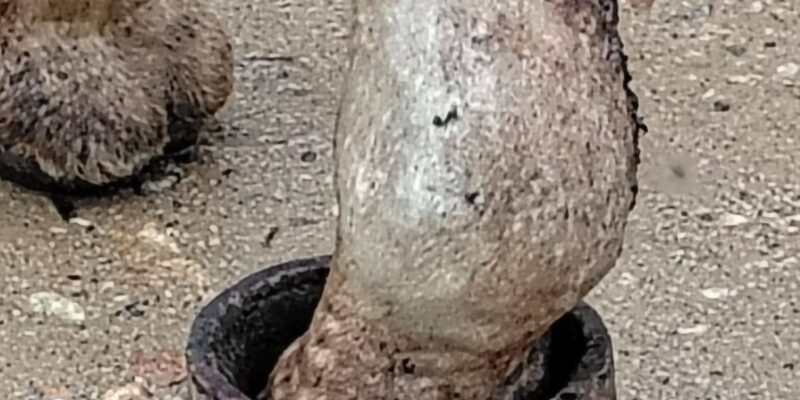
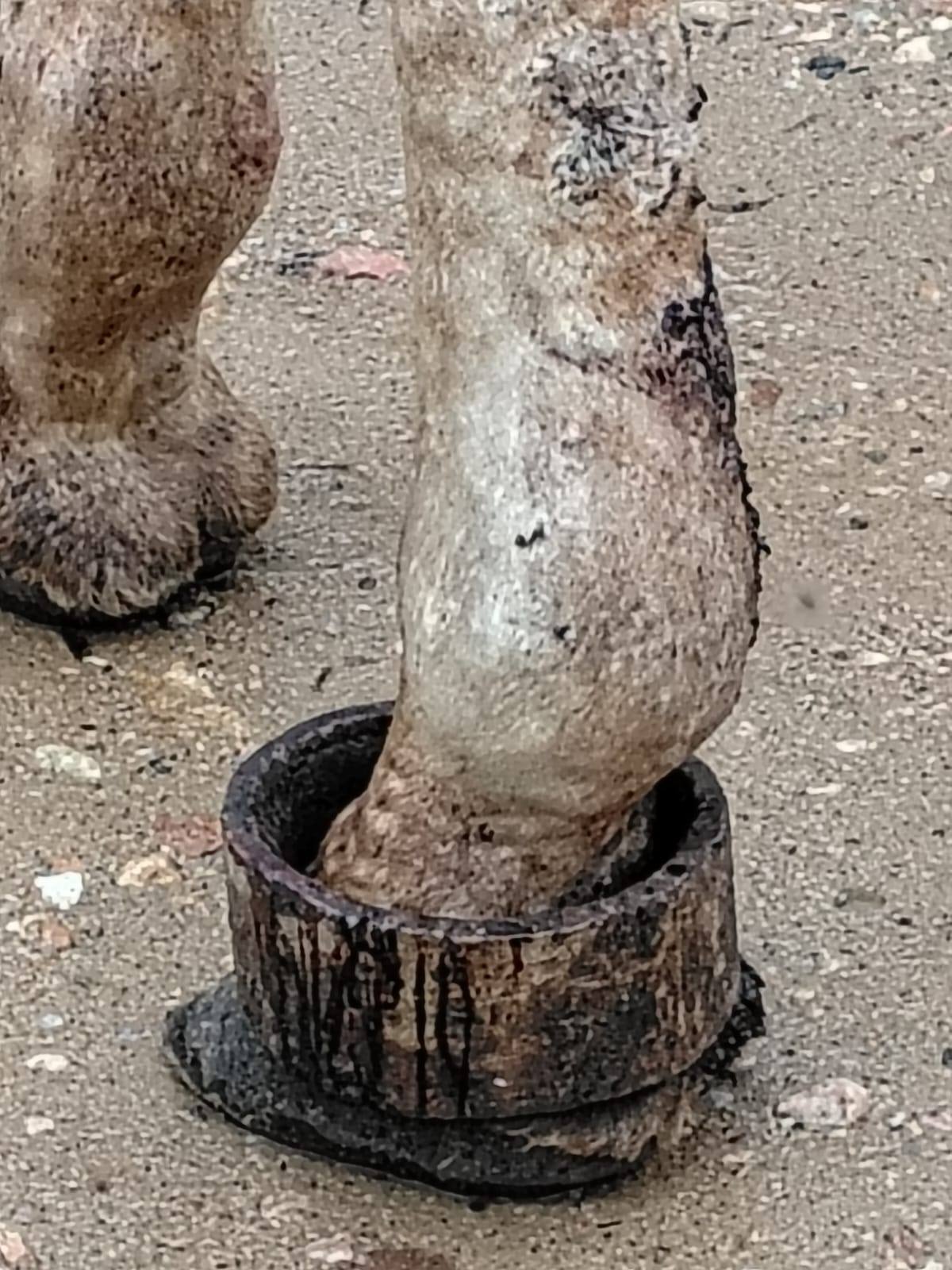
A few weeks ago, a series of photos caught our attention. A giraffe had been spotted with a pipe lodged around its leg, stuck just above its foot. It was the kind of image that makes your stomach drop. Giraffes move with such grace and quiet dignity that seeing one encumbered by a human-made object feels especially cruel. The pipe looked rigid and unforgiving, and it wasn’t hard to imagine what could happen if it remained there, swelling, restricted movement, open wounds, infection—a slow, painful outcome for an animal that had done nothing wrong.
Under normal circumstances, one might hope for swift intervention. But there is nothing normal about operating during floods. With roads submerged and large areas inaccessible, the Marloth Park rangers could not reach the giraffe safely. Days passed. Updates were scarce. Each new sighting brought a mix of relief that he was still moving, still alive, and fear that time was working against him. From afar, all we could do was watch, hope, and trust.
Then, a few days ago, everything shifted. We saw the video, that video, and felt an overwhelming surge of emotion. (Please click on the link above if you haven’t already.) There, on the screen, were the rangers at work, finally able to reach the giraffe. The scene was both tense and extraordinary. The giraffe was carefully darted, handled with precision and respect, and his immense body was supported as gently as possible. A generator hummed in the background, powering an electric grinder, an unexpected but necessary tool in this delicate operation.
Watching the pipe being cut away was almost unbearable in its intensity. Sparks flew briefly, hands moved with practiced confidence, and then, finally, the obstacle was gone. The pipe that had threatened so much pain and long-term damage was removed, piece by piece. What struck us most was not just the technical skill involved, but the calm, methodical compassion of the rangers. There was no rush, no drama. There was only focus, professionalism, and care for the animal in front of them.
For those of us who love Marloth Park and its wildlife, moments like this inspire a profound sense of gratitude. The rangers do not simply “do a job.” They shoulder an enormous responsibility, often in dangerous and unpredictable conditions, and they do so with humility and kindness. They intervene when human impact harms wildlife, even when the intervention requires ingenuity, heavy equipment, and hours of planning. They treat each animal as an individual life worth protecting.
From where we sit now, far away, dry, and safe, it is easy to forget how demanding this work truly is. But that video brought it all back into sharp focus. It reminded us why Marloth Park holds such a powerful place in our hearts. It is not just the animals, or the landscape, or even the memories we carry with us. It is the people on the ground, showing up day after day, quietly ensuring that compassion prevails.
Distance has not weakened our connection to Marloth Park; if anything, it has strengthened it. In moments of crisis and triumph, we are reminded that belonging does not require proximity. It requires care. And on that day, watching a giraffe freed from pain by steady, capable hands, we felt deeply grateful to still belong.
Be well.
Photo from ten years ago today, January 25, 2016:
