Happy New Year’s Eve in this part of the world…

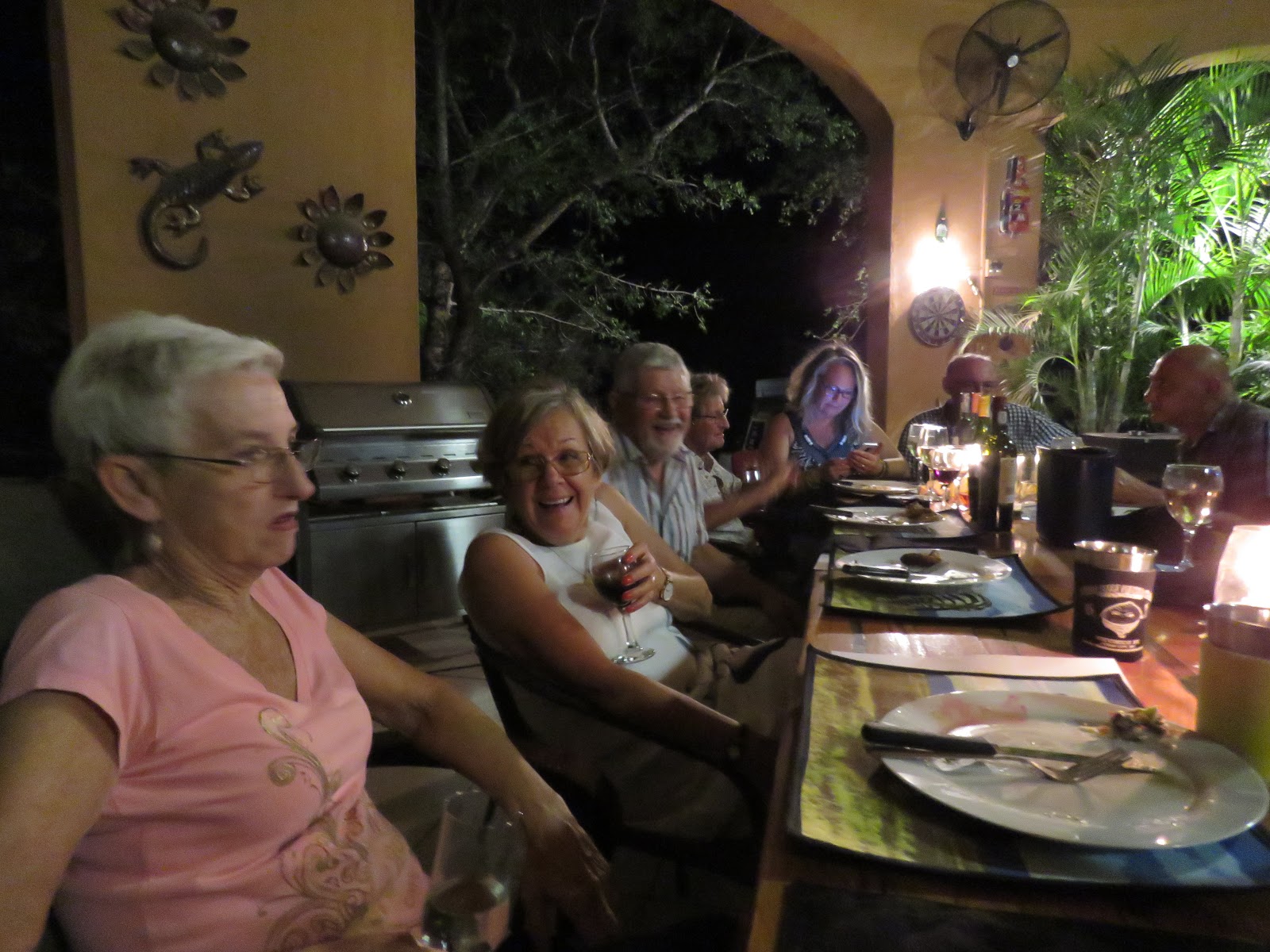
Tonight feels like a gentle pause before the calendar turns, the kind of evening that asks nothing more of us than to show up with something warm to share and an open heart. We’re heading up the road to our landlord’s and now dear friend’s home for a New Year’s Eve gathering. Dave and Enge have opened their doors once again, and like all the best parties, this one comes with a simple request: everyone brings a dish, everyone contributes to the table, everyone belongs.

In our highly functional kitchen, the air already carries the comforting scent of Italian comfort food. We’re making wagyu beef Italian meatballs, rich and tender, which I’ll pre-cook and simmer slowly in homemade red pasta sauce. It’s the kind of recipe that doesn’t rush, that asks for patience and rewards it generously. Just before serving, we’ll top the meatballs with hand-grated mozzarella cheese, still soft and slightly warm from the block. Tom will bring along his brandy, while I’ll tuck my bottle of white wine in the cooler bag, chilled and ready to pour.

Most of the guests will be familiar faces, people we met at the last party Dave and Enge hosted, the day after we arrived in New Zealand. It feels like a lifetime ago now, especially considering how quickly we fell ill after that evening. There’s something comforting about returning to a place where we were welcomed before we were sidelined by sickness, where laughter and conversation first eased us into this new chapter. Tonight feels a bit like a do-over, a chance to reconnect now that we’re finally ourselves again.

Today itself has been beautiful, one of those days that quietly insists you slow down and notice it. The windows are open wide, no screens to interrupt the breeze, and the sounds of the countryside drift in freely. Of course, that also means the flies will arrive in due time, uninvited and relentless. Flies are a constant nuisance here in New Zealand, just as they are in Australia, including Tasmania, where we’ll be headed in just 43 days. Forty-three days. It hardly seems possible. Time is flying by at a pace that’s both thrilling and a little startling.

Still, we’re savoring every moment in this blissfully quiet and serene location. The stillness here has been healing in ways we didn’t fully appreciate until we slowed enough to feel it. The pace will pick up considerably when we reach Tasmania in February, and we know that energy and activity will have their own rewards. For now, we’re content with gentle days like this one.

Today will remain intentionally quiet. I’ll do my daily exercises, grounding myself in routine and gratitude, and once this post is finished, I’ll sit down to do my nails, a small, almost meditative ritual that feels like self-care in its simplest form. Tom is happily relaxed, absorbed in Ancestry.com, his favorite pastime. He can lose hours tracing family lines and stories, and I love watching him do it, so completely at ease.

As the sun lowers and evening approaches, we’ll gather up our contributions and head up the road, ready to welcome the new year among new friends. From our hearts to yours, we wish every one of our readers a safe and Happy New Year, wherever you may be in the world, in whatever time zone you call home. May the year ahead bring health, peace, and many shared tables.

Be well.

Photo from ten years ago today, December 31, 2015:

Now that it’s summer in Fiji, more and more flowers are blooming. For more photos, please click here.

Day 32…Happy Thanksgiving to those who celebrate…Remembering Thanksgiving in the bush November 2018, menu included…

From left to right around the table:  Kathy, Janet, Steve, Don, Louise, Danie, Leon, Dawn, Uchi, Evan, while Tom and I shared the end of the table. Total in attendance: 12.

The two days leading up to our Thanksgiving dinner felt like a marathon held under the unrelenting African sun. With the heat pressing in on us, an almost tangible presence, I kept reminding myself that we had chosen this life, this adventure, and that moments like these are as much a part of our story as the quiet evenings on the veranda. Tom and I worked shoulder-to-shoulder through it all. Yes, I handled most of the cooking, but he peeled mountains of potatoes, washed endless stacks of dishes, helped with the pies, set up the veranda, and stepped in wherever he could. When it comes to hosting, we truly do operate as a team.

Thanksgiving dinner on the veranda with friends.

I tried to remember the last time we’d prepared a full dinner for twelve. The year must have been 2012, sometime before we locked the door of our Minnesota home for the final time. I had forgotten the sheer effort involved, not just the cooking, but the coordinating, the timing, the constant motion. Yet, as soon as friends began arriving and the laughter began floating across the veranda, I knew it was worth every sweaty minute.

For a brief moment, though, I feared we might miss our 7:30 pm “dinner-is-served” target. I had a few dishes left to reheat and, wouldn’t you know it, the new microwave refused to cooperate. With the clock ticking, I abandoned the idea and quickly reheated everything on the stovetop. It wasn’t elegant, but it worked. In the end, we were only ten minutes late sitting down. A victory, really.

On the right, Evan, Uschi, Dawn, and Leon.

The dinner unfolded in the most delightful way. Each couple received an entire stuffed chicken, surrounded by an array of sides that filled the table with color and aroma. The enthusiasm in their faces, the pleasure of tasting foods many hadn’t eaten in years or ever, was the best reward of all.

When the meal wound down, we invited everyone to pack leftovers using the takeaway containers Dawn and Leon had brought from Jabula. Watching our friends playfully fill their boxes reminded both of us of all those years back in the US, when family members left our house, balancing containers of leftovers and, of course, a pie.

Each couple got their own roast stuffed chicken with leftovers to go.

On the pool table, the full-sized pumpkin pies were lined up, ready for each couple to take one home. We served a separate pie after dinner, topped with whipped cream, as requested. I told myself I’d resist, but who was I kidding? I sampled a bit of this and that. How else could I be sure everything tasted right? By the end of the night, I even allowed myself a sliver of the regular pumpkin pie. A holiday indulgence, I suppose.

On the left, a pan of extra stuffing; in the center, sweet potatoes (they are light-colored here in South Africa, not orange as in the US.

The next morning, with no leftover chicken but plenty of sides, we decided to roast a “flattie,” some chicken livers, and a few bone-in breasts. That will carry us through several easy dinners. I’m back to my usual way of eating, content with chicken, salad, and steamed spinach, while Tom happily anticipates digging into the stuffing, mashed potatoes, sweet potatoes, rolls, and pie. That man never met a carb he didn’t love.

Low-carb mashed cauliflower.

The aftermath of a dinner for twelve is no small thing. Dishes everywhere, serving pieces scattered, napkins in need of washing. Louise, thoughtful as ever, arranged for Vusi to come this morning. Even so, Tom, who hates leaving dishes overnight, ran the dishwasher twice before 6:00 am, trying to lighten the load. I washed the linen napkins, cleaned the counters, did laundry, and organized the refrigerator.

Traditional green bean casserole. Kathy brought the fried onions back from the US! Thanks, Kathy!

Despite the bustle of the previous night, our wildlife friends still wandered into the garden. Tusker appeared briefly, and our inseparable warthog duo, Siegfried and Roy, came looking for pellets, responding to their names no matter which of them we called. Even in the chaos of hosting, those simple, familiar interactions anchored us.

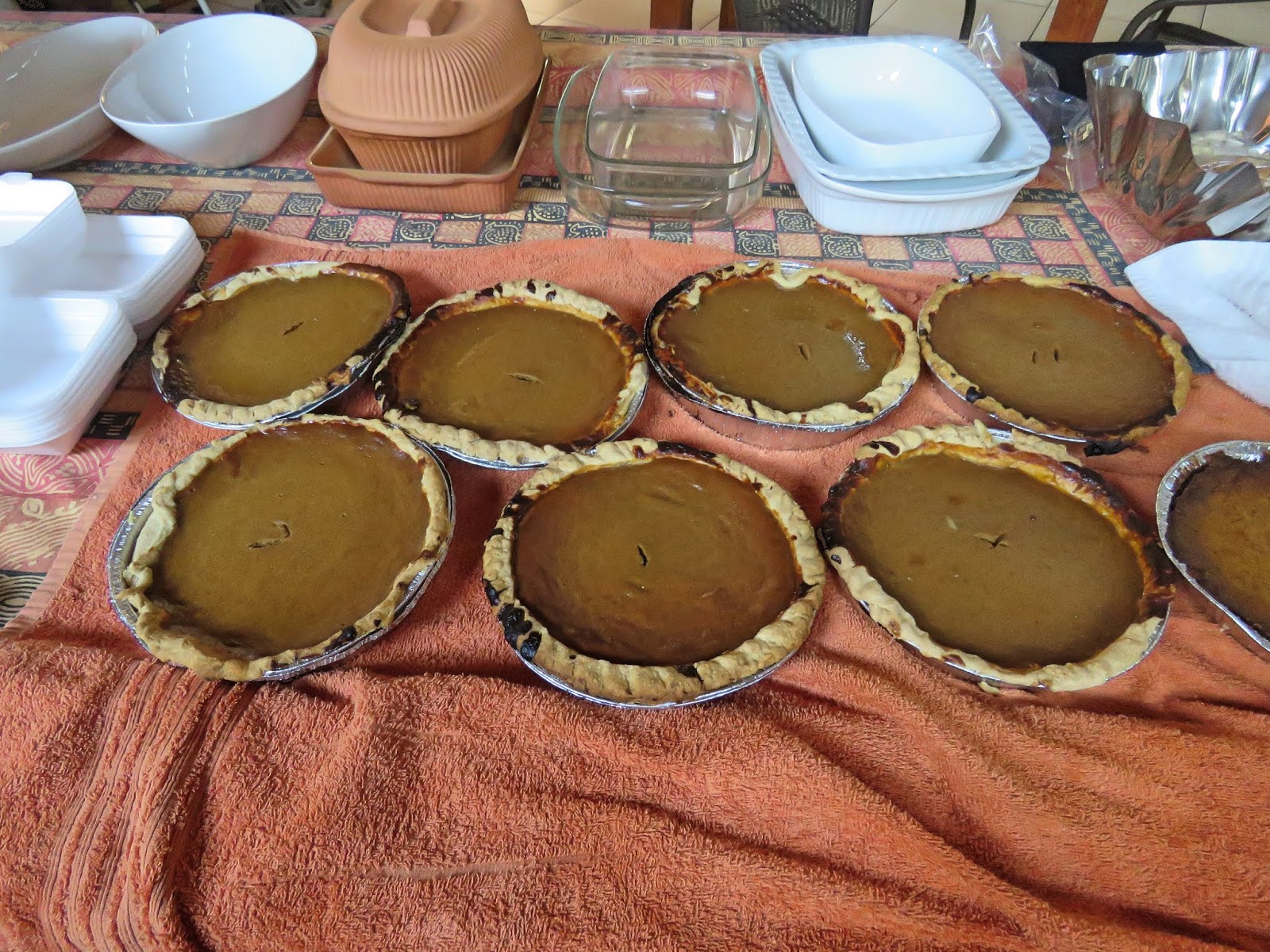
Here were my eight less-than-perfect pumpkin pies for the Thanksgiving dinner, with impossible pie crusts made at 104°F, 40 °C.

As promised, here is the Thanksgiving menu we printed and placed at each table setting, our small attempt to help everyone pace themselves through a feast prepared with love, sweat, and more than a few moments of improvisation.

Menu

Thanksgiving Dinner in the Bush

Sundowners with Light Snacks

Roasted chickens

Stuffing with Sausage, Mushrooms, and Onions

Mashed Potatoes with Creamy Gravy

Buttery Mashed Cauliflower

Sweet Potatoes with Fresh Pineapple and Cinnamon

Broccoli Salad with Crunchy Almonds and Sultanas

Green Bean Casserole with Crispy Onion Rings

Cranberry Sauce

Homemade dinner rolls

Pumpkin Pies

Whipped Cream Topping, if desired

Happy Thanksgiving to all of our family members and friends who celebrate, wherever they may be in the world.

Be well.

Photo from ten years ago today, November 27, 2015:

Ocean views in Fiji never disappoint. For more photos, please click here.

Day 30…Another sea day…Five days until we arrive in Singapore…

Gathering with new friends in the R-Bar, Salli, Diana, and Peter.

In just five days, we’ll be pulling into Singapore, our next port of call, and one that always feels a bit like stepping into the future. The ship will remain overnight, offering passengers ample time to explore the city’s dazzling skyline, spotless streets, and endless culinary temptations. For many on board, this will be their first glimpse of this remarkable island nation, a place where tradition and innovation blend so seamlessly that you often forget where one ends and the other begins.

For us, though, Singapore is already woven into the fabric of our travel memories. We spent more than a week there back in 2016, during one of the more hectic chapters of our early nomadic life. At the time, we were deep into preparations for our Viking Mekong River cruise and needed to visit several embassies to secure the necessary visas. It was one of those stretches where travel turns into a full-time job, running from consulate to consulate, gathering documents, filling out forms, and hoping each bureaucratic stop would be smoother than the last. Between those obligations, we carved out pockets of time to explore the sights that appealed to us, savoring Singapore in slow, measured slices.

My dinner last night, in the main dining room. Soon, we’ll post about the dining experience aboard Royal Caribbean Voyager of the Seas.

We wandered the lush paths of Gardens by the Bay, marveling at the towering Supertrees that looked more like props from a sci-fi film than anything grown from soil. We strolled through Chinatown, Little India, and Kampong Glam, each neighborhood offering its own blend of colors, aromas, and energy. We visited the iconic Marina Bay Sands, not for the shopping or the high-end dining, but to stand along the water’s edge at twilight and take in that sweeping skyline. Even then, we felt content with what we’d seen, never rushing, never trying to fit in more than we could comfortably manage.

That’s the beauty of long-term travel. You learn that not every port requires you to spring into action. Not every destination demands a checklist. Some places, once explored deeply enough to satisfy the heart, become peaceful reference points, allowing you to settle into the present moment without the pressure to “do it all” again.

And, of course, this time around, my mobility, or lack thereof, creates its own boundary lines. My stubborn knee has continued to make its presence known, dictating how far I can walk, how many steps I can manage, and how adventurous each day can be. A younger version of myself might have pushed through, determined not to miss a thing. But now, after years of circling the globe, I’ve learned that honoring my body’s limitations isn’t a defeat. It’s simply part of this life. There will be other ports, other days, other chances to explore.

Tom’s dinner, last night in the main dining room.

So, on this visit to Singapore, while fellow passengers spill off the gangway excitedly clutching maps and camera phones, we’ll be perfectly content to remain aboard the ship. For us, it will be a quiet interlude, time to catch up on financial matters, enjoy the peaceful hum of the nearly-empty decks, and maybe linger a little longer than usual over morning coffee in the Promenade Café. There’s something almost indulgent about having the ship mostly to ourselves while others are ashore, like staying home on a rainy day with no obligations nipping at your heels.

Singapore will shimmer just outside the harbor, close enough to admire from the rails but far enough that we can rest easy knowing we’ve already tasted its charms. This visit won’t be about exploration but about ease, gratitude, and listening to what feels right for us now. In a life filled with movement, sometimes choosing stillness is the most incredible luxury of all.

Be well.

Photo from ten years ago today, November 25, 2015:

In Fiji, these red flowers continue to thrive in the rainy weather. For more photos, please click here.

Six days and counting…It was great to get out and see our friends!…

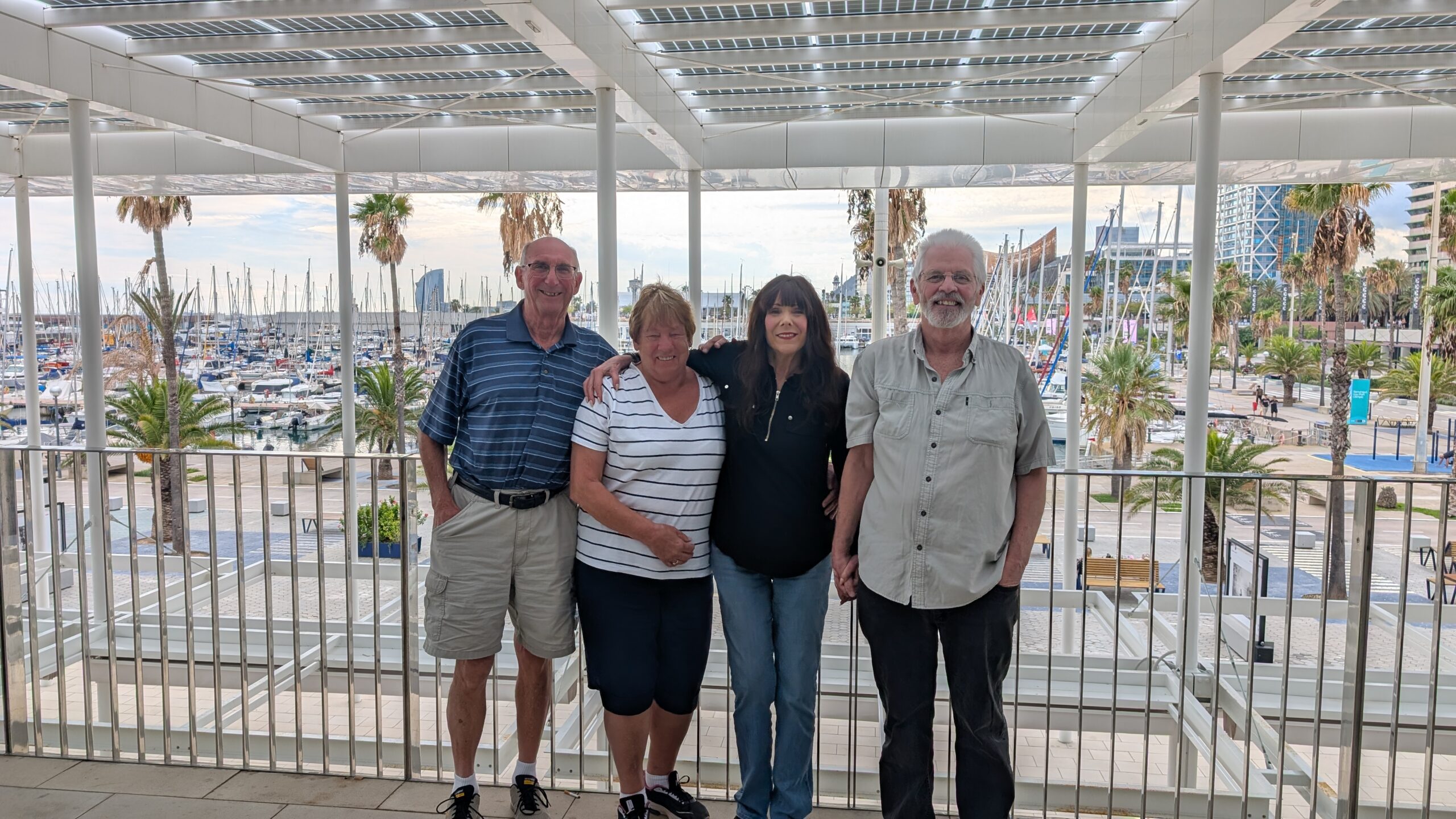
A kindly passerby took this photo of the four of us.

It was fantastic to go to lunch with our dear friends Linda and Ken, whom we hadn’t seen in about six years. Time has a funny way of slipping by, yet when we finally met again, it felt as if no time had passed at all. We first met them years ago in Marloth Park at a dinner party at Kathy and Don’s home along the Crocodile River.

Over the years, we’ve stayed in touch, sharing adventures, stories, and laughter along the way. The last time we were together was in Wales, where we spent an unforgettable day exploring castle ruins and savoring a long, leisurely meal filled with good conversation and plenty of laughter. Seeing them again brought back a flood of wonderful memories from that carefree day in the Welsh countryside.

My first glass of wine in five weeks. Notice the skimpy pour. It couldn’t have been more than three or four ounces.

Over the years, we spent time together in Marloth Park on various occasions when our visits happened to overlap—a happy coincidence that always led to laughter, storytelling, and shared sundowners on the veranda. Then, in 2017, our paths crossed again on the other side of the world, when we enjoyed a wonderful lunch with Linda and Ken at the famous Fortune of War, a historic pub established in 1828, tucked in the heart of Sydney, Australia. Sitting in that old establishment, with its worn wooden bar and walls steeped in seafaring history, we reminisced about our adventures in the bush and marveled at how our travels continued to intertwine in the most unexpected corners of the world.

Yesterday, when we reunited at El Tribut, an oceanfront restaurant not far from our current location, it felt like coming full circle. The restaurant, perched above the sparkling sea, offered breathtaking views of the coastline, a perfect backdrop for an afternoon of reminiscing. The Mediterranean breeze drifted across the terrace, carrying the scent of salt and grilled seafood. There’s something so comforting about the familiar energy of friends who share your passions, and Linda and Ken are very much kindred spirits. Like us, they have a deep love for travel, cruising, and discovering the world one port at a time.

Tom ordered the Beef Wellington and thoroughly enjoyed it. No bread or potatoes were served with this entree.

El Tribut doesn’t open for lunch until 1:00 p.m., which is typical in Spain and many parts of Europe. We arrived a few minutes early and waited near the entrance, chatting and catching up on recent adventures. It reminded me how different dining customs can be around the world. While Americans often have lunch by noon and dinner by six, Europeans tend to linger through their afternoons, with lunch stretching well past 3:00 p.m. and dinner not beginning until 8:00 or later. There’s a certain rhythm to this lifestyle, a slower pace that encourages relaxation, conversation, and savoring every bite.

By 2:00 p.m., the restaurant was packed. Locals and tourists filled every table, their voices blending into a pleasant hum of conversation and clinking glasses. We ordered a leisurely lunch, each of us choosing something different so we could share tastes, as travelers so often do. The food was excellent, fresh, flavorful, and prepared with care. Between bites, we shared stories from our respective journeys: ports we’d loved, favorite cruise lines, unexpected challenges, and funny mishaps that only seasoned travelers could truly appreciate.

Linda, Ken, and I ordered this fish, croaker, with a side of aubergine (eggplant) and marinated grape tomatoes.

Linda and Ken had met us from their current cruise, on their port of call to Barcelona, and they spoke with such enthusiasm about their experiences. We compared notes on itineraries, ships, and destinations, laughing at how small the cruising world can be, how often travelers cross paths without even realizing it. We also talked about how travel has changed in recent years, with fluctuating prices, evolving visa requirements, and the ever-present balance between adventure and comfort.

What I appreciated most about our time together wasn’t just the conversation. It was the feeling of connection. After years of moving from place to place, friendships like this become treasures, reminders that the world can feel wonderfully small when you find people whose spirits align with your own. We may go months or even years without seeing one another, but when we reunite, it’s as though we simply picked up where we left off.

It was wonderful to see our dear friends, Linda and Ken, once again.

As the afternoon sun dipped lower, casting golden reflections across the water, we reluctantly said our goodbyes, promising to meet again, perhaps on another cruise or in some unexpected corner of the world. The meal, the laughter, and the warmth of old friends reminded us once again why we travel: not just to see the world, but to share it with those who understand the joy of exploration.

In a mere six days, we’ll be heading to that same Barcelona port where Linda and Ken arrived and begin our 47 nights of cruising. We can hardly wait.

Be well.

Photo from ten years ago today, October 21, 2015:

Several emergency vehicles were on the hospital property. Locals don’t hesitate to call in an emergency and feel the local care is adequate for many conditions. For more photos, please click here.

Introducing our friends to a lively night at Jabula!…Tourist transportation hazards…

Last night, we had a fantastic evening at Jabula.

Last night couldn’t have been more fun. We arrived at Jabula a little later than usual. We wouldn’t have been sitting at the bar, given the vast number of sports enthusiasts watching the rugby game, so we headed directly to our assigned table on the veranda.

The service, the food, and the ambiance couldn’t have been more perfect, even amid the vast, rowdy crowd. The staff provided exemplary service and food. Thanks to Dawn and Leon, Corrine, and all the staff for a superior experience. We even got into the exuberant dancing on the dance floor to the lively popular music after the game ended. What a fun place to share with our friends.

On another note, here’s an important article that may be of interest to our readers who rent portable personal transportation while traveling.

From Travel & Leisure at this link:

“Major Tourist Destinations Have a Hidden Transportation Hazard That Leaves Travelers and Locals Vulnerable—What to Know

Are micromobility devices a growing safety crisis? By  Published on July 5, 2025

  • E-bike and scooter injuries have surged, according to researchers at UCSF.
  • Many tourist cities are restricting the use of micromobility devices due to an increase in accidents and safety concerns.

The newest travel hazard in cities might be something you aren’t expecting at all.

Electric scooters and e-bikes are ubiquitous throughout many cities worldwide, and they aren’t inherently dangerous. But the sheer number of them, combined with the potential for serious accidents, makes them a real and serious travel hazard for visitors.

The setting sun was a perfect backdrop for some photos.

A 2024 study by researchers at UC San Francisco found that injuries from e-bikes have doubled every year from 2017 to 2022, and injuries from scooters have risen by 45 percent annually.

“This increase in accidents not only introduced a demographic shift but also underscores an urgent need for added safety measures,” co-lead author Adrian Fernandez, a chief resident with the UCSF Department of Urology, said in a statement on the UCSF website. “There are undeniable health and environmental benefits to micro-mobility vehicle use, but structural changes must be taken to promote safe riding.”

In response, many major tourist destinations, including New York, Madrid, and Paris, have taken steps to ban or severely limit e-scooters, while others are on the verge of becoming scooter-free. Often, e-bikes and e-scooters behave in ways around pedestrians that put both riders and walkers at risk of injury.

Though serious injuries are rare, they do happen. In 2024, a woman was severely injured in West Hollywood when she was hit by a motorized scooter, suffering a fractured skull and brain swelling that required hospitalization. An American man in Sydney nearly died after being hit by an e-bike that was being ridden in an area where it was not permitted. He needed emergency brain surgery and spent weeks in a coma.

We had a fabulous time with Kady and Rich.

And most run-ins between people and micro-mobility devices go unreported. Many more people have close calls or are injured by speeding scooters, and these experiences can make people nervous in cities, which in turn affects tourists. Tourists can also be responsible for close calls, as they rent e-bikes and scooters to joyride around unfamiliar cities, leading to potential accidents. Riders of e-devices might feel unsafe riding on main streets alongside cars but then become a hazard to pedestrians on sidewalks. Designated scooter lanes can be helpful, but they are not always available.

“As micro-mobility vehicles become more embedded in our daily lives, understanding and addressing the safety challenges they pose is critical,” corresponding author Benjamin N. Breyer, MD, MAS, the Taube Family Distinguished Professor and chair of the UCSF Department of Urology, said on the UCSF website. “By doing so, we can harness the full potential of micro-mobility to create more sustainable, healthy, and safe urban environments.”

Today, we’ll stay in and enjoy the bush, along with an excellent homemade meal. Perhaps we’ll play cards, and without a doubt, the conversation will be lively and animated.

Be well.

Photo from ten years ago today, July 6, 2015:

The house we rented in Phuket, Thailand, was built around its private pool. For more photos, please click here.

A final dinner with old friends…Dining out a lot with much more to come…

Last night, Don, Kathy, and Kathy’s sister Connie joined us for dinner at Jabula. It was our last evening together before they returned to their home in Hawaii in a few days. We will miss them.

In 20 days, we’ll arrive in Minnesota for granddaughter Maisie’s graduation on May 29. Her graduation party will follow on Saturday, May 31. We’ll have three days to recover from the long journey before the festivities begin.

We’ve decided we won’t be cooking our meals while in the US, so we are staying at a Marriott Residence Inn that will have a small kitchen. Why won’t we prepare meals in a convenient kitchen with a full-sized stove, refrigerator, and dishwasher?

From our past experiences, these short stays, in this case, three weeks, isn’t long enough to warrant buying spices and other ingredients required to make our keto meals. Sure, on occasion, we may order from GrubHub or a similar service, without a delivery fee from our membership in Amazon Prime.

But, overall, we’ll be dining out with family and friends. Undoubtedly, we expect to pay a minimum of US $100, ZAR 1839, daily for the two of us to dine out for dinners, even in the most modest restaurants. The cost will increase exponentially when we take our kids and grandkids to dinner.

We won’t eat out for breakfast since the hotel offers a complimentary breakfast with eggs, bacon, or sausages. We continue to avoid eating lunch, except when we get together with friends or family. On those days, we won’t eat breakfast.

However, to continue on our path of healthy eating and hopefully lose more weight, we will observe the following to maintain our ketogenic lifestyle.

Dining out on a keto diet can absolutely work with a little planning and confidence. Here’s a practical guide to help you stay low-carb without feeling restricted or awkward at restaurants:

1. Choose the Right Type of Restaurant

Some cuisines are more naturally keto-friendly:

  • Steakhouses, seafood places, BBQ joints – Easy to order meat + veggies.

  • Mexican – Skip the tortillas/rice/beans, go for fajitas or taco salads without the shell.

  • Burgers – Ask for a lettuce wrap instead of a bun, skip the fries.

  • Asian – Choose stir-fry without sauce or with minimal sauce (ask for steamed instead of battered). Be wary of hidden sugars in sauces like teriyaki, hoisin, and sweet chili.

  • Breakfast spots – Omelets, eggs, sausage, bacon, and avocado are your friends.

2. Master the Art of Modifying Your Order

Be polite but assertive:

  • Swap starchy sides (fries, rice, mashed potatoes) for a side salad, sautéed greens, or steamed broccoli.

  • Ask for no bread, no croutons, or sauce on the side.

  • Many places will accommodate custom meals if you ask kindly.

Example:
“Could I please have the grilled salmon, but instead of rice, could I get a side of spinach or another vegetable?”

3. Watch for Hidden Carbs

Be cautious with:

  • Sauces and dressings – Often loaded with sugar or starch. Ask for oil & vinegar, ranch, blue cheese, or Caesar (but double-check).

  • Soups – Many are thickened with flour or cornstarch.

  • Breaded or fried items – Stick to grilled, roasted, or baked options.

4. Alcohol: Yes, But Mindfully

  • Stick to dry wines, clear spirits (vodka, gin, tequila) with soda water or on the rocks.

  • Avoid beer, sweet cocktails, and liqueurs.

5. Be Prepared and Stay Flexible

  • Check the menu online beforehand if possible.

  • Eat a small keto-friendly snack before dining out if you’re unsure of the options.

  • If nothing fits perfectly, aim for the closest option and don’t stress – one meal won’t derail you.

6. Speak Up – You’re Not Alone

Restaurants are used to food restrictions (gluten-free, vegan, etc.), so don’t be shy. You might even inspire someone at your table to think twice about their own choices!

Once we leave Marloth Park in September, we won’t be cooking meals again until December after we arrive in New Zealand. In the interim, we’ll continue to be mindful of what we eat and how it’s prepared, if possible.

Be well.

Photo from ten years ago today, May 4, 2015:

Tom’s hair stood up before a haircut in Kauai. For more photos,  please click here.

It’s a special day in our lives of travel…Last night, eight guys and me at the “Cheers-type” bar at Jabula…What a blast!…

My first ever attachment to an impala. This is Mac. He hangs around our garden throughout the day and night. Most often, impalas graze in herds. Max is the exception. He’s learning his name and the sound of my voice.

We uploaded our first post on March 15, 2012, 13 years ago as of today. You can read the first post here.

It was an exciting day to upload that first post. Although our site wasn’t entirely designed then, I did my best to make it readable. We made many errors, many more than we make today, but I genuinely believe our readers understand that posting as often as we do, a certain number of errors are to be expected, although we both proofread each day.

Today’s post will be number 4172. It is not exactly one post per day; there have been times when we couldn’t post or took a day off during the 13 years since we began sharing our story.

Although we posted on March 15, 2012, we didn’t begin our travels until October 31, 2012, 231 days later. But, we thought we needed to share the process of unloading everything we owned and the emotions associated with letting go of so much we knew and love, including family and friends.

Mongeese drinking from the bird bath after eating paloney..

In the beginning, we included a few photos—for many days, there were no photos. However, as time marched on and our experiences grew, we purchased a cheap little automatic camera at a Walmart in Mexico, with virtually no expertise in photography.

Over the years, our interest in sharing photos increased exponentially but my interest in photography never increased. Thus, as much as we’d like our photos to be perfect, we spend little time editing photos while gaining little knowledge about how to take great pictures.

Tom’s dinner at Jabula last night was 300 gr. rump steak, baked potato, sour cream (which I used), and green beans. He said it was delicious.

After spending so much time preparing posts and photos, once I am done for the day, I have little interest in using my laptop or learning about photography to a greater degree. It is what it is, and I do my best with my limited ability. We hope you all understand.

We’ve found we like to spend the balance of our days experiencing the world around us instead of being educated on a topic for which I have little interest and skill. As long as I can upload photos for our readers to see, I am content and experience no frustration or angst for this topic.

We have thoroughly enjoyed sharing our stories and photos over these past 13 years and hope you will continue to enjoy them with us. Without all of you, I’d have had little motivation to spend every morning of my life sitting at my laptop documenting almost every detail of our lives. For this, I thank everyone of you.

This grilled chicken salad will be a regular for me. It consisted of a Greek salad topped with tender grilled chicken.

On another note, last night we had another fantastic time at Jabula, the South Africa equivalent of the Cheers Bar from the TV series from 1982-1993, about a bar, “where everyone knew your name.” I felt like a prima donna surrounded by eight men sitting at the bar with us, commiserating over our love of the bush, nature and travel. Dawn, the lovely owner, stood behind the bar and joined in with all of us.

Two men were British, two were from Mozambique, and the remainder were South African. What a lively group! The animated conversation, laughter, and interaction amongst the group were palpable. When we left, we received hugs, kisses, and handshakes all around. Surely we’ll see many of them again.

As always, our food was fantastic. We ate sitting at the bar, as usual, never missing a beat in the lively conversations. It was a memorable night. More will follow tonight.

Be well.

Photo from ten years ago today, March 15, 2015::

In Kauai, we watched the life cycle of the Laysan Albatross for months. The beaks of the Albatross are used for preening and signs of greeting. They may also be used aggressively if an intruder threatens them or the nest. For more photos, please click here.

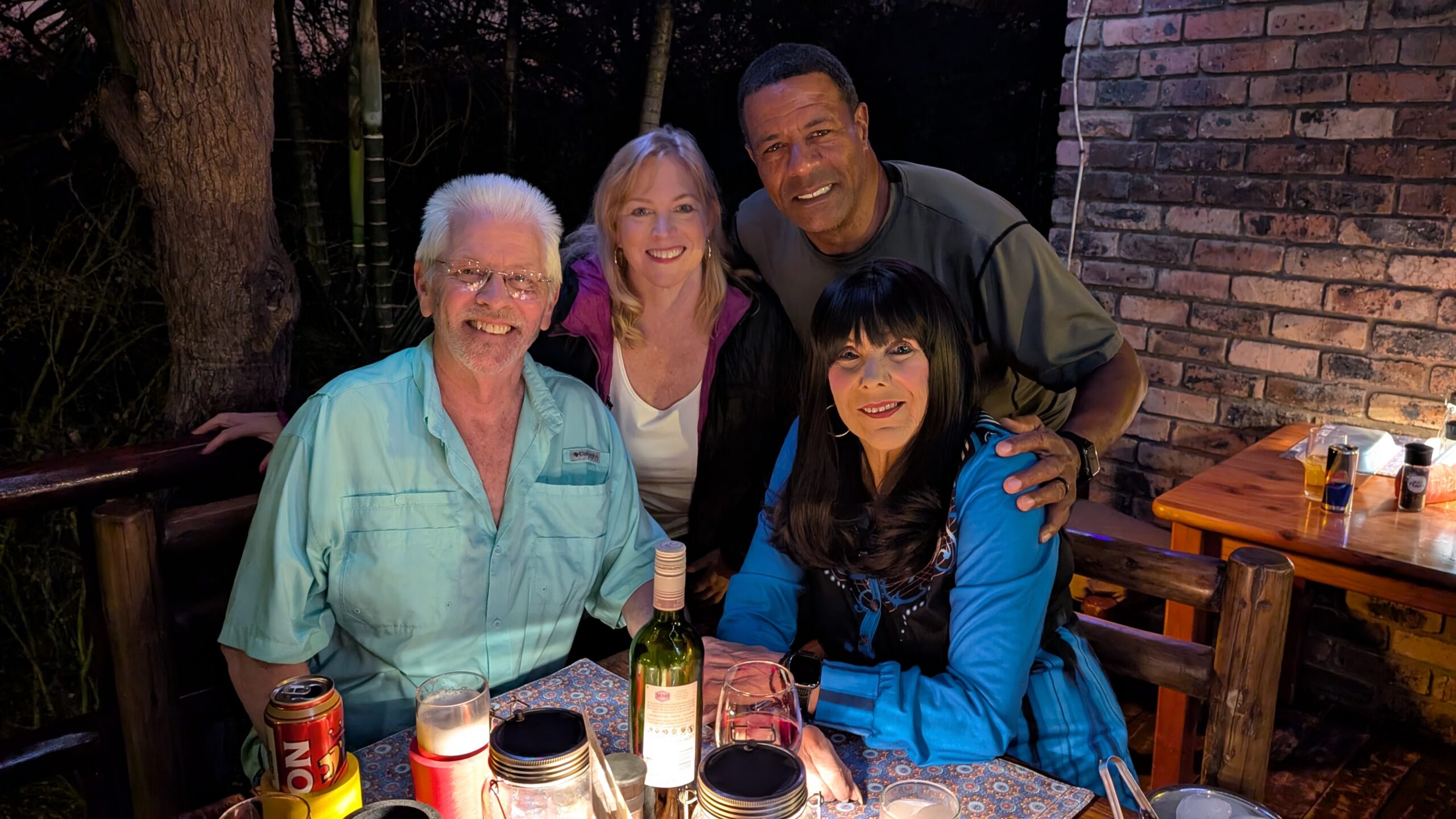
Finally, a new photo of us in the bush, having the time of our lives…

What a fun time we have every Friday and Saturday night at Jabula!

Again, last night, we had a fantastic time at Jabula, after an enjoyable day at the house hanging out with wildlife. This is the life I’ve longed for over the past few years.

My dinner was outrageously delicious: roasted leg of lamb, sauerkraut and Greek salad. I was so stuffed after eating lamb and spinach, I couldn’t eat the rest.

Sure, there’s the heat, living outdoors day after day in temperatures reaching well into the 90s.On top of that is the heat rash, insects, loading up on repellent several times a day, load shedding (which is minimized for us having an inverter system), WiFi outages, water outages, and more.

Tom ordered Eisbein, a deep-fried pork knuckle that was too huge to finish. We brought it home for the mongooses, who should arrive soon.

Those issues become irrelevant when we have endless magical moments with animals and humans. Neither of us complained about the inconveniences; almost a week later, we hardly noticed them. After six days, we’ve finally recovered from the long journey and are as content as possible.

We’ll stay in tonight and have bunless burgers on the braai for Tom (with rice on the side) and steamed garlic mussels for me, served with an ice-cold bowl of homemade coleslaw. It’s not even 10:00 am, and we have the laundry done, drying on the rack. The fixings for dinner have started, making prep time at dinnertime minimal.

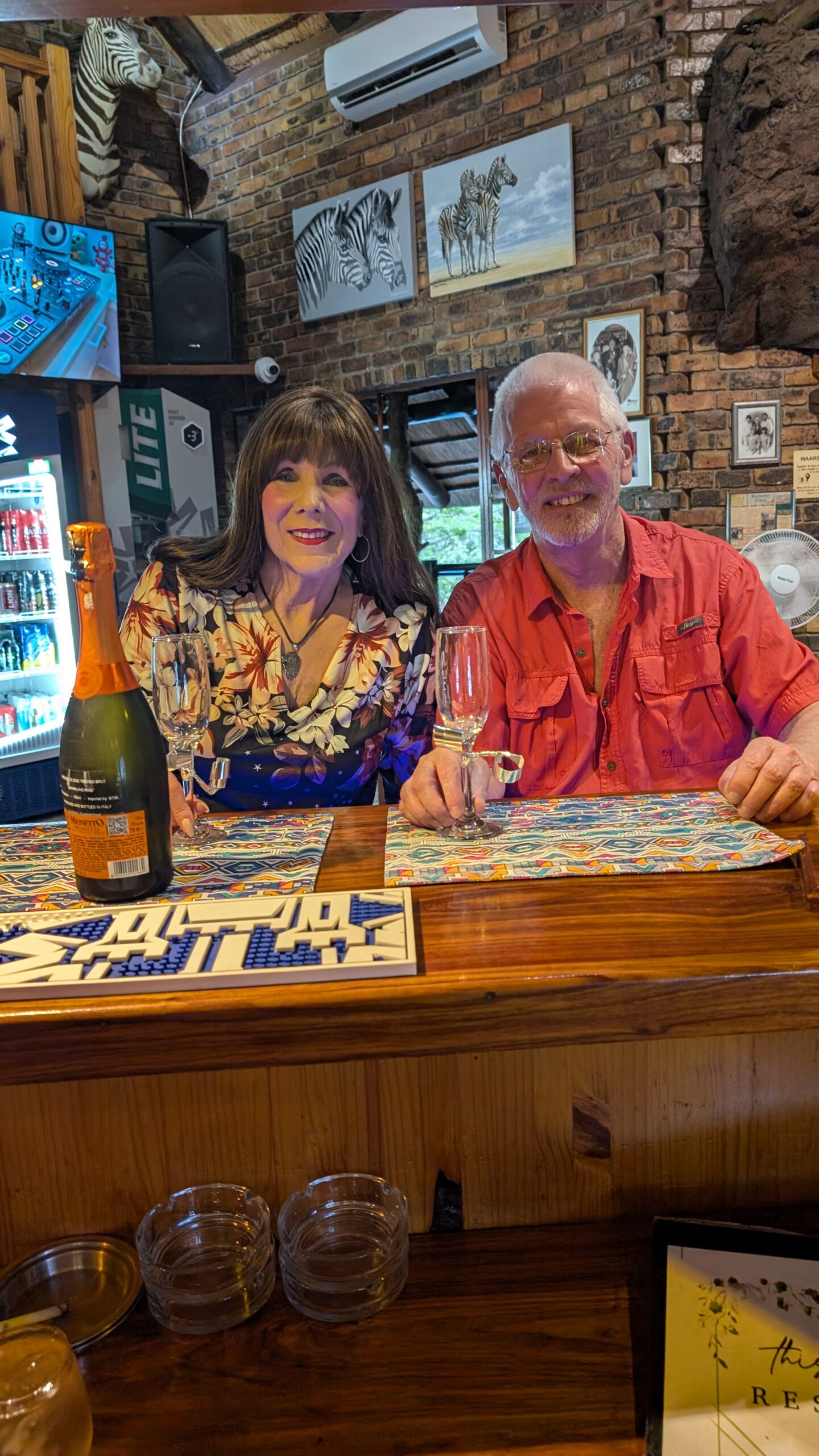
Our friend Dawn is one of the two owners of Jabula Lodge. We always feel welcomed by Dawn and enjoy chatting with her at the bar.

We haven’t seen Kathy and Don yet, and it may be several days before we do. They, too, are dealing with lack of sleep and jet lag after the long days of travel. I’m sure we will see them once they are rested and settled.

It’s hard to believe that we arrived almost a week ago. However, we’ve lost several days being out of sorts and tired. It feels fantastic to be back to ourselves, cheerful, energetic, and enthusiastic. Life is good.

Friends Feliz and Lorne joined us at Jabula last night. It was fun to see old friends from the bush.

As soon as this is uploaded, we’ll go to Komatipoort to the big Spar Market, which will have everything on our list. It would still be interesting to see the food prices here, unlike in the US.

We spotted this duiker on the road as soon as we pulled out of Jabula.
Why not see a giraffe on the way home from dinner?

We’ll be back!

Be well.

Photo from ten years ago today, March 9, 2015:

Red Ginger plants overlook an open area on Bev and Sam’s estate grounds in Kauai. For more photos, please click here.

Armchair world travel…A fantastic series that brings travel to life…

This enjoyable travel show reminds us of places we’ve visited. It can be streamed on several streaming services, including Hulu, Disney, ABC (regular TV), and National Geographic.

Lately, we’ve been watching episodes of “Gordon Ramsey Uncharted,” a fantastic series as Gordon travels the world to experience and participate in culture and its impact on food indigenous to the area/country. Much to our delight, we’ve been to seven of the first ten episodes we watched as a new country is highlighted on each episode.

Gordon Ramsay: Uncharted – A Culinary Adventure Across Continents

Food has a magical way of connecting us, not just to our daily sustenance, but to unfamiliar places, people, and cultures. Gordon Ramsay, a Michelin-star chef famous for his fiery temper and unparalleled culinary skills, takes this connection to a new level in his Uncharted series. In this National Geographic series, Ramsay steps outside the familiar kitchens, restaurants, and high-pressure cooking competitions to explore the world’s vast, rugged, and sometimes harsh landscapes. But Uncharted isn’t just about food – it’s about discovery, humility, and respect for the traditions that shape a region’s cuisine. Ramsay’s adventurous journey serves as a reminder that the roots of culinary mastery often lie in understanding the land and its people.

A New Side of Gordon Ramsay

For those familiar with Ramsay’s reputation as a relentless perfectionist on shows like Hell’s Kitchen or MasterChef, Uncharted might be a refreshing surprise. While his sharp wit and no-nonsense demeanor are still very much present, this series shows another side of him: one that is open, curious, and humbled by the sheer breadth of knowledge held by the people he encounters.

In each episode, Ramsay travels to a remote part of the world, far removed from the Michelin-starred kitchens where he’s made his name. He works with local chefs, farmers, and food experts to learn the culinary traditions and ingredients specific to the region. From the mountains of Peru to the jungles of Laos, Ramsay isn’t just tasting the food – he’s diving headfirst into the culture that creates it. Whether catching his own fish in freezing waters or hiking to harvest wild herbs, Ramsay experiences food from the source. And that’s the beauty of Uncharted: it’s not about gourmet cuisine in fancy restaurants; it’s about food in its raw, authentic form.

Learning Through Immersion

What makes Uncharted stand out from other travel or food shows is Ramsay’s full-bodied approach to learning. Instead of being a passive observer, he fully immerses himself in each environment, embracing every challenge that comes his way – and there are many. The physical, emotional, or culinary challenges push him to his limits. We see Ramsay scaling mountains, navigating through swamps, hunting for his dinner, and enduring cold waters, all in pursuit of understanding local traditions and practices.

In one episode, he travels to Peru’s Sacred Valley, where he learns the intricacies of traditional Andean cooking and participates in the arduous work of gathering ingredients in such a challenging environment. Watching Ramsay, a man who has spent most of his life in high-end kitchens, bend down to pull potatoes from the ground or forage for herbs high in the Andes gives the viewer a profound sense of the labor that goes into food production in these regions.

Each episode follows a similar structure: Ramsay explores a new region, learns about the local cuisine and ingredients, and ultimately participates in a cook-off against a local chef. But this isn’t a competitive showdown like in his other series. Instead, it feels more like an exchange of respect, where Ramsay takes on the role of a student, honoring the traditions he encounters while bringing his own expertise to the table.

Food as a Cultural Gateway

Throughout Uncharted, one of the central themes is food as a gateway to culture. Ramsay often remarks on how each dish tells a story, not just of the ingredients used but of the land and people who cultivate them. In many ways, food becomes the vehicle through which Ramsay and viewers can better understand a region’s history, challenges, and triumphs.

For instance, in New Zealand, Ramsay learns the significance of the Māori hangi – a traditional cooking method in an earth oven. What might seem like a simple cooking technique to an outsider is steeped in cultural and spiritual significance. The hangi isn’t just about preparing a meal; it’s about community, about honoring the land and its bounty. By immersing himself in this tradition, Ramsay comes away with a deeper understanding of Māori culture, something that transcends the food itself.

Similarly, in Laos, Ramsay learns about the significance of rice to the Laotian people. More than just a staple food, rice has cultural, religious, and economic importance. Ramsay, who has likely cooked with rice countless times, has a new perspective on this humble grain after seeing how much it means to the people who cultivate it.

Humility in the Face of Tradition

One of the most captivating elements of Uncharted is seeing Ramsay – who often exudes an air of authority and expertise in the kitchen – humbled by the depth of knowledge possessed by the people he meets. In each episode, there are moments where he’s clearly out of his element, whether it’s trying to navigate a new terrain or working with unfamiliar ingredients. But instead of letting his ego take over, Ramsay approaches these moments with humility and a genuine desire to learn.

In Alaska, for example, local experts teach Ramsay how to hunt for wild game. Despite being an experienced chef, he struggles to adapt to the harsh conditions and physical demands of hunting. This is a reminder that no matter how much one knows about cooking, there’s always more to learn, especially when it comes to understanding the origins of food.

This sense of humility is a recurring theme in Uncharted. Whether he’s learning from indigenous tribes in Morocco or from farmers in Tasmania, Ramsay approaches each new experience with an open mind. He acknowledges that the knowledge these communities have, passed down through generations, cannot be learned in a kitchen or from a cookbook. It’s lived experience, and Ramsay shows a deep respect for that.

Conclusion: A Journey Beyond the Plate

Uncharted is more than just a food show. It’s a journey that transcends the plate, bringing viewers closer to the heart of different cultures, environments, and people. Ramsay’s adventures, full of grit, discovery, and, at times, vulnerability, remind us of the vastness of the world and the many ways in which food can tell a story.

For Ramsay, Uncharted has been a learning experience as much as an adventure. The show highlights not just his passion for food but also his growing appreciation for the cultural contexts that shape culinary traditions. Viewers come away from each episode not just entertained but with a richer understanding of how deeply food is intertwined with the land and the people who nurture it.

Ultimately, Uncharted is a love letter to the world’s most remote culinary traditions. Through his journey, Ramsay shows us that to truly appreciate food, one must understand where it comes from and the people who make it possible. In doing so, Uncharted reminds us that there’s always something new to learn, even for the most seasoned chefs.

Of course, we don’t assume we’re “seasoned chefs.” Still, we have had the divine opportunity to experience some of the ingredients mentioned in each episode, utilizing them to the best of our ability and expertise. With Tom’s picky tastebuds and my dietary restrictions, I’ve avoided cooking with many of the more exotic ingredients.

As we’ve traveled the world, a considerable aspect of our enjoyment has been learning about how people grow and harvest their native ingredients, as illustrated in many past posts. However, after watching “Uncharted” we are presented with a new perspective that surely will impact our interests when we begin to travel once again.

We highly recommend watching this series even if you aren’t a “foodie.” Once again, Gordon Ramsey and National Geographic present an interesting series with much more to glean.

Be well.

Photo from ten years ago today, October 17, 2014:

Tom walked toward our private beach near the breakwaters in Maui, Hawaii. For more photos, please click here.

Four pumpkin pies are in the oven…Happy to be baking…

Here were my eight less-than-perfect pumpkin pies, made on a 104F, 40C day, for a Thanksgiving dinner celebrated in the bush on November 17, 2018. It was impossible to roll the homemade dough in the heat and humidity. Thus, I called it a “Pie day from hell.” At the bottom right is a low-carb pumpkin pie made with an almond flour crust for Louise and Danie. Today’s four pies will look much better. See the post here.

This morning, I managed to walk down the corridor to the elevator bank and make my way to the front desk to pick up a package from Amazon. Then, after I returned to our room, I proceeded to make the four pumpkin pies for Tom, which are now being baked in the oven. This felt like quite an accomplishment.

I didn’t make the crust without a food processor. Instead, I bought the best-prepared crusts from Whole Foods. Hopefully, Tom will enjoy the pies. I’ll leave two pies out and freeze the other two for Tom to enjoy when he chooses. Cooked pumpkin pies freeze well but only for about one month.

We won’t be making a typical Thanksgiving dinner this year, which we haven’t done except when we’ve had guests over the years. Although having a vast array of delicious dishes would be enjoyable, we don’t have the appropriate serving dishes and kitchen utensils to prepare such a meal. Plus, it would be too much work for me now.

As soon as Tom’s pies are done, I’ll make my keto cheese pie, which I haven’t made since we were in South Africa in April 2023. Whenever I make this pie, I think of Louise and Danie, who love it. When it’s done, I take a photo and send it to them. Recently Louise wrote to me asking if I’d make the pie for them when we arrived. Of course, I’d be thrilled to do so!

Today’s four pumpkin pies we just took out of the oven. They look much better than the eight above pies, although they will taste the same.

Pumpkin pie has a long history, especially in the US.

Pumpkin pie, a classic dessert closely associated with autumn and Thanksgiving in the United States, has a rich history that spans centuries and continents. Its story begins long before the Pilgrims set foot on American soil, rooted in the traditions of Native Americans and European settlers.

Native American Origins

The indigenous peoples of North America were cultivating pumpkins and other squash for thousands of years before European settlers arrived. They used these hardy, versatile gourds for both food and practical purposes. Pumpkins were roasted, boiled, or mashed, but the idea of transforming pumpkin into a sweet dessert wouldn’t emerge until later.

Early European Influence

When European settlers arrived in North America in the 1600s, they brought with them a taste for meat pies and custards. However, they found pumpkins a valuable substitute for ingredients they were familiar with back in Europe. Instead of making the pies we think of today, early settlers would hollow out pumpkins, fill them with milk, honey, and spices, and bake them whole in the ashes of a fire. These early “pumpkin pies” were more like a pudding baked inside the shell of a pumpkin, and the use of sugar or spices varied depending on what was available.

The Birth of Modern Pumpkin Pie

The pumpkin pie we know today, with its flaky crust and spiced filling, began to take shape during the 17th and 18th centuries as colonial cooks combined Old World techniques with New World ingredients. The first recorded recipes resembling modern pumpkin pie appeared in English cookbooks. The 1670 cookbook The Gentlewoman’s Companion contains a recipe for “Pumpion Pye,” which involved layering pumpkin with apples, spices, and sugar in a pastry crust. By the late 18th century, recipes had spread throughout New England, where pumpkin pies became a regional specialty.

Pumpkin Pie and Thanksgiving

By the early 19th century, pumpkin pie had become strongly associated with the fall harvest and Thanksgiving. Sarah Josepha Hale, often credited with helping to establish Thanksgiving as a national holiday, popularized pumpkin pie in her 1827 novel Northwood, in which she described a Thanksgiving meal that featured the now-iconic dessert.

When Abraham Lincoln declared Thanksgiving a national holiday in 1863, pumpkin pie was firmly embedded in American culture. Its presence at Thanksgiving dinner cemented its status as an American tradition and has remained a beloved part of the holiday ever since.

Modern Day Popularity

Today, pumpkin pie is as popular as ever. Canned pumpkin, first introduced in the 1920s, made it easier and quicker to prepare, contributing to its widespread consumption. While many families still make their pies from scratch, the availability of ready-made pie crusts, pumpkin pie filling, and even pre-baked pies has kept the tradition alive in an era of convenience.

Though variations exist—some prefer to tweak the spices or add a touch of maple syrup—the core ingredients of pumpkin puree, sugar, and warming spices like cinnamon, ginger, and nutmeg remain constant. It symbolizes warmth, comfort, and togetherness, particularly during the colder months when families gather for the holidays.

From humble Native American beginnings to a dessert that graces millions of tables each year, pumpkin pie has become a cherished tradition that’s evolved with the times but remains a delicious celebration of fall’s bounty.

Be well.

Photo from ten years ago today, October 3, 2014:

Was this a houseboat, island, or floating property we spotted in Kona, Hawaii, ten years ago? For more photos, please click here.