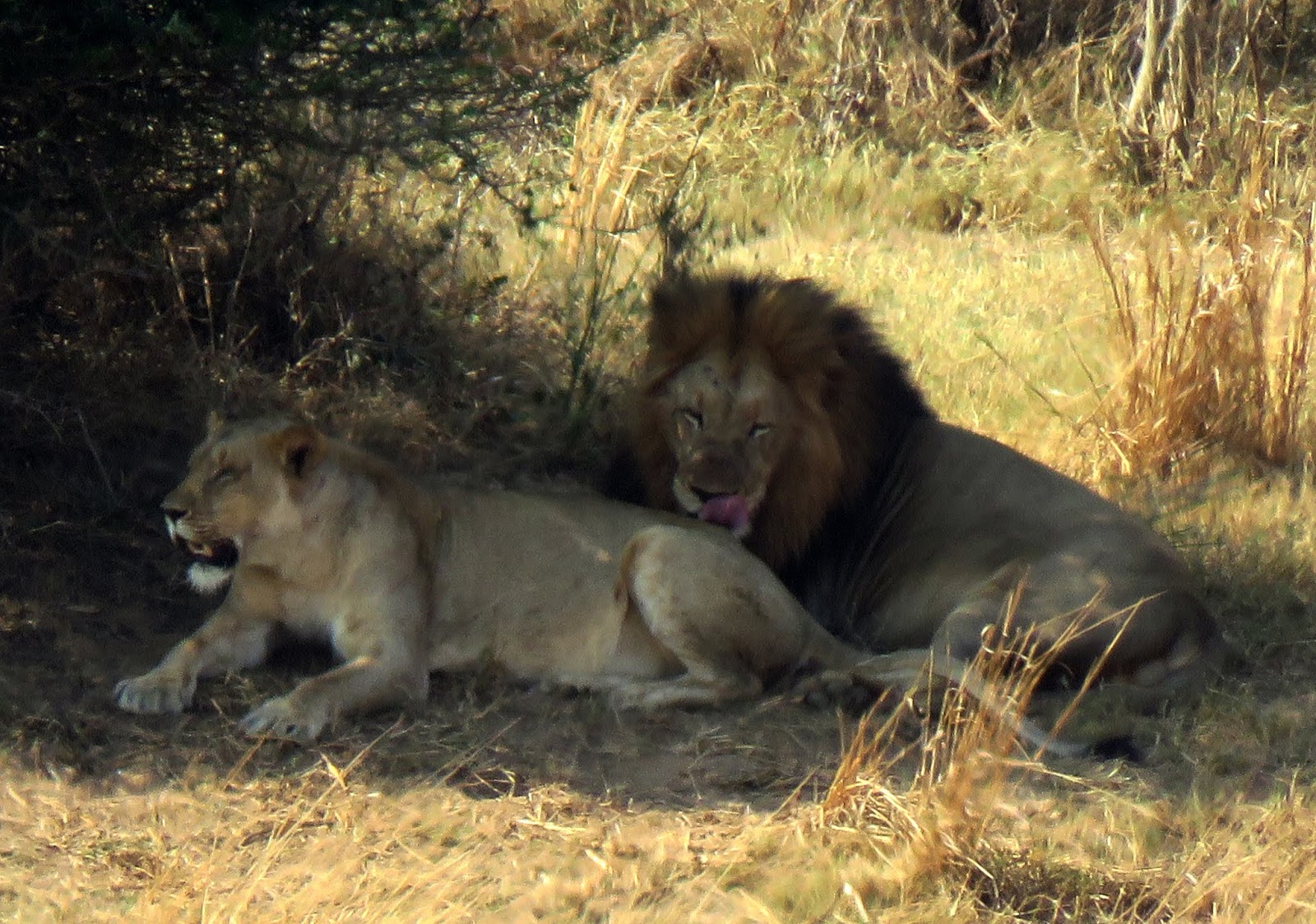
Leeu Day!…That means “lion” day in Afrikaans…Love is in the air!….

Notice him licking her backside.  Hmm…

“Sighting of the Day in the Bush”

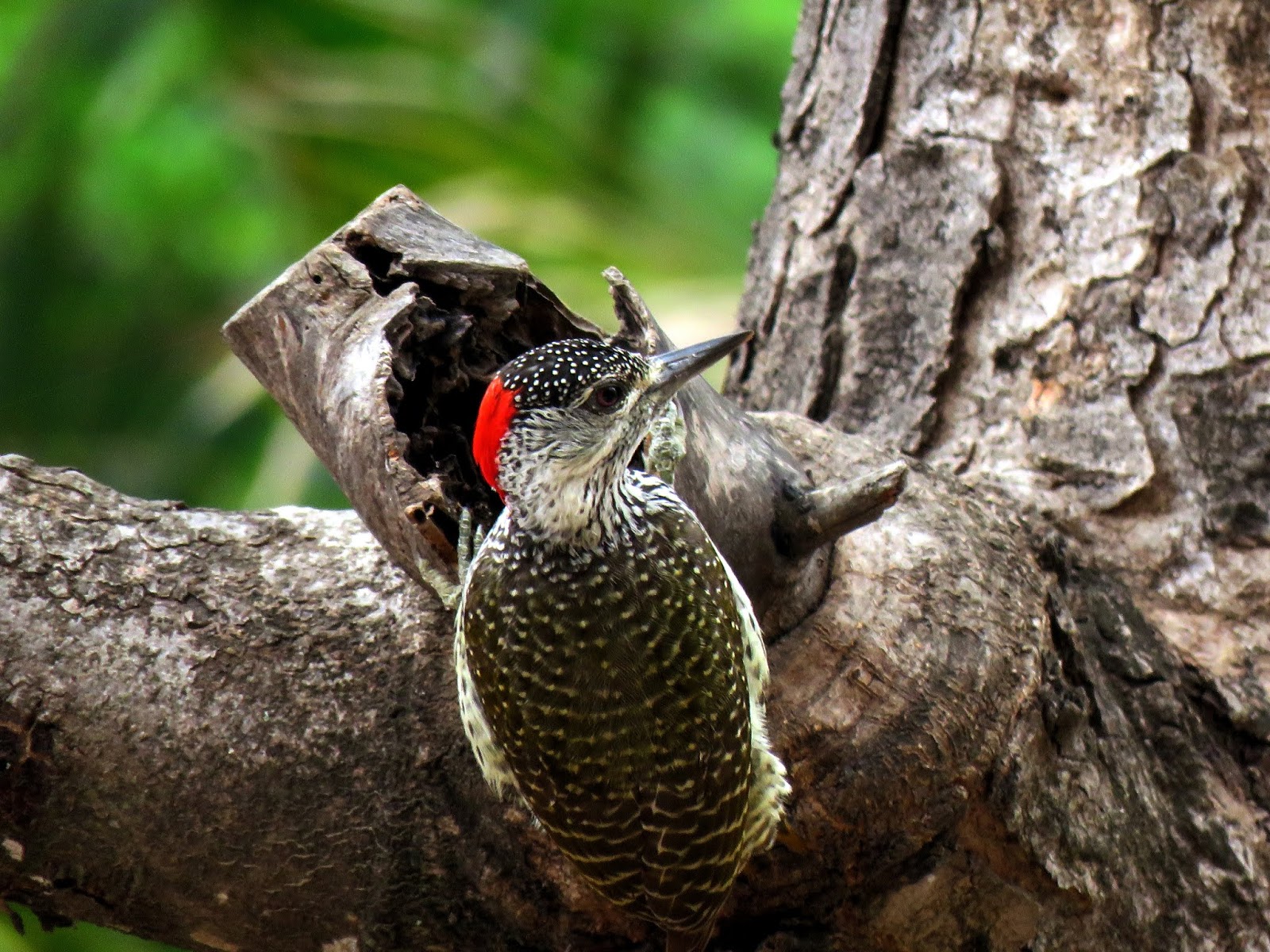
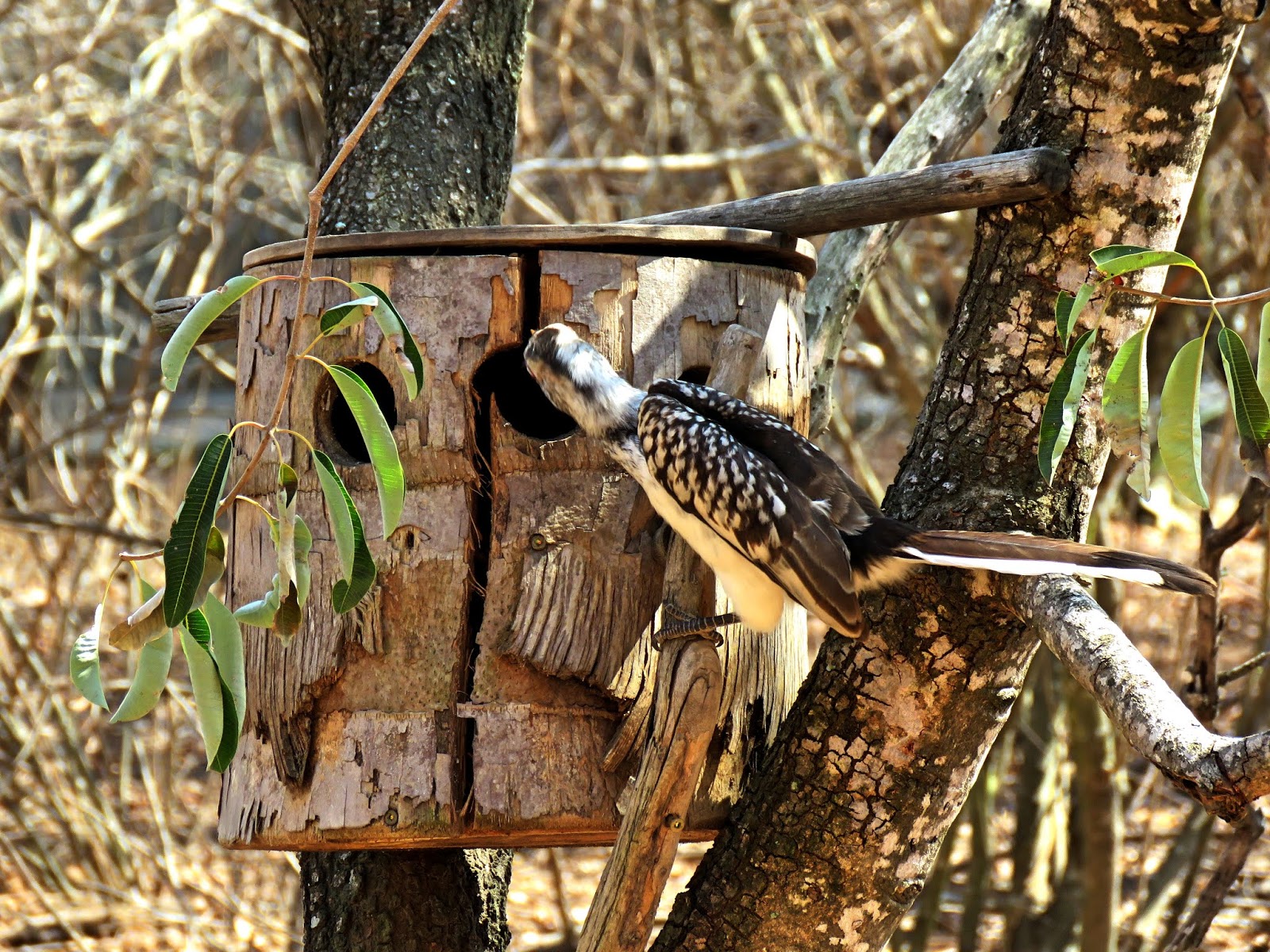
This woodpecker stopped by for some enthusiastic pecking in a tree by the veranda. From this site“Campethera is a genus of bird in the family Picidae, or woodpeckers, that are native to sub-Saharan Africa. Most species are native to woodland and savanna rather than the deep forest, and multiple species exhibit either arboreal or terrestrial foraging strategies. Its nearest relative is the monotypic genus Geocolaptes of southern Africa, which employs terrestrial foraging and breeding strategies. They are however not close relatives of similar-looking woodpeckers in the “Dendropicos clade”.

During these holiday times in South Africa, our daily drives in Marloth Park have been filled with a mix of an abject absence of wildlife sightings to breathtaking scenes unfolding across the Crocodile River.
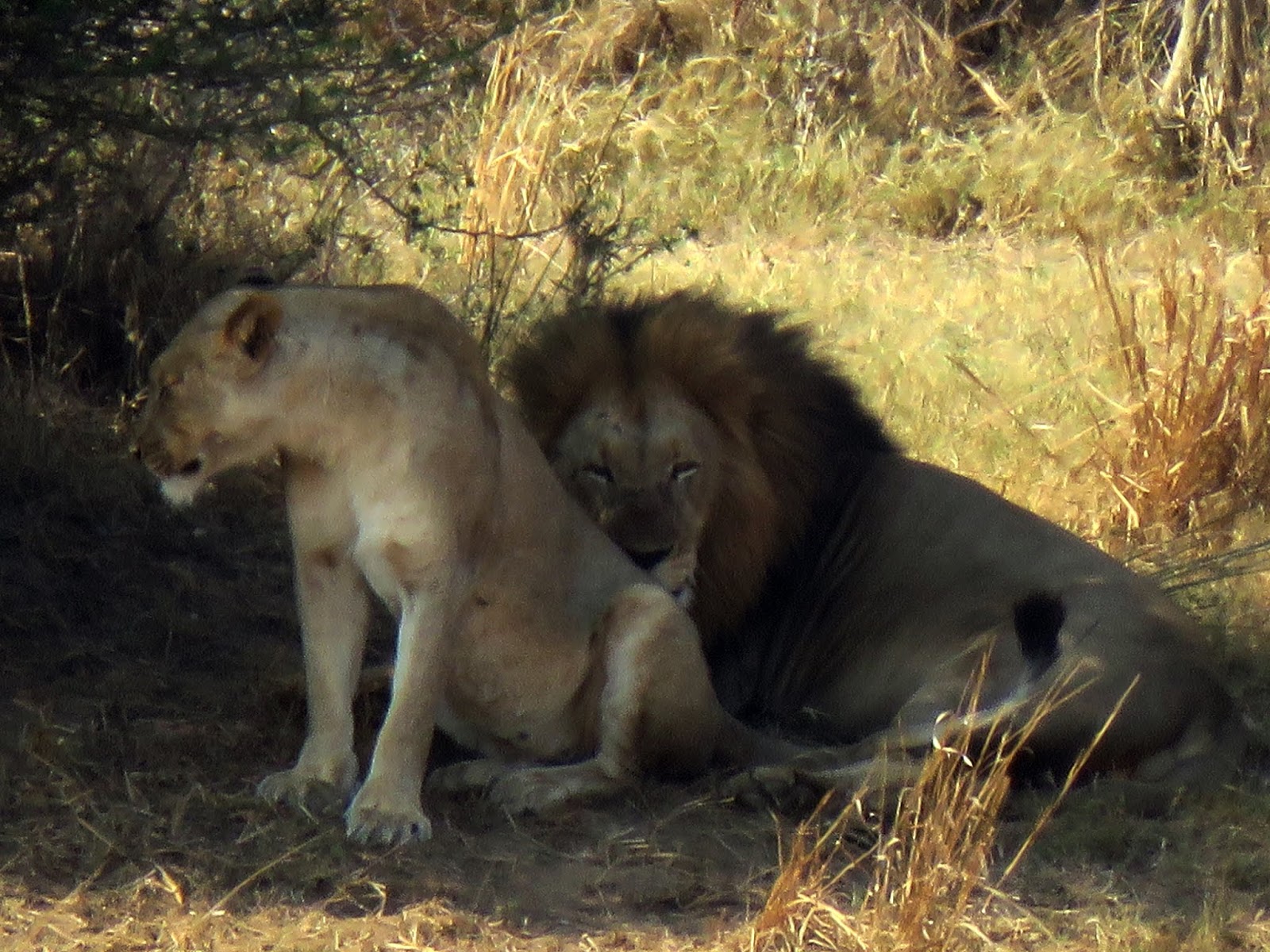
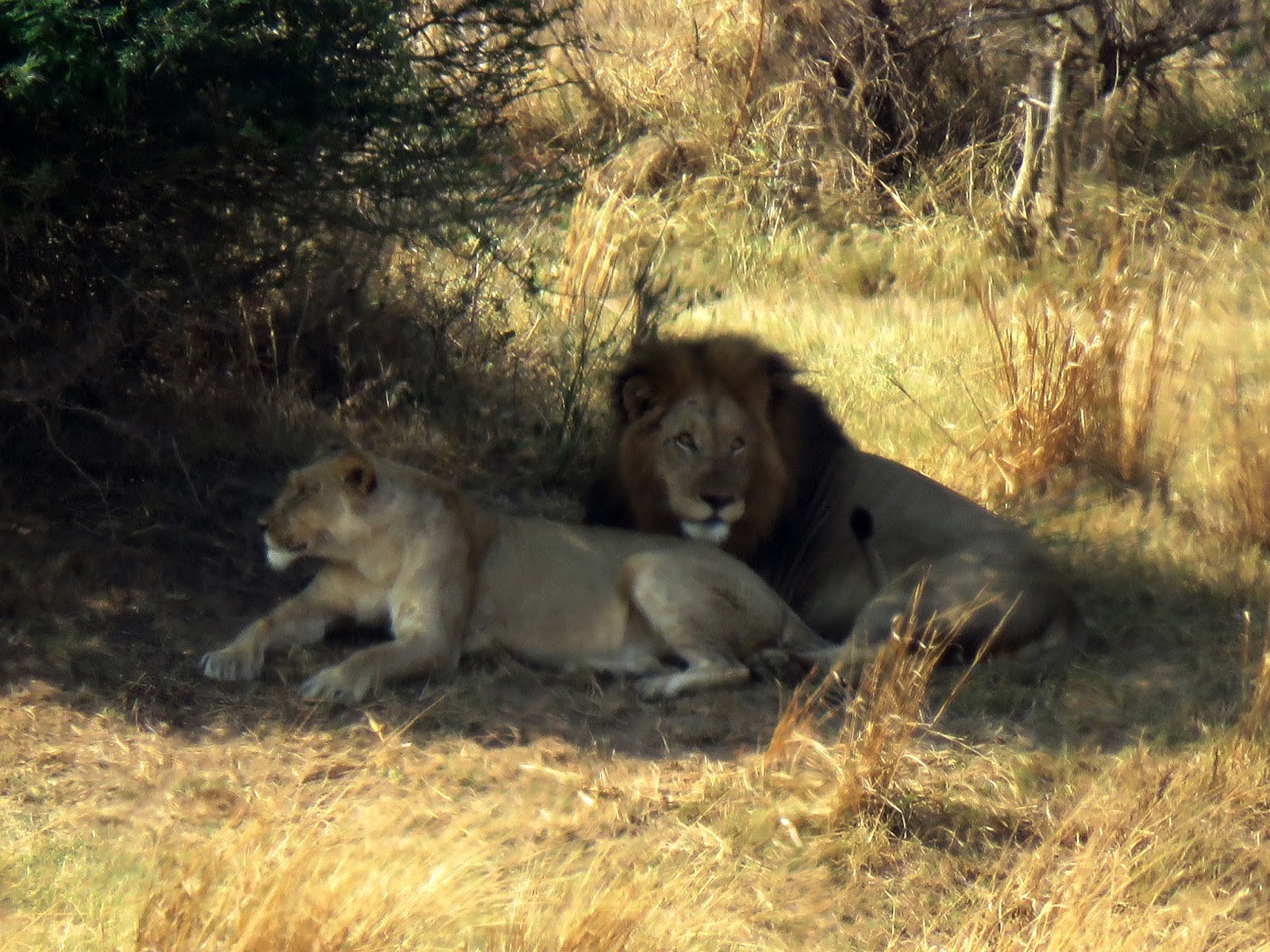
This male lion was cuddling up to this female.

We keep our expectations in check each time we venture out. Yesterday was no different when we took off at noon, not expecting to see much. The lack of visitors to our garden over this past week only reminds us of how determined the wildlife is to stay “undercover” when there’s an influx of holidaymakers in Marloth Park.
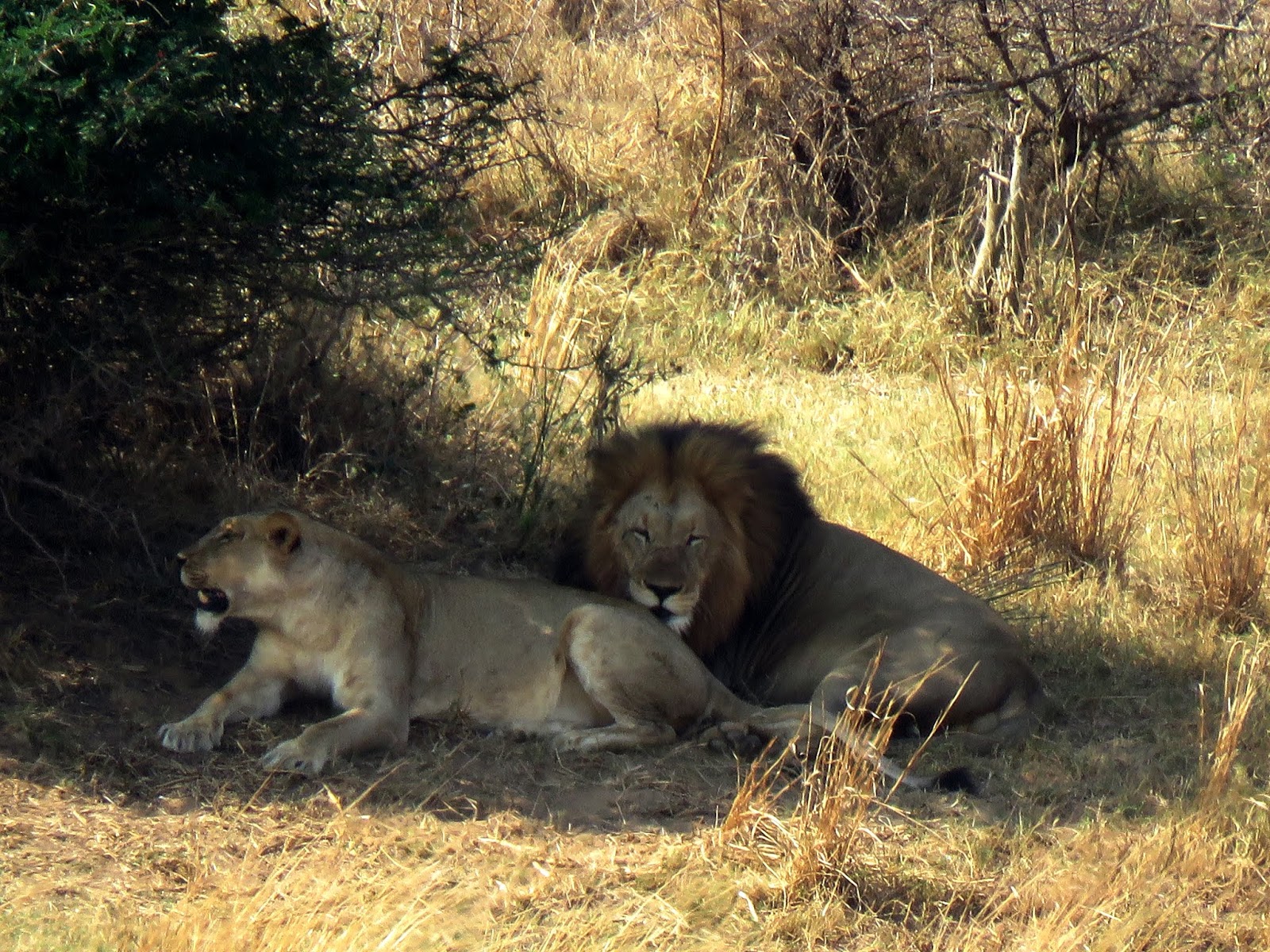
“There isn’t a mating season for the Lion but when there is plenty of food it is more likely to occur. The females are ready for mating when they are about four years of age. The males are mature about three-five years old. When the female is in estrus she may mate with the male more than 20 times per day. They may not even eat during this period of time. Due to so much activity, it is very often going to result in conception.”

Of course, this isn’t the case in Kruger National Park where the animals have
an area of 19,485 square kilometers (7,523 sq mi) in which to wander. Even when the holidaymakers come to explore the wildlife the animals must not feel crowded or intimidated by the excess traffic and noise as they are here in Marloth Park during holiday periods such as occurring now.

After we drove for an hour into our usual two-hour drive, we resigned ourselves that we weren’t going to see a thing…not in Marloth…not across the Crocodile River.  
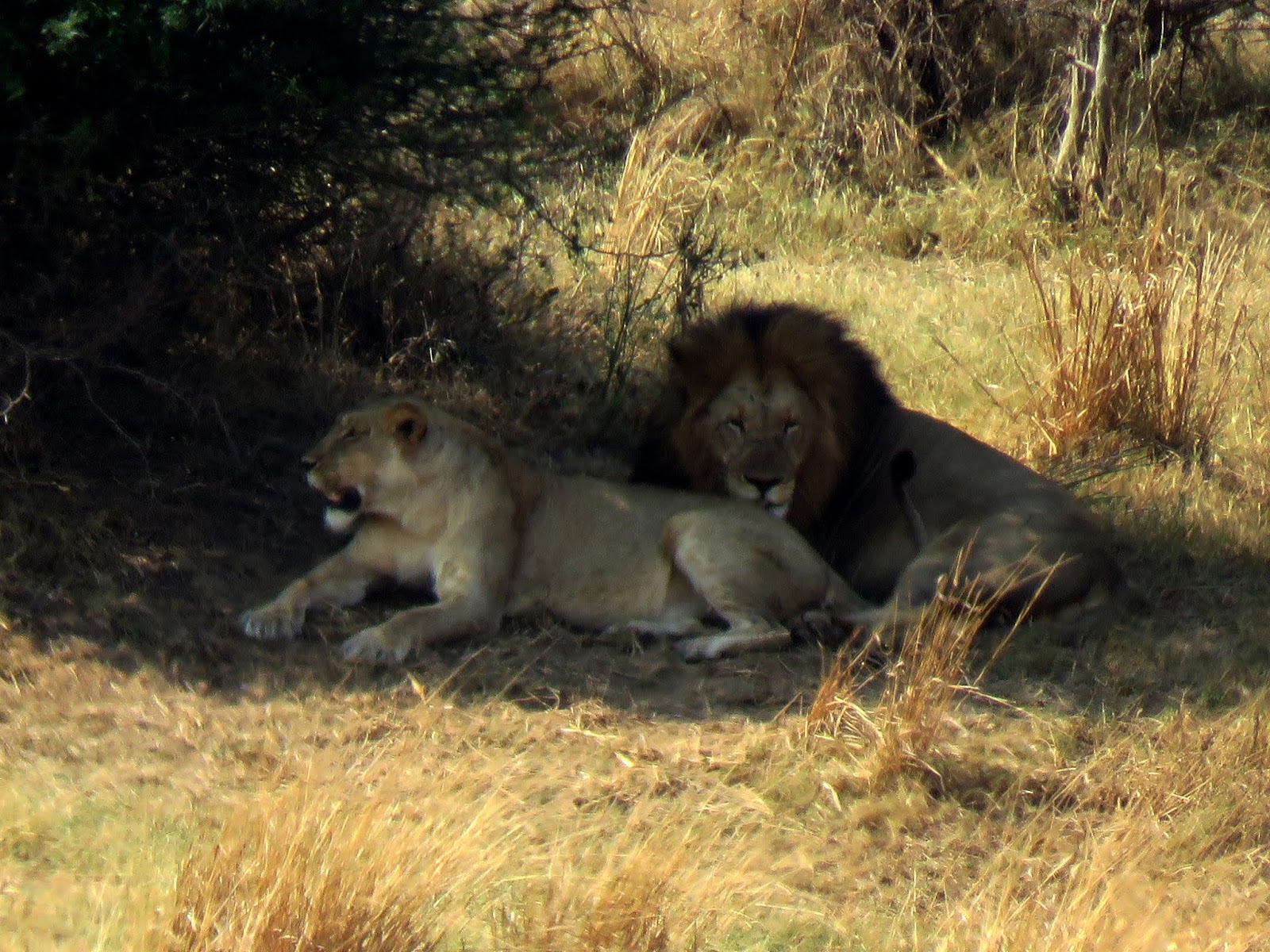
Approximately 110 days after conception she will have her cubs – anywhere from 1 to 4. She will give birth in a den away from the rest of her pride. She will stay very close to the den and only hunt very small prey that she can take down on her own. This food will offer her the ability to continue producing milk for the young to consume.

But as we always say, safari luck prevails, in a matter of minutes, everything changed. We not only encountered stunning scenes within the confines of Marloth Park that we’ll share in the next few days but we were literally entranced by two outstanding sightings on the river.

Today, we’re posting the river scenes of a mating pair of lions pointed out to us by a kindly gentleman, the only person at the overlook upstream from “Two Trees” who spoke little to no English.

When trying to spot lions at the distant bank of the river, whoever sees them first has the daunting task of attempting to point them out to others who happen to come by with binoculars and cameras.  
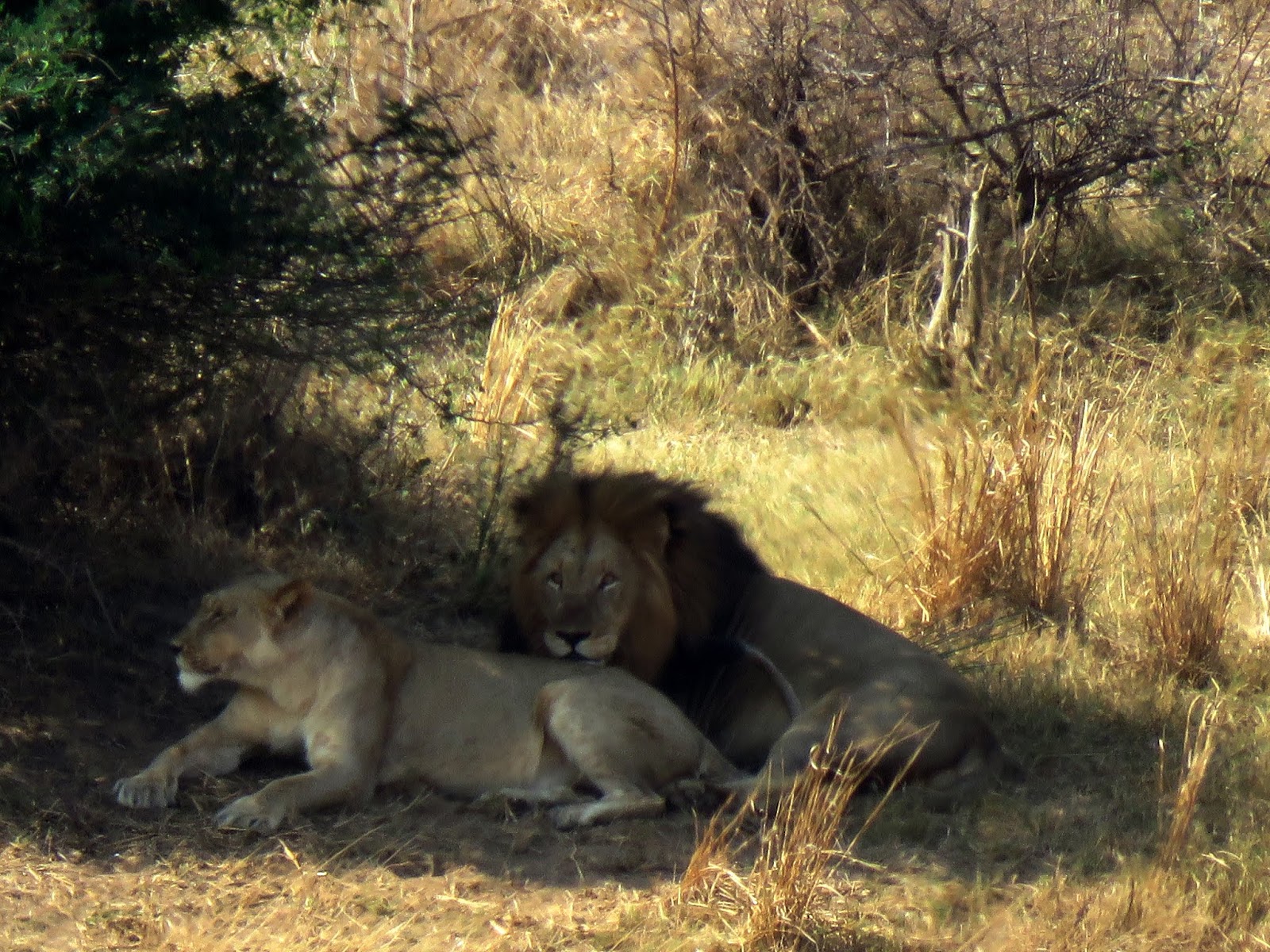
I literally held my breath while taking these photos since we were so far away and our camera has a limited range.

Lions blend into the surrounding rocks due to possessing the exact same coloration of the rocks and dry bush. They are nearly impossible to spot with the naked eye and still difficult with binoculars and long-range cameras.

Our cameras are not of professional caliber. We had to chose lightweight cameras due to weight restrictions and the fact that both of us have bad right shoulders and can’t hold cameras with heavy lenses.  

Until camera technology improves, which we expect will transpire in years to come, we are stuck with what we have and have made every effort to do our best considering the limitations of the technology on hand.
Every few weeks the mom moves the cubs, one by one, to a new den or their scent will attract predators. When these cubs are approximately seven weeks old she’ll take them to be introduced to the remainder of the pride.

It took a while for us to spot the lions when the gentleman had difficulty describing the landmarks where they could be seen. Alas, with a little extra effort on both our parts, we saw them and could let the man continue on his way thanking him profusely in Afrikaans, although we weren’t quite sure which language he spoke.

Usually, when lions are spotted when viewing from Marloth Park, a dozen or more cars can be seen at the overlook area. Jockeying for a good position can be a challenge. But, yesterday we were the only spectators at this most convenient overlook location.

Steadying the camera is the biggest challenge. Our camera has the capability of zoom in to the opposite shore of the Crocodile River but not as far as up the steep embankment. As an amateur photographer well knows, a steady hand is required and even breathing disturbs the clarity of a scene.
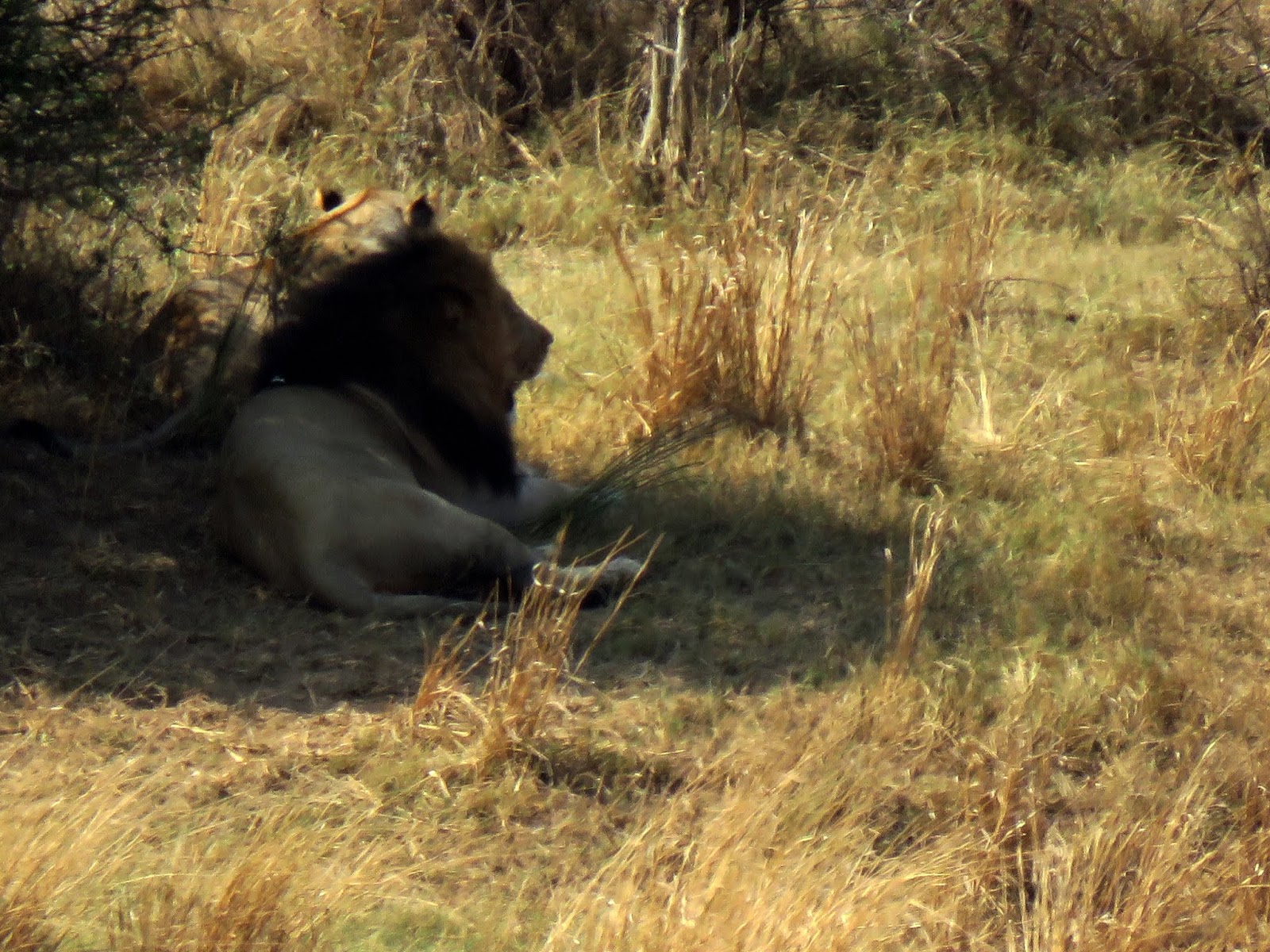
She took off, out of sight, and he remained in the shade on a hot day.

I placed the camera on a space between the barbs on the barbwire fence which has an electrified fence beyond it. The electric fence is fairly easy to avoid touching when the two fences are separated by less than a foot.

Each time I pressed the shutter, I took a deep breath and held it, knowing this was the only way I knew how to steady the camera with it placed on the thin wire. 

I had no idea if the photos were good when trying to view them in the bright sun until I uploaded them to my laptop. We couldn’t have been more thrilled to get the photos we’re sharing today. Forgive the repetition. They are slightly different shots if you look closely.
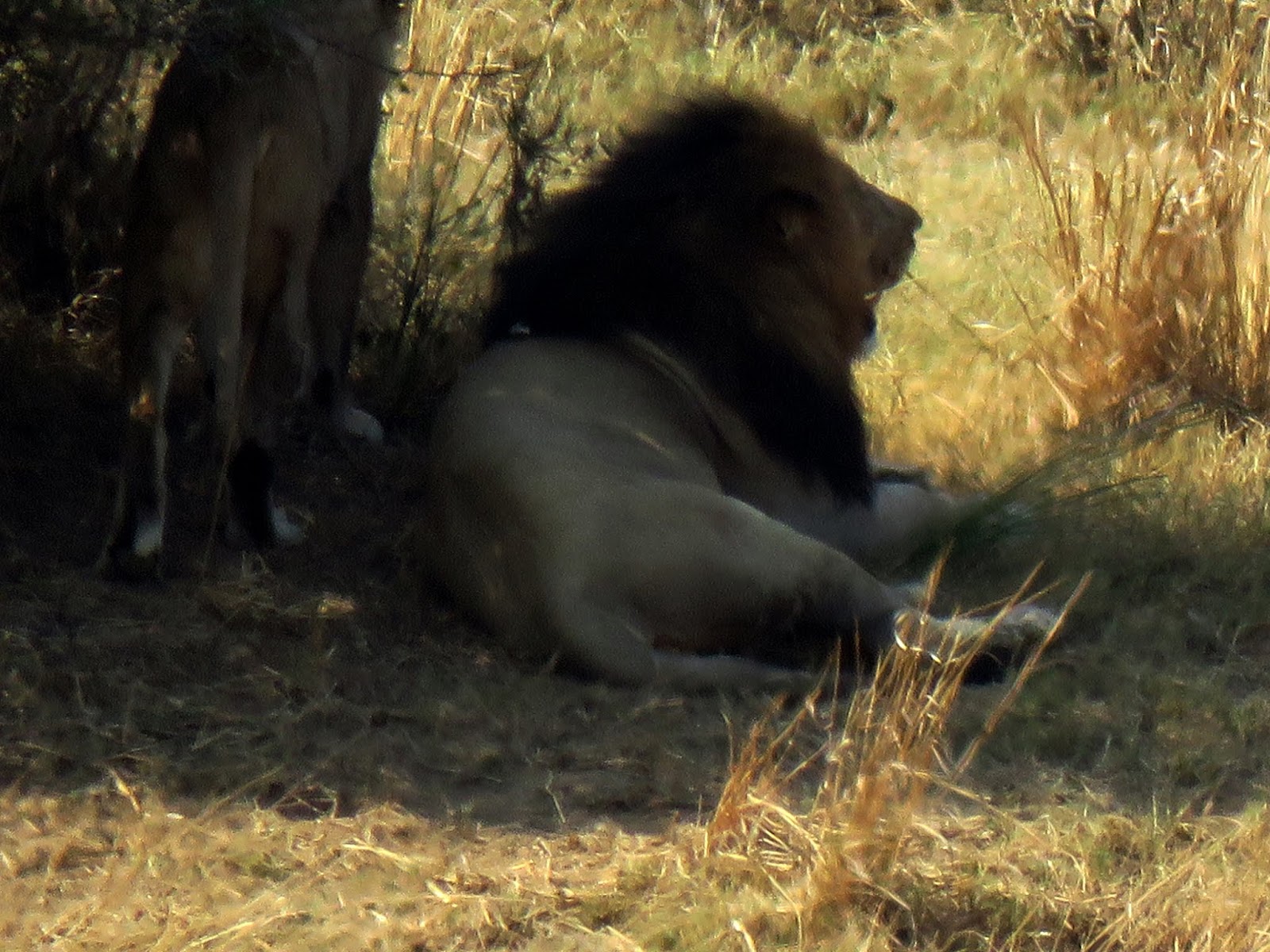
She stood for a while investigating opportunities for prey while he rested and watched.

As a matter of fact, I was so thrilled when we uploaded them I placed one, the main photo here today, on my Facebook page and also the Marloth Park sighting page where we’ve had tons of “likes,” “comments” and “shares.” Thanks to all of our Facebook and Marloth Park friends for supporting our enthusiasm in sightings in the magnificent place.

Although the timing is a little off (we don’t need more photos right now) we’re still heading to Kruger as soon as we upload this post. During the holiday season, such as the current “school holidays” it seems best to go mid-week but by the weekend an additional fee and reservation will be required to gain access to the Crocodile Gate along with several other entrances many kilometers apart.

We’ll be back with more tomorrow, looking forward to sharing some new and exciting scenes, followed up by whatever we’re gifted to see on today’s self-drive safari in Kruger National Park.

Be well. Be happy!

Photo from one year ago today, September 26, 2017:
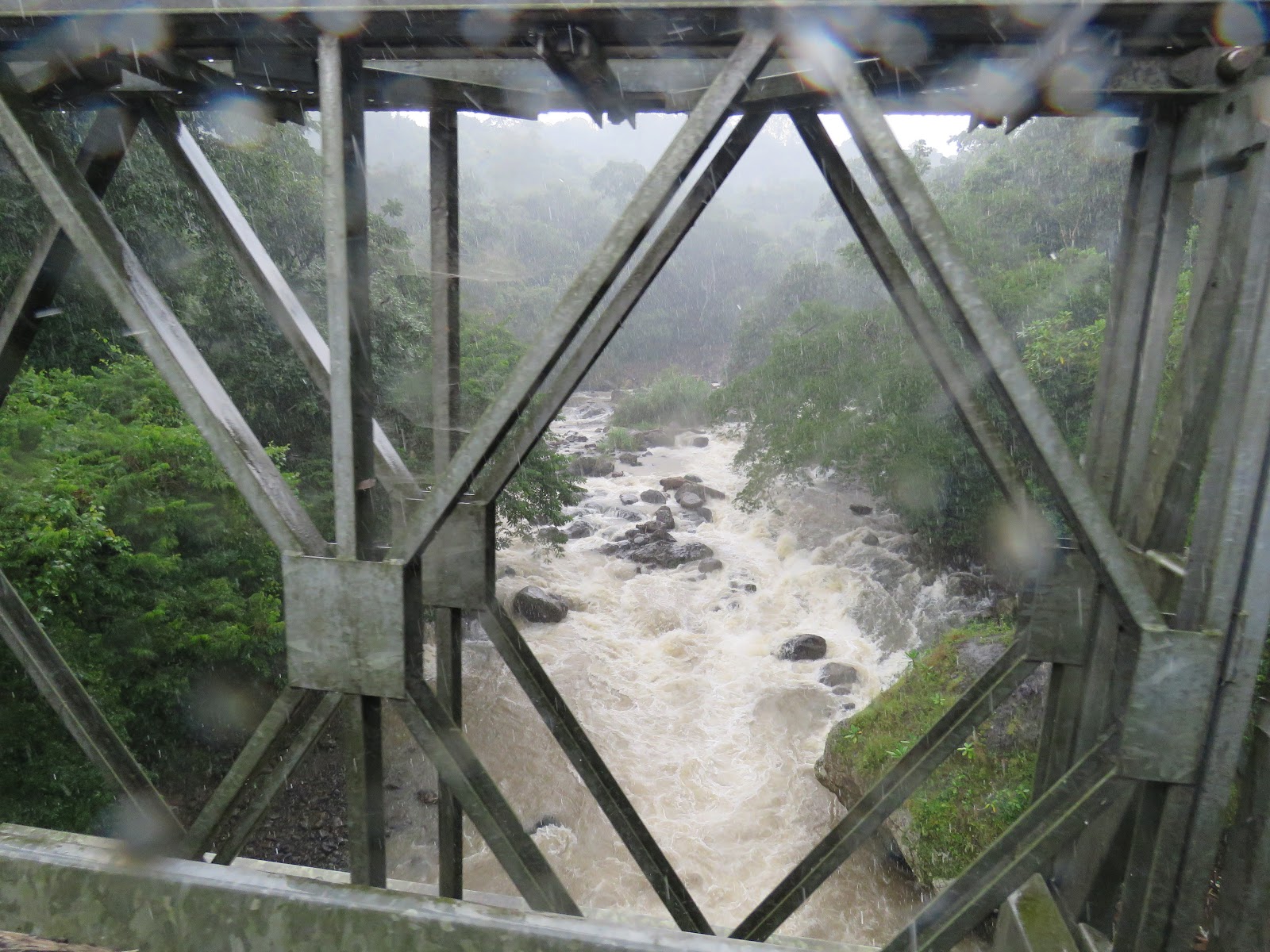
Rapids in the Rio Grande River in Costa Rica. We’d have stopped for a video or better shot but there was no shoulder at any point on the single-lane bridge and other vehicles were waiting to cross. For more photos, please click here.

Mom and baby giraffe day!…Little birds and crocs…Losing one’s memory…

Mom was standing by the river’s edge, waiting for her baby to join her, who was a short distance away.

“Sighting of the Day in the Bush”

Little birds stopped by for seeds.  Can anyone help us identify these little birds?

The days and nights roll into one another so quickly we often forget the day of the week. But, that constitutes the extent of any memory loss we may experience. Of course, there’s always been the issue of remembering the names of people we’ve just met, but that’s been a lifelong issue for both of us.

Mom appeared to want to show her offspring how to drink from the river.

I’ve concluded that not remembering the names of newly met people is because we’re so busy assessing them and formulating opinions as to “who they are” we fail to pay close attention to their names.

Down they went, in an awkward pose, to drink from the river.

We’ve both found if we focus on hearing their name, we’ll remember it, especially if we use their name in conversation during the first meeting. That’s not always easy to do, but we’ve found it really works.

Otherwise, neither of us suffers from any forgetfulness, perhaps making us a little too confident that advancing age-associated memory loss will escape us.  Tom’s mother, who passed away at age 98, had an acute memory, able to recite birthdays, anniversaries, and special events in the lives of her many family members. 

The baby tried it on her own while mom stood to watch.  Giraffes are vulnerable to predators in this position.

My mother suffered from dementia even at the age I am now, which exacerbated until her death at 81 years of age. Memory loss is heredity, and yet I suffer no signs of it approaching and pray this path of good memory continues for many years to come.

If keeping one’s mind active is any indicator of prolonging a good memory, we’re on the right track. Never a day passes that we don’t discover and learn something new. Add the task of often putting it down in writing (and photos) on this site only adds to the depth of our ability to remember.

A few zebras meandered down the hill to the water, but mom didn’t seem concerned.  Giraffes and zebras seem to comingle well in the wild.

Tom, who proofreads each post daily and shares in the research process while I’m preparing the post, also gleans a lot of new information daily along with our many adventures with wildlife and nature.

After writing the above comments, we searched online and found an article from Harvard Health at Harvard Medical School listing seven points that aid in maintaining a good memory.

Here they are, as quoted from the article here:

“1. Keep learning

A higher level of education is associated with better mental functioning in old age. Experts think that advanced education may help keep memory strong by getting a person into the habit of being mentally active. Challenging your brain with mental exercise is believed to activate processes that help maintain individual brain cells and stimulate communication among them. Many people have jobs that keep them mentally active, but pursuing a hobby or learning a new skill can function differently. Read; join a book group; play chess or bridge; write your life story; do crossword or jigsaw puzzles; take a class; pursue music or art; design a new garden layout. At work, propose or volunteer for a project that involves a skill you don’t usually use. Building and preserving brain connections is an ongoing process, so make lifelong learning a priority.

2. Use all your senses

The more senses you use in learning something, the more your brain will be involved in retaining the memory. In one study, adults were shown a series of emotionally neutral images, each presented along with a smell. They were not asked to remember what they saw. Later, they were shown a set of images, this time without odors, and asked to indicate which they’d seen before. They had excellent recall for all odor-paired pictures, and especially for those associated with pleasant smells. Brain imaging indicated that the piriform cortex, the main odor-processing region of the brain, became active when people saw objects originally paired with odors, even though the smells were no longer present. The subjects hadn’t tried to remember them. So challenge all your senses as you venture into the unfamiliar. For example, try to guess the ingredients as you smell and taste a new restaurant dish. Give sculpting or ceramics a try, noticing the feel and smell of the materials you’re using.

3. Believe in yourself

Myths about aging can contribute to a failing memory. Middle-aged and older learners do worse on memory tasks when exposed to negative stereotypes about aging and memory and better when the messages are positive about memory preservation into old age. People who believe that they are not in control of their memory function are less likely to maintain or improve their memory skills and, therefore, are more likely to experience cognitive decline. If you believe you can improve and translate that belief into practice, you have a better chance of keeping your mind sharp.

4. Economize your brain use

If you don’t need to use mental energy remembering where you laid your keys or the time of your granddaughter’s birthday party, you’ll be better able to concentrate on learning and remembering new and important things. Take advantage of calendars and planners, maps, shopping lists, file folders, and address books to keep routine information accessible. Designate a place at home for your glasses, purse, keys, and other items you use often. Remove clutter from your office or home to minimize distractions so you can focus on new information that you want to remember.

5. Repeat what you want to know

When you want to remember something you’ve just heard, read, or thought about, repeat it out loud or write it down. That way, you reinforce the memory or connection. For example, if you’ve just been told someone’s name, use it when you speak with them: “So, John, where did you meet Camille?” If you place one of your belongings somewhere other than its usual spot, tell yourself out loud what you’ve done. And don’t hesitate to ask for information to be repeated.

6. Space it out

Repetition is most potent as a learning tool when it’s properly timed. It’s best not to repeat something many times in a short period, as if you were cramming for an exam. Instead, re-study the essentials after increasingly longer periods of time — once an hour, then every few hours, then every day. Spacing out periods of study is particularly valuable when trying to master complicated information, such as the details of a new work assignment. Research shows that spaced rehearsal improves recall in healthy people and those with certain physically based cognitive problems, such as those associated with multiple sclerosis.

7. Make a mnemonic

This is a creative way to remember lists. Mnemonic devices can take the form of acronyms (such as RICE to remember first-aid advice for injured limbs: Rest, Ice, Compression, and Elevation) or sentences (such as the classic “Every good boy does fine” to remember the musical notes E, G, B, D, and F on the lines of the treble clef).”

Although, in many ways, the medical profession had led us down the wrong road over the decades, this article appears to be realistic and most likely accurate. 

Yesterday, while on our drive, we stopped to check out the scenery at this dam.

In reviewing the above seven points, it’s clear we’re doing everything possible based on this lifestyle, mostly unintentionally, to enhance our memory as we age.  

When I recall my mother’s dementia, I realize how limited her range of learning may have been as she aged. Many seniors with severe medical problems find themselves sitting in front of a TV screen for most of each day.  In addition, many ill seniors may be taking multiple medications, impacting cognition and memory on a day-to-day basis.

Once we arrived at the hippo pool, we spotted a few crocs.

Several years ago, I read Dr. David Perlmutter’s book “Grain Brain,” which further explains how consuming a high carbohydrate diet of grains, starches, and sugars grossly impacts our brains as we age. I highly recommend this book to anyone who may be concerned with memory, regardless of age.

As a matter of fact, Dr. Perlmutter did an article on me, as shown here in this post (with photos), on how eliminating inflammatory foods from my diet allowed us to travel the world. Also, here’s the link from our post notifying our readers about the article.

We always enjoy taking a good croc headshot.

No, we don’t have all the answers to longevity and good health. We learn what we can from what we hope are reliable sources and incorporate what we can into our daily lives.

One thing we do know is, should we ever falter in our memories of what we’ve been doing over these many past years, we can always look online and reread every single post. That’s a perk we have gained from all these busy years, putting our story and photos together to share with all of you.

I hope your day provides you with an opportunity to engage in some of the above memory-enhancing tools!

Photo from one year ago today, September 25, 2017:

A turtle we spotted in a pond in Zarcera, Costa Rica. For more photos, please click here.

Yikes!!!…A snake in the bedroom???…Or, what?…Adults only photo today.

A waterbuck with it’s circular-shaped marking on its rear end.

“Sighting of the Day in the Bush”

Only 3% of birds on the planet have penises. For a scientific perspective, in an article entitled “Ostrich penis clears up an evolutionary mystery,” please click here.

Yesterday on the N4 Highway not far from the entrance to Marloth Park, a male lion was spotted on the highway and reported as follows:

A lion spotted by motorists along the N4 near Marloth Park in Mpumalanga is thought to have escaped from the Kruger National Park.
A lion spotted by motorists along the N4 near Marloth Park in Mpumalanga has escaped from the Kruger National Park.
A lion spotted by motorists along the N4 near Marloth Park in Mpumalanga has been darted and captured.
A spokesperson for the Mpumalanga Tourism and Parks Agency, Kholofelo Nkambule, told SowetanLIVE that the lion would be returned to the Kruger National Park from which it is understood to have escaped.
“The lion has been found and darted. It is ready to be sent back to the park where it escaped from‚” said Nkambule.
The lion was sighted in the early hours of Sunday by motorists who posted a video and pictures on Facebook.”

This story created quite a flurry of activity on the various Marloth Park pages on Facebook. We followed throughout the situation, pleased to discover the lion had been darted and returned to Kruger National Park by helicopter. Thanks to all the local people, including Marloth Park rangers, for participating in this successful recovery. 

Ostriches strutting their stuff!
Our friends Lois and Tom will be arriving here in 15 days traveling on that same road from the airport. We didn’t send them this link to avoid any concerns before arriving here and becoming more informed and familiar with such occurrences.
Crossing the road…

None the less the situation caused quite a stir on social media in Marloth Park, and of course, we enjoyed reading about it throughout the day.

Also, yesterday a Marloth Park resident posted the above photo of a venomous boomslang snake devouring a lizard from her veranda. Quite an interesting sight to see. 

This morning when the power had been out for several hours, and we weren’t able to finish the post, we jumped in the little car for a drive through the park.

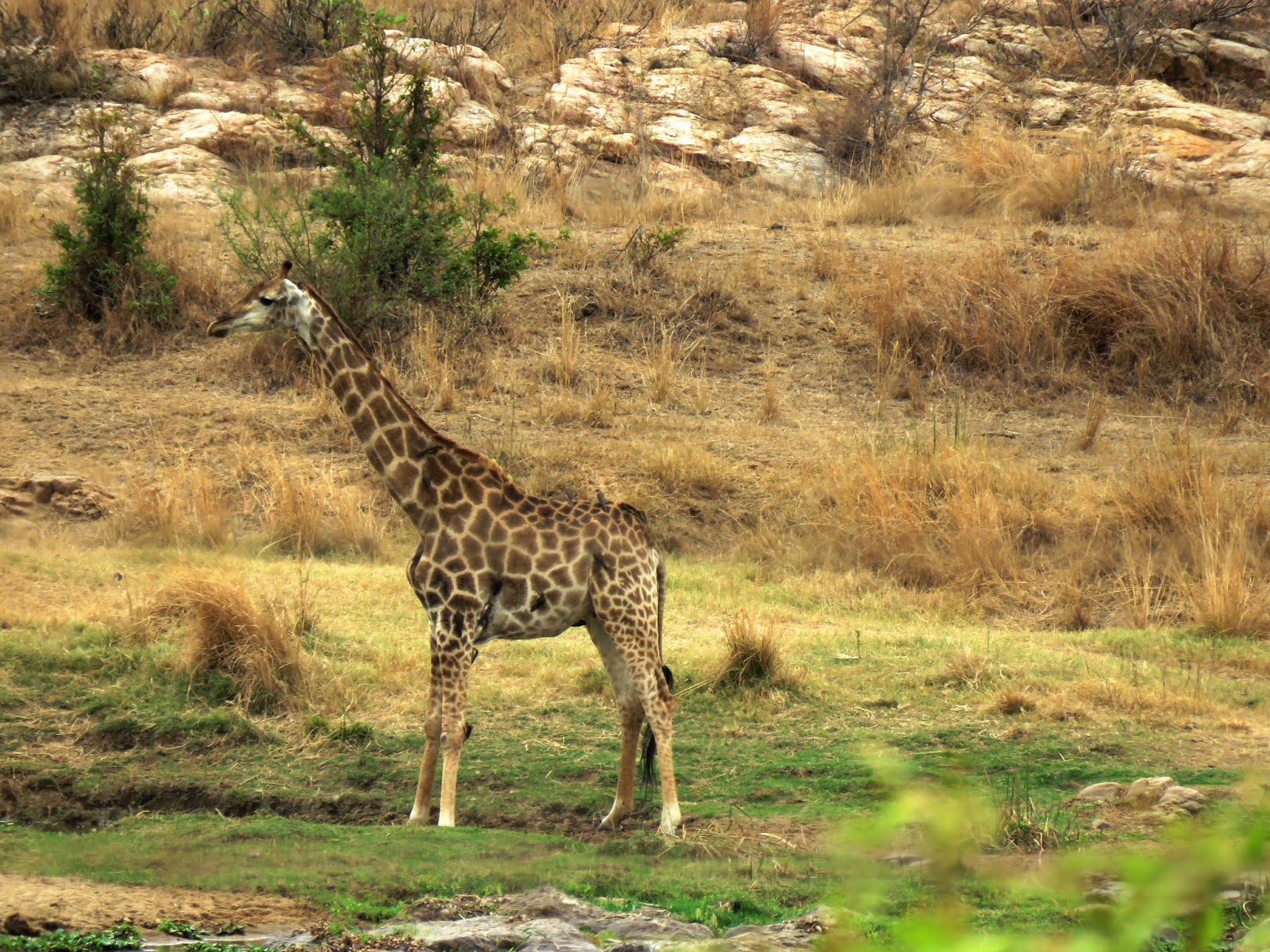
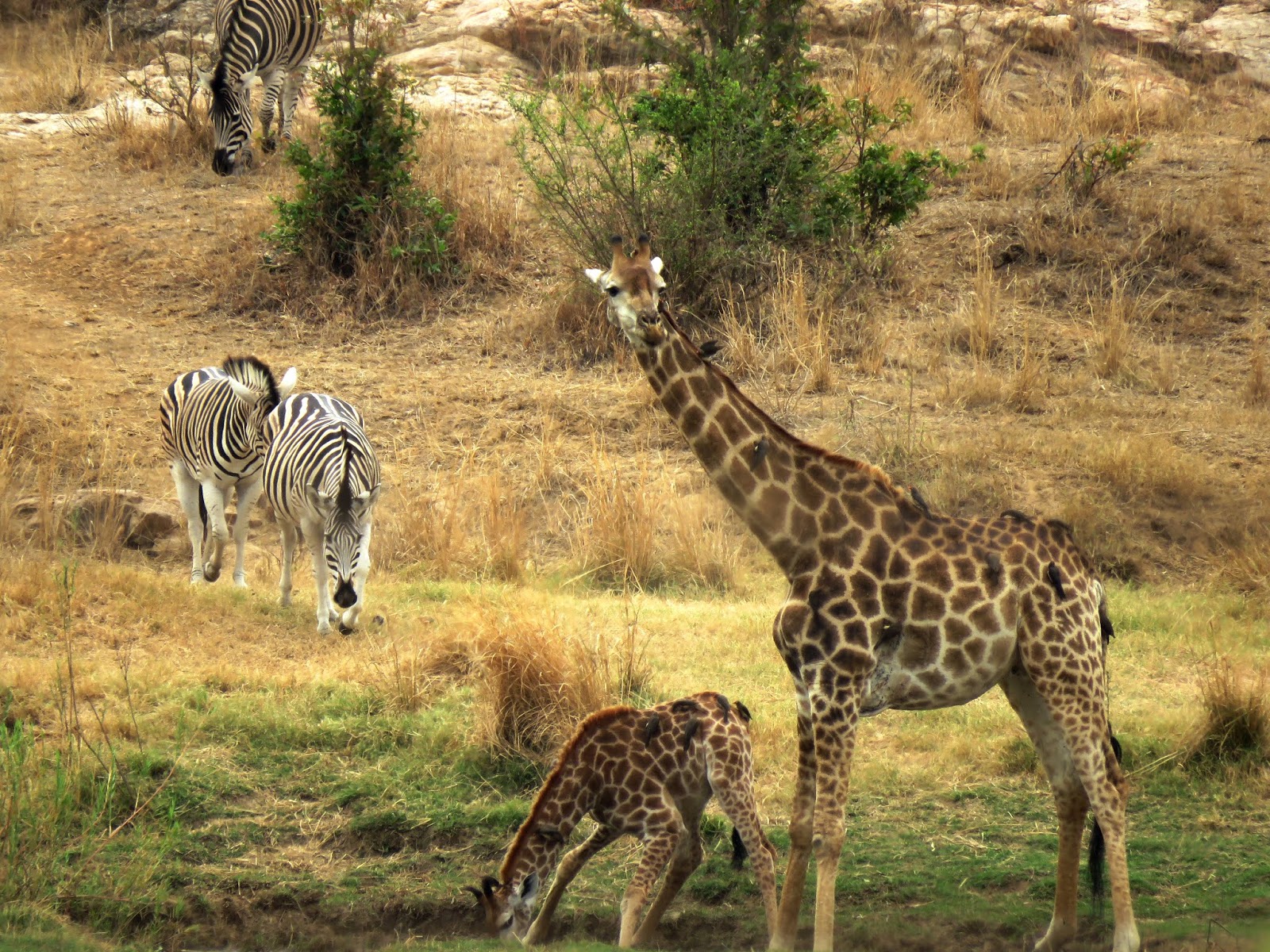
Giraffes, like most animals in the wild, are always on the lookout for food.  From this site:  “In Africa, there is a rainy season which allows giraffes to feed on fruits, leaves, twigs, and water, but there is also a drought season when they will try to forage for all that they can, mainly acacia trees and bushes. During these rainy months, they eat deciduous plants, and during the dry season, the evergreen plants are more consumed. They eat between 34 and 75 kg of vegetation every day.”

At the Crocodile River, we spotted five lions, but we were too far away for good photos. Now back at the house at almost 1:00 pm, we’re settled in for the remainder of the day and evening.

From this site“The giraffe’s main predator is the lion, which can accelerate to almost 50 miles per hour. His second worst enemy, the hyena, can reach 35 mph. If a lion and a giraffe ran a race side by side, the lion would beat the giraffe to the finish line. However, the giraffe is not about to give a predator an even start. He uses his great height and excellent eyesight to spot a pride of lions as far as half a mile away and gets a head start. Lions can sustain their top speed for only about a hundred yards, so they run out of gas before the giraffe does. Hyenas can be more dangerous because they hunt cooperatively. They can take turns sprinting to keep the giraffe from slowing down to catch his breath.”

It’s not as hot today as it had been several days last week. It’s a paltry 30C (86F), but oddly, with no rain for months, it’s humid today. The holidaymakers are beginning to leave after the long weekend, but many remain.

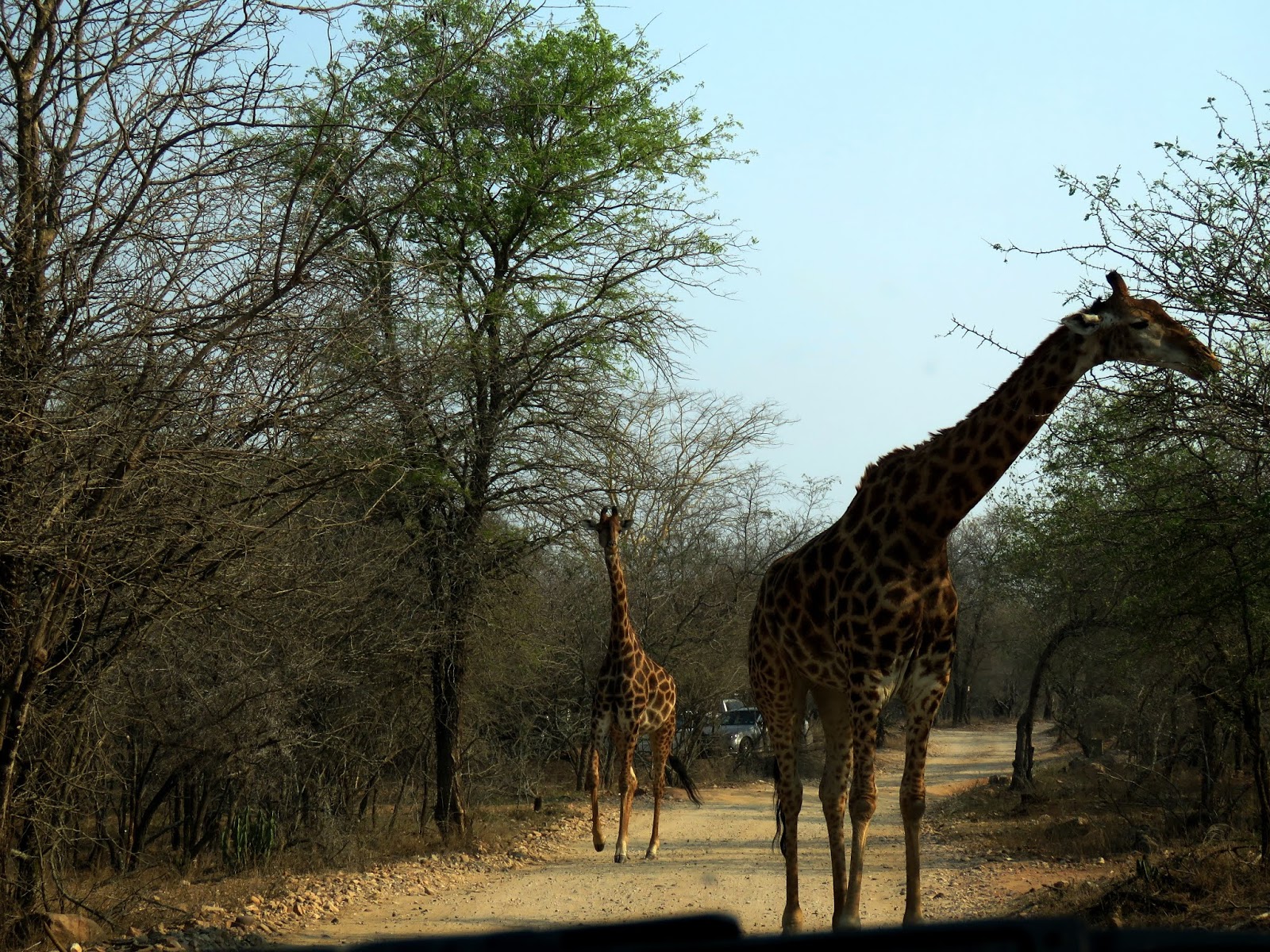
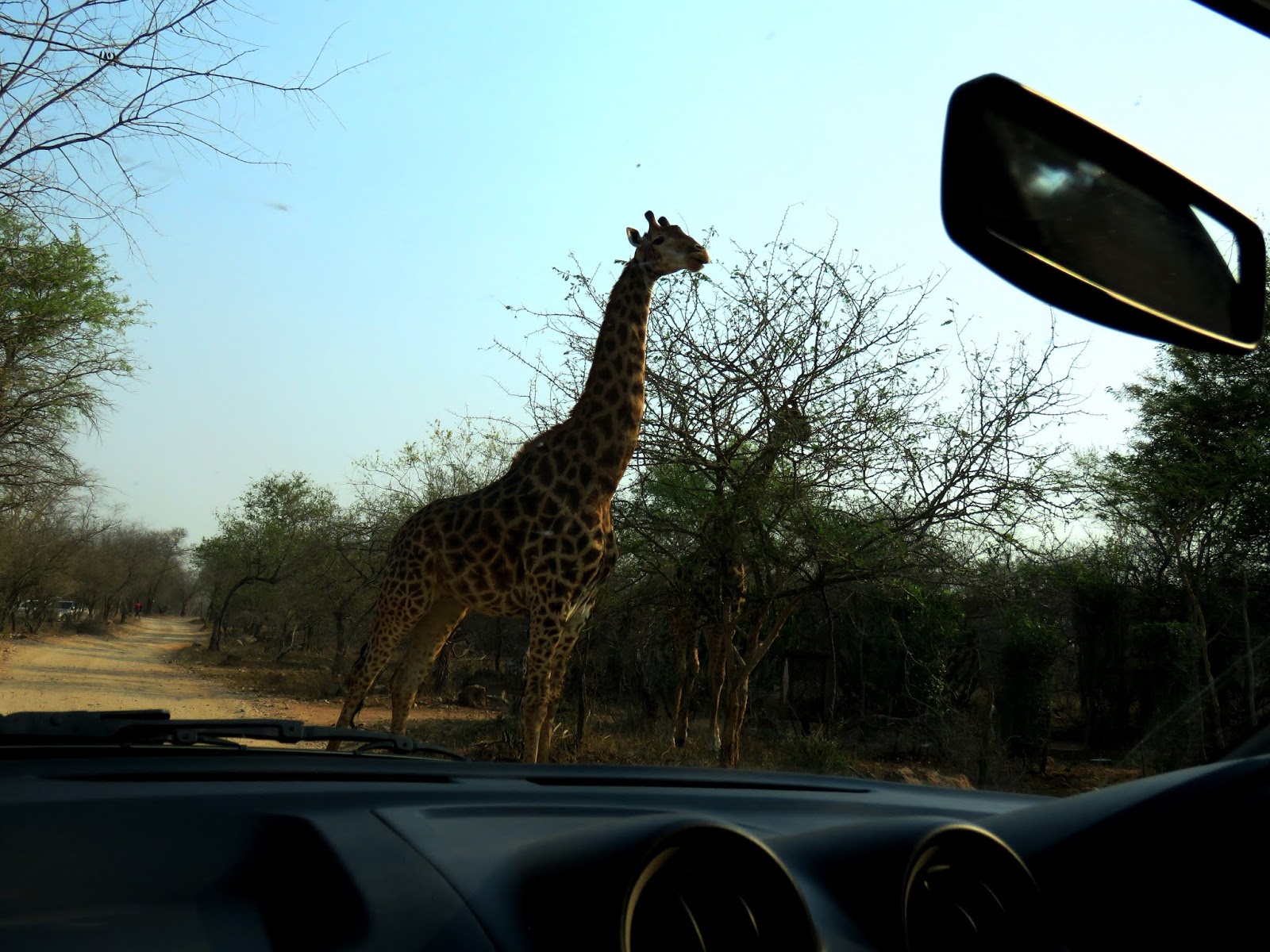
Giraffes move quickly, so when we spot them, we always stop for photos and observe their fascinating behavior.

There are many cars on the road, and more will come when the school holidays begin this week. As a result, we’re hardly seeing any visitors other than bushbucks, helmeted guineafowl, mongooses, and a few warthogs.  

Giraffes crossing a dirt road in Marloth Park.

Once the commotion thins out in a few weeks, it will be quiet and peaceful, with visitors clamoring in our garden for pellets, carrots, apples, and eggs. We’ll stay busy in the interim doing our favorite pleasurable activities; daily drives to the river; dinner out each week at Jabula Lodge & Restaurant where the food and companionship are divine; socializing and entertaining friends for dinner (this coming Saturday); and continuing to post stories and photos every day.

It’s dark in our bedroom. Upon awakening, with Tom already outside on the veranda, I looked out the window to see if we had visitors. Then I noticed this and backed up slowly and calmly.

As for the above photos of what, at first, appeared to be a snake, I called Tom into the bedroom, and he grabbed the huge telescopic pole he uses to chase off monkeys and baboons and carefully approached the scene.  

When Tom grabbed the telescopic pole to pull this out from behind the wooden chest, he discovered this. See the story below.

Oh, good grief. It was his belt that had fallen behind the wooden chest. We couldn’t help but laugh out loud, especially as we’ve recalled the situation several times since that morning.

Do we ever get bored? Never. Certainly not in this environment. But, like many other retirees throughout the world, we occasionally conjure up some added activity to keep us enthused and thoroughly entertained.

Oops, gotta go! Ms. Bushbuck just arrived. The pellets are ready for her, along with some iced cold carrots, apples, and lettuce…her favorites.

Have a spectacular day!

Photo from one year ago today, September 24, 2017:

Elephant topiary on the church’s grounds and topiary in Costa Rica. For more photos, please click here.

Exquisite scenery from the Marloth Park side of the Crocodile River…Staying healthy, a must for this life!…

It was hard to believe we captured this scene close to sunset.

“Sighting of the Day in the Bush”

Notice the appearance of a face in the rocks near the top center of this photo.

It’s almost noon on Sunday and I’m getting a late start to today’s post. Recently, on a relatively strict diet to lose the weight I’d gained these past few years since my gastrointestinal problems began, I’m only 2.5 kg (5.5 pounds) away from my goal.  

A pair of retired generals, perhaps?

Once I reach that goal, I will post the details here including what I’ve been doing to lose weight which is difficult with my already strict way of eating, what I did and didn’t give up, my weight at the start, and the final total weight loss.

Zebras were standing in a waterhole drinking and cooling off.

It’s been slow, averaging only a .45 kg (one pound) loss per week but I’m thrilled to be able to fit back into clothes I’ve dragged around the world for a few years hoping I’d fit in them once again.  

A mom and youngster grazing near the water’s edge.

Of course, now I’m stuck with many items that are way too big, which I’ll donate before we leave South Africa, whenever that may be. In the interim Tom who’d also gained a few kilos is now gradually returning to his lowest weight which was when we were in Belize almost six years ago.

This elephant was trying to figure out how to climb these steep rocks. Eventually, she turned and took a different route.

We’re hell-bent on not carrying excess weight when our goal is to stay fit and healthy so we can continue traveling. We’ve both found we feel our very best at the lower end of our weight ranges which like everyone, fluctuates from time to time.

Five giraffes at the river’s edge.

No, we’re not obsessed with the “numbers’ but we’re definitely determined to keep our lipids, blood pressure, blood sugar levels, and weight at a level of optimum wellness for our ages.

Zebras coming down the steep hill to the Crocodile River.

No doubt, I’d had my share of medical ups and downs these past several years.  But, now I see I need to pay more attention to wellness and less attention to the vulnerability of advancing age.  

The hot weather brought many animals down to the Crocodile River.

Fortunately, none of my issues had left me wanting to stop traveling. At times, it was difficult to carry on but the sheer love of our lifestyle has kept me motivated to forging ahead. Now that I’m feeling so well I never forget to be grateful each and every day while continuing on the mission to maintain good health.

Giraffes rarely bend to the ground other than to drink.  They are vulnerable to predators in this position.

One’s mental health is equally important in this process and nothing could bring us more joy than the amazing relationship we share as we travel the world.  This extended stay in South Africa, hopefully lasting until February 20, 2019, when we fly to Kenya (providing we are able to get visa extensions) means we only have 150 days remaining until we leave.

A few male impalas and two giraffes could be mom and youngster.

The remaining 150 days constitute a total of four months and 28 days. We both want to thank all of our worldwide readers for staying with us as we’ve continued to write and post photos of some fairly repetitive scenarios.

Giraffes heading back up the embankment while zebras languished in the water.

We present today’s photos with a little different perspective, not just animal photos per se but scenes with the wildlife we’ve been fortunate to see while on the Marloth Park side of the fence, overlooking the Crocodile River, taken on the two outrageously hot days this past week.

A few of the zebras began to wander off while the others stayed behind.

Enjoy our photos and especially, enjoy YOUR day!

Photo from one year ago today, September 23, 2017:

Much of the produce at the Central Market in Atenas appears to be imported when it’s perfectly shaped and mostly clean. At the feria, the Friday Atenas Farmer’s Market, the vegetables appear to have been “just picked” with excess leaves and insects still on them. That’s the type of produce we prefer to buy.  For more photos, please click here.

Mongoose mania in the morning…Delightful little critters we’re coming to know..What’s our weekly expense for is feeding the wildlife?…

The mongoose now comes up the steps to let us know they’d like some eggs.

“Sighting of the Day in the Bush”

Mr. Tree Frog has become a regular fixture hanging out on this light fixture every night after dark. Most likely he’s attracted to the possibility of eating many insects around the light.

Mongooses fascinate us. (Yes, the plural of mongoose is most often mongooses, not necessarily mongeese). There is no biological connection between mongooses and geese.

The mongooses get along well with Ms. Bushbuck and Baby.

A group of mongooses ranging from 20 to 50 participants is called a band. In our area in Marloth Park, most often we see the banded (striped) mongoose. Most often they visit us in small groups of 20 or so but we’ve definitely had visits from as many as 60 or 70 of the funny little creatures 

“Only one more step to go,” says one mongoose to another.

In Africa, there are 34 species of mongooses but there are also these and other species in parts of Asia and Europe. In many countries, they are highly revered for their ability to fight with a venomous snake, surviving many bites.  

Mongooses are adept at killing snakes due to their agility, thick coats, and specialized acetylcholine receptors that render them resistant or immune to snake venom. Thus, we welcome them as visitors hoping their presence, which is daily, keeps the snake population at bay during the upcoming spring and summer months.

“I made it all the way to the top. Now, let’s see if the humans notice me!”

Some mongooses are strictly carnivores but those that visit us, the banded mongooses, seem to enjoy eating the small apple chunks that we toss to a wide variety of visitors although not with the enthusiasm as when we provide the bowl of scrambled eggs as shown in today’s photo with a mongoose lying in it.

“I’ll hide under the braai so they don’t see me.”

Each week, while I shop for groceries in Komatipoort Tom heads to the market in Lebombo where he purchases five dozen eggs for the mongooses and carrots and apples for the remaining wildlife which we “serve'” along with the pellets.

Our weekly cost for feeding wildlife is as follows:
Carrots 5 kg:  ZAR 34.90  (US $2.44)
Apples 2 bags: ZAR  39.80 (US $2.78)
Eggs 5 dozen:  ZAR 79.80  (US $5.57)
Pellets 60 kg:  ZAR 329.29 (US $23.00)
Total: ZAR 488.79 (US $33.79) 

“Hmm…should I try it too?”

We also eat the carrots in the 5 kg bag since they are of exceptional quality.  However, we don’t consume apples with our way of eating and prefer buying “free-range organic eggs” which we purchase weekly at Spar for our own use.

The total weekly/month cost may seem like too big a number to be tossing out to wildlife but the amount of enjoyment we get derive while providing wildlife with added sustenance is well worth the money.

“Gee…the eggs are all gone but I think I’ll lay in the bowl to let them know we want more.”

We never go to a movie, dine out only once per week on average, don’t have the cost of upkeep and home maintenance (including cable bills, lawn service, utilities, and trips to Home Depot) results in the most exquisite entertainment found anywhere in the world as far as we’re concerned.  

In our old lives, it was nothing unusual to drop ZAR 7159 (US $500) during a single trip to Costco, considered in itself to be quite entertaining, while loading up on massive sizes of household goods and food. Those days are long past.

“Trying a different position.  Maybe this will work.”

We do not feed the wildlife our leftover food. We plan our meals carefully and rarely have leftover food to toss. Nor would we feel it is safe for the wildlife to be fed human food. Their digestive systems are developed to consume vegetation and for the carnivores, like the banded mongooses that visit us, they consume insects, small rodents, frogs, lizards, snakes, and eggs. 

We often hear stories of holidaymakers and some local residents feeding the wildlife totally inappropriate foods, such as potato chips and fries, pasta and desserts, and other sugary, starchy foods that aren’t befitting their physical makeup.

“That didn’t work.  Maybe I’ll take a nap.”

In a perfect world, the bush would be rife with greenery, vegetation, and water sufficient to feed the wildlife. But, the reality is such that it’s not always possible and the sustenance we provide is only a tiny portion of what they need to be well-nourished.

Soon, when the rains come, we’ll be excited to see the wildlife thrive in a richer greener environment. Even so, we have no doubt they’ll continue to visit us whether or not they’re hungry as they are now in this parched dry terrain.

May your day be rich in experience and purpose.

Photo from one year ago today, September 22, 2017:

After many inquiries as to these low-carb chicken stuffed loaves, this recipe is included in the link below. Food is a big part of our world travels as we’re sure it is for most of you when traveling, whether homemade or dining in restaurants.  We tripled the recipe in order to result in four meals, freezing part of it.  For the recipe and instructions, please click here.

Cape buffalo day!…Difficult day for wildlife in Kruger…

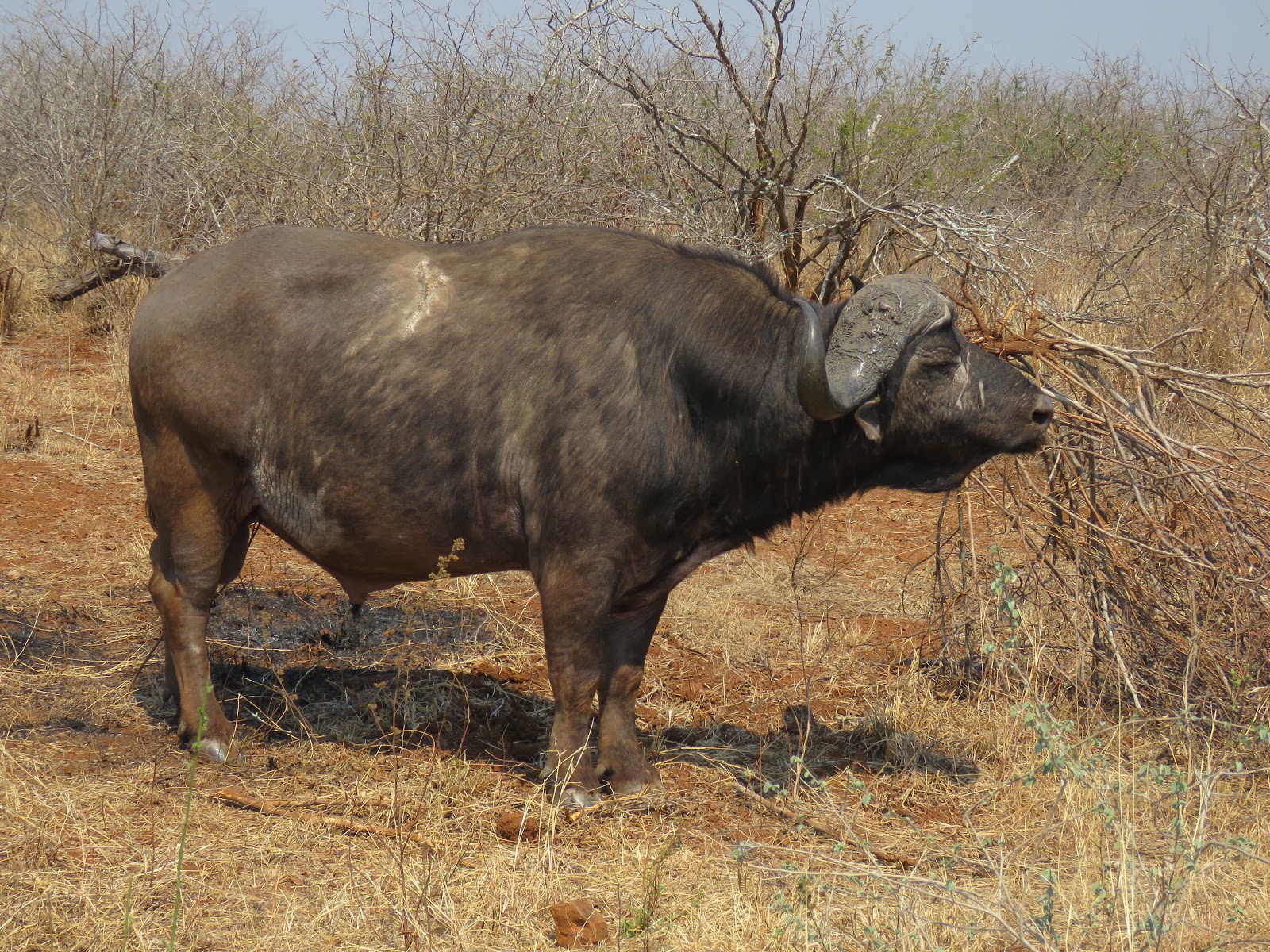
No expression on this cape buffalo’s face can more clearly illustrate his disdain over the hot weather and lack of water nearby.

“Sighting of the Day in the Bush”

I took this photo of Tom at the Mugg & Bean in Lower Sabie on the hottest day we’ve experienced since we arrived in South Africa last February. It was 42C (108F). Moments later, we moved to a table in the shade so Tom wouldn’t get sunburned.

Actually, it made sense to be in Kruger on the hottest day of the year. It allowed us to see how the wildlife stays as cool as possible under such stressful conditions.

Three cape buffalos crossing the road in Kruger.
In one single outing, we saw so much wildlife. We were stunned. For us, it isn’t always about spotting the Big Five: lion, leopard, elephant, rhino, and Cape buffalo. We’ve accomplished this on several occasions during our extended periods in Africa.
Thirsty, hot, and exhausted cape buffalo by the almost completely dry Verhami Dam.

We tend to focus on the wildlife we encounter along the way, never specifically searching for any particular species. Sure it’s exciting to see “cats” and rhinos and appreciate every sighting.  

Cape buffalo stay close to any water they can find.

But, we also get wrapped up in many other species, especially when there’s a story to tell, such as in yesterday’s thrilling newborn elephant sighting, as shown in this post.

A lonely-looking cape buffalo.  

In the case of today’s cape buffalos, we didn’t glean a specific story over our many sightings. Still, we did extract a common theme on the hot-weather day…cape buffalos, along with many other wildlife species, need proximity to water to find any degree of comfort during the hottest days of the season, as described here at this website:

“The African buffalo or Cape buffalo (Syncerus caffer) is a large African bovine. The adult buffalo’s horns are its characteristic feature; they have fused bases, forming a continuous bone shield across the top of the head referred to as a “boss.” Syncerus caffer caffer, the Cape buffalo, is the typical subspecies and the largest one found in Southern and East Africa. S. c. nanus (African forest buffalo) is the smallest subspecies, common in Central and West Africa forest areas, while S. c. braceros are in West Africa and S. c. aequinoctialis is in the savannas of East Africa. According to some estimates, they are widely regarded as hazardous animals, as according to some estimates, the gore and kill over 200 people every year.

Only arid bush for sustenance.

The African buffalo is not an ancestor of domestic cattle and is only distantly related to other larger bovines. Owing to its unpredictable nature, which makes it highly dangerous to humans, the African buffalo has never been domesticated, unlike its Asian counterpart, the water buffalo. Other than humans, African Cape buffaloes have few predators aside from lions and large crocodiles and can defend themselves. Being a member of the big five games, the Cape buffalo is a sought-after trophy in hunting.”

When male cape buffalo don’t “win” the right to mate, they are ostracized from the herd and left to wander in combination with other males in a similar situation.  Our last guide in Kenya, Anderson, called them “retired generals.”

One of the “big five” African game, it is known as “the Black Death” or “widowmaker” and is widely regarded as a hazardous animal. According to some estimates, it gores and kills over 200 people every year. Buffaloes are sometimes reported to kill more people in Africa than any other animal, although the same claim is also made of hippos and crocodiles. These numbers may be somewhat overestimated. For example, in Mozambique, attacks, especially fatal ones, were much less frequent on humans than those by hippopotamuses and Nile crocodiles. In Uganda, on the other hand, large herbivores were found to attack more people on average than lions or leopards and have a higher rate of inflicting fatalities during attacks than the predators (the buffalo, in particular, killing humans in 49.5% of attacks on them). However, hippos and even elephants may still kill more people per annum here than buffaloes. Buffaloes are notorious among big-game hunters as very dangerous animals, with wounded animals reported to ambush and attack pursuers.”

These cape buffalos hung out with hippos at the Sunset Dam, a short distance from Lower Sabie.

A few months ago, we posted our video of two cape buffalos whose horns had become entangled, which ultimately was posted on Kruger’s website per their request. Click here to see our video and here to see it again on Kruger’s own site.

Having access to water surely made life easier for these cape buffalos on a sweltering day.

We’re often able to spot cape buffalos on the Crocodile River, as shown below in one of today’s photos taken from the fence at Marloth Park overlooking Kruger.  We took this photo only two days ago. With all the zebras in the photo with the buffalos, we were pleased with the sighting.

Cape buffalo and zebras on the Crocodile River.

Today, the holidaymakers return for the upcoming two-week school holiday officially beginning on Monday. We can already tell the influence of the rush of visitors is impacting the peace and harmony of Marloth Park with many vehicles on the roads and less wildlife visiting us.  

An unbearably hot day in the bush.

Many animals head to the parklands with all the commotion, where they’ll stay until quiet is returned to the bush. This morning we had quite a few visitors, including 15 kudu, a half dozen warthogs, and our usual bushbucks, whom we expect will continue to visit several times a day, even during the busy time.

A cape buffalo hanging out with a yellow-billed stork.

The construction next door has ended, which has provided us with the quiet we so much treasure. We’ll see how these next few weeks pan out with all the tourists here. We’ll continue our daily drives to the Crocodile River, where once the wildlife is in Kruger National Park, they pay no attention to what’s transpiring in this little piece of paradise in Marloth Park.

Water and vegetation surely made this cape buffalo content.

May your day bring you peace and comfort.

Photo from one year ago today, September 21, 2017:

A beautiful scene in the yard at Iglesia de Catholica Zarcero in Costa Rica. For more photos of the church, please click here.

Loving elephants assisting a downed baby…A beautiful story unravels before our eyes….

 Although we missed the actual birth of the calf, we were thrilled to have seen this important process…getting the baby on her feet for the very first time. Amazing! See the photos below for the outcome.

“Sighting of the Day in the Bush”

A yellow-billed heron sitting atop the back of a hippo at Sunset Dam in Kruger National Park.

Our trip to Kruger National Park a few days ago left us in a state of awe and wonder. Not only did “safari luck” befall us in several instances such as in the case of yesterday’s post highlighting a gorgeous cheetah but also in many other scenes we encountered that day.  

If you missed yesterday’s post, please click here to see the stunning cheetah.

When we came upon this scene which was blocked by numerous vehicles we jockeyed for position to get a good enough spot for taking the above videos and sequential photos below.

On the outrageously hot day with temps in the 42C (108F) range, nothing seemed more appealing than spending the better part of the day in airconditioned comfort in the little car. As long as we didn’t get a flat tire on the bumpy dirt roads, we’d be good for the day.

At first, we thought the baby was injured or ill but after reviewing our photos, taken in bright sun, we could see it was a newborn calf.

By the way, we should mention here that other than stopping at various camps or restaurants nestled in guarded areas of the park, visitors are not allowed out of their vehicles. The exception would be of course, if one ran into mechanical difficulties with their mode of transportation.  

However, in these cases, its required that the emergency number listed on the entrance-to-the-park-documents must be called promptly to gain assistance in any such occurrence. One doesn’t want to be outside their vehicle replacing a tire in the park.

The baby elephant, lying on the sand unable to stand.

Actually, it’s dangerous to even have a hand, arm, or leg outside the vehicle for any reason. We are often shocked when we see self-driven vehicles with a passenger hanging outside the windows or sunroof. This is definitely the type of scenario that could attract a hungry lion, an angry cape buffalo, or a determined bull elephant.

Gently nudging and pushing the others assisted in getting the calf on her feet.

Speaking of elephants, today’s story and photos are about an encounter we had on Tuesday at the Verhami Dam while heading to the park’s exit at the Crocodile Bridge. We’d already had a good day and weren’t expecting to see much more during the 4 kilometers (2.5 miles) return drive to the gate.  

In the past Verhami Dam when it was less dry, this dam was an excellent location to spot considerable species. The fresh water in the dam was a huge attraction for elephants, giraffes, cape buffalos, and impalas.  

The baby is finally on her feet with the help of the family.

But now, almost completely dry for lack of rain over these past many months, we hadn’t seen a thing at the dam in our past several visits. As we approached the dam, we couldn’t help but become enthused when we noticed several cars lined up on one side of the road with passengers “hanging out windows” to get a better view.

The sun was bright and it was so hot, it was a challenge turning off the car and opening the windows. Shooting through glass is never our preference and we do so only when there’s a possible danger in opening the windows.  

Female elephants don’t usually reproduce until they are 14 or 15 years old.

But, we remained diligent awaiting the perfect opportunity to get into a good position to make a video and take photos as vehicles in front of us finally drifted away.  

The intensity of the sun made it difficult to see what we were shooting but we fired away not knowing exactly what we were seeing until we returned to our holiday home in Marloth Park, uploaded the photos and video, and finally, it was clear…it was a newborn being assisted in standing for the very first time!

We couldn’t have been more thrilled to have witnessed this magical occurrence with the most loving and emotional animals on the planet..majestic elephants.  

The baby isn’t quite sure where to nurse but she’s trying to figure it out.

Yes, over and over again, on YouTube videos we’ve watched stunning scenes of elephants interacting with one another during times of crisis. But, to see it live firsthand was precious and we’re delighted to share it with our readers today.

Please, I implore you, watch the video. It will give you, as it did us, a chance to see a little further into the love and caring nature of these wild beasts. Enjoy, along with us!

More will follow tomorrow as we continued on our exceptional visit to Kruger National Park to which we’ll return again soon. We can’t ever seem to get enough!

Happy day to all!

Photo from one year ago today, September 20, 2017:

I walked through the archways in the topiary garden at Senor Scissorhands Topiary Garden in the small town of Zarcero, Costa Rica. For more of these photos, please click here.

Cheetah day!…Expressions of a cheetah in the wild…Fantastic sightings in Kruger National Park…

Based on our position in the line-up of vehicles our photo taking advantage was limited.  

“Sighting of the Day in The Bush”

The now-visiting-daily mongooses gather in a pile staring at us until Tom mixes up the bowl of eggs. I talk to them to keep them entertained while he prepares the eggs. We’re happy to feed them to keep them around to deal with snakes.

As mentioned in yesterday’s post here, when the power had gone out in the morning we decided to go to Kruger for the day. Not knowing when it would return and based on the high temperature of 42C (108F) it wasn’t such a bad idea to spend the better part of the day in the airconditioned little car.

These cats are easily distinguishable from leopards based on the dark tears running down their eyes.

Our expectations weren’t high on such a hot day. Would wildlife hide under trees and bush to take cover from the heat? No doubt, many did just that as we spotted many herds of impalas, kudus, and wildebeest seeking protection from the heat of the sun.

It was a mere week or so ago we’d been to Kruger traveling along the main paved road (one of few) that we observed the recent “controlled burn” leaving the bush along that road blackened for at least 45 minutes of the hour-plus drive to Lower Sabie. And yet, magically, it already seemed to be recovering.

Every so often, she’d change positions providing us with additional shots.

We decided to stop for breakfast at the Mugg & Bean restaurant in Lower Sabie which overlooks the Sabie River, often providing some good sightings and photo ops. After breakfast, we’d continue on our self-drive traveling on bumpy dirt roads. 

We watched the cheetah for quite a while but she never stood. In the scorching heat, she seemed comfortable in the shade.

The drive surpassed our expectations, especially when early on we noticed a number of safari vehicles driving down a dirt road to a loop we’d never noticed in the past. We believe based on the map that it was at Gasanftom Road/Gezantombi Waterhole/Watergat.

Moments after entering the loop, we encountered no less than eight safari vehicles with passengers hanging out the sides and windows with cell phones, cameras, and tablets in hand.

What a nice face!

They were obviously gushing with enthusiasm as to the creature before their eyes, a cheetah lying in the shade, awake, alert, and seemingly unaffected by the presence of the growing crowd.

Dozing for a moment?

Tom maneuvered the little car to the best possible vantage point and we too felt excited with this sighting. It was one of few cheetahs we’d seen in Kruger over these past many months. There was only one cheetah.

Sure, we’d like to have seen more cheetahs. But, as we’ve learned over this long period in Marloth Park/Kruger National Park, we’ve come to appreciate spotting “one” of any wild animal. Yes, numbers are exciting but it doesn’t diminish the power, grace, and beauty of any species.

She heard a sound in the bush.

Here are some facts about cheetahs, the second-fastest mammal on the planet, from Kruger’s site here:

“The Cheetah’s body is built for speed. Its legs are relatively long compared to its greyhound-like body; it has a big heart and lungs and wide nasal passages. It is the fastest land animal, timed running at speeds of up to 114km/h (71 mph). While the lion and the leopard rely on getting close to their intended prey before breaking cover, the cheetah’s speed gives it an advantage in the more open savanna. Cheetahs are slightly taller than leopards but not as bulky, probably weighing between 40kg (88 lbs) and 60kg (132 lbs). Although cheetahs are members of the cat family, they have dog-like non-retractable claws. This limits their tree-climbing ability but gives them a speed advantage when charging.

This lone cheetah seemed unperturbed by the clicking of cameras and numerous vehicles in the area. We couldn’t believe how thin she was. We’d seen cheetahs in the past but none looking quite this lean.

Typically, a cheetah will start a charge 60m (66 yards) to 100m (109 yards) from an antelope and, within seconds, will be racing at full tilt. If the buck is alerted in time, it will attempt to throw the cheetah off its trail by zigzagging and dodging between trees and shrubs. Using its long, heavy tail as a stabilizer, the cheetah will single-mindedly pursue its intended prey, trying to anticipate which way it will turn. At the right moment, it will knock the antelope off balance and grab it by the throat as it falls. Because of the relatively small jaws and teeth, cheetahs are not as effective in killing their prey as quickly as lions or leopards, and it can take between five and 25 minutes for its prey to die.

A little grooming was in order.

The element of surprise in hunting is as important for cheetahs as it is for other big predators. While its speed gives it an edge, the cheetah’s vulnerable point is its stamina. It will manage to run at top speed for only about 250m (273 yards) before it needs to catch its breath.

After a high-speed chase, the cheetah desperately needs to rest for about half an hour – even before it eats its prey. This is when cheetahs are at their most vulnerable. They are often robbed of their kill by lions or hyaenas during this recovery spell. If the cheetah is unmolested, it normally devours its prey at the kill site. A cheetah’s food tastes are not as broad as that of the leopard, and it concentrates mostly on small and medium antelope. The cheetah’s diet comprises of the young of larger animals, as well as warthog, ground birds, porcupines, and hares, as well as the smaller antelope. The cheetah’s kill rate is hard to determine, but the consensus is that each cheetah kills between 30 and 150 animals a year, depending on its size, hunting frequency, and the condition of the area. Experts believe a single cheetah ideally needs between one and three kilograms of meat a day to stay in shape.”

For the remainder of this story, please click the above link.
Lounging on a hot day in Kruger.
After the cheetah sighting, we encountered several equally exciting wildlife scenes, which we’ll continue to share in posts over the next several days. Please check back for more.
 
As for today, it’s hot again, similar to yesterday’s unseasonal heat. It’s still winter here for a few more days! As we write here today sitting outdoors on the veranda, it’s currently 35C (95F) and we’re doing fine.  
 
We’ve got the braai (grill) fired up and cooking tonight’s chicken dinner in the event of a power outage at dinnertime which can easily transpire with added power usage during the hot weather.
 

We hope you have a fantastic day whether it’s hot or cool or a balmy almost-fall or almost-spring day!

Photo from one year ago today, September 19, 2017:

“The variegated squirrel is a tree squirrel in the genus Sciurus found in Costa Rica, El Salvador, Guatemala, Honduras, southern Mexico, Nicaragua, and Panama. Fifteen subspecies are recognized.”  Tom spotted this squirrel in the yard, alerted me and I took this photo through the glass wall to avoid scaring it away.  For more photos, please click here.

Hot, hot, hot…42C, 108 F…We went to Kruger…Hornbills preparing for mating season…

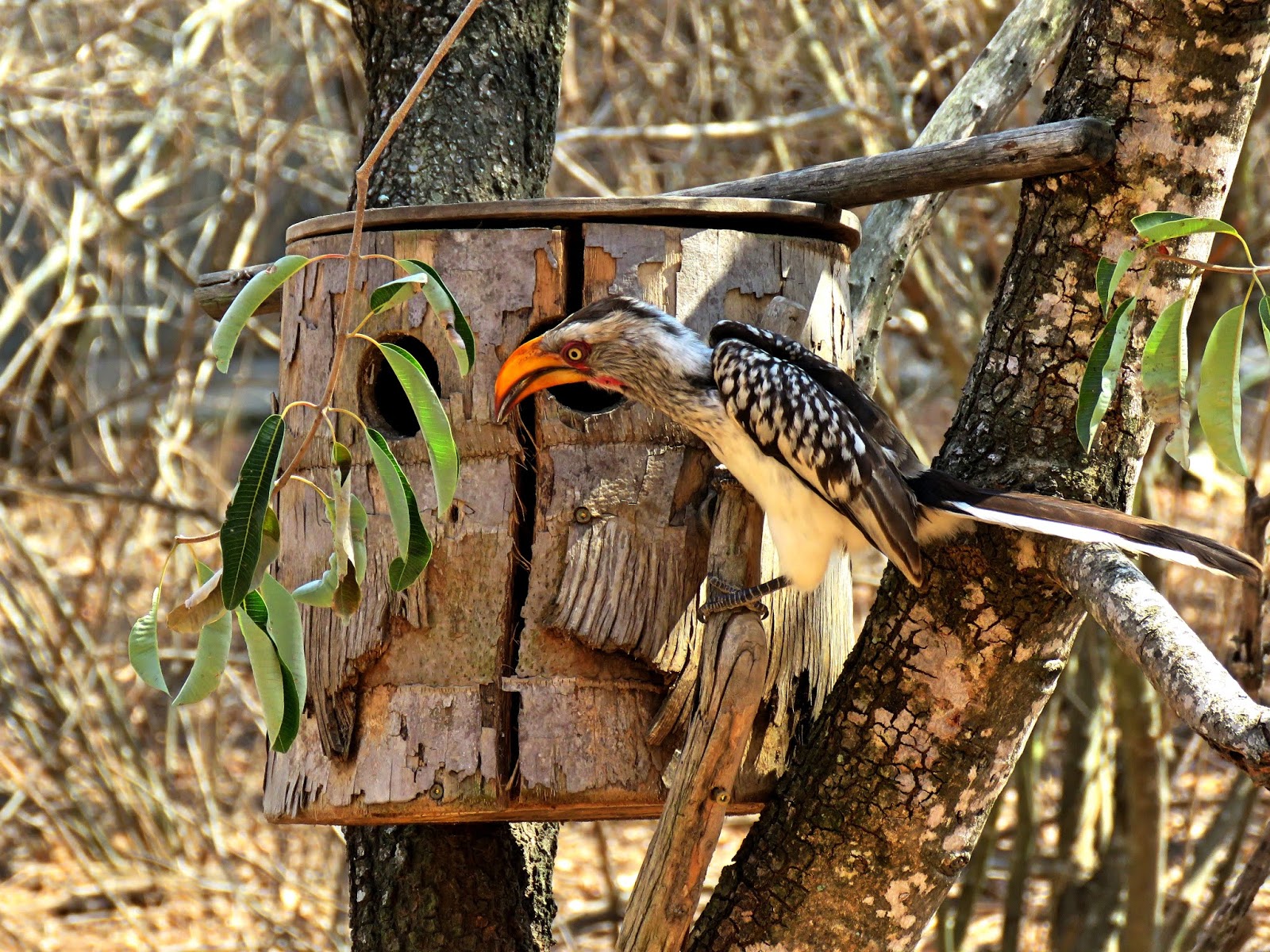
This is not a birdfeeder.  This is an abandoned bushbaby house that our 12 bushbabies don’t care to use.  These male and female hornbills have recently taken seeds from our birdfeeder and placed them inside the bush baby house.

“Sighting of the Day in The Bush”

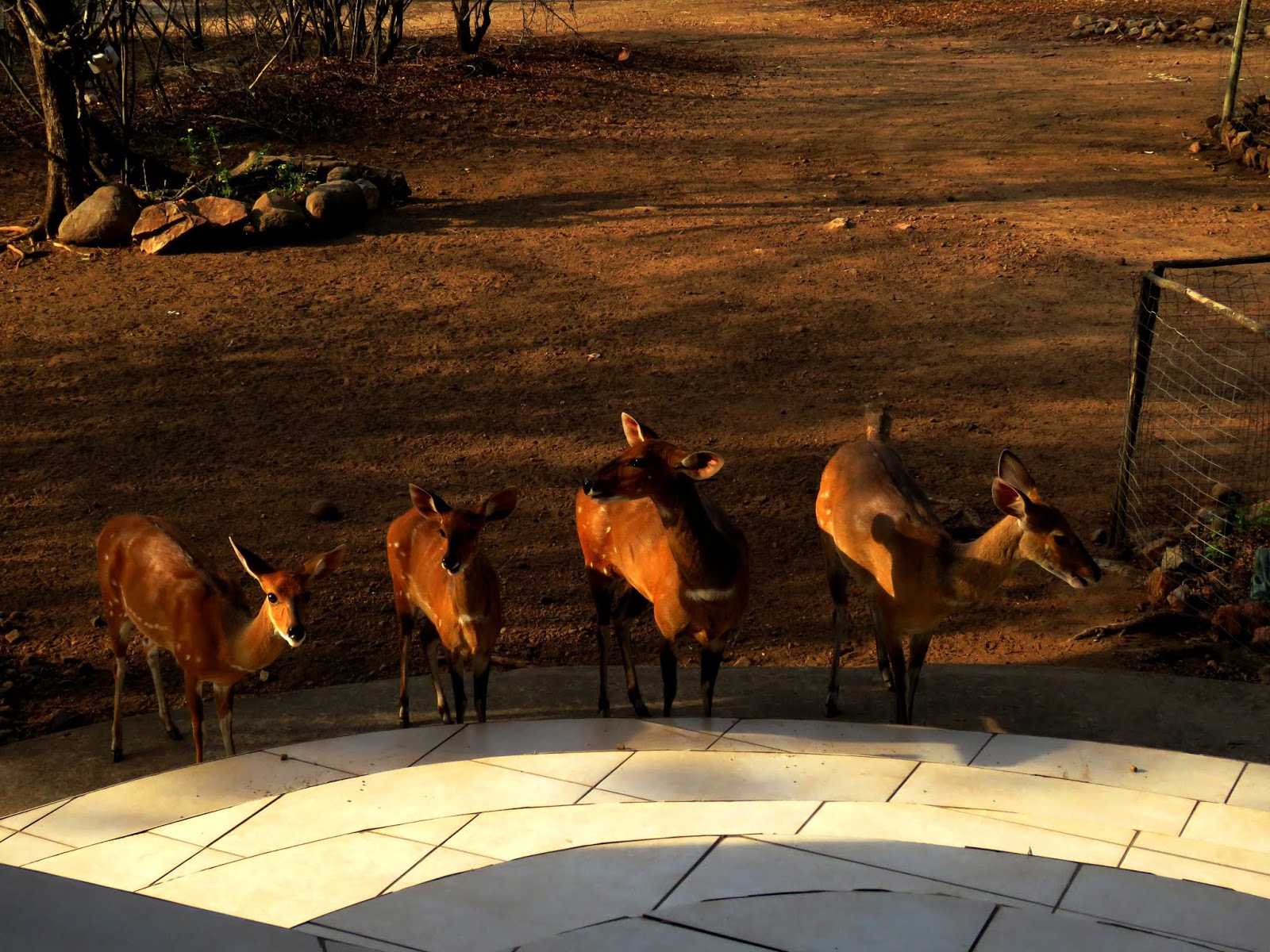
These four bushbucks, two moms, and two babies know the drill. Stand at the bottom of our veranda steps, and you’ll get pellets and ice-cold lettuce, celery tops, carrots, and apples. When we returned from Kruger a short time ago, they were waiting there for us. They sure appreciated it today.

Today’s post will be more compact than usual. We just returned from a full day at Kruger National Park and the time available to get it done before our evening ritual on the veranda begins at 1700 hours (5:00 pm) is limited.

We’re assuming they’re preparing this house as a future nesting spot since we see them do this almost daily.  They both come to peer inside to check out their handiwork.
When they’re satisfied with their day’s work, they head back to the birdfeeder for a bit of sustenance for themselves, as shown below.

With temperatures expected in the 42C (108F) range, it made a lot of sense to spend the better part of the day in airconditioned comfort in the little car while driving through Kruger searching for magical moments.

On top of it, the sugar cane burning fires filled the air with so much smoke getting away was a perfect scenario. We began packing our iced teas, camera, batteries, passports, and prefilled-out Kruger entrance document and were on our way in no time at all.

Here’s the mating pair filling up in preparation for the upcoming spring mating season.

It was still earlier enough in the day not to feel the magnitude of the expected temps, but we dressed in shorts and tee shirts, ready for however hot it may eventually reach.  

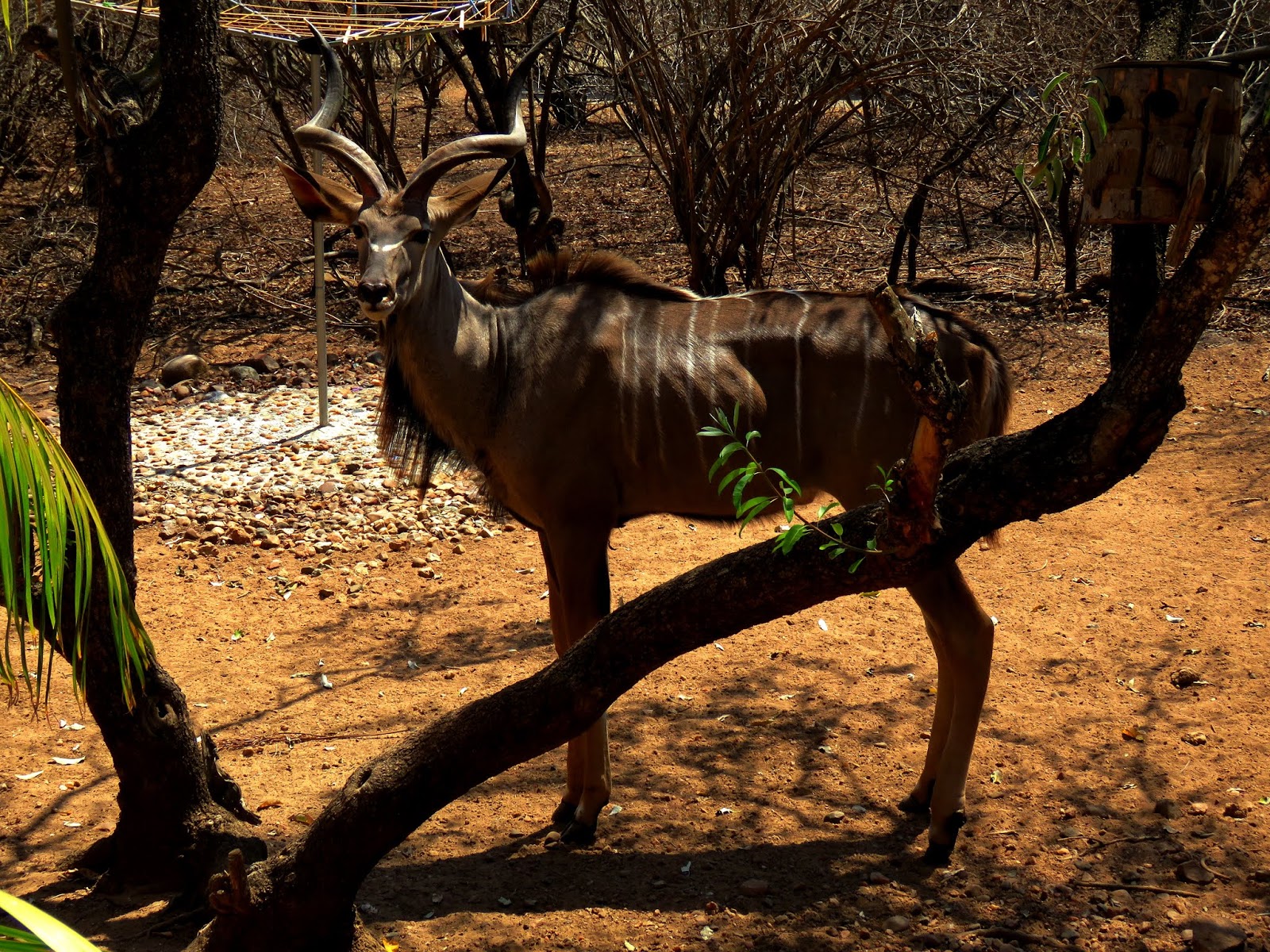
This young male kudu has a long way to go in his maturity to become a “Big Daddy eventually.”  In the interim, we’re thrilled to provide him with pellets when he stops by.

With a plan to stop at the Mugg & Bean Restaurant in Lower Sabie for breakfast or lunch, we knew we’d be spending our time there, outdoors in the hot weather on their veranda overlooking the Sabie River but didn’t give it a thought. This is Africa. It gets hot here.

And, for those of our readers in other parts of the world, it’s still winter here.  Spring begins in the next few days as fall begins north of the equator. We haven’t forgotten how hot it is here in the summer months.  

His horns (not antlers…they don’t lose these) will eventually make another twist as he matures.

Almost five years ago, we spent three months here during the heat of summer. It was hot and sweaty. We managed, as we’ll work now. In some countries, homes may have full-house airconditioning as we experienced in our old lives.  

Elephants we spotted from the fence in Marloth Park during yesterday’s drive.

In Africa and in many other countries worldwide that cater to tourists, air conditioning is only provided in bedrooms by use of an on-the-wall unit that generally keeps the sleeping quarters comfortable, which is the case here.

Right now, on the veranda, it is exactly as stated above. But, when anywhere else in the house, the heat is felt full-on. Perhaps, by the time we prep the veranda for the evening, the temps will begin to subside. In any case, we won’t be missing a night outdoors due to the heat.  

It’s common to see elephants at the Crocodile River on these hot days.

In our old lives, we’d never had sat outside in such hot weather, preferring to stay cool and comfortable indoors. But, as we always say, “This is Africa,” It’s not like our old lives.

And today, while in Kruger, we’re especially reminded of how unlike our day was compared to any day in times long ago remembered. This is a different life now, not to compare, although it’s irresistible to mention the vast difference at times.

So here’s how the day rolled out. This morning as I was getting ready for the day, we experienced a power outage. With no power for WiFi, we decided today would be a perfect day to head to Kruger.

We can’t wait to share today’s photos in tomorrow’s post. We took so many good photos, and it will take days until we get through the bulk of them we’d like to share here.
Please check back tomorrow for some first-time-sightings (for us) that Kruger bestowed upon us in her magical and mysterious ways.

Have a great evening!  We plan on it!

Photo from one year ago today, September 18, 2017:

At the Atenas Railway Museum in Costa Rica, Juan Ramon was excited to show us this bottle with a marble inside.  For more photos, please click here.

Lion kill on the river…Wow!…

The food chain prevails…a lion killed this zebra. It’s a harsh reality of life in the wild.  

“Sighting of the Day in the Bush”

Ms. Bushbuck, aka “Tom’s Girl,” with pellet crumbs on her nose. We can identify her by her uneven ears. Too cute.

Yesterday afternoon, after uploading the post, doing some laundry and hanging it to dry, and prepping everything for dinner, we decided to take off on our usual drive through Marloth Park.

The holidaymakers were in abundance on the bumpy dirt roads, especially along the fence between Marloth Park and Kruger National Park overlooking the Crocodile River.

When we embarked on our usual drive along the Crocodile River, we spotted this scene along with many others clamoring for space at the fence between Marloth Park and Kruger National Park.

The Crocodile River is a dangerous place with crocodiles lurking in the water, a wide array of venomous snakes, harmful insects, and of course, myriad apex predators, such as lions, leopards, cape buffalo, and hippos, all of which can cause great harm or fatal injuries to humans.

As a result, boats and humans are not allowed anywhere near the river, except in designated viewing locations in various places in Marloth Park and the vast Kruger National Park. When holidaymakers are here, these viewing locations are often packed with cars.

Many others watching this scene stayed at the viewing area for many hours, eventually spotting as many as six lions feasting on this female’s kill.

The advantage to the number of spectators is that if they find a sighting before we do, we can follow the crowd to see what they’ve spotted, a common practice for safari-goers and wildlife-watchers in national parks abundant with wildlife.

But even after seeing the people with their cameras, cell phones, and binoculars, it’s still not easy to find lions when their coloration blends in with the rocks and dry vegetation making them nearly impossible to see without some guidance.

Then, when we spotted elephants coming down the embankment to the river, we took off to take the following photos.

We’ve been fortunate to encounter spectators who are more than willing to help point out the scene with detailed descriptions while others may be at a loss scanning the terrain through camera lenses and binoculars. We are always thrilled to share the information with others.  

However, there are a select few who appear to want to keep the sightings to themselves. This makes no sense whatsoever. Why not share the wonder of nature with others for whom this may be a once-in-a-lifetime experience?

Could these three zebras be watching the scene of the kill when it may have been a  member of their family?

When we saw all the vehicles near the overlook at Two Trees, we had no doubt it had to do with lions. Portable chairs and tables, coolers (called chill boxes here) filled with beer and other drinks, and people of all ages had set up camp to watch the lions for which may have been for hours.

Had we desired to “camp out,” we certainly would have. But for us, as much as we’d prefer to get even more stunning photos, we shot what we could and were on our way.  

Each day, many mongooses have visited, piling atop one another for the raw scramble eggs Tom brings out to them. Now, after these months, they’ve come to know us and stare at us, making funny noises to show us how much they want the eggs. Mongooses are omnivores eating both plants and animals, with an infinity for snakes.  They are immune to snake venom.

We always have a vast array of scenes we’re seeking, and it isn’t always about lions, although we are intrigued with their behavior. But, we can spend the better part of an afternoon interacting with a band of mongooses while observing their adorable demeanor.  

These funny little rodent-like creatures are more intelligent than one might think. They already know how to beg for eggs, making funny noises while making eye contact with us. Known as possible carriers of rabies, we don’t get too close or touch them, never feeding them by hand. (Although, we’ve both been vaccinated for rabies, recently getting boosters).

Some nights, she faces this way, and other nights, she meets the wall.

Even the pesky helmeted guineafowls, of whom we have about 60 in residence, are more intelligent than one might think with their pea-sized brains. They love breaking up the pellets and eating them. They wait in the nearby bush, and when they hear us talking to other wildlife, they come running knowing full well, pellets are on the horizon.

It’s all memorable and meaningful, every single creature, including our new resident frog, who continues to appear at night on a light fixture on the veranda. Each time we see them in that spot, they are in various positions, and we can’t help but laugh.

Once we’re done here today, we’re off for another drive in the park and then heading to Daisy’s Den for more birdseed and outdoor repellent. We’ll be back with more tomorrow…you can count on that!

Have a day filled with wonder!

Photo from one year ago today, September 17, 2017:

This photo, taken from the veranda of our holiday home in Atenas, Costa Rica, before a big storm. For more photos, please click here.