A rainy and windy trip to the market…Rounding out the week’s menu…

Talk about tropical climate!  Today’s view from the veranda.
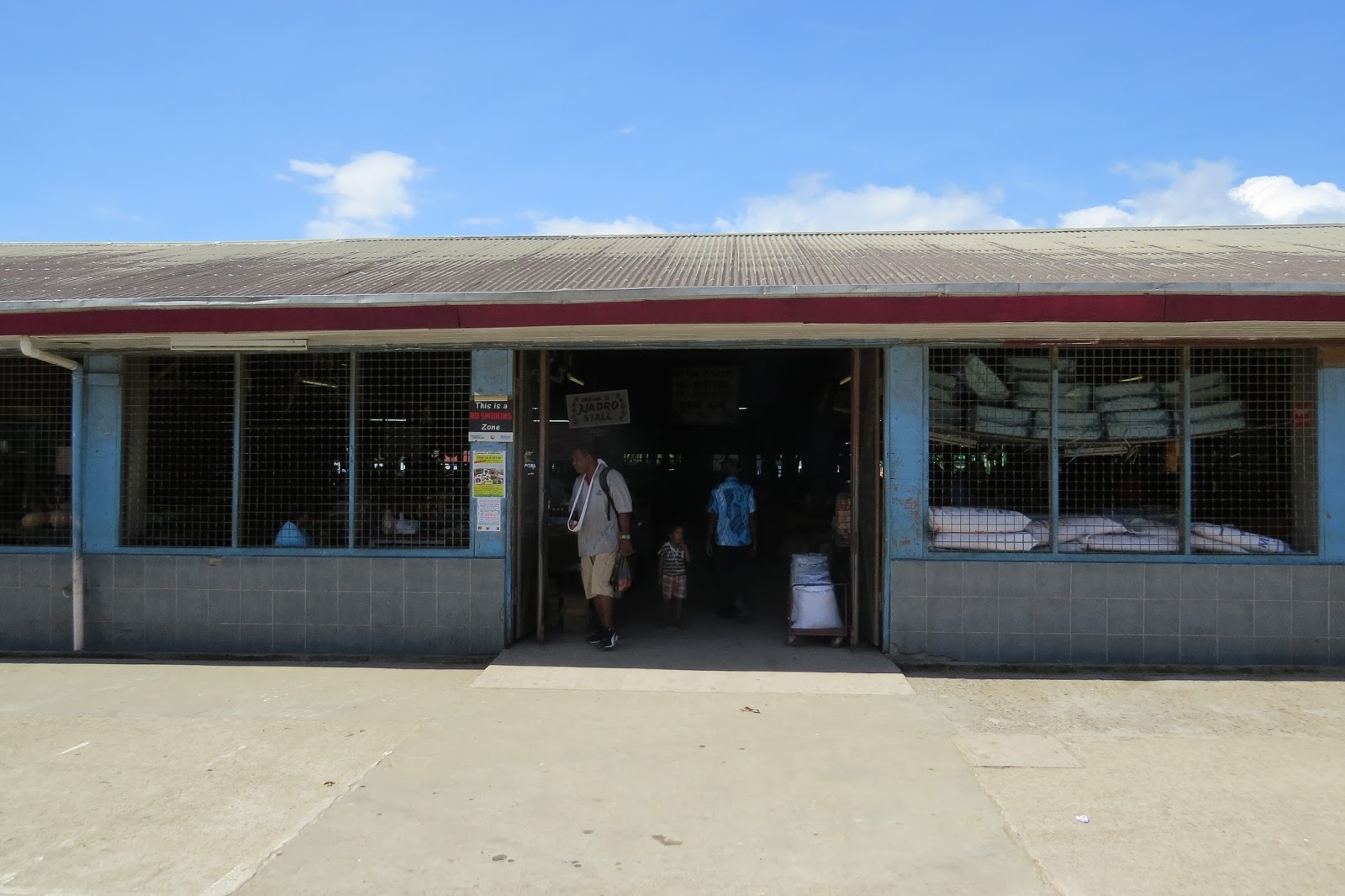
The muddy roads, the long, steep drive down and then back up this mountain was an adventure in itself. All we needed to do in the pelting rain, was to get to the village to shop at the Vodafone kiosk, the Farmers Market, the New World grocer, and Fiji Meats where Helen was holding some items for us.  

Helen often runs out of ground beef, referred to as mince in many parts of the world, requiring we call ahead to place an order for the meat and roasted chickens to ensure we can get what we need. Otherwise, she runs out of chickens by noon each day and other meats within a few days of her Saturday delivery.

All the meat in Fiji is grass-fed. The beef cuts are different than those we’ve found in other countries and the beef can be tough if not slow roasted. With only a countertop oven and no large roasting pans, slow roasting is not an option, especially when it would use considerable power to run. (We try to stay mindful as to how much power we use, wherever we may travel).

As a result, the only beef we eat is the grass-fed mince, ground pork, and free-range chickens, which we’ve found to be excellent. We’ve narrowed our weekly menu down to a science, carefully planning each day’s meals. 

The tiny freezer contains meat for the week, streaky bacon, bagged portions of Tom’s daily egg dish, homemade low carb flax and almond meal lemon poppy seed muffins and low carb coconut cookies. Also, ice, ots of ice.  We Americans like ice with our cold tea.

After trying various cuts of the beef we’ve determined we prefer the taste and texture of the mince better than the other cuts of beef. It’s not your usual “ground beef.”  It has a texture and flavor far beyond the red-dyed ground beef we’ve had most of our lives. It’s comparable to a rough grind of the finest steaks in the world, even a bit chewy as if roughly ground at home. No dyes, no chemicals. The way we like it. 

To add fat to the beef, we often include ground pork, “pork mince,” making some of the most delicious “mince” dishes we’ve had to date. We have a variety of recipes we alternate, never becoming bored with the varied options. 

Unable to purchase fish, other than huge whole fish caught fresh daily, we haven’t had fish once since our arrival. With little room in the tiny freezer, buying an entire fish makes no sense, nor are the knives here sharp enough to filet a fish, even if there was room in the freezer. 

The freezer door is also jam-packed. I’m not as organized in putting food in the fridge. Its not my “thing.” I stuff it in. If the door closes, I’m happy. Notice the ice pack, just in case, we old-timers, have an achy joint. Thank goodness, we haven’t had to use it since we left Hawaii.

Having beef and pork, including occasional pork chops, five nights a week and chicken two nights has been how we’ve rounded out the week’s menu. Of course, there’s a degree of repetition, but with the good recipes we’ve found or created, we hardly flinch at having a particular dish time and again.

There’s a favorite recipe, Mushroom Burger Scramble, that we particularly love, making it as often as the ingredients are available. The recipe requires fresh mushrooms which are only available on occasion at the New World Market. Mushrooms aren’t a popular ingredient in Fijian cooking and aren’t available at the Farmers Market.

The recipe, which I borrowed from a low carb site, (click here for the recipe) also requires cream cheese. For weeks, there was no cream cheese at the market. I asked the store manager, Sarah, if they ever get cream cheese and she said they do, but not often. A few weeks later, there was a dozen packages of Philadelphia Cream Cheese for sale in the refrigerated case.

A few weeks ago we finally found cream cheese at the market. Now, they keep it well stocked. Also, I’d asked for a “turner” and a few weeks later, it was there.

Yesterday, after our usual purchases at the Farmers Market, we walked over to the grocery store to find Sarah smiling when she saw us. They had a huge bin filled with fresh mushrooms. We grabbed all we could, changing our menu for the upcoming week to include the above recipe, now that we’d have mushrooms.

Sarah and I have chatted on each of our weekly visits. Yesterday, she invited us to her home for dinner. I felt badly having to decline when she was so kind to offer. I explained, profusely apologizing for declining, that my life-changing way of eating would make it impossible for her to prepare traditional Fijian foods that I could eat, when most include starches and sugar. 

How we’d have loved the experience. But, I always remind myself  that we wouldn’t be traveling the world if it weren’t for my way of eating totally changing my life. By now, surely I’d have been in a wheelchair or living like my dear eldest sister with the same condition, who’s been lying in bed 24/7 in horrible pain for the past 10 years. I was heading down that path a mere four and a half years ago. Today, I’m pain-free and active.

The black bag contains the remaining chicken which we’ll have tonight. Today, I’m making the muffins and Tom’s green beans. Each day we stay in, I cook a portion of the foods we eat regularly, spacing it out to ensure I don’t have a single day that requires all-day prep. Messy? No matter.

After the market, Ratnesh picked us up and we headed a kilometer down to the road to see Helen at Fiji Meats to pick up our order: two roasted chickens, several packages of the finest streaky bacon on the planet and numerous packages of beef and pork mince. 

We’d need to eat the two small roasted chickens over two nights when the fresh mushrooms needed to be used as soon as possible when they don’t stay fresh more than a few days.

Since we loaded up on extra products they happened to have in stock, we spent more than usual for a total, between the three markets, of USD $228, FJD $484. This included two packages of ground coffee which is referred to as “plunger coffee” as shown in the photo below. 

The plunger coffee sells for FJD $14.89, USD $7.03, for a 200 gram bag which lasts for a week. Each package has a complimentary little package attached.  The coffee is grown in Fiji and compares to the finest we had in Hawaii.

New World has been out of plunger coffee for the past two weeks. While I shopped, Tom ran out to the street to two other markets looking for plunger coffee, thrilled to have found these two packages, the only available.

Soon, we were back on the road home. It had rained during our shopping trip. We were wet but not “to the bone” as expected. We hung our parkas to dry on the backs of the dining chairs (no hanging rods here) and the dampness in our clothes soon dried.

Getting up the steep muddy road to the house was equivalent to “Mr. Toad’s Wild Ride” as Ratnesh expertly maneuvered his way up the muddy rocky climb. We couldn’t help but squeal and laugh with the roughness of the drive up the mountain.

To begin the shopping trip each week, Ratnesh drops us off at the Vodafone kiosk on the street picking us up later after we call from the market as we’re checking out. As a final stop, he waits for us while we collect the meat at Helen’s store. 

Today, I’ll work on making more room in the refrigerator to fit these eggplants. A few times each week, I make a huge wok of vegetables, stir-fried in ghee, well seasoned, often including eggplant, peppers, onion, carrots (small amount) and lots of fresh garlic. Tom won’t taste it. For him, I make a batch of fresh sautéed green beans with onions, streaky bacon and spices, also cooked in ghee.

He helps us carry our huge haul up the long uneven walk to the house. Lately, with his help, we’ve been able to carry everything to the house in one trip. As a result, we’ve paid him FJD $30, USD $14.13 for the round trip as opposed to his usual FJD $20, USD $9.42. 

Many of the local businesses only accept cash payments. The New World market is the only store that accepts credit cards, charging an additional 2.5% fee on the total bill. 

Between the Vodafone store, the Farmers Market, the meat market and the driver, all requiring cash only, we spent FJD $435, USD $205. (This total included FJD $150, USD $71 cash for data). At New World, we paid, FJD $260, USD $123. 

With the fees charged by our bank for using the ATM in a foreign country and the charges the local bank charges for using the ATM machine, it pays to use a credit card at the grocery store.

Its raining so hard we can’t see the ocean.

Once back home, as always, I spent the better part of an hour washing and sorting all the produce and making room in the tiny refrigerator, the same size we’ve had many times in the past. We’re getting good at this.

We never left the house the remainder of the day when the rain continued non-stop as is the case again today.  So be it. We have plenty of food, plenty of “strong signal” data, lots of books to read, and now a plethora of movies and TV shows we’ve recently downloaded to watch in the evenings. We’re almost tied at playing Gin.  What more could we possibly need or want? 

Photo from one year ago today, October 16, 2014:

One year ago today we flew from Honolulu, Oahu to Maui. Many flights had been canceled due to warnings for possible Hurricane Ana. Luckily, our flight made it through and after picking up the rental car, we headed to the Costco store in Maui, where we loaded up on food and supplies we may need if the hurricane hit with power outages. For more details, please click here including the final total expenses for the 11 nights in Waikiki Beach. 

An outing filled with culture and unique and unusual finds…Fun photos to share today!…More to follow…

As we slowed down the car to take photos of the sea, my eyes caught something black moving at a distance. Getting out the car where there was no fence to keep these piglets contained, we squealed with delight, as did this little white piglet who seemed happy to see us.

With a mostly sunny day, we could hardly wait for Ratnesh to arrive to take us out to tour the local scenery. This island and this particular area are most commonly visited by tourists who are avid scuba divers, snorkelers, and seminar attendees at the world-renowned speaker Tony Robbins at his resort, Namala (more on that later after our upcoming visit and tour).

There aren’t as many tourist attractions here with a total of only 14 listed on Trip Advisor’s website that doesn’t include scuba diving. We already visited a few of these sites and will partake in some of the others that don’t include scuba diving.

I guess those who’ve been following us know that I love pigs.

Instead, we immerse ourselves in what appeals to us more than any tourist attractions, the life of the people of Fiji, living for generation on this small island of Vanua Levu, living a life of joy and happiness, always with a warm smile on their faces and a heartfelt “bula!” 

If seeing and being only a small part of their lives during our short three-month stay is all we do, we’ll have experienced more than any brochure or promo piece could ever have accomplished. 

To our good fortune, with Ratnesh as our guide and driver, a kindly and good soul with powerful religious convictions, we are allowed an inside peek into the lives of his people going back many generations. He shares snippets of their traditions with us as we drive.

It appears there were no less than five piglets.  The mom was contained within this wood structure, but the piglets could easily wander about.

Although we ask him questions as we drive, we respect the boundaries of those areas he chooses not to discuss, instead of focusing on that area in which he takes great pride, like yesterday when he shared the stories of the harsh treatment of Fijians before they gained their independence on October 10, 1970.

Included in this link is the detailed history of the Fijian Islands that history buffs may enjoy reading. Reading this site gave us a clearer perspective of Fiji’s history, its resourceful people, and its long road in the development of its independent status. 

With the holiday upcoming in a week, we’ll ask the locals as to the expected celebrations and how, if possible, we may participate, only possible for us with transportation. Next time we see Ratnesh, we’ll ask about his plans for that day, if in fact there is a big celebration in Savusavu.

There was no fence keeping the piglets from wandering off. This wood structure was located on the ocean side of the road with no house nearby other than those across the main road that led to the village.

Yesterday, we drove for two hours to see those areas that Ratnesh explained we may find most interesting. He reveled in our enthusiasm over the “simple” aspects of life in Fiji, whether it be an unusual rock formation, a minuscule island with three trees growing, or a blue lagoon, one would imagine only in their dreams.

It was a glorious day followed up by him dropping us in the center of the village to tend to another customer, promising to return in an hour, giving us plenty of time to wander about the village, stopping in shops and various establishments leaving us ample time to purchase vegetables in the Farmer’s Market and a dozen items in the tiny three aisle grocery store.

The closer we approached, the closer these two came to toward us. We stayed back to avoid disturbing the huge mom contained in the pen.

Much to our delight, two of the several grocery store helpers pointed out that fresh mushrooms had arrived (we purchased all three packages) and two other others we’d previously been unable to find;  cream cheese (we purchased all four packages) and a “turner” (spatula for flipping eggs). 

The helpers were thrilled that the items we inquired about had arrived. Maybe it’s pompous to suggest they ordered these specifically for us but, by the way, they expressed such enthusiasm when we put them into our trolley, we imagined they did in fact have influence in the arrival of these items. We expressed our gratitude with multiple “vinakas” and smiles on our faces.

As we walked away, the adorable white piglet came toward us, “Hey, where are you going?”

As planned, Ratnesh returned in less than an hour as we were checking out. We loaded the car with our stuff and off we went to see Helen at Fiji Meats much further down the road. 

When we arrived to a sign on the door stating, “Back at 4,” we only had to wait a couple of minutes until her return. By the time she had the door open, no less than a half dozen shoppers were waiting to make their meat purchased. The two roasted chickens we ordered early in the morning were ready to go in the heated roaster. 

The ferry that was awaiting passengers for its daily run to the main island of Viti Levu takes several hours.

A pair of anxious tourists ahead of us in line expressed their desire to purchase the chickens in the roaster that were earmarked for us. Helen politely explained she was holding them for us from our order early in the day.  They run out of these chickens each day and it’s imperative to preorder if arriving at 12 pm.  

Had we not planned our entire week’s menu and already shopped for all of the ingredients, we may have been willing to share. But, with no car of our own, and Thursday, our new shopping day when mushrooms arrive at the market in the morning, we’d have been one day short of making it to next Thursday.

The small freezer packed with ice cube trays prevents us from “stocking up” on anything more than what we’d use in one week. We’ve got meal planning worked out, down to a science.

The beach along the drive to the village.

On the way home, I checked the camera to discover I had enough photos to share for many days to come. Before bed, I went through every photo, eliminating the “duds” leaving those in place we’re excited to post, today’s is no exception.

As we share these photos over the next several days, the theme and accompanying stories will evolve, as we continue to discover more and more about this lovely island and people of Vanua Levu and this sleepy village of Savusavu and its surroundings.

Enjoy the day!

Photo from one year ago today, October 1, 2014:

Here we are in Hilo on the Big Island, one year ago, when our ship docked at the port. Although we’d be living in Hilo for six weeks beginning in December when our family would begin to arrive, we decided to take a bus which proved to be the wrong bus and we ended up at an odd location. Check here for details as we laughed over faux pas.

Reflections…Housebound or homebody happiness?…

Footbridge over the creek in the village.

At 5:30 this morning, I tiptoed across the creaky wooden floor in the bedroom quietly shutting the door behind me in hopes of not awakening Tom. I had a strange sense of sunshine pending on the horizon from little slivers of light reflecting in the room, glistening in stripes through the rows of jalousie windows.

The sun was making a feeble attempt (not that the sun ever does anything but produce heat, solar flares, and radiation) to peek through a band of unenthusiastic clouds (not that the cloud possess any emotion) preferring to own the sky for yet another day.

Tossing hopes of sunshine, I booted up my laptop with the hopes of continuing to download a show after several wasted attempts yesterday. There was no signal, just a feeble “limited” notation on my desktop taskbar. I unplugged the in-wall router, waited 30 seconds and plugged it back in. Nothing.

This beach walk is comparable to the “esplanades” we walked in Australia at various beaches.

Should I be up for the day, shower and dress, make my tiny pot of coffee (we make one for each of us with the pot too small for two) to sit down in an attempt to write a few words, albeit between “limited” and “online”? 

Or, shall I return to bed, squinting to read the over-sized letters on the Kindle app on my phone (my contacts weren’t in yet), to gain more momentum to finish the good mystery that I’ll soon devour, as I do with no less than three books a week?

I opted for the later, returning to bed, falling back to sleep after Tom got up. I slept until 7:30, an odd habit I’ve developed over these past months. The extra sleep is good, upping my nightly ante to a total of seven hours, far more than Tom manages, by getting to bed at midnight and up and “at ’em” by 6 am most days.  Today was no exception. 

Many locals and some tourists take this bus to other parts of the island.

By the time I was dressed, showered, and prepared myself for the day, in the expectation of avoiding that “just out of bed look,” I poured the first cup of coffee (Tom had made my tiny pot when he heard me get up), lightening it with a load of the nicest thick cream on the planet. Once again, I sat down in the not-so-comfy chair, hoping to find a signal sufficient enough for today’s post. Tom was able to get online making my prospects look good.

Now, at 9 am, with a signal in tact, the sun has peeked out through the fast-moving dark clouds which surely will turn into rain again today with the 60% chance predicted. Tomorrow, Ratnesh is coming to get us, rain or shine. We need to get out.

Today, I’ll busy myself experimenting in the kitchen in an attempt of conjuring up a batch of homemade Italian sausage, after finding a recipe online. A few of the spices needed weren’t available in the market. I chose alternatives. There isn’t such a thing as Italian sausage here, nothing even close. 

Clothing for sale at the “chemist.”

We’d like to make our favorite pizza recipe and the pasta free lasagna we’ve come to love both of which require tangy Italian sausage. Fennel is a necessary spice in making the sausage. It was only available in the seed form, impossible to use unless cooking in a pot for hours, breaking down the flavors. 

With no coffee grinder, mortar and pestle or any type of grinding device, I had no choice but to dig out the plastic blender in the cupboard to see if it would grind the seeds. 

Tom helped me with the simple task of plugging it in. There are numerous types of adapters/converters used in this house and finding the appropriate device is necessary to avoid burning out an appliance or the fuses.

The town council building located in the center of town.

Electrical is “his thing” which could easily been “my thing” had I taken an interest in learning about all the various adapters, many of which we carry with us, others plugged into a variety of outlets in various homes throughout the world. I haven’t been even remotely interested in flooding my brain with electrical thoughts. He has. It’s not surprising how we automatically gravitate toward tasks befitting our innate skills.

As shown in the photo below, the blender did a great job of grinding the fennel seeds adequately for use in making the sausage. I won’t use casings. I’ve always preferred using the bulk Italian sausage (not in casings) which, on occasion we’ve found in only a few countries. Most often, if we do find Italian sausage, we remove the casings anyway for ease of use.

In Australia, we didn’t find the taste of the available Italian sausage to our liking. We used an alternative, a German cheese sausage spiced well but not tasting Italian. Those little sausages can’t be found here nor is there any possible alternative. Tourists don’t come to these islands to cook Italian meals or for that matter eat Italian foods or…for that matter, to cook at all. 

The blender I found to grind the fennel seeds for making the sausage. It worked out well as shown in the cup with the ground seeds. There are lemons ripening on the window sill.

The local curry is the big draw in the South Pacific which is not to Tom’s liking after all the time we spent in Morocco. I love the flavor, hot and spicy but, can’t seem to interest Tom in eating out when the smell of the curry permeates the air at the restaurants. Plus, many curry and side dishes are made with some form of flour, sugar or starch, making it pointless to dine out. 

A piece of grilled meat or fish and a steamed veg would be what I’d get in a restaurant, hardly worth the taxi fare and the restaurant’s bill. I learned my lesson long ago, also in Morocco, not to eat fresh salad in restaurants in many countries. 

In the village, where all of the restaurants are located, they’re using ‘city” water, not the fresh spring water we have here in the Korovesi neighborhood, generously supplied by Seawak from the spring on his land.  We’ve consumed that water since the day we arrived with no ill effect.

View from the upper level of a shop we investigated.

Paragraph after paragraph, I continue on and now close to 11:30 am, the peeking sun is long since gone, replaced by ominous clouds rearing to unload their day’s bounty. 

I’ll make the sausage using the spices we have available, hand chop cabbage, carrots, and onions, “snap” the green beans while deciding on how we’ll “test” the sausage in tonight’s meal of perhaps sausage and onions in a red sauce with hand-grated “pizza cheese.” When done cooking, I’ll read my book off and on when the Internet is down, attempting when it returns, to once again slowly download a few shows for tonight’s viewing.

Are we bored? Not yet. If the rain continues over the next two months, we may become so. For now, we continue to find ways to busy our minds and bodies to the best of our ability while living in this remote area, high atop a hill, where a walk in the neighborhood is an unlikely prospect but, with a view that is unstoppable, along with our spirit!

Photo from one year ago, September 30, 2014:

Honolulu was one of the several ports of call during the remainder of the cruise. Knowing we’d be staying in the busy city for 13 nights, we didn’t take a tour with the ship or other passengers. Instead, we walked off the ship wandered the city on foot, later returning to the quiet ship and pool, almost to ourselves.  For more details, please check here.

Part 2…A look at “real life” in the Fijian Islands, often centered around farming…

Today’s late posting is a result of a poor wifi signal which has made posting photos and line spacing difficult.  We apologize for the delay.

This duck’s unusual crown caught our attention. He seemed proud of his facial characteristics.

Once we arrived at Kusma’s house to purchase the eggs, we waited outside taking photos of the various chickens, roosters, and ducks wandering about her front yard. 

We weren’t certain if there were more chickens at the back of the house. We preferred not to intrude asking to see more. There were plenty of chickens, gathering around our feet, pecking here and there, seemingly content and busy in their simple chicken lives.

The several roosters began to crow, taking turns at the spotlight.  One, in particular, appeared to be the “cock of the walk” strutting about with a sense of confidence we’d only seen in lions, not necessarily in chickens. It was highly entertaining.

Not only were there chickens wandering about the yard, but there were also a few ducks.

A dear friend of mine in Minnesota lived five minutes from us. She had a well-equipped chicken coup, kept suitably warm in the frigid winters. When I’d visit, she’d holler, “Chickens!” They’d come running, making me howl. She also had a few adult goats, two sisters, that would sit on our laps while in lawn chairs in the garden, while we chatted with cups of coffee in hand. Even then, I couldn’t get enough of animals, regardless of their species.

Kusma came outside and Ratnesh introduced us.  She spoke a little English but not much. The overwhelming majority of Indo-Fijians speak Fiji Hindustani or Fiji Hindi. This language developed out of contact between speakers of different dialects of Hindi/Urdu (one of the native languages of India) and their bosses on the colonial-era sugar plantations.”

She shook our hands with a hint of trepidation, looking at Ratnesh, a relative whom she knew well, for his approval. He nodded assuring her we were good. In as few words as possible, I explained we’d be staying here in the neighborhood of Korovesi, (comparable to a suburb) for a total of three months and would like to buy her eggs regularly if that was acceptable to her.

The chickens were nibbling on something in this tin bowl. The contents could certainly be a determining factor if the eggs would be considered organic, although they wouldn’t be “certified” by any means, a process not done here in Savusavu.

As best as I could, I explained that Usi would pick them up for us in the future with the ride too difficult in a vehicle. We didn’t see any cars or trucks in the yards of the houses in that mountainous difficult-to-reach area.

I kindly asked for four dozen eggs, for now, knowing we still had the rough walk back up to the car and Ratnesh insisted he carry them.  We’d brought along the cloth bag we purchased in Kenya that has traveled well, laundering it on occasion and happy it’s worn so well for a $2 purchase so long ago. The four dozen eggs fit perfectly into the bag.

She charged us FJD $20, USD $9.20 which translates to FJD $5.00, USD $2.40 a dozen. Not too bad a price for free-range and antibiotic-free eggs. She may charge the local less, but we were content to pay her whatever she deemed fair.

It looks as if a pair of shorts fell off the clothesline and one of the birds dragged it away from the line.

Whether or not her eggs could have been classified as organic under other circumstances remains to be seen, as described below, for example from the USDA (not necessarily our favorite government entity):

“The label USDA Organic is your best bet when buying chicken or eggs. In terms of chicken, it means that your bird has been fed a vegetarian diet that is also organic and therefore does not include any GMOs (genetically modified organisms) or chemical pesticides.

It also means that the birds must be raised according to organic standards within two days of being born, are not fed any hormones, antibiotics, or drugs, have access to outdoor space, clean drinking water, and be raised “per animal health and welfare standards” according to the USDA.”

The roosters were competing for crowing rights, each taking his turn.

We highly doubt Kusma’s chickens are given hormones, antibiotics, or any other types of drugs. We witnessed the free-roaming aspect when we arrived unannounced to a few dozen chickens and several ducks wandering in the front yard. We noticed a faucet with spring water provided for the chickens and the household. There’s no city water in the area. (We’ve had no problems drinking the spring water, although if in town, we’d only drink bottled water).

We also noticed a large tin bucket filled with some type of feed.  We can’t assume the feed in that bucket was non-GMO. But, pesticides aren’t used in Fiji or, for that matter, in many other parts of the world. Most free-range chickens are fed some type of feed when the immediate surroundings may not provide enough nutrients to produce good eggs. (Kusma’s yard had been well pecked to the bare soil in spots).

We observed this with feral chickens in Kauai, in the thousands or more, skinny and malnourished living off the land, still able to produce offspring and survive. Residents we spoke with explained that many have tried catching and cooking them only to find they’re tough and relatively inedible.

Homes with tin roofs, many worn and old, maintained to the best of the ability of the owners over decades.

Perhaps the bucket a few of the chickens were nibbling from contained Kusma’s leftover food scraps for all we know. Goodness, when I cook each day, I have enough leftovers to feed that many chickens bits of meat and vegetable scraps. We didn’t ask. Many local people don’t have a lot of resources to purchase chicken feed and may easily manage off of what is available in their daily lives or growing under their feet. 

Kusma took the Kenya bag from us, entered the house, and several minutes later returning with the four dozen eggs in used crates (which we’ll return) neatly fitting into the bag. It was heavier than one might expect. 
Taking several photos, eggs in hand, we said goodbye thanking Kusma with a heartfelt “vinaka” (thank you in Fijian), and began the muddy trek back up the hill to the car. Luckily, Ratnesh has cardboard for floor mats in his car. We tried getting the mud off our shoes as best as we could on the wet grass, unable to completely do so.
We made it back without slipping or falling and once again were on our way to the village for the rest of our shopping. The cloud cover had returned and the air was thick with humidity. 
These large pots in the window of the hardware store inspired me to stop in to look for a kitchen utensil.
Ratnesh dropped us off at the Farmer’s Market where we could easily scurry about to our favorite vendors finding everything we purchase each time. Then, we made the short walk across the road to the small grocery store for the balance. 

When checking out, I called Ratnesh to pick us up. With disappointment in his voice, he explained he wouldn’t be able to pick us up for another 25 minutes. He was picking up a customer for a ride to the airport.

We’d told him he’s free to take other fares after dropping us off, not asking him to wait for us. We’d anticipate the shopping would take longer but having gone shopping only four days earlier we needed only a dozen items at the grocer. Thus, we called him 30 minutes earlier than he’d expected.

After paying for our food, the clerk told us we could leave our food inside in the trolley inside the AC store while we waited.  The trolleys aren’t allowed outside nor could they make it down the several steps to the street. Hands-free, we stood outside the building for 25 minutes waiting for Ratnesh.

Easily entertained while people-watching, the time passed quickly. I ran across the street to a hardware store while Tom stayed behind. Would they carry a “turner” (spatula) used for flipping eggs? They had some huge pots in the window as shown in the above photo. Surely, they must have kitchen wares.

Houses in the surrounding area.
They didn’t have a turner or any other kitchenware and suggested we try the grocery stores which we’d already done without any luck. There is no kitchen wares type store anywhere in Savusavu.  Why would they when such items are handed down from generation to generation or otherwise shipped when foreigners decide to make Fiji their full or part-time residence? Tourists don’t typically purchase kitchen utensils. 

When Ratnesh returned we head directly to see Helen at Fiji Meats, who was holding two roasted chickens for us after we’d called earlier in the day with the request. They’re delicious, wheat-free, and easier to purchase already roasted rather than using the portable atop our kitchen counter, making the house hot on these hot humid days.   

Once back home by 4 pm, I was busy until dinnertime, washing all the veggies and attempting to make room in the tiny refrigerator for everything we’d purchased. The fridge and freezer are the same sizes we had in Trinity Beach and many other locations.  I’m getting good at this task, somehow managing to fit everything inside, fresh washed and ready to prepare.

Yesterday afternoon, I washed the outside of two dozen of Kusma’s eggs in a  bowl of lukewarm water with a little sink soap.  Getting the exterior clean is important when cracking open raw eggs to avoid contamination.

Taking a better part of the afternoon, I cooked four packages of streaky bacon (10 slices per pack) to make another batch of Tom’s favorite breakfast quiche (crust-less), dicing each slice of bacon into bite-sized pieces, hand grating the cheese, dicing and precooking the onions. Cracking the 24 cleaned eggs, I was pleased not to find a single bad egg.

Unusual marking on this duck gave him the rights for the main photo today.
Baking the egg dish in three batches since I only had the two pans we’d shipped from Australia, the end result was 20 portions which I  always freeze in sandwich bags for three days portions, taking out a new bag each three days to defrost in the refrigerator overnight. Tom has this every morning for breakfast. Although I love this dish, I’m never hungry in the morning.

With the leftover cooked bacon I’d diced, I made the Ghee, Garlic, and Bacon Green Beans with lots of spices. I’d carefully washed the green beans but when done cooking the dish while placing it into a container, I spotted a worm I’d cooked in the pan while sautéing the beans. I flicked it away and continued on. We reheated a batch to have with dinner last night and will do so again tonight.

I feel like a farm wife in some ways. Although I don’t clean much, other than after cooking and only hand wash kitchen towels and my underwear, I find myself spending the better part of each afternoon preparing food that may have already been prepared when purchasing it years ago in the US.

The only thing missing from being a real farm wife is the mashed potatoes, homemade bread, and of course, the apple pie with hand-rolled crust. I made those in our old lives prior to eating this way. Instead, now, we have mashed cauliflower on occasion, low carb grain free muffins, and coconut cookies for dessert. No complaining here. It’s all good.

For those of our readers disinterested in food, we apologize for this extended period of stories about purchasing and preparing local foods. For now, we’ll move on to other topics. Thanks for hanging with us.

For the foodies out there, we often receive comments and support for our discussions about food shopping and prep particularly from those attempting to adopt a more healthy manner of eating. Thank you all for the positive feedback.

Have a fun-filled safe weekend, treasuring every moment. It’s raining again today. So it goes…life in the tropics.

Photo from one year ago today, September 27, 2014:

Rough seas and all, the Captain’s Club party aboard the ship carries on as we continued on course to Hawaii. For more details, please click here.

Part 1…A look at “real life” in the Fijian Islands, often centered around farming…

As we approached this pair atop this table turned away from us while others curiously meandered toward us.

The longer we’ve traveled, the less interest we’ve had in traditional tourist points of interest, other than the often revered scenic beauty at particulars sites and the viewing and photographing wildlife indigenous to the country.

As we shape our “travel personalities” we’ve found a gradual change over time, one in which we’re often unaware until…a scenario is presented to us and we are overwhelmed with a sense of intrigue, compassion, and enthusiasm to gain insight into the lives of the true locals, generations of families working hard to survive in an often difficult environment.

So it was yesterday when we stumbled upon such an opportunity when all we wanted was to purchase fresh, free-range eggs. Since our arrival, buying eggs at the market, we’ve found at least two of each dozen to be rotten like we’ve never seen before. Rotten eggs (black on the inside) are most likely caused by bacteria. 

This is the beginning of the dirt road we traveled to Kusma’s house. Bouncing in the car made it impossible to hold the camera steady.  Thus, a few blurry photos today.

We realize this is a risk when buying free-range eggs from a market when we have no idea how or where they’ve come from or how long they’ve been sitting on the shelves. In asking around, we discovered from our sweet housekeeper Usi, that there’s an egg farm nearby, not necessarily easy to get to. 

Usi suggested we ask Ratnesh to drive us up the mountain to a little village of approximately 60 homes and see Kusma, whose entire family income is derived from the sale of eggs. The thought of being able to add even a tiny bit to that income, purchasing her free-range, chemical-free eggs during our remaining time in Savusavu, only added to our enthusiasm. 

Buying local has been an ongoing objective as we’ve traveled the world, supporting the hard-working local farmers and food producers in our desire for chemical-free, fresh foods befitting our way of eating.

I’d wished we could stop for photos but Ratnesh had to maintain momentum the higher we climbed.

Yesterday, when the sun peeked out for a short period with a downpour predicted in the afternoon, we called Ratnesh to take us to the egg farm and another trip into town for the Farmer’s Market, grocery and meat market. 

It makes us smile at how little we typically purchase at the grocery store, using yesterday’s purchases as an example; bar soap, paper towels, plastic bags, sponges and sink soap, locally made cultured sour cream (used in making salad dressing), canned coconut cream (without added sugar), real cream from New Zealand for coffee, ground coffee (only one brand available), sea salt (we’re almost finished with our Costco container of Himalayan salt) and Italian spices.  

Many items are simply not available here: Parmesan cheese or any similar cheese, grated cheese (we grate chunks of “pizza cheese” by hand); cream cheese; onion or garlic powder (used in many of our recipes); fresh mushrooms, romaine lettuce, parchment paper or a metal spatula, to name a few.

There are approximately 60 homes in this area, Ratnesh explained, many of them his relatives.
Over 40% of people living in Fiji today are descendants from India: See below for details:
“Most Indo-Fijians are the descendants of indentured laborers brought to Fiji during the nineteenth century by the British. In the system of indentured labor, workers (who had been moved to a new country against their will) were forced to perform a job for little or no pay until they earned enough money to buy their freedom. The system was created to provide cheap workers for British colonies after the abolition of slavery in Britain and its colonies in 1833.

The first indentured laborers from India arrived in Fiji in 1879 and the indenture system lasted until 1916. Other immigrants from India arrived in Fiji in the early twentieth century, and they opened small shops in the coastal towns. The Indo-Fijians are part of the South Asian diaspora (a community of ethnically related displaced peoples) that includes the Indian Ocean island of Mauritius, Trinidad in the Caribbean, Guyana in South America, South Africa, and North America.”

The only produce we’ve purchased at the grocery store has been celery which is unavailable at the Farmer’s Market. We purchase no meat or frozen products only buying fresh at the other locations.

One might think, reading here, that we’re obsessed with food. Perhaps, we are. But, a huge part of the lives of locals centers around the production and sale of food products. Why not embrace these foods into our lives as well, when we can’t eat out much due to our diet and, we love our homemade meals using the products that are available?

The beautiful vegetation we see in our yard extends to all areas.

For us, purchasing and preparing food has become of even greater interest than years ago when anyone that knew me knew I was a “foodie.” Just because the types of foods I can eat have changed, my interest and desire remain firmly in place to create great meals providing us with nourishment and pleasure. For most of us, we derive tremendous pleasure from food. Why not enjoy good food as opposed to unhealthy?

Over these past months, watching Tom continually lose weight, a little each month, eating exactly what I eat with the exception of some vegetables, has only added to our combined interest. Seeing his belly shrink month after month, only makes me happy in one regard…perhaps he’ll be healthy and around longer. 

Selfishly, I want him around and free of the health problems often associated with belly fat which also indicates fat wrapped around one’s internal organs. Also, he seems to like it when his pants fit. We don’t have the privilege of hauling clothing in various sizes to accommodate a change in waist size (for either of us).

With clothes dryers an unnecessary luxury in third world countries, clotheslines are seen in most yards.

I don’t give a hoot about the “look” of the big belly, it’s only what it represents that worries me, and hearing him huff and puff carrying our bags when he’s also carrying extra poundage on his body is also worrisome as we age. With the belly gone, his strength and ability to haul the bulk of our heavy bags have only improved.

When Ratnesh arrived and we explained our desire to go to Kusma’s farm for eggs, he hesitated. We sensed this immediately, quickly explaining if he didn’t want to make that drive, no problem. Usi had offered to bring us Kusma’s eggs the next time she walks up the mountain to visit her family who lives nearby. We knew it was going to be a steep drive on a muddy, pothole, dirt road, a challenge, based on what Usi had told us.

Ratnesh thought it over and in his desire to please, he insisted it would be OK as long as we didn’t mind bouncing around up the steep and uneven road. We didn’t mind. We gave him several opportunities to decline.  He turned them all down and off we went. 

This was the first of many goats we encountered in the area.  The only meat the locals eat is goat, lamb, fish (they catch), and chicken. 

I realize we wrote that the drive up the mountain with Sewak as the steepest road we’ve traveled in a vehicle.  Now, we can add, that the road to Kusma’s home was the most uneven, steep, rutted road we’ve traveled on during these past years. Wow! The ride in itself was an adventure. 

Sitting in the backseat by myself with Tom in the front with Ratnesh, I practically hung out the window taking photos. It was impossible for Ratnesh to stop for my photo taking or he’d lose his momentum. We continued on for some time until finally, he parked on a patch of wild grass when we could go no further.

We had no choice to walk up the remainder of the muddy hill to Kusma’s house. There was no way either of us were going to say we wouldn’t walk up the dangerous balance of the hill when Ratnesh worked so hard getting up the hill. Tom hung onto me most of the way with much younger Ratnesh offering another hand over a  few particularly rough spots. 

Finally, we arrived at Kusma’s house after we navigated down this slippery hill, still wet from all the rain.

I could easily have made it up the hill on my own but we’re extra cautious to avoid me falling, which could topple my delicate spine putting a fast end to our travels. We easily recall when the steps collapsed under our feet in Belize in 2013. Click here for that story with photos, if you missed it.

Recalling the hike to the Queen’s Bath in Kauai (click here for the story, if you missed it as well), I knew we could make it. By far, that was much more treacherous. This was a “walk in the park” comparatively. For these young fit Fijians who walk up and down these hills all of their lives, this hike is a normal course of life.

Finally, we arrived, shoes muddy, bodies sweaty and filled with excitement. The level of excitement we felt wasn’t about eggs. It was about being in this tucked away village with Fijians who’d spent their lives in this remote area, often living off the land. Tomorrow, we’ll share the continuation of this story with many more photos including the trip into the village after the visit to the farm.

It’s these types of experiences that make all of our travels meaningful and purposeful; the people, their lives, their love of nature and their surroundings, and their willingness to share even a tiny piece of it with us. How did we get so lucky? 

Photo from this date one year ago, September 26, 2014:

It was one year ago aboard the Celebrity Soltice, on our way from Vancouver to Honolulu, that we experienced some rough seas. Check out this video. For more details, please click here.

Hot…hot..hot…and humid…Visit to the village to meet with customs officer…Busy productive day!

The main street in Savusavu is always a flurry of activity with more locals shopping than tourists. 

When packing the box in Australia to be shipped to Fiji, we couldn’t help but be concerned that we’d have trouble getting it through customs when there are many restrictions on food items that may be brought into this country.

With no known venomous insects, snakes, and flies in Fiji, certain types of food may potentially be carriers of eggs and larvae. Of course, we carefully perused the list of prohibited items not noticing any specific comments regarding any restrictions on anything that could be construed as nut flours, coconut, extracts, and ground flax meal.

We included several non-food items in the box: the camera tripod, a measuring cup and spoons, a spatula, and one bottle each of shampoo and conditioner, none of which were restricted.

This is the market where the local people shop. It doesn’t work for us when it mostly includes packaged food whereby we purchase most fresh items. However, I’ve checked it a few times for specific ingredients with little luck.

With a maximum value of FJD $1000, US $463 allowable to avoid customs fees for a single box entering the country, we didn’t expect there to be much in the way of fees. But, having experienced custom inspections and resulting fees on previously shipped supplies to other countries, it was the roll of the dice.

Our new neighbors, the lovely couple we met a few days ago from the US, Judy and Chris, asked if they could share the ride with us to the village since they, too, had to go to the post office. Ratnesh was waiting for all of us shortly before 11 am.

We didn’t mind sharing the taxi, especially when we all agreed during the ride that once we parted at the post office, we were on our own having Ratnesh return us home separately at our leisure. Well, not entirely leisurely.  It was one hot and busy day. With the humidity at 100% and temps at a peak for Fiji, the air was thick with our clothes sticking to us.

It’s hard to believe that Western Union store still exists.

On the way to the post office, Tom jumped out at ATM to ensure we’d have plenty of cash for the post office, should we be charged a customs fee. A few blocks further down the main road in the village, we arrived at the post office. 

Expecting a tiny post office and photo op, we were surprised to find a good-sized facility, not necessarily photo-worthy. There were lines for purchasing stamps, mailing packages, and reloading phone SIM cards with a separate area for receiving international packages.

The customs guy is only available on weekdays from 11:00 am to 1:00 pm. We arrived at 11:30 to a fairly long slow line. With the packaging weighing 22 kilos, 49 pounds, and with food shopping on the agenda, we asked Ratnesh to wait for us so we could put the box in the trunk of his vehicle leaving it there while we took care of other shopping.

Next door to the bottle shop is another clothing store and a restaurant.

Unsure as to how long it would take to pick up the package, we planned to get it first to avoid having the groceries waiting in the car in the heat.  A to-do list for the day included another trip to the Vodafone store when I’d accidentally used all the credit by leaving the phone on after hanging up from Ratnesh on a prior call. Lesson learned.

As we waited in line for 25 minutes, Ratnesh explained we could buy data at the other window, avoiding another long line and wait at the outdoor Vodafone kiosk near the Farmer’s Market. With me having to do the “sell job” to the customs guy that we weren’t resellers and had shipped the products for our own personal use, Tom waited in the SIM card line to reload the phone card.  One more item ticked off the “to do” list.

Finally, it was my turn. The receipt Mario had dropped off in the morning stated they needed our tax ID number, there again assuming the multiple bags of food products were for resale. 

Tom has yet to purchase a bottle of alcohol in these past months since arriving in the South Pacific. He says he doesn’t have a taste for it now. In January, back onboard a ship, he’ll fire it up again, when the drink package is included in the price of the fare. Tom’s always been a lightweight drinker.

Having brought along passports and the doctor’s list of the foods I can consume which included many of the products in the box, I easily explained to the two customs officers that we weren’t a business selling food and that the products would go directly into our kitchen as prescribed in the attached “doctor’s list.” 

They opened the huge box, rifling through its contents looking for contraband or other non-allowable items.  This wasn’t easy to do as tightly as we’d packed it. After several minutes and a few questions, they taped up the box, stamped a form, and charged us the standard post office package pickup fee of FJD $4.50, USD $2.09. 

Within minutes, we were back on the road again to be dropped off at the Farmer’s Market to purchase produce, walk to the New World grocer, where Ratnesh would pick us up when we were done.

There’s a variety of clothing stores in the village, mostly to appeal to tourists.

Wandering around the huge Farmer’s Market we had a little trouble finding everything on our list but managed to find everything except celery which we later found at the grocery store; limp and a few days old. After a good wash and a soak in ice water, it revived nicely. We were never able to find celery in Belize or Kenya. 

We were surprised by the price of red bell peppers at FDJ $25, USD $11.59 per kilo at the Farmer’s Market, appearing to be the most expensive item in the market. Since a kilo is 2.2 pounds, it doesn’t seem to be quite as expensive by the pound. We paid FDJ $10, USD $4.63 for one large pepper, referred to as capsicum in Fiji, as well as in Australia where they were considerably less expensive.

Each week, I’ve been cooking a pan of diced roasted vegetables including red bell pepper, eggplant (aubergine), carrot, and onion, all well seasoned with whatever we have on hand, cooked in healthy ghee. Reheating a portion each night, goes well with any meal. Tom won’t eat this dish.

Another clothing store appealing more upscale based on its nice signage. However, once inside there more typical tourist type wear, tee shirts, shorts, dresses, and swimwear.

It’s not easy finding items at the three-row grocery store but, it was air-conditioned, making the task easier. With no fresh meat department, a tiny produce department and a single refrigerated dairy section the pickings are slim.

The only hard cheeses available are chunks of a local “Tasty” brand and “pizza cheese,” no specific mozzarella, cheddar, or Parmesan. There’s no grated cheese although they carry Crème Fraiche and Marscapone which is squeezed from small tinfoil packs. We purchased both of these as alternatives to cream cheese which we use in preparing some dishes.

For several recipes, we use homemade ketchup which I’m making today. The low carb recipe calls for onion and garlic powder. After searching four markets, these items were nowhere to be found. I wish I’d thought of this before we shipped the box. I’ll improvise using fresh garlic and onion, straining the ketchup when it’s done cooking using a small strainer I found in the cupboard.

It was impossible to avoid stepping inside the Hot Bread Kitchen when the smells wafting through the air as we walked by brought back memories of bread baking days.

What else do I have to do when there’s no housework required, other than clean up after cooking, hand washing kitchen towels, and my limited supply of underwear? I don’t mind these types of tasks which keep me busy for most afternoons on rainy days, such as today.

When the shopping at New World was completed, we called Ratnesh.  He’d taken another customer to the airport and would arrive in about 12 minutes. With no “trolleys” allowed outside the market, we stood outside in the heat with all of our produce and grocery items.

As we stood waiting, we couldn’t help but observe the hustle and bustle on a Monday in the little village of Savusavu. The storefronts, worn with unrestricted signage cluttering the exteriors, reminded us of many villages we’ve visited in our travels. 

It’s fun to look, not touch.

And yet, Savusavu is unique in its own special way. The colorful clothes of the locals, the friendly smiles and greetings of “bula!” by passersby and the general feeling of safety in this tiny community reminds us of how lucky we are to be traveling the world, experiencing even the simplest aspects of life in other lands.

As we become familiar faces to the locals in the markets, we begin to feel as if we’re fitting in and somehow belong here, at least for now. When I dashed across the street to another market in search of a few items, while Tom waited outside, I ran into Salote in the other market, used mostly by the locals. Giving her a warm hug when she spotted me, further added to a sense of belonging.

On the way home, we stopped at Fiji Meats purchasing enough meats to last for a week. Helen, the store owner, recognized and welcomed us while we asked her about her recent vacation/holiday when Louisa had handled our purchases while she was away for a week.

We walked up a steep flight of stairs to check out a few shops above lower-level shops. 

When we arrived home by 2 pm, Ratnesh carried the heavy box down the long walkway from the road to the house. We paid him well for the extra waiting time, FDJ $40, USD $18.54.  He said it was “too much.” We insisted. 

Back at home in the heat, we cranked up the fan in the living area, poured ourselves fresh glasses of iced tea and I busied myself for the remainder of the afternoon; putting away the groceries, washing and cutting veggies, making a big salad for dinner, and unpacking the big box. 

Only one package of coconut flour was damaged when the shampoo leaked and the coconut flour spilled mixed with shampoo over the exterior of most of the packages. It took an hour to wipe off each of the individual bags ensuring none of the shampoo had leaked inside. We only lost one bag of coconut flour.

Its not that hard to find a parking spot on the street even on busy days. Many locals travel on foot and by bus with the bus station in the center of town.

When done unpacking everything, I baked 20 low carbs (2 grams each) coconut macaroons to be savored at two cookies each in the evening after dinner as a treat. Placing four cookies in small bags to be frozen I take out one bag each afternoon to defrost. In five nights we’ll have consumed all 20 cookies. 

It’s no wonder we included 18 bags of unsweetened shredded organic coconut in the parcel.  One batch of 20 cookies uses one entire bag of unsweetened shredded coconut. As a result, the 18 bags we shipped will last the entire time we’re here. We’d done all of these silly calculations when we purchased the products in Australia.

With heavy rains again today, we’re staying put, the content we have almost everything we need for now including the necessity of a few “workarounds.” This, dear readers, in essence, is a part of what makes our lives of travel interesting to us and hopefully to some of YOU! 

                                            Photo from one year ago today, September 22, 2014:

View over the bay in Vancouver from the high rise condo.  In a matter of days, we’d board the ship to Hawaii.  For details, please click here.

A work in progress…Island living…

The lush green hills of Vanua Levu with a vast array of vegetation contribute to this island’s astounding beauty. 

The realities of living on a fairly remote island are frequently brought to the forefront. Don’t get me wrong, this isn’t comparable to living on an island, for example, on the upcoming returning US TV series, “Survivor.”

We don’t have to sleep on a palm frond on the ground, gather wood for the fire and forage, fish and hunt for our food. Big difference. Then again, we aren’t going to win $1 million for our efforts to attain comfort, nor would we want to make that type of effort, totally out of our league.

Often we stumble upon other blog writers who live on the various islands carrying heavy backpacks, sleeping in tents or hostels, showering at campgrounds, or bathing in the sea and eating what they can find offered on roadside stands at modest costs. That’s not us either.

Tom took this photo atop the steep cliff, he climbed.

When we look at our old lives with every convenience we could possibly need, we’re shocked we did as well as we do going from a life of abundance to a life of minimal amenities.

Sure, we’ve noticed the simple items we previously took for granted and certainly could use; a metal spatula to flip eggs (no such thing available in the village); a baking pan (we purchased a few cheap tinfoil pans); a large pot (if we ate pasta, which we don’t, a pot large enough to cook the noodles which would be useful for many of our dishes): a TV, (in order to watch the news); a more comfy bed (it feels as if we’re sleeping on a box spring and we just maybe); cream cheese, Parmesan cheese and pre-grated cheese (none of which is available in any of the stores); more than one ground coffee selection and the eventual arrival of our box of supplies we’d shipped two weeks ago from Australia supposed to arrive in under ten days.

There’s a lake on the perimeter of the property.

This list could go on and on including having a car, a washer, two chaise lounges by the pool, and stable working wifi. This morning I took out the dirty hand towels I’d placed into the freezer last night (to avoid ants) and washed them by hand, hanging them on the veranda railing to dry.

Today, the wifi is working. Yesterday afternoon, it wasn’t working for several hours due to an outage. This morning, I typed fast and furiously in hopes of getting this post done and uploaded before we lose the signal again out or it slows to a crawl with the busy online weekend activity. 

Atop the steep hill on Sewak’s property, we were taken by the views.

Am I complaining?  It sounds as if I am. But, compared to email, writing online cannot depict the “tone” in one’s voice or the “expression” on one’s face to grasp the full meaning of the words.  We’re surprisingly content. 

We’re finding “workarounds” for all of the above items and more: cooking in small batches due to lack of proper pans, flipping eggs with a butter knife; listening to podcasts on our phones to stay abreast of the news; grating chunks of cheese by hand (there a hand grater here), using the tiny fine blades for grating mozzarella to “look like” Parmesan cheese; and playing Gin when the power and wifi are out.

Only a few months ago, Sewak had this road excavating reaching high above his house.

With good lettuce, hard to find, and not a staple of Fijian cooking, we have no choice but to purchase whole cabbage for our nightly salads. As in many countries, few have shredded cabbage in a bag. Each day I slice the amount equivalent to one of those prepared bags of “coleslaw mix.” 

It’s a tedious process along with scraping off the skins of whole carrots (no working peeler here) and then dicing them into tiny pieces for the coleslaw. Unable to find any suitable dressings in most countries I also make a huge batch of salad dressing to last for several days.

Last night, for the first time in Fiji, we had steak for dinner, the very best quality the meat market offered. We’d purchased enough to last two nights, cooked fresh each night. It was tough with lots of grizzle, making chewing quite a challenge. 

Sewak explained it was only 10 years ago that electricity was brought into this area to fulfill the needs of a few homes.

Grass-fed meat can be tough at times. It was the kind of chewing where one ends up with a huge wad in their cheek, unable to get it, masticated enough to swallow, resulting in spitting out a ping pong sized clump into a paper towel. It reminded me of the overcooked steaks we ate as kids with the edges curled up from being overcooked under the broiler. Tom struggled with it last night. Me, not as much. 

Tonight, we have a comparable amount of steak left for dinner. Currently, it’s marinating in a marinade I made this morning. I suggested to Tom that I’d be happy to finish the steak over the next two nights and I’ll make something else for him. He refused. He insisted he’d eat it one more time. With the small freezer with little room for meat storage, we only keep enough to last for one week. It’s unlikely we’ll purchase steak again here in Fiji.

Fiji’s coral reef is second to none in the world and a favorite location for scuba divers.

We have enough frozen meat on hand to make Sunday and Monday’s meals and then, on Tuesday, we’ll shop again. Each week, I create a menu of our nightly meals followed by a grocery list on the app on my phone commensurate with the menu. This prevents shopping from being confusing and willy nilly at the time, especially with the limited products available in the shops.

Amid all of these relatively minor inconveniences, we’re happy to be here in Savusavu, Fiji.  Our workarounds are indeed “working.” The sense of pleasure we derive from figuring out ways to adapt continues to fuel our desires to continue to visit remote locations throughout the world in years to come.

With a 70% chance of rain today and 90% for tomorrow, it appears we’ll be staying put over the weekend. With dozens of new photos to share, plus a fun video we made, we certainly won’t be at a shortage of material until once again we get out to explore.

The ocean is always mesmerizing from every angle.

Have a fabulous weekend! We certainly will, rain or shine, tough steak and all!

                                         Photo from one year ago today, September 19, 2014:

It was one year ago we arrived in Vancouver, British Columbia, Canada to await an upcoming cruise in six days sailing to Hawaii. Finally, we were heading toward the US island where we’d see our kids and grandkids over the Christmas holiday. For more details, please click here.

Part 2…A popular tourist attraction in Cairns…Beyond expectations…Wish we’d visited sooner….

Not the most flattering photo of us. But, we couldn’t resist including a photo of us tasting the Mimolette cheese we’ve written about today, know for its “mites’ that live on the outside of the cheese as it ferments. The US has concerns over “bugs” on cheese.  See story below.

We love the unusual, the peculiar or anything that deviates from the mundane and the expected. Whether it be an animal, a plant, a sunrise or sunset that varies from that which we’ve seen in the past.

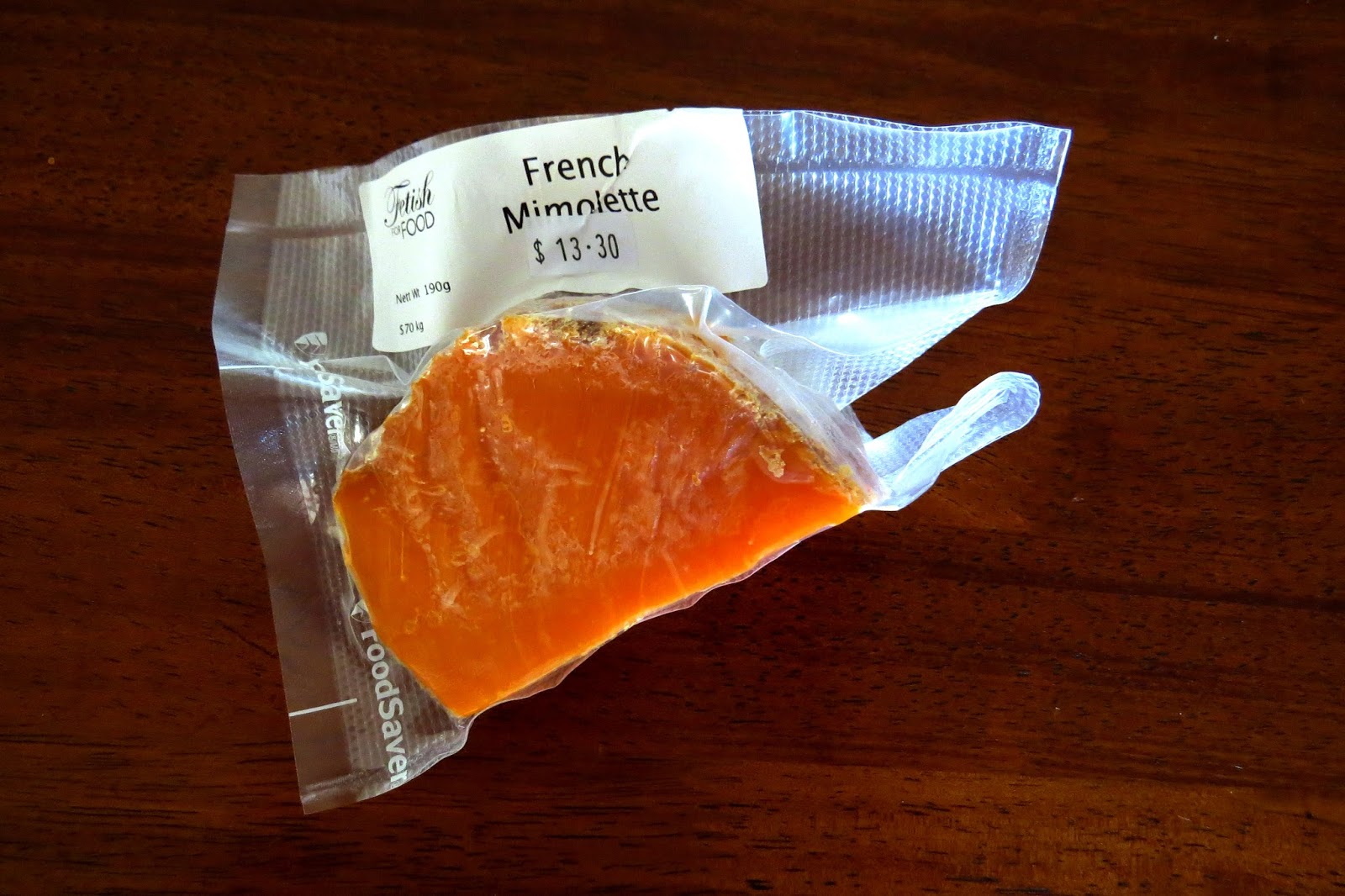
This 190 gram chunk of Mimolette Cheese was priced at AUD $13.30, USD $9.73, certainly no more expensive than a chunk of quality Parmesan.

Perhaps, that’s one of the many reasons why we decided to travel the world, a reason we’ve discovered has escalated as our journey continues. What tidbit can we discover along the way that finds us in awe of the world around us? It all boils down to the concept of “what is unique to us?”

We purchased these items at Fetish for Food at Rusty’s Markets. The total cost was AUD $77.65, USD $58.83.  In the center is a container with fresh mozzarella balls which we’ll use soon to make stuffed Italian meatballs with sugar free pasta sauce and Parmesan. After tasting the Mimolette, if we grate it, it may work perfectly to finish off the dish.

Those who know us may laugh when it comes to admiring each other. What’s so unique about each other maintaining our interest and enthusiasm in being together, day after day, year and year in such tight quarters?  It’s all a matter of perception in one’s own eyes. I find this man with an inordinate amount of willingness to adapt, of openness and of generosity of spirit at my side each day.

He may find similar types of qualities in me. But mostly, I perceive he likes that I don’t complain and I don’t do drama. Collectively, the humor, the teasing and the playful banter contribute to the ongoing pleasure of one another’s companionship. That’s unique, maybe not so much in the realm of the world, but it is to us.

Foie Gras is one of my favorite food items. This tiny piece, of which I savored half yesterday afternoon was AUD $14.30, USD $10.47, was delicious, even without crackers or bread.

Whether its in looking for and finding vacation homes, places to explore and people we meet, we naturally gravitate toward that which varies from the “norm” even if only to a miniature degree in the eyes of others.

As we wandered through Rusty’s Markets our eyes, trained to scan for unique items we stopped to investigate, inquire and take photos when possible. We’ve learned over these past years certain vendors don’t want photos taken of their products. This has been especially true in Muslim countries based on religious beliefs we respectfully honored without question.

This taste of this delightful Chicken and Black Peppercorn Pate stayed with me for hours as I often thought of going back for more, instead saving the balance to enjoy for a few days. This was priced at AUD $9.35, USD $6.84.

Many of the most unique fruits and vegetables were for sale in such owned displays causing us to proceed with our photo taking with caution. Although, without taking photos we were able to enjoy our perusal of the most unusual items. 

In our search for the most unique item we were enthralled when visiting with Nick Down at Fetish for Food. We couldn’t resist but load the counter with what appeared to be delectable choices to take home when he noticed me staring at a unique item in a display case, Mimolette Cheese.

This Brie Cheese with Truffles is a rare treat.

Nick chuckled when he saw me admiring the “unusual” color, a bright orange, when all the other cheese were varying in shades from bright whites to yellow. At first I thought it may be a type of cheese made with a pumpkin flavoring contributing to its odd color.  

Nick proceeded to explain Mimolette’s unusual story which definitely caught our attention. There was no way we were walking out of his shop without buying that chunk of Mimolette Cheese and we looked forward to conducting a bit of research on this unusual product when we returned home.

(I should mention a phenomenon here in Australia at this point; cheddar cheese here is not orange. It’s a natural off white color. They don’t use dye in their cheese to color it. When looking for grated cheddar cheese for our grain-free taco salad, I have to read labels, unable to easily spot the orange-tinged cheddar cheese).

After considerable research I found this wonderful article, although dated, from NPR detailing exactly what we wanted to learn about Mimolette Cheese:
“Tiny Mites Spike Big Battle Over Imports of French Cheese
May 11, 2013

by Deena Prechep

The Food and Drug Administration is currently embroiled in a surprisingly heated culinary standoff — pitting French cheese-makers (and American cheese-lovers) against regulators, all because of one very small problem: cheese mites. Cheese mites are microscopic little bugs that live on the surfaces of aged cheeses, munching the microscopic molds that grow there. For many aged cheeses, they’re something of an industry nuisance, gently brushed off the cheeses. But for Mimolette, a bright orange French cheese, they’re actually encouraged.

The mites munch on the rind for a few years and then are removed — usually with a blast of compressed air and a bit of hand-brushing — before Mimolette is sold. But there are always a few hiding behind. And now the FDA is cracking down.

According to the FDA’s Patricia El-Hinnawy, there’s no official limit, but the target is no more than six mites per square inch. For Mimolette, that’s a near-impossible standard.

Benoit de Vitton is the North American representative for Isigny, one of the largest producers of Mimolette. In March, de Vitton began receiving letters from each of the dozen importers he works with, saying that their Mimolette shipments had been detained.

De Vitton estimates that he now has about a ton of cheese sitting in FDA warehouses in New Jersey. “They say the product, because of the mites, it is not proper for human consumption,” de Vitton sighs.

Ironically, de Vitton notes that Mimolette itself is rumored to have been created because of import issues in the 17th century. “The French were at war with Holland, and the king didn’t want any more Dutch Gouda coming to France. So he asked to create kind of the same cheese.”

But in the 21st century, do we need a cheese ban? Microbiologist Rachel Dutton runs a cheese lab at Harvard University, and we checked in with her about the dangers of mites. Dutton notes that there have been some reports of mite allergies, but they seem to be restricted to people who have come into contact with large numbers of mites.And Dutton says that while we may not like to think about bugs, they’re a part of what makes cheese so delicious.

“Cheese is absolutely alive,” Dutton laughs. And all of that life — the molds, bacteria, yeasts and mites — help make cheese what it is. Dutton says that the mites on Mimolette can contribute flavors of their own (they have a somewhat earthy smell), and by eating into the rind, they can also increase aeration — and the surface area in which the other microbes can do their work.

Dutton understands that this doesn’t sound appealing, but implores people to realize the good work of these bugs. “There definitely are microbes that can spoil food and make either it bad for you to eat or just sort of gross. But any time you eat a piece of cheese or a bite of yogurt, have a piece of bread or a glass of wine — these are all examples of foods fermented by different types of microbes.”

Throughout France, cheese lovers have been rallying in support of Mimolette. There are radio stories, YouTube videos — there’s even an ex-pat Save the Mimolette Facebook campaign (of course).

In America, the response is a bit more subdued. Some cheesemongers are buying up the limited supply, but most are content to shrug it off. Sasha Davies, of Cyril’s cheese/wine bar in Portland, is nervous about what the mite crackdown could mean for other aged cheeses, but in general is fine reaching for an aged Gouda instead of Mimolette.

“I find I can scratch the itch I feel for Mimolette with a lot of other cheeses,” she admits.

Davies says that the fervor for Mimolette isn’t just about its caramel notes or lactic tang or bright orange color.

“There are cheeses that — even though I think they taste delicious, they tug at my heartstrings, either because I love the person that makes them, or I have this great memory of being in a special place,” she says. “Food is never really just food.”

And for many French people, Mimolette brings a taste of memory, family and home — as well as mites.”

By no means are we cheese experts and, we were aware that mites may hang out on fine cheeses based on the education we received on long ago tour of the Cheese Factory in Belize.  However, we never realized the significance of mites as described in the Mimolette Cheese.

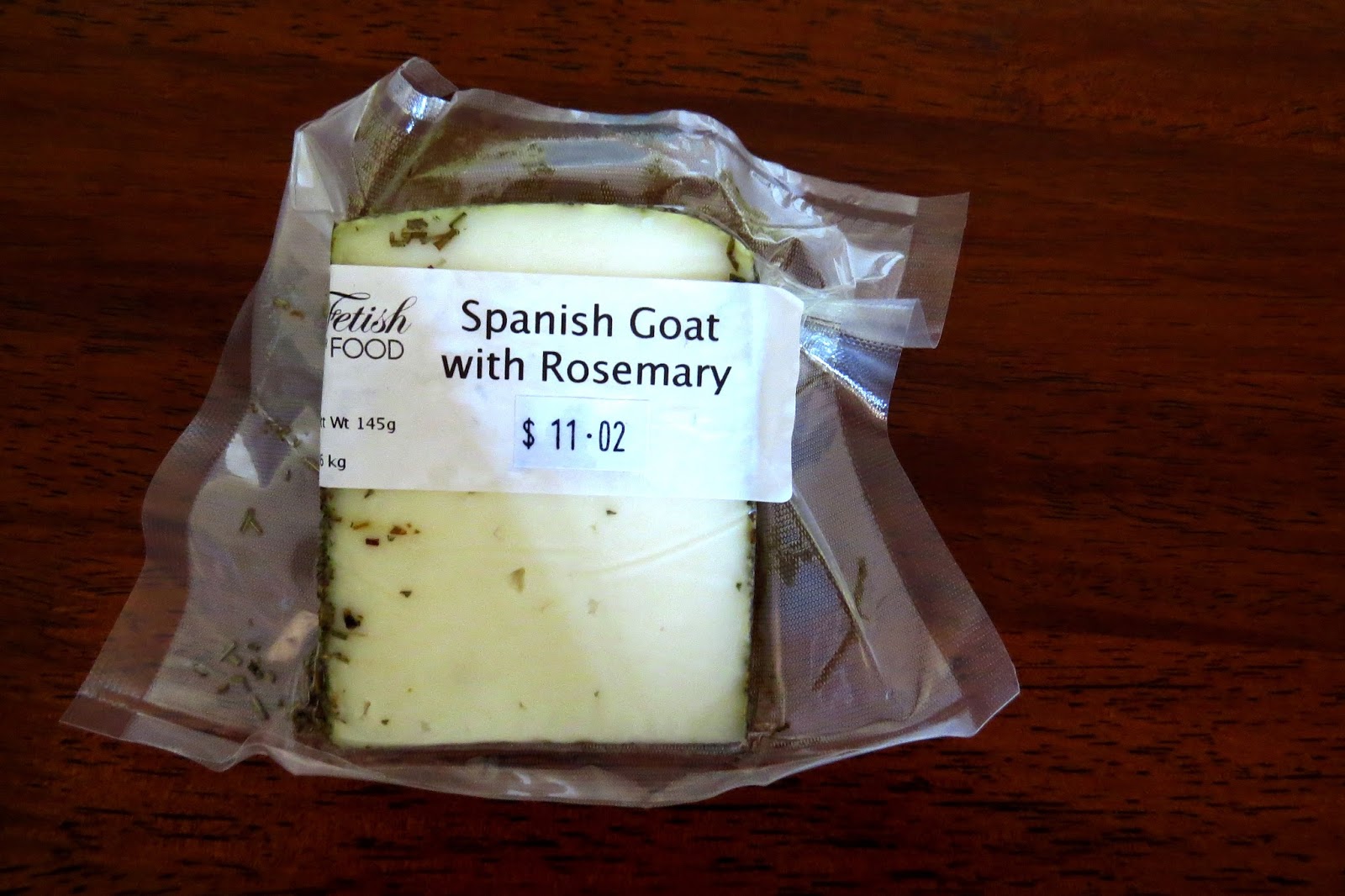
We’ve yet to unwrap and try this Spanish Goat Cheese with Rosemary saving it for another day.  It was priced at AUD $11.02, USD $8.06, another fair price.

It was irresistible. We purchased a good-sized chunk of Mimolette Cheese and this morning we tasted it for the first time. As described above, we loved its “caramel notes and lactic tang” or I should say, I loved it. Tom was less impressed when his tastes for cheese leans toward Kraft’s Individually Wrapped Slices or Velveeta.

When Tom and I first dated and on occasion I visited his home, I cringed when I noticed he kept a huge bucket of nacho dipping cheese on his kitchen counter, readily available double-dipping a tortilla  chip. On the other hand, back in 1991, I was shopping the gourmet deli counter at Byerly’s Market for fine import cheeses.

This morning Tom had a chunk of this non sugared smoked salmon with scrambled eggs, onions with his favorite local sliced cheese, Tasty brand with a side of nitrate-free “streaky”  bacon.  This price at AUD $8.95 was only USD $6.55.

As for the unusual, Mimolette Cheese was an interesting tidbit teaching us something new which ultimately is the benefit of seeking and finding those special morsels in our travels having an impact on our senses, whether its a taste, a smell, a touch, a sound or a sight. It all adds to the experience. 

Lots more new photos tomorrow!

Photos from one year ago today, August 23, 2014:

One year ago, we visited Oxford, England, the famous college town filled with one historic building after another. This is the Radcliffe Camera Building, “camera” referring to a “room” not a camera. For more Oxford photos, please click here.

Part 1…A popular tourist attraction in Cairns…Beyond expectations…Wish we’d visited sooner….

The sign outside the huge permanent farmer’s market in downtown Cairns, Rusty’s Markets, a popular tourist attraction as well as a favorite shopping site for locals.

Hindsight is 20/20. Had we visited the popular tourist attraction, Rusty’s Markets in Cairns earlier in our stay in Trinity Beach, we’d easily have returned on many occasions. (Click here for the map).

As soon as we entered Rusty’s Markets we knew we were in for a treat.

With easy to find and navigate free two-hour parking in a nearby ramp, we barely made it back to the car in time to avoid the overtime AUD $10, USD $7.73 additional hourly fee. Had we missed the two-hour window, the experience would certainly have been worth the fee.

Tropical flowers are on display in multiple locations.

Rusty’s Markets is a cacophony of mind-blowing shopping from a wide array of products including pretty summer dresses, handmade jewelry and crafts, and exquisite flower arrangements, to organic fruits and vegetables, meats, breads and desserts.

Having already purchased avos a few days ago when we grocery shopped I had to pass on these.

Countless casual restaurants with foods from around the world lined the perimeter including a makeshift food court where hungry tourists and locals gathered about sitting on uneven chairs and benches happily munching away on their favorites.

A mixed variety of goods are presented at some tables with specific items at others.

It was evident that most vendors are offering products as a result of ongoing hard work and creativity in developing their wares to perfection. With Rusty’s Markets only opened from 5:00 am to 6:00 pm on Fridays and Saturdays and 5:00 am to 3:00 pm on Sundays, it’s a full-time job for the vendors, managing their inventory and presentation of their products to ensure a seamless three days open to the public.

Fresh greens are for sale at many displays.

For the avid local shopper, leave room in your fridge and freezer and bring a small wheeling shopping cart in order to leave hands free for gathering the multitude of treasures. For the tourist, bring durable over-sized bags for other wares you may be unable to resist to bring home with lovely memories of the shopping experience.  Cloth shopping bags are available for sale.

Tom stopped and looked at the bread display. Nothing appealed to him. He hasn’t had a bite of bread in almost three months but continues to mention how much he missed toast and jelly.

Few times in our world travels have we found a market of this size and variety. Under cover of an enormous building, it’s a year-round, regardless-of-weather venue with permanent stations for its vendors. It’s clean, well lit, and relatively easy to maneuver.

Tropical fruits, roots, and greens.  Prices are reasonable for most items.

Luckily, we visited on a Friday as opposed to the most likely busier Saturdays and Sundays. We discussed how crazy it must be when cruise ships dock in the port of Cairns with 1000 or more cruisers arriving by bus to Rusty’s Markets. Cruisers notoriously are avid shoppers and Rusty’s would be pure paradise for most.

As we approached the counter at Fetish for Food we knew we were in for a treat.

Having grocery shopped only two days earlier and with our tiny fridge and freezer packed to the gills, buying vegetables were out of the question. I was so disappointed when I couldn’t purchase grass-fed meat or organic veg as I drooled over the free-range meat, free-range chicken, and organic produce lining row after row in the vast market.

Every refrigerated case is filled with food befitting our way of eating including smoked fish, sausages, nitrate-free streaky bacon, and delectable cheeses.

However, when we spotted a meticulously presented cheese and exotics foods display, aptly named, Fetish for Food, I felt like a kid in a candy store. When the owner, Nick Down, was free to spend time with us, we were delighted with not only his knowledge of every item in his inventory but his pleasant demeanor and surprisingly reasonable prices.

Nick explained interesting facts about the various cheeses one of which we’ll expound upon tomorrow with a shocking story. Who knew?

Finally, being in a shop where I could almost eat anything offered sent me to the moon. It reminded both of us of when in March 2013 we visited the Cave Branch Jungle Lodge as guests of the owner Ian’s fabulous on site Cheese Factory. Click here for the link from that day with many great photos of our memorable experience.

There are multiple cases all filled with local and imported cheeses.

At Fetish for Food, we couldn’t help but make a fair sized pile of products I couldn’t resist. Even Tom, unlikely to do more than taste these items, got into the selection process encouraging me to grab more and more.  With only a little over two weeks, until we leave Australia, it made no sense to purchase too much, a little of which I’ll have each day.

Once we arrived home, it was fun to review our purchases.  In total, we spent AUD $77.65, USD $58.83 which was less than we’d expected for these several items. Today, we’ll prepare an appetizer plate for a pre-dinner treat.

Tomorrow, we’ll be back with a story on a very unusual product we purchased at Fetish for Food regarding a type of cheese and bugs, an unlikely combination we found fascinating. The foodies out there will love this. The non-foodies…please humor me. But, even you may find it entertaining if not cringe-worthy.

Much of the cheese is imported from France, as we know, the cheese capital of the world.

Another vendor that caught our eye was Wild Nature Cairns, presented by the owner, Nicola whose gentle demeanor was surely befitting the natural skin and hair care products, natural makeup, and pure essential oil products, all organic and environmentally friendly.

In addition to meats and cheeses, Nick has a display of fancy condiments and oils.
In my old life, I’d surely have walked away with a bag of girlie treasures. In this life, I can’t purchase any of these items with a lack of space in my bag and the inability to replace the preferred items when they’re gone. 
Nicola, the owner of Wild Nature is dedicated and committed to the highest quality product she can produce, mostly made utilizing the healing and therapeutic Australian Aloe Vera plant.
These days, I purchase cosmetics in grocery stores and pharmacies. I have one drugstore night cream in my possession which I’ll replace with another when it runs out. If I need body lotion, I use coconut oil. 
Nicola’s products may be used for a variety of skin conditions. Visit her site at this link.

Finding these two wonderful vendors in the busy market among the produce, grass-fed meats, exotic pastries, and endless eateries only added to our extraordinary experience…slightly under two hours of pure delight for both of us.

Back at you soon with the unusual products, we found at Rusty’s Markets.

Photo from one year ago today, August 22, 2014:

This is the church where Matthew’s funeral was held in Bampton, England where Downton Abbey has been filmed over the years. For details on how this quaint village has been prepared for filming please click here. It was quite a story.

Negative comments from a reader…Torn about responding…

Sunrise over Trinity Beach.

It’s a rarity that a reader sends us a negative comment. When it does occur, perhaps once a year, I struggle over whether or not to post the comment or to ignore it.

Long ago, we wrote that the intention of our site is about joy and fulfilling dreams, not an arena for negative comments and bantering back and forth in disagreement over topics or comments we’ve made. That doesn’t mean we shy from a discussion. But, in doing so, kindness is always of the utmost importance.

We don’t express political or religious views or present any negative comments regarding any person’s beliefs or preferences. From time to time, I may discuss frustration over the food industry’s money orientated goals of presenting chemical-ridden foods at us in the US markets. If this offends anyone, that’s never been our intent.

Over these past 41 months, since we began posting, we often mention the recovery of health I’ve experienced from changing my diet, a choice I’ve made for life. Tom joined me in this path except when on cruise ships and dining in restaurants.

Through sharing recipes and resources through books and medical research documents, we’ve had an enormous response from readers all over the world who have chosen their own path through their own research. 

In dozens of cases, readers have written to us via private email requesting the book list we compiled that helped me discover my own path which if they choose, may prove to be beneficial for them. 

We never claim to be medical professionals or experts in any of these fields. We always encourage readers to seek professional assistance in choosing their path to improved health. 

We’re simply laypeople, literally hungry to learn ways in which we can extend the quality of life in our senior years, which ultimately adds to the joy of continuing our world travels, hopefully for years to come.

Yesterday, when I received this comment, I struggled over whether or not to upload it to the site. The reader wrote:

“Your husband is right. You obsess over food. It’s annoying and will probably mean I quit reading altogether. I read only about the first couple of paragraphs of this page, scrolling down, and when I came to the recipe, scrolling faster.”

Here is the link to the post on which the above comment was made. (Oftentimes, readers are “catching up” reading posts from months or years ago). This post was uploaded in March 2014 but the comment arrived yesterday. If you’ll click the link to this post and scroll to the bottom of the page, you’ll see comments made by other readers at that time. 

I didn’t post the above reader’s comment online in the “comments” section at the end of the post. I didn’t since it included her name and to avoid publicly using a person’s name to address an issue, I am posting it here without the name.

Now, for my response to the reader which I assure you is done so, not with the intent of criticizing the reader but to address what may in fact be an issue for some of our other readers…our ongoing discussions of food:

Undoubtedly, I make frequent references to food including the shopping, quality of products, my perceived healthfulness of products, our way of eating, recipes, and often photos of meals we’ve had in restaurants or cooked “at home.”

As all of our readers are aware, changing my diet changed my health to such a degree it allowed us to travel the world. Had this not happened, we’d never have been able to travel. I won’t go into all of that again. Most of you know the story.

But, traveling the world is often a story about food and culture. In reading many travel sites, we often find ourselves admiring food photos and stories since for many travelers, it’s all about the food, the great restaurants, the fabulous finds of the “tucked away” spot that filled their bellies and hearts with love and joy, often a treasured story they’ll tell for years to come.

For us and the limitations of my way of eating, we tend to stay away from restaurants in some countries which are more inclined to use flour, sugar, and starch in the preparation of food. 

This reality definitely hinders our experience to a degree. In a way, it’s a limitation, not unlike those that many people experience at some point in their lives. And, we chose to adapt to the best of our ability…finding homemade food, grocery shopping, and recipes bringing us that same kind of pleasure.

Yes, I’m obsessed with food. Always have been. Always was a great cook and loved to entertain. It’s a hobby. It’s a passion. Food is love. And now, for us, food is medicine. And yes, Tom occasionally reminds me about my passion, obsession, and hobby as he gobbles us the next plate of fabulous food, thanking me for a good meal.

Another important point for us, perhaps beyond our personal enjoyment of food is the hundreds that have written to us over these 41 months that have asked for booklists, information on medical research, and recipes that they may decide to peruse in their own search for renewed health. 

If in this process, only one person through gaining inspiration in reading our posts has found a solution through a diet that has improved their health, every single one of the 1112 days that we’ve sat here writing and researching will have been worth it. 

As for the recipes, there are literally hundreds of people that have written to us requesting recipes for a meal we’ve mentioned or a food photo we’ve posted. Instead of spending the recipe via email, knowing there are others less inclined to write, we post the recipe online.

If this above-mentioned one reader decides to stop reading our posts that’s a personal choice and we’re saddened by that decision. It’s easy to scroll past those points that one may find less interesting or desirable to their owns tastes and interests. 

Our goal is not singularly about food. If you’ve had an opportunity to read the posts of the last several days regarding safety it’s evident that is the case. We strive to provide a wide array of topics that may appeal to all ages, those who sit at their kitchen table each morning, a cup of coffee or tea in hand, that travel along with us. 

We feel your presence and appreciate every single one of you.

Photo from one year ago today, August 20, 2014:

We visited the Victoria and Albert Museum for an excellent educational day. For more photos, please click here.

Both of us had a great day at the museum.