Part 2…Exotic foods and shopping in Cambodia and Vietnam…Street food and market…Rats?…Easy life in Rawai, Phuket…


Skinned rat.  Oh.

Lazy as we can be right now as I continue to improve in baby steps each day finds me relatively inactive as I’m experiencing some recovery by not bending and walking more than absolutely necessary at this time.

This area is where we’ve spent most of our daylight hours. There’s one English speaking TV news channel.

Although I gently perform familiar stretching exercises each day, I do so with the utmost of caution. I’d considered going to a hospital for x-rays once we arrived in Phuket but what would “they” prescribe? Rest with light exercise? Done! Pain meds? No, thanks! Surgery? Not going to happen!  What would be the point?

The master bedroom we’re using with AC, comfortable bed and bedding, vanity desk and chair and an en suite bathroom.

If I’d been unable to walk (I am able) or having outrageous radiating nerve pain (none) I’d have checked it out. Years ago, I had a spinal compression fracture. This feels exactly like that, only more painful over a longer period.  It’s almost been two months. Typically, a compression fracture can heal in three months. If so, I’m right on track, progressing a little each day.

What type of fish is this?  Any comments?

Our first five days in Phuket have been low key. Tomorrow morning at 10:00 Gregory delivers the rental car. Then, we’ll head out to take photos and shop, over which we look forward to with considerable enthusiasm. 

Soft shell crab.

The Rawai, Phuket house is not on the ocean, a circumstance of which we were aware  when booking this property. Although we love being situated directly on the ocean or with ocean views we have no problem choosing a better house over a view. 

We didn’t recognize some of these items used in Asian cooking.

Certain popular tourist areas make choosing oceanfront or ocean view properties prohibitive cost-wise.  With all the ocean views we’ve had in our travels, living inland doesn’t bother us a bit.  It’s not as if we’re at any given location for the long haul. There’s always the “next one” as Tom says when asked as to his favorite location.

Chicken feet, toes, toenails.

Now, we continue with more exotic foods and shopping while on the Viking Mekong River Cruise:

Huge produce displays.

On Tuesday, July 17th we decided to join the tour group when Kong explained there wouldn’t be many steps to climb or overly strenuous walking. The morning’s tour would board down a steep ladder directly from the cruise ship for a ride along the Mekong Delta.

Live fish.

The tour included a stop at a brick making factory which originally we thought might be of little interest to either of us or our readers. But it proved to be fascinating after all. Photos and story will follow soon. Today, we’re sticking with the food theme.

Crab.

After a tour of the bay with many war related historical buildings (more of those later too), the two sampans made their way to the shoreline where once we navigated a stairway we were on the street of the quaint town of Sa Dec where we had two stops of interest, one, the historic site of the aristocratic home filmed in the controversial Vietnamese made movie which we watched on the ship, The Lover (more on that later), and two, the fascinating Sa Dec Market.

Live eel.

No doubt, it was sweltering in the high heat and humidity which had been the case during each and every tour. We were fine with that, having spent most of our time in hot, humid climates over these past years.

Fish heads commonly used in Asian cooking.

The time spent walking was more noticeable than the humid heat. We’d hoped to attend the afternoon tour to visit a small factory in yet another village, but after the several hours on my feet in the morning, we chose to stay behind.

Chickens and parts.

Once we arrived at the outdoor market, we were thrilled to have managed to see this amazing venue. Expecting to see more tourists than locals, we were pleased to find that the Sa Dec market was the popular choice for the locals.

Cleaned squid (calamari).

Tourists, who generally don’t cook, unless staying in the area for longer periods, don’t purchase much in the way of foods from a local “farmers markets.”

Prawns are kept in ice cold water since they spoil quickly.

The biggest surprise in visiting this enormous outdoor market wasn’t necessarily the unusual foods offered but the fact that considerable amounts of meats were displayed without ice or refrigeration for long periods of time.

Pork is more prevalent than beef in Southeast Asia.

We hadn’t arrived at the market until around 10:00 am and the meats could easily have been sitting out for hours when the markets open very early in the morning. Had we been residing in that area, there’s no doubt we’d wanted to be among the first shoppers early in the morning to hoping the meats had been properly stored overnight and hadn’t sat out the prior day.

Offal… intestinal parts of animals are commonly eaten in Southeast Asia.  No part of an animal is wasted.

Local shoppers have probably figured out what works safely for them and surely we gringos would require education on what meats would be safe for human consumption based on current methods in handling.  

We wondered how long these pork would sit out in the heat.  Kong warned us about consuming street food when it was prepared from sources such as this.  He stated that locals occasionally get sick, but many are able to tolerare the consumption of some un-refrigerated foods, compared to us westerners.

In any case, seeing this market was a significant part of the Mekong River experience and we’re grateful we were able to visit this amazing market in Sa Dec. Here’s some information on the village with a population of 152,500 (continue below this photo):

Walking through the markets is tricky amid all the motorbikes passing through.

“Sa Đéc is a provincial city in Đồng Tháp Province in the Mekong Delta of southern Vietnam. It is a river port and agricultural and industrial trading center. During the Vietnam War in 1966 and 1967, it was the site of an American PBR (Patrol Boat, River) base. Later on, it became a Swift Boat base, as well.

We weren’t sure what was in these bags.

Before the nineteenth century, it was the capital of Dong Khau Dao, and it was known as one of the largest cities in the Mekong Delta There are three industrial zones in this city, designated by the codes A, C1, and C. They attract a large number of businessmen from the Mekong Delta region.”

Fruits, veg and flowers.

Back on the sampan by 11:00 we returned to the ship in time for lunch, yet another delicious, somewhat more traditional meal. The other cruise passengers were as equally enthralled with the morning tours as we were.  

Produce for sale in the market in Sa Dec, Vietnam.

At that point, July 19th was the last night aboard the ship. We all paid our final bills in the Saloon Bar, paid tips for the staff and began packing for the next part of the journey, a lengthy bus ride which would take us to Saigon (Ho Chi Minh City) for the final two nights in another hotel.

Western vegetables.

More stories will continue over the next several days, not necessarily in order of the journey but more in groupings based on topics. See you soon!

Ice being delivered to some of the shopkeepers who use it.

Have a blissful day!

Photo from one year ago today, July 27, 2015:

We’d seen these gorgeous orchids in our neighborhood in Kauai, Hawaii and found them as equally breathtaking in Australia at the Cairns Botanical Garden. Many of the plants, trees and flowers are similar in both areas due to the tropical climate. For more photos, please click here.

Part 1…Exotic foods and shopping in Cambodia and Vietnam…Did we eat insects? An issue in Phuket?

Kong took this photo of Tom and a tarantula!

First, we begin our post with a few points regarding our stay in Phuket.  With 37 remaining days on the island, we want to make the very best of our time here considering my current circumstances. 

After analyzing the higher cost of taxi service here, we reconsidered the possibility of renting a car. As it turns out a short trip for shopping will cost approximately THB (Thai Baht) 700, US $20 with more for sightseeing and dining out.

The kitchen is spacious and relatively well equipped. We certainly appreciated the size of the refrigerator, the drip coffee pot and the double sinks.

As a result, the kindly local owner of this house, well aware of high taxi fares, offered us a rental car for the balance of our stay for a total of THB 9000, US $256. Gregory will deliver the car on Thursday morning, the first day we’ll need to use it.

It’s an older car, but has AC, seat belts and works well which is fine. For our local exploration and shopping this will be fine regardless of how old or worn this car may be.

As for our past day, we were a little worried when there was no running water yesterday afternoon.  Within minutes of reporting this to Gregory, two workers arrived at the house, spending several hours repairing the issue. This reminded us of similar issues we’ve encountered without water and electricity in less developed countries throughout the world.

We dine at this table.

There’s a bottled water dispenser here, which would have seen us through the night if necessary. Unfortunately, the water quit while Tom was in the shower after soaping up. 

When he appeared in the living room, covered in soap, I suggested he take some bottled water to get the soap off until we had water again. He did so, but felt dirty and sticky until hours later when the water was working and he was able to finish his shower. 

We won’t be using this sofa, preferring to spend time in the living room. Photos will follow tomorrow.

We postponed dinner when the workers were attempting to resolve the issue right outside the dining room door. Finally, they were done. The water was running again and we were able to quietly enjoy our meal, most of which we’d prepared earlier in the day. 

Here are a few more photos of the house taken from the listing here.  We’ll be back with Phuket photos as soon as we get out and about later this week. Thanks for your patience.

Back to the Mekong River Cruise: With all the heart wrenching photos we’ve shared over the past many days, we decided to lighten it up a bit and share some food photos we’d taken over the 17 days we spent in both Cambodia and Vietnam.
First off, I must espouse the virtues of the popular Vietnamese soup, known as “pho” which is pronounced as “fuuuuur” in Southeast Asia not the commonly pronounce “Foe” in Vietnamese restaurants in the US and other countries throughout the world.
Delicious pho without noodles.

In my old life before my special diet, pho was a favorite Vietnamese soup which I often enjoyed with son Greg at a local Minneapolis Vietnamese Restaurant. At that time I was able to have the wide noodles added to the delicious broth along with the vegetables and basil. 

In Cambodia, they don’t use basil but other types of greens. In Vietnam, depending on the region, basil is an available option to be added to the delicious soup at one’s option. 
Everywhere we traveled in the 17 days, I tried the pho, (without noodles) often for breakfast instead of eggs or as a first course with dinner. I was never disappointed although the flavor of the broth varied from region to region. Many other passengers raved about the pho along with me anxious to try it at each new location in our journey.
The server passed this plate of appetizers…tarantulas, tiny whole frogs and crickets.
One night at dinner on the cruise, we were served insects as a first course.  Unfortunately, to add to the less than desirable taste, we discovered that such creatures are usually marinated in a sugary broth to enhance the flavor and/or dipped in flour before frying. Had this not been the case, I’d have happily tried any of these.
Tom, on the other hand, took a few small bites making some awful faces after doing so. Many passengers opted for the full experience eating some of each of the items presented. 
Eating a variety of insects including grasshoppers, crickets and small frogs is an inexpensive source of protein for citizens throughout the world. Of course, it was the tarantulas that captured our attention the most.  We were only served these items on one occasion on board the ship during our travels.
I made up this plate for this photo although I never took a bite since they’re soaked in sugar to make them more palatable.

The remainder of the meals on both on the ship and at a number of restaurants included in the cruise/tour were varied and overall excellent. Most of my meals were good, especially on the ship although, a few restaurants had a more difficult time often presenting me with overcooked steak, boiled fish and steamed bok choy for a bland and unseasoned meal. 

We had such a great time dining with our co-passengers, food became of little importance to me. Tom, on the other hand, fully enjoyed most of his meals, especially when they included bread, potatoes and sweet desserts.
Tom took a few small bites.

Tom gained back 10 of his recently lost 20 pounds in Bali but now since our arrival in Phuket he’s already rapidly dropping those pounds by eating homemade meals befitting my way of eating based on what we were able to find at a local market.

Even I had gained a few pounds since I wasn’t used to eating three times a day. I’m feeling good to be back to my regular intermittent fasting regime, no longer hungry all the time from eating too much, too often, although I totally stayed on track of acceptable foods during the 17 day period. I’ve since lost the few pounds.
Food is a huge appeal for travelers, many who dine two to three times each day. Most parts of the world offer their own unique style of cuisine that makes dining out irresistible. 
A tarantula leg was resting on my tooth making me look like I was missing a tooth in this goofy photo.
Being able to experience tastes of the spices and methods of cooking becomes appealing and interesting for me as well. Southeast Asia provided a number of options that fit my criteria at times with some adjustments by conscientious chefs and cooks who made considerable efforts to enhance my dining experience. Kong took personal responsibility for each of my meals to ensure they were properly prepared.
Tom ate his fair share of local meals along with “western” options found on many menus. With warnings from Kong about street food, we stayed with the foods offered on the ship, the three hotels and the several restaurants where we dined.
Overall, it was a great dining experience and look forward to our readers enjoying the many photos we’ll share over the next few days. Our list of future stories and photos will continue in days to come as an adjunct to our daily quips on life in Phuket, Thailand.
Be well. Be happy. Eat insects when available. I guess.
Photo from one year ago today, July 26, 2015:
A beautiful bouquet already made by nature at the Cairns Botanical Garden in Australia. For more photos, please click here.

Part 3…Final photos of Cu Chi Tunnel and more amazing Vietnam photos…

Our current private vacation home in Rawai, Phuket, Thailand.

Over these past few days since our arrival, I’ve since discovered that rest seems to be the best treatment to improve my condition. This doesn’t mean lying in bed immobile. But it does mean two things; one, not a lot of walking and two, not bending at the waist over short countertops and sinks. 

We’ve yet to use the pool with rain these past few days but will soon.   Interior photos will follow over the next few days.

As a result, there’s been no point in sightseeing or even taking a walk in the neighborhood. As yet, we haven’t taken any photos in Phuket or, in the house. We’ll make every effort to take photos soon. 

We’d love to be able to dine outdoors, but the masses are fierce at dusk.

Unpacking in a less tidy manner than usual, the house in now a little cluttered with our stuff since I can’t bend over to organize and it doesn’t make sense for Tom to move everything to enable me to take the photos.  

Examples of clothing worn by the Viet Cong.

As a result, today we’ve added a few photos of the property from the listing as shown and we’ll add more as we go along. In several days, we’ll be getting out to take photos of the area and a few of exquisite beaches in this area. Phuket is known for its beautiful beaches, clear blue waters with hundreds of smaller islands.

Map of the vast coverage of the Cu Chi Tunnel.  In the basket in front of the map is a hand tool used to dig the miles of tunnels.

Actually, we’re enjoying it here considering our circumstances. We’ve figured out which fans to use to keep us comfortable in the rooms where we don’t use the air con. Plus, having screens has made a huge difference in keeping us from feeling closed in.

Booby trap. Scary.

With two English speaking news channels we’re able to remain up-to-date on US and world affairs and with a flat screen TV we can plug in the HDMI cable to watch a movie or favorite TV show at night after dinner, not unlike evening activities of many citizens throughout the world.

Tom tasted a ration used by the Viet Cong made of coconut, seeds and sugar, compressed into a crispy stick. He said it was surprisingly palatable.

Sure, I’m chomping at the bit to get out but having angst or frustration over our current circumstances would only add stress. As always, we’re making the best of our situation, smiling and laughing throughout the day in our usual playful lighthearted manner. 

The vent for the underground kitchen within the tunnel emitting smoke a distance from the location of the kitchen to prevent enemy attack.

We have no doubt that within a month, I’ll be fully recovered as it improves a little each day, especially now with this new less active plan. Tom helps me with chopping, dicing and cooking along with all household tasks.

This was actually a live person in a slightly below ground bunker making uniforms and other gear used in the tourist center which also served as an example of how clothing and gear was made during the war.

We’d hope to process the Indonesian passport while here sending our passport to the US by registered mail for processing and return. It was a flippant thought. There’s no way we’re willing to be a foreign country without our passports in our possession, even if only for a week. If we had an emergency and had to leave suddenly, we’d be in big trouble.

At first glance we wondered why these tired were cut into piece. Kong explained how the old tires were used to make sandals for the Viet Cong.  See photo below.

Instead, once in Bali after the 24th day, again we’ll do the three day Lovina run (two hours of driving each way, each day) to the immigration office. There’s simply no other option than this bothersome task other than to leave the country and re-enter.  That would require airfare for two and a round trip of the four or five hour harrowing drive to Denpasar and back. The Lovina option is the more logical decision.

These are the sandals that were made from old tires worn by the Viet Cong.
Underground area for making bombs and booby traps.
With hundreds of photos we’ve yet to share from Vietnam, our photos and stories continue. I deliberated over posting three days of photos from Cu Chi Tunnel but based on the huge number of hits we’ve had, one more day of the remaining photos may be of interest to some readers. 
Kong illustrated a booby traps that targeted a soldier opening a door in two ways.  Horrible.
Tomorrow, we’ll continue with all new Vietnam photos, many locations we visited but have yet to describe. We look forward to seeing you visit us here again.
More items used in booby traps, made on site by the Viet Cong.
Have a healthful and meaningful day!
Photo from one year ago today, July 25, 2015:
The Australian Brushturkey, also called the Scrub Turkey or Bush Turkey freely roamed the Cairns Botanical Garden which we visited one year ago today.These turkeys are not closely related to American turkeys. Click here for more details. For more of our photos from the botanical garden tour, please click here.

Part 2…Most awe inspiring tour yet in Southeast Asia…Cu Chi Tunnel…Tom’s brave although short exposure to the tunnels…

Tom is sitting at the table in a meeting room bunker with several mannequins and two other passengers standing behind him.

As mentioned in a prior post, we’re continuing to include photos and stories (when applicable) from our cruise/tour to Vietnam. Earlier we’d posted photos from Hanoi, Vietnam, and a few areas in Cambodia.

Two Russian MIGs which was used by the North Vietnam Air Force.

The bulk of the photos we have yet to share are from Vietnam during the roughly 11 days we spent in the exotic country. We both agreed we could hardly jump to Phuket, Thailand now, leaving this important information behind.

US Huey helicopter.

As for Phuket, thus far we’re becoming adapted to yet another house in a foreign land. Nuances such as finding outlets that work for our adapters, location of light switches which is very different from country to country (in other words, walk into a room and there’s no light switch nearby upon entering) figuring out TV systems and remotes, turning on the oven (never a simple turn of a dial or two) is all a part of the process.

Rocket launchers on helicopters.

This house has eight doors we need to lock at night. Much to our delight and surprise, there are screens on the six sliding doors, causing free air to flow through the house each day. 

One can only imagine how dangerous it was flying these helicopters during the war.

Each area of the house has an air-con unit, but in an effort to be mindful of power usage, so far we’ve only used the one in the bedroom at night along with the overhead fan. It’s hot and humid here, so much so that in our old lives in the US we’d have had whole-house air-con on day and night. 

US artillery pieces and two jeeps.

We sweat it out in 85% to 90% humidity which is uncomfortable at any higher temps. With a floor fan that doesn’t quite reach us (due to lack of outlets), with an overhead fan in a vaulted ceiling, the breeze is minimal. 

Viet Cong hammock with a tarp.

Overall, we’re managing fine. Last night we made our first meal in months, roasted chicken parts, green beans, and salad with a cheese plate for dessert. We made enough chicken for two nights.  All we’ll need to prepare for tonight is the salad and green beans. 

US  rocket launchers and cluster bombs.

Tom will assist me in the chopping and dicing. Bending over the short countertops in brutal at this point, but is often an issue when in most countries the population is much shorter than we are and countertops are made to accommodate their stature, not ours.

Above ground table and benches for dining or meeting.

The house is lovely, well maintained with nary a worn or old amenity. There’s no dishwasher, clothes dryer, large pans, or mixing bowls, but we found a two-liter pitcher for our iced tea and there’s an electric drip coffee pot. 

Horrifying bamboo spikes in ground booby traps. 

There was no ground coffee at the market (only instant which we don’t like) with only ground espresso. Each day we’re testing using different amounts to correct the flavor to our taste.

Another view of a booby trap.

Included in the rent is a house cleaner every Wednesday and Saturday. We passed on yesterday’s cleaning since we’d arrived the prior night and didn’t need it. We’ll keep it tidy in the interim, as we always do.

Surgery bunker sign. Can we even imagine how dangerous surgery was at this location?

Today, it’s raining, which is expected to continue throughout the day. We’ve yet to use the pool.  There are no steps leading into the water, only a ladder at the deep end. I can’t imagine how I can manage the ladder at this point, fearful of twisting or turning the wrong way. We’ll see how it goes.

Viet Cong surgery bunker.

We’d considered renting a car, but with my need to rest, a driver will be most logical over these remaining 39 days. We can go shopping each week at a reasonable cost for the taxi and he’ll wait while we shop.

Notice the sweat on Tom’s shirt. He was soaked after crawling through the narrow tunnels. This larger opening was a welcome relief.  Some of the tunnels and openings were enlarged for the benefit of tourists.

Dining out will come once I’m feeling up to it. In the interim, there are numerous “take away” delivery services that have roasted chickens and salads that may work for us a few times a week.

_____________________________________________________
Now, we continue with our tour of the Cu Chi Tunnel after Part 1 included photos of Tom tackling a few of the narrowest portions of the tunnel, entering at one narrow point and exiting 10 to 30 meters later at another opening.
If you missed that prior post, please click here.
Entrance to a narrow tunnel which was also enlarged.

The bus ride to the location was about an hour outside of Saigon (Ho Chi Minh City) requiring we backtrack to return to Saigon later in the day for the two-night hotel stay at another Sofitel Hotel, the least favorite of the three Sofitel Hotels included in the cruise tour. 

The trip from the ship to include the tour of the Cu Chi Tunnel, a stop for lunch, and the return drive extended over an eight hour period with about five hours riding on the bus. It was a long hot day but we were excited to visit the tunnel which we entered in the Ben Dinh area.

Tom took this photo while climbing out of a narrow tunnel by turning around after he’d already crawled through this spot.

With the tunnel extending as follows:

“The 75-mile (121 km)-long complex of tunnels at Củ Chi has been preserved by the government of Vietnam,[3] and turned into a war memorial park with two different tunnel display sites, Ben Dinh and Ben Duoc. The tunnels are a popular tourist attraction, and visitors are invited to crawl around in the safer parts of the tunnel system. The Ben Duoc site contains part of the original tunnel system, while the Ben Dinh site, closer to Saigon, has tunnel reconstructions and some tunnels have been made larger to accommodate the larger size of Western tourists. In both sites low-power lights have been installed in the tunnels to make traveling through them easier, and both sites have displays of the different types of booby traps that were used. Underground conference rooms where campaigns such as the Tết Offensive were planned in 1968 have been restored, and visitors may enjoy a simple meal of food that Viet Cong fighters would have eaten.”

Included today are some of the best remaining photos we’d taken during the tour of the tunnel. Please check back tomorrow for the balance of the photos.

We’ll look forward to seeing you then!

Photo from one year ago today, July 24, 2015:

Once inside the long, narrow Mangrove Boardwalk in Cairns, Australia we walked deeper and deeper into the marsh never encountering other visitors. For more details, please click here.

Part 1…Most awe inspiring tour yet in Southeast Asia…Cu Chi Tunnel…Tom’s brave although short exposure to the tunnels…

It’s hard to believe that Tom managed to climb out of the tiny opening at Cu Chi Tunnel in Vietnam. I was scared he’d be stuck after all the carbs he ate on the two-week cruise.

Yesterday was a long day with many hours spent riding on the air-conditioned bus that even had a weak WiFi signal from time to time. Sitting or walking for extended periods is not easy for me, but with a few stops on the way to Saigon (Ho Chi Minh City), I managed fine.

The sign at the entrance to the Cu Chi Tunnel.

Actually, the distance from the ship to Saigon is only about 2 1/2 hours drive. However, with the planned stop at Cu Chi Tunnels we ended up going far out of the way beyond Saigon and back again to our hotel, yet another Sofitel Hotel, arriving by 4 pm which accounted for the extra time.

Rules for visiting the Tunnel in both Vietnamese and English at the entrance to the dense jungle.

Tom and I always sit in the bus’s last few rows, each taking two seats across the aisle from one another, allowing for more squirming about (in my case) and more legroom, especially with our bulky carry-on bags which we keep with us.

The luggage for the 54 passengers went ahead to Saigon on a truck with our three bags awaiting us in our hotel room when we arrived. This particular Sofitel in Saigon is newer and less appealing than the past two, especially compared to our new favorite Sofitel Legend Metropole Hanoi, which was superb.

All of these tunnel photos were taken by Tom as he crawled through the narrow spaces on his hands and knees to exit on the other side, quite a distance away from the entrances.

Those of us who are old enough to recall the constant news reports during the Vietnam War certainly remember the commonly mentioned Cu Chi Tunnel. But young and caught up in our own lives at the time, disheartened by the loss of life, we may not have focused much attention on such sites as used by the “gorillas/Viet Cong” during the war.

Occasionally, certain areas were lighted as shown in this taller section.

The Cu Chi Tunnels are described as from this site:

The tunnels of Củ Chi are an immense network of connecting underground tunnels located in the Củ Chi District of Ho Chi Minh City (Saigon), Vietnam, and are part of a much larger network of tunnels that underlie much of the country. The Củ Chi tunnels were the location of several military campaigns during the Vietnam War, and were the Viet Cong‘s base of operations for the Tết Offensive in 1968.

The tunnels were used by Viet Cong soldiers as hiding spots during combat, as well as serving as communication and supply routes, hospitals, food and weapon caches and living quarters for numerous North Vietnamese fighters. The tunnel systems were of great importance to the Viet Cong in their resistance to American forces, and helped to counter the growing American military effort.

Life in the tunnels

American soldiers used the term “Black Echo” to describe the conditions within the tunnels. For the Viet Cong, life in the tunnels was difficult. Air, food, and water were scarce and the tunnels were infested with ants, poisonous centipedes, scorpions, spiders, and vermin. Most of the time, soldiers would spend the day in the tunnels working or resting and come out only at night to scavenge for supplies, tend their crops, or engage the enemy in battle.

This guide, a former Viet Cong, who was 10 years old during the war, showed us how entrances to the tunnel was camouflaged by leaves atop a small wood door such as this. Tom actually went down this small opening.

Sometimes, during periods of heavy bombing or American troop movement, they would be forced to remain underground for many days at a time. Sickness was rampant among the people living in the tunnels, especially malaria, which was the second-largest cause of death next to battle wounds. A captured Viet Cong report suggests that at any given time half of a PLAF unit had malaria and that “one-hundred percent had intestinal parasites of significance”
The tunnels of Củ Chi did not go unnoticed by U.S. officials. They recognized the advantages that the Viet Cong held with the tunnels and accordingly launched several major campaigns to search out and destroy the tunnel system. Among the most important of these were Operation Crimp and Operation Cedar Falls.

Operation Crimp began on January 7, 1966, with Boeing B-52 Stratofortress bombers dropping 30-ton loads of high explosive onto the region of Củ Chi, effectively turning the once lush jungle into a pockmarked moonscape. Eight thousand troops from the U.S. 1st Infantry Division, 173rd Airborne Brigade Combat Team, and the 1st Battalion, Royal Australian Regiment combed the region looking for any clues of PLAF activity.

It’s amazing a human could fit down this tiny hole especially Tom, who’s considerably larger than the Vietnamese people.

The operation did not bring about the desired success; for instance, on occasions when troops found a tunnel, they would often underestimate its size. Rarely would anyone be sent in to search the tunnels, as it was so hazardous? The tunnels were often rigged with explosive booby traps or punji stick pits. The two main responses in dealing with a tunnel opening were to flush the entrance with gas, water or hot tar to force the Viet Cong soldiers into the open, or to toss a few grenades down the hole and “crimp” off the opening. This approach proved ineffective due to the design of the tunnels and the strategic use of trap doors and air filtration systems.

However, an Australian specialist engineering troop, 3 Field Troop, under the command of Captain Sandy MacGregor did venture into the tunnels which they searched exhaustively for four days, finding ammunition, radio equipment, medical supplies, and food as well as signs of considerable Viet Cong presence. One of their numbers, Corporal Bob Bowtell died when he became trapped in a tunnel that turned out to be a dead end. However, the Australians pressed on and revealed, for the first time, the immense military significance of the tunnels. At an International Press Conference in Saigon shortly after Operation Crimp, MacGregor referred to his men as Tunnel Ferrets. An American journalist, having never heard of ferrets, used the term Tunnel Rats and it stuck. Following his troop’s discoveries in Cu Chi, Sandy MacGregor was awarded a Military Cross.

I sighed in relief when I saw his white head pop up, but worried he’d be unable to get out. The guide told him to extend both arms above his head first which would stretch him to more easily squeeze out of the tiny opening. This is not for the faint of heart or anyone claustrophobic! I was impressed by his obvious lack of fear. 

From its mistakes and the Australians’ discoveries, U.S. Command realized that they needed a new way to approach the dilemma of the tunnels. A general order was issued by General Williamson, the Allied Forces Commander in South Vietnam, to all Allied forces that tunnels had to be properly searched whenever they were discovered. They began training an elite group of volunteers in the art of tunnel warfare, armed only with a gun, a knife, a flashlight and a piece of string.

These specialists, commonly known as “tunnel rats”, would enter a tunnel by themselves and travel inch-by-inch cautiously looking ahead for booby traps or cornered PLAF. There was no real doctrine for this approach and despite some very hard work in some sectors of the Army and MACV (Military Assistance Command, Vietnam) to provide some sort of training and resources, this was primarily a new approach that the units trained, equipped and planned for themselves.

Despite this revamped effort at fighting the enemy on its own terms, U.S. operations remained insufficient at eliminating the tunnels completely. In 1967, General William Westmoreland tried launching a larger assault on Củ Chi and the Iron Triangle. Called Operation Cedar Falls, it was similar to the previous Operation Crimp, however on a larger scale with 30,000 troops instead of the 8,000.

On January 18, tunnel rats from the 1st BN, 5th Infantry Regiment of the 25th Infantry Division uncovered the Viet Cong district headquarters of Củ Chi, containing half a million documents concerning all types of military strategy. Among the documents were maps of U.S. bases, detailed accounts of PLAF movement from Cambodia into Vietnam, lists of political sympathizers, and even plans for a failed assassination attempt on Robert McNamara.

By 1969, B-52s were freed from bombing North Vietnam and started “carpet bombing” Củ Chi and the rest of the Iron Triangle. Ultimately, it proved successful. Towards the end of the war, the tunnels at this were so heavily bombed that some portions actually caved in, and other sections were exposed. But by that time, they had succeeded in protecting the local North Vietnamese units and letting them “survive to fight another day”.

Throughout the course of the war, the tunnels in and around Củ Chi proved to be a source of frustration for the U.S. Military in Saigon. The Viet Cong had been so well entrenched in the area by 1965 that they were in the unique position of locally being able to control where and when battles would take place. By helping to covertly move supplies and house troops, the tunnels of Củ Chi allowed North Vietnamese fighters in their area of South Vietnam to survive, help prolong the war and increase American costs and casualties until their eventual withdrawal in 1972, and the final defeat of South Vietnam in 1975.”

To continue reading from this site, please click this link.

Today, he’s a little stiff and sore, having used muscles he hadn’t used in years but suffered no ill effects. The passengers in our group were cheering him as he entered and exited.

Cu Chi Tunnels have become a major tourist destination for travelers from many parts of the world as described here:

The 75-mile (121 km)-long complex of tunnels at Củ Chi has been preserved by the government of Vietnam, and turned into a war memorial park with two different tunnel display sites, Ben Dinh and Ben Duoc. The tunnels are a popular tourist attraction, and visitors are invited to crawl around in the safer parts of the tunnel system.

The Ben Duoc site contains part of the original tunnel system, while the Ben Dinh site, closer to Saigon, has tunnel reconstructions and some tunnels have been made larger to accommodate the larger size of Western tourists. In both sites, low-power lights have been installed in the tunnels to make traveling through them easier, and both sites have displays of the different types of booby traps that were used. Underground conference rooms where campaigns such as the Tết Offensive were planned in 1968 have been restored, and visitors may enjoy a simple meal of food that Viet Cong fighters would have eaten.”

To find ourselves at this profound historic location was awe-inspiring. With a fairly long distance to walk through the jungle, all of us were well coated in insect repellent and insect repellent clothing which only made us realize the struggle of the soldiers during this horrific period in time.

How they suffered in the humid heat with insect bites, contracting malaria, dengue fever, and other diseases wrought in the toxic environment due to a lack of with a lack of decent food, clean water, and appropriate medical care. 

We could only imagine how hard life was for the soldiers who spent months in the tunnel during the war.

Being in this place in the jungle made us all the more aware of the strife they endured while continuing to fight, day after day, month after month, and year after year.

As Kong toured us through the thick brush on the lengthy uneven dirt path over roots, rocks, and vegetation, we finally arrived at the entrances to some of the tunnels.

Tom, emerging from a larger opening after entering this section of the tunnel from a small opening.  His clothes were wet with sweat and covered in dirt.

When Kong asked for volunteers for the tightest of tunnels, Tom jumped in saying he would try it, even with the weight he’d gained over these past two weeks on the cruise/tour. The Vietnamese people are tiny and easily fit through the narrow miles and miles of tunnels.

When we saw the size of many of the narrow entrances to the tunnel, Tom had decided to tackle I cringed hoping he wouldn’t get stuck. Our group watched in anticipation of him making his way from the tight entrances and out the equally tight exits, crouched down through the narrow underground passageways to surface some distance away.

He had to literally crawl up these steps when there was no headroom to do otherwise.

Many others in our group partook in the wider tunnels, although one petite woman in our group followed Tom’s example in one area a short time later. When he’d finally managed to maneuver the tight spaces to enter and subsequently exit the tiny tunnel, he was soaked in sweat and covered in dirt and mud.

Everyone cheered his bravery while he dismissed his attempt at trying to understand how it was for the soldiers in this difficult place for extended periods of time. I was proud of him for his bravery but fully understood, amid his joking and dismissal of his experience as “nothing” compared to the real lives of the soldiers.

The guide was as limber as a monkey making his way through the tunnel. No doubt, given more time and fewer doughnuts, Tom would have become equally adept.

Back on the bus, we went to lunch at an exquisite restaurant, dining outdoors under cover during a massive downpour. Tom dined in his dirty sweat-soaked clothes never giving it a thought.

It was quite a day, to say the least, and by the time we checked in to the hotel, a shower was imminent for him with a soak in a hot tub for me following. We dressed for dinner, heading down to a fabulous buffet dinner in the hotel’s restaurant with mostly Vietnamese foods. More on that later.

Our guide at one of the larger tunnel entrances.

This afternoon, after we’re done here, Kong will arrange a taxi to take us to the “shoe district” where Tom will purchase a new pair of tennis shoes. He’s wearing the same pair since we left the US 45 months ago and it’s definitely time for something new when they’re literally falling apart. We’ll report back on the results of this shopping trip later.

This is the type of tool used to make the tunnel by hand.  The tunnel is 250 km, 155 miles long weaving through the jungle floor over a massive area.

Today, I’m wearing a shirt with a hole in the sleeve, less obvious when I roll up the sleeves. Gee, traveling the world has certainly changed us in so many ways, most of which we’ve found to be liberating.

Early tomorrow morning, we’ll leave the hotel for the airport in Saigon known as the Ho Chi Minh City Airport (SGN) Vietnam, where at 9:45 am we’ll fly to Bangkok with a few hour layover and then on to Phuket. A driver will meet us at the airport for the hour-long drive to the villa where we’ll stop for some groceries along the way. 

Tom explained how he crawled into one of these air vents, large enough in which to stand on the inside for both ventilation and firing weapons.

Most likely we won’t arrive at the villa until 6 pm. Once we’re settled, we’ll prepare a short post with our final expenses for the Viking Mekong River Cruise including the extra three nights we spent in Hanoi. 

In a few days, we’ll continue with Parts 2 and 3 of the Cu Chi Tunnels since this tour is deserving that more of these important photos be shared with our worldwide readers. Back to you soon!

Have a joyful day!

Photo from one year ago today, July 21, 2015:

It’s amazing how quickly Tom’s hair grows as he prepared for another haircut in Trinity Beach, Australia. For more photos, please click here.

Vietnam never fails to amaze and inspire…Out on tours…More photos than we can possibly share…Evening view Phnon Penh…

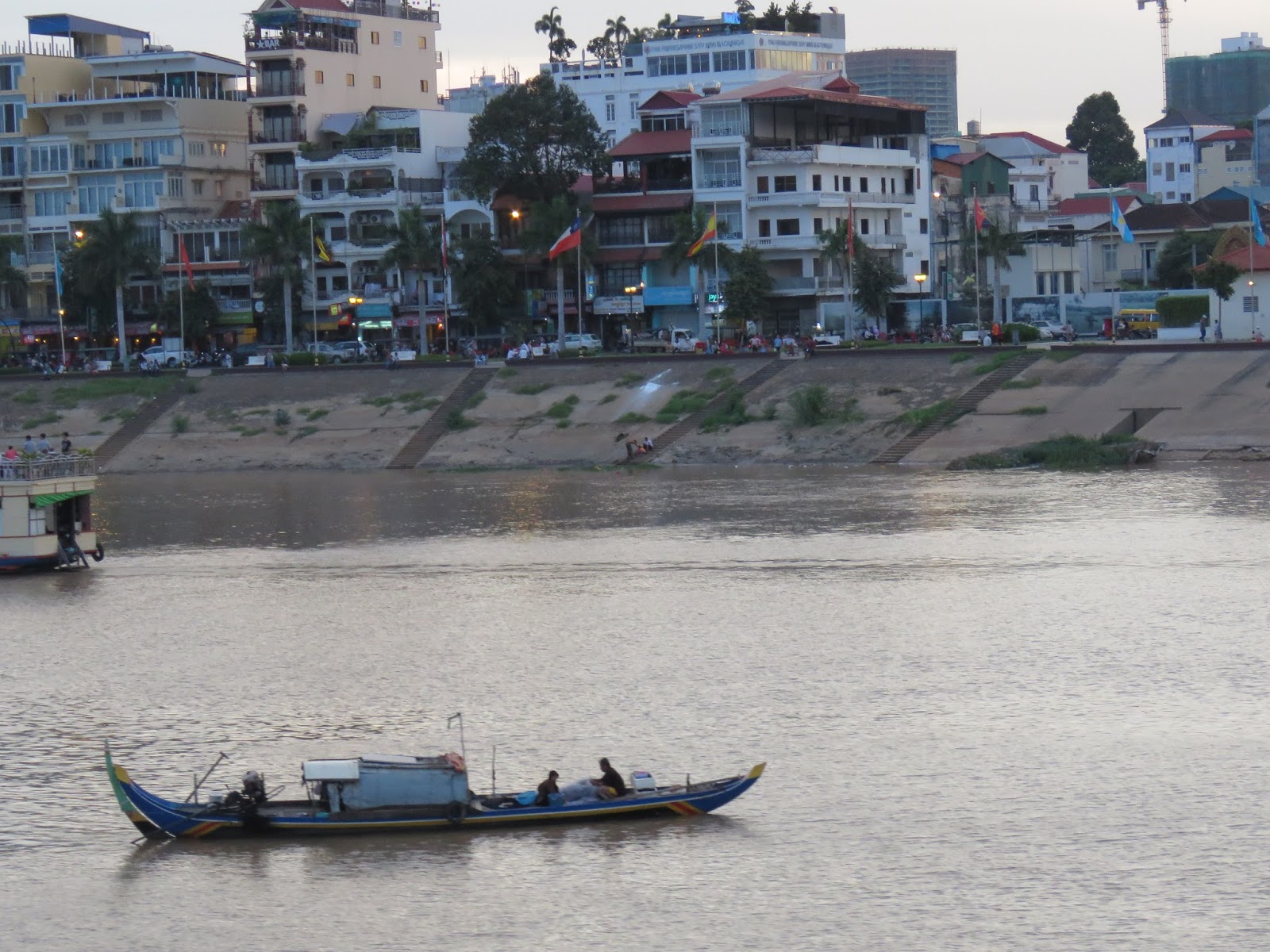
View as the day turned to dusk on the river as we lounged on the Sundown Deck on the Viking Mekong River boat.
At 4:00 pm today we arrived by bus in Saigon, the largest city in Vietnam. It was a full day on the bus, onto an amazing tour we’ll share tomorrow and dining at an exquisite Vietnamese restaurant in the countryside. More on all of this soon. 
Lighted front of the Royal Palace.

We were disappointed to be unable to post yesterday due to an entire lack of Wi-Fi signal as the boat made its way through more remote areas as we’d left Phnom Pehn to head toward Saigon where we’re spending two nights in our third Sofitel Hotel during this lengthy and vast experience.

With over 1000 photos in our “photos to post” file on my desktop, we’re in a quandary on how we’ll possibly share the huge batch. Even making a determination which will be most appealing to our worldwide audience based on comments and email we’ve received in email, on our site and in Facebook, in itself is a daunting task.

Tourist boat.
In two days, we’ll arrive in Phuket, Thailand for a six week stay. In discussing our options, we’ve decided to continue posting stories and photos for Vietnam well into the time were staying in Phuket in the following manner:
  • The first half of each day’s post will include photos and information about Phuket, Thailand.
  • The second half of each day’s post will be a section with more Vietnam  photos with captions and our comments/observations as the photos were taken.
  • The “one year ago photo” will continue as always at the bottom of each post.
  • Feel free to post personal or anonymous comments at the end of any post.
Many types of boats, carrying tourists tours along the Mekong River.

With this plan, we’ll happily share these photos while keeping our readers p-to-date on our current location. At this point, we aren’t certain how long it will take to catch up only anticipating a few weeks.

At sundown, the views were beautiful.
This is not unlike how we included the many photos from our first safari in the Masai Mara in Kenya October, 2013.  If you’d like to see those continuing photos, please select the “archives” beginning on October 5, 2013, continuing well into the month, all of which are located on the right the right side of the page.

As for Vietnam, we continue to be enraptured by the magnificence of this majestic country, its people and its never ending charm. How the Vietnamese people have embraced tourists throughout the world and the USA has been a joy to behold.

Sampans are small, low-to-the-water-boats we used to go ashore on tours.

They’ve welcomed us with open arms, generosity of spirit and gracefully sharing their personal stories and family history in their ever changing, growing culture and society.  They are proud of that they’ve accomplished over these past four decades while never losing sight of their ancestors and spiritual beliefs.

Ninety percent of the Vietnamese people practice the Buddhist religion and its gentle ways, evident in everyone we’ve met to date. Their strong attachment to family members from generations past plays a significant role in their daily lives.

Phnom Penh, the capital city is a diverse area of old and new.

We have many more photos and experiences to share. Yesterday, morning we participated in number of tours after we traveled by sanpan (boat) to the shore from our anchored position in the center of the Mekong River to the along the river, dependent upon its resources for a living.

It felt good to get off the ship on a tour after spending a few days unable to walk the long distances required for venues. After the difficult rickshaw rid a few days ago  I had to hunker  down and nurse my wounds after the over-bumpy ride set me back a few weeks in my recovery.

More modern building have been added to the shoreline.

After the extra day’s time spent taking it easy, I’m feeling a little better on a renewed path toward putting an end to this constant painful condition. I can’t wait until this difficulty is over and I’ve returned to my usual energetic, pain free self.

Last night was the last night onboard the Viking Mekong River Cruise with a special evening and party planned for the event.  We sat with some of our favorites at dinner and had a terrific  time together.

It was hard to determine what type of boat this was.

As we made the all day bus trip to Saigon, our group of 54 passengers happily maintained
our high degree of entertaining interaction while sharing the last segments of the cruise/tour together. 


On Friday, July 22nd we’ll be on our way to Thailand.  Please stay with us. We so look forward to posting many more aspects of this memorable occasion in Southeast Asia.

Happy day to all!
                  
Photo from one year ago today, July 20, 2015:

Tom’s first photo of sunrise over the Coral Sea in Australia at 6 am this morning. For more photos please click here.

The Mekong River crossing from Cambodia back into Vietnam…Wheelhouse tour…More Phnom Penh photos…

Tom, me, Captain Han and new friend Bob in the wheelhouse.

The remainder of the cruise will take place in Vietnam. Yesterday, as I began to write this post, we were crossing into Vietnam with immigration officers were boarding our ship to stamp our passports.  First the Cambodian immigration officer boarded to stamp our passports and exit visas.

The sign above the wheelhouse entrance. We’d signed up for the wheelhouse tour.

Shortly thereafter the Vietnamese immigration officer boarded to stamp our passports for the second of the multiple entry visas, we obtained in Singapore at the embassy two weeks ago. 

Our ship captain, Bui Huu Han.

There’s nothing we had to do other than relax and enjoy the view while the ship was anchored in the Mekong River. Yesterday, was a full day “at sea” so to speak, without any excursions.

Today we decided to avoid going on the day’s excursions based on my condition and the strenuous nature of the tours. I was hoping to attend, but after seeing the boats, called sampan, we both agreed boarding would be difficult as well as riding on the tilted backs of the low to the floor seats.  No good for me at this point.

Ship’s control panel on the bridge.

There’s no doubt the less I do, the better I feel. As much as this concept of “taking it easy” drives me nuts, I’ve seen over and over these past six weeks that rest is my friend.

We’re still having a great time, loving the interaction with the other passengers and staff. Getting to know 54 passengers and their names is a daunting task as we’ve thoroughly enjoyed every moment of the process. 

Buddhist shrine in the wheelhouse.

Obviously, we knew there would be favorites and we’ve had no trouble narrowing it down to a handful of guests. As for the remainder, there was not one person on board, that we haven’t enjoyed one way or another.

Border monument between Cambodia and Vietnam as we crossed back into Vietnam yesterday afternoon.

Mostly, the ship’s manifest consists of Americans and British passengers with everyone speaking English. Then there’s the very special staff, from Kong and Lee, to our two guides, Enrico, the cruise director and manager, to the wait staff in the dining room to the support staff in boarding and disembarking. They all clearly, exhibit joy in working for this company.

Part of the Silver Temple.

When asked how they feel about working for Viking Cruises, their eyes light up. They exhibit pride and appreciation to be working for this company which we don’t always see on some of the larger cruise ships.

The city had numerous shrines and temples mixed among modern buildings.

Sure, the cabins are small but over these past five nights, we’ve become used to the tiny space easily able to maneuver around the cabin to accomplish everything we’ve needed to do during the short periods we stay in the cabin.

Traffic was busy in Phnom Penh, the capital of Cambodia, but no as busy as in Vietnam.

Yesterday afternoon, we attended a tour of the ship’s wheelhouse which on such a small ship is compact and efficient. After the tour we settled into the cool cabin for a short rest and to prepare for yet another fine dinner and evening with all of our new friends and hopefully soon, to be many new readers. 

Bridge over a park area.  Note the cobra statues on either end of the bridge.

We’re so grateful for the warm reception we’ve received from other passengers when inquiring about our lives. We freely share our story with them as we relish every moment in hearing about their adventures as well.

Stairway to a temple in Wat, Phnom Penh.

Have a beautiful day!

Photo from one year ago today, July 18, 2015:
 

 Location or Ship  Days  Address or Ship  Dates
 Sydney Hotel   1   9/7/2015 – 9/8/2015
 Fiji Rental  88    9/8/2015 – 12/6/2015 
 Fiji Rental #2  29    12/6/2015 – 1/4/2016 
 Sydney Hotel  1    1/4/2016 – 1/5/2016 
 Sydney to Auckland – Cruise  14  Celebrity Solstice   1/5/2016 – 1/19/2016 
 New Zealand Farm  87    1/19/2016 – 4/15/2016 
 Sydney Hotel  1    4/15/2016 – 4/16/2016 
 Sydney to Singapore – Cruise  14  RC Voyager of Seas   4/16/2016 – 4/30/2016 
 Bali House  59    4/30/2016 – 6/28/2016 
 Hanoi Hotel – to be booked  10    6/28/2016 – 7/8/2016 
 Hanoi to Ho Chi Min City – Cruise  15  Viking Mekong    7/8/2016 – 7/22/2016 
 Phuket House  41    7/22/2016 – 9/1/2016 
 Bali House  59    9/1/2016 – 10/30/2016 
 Sydney Hotel  1    10/30/2016 – 10/31/2016 
 Sydney to Perth – Cruise  16  RC Radiance of the Seas   10/31/2016 – 11/16/2016 
 Perth to Sydney – Cruise  17  RC Radiance of the Seas   11/16/2016 – 12/3/2016 
 GAP 12/3/2016 – 3/1/2017  88    12/3/2016 – 3/1/2017 
 Sydney to Sydney – Cruise  12  Celebrity Solstice   3/1/2017 – 3/13/2017 
 GAP 3/13/2017 – 4/22/1017  40    3/13/2017 – 4/22/2017 
 Sydney to Seattle – Cruise  24  RC Explorer of the Seas   4/22/2017 – 5/15/2017 
Total number of days 617

One year ago today, we posted our itinerary which has since changed with more bookings. For photos from this past date, please click here.

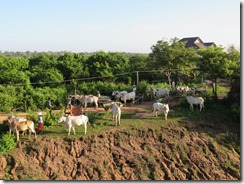
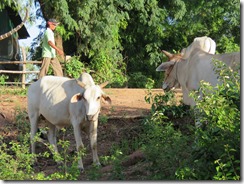
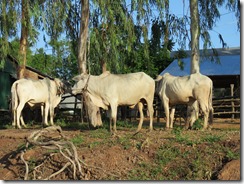
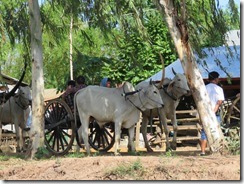
The ox cart rides for passengers on the Viking Mekong River cruise….

IMG_6922
The carts and oxen were ready to load.

Bottom line, we’ve had difficulty uploading many photos based on the poor WiFi signal we have at this point on the journey on the Mekong River. We aren’t certain as to when this will improve, but in the interim we’re doing the best we can.

Using Enrico’s laptop while sitting at his desk, I managed to upload a few photos for the post dated July 16, 2016. Please check that post to see the photos.

IMG_6912
The oxen hung around ready to get to work.

If this continues to be the scenario over the next several days, once we arrive at the hotel in Saigon (Ho Chi Minh City) on Wednesday where we’ll stay for two nights, we’ll attempt to get caught up with the photos we have waiting to be posted. We apologize to our readers. 

IMG_6913
The workers started preparing the carts.

Many of you have written expressing your interest in these photos, only to find we have hundreds backed up we’re unable to upload. Time will alleviate this situation. Even, if we’re unable to get fully up to date, we can easily continue posting the Vietnam/Cambodia photos once we’re settled in Phuket.

IMG_6915
Early morning photo of the oxen awaiting their cart hookup.

We’re really enjoying the cruise otherwise, having met so many interesting and well traveled passenger, many who’ve expressed an interest in this peculiar life we live while others are shocked we’ve been willing and able to travel the world as we do. 

IMG_6917
As our regular readers are aware, we love seeing any type of creature.

Of course, we’re equally fascinated by their lives, whether they travel a lot or not. We often wonder what our retirement would have been like had we stayed in one place, only traveling on occasion, as is the case for most retirees.

IMG_6918
The oxen are gentle animals.

The cruise itself continues to provide the utmost in customer service, entertainment and food, all of which are most important to cruise passengers. Feed me well, fulfill my expectations of great service and offer me an array of options to keep me entertained and a cruise becomes a highly worthwhile means of taking that holiday/vacation most long to experience.

Viking Cruises leaves no stone un-turned, in ensuring each passenger’s experience is as impeccable and meaningful as possible. If we ask for anything, they’ll do everything in their power to accommodate the request. 

Then again, we don’t ask for much other than ice for our cold tea, modifications for my meals and if possible a working WiFi connection which, if isn’t possible, we don’t complain or ask for a service they cannot provide based on location.

As for the meal modifications, last night we were served a traditional family style Cambodia meal.  Had  I been able I’d have tried some of each beautifully presented dishes. After speaking with the chef there wasn’t a single item on the menu that would be suitable for my way of eating. 

To make it easy for the kitchen staff when so busy making the varied dishes for the special meal for the guests, I suggested I have a dish they presented at lunch, which sent me over the moon, grilled eggplant and minced pork, seasoned to perfection. It was delicious. 

IMG_6933
The oxen seemed gentle and used to being around humans.

Unfortunately, they had little left to reheat for me after the lunch so they make me a quick tenderloin stir fry with veggies along with the small portion of the eggplant dish, and a Caesar salad minus the croutons. It was a perfect meal I fully appreciated, expressing considerable praise for their efforts to the efforts since the cruise began last Wednesday, July 13th. 

Its hard to imagine we’ve only been on this cruise for four days when we had so much activity, even with my lingering spinal condition impeding many activities. We’ve taken hundreds of photos, only a small portion of which we’ve been able to post.

Please stay tuned as we continue to make every effort to stay as current as possible with our daily posts and photos.

Have a lovely day and we’ll be back soon!

Photo from one year ago today, July 17, 2015:

Australian M113A1 Fire Support Vehicle (Saladin Turret). Tom especially enjoyed the visit to Australia’s Armour Artillery Museum near Cairns.  For more photos, please click here.

WiFi issues in Phnom Penh…Using the cruise director’s computer to upload a short post…A painful story to tell…

Tom, situated in his rickshaw as we meandered down the busy street in Phnom Penh.
We expected wifi issues with this Viking Mekong River cruise. However, Cruise Director Enrico Schiappapietra has gone overboard (no pun intended) to assist us in getting a post, however small, uploaded today while we are docked in the capital city of Phnom Penh, Cambodia.
Still nursing my wounded spine, we continue to curtail our activities to a level that I can manage without further injury. This morning at 8:30 am we’d committed to trying the tuk-tuk for a tour of the city.  
There was lots of traffic on the street we wove our way through motorbikes, cars and trucks.

As it turned out two one-person rickshaws were awaiting us as opposed to a motorized tuk-tuk.  Simply put a rickshaw is a  bicycle with a riding seat in the front of the driver.

When we spotted our mode of transportation, I hesitated, especially when noticing the back portion of the passenger seat was reclined as shown in today’s photo. The incline placed me in a position disastrous for my current condition.

Realizing our ride through the busy city of Phnom Penh was only scheduled for only an hour, I figured I could tough it out. After all, in these past six weeks, I’ve endured some difficult sitting and walking that surely exacerbated my condition.

The entrance to the Royal Palace in Phnom Penh.

With all the other passengers, including Tom, situated in their one-person rickshaws, I didn’t want to make a  fuss and decided to forge ahead. It was odd for Tom and I not to be side by side. He’s my spotter with an innate skill of spotting great photo ops. On my own, I can hardly match his fine skills.

As a result, today’s photos may not be as good as others, these past days when he wasn’t with me and, I was wriggling around in the seat in a dire attempt to get comfortable. After the first 10 minutes, I yelled out to Tom’s rickshaw, “We have to go back to the ship. This is torture.”

Our regular readers know I’m not a  wimp and will tough it out in most situations. I could have withstood the discomfort if I wasn’t concerned I was doing damage to an already precarious situation.

Views along the streets of Phnom Penh.
Then, the “fun” began when neither of our rickshaw drivers understood, we wanted to “return to the Mekong River.” There were no hand signals or manner of speech that could communicate to these two kindly gentlemen who so much wanted to please us that we needed to return to the boat on the Mekong. 


They did understand that we wanted to go to an ATM, something surely many tourists request. On a side, not much to our surprise ATMs in Cambodia only dispense US currency. Everywhere in Cambodia purchases can be made using US dollars.


We needed cash for tips we’d proffer at the end of the cruise and today was our last option to get US currency for quite some time. We carried only small amounts of US currency with us over these past 45 months, using the currency available in each country.

We stopped at a little market in the center of town when I spotted an ATM inside, also hoping to purchase toothpaste which we’re almost out of at this point.  We don’t pack the runny homemade toothpaste when we’re traveling since it could easily spill in the luggage.

It felt great to get out of the rickshaw, again trying to find an English speaking person to explain to the two rickshaw drivers that we wanted to return to the ship as soon as possible. Our efforts were to no avail. Not a single person understood our message.

Finally, the hour began to wind down and we were hopeful they’d head back to the pier. Finally, they wanted to give us a “bang for the buck” and they took off in yet another direction.

At that point, I resigned myself that we could possibly be riding around Phnom Penh for several more hours while I squirmed in an effort to find a comfortable position.

An hour and 40 minutes later, the two rickshaw drivers peddled toward the pier to our awaiting ship. I couldn’t have been more thrilled to see the boat nor could I maneuver out of the cumbersome vehicle more quickly.

As we made our way down the steep steps to the gangplank we sighed with relief that the day’s outing was over. Had we taken a tuk-tuk we’d have had no problem.

To distract myself, I took plenty of photos, some of which we’re sharing here today as soon as we get a better signal. With the poor WiFi signal, I’m currently using Enrico’s laptop which is wired to the only working Internet signal on the ship. We didn’t ask for this, he offered, insisting we take advantage of his offer. How’d we become privy to such outrageous customer service we’ve experienced on this cruise.

Last night, when we went to our cabin after the evening ended, we noticed a bottle of champagne in a bucket of ice with two flutes and a thoughtful note from Enrico thanking us for sharing our worldwide travel story with him and posting all the genuine and positive comments we’ve made about Viking Cruises over these past many days.

Even with my limitations and a continuing degree of discomfort during the last week of this cruise/tour, we couldn’t be more pleased with Viking’s Magnificent Mekong river cruise and the attention and care provided by this extraordinary company. Now, we see first hand why Viking is rated with five stars over and over again.

If you don’t see us here by 3 pm tomorrow, it is due to the poor signal aboard the ship, as we’ve discovered is no fault of the cruise line and is due to the lack of a good signal at various points along the river. Keep an eye out. We’ll be back as soon as we can get back online.

Happy day to all!

Photo from one year ago, July 16, 2015:

Tom in front of a restored tank outside the Australian Armour and Artillery in Cairnes, Australia. For more photos, please click here.