Unusual sighting on a drive…Who knew?…New photos!

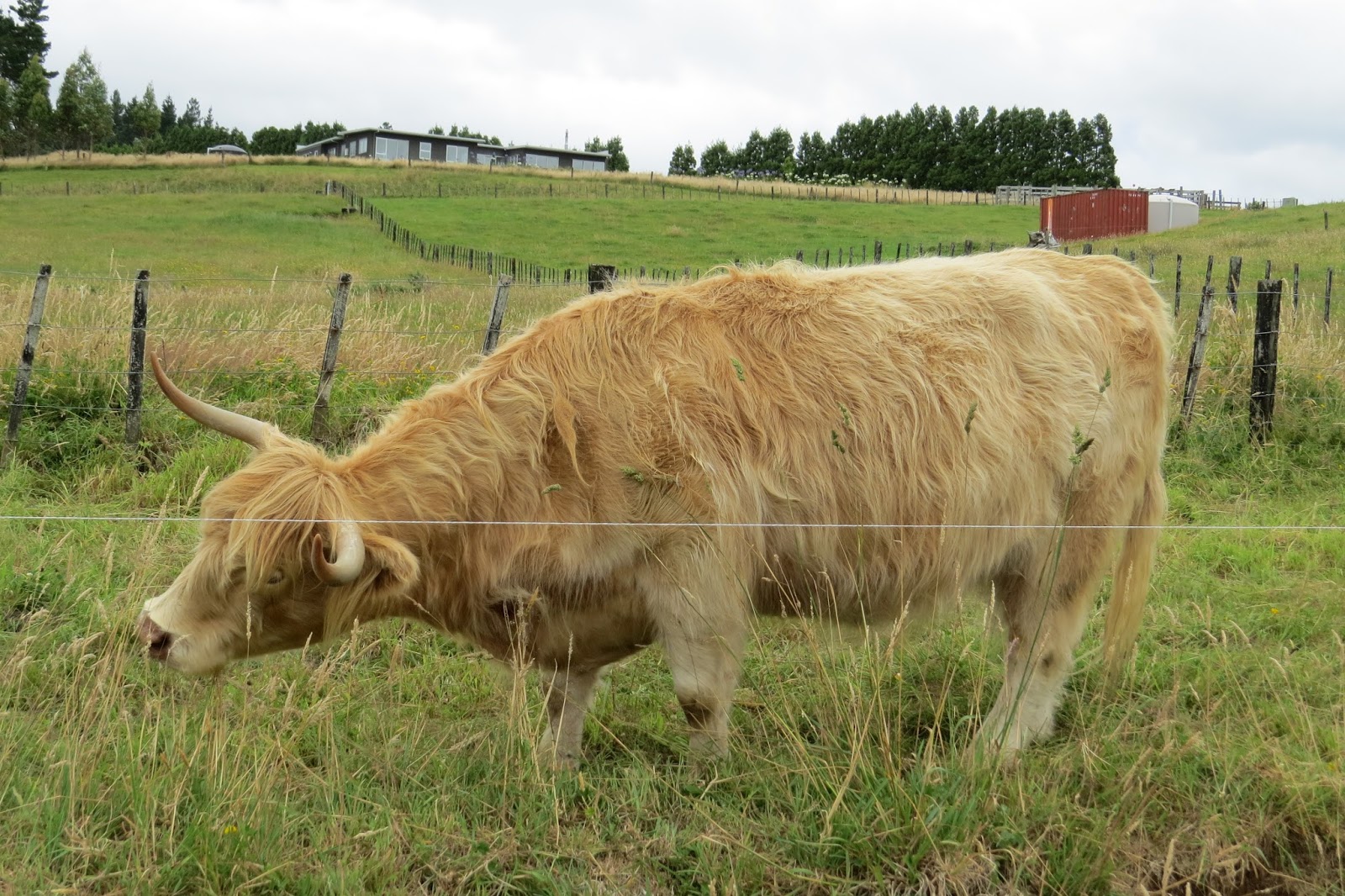
Later, upon arriving home we laughed over this photo that appears to be what??? A six-legged cow? No. The photo is a fluke which one cow standing behind the other.  We didn’t stay long for better photos when they began showing a few signs of aggression.

After days of bad weather, yesterday as the winds diminished we took off for a drive anxious to get out. The sun was shining and we couldn’t have been more thrilled to be on our way. 

It was Saturday and the roads were busy with outdoor activities including a motocross event and a bike race requiring we make a few detours to get around the road that runs along the ocean.

We were able to take many photos often getting out of the car when possible to walk down country roads for better shots when parking wasn’t readily available at the most scenic locations.

The air was cool, but we’d dressed accordingly. This area is an amazing wealth of unique sights to see, unlike many countries we’ve visited in the past inspiring us to take advantage of sunny days.

This sign is posted at the entrance to the Belted Galloway farm.

Many sightings, unique to New Zealand, only add to the excitement as we wander onto road after road, making an effort to avoid repeats.  I almost hold my breath as we drive anticipating something special at the next turn. 

It’s no wonder we haven’t wanted to drive far away, incurring hotel bills, costs of meals, and expensive fuel when everything that appeals to us is within a two-hour drive.

This morning, prior to preparing today’s post we headed to town again to purchase eggs at the Farmers Market Taranaki, a trip we make every other Sunday morning. Open only in the mornings and having taken my time getting up this morning after a fitful night, we decided to head out as soon as we were up, showered, and dressed, even waiting for our usual morning coffee.

The egg farmer from whom we purchase usually purchase six dozen free-range, organic eggs, asked if we’ve traveled much throughout the country. We explained how much we’ve loved this general area and he laughed saying, “Many locals never visit all that you two have in their entire lifetime in this area!”

The line of demarcation of the white and black hide is fairly defined in these unusual cattle.

We certainly understand this often typical scenario. Who goes sightseeing in their own town unless they’re taking out-of-town visitors to see a specific venue or visiting a few popular sites with their children and/or grandchildren?

By the time we leave the Taranaki Region, we feel we’ll know it quite well as opposed to knowing a little of “this and that” from frequent travel outside the area. 

Perhaps, this is a rationalization for our lack of interest in making long road trips at this time. As we explained to the egg rancher, we do what we love to do which ultimately brings us the most joy and meaning and, hopefully, provides a modicum of entertainment for our worldwide readers.

Taking dozens of photos which we’ll share over the next many days, we were able to see a “story” in many of our camera subjects, especially the photos we’re sharing today, that of the unique (to us anyway) Belted Galloway Cattle. 

We’d never seen this breed of cattle in all of our world travels where over and over we’ve seen a wide variety of the more common breeds.

What a sight to see…these belted cattle!

This website is a good resource for information about the Belted Galloway who originated in Scotland in the 1700s.  Here’s a little about these special looking cattle from the online source:

“Belted Galloway cattle originated from western Scotland, a region whose weather is strikingly similar to Ireland’s own damp climate! This makes Belted Galloways perfectly suitable for the wet, cold winters and the boggy soft terrain of Irish farms. Their long, curly outer coat is ideal for rainy weather, as its coarseness deflects moisture from the animal’s skin. They also have a soft undercoat to keep them warm in colder temperatures. The head of the Belted Galloway has long hair around its ears, preventing frostbite in a case of an extreme Irish freeze.”

These unique animals are often referred to as the “Oreo” cattle. We “borrowed” the below photo from the website to illustrate that point which once seen clearly makes sense of such a nickname:

Yep, kind of similar to an “Oreo.”  Tom misses those for sure but looking at these cows didn’t make his mouth water as much as eyeballing a package of Oreos at the grocery store.

Standing on the side of the road, having parked on the narrow weedy road’s edge we proceeded with caution. (Few local roads in New Zealand have a “shoulder” for any necessary or desired stopping).

Wading through the tall grass and weeds we were able to get close enough for today’s photos. This breed of cattle may be aggressive as noted in these comments from the website:

“The dams also have strong mothering instincts, which is a plus for farmers who worry about the safety of vulnerable calves. Any nearby predators can be warned off by protective Belted Galloway dams; however, as with every breed, this kind of aggression should be treated with caution, and extra care should be taken around a volatile dam and her offspring. In the case of bulls, visitors should always be wary of the danger! Have a look at our article on Bull Safety to remind yourself of the right practices.”

It’s the females that are more aggressive in this breed as may be the case with this mom who may have a calf nearby.

As we stood and watched the cattle we could sense a bit of possible aggression as we noticed the double electric fence. As we’ve seen most recently cattle have certain movements such as kicking up a leg at a time and snorting indicating agitation.

Preferring not to upset their daily routine, we took these few photos and were happily on our way to see more treasures in this special area. We’ll be back with lots more over the next several days.

May you have a day of new discoveries!

Photo from one year ago today, March 13, 2015:

In Kauai, Tom spotted these two chickens. “Must have been a double yolker,” Tom clucked as I laughed. Kauai has one of the largest feral chicken populations in the world. For more photos, please click here.

Part 1…Beautiful and hilarious faces…Take a peek for a warmed heart and a hearty laugh…Part 2 in a few weeks…

Check out that smile with grass!

Perhaps it’s just us. Maybe we’re somewhat daft for loving animals as we do finding joy, humor, knowledge, and a passion for their health and well-being as we tour the world.

They often appear to be smiling.  Perhaps, these gentle animals are as happy as they appear.

Whether it’s a bird, an insect, a lion, or one of the endearing alpacas on this beautiful farm in New Zealand, we stop to observe, to analyze, to study online to learn as much as we can.

Many moons ago we wrote about the therapeutic benefits for animal lovers when spending time in their presence. Whether it’s one’s own pet or an animal in the wild, many find a surge of feel-good hormones rushing through their bodies.

The noses and lips of the cria are pink until they mature. This cria is only 24 hours old, hugging close to mom.

Yesterday, as we walked the grounds of the farm, I commented to Tom how spending time with the alpacas makes me feel as if I’ve been infused with an added dose of happiness, unable to wipe the smile off my face.

The bottom teeth are of varying sizes and shapes on each of the alpacas, not unlike in humans.

Looking at Tom, I saw that same smile and sense of peace on his face as we got up close to the alpacas, many of whom have come to know us as we approach the fences at the various paddocks.

Again, we stopped to see the pink cockatoos capture this funny photo from the moment they saw us. Surely, visiting them will be a frequent stopover our remaining time on the farm. 

“Look,” she says, “That weird pair of humans are back, staring at us!”  Even the faces of birds are expressive.

Against the narrow diamond-shaped galvanized chain-link which houses the cockatoos, I tightly positioned the lens of the camera to ensure I got a good shot without any major amounts of chain link appearing in the photo.

Using photo editing software I was able to “erase” any remaining vestiges of the chain links, allowing as clear a view as possible of these exquisite cockatoos.

It’s not unusual to see alpacas with grass sticking out of their mouths.

As I sit here now, sipping Tom’s perfectly made French press coffee, I need only lift my head to peer outside on this chilly morning to see a number of alpacas munching on the dew-covered grass in the side paddock to which they were moved a few days ago. 

Posing for the camera!

They’re moved each week to one of the many paddocks to allow the grass to refresh and regrow. Our favorite paddock is the one closest to the house, essentially in our immediate yard, where we can reach out and touch them from the deck. 

This is Gypsy Rose who loves to look in the kitchen window while I cook.This photo was taken through the glass.

Within a few weeks, they’ll be back close at hand which may be for the last time while we’re still here, as our time winds down and we’ll soon have to go. Over this past almost two months we’ve come to know and love them not unlike we’ve adored other wildlife in our travels; warthogs, kudus, zebras, giraffes, and more in Marloth Park and “Birdie”, albatross and chicks and whales in Hawaii.

There are only a few dark fleece alpacas that appear larger and very expressive.

If we weren’t determined to see many parts of the world, I could easily spend all of our travel time living in wildlife areas or on farms with animals (after this amazing farm experience). 

We love visiting these two located in a paddock further down the road, although still on the farm.  They often appear side by side although they are of the same gender.  Adult females (dams) and males (machos) are kept apart unless mating.

Its not beyond my realm to conceive of spending most of our time in Africa and other wildlife-rich locations although doing so would be less ideal for Tom. Instead, we both relish in one another’s preferences making our travels meaningful to both of us. 

No, I haven’t been disappointed living in countries where a passing bird or an insect may be the only creature within the range of the camera. We always seem to find points of interest and other pleasing aspects of every country we’ve visited.

This female appears to have a mouthful of teeth.

Today, we share Part 1 of some of our favorite alpaca photos…faces…adorable, heartwarming, and funny, if not hilarious.  We’ll share Part 2 on another date over these next remaining weeks. 

Most of these faces shown today were taken with our old camera. I’m anxious to capture more with the new more advanced camera, especially now as their fleece has begun growing back after their annual springtime shearing, making them even more adorable.

Ears tucked back for the photoshoot.

Smile with us, laugh with us, and hopefully, you too will feel a little rush of endorphins and feel-good hormones from the sheer joy of such simple beauty in the faces of these somewhat peculiar-looking creatures.

Today, we’re off to the winery.  Back tomorrow with new photos!

Photo from one year ago today, March 9, 2015:

It’s hard to believe it was a year ago we visited new friends Bev and Sam in Kauai who’d invited us to movie night at their home. Bev and Sam are the couples from whom we’ll be renting the fabulous villa in Costa Rica in 2017. This photo is of a small portion of the grounds of their beautiful home in Kauai.  Bev explained that these red bamboo stalks on the right as Lipstick  Bamboo.  We continued on the pavers set in dense grass for an interesting tour of their gorgeous, former botanical gardens home.  For more photos, please click here.

Each day bring more wonders, more laughter and more surprises…

Trish and Neil recently acquired these two pink cockatoos, a mating pair, from an elderly couple whose health is failing. This pair is living in a chained link cage on the grounds with lots of space and plenty of food. To get this photo, I placed the new camera, touching the closely woven chain link cage. Our old camera would never have been able to capture this photo through the wire.  More photos of these gorgeous birds will follow on sunnier days.

In an attempt not to think too far ahead, I’ve avoided checking how much time until we leave New Zealand.  Why do we ever count the days? Often, we have necessary steps in the process of moving to a new location that require advance planning.

Also, when we’re in a location which we won’t be disappointed to leave, counting down the days seems to make the transition and remaining time easier. It’s never that we want LIFE itself to move along more quickly. 

We treasure each day in its content and length, both arising early and staying up until sleepiness overtakes us; me, always before Tom. We never lie down or nap during the days, never wanting to miss a moment.

The alpacas sleep in this tree lined area of the paddock at night.  We took this photo very early this morning. As the day warms, they move close to our house, where we can observe them all day.

Living in this glorious location, the alpaca farm in the Taranaki Region of New Zealand, leaves me a feeling a little sad over the prospect of its eventual end.  In an attempt to stay in touch with reality, today for the first time since our arrival, I checked this “date to date” calculator to see how much time we actually have left here, although we both had a good idea in our minds.

When the calculator indicated only 41 days until we depart on April 15th, my heart sank. Only 41 days left on this farm. It will be hard to leave. Plus, from what little we’ve seen of New Zealand, this amazing country has wrapped its arms around us making us feeling welcomed and included.

Sorry, readers. We haven’t traveled much to share the endless scenery and tourist attractions. In essence, we’re chasing joy however it may come our way. We’ve found it right here. And, if staying close to New Plymouth has given us joy, we don’t question it for a moment.

From time to time a family member mentions, perhaps even criticizes that we don’t travel about enough. Maybe that’s what “they” would do in our circumstances.  

Yesterday, we walked down the road to visit the cows at the adjacent farm. This mating pair were “necking.”

With our goals of “living” throughout the world, we find ourselves living exactly as we’d like, as the locals, in their environment and in their world of simple pleasures surrounded by the treasures they appreciate each and every day.

The difference for us is that eventually we have to leave behind that which we’ve come to embrace, the beauty of this simple life with few responsibilities other than life’s daily maintenance of a healthy existence and a warm and loving environment with one another, with our surroundings and with nature. 

It’s a simple prescription for happiness by our standards, one we don’t question, one we find works for us. Even Trish and Neil who have the daily responsibility of managing this 35 acre farm and over 100 alpacas who require daily tasks and attention in order to maintain their good health and well being, are fulfilled and happy in their lives.

Another cria born in the “pregnant moms” paddock. We missed the birth of this one! The mom and cria were located in the far rear of this paddock. With out old camera, I wouldn’t have been able to get this distant shot.

With outside jobs and coming home nightly to many tasks, they never complain and seem to relish in every aspect of this monumental responsibility. They easily dismiss the amount of work to choose happiness instead, to embrace the quality of life they’ve chosen with grace and dignity.

Many throughout the world talk of feeling “overwhelmed” a word we frequently hear as common in the harried lives of those in the US and other countries. In our old lives while we were working, at times, we felt as if it was “too much,” too much stuff, too much responsibility, too much obligation.

We sent this photo to Trish indicating something they’d never seen, two cria nursing from one mom simultaneously, which may determine why the smaller of the two isn’t thriving as it should. Today, she thanked us for keeping an eye out to bring such an anomaly to their attention which may result in separating the mom and baby from the others.

Now, we are free of those feelings, never feeling overwhelmed. Well, maybe once…when we first arrived and the newly born cria, Mont Blanc, had escaped the confines of the fence and couldn’t get back to his mother while both cried loudly. We didn’t know what to do. Now, we’d pick him up and place him on the other side with his mother. 

Life is good. No complaints here.

Photo from one year ago today, March 5, 2015:

Our old camera took good photos in Kauai one year ago.  We think it was the high humidity after four months in Fiji that finally caused the issue. For more photos, please click here.

Another extraordinary day on the farm…Graphic birthing video and photos…

This is the first full birthing video we’ve taken since our arrival at the alpaca farm over six weeks ago.

I get it. Some of our readers may be tired of hearing about the alpacas. For you, we apologize for our one-track minds while living on this farm. Were any animal lovers living here, it would be easy to see how enthralled we have become with these amazing animals.

We both giggled over our “safari luck” to be able to see the birth when we happened to be walking past.

While living in  South Africa, we were equally wrapped up in the animals on a daily basis as they wandered about our vacation rental, in the same manner, they do here. 

The only difference here is the lack of variety in breeds of animals when instead we have the immense variety of the differences in personalities of the alpacas the more and more we come to know them. Even the rapidly growing cria have developed their own demeanor setting them apart from the others.

Elliouse walked about the paddock as the birth progressed, never far from the other mom or our easy viewing.
Yesterday morning, Tom and I walked toward Trish and Neil’s home to check out birds they invited us to see at any time. Although they weren’t home we were sensitive in respecting their privacy by avoiding any photos of their house itself instead, taking photos of some of the interesting surroundings which we’ll soon post.

We never saw the birds they’d described but will return again soon to see what we may find and when we do, we’ll certainly post those photos as well.

More ears crowning.

On the way toward their home, I mentioned to Tom that one of the four pregnant moms was moaning all of which have been kept in the separate paddock along the road awaiting the birth of their cria.  

With his less-than-ideal hearing from years of working on the railroad, at times he’s unable to hear certain sounds.  On the walk back from their home, I noticed the moaning has escalated a little, not outrageously loud but slightly more detectible. At that point, Tom was able to hear her as well.

For a moment, Elliouse sat down to rest while the other moms watched with their heads up as they waited for the birth.

We stopped, camera in hand, and with our limited experience we could tell a small portion of the cria’s face was “crowning.” The birth of the cria could be imminent. As small as she was compared to the others, we wondered if she may be a young mom having her first birth. Would her small stature present as an issue? 

With Trish and Neil at work, with him as a physician (not a vet) and both highly experienced in the delivery of the cria, if we needed to reach them we could do so quickly when they both work in town and could get back to the farm in 20 minutes, if necessary.

Elouise almost looks as if she is smiling as she sees the cria’s birth was going as nature intended with the front legs showing. We were also relieved.

Seeing the face crowning through the membranes gave us comfort in hoping we’d soon see the front legs.  Trish and Neil explained that if face and front legs come first, most likely the remainder of the birth will go well, providing there were no other unforeseen complications. 

Having had this experience when Miss Jessica was born one week before my birthday, we’d joyfully watched over her birth when Trish and Neil were out of the town.  With both of them in close proximity and, based on our past experience, we weren’t worried, instead, feeling excited. 

Our goal during yesterday’s occasion was to make a video of the miraculous birth in its entirety with a number of photos accompanying the experience, should anything go wrong with the video.

The cria gently landed on the ground listless only for a few minutes while we watched in anticipation.

With our relatively modest lightweight camera which soon must be replaced after substantial humidity has caused issues over these past 18 months, taking videos is tricky. Regardless, we forged ahead, managing to get the video we hoped at the exact moments of the birth. 

Holding up the camera up for so long was challenging but my motivation didn’t falter. Pain or not, I held it up in place as we waited, attempting to anticipate the moment to begin the video when our intention was to keep it short with uploading issues on metered wifi. 

Few readers care to watch a 10-minute video when we’ve determined keeping a video under two minutes is ideal which we managed in this case albeit a bit shakily when I’d been holding up the camera for quite some time. There was no time to run back to our house for the tripod.

This is at 10 minutes after the birth, as the cria wiggles on the grass attempting to stand.

It was interesting watching the three other moms as they stood to watch over her during the birth of her cria.  There was no doubt in our minds they were well aware of what was transpiring as they spent less time grazing and more time on the lookout and engaged in the birth. 

Once the baby was born we started the countdown on the 20 minutes requirement for the cria to stand on its own. If the cria struggled to stand after this time frame or seemed listless, we may have had to help which we were prepared to do if necessary.

This cria hardly needed human intervention when he (we later discovered it was a male), squirmed about almost constantly during that 20 minute period raising his head in less than 8 minutes after his birth.

Smaller mom, Eliouse, didn’t seem to want aunties intruding with the cria, hissing at this pregnant mom a few times.

In precisely 24 minutes from the birth, the cria was on his feet. Wobbly on spindly legs we laughed over and over as he attempted to stand, finally doing so with little certainty but considerable enthusiasm.

We’d be standing at the paddock for over an hour. With the cria and mom both looking healthy and happy we returned home anxious to email Trish, check our photos, and upload the video to YouTube. 

Finally, 24 minutes after birth the cria stands on wobbly legs while mom watches. It’s amazing how the moms know the cria must stand quickly to ensure their good health.

A short time later, we spotted Trish and Neil at the paddock. As it turned out, they were on their way home for lunch, a daily occurrence on workdays. We’d sent an email but they’d yet to see it. 

They were as excited as we were when we shared the experience in their absence.  They explained the mom, named Eliouse, was in fact 12 years old, having given birth to many cria over the years, and was an attentive and loving mom.

Now, with only three pregnant moms yet to give birth, we chuckled over how timely our stay on the farm has been. Had we arrived at any other time of the year, we’d have missed these delightful experiences of the births and the pure pleasure of watching these playful youngsters as they quickly grow.

If showing these funny lower teeth (alpacas don’t have upper teeth) can indicate an emotional state of happiness, Eliouse was indeed happy with the birth of her new offspring. We were happy too!  What an experience!

Today, when the cleaning people arrive soon, we’ll be off to town to shop at a variety of markets. We both enjoy the shopping each week, especially stopping at a number of locations.

Each day offers some degree of magic, whether it’s the birth of a cria, the singing of a bird, or a flower blooming as summer winds down in New Zealand. It only requires us to pay attention to our surroundings. May your surroundings provide YOU with some magic today!

Photo from one year ago today, March 3, 2015:

Kealia Beach as we walked along the Kauai Path on a sunny day in Kauai one year ago. For more photos from the Kauai Path, please click here.

Alpacas mating…Video…Time consuming process…Not as simple as one may assume…

We took this video during the mating.

This morning at 9 am we’re heading an hour south for an exciting local event, returning late in the day. We’ll be back with photos over the next several days which we’re looking forward to sharing.

The males, called Machos, are kept in a separate paddock in order to maintain control over the mating process.

Today’s post prepared late yesterday and completed early this morning is a bit more rushed than usual.  Hopefully, the included video and photos speak for themselves.

We’re continually amazed by the amount of work required by Trish and Neil to manage this 100 alpaca farm, both of whom are also working away from the farm in a high level profession requiring considerable work and commitment.

The pair are placed in a smaller paddock for the purpose of mating. Notice the others looking on with considerable curiosity.

In itself, managing this farm could easily be a full-time commitment.  ]And yet, effortlessly and diligently they both spend many hours each week with nary a complaint. They love and care for these unique creatures with the utmost of love and concern.

Not only are they busy providing nutrient-rich foods a few times each day laid about the paddocks in dozens of colorful bowls as an adjunct to the hay and grass the alpacas graze, but, several entire herds in the various paddocks must be moved frequently to newly greened pastures.

The courtship is rather quick but the event can last for 45 minutes.

Moving the various herds of alpacas from one paddock to another is quite a sight to watch. The alpacas have become accustomed to this process and in their gentle ways, they respond to the carefully managed process that Trish and Neil perform with what appears to be relative ease.

We couldn’t help but laugh over the looks on the faces of the others during the mating.

For us neophytes, it looks a lot easier than it really is. Add the constant handling of baled hay as an additional food source for the alpacas, the annual shearing of all the alpacas, the attendance at alpaca shows throughout the country where they frequently win blue ribbons and awards.

Trish and Neil oversee the mating to ensure all is going well.  The Macho is wearing the harness used to bring him to the mating pen.

The record-keeping is a big part of the management of the farm with each alpaca tagged and named, as is the case for the cria shortly after birth. As much as we’re enjoying the playful entertainment by these amazing animals, we don’t take lightly the responsibility required in all of the above…including the mating process.

We don’t profess to know much about the breeding of alpaca other than the answers to questions we’ve asked of Trish and Neil as time has allowed with their busy schedules.

We were up close during this particular mating.  Others we’ve observed from a distance.

Today, we share the snippets we’ve gleaned, hoping if any of our readers have more specific questions they’ll refer online for more information with many sites providing details. Here are a few points of interest we gleaned in the process:

  • Females referred to as the “Hembra” with the male referred to as the “macho.” Males and females do not live together in the paddock and are only brought together for mating purposes.
The other hang close, so they can watch The crias were chasing one another mimicking the making behavior.
  • Hembra can be bred at one year of age and continue to breed until they are 14 to 15 years old. Machos reach maturity at 2 to 3 years of age.
  • Hembra are referred to as “induced ovulators” meaning they do not have a specific cycle. They can be mated at any time while ovulation is induced by the actions of the macho.
The female will only resist if she’s impregnated from a prior session which immediately is terminated ensuring Trish and Neil there no need to continue.
  • Gestation is approximately 11.5 (from 335 to 342 days) months. Hembra can be mated two weeks after giving birth of the “cria” of which there is only one birth per year.
  • 14 days after mating, the female is reintroduced to the male. If she is pregnant she will not sit down for the mating process. Instead, she will engage in what is referred to as the “spit off” test by kicking, running away, and spitting at the male. It’s this process that enables the farm owners to determine the Hembra is in fact pregnant until further blood tests at a later date. If the “spit off” doesn’t occur, this means the Hembra is not pregnant and she cooperates in the mating.
He was no worse for the wear after the event.

Having witnessed this entire life cycle at various stages since our arrival over one month ago we feel honored for the experience as we continue to observe this miracle of life.

He even offered a little smile for the camera.

Now, we’re off for our upcoming busy day and will return tomorrow with a new story and photos of a popular annual event in the Taranaki Region.  Have a great day!

Photo from one year ago today, February 26, 2015:

One year ago, we visited Spouting Horn in Kauai where spouts in the lava formed from which the ocean spouted as the waves washed in and out to the shore. We could only imagine how majestic it would have been on a day when the waves were more aggressive. For more photos, please click here.

Photos of a popular architecturally interesting Taranaki landmark…

There were numerous birds flying in the area most likely due to visitors feeding them when picnicking.

Yesterday morning, upon completion of the post, the sun was shining and we headed out to check out a few popular attractions. One of those that held particular interest to us was the Te Rewa Rewa Bridge.

The easy walkway to the Te Kewa Kewa bridge was pleasant.

From the “100% New Zealand” website, here’s their description:

Where functionality meets fine art – New Plymouth’s Te Rewa Rewa pedestrian/cycle bridge is an impressive illustration of innovative local engineering.  The tied arch bridge has a clear span of almost 70 meters and is part of the award-winning New Plymouth Coastal Walkway.

Spanning the Waiwhakaiho River, its iconic form represents the sacred relationship between the land, sea, and wind with the Ngati Tawhirikura tribe.

Te Rewa Rewa Bridge opened on June 5, 2010, as part of the extension of the Coastal Walkway, making possible a 10 kilometers off-road route for cycling, walking, running, skateboarding and rollerblading.

The bridge has quickly become a proud piece of Taranaki with a couple of international awards already to its name:

Footbridge Awards 2011 – Aesthetics Medium-Span Winner (for bridges with spans between 30 meters and 75 meters).

International Bridge Conference: Bridge Awards 2011 – Arthur G. Hayden Medal (for a single recent outstanding achievement in bridge engineering demonstrating innovation in special use bridges such as pedestrian, people-mover, or non-traditional structures).”

The unique architecturally interesting Te Kewa Kewa Bridge.

No more than 10 minutes down the highway toward town, the clouds completely covered the previously blue sky. We decided to check out the downtown mall, the modern Centre City Shopping Centre (yep, that’s the name) to kill some time hoping the skies would clear. Tomorrow, we’ll share photos of the modern mall complex.

Tom at the beginning of the bridge a short walk over the Waiwhakaiho River.

Spending a short time in the mall (Tom’s not a mall kind of guy) we headed out to The Rewa Rewa Bridge in hopes of taking some decent photos to share. The skies hadn’t cleared, but we decided to proceed with our plans.

The expanse of the Waiwhakaiho River to the sea is beautiful, most likely more so on a sunny day.

We were pleasantly surprised when we easily found the exquisite bridge built over the Waiwhakaiho River to find paved walkways, beaches, picnic areas, and fishing spots. 

The Waiwhakaiho River views with the ocean at a distance.

With the possibility of rain, it appeared few were enjoying the surroundings. With the tail end of summer in this part of the world, there have been few days where outdoor activities have attracted a lot of locals to the parks and beaches. Later, we discovered the reason why few visitors were in the water (see below).

There were bicyclists on the bridge.

We walked along some of the trails, stopping for photos finally making our way to the bridge as shown in these photos. The contemporary bridge is an obviously important work of art to the people of New Zealand that also is a well-built functional means of crossing the Waiwhakaiho River, which flows to the sea.

View from the bridge.

The activity on the bridge was busier than we’d anticipated with the few visitors seen in the area. There were walkers, runners, bicyclists, and tourists with cameras in hand. 

Many birds populate the area of the river and the Lake Rotomanu

Later, we discovered online that the sparse crowds at the Lake Rotomanu were a direct result of a recent notice of Escherichia coli or E Coli in the lake and river in this area. 

From this link“The council tested for fecal coliform, E Coli, and enterococci bacteria. Almost all samples which returned a high count were caused by birdlife such as seagulls, ducks, and pukekos.” The number of birds is evidenced in our photos which at the time, we had no idea their presence was an issue.

Warning signs are posted in the area.

We took our time in the well-planned area. New Zealand is not unlike the US and other countries with numerous lovely parks, lakes, beaches, and recreational areas, all well marked for dangers, rules, and regulations. 

More Lake Rotomanu photos will be posted another day.

The difference we find in New Zealand is their sense of humor that follows through on road signs, informational signs, news broadcasts, and any other means by which the city or country stresses a particular point to the public, often making following regulations more palatable for some visitors. We continually giggle over that sense of humor the longer we’re here.

View of the bridge from a distance.

Today, we’re staying in to catch up on laundry, visit the alpacas who are now moved to the far-from-the-house paddock for a week or so, and take the usual walk in this astoundingly wonderful neighborhood.  I’m looking forward to visiting our favorite cow.

Happy day to all!

Photo from one year ago today, February 23, 2015:

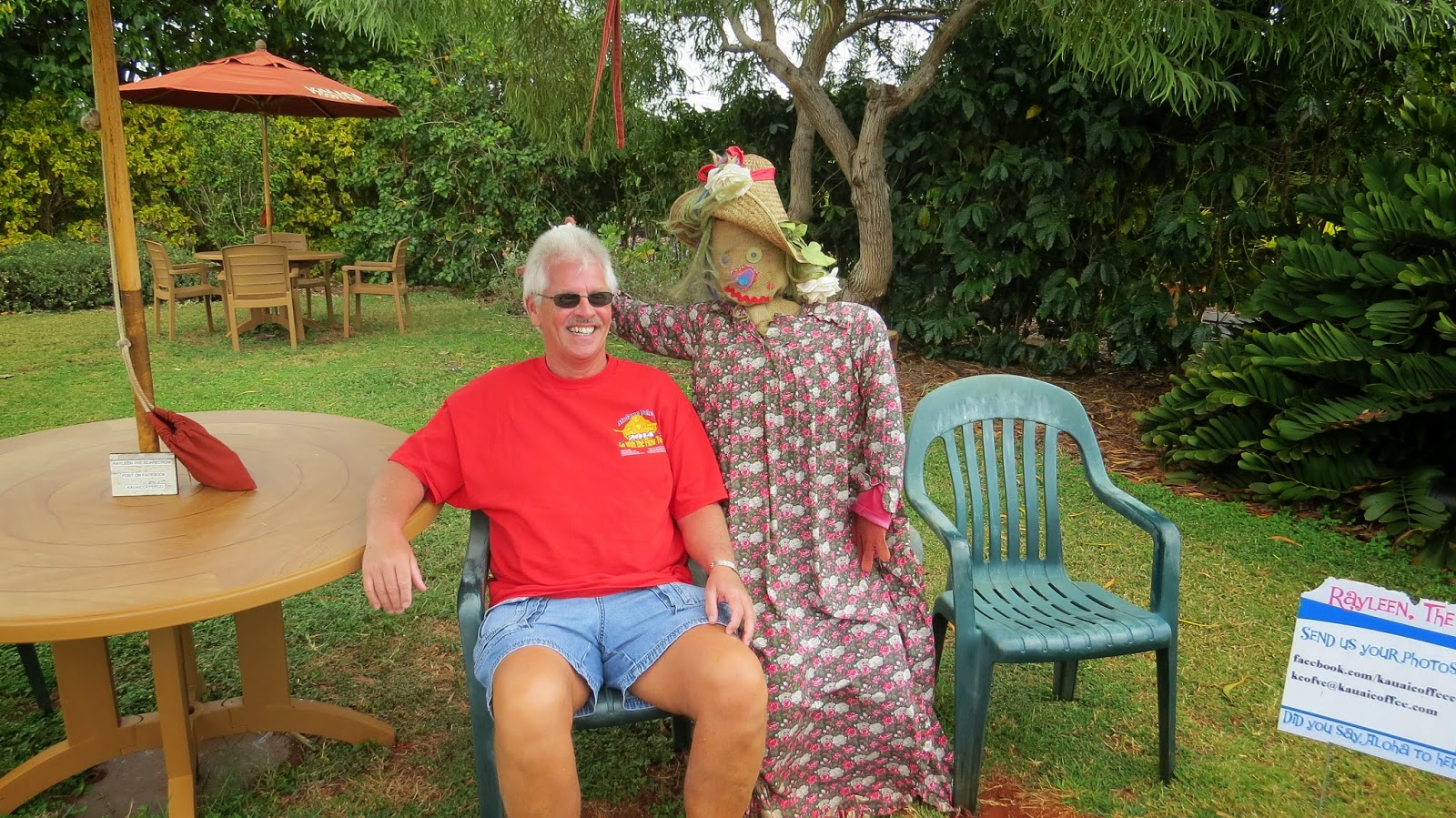
One year ago, Tom and a scarecrow at the Kauai Coffee Company.  For more photos, please click here.

A birthday gift like none other!!…Alert!…Graphic birthing photos!

There I am with my namesake, Miss Jessica, when she’s only a week old.

For those on the other side of the International Dateline its currently February 19th.  For us here in the South Pacific its February 20th, the date of my actual birthday. As a result, we’re celebrating today.

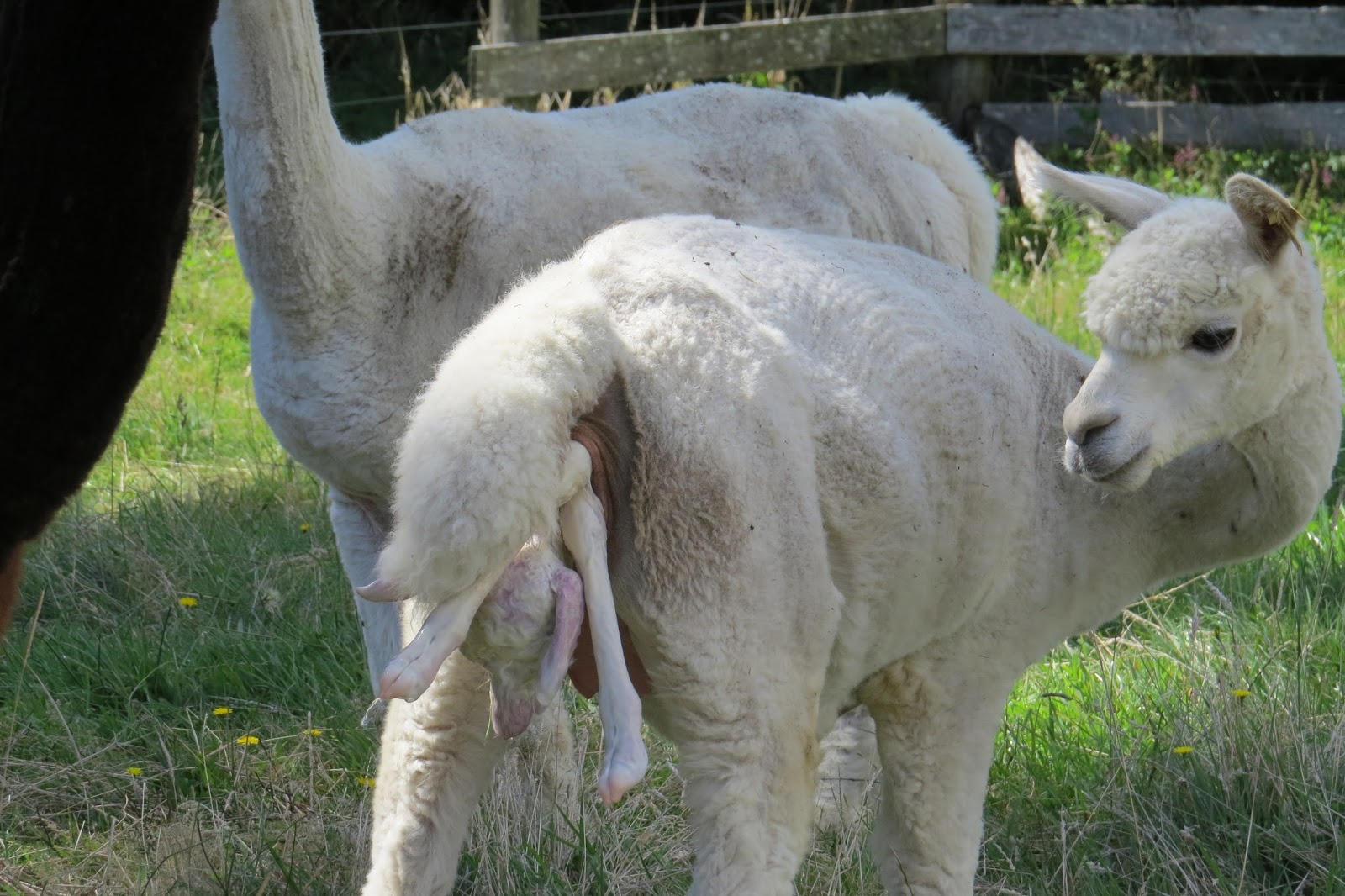
We didn’t have to physically assist in the birth, although we were prepared to do so just in case. Another pregnant mom observed the miracle of life. 

Oh, gee, what’s to celebrate about turning another page on the old age calendar other than one simple fact..it’s one more blessed day of life, the greatest gift of all. For this, I’m eternally grateful whether it’s my birthday or not.

Mom, while in labor, moved about the paddock for the perfect birthing spot.

In our old lives, we had certain expectations of our birthdays. A bit of fanfare was definitely in order when both Tom and I, family, friends, and co-workers made every effort to make us feel loved and acknowledged on our birthdays. 

Now, my fourth birthday since leaving the US, it’s an entirely different scenario; no printed birthday cards, no balloons, no banners, no gifts, no cake (which I can’t eat anyway), and no “surprise” party (or any party for that matter). (Although my new girlfriends in South Africa went over the top to make it special in 2014).

The exact moment when the cria gently hit the ground. The dark spot on mom’s side is dirt, not a permanent mark on her coat.  These alpacas are sheared once a year. With enough rain, she’ll clean off soon.  Alpacas love to roll around in the dirt.

Now, a phone call on Skype, an acknowledgment on Facebook, or an email makes my heart sing with appreciation as if unwrapping the finest of gifts. Who needs gifts when every day is a gift of life?

Within 25 minutes after birth, Miss Jessica struggled to stand.

This morning immediately upon awakening Tom wished me “happy birthday” with a kiss and that’s all I need or want. Throughout the day, I have no doubt he’ll continue to make me feel special. Then again, each day with Tom makes me feel special.

Almost standing.

Tonight we’re heading out to dinner at another well-reviewed restaurant in New Plymouth, leaving early to meander about the town on late Saturday afternoon if it’s not raining. But, even this is unnecessary. A fine dinner at home and a good movie is a great way to spend an evening, any evening, including my birthday. 

Her collar is pink partly not visible due to the dense coat.

I guess my age as of today is also not a big deal. I have no qualms about sharing the news that it’s my 68th year of life as of today. For this, I’m less frustrated and more grateful. I never expected to spend these later years of life, living this glorious life in good health with my wonderful husband, lover, friend, and travel mate. 

Miss Jessica hovers close to mom and aunties except when playing with the other youngsters. She’s already playfully running through the paddock with the others, especially in the late afternoon, typical for cria.

Although I must admit, I did receive a special birthday week gift, one I never expected and couldn’t appreciate and enjoy more…Trish and Neil,  the thoughtful owners of our house here in the Taranaki countryside, named the baby alpaca after me, “Miss Jessica” after we’d overseen her birth while they were away.

I couldn’t have been more flattered and appreciative. For me, this simple act of kindness meant the world. On the first sunny day after the good news this week, we dashed over to the side paddock to take photos of “Miss Jessica.”

Their adorable pink lips and noses turn dark as they mature.

The 35 or so alpacas we’ve been observing and interacting with were moved from the paddock nearest the house to allow the grass to generate. We’ve missed their close proximity but surely they’ll return to this area someday soon. For now, we need only walk down the driveway to see them.

Trish was outside when we arrived to take the photos, busy setting out the few dozen colorful bowls filled with nutritional pellets used to keep the alpacas healthy in addition to their constant grazing. She helped us with Miss Jessica so we could take these photos. Also, included today are a few new photos of her birth a week ago that we hadn’t posted previously.

Alpacas have long eyelashes as shown here on Miss Jessica. 

We hope you enjoy these photos of this special gift as much as we enjoy sharing them with all of our readers, which…having you beside us as we continue on our journey is truly a gift we both treasure each and every day!

Photo from one year ago today, February 20, 2015:

The Queen’s Bath from the last point until descending into the water. With the number of fatalities occurring as a result of swimming in this area, we opted to stay on the land.  The hike was treacherous enough for us.  For more details, please click here.

How we’re spending the two month gap between two visits to Bali…Partial Itinerary…Moo…baa…neigh…

This is our favorite cow to visit when we’re on a walk.  She always sticks out her tongue and does a little dance when she see us.

When preparing yesterday’s post, we realized it may sound a bit confusing regarding our back and forth for two trips to Bali. The bulk of the decision to go back and forth revolved around the fact that Indonesia has strict visa regulations with stays only allowing for 30 days (with 60 days possible). We’ll figure that out soon.

Recently, these fillies/colts were born.

As a result, we thought it might clarify the plans we made for the almost two-month gap in between the two separate bookings for the same property. In part, the owners gave us an excellent price on the villa with a full staff but preferred to get more for the high season. 

The walk in the area is always lovely.

If we’d leave and return, they could get higher rates than we’re paying during the peak season, resulting in excellent pricing for us during the two separate visits on either end of the peak season.

Also, during this two-month gap, we found a two for one special on a Viking Mekong River cruise, providing we paid the cruise fare in full at the time of the booking which we were happy to do for the savings.

Cattle seem interested in humans as we’ve found on walks and drives through the countryside.

In these two transactions, we saved several thousand dollars for venues we may not have found affordable at the full rates and fares. The more countries we can visit at the best possible prices and terms the greater our worldwide experience. 

There are numerous varieties of long-horned cattle in New Zealand.

It’s not that we’re on a mission to visit every country in the world. It’s not practical in today’s world of war and terror.But, we are on a mission of visiting the countries we find interesting and enriching as we continue on our world journey.

The gap between the two Bali stays made sense when by coincidence and admittedly diligent planning and research, we’re not only excited about the time we’ll spend in Bali but also the two months in between and shortly thereafter, as shown below:
                                                                                         # days                        Dates


 Sydney Hotel 1  4/15/2016 – 4/16/2016 
Cruise –  Sydney to Singapore  14  RC Voyager of Seas   4/16/2016 – 4/30/2016 
 Bali House  59  4/30/2016 – 6/28/2016 
 Hotel Singapore 7  6/28/2016 – 7/5/2016 
 Hanoi Hotel 3  7/5/2016 – 7/8/2016 
 Cruise –  Hanoi to Ho Chi Min City  15  Viking Mekong    7/8/2016 –
7/22/2016 
 Phuket House  41  7/22/2016 –
9/1/2016 
 Bali House  59  9/1/2016 –
10/30/2016 
 Sydney Hotel  1  10/30/2016 –
10/31/2016 
 Cruise – Sydney to Perth  16  RC Radiance of the Seas   10/31/2016 – 11/16/2016 
 Cruise – Perth to Sydney  17  RC Radiance of the Seas   11/16/2016 – 12/3/2016 

Luckily, the time in Bali will be low-key and relaxing while the interim period will be a whirlwind of flights, hotels, cruises, and comings and goings. Having this hectic schedule is good for us when at times, we can easily fall into the “homebody” mode staying put in one spot for a while. 

Discovering these horned cattle was a first for us in New Zealand.

The above itinerary over a period of seven months requires seven flights, four of which we’ve yet to book. We have plenty of time to book the remaining flights.

Don’t get me wrong…we love quiet times in the country. Without a lazy bone in our bodies, we keep our days full of activities we love to do, ultimately highly fulfilling. 

Many cattle are dehorned.   But, we don’t believe that process is done on this breed.

Although it may appear we’re occasionally “couch potatoes” which on occasion we are, we’re actually quite active most days of the week, not unlike many of our readers, who say they’re busier in retirement than when they were working.

Young bulls down the road from our house.

Of course, living on this farm in itself provides enough daily stimulation, activity, and entertainment as we spend considerable time outdoors enjoying every single moment. 

They often approach to check us out.

With the diligent use of repellent I’m able to spend all the time I’d like outdoors, as was the case when we lived in South Africa, Kenya, and other parts of the world where mosquitoes, biting flies, and sandflies are an issue.

On our usual walk, Mount Taranaki with our favorite cow on the right and a few sheep who often baa at us.

Today, it’s raining with heavy winds with more rain in the forecast. As summer winds down in New Zealand, apparently the much-needed rains have arrived. Knowing this is good for all the grazing animals in the countryside, we’re happy to see the rain, greening their pastures.

Tomorrow, on the day of my birthday we have a planned evening out and a special story with new photos we hope our readers will find entertaining. Happy day to all!

Photo from one year ago today, February 19, 2015:

It was one year ago today, we made the treacherous trek to the Queen’s Bath in Kauai, a known dangerous place to visit. Making our way down this area was challenging. Had we known how dangerous it was, we’d probably wouldn’t have done it. At times I grabbed any sturdy branch I could hold onto and when possible hung onto Tom to keep from falling. When we were done, I was glad to have challenged myself but also realized the practicality of such risky treks makes no sense at this age.  For more photos of Part 1 of this story, please click here.

Booking new flights…We couldn’t get any closer…


In the early evening a group of the babies get together to play, running through the paddock, making us laugh over their playful antics.

There are always flights looming in the future.  As much as we’d hoped to sail our way around the world using cruise ships as a means of transportation, it just doesn’t work out that way.

As we’ve become more and more knowledgeable (Tom particularly) about the routes of cruise ships, we’ve come to accept how impossible that is to accomplish.  Were cost no object, it may be a different scenario opening up many more possibilities.

If money were entirely no object, one could easily charter ships to almost any part of the world.  Long ago, we accepted that we have limitations on what we can and can’t do based on cost and practicality, neither of which is a disappointment, just a reality.

Not only do we dislike flying for the vast inconveniences, commotion and baggage fees, we don’t get excited booking a flight as we do when booking a new location, a vacation home or a cruise. 

These two babies sat in this spot staring at us for hours, occasionally napping.

Its not the flying part we mind.  Its everything leading up to it including the laborious process of searching online to find the right flight, at the right time of day, on the right date, on the right airline, at the right place and with the right seats.

Then, there’s the challenge of deciding…do we book early (up to 330 days ahead of schedule as allowed by most airlines) or do we wait and hope for better flight options and prices further down the road?

I wish I could say we have a definitive plan for booking flights.  We don’t.  We’ll mention that we need to book a flight, discussing a possible time frame during which it needs to be done.  Then, on an unexpected day, one of us searches, discusses it and we find a suitable option, getting it booked and out of the way.

This isn’t a quick process completed in five minutes.  We’re often checking and rechecking to verify there are no errors.  We use Expedia on our website, accumulating points we’ve yet to use. 

The alpacas, young and mature all get along well and enjoy staying close to one another. With 30 in this paddock and 60 more in other paddocks, its a pleasure to see how they interact with one another.

We’ve found the jumping around to dozens of websites offering supposed better deals, only to discover that overall prices are not a whole lot different from one “supplier” to another. 

Often, blocks of flights and seats are offered by ancillary websites.  We’ve chosen not to spend hours trying to maneuver through all of these myriad options when in the end, we may pay the same price or at times, a better price.

Plus, we’ve found good customer service with Expedia when on a rare occasion we’ve encounter a booking question.  Their reps are easy to reach with quick and painless resolutions as their imminent objective.  This works for us.

Its hard to believe how these young alpacas have quickly adjusted to our presence.

The flight we needed to book (now completed) is upcoming on April 15th from Auckland, New Zealand to Sydney, Australia for our fourth visit to the beautiful harbor city. 

Again, we’ll stay overnight one night to ensure there is no risk of missing the cruise.  Staying overnight the night prior to a cruise is a maneuver we long ago decided would best avoid stress. 

If we arranged a flight on the same day as a cruise and its delayed for any reason, we’d be in big trouble.  We’ve heard stories of this occurring and don’t want any part of it. 

As always our motto comes into play as shown in the heading of our homepage. For one reason or another, we simply think of our travels in regard to our motto, “Wafting Through Our Worldwide Travels with Ease, Joy and Simplicity.”  Its from this premise that we continue on, at times spending a little more to ensure the least amount of stress and frustration.

Napping together.

Finally, we booked the flight with our favorite (to date) airline, Emirates, who’s coach seats are comparable to first class on other airlines.  It cost a little more than a few other options but its safety history, roomier seats and customer service are definitely a consideration. We could have saved a total of NZ $62, US $40 booking on another airline at a less desirable time. 

Instead, we chose our preferred choice of Emirates with which we may ultimately save the difference in baggage fees.  They don’t charge for the first bag per person (see below) and there’s no charge for carry on bags.

Here’s the flight we selected which includes a two hour time difference:

Emirates logo
5:55p7:25p
Emirates
3h 30m
AKL – SYD
Nonstop
$188.70 as of 59 minutes ago

5:55p to 7:25p 3h 30m  

Auckland (AKL) to Sydney (SYD)
Auckland Intl. (AKL) to Kingsford Smith Intl. (SYD)
Emirates 413
Economy / Coach (Q)
Airbus Industrie A380-800 Passenger
Seats
Preview availability
Bag fees
Baggage fees when purchased at the airport (Prices may be cheaper if purchased online with Emirates)
Carry on: No fee
1st checked bag: No fee up to 30 kg
2nd checked bag: No info
How to pay: Emirates
 
This airline doesn’t charge fees for this weight of 30 kg, 66 pound which serves us well.  We’ll only have to pay for our third smaller bag online. We’re content we’ve made the right decision in booking this flight.
The babies all hang out together running through the paddock and playing.  All of these cria were born since this past December, growing quickly.

Now, back to matters at hand.  Yesterday, Trish and Neil moved the alpacas moms and babies to the paddock in front of our deck providing us with easier viewing.  We spent most of the day watching them enjoying every moment.  No longer afraid of us, they readily approach making our experience all the more heartwarming.

 
Soon, we’re heading to the Farmers Market Taranaki for more eggs, fish and produce, hopefully arriving early enough to ensure these items are still available.
 
Have a joyful, stress free day!
________________________________________
 

Photo from one year ago today, January 31, 2015:

This was our first photo of “Birdie” whom we came to know and love.  In no time at all, he responded to his name coming when called many times each day, often bringing along his mate, another Red Cardinal with different markings and coloration.  His presence in our lives over the four months in Kauai added to our glorious experience.  For more details, please click here.

Road trip…Endless array of interesting sites to see in NZ…

The grapes are robust and beautiful at the Okurukuru Taranaki Winery.

Waiting for a sunny day to get on the road was pointless. With rainy weather on the horizon, we decided to head out anyway, as soon as Isabel and Ra arrived to clean the house for the first time. They’d be fine on their own and it’s always best when we’re out of the way of the cleaners.

We were in awe of the beauty of the vines.

In a few short decades, New Zealand has gone from a practically non-existent wine status to wowing the world in international competitions on a regular basis.” For more about the growth of the New Zealand wine business, please click here.

The entrance to Okurukuru Taranaki Winery.

Without a plan in mind, we decided to drive along the ocean in a southwest direction and see what we could find. Unplanned outings have always been our favorite way to explore by driving until we feel like stopping.

We’d have preferred a sunny day for better photos.  Maybe it will be clear when we return.

Tom is the perfect driver in these scenarios anticipating when to stop for photos and offering to turn around if we quickly pass an interesting photo op. It’s almost as if I don’t even have to ask when he has a sharper eye than I as he spots interesting scenes I may have easily missed.

The Sugarloaf Islands and Paritutu Rock, located in New Plymouth can be seen at a distance from the winery.

As we made our way along the highway, our first stop proved to be much more interesting than we’d ever expected we’d encounter on an unplanned road trip. Before we headed out the door, Isabel and Ra suggested we stop and see the popular winery, Okurukuru.

We spotted several groups of tourists.

One may think visiting a winery when neither of us is wine drinkers could be pointless. Yesterday, we discovered that’s not the case at all. With a beautiful restaurant and grounds, there was plenty to see and we enjoyed every moment.

The vast ocean, the vineyards, the flowers, and the green hills create a fabulous view.

Introducing ourselves to the manager while handing him our business card, we asked permission to wander about exploring the grounds and taking photos. He welcomed our visit offering us free rein to explore at will.

Workers were preparing for an event on Saturday.

With neither of us hungry, staying for lunch wasn’t on our radar. Although, before leaving after touring the facilities and perusing their various menus, we made a dinner reservation for our upcoming wedding anniversary in March. 

We walked down several wide stairways for more views.

At this point, we’ve booked three fine dining dinner reservations; one for Valentine’s Day on February 14th (not celebrated in all countries), another for my birthday on February 20th, and now for our anniversary which is on March 7th. With the winery closed on Mondays and a wedding scheduled for the 8th, we selected March 9th for our anniversary dinner celebration.

The grounds are meticulously maintained.

Tom often jokes about all of these celebratory occasions occurring within a three-week period. A dinner out is all either of us care to do for such events when we have no inclination toward buying each other gifts with the need for wrapping paper, tape, and bows and, with no room in our luggage. 

Situated on the ocean, the winery’s scenery is all the more exquisite.

Long ago, we decided on this plan with both of us at ease with a warm hug and kiss on the special day that totally fulfills our need for acknowledgment. Our family members call, email, or send a message on Facebook when it’s our birthdays or holidays, and there again, that’s appreciated and meaningful.

Future plantings at the vineyard.

Although an enthusiastic wine drinker at a period in my life, I gave it up when I changed my way of eating almost five years ago knowing, in the long run, it wasn’t best for my health. I do miss red wine. Tom drinks wine only when it’s placed in front of him when included in a meal, never ordering a glass when dining out or at a bar.

The winery’s main building.

Neither of us had visited a winery for these reasons. Now that we have, as of yesterday’s tour, we’re convinced visiting wineries may be worthwhile for the exquisite scenery, ambiance, and meals. We’re excited to be returning in March. When we do, we’ll share photos of our multiple course meals and if Mother Nature cooperates, a sunset over the vineyards and the sea. 

Tom, at the bar and restaurant in the Okurukuru Taranaki Winery.

After we left the winery, we continued on the highway for more surprises along the road which we look forward to sharing over these next several days. Please stay tuned…


Photo from one year ago today, January 29, 2015:

Wisdom, the oldest known tagged albatross, had a chick last year at 63 years old.  This photo (not ours) was taken last year as she tended to her chick. For more photos, please click here.