Marloth Park…No dogs allowed…Remembering…

During his last 17 days of life, Willie is resting on our bed with his favorite toys; Tiger Woods (in the forefront) and Fred Flinstone behind his head. At night, he’d always use his pet steps while carrying these toys up onto the bed with him.

“Sighting of the Day in the Bush”

Treefrog sitting atop the vacuum hose to our plunge pool. Could this be one of the frogs hatched from the nest almost two months ago?

Anniversary dates seem to matter more to us as we’ve aged, whether it’s regarding our relationship, places we’ve been, and experiences we’ve had over the years.

Today, one special anniversary is challenging to pass, the day our last dog, WorldWideWillie, made his way to doggie heaven. It was a sorrowful day.

On his last day of life, Willie was standing on the seat of a picnic table in our yard, looking for moving critters to chase.  He’d been awake all night coughing terribly while we stayed awake with him, comforting him.

For those who’ve never had a dog or other pet, wanted a dog or other pet, or understand the degree of love we can have for our furry friends, surely today’s post will be of little interest.

But, oddly, there’s a huge connection with our love and remembrance of Willie with being in Marloth Park, one that is so obvious to us, as we cherish every animal that stops by to visit, whether it’s as unassuming as the above-mentioned tree frog in today’s “Sighting of the Day in the Bush” or as fascinating as “forkl” of 20 kudus such as visited us over the weekend.

Willie would sit staring at my laptop for hours, hoping I’d Skype my sister Julie when he and I were visiting son Richard in Las Vegas. He’d get so excited when he’d hear her voice.

It’s the profound love of animals that some, not all, of us possess that drives us, motivates us, and inspires us to have dogs as pets, lavishing an often over-abundant lifestyle to ensure the quality of joy they bring us and ultimately them in our excesses.

Such was the case with Willie and our two prior Australian Terriers over 18 years. Bart was run over by the mailman on our private road at five years of age, and Ben passed from the effects of Cushing’s Disease at 12 years of age, two years before the heartbreak of losing Willie.

On his last trip to Petco after his diagnosis, Willie decided if he’d like anything which generally, he’d choose from these reachable bins. This time, he didn’t choose a thing.

It was through the love of these dogs and ultimately with Willie when we arrived at a magical place within our hearts that clearly defined our passion for animals had come to fruition.

Willie passed away on April 9, 2011. We began our worldwide journey on October 31, 2012, 18 months later.  However, during the planning stages in 2012, while we were still living in Minnesota, we booked plans to come to Africa, first to Diani Beach, Kenya, to go on safari in the Maasai Mara and then make plans to go here to Marloth Park, South Africa. Why? To see the animals, plain and simple. 

Shortly before, the vet came to the house to send Willie to doggie heaven.

Sure, I could go into the details of why we loved Willie so much and the heartbreak we both felt over losing him on this date seven years ago. But, you’ve heard it all before, from us, from others, on losing their beloved pets and the sorrow that hovers in one’s heart, days, weeks, months, and even years later.

So, today, and other days, we remember Willie who presented from his perspective through the first blog I’d ever written about the last days of his life. If you haven’t read his blog and would like to, please click here

Willie climbed this tree on command.  After he developed a cataract, he was afraid to do it. We’d scheduled eye surgery with a specialist, but he refused to allow us to put the initial drops into his eye, which was required before and after the surgery. He spent the remaining years of his life only able to see with one eye but was perfectly content.

If you’d like to read Willie’s blog from the beginning (the first post was on March 20, 2011), please scroll down to the archives on the right side of the main page and start with the first entry. Many of you who’ve lost beloved pets will undoubtedly relate to his story.

Here it is, seven years later, and we still celebrate you Willie, and always will. You taught us, focused us, and lead us to the heavenly environment giving us the will, the desire, and the opportunity to look into the eyes of a visiting animal and see them and…see you. 

He saw the vet pull into the driveway, wondering who was coming to visit.

No dogs or other pets are allowed in Marloth Park for the peace, harmony, and unity of the humans and wandering wildlife. Being here is a gift, as was the infinite joy of loving our dogs, and now, we’re blissfully able to spread the love among many who grace us with their presence every day.

May you find the love of an animal to fill your heart with a profound connection providing you with an eternal ray of light and hope in your life. Rescue.

Photo from one year ago today, April 9, 2017:

While walking on the Manly Scenic Walk, we enjoyed an excellent view of boats in North Harbour Reef Bay. Please click here for more details.

Our upcoming bookings for Zambia…Photos of scenery and culture…

Had Louise and Danie not taken us here, we’d have no idea this beautiful spot existed.

“Sightings of the Day on the Bush”

Full moon in the bush.

In 34 days, our South Africa 90-day visas expire. It’s not as easy as jumping across the border to get our visas re-stamped upon our return. As mentioned in an earlier post, it is now illegal to “border hop” to any of the countries bordering South Africa, as shown on the map below:

Image result for map of african countries
We cannot “border hop” (to re-do our visas for South Africa) to Namibia, Botswana, Zimbabwe, Mozambique, and Swaziland. There are many other countries in Africa, but we aren’t interested in visiting at this time.

Over the next 11½ months, we are required to leave South Africa four times, possibly leaving earlier in March if necessary. This all depends on how long we stay out each time we leave. We aren’t booking any plans during this remaining period, other than the upcoming trip to Zambia, to ensure we won’t have any issues upon re-entry.

It’s entirely possible, immigration will refuse our re-entry on May 18th and will give us only one week to leave the country entirely. We can only wait and hold our breath to see how it goes on May 18th.

Rapids run through this area, although it doesn’t appear to be navigable by rafting enthusiasts.

During this period, our second 90-day holiday home rental renews, but after addressing this possibility with dear friends Louise and Danie, they assured us we don’t have to worry. We won’t be charged if we have to leave. We’ll only pay for the extra nights we used from May 11th on.

Fortunately, we have this house where we can leave the bulk of our luggage, making the trip to Livingstone, Zambia, a lot easier. Also, the flight is only two hours long. That makes travel days so much easier. 

Rock formations in the Komati River close to the road.

On May 11th, our nonstop flight is at 11:35 am, and on our departure from Livingstone, Zambia, on May 18th, we leave at 1:35 pm, again another easy travel day for a two-hour nonstop flight. Yesterday, we booked the round-trip flight and also a hotel in Livingstone through Expedia on our website at this link.

Sure we’d have liked staying in a luxury tent at one of a few locations on the Zambia side of Victoria Falls. Still, most of the tented camps are located on the Zimbabwe side, where we cannot stay to accommodate the visa requirements as shown on the above map. Such camps in Zambia were already booked during the time slot we needed.

Living conditions such as these are commonly found in many parts of the world.

We should have booked this months ago, but we waited as we further researched immigration laws for American citizens in South Africa. When we were here four years ago, we could have gone across the border in any of the surrounding countries and reentered for a new stamp.

It wasn’t until we started doing research a few weeks ago that our perception of renewing our visas was entirely wrong after the laws changed a few years ago.  Most tourists don’t stay as long as 90 days, or more so there was no point in “asking around.” Everyone had a different perception as to what is acceptable under our circumstances.

Many locals sell wood, used merchandise and handmade wares, and a variety of other products.

Many of our local friends from other countries (outside Africa) own homes here and have “resident’s visas.” We can’t apply for such a visa since we don’t own a home.

Fortunately, we were able to book flights and a hotel. Although the traditional hotel, the Protea by Marriott, is highly rated and packed with modern conveniences, we’d have been happy to stay in a tented camp.

Life is not easy for all citizens of South Africa, living under challenging conditions.

Then, of course, there’s the cost for these four outings we must make in the upcoming year. For one week, many more excellent tented camps were ZAR 60,161.23 to 90,242 (US $5,000 to $7,500).  Our total cost for the highly-rated hotel, including air, is ZAR 31,633 (US $2,629). 

Staying at the Protea by Marriott, we’ll be on our own for tours but have located a highly rated tour company that can fulfill all of our expectations at reasonable prices we’ll post later. Some tours were included in the higher-rated camps, but many were al la carte. Breakfast is included, and we’re on our own for dinners.

A village on the side of the road.

Today, we sent the tour company an email with our flight info (to have them handle our transfers to and from the airport) and four tours they offer that we’d like to attend during that week.

Our old philosophy of booking everything well in advance will become prevalent as we move into the future. We are waiting until the last minute seldom works to our advantage. 

 After the rain, everything was a lush green.

However, we cannot book the remaining three trips in Africa until we know the 90-day visa was renewed upon our reentry into South Africa on May 18th. At this point, we wait to discover how immigration chooses to handle this.

We’re not worrying or panicking in any manner. We continue to enjoy every day to the fullest, imagining that we’ll be able to stay until next March by taking similar one-week trips to our preferred locations.

The Crocodile River flows into the Komati River.

Tonight we’re off to Jabula for dinner for six of us. Tomorrow at 10:00 am, we’re heading to a “bush brunch” in Lionspruit (Louise will drive us since the little blue car doesn’t have enough clearance for the rough roads).  Tomorrow night we are invited to dinner at Sandra and Paul’s home, who live only two doors from us. It’s a busy, fun-filled weekend!

We hope your weekend is filled with activities you enjoy as well!

Photo from one year ago today, April 7, 2017:

View from the dining room balcony of the lovely house next door to us in Fairlight, Australia, was scheduled to be auctioned on April 22nd. For more photos, please click here.

Exciting night in the park…Immigration concerns for South Africa…


With a story of around 3.048 meters (10 feet), this bull giraffe is two stories
tall. Their legs are taller than the average adult male.

“Sighting of the Day in the Bush”

Bushbabies are loving the little cups of peach-flavored yogurt we put out for them every night at dusk.  They fly through the air so quickly it’s not easy to get a good photo in the dark.

Each night we spend outdoors, which is when it hasn’t been windy and raining, we experience something new and unique. Two nights ago, it was 30-minutes of screeching by the bush babies in the tree in front of our veranda. 

From this site:  “The cattle egret feeds on a wide range of prey, particularly insects, especially grasshoppers, crickets, flies (adults and larvae), and moths, as well as spidersfrogs, and earthworms. Cattle egrets often hang around large mammals such as this hippo, feeding off their scraps. In a rare instance, they have been observed foraging along the branches of a banyan tree for ripe figs. The species is usually found with cattle and other large grazing and browsing animals and catches small creatures disturbed by the mammals. Studies have shown that cattle egret foraging success is much higher when foraging near a large animal than feeding singly.”

Last night, bone-chilling sounds were leaving us bewildered and curious as to what it could be. Louise and I texted back and forth, trying to access what we were each hearing. Our properties are only a few blocks apart, and she and Danie could hear what we were hearing. They have many years of experience in determining these sounds, and it was fun to go back and forth with them via text.

Louise suggested at one point that it was hippos. We’re a good seven or eight-minute drive to the Crocodile River, but that’s over rocky dirt roads. As the crow flies, we may only be one or two kilometers from the river. Hippo sounds may be heard as far away as eight kilometers (five miles), so that might be what we were hearing.

Hippos spend most of their days foraging and lounging in the river.

Within about 10 minutes, the sounds changed while our ears were tuned to the curious sounds we were hearing. With his impaired hearing after years on the railroad, Tom could easily hear all these sounds along with me.

We heard sounds similar to the howling of wolves or wild dogs. We listened in awe for every loud outcry, uncertain as to precisely what it may be.  After about 15 minutes, those sounds ended, and different sounds commenced.

When driving through Kruger National Park, visitors seldom see hippos if they stay on the main paved roads.  One would need to venture off onto the dirt roads leading to the river. We took these photos from the fence between the Crocodile River and Marloth Park.

Lions have recently been sighted in Marloth Park. Of course, we’d be thrilled to be able to spot one, let alone take a photo. The new sound was clear and definitive…the roar of a lion. 

And yes, we know to be ultra-careful if a lion is nearby. There are several steps to reach the veranda, and it’s unlikely a lion would climb steps to get to us. Nonetheless, we’d most likely go indoors taking photos through the window. 

Often, when we spot giraffes, they are foraging in tall trees, obstructing a clear view for a photo.

However, many year-long residents of Marloth Park have never spotted a lion in the park, other than in Kruger. Over the years, numerous sightings have been observed and documented, including recently before and after our arrival on February 11th.

Many have ventured into Lionspruit, another reserve located within the confines of Marloth Park, and have never seen the two resident lions that remain inside.  A month ago, we visited Lionspruit, but the little rental car couldn’t handle the rough road, and we exited as soon as possible.

These leaves must have been delicious for this giraffe to be willing to bend “down” to eat when most often they stay at eye level or reach “up.”  They will bend down to drink.

Finally, the loudest of the nighttime sounds in the bush changed to the usual hum of crickets, frogs, and birds, and we wandered off to bed. Although few visitors stopped by in the dark last night, we thoroughly enjoyed the bush babies and the various sounds of the night.

This morning, at 5:40, am (of course I was awake), Louise texted me to let me know that seven hyenas were sighted in Marloth Park by Field Security (the rangers) at Oliphant (the main tarred road) and Wild Dog Road, quite a distance from us.

From this site: About Giraffes: The giraffe (Giraffa camelopardalis) is the largest rudiment and the tallest land mammal. We waited for an extended period in an attempt to get a full-body photo of this huge male bull. This giraffe is known to be the largest in Marloth Park. This is not due to its long neck alone. The adult giraffe’s legs are taller than the average human. The average height of a giraffe differs between males and females. Male giraffes (or ‘bulls’) can be up to 18 feet (5.5 meters) tall.”

Of course, we can’t help ourselves; we’ll be postponing today’s planned trip to Komatipoort tomorrow for grocery shopping to drive around the park to see if we can spot the hyenas. It’s doubtful we’ll see them, but it’s fun to go searching.  We do this almost every day anyway as if we’re on a daily treasure hunt…and treasure it is indeed!

This male bull is well-equipped for the current mating season if the size of his testicles is any indication.

As for immigration, a few years ago, one could drive less than an hour to the border to Mozambique, spend the day and re-enter South Africa for a new 90-day visa which is now illegal based on immigration law changes. As a result, we must leave South Africa by May 10 and cannot visit any bordering countries to get our visas stamped for another 90 days.

We have to leave for a bonafide trip, not just one or two days and spend time in another country in Africa beyond the bordering countries. We’re working on this now and hope to wrap something up in the next few days. Once we do, we’ll certainly post the details of where we’re going and what we’ll be doing. Please stay tuned.

Have a spectacular day!

Photo from one year ago today, April 5, 2017:

When they miss the bit of meat, it doesn’t hurt at all if the kookaburras pecked at me instead. For more photos, please click here.

Marvelous, majestic, magical Marloth Park…Keeps on giving…

Such a big scary world out there!

“Sighting of the Day in the Bush”

This is a Dark-Capped Bulbul, thanks to friends Lynne and Mick.

It seems that never a day passes without us seeing something new and unique.  It’s nearly a full-time job seeking the unusual, the heartwarming, and the exceptional sighting that evokes emotions we can hardly describe.

At times, we also seek the simple beauty of nature at its finest in photos taken to the best of our ability. Recently, I’ve considered taking some online photography lessons, hoping to improve the quality of our photos.

Mongoose regularly visit.  Each time we give them a bowl of raw eggs mixed with a bit of sour cream. Their little faces get dirty, resulting in them cleaning each other after the feast.

We aren’t sure where the time goes. Somehow, right now, there doesn’t seem to be enough hours in the day to spend time taking a course. Once we’re up and on the veranda, getting the post done and uploaded by noon or 1:00 pm, half the day is gone.

Lately, we’ve been hearing stories of ostriches attacking humans. There are many more here in the park now than there were four years ago. We always proceed with caution around any wildlife.

Then, we hop in the little blue car to head out in search of more, usually returning by 2:00 or 3:00 pm. There’s dinner to be prepared, email to respond to, financial matters to attend to, and before we know it, the day has come to a close.

Yesterday, we spotted these two hippos by the river.

On occasion, we take a short nap since neither seems to get enough sleep most nights. I guess it’s an “old age” thing when many of our friends our age seem to suffer from the same affliction, awakening in the middle of the night for no reason at all.

I’ve never been a napper, although I’ve tried off and on over the years. Realizing a short nap is most beneficial, I’ve recently discovered I may get in a 20-minute doze now and then, which perks me up. Tom doesn’t do so well, but he too tries for a short siesta. 

Some of the rest of the family took Marta’s broom and decided to play with it. 

If the nap is too long, it seems to impede the ability to sleep that night. If too short, it doesn’t seem to offer much added benefit. That perfect 20 to 30-minute window always appears to do the trick. 

Our housekeeper Marta lives in a guest cottage on the property. A few days ago, we noticed this Vervet monkey sleeping near her house.

Thus, sometimes in the afternoon, when time allows, and we feel a little sleepy, we wander off to the bedroom, turn on the AC, pull on a light blanket, and try to wander off.

I suppose most retirees’ daily lives are filled similarly to ours; busy planned activities, “taking care of business,” almost daily outings to “here and there,” and responding to social media in one manner or another.

The kudus love munching on this tree in front of our veranda.

The fact that we get dozens of email messages from our worldwide readers each day, which we usually answer in the afternoon, always attempting to reply within 24 hours at most, adds to the time spent filling up our day. 

Regardless of how annoying monkeys are in the park, this tiny baby is irresistible.

Tom also receives many email messages, Facebook, and Cruise Critic inquiries to which he always responds promptly. Also, he spends a certain period each day gathering more data for his Ancestry.com file, a genuine and enthusiastic passion.

Throw in the time necessary to continue to research future travels; our days are jam-packed. By the time we set up the veranda for our nighttime viewing, we’re finally able to relax and enjoy a glass of wine or beer; it’s time for the final prep for dinner. 

View of the Crocodile River from the overlook in Marloth Park.

It’s usually dark when we dine since we’ve changed our eating time closer to 7:00 pm than our last 5:00 pm in other locations. Somehow, the later dining time seems to work better for us while here. We eat while we “watch” for wildlife and the playful antics of the bush babies who only make an appearance after dusk.

We used to watch episodes of Shark Tank, Master Chef, Hell’s Kitchen, etc., during dinner; Now, in this extraordinary life in Marloth Park, instead we’ll watch for wildlife which has ultimately proven to be more entertaining than any show imaginable.

Another view of the Crocodile River.

Once we’re off to bed, we bring my laptop into the bedroom and usually watch one episode of a favorite show. At that point, I have trouble keeping my eyes open, during which Tom constantly awakens me. He knows if I fall asleep too early, I’ll be up a long time during the night. At the time, it annoys me that he awakens me, but his intentions are spot on, so I don’t protest too much.

Ah, our lives sound so mundane and straightforward when I read this back to myself, checking for errors. We have difficulty wiping the smiles off our faces in the depth and meaning of these daily activities in this magical place.

A mongoose was resting on a root after an egg-feeding frenzy.

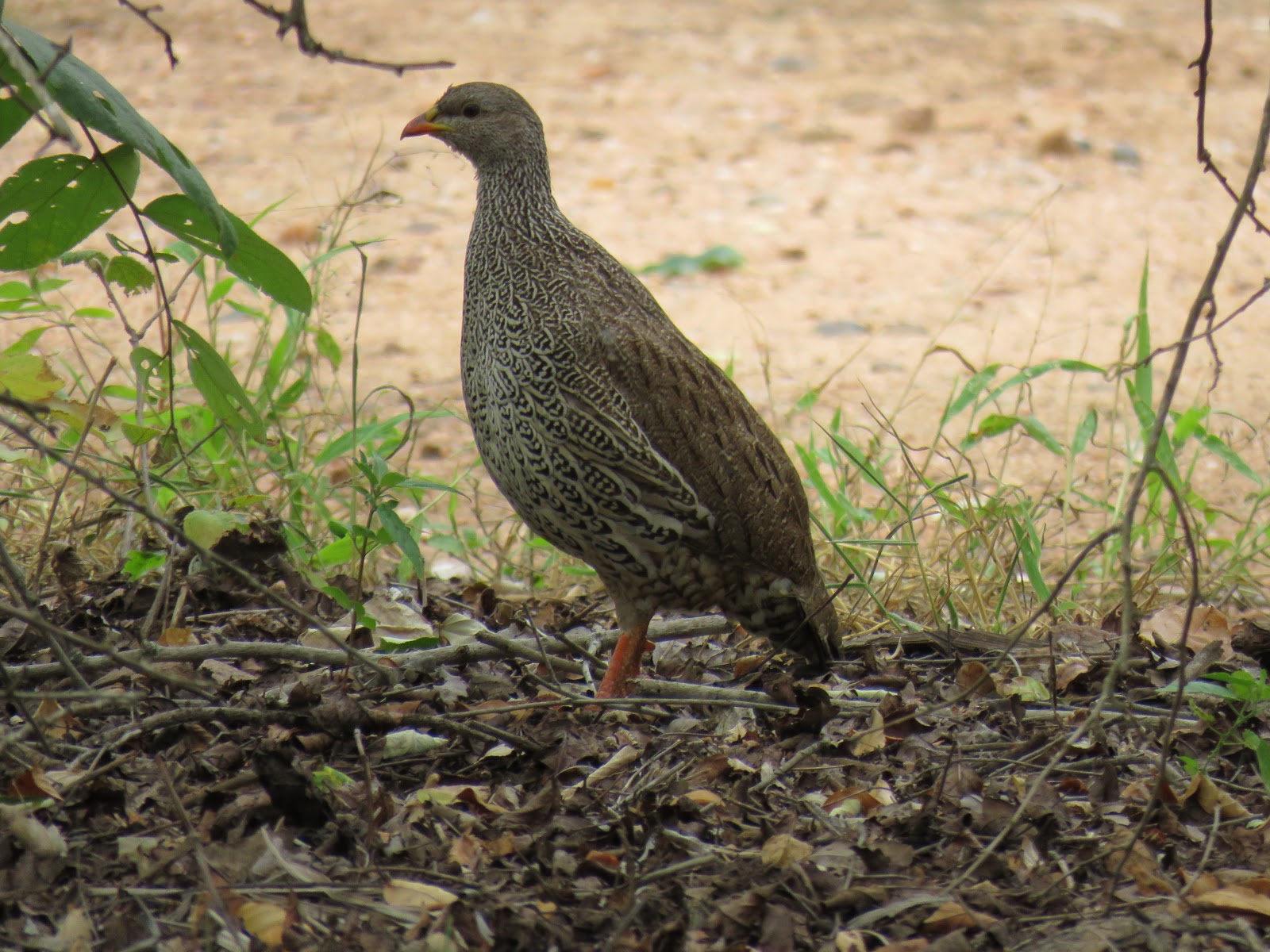
Oops, I hear Frank, our resident francolin, making some noise in the bush. I’d better go fill up a cup of birdseed to toss his way, and soon, he’ll be making contented little sounds as he pecks at one seed after another. 

Is birdseed for one bird? Doesn’t sound like much in the realm of things. But, for us, it’s all a part of the awe and wonder that washes over us, day after day in majestic Marloth Park.

May the simplicities of daily life bring a smile to your face.

Photo from one year ago today, April 4, 2017:

These houses are all valued well over AU $3,000,000, US $2,269,500. As we’ve mentioned in prior posts, home prices are high in Australia, more than we’ve seen in any country. We lived in the house on the far left with views of the bay. For more photos, please click here.

Safari luck sighting in the yard…Nature at its finest….

She’d nibble on the pellets, but we never saw him take a single bite. He was more interested in her than he was in snacking.

“Sighting of the Day in the Bush”

A female bushbuck climbs the pile of dirt for next door’s construction project.

Today’s entire post revolves around what could be considered the “Sighting of the Day in the Bush” since the experience is worthy of more than one photo under the daily feature photo. We’re enthralled with the babies of many species of wildlife in the park. And, we gasp in wonder over the enormous antlers of a mature, perhaps senior, kudu who visit from time to time.

Both this female and male bushbuck had been in and out of our yard for days. 

We’ve stumbled across only a few opportunities to witness, first hand, the creation of life when the mating process isn’t necessarily easily observed in the open in front of human onlookers. 

Ironically, we’d mentioned how interesting it would be to see more wildlife mating before our eyes the previous day.

It isn’t as if wildlife prefers privacy during the act, per se. Most likely, it’s just a matter of us humans being at the right place at the right time to see how procreation occurs in the wild.

He made several seeming unsuccessful attempts, but finally, nature took its course.
Anderson, our guide, explained this process could go on for hours.  We’d anticipated he might bite her, growl, or be aggressive in some manner. But, he quietly and gently pursued her, an exquisite sight to behold.

We were amazed to see lions mating while on safari in the Masai Mara, as shown in the photo below. Also, here’s the link for that sighting.

Then, in 2016 while living on an alpaca farm in New Plymouth, New Zealand, for three months, we had the opportunity to witness the supervised mating ritual as shown in this link (with a video) and also the below photo:

Trish and Neil, owners of the alpaca farm, oversee the mating to ensure all is going well. The macho (the male) is wearing a harness used to bring him to the mating pen.

We’d considered including “for adult eyes only” in the heading of today’s post. Most certainly, we prefer not to suggest what is appropriate viewing material for your children or grandchildren who may on occasion see our posts.

He often kept his eyes on us and was very skittish if we stood from our chairs on the veranda.

We find all aspects of nature and the life cycles of wildlife a true miracle. Each of us can learn from all parts of nature from conception to birth, from mammals on the hunt and subsequently eating their prey, or to find the carcass of an elephant in the savanna who died of old age, injury, or illness.

She was still eyeballing the pellets while continued in the act.

Bushbucks are one of the most beautiful creatures in the antelope family that we’ve seen in Africa.  Their unique markings make them stand out amongst the others. Yesterday, we stopped everything we were doing to embrace the relationship and behavior of these two stunning animals.

Graciously, he stopped now and then and let her get back to her pellets and apples we placed on the ground earlier.

After over an hour of observing the handsome couple, they wandered off into the bush to continue the mating process away from our prying eyes. Oddly, the male never once took a bite of the fresh veggies or pellets. He was focused on ensuring their safety, keeping a tense lookout whenever they were apart, and of course, mating with this female.

He was patient but stayed close to her.

In the early evening, we set up the camera on the tripod with a chair nearby to quietly observe; the handheld camera at proximity; the new bright light to illuminate the yard, and; containers of cut apples, vegetables, and pellets for our now nightly ritual of watching for nocturnal visitors.

A while later, they wandered off into the dense bush for more activity. Indeed, it must have been a successful day.

Surprisingly, the bright light doesn’t seem to keep wildlife away. Please check back frequently to see what we’ve discovered in the dark of night. We’re accumulating, sorting, and choosing photos we’ll be sharing here soon.

This is the baby bushbuck we’d shown a few weeks ago who returned with mom (she was nearby eating veggies and pellets we’d put out) who’d grown so much. Please click this link to see the baby only a few weeks ago here.

Tonight is the “blue moon,” the second full moon in March. We hope you have an opportunity to revel in its glory and enjoy the meaning and purpose of this holiday weekend of Easter and Passover. 

The baby bushbuck has yet to show any interest in pellets of vegetables instead of waiting in the bush while mom devoured everything we’d put out.

May God’s blessings (or your chosen higher power or beliefs) grace you this season and always.

Photo from one year ago today, March 31, 2017:

There are hundreds of sailboats and motorboats in the  Clontarf Marina in Sydney, Australia. Construction was in process at the time, as shown to the left, but it didn’t seem to impede any of the activities. For more photos, please click here.

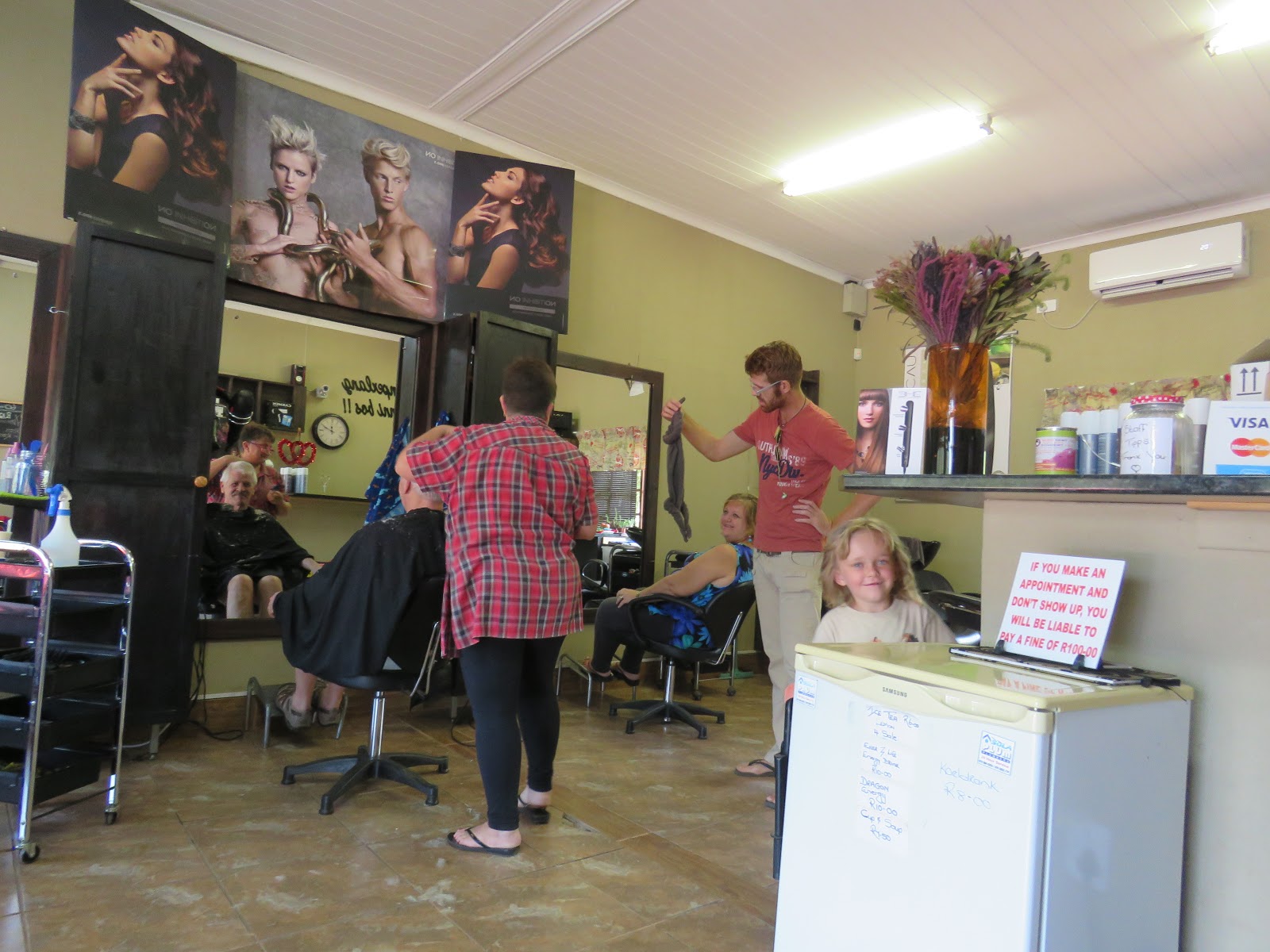
Tom’s first haircut in Marloth Park…Viewing nocturnal wildlife solution…


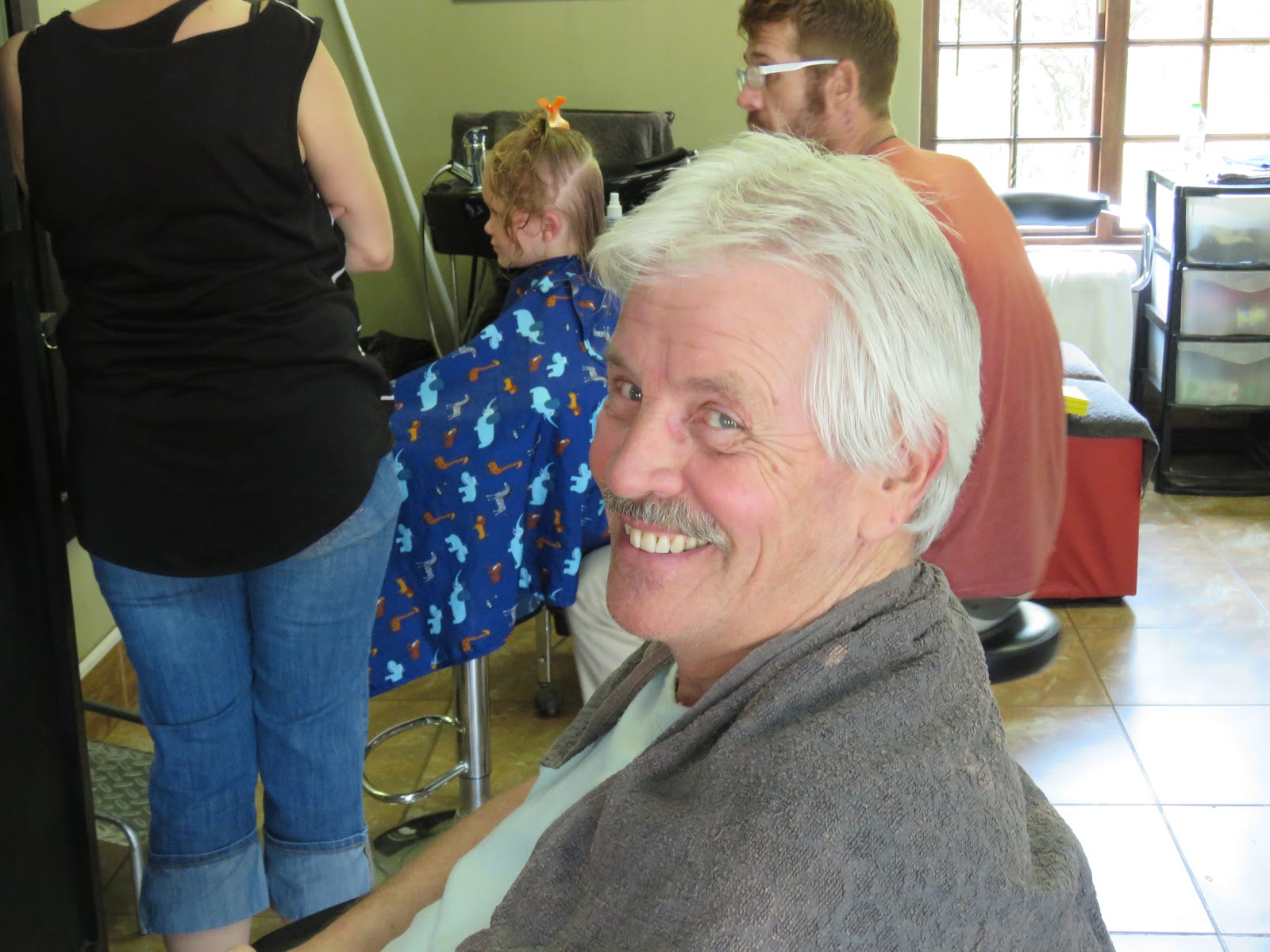
Tom needed a haircut, as shown in this photo.

“Sighting of the Day in Bush”

These funny francolins make us laugh. They run like crazy, are very shy and make the loudest noises we’ve heard in the park. We toss out seeds for them but then we have to back off or they won’t go near them if they see us.

Tom needed a haircut. It had been almost three months since his last trip to a barbershop in Buenos Aires where they gave him a beer, (they also offered me one, but I graciously declined) and he received the best haircut he’d had in years.

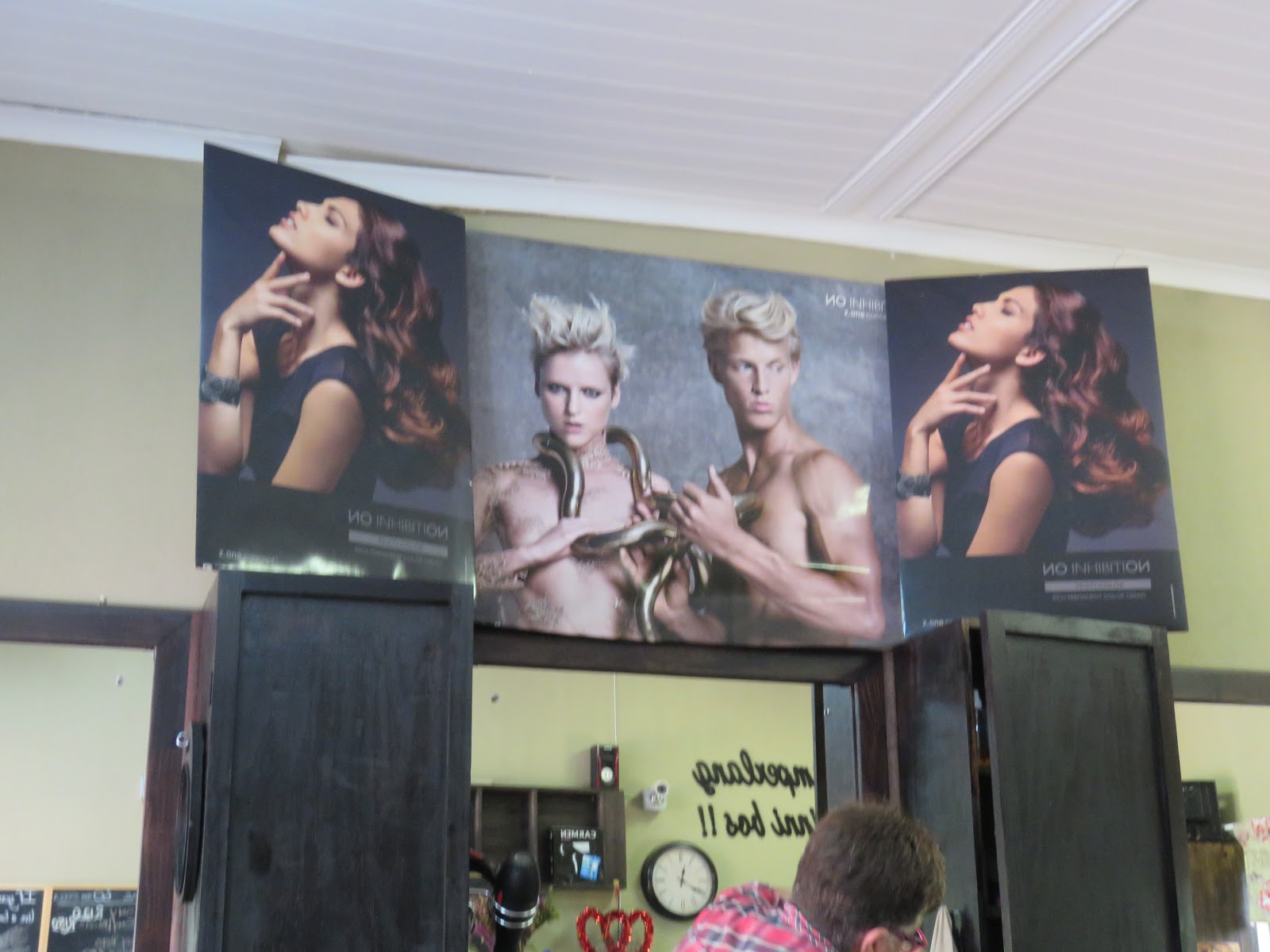
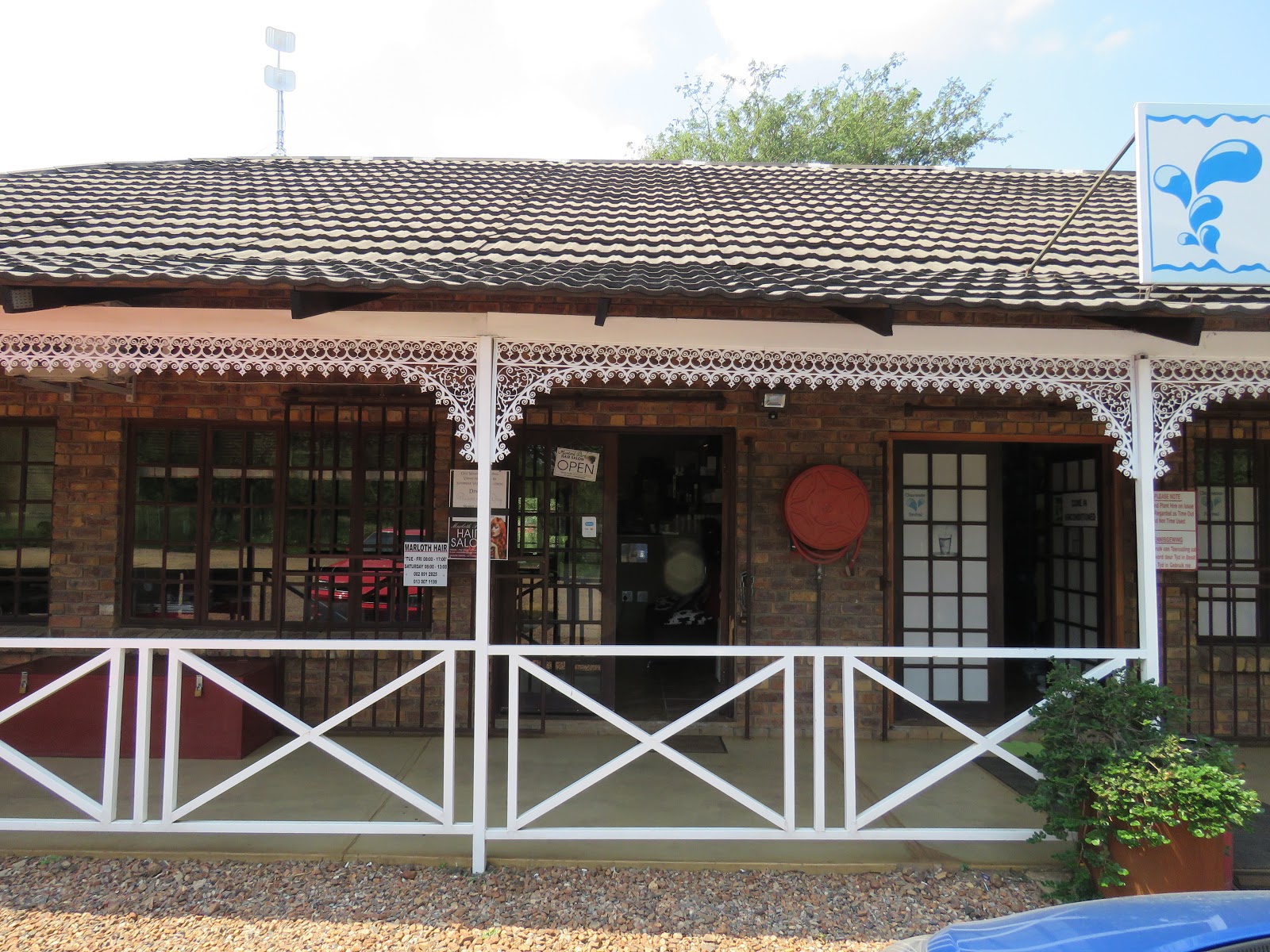
Tom was seated at the station under these photos.

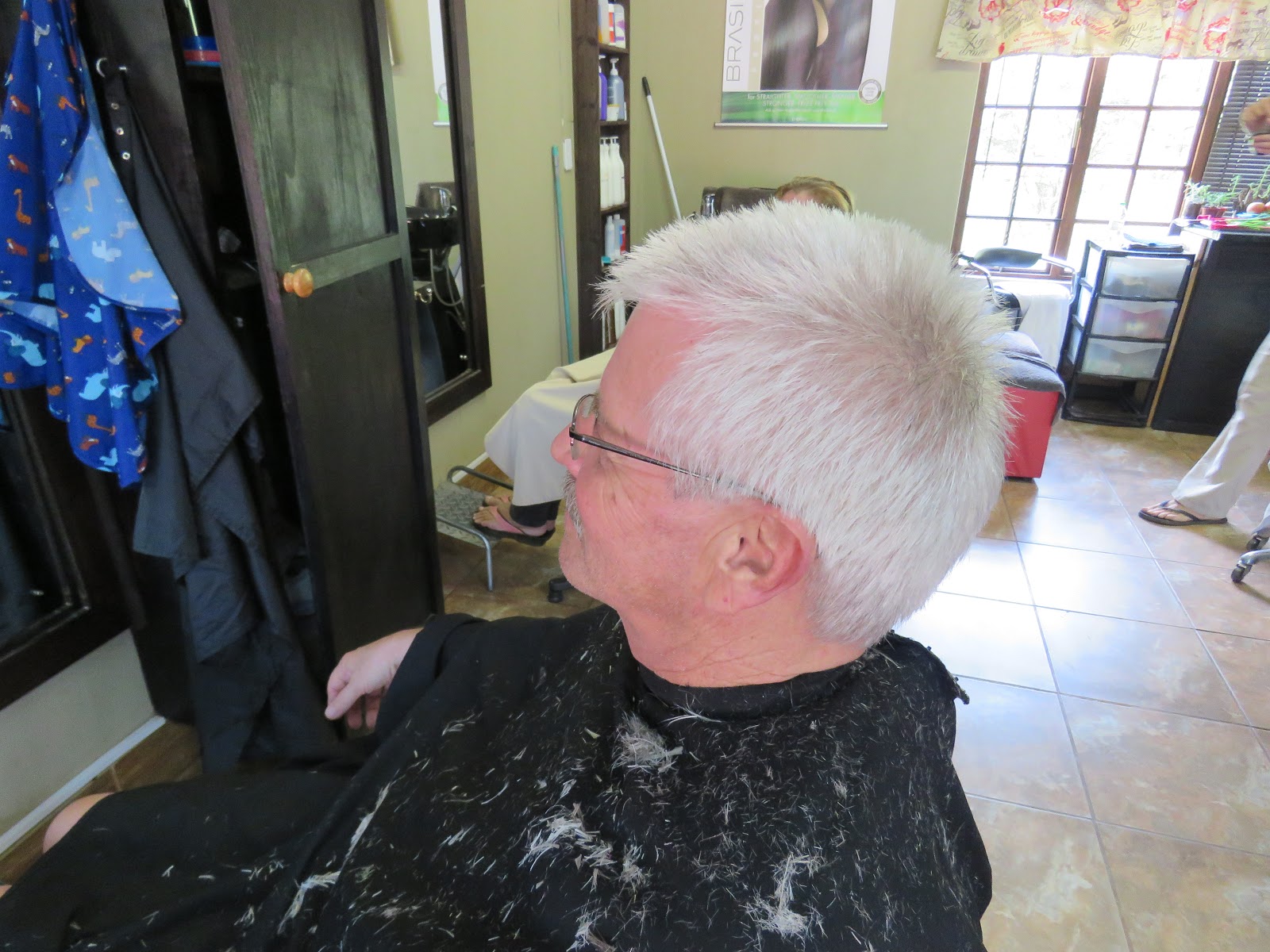
We always get a kick out of his haircuts in locations all over the world, usually every three months or so and often with an outstanding story to tell. Yesterday’s good cut at the Marloth Park Salon wasn’t as story-worthy as many in the past but none the less was worthy of a mention in today’s post along with the photos.

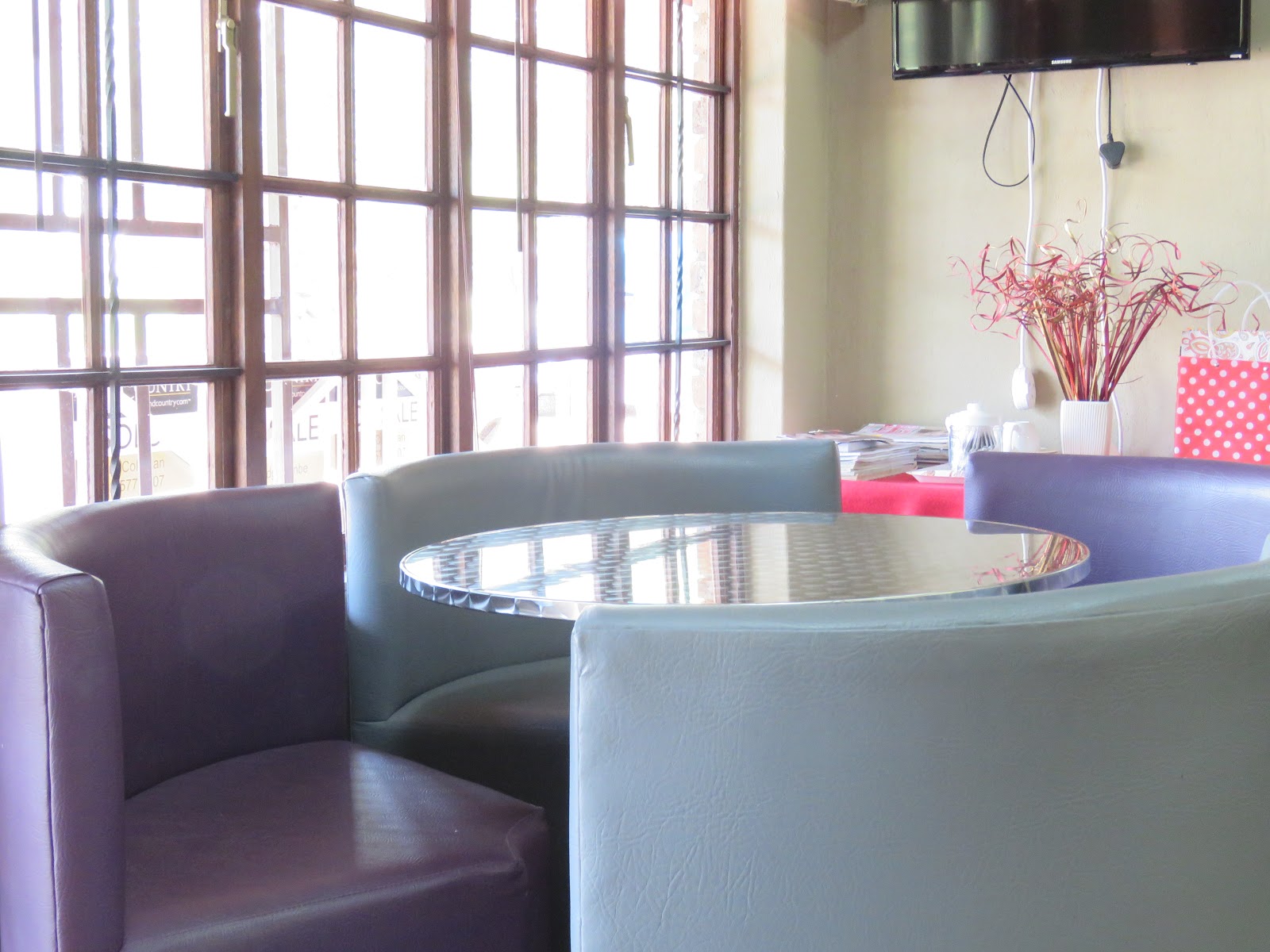
This is a booth where customers could have a beverage and wait for their appointment.

Earlier in the day, we headed back to Komatipoort to the pharmacy and hardware store. We were looking for some spotlight to illuminate the yard at night enabling us to take better photos of the visitors that come to call.

The female stylist worked on Tom while the male stylist had fun entertaining a young girl. Locally, the male stylist is called, “Jack, Just Jack.”

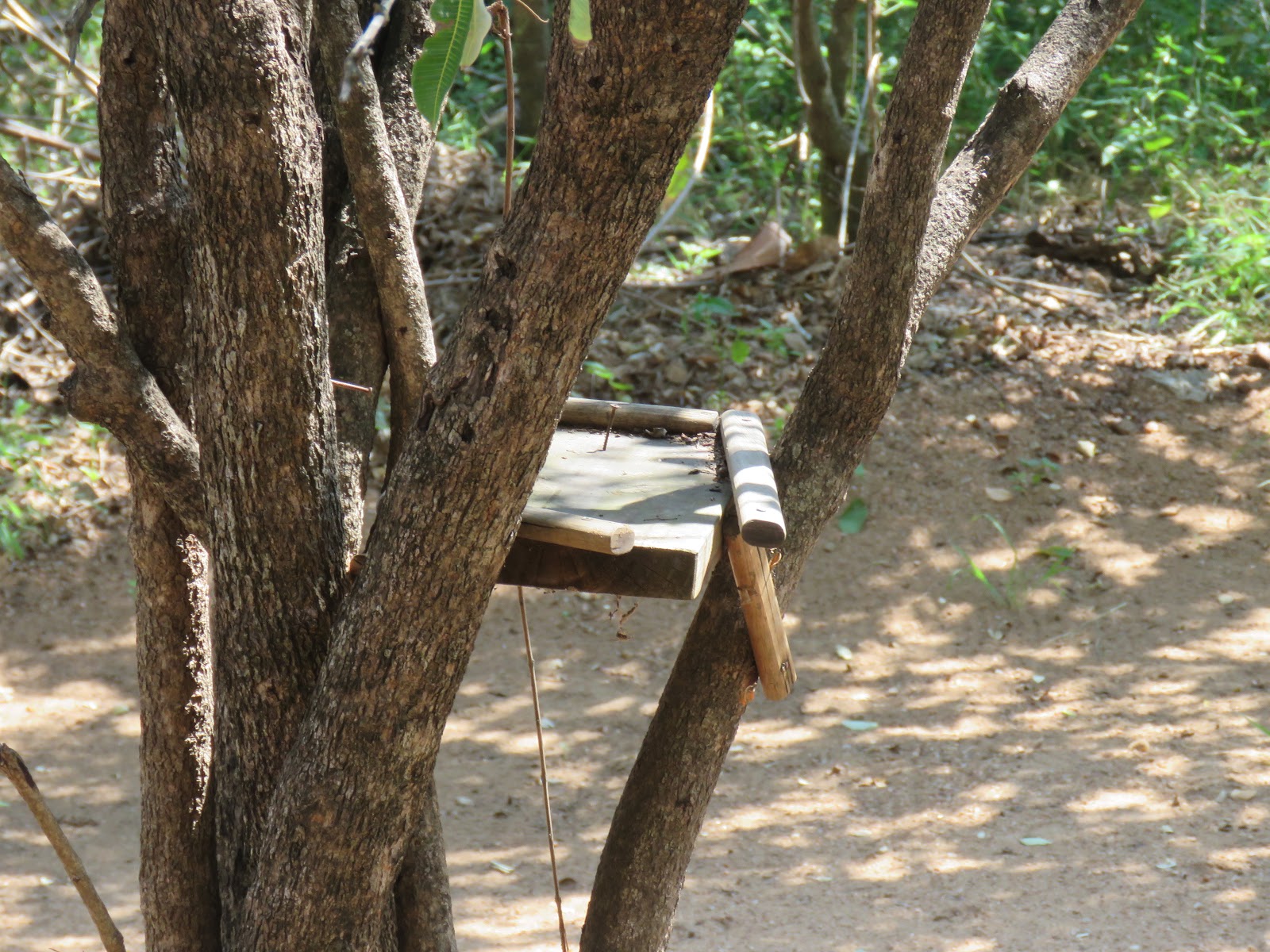
Plus, right now, we’re determined to take photos of the bush babies eating the small-sized fruity yogurt cups we’ve been putting on the tiny stand in a tree, as shown in this photo below:

It’s not uncommon to see these bush baby platforms in homeowner’s trees (such as this one in our yard) for the very purpose of putting out fruit and yogurt for the nocturnal bushbabies who are hard to see at night as they fly through the trees.

We weren’t home last night (more on that in tomorrow’s post) but the prior night for the first time since we arrived, we actually had a chance to see the bush babies eating from the little cup of fruity yogurt. 

The finished product looked best after he washed it and blew it dry. The cost was ZAR 130 with tip, (US $11.01).

But, it was so dark that we couldn’t get a good photo without using flash, which prompted us to consider purchasing some spotlight that we can set up for a few hours each night, turning off when we go inside long after dinner.

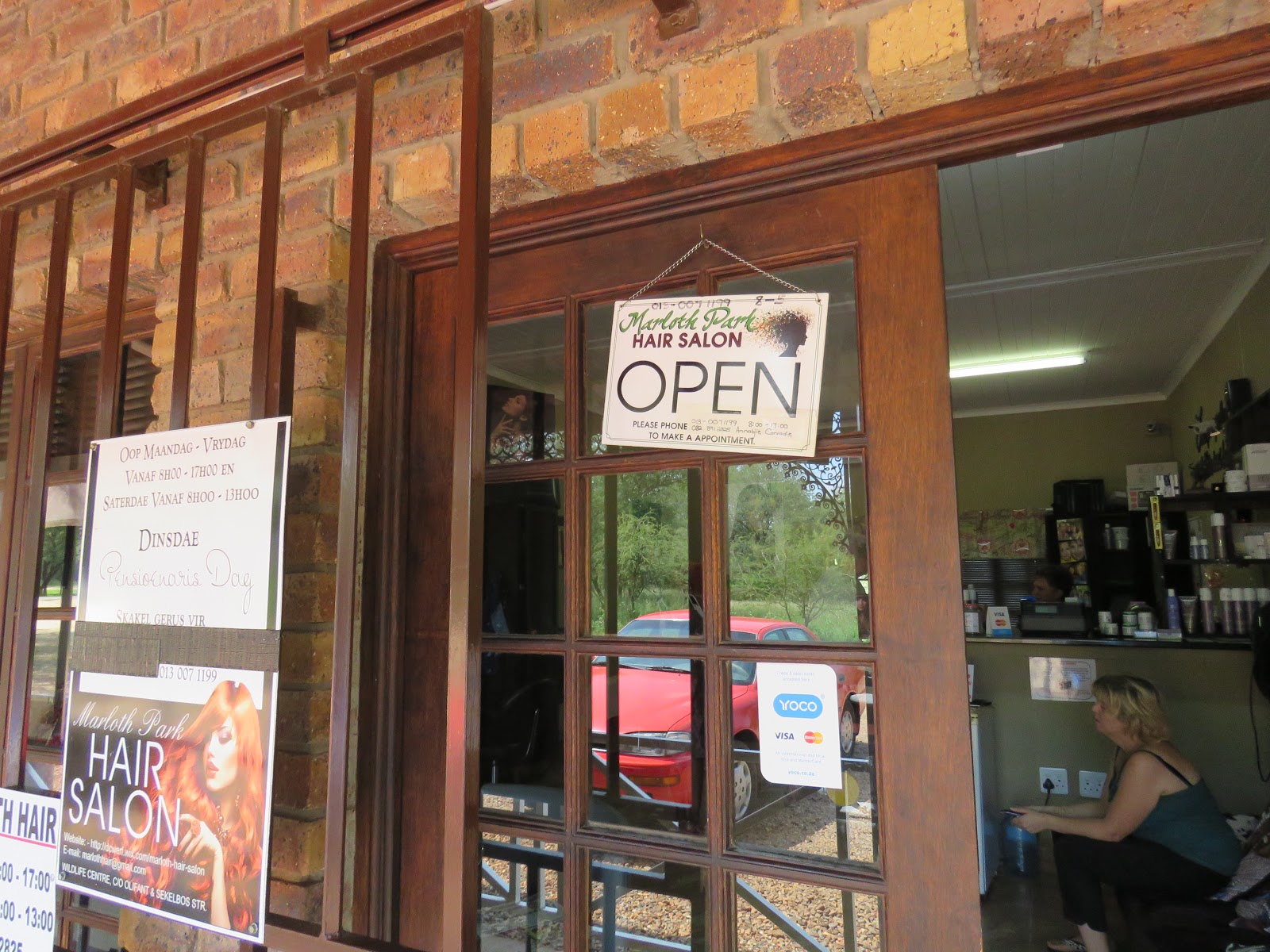
The entrance to Marloth Park Hair Salon where Tom got his haircut.

Using the spotlight, which we purchased at the hardware store for ZAR 258, (US $21.02) we may be able to get a few photos of visitors at night. We’ve don’t want to startle the animals with a camera flash but they seem to be fine with spotlights in the yards of our friends in the park. They’re interested in what we have to offer, food-wise and not as concerned as the lighting arrangement.

The tiny strip mall where Tom got his haircut yesterday.

While on night drives in Kruger National Park, the rangers use spotlights to enable the guests to see the fantastic nocturnal animals. It won’t be much different from using the light as shown below for that very purpose:

The spotlight we purchased in Komatipoort for viewing of nocturnal wildlife such as elusive bushbabies.

Tonight, we’ll be dining on the veranda, as always, anxious to see how our new lantern works to light the way for our nocturnal friends who hopefully stop by.

We hope all of you have a wonderful day and evening as you prepare for Easter or Passover holiday (for those who celebrate). And may all of you who do not observe these holidays, also have a wonderful day and evening.

Photo from one year ago today, March 29, 2017:

A sunny day view of a portion of the Sydney skyline. For more details, please click here.

Protests in Kruger National Park…Easter and school holiday…Burning sugar cane results in ash everywhere…

A hornbill in the bush.

“Sighting of the Day in the Bush”

A lizard-like gecko was found on the veranda.

We’d planned to go into Kruger in the next few days, but when we realized it’s Easter break and many tourists will be coming to the area for holiday and the school break (the equivalent of Spring Break but is fall, not spring here now), we decided to wait until the commotion dies down.

The Crocodile River has been rising due to recent rains.

Also, we’d read online that there are protests at various gates in Kruger, which will add to traffic and the very type of commotion we choose to avoid. We’ll be here a year. We don’t have to go now. 

Here’s an article we found regarding the protests in Kruger. Apparently, it’s peaceful at this point, but one never knows. We feel it makes sense to stay away.

These may be European Mergansers along the banks of the Crocodile River. Please comment if you know otherwise.

We didn’t do all of our grocery shopping for the next week since we need to shop on Fridays or Saturdays going forward when off. Late yesterday afternoon, we drove to Komatipoort for a few items we needed at the market. We find they’re out of many items we need, mainly in the produce department. 

A baboon in the bush.

New shipments come in on Thursday but often aren’t on the shelves until late in the day, making Friday the best day to shop. By Monday, most of the produce we use is sold out. Thus, in the future, we’ve chosen Fridays are our preferred shopping day. There’s no doubt this Friday will be packed with shoppers buying food for Easter weekend.

A solitary waterbuck on the river.

When we returned, the veranda was covered in black soot. Tom checked around the neighborhood but couldn’t find any fires. Could a neighbor’s thatched roof catch on fire? We didn’t smell smoke. Tom swept the veranda before dinner, but only minutes later, it was covered in soot again.

Animal footprints in the sand.

Tom had the idea that the soot resulted from the burning of the sugar cane fields, done before the harvest. This morning, as Marta swept piles of soot in the house, she explained it was, in fact, from the burning of the sugar cane.  Once again, (duh) Tom was right.

The sunset on our return from Komatipoort last night.

Here is an article regarding the burning of the fields before the harvest. Also, here is a quote from the article for those who prefer not to follow links:

“Sugarcane field burning is carried out before harvesting the cane to make the process easier and require less manual labor. It takes place during the harvest season.  The field is set to fire in the burning process, and the leaves are burned off of the stalks. About 80% of the “trash,” including straw, the tops, and green and dry leaves, are burned off. These components constitute about 25% of the entire sugar cane stalk. The burning kills microorganisms and burns the trash, both of which keep the soil rich when left in the fields. In place of burning the cane, the leaves could be removed and burned to create steam for electricity generation or be converted into fuel themselves.

The river is looking better but now, as we’re approaching the dry season.

Whoever thinks of this stuff? We learn something new every day.  So, between Marta, Josiah, and us, we’ll keep the veranda and house free of soot by sweeping it all away as it comes.

Female waterbuck lounging in the grass along the river.

We have no bigs plans for Easter. We’re going to Kathy and Don’s bush home on the river for Easter fun on Monday. They are returning from their home in Pretoria in a few days, and it will be great to have them back in Marloth Park. We’ll cook one of our favorite recipes as always and enjoy a quiet day in the bush.

Today is a gorgeous day, sunny and not too hot, a perfect day for another hopefully exciting drive in the park.

May your day be gorgeous and sunny! 

 Photo from one year ago today, March 28, 2017:

Surfboard shop in Manly Beach, Australia. For more photos, please click here.

Construction next door…Breaking up the serenity of life in Marloth Park…

A mom warthog and possible aunt showed up last night, shortly before dark, with the tiniest baby warthog we’ve seen since our arrival.

“Sighting of the Day in the Bush”

Any comments on this bird’s species? I can’t seem to find the answer online.

It’s a good thing we aren’t here for only a one or two week holiday. The noise, dust, and disturbances resulting from the construction next door would have ruined an entire time away for most tourists.

Four years ago, the homes we rented were well secluded from other properties, and although sound travels through the bush, we rarely heard a thing. Now in this area, there are a few houses we can see from the veranda, which in essence wouldn’t bother us a bit.

We didn’t recall seeing a warthog this tiny since this post in Kenya in 2013 when a mom placed her babies in a hole to protect them from lions in place for the kill.

The benefits of a lot of wildlife stopping by to see us certainly outweighs the annoyances of the daily noise and commotion, which should be over with a few weeks. But now, it appears the neighbor or the other side of us just had a pile of materials delivered, and soon, they’ll startup also.

With all the workers around all day, less wildlife stops by. But the workday usually ends by 3:00 or 4:00 pm, and once again, magic happens, and visitors grace us with their presence within an hour or two.

It was surprising to us to see how adept the baby was at eating pellets. It may have been less than a few weeks old.

Last night was no exception. Now that we’ve adopted “happy hour” into our lives several evenings a week, where I have a maximum of two wine spritzers (no sugar added), and Tom has a few beers while dining outdoors every night, this routine has become quite enjoyable.

We close our laptops and put away our phones; no media, no distractions, just the pure pleasure of watching nature unfold before our eyes while engaging in the playful idle chatter that has become so “us” over the years.

The baby would wander off a bit from time to time, but a single grunt from mom and he came running back to her.

With the activity before us, we’re constantly busy. Now that we’ve got birdseed, apples, and a veggie scrap container, we’re often rushing outdoors to indoors to cut up another apple or carrot and refill the red plastic cup with birdseed or the yellow plastic container with pellets. 

We keep the birdseed in the chest freezer, which has proven to be quite a handy addition to our daily lives. We keep the birdseed in the freezer to avoid getting more insects inside the house. The fruit and veggies are kept refrigerated to ensure freshness and safety for the animals and to keep the ants away.

The kudus weren’t standing together, so we couldn’t get a photo of all 11.

Last night was a classic example of the perfect evening. Not only did we see the tiniest baby warthog we’ve ever seen, but we had the rousing interaction between guinea fowls and francolins reacting to one another while clamoring for the seeds we tossed onto the ground. It was a laugh-fest for us and seemingly fun for them.

Then came a “forkl” of kudu (yep, that’s their collective noun) for a total of 11 females, including a few youngsters. We’d seen this forkl in the past, and they seemed happy to see us, nibbling on cut-up apples and carrots fed from my hand, and handfuls of pellets tossed to the ground.

There’s one particular female kudu who’s come to know me, and she gently nudges my hand for more, looking directly into my eyes. Often, people underestimate the power of communication between wildlife and humans.  Sure, some are dangerous, and one must steer clear. 

It was almost dark, but this kudu approached me for a handout.

For example, I’d never feed a male kudu from my hand. His huge antlers could inadvertently cause great harm. We always keep a safe distance. Also, we don’t hand-feed warthogs. Their razor-sharp tusks are deadly, and they aren’t particularly gentle like female kudu and bushbucks. 

Not long ago, we posted a video of a warthog tossing a mongoose into the air, which can be seen here if you missed it. This split-second action appears about halfway through the short video.

We’re learning so much. Our hearts are filled with respect and admiration for the gifts Mother Nature, God, or whichever belief you may possess (or not) bestowed upon us lucky humanoids. It’s undoubtedly our responsibility to honor and revere all species on this earth, both human and animal.

Most of the time, mom and baby stayed close to one another.

As much as we have definitive opinions on conservation, we won’t get into the “politics” of this sensitive subject. Unquestionably, most of our readers can readily imagine where we stand on this topic based on our passion for wildlife. 

But, here, we choose to avoid highly charged politically motivated topics. At the same time, we maintain the integrity of living life on the move, primarily referring to our motto as shown on our homepage, which reads: “Wafting Through Our Worldwide Travels with Ease, Joy and Simplicity.”

“Mom, I need a drink after all those dry pellets.”

As a result, we choose to ignore the noise and commotion of the construction the best way we can during this off-season in Marloth Park when homeowners have work done on their holiday rentals. We’ll strive to maintain the positivity we find adds so much quality to our lives.

May your day consist of ease, joy, and simplicity.

Photo from one year ago today, March 27, 2017:

Bob, our kindly landlord, and a new friend had insisted on driving us to see some of the sights in the area, including the beautiful historic St. Patrick’s Estate. For more photos, please click here.

It’s all in the numbers…Laughing out loud…A day in the life…

This was the first time we’d ever seen Guinea Fowl sitting in a tree.
“Sighting of the Day in the Bush”
Our first tree frog, most likely a result of the white foam tree frog nest, is shown in this post.

Yesterday was quite an enjoyable Sunday. We started the day with the post, uploading it by 11:30 am. With dinner guests the night before and Marta and Josiah off for the day, we tidied the house, put away the dishes, and swept the floors and veranda.

With the doors wide open all day and evening with no screens, many insects enter the house and are found wriggling around on the floor and elsewhere.  It’s a daily task to clear them off, usually sweeping them outside off the edge of the veranda.
They are sitting proudly on the tree while overseeing the pecking on seeds below.
With rain expected today, yesterday I did two loads of laundry rather than wait for Marta, which I’ve been doing regularly, leaving the towels and bedding for her to do on sunny days since she hangs everything outside. No one uses clothes dryers here in Africa.
I hesitate to hang the wet clothing outdoors on the clothesline when each time I’ve done so both in Kenya and here, I’ve been viciously bitten by insects in the grass in and around the clothesline. Instead, I hang the clothes on hangers and top of the granite countertops inside the house. In no time at all, they’re dry.
As soon as we tossed some birdseed on the ground, the Helmeted Guinea Fowl came running.
I decided to make a huge pan of roasted vegetables, saving all the fresh veggie scraps for the wildlife. Some will eat them; some will not.  Warthogs don’t like cabbage or lettuce but will eat zucchini and carrots but always prefer pellets. Zebras and kudus seem to like any fresh veggies along with pellets, of course. Always pellets.

Once the veggies were done cooking and cooling, I popped them into the fridge, and we were off to friends Lynne and Mick’s home to see their new thatched roof, stay for a short visit and say goodbye before they’re off to their home in Jersey, UK. 
The word got out, and more started coming from the bush.
Tom was out of cream for his coffee. By the time we left Lynn and Mick’s home, the little markets were closed. We didn’t want to drive the distance to Komatipoort just for cream. 
I suggested he try using some of my unsweetened coconut cream instead of the whole cream to see if he likes it. I use it in tea and find it rather delicious. Much to my surprise, he liked it and will use it in the future. This makes life a little easier since we can store many containers of coconut cream, which is shelf-stable, instead of whole cream spoiling in the refrigerator in a week or two.
There were about two dozen here, but more were lurking nearby.
Upon returning to our place by 4:30, we were in for a pleasant surprise. Dozens of Helmeted Guinea Fowl appeared in the yard, looking for a handout.  How quickly they learned that we now have birdseed. Ironically, as I write this now, they’re back!  I jumped up to fill the red cup with seeds and tossed it their way.
Clucking and pecking, they’re thrilled we’re tossing birdseed their way. Next time we head to Daisy’s Den, the feed store, we’ll have to purchase bigger bags of seeds.
Tom calls them Guinea Hens, making me laugh.  They cluck a bit like a combination of turkeys and chickens.
Last night, we had a bigger crowd of guinea fowl than we’d seen to date. We entertained ourselves for an hour while taking photos and tossing seeds. It may not sound like that much fun, but for us, it’s a pure pleasure. I don’t recall ever seeing four dozen wild turkeys in our yard in our old lives, but on occasion, we may have seen a dozen. This is fun.  Well, for us anyway.

At 5:00 pm, our next-door neighbor stopped by to ask if we’d like to join him at his house for “happy hour” at 6:15. His home has been undergoing some noisy construction work, and he kindly wanted to make it up to us with an invite. It hasn’t bothered us much (we never complained), and they’ll soon be done.

They fight and peck at one another over the birdseed.
At 6:15, we headed over to Ruud’s home and sat outdoors in lawn chairs on the grass with him. After the rains, the mozzies were on a rampage, and even with plenty of repellent on, I was getting bit, including on the bottom of my foot with shoes on! Since we’re not taking malaria pills, we tend to be more careful than ever.

Our veranda is approximately over one meter (about four feet) above ground level. As a result, it’s much easier for us to be outdoors all evening sitting at the big table, getting little attention from the insects. If we were to sit on ground-level dirt or grass, it’s an entirely different scenario.

One Helmeted Guinea Fowl are sitting in a tree.
By 7:00 pm, we returned to make dinner consisting of excellent leftovers from Saturday night. By 7:30, we were seated at the outdoor table, enjoying a delicious meal to which I added the roasted vegetables. We no longer watch a show during dinner since we began dining outdoors each night.

The sounds of nature are all we need to entertain ourselves.  After dinner and before bedtime, we wander indoors and may watch one downloaded show on my laptop.

And then, there were three sitting in a tree.
It’s an easy life in many ways. Knowing it will be like what we’ve shared in these past six weeks with occasional trips away gives us a sense of peace and comfort, coupled with the adventure of what is yet to come while we’re here.

Soon, we’ll begin planning our trips to other countries in Africa, but for the time being, we’re “living in the moment,” finding each day a magical wonder.

Please check back for more.  We appreciate every one of our readers!
Photo from one year ago today, March 26, 2017:
Our kindly and thoughtful landlord, Bob, with Tom. What a great guy! For more and the results of our immigration issues in Australia, please click here.

Hippo Day!…First time sighting since our arrival…Exceptional dinner party…

At first, with the naked eye, we thought this was a rhino from way across the river. Tom looked through the binoculars while I zoomed in for a photo to delightfully discover it was a hippo, the first we’d seen since our arrival. That’s a cattle egret near their head.

“Sighting of the Day in the Bush”

Gecko on the orange wall at night.  Check out the “red-eye.” Where’s the tail?

With company coming for dinner and with most of the food prepped, we decided to take a drive to the Crocodile River since, after the rains, we’d hoped to see more wildlife.

In my old life, I’d never have taken the time on a day company was coming for dinner when I’d be too busy to take a few hours for frivolities. This life is different, allowing me time and motivation to do exactly whatever strikes me at the moment.

We took off in the little blue car after stopping at the petrol station to add air to a low tire (which seems to be holding up OK), and off we went on the outrageously bumpy dirt roads that take us to the river.

Since hippos stay close to the water and the river so low recently, we hadn’t expected to see any hippos, not from Marloth Park or Kruger National Park.

It was hot, humid and the air felt thick.  Bugs congregated around us each time we stopped and got out of the car to scan the riverbanks for possible sightings. We stopped at the usual brick overlook structure but didn’t see a thing. 

A group of tourists relaxed on the tiered seating having lunch and drinks. It’s always busier on these roads and overlooks on the weekends when many South Africans from other areas flock to Marloth Park for a few days of “holiday fun” among the precious wildlife, often retreating from the “extra” humans in the park.

We’ve noticed that generally, we have fewer visitors to our house on weekends. The only thing we can attribute this to is the added cars and people visiting. Could the wildlife prefer to stay “undercover” when there are so many humans milling about?

The hippo is responsible for more human fatalities in Africa than any other large animal from this site. The hippo is considered the most dangerous mammal in Africa. Male hippos actively defend their territories which run along the banks of rivers and lakes. Females have also been known to get extremely aggressive if they sense anyone coming in between their babies, who stay in the water while she feeds on the shore. Hippos can run at speeds of over 20 miles an hour, and they have enormous jaws which host up to 20-inch canines.”
I suppose the longer we’re here; we’ve become protective of this unique location, preferring it to stay natural and unencumbered with the likes of too many tourists coming and going, often staying for only two or three days.
Then again, the revenue generated by tourists is vital for many of the shops, lodges, and homeowners renting their properties to incoming tourists.

Sadly, some tourists ruin it for everyone, disturbing the quiet and easy flow of life in this veritable paradise for animal lovers and those seeking the serenity of this magical world, so far removed from everyday life.

We watched for some time, attempting to get a better photo of this hippo with a few oxpeckers on them, clearing off the insects.

As we drove along the river, eyes searching to the distant shore, we spotted something dark and mysterious across the river. Keeping in mind, we could be talking about a distance of up to one kilometer (.62 miles) from our vantage point, making photo taking with our less fancy camera a bit tricky to get a clear shot.

Tom maneuvered the car into a perfect place to park while we got out and walked through brush and grass to get as close as possible. Getting closer by 15 meters (50 feet) is nothing compared to the distance from the sighting, but we forged along anyway.

It was challenging to get a more explicit photo at such a distance, but we were nonetheless thrilled to get these photos.

The perception that moving even such a short distance closer would enhance the quality of our photos, spurred us on. Batting off flies and other insects, we steadied ourselves as much as possible to take today’s hippo photos.

We’d love to have seen more hippos like we had while in the Masai Mara, Kenya, in 2013. But, with the inaccessibility of the Crocodile River, we happily take what we can get, always thrilled in the process.  Here’s a photo of hippos we’d taken while on safari in Kenya:

We captured this “bloat” of hippos along the Mara River during our first hour on safari in Kenya in 2013.  Here’s the link from that date.

The above photo doesn’t in any manner make us feel, “Oh, that was then.  This is now.” Instead, we think in terms of our collective worldwide experiences. Africa presented these experiences to us. When?…is irrelevant, so it’s easy for us to revel in one hippo knowing we had the above opportunity long ago and perhaps will have more in the future.

Here’s another photo we posted on Tom’s birthday, December 23, 2013, of this glorious hippo at sunset as we crossed the Crocodile River:

As the sun went down, the reflection on this hippo in the Crocodile River on Tom’s birthday in 2013 was unique.  For the link from that date, please click here.
Yesterday, as we continued, we were breathless over other encounters on the road back to our property, photos which we’ll share in the next few days.  Each time we embark on a drive, we have few expectations, and, in one way or another, we’re always pleasantly surprised. This upcoming week, we’ll head back to Kruger, this time staying on the paved roads.

As for last night’s dinner party of six, it was delightful.  Our friends Lynne and Mick and Janet and Steve were here for what proved to be a near-perfect evening. As always, the conversation flowed with ease, and the pace was low-key and stress-free. 
Each time we go to the river, the first animal we long to see is an elephant.  We’re seldom disappointed.

We were pleased they enjoyed our meal of mozzarella stuffed meatballs, topped with homemade marinara and two kinds of cheese along with a side of bacony green beans and salad. For dessert, we served ice cream bars and coffee with cream. After they left, at almost 11:00 pm, Tom had a lot of dishes to wash, but together we cleaned up and awoke to only a few things left to do this morning.

In yesterday’s post, I mistakenly mentioned Janet and Steve would be away for some time. As it turns out, they’ll be back in Marloth in no time at all, and we look forward to seeing them again soon. 

This big guy took water into his trunk and sprayed it on his back to cool off on a scorching day.

Lynne and Mick return to their home in Jersey (UK) for many months in a few days. We won’t see them again until November other than to run over to their home this afternoon to say goodbye and see their newly thatched roof (almost done). Later we’ll return “home” to some mighty fine leftovers.

Last night’s sunset, after our guests arrived, was hard to see through the trees.

That’s it for today, folks. Of course, we’ll always be on the lookout for more to share with each of you every single day! Have a great day!

Photo from one year ago today, March 25, 2017:

Volleyball competitors are warming up for tournaments in Manly, Australia. For more photos, please click here.