Exciting first time visitors!!!…Both human and animal…Quite the day and evening…

While we were attending to the warthogs, these two first-time visitors to our yard stopped by.  Moments later, there were more.

“Sighting of the Day in the Bush”

After the zebras left, the warthogs drank from the pond and went back to looking for pellets.

It would be easy to assume that spending most days on the veranda in this holiday home in the bush, that boredom would eventually set in at some point. After all, how many animals can we watch and photograph day after day? 

A new warthog family stopped by, one mom and five babies.  It doesn’t take too many handfuls of pellets to get mom to stare at me for more.

For us, it’s never enough. We consider our passion and enthusiasm, not unlike a sports fan which can easily spend free time watching sporting events on TV. Is it a hobby? Perhaps, to some degree.

Four boys had stopped by for some pellets and fawning.  They loved it all.

But, it feels more profound than a hobby would be for us. When the zebras showed up in the yard yesterday afternoon, neither of us could wipe the smiles off our faces or deny the rush of feel-good hormones coursing through our veins. It’s indescribable.

The warthogs weren’t happy to see the zebras since they’d have to share the pellets. On a few occasions, there was a scuffle, but no one was injured.

We easily recall the excitement we felt in our old lives when we spotted a coyote, a moose, a deer, a heron, or even a bald eagle in our yard on the lake. Oddly, at that time, we weren’t into taking photos. Who’d want to see them anyway?

Although there are only a few big cats in Marloth, there’s little risk of danger for most animals.  And yet, they are always on the lookout.

No one ever enjoys feeling obligated to watch a friend or family member’s slideshow with photos from their yard or a recent vacation/holiday. We all recall being stuck in this uncomfortable position at different times in our lives.

These magnificent animals don’t hesitate to make eye contact, nor do we.

For us, there’s a certain irony that we ended up with this well-read blog that draws readers from all over the world, day after day, anxious to see what photos we’re posting for the day. We’re amazed by this!

I was contemplating the steps to the veranda.

You may wonder, why are we so fascinated with warthogs? Their looks are not necessarily a big draw, although I find them quite adorable, mainly due to the knowing look in their eyes. They’re smart, like most members of the boar and pig family.

Munching on the pellets, we placed them on the edge of the veranda.

That intelligence and ability to communicate with each other and, with us, is astounding. In a short time (three weeks since we arrived), those that regularly visit already know the sound of our voices and respond when I call them from afar. It’s magical, for sure.

During most of their visit, they stayed close to one another and not too far from us.

And the rest? The zebras? They, too, are intelligent animals, and we have no doubt they’ll return soon after the pleasure time they spent in the yard with us, not only from the pellets they consumed but the keen attention we paid to their playful antics.

This guy walked along the bottom step.

At 5:00 pm, friends Lynne and Mick arrived for dinner. We started our evening with a few light snacks and drinks at the big table on the veranda. When we’ve had company for dinner, we dine outdoors, which most residents of Marloth Park seem to prefer over dining indoors.

Tom said, “Please don’t kick that little car!”  They didn’t.

Like us, everyone wears repellent after dusk when the mozzies are most active. As a mosquito magnet, I have to wear it day and night. We keep the bedroom door shut at all times to reduce the number of insects in the bedroom at night. Nothing is more annoying than the sound of a mosquito buzzing around one’s head at night.

We roasted two whole chickens on the braai, and by 7:30, dinner was served with sides and salad.  The conversation was splendid. Although our lives are very different, we share in the passion of our love for wildlife. Lynne and Mick are huge bird enthusiasts. 

Each zebra has its distinct stripe pattern, not unlike a human fingerprint.

You can find Lynne and Mick’s website here. They are amazing photographers, and their birding skills have been helpful for us in identifying birds throughout the world, along with our friend Louise in Kauai, Hawaii. They have both been excellent resources for us when we’re unable to locate a species we discover along the way.

They were done in our yard and decided to move on.  It seems there’s always a warthog in the photo!

When the evening ended, we all hugged goodbye, appreciating the quality time we spent together. Tom had left a massive pile of dishes and pots and pans in the separate out-of-the-way service kitchen. I insisted on helping him with the dishes, but he wasn’t having any of that. A half-hour later, he was done, everything was clean, and we headed off to bed.
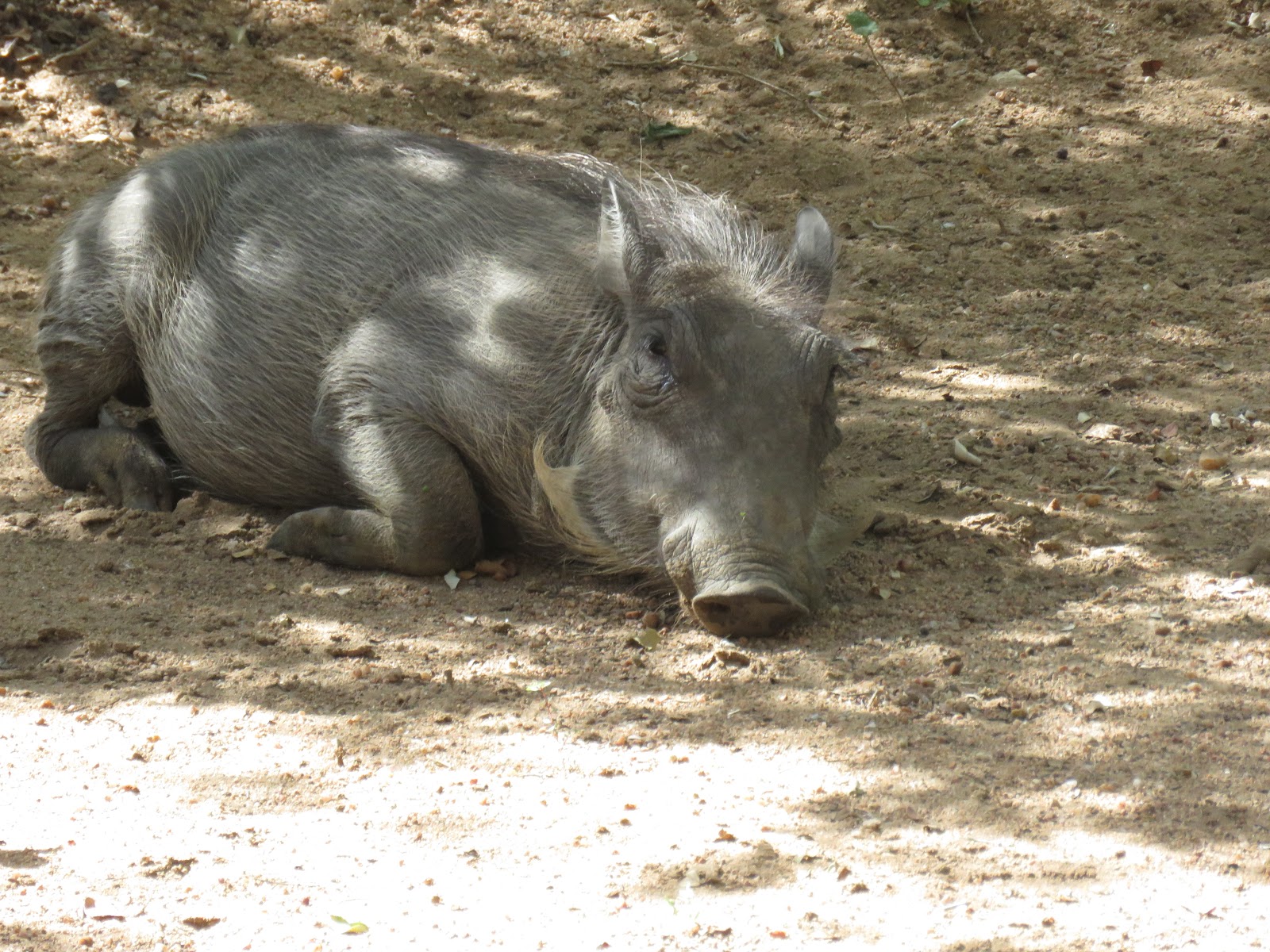
This pudgy baby warthog, now about six months old, was exhausted after the day’s events and rested in the shade.  Yesterday the temperature was over 90F, 32C.

As usual, this morning, while outdoors, we experienced a new sighting we can’t wait to share tomorrow! Soon, we’re heading to Komatipoort for a few items. Oops, I must go! I just heard the sound of hooves on the dirt road. I wonder who that might be?

Happy day!

Photo from one year ago today, March 5, 2017:

Two newly born bush babies peering out at the world awaiting them In Marloth Park, South Africa. This photo was taken by friend Mick Dryden (wife, Lynne), with whom we had dinner last night, who are both extraordinary photographers and birders. Ironically, Mick and Lynne were our dinner guests last night!  Click here for more.

Reasonable cost of living in South Africa…Could we have forgotten our upcoming wedding anniversary?…

This female bushbuck flipped into the air after something bit her!

“Sighting of the Day in the Bush”

A grey heron in Kruger National Park.

We arrived at Jabula for dinner last night at 6:00 pm. We’d hoped to mingle with other customers who may be sitting at the inviting bar in the restaurant.

With only one other patron in the restaurant, we found ourselves engaged in pleasant conversation with Lyn, a friend of owners Dawn and Leon, who recently started working in the popular local establishment.

This time, little Ms. Bushbuck had Helmeted Guinea Fowl join her for a visit. They also like the pellets but have to break them up to fit in their beaks.

It’s the low season now in Marloth Park, but soon, when Spring Break begins, many tourists will arrive for one or two week holidays. Few stay as long as we do. At that point, the few restaurants in MP will be busier. But, last night’s quiet experience at Jabula on a Saturday night was an isolated case.  

There was only one other couple dining while we dined at around 7:30. We moved from the bar to sit outside on the veranda, enjoying another delicious meal. Tom ordered the mixed grill with chips (fries) while I had my usual peri-peri chicken livers and a Greek salad.

Tossing pellets to three females kudus who stopped by.

Our total bill was ZAR 478 (US $40.09), which included tax and tips. Instead of ordering a glass of wine, I accidentally ordered an entire bottle of Pinot Grigio while Tom had a few bottles of Castle beer. 

Knowing I’d never drink an entire bottle of wine, I ended up taking half of it “home,” which I’ll finish tonight when our friends Lynne and Mick come for dinner. Where in the world can one go out to dinner, order an entire bottle of wine and several bottles of beer, order meals and, tender a tip for this amount?  

Female kudu eating pellets out of my hand.  They’re very gentle, but any sudden movements send them on their way.

We decided to return to Africa for a few reasons: primarily to fulfill my dream of returning to Marloth Park, my favorite place in the world, and two, to “lick our wounds” after the expensive Antarctica cruise. Our mission is fully being realized. 

The cost of living here is more reasonable than anywhere we’ve lived in the world. By the time we leave Africa next March, we’ll have recovered the entire cost of the Antarctica cruise by spending so much less on our monthly expenses.

She stopped eating from my hand and decided to go after the container!

There will be the added expenses of the tours we’re planning in the next few months when we’ll visit a few other countries on the continent, after which we’ll return to Marloth on each occasion.

Last night, as we chatted in the bar, we remembered that our wedding anniversary is coming up on March 7th. We’ve been having such fun. Lately, we could easily have forgotten the anniversary! Ironically, this anniversary is less critical than the October 31st anniversary we celebrate with enthusiasm each year. 

We adore this large full-grown male who stops by every few days.  He likes eating the pellets off the edge of the veranda, which prevents him from having to bend down with his heavy “rack.”

It was on that date in 2012 that we began our journey…a day of liberation from “stuff” and “work” and a day to celebrate our “stepping outside the box” to live our retirement years to the fullest. But, this coming Wednesday, March 7th, we will celebrate our wedding anniversary with plans we made this morning and will share on Thursday with photos.

Having placed less emphasis on our wedding anniversary doesn’t necessarily mean it’s not essential to us. All of our readers know we are a very happy couple and love every moment we spend together. But, the full realization of the depth, magnitude, and meaning of our relationship didn’t fully come to fruition until we began to travel the world.

When he finishes the pellets, we put them down, and he stares at us for more.  It’s impossible to resist his request.  He’s so handsome.

It’s been through this process during the past 5 1/3  years that we’ve come to fully appreciate how compatible and loving we are as a couple. It was easy to put aside our needs as a couple in the hustle and bustle of our past lives, loaded with responsibility and stress. 

In this magical life, sharing every morsel of our day-to-day lives, our level of admiration and appreciation for one another has catapulted to a level we never dreamed possible. So, yes, we will celebrate on March 7th, as we hope and pray for many more such years to come.

Tom, coming back up the steps after he lay down a raw egg for the mongooses.

Be well.  Be happy. 

Photo from one year ago today, March 4, 2017:

We had a great time with new friends, Christina and Harold, with whom we enjoyed dinner in their Penthouse Suite the previous night. For more details, please click here.

Yesterday’s wondrous adventure…In a span of one month…From elephant seals and elephants…Who would have thunk?…

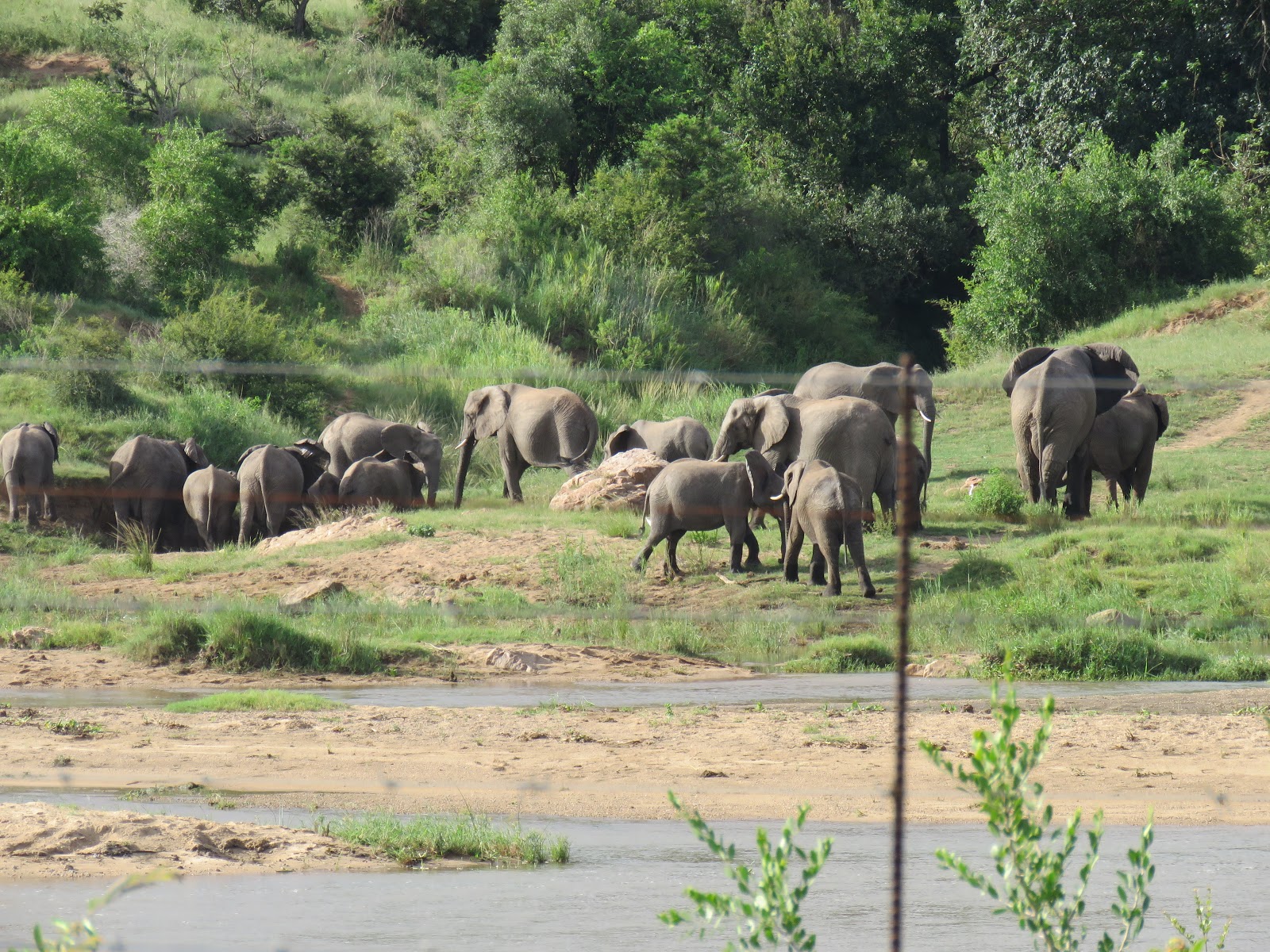
The lines in this photo are the electrified cables separating Marloth Park Conservancy and Kruger National Park. There were 17 in this photo, but later we counted 20, including a male clearly “told” by the matriarch that he couldn’t stay with the herd. See the photo below as he wanders off.
Part 1 video.
Part 2 video.
“Sighting of the Day in the Bush”
Yesterday, another “band” of mongooses stopped by looking for eggs.  Of course, we complied. This mongoose decided to rest their chin on a log to take a break from the frenzy of activity.
Yesterday afternoon as we stood at the electrified fence in Marloth Park delightfully watching a 20 member “parade” (another word for a herd of elephants) at the Crocodile River, an interesting thought popped into Tom’s head…we went from observing elephant seals in Antarctica to observing elephants in South Africa in a month.
In Antarctica, one month ago, this “arrangement” of elephant seals found comfort sleeping together in a ditch. Now, here in South Africa, we are blessed to see elephants. Here’s the post from that date.
Not only did we ooh and aah over the scene before our eyes when we were out on one of our almost daily drives through the Conservancy, but we were also totally awestruck by “safari luck’s” continuing presence in our lives.
In ones and twos, they meandered down the hill to the Crocodile River.
Tom often mentions how humbled and blessed we are, not only to live this peculiar and amazing life on the move but also in the heart-pounding experiences we encounter along the way that continues to surprise us daily.
Most likely, the majority of the elephants were females.  Males are kicked out of the herd by their 12th birthday when puberty sets in.

Perhaps our enthusiasm is slightly higher than some in our attentiveness as we always strive to get the very most out of every day of our world travels, knowing full-well that someday it will end.

Female elephants stay together for life.
This may prove to be the last period we’ll spend in Africa, and of course, Antarctica was indeed a once-in-a-lifetime experience. Comparing the two experiences is tricky when they each are unique in their particular way. 
Three elephants of varying ages drinking from the river.  Check out the baby in the background!
But the reality remains, they’re very similar in producing a surge in the feel-good hormones that course through our bodies day after day. Perhaps, we’ve both become addicted to this feeling coupled with a sense of adventure we never imagined possible during these senior years of our lives. 
Perhaps, for us, it’s not unlike the surge of adrenalin that those who seek high adventure sports and activities. They don’t do it just because it “sounds fun.” They do it for the “rush.”
A youngster stopped to nurse.
We don’t need to climb Mount Everest or bungee jump for the rush. We need only to stand at the electrified fence between Marloth Park and Kruger National Park, as we did yesterday, fully engaged in the scene before our eye, unable to wipe the smiles off our faces. At the same time, we took distant photos and videos.
As they began to make their way back up the hill. 
No, our photos aren’t as clear as we’d like, but we were no less than 800 meters (2625 feet) from the magnificent animals, and our paltry little camera did its best to capture as much as we could, albeit shakily at times while making the two videos, we’re posting today.
After spending about an hour at the river, they began the trek back up the hill as soon as the matriarch trumpeted a loud sound.  Seeing and hearing this was beyond description.
Sure, it would be great if we had a more sophisticated camera and if I were a better photographer, but we have what we have. We are what we are, content with the small size and weight of our two identical cameras and our abilities as amateur photographers.
For short periods, smaller groups would wander off, only to connect with the more significant herd moment later.
So, today, we share what we captured yesterday with such enthusiasm and joy, hoping those of our readers who embrace wildlife and nature will find this interesting along with us.
This male was pushed aside by the others since most likely the time had come for him to go off on his own, now that he’s reached puberty.  He may find other males he’ll join or may stay alone seeking to mate. Elephant parents typically don’t stay together with their offspring. The babies stay with the moms, sisters, aunts, and matriarch.
If not, bear with us. We’ll have many more stories to tell during our extended period in Africa over this next year, with our plans to leave by next March. During this year, we’ll be moving to other properties in Marloth, visiting other countries in Africa, and continuing to meet new people and see more wildlife.
The others followed suit and make their way back up the hill.

Today, we’ll stay put during the day.  Tonight, we’re off to Jabula for dinner and easy socializing when other patrons are outrageously friendly. Tomorrow night, friends Lynne and Mick are coming for dinner. It will undoubtedly be a great weekend.  

May you have a great weekend as well!

P.S. Today, March 3rd, is World Wildlife Day. For more information, please click here.

Photo from one year ago today, March 3, 2017:
Baby Grand player piano in the living area of the Penthouse Suite on Celebrity Solstice.  The lovely couple who had booked this suite invited the two of us for a private dinner, served by the shop’s “butlers.” It was a sensational evening. Please click here for details.

Final Kruger photos for now…What is the plural names for groups of African animals?…Rather humorous

A herd of impalas at the river.

“Sighting of the Day in the Bush”

A female kudu in the background isn’t happy that Mr. Kudu is getting all of the attention.

It’s not so hot today, with the sky primarily overcast with patches of blue peeking through from time to time. By 6:00 am, we were outdoors on the veranda after we’d heard the sound of hoofs on the dry, dusty driveway in front of our vacation home.

This is a Magpie Shrike.  Thanks to friends Lynne and Mick for aiding in identifying today’s birds.

There stood Mr. Kudu, who’s become a regular in these parts, stopping by a few times each day to see what’s on the agenda. Yesterday, upon returning in the afternoon after our shopping trip to Komatipoort, there were no less than eight kudus in our yard, seemingly awaiting our return.

This is a Southern Ground Hornbill in the grass.

Oddly, a group of kudu is called a “forkl” of kudu as opposed to a herd.  Here’s a list of plural nouns of African animals from this site:

An armoury of aardvarks
A shrewdness of apes
An army of ants
A troop of baboons
A cete of badgers
A cloud of bats
A herd of buffalo
A coalition of cheetahs
A cartload of chimpanzees
A quiver of cobras
A bask of crocodiles
A murder of crows
A pack of wild dogs
A convocation of eagles
A herd/parade/memory of elephants
A leash of foxes
A flamboyance of flamingos
A tower/journey of giraffes
A band of gorillas
A cast of hawks (general)
A kettle of hawks (in flight)
A boil of hawks (spiraling)
A bloat of hippos
A cackle of hyenas
A leap of leopards
A conspiracy of lemurs

A pride of lions
A troop/barrel of monkeys
A band of mongooses
A parliament of owls
A pandemonium of parrots
A prickle of porcupines
An unkindness of ravens
A crash of rhinos
A venue of vultures
An implausibility of wildebeest
A dazzle of zebras

This is a Burchell’s Starling.

I saved this list on my desktop and hopefully will use these nouns to correctly identify groups of animals we post. If any of our readers know of additional plural nouns for other African animals, please post a comment at the bottom of today’s post or send me an email.

A tower of giraffes at a distance.

Well, anyway, back to our forkl of kudu…they seemed happy to see us as they freely approached the veranda. Now, don’t get me wrong. We make no assumptions that animals come to visit “because they like us.”

An implausibility of wildebeest resting under a tree.

Undoubtedly, the fact we have plenty of pellets along with the opportunity to satisfy their curiosity about humans may be the main reason they come to call. Also, most wild animals have specific paths they regularly follow as they forage for food.

Danie explained that when giraffes graze off the treetops in an area for an extended period, the trees eventually emit a toxic taste, nature’s attempt to send them off to another area to allow the trees to replenish. Isn’t nature amazing?

Mom and baby zebra.

It’s these little morsels of information that are of particular interest to us. It’s not always about the wildlife we see and photograph. There’s so much more to this magical place.

This is an African Fish Eagle.

Today, we’re staying in, preparing a great dinner, one of our favorites, the “unwich,” lettuce wrapped sandwich (no bread) with fresh ham, chicken, roast beef, tomatoes, purple onion, cooked streaky bacon, mayonnaise, and for me, sliced avocado. On the side, we’ll have a lettuce salad with onions, bits of carrot, celery, and diced tomato tossed with our homemade dressing.

The one-lane bridge over the Crocodile River. Swimming and boating are not allowed on the Crocodile River due to dangers from crocs and hippos (the animals responsible for more human fatalities than any other in Africa).

At the moment, it’s quiet with no visitors insight. Indeed, sometime in the next hour or two, we may see a “band of mongooses” running around the yard, looking at us with an expression that says, “You got any of those raw eggs?”

“Yes,” we’ll say, “for you, we do!”

Happy day!

Photo from one year ago today, March 2, 2017:

One year ago, our cabin on Celebrity Solstice was comfortable and roomier than on some ships at 194 square feet (18 square meters).  The balcony is 54 square feet (5 square meters). We have plenty of storage space for our clothing and supplies when able to store our luggage under the bed, leaving ample walking space. For more photos, please click here.

Visiting the bushbaby rehab centre here in Marloth Park…The cutest little creatures in the world…

What a face!  Lisa and Doc, the tiniest of the rescue bushbabies.

 “Sighting of the Day in the Bush”

Sweet Ms. Bushbuck stops by every day for a warm welcome and pellets eaten from my hand.  Its a treat for her and a bigger treat for us.

This morning awakening by 4:30 am, we were determined to get up and out the door early to head to Kruger National Park where we’d purchase an annual pass, called a “Wild Card” allowing us access at any time for a one-time annual fee.

Although we’d been to Kruger many times in the past, each occasion presented us with a wide array of new and unique experiences we’ve both longed to see once again; elephants on the road, crocs in the river; rhinos grazing in the savanna, giraffes lumbering through the trees, herds of cape buffalo and of course, the much sought after lion or leopard sighting and so much more.

Lisa makes little plates of food for the bushbabies which they nibble on for hours.  One of the less-well babies must be fed every three hours including during the night which Lisa doesn’t hesitate to do with unselfish love and concern.

A sighting of any one of the above and any others would provide for a highly successful day and we don’t hesitate in our desire to see these majestic animals in the wild.  But, after getting up and dressed and throwing open the massive wooden doors to the veranda, we found ourselves in a quandary…there were countless wild animals in our yard.  Should we stay or go?

Bushbabies like worms as well as soft foods.

Quickly, we loaded the yellow plastic container with pellets and grabbed a camera, finding ourselves entrenched in the scene before our eyes, we decided to wait until another day to visit Kruger National Park.

After taking countless photos and tossing and hand-feeding pellets to the many visitors that gradually wandered off to their next stop, we grabbed our coffee and tea sitting down at the big table on the veranda, ready to begin telling the story of last night’s visit to Lisa’s home a few kilometers from here.

The four bushbabies spend their quiet time together (they are nocturnal) inside this flannel bags in Lisa’s closet.  When we arrived, all four were awake and ready to see who’d arrived for a visit.

We’d heard so much about the tiny bushbabies Lisa’s been nursing to health as a part of hers and Deidre’s non-profit organization, Wild & Free Rehabilitation Centre based in Marloth Park and Hoedspruit.  We were anxious to see Lisa’s rescued bushbabies that she handles with the ultimate of love and care until they’re ready to be released into the wild.

This up close and personal experience was a treat!

Well, wouldn’t you know, no more than 10 minutes after we finally sat down to begin today’s post, the Internet went down.  After waiting 15 minutes, the message was clear, this would be a perfect time to head to Kruger, sign up for the Wild Card and spend a few hours driving through the park. 

Tomorrow, we’ll share our totally unexpected “safari luck” experience with some amazing photos we can hardly wait to post.  Who knew that late morning and midday self-drive photo safari would prove to be so exciting?  Perhaps, this purported morning window of opportunity doesn’t hold much water after all.

They are shy and yet curious little animals.

Anyway, back to the heartwarming visit to see the bushbabies and spend time with Lisa who graciously welcomed us into their home, serving snacks and wine. (Wow!  We’re always impressed with the hospitality of South Africans!!!)

They love for Lisa to massage and tickle them, moving around to accommodate her gentle touch.

As soon as we arrived at Lisa’s home (the same site where the bush movie and fundraiser for Wild & Free was held on Saturday night) she escorted us to her bedroom where she cares for four bushbabies who happen to reside in her bedroom closet, which by the way, was meticulously clean and tidy.

We simply could not believe our eyes!  We’ve seen bushbabies in both Kenya and South Africa, usually adults but never quite so close up.  With their big eyes, adorable faces and fluffy hair, they are quite a sight to behold.

The tiniest of the four needs a special tonic several times a day.

Watching Lisa interact with them while caring for their needs with special foods and medicines was indeed precious.  The dedication she has to this four little creatures is beyond reproach. 

Unfortunately, one of the bushbabies, aptly named, Special Needs,” suffers from a brain injury he received when negligently kept as a “pet” and later rescued by Lisa.  Sadly, he isn’t expected to survive much longer but Lisa is making his quality of life meaningful and loving in the interim.

Lisa shared a photo of this baby when he was the size of the end of her finger which may be found here on their Facebook page.

But, the remaining three are thriving and growing and, when fully prepared they will gradually be returned to the wild. There are few people who could so lovingly care for these tiny and magical creatures and Lisa, undoubtedly fits the bill.

They enjoy maneuvering around the various clothes in the closet.

After I fed Doc, the smallest of the three remaining (along with Apple and Bubba) I felt a unique affinity for these little creatures and plan to buy some bananas and yogurt for those that live in the trees near our veranda.

I had the opportunity to feed tiny Doc who slowly nibbled on the teaspoon.

Deidre, from Wild & Free whom we also met on Saturday night, stopped by last night while we all sipped on wine and snacked on biltong and chips while savoring the steady stream of visitors that freely come to their yard.  It was indeed magical.  Thanks to both Lisa and Deidre for making these past few evenings extra special for both of us.

We look forward to seeing them again in the near future and hearing when those precious bushbabies are able to fulfill their innate goals of living free in the wild in fabulous Marloth Park.  Who knows?  Maybe we’ll all see them again peeking out from their den in a tree on a warm and balmy night.

What a special experience!

Please stop back tomorrow for more breathtaking photos and our visit to Kruger National Park!

 _________________________________________________________

Photo from one year ago today, February 27, 2017:

Could it be more beautiful in Tasmania?  For more favorite photos of Tasmania as we wound down to our last day, please click here.

More exciting discoveries in the yard…Each day in the bush delivers…Boredom is out of the question…

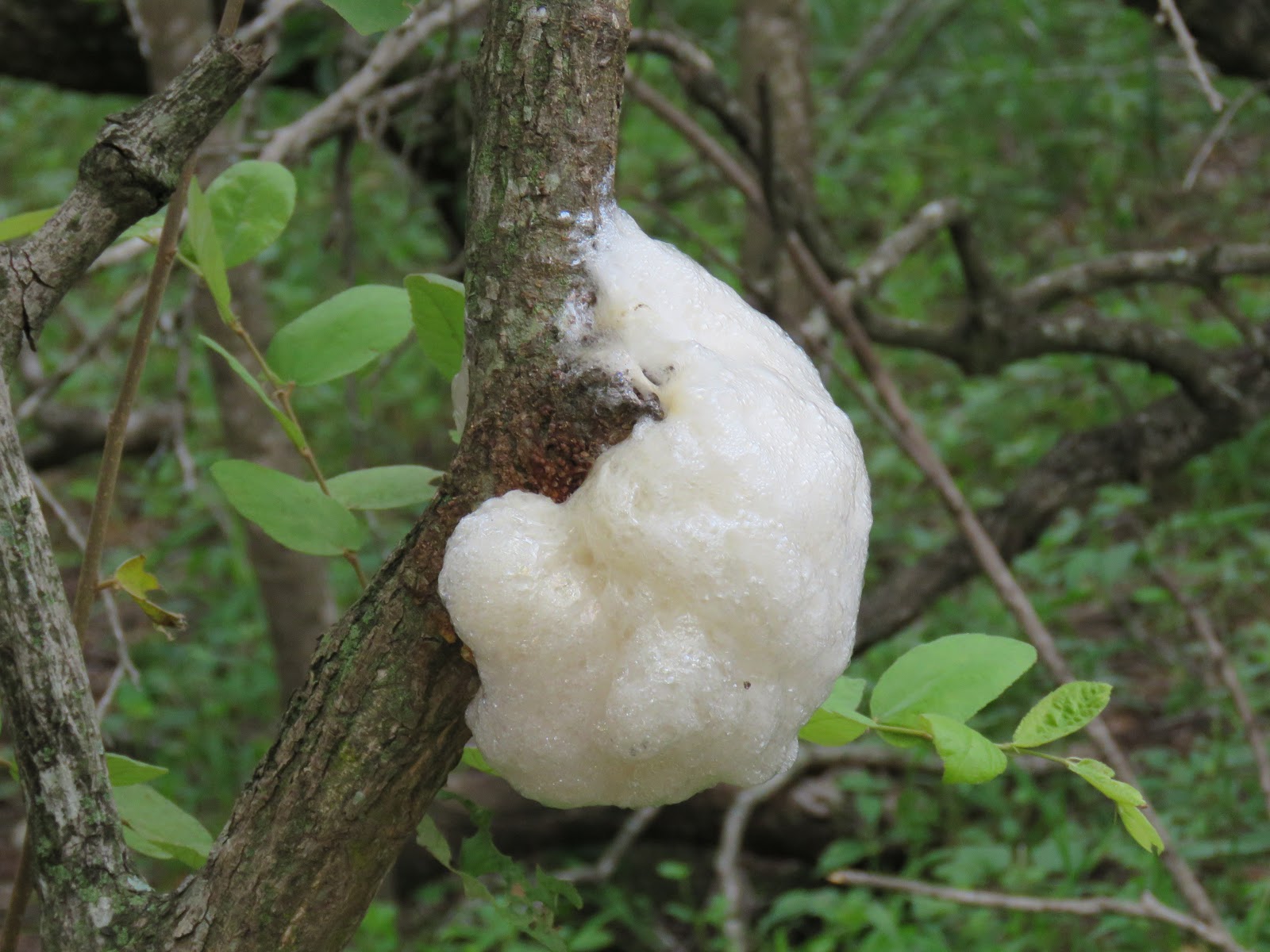
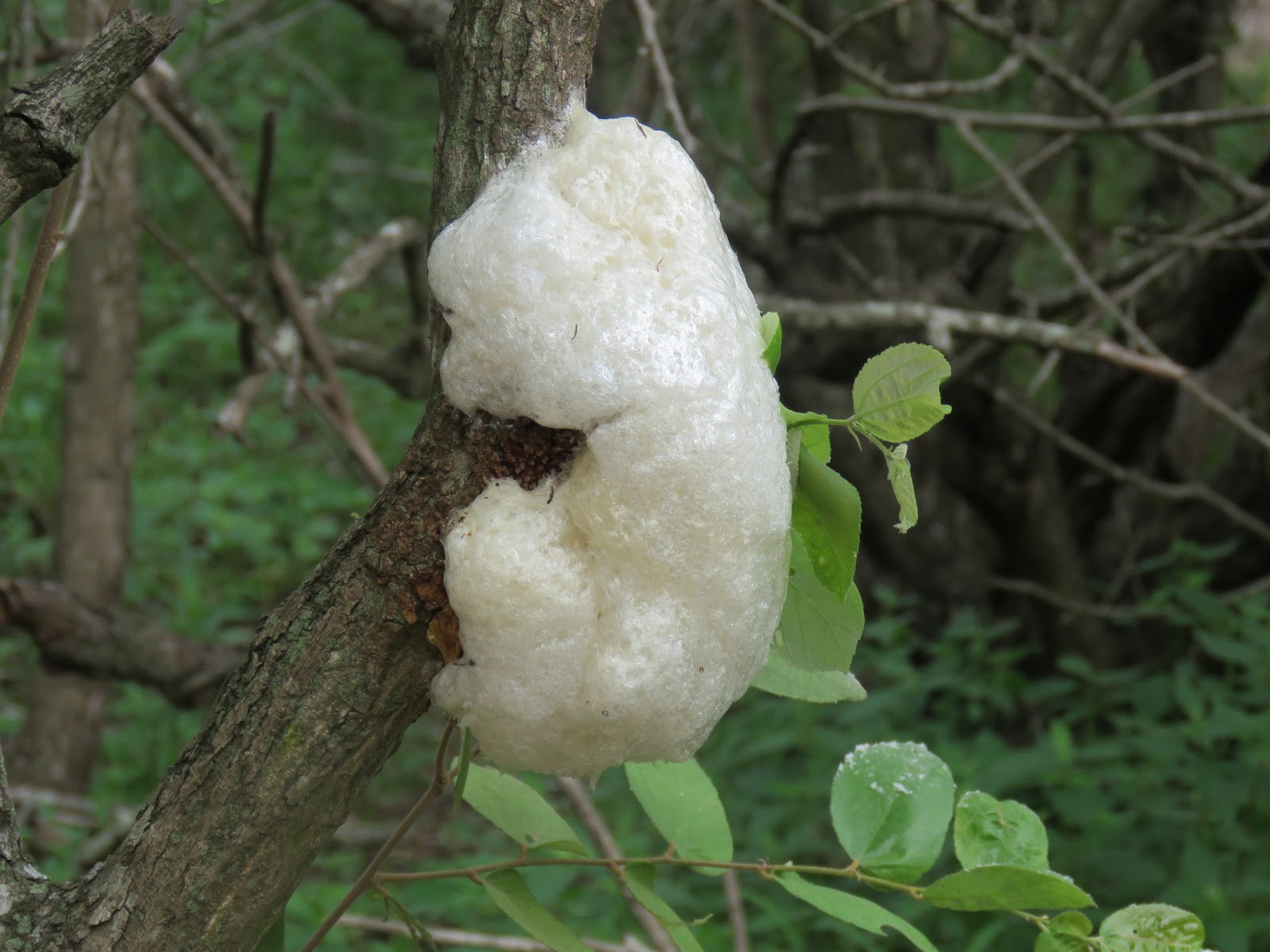
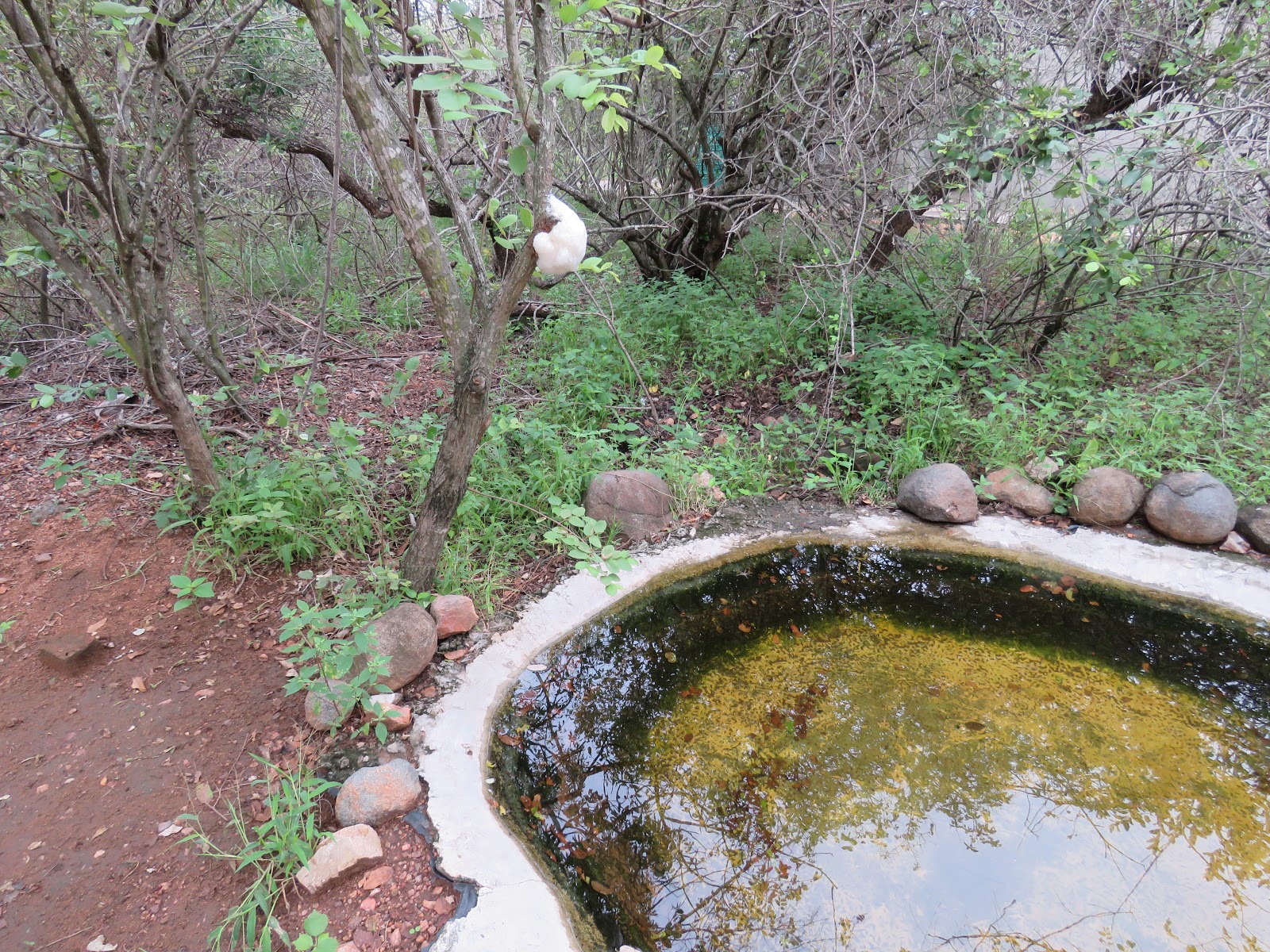
We made this video four years ago when we had the unique opportunity to see the males fertilizing the white foam nest filled with thousands of eggs laid by the female tree frog. But, we missed the fertilization by the male, which must have occurred overnight. A few days ago, we saw a new white foam nest made overnight by the female above the pond in the yard., 

“Sighting of the Day in the Bush”

A foam tree frog nest, made overnight by the female frog awaiting up to one dozen males to fertilize it.  We’ve been watching for the males but have yet to see them.  In this post, four years ago, we had the opportunity to see the males fertilizing the nest. After an incubation period of a few weeks, the tadpoles will drop into the pool of water to complete their growth cycle.

It’s so easy to become caught up in the simple and yet outrageously entertaining life in the bush.   Both the human and animal friends provide a steady stream of exciting and somewhat unusual activities we never imagined in our old lives.

Each day brings new and exciting opportunities to learn more about nature. Even after the seminars and classes aboard the Antarctica cruise, where we expanded our knowledge about unique scenery and wildlife, we weren’t quite as challenged as we are here.

This morning upon close inspection, we realized the mating process had transpired during the night while we were sleeping. Our post from four years ago and the above video we made, show the process. Today, tiny frog footprints on the foam nest indicate the males had already been here. Fascinating!  Who’d ever think of this?

The mere 16 nights in the magnificent Antarctic wasn’t quite as comprehensive as the education we’re deriving now as we continue to discover new species, new scenarios, and animal behavior we never dreamed would roll out before our eyes.

We’ll post photos of the tadpoles and frogs as they mature. 

Sure, we witnessed exciting scenarios four years ago, but as we mentioned a few days ago, we do so now with new eyes and a new perspective. This week, we’ll head over to Kruger to discover its added wonders, much of which we may not experience here in Marloth Park.

A bushbuck in the yard considering a drink from the pond.

Is it possible we’ll ever be bored while we’re here? Sure, wherever we may live, there are always a few occasions where boredom may set in for short periods. But, our journey has never been about constantly being entertained. Its always been about the magnitude of our experiences superseding any insignificant moments of boredom.

The action became rather rambunctious while the baby held his own.

During the “movie in the bush” night, Louise was sitting next to me while Tom and Danie sat behind us before the movie started. Constantly thinking about the comfort and ease of others (Danie is this way, too), she turned to me and asked, “Are you bored? Are you comfortable?”

I giggled at her question, answering, “No, I’m not bored. I’m easily entertained!”

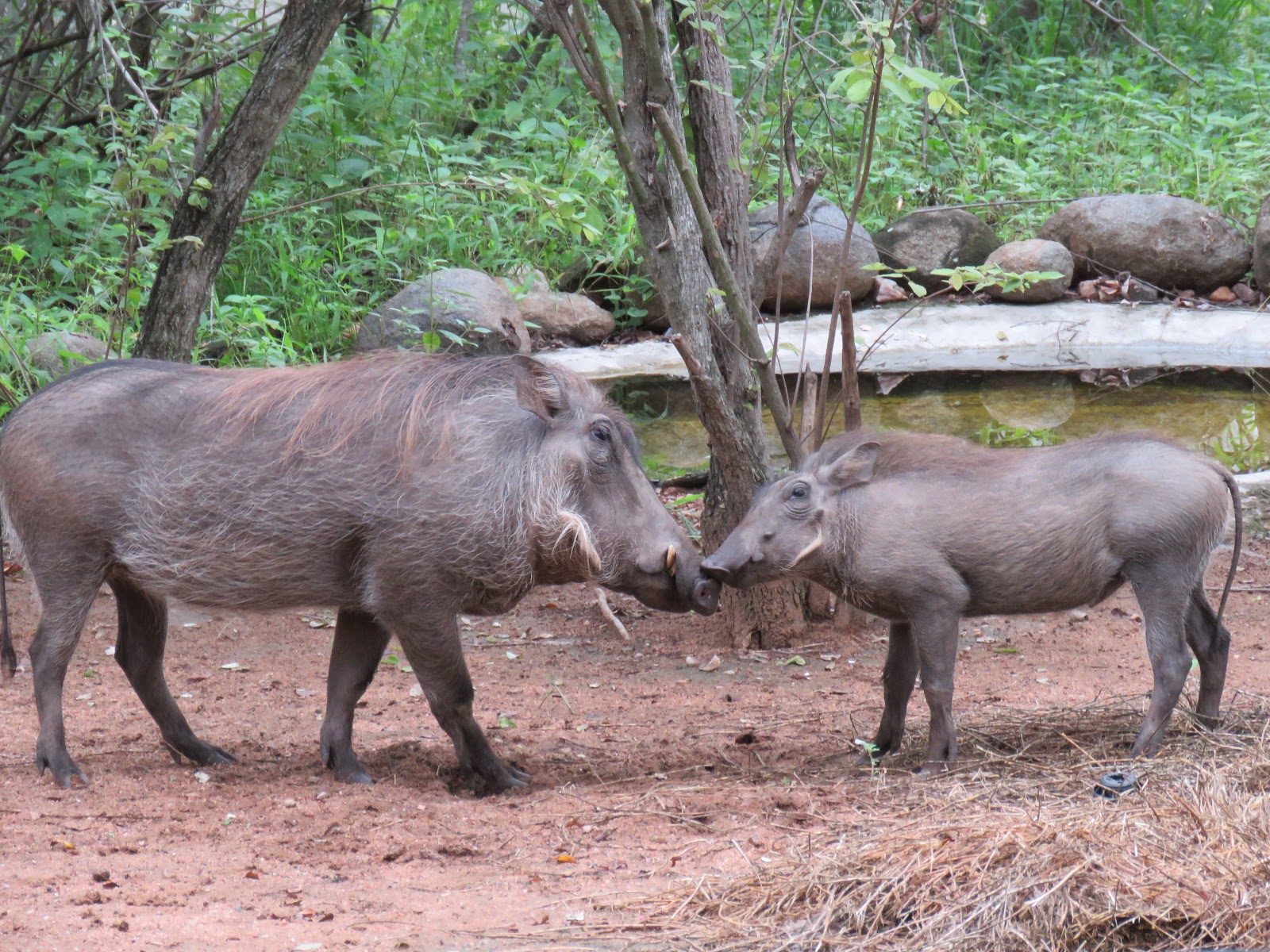
Could this be mom teaching the young warthog how to protect herself?

Later, when I reflected upon her question and my answer, I realized it’s much more than being entertained. One is not always considered when engaged in quiet contemplation.

One is not always entertained at any event or at “home,” and conversation quiets for a few minutes. The entertainment factor can dissipate to a low hum, hardly detectable in the realm of things. But boredom is a rare thing, for me, for Tom.

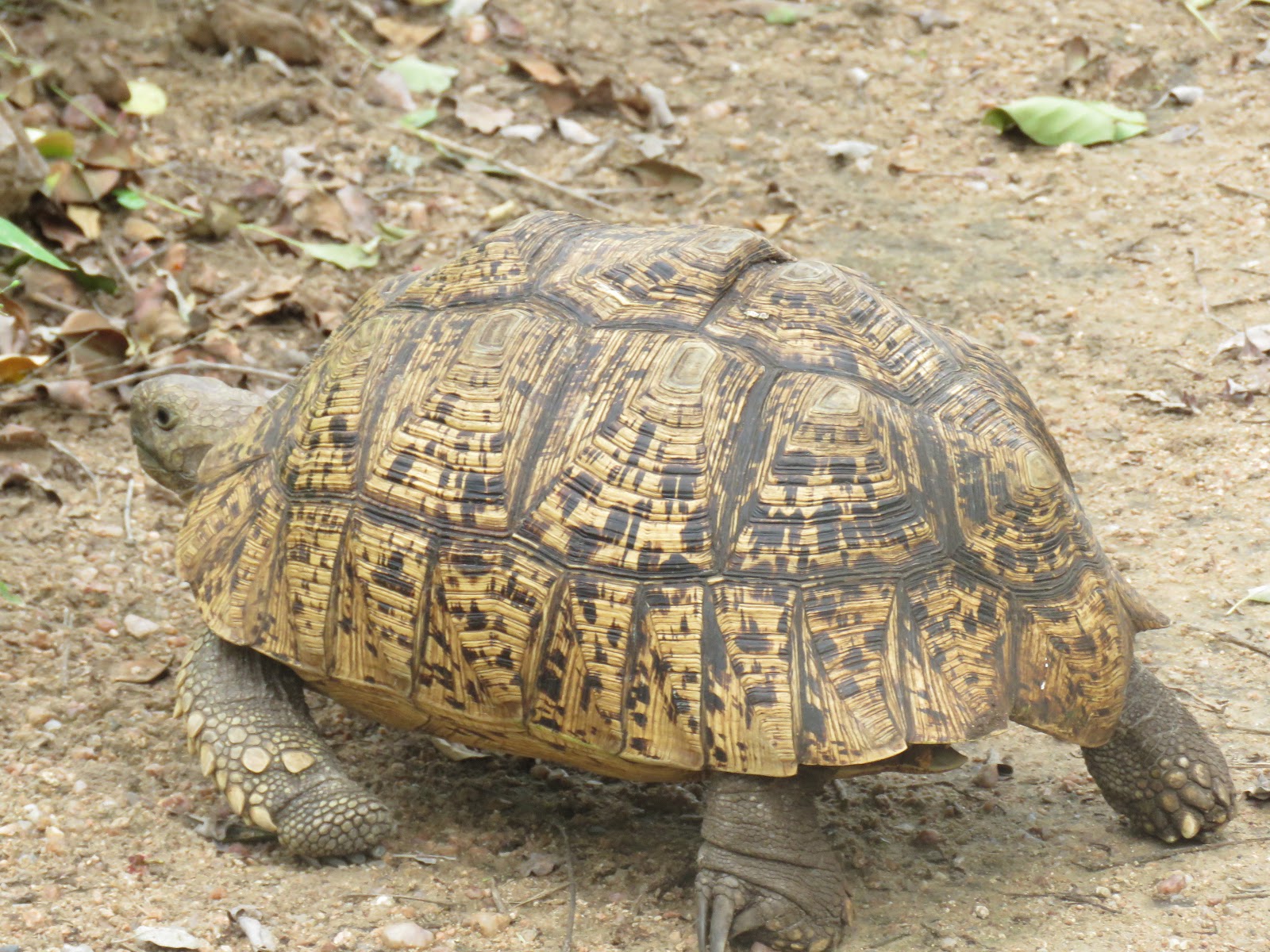
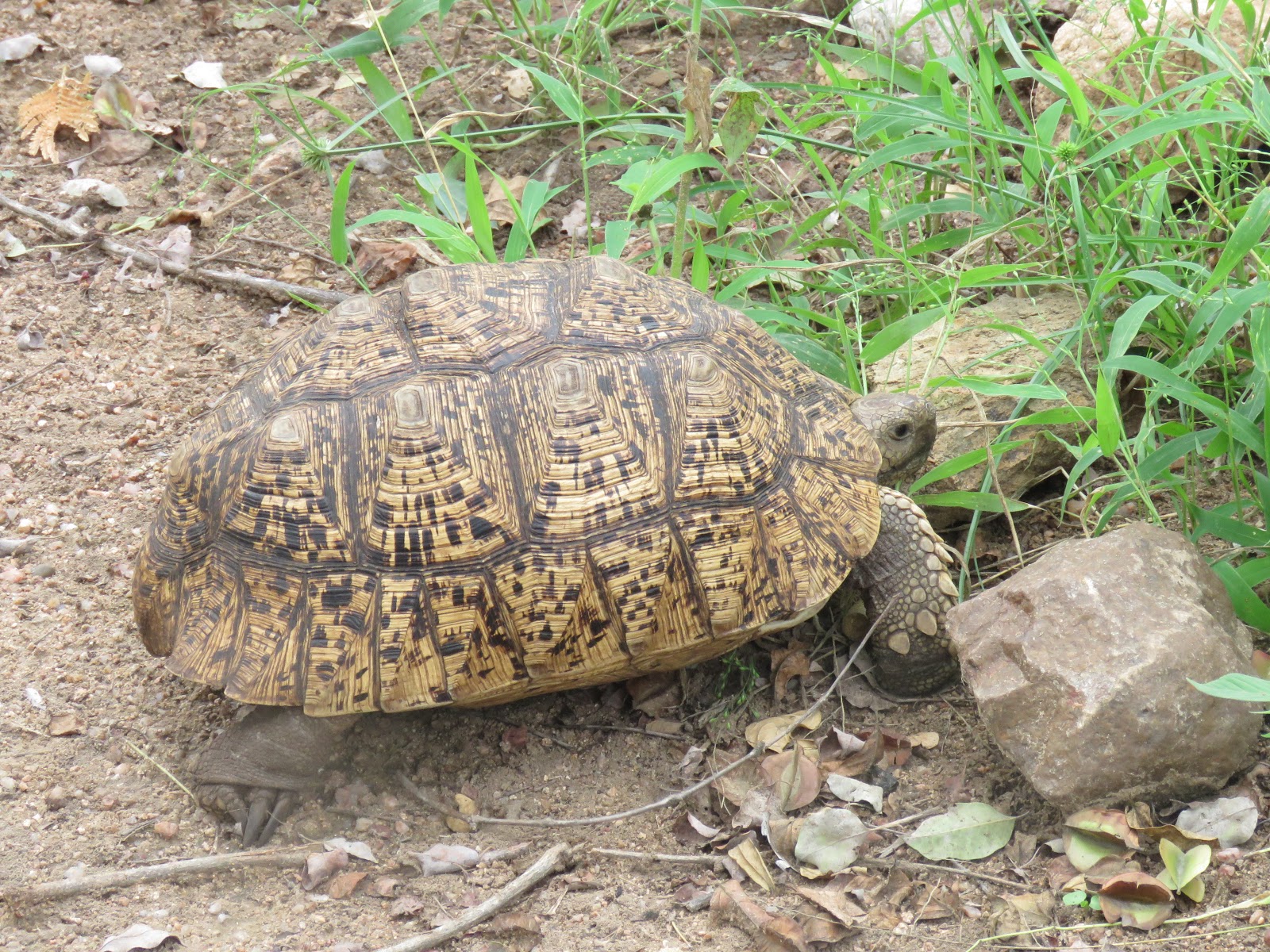
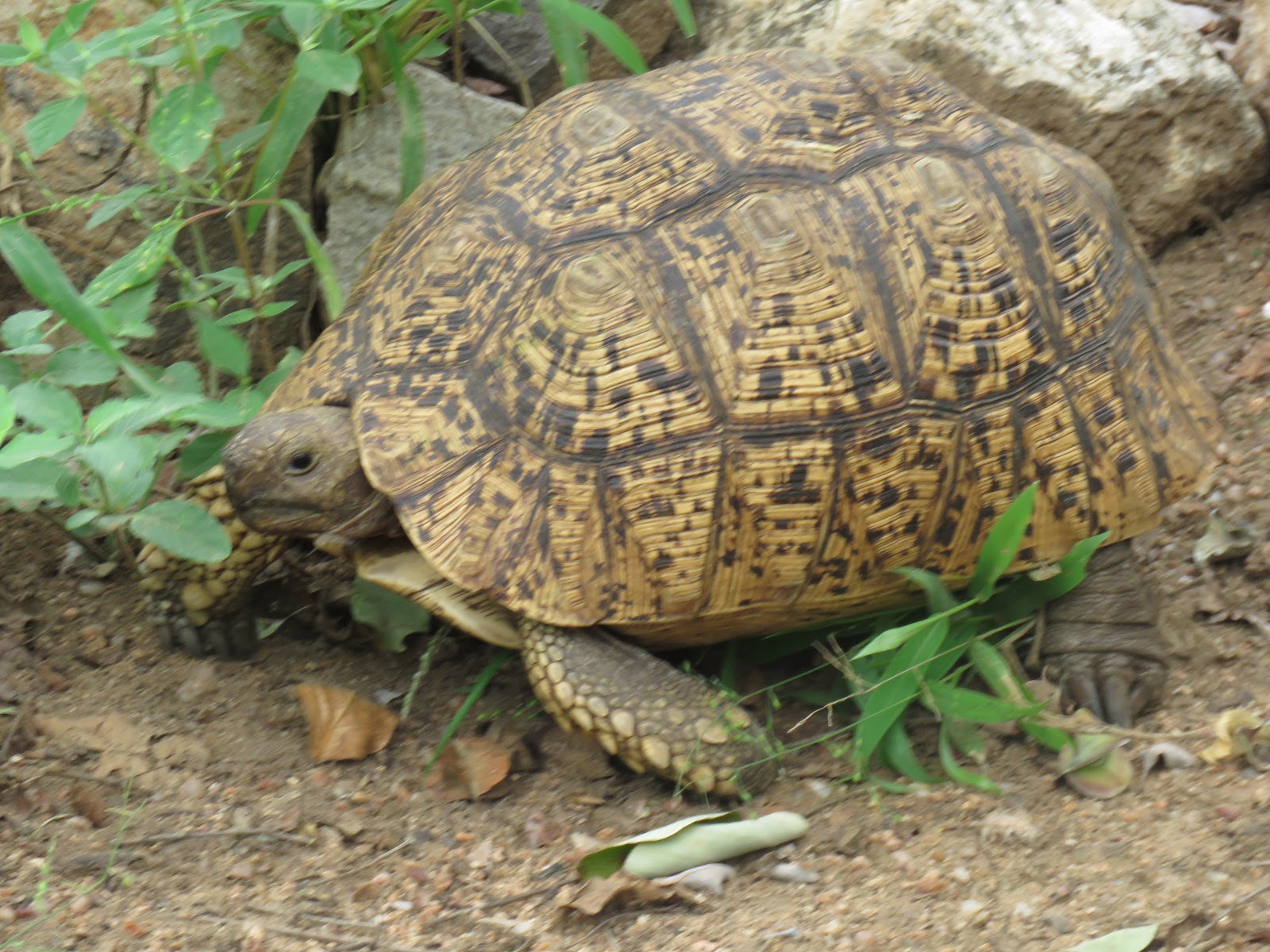
This Angulate tortoise that stopped by yesterday afternoon is one of many species of ground tortoises. We offered it some cabbage and carrots, but it was too fearful and wandered off.

Of course, when the power or Wi-Fi is out, which frequently occurs in most countries, we may experience a period of boredom while we wait for it to return. We don’t carry paper books with us when we travel, nor would we want to. 

During outages, we don’t use our phones or laptops to read if the power doesn’t return by dark. However, picking up a paper book during those periods of power outages might be helpful. By saving the batteries until dark, we are assured we’ll be able to read or watch a movie in the dark, should the need arise.

We were surprised by how quickly it moved away.

Otherwise, we’ll play cards or a board game to keep our minds occupied. We noticed there’s a giant puzzle here and, of course, a dartboard and pool table, all of which will keep us busy during outages. 

Although we don’t typically drink alcoholic beverages when it’s just the two of us, it’s not a bad idea to have a beer (for Tom) and a glass of wine (for me) during an outage, turning it into a “party for two.” At the same time, we play pool or darts, providing our form of entertainment. 

The tortoise had little interest in our veggie offerings.

Other than those scenarios, we don’t think about being bored, nor do we experience boredom.  There’s always a future booking to research, a country we’d like to see, a place we’ve longed to visit, providing us with a steady stream of conversation, thought, and research. Essentially, what could be more fun than that…making our dreams a reality?

May your dreams be realized, and you find yourself free of boredom, worry, or strife. Happy day to all! 

Photo from one year ago today, February 26, 2017:

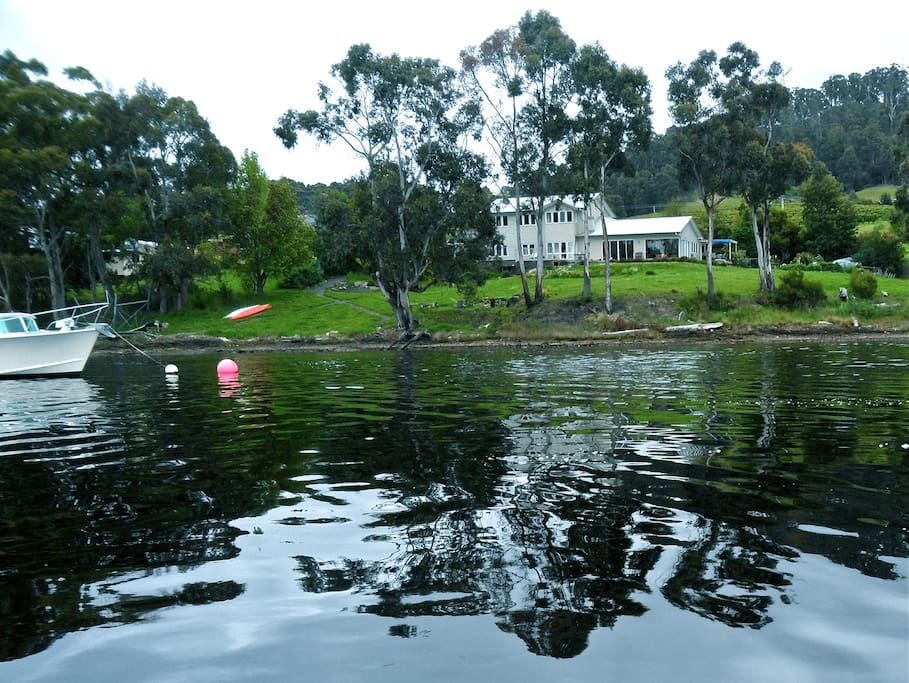
Exterior view of the house on the Huon River in the Huon Valley in Tasmania. For more photos, please click here.

Movie night in the bush!!!…Many visitors wanted in on the action…

“Hmmm…” says Clive to Clove, “I wonder what these humans are up to now.  Are we invited?”

“Sighting of the Day in the Bush”

An apparently happy oxpecker on the hide of a kudu we spotted on yesterday afternoon’s drive in Marloth.  From this site: Oxpeckers graze exclusively on the bodies of large mammals. Certain species are seemingly preferred, whereas others, like the Lichtenstein’s hartebeest or Topi are generally avoided. Smaller antelope such as lechweduikers, and reedbuck are also avoided; the smallest regularly used species is the Impala, probably because of the heavy tick load and social nature of that species. In many parts of their range, they now feed on cattle but avoid camels. They feed on ectoparasites, particularly ticks, as well as insects infecting wounds and the flesh and blood of some wounds as well. They are sometimes classified as parasites because they open wounds on the animals’ backs.”

When Lousie and Danie invited us to a fundraiser, they did so with the thought in mind that our attending this might be ideal for a post for our worldwide readers.  The intent was clearly not in having us donate lots of money.

About 25 guests had arrived in the bush area for the wildlife rescue event, Wild & Free Wildlife Rehabilitation Centre.  Within minutes there were about 50 guests who stayed for the meal, the presentation, the auction and eventually the movie, Out of Africa.

With the food hosted by local shop owners and the meat market, the US $8.66 (ZAR 100) per person donation for attendance was a mere pittance for the quality of the experience bestowed on the 50 attendees, most homeowners in Marloth Park or nearby surrounding areas.

We may have looked like idiots wearing our bug resistant “Africa” clothes while everyone else was wearing shorts, tee shirts, and flipflops. But, this time we aren’t taking malaria pills and feel it’s diligent to be careful especially with my weakened immune system after taking so many antibiotics.  The mozzies love me.

Louise and Danie showed up at 5:45 pm so we could follow them to the site.  They also brought chairs for us and sat with us for the entire event, although they were acquainted with almost everyone in attendance.  We had a great time at the entire event! Thanks, Louise and Danie!!!

The locals are used to applying repellent especially when out at dusk and into the evening when the mosquitos can be downright annoying and also, carrying many types of diseases besides malaria. 

The event took place on the grounds of a thoughtful homeowner who kindly cooked the fabulous food and hosted the event.

After contracting this awful gastrointestinal issue in Fiji which still plagues me today, we’d both decided that we can’t be too careful.  Illness is the only thing that will put a fast end to our travels and we’re simply not willing to take the risk.  So we look foolish?  Who cares?  We’re happy and continuing to travel the world.

Even now, as I’m posting from the veranda where we spend all of our days there’s a variety of bees and hornets buzzing us, let alone mozzies that find me, day or night.  A little caution can go a long way in protecting us.

Our first visitor to the event, a lone warthog who was curious and perhaps wondering, “Do you have any pellets?”

Anyway, back to the event…Louise and Danie graciously introduced us to many attendees which easily brought us into many interesting conversations about wildlife and Marloth Park.

She was on her knees eating some greens.

Each person we spoke to freely expressed their unbridled passion for this magical place.  Some had been living here for decades, others frequently visiting family who lives in the park.  All of the people we met are from one part of Africa or another although the majority are from South Africa.

At no point, did we or the other guests feel pressured for added donations.  The auctions provided more needed revenue and although Tom bid on a few items we lost to more enthusiastic bidders interested in various types of alcoholic beverages being offered in pretty baskets.

Deidre from Wild & Free Rescue Center in Marloth Park did a heartwarming presentation.

The food was superb as mentioned here, the movie Out of Africa, which we’d seen many times, was again entertaining. But most of all, the visitors who stopped by to check out the evening’s event, left us all in stitches with cell phone cameras flashing along with my camera.

A lookout tower on the property. Notice the kudu grazing beneath the structure.

Sometimes I could kick myself for not seeking the best possible scenes for taking photos.  I certainly have the ability to do so but in my enthusiasm, I get sidetracked by the scene in front of me and I forget to be more diligent.  I promise to work on this after it became especially evident to me this morning when I looked at last night’s photo.

We watched a heartwarming slide presentation of some of the baby animals rescued by Wild and Free Rehabilitation Centre.

Why in the heck didn’t I get the shots of the visitors with the crowd of humans in the background?  This would have created more humorous photos.  Thus, I must describe to you that the following animals came to call and hovered around the perimeter of our event: warthog, wildebeest, zebra, and ostrich.

Note the tiny bushbaby on the end of a finger.  Soon, we’ll visit the center and do a more comprehensive story on this exceptional facility.

In defense of myself to a small degree, based on the positioning of the wildlife when they hovered around our “camp,” I would have had to get behind them to get such a photo.  All of these animals weight 100’s of kilos (pounds) and doing so may have been risky.  One swift kick by an annoyed visitor could result in a tragedy.

The food was excellent; pulled pork, pulled chicken, homemade pickle slices, coleslaw, and buns.  I ate a little of everything but was concerned about the sugar in the delicious barbecue sauce.  Typically, barbecue sauce has a lot of sugar.

And so, I ask you to use your imagination and picture the animals shown in today’s photos, standing very close to us, smelling, snorting and making a variety of sounds and gestures wondering what we were all about.

I could have easily eaten twice as big a serving of the meat, it was so good but I refrained.  Tom had one bun filled with pork, coleslaw, and pickles on the side.  We noticed the locals putting the pickles in the bun with the meat.  That looked good!

Throughout the movie, we continued to hear the music-to-our-ears sounds us bush-dwellers continually strive to identify.  Tom and I are learning those sounds more this time in Marloth Park as opposed to four years ago. 

This delightful man sang a few times during the evening.  He is Etienne van der Nest also known as the “Cooking Tenor.”  What a voice and special unexpected treat!

Perhaps we’re a little wiser, a little more appreciative, and a little more in awe than we were four years ago.  A reader wrote to us a few days ago asking, “Since you’ve been in Marloth Park before, is it any less interesting and magical this second time around?”

The zebras were hovering around the perimeter of our group curious as to what was going on.

We wrote back to our reader, stating it like this, which we’ve said before, “Being here again is like having an “E” ticket to Disneyland…the anticipation of the “next ride” is almost as exciting as the ride itself.”  Even when “they” don’t visit us, our perpetual state of expectation is indescribable.

Louise explained that wild animals are often attracted to the noise of human activity and of course, like the other visitors at the event, curious as to what’s going on.

For example, the above photo featured in “Sighting of the Day in the Bush” of the oxpecker with its mouth agape while sitting atop a kudu is another of those bonuses we never seek or expect.  It’s sheer joy in the simplest of terms.

Please continue to enjoy the “ride” along with us!

__________________________________________


Photo from one year ago today, February 25, 2017:

Had we arrived a month or two earlier, the hilly countryside in the Huon Valley would have been a lush velvety green.  For more photos, please click here.

Coincidences…Hilarious video interaction…Harrowing visit to Lionspruit game reserve…Busy weekend ahead…

For a good chuckle, watch this video.  At about halfway through
you see a funny interaction with this warthog and mongoose.
 
“Sighting of the Day in the Bush”
These tusks on this female warthog that visited with babies are the largest we’ve seen since our arrival.
Upon entering Lionspruit, we had to sign a waiver stating, “Entering at our own risk.
Our lives are filled with coincidences, dates, people, and things. As we look back at the year-ago posts, we’re always amazed how often we encounter patterns of dates and events. I suppose with the diversity of our experiences. This can happen.

Today is February 23rd which brought to mind the coincidence of the 23rd of the prior several months. For example, on November 23rd, we embarked on the 30-night South America cruise. On December 23rd, Tom’s birthday, the cruise disembarked in Buenos Aires, where we stayed for 31 nights. Then, on January 23rd, we flew from Buenos Aires to Ushuaia, Argentina, and embarked on the cruise to Antarctica. These are pretty coincidental dates filled with considerable adventure.

Today, we’ve posted a video you must watch if you’d like a chuckle. About halfway through (watch carefully), you’ll see interaction with a warthog and mongoose that we watched over and over again, laughing each time.

This sign, written in both Afrikaans and English, warns visitors about entering.  We had no intentions of getting out of the vehicle at any time.

While filming the video, we had no idea this happened. It wasn’t until we watched the video after uploading it to YouTube we realized this funny split-second-long event.

Yesterday morning Louise and Danie stopped by to leave a “cool box” (cooler) with us and a pass to get into Lionspruit Nature Reserve, contained within sprawling Marloth Park.

With very few visitors, it’s a long day for the guard that manages the gate.

With social events tonight and tomorrow night where we bring our beverages, it was thoughtful of them to loan us a cool box for our lengthy stay at “Orange…More Than Just a Color,” the name of this lovely home in the bush. 

Although the house is well-equipped, Louise has rousted up some additional items I needed; sharp knives, measuring spoons and cups (most tourists don’t cook much), mixing bowls, and other odds and ends.  Now, we have everything we need.

There were numerous impalas beyond the entrance gate, but we didn’t see much as we traveled on the dirt road.

As for the pass to Lionspruit…last time we were here, four years ago, we’d considered visiting this small (compared to Kruger National Park) wildlife reserve, but for some reason, we never got around to it. When Louise and Danie offered the pass, we decided to go.

Image result for map lionspruit
Map of Marloth Park and Lionspruit Nature Reserve.

Here’s a map of Lionspruit, located within Marloth Park. Lionspruit is 1500 hectares, equivalent to 3707 acres, or 5.8 square miles. In comparison, Marloth Park is 3000 hectares, equal to 7413 acres, or 11.6 miles.

We’d heard the roads inside Lionspruit were uneven with lots of rocks and potholes but thought we should finally give it a try. If we didn’t find it navigable, we’d turn around and leave.  Not so simple. 

Most of the roads are one-way. It proved to be like a maze, and although we were never lost, we found ourselves in a quagmire of never-ending mud holes, water holes (not knowing how deep they were), and rocky pits and ruts from rain and erosion.

As it turned out, this reserve is not the place for a regular, especially tiny car with small tires, like our rental. Indeed, a four-wheel drive would have been more appropriate.

The dirt road didn’t look bad when we started, but everything changed 10 minutes into it.  It had rained quite a bit lately. We probably should have waited for a drier spell to enter Lionspruit.

Once we got going, there was no turning back. At several points, we certainly anticipated getting stuck in the mud or ruts and having to call for help. Luckily, I’d brought my phone with the number for Field Security in the park that will come to the rescue in an emergency. We hoped “safari luck” would prevail and we’d see a lion but instead, “safari luck” saved us from getting stuck.

There are only two known lions in Lionspruit, but we could have done a number on ourselves, anticipating being stuck and spending the night in there or in attempting to walk back to the single entrance.  Oh, good grief. This could have been quite the story for an episode of 48 Hours, Dateline, or other such sensationalized TV programs in the US.

Luckily, we both stayed calm, even when we approached the scary huge water holes in the narrow dirt and rock road. Although we both were running the possibility of getting stuck in our minds, we avoided mentioning our concerns to one another.

“The southern yellow-billed hornbill (Tockus leucomelas) is a hornbill found in southern Africa. This hornbill species is a widespread resident of dry thornveld and broad-leafed woodlands. Yellow-billed hornbills feed mainly on the ground, forage for seeds, small insects, spiders, and scorpions. They can often be seen along roads and watercourses.”

Tom, a highly competent driver, was a little hesitant at times but maneuvered our way through some of the most challenging roads we’ve navigated in our travels. Each time he made it through another frightening patch, we both sighed in relief.

It was so tense. I failed to take photos of the water and mud holes, which I wished I had done now that it’s over. Just picture a water hole of unknown depth covering an entire dirt roadway…we made our way through many of these.

More impalas tucked away in the bush.

With a manual transmission, Tom used first gear during most of the entire long drive. It took us two hours to return to the entrance gate, after which we returned the plastic-encased map to the guard joyfully waving goodbye.

We never spotted either of the two lions in Lionspruit, nor did we see much wildlife, other than a few, as shown here today. We see more wildlife sitting at the big table on the veranda than we did there. 

Impalas are shy and tend to back off from humans.  Plus, they are huge targets for lions, leopards, and hyenas, so they’re always on the lookout.

Next week, we’re heading to Kruger National Park (25 minutes to the Crocodile Bridge entrance) on a self-drive on their easy-to-manage paved roads.  In comparison, Kruger is over 2,000,000 hectares, 4,942,108 acres, and 7,722 square miles. Having visited Kruger many times during our last stay, we’re looking forward to returning.

There are many hornbills in this area.

Tonight at 6:00 pm, we’re off to a musical party at friends Kathy and Don’s home here in Marloth, where Don and Ken (of Linda and Ken) have a performance planned, followed by food, drinks, and most certainly more lively chatter. 

What a fabulous social week for us with more excitement upcoming tomorrow night, which we’ll write about tomorrow. 

Have a blissful weekend, whatever you may do!

Photo from one year ago today, February 23, 2017:

Caravans parking in Franklin, Tasmania for summer activities in the Huon Valley. For more photos, please click here.

Unbelievable sighting in our yard…You must see this!…Look below!…Fabulous evening with friends…

Please take a moment to watch our video of mongoose visitors in our yard last night!

“Sighting of the Day in the Bush”

Finally, my favorite, warthogs, stopped by for a lengthy visit—more on this tomorrow.

I don’t know where to begin first, the outrageous sighting in the yard shortly after our friends arrived for dinner, a stunning sighting for all of us or, the exceptional evening we spent with four of our friends.

Ken, Tom, and Don are making big faces for the camera!
Linda, me and Kathy. It was these two thoughtful friends that took me to lunch on my birthday four years ago. Wow! Now, we’ll all be together again to celebrate my 70th.
During the day, we had no less than eight visitors all at once from three different species that sent us into a tailspin of pure delight. That event in itself was beyond our wildest dream this early in our stay. We’ll share those photos tomorrow.
At first, we only saw a few of the mongooses, but the rest were on their way into the yard.

We only arrived a week ago today, and yet we’ve seen every species that resides in the Conservancy, and beginning next week, we’ll head to Kruger National Park hoping to see the Big Five once again; lion, elephant, cape buffalo, rhino, and leopard.

Our guests arrived promptly at 6:00 pm, and we were ready for our guests. When we’d made the invitation to the four of them for dinner, we realized we had enough food on hand for the meal without the necessity of heading to the market.

Mongoose is the popular English name for 29 of the 34 species in the 14 genera of the family Herpestidae, small feliform carnivorans native to southern Eurasia and mainland Africa. The other five species (all African) in the family are the four kusimanses in the genus Crossarchus and the only species in the genus SuricataSuricata suricatta, commonly called meerkat in English.”

We made the following (all the meats were cooked on the grill):
1.  Pork Chops
2.  Lamb Chops
3.  Boerewors (sausages) – “The many varieties of boerewors include specialties such as garlic wors, kameeldoring (camel thorn), Karoowors (sausage from the Karoo region in South Africa), and spekwors (made with extra cubed pork fat). Other ingredients include cheese and chili peppers.”
4. Cauliflower Mash
5. Pureed Pumpkin
6. Sauteed onions, garlic, and portabella mushroom (to top the seasoned meat)
7. Cabbage Salad

Suddenly a baby was on the scene.

We’d purchased beer and wine, but they insisted on bringing their own beverages, a tradition when visiting guests in the bush. We had purchased a lighter red wine for me with less alcohol and tannins, which tend to keep me awake at night after a few glasses. It wasn’t as good as a regular Cabernet or Merlot, but I drank it anyway. Tom had Castle Beer, manufactured in South Africa and a local favorite.

Mongooses love raw eggs.  When we spotted them, Tom ran inside, bringing out an 18 pack of fresh eggs.  He laid one on the ground, and this is what happened.

Although we’d seen Linda and Ken in Sydney 11 months ago, we hadn’t seen Kathy and Don in four years. It was Kathy and Don who’d invited us for Christmas Eve when they’d never met us. We’d met their mutual friends, Lynne and Mick, at Jabula Lodge a few days before Christmas, and they hooked us up.

During the period of time they were in our yard, Tom placed four eggs on the ground for them to quickly fight for and devour.  It was quite a scene.

Lynne and Mick were leaving Marloth for the holidays but wanted to make sure we had something wonderful to do on Christmas Eve. And indeed we did, spending the evening at Kathy and Don’s beautiful bush house bordering the Crocodile River. Here’s the link to that story.

To know that soon we’ll all be together again (also with other dear friends) at my birthday party in two days fills my heart with so much joy and love. How did we get so lucky? 

Once the rest of them realized we had eggs, they piled atop one another.

The evening flowed with considerable ease when we’d prepared all but the meat in advance. I heated the side dishes in the microwave and then popped them in the preheated oven. With the homemade dressing ready to go, I tossed the salad. 

“Mongooses live in southern AsiaAfrica, and southern Europe, as well as FijiPuerto Rico, and some in the Caribbean and Hawaiian islands, where they are an introduced species. The 34 species range from 24 to 58 cm (9.4 to 22.8 in) in length, excluding the tail. Mongooses range in weight from the common dwarf mongoose, at 320 g (11 oz), to the cat-sized white-tailed mongoose, at 5 kg (11 lb).”

Tom, Don, and Ken fussed over the grill, and by 8:00 pm, we were all seated at the outdoor table, meats cooked to perfection, and we dug in for a hearty meal (minus gluten, grains, starch, and sugar). No one even noticed we didn’t have rice, potatoes, or bread. 

The lively conversation continued through the delightful evening. We all have so much in common in our love for Marloth Park, traveling and being engaged in lively and exciting times at this point in our lives.

In a split second, they were all over the eggs.  See our above video for details.  “Mongooses mostly feed on insectscrabsearthwormslizardsbirds, and rodents. However, they also eat eggs and carrion. The Indian gray mongoose and others are well known for fighting and killing venomous snakes, particularly cobras. They are adept at such tasks due to their agility, thick coats, and specialized acetylcholine receptors that render them resistant or immune to snake venom.  However, they typically avoid the cobra and have no particular affinity for consuming its meat.”

So yesterday, enriched by our friend’s visit and the many wildlife “visitors,” it was quite a special day. You won’t be disappointed! Enjoy our photos, and please take a moment to watch the video.

Be well. Be happy.

Photo from one year ago today, February 18, 2017:

Although overcast in the Huon Valley, Tom had a great day fishing and taking photos while boating with Anne and Rob. For more photos, please click here.

A little about Marloth Park… Fun with the locals…

Zeff was here with us four years ago.  It was wonderful to see him again. 

What is Marloth Park? Over these past four years since we were last here, we’ve mentioned it more times than we care to count, over and over again, ad nauseam, perhaps at times to the disdain of our readers. For this, we apologize and hope we haven’t bored you.

But, this place is unlike any other world, a little developed, a lot natural. Oh, some may say this is like “Disneyland in the bush,” but that’s far from the truth. 
Our first male kudu visitor.
Marloth Park is adjacent to Kruger National Park, that this 3000 hectare (11.5 square miles), developed as a town in 1972, became a holiday haven for wildlife enthusiasts who wanted to experience living in the bush (bushveld in Afrikaans, the local language), being able to interact ever so gently with the many animals that have naturally habituated this area.
We’ve heard that 4000 lots had been divided over the years, and there are varying opinions on how many houses have actually been built in these past 46 years. Our host, Danie, a builder, presumes there are about 2300 houses in Marloth Park.
Mr. Kudu certainly enjoyed his share of pellets after he finished off everything we’d left on the dirt driveway.  Once he left, we restocked.
Other than the houses in the area and a few minimal-offering shops and a petrol station, Marloth Park remains pristine in its attempt to maintain a less touristy-feeling environment while providing its homeowners and visitors with a life-changing experience.
Sure, we could find a home in the savannah, somewhere in the bush in Africa, where wildlife roamed about the house. In that case, we wouldn’t have the ease of living all of us expect in our day to day lives; electricity; air-con for sleeping; Wi-Fi, running water, sewer systems, garbage pickup, and all those amenities many of us have come to anticipate as a part of everyday life.
What a muscular animal!
We’re not 20 years old, hauling a backpack and sleeping in a tent for the rich experience one of this age might find enticing in their pursuit of personal growth.
However, even in our age group, we reap the benefits offered by this stunning environment, of peacefulness, wonder, and the sheer joy of our surroundings and yet have all of the above conveniences we’ve come to expect and, maybe at our ages, need to be comfortable to some degree.
This adult female bushbuck stops by several times a day.
Oh, don’t get me wrong, it’s not a piece of cake living here. It’s a half-hour drive to a supermarket or pharmacy. And if one needs emergency medical care, it’s still that same 30-minute drive which would be a matter of life or death in the event of a bite from a black mamba (snake) even we had seen in these parts only four years ago (and most likely will see again).

It’s hot and humid most of the time. There are insects like none others we’ve seen anywhere in the world. The power goes out more often than in most places, often due to careless tourists failing to be mindful of the size of the limited power grid in this area. 

While at the shopping center yesterday, these students were cheering and singing after a fabulous photo safari in  Kruger Park as part of a school project.

And, the mozzies come out at dusk bringing with them a rash of dangerous diseases. This time we aren’t taking malaria pills. None of our friends take them that live here off and on throughout the year.  

The possible fourteen months we’ll be in Africa is just too long to be taking the drugs. Instead, we’re using repellent day and night with a maximum of 35% DEET, which has been determined to be safe.

When this pretty young lady spotted us with a camera, she asked if we’d take her photo.  When we handed her a card with our web address, she thrilled us to post her photo.  Her name is Sonto Zwene. We hope she has an opportunity to see herself here. What a lovely girl!

The staff in Marloth Park come from many surrounding areas. Many arrive each day by bus or sharing the  Rarely do any of them live in the park. The exception is those who may be live-in support staff.  Even Martha, our full-time housekeeper who lives in a little house on the property, frequently leaves the area to visit family and friends.  

These kindly, warm and friendly people definitely enhance the quality of our experiences living in Marloth Park. A warm hug is as common as a hearty hello. Although most speak Ndebele, Northern Sotho, Sotho, Swazi, Tsonga, Tswana, Venda, Xhosa, and Zulu, many speak English sufficient to communicate easily.

More Helmeted Guinea Fowl. We love these turkey-like birds with colorful heads.

Yesterday, we drove to Komatipoort for the second time since our arrival to find a few groceries items we hadn’t been able to find the first time. Also, we replaced the HDMI cord, but we’re still having trouble with the signal from my laptop to the TV. We’ll work on this later today.

While in town, we stopped at a pharmacy to discover I won’t need to order refills of my few prescriptions from afar. They carry each of my three meds over-the-counter, without a new prescription, making the process convenient.

“The greater kudu (Tragelaphus strepsiceros) is a woodland antelope found throughout eastern and southern Africa. Despite occupying such widespread territory, they are sparsely populated in most areas due to a declining habitat, deforestation, and poaching. The greater kudu is one of two species commonly known as kudu, the other being the lesser kudu.”

Yesterday the temperature was a high of 100F (38C). In the evening, after our delicious dinner, we stayed indoors. The two air con units in the high vaulted ceiling living room couldn’t cool it down. It was toasty, but we managed. Today, it’s partially cloudy and much cooler.

We’ve already had several visitors this morning and look forward to more as the day progresses.

Have a beautiful day! 

Photo from one year ago today, February 16, 2017:

Boats in the bay on the Huon River in Tasmania. For more photos, please click here.