This is too weird for words…Do they read road signs?…

Where in the world would one drive down a road to encounter this site outside their car window?

“Sighting of the Day in the Bush”

We didn’t realize we hadn’t cut this piece of lettuce into smaller bites for Ms. Bushbuck.  When we saw her tackling this big piece, we couldn’t help but laugh.  She managed it eat the entire big leaf.

After finding the ostrich chicks and mom and dad on Volstruis Street on July 6th (see that post here) based on a text Louise sent us after she’d spotted the family, we couldn’t help. Still, we were amazed that they were hanging around this particular street that translates to “ostrich” in the Afrikaans language.  

At that point, we thought it was a fluke that ostriches would be grazing on a street that means “ostrich.” But, that fluke didn’t keep us from returning to that street several times in the past month in an attempt to see the family again.
First, we spotted mom and dad hanging out near this building.  Moments later, we saw the seven chicks.

On Friday afternoon, before our usual drive along the Crocodile River to see what we could discover, we decided to drive down Vostruis Street to see if we could find the ostrich family.  

Alas, after heading down Volstruis in one direction and then another, we saw them, the mom, the dad, and the seven chicks who’d easily doubled in size over the past month.  

We were thrilled to see all seven had survived this past month.

“How peculiar!” we both commented in unison. Do these fantastic oversized birds read road signs? How is it they so happened to spend a good portion of their time on a street, meaning ostrich?

Then, we wondered if perhaps before the street was named, it was indeed a haven for ostriches prompting the naming of the street some 40 years ago. Who knows?  If any Marlothians out there have an answer, please let us know. It’s quite curious.

Even more peculiarly is the fact that when a lion was sighted within the confines of Marloth Park a few months ago, it was first seen on Leeu Road, which translates to “lion” in Afrikaans.  

We didn’t have an opportunity to take a photo of all seven chicks together.

We’d shared a post, found here, regarding the lion sighting mentioning the fact it was first seen on Leeu Road, not realizing at the time that “lieu” translates to “lion” in Afrikaans. 

Last Sunday, when we spotted the lions across the river at the “Two Trees” overlook, I saw a young boy, pointing across the river shouting, “leeu.” At that point, it dawned on me the peculiar fact that the lion appeared on Leeu Street, which we wrote about on June 23rd, as indicated in the above link.

The chicks, most likely a few months old, are on their own in foraging for food. The parents do not feed them once they’re out of the nest. They emulate the parents pecking behavior and begin foraging at a young age.

Surely, these sightings on these two roads must be entirely coincidental unless one has some mystical beliefs regarding this magical place. Neither lions nor ostriches read road signs, as far as we know.

Regardless of what any of this may or may not mean, we were thrilled to see once again this family of seven chicks and their diligent mom and dad watching out for their safety.

Dad kept a watchful eye on the chicks when they wandered off.

There’s little information online as to the raising of ostrich chicks. We can only surmise how the young chicks are raised by their diligent and cautious parents through our observation.

It is clear that the female watches for predators and the male watching the chicks so that they don’t wander off far from view. We’ve observed this on several occasions, and it is further indicated in the above photo.

At specific points, the chicks say close to one another as they search for food.
Never for a moment do we fail to appreciate the gift of being privy to the cycle of life here in the bush. And, over the next many months until we depart in February, more and more offspring of these amazing animals will be born, allowing us to cherish further the remarkable ability most animals possess in caring for their young.
Dad lets them know to stay close.

Today, we’ll embark on yet another drive. It’s overcast and still a bit windy and, due to increased tourist activity over the weekend, we’ve had few visitors since Friday other than a few warthogs and mom and baby bushbucks. All of them we thoroughly enjoy, as shown above in the “Sighting of the Day in the Bush” photo which we took last night slightly before dusk.

Have a pleasant balance of the weekend, wherever you may be!

Photo from one year ago today, August 5, 2017:

There was a cafe at the front of the Supermercado Coopeatenas, where we grocery shopped, often busy with ex-pats. For more photos of Atenas, Costa Rica, please click here.

Lion Day!!!…Finally!…

What an animal! We feel fortunate to have been able to get today’s photos of lions.

“Sighting of the Day in the Bush”

This baboon seemed happy with a piece of fruit she’d foraged.

When we spent three months in Marloth Park four and a half years ago, visiting Kruger National Park on many occasions, we never saw a lion. DWe’dyet to see a single lion on our self-drive safaris. during our almost six months here and after almost weekly trips to Kruger

There was a total of six lions but we weren’t able to capture all of them together in one photo.

On several occasions, we’ve seen lions from the fence in Marloth Park at the “Two Trees” overlook across the Crocodile River. However, getting good photos from almost a kilometer away has been tricky.

Lion lounging on the rocks.

Without special camera lenses and with our somewhat modest cameras and camera skills, we’ve been disappointed with the shots we’ve had so far. Instead, each week when we venture into Kruger, we have a glimmer of hope we may get lucky.

Young male sprouting the beginnings of a mane.  From this site: “The mane has many hypothetical purposes and some reasonable explanations. It is supposed to make the male lion look bigger to an adversary and, therefore, more intimidating. It is supposed to protect the male lion from being bitten and clawed by other male lions. Some researchers have proposed it is a handicap in hot climates and therefore the male lions in Tsavo, Kenya are “maneless”. 

I don’t know what it is about lions that make safari enthusiasts feel great satisfaction when they see them but it seems to be the general consensus in everyone we meet here. We weren’t the only people driving around in Marloth Park for days looking for the lions who’d entered the park through an opening in the fence between the two parks.

Now and then, he opened his eyes to scope the area.

Perhaps, it’s their fearsome nature, majestic beauty and a degree of mystery surrounding their demeanor that makes us literally foam at the mouth when there’s a lion nearby. Maybe for some of us, the excitement of potential danger sends us into an adrenaline rush.  

After all, we don’t bungee or skydive.  How else do we get our adventuresome natures fulfilled in the wild? Lions, hippos (the most dangerous animals on the planet), and other big game can send us into a frenzy of adrenaline pumping through our veins. What a thrill!

A pair on the move.

It’s imperative to stress that after each expedition in Kruger, we are not disappointed or frustrated for not seeing lions up until this point. We’ve had our share of “safari luck” in countless ways in our world travels. No complaining here.

Yawning…

Yesterday morning, no more than 20 minutes into our drive on the tar road in Kruger, as we approached one of our favorite spots, the Vurhami Dam, we saw about a dozen cars stopped facing in all directions with many passengers and drivers hanging out the windows (a no-no in the park) attempting to take photos with phones, cameras, and tablets.

Wishing I’d have taken a better shot. It still was great to see those teeth.  From this site:  Like all other mammals, the African lion has a fixed arrangement of teeth which can be generalized into a dental formula. This formula can only be effectively applied to adults. Like all other cats, the permanent teeth only begin to erupt at around three months of age, pushing the deciduous teeth up and eventually causing them to fall out. The complete set of adult teeth are gained between the period of 13 and 15 months. The front canine teeth are spaced such that they can slip between the cervical vertebrae of their prey severing the spinal cord and also to rip chunks of meat away from the bone.”

The expert driver that Tom is he eventually managed to maneuver us into a spot where we’d have a clear sight of the lions although they were still at quite a distance. As amateur photographers well know, those with primary digital cameras, the more we zoom, the less clear the shot primarily due to our own movements.

Back to sleep.

I’ve yet to master holding perfectly still while shooting and doubt I ever will. This isn’t something that improves as we age. Even taking a breath can upset what could have been a decent photo. I’ve noticed that even Tom’s slightest movement in the little car while I’m shooting has an impact on the photos.

Another young male with a mane in its early stages.

We must have stayed in that ideal position for about 45 minutes, waiting for the lion’s next move or change in position or expression. We were thrilled with the results, as shown in today’s photos.

The lions have excellent vision. From this site: Lion’s eyes have two kinds of receptor cells, called rods and cones because of their structure. Rods are mainly responsible for black and white vision, and cones do the color bit. Human eyes have a predominance of cones – we see colors very well, especially in the red spectrum of light, but consequently, we have a problem with night vision no matter how many carrots we eat. Lions have fewer cones, so they see less color but have great night vision, especially since their eyes also have a membrane that concentrates weak light back to the retina. Their pupils can enlarge to an extent much more significant than ours.” 

When the lions began to scatter and walk away, we took off, still giddy over the experience. We continued on with little to no expectations of seeing much else the rest of the day but the adventures continued.

From this site: “Lions are supposed to be nocturnal, and there is a popular misconception promoted by guidebooks that lions sleep about 20 hours per day. Lions are very opportunistic in terms of when they are active. For sure, most lions will probably wake from their daily slumber and begin to get active at dusk, but this is not always so. If lions have water within their territory that attracts prey animals in the daytime, the lions will be active in the day.”

At one point, Tom spotted a leopard, but it happened too quickly for a photo. Thus, our day consisted of seeing four of the Big Five, lion, leopard, elephant, and Cape buffalo, although we never spotted a rhino all day. (As a side note, seeing the Big Five in a day is not necessarily that important to us which had transpired many times in the Masaai Mara in Kenya in 2013, to which we’ll soon return). 

Over the next few days, we’ll post the remainder of our photos including a few more lion shots not included today and a few new bird sightings that were quite exciting.

May your day bring you joy!

Photo from one year ago today, August 2, 2017:

Tom is as content as he could be at La Perla de Atenas in Costa Rica, one year ago today. For more details, please click here.

For adults only, please…Mature theme…Plus, a little of this and that…

Little Wart Face gave it an honest effort, but he couldn’t get it quite right.

“Sighting of the Day in the Bush”

Although Tom has to take down and refill the bird feeder several times a day due to the monkeys eating the seeds, we thoroughly enjoy watching the birds partaking.

We’d hoped to head to Kruger today but have decided to go another day. The sky is cloudy and doesn’t appear it will clear in time for us to go. Instead, today, we’ll make our usual run to Komatipoort and Lebombo for groceries and carrots and apples for the wildlife and head to Kruger on the next sunny day.

Yesterday, I called Obaro, and it appears they now have pellets in stock, and we’ll load up enough for the next few weeks until it’s time to go to Zambia and Botswana on August 16th.

Little Wart Face attempting to mate with this young female.

Although neither of us particularly loves to shop, we find the weekly trips interesting and diverse. The townspeople are friendly, the culture fascinating, and generally, we can find most of the items we need to purchase, forgoing thoughts of those items we can’t find.

Since I’m no longer eating dairy, my options for meals are limited.  Most of our favorite dishes include dairy in one form or another. It appears I have no trouble with butter, but all other dairy products must be excluded from my diet to maintain this high level of feeling so well.

This occurred after dusk, and thus, the photos aren’t as straightforward as we’d hoped.

Day after day, I’m aware of how great I’m feeling for the first time in over two years. From the time I contracted the bacterial infection in Fiji and later the injury in the pool in Bali, I was plagued with constant pain and discomfort.

To be free of pain is such a blessing, and I never forget how important it is I don’t consume a slice of cheese, a dollop of cream, or a smear of cream cheese on a celery stick. It takes no willpower whatsoever. The excellent end result of feeling good keeps me highly motivated.

Snack options are limited so I avoid snacking. I’m slowly losing weight and will share details when I reach my goal in the next few months. Surprisingly, it hasn’t been that difficult. 

He’d been making the train-like noise up until he actually tried to make contact. The bowl in the dirt was left after we’d fed eggs to the mongooses a few minutes earlier.

We now have a hearty breakfast each morning, with two eggs and sardines, which are high in calcium to compensate for my lack of dairy products, while Tom has three eggs and bacon. We don’t eat again until dinner on the veranda around 7:00 pm. This schedule provides us with approximately 11 hours of intermittent fasting which works well for both of us.

As for today’s warthog mating photos, I’d like to stress, we do not include these or other mating photos for any shock value. Our intent is purely to illustrate the magic and mystery of nature at its finest. Having the opportunity to observe the “cycle of life” in nature is truly a gift.

It’s evident in this photo that contact wasn’t fully executed.

In many months to come, we’ll see the park filled with babies from this mating season. For an interesting article in Africa Geographic regarding warthog mating, please click here.

The gestation period for warthogs is 152 to 183 days. Generally, piglets are born between October and February. It won’t be long before we see entirely new batches of youngsters coming to call with their moms (occasionally dads), aunts, and siblings from past litters. 

It’s a rare opportunity to see mating in the wild, but this appeared more to be “practice” than anything.

Warthogs may stay with their family group, a sounder, for a few years, eventually finding their burrows for rest at night. However, they often stay in the same general territory as other family members.

When we see them at night, they tend to wander off by 2100 hours (9:00 pm) to return to their burrow for the night. Moms will place their offspring in the burrow first and follow behind facing the opening to guard the family unit.

Not a night passes without an opportunity to watch these adorable bushbabies enjoy the yogurt we place on their little stand.

Intelligent animals, pigs of all breeds are rated #2 of the top 25 most intelligent animals on earth. See this list for details. This is clearly evidenced to us daily as we carefully observe their behavior. Dogs are rated #6.

That’s it for today folks! Have a fabulous day! We’ll be back with more tomorrow.

Photo from one year ago today, July 31, 2017:
Here were our total expenses for the 25 nights we spent in Henderson Nevada.  Please click here for more details.

 Expense   US Dollar 
Housing (Richard’s home)   $                         
 Gifts & Misc.   $                  299.00
 Airfare    $               1,137.00
 Rental Car & Fuel  $                  926.00
 Groceries   $               1,245.30
 Dining Out   $                  402.52
 Supplies & Pharmacy   $                  609.32
 Entertainment   $                  310.25
 Total   $               4,929.39
 Avg Daily Cost 25 days   $                  197.18

In the realm of things, it just doesn’t matter…

This morning we opened the door to find 19 kudus in the garden, breaking our prior record of 17 at once. The one closest to the veranda is the girl that constantly licks my toes. She is identifiable by an oval notch in her right ear.

“Sighting of the Day in the Bush”

Yesterday, this “Grey Go-Away” bird stopped by. The name was as a result of the song this bird sings that sound like, “go-away.”

It’s imperative that one must temper their expectations when staying in Africa, especially when coming from cities throughout the world that are highly developed and have an abundance of literally everything, for example; in any big city in the US and other parts of the world.

There were all moms and babies some of which were males.

When we say abundance in the US, we mean going to a market, a superstore, or a shop and finding anything you may conceive of or anything special on your shopping list. 

Do you have almond extract on your grocery list? No problem. You will find it in the first grocery store you visit. Are you looking for a particular brand or popular style of jeans? No sweat. You’ll find them in a number of locations in exactly your size and chosen fashion.

Tusker, last night in the dark of night, hung around for a few hours,

But, in Marloth Park and surrounding areas, certain items are difficult to find often requiring a more than an hour drive to be presented with a few less than ideal options.  

A pair of hornbills sharing the bird feeder.

Sure, one could drive to Nelspruit, (where the airport is located) but still not find what they’re seeking, certainly not, the style, the price or the size. We don’t bother to make the long drive unless we’re flying somewhere as we will in 17 days to make the “visa run” to Zambia, required every 90 days.

In the realm of things, for us, none of this matters. There’s always a workaround of one sort or another. Last week, when we grocery shopped on Thursday, the Obaro store where we purchase pellets for wildlife was totally out of pellets.

In attempting to recognize different animals within a species, we search for variances in their markings. In this case, of Ms. Bushbuck, her lower facial marking is a round dot as opposed to an oval dot. Another identical-looking female bushbuck has two white dots similar to the upper dot in this photo. Now we can distinguish between the two females.

We usually purchase three 40 kg (88 pounds) bags which will last a little over two weeks with all the visitors we have here. There were other options if the stock never returned for a while. We could pay a higher price (as much a 30% more) where they were available at other locations. 

Very distant photo taken a few days ago at the overlook entitled “Two Trees” across the Crocodile River and up the hill to Kruger. 

We’re slowly doling out our last bag of pellets, instead focusing on tossing the carrots and apples.  This morning, I called Obaro and the pellets are again back in stock. We’ll head out in a few days to purchase more.

One week there will be celery at the market. The next three weeks there won’t be any. It’s the ways it is. We’ve learned to accept these situations and be flexible in our meal planning.

Big Daddy was drinking from our cement pond.

Over the weekend, I opened two bottles of my favorite low-alcohol red wine, called Skinny Red by Four Cousins, a South African brand which also carries many wine options that aren’t low-alcohol, to find both bottles had gone bad (turned bubbly and vinegary). This has happened at least ten times in the past several months.

In each case, we’ve returned the bad bottles to the Spar Supermarket in Komatipoort where we’d purchased the wine and were quickly given a refund without a receipt, no questions asked. In the realm of things, it just doesn’t really matter. We’ll purchase more when we return to Spar in the next few days.

He seemed content after pellets and a few big gulps of water.

In certain instances, expiration dates have long past on some items in the market. No worries. We don’t purchase those. Also, most recently, we’ve been dealing with the fact that the package we had sent from the US on May 28th has yet to arrive.

Wildebeest Willies stops by almost every evening.

There was a strike slowing it down. Right now, it’s still “stuck” in Pretoria. We have no idea when and if it will eventually arrive. This is probably the situation most likely to cause a certain degree of frustration.

There are power outages every few weeks some lasting a short while and others lasting for several hours. In the realm of things, it really doesn’t matter, as long as our food doesn’t spoil. It hasn’t as yet.

We can always count on a visit from Tusker and friends.

However, we don’t forget that in the US during the stormy season, we could be out of power for days. We don’t forget that fe had trouble with the TV cable company for years, often requiring service once a month, never seeming to be resolved. 

We recall dealing with incorrect statements for medical bills, utilities, and more. We easily recall the difficulty in handling specific insurance claims, often requiring tremendous time and effort.

Mom, babies, and Tusker seem to get along while nibbling on pellets.

Now, we don’t have medical bills (we pay cash when we have an occasional doctor or dentist appointment). We don’t pay for utilities or cable bills (we don’t watch TV). And, we don’t handle any insurance claims. In many ways, this life is easier even amid occasional incompetency and slow service.

Wherever one resides, there are inconveniences, annoyances, and frustrations. I suppose it is how we handle these situations that determine the overall quality of our lives. We chose to take an attitude of “it just doesn’t matter.”

If we have our health, well being, safety and financial stability (by sticking to our budget) and, each other, the rest is of little cause for worry or concern…in the realm of things.

Be well. 

Photo from one year ago, July 30, 2017:

Tom’s Reuben sandwich with chips (fries) when we were out to dinner and movie with son Richard and friends on our last night in Henderson, Nevada. For more details, please click here.

Vulture Day!…What?…Are vultures deserving a day of their own?…Most certainly!…

Classic scene of three vultures on a limb.  We were thrilled to get this shot from quite a distance. From this site:  Vultures are, however, great ecologists, having a high sense of personal hygiene and are a manifestation of the adage of patience as a virtue. They clean the veld of carrion, thereby minimizing the impact of animal disease, and they bathe regularly in rivers after gorging themselves at a kill.”

“Sighting of the Day in the Bush”

Whoa, Mr. Zebra!  Why are you climbing the steps to the veranda?

Each visit to Kruger National Park seems to result in the focus of one particular species or another. It may be rhinos, elephants, giraffes, zebras, or wildebeests. 

Oddly, and much to our surprise, the focus of yesterday’s foray in the park seemed to highlight vultures. After about 45 minutes on the tar road from the Crocodile Bridge entrance, we noticed several vehicles tightly pulled into an overlook area. Of course, we had to stop to see what was going on.

This appeared to be the most common vulture we spotted, the white-backed vulture. From this site: “To watch the interaction of vultures at a kill is like witnessing the unbridled nature of food politics. The Shangaan proverb that translates as ‘where the vultures assemble, there is a kill’ refers to the fact that there is always a purpose in mind when people gather together. The White-backed Vulture is the most common in Kruger. There are approximately 2 000 pairs in the Park, concentrated mostly in the dry, lightly wooded grasslands of the east and mopane veld of the north. They are the most gregarious of vultures, often roosting in large communes where they sleep with their heads tucked under their wings. They often soar at great heights during the day and depend on either the Bateleur or other vultures to lead them to a kill.”

One’s hope in these situations that lions might be the reason for the gathering of vehicles. We hoped it was lions for us, who have yet to see lions while driving through Kruger but have experienced several sightings from Marloth Park overlooking the Crocodile River from this side of the fence.

Most photo safari participants long to see lions above all other wildlife in the massive national park, whether self-driven or in a guide-driven and assisted safari vehicle.

This vulture appeared to be a different species from the others shown.

Months ago, we let go of our burning desire to see lions in Kruger National Park since we’d seen them on the river, and we didn’t want our focus on lions to distract us from other wildlife we’ve thoroughly enjoyed sighting on our almost weekly visits to the park.

As we entered the tight overlook area, where no less than a dozen vehicles were crammed, we searched and searched for a lion, a kill, or a dying animal that may have attracted the many vultures in trees and hovering over the area, to no avail.

There was little information online to help us identify these vultures. Any comments would be appreciated! From this site: Vultures fight unashamedly over whatever scraps they can get, and when they descend on the proverbial trough, their grim determination is evident – these birds can consume a kilogram of meat in a minute and strip a carcass within hours.”

Tom used his trusty Swarovski binoculars while I searched with the viewfinder of the camera, scanning every inch of terrain which wasn’t obstructed by trees and bush.No luck. We didn’t see a thing other than the variety of vultures we’ve presented here today, most of which were sitting in trees rather than eating something on the ground.

Although months ago we purchased the Kruger Park Map & Guide with photos of most birds found in the park, including birds of prey, we couldn’t identify by name any of the specific vultures shown above other than the white-backed vulture.  

This vulture appears to be out of a scary movie or nightmare. From friend Ken (thanks, Ken!): This is the Hooded Vulture. They usually turn on the feast after the Lappet-faced or white-backed has torn into the carcass and had their fill. Details: 65 to 75cms high considered small in Vulture terms.The wingspan of 1.7 -1.8m. From this site: Physically, all vultures appear built for scavenging. They have strong, hooked beaks that can tear a carcass open, but unlike other birds of prey, their feet are not suited to catching live animals. The main exception appears to be the Hooded Vulture – as the smallest and most prone to being bullied off a carcass, it has diversified its diet to include termites and small animals such as lizards.”

If any of our worldwide readers are vulture enthusiasts, please send me an email from the link on the right side of our homepage under the “translate” button and let me know each species numbered them top to bottom, beginning with a photo #1. This would be greatly appreciated.

There’s no doubt. We often search for birds in our garden throughout Marloth Park on our almost daily drives and when visiting Kruger. However, we must admit, the bulk of acquired knowledge revolves around other types of wildlife.

Here in Africa, we love the sounds of various birds pecking in our bird feeder, the constant “trilling” sound of the helmeted guinea fowls, the squawking of hornbills, and of course, any sightings of the most peculiar and fascinating ostriches. 
Obviously, there had been a kill in the area where sighting these various vultures.

While living in Kauai, Hawaii, in 2015 for four months, we were literally obsessed with the nesting Laysan Albatross as shown in dozens of posts such as this one here. Also, during the extended stay on the island, we fell in love with a singing-for-nuts, red cardinal we aptly named “Birdie,” which can be found here.

Lately, our favorite birds have been francolins, Frank, and the Misses, who now respond when we call for them. In the meantime, the not-so-dumb guinea fowls come running when they hear me call for Frank, knowing birdseed is on the horizon.

Then, of course, there were hundreds of thousands of birds we saw while in Antarctica a mere six months ago. See this link for some of those stunning birds, including albatross and a wide array of penguin species.

We got as close as possible but could not see what had piqued the interest of all of these vultures. From this site: “Almost all the vultures in Africa are represented in Kruger, the main exception being the Lammergeyer, which is restricted to the Kwazulu-Natal Drakensberg, and the Palm-nut Vulture, which is found on the eastern seaboard (rarely seen in Kruger). The Park has thus become a vulture sanctuary, mainly because of the predator activity on the ground, and secondly because of poisoning in non-protected areas of southern Africa.”

We’re often dependent upon our friends Lynne and Mick from Marloth Park (now in the UK) and friend Louise in Kauai, Hawaii, to assist us in identifying birds, but we don’t like to take up too much of their time. If you can help, please do.

One thing for sure, wherever we may travel in the world, there are birds, and we’ll always enjoy sightings with opportunities to take photos when possible to share with all of our readers/friends.

Thank you for being on this journey with us! May your day provide you with opportunities to enjoy our flying, walking, and running aviary friends.

Photo from one year ago today, July 25, 2017:

One year ago, while in Las Vegas, I dinged the rental car. How I got it fixed was quite unusual. Click here for the details.

World travel friends inquire…Visa questions…

We took this photo on Volstruis Street. The word volstruis means ostrich in Afrikaans.

“Sighting of the Day in the Bush”

Wildebeest Willie and a friend, along with some warthogs at night.

Today, as late as it is, we’re rushing through the post to get it uploaded before 1700 hours (5:00 pm) when the evening’s festivities begin. As a result, there’s no rhyme or reason to today’s photos which include a bit of this and that.

Not only do they gravitate toward the river for food but also for water, where they drink, play, and swim.

We just returned from Kruger National Park for another fantastic day we’ll be sharing in tomorrow’s post, for which we’ll have plenty of time to prepare as opposed to today’s limited time frame.

Trying out a few of the camera techniques I learned from friend Ken, I still see that I have a long way to go.

Over this past almost six months in South Africa, we’ve become more and more interested in visiting Kruger, but it seems to make sense to arrive before noon resulting in our frequent late posting. 

If visitors arrive after midnight, it’s required to go into the building to access the park. This may result in a 30 minute or longer wait during busy days.

This photo better represents what I’ve been practicing. 

As it is, driving through the entrance booths can take as long as 10 or 15 minutes per vehicle. Once we cross the Crocodile Bridge, we’re anxious to get inside to begin our favorite route.

On another note, we can’t believe we’re leaving for our next visa run in a little over three weeks. Where did the time go? These 90 day periods we’re allowed to stay in South Africa are flying by so quickly. It’s undoubtedly frustrating we have to leave, but it’s the only solution we see available at this time.

Speaking of visas, a few minutes ago, we were talking on Skype with friends Lea Ann and Chuck, whom we met while on a cruise, Royal Caribbean Explorer of the Sea, from Sydney to Seattle. We’ve stayed in touch over these past many months.  They had visa-related and other questions to ask.

I’m not a “natural” photographer making it extremely difficult to learn all the nuances, but I’m determined to improve over time.

Soon, Lea Ann and Chuck will embark on their own world travel journey, and of course, they encountered some concerns about visas for specific situations. We suggested they contact one of the many visa processing companies for finite details.

But, we were able to give them an overview of a few situations we’ve encountered along the way, including our experience in being “illegal aliens” in Australia last year due to a closed-loop cruise.

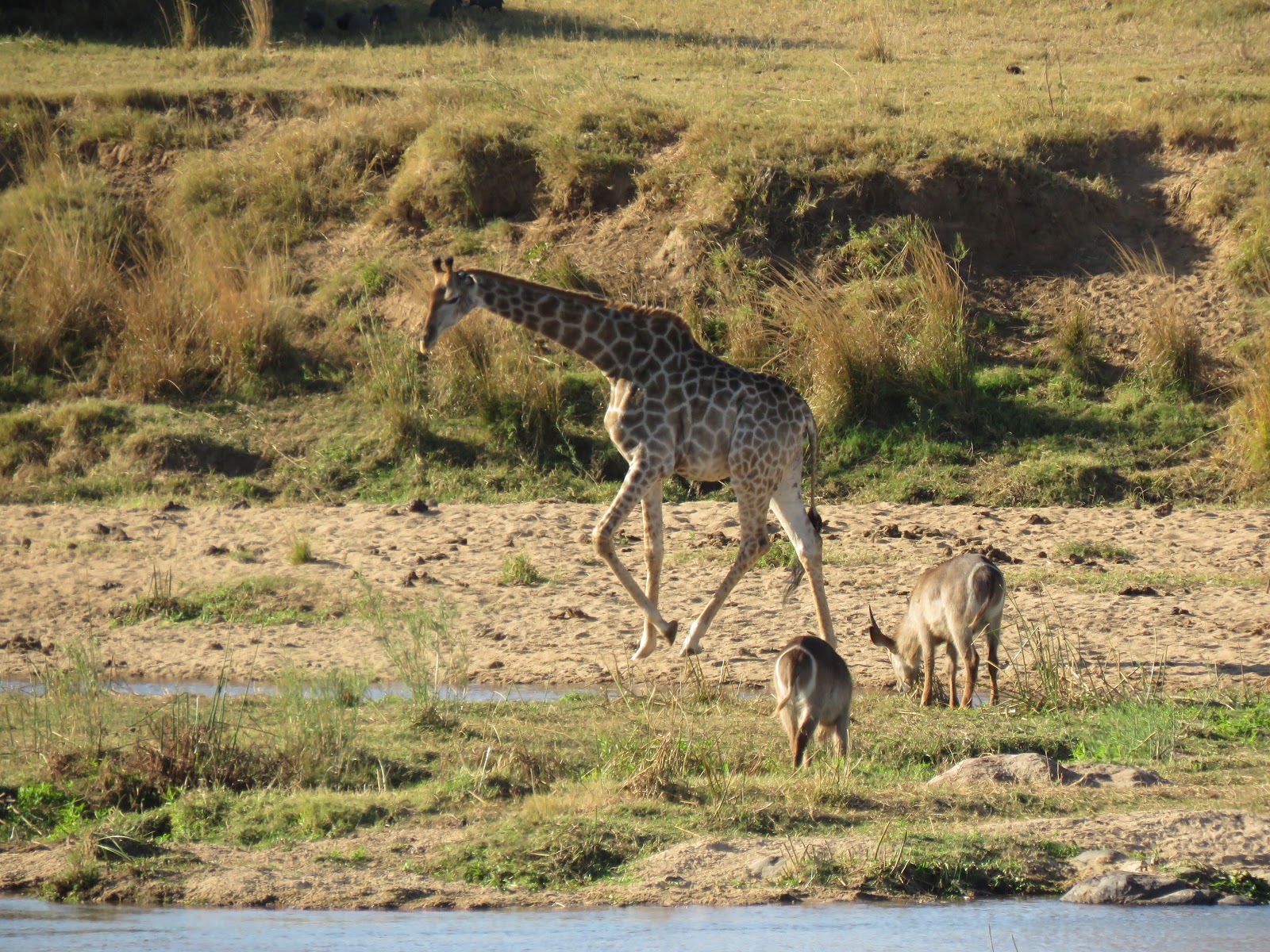
A giraffe near two waterbucks.

For one of many posts describing our illegal alien status in Australia, please click here. Luckily, after considerable time and effort, we were able to work it all out and leave on the cruise where we met Lea Ann and Chuck on our way back to the US to see family.

In speaking with Lea Ann and Chuck, we’re reminded of how vast our experiences have been since 2012 and how grateful we are for every experience, good and bad. We’ve learned a lot from our mistakes and, on occasion, prided ourselves on good decisions we’ve made along the way.

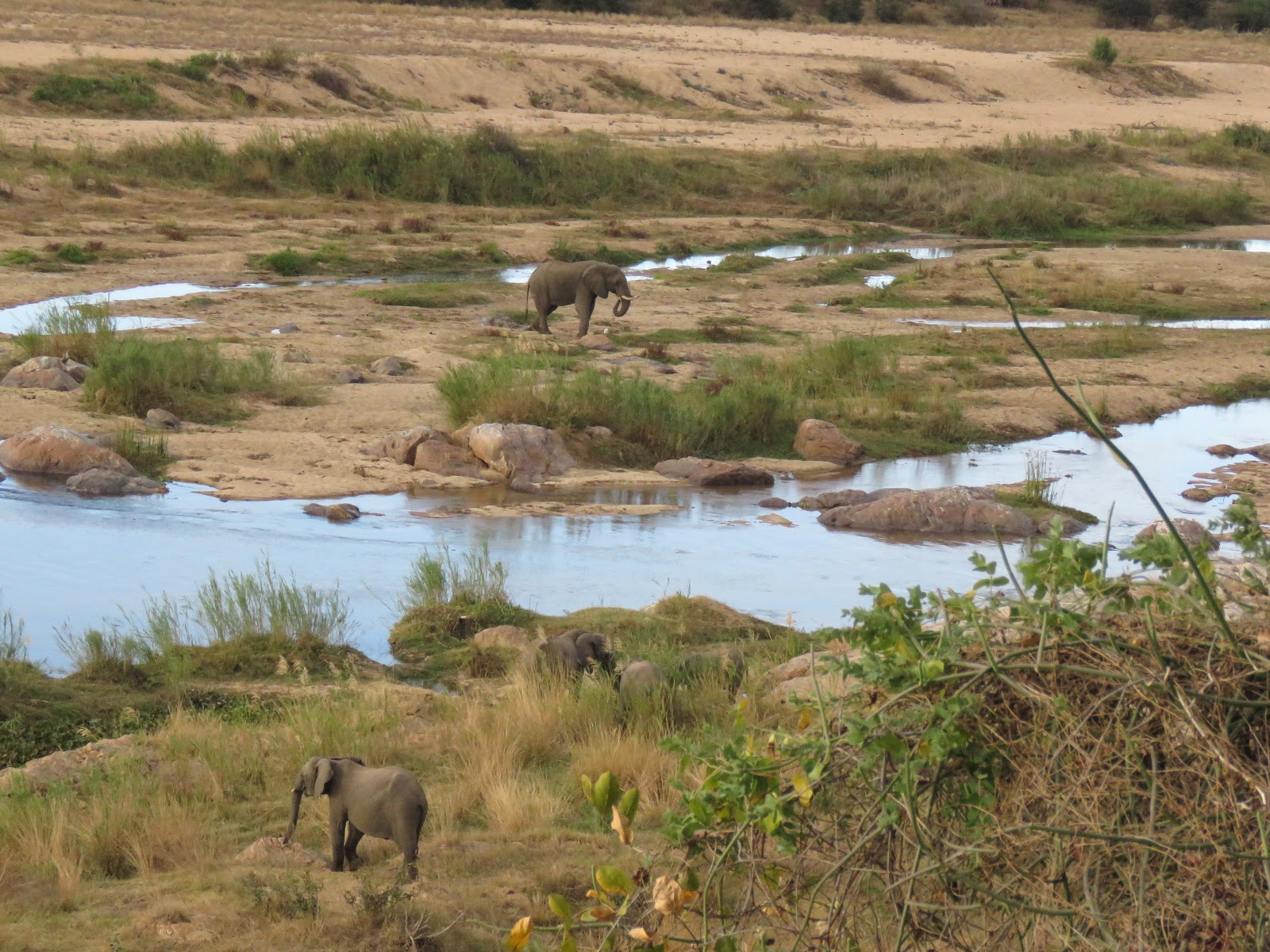
We always enjoy watching elephants crossing a river or a road.

However, continuing to travel the world, which we’ll commence with even more mobility beginning next February, is always a “work in progress.” The learning, along with our personal growth as individuals and a couple, is an ongoing process.

Today, as we drove through Kruger for several hours, we relived many of the details of the early stages of our relationship. At that time, we were the most “unlikely” couple to succeed as anyone we’d ever known. Our differences were many.

The green grasses along the river are pleasing to the elephants.

And yet, here we are 27 years later, and we’ve decided we couldn’t have been better matched in general and for this extraordinary life we live. The likelihood of two people willing to live this life and doing so with love, respect, peace, and harmony is hard to envision.

A lone elephant across the river.

We wish Lea Ann and Chuck, another happy couple, the very best life together as they continue to plan their world travel adventures. We have no doubt they’ll be as content and fulfilled as we have been!

Happy day and evening to all!

Photo from one year ago today, July 24, 2017:

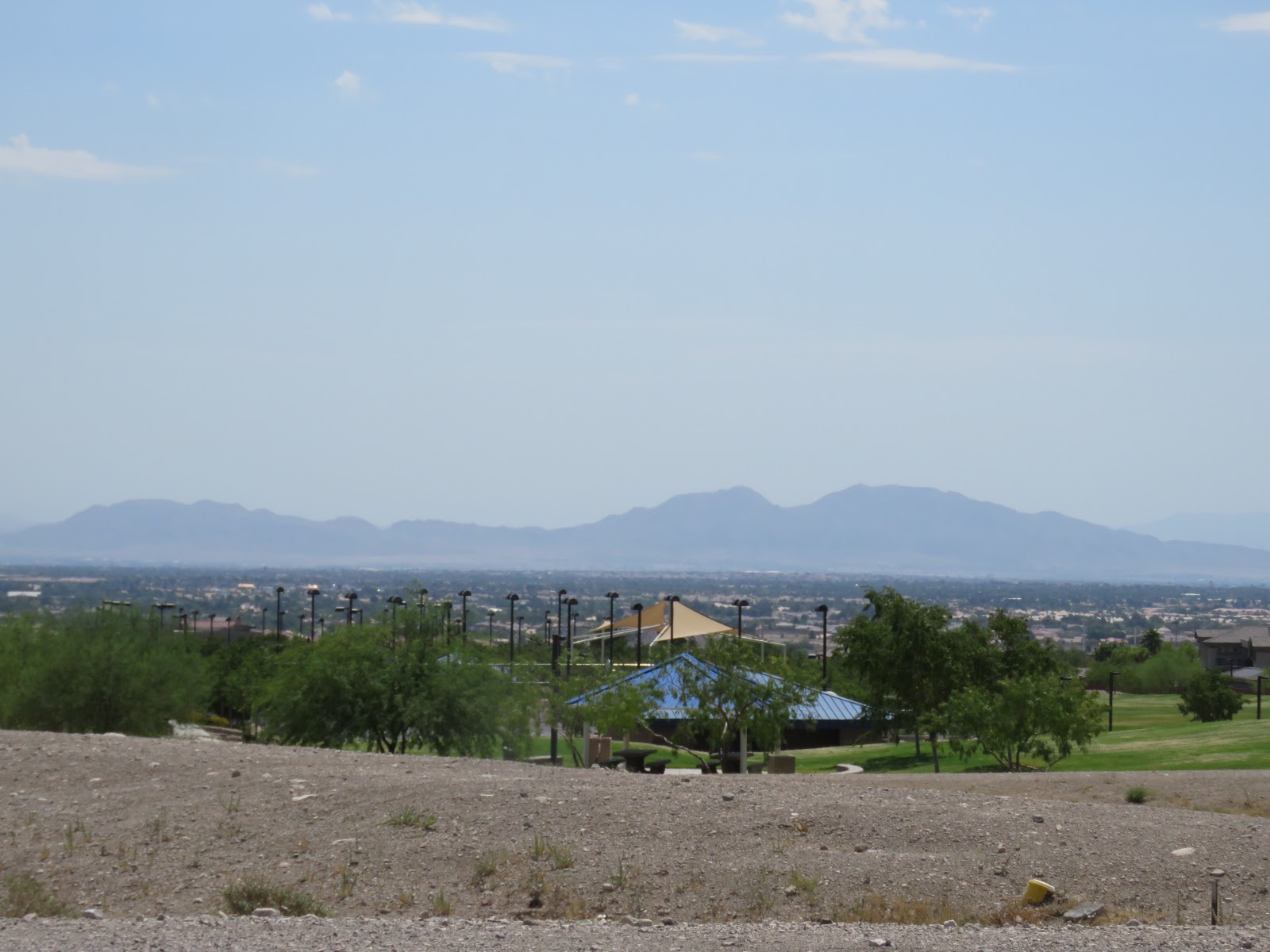
The heat and dust create a haze over the desert, often impeding views of the mountains.  For more photos, please click here.

A Sunday drive in the neighborhood…Pinch me, am I dreaming?…

This was one of our favorite sightings of the day, three giraffes drinking together on the Crocodile River.

“Sighting of the Day in the Bush”

We’ve posted other photos of hornbills in our bird feeder, but we can’t ever get enough of these pretty birds.

After uploading the day’s post and busying myself making a special Sunday dinner, I suggested we go for our drive…in this case, a “Sunday drive.” I recall as a kid going for a drive on Sunday afternoons, and it was extraordinary. 

I grew up in Long Beach, California (except for two years in Boston). A Sunday drive usually consisted of visiting one of many exceptional beaches on the Pacific Coast Highway.

The above main photo is from a distance. 

When Tom was a child, typically, his family would drive from Minneapolis to Winsted, Minnesota (72 km, 45 miles) to visit family. It was often too cool to swim in the ocean in the winter months, but the drive and a stop for an ice cream cone were all it took to make the day special. He, too, had some great memories of those days.

Now, as we’ve aged and are “relatively” retired as world travelers, Sundays are just another pleasant day of the week, especially since we’ve re-instituted our old-fashioned Sunday drive.

Giraffes rarely bend over to the ground other than for drinking. They are highly vulnerable to predators in this position.

However, a Sunday drive in Marloth Park is like none other anywhere else in the world. As always, Tom washed the little car’s windows since, at times, sightings occur in front of us on the road, and we have no choice but to take photos through the windscreen (windshield in the US).

A wildlife wonderland.

We load a newly charged battery in the camera, clean the camera lens with a soft cloth and pack an extra battery in Tom’s pants pocket. We fill our mugs with iced tea, Crystal Lite for Tom, and green tea with cinnamon for me, and we’re off.

Over the past 5½ months, we’ve learned to keep our expectations in check. On occasion, we may see little more than helmeted guinea fowls (of which we have dozens in our garden), impalas, and a variety of baboons and Vervet monkeys.

Zooming in on this “obstinancy” of cape buffaloes, we see where they got this plural name. They certainly do appear obstinate and, in fact, are referred to as the “Black Death” based on the number of people they kill each year.

For first-time visitors seeing the above could be most satisfying. But, now, after a total of 8½ months in Marloth Park, including our prior three months in 2013/2014, impalas, although adorable, guinea fowls and monkeys are seldom subjects of photos unless something is exciting transpiring.

As for baboons, which are destructive and may be dangerous, we have no interest in them at all, preferring to stay away as much as possible. The exception may be if a large troupe came to the garden for a possible photo op. Of course, it’s imperative not to feed them, or they’ll never go away.

In this distant photo, it appeared the many cape buffaloes were piled atop one another.  They do stay close to one another when lounging…safety in numbers.

As for the rest of the wildlife, we’re interested in it all, from the unusual insects to tiny frogs to the massive elephants. I suppose most of the residents in Marloth Park feel the same, except we noticed the next-door neighbors feeding the Vervet monkeys over the weekend. 

They leave for their other home, and then we’re left with the monkeys pestering us. We cannot stress enough how destructive they can be. They can literally destroy every item on a veranda or the inside a house in a matter of minutes.

Elephants are always an exciting sighting.

Side note:  a few minutes ago, a hornbill was sitting on a tree limb squawking at us.  Tom checked and found the birdfeeder almost empty of bird seeds. He refilled it, and moments later, the hornbill was back inside the feeder as content as she could be, with several following her. That precipitated today’s “sighting of the day” photo above.

We began the Sunday drive around 1330 hours (1:30 pm) and never made it back “home” until almost 1600 hours (4:00 pm).  What a day we had while merely on a Sunday drive through Marloth Park, mainly focusing on activity on the river.

As we ended our drive along the river road, we spotted elephants close to the fence between Marloth Park and Kruger National Park. This was a first for us, but Kathy and Don’s friends who live on the river road told us this occurs occasionally.

The areas around the bush houses had few animals since many holidaymakers were still here spending a long weekend or more. But, once we reached the river, the sightings were over-the-top. 

We’d drive a short distance with our eyes peeled toward the river, see something, park the little car on the road to walk through the dense bush at times. I was wearing jeans and socks, but Tom was in shorts, scratching up his legs in the process. 

Wildebeests and zebras visiting holidaymakers. They had a small bag of pellets that tourists often buy when they are here for a weekend or longer stay. 

Some indigenous and invasive plants can cause a nasty rash, infection, or even serious injury, so I always make sure my legs are covered. We’d recently read of a woman who died (in another area in South Africa) by a neurotoxin in a plant that had scratched her leg while walking in the bush. 

One can’t be too careful. Next time, he’ll wear long pants. Also, it’s important to wear insect repellent since we aren’t taking malaria pills this year in Africa except for our visa trips to Zambia, Botswana, and Zimbabwe.

There were giraffes munching on trees in Marloth Park and more drinking on the river.

Anyway, the day was outstanding! We spotted more wildlife in this short period of time than we’d ever seen in Kruger during the same period. It kept coming and coming. Each time we thought we were done for the day, we encountered more sightings. 

Back at our holiday home, a few animals were waiting for us, Ms. Bushbuck and Little Wart Face. We gave them each a little pile of pellets and vegetables in separate areas so LWF wouldn’t chase her away. They happily munch on their treats, both returning in the evening for yet another round.

Yesterday, we saw no less than 100 cape buffaloes at the Crocodile River.

Today, we’ll lay low, enjoying yet another hot and sunny day at 25C (77F) while situated on the veranda, as usual, contemplating our next trip to Kruger and drive in Marloth Park. Of course, we won’t be waiting until next Sunday for either.

Have a warm and sunny day!

Photo from one year ago today, July 23, 2017:

The lights on the Strip at night are always impressive. It’s hard to believe it was a year ago we were in Las Vegas spending this fun evening, among many others, with son Richard and friends. For more photos, please click here.

Part 2, Kruger National Park reaps many rewards…Supporting other travelers in their quest to travel the world…

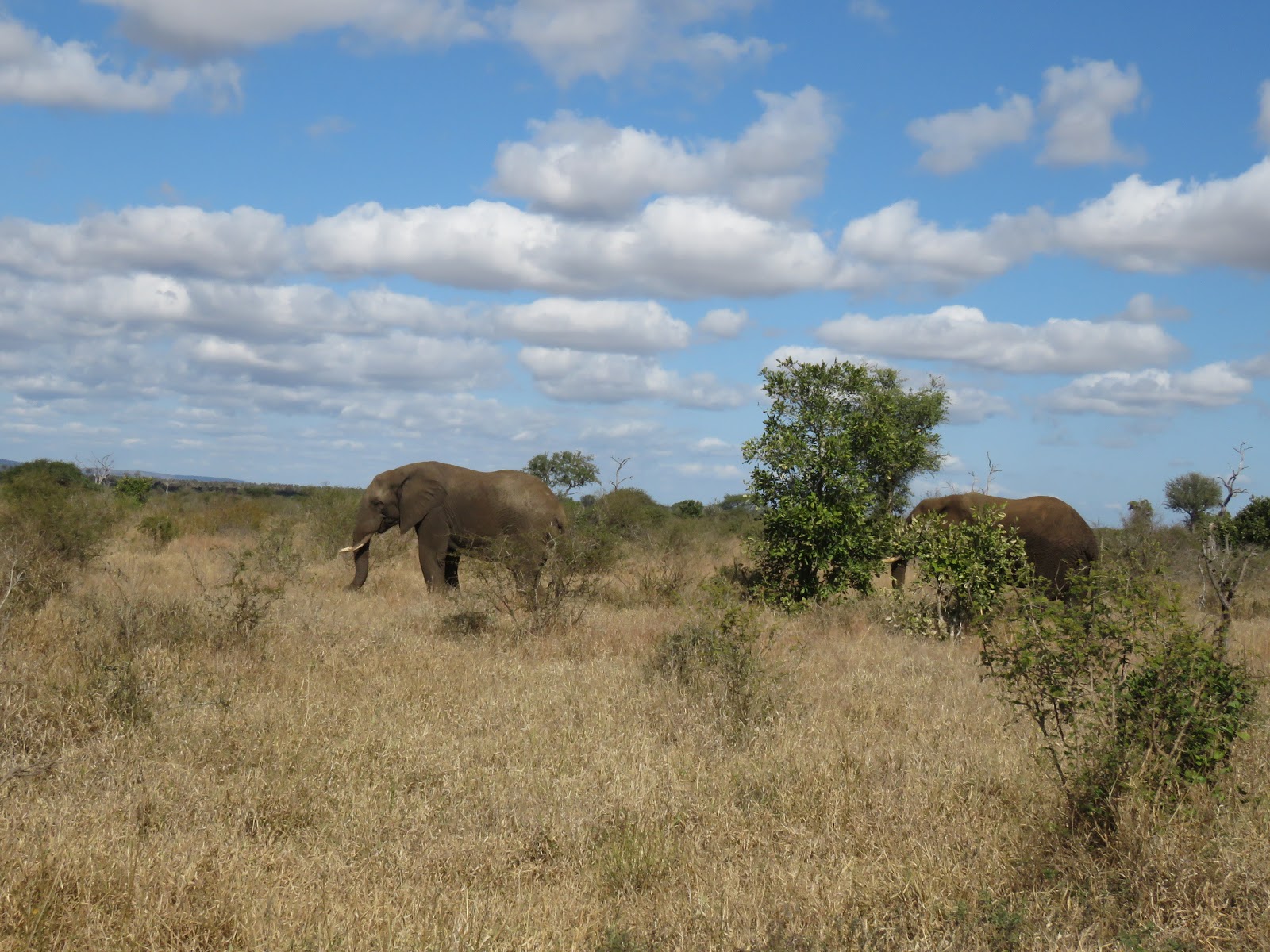
The pillow-like puffs of white clouds against the bright blue sky and a few elephants create a heavenly scene in Kruger.

“Sighting of the Day in the Bush”

This cute little bird landed in our bird feeder. According to our helpful friend Lynne, this is a juvenile male red-headed weaver.  Thanks, Lynne!

Not a day passes that we don’t hear from some of our readers contemplating changing their lives to travel the world. They often have many questions we’re always more than willing to answer based on our personal experiences over this past almost six years.

It’s always thrilling to see elephants along the road.

We’ve had little to offer in a few cases when the inquirer is planning to backpack, stay in hostels, or use an RV, camper, or caravan. But, the majority of inquiries revolve around places we’d suggest, holiday/vacation home rental sites we prefer, health insurance and medical care, refilling prescriptions, car rentals, credit cards to use, visas, and the most cost-effective means of converting money.

Elephants crossing the road is extra special.

We are always happy to oblige and most often respond within 24 hours. The irony of it all is that everyone travels differently. No single person or couple seems to do it precisely as we do.

And most exciting when large numbers of elephants cross the road.

That’s the beauty of the vast numbers of primarily retirees/baby boomers who are making the drastic decision to change their lives. The single most significant difference in the way we travel and how others travel or desiring to travel may include some of these:

  • We have no home, apartment, condo, or bedroom in the homes of family or friends where we go for downtime or regrouping. 
  • We have no storage anywhere. We unloaded everything we owned in our old lives.
  • We own no rental property, often the traveler(s) former residence they keep in case “they change their minds” or tire of traveling.  This may be a significant source of worry and stress; maintenance, management, rental issues, wear and tear, and market conditions. We each had owned homes for over four decades.
On our way to the Mug & Bean restaurant on Lower Sabie, we noticed it was raining at a distance. We certainly need rain here but most likely won’t encounter much for several months.
  • Typically we stay in vacation/holiday homes for one to three months. (Although this year in Africa is a rare exception, as mentioned in yesterday’s post, where we’re recovering from the big expense of the Antarctica cruise).
  • Often, for short stays, we negotiate special pricing for hotels while we await the next venue.
  • We use cruising as much as possible as a means of transportation while providing living arrangements during the sailing period. We don’t think of cruising as a holiday or vacation. 

We have minimal luggage. If we purchase something to add to our bags, we must dispose of something else. Maximum kilogram per bag: 23 (50 pounds)

A waterbuck is looking across the river for possible predators.
  • We do not stay in the homes of family and friends.  We don’t want to burden anyone with our peculiarities, nor do we expect a free ride (except for son Richard in Henderson, Nevada, where we’ll stay for a few weeks every two to three years. Thanks, Ricky!)
  • We don’t have a “bucket list.” If we discover something along the way we’d like to do, we research, analyze the costs, and make a decision to include it in our itinerary.
  • We often book some events two years in advance to continue shaping our itinerary. We thoroughly enjoy the planning process, with each of us playing a very active role.
  • Every day, 365 days a year, we spend half of each day documenting our daily lives with photos. Doing so is not a chore for us. It’s a pure pleasure! We can write about the second part of each day we spend experiencing aspects of our lives the following day.
  • Our overall goal: stress-free living.
There’s never a shortage of moms and babies.  From this site: “Elephants have the longest gestation period of all mammals. These gentle giants’ pregnancies last for more than a year and a half. The average gestation period for an elephant is about 640 to 660 days or roughly 95 weeks. By comparison, a human pregnancy lasts an average of 280 days or 40 weeks. Female elephants live for 60 to 70 years, but only have about four offspring throughout their lifetime.”

None of the above is stated to imply that the way we’re doing it is ideal. However, over these years, we’ve fine-tuned our goals, objectives, and expectations and are content with how we’ve chosen this path in life.

From this site: “The South African giraffe (G. c. giraffa) is found in northern South Africa, southern Botswana, southern Zimbabwe, and south-western Mozambique. It has dark, somewhat rounded patches “with some fine projections” on a tawny background color. The spots extend down the legs and get smaller. The median lump of males is less developed. A maximum of 31,500 are estimated to remain in the wild, and around 45 are kept in zoos.”

However, we always welcome inquiries regardless of the ways you may choose to travel. Please don’t hesitate to inquire at any time. Also, if you know of someone interested in long-term lifestyle travel, please forward our site to their email.

Two giraffes are crossing the road near a historical marker on the paved road.

Tonight, we’re heading out to dinner with friends Sandra and Paul (both MP Honorary Rangers), who happens to live a few doors down the road from us. No doubt, as always, it will be an enjoyable evening with this lovely couple.

In certain parts of Africa, giraffes are being killed for their tails used as a status symbol. For a video and story on this horrifying practice, please click here.

Tomorrow, we’ll be back with lion sighting photos! Please check back!

Have a beautiful weekend.

Photo from one year ago today, July 21, 2017:

We purchased our new Brother color scanner in Nevada to replace the five-year-old Doxie model we used in the past.  For details on living a paper-free lifestyle, please click here.

Part 1, Kruger National Park reaps many rewards…A gruesome reality…Plus, cucarachas…

Although this may appear gruesome, this is the reality of life in the wild. Most likely, a lion killed and devoured this cape buffalo which was later “finished off” by vultures that we saw hovering when we first spotted this scene.

“Sighting of the Day in the Bush”

We were parked at the edge of the shore of Sunset Dam when this croc emerged from the water. Wow!

Sometimes when we go to Kruger National Park, we encounter breathtaking and unusual scenes. Yesterday was a little different. There wasn’t any particular incident or sighting that left us reeling as usual. 

Several vehicles had stopped to observe this kill.  We waited until we could get a better shot and zoomed in.  See the main photo for more detail.

Were we disappointed? Not at all. It’s not always the mind-blowing experiences that make it a good trip into Kruger. Instead, we encountered a wide array of birds and wildlife, which we’ll share over the next few days.

Hippos and impala at a distance on the Sabie River in Kruger.

Often, it’s the more subtle sightings that make us appreciate the simplicity of it all…wildlife living in their natural habitat, continually on the search for food, procreation, and a degree of comfort when possible. We, humans, are so much like them, aren’t we?

We take a side dirt road each time we go to Kruger and often see this wildebeest sitting under this same tree.  I guess  that explains how we’re all “creatures of habit.”

We began first thing in the morning to make the 20-minute drive to the Crocodile Bridge with a plan to drive to Lower Sabie to the Mug and Bean restaurant for a leisurely lunch. I know I’ve mentioned this before, but where in the world can one jump into their car and be in wildlife nirvana in 20 minutes? 

Now that we’ve fallen in love with Wildebeest Willie, we are particularly passionate about these calm and peaceful animals.
We never fail to appreciate this fact, nor do we ever get tired of seeing elephants, giraffes, zebras, wildebeest, warthogs, rhinos, and so much more. One might think that since we can drive five minutes to the river in Marloth Park and almost always seeing elephants, that after a while, it could become mundane.
From this site: “An omnivorous bird, the Yellow-billed Hornbill, feeds mainly on the ground surface, where they forage for seeds, small insects, spiders, and scorpions. This is the bird we see most often in Marloth and Kruger Park, the hornbill. Termites and ants are a preferred food source in the dry season.”

It doesn’t. Each time we spot the magnificent beasts, we’re reminded of how fortunate we are to be here. Often, we ask ourselves and each other…”How did we get to be here? How could we have lived our lives without these amazing
experiences?”

An “implausibility” of wildebeest.

Previously, we’d mentioned that one of the reasons we chose to stay in Africa for so long was to “lick our wounds” from the costly Antarctica cruise, which was well beyond the limits of our yearly budget. To see the total expenses for the Antarctica cruise, please click here and scroll down the page for the information.

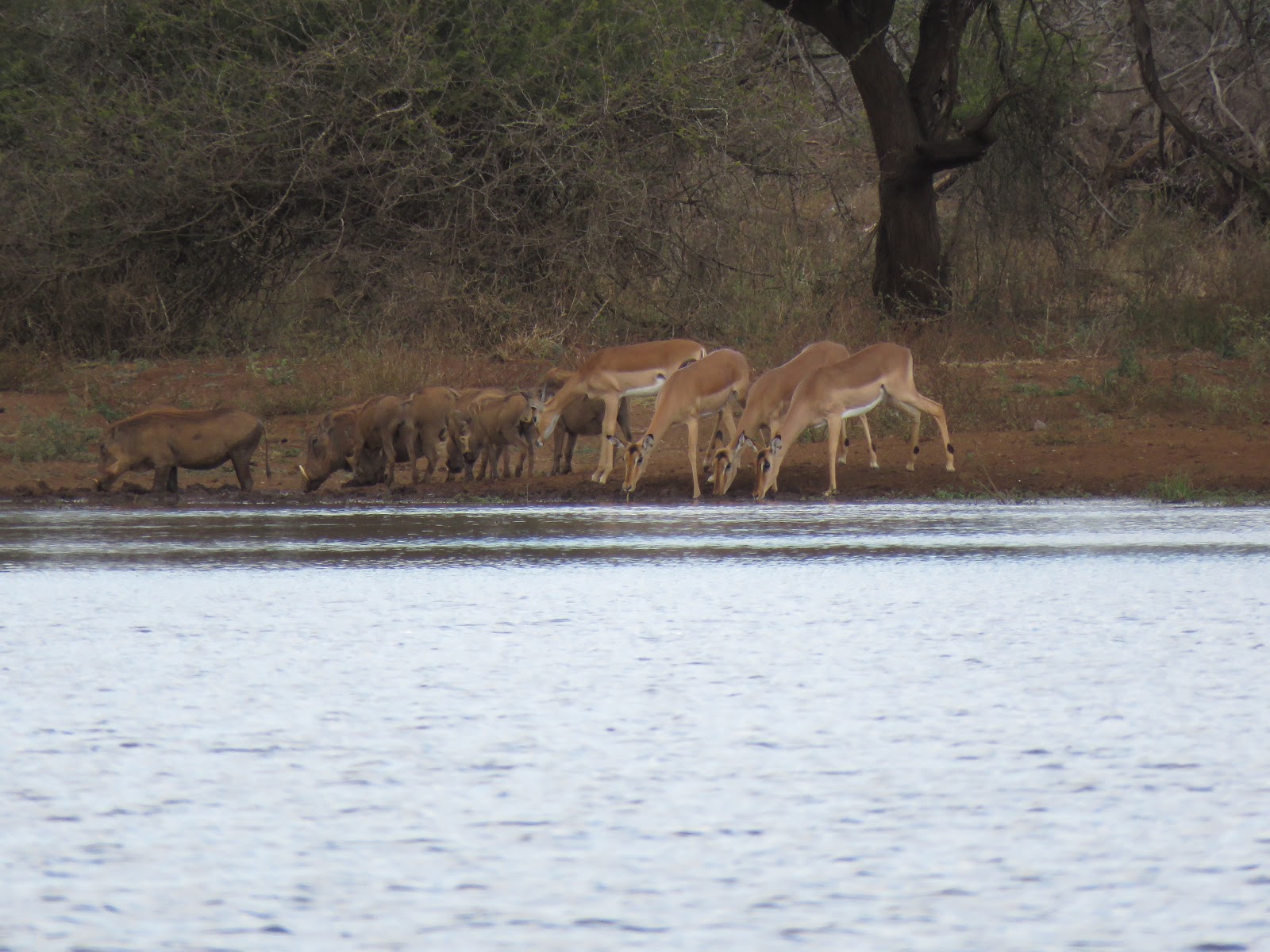
Impalas and warthogs are stopping for a drink.

But, we knew in doing so, it would be “heaven on earth” spending more time on the continent of Africa. Usually, “to lick one’s wounds” requires a certain degree of sacrifice. There’s been no sacrifice here.

This was the first time we’d ever seen a cape buffalo crossing the tar road. They are one of the “Big 5,” including the leopard, lion, elephant, and rhino.

Sure, there are inconveniences and occasional discomforts compared to living in some other parts of the world. However, we’ve adapted so well, we hardly notice anymore. 

Hippos resting on a sandbar on the Sabie River.  Note the number of oxpeckers on the hippos hides!

Over the past few weeks, we’ve had many cockroaches (aka cucarachas in Spanish) in the house. Usually, one thinks of dirt and filth about the disgusting cockroaches. We have them here, and we had them in Costa Rica, both very clean and newer properties. 

This is a white-fronted bee-eater from this site: White-fronted bee-eaters nest in colonies averaging 200 individuals, digging roosting and nesting holes in cliffs or banks of earth. A population of bee-eaters may range across many square kilometers of savannah but will come to the same colony to roost, socialize, and breed. White-fronted bee-eaters have one of the most complex family-based social systems found in birds.”

Picture this, you’re taking a shower, and you see a cockroach crawling up out of the drain. The weird thing here is that they were crawling up out of the drain in the shower. This surely could be a scream-worthy event. 

These dark-capped bulbuls hang around for scraps from diners at the Mug and Bean restaurant in Lower Sabie, where we stopped for lunch yesterday. 

We don’t scream. Tom sprayed the shower, but when it didn’t resolve the issue, Louise and Danie came to the rescue with a particular product they use specifically for these situations. For a while, we won’t see them again. 

Yellow-billed storks lined the shore of Sunset Dam in Lower Sabie.

This is Africa, and they’ll return. Along with zillions of mosquitoes when the rainy season comes in the spring and then the humid summer heat with snakes and insects everywhere. We were here in the summer of 2014. We managed then. We’ll manage again.

Zebra stopping for a drink in the lake.

There will be a trade-off then; the return of dung beetles, which we love to see; the newborns of many of the wildlife; the blooming the bright red Flame Trees and the Sausage Trees and, it goes on and on. There’s so much to distract us from any possible inconveniences.

Another croc emerged for a breath of fresh air.  Crocs may stay underwater for up to an hour when they feel threatened.

Soon, we’ll be off for our usual exploratory drive in Marloth Park. Who knows what we’ll see? It’s now approaching the weekend, and holidaymakers are flooding the park once again. Today the wildlife “traffic” in our garden has already diminished a bit as the crowds move in for the weekend.

Several crocs at Sunset Dam, lounging in the sun.

We’ll be patient, and before too long, it will be Monday again, and everything will be right with the world, this world, right here and right now.

May everything be right in your world today and always.

Photo from one year ago today, July 20, 2017:

While in Las Vegas, I made these homemade hamburger buns (the recipe is shown at this link here) are huge enough to hold a 6 to 8-ounce patty with cheese, bacon, lettuce, tomato, and onion or other items added. They’re easy to make and delicious!  Please click here for more.

An outstanding 24-hour period we’ll always remember…

 
This morning, we made this video of 17 kudus in the garden. Astounding!
“Sighting of the Day in the Bush”
We spotted two rangers on the road with rifles. We wondered what that was about. Any comments?

Yesterday was quite a day! With many holidaymakers leaving on Sunday due to the end of the school holiday, the wildlife came out from hiding in the parklands.

This morning’s 17 kudus in the garden. See the above video for details.

Not only did we have visitors from early morning well into the evening, at dusk last night spotted three giraffes in the side yard after hearing the sounds of branches breaking as they made their way through the bush. When we saw the giraffes’ heads through the dense bush, we took off on foot to check it out.

The kudu standing at the edge of the veranda is the same female that constantly licks my foot when she approaches.  I can identify her with a bit of oval notch in her right ear.

We found what appeared to be a mom, dad, and one youngster, most likely around eight or nine months old. We followed them through the neighbor’s garden (no one was there) and out to the parklands, where we stopped to take photos while they were grazing.

Wildebeest Willie and friends stopped by again last night.

The parents didn’t look happy to see us, although we were back by at least 10 meters, so we backed off further, giving them even more space. It was getting late, and visibility was poor from such a distance as we stayed out of sight as much as possible, taking the few photos as shown here today.

Although not all shown in this photo, we had six bushbucks in the garden for the first time.

Soon, we were back on the veranda, ready for the evening’s activities, all of which couldn’t have been more pleasing. They came and came and came, one species after another, often sharing the space with several other species, seem to all be getting along.

Last night, we saw giraffes coming through the parklands next to us.  On foot, we rushed to see them up close to take photos.  But, dad wasn’t too happy with us with his young calf nearby.  We carefully backed away.

When pellets are offered, it’s not unusual to see some head-butting among the same species, let alone among two or more species. Overall, the most aggression we’ve seen is in warthogs amongst themselves. After all, they are “pigs,” right?

This may have been the young giraffe’s mom who hovered nearby.

Yesterday afternoon, we embarked on our usual drive in the park. Although not affected by the number of tourists in Marloth Park, we saw the most striking scenes to date on the Crocodile River, photos of which will follow over the next few days.

We knew better than to get too close.

Was all of this “safari luck” or simply a case of the fact that there were fewer people in the park, resulting in more and more wildlife coming out of hiding to wander from bush house to bush house? We can’t help but assume it was due to fewer cars and fewer people disturbing the peaceful flow of life in the bush.

It was nearly dark when they visited.

The quiet has resumed.  We don’t hear cars passing on the road very often. The tar road is quiet and unencumbered and, fewer animals will be killed by speeding motorists. How long this quiet lasts is unpredictable. More tourists will be arriving over this next month for the summer school holidays in Europe and other parts of the world.

The young giraffe was preoccupied munching on leaves in the bush.

But, for now, we’re reveling in the serenity precipitating the return of the wildlife to our garden. It couldn’t be more heavenly. Even the birds seem happier, singing their tunes and dining on seeds from our birdfeeder.

For today? We may stay put and catch up on some much-needed research to begin filling gaps in our itinerary over the next few years. There’s never a time to sit back, knowing everything we need to plan is in place.

A young zebra in the garden of a house on the river road.

Weather permitting, tomorrow, we’ll head to Kruger for the day. If so, we’ll post a notice as to when we expect to have the day’s post uploaded unless I get ambitious enough today to work on tomorrow’s post this afternoon.

This must have been the above baby’s mom resting nearby.

Of course, that’s subject to how many delightful distractions present themselves throughout the day. We’ll play it by ear, as they say.

Have a pleasant day filled with beautiful surprises.

Photo from one year ago today, July 17, 2017:

Surprisingly, there are some birds in the desert during the scorching summer months in Nevada78. For more photos, please click here.