Mongoose mania in the morning…Delightful little critters we’re coming to know..What’s our weekly expense for is feeding the wildlife?…

The mongoose now comes up the steps to let us know they’d like some eggs.

“Sighting of the Day in the Bush”

Mr. Tree Frog has become a regular fixture hanging out on this light fixture every night after dark. Most likely he’s attracted to the possibility of eating many insects around the light.

Mongooses fascinate us. (Yes, the plural of mongoose is most often mongooses, not necessarily mongeese). There is no biological connection between mongooses and geese.

The mongooses get along well with Ms. Bushbuck and Baby.

A group of mongooses ranging from 20 to 50 participants is called a band. In our area in Marloth Park, most often we see the banded (striped) mongoose. Most often they visit us in small groups of 20 or so but we’ve definitely had visits from as many as 60 or 70 of the funny little creatures 

“Only one more step to go,” says one mongoose to another.

In Africa, there are 34 species of mongooses but there are also these and other species in parts of Asia and Europe. In many countries, they are highly revered for their ability to fight with a venomous snake, surviving many bites.  

Mongooses are adept at killing snakes due to their agility, thick coats, and specialized acetylcholine receptors that render them resistant or immune to snake venom. Thus, we welcome them as visitors hoping their presence, which is daily, keeps the snake population at bay during the upcoming spring and summer months.

“I made it all the way to the top. Now, let’s see if the humans notice me!”

Some mongooses are strictly carnivores but those that visit us, the banded mongooses, seem to enjoy eating the small apple chunks that we toss to a wide variety of visitors although not with the enthusiasm as when we provide the bowl of scrambled eggs as shown in today’s photo with a mongoose lying in it.

“I’ll hide under the braai so they don’t see me.”

Each week, while I shop for groceries in Komatipoort Tom heads to the market in Lebombo where he purchases five dozen eggs for the mongooses and carrots and apples for the remaining wildlife which we “serve'” along with the pellets.

Our weekly cost for feeding wildlife is as follows:
Carrots 5 kg:  ZAR 34.90  (US $2.44)
Apples 2 bags: ZAR  39.80 (US $2.78)
Eggs 5 dozen:  ZAR 79.80  (US $5.57)
Pellets 60 kg:  ZAR 329.29 (US $23.00)
Total: ZAR 488.79 (US $33.79) 

“Hmm…should I try it too?”

We also eat the carrots in the 5 kg bag since they are of exceptional quality.  However, we don’t consume apples with our way of eating and prefer buying “free-range organic eggs” which we purchase weekly at Spar for our own use.

The total weekly/month cost may seem like too big a number to be tossing out to wildlife but the amount of enjoyment we get derive while providing wildlife with added sustenance is well worth the money.

“Gee…the eggs are all gone but I think I’ll lay in the bowl to let them know we want more.”

We never go to a movie, dine out only once per week on average, don’t have the cost of upkeep and home maintenance (including cable bills, lawn service, utilities, and trips to Home Depot) results in the most exquisite entertainment found anywhere in the world as far as we’re concerned.  

In our old lives, it was nothing unusual to drop ZAR 7159 (US $500) during a single trip to Costco, considered in itself to be quite entertaining, while loading up on massive sizes of household goods and food. Those days are long past.

“Trying a different position.  Maybe this will work.”

We do not feed the wildlife our leftover food. We plan our meals carefully and rarely have leftover food to toss. Nor would we feel it is safe for the wildlife to be fed human food. Their digestive systems are developed to consume vegetation and for the carnivores, like the banded mongooses that visit us, they consume insects, small rodents, frogs, lizards, snakes, and eggs. 

We often hear stories of holidaymakers and some local residents feeding the wildlife totally inappropriate foods, such as potato chips and fries, pasta and desserts, and other sugary, starchy foods that aren’t befitting their physical makeup.

“That didn’t work.  Maybe I’ll take a nap.”

In a perfect world, the bush would be rife with greenery, vegetation, and water sufficient to feed the wildlife. But, the reality is such that it’s not always possible and the sustenance we provide is only a tiny portion of what they need to be well-nourished.

Soon, when the rains come, we’ll be excited to see the wildlife thrive in a richer greener environment. Even so, we have no doubt they’ll continue to visit us whether or not they’re hungry as they are now in this parched dry terrain.

May your day be rich in experience and purpose.

Photo from one year ago today, September 22, 2017:

After many inquiries as to these low-carb chicken stuffed loaves, this recipe is included in the link below. Food is a big part of our world travels as we’re sure it is for most of you when traveling, whether homemade or dining in restaurants.  We tripled the recipe in order to result in four meals, freezing part of it.  For the recipe and instructions, please click here.

Cape buffalo day!…Difficult day for wildlife in Kruger…

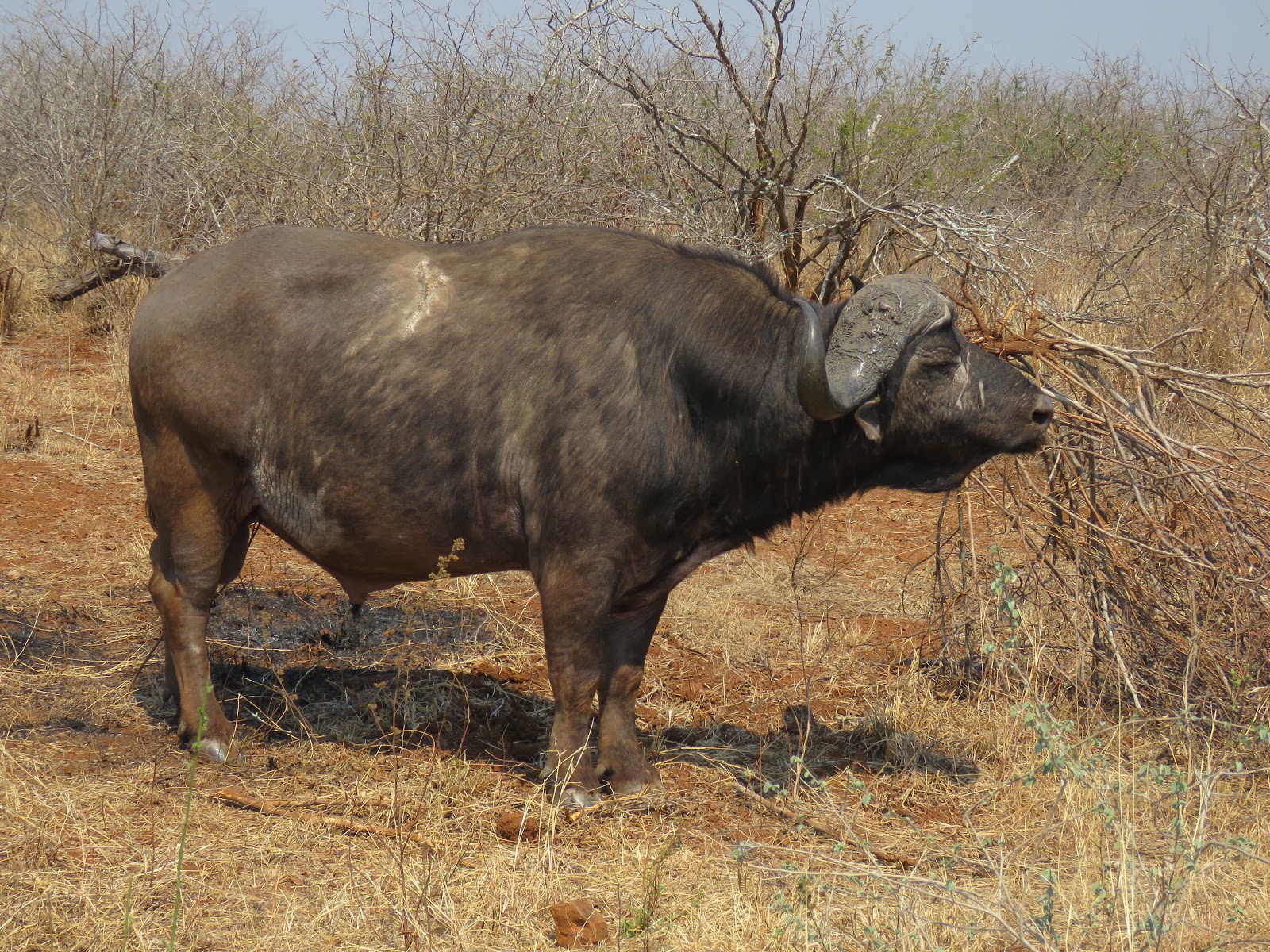
No expression on this cape buffalo’s face can more clearly illustrate his disdain over the hot weather and lack of water nearby.

“Sighting of the Day in the Bush”

I took this photo of Tom at the Mugg & Bean in Lower Sabie on the hottest day we’ve experienced since we arrived in South Africa last February. It was 42C (108F). Moments later, we moved to a table in the shade so Tom wouldn’t get sunburned.

Actually, it made sense to be in Kruger on the hottest day of the year. It allowed us to see how the wildlife stays as cool as possible under such stressful conditions.

Three cape buffalos crossing the road in Kruger.
In one single outing, we saw so much wildlife. We were stunned. For us, it isn’t always about spotting the Big Five: lion, leopard, elephant, rhino, and Cape buffalo. We’ve accomplished this on several occasions during our extended periods in Africa.
Thirsty, hot, and exhausted cape buffalo by the almost completely dry Verhami Dam.

We tend to focus on the wildlife we encounter along the way, never specifically searching for any particular species. Sure it’s exciting to see “cats” and rhinos and appreciate every sighting.  

Cape buffalo stay close to any water they can find.

But, we also get wrapped up in many other species, especially when there’s a story to tell, such as in yesterday’s thrilling newborn elephant sighting, as shown in this post.

A lonely-looking cape buffalo.  

In the case of today’s cape buffalos, we didn’t glean a specific story over our many sightings. Still, we did extract a common theme on the hot-weather day…cape buffalos, along with many other wildlife species, need proximity to water to find any degree of comfort during the hottest days of the season, as described here at this website:

“The African buffalo or Cape buffalo (Syncerus caffer) is a large African bovine. The adult buffalo’s horns are its characteristic feature; they have fused bases, forming a continuous bone shield across the top of the head referred to as a “boss.” Syncerus caffer caffer, the Cape buffalo, is the typical subspecies and the largest one found in Southern and East Africa. S. c. nanus (African forest buffalo) is the smallest subspecies, common in Central and West Africa forest areas, while S. c. braceros are in West Africa and S. c. aequinoctialis is in the savannas of East Africa. According to some estimates, they are widely regarded as hazardous animals, as according to some estimates, the gore and kill over 200 people every year.

Only arid bush for sustenance.

The African buffalo is not an ancestor of domestic cattle and is only distantly related to other larger bovines. Owing to its unpredictable nature, which makes it highly dangerous to humans, the African buffalo has never been domesticated, unlike its Asian counterpart, the water buffalo. Other than humans, African Cape buffaloes have few predators aside from lions and large crocodiles and can defend themselves. Being a member of the big five games, the Cape buffalo is a sought-after trophy in hunting.”

When male cape buffalo don’t “win” the right to mate, they are ostracized from the herd and left to wander in combination with other males in a similar situation.  Our last guide in Kenya, Anderson, called them “retired generals.”

One of the “big five” African game, it is known as “the Black Death” or “widowmaker” and is widely regarded as a hazardous animal. According to some estimates, it gores and kills over 200 people every year. Buffaloes are sometimes reported to kill more people in Africa than any other animal, although the same claim is also made of hippos and crocodiles. These numbers may be somewhat overestimated. For example, in Mozambique, attacks, especially fatal ones, were much less frequent on humans than those by hippopotamuses and Nile crocodiles. In Uganda, on the other hand, large herbivores were found to attack more people on average than lions or leopards and have a higher rate of inflicting fatalities during attacks than the predators (the buffalo, in particular, killing humans in 49.5% of attacks on them). However, hippos and even elephants may still kill more people per annum here than buffaloes. Buffaloes are notorious among big-game hunters as very dangerous animals, with wounded animals reported to ambush and attack pursuers.”

These cape buffalos hung out with hippos at the Sunset Dam, a short distance from Lower Sabie.

A few months ago, we posted our video of two cape buffalos whose horns had become entangled, which ultimately was posted on Kruger’s website per their request. Click here to see our video and here to see it again on Kruger’s own site.

Having access to water surely made life easier for these cape buffalos on a sweltering day.

We’re often able to spot cape buffalos on the Crocodile River, as shown below in one of today’s photos taken from the fence at Marloth Park overlooking Kruger.  We took this photo only two days ago. With all the zebras in the photo with the buffalos, we were pleased with the sighting.

Cape buffalo and zebras on the Crocodile River.

Today, the holidaymakers return for the upcoming two-week school holiday officially beginning on Monday. We can already tell the influence of the rush of visitors is impacting the peace and harmony of Marloth Park with many vehicles on the roads and less wildlife visiting us.  

An unbearably hot day in the bush.

Many animals head to the parklands with all the commotion, where they’ll stay until quiet is returned to the bush. This morning we had quite a few visitors, including 15 kudu, a half dozen warthogs, and our usual bushbucks, whom we expect will continue to visit several times a day, even during the busy time.

A cape buffalo hanging out with a yellow-billed stork.

The construction next door has ended, which has provided us with the quiet we so much treasure. We’ll see how these next few weeks pan out with all the tourists here. We’ll continue our daily drives to the Crocodile River, where once the wildlife is in Kruger National Park, they pay no attention to what’s transpiring in this little piece of paradise in Marloth Park.

Water and vegetation surely made this cape buffalo content.

May your day bring you peace and comfort.

Photo from one year ago today, September 21, 2017:

A beautiful scene in the yard at Iglesia de Catholica Zarcero in Costa Rica. For more photos of the church, please click here.

Cheetah day!…Expressions of a cheetah in the wild…Fantastic sightings in Kruger National Park…

Based on our position in the line-up of vehicles our photo taking advantage was limited.  

“Sighting of the Day in The Bush”

The now-visiting-daily mongooses gather in a pile staring at us until Tom mixes up the bowl of eggs. I talk to them to keep them entertained while he prepares the eggs. We’re happy to feed them to keep them around to deal with snakes.

As mentioned in yesterday’s post here, when the power had gone out in the morning we decided to go to Kruger for the day. Not knowing when it would return and based on the high temperature of 42C (108F) it wasn’t such a bad idea to spend the better part of the day in the airconditioned little car.

These cats are easily distinguishable from leopards based on the dark tears running down their eyes.

Our expectations weren’t high on such a hot day. Would wildlife hide under trees and bush to take cover from the heat? No doubt, many did just that as we spotted many herds of impalas, kudus, and wildebeest seeking protection from the heat of the sun.

It was a mere week or so ago we’d been to Kruger traveling along the main paved road (one of few) that we observed the recent “controlled burn” leaving the bush along that road blackened for at least 45 minutes of the hour-plus drive to Lower Sabie. And yet, magically, it already seemed to be recovering.

Every so often, she’d change positions providing us with additional shots.

We decided to stop for breakfast at the Mugg & Bean restaurant in Lower Sabie which overlooks the Sabie River, often providing some good sightings and photo ops. After breakfast, we’d continue on our self-drive traveling on bumpy dirt roads. 

We watched the cheetah for quite a while but she never stood. In the scorching heat, she seemed comfortable in the shade.

The drive surpassed our expectations, especially when early on we noticed a number of safari vehicles driving down a dirt road to a loop we’d never noticed in the past. We believe based on the map that it was at Gasanftom Road/Gezantombi Waterhole/Watergat.

Moments after entering the loop, we encountered no less than eight safari vehicles with passengers hanging out the sides and windows with cell phones, cameras, and tablets in hand.

What a nice face!

They were obviously gushing with enthusiasm as to the creature before their eyes, a cheetah lying in the shade, awake, alert, and seemingly unaffected by the presence of the growing crowd.

Dozing for a moment?

Tom maneuvered the little car to the best possible vantage point and we too felt excited with this sighting. It was one of few cheetahs we’d seen in Kruger over these past many months. There was only one cheetah.

Sure, we’d like to have seen more cheetahs. But, as we’ve learned over this long period in Marloth Park/Kruger National Park, we’ve come to appreciate spotting “one” of any wild animal. Yes, numbers are exciting but it doesn’t diminish the power, grace, and beauty of any species.

She heard a sound in the bush.

Here are some facts about cheetahs, the second-fastest mammal on the planet, from Kruger’s site here:

“The Cheetah’s body is built for speed. Its legs are relatively long compared to its greyhound-like body; it has a big heart and lungs and wide nasal passages. It is the fastest land animal, timed running at speeds of up to 114km/h (71 mph). While the lion and the leopard rely on getting close to their intended prey before breaking cover, the cheetah’s speed gives it an advantage in the more open savanna. Cheetahs are slightly taller than leopards but not as bulky, probably weighing between 40kg (88 lbs) and 60kg (132 lbs). Although cheetahs are members of the cat family, they have dog-like non-retractable claws. This limits their tree-climbing ability but gives them a speed advantage when charging.

This lone cheetah seemed unperturbed by the clicking of cameras and numerous vehicles in the area. We couldn’t believe how thin she was. We’d seen cheetahs in the past but none looking quite this lean.

Typically, a cheetah will start a charge 60m (66 yards) to 100m (109 yards) from an antelope and, within seconds, will be racing at full tilt. If the buck is alerted in time, it will attempt to throw the cheetah off its trail by zigzagging and dodging between trees and shrubs. Using its long, heavy tail as a stabilizer, the cheetah will single-mindedly pursue its intended prey, trying to anticipate which way it will turn. At the right moment, it will knock the antelope off balance and grab it by the throat as it falls. Because of the relatively small jaws and teeth, cheetahs are not as effective in killing their prey as quickly as lions or leopards, and it can take between five and 25 minutes for its prey to die.

A little grooming was in order.

The element of surprise in hunting is as important for cheetahs as it is for other big predators. While its speed gives it an edge, the cheetah’s vulnerable point is its stamina. It will manage to run at top speed for only about 250m (273 yards) before it needs to catch its breath.

After a high-speed chase, the cheetah desperately needs to rest for about half an hour – even before it eats its prey. This is when cheetahs are at their most vulnerable. They are often robbed of their kill by lions or hyaenas during this recovery spell. If the cheetah is unmolested, it normally devours its prey at the kill site. A cheetah’s food tastes are not as broad as that of the leopard, and it concentrates mostly on small and medium antelope. The cheetah’s diet comprises of the young of larger animals, as well as warthog, ground birds, porcupines, and hares, as well as the smaller antelope. The cheetah’s kill rate is hard to determine, but the consensus is that each cheetah kills between 30 and 150 animals a year, depending on its size, hunting frequency, and the condition of the area. Experts believe a single cheetah ideally needs between one and three kilograms of meat a day to stay in shape.”

For the remainder of this story, please click the above link.
Lounging on a hot day in Kruger.
After the cheetah sighting, we encountered several equally exciting wildlife scenes, which we’ll continue to share in posts over the next several days. Please check back for more.
 
As for today, it’s hot again, similar to yesterday’s unseasonal heat. It’s still winter here for a few more days! As we write here today sitting outdoors on the veranda, it’s currently 35C (95F) and we’re doing fine.  
 
We’ve got the braai (grill) fired up and cooking tonight’s chicken dinner in the event of a power outage at dinnertime which can easily transpire with added power usage during the hot weather.
 

We hope you have a fantastic day whether it’s hot or cool or a balmy almost-fall or almost-spring day!

Photo from one year ago today, September 19, 2017:

“The variegated squirrel is a tree squirrel in the genus Sciurus found in Costa Rica, El Salvador, Guatemala, Honduras, southern Mexico, Nicaragua, and Panama. Fifteen subspecies are recognized.”  Tom spotted this squirrel in the yard, alerted me and I took this photo through the glass wall to avoid scaring it away.  For more photos, please click here.

Hot, hot, hot…42C, 108 F…We went to Kruger…Hornbills preparing for mating season…

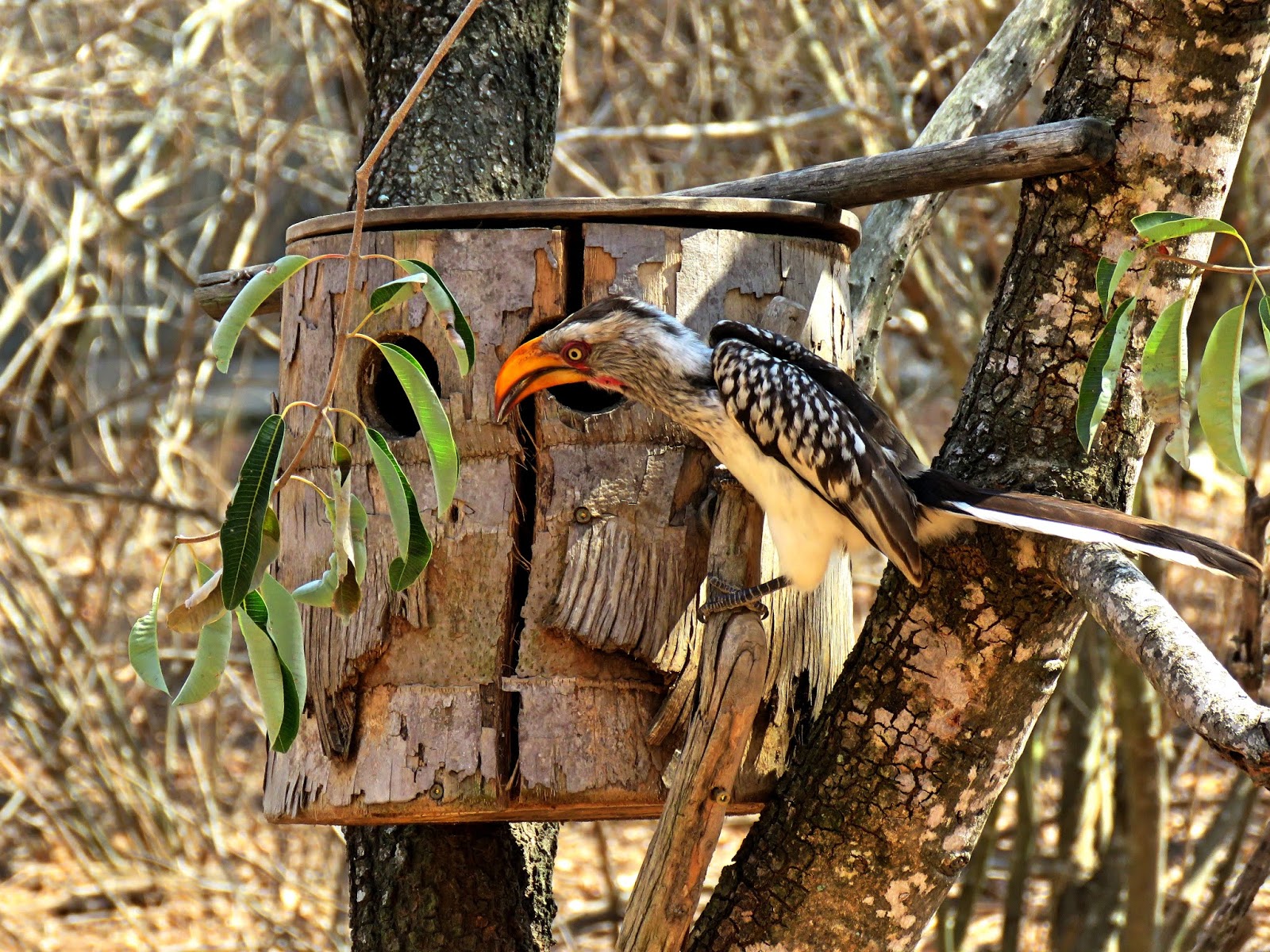
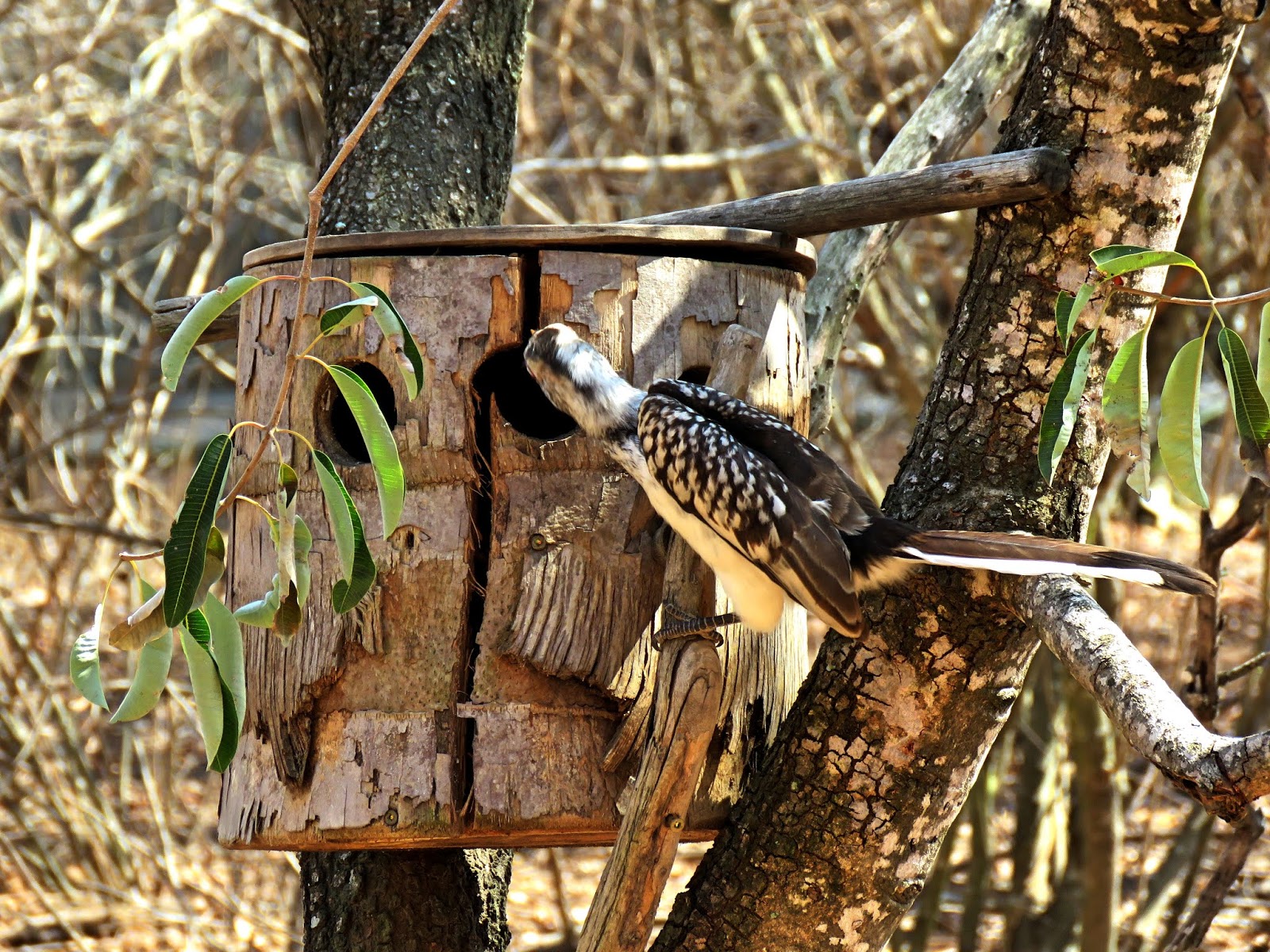
This is not a birdfeeder.  This is an abandoned bushbaby house that our 12 bushbabies don’t care to use.  These male and female hornbills have recently taken seeds from our birdfeeder and placed them inside the bush baby house.

“Sighting of the Day in The Bush”

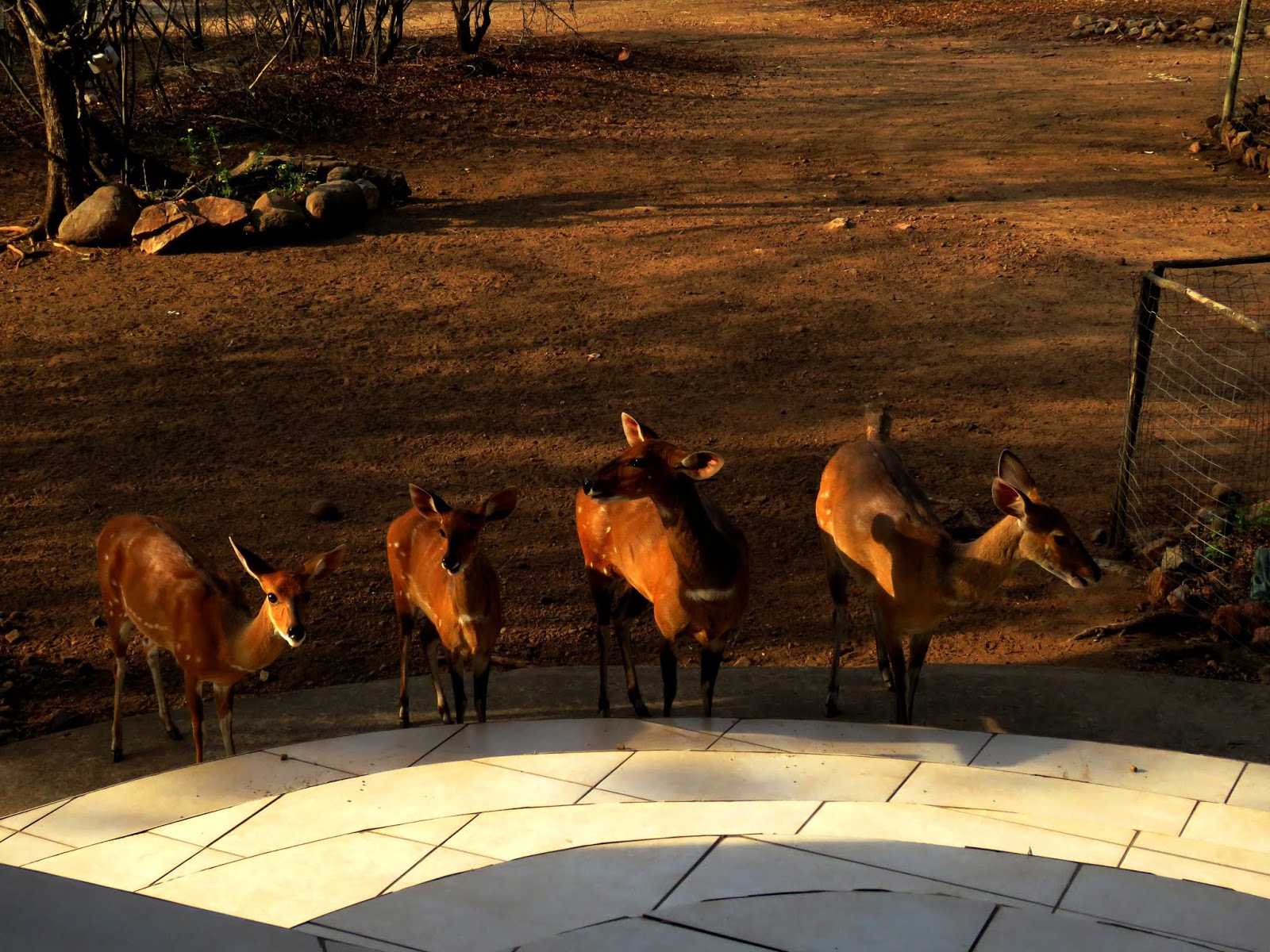
These four bushbucks, two moms, and two babies know the drill. Stand at the bottom of our veranda steps, and you’ll get pellets and ice-cold lettuce, celery tops, carrots, and apples. When we returned from Kruger a short time ago, they were waiting there for us. They sure appreciated it today.

Today’s post will be more compact than usual. We just returned from a full day at Kruger National Park and the time available to get it done before our evening ritual on the veranda begins at 1700 hours (5:00 pm) is limited.

We’re assuming they’re preparing this house as a future nesting spot since we see them do this almost daily.  They both come to peer inside to check out their handiwork.
When they’re satisfied with their day’s work, they head back to the birdfeeder for a bit of sustenance for themselves, as shown below.

With temperatures expected in the 42C (108F) range, it made a lot of sense to spend the better part of the day in airconditioned comfort in the little car while driving through Kruger searching for magical moments.

On top of it, the sugar cane burning fires filled the air with so much smoke getting away was a perfect scenario. We began packing our iced teas, camera, batteries, passports, and prefilled-out Kruger entrance document and were on our way in no time at all.

Here’s the mating pair filling up in preparation for the upcoming spring mating season.

It was still earlier enough in the day not to feel the magnitude of the expected temps, but we dressed in shorts and tee shirts, ready for however hot it may eventually reach.  

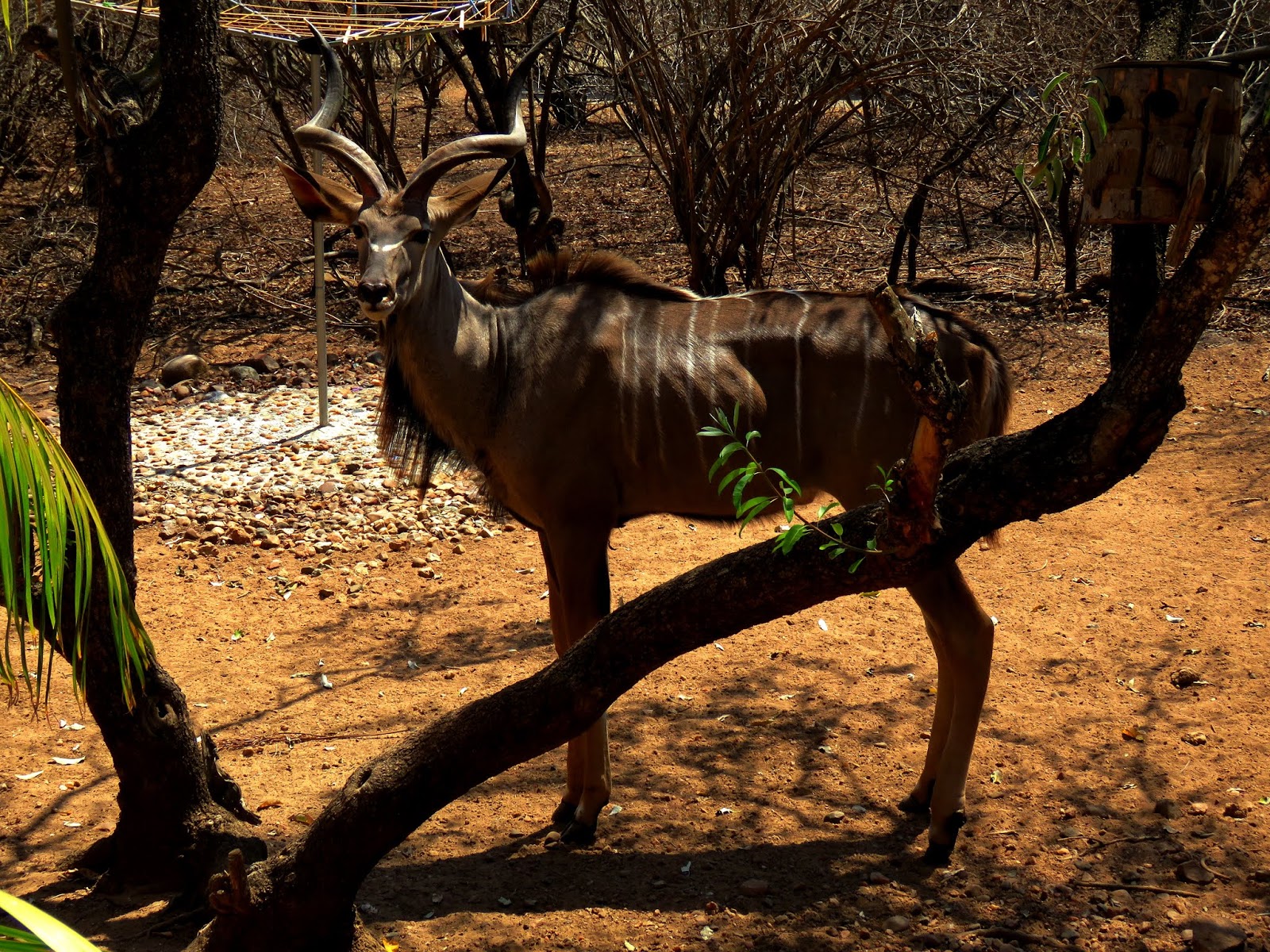
This young male kudu has a long way to go in his maturity to become a “Big Daddy eventually.”  In the interim, we’re thrilled to provide him with pellets when he stops by.

With a plan to stop at the Mugg & Bean Restaurant in Lower Sabie for breakfast or lunch, we knew we’d be spending our time there, outdoors in the hot weather on their veranda overlooking the Sabie River but didn’t give it a thought. This is Africa. It gets hot here.

And, for those of our readers in other parts of the world, it’s still winter here.  Spring begins in the next few days as fall begins north of the equator. We haven’t forgotten how hot it is here in the summer months.  

His horns (not antlers…they don’t lose these) will eventually make another twist as he matures.

Almost five years ago, we spent three months here during the heat of summer. It was hot and sweaty. We managed, as we’ll work now. In some countries, homes may have full-house airconditioning as we experienced in our old lives.  

Elephants we spotted from the fence in Marloth Park during yesterday’s drive.

In Africa and in many other countries worldwide that cater to tourists, air conditioning is only provided in bedrooms by use of an on-the-wall unit that generally keeps the sleeping quarters comfortable, which is the case here.

Right now, on the veranda, it is exactly as stated above. But, when anywhere else in the house, the heat is felt full-on. Perhaps, by the time we prep the veranda for the evening, the temps will begin to subside. In any case, we won’t be missing a night outdoors due to the heat.  

It’s common to see elephants at the Crocodile River on these hot days.

In our old lives, we’d never had sat outside in such hot weather, preferring to stay cool and comfortable indoors. But, as we always say, “This is Africa,” It’s not like our old lives.

And today, while in Kruger, we’re especially reminded of how unlike our day was compared to any day in times long ago remembered. This is a different life now, not to compare, although it’s irresistible to mention the vast difference at times.

So here’s how the day rolled out. This morning as I was getting ready for the day, we experienced a power outage. With no power for WiFi, we decided today would be a perfect day to head to Kruger.

We can’t wait to share today’s photos in tomorrow’s post. We took so many good photos, and it will take days until we get through the bulk of them we’d like to share here.
Please check back tomorrow for some first-time-sightings (for us) that Kruger bestowed upon us in her magical and mysterious ways.

Have a great evening!  We plan on it!

Photo from one year ago today, September 18, 2017:

At the Atenas Railway Museum in Costa Rica, Juan Ramon was excited to show us this bottle with a marble inside.  For more photos, please click here.

Remembrance of a sorrowful day…Adventures along the river…Friends coming to visit…

Many species can share a space in harmony.
“Sighting of the Day in the Bush”
Our resident helmeted guineafowls climbing a tree at dusk shortly before they take off for the night to sleep in the nearby parklands.

Many of us recall the travesty of the horrific loss of life and injury of thousands of individuals on September 11, 2001, and where we were when the events transpired.  

It almost seems as if it was but a short time ago when images flash through our minds of the scenes replayed over and over again on TV of the planes crashing into the Twin Towers and their eventual collapse and the loss of many lives in two plane crashes, one hitting the Pentagon.

Based on the size of the tusks on these elephants, many of them were young.

The visual impact on every person watching then easily remains today in our hearts with sadness and sorrow that will stay with us forever. For those impacted by these tragic events; survivors, family, friends, and observers, we extend our heartfelt sympathies and compassion for all that you have endured.

The simplicity of our everyday lives seems insignificant compared to these events but somehow, those who remain managed to pick up the pieces of their lives and carried on with grace and dignity.

There were more members of this parade nearby.

Now, as we discuss our daily experiences in the wild, we’re reminded how precious life is for all beings on this planet and the fragility of our existence. Today, we share more wildlife photos, feeling especially touched on this anniversary of September 11th.

After yesterday’s foray to the Crocodile River on the Marloth Park side of the fence and seeing lions at a distance, along with many others in attendance (word gets out quickly in Marloth Park when lions are sighted) we decided we’ll venture out more frequently than we have in the past.

Mom and baby elephant enjoying the beautiful day.

Our every other day drive through the park has now been escalated to every day when we don’t want to miss a thing. Whether we have to leave South Africa on November 21st (71 days) or are given an extension to stay until February 20th (163 days), time is running out in South Africa.

As we mentioned earlier, instead of worrying about which time frame in which we have to leave, we’ve decided to embrace each and every day as if it’s our last.

With the excitement of our friends Lois and Tom coming to stay with us for three weeks beginning on October 9th (29 days), an entirely new level of enthusiasm has washed over us, making this a very special time.

Impalas at the Crocodile River.

How exciting to share the magic of Marloth Park and Kruger National Park with friends who’ve never been to Africa. It’s indeed an honor that we’ll be able to watch the excitement on their faces when they experience the stunning wildlife right before our eyes.

It will take every bit of self-control we possess to temper our enthusiasm to let them discover the joy for themselves without our speculation of what they’ll most likely see next.  

Elephants moving closer to the Marloth Park side of the river.

How will we not describe even the 12 bushbabies that visit every evening or the regular visits and sounds of Frank and the Mrs. at dusk each and every night? We want to let them see these magical occurrences for themselves and formulate their own responses to each visiting creature in the bush. What a gift for us to experience this with them.

We met Lois and Tom on a 33-night cruise circumventing the Australian continent in November 2016. We spent almost every evening with them and another couple, Cheryl and Stan, from happy hour through dinner.  

See this post here for details.

This may be a dad and his son whose horns have yet to shape as an adult.

After dinner, they’d wander off to relax in their cabin while Tom and I usually played pool, danced at the disco, or commiserated with other passengers we’d met along the way. It was an exceptional time.

We hit it off so well with Lois and Tom, we stayed in touch the past few years, and now, they’re making the long journey from New Jersey, USA to Africa to the airport in Nelspruit/Mpumalanga, South Africa where they’ll rent a car and head this way.

Female lions at quite a distance.

Today, we’ll be sending them an email with suggestions as to what to bring, clothes to wear, etc. We’ll share these details in an upcoming post for those who may be considering coming to Africa for the first time and who may be a little unsure as to what they’ll need to bring.

We’ll be back tomorrow with more and better lion photos from today’s visit to “Two Trees,” the overlook area where the magic happens almost every day.

May your day bring you purpose and joy!

Photo from one year ago today, September 11, 2017:

This photo taken in Costa Rica is the remainder of a banana tree’s inflorescence described as follows: From 26 to 32 banana leaves will have wrapped around themselves by the time the inflorescence emerges from the center of the pseudostem. This process is called shooting. Ten to 20 flowers spiral around the stem of the inflorescence. Each flower is covered with a fleshy purple to green bract that it sheds as it matures. While we were living in Madeira Portugal, we post a continuing story with photos of the progression of these amazing blooms. See here for details on another story with photos of the morphology of the banana tree. For more photos, please click here.

Lions biting tires in Kruger National Park…Spotting lions near the Crocodile River…A day in the life…

The lions were very far from us and thus, these photos aren’t as clear as we’d have liked.

“Sighting of the Day in the Bush”

This wildebeest wanted in on whatever was is this bowl.  But, when he smelled the eggs, he left the mongoose alone to enjoy their treat. Wildebeests are herbivores dining on vegetation whereas mongoose are carnivores, especially thriving on snakes, rodents, insects and eggs.

This morning Tom forwarded this news story to my email thinking it was definitely of interest to us and hopefully many of our readers. The article in its entirety may be found at this link.

Here is a quote from the article for those of you who prefer not to click links:

“Visitors to the Kruger National Park’s (KNP) are urged to be on the lookout for a pride of ‘tyre-biting’ lions on the prowl.
KNP management said it has received reports of a large pride of lions north of Satara, which are showing abnormal behaviour* around vehicles such as the biting of tyres.* 
Although we’re always excited to see lions from Marloth Park into Kruger, we’re always reminded of the limitations of our lightweight cameras.

Visitors who come across this pride are urged to keep their windows closed. Those traveling in open safari vehicles have been told to remain silent and keep all limbs within the structure of the vehicle

“We would like to appeal to the open safari vehicle operators specifically to be on the lookout as the behaviour of the pride is of concern and might pose danger to occupants,” KNP Managing Executive Glenn Phillips said in a statement.

Tom walking down the steps with the eggs for the mongoose, in a different spot than usual since he didn’t want to disturb the wildebeest in the garden.
Veterinary Wildlife Services will be collaring one of the lions to monitor its movements and will also mark all members of the pride to allow for identification.
According to park management, if this unlikely scenario should happen to you, don’t try and change the tyre yourself. Instead call the park administration to send a breakdown service. If you aren’t within cellphone range, get a passing vehicle to do so once it is in cellphone range.  
(*Many English words are spelled differently in South Africa and other parts of the world).
That could be interesting and certainly an opportunity for quite a story to tell, especially if the people in the vehicles were able to take videos of the occurrence. The above link does include a video for your viewing (not ours).
Coincidentally, yesterday, we saw lions under a little unusual circumstance. Here’s how it transpired: In the morning while on our way to shop in Komatipoort and Lebombo, we decided to stop at friend’s Kathy and Don’s bush house. Don and his brother Keith are there for a week while Kathy has gone to California and then Hawaii where Don will meet her soon.
We were certain this wasn’t Wildebeest Willie, although they all look alike.
We knew Don would be returning for a week and we thought is would be nice to invite him and his brother for dinner.  Kathy had explained that Don isn’t always easy to reach on his cellphone (like us) and stopping by was a better option.
His brother Keith greeted us at the door, inviting us in, explaining that Don was out for a run/walk along the river. Fortunately, Don had his phone with him and answered when Keith called and handed the phone over to us. We chatted momentarily, deciding Sunday night would be ideal for their visit to our bush house and a meal on the braai.
No more than a minute after we hung up, he called right back to let us know there were lions on the banks of the Crocodile River and if we’d drive down the road, we’d see him and he’d drive with us to the location where he spotted them. We were thrilled about this opportunity!
When we tossed pellets a few landed on the edge of the veranda.  This guy didn’t waste any time gobbling them up.
Driving on Seekoei as Don directed, we found him on the side of the road waiting for us. He jumped into the backseat of the little car and we were off further down the road, a kilometer or two.
We parked the car and walked down a narrow dirt wildlife path to the fence separating Marloth Park and Kruger National Park. The lions were far away, hard to see with the naked eye and difficult to pick up through the camera’s viewfinder.
I did my best to to get these few photos we’ve posted today of the lions. There were actually four of them but I couldn’t get the other two in my sight. We hung around the fence for awhile with others equally interested and drove Don home when we were done.
This morning’s visit of four zebras, all males and of course, there’s always a few helmeted guinea fowl.
With our dinner plans set for Sunday at 1730 hours (5:30 pm) we said our goodbyes and headed to Komatipoort to shop. As always Tom dropped me off at the shopping center while he doubled back to Obaro to buy more pellets and then headed to Lebombo for carrots and apples for the wildlife.
A few hours later we were back at the house, unloaded the groceries and supplies. We were hot and thirsty. It had been another brutally hot day with an equally hot dusty breeze. We’re living in the bush.  
Everyday is dusty and each new day brings more dust-covered tabletops, counters, and floors. Each day, Martha, Zef, or Vusi washes the floors. The bottom of our feet are always dirty and we wash them before going to bed.  
The zebras don’t hesitate to stare at us, in hopes we’ll provide some food.  We always do.
If just a dribble of water hits the tile floors and we walk through it, we’ll track muddy footprints across the floor.  Each day we have to clean our laptop screen that end up covered in dust since we spend most of each day and night outdoors.
Soon, as this heat continues and the rains begin, the insects will be rampant. I’m not as freaked out by insects as I was in our old lives. After all, at this point between our visit in 2013/2014 and now, we’ve lived in Africa for almost a year and a half. Mostly, its the upcoming mosquito season that’s most worrisome since we don’t take malaria pills anymore.  
Two to three times a day, we cover ourselves with repellent. DEET is the only repellent that works. We’ve tried all the holistic and “healthy” repellents and none, and I mean none, will keep them from biting me. We use a local brand with less than 35% DEET, the maximum one should use. Its the way it is. Malaria is scarier than DEET.
This friendly fellow hung around for quite some time.
Currently, I’m outside on the veranda. Tom is inside taking a short nap. He didn’t sleep well last night nor did I.  The wind is blowing so hard, I may have to go inside soon. My eyes are burning from the sand billowing around my head.
This is Africa and I wouldn’t change it for anything. All of our friends here are strong and sturdy, resilient and adaptive. They make it work. We have as well. When we’re all together we don’t discuss the sand in our eyes, the dust in our houses, the things we wish we could buy here, the insects, or even the often unbearable heat.
Instead we share the unbelievable sightings, the endless stream of visitors, the gorgeous sunsets and our hopes and dreams for today and into the future. It’s a good life. We’re grateful.
May your life bring you gratefulness.

Photo from one year ago today, September 7, 2017:
Due to a power outage in Atenas, Costa Rica one year ago, there was no post on this date.

Mongoose mania…Wild and crazy visitors…A frog thing…

“Sighting of the Day in the Bush”

It’s not easy lying down and getting comfortable when you have big tusks.

By the time you see today’s post, we’ll already be in Nelspruit at the immigration office for our 11:00 am appointment to which we’re bringing a pile of printed documents inside a plastic bag as required. I don’t quite get the plastic bag thing but who cares?  We have plenty of plastic bags.

This won’t be the first time in our travels that we’ve had immigration issues. It was most challenging in Australia as described in this post in March 2017. Earlier in Bali, Indonesia we had to visit the immigration office every 30 days with a new pile of documents as shown here in this post.

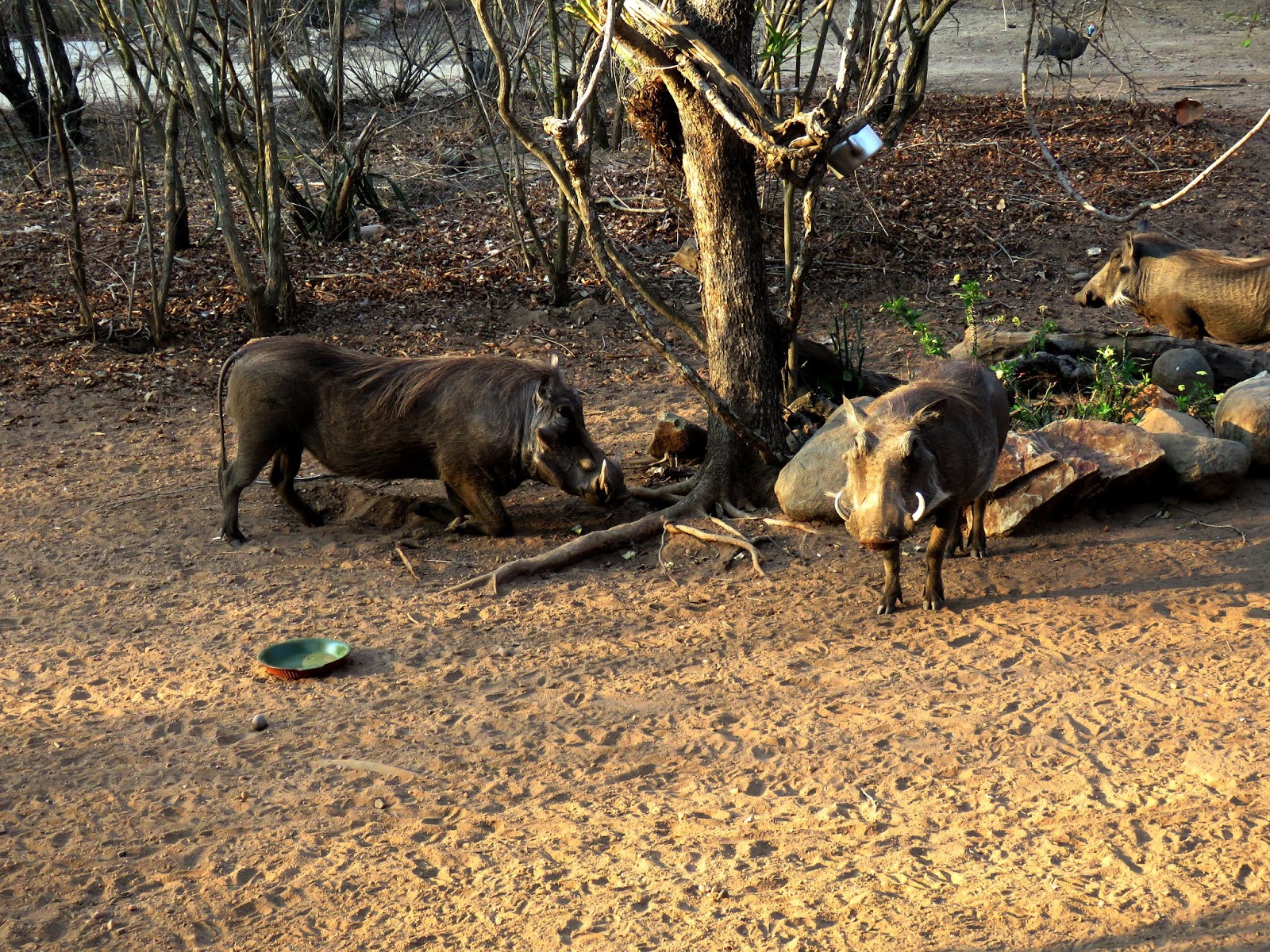
We’d just fed the eggs to the mongoose and the green bowl remained on the ground. The warthog on the left was digging a hole, most likely in search of roots.

During our stay in Belize for 2½ months in 2013, we had to take a small rickety boat, called the Hokie Pokie to get to the immigration office on the other side of the bay, a 30-minute excursion. Here’s the link to that post.

Needless to say, we’ve had our fair share of immigration challenges. Now, as we’ve matured in our travel experience, we’ve begun to avoid long stays where it may be an issue, the exception, of course, has been our desire to stay in Marloth Park for one year, a rare occurrence.  

Last night, Bid Daddy stopped by in the dark.

It’s unlikely we’ll ever stay anywhere longer than 90 days in the future regardless of how much we love the location. This doesn’t mean we’ll avoid countries with 30-day visas.  

We’ll only stay 30 days or less in those locations. We’ve learned our lesson although we don’t regret the valuable time we spent in those countries, leaving us with exceptional memories with stories and photos to share.

As for today’s appointment, as mentioned, we’ll share the details as they unfold over the next many weeks.  

He stayed in this spot for quite a while deciding on his next move.

As for today’s video and photo, we continue to reel with excitement over the number of visitors coming our way. We particularly get a kick out of the mongoose who seem to hover nearby most days. We can hear their little squeaky little sounds, at times high pitched when they have a mission in mind.

Today’s video clearly illustrates how funny they are. They’ve come to know us quite well, Tom when he delivers the green bowl filled with raw scrambled eggs and my voice when I call them to announce eggs are on their way.  

This is our new favorite male pair, “Siegfried and Roy.”  They adore each other and are always close to one another.  

Once we spot them in the garden I keep them around by talking to them while Tom mixes up the eggs in the bowl.  No, we don’t give them pricier free-range eggs. Instead, when Tom goes to Lebombo for apples and carrots, he’ll purchase a five-dozen pack of their cheapest eggs.  

The mongooses go absolutely wild when he places the bowl of eggs on the ground as shown in the above video.  Each time, we can’t help but laugh with sheer delight over this unusual event.  

Although we posted a similar photo a few days ago, last night this frog returned to be near the thermometer.

It’s important to keep the mongooses happy when they are experts at killing snakes. Oddly, they’re immune to the toxic venom and can easily survive being bitten.  For an interesting post on mongoose facts, please click here.

Well, that’s it for today, folks. We’ll be back tomorrow with more photos and the story of our appointment at the immigration office in Nelspruit.

A few hours later he’d moved to the light fixture above the thermometer and was facing the wall supporting the fixture. When we stayed at the African Reunion house in Marloth Park in 2014, we had a similar situation where a frog visited every night hanging out in the same area of the veranda. 

Have a pleasant and fulfilling day!

Photo from one year ago today, September 5, 2017:

A hen and her chicks in the gated community in Atenas, Costa Rica. For more photos, please click here.

The simple things to make life easier…Lots of visitors have returned…

Now that the weekend has ended and many holidaymakers have left, 
the animals have returned to our garden.
 
“Sighting of the Day in the Bush”
A pretty female kudu face.

Now that the bulk of the tourists have left after the long weekend, we were thrilled to welcome many visitors back to our garden after a sparse weekend.  Yes, we had visits from bushbucks, warthogs, mongoose and even an appearance by Wildebeest Willie over the weekend but hours would pass before we’d see a “soul.”

We couldn’t believe our eyes when we saw this tiny baby bushbuck in the garden.  

On Monday morning the live-action began once again. They literally came to call in droves, and we could hardly sit still for a few minutes when we’d jump up to welcome them proffering pellets, apples, carrots, and other vegetable scraps they seem to like such as lettuce tops and celery scraps.  

It was the tiniest bushbuck we’ve seen in almost seven months.

I must have spent two hours in the kitchen chopping up the vegetables in small enough bite-sized pieces suitable for the tiny tots who love to munch along with the adults.  

Once, we saw a baby bushbuck struggle with a piece of carrot and we panicked it was going to choke. Somehow it managed to spit it out and try for a smaller piece. Since that incident, we’ve been cutting the piece small enough for even the tiniest of wildlife.  

We’d gone indoors to do a few things and I heard loud squawking by these two hornbills that just wouldn’t stop.  Upon further inspection, we discovered monkeys had eaten all the seeds in the feeder while we weren’t watching. The hornbills were letting us know they wanted the seeder filled with seeds. Tom took it down and re-filled it.  As soon as he set it back up, within seconds they were back, happily eating the new stock of seeds.

Sure, it takes more effort to cut the pieces so small, but now, it’s the only way we do it. Louise had brought us a new food processor for this purpose but unfortunately, it doesn’t cut the items into the right sized pieces, and hand cutting them is the only way.  

Yesterday in the late afternoon, we had so many visitors, we lost count.  

Instead, we’ve used the food processor for prepping our meals, and it’s been quite a time saver. Yesterday, I made Tom his favorite meal, low carb, grain-free pizza. After reading horrible things about pre-grated cheeses, I made a commitment, I’ll never purchase that type of cheese again.

Although not as many as last week’s 25 kudus, we counted 18 in this group.

Instead, we buy the big chunks of imported cheeses to use in making his pizza and other cheesy recipes. Before we had the food processor, we were grating the cheese using one of those tricky metal graters which required a lot of time and effort.  

Now, we grate the quality cheeses in the processor which we’d done in our old lives. But, over these past several years of world travel, I resigned myself to using the disgusting pre-shredded cheese instead of hand grating.  

We couldn’t keep the pellets coming fast enough with such a wide array of visitors in the garden.

A few months ago, I read an article about how that pre-grated cheese is processed and I decided, no more! Hand grating, here we come. But, when Louise and Danie had gone to Nelspruit they found this food processor for us.  We couldn’t have been more appreciative and grateful. It’s come to great use.

The kudus and the warthogs seem to get along well when feeding.

It’s often the simple things that we appreciate the most. Recently, I washed my white tennis shoes and water shoes in the washing machine. They came out perfectly after drying in the hot sun and now they both appear new.  

I’ve washed my makeup brushes in the washer in a cloth bag and they come out clean and new. In my old life, I’d have replaced these items instead of resorting to simple yet efficient processes to extend the life of products not easily found here in South Africa.

As often is the case, there were many who’d stopped by.

Yes, today, I’m wearing a pair of jeans with a few holes. Instead of tossing them, I wear them anyway. Torn and ratty jeans seem to be a trend in some parts of the world.  

For some odd reason, they like to hang out near the little car.

The white tee shirt I’m wearing has a stain near the neckline that I couldn’t get out with bleach. My hair hides the stain. I still wear the shirt although not necessarily when we going out to dinner or to socialize.  

Somehow we make do with what we have although a few times a year we need to replenish some of our supplies that we cannot replace locally. On May 28th we had a shipment sent from our mailing service in Nevada. The tracking information showed it was received in customs on June 6th and processed without issue. Now, three months later, it’s yet to arrive. More on this in tomorrow’s post.

After we decided to hold back on the pellets, since we were going through them so quickly, they wandered off to the bush. As soon as they heard my voice, welcoming other visitors, they quickly returned to ensure they were in on the action.  So clever.

Tomorrow, we’re leaving the house around 9:00 am to drive to Nelspruit for our 11:00 am appointment at the immigration office. Subsequently, we’ll schedule the new post to upload automatically while we’re away for the day. We won’t miss a beat.  

We won’t know anything after tomorrow’s meeting but will review the experience in Thursday’s post.

Have a spectacular day!

Photo from one year ago today, September 4, 2017:

In Costa Rica, this iguana posed nicely for us, seemingly unperturbed by our close proximity. For more photos, please click here.

The immigration story continues…Nighttime visitors…

Last night, Tom took this photo when he checked the thermometer to find a frog doing the same. It was 25C, 77F at 2200 hours, 10 pm.

“Sighting of the Day in the Bush”

Hippo and cattle egret on the river’s edge.

I almost don’t know where to begin regarding the South Africa immigration story. With a definitive response, when our passports were stamped when we re-entered at the airport in Nelspruit after a trip to Zambia, that we won’t be allowed to stay beyond November 21, 2018.

As mentioned in a few prior posts, our only solution was to find a holiday home where we could stay for three months while we await our big upcoming tour in Kenya beginning on February 22, 2019. This was no easy task.  
In the dark, Tom also spotted a re-visit of giraffes in our garden.  I was already asleep so he took the photos.

Between us, we each spent no less than 40 hours in research trying to locate a holiday home for this extended period, for these specific dates, in any country we were interested in staying for three months. On short notice, 95% of most properties were already booked.

Even if we stayed part of the time in a hotel and the remainder in a holiday home, we couldn’t match up the dates and locations that would work for us.  Also, we had to consider airfare, rental cars (or other means of transportation), distance, and expenses during this period.

Two giraffes munching on treetops near the little car.

Frustration kicked in after a few days of research but diligently we continued to consider many alternatives that would have been less desirable such as staying in apartments or hotels during the entire period. Living in a hotel for three months was certainly not an appealing prospect.

Considering there are a number of countries in Africa we’d prefer not to visit, our options were limited.  Louise and Danie were well aware of our frustration and in their usual thoughtful manner, connected us with a highly experienced and competent immigration specialist who walked us through, over the phone, how to complete the myriad documents in order to get an extension until February 20th.

A giraffe visiting in the dark.

I’m not exaggerating slightly when I say, it took the entirety of two days to get the paperwork completed, collated, and stacked all of which Louise handled with her printer at her home office. On both ends, we were at it for two days. I don’t know how we can ever thank her and the kindly immigration specialist who supported us through this process.

I must add here, that no special consideration is given to us. We are simply following the “letter of the law” in compliance with gathering the endless number of documents required to possibly receive an extension.  

She’s awfully close to the little car.  One swift “necking” and it could be totaled.

This included bank statements, financial documents, passport and visa documents, and many peripheral forms to be completed, dated, and signed at the time of the meeting. Also, we paid a fee of ZAR 3550 (US $240.42) but weren’t allowed to use any of our credit cards. The fee had to be paid using a South Africa credit or debit card.  

Once again, Louise came to the rescue. We used her card and gave her the cash we’d received from an ATM. This added exponentially to the amount of paperwork in order to be able to confirm Louise authorized this transaction

Moms and babies at the Crocodile River.

During this process, using the complicated South Africa Immigration website, we were assigned an appointment date and time for a face-to-face meeting upcoming this Wednesday morning in Nelspruit to which we must bring all of the printed documents. Complicated, to say the least. 

Part of the process required we include airline tickets showing we’re flying out of South Africa on February 20th (coincidentally, the date of my birthday). The only tickets available were over ZAR 16243 (US $1000) and are non-refundable. In other words, if we don’t get approved to stay until February 20th, we lose the money we paid for the tickets. Oh, goodness.

A noisy hadeda bird flies overhead almost every night at dusk.

We decided we had to take the risk. We understand the necessity of this complicated process for visa extensions when so many countries struggle with those overstaying their visas or entering illegally.  

So here we are, two days from taking the 90-minute drive back to Nelspruit, from which we returned only a few weeks ago after our flight, to enter our documents in person to see if we’ll eventually be approved. It can take two to four weeks for a response. Hopefully, we’ll know by the end of September or early October.

Bushbaby tongue sticking out and the others head in the yogurt cup!

After Wednesday’s in-person meeting, we’ll include an update and will continue to update the news here as it becomes available.

Enjoy today’s photos, some of which Tom took last night in the dark while I was sleeping.  

For those in the US, today is Labor Day. Have a safe and meaningful day whatever you may do!

Photo from one year ago today, September 3, 2017:
This Giant Tortoise is located at the Zoo Ave location, although not indigenous to Costa Rica. We suspect the facility imported some of its wildlife to attract more visitors to its rehab facility. For more details, please click here.

Everyday is a new day with new discoveries and wonders…It’s a “birdie” day!…

Hornbill sitting near the bench at the overlook at Two Trees, where we always spot wildlife.

“Sighting of the Day in the Bush”

Blue starling on the fence between Marloth and Kruger Parks.

This is one of the most gorgeous mornings we’ve experienced at Marloth Park since we arrived almost seven months ago. No, we haven’t had a lot of visitors so far today with another holiday weekend winding down from lots of tourists resulting in less wildlife stopping by.

The balmy breezes, clear skies and ideal temperatures hovering around 28C (82.4F), couldn’t be more perfect. Of course, we’re bracing ourselves for the African summer and its outrageous heat increasing over the next few months.

A pair of laughing doves, commonly seen in the parks and in our garden.

We easily recall the heat when we arrived here in December 2013 which carried through the three months we spent in Marloth Park. Going forward, based on where we’ll be living on the continent, we can expect high humid weather in months to come.

A pair of hornbills in our birdfeeder which we have to watch closely when nuisance monkeys try to eat the seeds.

The birds are singing and we appreciate the sounds of the wind whipping through the sekelbos (sickle bush) trees in the bush and the myriad plants on the veranda which include a few varieties of palms and lemongrass.

A few of our favorite bushbucks, warthogs, and mongoose have stopped by this morning along with several appearances of Frank and The Mrs. who let us know they’re looking for seeds. They don’t fly up to the birdfeeder so we drop seeds onto the ground for them, hoping they get a few nibbles before the several dozen helmeted guinea fowl take over.

Mr. Ostrich and his fluffy feathers.  They all look bow-legged.

Yesterday, we embarked on our usual drive through the park, discovering some of the photos ops we’re sharing here today and tomorrow. Since access to Kruger is challenging again with the holidaymakers, we’ve decided to wait to go until the crowds thin out. Hopefully, there will be a good time to go in the upcoming week or two.

Moms and babies.

Last night, again with the exceptionally pleasant weather, we lounged once again on the veranda enjoying a cocktail while waiting to see who’d arrived. For dinner, we had one of our favorite meals, taco salad (minus the floury shell). They don’t sell the packets of seasoning here so I make my own flavorings in order to keep the carb count low. We used wonderful ground tenderloin for the meat.

For the first time in a long time, I added avocado to my salad, a very special treat. They’re commonly found in markets in South Africa but finding them at the correct stage of ripeness is always a challenge. This time it worked out. We purchased three large dark-skinned avos for a total of ZAR 15.90 (US $1.08)

This tiny baby managed to make it down this steep embankment.

I recall paying ZAR 44 (US $3) for a single avocado in the US over six years ago before we left. Many food items are expensive here but not produce, beef, pork or chicken. Fish is on the high end along with many packaged good but not all.  

Trunks are so “handy.”

Tonight, we’ll enjoy our leftovers from last night, making today a very easy day for us.  I already chopped the tomatoes, purple onion, olives, and celery and grated the fresh cheddar cheese for Tom. Tonight, I cut up more avocado for my salad. (No cheese for me).

As I’ve continued to avoid all dairy products my gastrointestinal issues are all but gone. How I suffered for 2½ years to now feeling well continues to baffle me.  Why didn’t I figure this out sooner?  

Little blue and grey bird, a blue waxbill, near us while we sat on the bench at the overlook.

I’d read that getting helicobacter pylori which was diagnosed in January 2016 in the Huon Valley in Tasmania, can cause lactose intolerance, why didn’t it ever occur to any of the three doctors I saw for the condition? And most disappointingly to me, why didn’t I figure this out when I’d spent endless hours researching possible solutions?

Well, in any case, I’m thrilled to have finally figured it out and now can live a relatively normal life although I still can’t eat starch, grains, fruit, sugar, and now dairy. What does that leave me?  

A hornbill checking us out, “Got any seeds?”

I can have any type of animal protein, eggs, butter (no problem with that dairy item in moderation), and non-starchy vegetables. I still can use almond and coconut flours but do so in moderation while I’m attempting to continue to lose a few more kilos (pounds). It’s going well although slowly.

As for lack of calcium, I’m consuming mackerel, sardines, tuna, or salmon daily which are excellent sources of calcium and vitamin D. See this link for details:  “Fish with soft bones, such as canned salmon and sardines, are good sources of calcium and vitamin D. Three ounces of sardines, for example, nets you 325mg of calcium and 200 IU of vitamin D. Cooked ocean Atlantic perch and rainbow trout are also calcium-rich. And tuna is also a great vitamin D choice. Recommended daily allowance for vitamin D is 600 IU for most people. Ask your doctor for recommendations.”

Tomorrow, we’ll be sharing an update on our immigration situation which may be surprising to some.

Have a wonderful weekend!

Photo from one year ago today, September 2, 2017:

All of these young rabbits appeared to be part of a herd, living in a “warren” in the well-designed spacious habitat of Zoo Ave, a rescue facility in Costa Rica. For more photos, please click here.