No big COVID-19 talk today…Almost…

As we’d mentioned, we’d post some of our videos on most days. Unrelated to today’s post is Hubbard Glacier while on a cruise in Alaska in May 2017, which is found at this post.

Note: To all of our readers visiting our site via a smartphone, please click the “View web version” tab under the word “Home” at the bottom of the page to access the web version enabling you to access all of our archives on the right side of the page. We’ll be updating our site in a few months, making these extra steps unnecessary. Thank you.

Note the triangular shape of this praying mantis, a photo I’d taken when friends Lesley and Andrew stopped by for a visit, and I allowed myself to sit outdoors for a  while with the camera in hand.

All of today’s photos were posted one year ago from here while still in Marloth Park as we awaited the doctor’s OK for us to book a flight to Ireland leaving South Africa on May 11, 2019. 

A face only a mother could love.

Flying on an airplane was a scary prospect for me based on the fact by the time we’d leave, it had been a rough 90 days since the open-heart surgery and only a little over a month since the two surgeries on my infected legs.

We decided to book a business class ticket for me when that particular plane would have special seats that completely reclined. With pillows and blankets provided, this would be a much more comfortable option for me, mainly keeping my legs up throughout the flight.

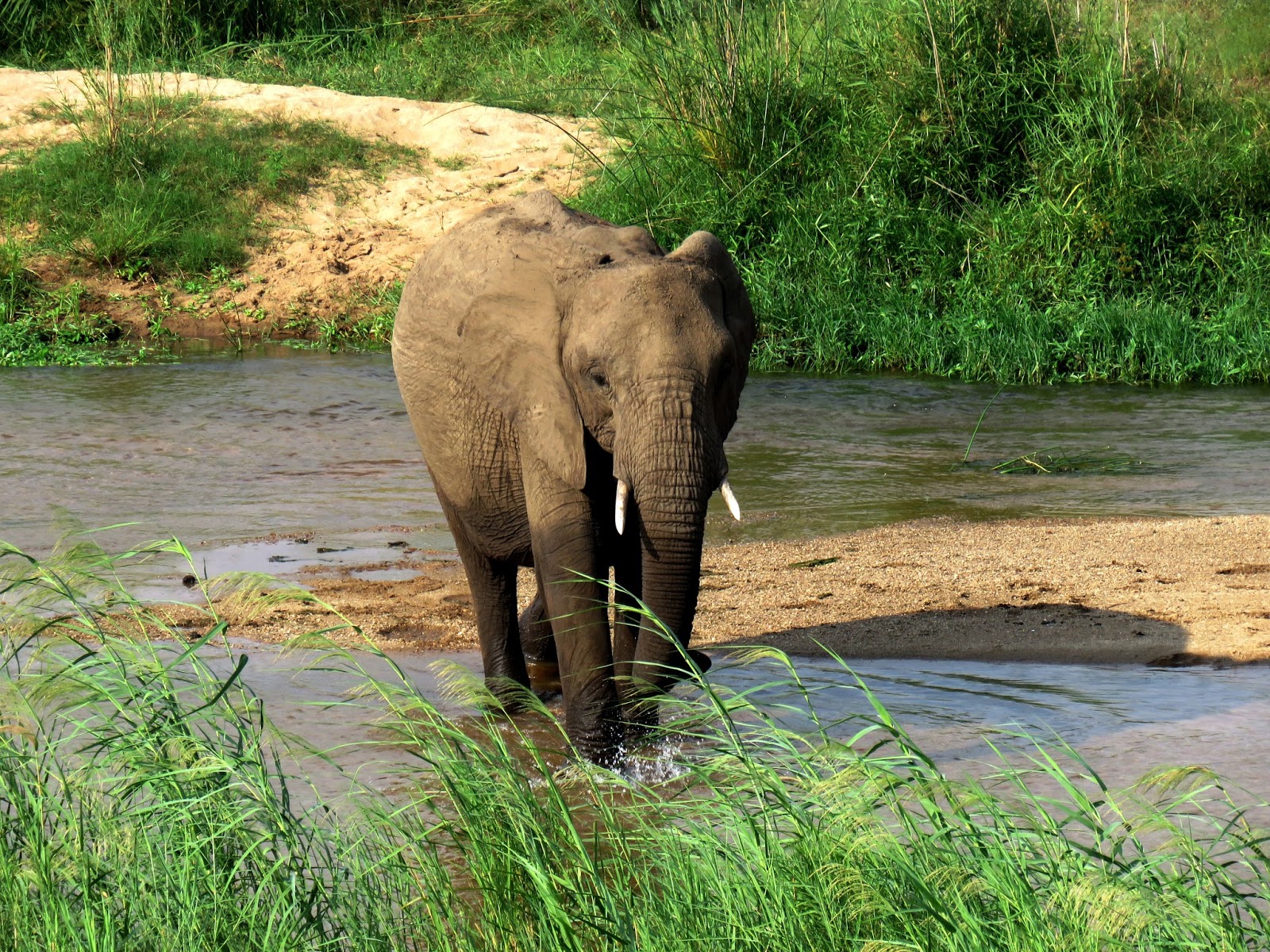
A distant elephant from across the Crocodile River.

With the added expense of the upgrade, Tom insisted he’d stay in the “coach” section and be available for me if I needed him. At that point, I was far from recovered. We ordered a wheelchair at each of the airports. As it turned out, it all went well, much better than expected.

Many who’ve had known heart disease before their surgery claim to be so much better once they heal. I never had any signs of cardiovascular disease other than the pain in my jaw, which started about a month before my condition was discovered. Hence, I never observed feeling better than I had before the surgery.

View of the Crocodile River from Aamazing River View (spelled correctly).

I never had shortness of breath, nor did I ever have chest or arm pain, weakness, or a feeling that “something was wrong.” May this serve as a warning to those that may have familial cardiac disease and not be aware of it until it’s too late.

Please get checked if your family members had hypertension, heart attacks, strokes, required stents in clogged arteries, or ever had any cardiac/heart surgery, regardless of your age.

A zebra, contemplating his next move.

It’s not a bad idea to have some tests after reaching the age of 60 or 65 to see if you potentially require treatment even if you don’t have any risk factors. By doing so, many fatal heart attacks and disabling strokes may be prevented.

As I’ve mentioned in prior posts, by no means am I out of the woods. I have chronic, permanent coronary artery disease, and there is nothing I can do to reverse the damage done thus far.  

All I can do is eat a healthy diet, exercise daily, get plenty of sleep and keep stress to a minimum. Hopefully, my efforts may prevent it from getting any worse than it already is.

Baby zebra frightened by all the commotion from the dazzle of zebras nearby.

Fortunately, during the lockdown in India, I can eat fresh, healthy meals twice a day; a vegetable and cheese omelet with chicken sausages for breakfast with green tea; and grilled salmon or chicken breasts for dinner with a huge plate of steamed fresh vegetables. 

As for stress, neither of us is feeling stressed under these peculiar circumstances. The only time we’ve felt stressed, especially me, was a month ago, on March 24, when we didn’t know if we had a place to live for a few hours. 

Instructor Chris and Tom at snake school dealing with a black mamba, one of the most venomous snakes in the world. Yikes!

Today, we paid our hotel bill, including the meals for the last four weeks, and confirmed our reservation for the next four weeks. With the speed at which India is logging new virus cases every day, we could be doing this many more times. 

We accept this fate and continue with determination and confidence for the future for all of us.

Stay in, stay safe, wash your hands, wear a mask and gloves, social distance, stay busy and, continue to have hope.

Photo from one year ago today, April 22, 2019:

This is one of my top five favorite photos of sightings in Kruger National Park…the prolific impalas. For more photos, please click here.

Prospects for airports allowing us to enter diminishes over time…

A group of five ambitious men met each day to ride the FlowRider on the ship. 
See this link here for that post two years ago.

Note: To all of our readers visiting our site via a smartphone, please click the “View web version” tab under the word “Home” at the bottom of the page to access the web version enabling you to access all of our archives on the right side of the page. We’ll be updating our site in a few months, making these extra steps unnecessary. Thank you.

Most weekdays, Josiah stopped by in the morning to wash and sweep the veranda, rake the garden and clean the pool. No more than an hour after he’d done, the veranda would dirty again with leaves from the trees, pellets residue, and soot from the burning sugar cane a few kilometers away. Tom was constantly sweeping to keep us from tracking the house’s dust, dirt, and debris. By the end of each day, the bottoms of our bare feet were so dirty we’d have to shower again before getting into bed. Today’s photos were from this post two years ago.

Today’s photos are from two years ago today at this link.

With the US closing its borders to all immigrants over the next several months to reduce the spread of COVID-19, we are faced with the reality that many other countries will follow suit.

If we’d been in Kruger National Park, we wouldn’t have been able to gain access to this area.

Currently, almost every country worldwide has closed its borders to international travel and its airports, and travel is at a standstill. Today, I asked Tom, “How long can we hold out here?”

He answered with a wide grin on his face, “With the Mumbai airport closed, we won’t be going anywhere.” 
 

Duh, I get that. But at some point, the Mumbai International Airport will open, and the challenge for us at that time will be where we will be able to go? What country will allow us to enter after living in India for three to six months (or more)? 

Taking photos through the fence in Marloth Park was tricky, so we got what shots we could.  At times, we were pleasantly surprised at the finished product.

It may not be South Africa if they, too, impose a ban on all foreigners entering the country for an extended period. Right now, all we’ve heard so far is May 31st. But we don’t have a lot of faith that they’ll allow foreigners to enter even at that date.

Well, the world is a prominent place. And once the Mumbai airport opens, we’ll let it settle for a few days while we decide where we’d like to go that has an open airport. The possibilities may be few.

But, the magic of our lives is the fact that we can go anywhere we’d like that will be open to our arrival, which we’ll confirm in detail before we book a flight and accommodations. 
Male elephants are kicked out of the herd (parade) when teenagers.  When we saw large numbers, many were unlikely males except for those youngsters yet to reach maturity at 13, 14, or 15 years of age.

We can pack and be out the door in a few hours. We both believe that we’ll have some options within three months if South Africa isn’t one of those. We can always go there later when the airports open.

Oddly, we have an Azamara cruise (690 passengers) booked for November 10th from Lisbon to Capetown. If things improve and we aren’t yet in South Africa, we may make this cruise. The question will be, where will we wait for the cruise in the interim if we can leave Mumbai.
 

Tom’s dear sister Colleen kindly offered her place in Arizona if we returned to the US. However, as we’ve mentioned many times in past posts, we have no interest in returning to the US at this time. 

A mom was fussing over her offspring.

Even in months from now, the virus in the US will still be rampant, nor do we want to live in the high heat in Arizona during the summer and fall months, there again, stuck inside all day. 

As mentioned in several posts, I am very high risk with asthma, heart disease, and age, and our health insurance can only be used outside the US. We don’t want to take any risks being in the US at this time. Then again, how would we get there with no airport open here?
 

There are many other countries we’ll be able to travel to at some point. Fortunately, as much as we don’t like wasting valuable time as we age, we are prepared to stay in Mumbai as long as necessary to get us to a suitable location where, perhaps, it will feel more like a continuation of our world travels than trapped in the lockdown.

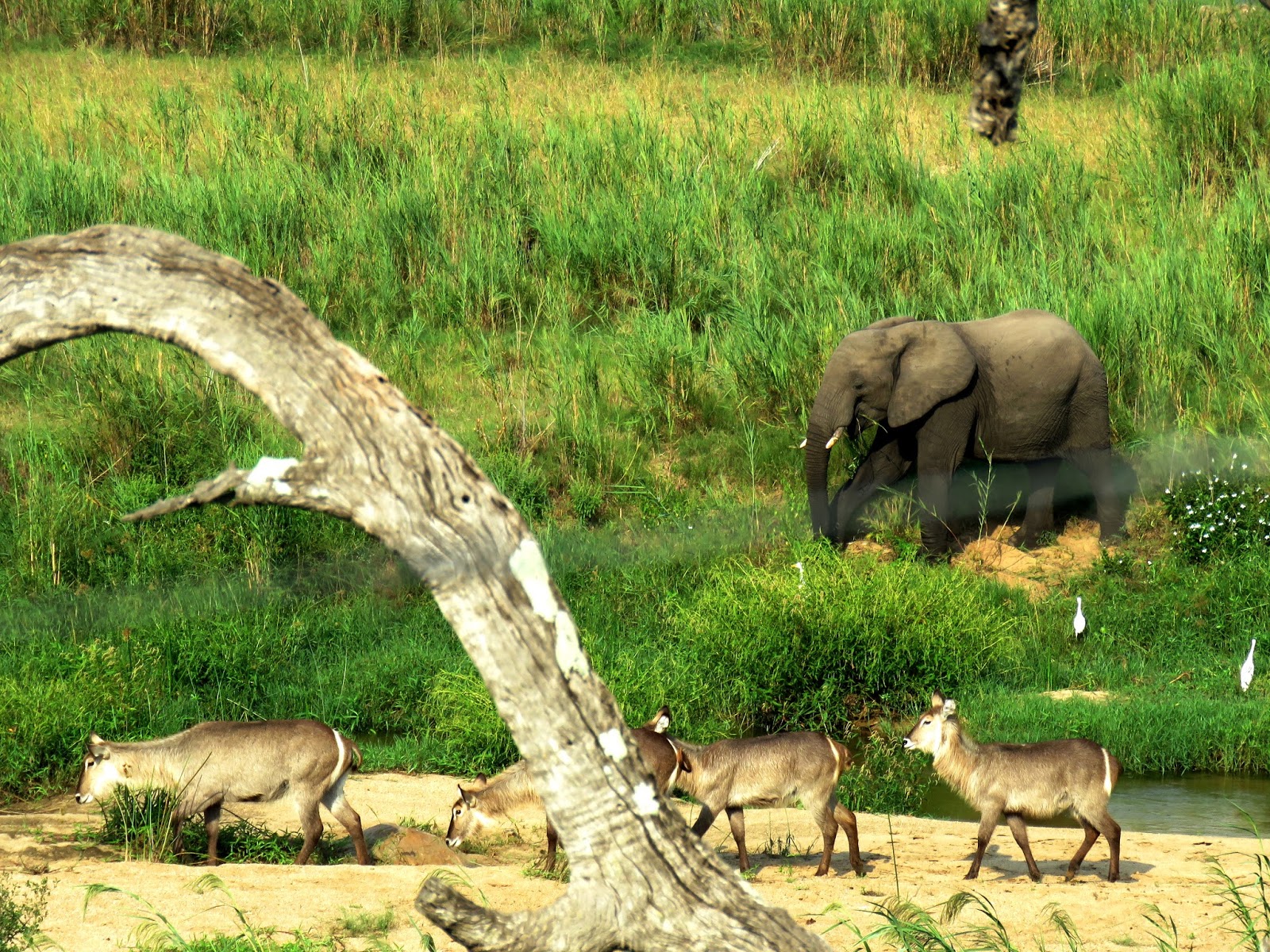
Neither the elephants nor the waterbucks seem to mind one another’s presence.

Oddly, we are OK, as we’ve mentioned. Nor do we expect our emotional state to change as time marches on. We are doing what many are doing now; reading, watching the news, streaming shows, listening to podcasts: and for me, exercising throughout the day while eating a healthy diet

Tom has been eating a high carbohydrate diet and, for now, isn’t gaining weight or suffering any ill effects at this time. (We don’t have access to any snacks or alcohol). Once we get somewhere when I can cook again, he’ll get back to eating a diet similar to mine. 
 

For us, accepting the realities of this dreadful virus and the consequences facing all of us has provided us with a sense of peace while reducing stress and worry. 

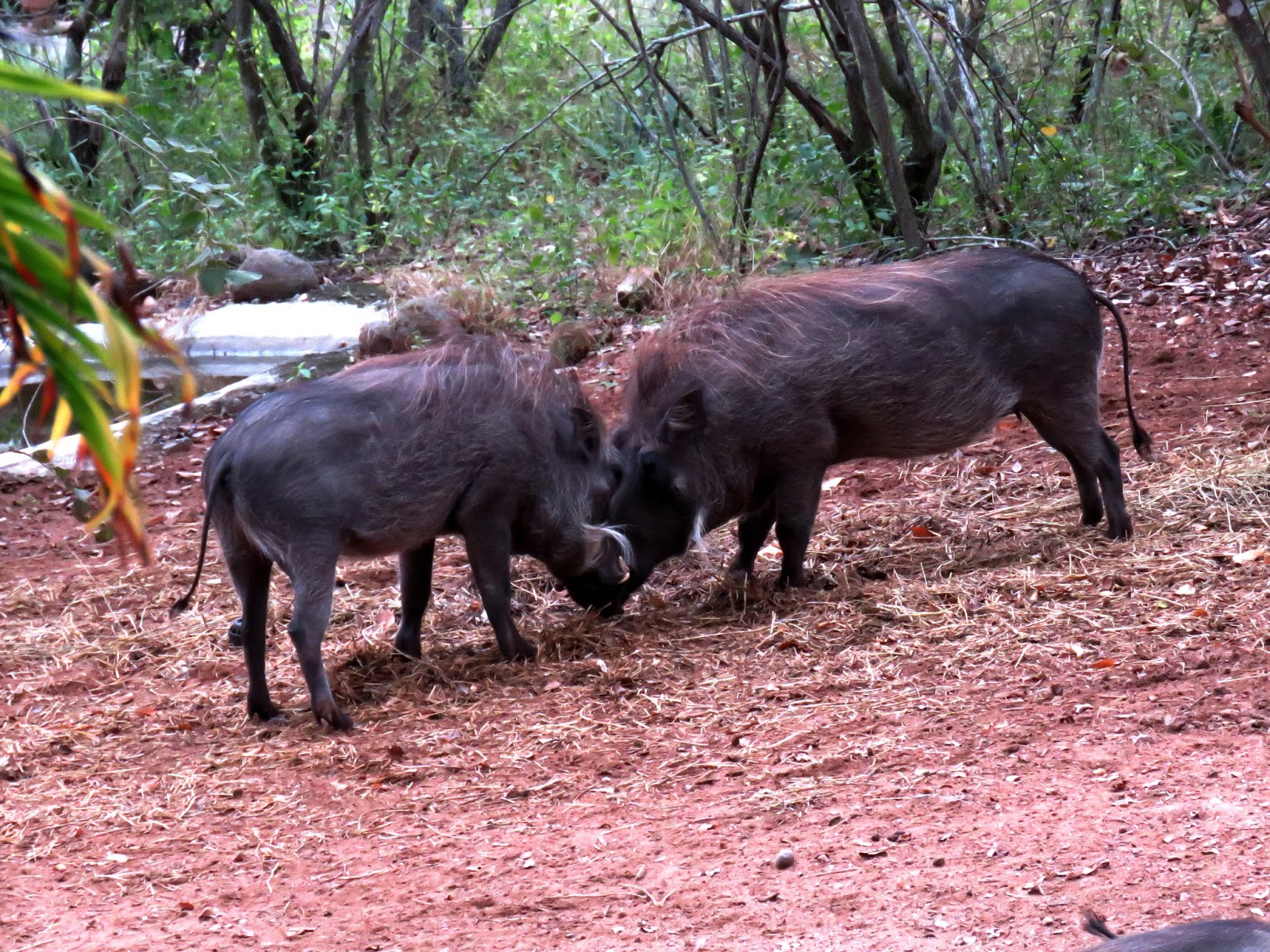
Each day these two females stop by several times with two piglets, most likely several months old.  The two females may be sisters, a mother, and a daughter from a prior litter or, who knows, another relative of one sort or another.  This particular morning the two of them played a nose-to-nose game while the two piglets busied themselves with pellets.

Now that DIL Camille is on the mend and sister Susan has been allowed to stay in her assisted living facility (for now due to COVID-19), I can breathe a sigh of relief and make every attempt to live in the moment.

Our hearts go out to all who have lost loved ones during this trying time, either through COVID-19 or other illnesses, and to all of the millions of citizens who have lost their jobs, businesses, and sources of income. 
 

What are you doing today to bring you comfort and reduce boredom? We’d love to hear from you!

Photo from one year ago today, April 21, 2019:

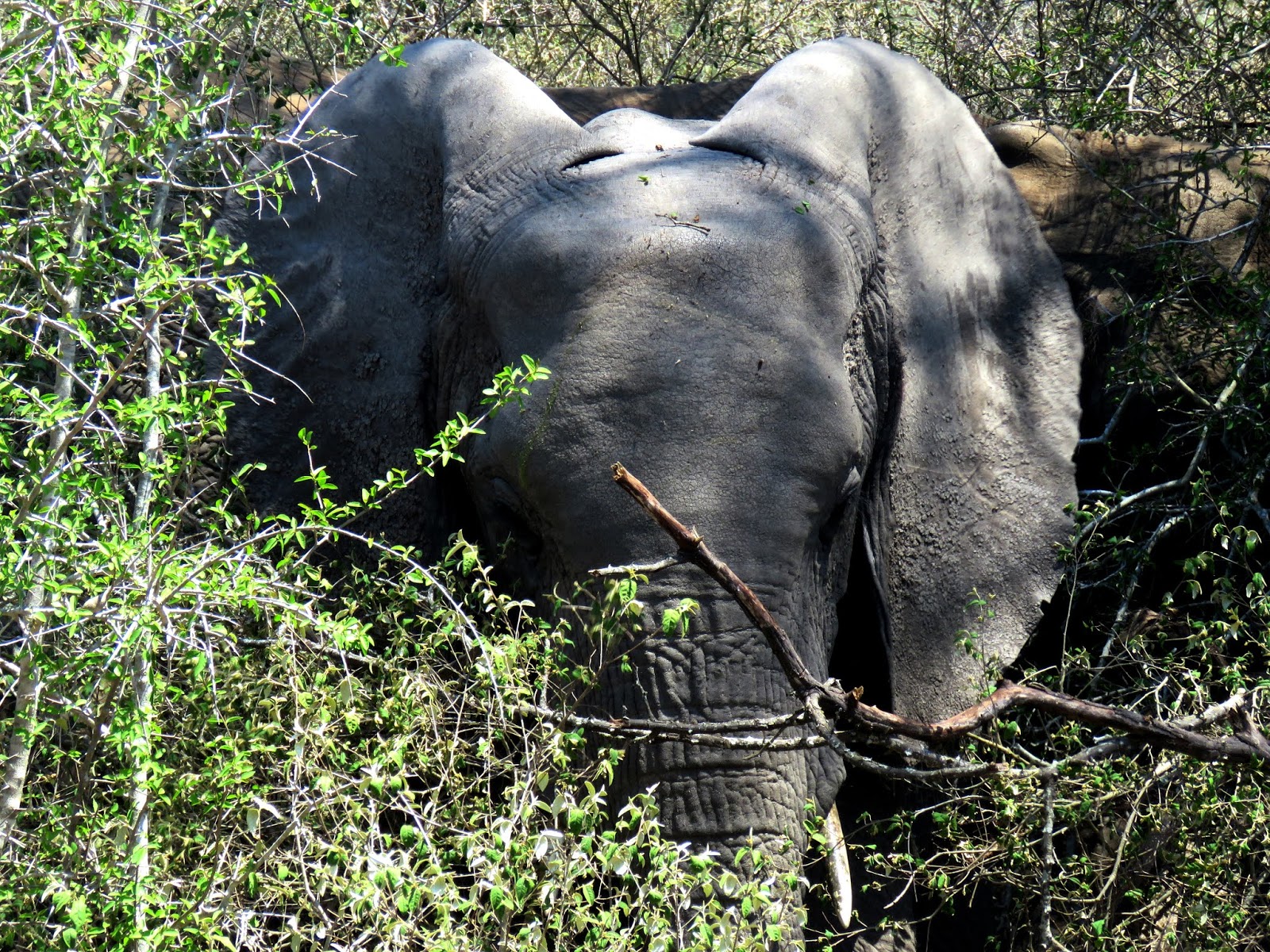
An elephant in the bush was watching us take photos. For more photos, please click here.

Five years ago photos…Moholoholo Rehabilitation Center…

A visit to a pig farm in Penguin Tasmania. See the original post here with some fun “pigs in the mud” photos.

Note: To all of our readers visiting our site via a smartphone, please click the “View web version” tab under the word “Home” at the bottom of the page to access the web version enabling you to access all of our archives on the right side of the page. We’ll be updating our site in a few months, making these extra steps unnecessary. Thank you.

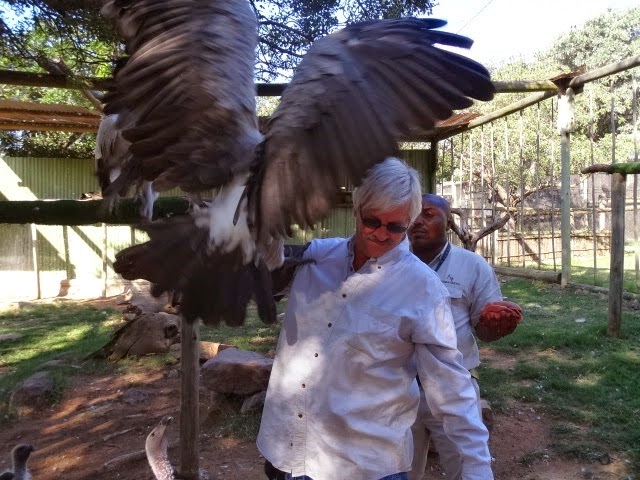
At the Moholoholo Rehabilitation Centre, Tom donned a huge leather hand and arm protector and was handed a massive chunk of fresh meat to feed this vulture at the rehabilitation center.  It was quite a thrill to get this photo.  I love the look on Tom’s face!  As their injuries healed, these vultures would soon be returned to the wild. Photos today are from this post on this date in 2015, which included some past-posted photos.

Today, while deciding on which past photos to post, I started with the post we wrote five years ago while still living in Princeville, in Kauai, Hawaii.

Then, we’d posted so many photos of Kauai. We were running low on new photos to post, so we reached back to these photos from 2014/2015 since we found them to be of particular interest to us and, hopefully, to our newer readers who may not have seen them in the past.

We apologize for the repeats if you have seen these photos in the past, perhaps even a few times. We aren’t taking any photos during the lockdown and, based on recovery from four surgeries a year ago. The pickings were also slim at that time.

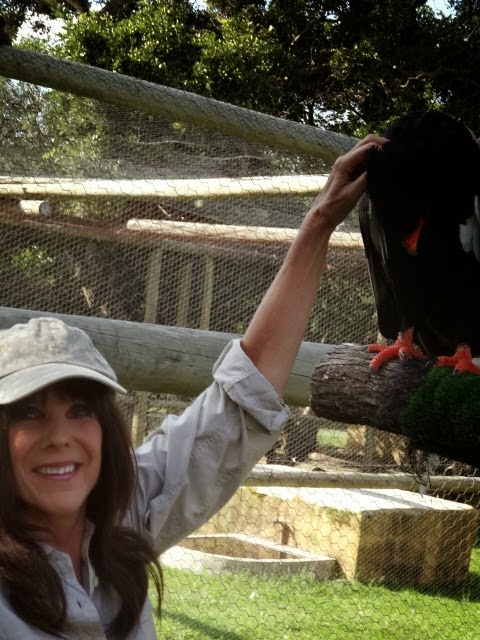
It was exciting to touch the vultures.  We were told to keep moving while around the vultures.  They only eat what appears to be dead meat.

For us, seeing these photos again is comparable to watching a favorite movie a second time, especially one that makes us smile. It only reminds us how anxious we are to get back out into the world again, sometime in the future.

In actuality it was on January 19, 2014, we visited the Moholoholo Rehabilitation Centrewhich may be found at our link here. We were so enthralled at the experience of making the tour of the well-known Panorama Route in South Africa. The photos have been fascinating.

If you ever can visit South Africa, this road trip is well worth the effort. The Panorama Route is a series of sites to see while driving along the highway, veering off periodically to stop at yet another stunning point of interest during the self-drive tour. For more on the Panorama Route, please click here.,

An eagle on the mend at the rehabilitation center.

Hmm… Do we ever get to visit South Africa? If we ever get to see South Africa again??? That’s the proverbial question for us. At this point, it’s hard to imagine when the airports and borders of both countries will open again. 

The number of cases in India is growing, not diminishing as expected from the lockdown, with 16,345 cases and 521 deaths. But, this was to be expected when many were not able or willing to honor the lockdown. Protests in the streets, in massive crowds, wanting businesses to open immediately, as is the case in parts of the US, significantly contributing to the added new cases each day.

Poverty is an enormous factor in the public’s response to lockdowns. On the other hand, South Africa, making it a crime to be out and about, has 3034 cases with 52 deaths. But, there, too, protesting workers are angry and anxious to get back to work to support their families.

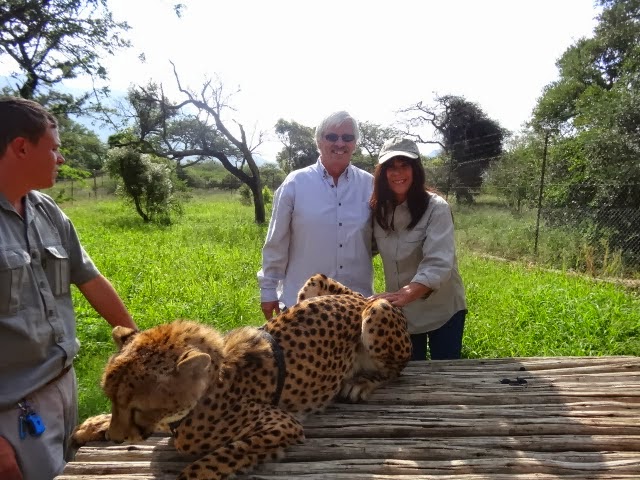
We had an opportunity to interact with a cheetah at the wildlife rehabilitation center. The particular cheetah wouldn’t ever be able to return to the wild due to injuries sustained in the wild for which he was rescued.

All of these statistics can change dramatically in a day, in a week. We’ll continue to watch and see. In any case, we are continuing to feel safe here in India with virtually no need to go out.
In the interim, we’re accumulating supplies we need now and will be shipped here to us in Mumbai over the next year. Imagine you could never go to a Target, Walmart, or Walgreen store. Of course, over time, one’s list of needed items would grow. We don’t purchase anything unnecessary. 

Recently, I ordered such items as large bottles of Tylenol, Tums, contact lens solution, toothpaste, and many more. If we went out to a tiny roadside pharmacy here in Mumbai, we’d have no say in the products we’d like since the little lean-to shops have a minimal inventory of such items, if they have them at all.

A Vervet Monkey and her baby were peering at us one morning while we were sitting at the table on the veranda.  Check out that thin pink ear of the baby.

All of our purchases are sent to our mailing service in Nevada (free shipping on most), and then all will be packed into one box and shipped to us soon. Daily I cross-reference the items I’ve ordered with those that have been received by our mailing service. Once everything has arrived, we’ll order the shipment.

Cargo planes are flying into Mumbai, and we should receive our shipment within 10-days of ordering utilizing the fastest possible service. Our only fear is that the hotel will close while we’re awaiting the shipment. But, they continue to assure us they will be staying open through the lockdown and beyond.

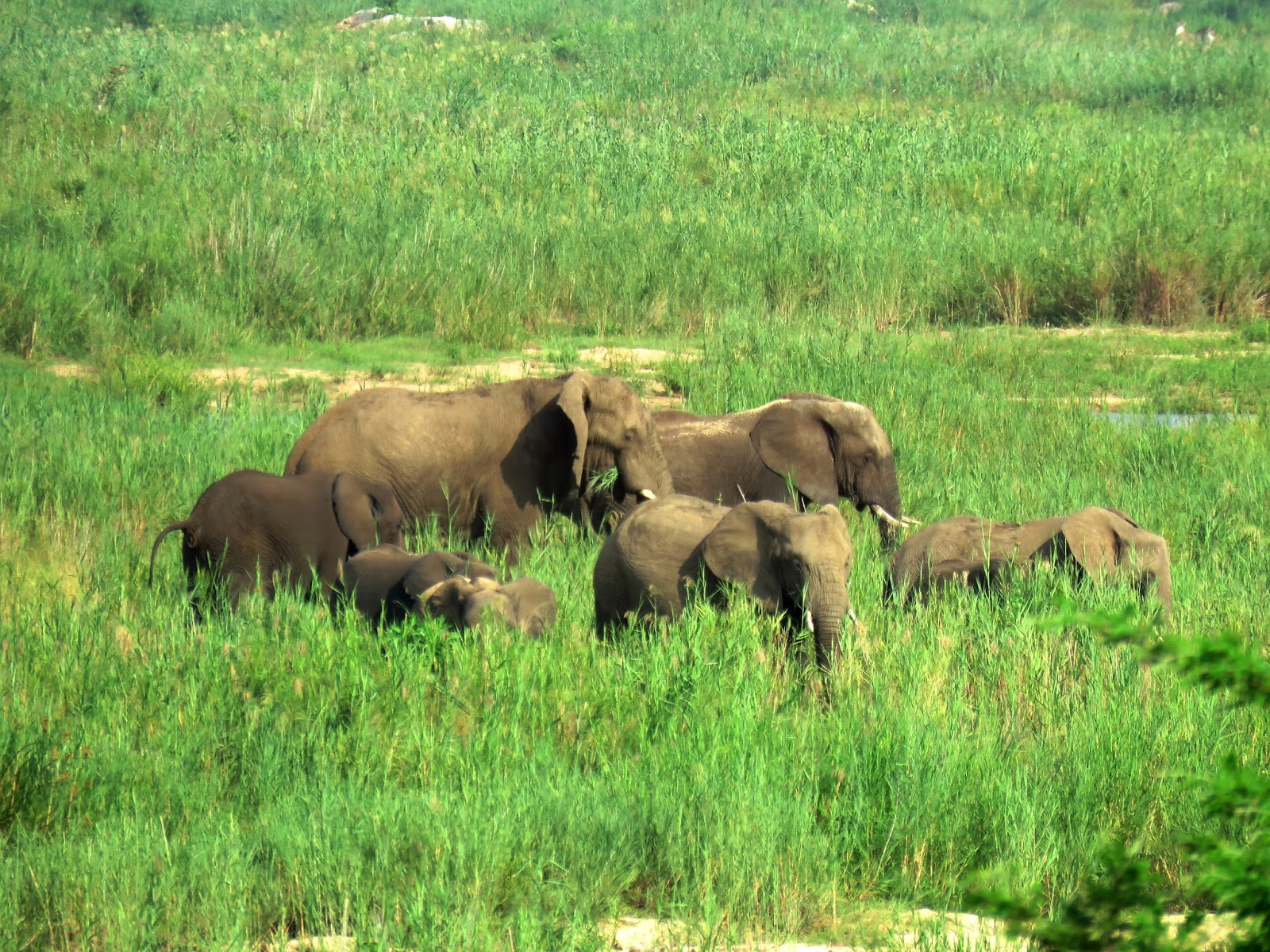
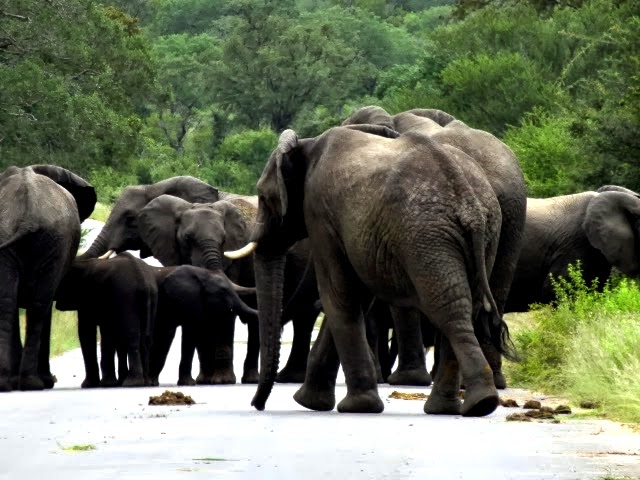
The fifth animal in the Big 5 (Leopard, Cape Buffalo, Rhino, Elephant, and Lion) this herd of elephants blocked the road as we drove through Kruger National Park.  Notice the babies are kept protected in the middle of the herd.  The most giant elephant, the Matriarch is often twice as large as the other adult females, holds up the rear with a keen sense ensuring their safety.  Seldom are elephants attacked in the wild based on their pack mentality of safety in numbers and their massive size.

So, today, after completing this post, we’re back to our usual routine; me walking once an hour while listening to podcasts, playing online Scrabble on my phone, and streaming shows while I play using my earbuds. Tom listens to Garage Logic and other podcasts while researching his favorite historical topics and, of course, ancestry.com.

How we manage to stay busy enough to keep from going crazy baffles me, but we’re doing it. We hope you’re doing the same.

Stay healthy. Stay safe.

Photo from one year ago today, April 19, 2019:

Duikers are incredibly cautious around warthogs, especially when there’s food being offered.  Tom makes a special effort to ensure the smallest of the antelope in Marloth Park is given pellets when no pigs are in close proximity. For more photos, please click here.

Photos from past adventures…Prescription challenges while in lockdown…Improvising…

A lone female lion was stopping for a drink.  The edge of the open vehicle is shown in this photo, illustrating how close we were to her.

Note: To all of our readers visiting our site via a smartphone, please click the “View web version” tab under the word “Home” at the bottom of the page to access the web version enabling you to access all of our archives on the right side of the page. We’ll be updating our site in a few months, making these extra steps unnecessary. Thank you.

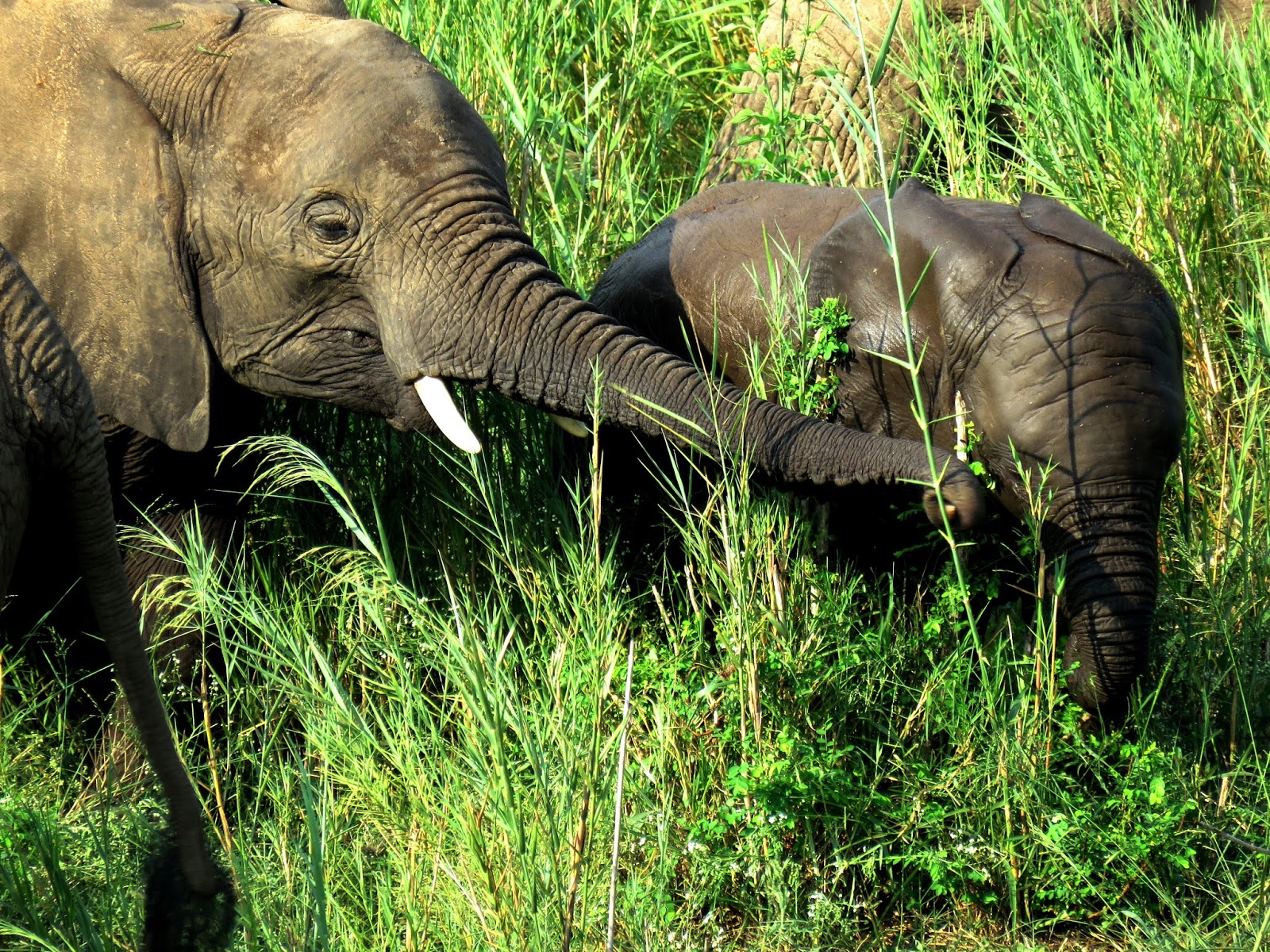
This playful baby elephant we spotted in Kruger hangs on to her mom.

Since we were focused on today’s photos, we haven’t included a video today or any Kauai photos. Instead, here is a combination of images we posted five years ago on April 18, 2015, at this link and also last year on this date on April 18, 2019, at this link. We hope you enjoy some of these favorites that many of our readers may have seen in past posts.

Hippos along the Mara River while we were on safari in the Masai Mara.

Of course, being in lockdown right now prevent us from taking photos. We can’t go outdoors, and most wouldn’t be enlightened by seeing photos of a hotel, however appealing it may be. If, by chance, you are curious about where we’re holding out, please click here

As you can see, if you click the above link, it’s a charming hotel, but most areas are closed during this time. We only have access to the restaurant, the corridors on the fourth floor, and our standard room. Only one lift is in use which we never enter when occupied by others. 
Crocodiles sunning along the Mara River in Kenya.

Not only does being in lockdown in India present its challenges, but also there is the harsh reality that we may not have everything we need on hand.
For example, once every four weeks, I refill my pill case with three prescriptions I take each morning along with a handful of vitamins. 

Spread out through during the day, we each take 1000 mg of Vitamin C and an extra dose of Vitamin D3, both of which may improve the immune system’s ability to fight off colds and flu (so they say).

As shown here, the cheetah and leopard are distinguishable by the cheetah’s tear lines running down her face.

As I was refilling the pill case, I noticed I was running out of a proper dose of blood pressure medication which is Lisinopril 12.5/10. Amid the recent COVID-19 mayhem, I’d forgotten I needed to head to a pharmacy while in India, where prescriptions aren’t required for non-narcotic medications.

Many of us have heard that India produces a huge portion of the drugs used in the US and other countries with all the news lately. Thus, I wasn’t concerned about purchasing any medication while here from any popular pharmacy.

In the first 10 hours on safari, we saw the Big 5.  The black rhino is one of the Big 5.

Before lockdown, while on tour, we stopped at a pharmacy and explained exactly what I needed. The above described Lisinopril, which included 12.5 mg of HCTZ (hydrochlorothiazide) and 10 mg of Zestril in a combination pill. 

Unfortunately, they only gave me Lisinopril with 12.5 mg HCTZ)/5 mg Zestril. I need 10 mg Zestril. At the time, I requested additional tablets containing 5 mg Zestril to make up the shortfall. 

The pharmacist left for a while and returned with a handful of tinfoil-packed tablets with what I thought was the 5 mg Zestril. Foolish me, when I couldn’t read the tiny print on the tinfoil, I assumed it was the correct add-on. As I said, foolish me.

We couldn’t resist posting this contented lion who was, at the time, engaged in a mating ritual with the female about 15 feet from him, leaning on another tree.

I didn’t notice this error until yesterday when I started filling the pill case, running out of my old 12.5/10, and started including what I’d purchased here. I discovered using a magnifying glass that when the pharmacist took off for 10 minutes, all he collected was more of the same. I now have 100’s of 12.5/5.

They were a meager cost, so that I won’t complain too much. Besides, it was my error in not checking diligently enough for something so crucial in the long run. I don’t think the pharmacist did this on purpose. I believe he also thought this was the correct item when he, too, couldn’t read the small print on the tinfoil-wrapped tablets.

So now, the dilemma. It is legal to go out to a pharmacy here and straight back. But, with the escalating cases of the virus in Mumbai, the new India hotspot, there’s no way we’re going to stand in line at an outdoor pharmacy with sick people. I had to figure out a better solution.

Closeup of hippo face. Charming.

With the single pill at 12.5/5, there was no way to double up and then cut part of a pill. It would result in a really peculiar dose. I looked online to see dosing instructions for this drug at a few reliable US pharmaceutical sites but found no answer.

The question became, “Could I take two tablets resulting in a dose of 25mg HCTZ/10 mg Zestril? What would be the consequence of doubling the amount of HCTZ, which is a diuretic I need to control blood pressure, especially important in light of ongoing coronary arterial disease? 

A female lion looking for the next meal.  The lion is the second of the Big 5.

An idea popped into my head. I still had Dr. Theo’s email address I’d used when sending him updated photos on the healing of my legs before and after the two surgeries one year ago. I’d send him an email.

Within hours I had a response, and kindly Dr. Theo told me I could double up on the drug and take two for the total dose of 25/10, but it was imperative to check my blood pressure daily to ensure it didn’t go too low.

Fortunately, we have a sphygmomanometer, which we purchased as part of our medical supplies. I used it frequently after I had surgery, but seldom did it seem under control over the past few months, and I was feeling so much better.

Males lions are always on the lookout for a female making a kill.  Why?  So he can steal the kill from her.

I’ll start checking and charting my blood pressure before taking the higher dose (for a baseline). If my blood pressure gets too low, I can alternate between the higher and lower doses every other day to hopefully stabilize it enough until we get out of here and I can get the proper dose, hopefully in South Africa in a few months.

Oh dear, there are other items we need, but we’ll improvise to the best of our ability in the interim. We don’t want to risk going out in public. And, we hope you feel the same way too. Please avoid going out unless it’s absolutely imperative or life-saving. 
Stay safe. Improvise.

Photo from one year ago today, April 18, 2019:

Female lion showing off her tongue. For more photos, please click here.

A morning from hell…OMG…OMG…

An older man was walking his cow down the road.

Last night when we went to bed, we assumed we had a solid plan in place. By noon, we’d have our bags packed, have paid our hotel bill, and be ready to head to the Espresso Hotel, which had booked us a room for a month, according to the Sun-N-Sand staff.

At 8:00 am, having slept later than we’d expected after awakening several times during the night, the phone rang. The front desk informed us that our checkout had been moved to 10:00 am, not noon.

We bolted out of bed to begin to take turns showering, dressing, and packing. By 8:45, we headed to the restaurant for our final breakfast at the Sun-n-Sand Hotel. It appeared we were the only remaining guests in the hotel.

At the reception desk, we asked why we were rushing for a 10:00 am checkout. They didn’t say much other than, “We’re closing earlier than we’d planned.”

A Marwari horse with curly ears at the Best Exotic Marigold Hotel.

Service was slow at the restaurant, although we were the only patrons. By 9:30, Tom went back to our room to finalize the packing while I approached the front desk to pay our bill. He told me to go back and wait in the room until they were ready for us.

I refused to go back to the room. I insisted on waiting for Tom in the lobby after the bellman had been ordered to pick up our bags. The man at the desk seemed nervous and confused, telling me to “go wait in the room until they were ready for us.” Again, I refused.

This worried me. I insisted on paying the bill. Moments later, Tom came off the elevator wheeling our bags. The bellman hadn’t arrived in time to help him. He joined me at the desk to assist in sorting out the bill.

As it turned out, we had a credit when we paid for an entire week last Friday and still had three nights remaining. The only charges we’d incurred were for dinners and one batch of laundry. They paid us several thousand rupees in cash rather than put it on our credit card. 

An Indian Roller.

After completing the transaction, the man handed us a piece of paper with the name of a different hotel, The Orchid, explaining that’s where we were going. A reservation for one month had been arranged for us, and we were to leave right away. They’d managed to find a driver to move us to the new location instead of using a police vehicle as mentioned yesterday.

We checked out The Orchid, a hotel online, and it looked very nice. We were satisfied it would work for us. Tom was disgruntled about this last-minute change from one hotel to another without notifying us, but based on our situation, we had little choice but to move along. Hotels all over Mumbai were rapidly closing, one after another.

With the roads empty of vehicles, we arrived at the beautiful Orchid, feeling relieved as soon as we drove up. Although all bars, most restaurants, pools, and facilities in hotels had to be closed, we’d be content with a room with air-con, WiFi, a comfortable bed, and a place to eat breakfast and dinner.

Our bags were unloaded from the van, we paid the driver, went through security, had our temperature checked, and approached the desk to sign in for our one-month reservation.

Statues made from stone and granite are offered for sale to locals and tourists.

They had no record, whatsoever, of any reservation in our name, not for one night, let alone one month. Nor were they able to book us a room when they are closing tomorrow. Sun-n-Sand had pulled the wool over our eyes to get us out the door so that they could complete.

There we were, hotels closing like dominoes falling, all over Mumbai, along with owners of holiday homes not responding to our inquiries and nowhere to go. My heart was pounding in my chest. Tom kept reminding me to stay calm while we figured something out.

As much as the staff at The Orchid wanted to help us, there was little they could do. The fantastic hotel manager/concierge, Mr. Wesley Fernandes, immediately worked with the utmost effort to find a solution for us.

I had visions of us standing outside the US Embassy in Mumbai with all of our baggage, pounding on the door, trying to get help. 

Gorgeous leis of flowers offered for sale for offerings.

Partway through Mr. Fernandes’ diligent calling, he approached us and said he’d located a hotel the government had required to stay open… For suspected cases of Covid-19 required quarantine. 

Tom and I had agreed that, no matter what, we would not stay in one of those toxic situations. Mr. Fernandes didn’t think we’d willingly remain in such a facility. Subsequently, he continued the search. After a highly stressful hour, he found us a hotel, the Courtyard by Marriott, close to the airport.

He suggested we book it online right away, which we did, after which he spoke to a reception staff member who confirmed the reservation had come through and we were good to go.

Not only did Mr. Fernandes make these arrangements for us, but he also arranged a complimentary ride using a vehicle owned by The Orchid. Finally, we breathed a sigh of relief. Moments later, we were on our way to the most beautiful Courtyard by Marriott we’d ever seen.

Women were weeding the peanut fields.

During this entire stressful period, we both wore face masks. With lobbies of most hotels in Mumbai not air-conditioned and the high heat and humidity, we were both sweating profusely.

The kindly reception staff member at The Orchid Deeptka, provided us with both will bottled water, and we were on our way. The staff at the Courtyard by Marriott were welcoming, but here again, they made no assurances as to how long they’d stay open. Also, they explained there is no laundry service now or soon.

Today, we’ll begin contacting more owners of holiday homes to see if they’ll take us last minute, next time we have to move, which we expect will happen within the next week or so.  

Whew! Now, we’re comfortably situated in a beautiful hotel with all services suspended indefinitely except for an open coffee shop that will serve us breakfast and lunch. We’ll stay in our room unless we’re dining.

A termite mound in Kanha National Park.

If this hotel stays open, we could be here a month or two or longer, depending upon when South Africa opens its borders and when international flights are available in Mumbai. None of us know our fate at this point, and indeed every one of us feels cooped up and uncertain about the future.

If and when you visit Mumbai, we’d highly recommend staying at The Orchid. Nowhere in the world have we seen this caliber of customer service at a hotel, let alone the fact we weren’t staying with them.

Temporarily, we dodged a bullet, for how long? We have no idea. Stay safe. Stay indoors. We continue.  

                        Photo from one year ago today, March 24, 2019:
Fourth Baby, who’d been separated from his family, often sits in this goofy pose when eating pellets. This was how we knew it was him. The others kneel but don’t set their butt down while eating. He was never reunited with his family, from what we could determine. For more photos, please click here.

Night scenes over the lake in Udaipur, India..Tiger photos at last and more…Culture…

Note: To all of our readers visiting our site via a smartphone, please click “View web version” under the word “Home” at the bottom of the page to access the web version enabling you to access all of our archives on the right side of the page. We’ll be updating our site in a few months, making these extra steps unnecessary. Thank you.

Finally, yesterday afternoon, after the delivery of the SD card reader, I was able to upload hundreds of photos from the card to my new laptop. I am having trouble sorting photos easily using Chromebook and Google photos. It’s tricky and not as easy as it was on Windows. So it goes. You trade one set of technological problems for others. 

The weather is much warmer in Udaipur, and we’re able to dine outdoors without bundling up.

Eventually, I’ll have more time to figure out a better plan for managing photos, but for now, I am making a mess in Google Drive with our busy schedule, which I’ll have to clean up down the road.

More views from the restaurant at night.

Usually, I wouldn’t have any trouble figuring this out, but getting a new operating system after using Windows for the past 20 plus years. I have no difficulty using Chromebook, just the photos storage and uploads for easy access. It could result from a poor WiFi signal since almost every task on Chromebook requires being online.

Sagar Lake at night from the hotel’s restaurant.

So this is the way it is. At the moment, I have to figure out how to store photos I’ve already used in our posts to avoid repeats. Thus, in the interim, if you see repeats, please bear with me. I’ll get through this.

Our shadows are shown in the photo, but the floor lighting was worth a shot.

Tomorrow is another long travel day with two flights with a layover in Kempegowda as we head to Chennai, where we’ll stay for three nights, checking out on March 7th, our 25th wedding anniversary.

A vulture was preparing to fly.

Today is our first “free day” where we don’t have any scheduled tours. We’re thrilled to have this day to unwind, relax, and get caught up on some tasks hanging over our heads. We walked across the road for breakfast at 8:00 am and will return for dinner at 7:00 pm when it re-opens.

These brown and white deer are called black deer.

We’ve both managed to find something suitable for dinner, but breakfast has been touchy for me with only eggs and runny plain yogurt on the menu to hold me for 11 hours. This morning I ordered a four egg vegetable omelet, which should get me through the day. There’s no bacon or chicken sausage served in this part of India.

A peacock was strutting his stuff with two peahens at a short distance.

We’ve found cultural differences in various parts of India, not unlike in parts of the USA and other countries. Grits aren’t popular in New York but are often a popular addition to meals in the South and, it goes on and on.

Two turtles, basking in the sun.

Dialects and accents are difficult to decipher in certain parts of India. Tom’s hearing problems (after years on the railroad) often leave me to translate for him, but usually, I don’t understand what I’m being told and have to ask repeatedly until I finally get it.

Once again, it was hard to see elephants performing labor, as shown in this photo, carrying a log, but it’s a part of Indian culture to domesticate elephants.

As we mentioned earlier, we’re the visitors in a foreign land, and we must adapt to their ways, not ours. And if they speak poor English, that’s our problem, not theirs.

Male and female wild dogs were spotted in Kanha National Park. Its repetitive whistles are so distinct that they can identify individual members of the pack. Habitat destruction is a significant threat to the estimated 2,500 Indian wild dogs remaining in the wild. They are found mainly in protected reserves and wildlife sanctuaries.

The customer service in most venues is on “island time,” as we’ve experienced in many other parts of the world. We have to forget our American expectations and “go with the flow” during more relaxed service.

The proud male wild dog seemed unruffled by our presence.

We prefer coffee/tea (that’s how they say it) before our meal, but it is often served after the meal in India. Again, we are patient when we may have to wait 15 to 20 minutes to get our coffee/tea before breakfast, even when there are few customers in the restaurant. 

There he was in all his striped glory, our fifth tiger sighting in India.

It’s a cultural thing centered around the Hindu philosophy and way of life consisting of low stress, going with the flow, gentleness, peace, prayer, and harmony. And even during the crazy traffic and horn honking on the roads, we’ve yet to see a single incidence of “road rage.” They are peaceful people, and we’re humbled to be among them during our 63 nights of travel in their country.

He was yawning at this point. All the safari vehicles were jockeying for position. We were in the wrong spot for better photos, but you take what you can when it comes to tigers.

We’re over halfway through our time in India, with many exciting tours upcoming on the horizon. Tomorrow’s post will be prepared in between flights and waiting times. But, we’re anxious to share some beautiful photos from yesterday’s tours as we head to yet another location.,

The Indian safari guides call these “owlets,” an actual term in nature depicting baby owls, one we’d never heard before.

Enjoy your day and evening in peace and harmony.           

Photo from one year ago today, March 4, 2019:

Tom called me outside to see the tiniest baby kudu we’ve seen to date. For more photos, please click here.

Wednesday was a travel day…Now amid more safaris at Kanha National Park…

Note: All of today’s photos were taken from the car on yesterday’s road trip. No captions needed.

Yesterday, as I wrote this post we were in a crisp clean white SUV with air-con comparable to other vehicles that have been transporting us from one location to another.

It was travel day once again with an expected 5½ hours drive time until we’d reach our destination and yet another safari camp, Tuli Tiger Resort, this time to Kanha National Park where we’d be spending another four nights with two game drives each day.

The drive is interrupted every three or four kilometers by small towns lined with shops and vendors selling fruit and vegetables, clothing, and a variety of tourist goods and household goods for the locals.

Cows, dogs, and goats wander through the streets aimlessly in search of the next meal and women walk with baskets of food and other items atop their heads, while men congregate in small groups discussing the events of the day.
The women wear colorful Hindu costumes impeccably draped and pleated regardless of their income level of poverty. The beautiful garb us unlike any other we’ve seen in the world. Although each town may have its own personality the premise of the Hindu philosophy is evident in every aspect of creating a certain familiarity from town to town.

Once back out on the highway, the landscape is brown and somewhat desolate, scattered with trees and vegetation of one sort or another.
It’s winter time here and until the monsoon season arrives everything the grasses remain brown and less hearty for the cows and other animals in search of good grazing fields.

With nary a patch of green for meandering cows and sheep, they often seek out public areas in hopes of food donations from the locals who appear at times to be very generous with their sacred cows. Hindus have a love of all creatures, both human and animals.

People often smile and wave as we pass through. School children in freshly pressed school uniforms play together in the streets without a toy or a ball and yet seem happy and content in their lives.

Their simple life is accepted with a powerful faith not so much as a religion but as a way of life leaving them grateful and accepting of whatever lifestyle they’ve been provided.

We are humbled and in awe of their dedication and their strength as they work their way through any obstacles life presents them. Many have no access to medical care, modern conveniences, clean water, and in many cases such taken for granted commodities such as electricity.

These individuals and families work together however they can to create the best life possible without complaint, without disharmony and without a longing for what could have been.

I often think of all the times I’d grumbled when making a call for customer service to end up with a heavily-accented Indian person on the line, often working in a hot uncomfortable boiler room taking calls for various digital and computer equipment companies all the way from India to provide customer service for companies in the US. Now, I have an entirely different perspective.

In a land of 1.3 billion people there’s is little to no government subsidies such as welfare, food stamps or government assistance. Overall, Indian people are on their own.

We’ve seen fewer homeless people here in India in the almost month we have been here than we saw in an equal time in the US. That speaks for itself and the powerful work ethic and life values imposed by their Hindu strength and principles.

This morning at 5:30 am we began our first morning safari from the resort. We didn’t see any tigers yet but we have five more safaris scheduled at this location, including another today at 2:30 pm. 

By the time we return for the afternoon game drive at 6:30 pm, we’ll freshen up for dinner, dine at 8:00 pm and head to bed shortly thereafter. It’s a busy and exhausting day but typical in the lives of wildlife enthusiasts like ourselves.

Have a fantastic day and night!

Photo from one year ago today, February 27, 2019:

The kudus give us “the look,” which means “more pellets please.” For more photos, please click here.

Safari adventures continue…The rigors of game drives…

A female sambar deer.

It wasn’t entirely about the Bengal Tiger. Safari in Bandhavgarh National Park also included many other forms of wildlife and, as shown, some stunning scenery along the way.

This baby elephant was being prepped for humans to ride him in search of tigers. Riding an elephant is a custom in India, but we wouldn’t ride one, as most of our readers know. 

The morning drive beginning at 6:00 am each day was cold, and we were covered with the blankets provided by the resort. The roads are as bumpy as can be, and thus, those with back or spine problems would be miserable during either the morning or afternoon game drives.

The baby’s mother was chained nearby. I supposed the chains are the saddest part affecting us animal lovers. We have to respect the customs in other countries as we travel the world. After all, we don’t cringe when horses are ridden.

Bathroom breaks are at a premium, and often the toilet is but a hole in the ground, not conducive for us women wearing pants. What a challenge that is! I choose not to drink any fluids in the morning to avoid the necessity. Of course, for men, behind a tree works well.

A white gum tree, the bark of which is used by locals for medicinal purposes.

Between the morning and afternoon game drives, one can expect to be out for no less than 8½ to 9½, making for a very long day. There’s a 3½ hour break between the morning and afternoon game drives, allowing time for lunch in the dining room. All Indian food is spicy and flavorful (not necessarily delectable to Tom. He ordered separately on most occasions).

When we stopped during the safari for our packed breakfast, consisting of boiled eggs, toast, and muffins for Tom and vegetables for me, a few cows entered the picnic area in the park.

Climbing in and out of the safari vehicles is not easy. It was challenging. But I managed well. My legs did not fully recover, but I kept a stiff upper lip and did so with nary a whimper. Tom stood close by, spotting me in the event of a fall.

Not easy to see in this photo taken at quite a distance, a tiger is dining on her catch.

In other words, safari is not necessarily for everyone. But, for us, after years of experience in Africa, we didn’t complain a bit and bounced our way through hour after hour of game drives through the rough terrain.

We saw many of these vine trees in the park.

Our fantastic safari driver was with us throughout the three days, and in each session, a different naturalist joined us. But, our driver Babalu was most knowledgeable after 27 years as a safari driver. 

“Apart from being a rich wildlife reserve, Bandhavgarh National Park in Madhya Pradesh has other ways to beguile travel aficionados. One can be interested in noticing an age-old fort called the Hill Fort or Bandhavgarh Fort standing right in the middle of the national park. This majestic fort allows visitors to peep inside the rich history and shows the prominent influence of religion in the state. So, what exactly are we talking about here? Well, we are focusing on the priceless heritage that includes the cave dwellings, shrines, and several sculptures that indicate the strong faith in the power of Lord Vishnu here.”

We wouldn’t have needed the naturalist when many barely spoke English (our problem, not theirs. We are in “their” country, after all) but seemed to provide good service as spotters whose hearing is acute and eyesight keen for sightings.

A Common Kingfisher.

When a tiger is nearby, the spotted deer make a barking warning sound. The driver and naturalist quickly picked up these sounds, and then the watch for the elusive tiger would begin. We’d often sit quietly in the vehicle at the side of the road for 20 or 30 minutes, watching and waiting for the animal to appear.

A gorgeous sunset over Bandvargarh National Park in India.

There’s tremendous with no sightings of any animals and others when they were in abundance. On a few occasions, they did appear. On many more other occasions, they did not. An impatient person would not do well under these circumstances.

Another photo of the tiger we spotted.

Since my camera card doesn’t work with my new Chromebook (no slot), I couldn’t use my camera until I purchased an adapter or cord. Subsequently, all of our photos were taken with our Google phones, not the best for zooming in, as we all know. There was a bit of frustration over this on my part.

Male spotted deer.

Plus, the photos from our phone, which generally would appear on my laptop within a few hours of taking them, didn’t appear for at least 24 hours with the slow WiFi signal using my phone as a hot spot or when sitting in the reception area of the resort. Yesterday, photos appeared on my laptop in a more timely fashion, and I was able to do yesterday’s and today’s posts in a little more timely manner.

Rare wild buffalo is referred to as a gaur. We were excited to spot this elusive animal.

We apologize for the lack of a post on Monday. No matter how hard I tried, I couldn’t get photos to load. There was no point in writing a story about a fine artist without uploading the images I took in the shop, especially when I was thrilled with their clarity.

Mom and baby wild boar. I love all types of pigs. This was no exception.

If you didn’t have an opportunity to see yesterday’s post, please click here.

Today, we are moving again on another over five-hour drive to the next safari lodge in our itinerary. We’ll be back with more on that soon.

Photo from one year ago today, February 26, 2019:

This is our Basket, the Bully, who was thrilled to see we’d returned to the bush.  Many weeks ago, he appeared with a bloody right ear, which now is but a stubble of an ear that seems to have healed nicely. For more photos, please click here.

Back at the farm…Pygora goats…Nutrients

Posing for a photo atop the picnic table. “The pygora goat is a cross between the pygmy goat and the angora goat that produces three distinct kinds of fleece and has the smaller size of the pygmy.”

Fascinating Fact of the Day St. Teath, Cornwall:
“The first recorded mention of cricket in Cornwall is an advertisement in the Sherborne Mercury on 18 June 1781 for the sale of cattle at St Teath, near Camelford. The advertisement was dated 14 June 1781 and signed by Nathaniel Long.  Whereas the annual sale for cattle at St Teath, near Camelford, Cornwall held on the first Tuesday in July had for several years feeling rather neglected. This is to inform the public that the Gentlemen farmers, etc., of the neighborhood, will produce a large show of cattle of the said day being the 3rd day of July next.”

Yesterday afternoon, farm owner Lorraine walked with me out to the paddock to see the pygmy goats and take better photos than I’d taken from a distance. It was a pleasure to get up close and personal with these adorable animals.

They had no fear of me. Lorraine and Graham acquired them at an early age, and not unusual for goats. They are friendly, playful, and hilarious in their antics. They plan to keep them as pets rather than for any other purpose.

I was able to pet them, unlike the wildlife in Marloth Park, and then even nudged me for more when I stopped. Below is additional information on these adorable animals:
The four of them continually hang out together.
From this site:
“They are generally quiet and docile, but there is some variation, as one would expect with goats. Housing requirements are less demanding than for the dairy breeds since the goats are so much smaller. Kids are reared on the dams, so milking is only rarely necessary. 
Castrated males (wethers) make ideal pets, but entire males should not be kept unless separate accommodation can be provided for them. The goats like company, so keeping single Pygmies should be avoided.
Pygmies need a high proportion of dietary fiber daily (80% by weight of the diet is a guide), hay being the main feature; they also need small amounts of low protein goat mix twice a day. They graze and browse well, but tethering Pygmies should be avoided.
Each of them has a name, taken from the TV series Poldark. “The Pygmy Goat Club has set breed standards regarding size and type and organizes show classes for Pygmy goats. It has its registration and pedigree system aimed at improvement by selective breeding. The adult Pygmy has a maximum height at the withers of approximately 56 cm for males, less for females, short legs, and cobby bodies that give an impression of perpetual pregnancy. They can be any color except completely white, with white Swiss markings on the face not allowed.”
The Pygmy Goat Club publishes an excellent booklet, “Pygmy Goats,” that describes all aspects of housing, feeding, breeding, and general welfare of these goats. It is recommended that this booklet is purchased and read before deciding to go ahead with keeping Pygmies. The P.G.C. has a website: http://www.pygmygoatclub.org, where further details can be obtained about the Club. There is also a network of P.G.C. Regional Advisers.”

Lorraine and I chatted about the farm, wildlife, and our travels as we stood in the bright sunshine. I loved the feel of the warmth from the sun, which has been a rarity of late, with the typical cloudy, rainy English weather.

After the walk on the farm, I returned to the house to prepare dinner. I’d sauteed mushrooms, garlic, onions, and aged white cheddar cheese to stuff the cut and flatten chicken breasts which I neatly wrapped in bacon and baked in the oven for 45 – 60 minutes at 190C, 375F, depending on how hot the oven cooks.
They approached me without hesitation.  “Pygmy goats are miniatures, genetically dwarfed; they are kept mainly for enjoyment, interest, and companionship.”
With rice and salad for Tom and salad and cooked watercress for me, we had another great meal. I’m rarely able to find watercress in markets throughout the world but found it here. It’s a nutrient-rich “superfood” described as follows: 
One cup (34 grams) of watercress contains the following:
  • Calories: 4
  • Carbs: 0.4 grams
  • Protein: 0.8 grams
  • Fat: 0 grams
  • Fiber: 0.2 grams
  • Vitamin A: 22% of the Reference Daily Intake (RDI)
  • Vitamin C: 24% of the RDI
  • Vitamin K: 106% of the RDI
  • Calcium: 4% of the RDI
  • Manganese: 4% of the RDI

It’s not that I regard the RDI (the British version of the US RDA) in the highest regard for its recommended daily allowances. We need a higher amount of nutrients than they suggest as a minimum. 

As for watercress, it is not the most delicious vegetable eaten raw but cooked for a few minutes; adding a little butter and salt makes it quite tolerable, if not delicious. Once cooked, one large bag results in two servings. It’s like spinach…cooked down. There’s not much there.

In the evening, we watched the final episodes of season 2 of Seal Team on CBS All Access on Amazon Prime, which is GBP 2.37, US $2.95 a month with commercials, or GBP 4.78, US $5.95 without commercials. It was an excellent series that we hope returns for another season.

“The pygmy goat, also known as the miniature goat, and African pygmy goat, is a breed of miniature domestic goat. The pygmy goat is quite a hardy animal and can adapt to virtually all climates.”

Today, we’d planned to head to Bodmin Moor but have decided to go tomorrow instead. We’re caught up in handling some financial tasks and resulting “paperwork.”

We’ll be back with more tomorrow with two days and counting…


Be well. Be happy.
Photo from one year ago today, September 18, 2018:
When the hornbills were satisfied with their day’s work, they headed back to the birdfeeder for a bit of sustenance. For more photos, please click here.

Will today be a good day for sightseeing?…The consumption of animal products…

The first animal we encountered in the paddock was pigs. As our readers know, I love pigs.  However, as cute as they are, they can’t match the appeal of a handsome warthog.

Fascinating Fact of the Day About St. Teath, Cornwall*:

From this site: “The village has an interesting history. St Tetha, (from whom this village acquired its name) came over from Wales, with her sisters, to this area of Cornwall to bring Christianity to those living here. Since then, the village has seen much change with the rise and fall of both mining and the railway. There is plenty of evidence of both around the area.  The oldest part of the village surrounds the village square – the focal point of the annual summer carnival, Remembrance day, Christmas lights, and New Year Celebrations.”

So far this morning, the sun is shining, but we’re noticing dark clouds rolling in. If it doesn’t rain, we’ll be on the road to go sightseeing in a few hours. Taking photos on rainy days has become a source of frustration for me, and I am determined to avoid adding rainy day photos to our inventory.  
We were especially enthused to see the pygmy goats. Unfortunately, the grass was too mushy and wet for us to get closer for better photos.
Yesterday, as I’d promised myself, I finished our 2018 tax prep and forwarded the documents and worksheet to our accountant in Nevada. It was a tedious task, but somehow I managed to get through it when I already had a considerable amount of the information in place, ready to enter the form. What a sense of relief that was!
Adorable pygmy goat “baaaahing” at us as we admired him.
Now we wait to hear from the accountant with questions. We’ll probably chat with him in the next week and wrap this up, putting it behind us. We have until October 15th to file the return electronically, which he’ll handle for us.
 
A few mornings ago, after a rainy night, we decided to explore the various paddocks to see the farm animals. It was lightly misting and still quite cloudy, but we couldn’t have been more pleased. 
Beyond this bush are two wind turbines which are prevalent in England.
After a lengthy walk in thick grass, we had to wash our shoes, leaving them outdoors to dry when the sun finally peeked out. The shoes I wear most days when we’re going out are water shoes.  

With only five pairs of shoes, I can’t risk ruining a pair in rainy weather making water shoes perfect for our travels. They are ideal on rainy days and yet, are outrageously comfortable.  Tom’s tennis shoes were also a mess, but he waited until the grass dried and then brushed off the grass using a dustpan brush.  

The countryside beyond the farm is comparable to a patchwork quilt with varying shapes and colors.
As we walked through the paddocks, we realized we’d have to ask the owners, Lorraine or Graham, to escort us so we could take better photos on the next sunny day. Undoubtedly, over the next ten days, it will be bright once or twice.
Geese and ducks co-habitat peacefully in a paddock.
We love African animals, but we are also drawn to barnyard animals who have a unique charm of their own. Sadly, some of the animals we saw here will eventually be slaughtered. I doubt the goats or the ducks and geese, kept for their eggs, will be subject to that dreadful fate.

Yesterday, I wrote about how we eat meat, chicken, and pork, yet we have angst about slaughtering animals. Isn’t that hypocritical? I suppose some would say it is. But, the reality remains…we have emotions about this topic.
More beautiful scenery as seen from the farm.
Unfortunately, I can’t be a vegetarian/vegan based on my strict diet, nor would Tom, who doesn’t eat vegetables or fruit. The way I justify this in my mind, which I must do to make peace with it, is the concept that God, a higher power or whatever your beliefs, created an environment with a “pecking order.”  
Every morning and also during the day, we hear the roosters crowing.  It reminds us of living in Kauai, where there are thousands of feral chickens.
As a result, readily available protein sources (necessary for life itself) are provided to each creature on the planet, including humans. Living in Africa for two years during the past seven years placed us in a position to accept the hard facts about the animal hunt and subsequent consumption of the captured food source.

No, I won’t get further into a philosophical view of whether or not to consume animal products. We each have our reasons, rationalizations, and dietary needs.
The last time we had access to a clothes dryer was in Costa Rica over two years ago.  What a treat!  Our clothes were washed and dried in a mere two hours, compared to a day or two of hanging them in humid weather.
Now, as I wrap this up, we’re watching the weather to see if today will be a good day for a road trip.  

Have an excellent day filled with beautiful surprises!
Photo from one year ago today, September 10, 2018:
Check out those long eyelashes. For more photos, please click here.