Herbivores, omnivores and carnivores…More apparent in the wild…Lions in Marloth Park…

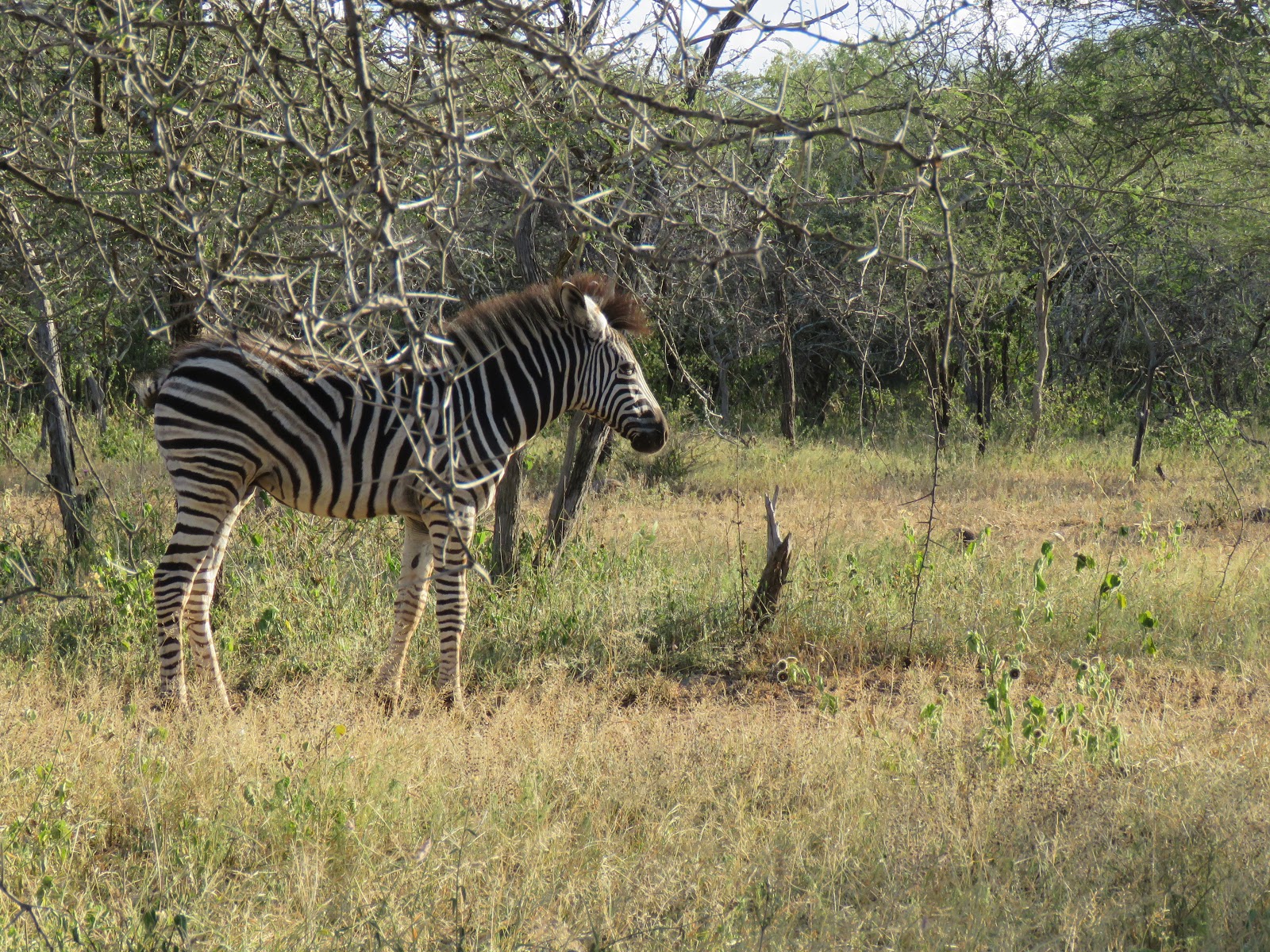
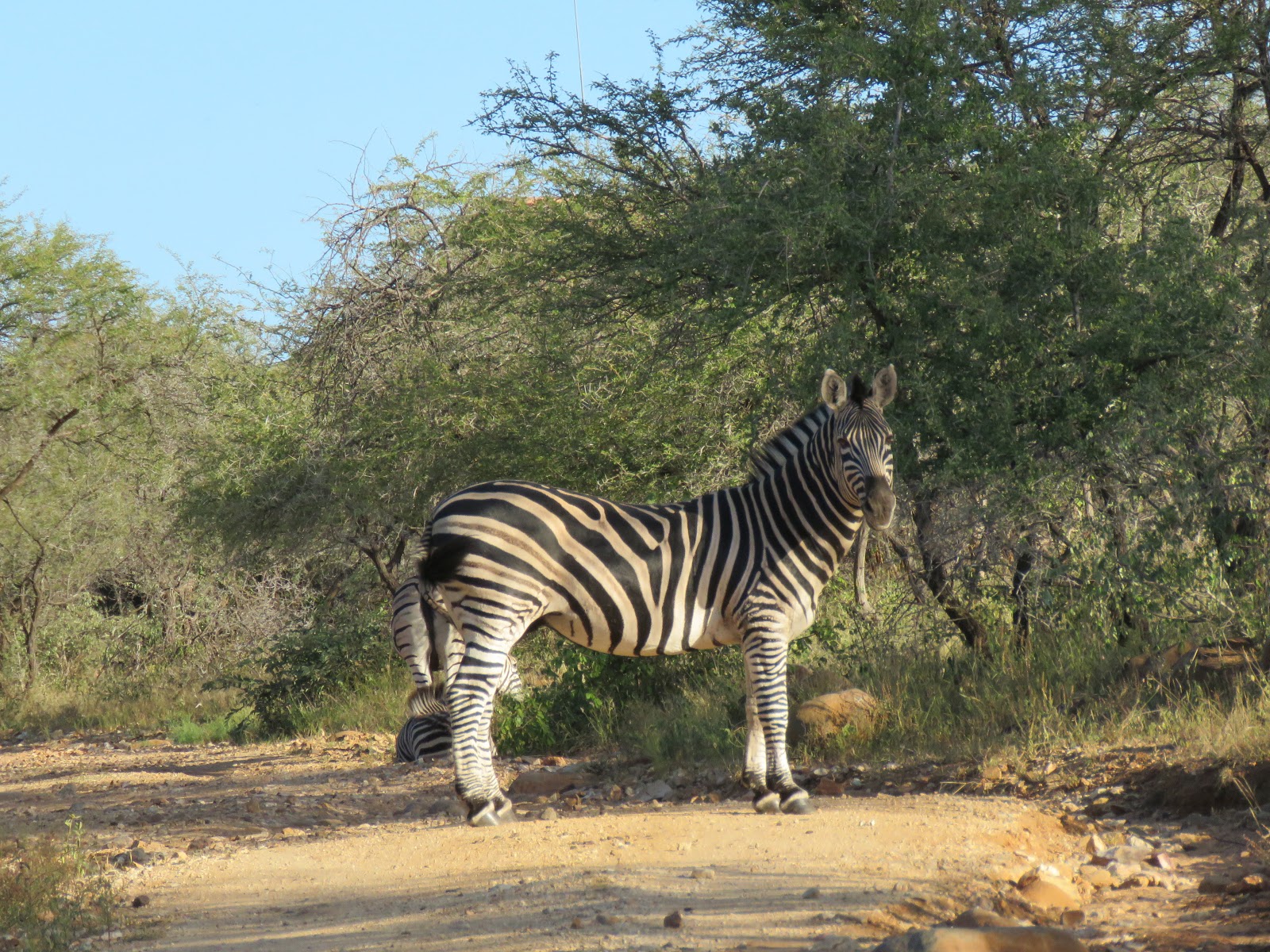
We drove down this bumpy dirt road to find several zebras while they grazed. This one stopped to look at us but didn’t seem to mind our presence.

“Sighting of the Day in the Bush”

Young zebra’s stripes appear more brown than black, and the hair on its neck is fluffier than on an adult.

After a fair amount of rain, it’s good to see the bush has become greener, providing more vegetation for the animals to forage. Most of the wildlife in Marloth Park are herbivores, as described here:

herbivore is an animal that gets its energy from eating plants and only plants. Omnivores can also eat parts of plants, but generally only the fruits and vegetables produced by fruit-bearing plants. Many herbivores have special digestive systems that let them digest all kinds of plants, including grasses.”
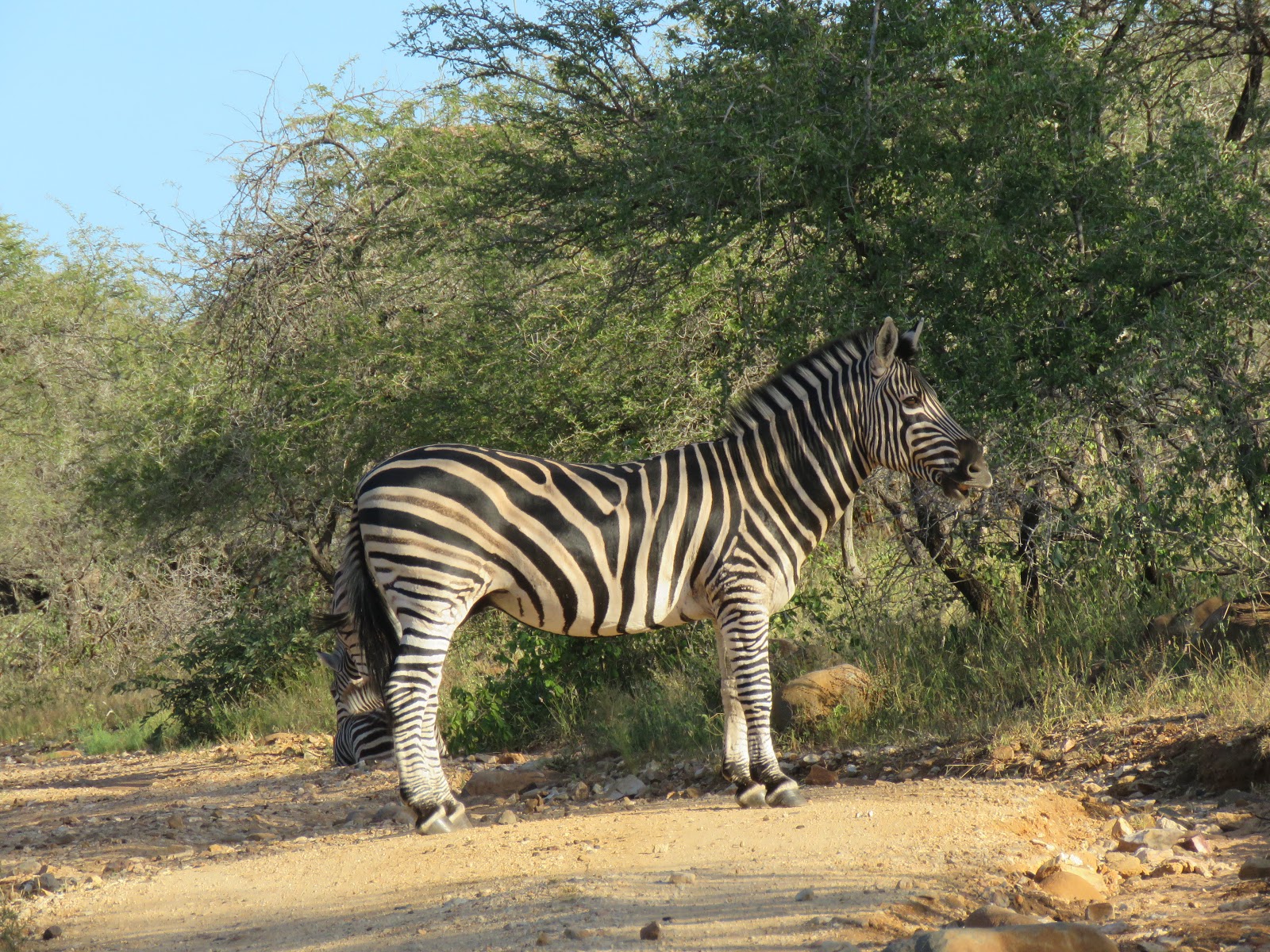
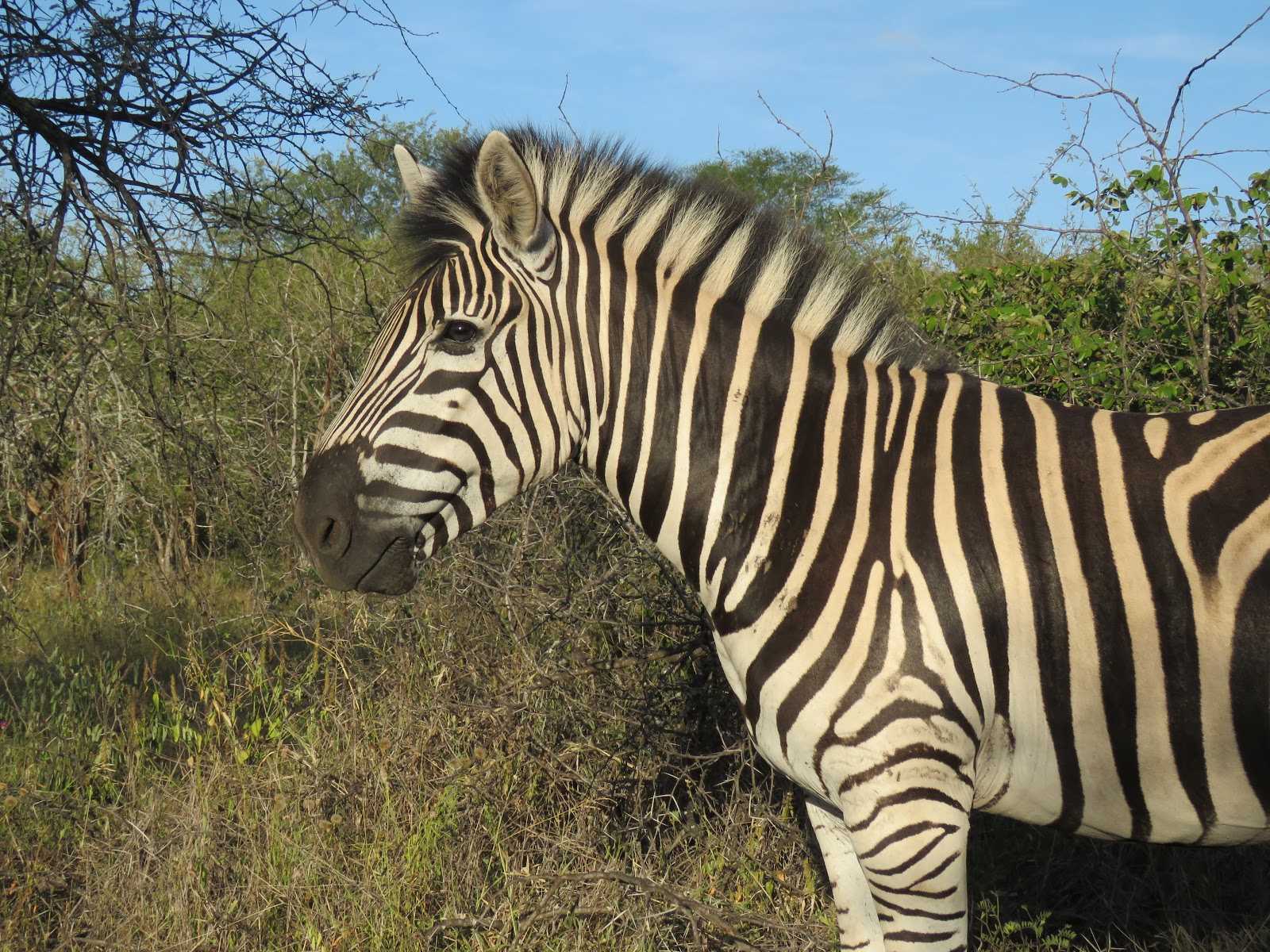
Zebras are such fascinating animals, especially when considering the uniqueness of their varied stripes. 

There are several omnivores in the park as well, described as follows here:

 “Omnivore /ˈɒmnivɔːr/ is a consumption classification for animals that can obtain chemical energy and nutrients from materials originating from plant and animal origin.”
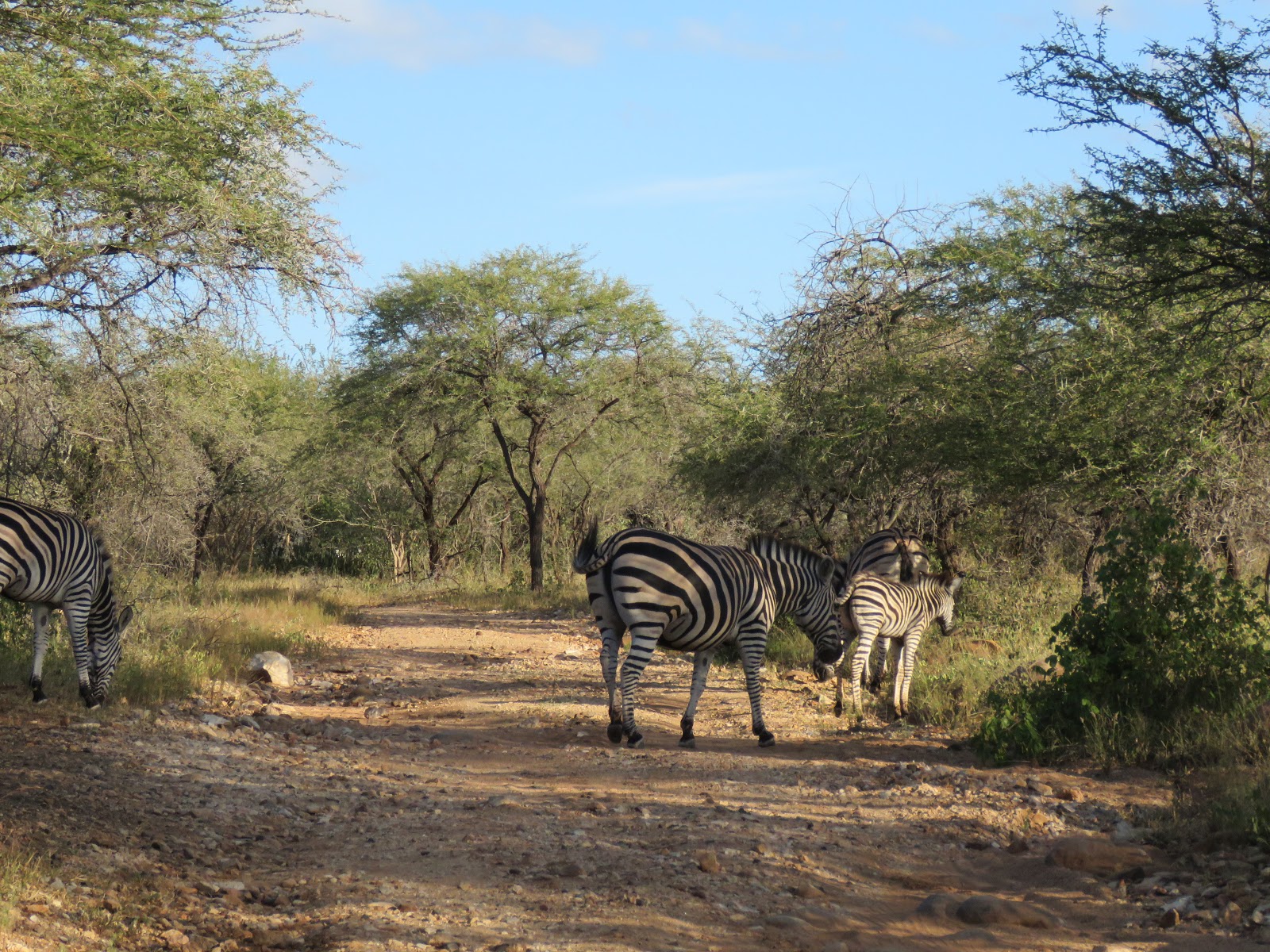
Zebras often live in “harems” with a male and several females and their offspring.  This appeared to be the case here when we noticed this youngster in the group.

Many species of birds are omnivores, such as the local helmeted guinea fowl, rodents, frogs, and other bird species, known to eat carrion, the rotting flesh of dead animals. Many types of vultures and birds of prey are carnivores.

Of course, as we all know, a carnivore is a creature, both human and animal that consumes meat, of one variety or another. With no particular affinity or opinion as to veganism as a personal choice for diet, especially for those who eat a “clean” vegan diet, they often claim humans weren’t intended to eat the flesh of other animals.
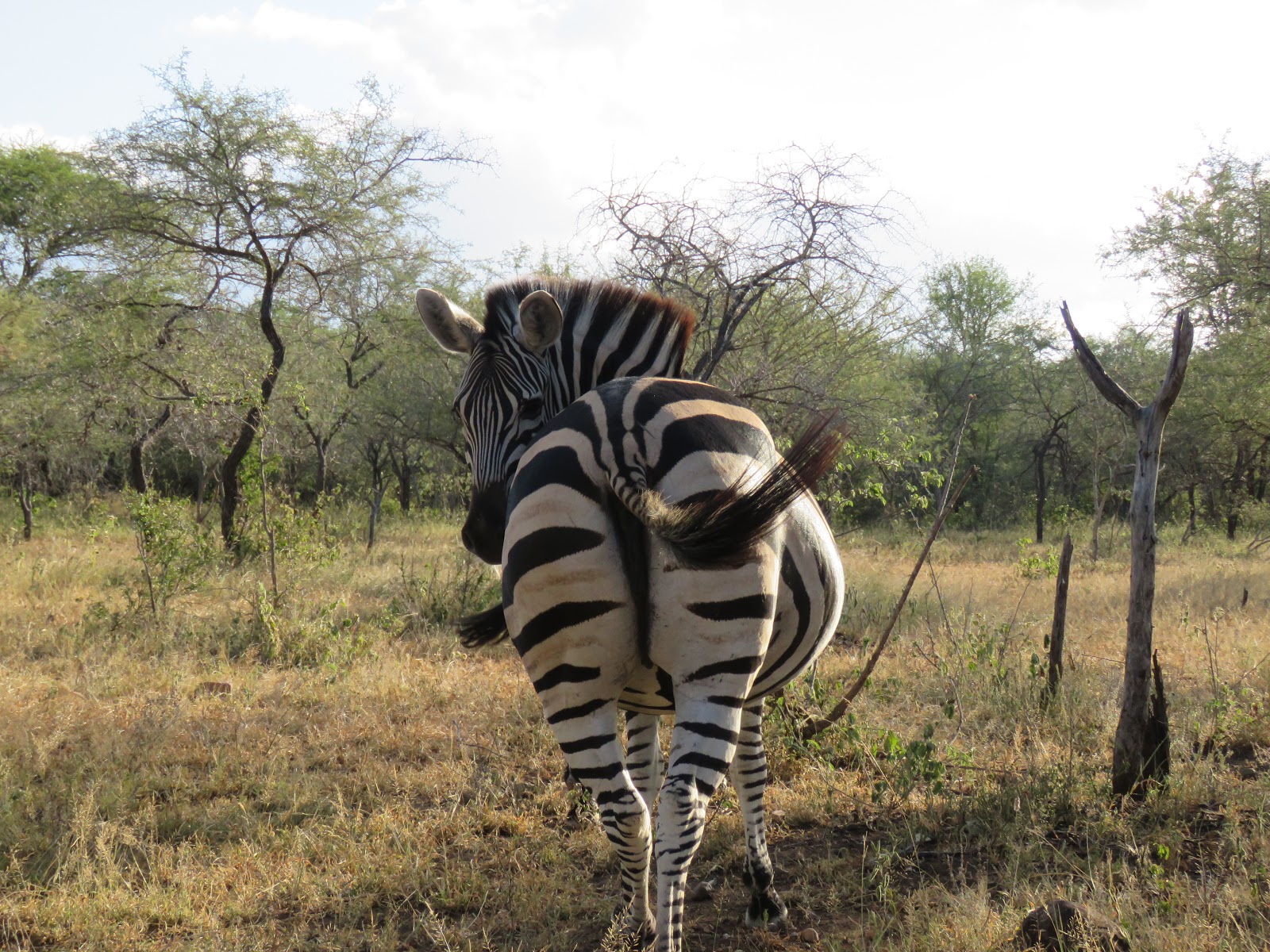
The stripe patterns are fascinating, and there are various opinions on why they developed them. Zebras are herbivores.
For many wild animals hunting for meat are a very natural process and their only means of survival. Perhaps we humans evolved similarly. I won’t get into that controversial topic too much here.
But, being in Africa certainly gives us a different perspective of the “food chain” as opposed to living in a more developed part of the world where we may give less emphasis to the cycle of life for human and animal evolution.
The adult male in the harem.

Indeed, I’m no scientist or expert and our perspective may hinge entirely upon a lifetime of preconceived notions we’ve garnered over decades. Living in the bush opens our eyes to possibilities we’d never considered in the past.
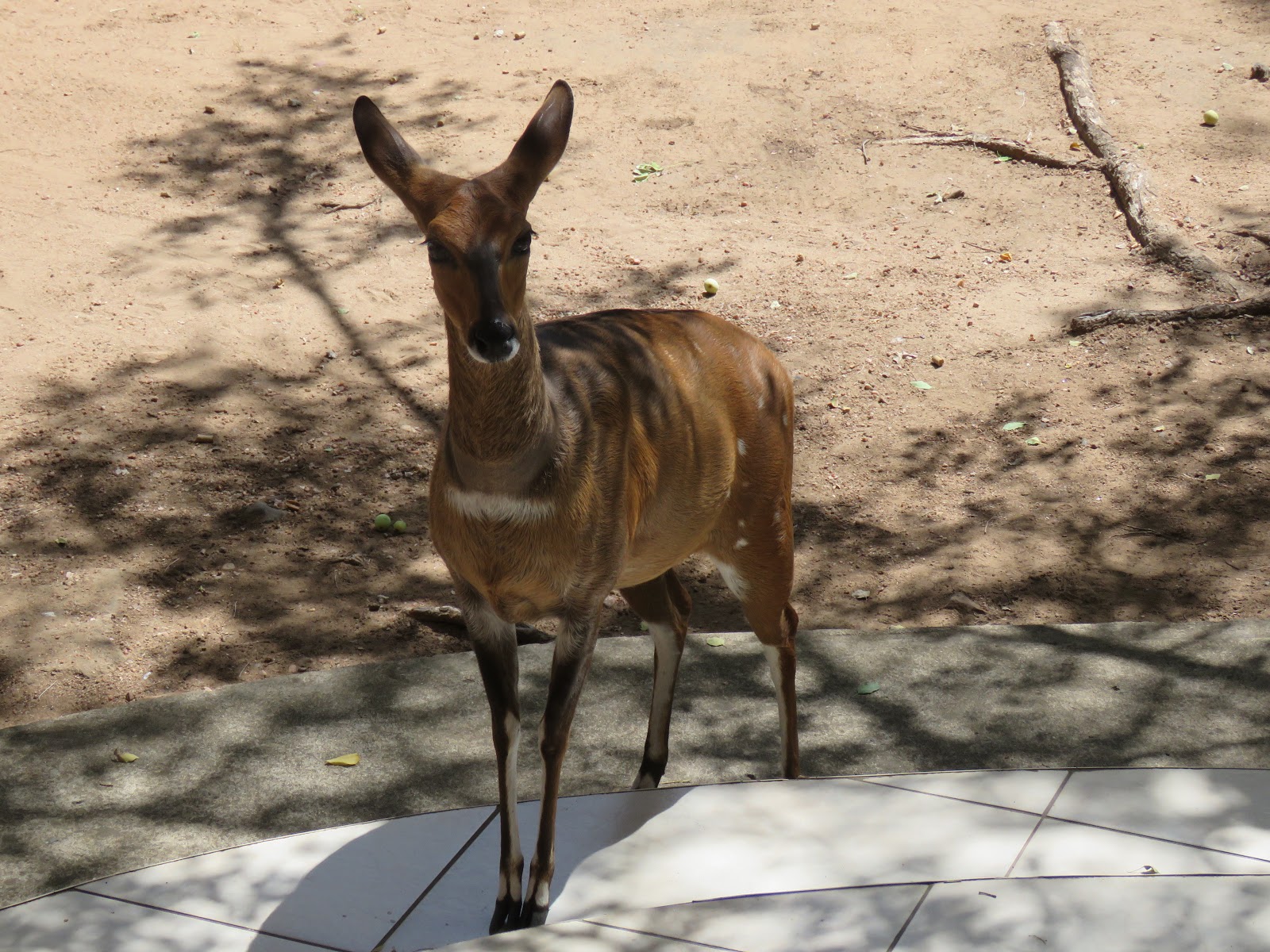
There she is, Ms. Bushbok, climbing the steps looking for pellets.  Of course, we respond to her request, as we do for all visitors.

We do know for sure that whatever we thought we knew about wildlife, even after our prior six months living in Kenya and South Africa was infinitesimal compared to the knowledge that lifetime residents of these parts have gleaned from education, personal encounters, stories passed down from generations. Innate curiosity to understand their country and their environment.

Each day as we discover a new species, a unique encounter or behavior, we find ourselves grasping for knowledge to understand better the magnitude and power of this vast wildlife-rich continent. 
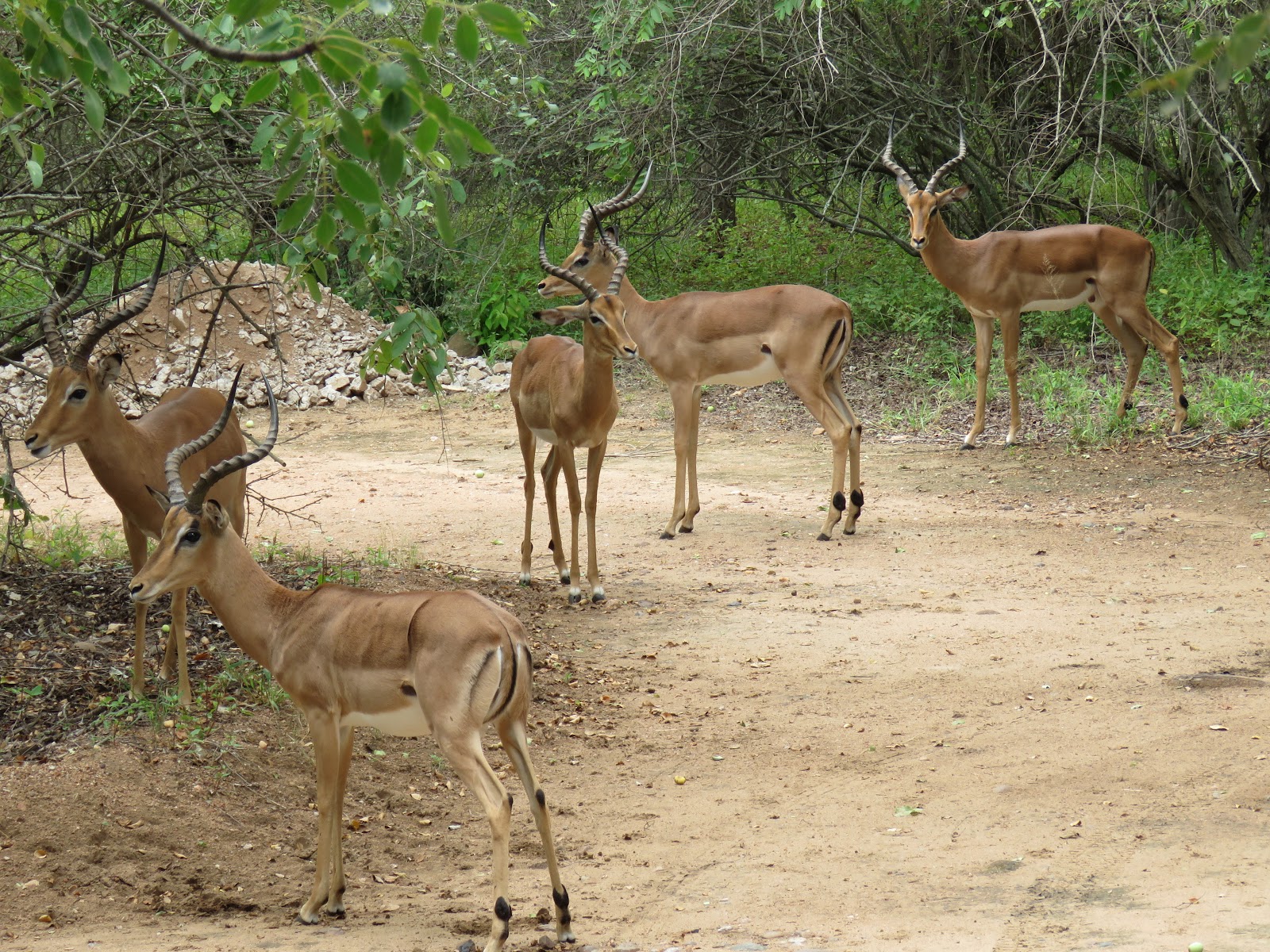
Several male impalas stopped by for a visit.

Fortunately, there’s considerable information online from reliable sources aiding us in our research and, like hungry vultures ourselves, we devour every morsel we can gather to enhance our perspective. Plus, our friends and landlords, Louise and Danie, native South African, are a valuable source in educating us.

There’s no way we can capture it all. This morning a half dozen vervet monkeys visited the marula tree in the yard which daily drops hundreds of the green fruit to the ground. As fast as they constantly moved, it was impossible for me to get a photo I would have loved to share here. 
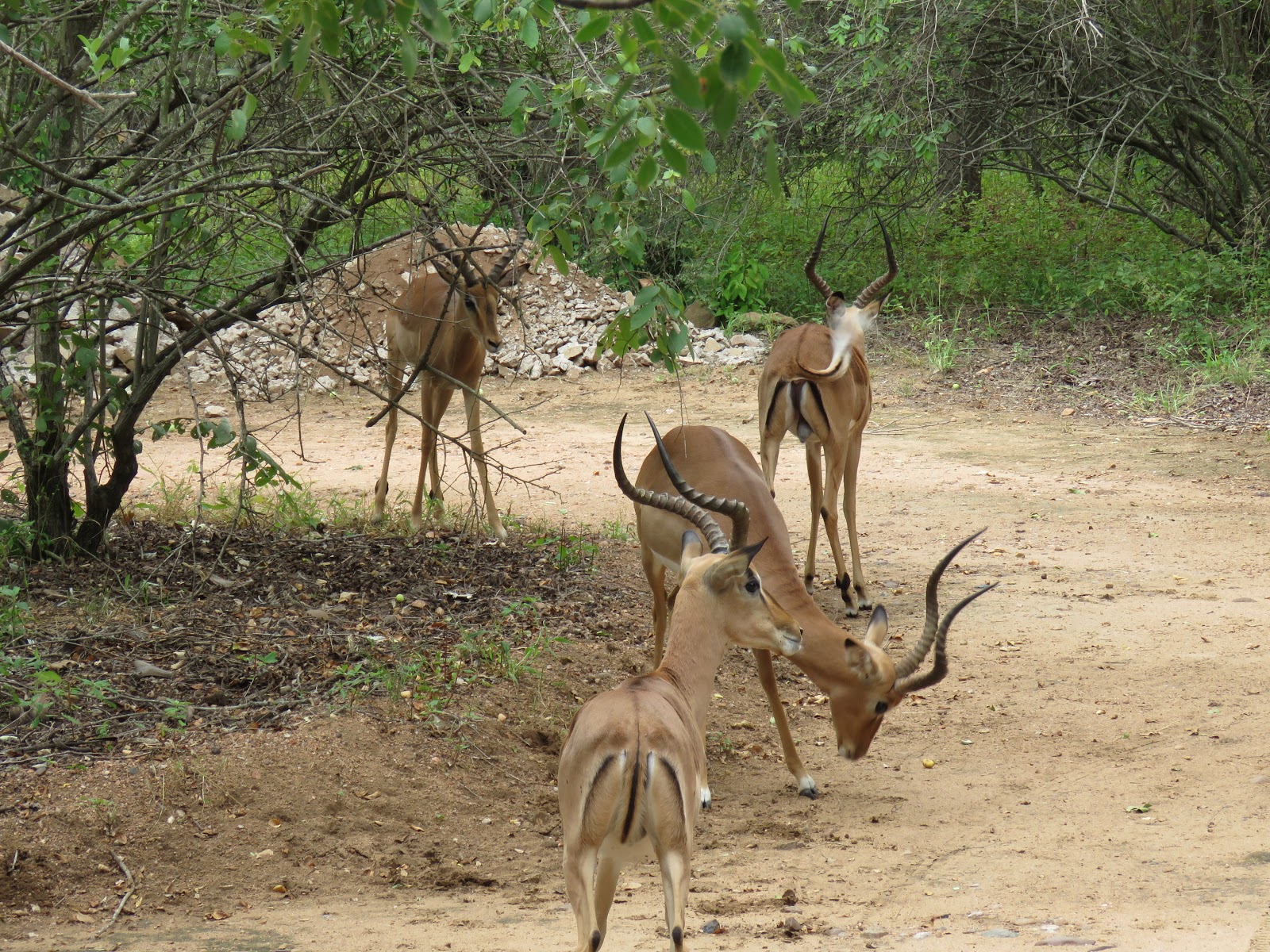
There wasn’t a single female in the herd.

At times, a photo is just not meant to be although in no way does it diminish the quality of our experience.  We can tell you about it and eventually, we’ll be able to share a photo. It’s all a part of the joy of being here. It’s not always instant gratification. Often, patience and gentle determination will provide the outcome one desires.
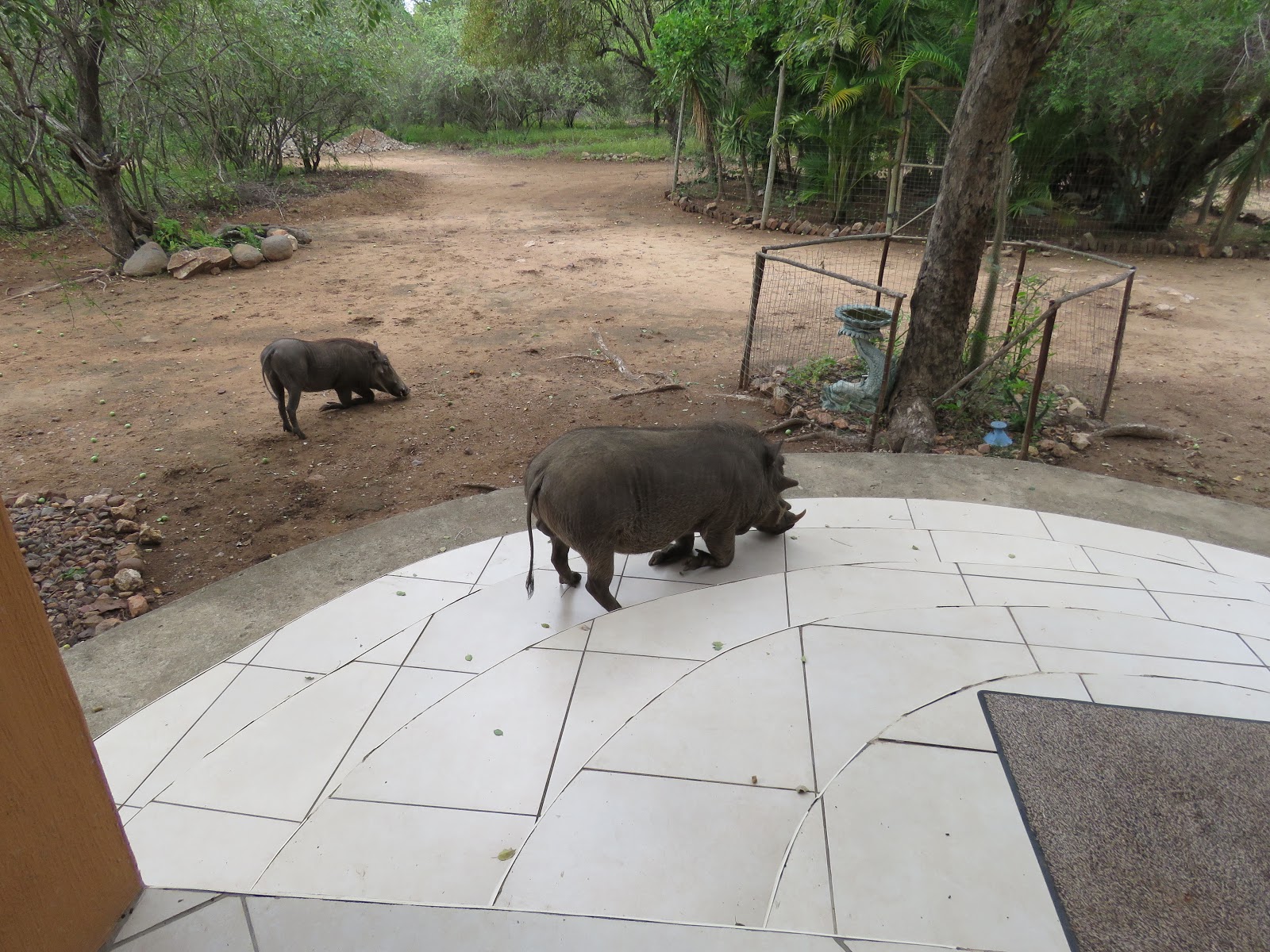
Big Boy is on his knees eating pellets on the steps to the veranda.  His friend nibbles off to the side.

And so, we’ve heard from several reliable sources, there are lions that have entered Marloth Park via the fence and the Crocodile River between Kruger National Park and Marloth  Park. One was spotted a few days, only a few blocks from us.

Sure, we’d love to see it and the other lions that apparently have taken up residence in the park and of course, if “safari luck” prevails, we’ll be ultra-careful and never attempt to “push our luck.” 
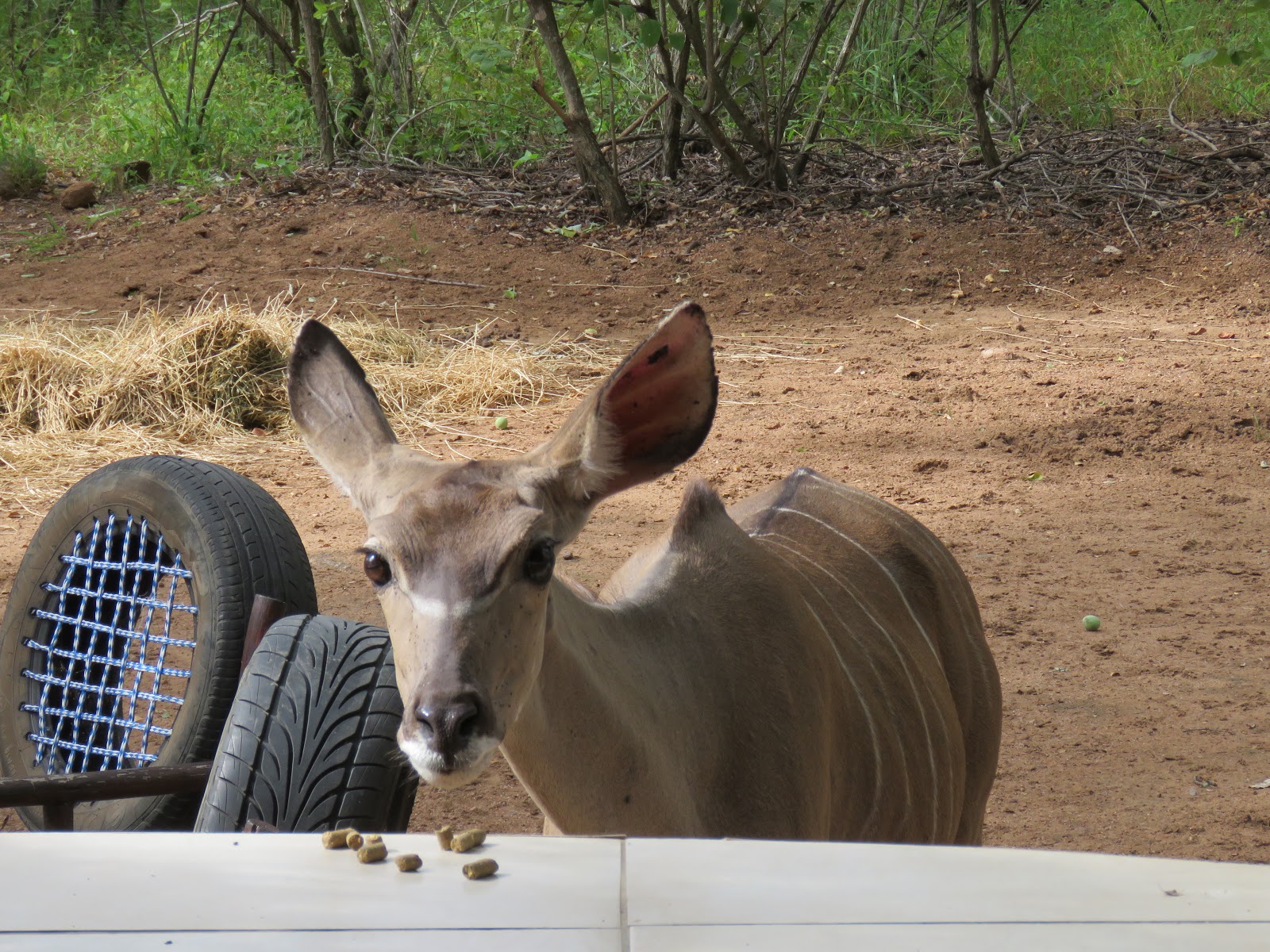
This pretty young female stops by every few days for some pellets.

Today, as soon as we upload this post, we’re heading out for a drive, hoping to spot more of Mother Nature’s wonders in the veritable paradise for wildlife enthusiasts.

Be well. Be happy.

Photo from one year ago today, February 22, 2017:
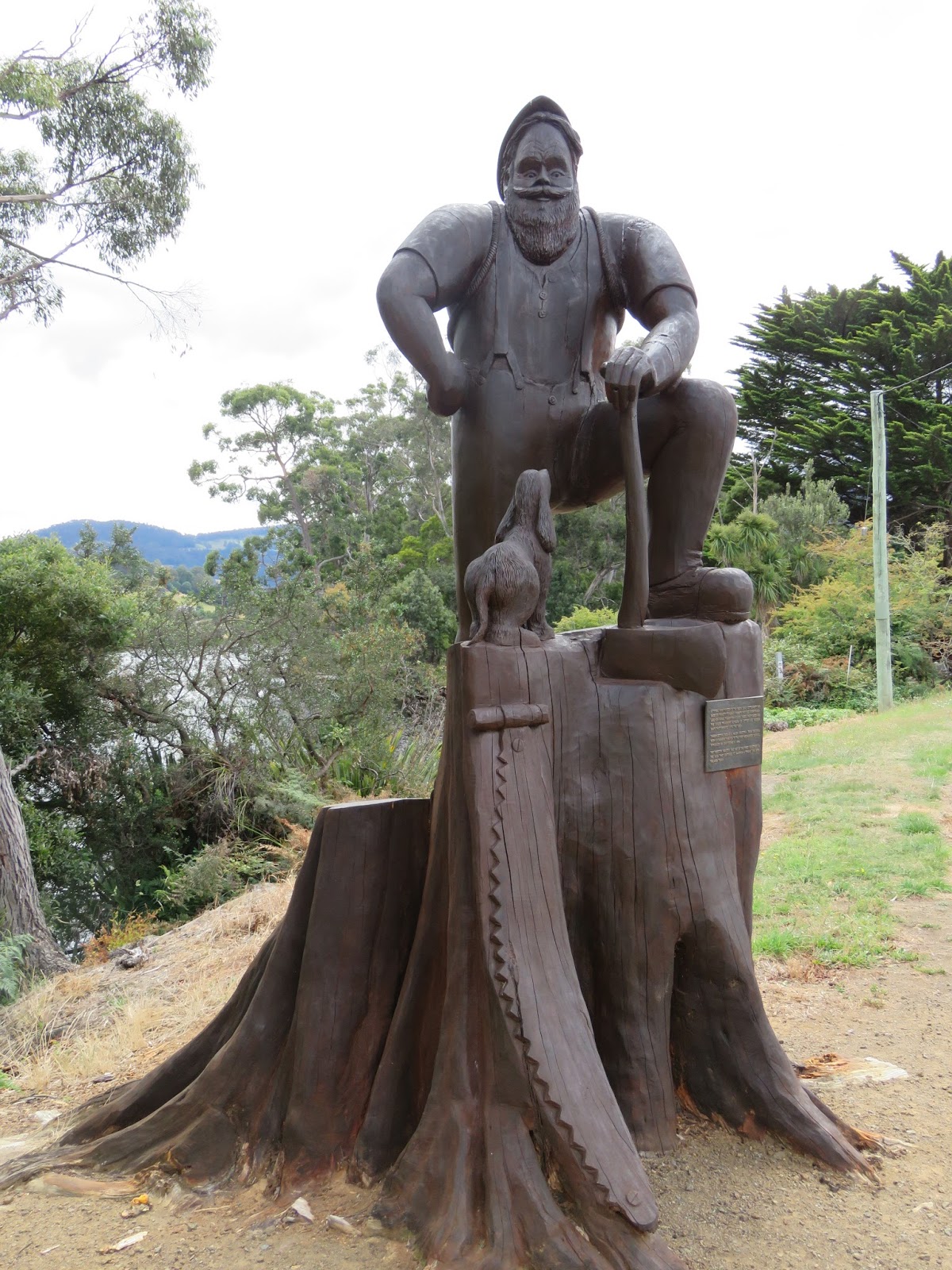
Throughout Tasmania and Australian states, there are many wood carvings
In honor of Australians throughout history. For more photos, please click here.

Malaria risks…Big Boy is back!…The excitement continues…We can’t get enough!…

Three-for-One….on the Crocodile River; a White Fronted Plover, a female impala, and a male waterbuck. We’d wish it had been a sunny day for this shot, but cloudy days can mean more rain, and rain is desperately needed.

“Sighting of the Day in the Bush”

A vervet monkey was sitting atop a lion statue in the yard of a house.

No, we won’t be spending this entire next 12 months in Africa sitting on the veranda waiting for visitors and posting photos of the same species over and over again. We have many exciting plans on the horizon.

Big Boy is easy twice the size of this other adult male warthog. We’re assuming this may be the same “Big Boy” we saw four years ago, as shown at this link. Warthogs have a lifespan of 18 years.  Once males mate, they don’t hang out with females, nor are they involved in the care of their offspring.  However, who knows, perhaps another male with whom they wander and graze may be an offspring.

But, after the last few months having sailed on two major cruises (30-nights and 17-nights) and spending 33-nights in Buenos Aires, we’re both thoroughly enjoying this time doing exactly what we feel like doing; relishing the quiet, the never-ending stream of “visitors” and time with our friends in Marloth Park.
 
Part of the joys of traveling the world is spending time, just like all of you, settling into a comfortable and pleasurable routine with minor requirements of our time. We can go out. We can stay in, sitting on the veranda. Our time is our own.

“A face only a mother could love,” and yet I find them so adorable with their quirky personalities.

Marloth Park and much of South Africa are often hot, humid with plenty of mozzies and other insects. We have to reapply insect repellent several times a day, especially during this second stay in South Africa. We aren’t taking malaria pills. 

The high-risk malaria season is ending in March or April, depending on the rains. It made no sense to be taking the pills for over a year where there are side effects and hazards in doing so over the long haul. 

Up the steps he goes, to see what we’ve got in the way of pellets!

Taking the risk of getting malaria or taking the risk of possible side effects from taking the medication for an extended period was a toss-up.  With a diligent repellent application, primarily with DEET, the only sure-fire ingredient, there’s another round of risks.

Warthogs tend to eat on their knees due to their long legs and short necks, making foraging for food more accessible. They have special knee pads that make this possible.

We didn’t take these considerations lightly. After speaking to several of our local friends, we opted to do what they do…stay protected with strong repellent and don’t kid ourselves that “natural’ repellents are strong enough to prevent bites. We know this from experience after trying several natural repellents, and yet, we still got bit, Tom, less than me.

“Whew,” says Big Boy. “I need a rest after eating all those pellets.”  He has to comfortably position his head with those razor-sharp tusks used for digging up roots and for his personal defense.  Warthogs aren’t naturally aggressive but will defend themselves vigorously if need be.  Females will become very aggressive in protecting their young.

Plus, taking malaria pills is no guaranty one won’t contract malaria. They aren’t 100% effective. Many tourists coming to Africa for a few weeks begin taking the drugs a week or two before they arrive, during their stay, and a few weeks after leaving the area. Generally, this provides good protection.

After about 20 minutes, Big Boy perked up and was ready to continue his day with his male friend, who hung around waiting for him while he napped.

But, our circumstances are different. After considerable research and speaking with our friends here in Marloth, we feel comfortable with our decision not to take the pills with a few adaptations.

Roadside shop with potatoes, onions, and miscellaneous items.

One way to reduce the risk of mosquito bites is to remove these “tire chairs” from our proximity, as shown in the photo below.  These tires can easily hold water where mosquitoes can lay their eggs.  Yesterday, after it rained, Tom tipped them all over to remove the water. Today, when our pool and groundskeeper Josiah arrives, we’re asking him to move these chairs in a distant area in the yard,

Visitors are checking the ground for pellets near the “tire” chairs.

As pointed out on Saturday night by our friend Don and longtime resident of Marloth Park, these tire chairs could easily provide an ideal hiding place for a deadly black mamba. Four years ago, Don told us a terrifying story about finding a black mamba in his storage room the last time we were here. 

Don escaped unharmed, but it was an incident he’ll never forget and a story we easily remembered after hearing it so long ago. One can’t ever be too careful in ensuring their safety from potential risks in specific environments, and there’s little room for foolhardiness.

This is the bush house we first rented when we arrived in Marloth in December 2013.  We prefer the house we’re in now due to its easier view of the yard indoors (for checking on visitors). However, we’re spending every hour of the day outside as we’d done at that property.

The weekend was spectacular for both human and wildlife visitors.  At one point on Sunday, we had eight large animals in front of us. We do not doubt as they become used to our presence, we’ll see more and more.

Today, we’re finalizing a few details for my upcoming birthday party at Jabula tomorrow night. We can’t wait to share photos from the party and the most unusual birthday cake prepared by the “cake lady” here in Marloth Park. 

Life is good, even better than we’d expected. We hope yours is as well!

Photo from one year ago today, February 19, 2017:

Huon River from the highway in Tasmania. We were nearing the end of our six-week stay. For more, please click here.

Guess Who’s Coming to Dinner?…New, or shall we say, returning special feature?…

With a lack of rain, there was little water in the Crocodile River.

“Sighting of the Day in the Bush”

We love Hornbills. “The hornbills are a family of birds found in tropical and subtropical Africa, Asia, and Melanesia. They are characterized by a long, down-curved bill which is frequently brightly colored and sometimes has a casque on the upper mandible.”

Note: Today, we’re beginning a “Sighting of the Day in the Bush” feature, which we’ll continue during our time in Africa. We hope our readers will enjoy this feature which we’ve presented similarly in specific past locations. 

The first zebra we spotted in the park.  We’ve seen several more since taking this photo a few days ago!

This is the first dinner party we’ve had since Fairlight, Australia, when we invited our dear landlord Bob and another couple we’d met who was also staying in his properties.

A baby zebra, most likely approximately four to five months old.  Zebras weigh from 30 kg to 35 kg (66 to 77 pounds) at birth. 

With friends Kathy and Don and Linda and Ken returning to Marloth Park yesterday, we could hardly wait another day to see them all once again.  We haven’t seen Kathy and Don since we were here four years ago.

As for Linda and Ken, we met up with them for lunch in Sydney, Australia, and had a spectacular time together. Please click here to see the post about our get-together.

“Ossicones are horn-like (or antler-like) protuberances on the heads of giraffes, male okapis, and their extinct relatives, such as Sivatherium, and the climacoceratids, such as Climacoceras. The base that a deer’s antlers grow from is very similar to an ossicone.”

We’ve stayed in close touch through Facebook, Messenger, and email, never losing touch with any of our South African friends during the past four years after leaving on February 28, 2014. 

In a way, it feels as if it was a lifetime ago we were in Marloth Park. But now, as we’ve settled in, it seems as if it was only a short time ago.  Lathering up in repellent several times a day, sweating in the high temperatures and humidity, batting off the mozzies while living every moment to the fullest is not hard to forget.

Giraffes lay down to rest but rarely sleep for more than five minutes at a time.

After we uploaded the post, we drove for two hours in Marloth Park, searching for wildlife. During the first hour we didn’t see much and what we did see was too far away for good photos.

During the second hour, everything changed, which is typical when on safari. You search and search, often coming up empty-handed, and suddenly there they are, one after another.

A male giraffe can weigh  1200 kg (2646 pounds), while a female may weigh 830 kg (1830 pounds).

I should mention that when we refer to “safari,” we’re constantly referring to “photo safari.” At no point would we ever participate in shooting wildlife for sport or trophies. Thus, we’ll say “safari” here in the future, constantly referring to photos safari unless stated otherwise regarding the senseless slaughter of endangered animals. 

With dwindling populations of most animals in Africa and the toll, poaching takes on nearly extinct wildlife. It makes no sense to kill any for sport or profit. But I won’t get into that here. Our readers know how we feel about this controversial topic.

No words can describe how excited we were to see these giraffes. Not wanting to disturbs them, we stayed on the road, taking photos from afar.

Much to the delight of all of us here in Marloth Park, it’s been raining off and on since yesterday afternoon. This provides much relief for the wildlife who so desperately need to eat the greening vegetation. 

Right now, it’s nearing the end of summer. The green vegetation will begin to wane in the fall season, commencing on March 21st and throughout the following cooler winter months. The wildlife will be on its own trying to find food. It’s a sad time for them, and many don’t survive the long winters.

Large ant hill with trees growing from it.

Today is a busy day, like few others, as we prepare for our six-person dinner party tonight. What a unique and memorable experience for us…to be entertaining in our “temporary” home, here in the bush in South Africa.

A vervet monkey is sitting in a yard of a house as we passed.

Today’s temperature is currently 90F, 32C, and the humidity is a bit uncomfortable after the rain.

May today bring you unique experiences.

Photo from one year ago today, February 17, 2017:

Tom was proud of their big catch, all flatheads, when he went fishing with our landlords. He had a great day!  For more3 details, please click here.

Antarctica – January 30, 2018…Grytviken, South Georgia…An abandoned whaling town…Sailing around the storm…

This group of Elephant Seals found comfort in sleeping together in a ditch.

The world…it baffles, it entices, it enlightens, and it surprises in one way or another almost every day. It spares nothing in attempting to capture our attention while we, in our amateurish or professional manner, attempt to capture it in photos in hopes of retaining memories to last a lifetime. 

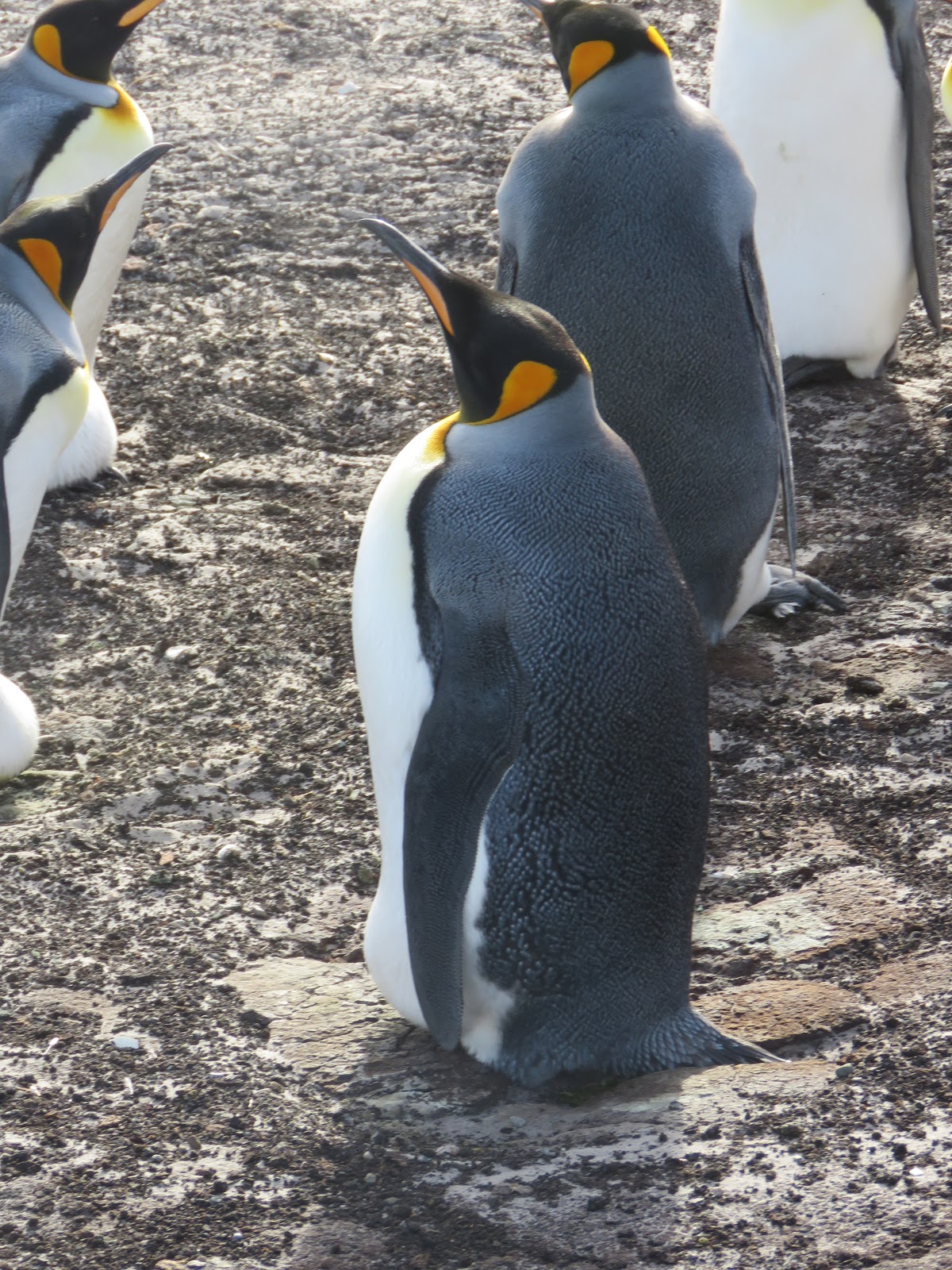
Some of the King Penguins were molting while others were not.

Antarctica keeps “giving and giving.” this trip to Antarctica has been at the top of our list for photo ops (along with our upcoming adventures in Africa). And, in our less-than-professional photo-taking manner, we thrive on these opportunities with such enthusiasm we can hardly contain ourselves. 

We walked along this beach in the rain to the small settlement ahead.

Taking photos is important to us to share them with all of our worldwide readers and maintain them for our reference, our family, and generations yet to come.

Tom, with an iceberg in the background.
The younger seals seem eager to pose for a photo, but the older males chase after us, prepared to attack if necessary.  We had to scare a few off by clapping our hands and yelling.

Above all, standing on the very ground where so much is happening takes our breath away as we live in the magic of the moment, anticipating nothing more than what is before our eyes. With heart-pounding enthusiasm, we embrace every moment, later reviewing our photos, hoping to find those fantastic captures that genuinely tell the story of our current experiences.

A young seal was sleeping atop a plant with a grouping of Elephant Seals in the background.

Sure, an expedition cruise is not expected to be perfect. We’ve had to forgo three landings due to bad weather, which we’d looked forward to on the itinerary. Last night, we had to sail away with bad weather on the horizon, missing two landings scheduled for today. 

A lone Fur Seal was posing for a photo.

Instead, the captain decided we’d sail directly to the Antarctic Peninsula, where we’ll spend the next several days, finally amid the massive icy environment we’ve so longed to see.  As a result, we’re at sea today.

She was so relaxed, a bit of drool dripped from her mouth. A bath would be nice.

Yesterday morning, we embarked on the Zodiac boats to Grytviken, South Georgia, an old whaling village since gone to ruin. As we wandered through the historic town, we couldn’t help but feel sorrowful for the millions of whales slaughtered for financial gain. 

This is the first of a few icebergs we spotted in Grytviken and the first so far on the cruise.  Guaranteed, more will follow.

This Elephant Seal was sleeping in the ditch without his friends.

Evidence of this travesty is readily evidenced in this small settlement with the remnants of the storage tanks and processing machines and equipment. 

Among the ruins were multiple shipwrecks photos of which we’ve included here today. A small group of 10 to 20 people occupies the location during the summer months (less in the winter months) to facilitate ship passengers stopping to inspect the settlement. 

We were served a shot glass of Irish whiskey with the suggestion to take a sip and pour the remainder over Shackleton’s grave, a local tradition.

There’s a shop, a church, a post office, and a few museums, all of which we visited during our few hours at the location. It was exciting and quite unusual, especially the many Fur Seals and Elephant Seals that live amongst the ruins of a long-abandoned business.

No sip of Irish whiskey for me, but I poured mine over Shackleton’s gravesite.
Here is information about Grytviken, South Georgia Island, from this site:
Grytviken is a settlement on the island of South Georgia, part of a British Overseas Territory in the South Atlantic. The settlement’s name is Swedish in origin, meaning “the Pot Bay.” The name was coined in 1902 by the Swedish Antarctic Expedition and documented by the Swedish surveyor Johan Gunnar Andersson, after the expedition found old English try pots used to render seal oil at the site.
It is the harbor’s best harbor, consisting of a bay (King Edward Cove) within a bay (Cumberland East Bay). The site is relatively sheltered, provides a substantial area of flat land suitable for building, and has an excellent freshwater supply.
Her companion is fanning her with widespread fins and tail.

The settlement at Grytviken was established on 16 November 1904 by the Norwegian sea captain Carl Anton Larsen as a whaling station for his Compañía Argentina de Pesca (Argentine Fishing Company).  

It was phenomenally successful, with 195 whales taken in the first season alone. The whalers used every part of the animals – the blubber, meat, bones, and viscera were rendered to extract the oil, and the bones and meat were turned into fertilizer and fodder. Elephant seals were also hunted for their blubber.

The following year the Argentine Government established a meteorological station. Around 300 men worked at the station during its heyday, operating during the southern summer from October to March. A few remained over the winter to maintain the boats and factory. A transport ship would bring essential supplies to the station every few months and take away the oil and other produce.

An adorable seal climbed a wall to see what the commotion was all about.
Carl Anton Larsen, the founder of Grytviken, was a naturalized Briton born in Sandefjord, Norway. His family in Grytviken included his wife, three daughters, and two sons. In his application for British citizenship, filed with the magistrate of South Georgia and granted in 1910, Captain Larsen wrote: “I have given up my Norwegian citizen’s rights and have resided here since I started whaling in this colony on the 16 November 1904 and have no reason to be of any other citizenship than British, as I have had and intend to have my residence here still for a long time.”
The first iceberg we’d seen since leaving Ushuaia a week ago today.  More will surely follow as we head to the Antarctica Peninsula.
As the manager of Compañía Argentina de Pesca, Larsen organized the construction of Grytviken, a remarkable undertaking accomplished by a team of sixty Norwegians between their arrival on 16 November and commencement of production at the newly built whale-oil factory on 24 December 1904. Larsen chose the whaling station’s site during his 1902 visit while in command of the ship Antarctic of the Swedish Antarctic Expedition (1901–03) led by Otto Nordenskjöld.
On that occasion, the name Grytviken (“The Pot Cove”) was given by the Swedish archaeologist and geologist Johan Gunnar Andersson. They surveyed part of Thatcher Peninsula and found numerous artifacts and features from sealers’ habitation and industry, including a shallop (a type of small boat) and several try-pots used to boil seal oil. One of those try-pots, having the inscription ‘Johnson and Sons, Wapping Dock, London’, is preserved at the South Georgia Museum in Grytviken.
Me, with an iceberg in the background.
Managers and other senior officers of the whaling stations often had their families living together with them. Among them was Fridthjof Jacobsen, whose wife Klara Olette Jacobsen gave birth to two of their children in Grytviken; their daughter Solveig Gunbjørg Jacobsen was the first child ever born south of the Antarctic Convergence, on 8 October 1913. Several more children have been born in South Georgia: recently even aboard visiting private yachts.

The whale population in the seas around the island was substantially reduced over the following sixty years until the station closed in December 1966. By that time, the whale stocks were so low that their continued exploitation was unviable. Even now, the shore around Grytviken is littered with whale bones and the rusting remains of whale oil processing plants and abandoned whaling ships. 

A big male Fur Seal and perhaps his offspring who he was training to be growly at visitors.

Ernest Shackleton Grytviken is closely associated with the explorer Sir Ernest Shackleton. Shackleton’s Imperial Trans-Antarctic Expedition set out from London on 1 August 1914 to reach the Weddell Sea on 10 January 1915, where the pack ice closed in on their ship, Endurance. The ship was broken by the ice on 27 October 1915. The 28 crew members fled to Elephant Island off Antarctica, bringing three small boats 

Shackleton and five other men managed to reach the southern coast of South Georgia in the James Caird. They arrived at Cave Cove and camped at Peggotty Bluff, from where they trekked to Stromness on the northeast coast. From Grytviken, Shackleton organized a rescue operation to bring home the remaining men.

An iceberg with our ship in the background.

In 1922 he had died unexpectedly from a heart attack at the beginning of another Antarctic expedition. He again returned to Grytviken, but posthumously, his widow chose South Georgia as his final resting place. His grave is located south of Grytviken, alongside those of whalers who had died on the island.

On 27 November 2011, the ashes of Frank Wild, Shackleton’s ‘right-hand man, were interred on the right side of Shackleton’s gravesite. The inscription on the rough-hewn granite block set to mark the spot reads “Frank Wild 1873–1939, Shackleton’s right-hand man.” Wild’s relatives and Shackleton’s only granddaughter, the Hon Alexandra Shackleton, attended a Rev Dr. Richard Hines service, rector of the Falkland Islands.
A whaling boat shipwreck.
The writer Angie Butler discovered the ashes in the vault of Braamfontein Cemetery, Johannesburg, while researching her book The Quest For Frank Wild. She said, “His ashes will now be where they were always supposed to be. It just took them a long time getting there.”

Update on my knee: It’s certainly not 100% yet. I visited the doctor a second time for another round of a different antibiotic and more anti-inflammatory meds. It’s improving, albeit slowly. 

Another sad reminder is that life for wildlife is not easy.

I can’t wait for this to be healed so I can stop thinking about it and, good grief, have a glass of wine! But, I’ve only missed one outing (out of many more), which required a five km walk, and Tom went ahead without me taking amazing photos.

As for today, right now, I’m in the lounge on deck three while Tom is taking a much-needed nap. It’s nearly 3:00 pm. Since we’re at sea today, little is required other than to enjoy our new friends, which is relatively easy to do in this beautiful environment.

The small Lutheran church in Grytviken, South Georgia.

Update on the pending rough seas: The captain made a good decision when we forfeited two planned landings to instead sail directly to Elephant Island, which we should reach sometime tomorrow. The waters are rough, and walking around the ship requires some holding on one another, walls, and railings. 

But, in our usual way, neither of us are seasick, but we suspect that some passengers may be feeling it when I’m only one of about eight passengers in the usually packed deck three lounges.  Due to the weakening Wi-Fi signal, I’m unable to enlarge a number of our photos to the size we always post. 

Whaling oil processing equipment.

Have a great day! And again, no worries if we aren’t here over the next few days. Likely, we won’t have a signal the further south we sail.

     Photo from one year ago today, January 30, 2017:

Wood handled tools for the “barbie” we spotted at an outdoor flea market in Franklin, Tasmania.  For more photos, please click here.

Antarctica- Friday, January 26, 2018…More from the Falkland Islands…Saunders Island…

A small group of Gentoo Penguins heading out to sea for a morning swim and hopefully a bite to eat.
Each day, during this exciting Antarctica cruise, we’ll be attempting to post activities from the previous day’s expeditions, including wildlife, scenery, and ship photos. 
The temperature was above freezing, but the heavy gear kept us warm and protected from the harsh winds. Like all of us, Tom was wearing a life vest which is mandatory while riding on the Zodiac boats. There are two Gentoo Penguins by the shoreline.
Soon, we’ll start posting some food photos, but right now, we’re thinking less about our luxurious cabin and meal and more about nature is sharing with us in this stunning winter-like wonderland, so far removed from any world we’ve ever known.
Me and a few Gentoo Penguins on Saunders Island in the Falkland Islands.

Currently, our world revolves around getting outside on the Zodiac boats to see the treasures of this most unusual place on the planet, leaving us with memories we’ll treasure until the end of our days.  Getting enough rest to partake in all of the activities has been a bit of a challenge with my still recovering infected knee, not yet 100%.

We enjoyed seeing the interesting markings on the Magellanic Penguins.

Although, my FitBit has been smoking as we’ve managed to do over 10,000 steps a day over some rough terrain; hills, rocky patches amid steep climbs and inclines. No doubt, the knee is sore, but I’m hopeful it will continue to improve now that we’ll have two days at sea to rest and recoup.

Two Gentoo Penguins were figuring out how they’ll spend their morning.

This cruise is less social for us than many other cruises. Half the passengers don’t speak English. Many came together in groups, leaving but a handful with whom we can engage. As it turns out, this cruise is less about socialization and more about learning about this majestic environment. We’re doing fine amid this social structure.

Two Gentoo Penguins were rushing along the shore, deciding if they’ll head into the sea for breakfast.

We’ll have plenty of time for socialization upcoming in South Africa when invitations for social events have already started rolling in. In the interim, Tom and I, in our usual manner, are having lots of fun together every moment of the day and evening. Even the setback of my knee hasn’t hindered the quality of the time we’re spending together.

A King Penguin parent was feeding its newborn chick.
Closer view of the newly hatched chick.
This small ship, Ponant Le Soleal (Soleal, meaning “the ship that shows the way), is bright white and varying shades of grey in a calming and pleasing contemporary design. Only five years old, it sails along with the greatest of ease. 
This photo, if carefully examined, illustrates a King Penguin, near the center of the group (slightly to the left) with a newborn chick which they were feeding from time to time, next to another penguin whose chick had died.
Every so often, the mom/dad with the live chick gets into a scuffle with the parent with the dead chick.  So sad to see.

Of course, we’ve yet to experience the Drake Passage in its entirety, where the Pacific and Atlantic Oceans meet for the roughest waters in the world. We’ll see how that goes on this tiny vessel.

Finally, the frantic parent with the dead chick turned away.

The fact that we’ve been able to post a few times has given us great hope that we’ll be able to stay in and out of touch as we continue for the two remaining weeks until we disembark in Ushuaia to fly back to Buenos Aires for two nights before we make the two-day flight to South Africa. We’ll need to be rested for that.

King Penguin parents overseeing the feeding and safety of their chicks.

The ship’s Wi-Fi is very expensive at US $250 for 18 hours, giving us approximately one hour a day of use. Tom has stayed offline except to send his blind brother Jerome the daily post as they occur minus the photos. 

This is a Brown Skua.

The remainder of the metered Wi-Fi time consists of preparing posts as quickly and as error-free as possible offline, then uploading them with photos and with as many corrections as possible. 

These Magellanic Penguins were headed out for breakfast.

Unfortunately, I don’t have enough time online to conduct research and provide links (other than our own) to share with you, as we often do. Half of the 17-day cruise will be spent visiting islands, glaciers, and ice floes, while the remainder will be out to seas, such as today and tomorrow. 

A well-padded King Penguin.

We intend to share every aspect of this cruise, including photos from every outing on the Zodiac boats, the essence of this type of expedition cruise. We’ll make every effort to ensure all of our readers will share in this adventure with us from their armchairs at home or desks at their office, minus the cold, minus the rocky ground, and; minus the steep inclines. 

A Gentoo Penguin swooning toward the sky.

For us to be able to do this with all of you means so much to both of us, adding an element to our experiences that feels as if you are right beside us.

Due to the cold climate, plants such as this may take decades to grow to this size.

Last night was a formal night, and as always, we did our best to fit in with dressing appropriately. Some women wore evening gowns, but only a few men wore tuxedos. There was a fixed menu in the dining room, which the chef accommodated my diet, which worked well and was the best meal we’d had on the ship to date. 

More beautiful slow-growing vegetation. Humans mustn’t touch or disturb any plants of vegetation in Antarctica, which may take decades or even centuries to grow.

After dinner, we headed to deck three to watch the most lively group of dancing passengers we’ve seen to date. What an enthusiastic group! Most were French, and they sure knew how to “boogie” to the music.

Many seabirds are killed as a result of humans fishing in their waters.

Tom and I love to dance together. Last night we danced a few times, with me dancing while standing in place. One can do a lot while wildly flailing their arms on a dance floor.

A hard reality in the animal kingdom…they don’t always survive the elements.

I appreciate your patience as we stumbled through the at-times-challenging Wi-Fi connection, which we anticipate will only get worse as we sail further south to the “real” bottom of the world. Stay tuned, folks. We’ll be back with more.

Photo from one year ago today, January 26, 2017:
Tom is standing next to the Australian flag at the entrance to the Australia Day festivities in Franklin, Tasmania. For more photos, please click here.

Tom correcting me when I’m wrong…

Pigs were cuddling while snoozing in pen.

“Sightings from the Veranda in Costa Rica”

Tom took another excellent distant shot of a bird we couldn’t identify online. Costa Rica neighbor and bird enthusiast Charlie identified this bird as a Clay-colored Thrush or Yigüirro in Spanish.  Thanks, Charlie!

After reading yesterday’s post, Tom corrected me on a few items, which is often the case when I make an incorrect or inconsistent statement. After 1,935 posts in five years, I’m bound to be inconsistent from time to time. 

In this post dated June 17, 2013, I referred to our “bucket list” upon visiting Venice, Italy. In yesterday’s post, as shown here, I stated we don’t use the phrase “bucket list” so much anymore.

I can justify my inaccuracy by saying that we’ve changed our views on specific topics or phrases over these years, one being “bucket list.” It had become too repetitive and overused in travel circles, and I became tired of using the phrase. 

In searching our site for how many times I referenced this phrase, it appears it may have been dozens of times dwindling as time passed, as it became apparent to me that it may not necessarily apply to us.

Squirrel Monkeys in pen.

If our travel lives consisted of a “bucket list,” we may have felt restricted to fulfilling each item on the arbitrary list.  Instead, our curiosity and desires have been fluid, changing from time to time. As a result, I dispensed with using the expression overtime during the past five years.

When meeting ambitious travelers throughout the world, I often chuckle to myself when I hear the phrase repeated repeatedly. In essence, for most travelers, it clearly defines an objective…see these places while we can.

Secondly, Tom reminded me of yesterday’s post when I went on and on about what Tom had envisioned for his retirement years, failing to mention what I’d imagined for myself.

“Oh, good grief,” I spewed. “Haven’t our readers heard enough of what I think and what I imagined?  Surely, after 1,935 posts, don’t our regular readers see me like an open book and easily recite my opinions and perceptions with an uncomplicated sense of fluidity?

Two parrots who refused to turn around for a photo op.

Tom reminded me that at any given moment, don’t we have hundreds of new readers stopping by to grab a snippet of that which we espouse in our endless ramblings? They may not as yet have grasped the flow of opinions and ideas that fly off these pages day after day.

To satisfy Tom over my supposed incomplete post yesterday, I agreed, albeit tentatively, to share what I had imagined my retirement years long before we decided to travel the world. After all, we decided in January 2012 and left Minnesota on October 31, 2102, less than 10 months later.

I began contemplating my retirement years after I turned 50, which was long before I changed my way of eating to achieve pain-free living, which transpired in August 2011 from a hereditary spinal condition.

By the end of November, I awoke one morning, and for the first time in decades, I could stand, walk and maneuver without pain in my back and legs. It was indeed a miracle. Only a few months later, Tom asked me if I’d like to travel the world now that I was pain-free, and we, unsure as to how long that would last, began planning the adventure.

Easy walking path in Zoo Ave.

At that time, little did we imagine we’d last this long. We thought, two or three years tops and we’ll lose interest after tiring of moving around. It hasn’t happened. 

However, before that recovery in 2011, always in chronic pain, preferring not to complain to family and friends, I imagined my “elder years” would be wrought with the painful condition while continuing to attempt to live as normal a life as possible.

My life would have consisted of spending time with family and friends, cooking and entertaining, keeping a tidy and organized household, and attending an endless array of activities, functions, parties, and events. 

Cute sign, Zoovenirs as opposed to souvenirs.

It would have been a relatively simple life comparable to that of many retirees, which was highly enjoyable when I could mentally put the pain aside.

That’s it. But now, my imaginings are very different…in 82 days from today (February 2, 2018), we’ll be standing on Astrolabe Island, Antarctica, with 100,000 Chinstrap penguins.

In approximately 90 days, we’ll be living in the bush in South Africa, surrounded by wildlife with a camera in hand, reveling in the wonders of nature and wildlife far beyond any dreams we may have had in the past. Pinch me. Is this really our lives?

Am I going to awaken one day to be pushing the grocery cart at the Cub Foods store in Minnesota or…awakening in Buenos Aires beginning in 41 days staying in a lovely hotel in the hub of the fascinating city for an entire month? 

Variegated Squirrel at the rescue facility, Zoo Ave in Costa Rica, comparable to those we’ve seen at the villa.

We made a choice. It wasn’t an easy or flippant decision. We have no regrets. Life is good. We’re grateful, we’re humbled, and we’re at peace.

Thanks to all of our readers for sharing this life with us.

Photo from one year ago today, November 12, 2016:

We dined almost every night during the 33-night cruise circumventing Australia, with new friends from the top, left to right, John and Kat from Australia, Cheryl and Stan and Lois and Tom from the US and us. (Not our photo). For more details, please click here.

A stunning experience in the yard….Check out these photos!…

This was the first sighting we’ve had of a Toucan in the yard. Once the downed tree was removed, it opened up an area where Ulysses spotted the two birds and came to tell us. Notice the piece of fruit in their beak.

“Sightings from the Veranda in Costa Rica”

A butterfly landed on this metal clip in the tile on the veranda. (The clip is used to anchor the hooks on the pull-down shades). Tom took these two photos.
Although not a perfect shot, Tom took this closeup of the beautiful coloration of this butterfly.

This morning’s late start resulted from us both staying busy in the kitchen cleaning and cutting vegetables and some fruit for Tom. He’s gained weight eating fruit and peanuts while here and will return to a low-carb diet a month before we depart for the cruise. 

With a 30-night cruise ahead of us and many tempting foods for Tom, starting a little lighter is always good. For me, it’s no difference one way or another. I eat the same foods at “home” as I do on a cruise. 

The Toucans were very high up in the tree, making it difficult to get a clear shot with our camera.  Soon, we’ll be purchasing a new camera for Antarctica and Africa. Keep this less expensive model so we can both take photos simultaneously. 

With the “feria” (farmers market) closed yesterday due to the storms, we purchased all of our groceries and produced them at the market, enough to last at least a week.

The taxi driver picked us up at the villa and dropped us off at the “barberia’ owned by a Columbian family, a popular spot for haircuts for the roughly 1500 ex-pats in Atenas. He paid CRC 4,000 (USD 6.97), which included a 25% tip!  Photos will follow in tomorrow’s post.  We’re both thrilled with the results.

The workers arrived in the morning and continued to remove the downed tree, as shown on the right in this photo.

We’d brought the golf umbrella with us anticipating more rain. Instead, the storm has moved toward the US, with Costa Rica no longer under “red alert.” But, it’s still the rainy season, and it can be sunny with a clear sky one moment and be raining in buckets 10 minutes later. 

Today at 10:30 am, the sky is blue and clear with hardly a white fluffy surge on the horizon.  Hopefully, we’ll be able to do our 30-minute dose of Vitamin D and also swim in the pool once we’re done with this post. Unfortunately, there have only been one or two afternoons since we arrived on August 1st that it hasn’t rained in the afternoon, generally by 1:00 pm. 

It took most of the day to remove the tree and debris.

After his haircut, we walked to the central park in Atenas when we’d heard that colorful birds may be seen in tall trees at certain times. We walked through the park with camera in hand, only seeing a few blackbirds pecking on the lawn. We assumed the birds may still have been undercover due to the recent inclement weather.

From the park, we walked to the “farmacia” (the pharmacy) to see if they may carry any of the few prescriptions I’ll be running out of before departing Costa Rica.  (Lesson learned…I hadn’t checked before we arrived to discover it’s against the law in Costa Rica to receive any shipped prescription drugs. This hasn’t been an issue in other countries where we’ve lived and purchased necessary prescriptions online).

Several workers came to remove the fallen tree due to Hurricane Nate that hit Costa Rica while it was a tropical depression.

The pharmacist said she’d check and see if she could get the correct dosage (very low) for the medication I’m most concerned about. Unfortunately, it wasn’t looking good. While there, I purchased more Omeprazole (it’s working!) to ensure I have enough on hand for the upcoming cruise. Running out of necessary meds on a cruise isn’t a good idea when cruise ships have a very limited pharmacy.

From the farmacia we headed to Coopeatenas to grocery shop. Tom waited in the cafe while I took my time searching for the items on the app on my phone. Then, in no time at all, he spotted me approaching the register and gently moved me out of the way so he could load the many items on the counter for checkout.

The workers were high in the trees clearing the debris.

A security guard called a taxi for us for the short ride back to the villa for CRC 2,000, USD 3.49, which included a 25% tip. Once back at the villa, the driveway was blocked with the tree removal guy’s truck and equipment, and Ulysses insisted on helping us carry the bags into the house.

Shortly after we put everything away, Ulysses came to the door in an uproar, waving his arms and rapidly speaking in Spanish. I will admit, I’m quickly learning Spanish, much to my surprise. I certainly can’t speak fluently in this short time, but when someone is speaking to us, I can pick up enough keywords to grasp the intent of the content. 

Tom was watching the tree removal while carrying bags for the market.

Tom is learning a few words here and there but often mispronounces them while I practically roll on the floor in laughter. But he’s a good sport and laughs right along with me.

Ulysses was trying to tell us a pair of Toucans in the trees behind the spot where the tree had since been removed. Tom ran out with the camera taking the first few photos while I excitedly took the rest. The thrill of it all was enhanced because one of the birds had a piece of fruit in his beak, as shown in the above photos. 

A water storage tank and shed are behind the fallen tree.

For hours, we were reeling with the excitement of seeing the birds. Today, Tom continues to head to the driveway every hour or so to see if they’d back. We may never see them again during our remaining time in Costa Rica. But, having seen and photographed them once was fulfilling. 

May you have a sunny and fulfilling day!

Photo from one year ago today, October 7, 2016:

This was a first sighting for us, a local taking a “bath” on the beach by tossing the sand all over his body. An unusual practice that may be utilized by many without access to a shower or running water. He later “rinsed off” in the ocean. Click here for more details.

Accomplished another task…Plus, sightseeing in Costa Rica..

Tom shot this excellent photo of a leopard high above the ground on a perch.

“Sightings from the Veranda in Costa Rica”

Early last evening, before the most powerful rainstorm since our arrival in Atenas, this fire was burning on a hill. We took this photo from the veranda. Only moments later, thunder and lightning filled the sky, and pouring rain put the fire out in a matter of minutes. Our pool was almost overflowing from the rain.

When the shipped package from our mailing service became lost in the mail while we were in Tasmania, one of the main reasons we were worried was the fact that Maillinkplus.com, as requested, had placed our paper mail and tax documents into the shipped box along with many other essential items.

Ducks and lots of turtles.

When we didn’t receive the package in time to do our 2016 taxes (it was later found and shipped to us in Sydney), our new accountant in Nevada filed an extension for us. Our prior accountant had decided to quit the business that eventually led us to Donnie Castleman who proved to be fast, efficient and reasonably priced in getting our return completed. 

With the extension, we had until October 15, 2017, to file the return. But, with a plan to put anything weighing heavily on our minds behind us, I got to work over this past week and sent Donnie everything he needed to complete the process.

We’ve seen these “flowers” in many botanical gardens throughout the world.  Thanks to friend Louise in Kauai Hawaii, she’s identified this as Pine Cone Ginger.  Thanks, Louise!

This morning at 5:00 am, I received an email from Donnie that he’d completed the return and all we needed to do was print the signature page, sign it, scan it and send it back to him. By 6:00 am, we’d reviewed everything, completed the few tasks, saved the documents to our external hard drive and cloud, and paid his bill via PayPal. Whew! That’s a significant relief.

The only significant items to accomplish between now and the next few months are extending our visas for Costa Rica by 23 days. Tom is waiving Part B Medicare when the documents arrive in the snail mail in Nevada before his 65th birthday on December 23rd. 

As in my case, Part B does Tom no good outside the US which results in the necessity of us having International Health Insurance.  Neither of us has made a health insurance claim of any type in almost five years. We’ll write more on these two topics as it transpires. 

There are six varieties of Toucans in Costa Rica.

Also, by November, we’ll need to select our clothing for the Antarctica cruise and have a physical exam by a local doctor certifying we are fit to travel to this remote location. Neither of these items causes us any concern and we’ll be diligent in getting them done on time.  

In the interim, we can begin to relax a little and check out some sightseeing venues here in Costa Rica. We’re not going to go crazy and go out every day. However, we do plan to do something special at least once a week while spending plenty of time exploring on a variety of road trips.

We’ve yet to see a Toucan in the wild, but indeed, over these next many months.

Many have the perception that Costa Rica is run rampant by wild animals, birds, and colorful frogs. This is not necessarily the case when staying in a vacation home, resort or hotel.  No doubt, there are plenty of colorful birds flying about but we’ve yet to see a colorful frog.

Many tourist activities include hikes through the rainforests where one may be more inclined to encounter unusual wild animals. Right now, as I continue to recover from this outrageous gastrointestinal thing, I’m not feeling like hiking in a rainforest.

I gushed over these baby rabbits as they crawled out of a hole in the ground.

Instead, yesterday we embarked on a two-hour hilly walk at what is called Zoo Ave located not too far from Atenas. As many of our readers know, we aren’t big fans of zoos.  We prefer to see native fawn and flora in a natural setting, not behind bars. 

However, when a facility advertises itself as a rehabilitation center we’re more inclined to check it out. As it turned out Zoo Ave (ave means “bird” in Spanish), located in La Garita, Costa Rica was well worth the trip, especially when we observed signs that depicted they’d rescued over 1000 animals in the past year.

White and black bunnies were hanging out together.

It doesn’t appear that Zoo Ave has its own website so we’ve included tourist’s comments from TripAdvisor here. With positive reviews of 4.5 of out 5, it seems others have enjoyed this facility with its intent to return rescued wildlife back to the wild when they are sufficiently healed and able to do so. 

Of course, some native animal can’t ever be returned to the wild when they’ve become dependent on human supplied food sources, making them incapable of foraging on their own. This is an unfortunate but necessary reality of rescue facilities.

We had the opportunity for numerous Iguana sightings at the facility including some not in cages with one walking across the path we walked.

The hard part for me was being unable to take good photos of delightful creatures who were ensconced in cages. Although none of the animals were housed in small or inadequate cages they had plenty of room to wander, fly and navigate. 

Taking photos through chain link fences is impossible for an amateur photographer like me. So I apologize for any of the less-than-clear images we’ll be posting over the next several days. We enjoyed ourselves and easily managed 10,000 steps on my FitBit, a goal I try to reach as often as possible.

This bird is giant, about half the size of an Ostrich.

It’s funny how during our two-hour walk through the facility, I kept thinking of Africa and how practically face-to-face encounters with wildlife has become so crucial for both of us. And yet, we’re still drawn to the opportunity to see what each country has to offer in the way of its native wildlife and we often seek rescue facilities when we’re unable to spot them any other way.

Actually, even in South Africa, we visited a few rescue facilities finding them dedicated and exciting in their commitment to returning as many animals as possible to their natural environment. 

Any suggestions on what this bird may be?

Now as I look back, I could kick myself for ever going to a facility that “trains” its inhabitants to perform for humans. We’ll never visit such a facility again if we can help it.  Over the years, we’ve become more educated and informed about wildlife which has had a tremendous impact on our views.,

After last night’s massive rain storm today is damp and humid. We plan to stay put, continuing to work on small tasks and perhaps relax and enjoy ourselves a little now that some more significant tasks are behind us. 

A green Parrot, comparable to the one that had flown into the glass on our veranda and survived.

May you have a pleasant day!

Photo from one year ago today, August 24, 2016:

Many residential streets are narrow with room for only one car to pass without a bit of maneuvering. The previous night there was a bombing at a nearby location. At this point, we had nine days remaining until departure and we were anxious to be on our way. For more details, please click here.

Learning to speak a little Spanish in town…Nature along the way…

Check out those ears. They certainly were flicking back and forth when we stopped to say “hola!”

“Sightings from the Veranda in Costa Rica”

If you look carefully, you can see the butterfly atop this cracked piece of fruit lying on the ground that I shot when I just happened to look over the railing for photos for this feature.  We’ve seen more butterflies in Costa Rica than we’ve seen anywhere in the world.  

Yesterday morning Henry arrived at 11:30 am to take us into town.  We had four stops in mind, including the pharmacy, the cell phone store for more data and calling, the health food store for more almond flour and organic nuts, and the Supermercado Coopeatena for groceries.

Last week we’d tried the warehouse-type MaxiPalil, but it didn’t seem to have as much variety as the Supermercado Coopeatenas.  We still can’t find whole cream, parchment paper, and imported cheeses between both major markets in town. 

In Costa Rica, there are certain cheeses, types of queso, that the locals use that aren’t necessarily good for snacking. We tried a few different brands of Gouda and Edam, but they didn’t taste quite right. Also, they all have a thin layer of paper under the wax covering that’s difficult to remove.

We love cows, and all barnyard animals, as our long-time readers are well aware.

Since we only eat one meal a day, usually about every 24 hours, a little cheese plate after dinner is a nice touch. Unfortunately, we’re not doing so well in that department right now. So instead, I purchased a few organic unsalted nuts at the health food store, which I’m having instead of the cheese. Tom doesn’t seem to mind picking off the bits of paper. I have no patience for that.

We entered the pharmacy looking for some over-the-counter meds for my continuing gastrointestinal issue and were surprised to find an armed guard at the entrance who opened the door for us. Upon entering, the pharmacist and other staff were behind windows with steel bars to secure the inventory, comparable to those found in banks of yesteryear.

This was a first for us. I contemplated taking a photo but knew there was no way it would have been allowed, so I didn’t ask or take out the camera. However, the pharmacist spoke a little English, and together with my sketchy Spanish, we managed to communicate well.

Could this be a mom and her calf?

Afterward, we headed to the Macrobiotica, a health food store where they now knew us. Unfortunately, they speak no English, but I’ve since learned “harina de almendras,” which translates to almond flour, and also “nueces,” which is “nuts.”

Oh, dear, I won’t bore our readers with the Spanish words we’re learned, nor will we start writing in Spanish but, I’m determined to learn as much as possible while we’re here when South America is on the horizon. 

Although, surprisingly, slightly more than half the citizens of South America speak Portuguese. We tried learning that language while we were in Madeira, Portugal, in 2014 and never got much further than “obrigado,” which translates to “thank you.” In every country, the first word we make a point of learning is “thank you.” 

A fence around a property on the way to the village.

Tom is still messing up his “gracias” (Spanish) and “grazie” (Italian) from the summer of 2013 when we lived in Boveglio, Tuscany, Italy, for three full months. 

He always makes me laugh when he says “grazie” here in Costa Rica, but the locals seem to get it. But then again, he was still saying “grazie” (from habit) when we were in Kenya which followed Italy.  

It’s not easy learning a new language at our ages. However, we realize how beneficial doing so is for our aging brains, along with all the other morsels we learn every day, all stimulating to the ancient neurons in our heads.

After the health food store, we had to find where we could recharge the free Movistar (yes, that’s spelled correctly) SIM card we were given at the appliance and furniture store when we first arrived. We didn’t want to run out of data using the SIM when we drive the long distance to the dentist on Monday. That would not be good. 

A newer building at the end of the tiny strip mall we entered for the “Pharmacia.”

They don’t use “Maps” here in Costa Rica.  Instead, they use an app called “Waze.” Hopefully, this will help us get to where we’re going on Monday, a 45 minutes drive from Atenas. 

On Monday at 10:00 am, we’ll be meeting the rental car guy outside at the cafe at the Supermercado Coopeatena, who apparently speaks English. From there, we’ll take the car and find our way to the small town where the large dental clinic is located with nine English-speaking dentists.

We imagine visitors may come from the US to this clinic for dental work when prices are considerably lower than in the US and other countries. We’ll let you know how it goes after our appointment, with photos, of course.

Recharging the SIM card was painless when the rep spoke a little English and reloaded data, and called on the card for US $17.37 (CRC 10,000). We have no idea how much data or calling we have, but it should be enough for next week when we have a car for five days.

Most of the buildings in town are old and well-used but not nearly as much as we’ve seen in many other parts of the world. As a result, it feels safe in the village, and we can freely walk from one location to another.

From there, the trip to the market went fine. We got most items on our list now that we’ve excluded items we know they don’t have available. Henry waited for us in the car during each of these trips and helped us load the bags into the trunk when we were done. 

Once back inside the gated neighborhood, Henry promptly stopped when he heard me squeal with delight when I spotted the two cows close to the road, as shown in today’s photos.

Back at the villa before 2:00 pm, we put everything away while we spent the remainder of the day preparing dinner and researching. I spent some time in the outdoor Jacuzzi, which was lovely. No complaints here.

Have a pleasant day!

Photo from one year ago today, August 15, 2016:

While in Phuket, I was recovering from an injury to my spine and couldn’t get out much, although we had a rental car. However, we did tour some sites, including the Phuket Seashell Museum.  For more photos, please click here.

Magical moments…Early morning wonders including some scary things…

Before sunrise, we captured this cloudy scene

“Sightings from the Veranda in Costa Rica”

These low-lying clouds were our first sighting from the veranda this morning.

If we never left this property, the exquisite La Perla de  Atenas, but had the views and wildlife surrounding us as we do here in the Central Valley, the canton/province known as Alajuela, we’d be content.

Each hour that is something magical occurring, whether it’s two or three vultures soaring overhead, referred to as “Zopilotes” by the Costa Ricans, or a flock of colorful parrots gently landing in a nearby tree only to disappear before I can stand with the camera for a shot.

This morning we were both up and out of bed well before 6:00 am. Within minutes, I grabbed the camera for stunning views of the mountain’s low-lying clouds, reminiscent of the clouds we discovered while living in Campanario, Madeira, Portugal, beginning in May 2014. Click here for one of the links illustrating the unbelievable clouds rolling in from the sea.

Costa Rica is just like we imagined;  lush rainforests, many birds and wildlife, and rapidly changing climates.

At times, the sounds of the birds are almost deafening, which we couldn’t appreciate more. Then, silence for a moment, only to have it begin again. We can’t stop smiling.

At first, we didn’t notice many insects. As the days pass, we find many ugly-looking creatures slithering on the floors or up the walls, some venomous, most not. 

As was the case in Africa, it pays to watch where one walks, whether it’s on a wet slippery floor on the stone of the veranda from the most recent daily rain during this rainy season or the presence of venomous centipedes, spiders, or other insects, comparable to those we regularly encountered in Africa. One can’t be too careful. 

It’s surprising to see how low the clouds settle in the rainforests.

Over these past years, our apprehension and fear of insects have dissipated to one of sensible caution and respect for the protective poisons some insects and animals possess as a means of protecting their survival. In most cases, leaving them alone is sufficient in avoiding a trip to a hospital after a potential life-threatening bite.

Costa Rica has many venomous creatures, including colorful frogs, such as the Poison Dart Frog, the dreaded Fleur-de-Lance snake, the Eyelash Viper Snake, and the Brazilian Wandering Spider, all of which may be seen at this somewhat playful site with warnings of a variety of dangerous creatures in the country.

The scenery from the veranda is breathtaking, often changing within minutes. I attempt to keep the camera nearby at all times, although at times, it’s across the room, and I can’t get to it quickly enough for the sighting.

This centipede was moving so quickly I was hardly able to get a photo, let alone a decent shot.

As for sightseeing which we plan to do soon, we’ve discovered a solution based on the suggestion of our house managers, Aad and Marian. We can rent a car for around US $32 (CRC 18,386.72) a day which includes all fees, taxes, and insurance, or, if booked for several days (five or more), includes free delivery and return from the villa.

This way, we can plan all of our outings for the days when we rent the car. This is much more cost-effective than paying outrageous car rental fees and the cost of booking tours we can essentially do independently.

This upcoming week will be busy with tax stuff, business, financial matters, and future bookings. Once completed, we’ll be free to sightsee at our leisure. In the interim, we relish the outstanding scenery and exciting sights and sounds directly witnessed from the villa.

Have a blissful day!

Photo from one year ago today, August 6, 2016:

Across and down the street from our villa, a woman washed her face outside near the road. We wondered if perhaps she didn’t have running water. For more photos, please click here.