Money, Money, Money…A song and also real life!….

Every evening around dusk, before Frank and the Mrs. (to his left) go off into the bush to “make their noise,” announcing the beginning of the night, they stop by the veranda steps for birdseed which we happily provide for them.  Whatever is left is eaten by either the helmeted guinea fowl or, believe it or not, the warthogs.

“Sighting of the Day in the Bush”

Every night the bushbabies find their way to their little stand and gobble up the fruity yogurt we place there.  They often tip the cup, occasionally dropping it to the ground. Tom always picks it up and places it back on the stand for them.

Last night we paid the second big chunk of an installment for the upcoming Kenya tour in February. It’s an expensive tour, and we cringed over the price considering our budget constraints, especially when last night we paid well over ZAR 73,437 (US $5,000) for the second of three installments as required by the tour contract.

Elephants on the Crocodile River enjoying their day.

Last week after we returned from Zambia and Botswana, we paid rent for three upcoming months in Marloth Park, typical when living in rental holiday/vacation homes. Generally, with popular properties, long-term renters pay large sums at a time rather than paying monthly.

Most wildlife gravitates to the river for water, cooling off, and rich sources of nourishment.

When having a permanent home, one often doesn’t pay three, four, or five months in advance. Plus, when booking tours, vacations/holidays, it may be for only one or two trips a year.

For us, we have to pay so much in advance to secure plans for the future that it’s not surprising we cringe when having to lay out large sums of money well in advance of plans far down the road.

A hornbill and “Frank and the Mrs.” our resident francolins.

We use credit cards to pay for all of our expenses when we can’t use banking’s “bill pay” or send checks (which we consider an antiquated means of paying anyway in these high-tech times). We prefer not to use “bank transfers” for security reasons.  

Keeping track of all of these transactions requires a tremendous amount of diligence and record-keeping to maintain one’s sanity and sense of where we are financially at any given moment.

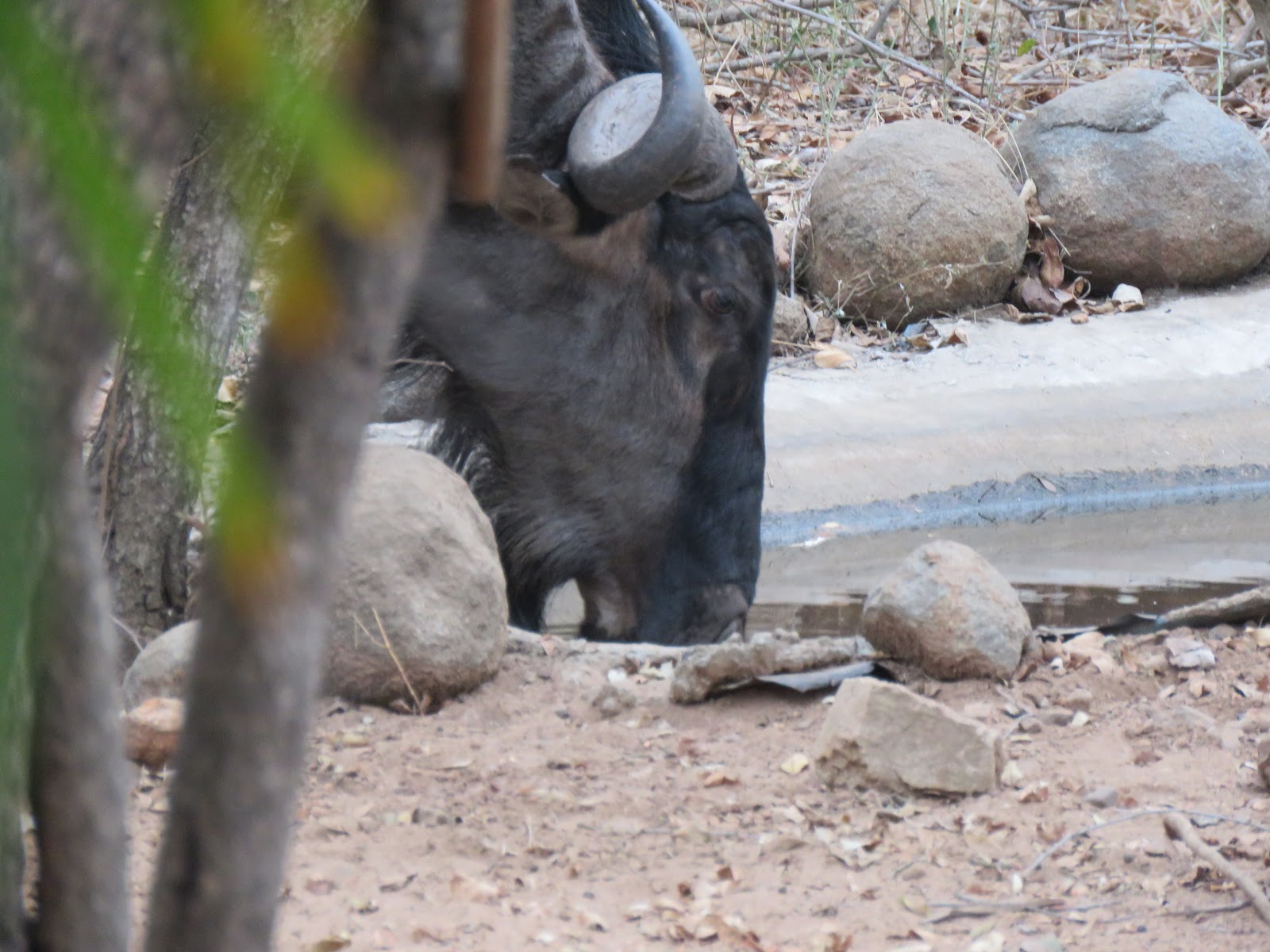
Two wildebeests, neither of them Wildebeest Willie, stopped by for treats with Tusker in the background and numerous helmeted guinea fowl who were hoping for a few pellets for themselves.

Every few months, we reviewed every upcoming dollar to be spent for current and future travels, referring to our comprehensive Excel spreadsheets of many pages. On top of that, we must keep diligent records for tax purposes.

In our old lives, once a month, we entered all our bills into our bank’s bill pay feature, never giving it much of a thought until the next month. In this life, we must constantly stay on top of our current and future expenses, deposits paid, balances due, and projected expenses for the future based on historical experience.

A mating pair of ostriches. The female is brown, while the males are predominantly black.

Need I say, this is a daunting task that those considering long-term world travel may not consider. When booking for the future, it’s imperative to consider the budget, above all other interests and desires.  


We don’t mean to sound like “tightwads,” but the future success of traveling the world is entirely predicated by careful financial planning and maintaining good health.  Both of these vital areas could easily “get away from us” if we weren’t a cautious as we’ve chosen to be.

Mom, Auntie, and Tiny Baby, who only months ago was the tiniest warthog we’d ever seen.

When living on a fixed income, one can easily imagine how disastrous it could be to find oneself living beyond their means and running money difficulties.  It would take away all of the joy and adventure of living this peculiar life on the move.

Wildebeest Willie stops by to check out the pellet action.

Instead, we carefully monitor all of our spending to ensure we stay within the confines of our budget.  Special purchases we may have once enjoyed are a thing of the past. 


Every financial move is calculated even to the point that we can’t dine out two or three times a week, nor can we flippantly select preferred rental cars or holiday rental homes.  Our most recent tiny, little car was ZAR 14,687 (US $1000) for three months (as mentioned in an earlier post).

Here again, Tusker is in the background awaiting an opportunity to get in on the pellet frenzy.  He visits several times a day while these or other zebras may stop by a few times a week.

And yes, we bounce around on these bumpy dirt roads more than ever in this recent car, but it doesn’t keep us from getting out to explore as we have all along.  


After we spent most of the morning updating and working on the “money, money, money” (click here for the Abba song), we’re excited to take off soon for another of those bumpy rides, always providing us with such pleasure to be a part of the magical world surrounding us here in the park.

This is our favorite warthog, Tusker.  He knows his name and turns around in one quick pivot when I call him.  It’s hysterical!  He’s charming to all of the other animals, politely waiting his turn.

For all of our readers/friends in the US, please have a safe and meaningful Labor Day weekend as you wind down the summer months.  Here in South Africa, we’re ramping us for spring to begin soon, on September 21st.


We’re worlds apart in the distance but close at hand in our hearts.  Happy day!

__________________________________________

Photo from one year ago today, September 1, 2017:

One year ago, we reviewed September firsts throughout the years of our travels, including the above photo and caption here:  The day we arrived in Kenya on September 2, 2013, we were shocked to discover that there was no living room, no salon, no sofa, no chair nor a dining table and chairs on the interior of the house.  In other words, we spent three months living outdoors on this veranda with no screens, venomous insects on the floors, furniture, and walls, and excessive heat and humidity (no AC, no TV).  We adapted spending from 7 am to 11 pm outdoors every day for three months, less when we went on safari in the Masai Mara.  What a good learning experience this was!  By the time we reached South Africa after leaving Kenya, we had no interest in being indoors in the two air-conditioned living rooms in the Marloth Park house.  Again, we spent every day and night outdoors!  How quickly we humans can adapt! For the one-year-ago post, please click here.

What a morning!…Many species came to call within a two-hour time frame…Is this real?

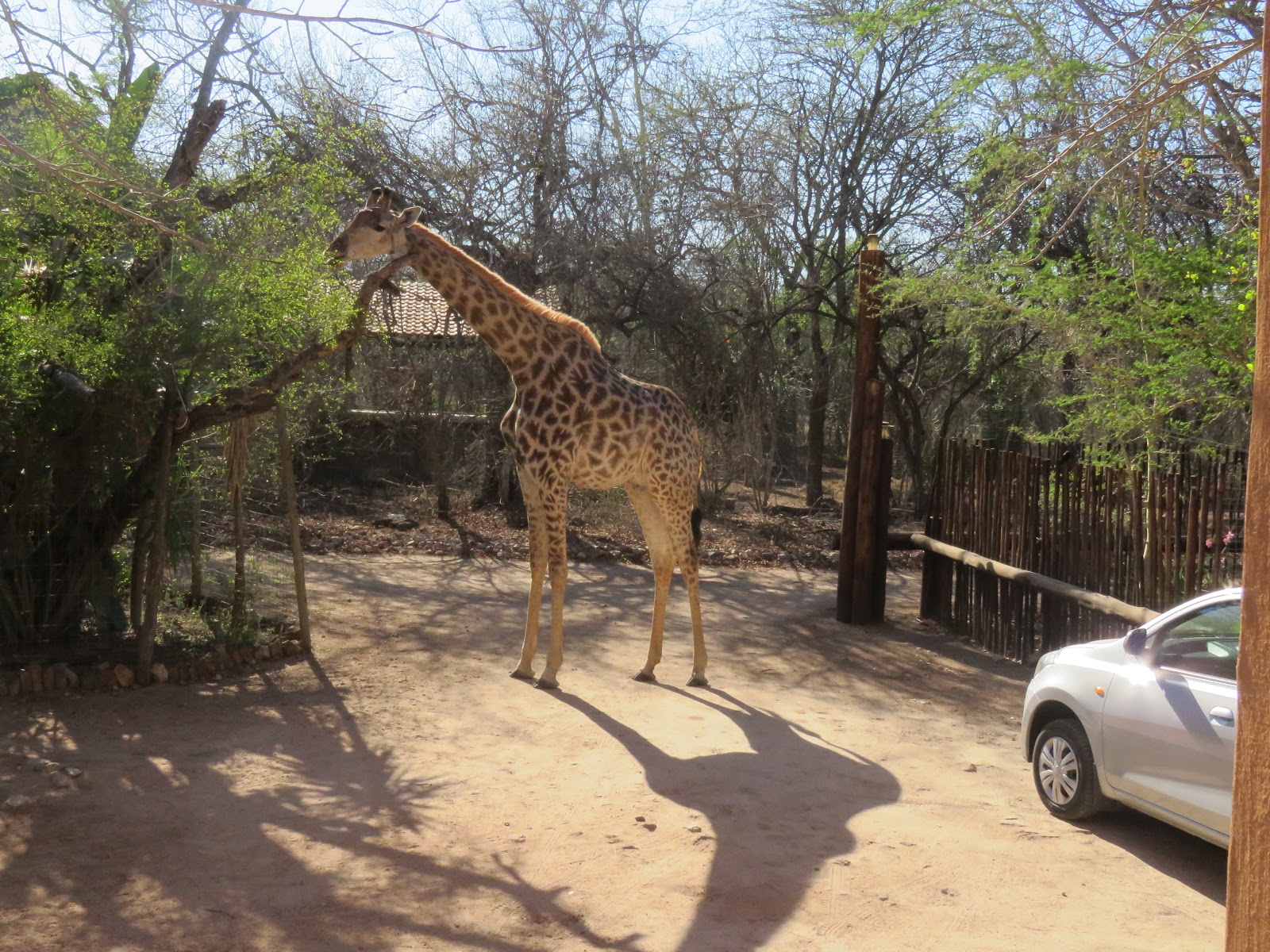
This was our first daytime giraffe visit at this house.

“Sighting of the Day in the Bush”

Zebras, helmeted guinea fowl, and of course our boy Tusker, whose quite a regular.

This morning we heard helicopters flying overhead heading to Kruger National Park in search of poachers. A considerable effort is being made to preserve the integrity of our endangered species who are being slaughtered for their horns, tusks, and even the scales of the quickly becoming extinct pangolin (an animal we’ve yet to see and would love to).

Within minutes a second giraffe arrived, and we excitedly photographed them both.

The sun is shining. The temperature is a comfortable 20C (68F) with a mild breeze. Endless varieties of birds are singing, and we even can hear the gurgling sounds of hippos a short distance away on the Crocodile River. .TIt couldn’t be a perfect morning…so we thought.

Giraffes have little competition for food in the treetops other than other giraffes.

Awakening earlier than usual after a good night’s sleep, while Tom was watching the Minnesota Vikings final pre-season game, I interrupted him to ask if he’d like to go to Kruger once I completed the post and he finished watching the game.

We couldn’t have been more thrilled to see them in our garden at long last.

In most cases, he enthusiastically agrees, but this time, he hesitated to state the weekend was here, and the crowds would be overwhelming in the national park during this busy holiday season.  

This more miniature giraffe may have been the offspring of the visiting female.

I was slightly disappointed but shrugged and went about my day, doing some laundry, chopping and dicing for tonight’s dinner, and reviewing the photos we had on hand for today’s post. Next week, we’ll surely head to Kruger, having been away for at least three weeks with our recent time out of the country.

Zebras are pretty rowdy with one another when competing for pellets. They don’t hesitate to kick and bite one another.

Little did I know that within a matter of minutes, magic would happen, and visitors came, one species after another, including the very first visit to our grounds by giraffes, who we’d longed to see since our arrival over six months ago.

And then, a band of mongoose suddenly appeared, hoping for raw eggs.  Tom mixed up a bowl full and placed it on the ground.

We’d seen a few giraffes in neighboring properties and taken a few photos, mainly at night and once, several weeks ago, saw one giraffe lingering in our driveway late at night. But, never had any giraffes come to call during the day.

I couldn’t grab the camera quickly enough, especially when all at once we had the following:  giraffes, zebras, warthogs, mongoose, and helmeted guinea fowl.  We had visits from bushbucks, hornbills, duikers, and a wide array of bird species throughout the morning.

They are used to Tom bringing out the bowl of raw scrambled eggs and wouldn’t back off while he placed it on the ground.

Tom didn’t hesitate to pause the football game to come outside to revel in the menagerie gracing us with their presence, each on their mission for some treats. Whether pellets, carrots, apples, eggs, or bird seeds, we joyfully shared our recently purchased inventory of things they love.

Unfortunately, giraffes don’t eat any foods we may offer when their goal and physical abilities only allow them to eat from the treetops or vegetation slightly below.  They only bend to the ground when drinking.

They pile atop one another to get a lick out of the bowl of eggs.  It’s hysterical to watch the action.

The morning continued magically, reminding us of how grateful and humbled we are to be in this amazing place, unlike anywhere else in the world, for whatever time we have left to be in South Africa.

Tom finished watching the game; Minnesota won, he was happy. I stayed busy with my various projects, online research, and managing the morning’s photos.  It’s been a great day so far.  Let’s see what rolls out for the remainder of the day.

Be well.  Be happy.

Photo from one year ago today, August 31, 2017:

Tom captured this unusual cloud formation in Costa Rica. For more, please click here.

Dealing with “stuff.”…Can’t escape certain issues while traveling…More astounding visitor numbers!…

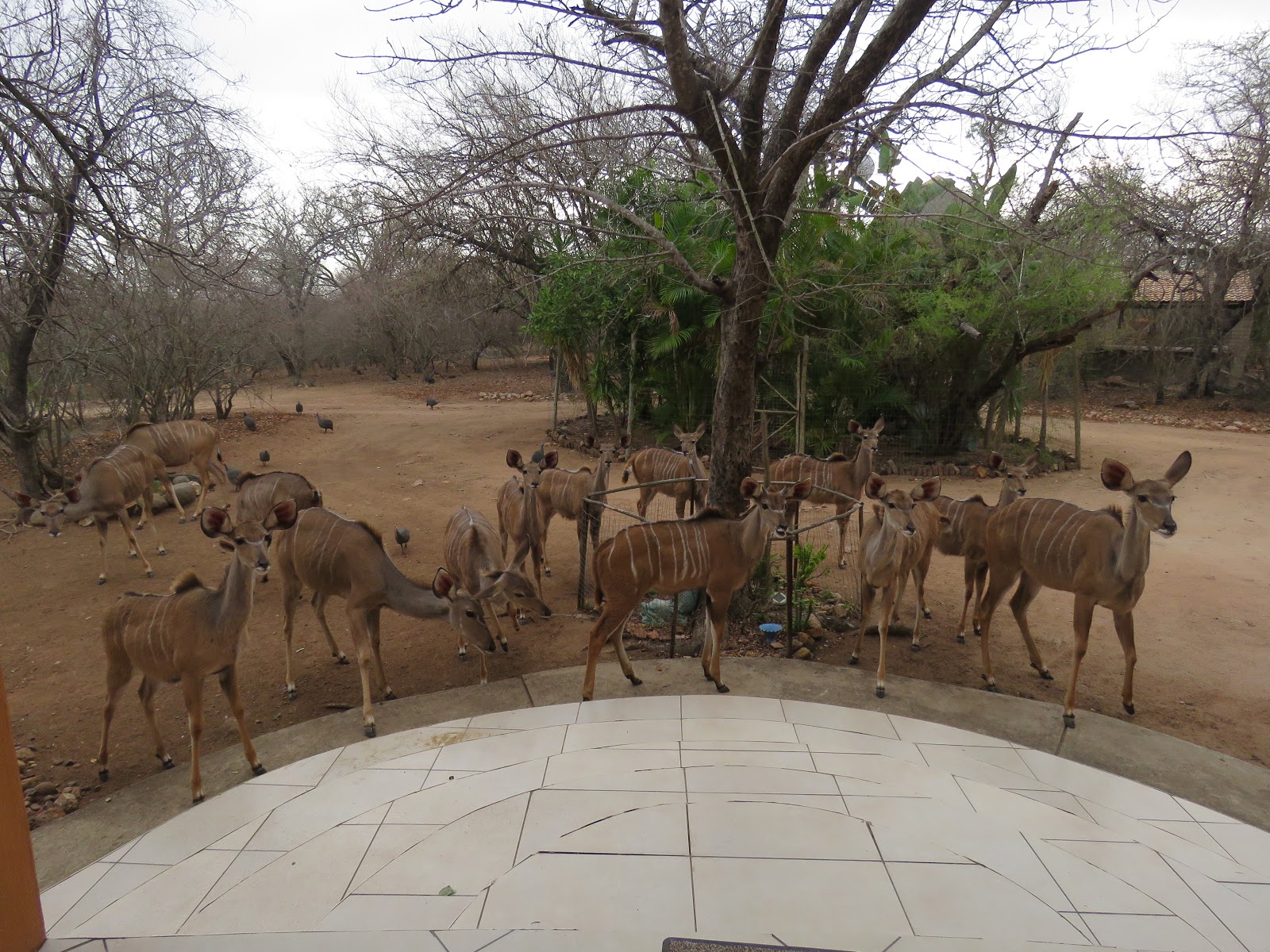
After our recent record-breaking 20 kudus in the garden, we were flabbergasted when 25 showed up all at once a few days later!

“Sighting of the Day in the Bush”

I believe this is a hadeda bird who makes exquisite sounds flying overhead at dusk.

There’s the issue with our package. It was sent by US Postal Service on May 28th and has yet to arrive. The cost for insurance for the contents was over ZAR 5754 (US $400). We didn’t want to pay this added amount and decided to take the risk. Never again. Not doing so was a big mistake on our part.

We must have gone through 10 kg (22lbs) of pellets while they visited.

In the future, all packages we ship from the US will have to be sent via UPS, FED EX, and DHL while we succumb to paying the outrageous costs for expediency.  In the interim, we continue to track the package which last arrived in Johannesburg where it’s been stuck since June 6th.

After waiting a while for more pellets which we wanted to save until Thursday when we shop, they began to wander off.

Louise, who’s an absolute miracle worker in all areas, hasn’t been able to pin it down to get it here. I called Louise’s contact again this morning pleading for help and offering to pay a fee to have the package brought to us. This may work. We shall see.

“No more food?  We’re off to the next bush house!”

Apparently, there was a post office strike months ago and they still aren’t caught up at the processing center. The box could easily be in a shipping container, yet to be unpacked. Oh, good grief.  

When wildlife, such as these wildebeests lie down in the garden like this, it may indicate they feel comfortable and safe enough to rest for a bit.

Life on the move is often a mishmash of extraordinary experiences interspersed with problematic situations and challenges, some of which can be resolved with persistence, coupled with a degree of patience.  

These could be a mating pair.

This sounds like an oxymoron but it’s not. Kindly persistence is crucial. There’s no room for angry outbursts or threatening tones in one’s voice. As for being patient, once we’ve done all we can do, we must wait.  

A young wildebeest made himself at home in the garden resting after a pellet frenzy.

We remind ourselves, this is Africa, not the US where even there one can encounter endless cases of incompetence and lack of desire to get the job done proficiently. Not every worker is like many of us in our fields of endeavor as we strived to “get the job done” as seamlessly and quickly as possible.

But, expecting such degrees of competence and motivation is not always easy to find and when we do, it’s more glaring than those who aren’t competent. The competent become the anomaly.

Wildebeest Willie hung around for several hours, resting and eating a few pellets from time to time. He makes good eye contact, letting us know exactly what he wants.  Do I detect a morsel of love in those looks? Could be.

Now, as we struggle with our immigration issues we can only hope and pray that as we finalize future plans we can count on the people at the other end who will ultimately be responsible for our comfort and convenience. That’s a big bill to fill.

We often comment to one another how fortunate we’ve been during this past almost six years (upcoming anniversary of travels in 63 days) when each time we’ve paid for and arrived to rent a holiday home, it’s been mostly as described.  

The kudus and the wildebeests get along well.

The only exception to this was the very first house we rented in Belize which turned out to be a fiasco. There was only running water a few hours each day and many more issues. We left in seven days and lost our money. To this day, we don’t know how we didn’t turn back and say we didn’t want to do this after all.

However, without complaining to one another, we carried on as we do now, with the postal service issue, immigration issues, and whatever transpires from here.  Whoever may think that traveling the world full-time is easy is kidding themselves. Like everyday life, wherever you may live in the world, life isn’t easy.

We can choose to embrace it all, figuring out solutions along the way, always striving for resolutions, and also preparing for disappointments.

May your day be filled with happy solutions!

Photo from one year ago today, August 29, 2017:

From this website: “The owl butterflies, the genus Caligo, are known for their huge eyespots, which resemble owls‘ eyes. They are found in the rainforests and secondary forests of Mexico, Central, and South America. Owl butterflies are very large, 65–200 mm (2.6–7.9 in), and fly only a few meters at a time, so avian predators have little difficulty in following them to their settling place. However, the butterflies preferentially fly at dusk, when few avian predators are around. The Latin name may possibly refer to their active periods; caligo means darkness.” For more photos, please click here.

We’re busy figuring out our next move…Lots to consider…Another record-breaker in the bush…

A record-breaking 20 kudus visited all at once. Watch this short video to see all the fun!
 

“Sighting of the Day in the Bush”

Lots of kudus by the steps to the veranda.

The past few days since we returned from Zambia and Botswana have been a blur with social activities and major animals sightings, all the while dealing with our emotions about having to leave South Africa on November 21, 2018, as opposed to our planned February exit to head to Kenya for the upcoming photographic safari tour.

One of the main reasons we’ve planned our upcoming travels years in advance has been to avoid the very situation we’re in now, trying to find where to go, where to live, and how to get there with very little advance notice. After all, we have to be out of here in exactly 86 days, hardy enough time to plan a 90-day trip meeting our criteria.

A giraffe stopped by the picnic site at Frikkies Dam in Lionspruit during yesterday’s braai.

Our readers can surely relate to this when you realize how much work and effort it takes, even if working with a travel agent, to plan all the details for even a two-week-long holiday outside of your home country.

As a matter of fact, traveling in one’s own country, figuring out where to stay, what to do, and transportation for 90-days is a daunting task. Over the past four days, we’ve spent all of our free time searching for options. 

Since there are two lions in Lionspruit there is a fence around the braai area. As a result, I had to slip through the slats in the fence to take these giraffe photos.

We keep running into obstacles, the first being, we aren’t interested in traveling to any country that doesn’t allow for a 90-day visa upon entry. Why would we put ourselves in such a position of having to deal with immigration every 30 days?  We wouldn’t.

We use this online guide we’ve used since the onset of our travels but always conduct further research for any recent updates and changes for any countries we may be interested in visiting. This particular form was updated as recently as July 2018.

It was Matthew’s 16th birthday (the young man in a blue and white shirt) and everyone sang the song, ate cake, and wished him well. He is the son of JJ (in the green shirt behind him) and Flo (not shown in this photo. Louise and Danie are shown as well.

As we conduct the research, we eliminate one country after another. We found a house in Namibia that particularly appealed to us. It showed on the popular holiday home website, HomeAway.com, as being available for our dates.

I contacted the owner asking about the Wi-Fi situation only to discover the house wasn’t available for our dates since they will be living in the property during that period. 

Another outstanding early morning today. This time another record-breaking kudu gathering in our garden, 20 of the magnificent beasts including a few males (whom we call Big Daddy)and many females and their young.

However, they’d made no note or indication on the property listing that it wasn’t available during our dates. It took several email messages over two days to find this out, leaving us frustrated and disappointed when this had appeared to be a great option with Namibia’s 90-day visa policy for citizens with US passports.

Back to the drawing board.  In short order, we gave up on Namibia. With a low population and little tourism, holiday homes are limited and/or too expensive. Also, as indicated on the HomeAway and other holiday home sites, there was only 5% to 10% of the available inventory available for our dates.

How exciting to see so many of these exquisite antelope, popular among locals and tourists in Marloth Park.

This is why, dear world travelers, booking well in advance makes all the sense in the world. This is why, dear readers, that we’ve chosen to book venues one to two years in advance. We’ve often been asked why we book so far in advance and this particular situation explains it all. There’s simply not much available last-minute, nor are there any better “deals” to be had last-minute under most circumstances.

So the search continues and will continue until we’ve firmed up our plans, paid the deposits, and booked transportation as to where we’ll be going for the 90 day period. We’ll post our decision here once we’ve wrapped it up.  In the interim, we’ll make every effort to keep our frustrations under wraps including in discussing them here. Thank you for your patience and understanding.

Wildebeest Willie also got in on the action along with dozens of helmeted guinea fowl.

Yesterday, we had a nice break from this topic when we joined Louise and Danie and their wonderful friends for a braai at Frikkies Dam inside Lionspruit Game Reserve which is located inside Marloth Park. We’d participated in such a party a few months ago and then, too, had a wonderful time.

South Africans like their food and drink so all flowed with fervors as a few different braais resulted in some seriously fine smells and subsequent tastes when everyone shared a little of this and that. As mentioned we’d prepared our usual crust-less egg, cheese, mushroom, onion, and sausage quiche and it was devoured along with the other delicious items.

We picked up the new little rental car on Thursday when we arrived in Nelspruit.

We were back “home” by 1640 hours (4:40 pm) and couldn’t wait to set up the veranda for the upcoming evening’s activities in the bush. Who would stop by to see us this time? No matter than a few minutes after we arrived, the visitors came, some hiding in the bush waiting for us to return. 

Oh, good grief this is beyond description! I want more, more, more!

May everything you want more of, come your way!

Photo from one year ago today, August 27, 2017:
Due to a Wi-Fi and power outage on this date one year ago, we were unable to post anything but a short blurb describing our plight. As a result, we had no photo on this date.

The Chobe saga begins…Good food for the carnivores…

We were excited to get a view of the leopard’s face after waiting for a considerable period while Samson, our guide kept moving the vehicle for better shots.  Upon careful inspection of this photo, you can see the pads of the feet of her kill in the tree near her head.

“Sighting of the Day in Chobe National Park”

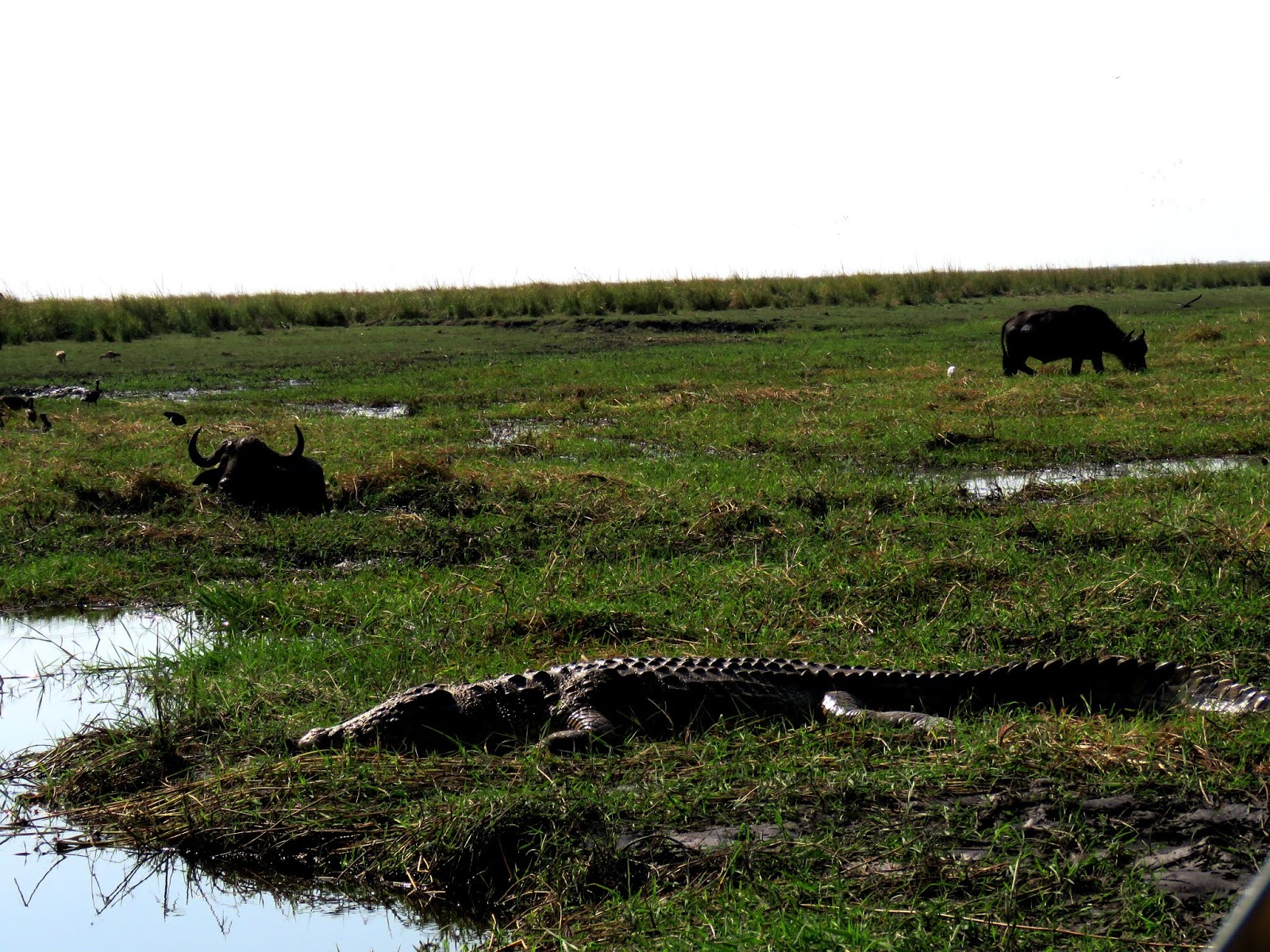
Cape Buffalo have a symbiotic relationship with cattle egrets who eat the ticks and other insects off their bodies preventing illness and infections.  Cape buffalo are well aware of this benefit and do not object to their presence. 

With literally hundreds of photos from four safaris in Chobe National Park, two each on land and the river, we almost don’t know where to begin.  Do we share our favorites first and wind down over a number of days to those of wildlife our readers have seen over and over again?  

When our guide maneuvered the safari vehicle for our photos, it was tricky getting into a good position.  There were nine of us in the vehicle and several other nearby vehicles with equal numbers of tourists, we were all jockeying for positions.

Or, do we spill “the best of the best” first and dwindle down to those animals and scenes which may have become familiar to all of you over the years of our wildlife adventures throughout the world?

The leopard was well aware of our presence and kept turning her back to us.

For expediency and perhaps a bit of laziness on my part, we’d decided to attempt to balance it out over this next week (or more, if necessary) with some of our favorites and others we look forward to posting which may not be as spectacular.

Of course, we would have preferred full-on face shots but it just wasn’t going to happen.

Dealing with hundreds of photos to pick and choose is a monumental task in itself.  Writing the text is easy comparatively.  Editing the post with a less than ideal Wi-Fi signal is challenging as well.  So bear with us.  

From time to time, she’d allow us a glimpse of her profile.

We’ll do our best to share our experience with all of you, our loyal reader, our new readers “getting their feet wet” in beginning to read our over 2200 posts and our occasional readers who may attempt to pick up where they left off or not.

But then, she’d put her head back down to nap after her tasty breakfast.

A person asked me, “If you go on safari over and over again, seeing the same animals, don’t you get bored?”

I answered, “If you watch football over and over again, seeing the same players, do you get bored?”

There are many islands in the Chobe River during this dry season.  The elephants swim back and forth from the land to the islands to partake of its rich vegetation.  Elephants are excellent swimmers.

Every time is different.  At this point, we couldn’t count how many times we’ve been on a game drive, either driving ourselves or being driven in a safari vehicle.  It doesn’t matter.  The fact remains, we aren’t bored.

In no time at all, she made her way to the island in the deep water.

No sooner than we climbed up into the safari vehicle or boat over these past days, the adrenaline rush flushed our minds and bodies with feel-good hormones as the sense of anticipation washed over us.

Once on the island, she joined the other members of her family.

A few times over these past few days, I described it to Tom like fishing…the anticipation is 75% of the excitement.  We get that same feeling when searching for wildlife scenes.  

There is varying speculation on how many elephants there are in Chobe National Park.  It ranges from 50,000 to 65,000.  During our four safaris, we saw no less than a thousand elephants.

For us, after many such experiences, the sighting of an impala or kudu may not be earth shattering but an impala attempting to mate or a kudu playfully dancing about is all new and elicits great feelings of pure joy and elation.

This was one of many crocs we spotted on the banks and in the water of the Chobe River.

In essence, that’s what we’re searching for, the unusual and less often sightings but all the while thoroughly enjoying the parade of elephants on an island in the crocodile-infested river or a dazzle of galloping zebras on the savanna.  It’s all quite exciting for us.

Tom’s fantastic dinner at the gourmet restaurant at Chobe Safari Lodge, located in a separate building we walked to in the dark with the sounds of wildlife around us.  There are no fences around Chobe National Park as there are in Kruger National Park.  One could easily encounter wildlife while out at night.

Of course, if you aren’t interested in wildlife, one way or another, none of our recent or upcoming posts over these next seven months will hold must interest for you.  Sorry about that.  As our longtime readers know, our posts aren’t always about wildlife and nature.  A year from now we’ll be at the end of our Baltic cruise…hardly a wildlife-rich experience.

This was the best-roasted leg of lamb in au jus that I’d ever had, moist, tender and delicious.

For now, we’re chomping at the bit to share nature’s bounty over these past several days.  And yes, once we’ve shared all we can, we’ll be back to posting our ongoing day to day adventures in Marloth Park. 

We made new friends while on safari, including Jean-Pierre and Patricia a wonderful couple from Nice, France.  

No words can describe how excited we are to return tomorrow to see all of our friends, both human and animal and to settle back into our lovely holiday bush home, “Orange…More than Just a Colour.”

Yumm…life is good.

________________________________________

Photo from one year ago today, August 22, 2017:

Tom, walking toward the dental clinic in Costa Rica.  It didn’t seem to be in a great neighborhood with bars on windows and doors but we felt comfortable.  For more photos, please click here.

We’re in Chobe…What an adventure!…Fun facts about Chobe!…

“What the muck have I gotten myself into?” says Mr. Cape Buffalo (one of the Big Five).

“Sighting of the Day in Botswana”

“Why are all these humans staring at me?” says Ms. Baboon.

While we’re in Chobe (Botswana), we didn’t have ample free time to upload our hundreds of photos to get to work on them. Yesterday morning Steve, our driver with Chris Tours, picked us up at 7:00 am, and we didn’t get to our hotel room at the Chobe Safari Lodge until after 4:00 pm after a full day of game viewing.

The entrance gate to Chobe National Park. Our guide enters the building to be given a route for our game drive.  Luckily, Samson negotiated a route close to the river where wildlife congregates during the dry season.

With a dinner reservation for 1830 hrs (6:30 pm), with both of us desperately needing to shower before dinner, we knew we’d have little time to prepare the type of post we’d like to best represent our entire day’s experiences on a game drive in Chobe National Park and an afternoon cruise on the Chobe River.

Cape buffalo are safe around this young crocodile. But, according to our guide Samson, once this croc is fully grown and a buffalo is floating in the water with hooves not touching the river bottom, they would be in grave danger.

Undoubtedly, my expectations were high after the experiences we had three months ago engaged in these same activities. Tom, on the other hand, kept his expectations in check. But, like visiting Kruger National Park once a week, one needs to temper expectations and go with the flow.  

Elephants have their own built-in snorkel.

There were a few stunning moments we’ll share in photos over the next week. Still, for today, we’ll only be adding a few of the less exciting photos to save time, including the gems from yesterday and today with the accompanying stories to go with them.

Luckily, as you see this post today, we have another full day of the same activities. Hopefully, we’ll be back with some severe adventures in tomorrow’s post when we are back in Livingstone, Zambia.

This elephant crossed the Chobe River with ease.  Elephants are great swimmers.

We stayed with the same group of six other people on the first day during the land game drive, the buffet lunch at the resort, and the boat safari in the afternoon.  

Today, we’ll meet an entirely new group of people. The people we met yesterday were fantastic, and we all shared wonderful stories of our world travels and love of wildlife. 

Man and boy canoeing in a channel of the Chobe River.

One couple from Switzerland and Germany had just come from staying in a lodge in Marloth Park. What a coincidence! We chatted with a pair of traveling friends working together in Dubai with one from Minnesota. Another coincidence.  

Tom is right at home while on safari.  We’ve learned so much over these years. It’s all the more exciting.

The third couple is from Nice, France, and although there was somewhat of a language barrier, we managed to engage in lively conversation. Meeting these friendly people was an exciting and enjoyable experience.  

Of course, we handed out business cards and looked forward to seeing them online, hopefully visiting us here on our site and saying hello on Messenger from time to time.

Warthogs, outside Chobe National Park, running from dogs chasing them as shown in the photo below.

The room at the Chobe Safari Lodge was excellent, with views of the Chobe River. Of course, early in the morning, we heard the magical sounds of hippos gurgling in the river…music to our ears…reminiscent of our time in the Maasai Mara in 2013 when we slept in a luxury tent on the Mara River, awakening to the sounds of the hippos before sunrise. See that link here.

Dogs were chasing warthogs outside the perimeter of the park.

After checking a few online resources, we found these fun facts about Chobe we’re sharing today. Please check below for details.

From this site:
1. Chobe National Park is divided into four different areas, each with distinctly unique geographical landscapes. They are as follows; the Savuti Channel, Linyanti wetlands, Serondella, and Nogatsaa.
2. In 1888, the Savuti channel dried up entirely and only flowed again in 1957, 70 years later. It is changeable and sporadic but exceptionally diverse and beautiful.
3. The roads in Savuti are notoriously difficult to drive through due to the wet black cotton soil in the area.
4. Savute and Linyanti have no internet and no mobile network coverage
All the more reason to take a digital detox and enjoy the simple pleasures of a Botswana safari
5. Before it was a national park, this area was used as trophy-hunting grounds and as a source of teak wood for the blooming timbre industry (both of which have been outlawed).
6. In the 1940s, Chobe National Park fell under a major tsetse fly infestation. This has a significant impact on the decision to declare the area a national park.
7. Gobabis Hill in Savuti has ancient San rock paintings estimated to be about 4000 years old.
8. Chobe National Park has the most elephants in all of Africa, and you can feel the ground shake as a large herd moves by.
9. To celebrate their second wedding, Elizabeth Taylor and Richard Burton married in secret at the Chobe National Park in 1975.
10. Victoria Falls is only a short drive away from the park. Don’t miss the chance to visit this magnificent feat of nature on your Botswana safari.
11. Rhino is the only Big Five animal that is not found easily in the park. (At current speculation, there are only 13 rhinos in this massive national park).

Tonight, we’ll be back at our hotel in Livingstone, Zambia, by dinnertime. For ease, we’ll dine at the hotel, which will be Tuesday evening, and then we’ll dine out once again on Wednesday.  

Our lovely room at the Chobe Safari Lodge in Chobe National Park in Botswana.

On Thursday morning, we’ll head to the airport in Livingstone to return to the Kruger/Nelspruit/Mpumalanga Airport, which is a seven-hour turnaround. At some point during the day on Thursday, we’ll upload a new post. Most assuredly, we won’t be missing any day’s posts during this trip, but the times we upload them may vary.

Hopefully, all goes well with immigration when we re-enter South Africa on Thursday afternoon. Either way, we’ll be sharing the details here.

Have a fantastic day and evening!

Photo from one year ago today, August 20, 2017:

This plant in the garden in Costa Rica had an exciting leaf pattern.  For more photos, please click here.

Curious giraffe behavior on a side road…One day and counting…

What could they possibly be waiting for?

“Sighting of the Day in the Bush”

Over the past few days, we’ve observed this pair of hornbills taking seeds from our birdfeeder and placing them inside this unoccupied bushbaby house.  Could they be preparing a nest?

Please note for visitors and residents of Marloth Park: 

TODAY AT 2 PM
The Tin Shack Restaurant, Marlothi Shopping Centre

 
On Monday, when we embarked on our typical two-hour drive through Marloth Park in search of interesting and unusual sightings of wildlife, we stumbled across a very busy road, as mentioned in yesterday’s post

here.

 The young giraffe had no interest in the activities of the others.

Not only did we see a dozen or more zebras on a mission we also spotted no less than a dozen giraffes, also seeming to have a task in mind as they stared down the road for quite some time.

The youngster scratching an itch.

After watching the giraffes for 10 or 15 minutes, we decided to drive further down the dirt road to see if we could determine what they were looking for. As we drove several hundred meters toward the direction they were watching, we noticed another tower of giraffes heading their way.

The young giraffe didn’t seem to be interested in what the others were waiting for and busily munched on the leaves of a tree. 

From this long-distance, they were well aware of the approaching giraffe. Was this to be a happy meeting or some type of mating conflict we’d heard so much about. Giraffes, when fighting for dominance will engage in necking can cause serious injury or death to one another.

Watch this NatGeo video to see what we’re describing here. After watching this video, we weren’t disappointed to discover these two towers of giraffes were meeting for some other unknown reason, perhaps as a family reuniting after a period of separation.

The giraffes were intently staring down the road with some objective in mind.  

This was not unlike photos and a video we posted a few months of a mom and chick ostrich reunited with the dad who we spotted at a distance, walking proudly down the road toward his family. Once reunited, the baby and dad hung out in the bush together while the mom stood watch on the road. For that post, please click here.

When the two towers all came together, they didn’t congregate into one tight area. Instead, they seemed to acknowledge each other’s presence by entering each other’s space to begin grazing on what leaves were left on the trees in the area.

On occasion, he’d stop to see what was going on, including checking us out.  

Giraffes have no competition when grazing other than other giraffes. No other animals eat the leaves on the treetops than these magnificent tall creatures. But even for them, in the dry winter months with little rain, their food sources become sparse as it is for other wildlife.

Those to the right in this photo didn’t move a limb for a considerable period of time.

Unfortunately, those of us in Marloth Park during the dry season can’t feed the giraffes. They don’t bend to eat, only to drink and they certainly don’t eat pellets or vegetables from being hand-fed by humans. They are totally on their own.

We weren’t able to get photos of them altogether since they were scattered throughout the feeding source. We watched for quite a while and then we were on our way satisfied over the two great sightings.

Suddenly, they were on the move.

From there, we continued on to the river with more photos we’ll share in tomorrow’s post which is a travel day. Although the flight from Nelspruit to Livingston, Zambia is less than two hours, it takes about seven hours from the time we leave the house until we arrive at the hotel in Livingstone. (The drive from Marloth Park to the Nelspruit/Mpumalanga airport is a little over one hour).

As for tomorrow’s post, we hope to get it uploaded before our 11:35 am flight. If it doesn’t work out, we complete the post once we arrive at the hotel, making posting time approximately six or seven hours later than usual.

We turned off the little car’s engine to wait patiently while watching the two merged towers enjoy time together in the bush.

We look forward to sharing many exciting photos during the upcoming week from both Zambia and Botswana.

Enjoy the day!

Photo from one year ago today, August 15, 2017:

Check out those ears.  They certainly were flicking back and forth when we stopped to say “hola!” while in Atenas, Costa Rica. For more photos, please click here.

An outstanding drive in the park…They’re baaaack!!!!…Two days and counting…

Mom and baby love.

“Sighting of the Day in the Bush”

We continue to take nighttime photos of the bushbabies on the stand eating the little cups of yogurt to see how many we can capture. We counted seven here but not all of them is easily shown in the photo.

With few animals visiting since last Wednesday when the holidaymakers started arriving for the long weekend, yesterday we were determined to be able to take plenty of photos to share over the next few days until we get to Zambia and Botswana.

We had few expectations even commenting to one another that with all the commotion in Marloth Park we’d see few animals within the park but might have safari luck looking across the fence to the Crocodile River in Kruger.  How wrong we were!

There were no less than 12 zebras in the dazzle, many of which included youngsters.

Sure, we saw plenty of wildlife on the river but that’s always from such a distance that the photos don’t always come out as good as we’d like. We’ll share those photos over the next few days until we depart on Thursday for Zambia, after which we’ll have plenty of new photos to share on our activities in both Zambia and Botswana.

After driving for about 15 minutes and taking a series of ostrich photos, yes on Volstruis Road (which means ostrich in Afrikaans) and a few surrounding roads, Tom spotted some giraffes and zebras on a side street.

Baby zebras always seem a little dazed and confused, sticking close to their moms.

Today, we’re sharing the zebra photos, and tomorrow we’ll post the giraffe photos that include a story that was quite entertaining. Please check back for those photos.

As for the dazzle of zebras, we couldn’t have been more dazzled. In researching the definition of the word “dazzle” from Merriam Webster dictionary, we noted the following: 
a. To shine brightly;
b. To arouse admiration by an impressive display.  

They were on a mission.  We couldn’t tell what motivated them to stay on the move.

Hum…it’s no wonder a group of zebras is called a “dazzle.” They certainly arouse admiration by an impressive display! And that they did yesterday as we slowly drove up and down the road observing them on their apparent mission to an unknown destination.

We’ve noticed that when zebras come to call, they don’t stay long like many others. They eat their pellets, jockeying for position with one another for the closest advantage to the food, kick up their hooves a few times when being pushed out and then, are on their way.

The babies were able to keep up the pace.

Often warthogs, kudus, bushbucks, and others will lounge about the garden, some even laying down for a rest or a nap as we’ve shown in prior photos. But zebras? Nope, they move along. Perhaps with their larger weight than some others, they require more food.

From this site:“Males are slightly larger than the females, and they have a narrow black stripe running vertically between their hind legs. In females, this stripe is wider. Males grow to between 1.35 meters (53 inches) and 1.37 meters (54 inches) at the shoulder and their weight is between 290 kg (629 pounds) and 340 kg (750 pounds), while females weigh about 260 kg (573 pounds).”

They traveled in a long row making it impossible to take photos of the entire dazzle.

In any case, the sightings for the day were much more than we’d expected, and by the time we returned to the house, we were fulfilled and satisfied with the excellent day in the bush.

They stopped to drink from a cement pond.

However, once we set up the veranda for the evening, we didn’t expect many visitors. The holidaymakers were still leaving the park and sightings were sparse. We had a number of warthogs, one bushbuck, and one duiker stop by for a visit.

Stopping in the shade to cool off for a moment.

This morning, now that a day had passed, as usual, they started returning to see us.  At 6:30 am, we had several sounders of warthogs including “mom and five babies,” three bushbucks, “mom, baby, and friend,” no less than a dozen kudus including “Big Daddy and Little Daddy,” lots of guinea fowls, and unfortunately, way too many monkeys.  

Tom spent most of the morning chasing off the monkeys while I stayed busy preparing tonight’s dinner, doing laundry, packing a few more items, and sorting through zillions of photos for today’s post.

When it’s so much hotter in the summer months, we can only imagine how hot it is for wildlife especially when water is sparse.

At the moment we’re sitting indoors on the sofa while Josiah cleans the veranda (a daily necessity with all the blowing sand and leaves) while Martha is sweeping and washing the floors on the inside of the house (almost daily). We’re anxious to get back outside to see who may visit us today and tonight.  

They made their way through trees and vegetation in the gardens of homes along the way.

The pounding next door has stopped and for these next two days, we can relax and enjoy that which we’ve come to know and love…paradise in the bush.

Be well. Be happy.

Photo from one year ago today, August 14, 2017:

This is a variety of Bromeliad growing on the grounds of the villa in Costa Rica. For more photos of the exquisite landscaping, please click here.

Rain, at long last…Few visitors last night…Today is Women’s Day in South Africa, a national holiday…

Wildebeest Willie is drinking from the cement pond.

“Sighting of the Day in the Bush”

It’s a little bit challenging finding a comfortable position when you have razor-sharp tusks!

Miraculously, last night it rained and continues to drizzle throughout the day. It’s cold again, today as low as 13C (55F), and after the scorching day recently, this feels very cold. Thank goodness for the outdoor heat lamp that enabled us to stay outdoors last night and will again tonight. It makes all the difference in the world.

As for last night’s visitors, we were pleasantly surprised when no less than eight warthogs, some we didn’t know, stopped by to say hello and check out the pellet situation. It was pretty good, they observed.

View of the Crocodile River from the overlook.

A short while later, several bushbucks and two duikers, female and male, all of whom we do know, appeared, anxious to get in on the action. It was easy for us to help them participate. 

We got up to feed them several times during dinner, leaving our dinners to get cold. This is such a common practice. We no longer mind a bit. Now, chilled to the bone, we’re still sitting outdoors while the drizzle continues hoping to see more and more vegetation turn green for the wildlife. It’s a happy occasion in the park today.

Three little pigs…not so little…Mom and babies eating pellets at the bottom of the steps, intended for Ms. Bushbuck.

We thought it is important to mention that instead of frequently apologizing for late postings, in the future, please plan to see a post between the usual posting time and five hours later. We’re so busy here in Marloth Park. We often head out on mornings to shop, go to Kruger, or head out on a drive, especially when we see notices posted on Facebook on unusual sightings.

As much as it seems we may have idle time, we’re swamped each day with only a few idle hours in the late afternoon. I’m sure this is the case with many retirees. How did we ever manage to have a “regular” job and get anything done?  

Croc lounging on the bank of the Crocodile River.

We’ve often heard retirees make such comments as “I’m busier now than when I worked.” I suppose it’s no different for us when each day we strive to engage in more fodder for the next day’s stories and photos, have a social life, cook most of our meals while spending the bulk of each day interacting and observing wildlife.

Tom says, “Being retired, I get up every day with nothing to do, and by noon, I’m three hours behind.” Hahaha, so true.

Three zebra butts.

Add the fact we spend at least three to four hours each day preparing a post, proofreading, taking and managing photos, and coordinating photo ops for future posts. It’s surprising to us that we have any time at all left for frivolity. But, we make sure we do.

So, for now, we’re back from shopping for the next week until we depart for Zambia and Botswana next Thursday. We’ve eaten almost everything in the big freezer except for two boxes of fish we recently purchased from the traveling “fish guy.”  

Little Wart Face often naps in our garden.  He’s so at home here.

If the power goes out for an extended period while we’re gone, Lousie and Danie will rescue the fish and other frozen items in the fridge’s freezer and put it all on ice.No worries.

Today, when we drove to Komatipoort to shop, we noticed the pharmacy was closed at 10:00 am. While at the Vodacom store purchasing my new phone (more on that tomorrow), the sales staff stated that due to Women’s Day in South Africa as a national holiday, the pharmacy would open for only one hour. How weird was that?

Vervet monkey on a rock on the bank of the river.

For details on this holiday, see below from this link:

National Women’s Day
National Women's Day.jpg
Women in Lesotho at a National Women’s Day protest against violence against women at the National University of Lesotho
Observed by Republic of South Africa
Date 9 August
First time 9 August 1995

“National Women’s Day is a South African public holiday celebrated annually on 9 August. The day commemorates the 1956 march of approximately 20,000 women to the Union Buildings in Pretoria to petition against the country’s pass laws that required South Africans defined as “black” under The Population Registration Act to carry an internal passport, known as a pass, that served to maintain population segregation, control urbanization, and manages migrant labor during the apartheid era.

The first National Women’s Day was celebrated on 9 August 1994. On 9 August 1956, more than 20,000 South African women of all races staged a march on the Union Buildings against the proposed amendments to the Urban Areas Act of 1950, commonly referred to as the “pass laws.” In 2006, a reenactment of the march was staged for its 50th anniversary, with many of the 1956 march veterans.

The march was led by Lilian Ngoyi, Helen Joseph, Rahima Moosa, and Sophia Williams. Other participants included Frances Baard, a statue unveiled by Northern Cape Premier Hazel Jenkins in Kimberley (Frances Baard District Municipality) on National Women’s Day 2009. The women left 14,000 petitions at the office doors of prime minister J.G. Strijdom.

The women stood silently for 30 minutes and then started singing a protest song composed in honor of the occasion: Wathint’Abafazi Wathint’imbokodo! (Now you have touched the women, you have struck a rock.). In the years since, the phrase (or its latest incarnation: “you strike a woman, you strike a rock”) has come to represent women’s courage and strength in South Africa.”

Moms and babies.

What an important day for South African women! We wish the very best for every woman as they are reminded of this critical period in time to celebrate together.

We’d heard about this important day of celebration but had no idea some stores would be closed or open for only short spans of time. After keeping an eye out, we managed to get into the store during the one-hour-open period and purchase a few toiletries for our upcoming trip.

Five waterbucks and lots of elephants near the river.

Tomorrow, we’ll be back with photos from Tom’s new haircut and the story of purchasing a new smartphone in South Africa, where there certainly are a few differences from buying in the US.

Have a spectacular day!

Photo from one year ago today, August 9, 2017:

The view of the main pool from the master bedroom in the villa in Costa Rica. These sliding doors and others on an adjacent wall open wide with fine screens to keep out insects. It was such a treat for us to have screens! For more photos, please click here.

Another school holiday period in Marloth Park…All is not as it seems…

Dad and his offspring posing for a photo we’d taken on yesterday’s drive.

“Sighting of the Day in the Bush”

The elephant’s hides appear black after they’ve been in the river.

It was a slow start to the day today. I spent almost two hours early this morning talking to my sister Julie on Skype, most of which was spent laughing. Then, I spent time prepping for tonight’s dinner with the help of a new appliance Louise and Danie purchased for our use, as a most exciting surprise, a food processor, as shown in the photo below.

This handy food processor will save so much time for food prep.

The use of this handy appliance will cut my chopping and dicing down about 80%, saving time for more important things in life, like watching wildlife, taking photos, socializing, and enjoying our day-to-day lives. With the new knives, cutting board, and this appliance, kitchen tasks have a whole new meaning.

We always laugh when seeing ostriches with their mouths open which helps them stay cool. When we took this photo yesterday, it was 37C (98.6F). Today it’s much cooler.

After my vegetables were ready to be roasted in the oven, we realized it was time for Tom’s haircut at the local salon/barber next to Daisy’s Den. We purchased birdseed and other miscellaneous items.

Yesterday we encountered an extraordinary elephant sighting on the Crocodile River when we counted over 50 of the magnificent beasts.

We turned off the oven, knowing we’d be back in no time and could fire it up when we returned. With these few distractions, we’re now back at the house, and I’m making every effort to get today’s post uploaded before too long.

This photo was an optical illusion…quite confusing.

Today starts yet another school holiday, and three houses close to us are involved in one type of construction or another. There’s lots of noise, to say the least, which will probably continue for several days.

This lone elephant, covered in mud from the wading in the river

When there’s noise to this degree, the wildlife stays away. This morning we noticed our favorite male bushbuck considering coming into our garden. But, he stayed hidden on the side of the house, fearful of all the noise. As hard as we tried to encourage him to approach, he wasn’t willing to take the risk.

We realize that many of our photos consist of elephants. But, it’s difficult to resist the lure of these magical animals.

As much as we talk to the animals and feed them pellets and vegetables, they still are wild animals, and they must feel safe to approach. Subsequently, we expect these next several days until the holiday period ends on Sunday night, to be very noisy from people and very quiet from wildlife.

There were quite a few youngsters in the parade.

We’ll have to entertain ourselves otherwise. We’re curious to see how tonight rolls out when the noise is made for the day, but the park will be filled with arriving tourists, talking loud, playing loud music in their cars, driving fast, and filling up the bumpy dirt roads with traffic.

Based on the heat of the day, many of them assembled at the river.

By the time we return from Zambia and Botswana on August 23rd, the holiday season will almost be entirely over, with tourists no longer arriving as often from summer in Europe and other parts of the world.

Waterbucks always stay close to the river.

After this holiday season ends, it should be relatively quiet here in Marloth Park until the Christmas holiday season begins. Four and a half years ago, we were here during that period, and indeed it was pretty busy.   

When we arrived on December 2, 2013 (click here for that link), we had no frame of reference for how quiet it can be here. When the holiday season ended after the first of the year, the peace became blissful. Surely, it will be that way again soon. 

It’s incredible how they maneuver their heavy bodies up steep embankments.

For today, we’ll lay low as we continue with research for our future travels. It’s a never-ending process as we delve into countries we’d like to visit in years to come. For now, we’ve decided our current itinerary will work for us, although it will require a very long travel day(s) when we leave Kenya on March 8th.

Tomorrow, we’ll shop in Komatipoort and Lebombo. My phone’s screen suddenly cracked all over (I didn’t drop it), and I need a replacement that can last until we return to the US in April. 

It’s always challenging taking photos impeded by the wire fence between Marloth Park and Kruger. But, we do somehow manage to work around it for most shots.

There’s a phone store by the market, and hopefully, I’ll find something satisfactory. In Africa, they tend to carry older models of digital equipment of any type, so we’ll see how it goes. I’ll report back here with what I’ve found.

Enjoy today’s photos taken yesterday on a scorching day as we drove along the Crocodile River. The extreme heat brought many elephants down the steep embankment to the river, and we had the heavenly benefit of watching them cool off.

Have a cool and calm day!  

Photo from one year ago today, August 8, 2017:

In La Perla villa in Costa Rice, a double garage was below the screening room. The maintenance man and groundskeeper, Ulysses, has an apartment to the left of the garage. Otherwise, we occupied the remainder of the gorgeous house.  For more details, please click here.